In lane Electric Vehicles
2024 Lamborghini Huracán Sterrato: A Rally Exotic With Design to Match
Description
The Sterrato turns the Huracán into a raised, rally-inspired V-10 exotic. Its detailed design sells the idea, even when some add-ons look awkward.
The 2024 Lamborghini Huracán Sterrato makes its case before you turn a wheel: it takes a low-slung mid-engine exotic and gives it the stance and equipment of a rally car. On the road, that combination feels less like a styling exercise than its parts list might suggest. The car still starts, stops and steers like an exotic, while its raised ride height, all-terrain tires and cladding make rougher surfaces part of the proposition.
That mix is the point. The Sterrato doesn’t disguise its Lamborghini roots, but it does challenge the idea that a supercar must be treated as a fragile pavement-only object. The result is striking, occasionally ungainly and often more convincing from one angle than another. Its design has enough detail to reward a close look, though a few add-ons seem to be working harder than the underlying shape.
A rally theme with real design work behind it


The Sterrato’s visual reference points include rally machinery and the battered, futuristic vehicles of Half-Life 2. That comparison fits its mix of exotic proportions and exposed hardware, though the car’s appeal doesn’t depend on the game reference. What matters is how Lamborghini has worked the off-road cues into the body: the raised stance, chunky tires, roof equipment, fixed driving lights and rough-textured wheel-arch extensions all have to coexist with the Huracán’s pointed surfaces.

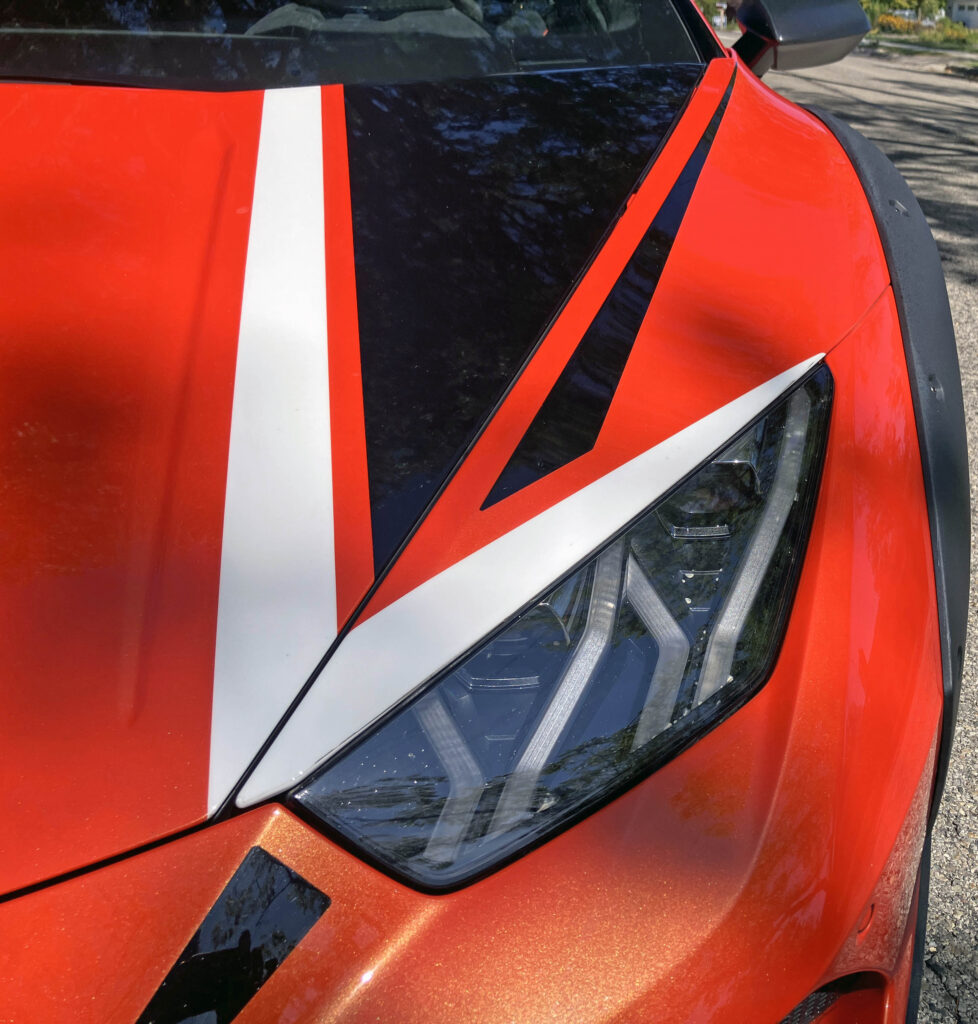
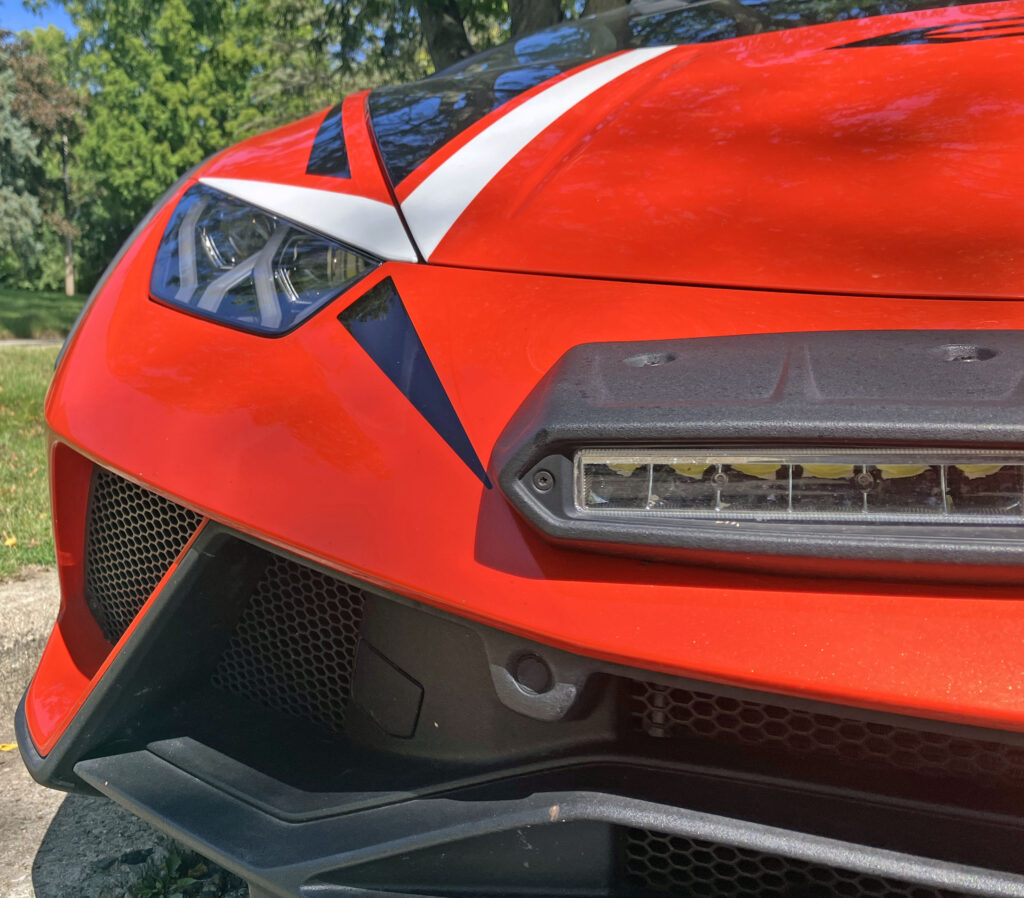
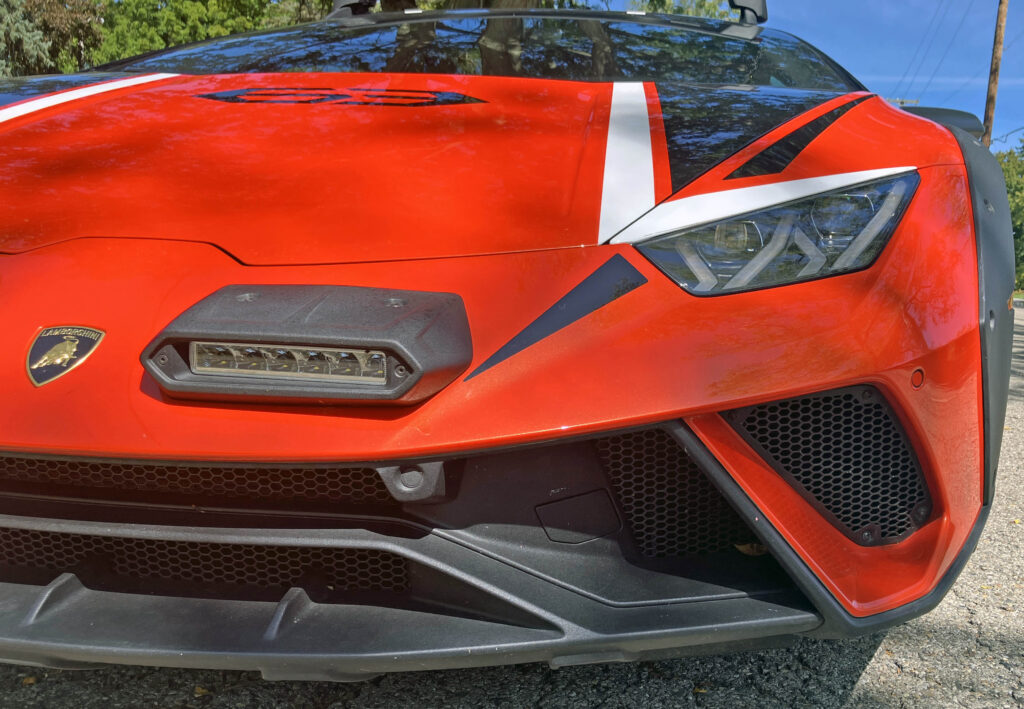
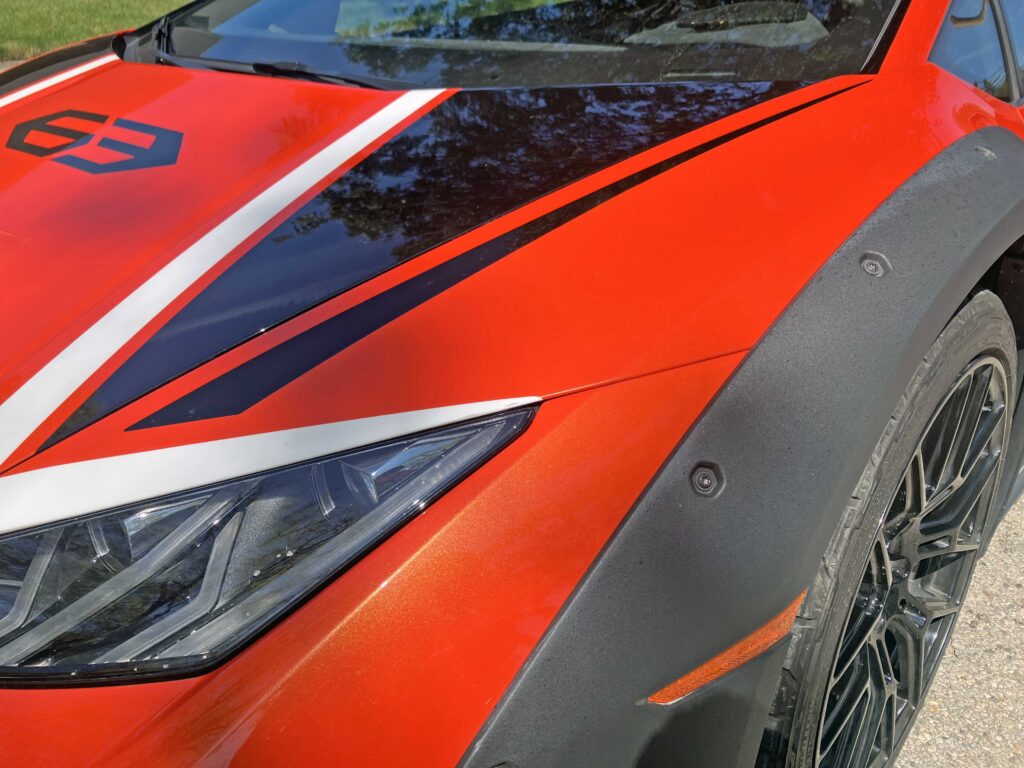
Graphics do a surprising amount of the work at the front. The black and white adhesive-backed shapes draw the eye toward the hood creases, headlights and driving lights, while their angles echo the cut lines between the hood and fenders. They’re optional, and their role is as much visual as functional: without them, the bolt-on flares and lamps would command more attention on their own.
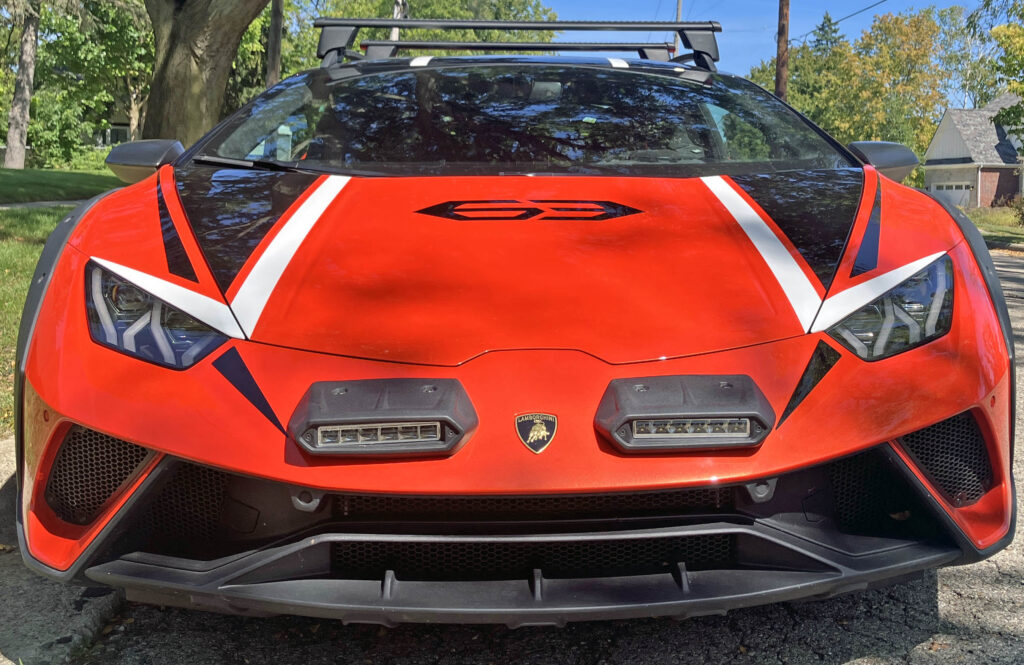
The black markings beside the lamps add depth to the bumper and fenders, and help make the fixed lights look like part of a larger design rather than accessories simply attached to a supercar’s nose. Their exposed fasteners still suggest aftermarket equipment, which is part of the Sterrato’s deliberate roughness. The white shapes above the headlights work like sharp brows; from some angles, they also pull the eye across the hood toward the flares.
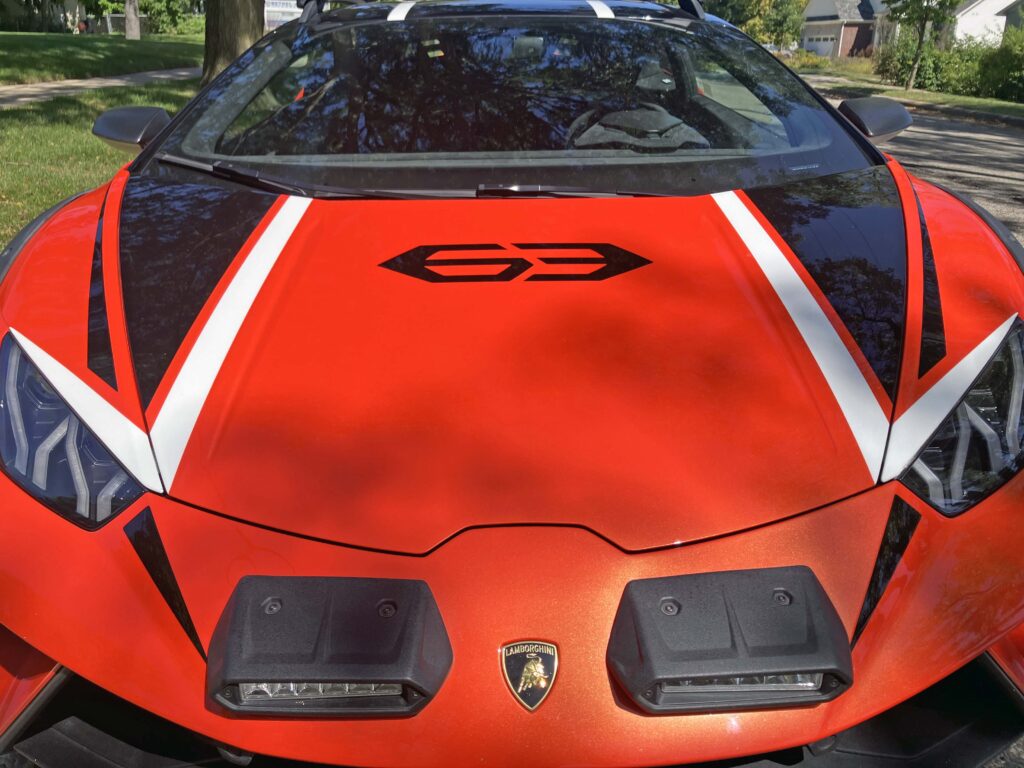
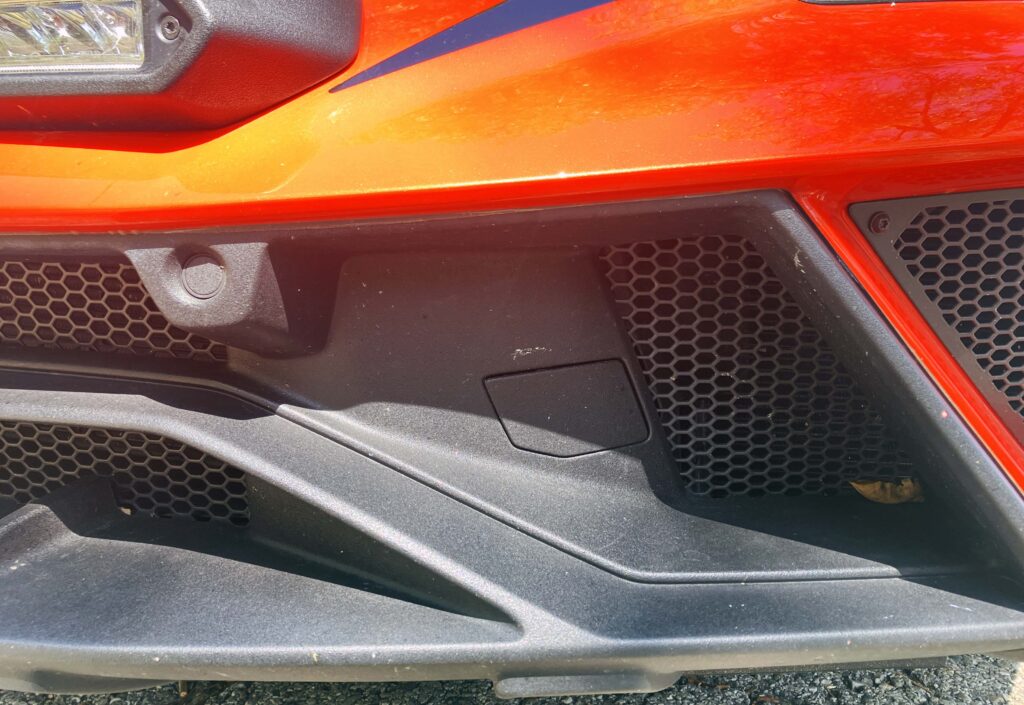
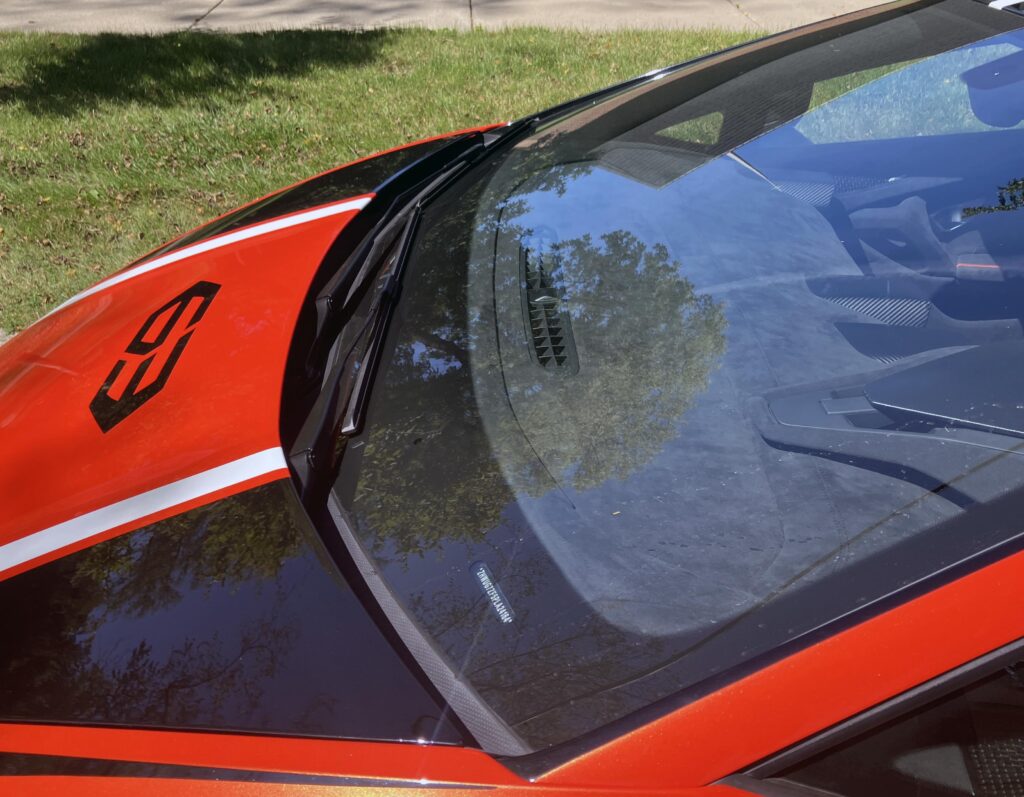
The “63” graphic refers to Automobili Lamborghini’s founding year, 1963. Its forked lettering also sits comfortably among the brand’s familiar angular and hexagonal motifs. With the bumper removed from view, the graphic offers a visual counterweight to the driving lights; when the whole front is visible, it becomes one element in a much busier composition.
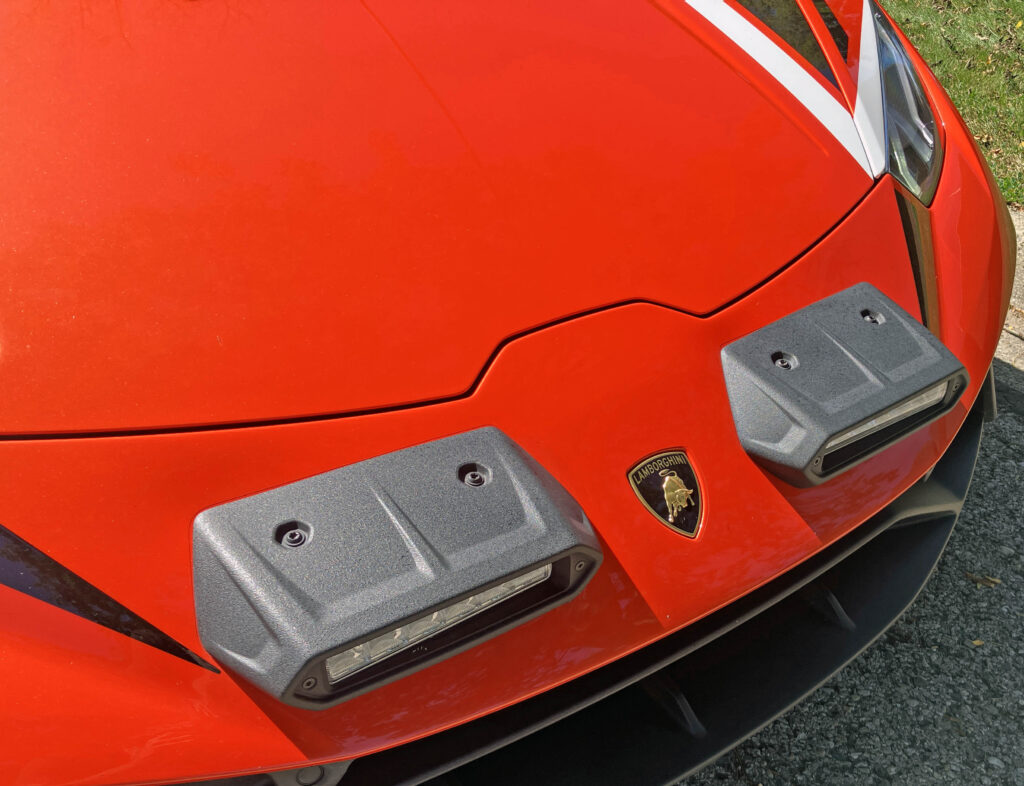
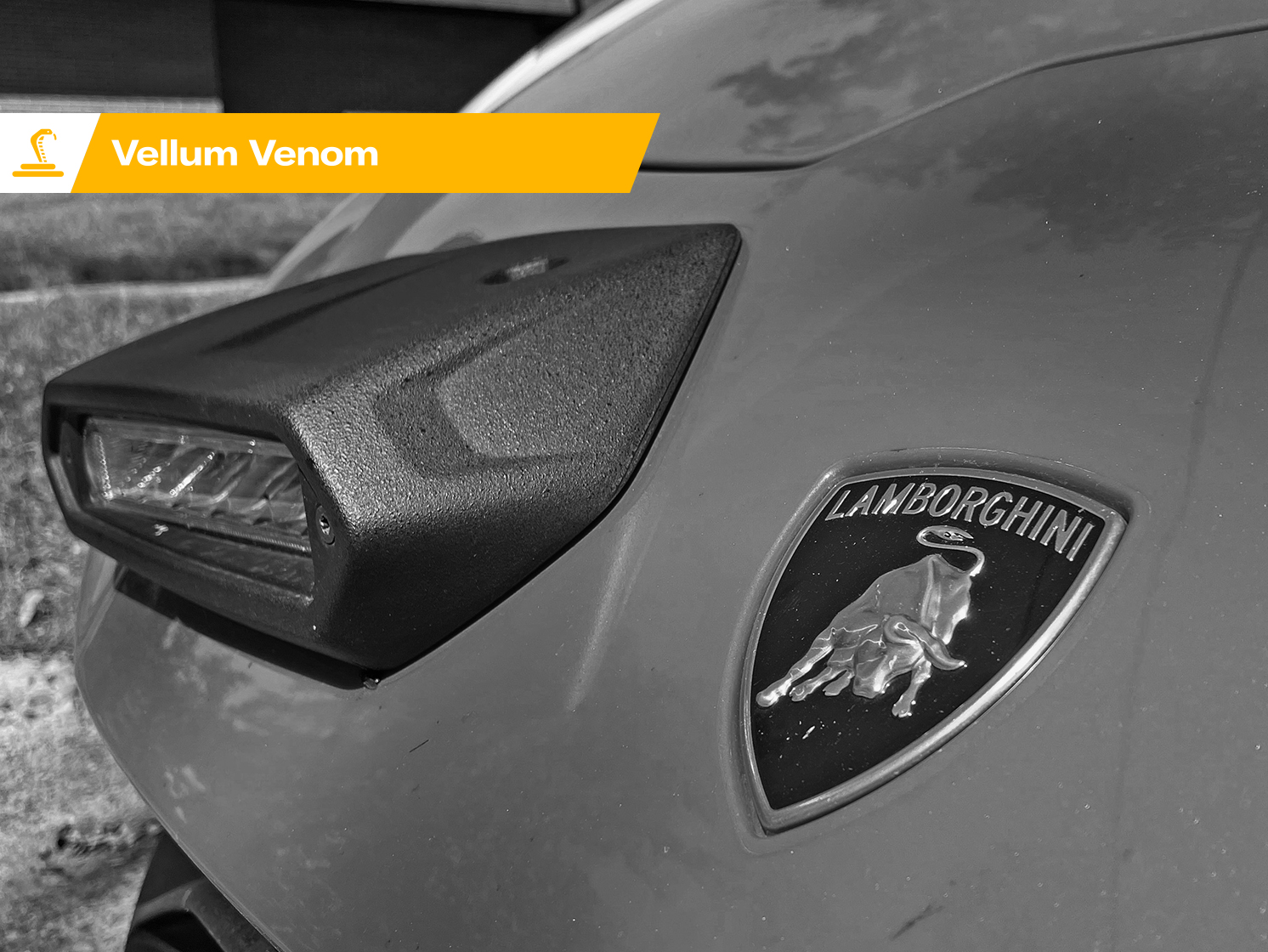
The lamps’ lenses sit at an angle that follows the lights’ intended direction, even as their housings have to negotiate the bumper’s contours. Lamborghini uses those contours to make the enclosures appear more integrated. Triangular shapes formed by the hood cut line and emblem area continue into the inner edges of the lamps; at the outside, a bend in the bumper leads toward the headlight. The surfacing gives the installations a rationale, even if the visible mounting points keep their accessory-like character.
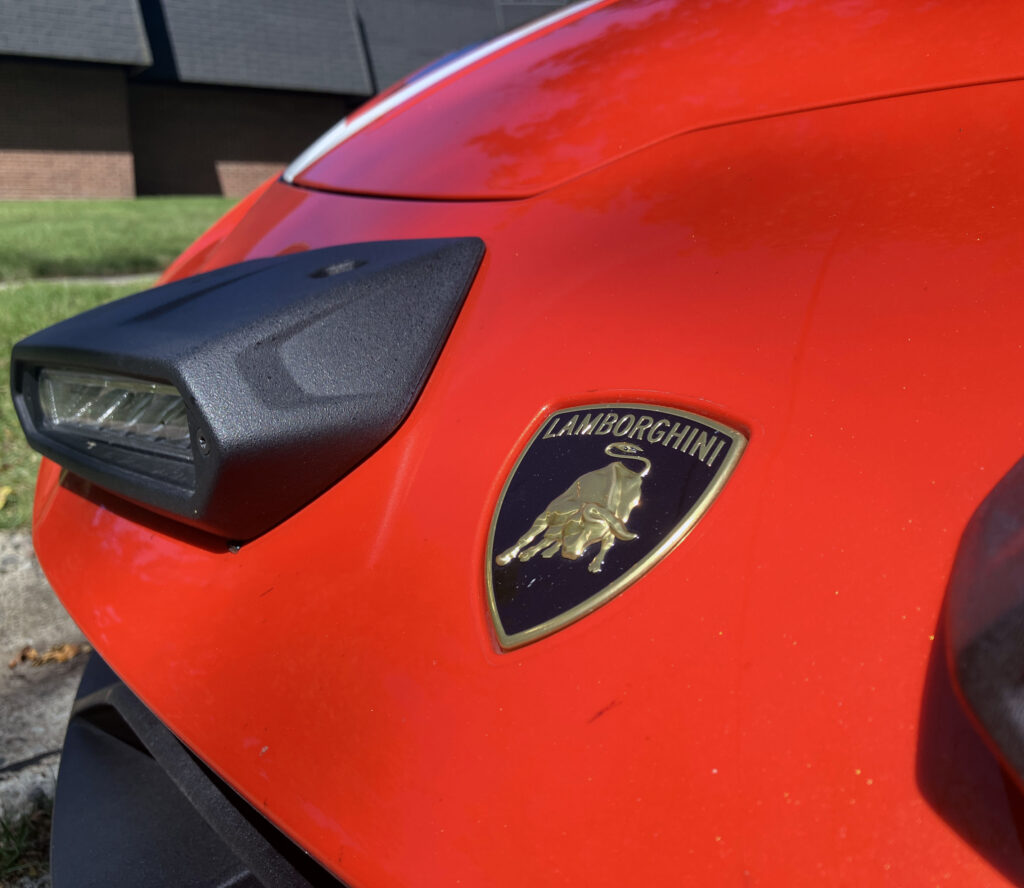
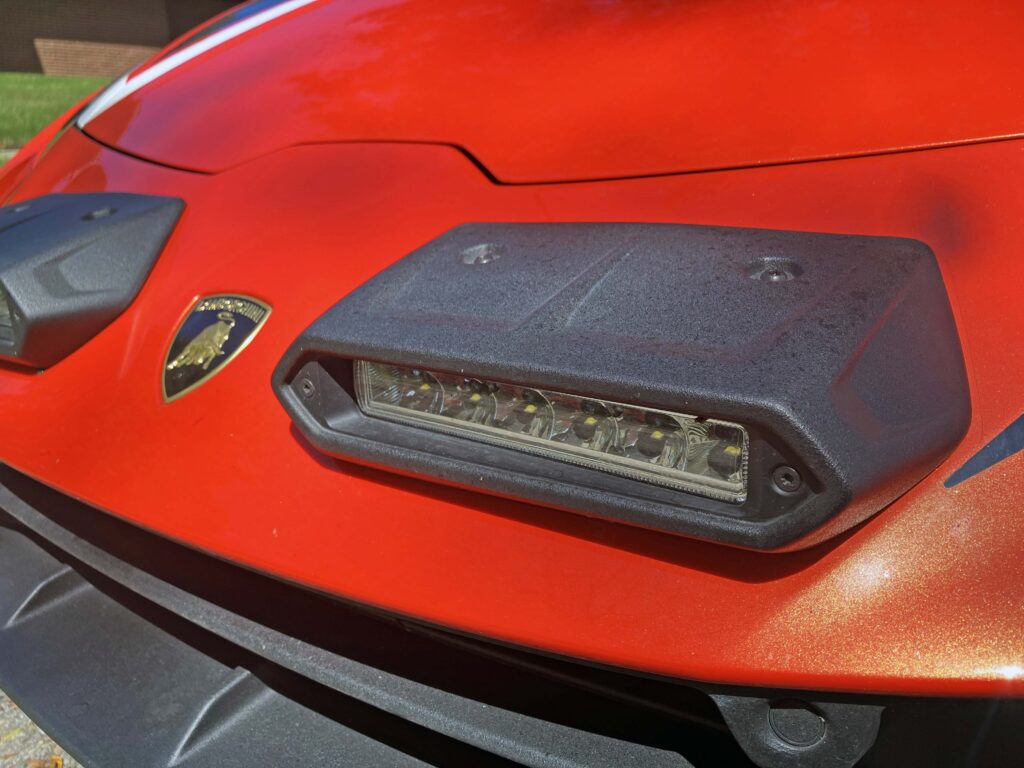
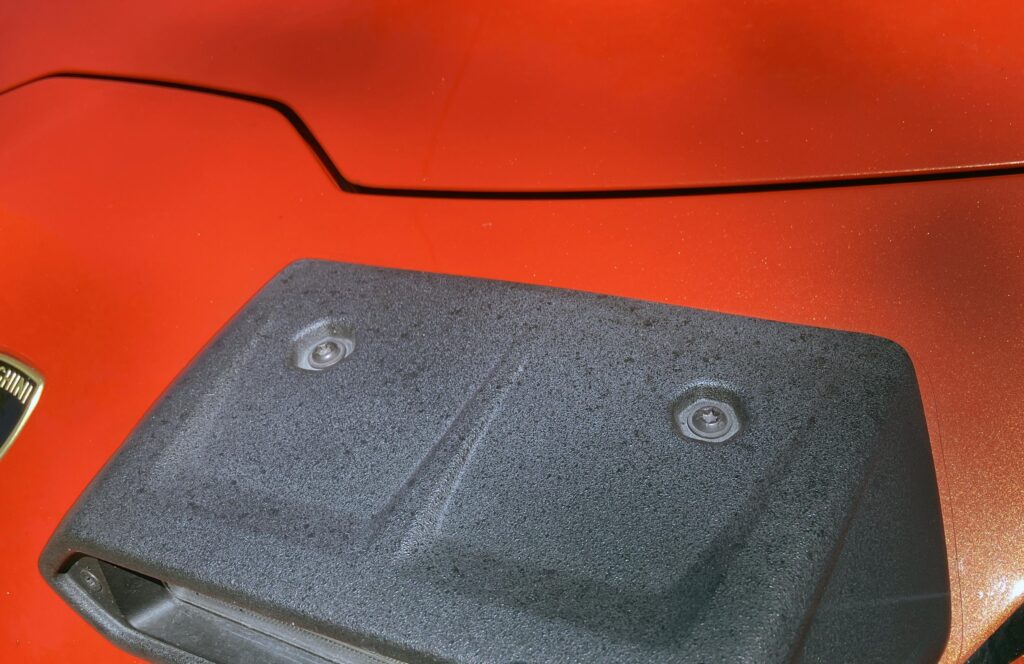
That integration matters because auxiliary lights are a natural fit for rally use, but they’re difficult to add to a low, sharply sculpted front end without making the car look modified after the fact. The Sterrato mostly avoids that problem. The black graphic between the headlight and driving light is less successful up close: it leaves a large gap beside the lamp, and a longer triangle might have tied the body shapes together more neatly. From farther away, the same mark points toward the light and follows the angle of its hexagonal form, so the imbalance is less obvious.
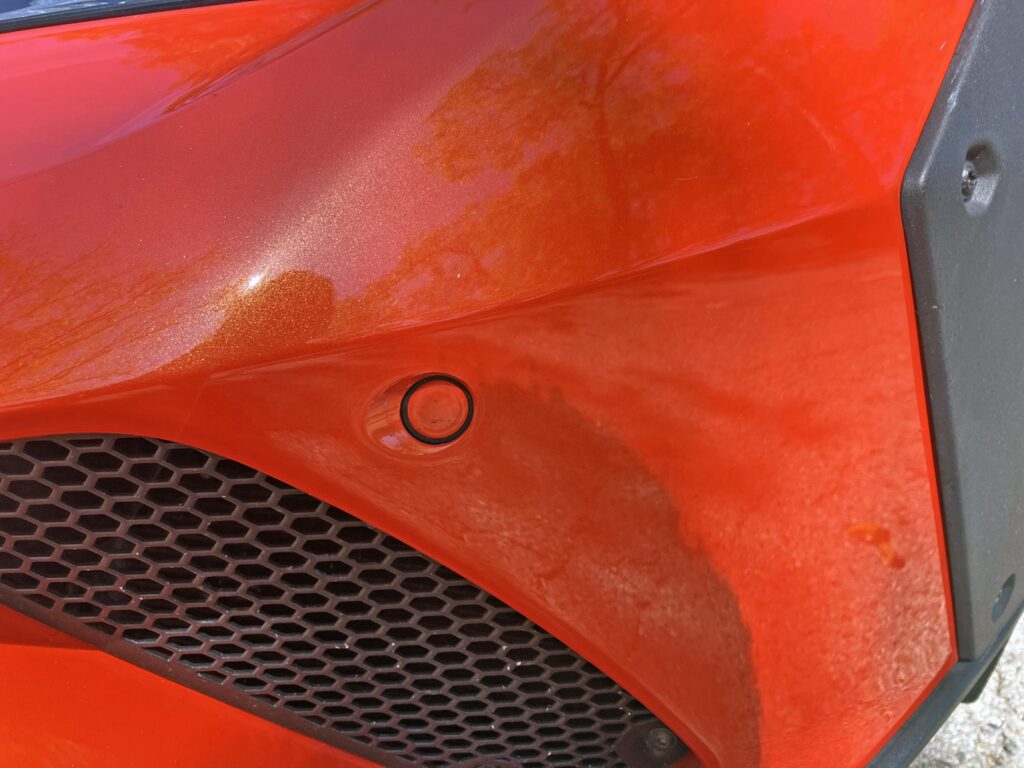
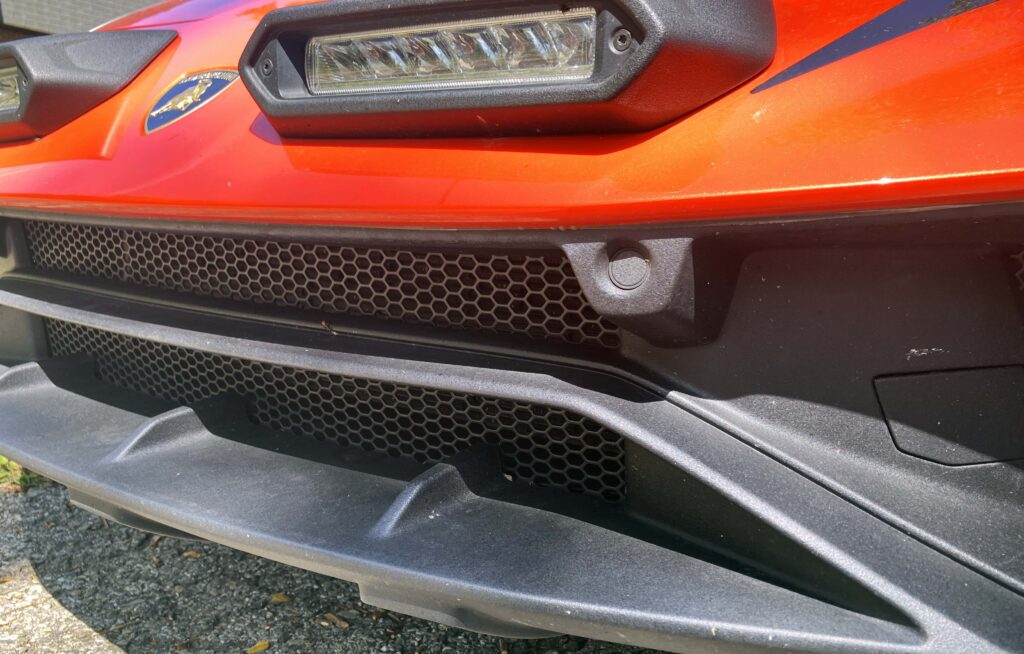
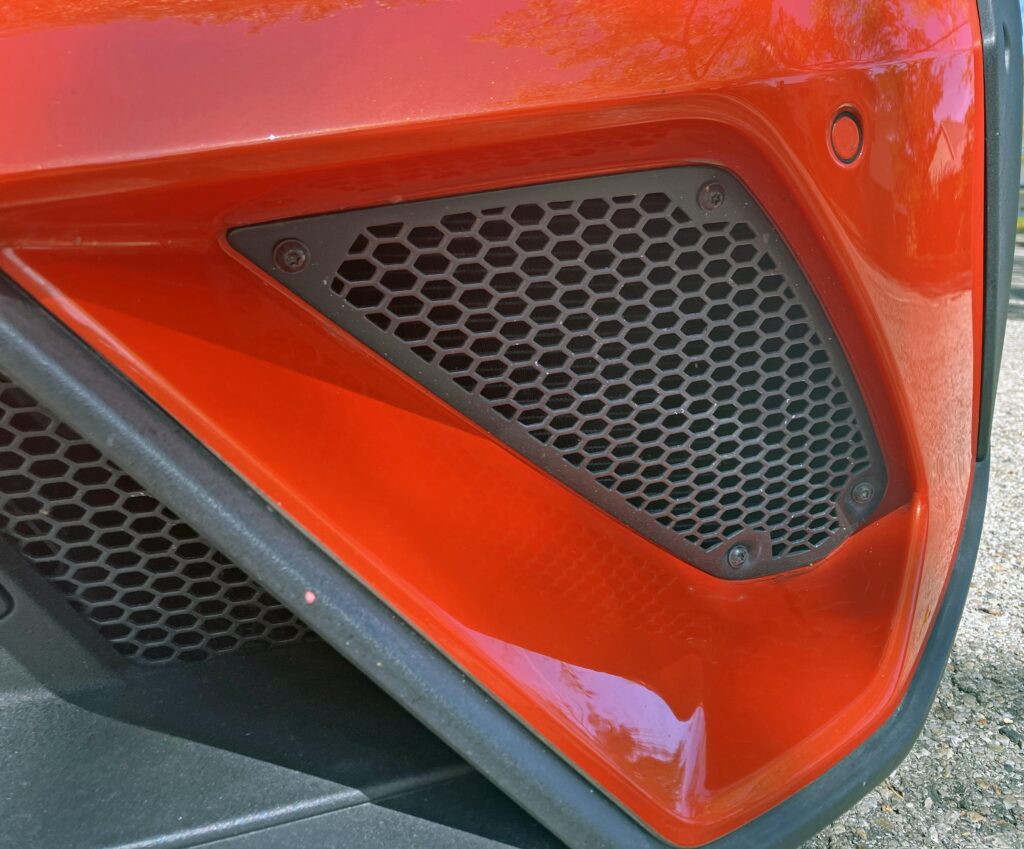
The front grille and lower valence take a cue from the practical end of the crossover market. Their black hexagonal mesh gives the Sterrato a tougher face than the regular Huracán’s more color-matched trim, and corner grilles with visible fasteners reinforce the impression that the parts can take a beating. Proximity sensors add a less cohesive note: the outer ones sit close to the body color and nearly flush, while forward-facing sensors stand out against black plastic.
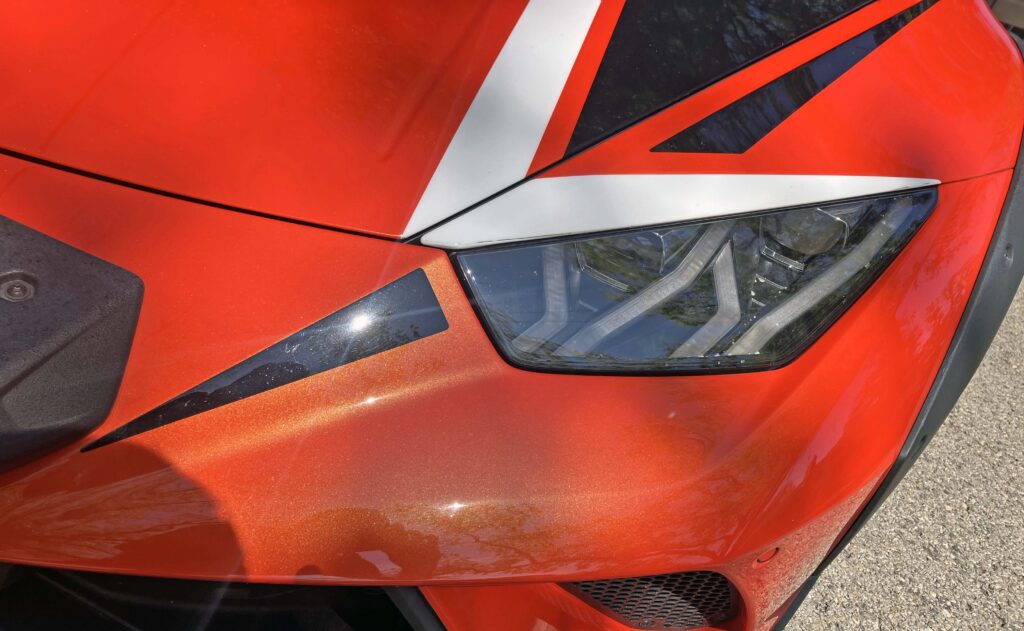
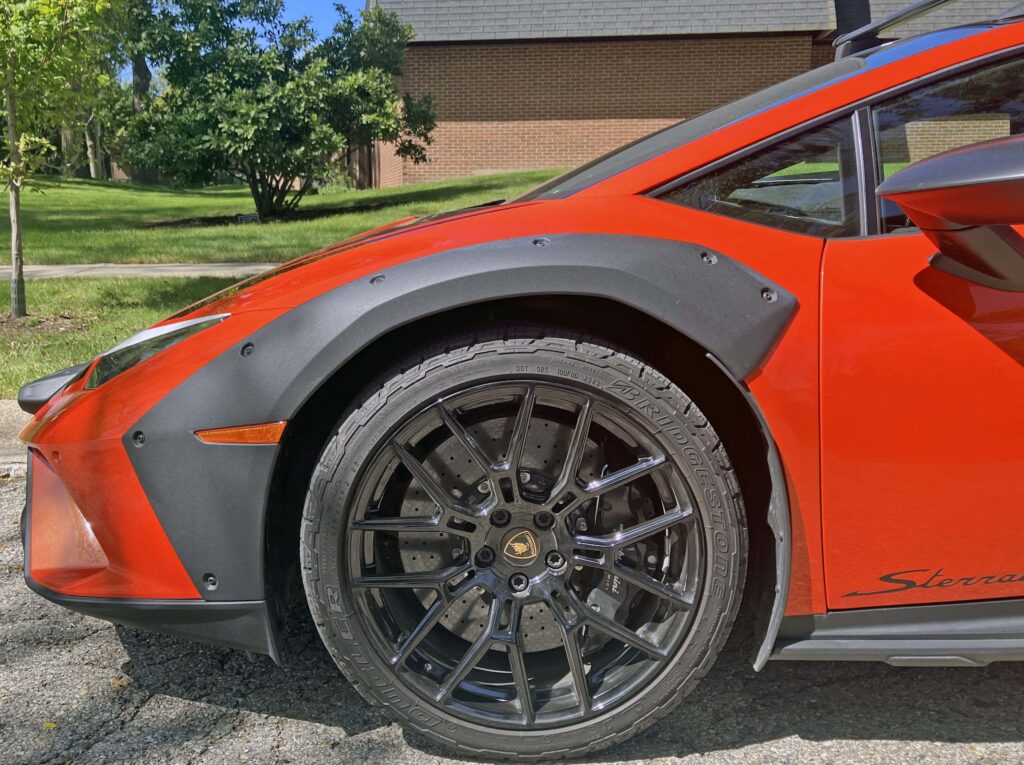
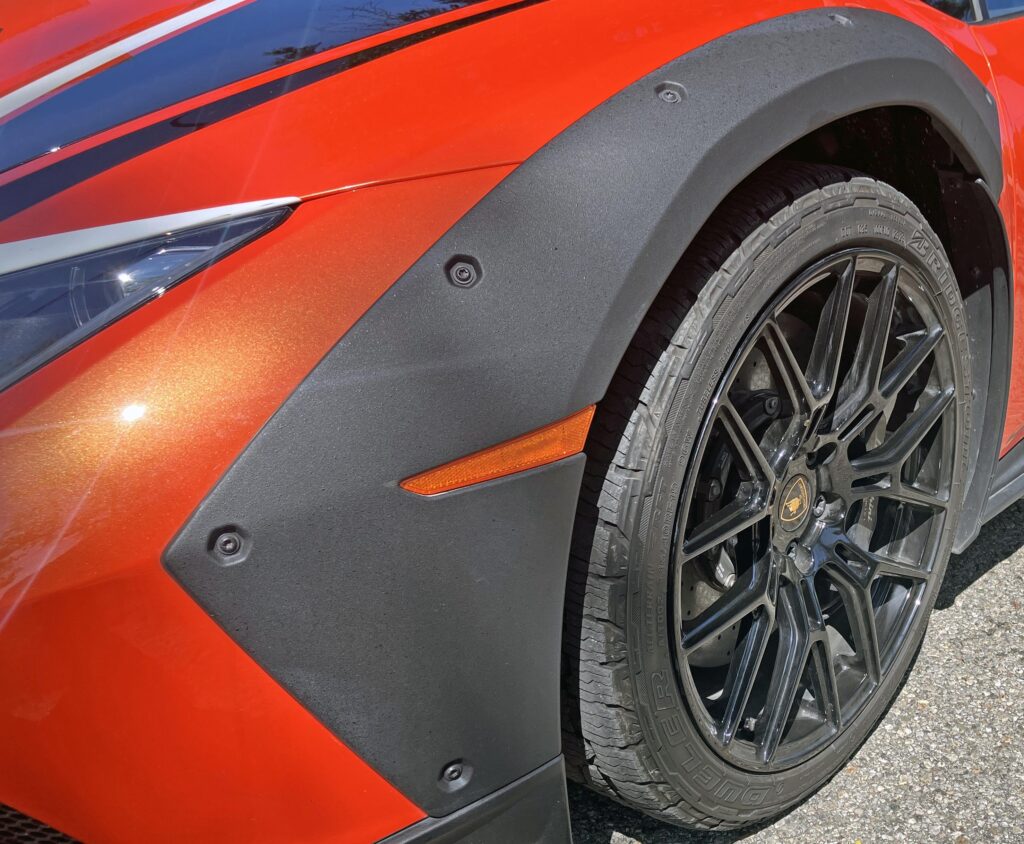
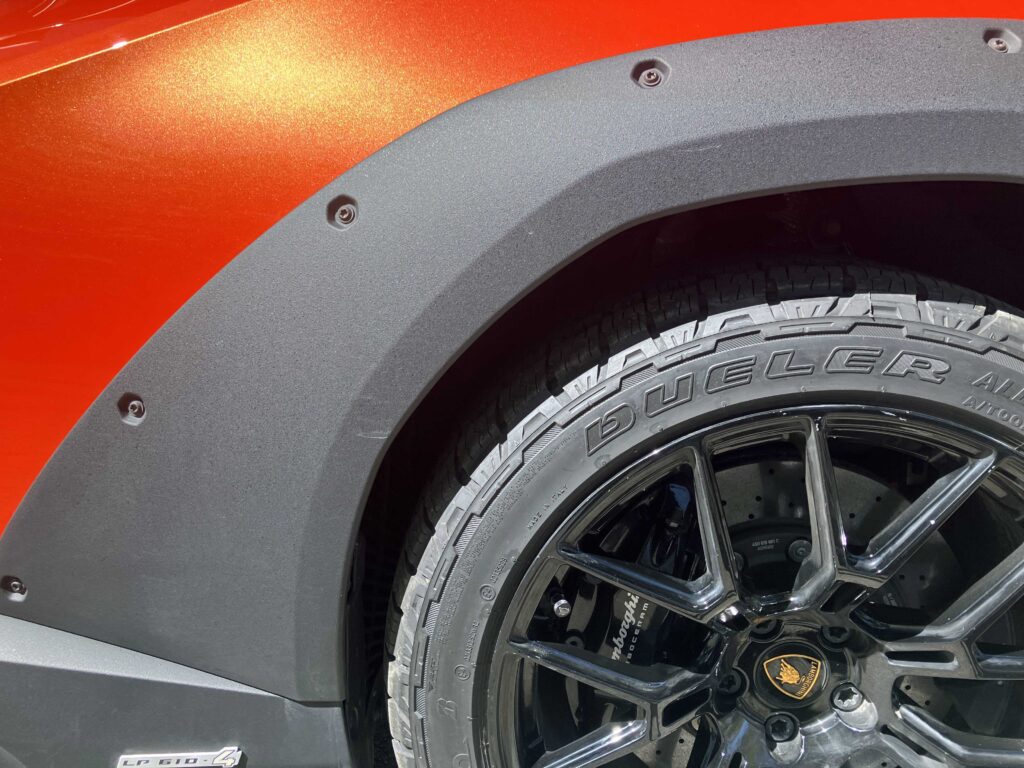
There’s room to debate the graphics, but the unfinished-looking plastic flares are the clearest declaration of intent. They’re a familiar off-road cue, seen on vehicles as different as the Subaru Outback, Chevrolet Avalanche and Jeep Wrangler. Here, the sharply cut edges keep them in step with the Sterrato’s aggressive nose. The screws are conspicuous, and may take some adjustment on a Lamborghini, but they help the car look equipped for a different job.

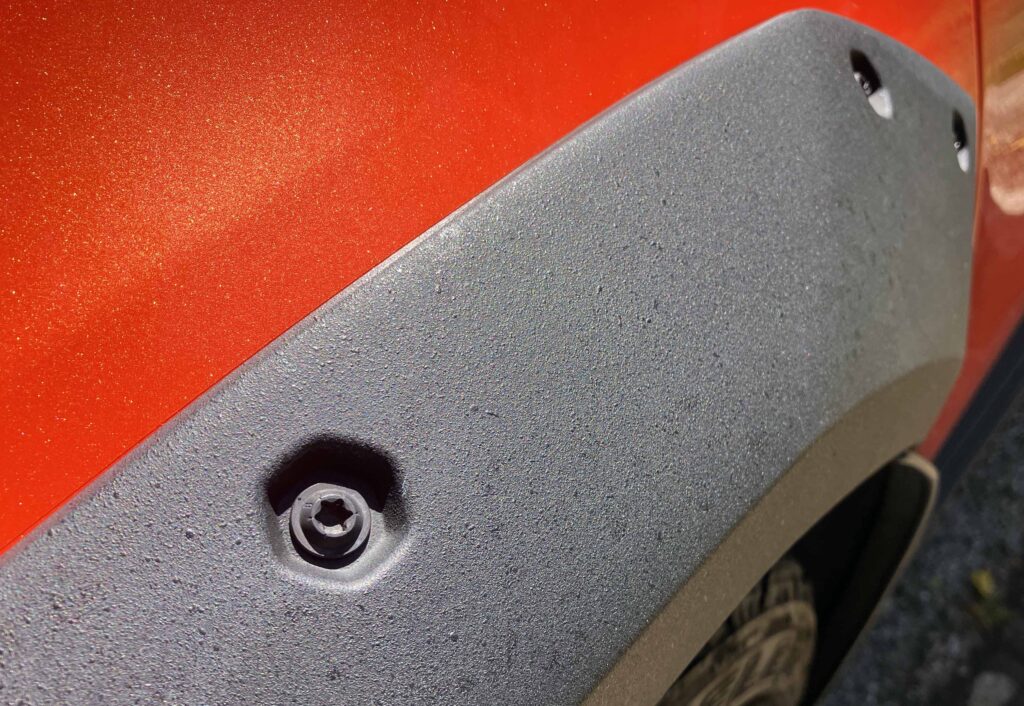
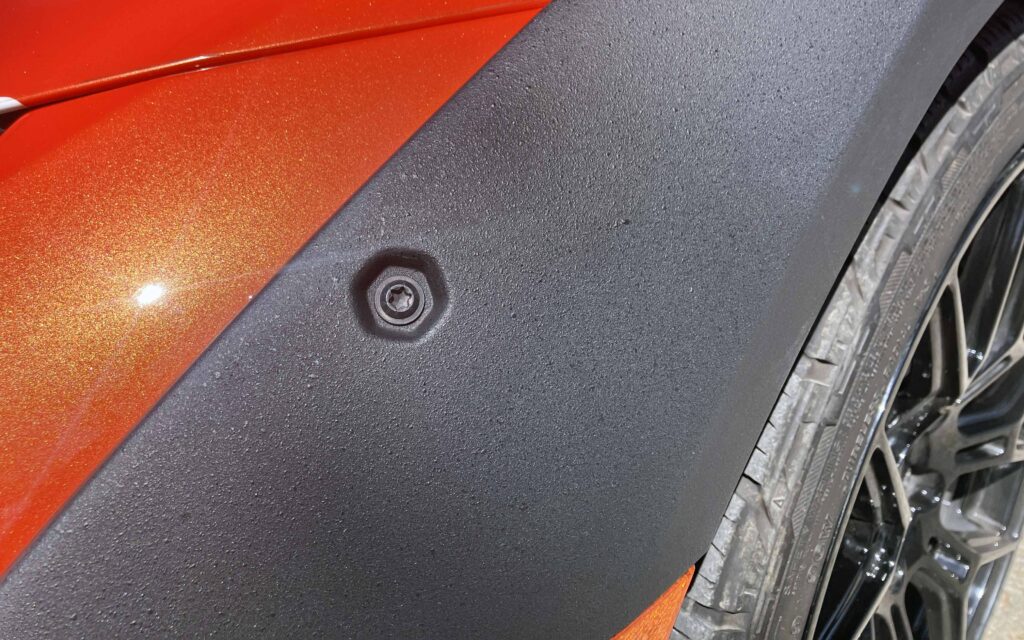
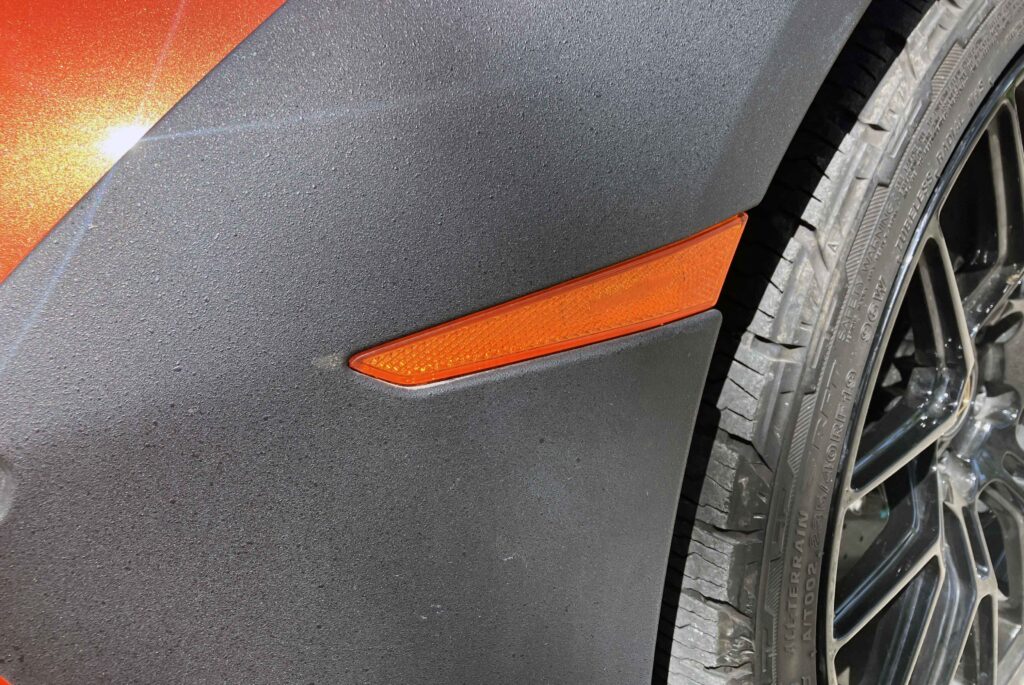
The standard Lamborghini side marker helps keep the flares connected to the rest of the range. Above them, graphics steer attention back to the driving lights and follow the hood-to-fender cut line. A crease in the fender carries the line beneath the A-pillar, linking the front hardware to the body side.
Practical proportions, exotic tensions
The hood’s shape, viewed from above, recalls the trapezoidal geometry of the original Lamborghini Countach LP400. At its base, the windshield sits above a rounded cowl, but the hood doesn’t follow that curve. The contrast gives the front a distinctive shape, even if the broad area of dark glass leaves less painted surface than earlier Lamborghinis displayed.
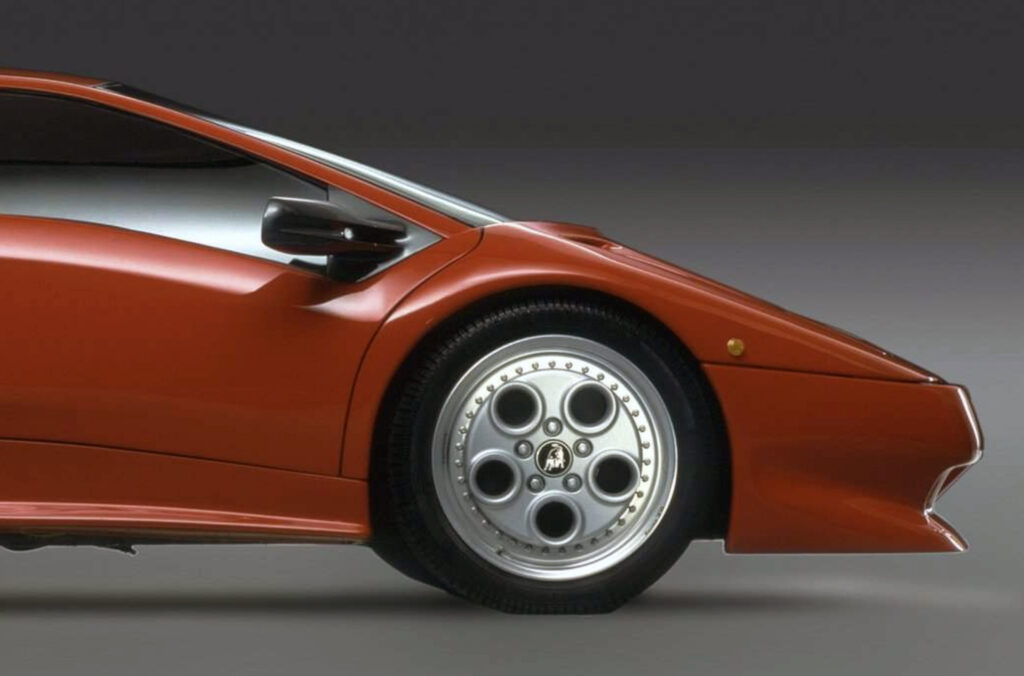
Modern Lamborghinis give the cabin more room, and the Sterrato’s larger greenhouse is part of that change. Older models, from the Countach through the Murciélago, could make the hood and windshield read as one long line. The Huracán has a more distinct windshield, a substantial fender and a fixed glass panel between the door and windshield. That arrangement appears to make the cabin easier to enter, but the extra glass and slower body lines soften the dramatic, single-sweep look associated with those earlier cars.
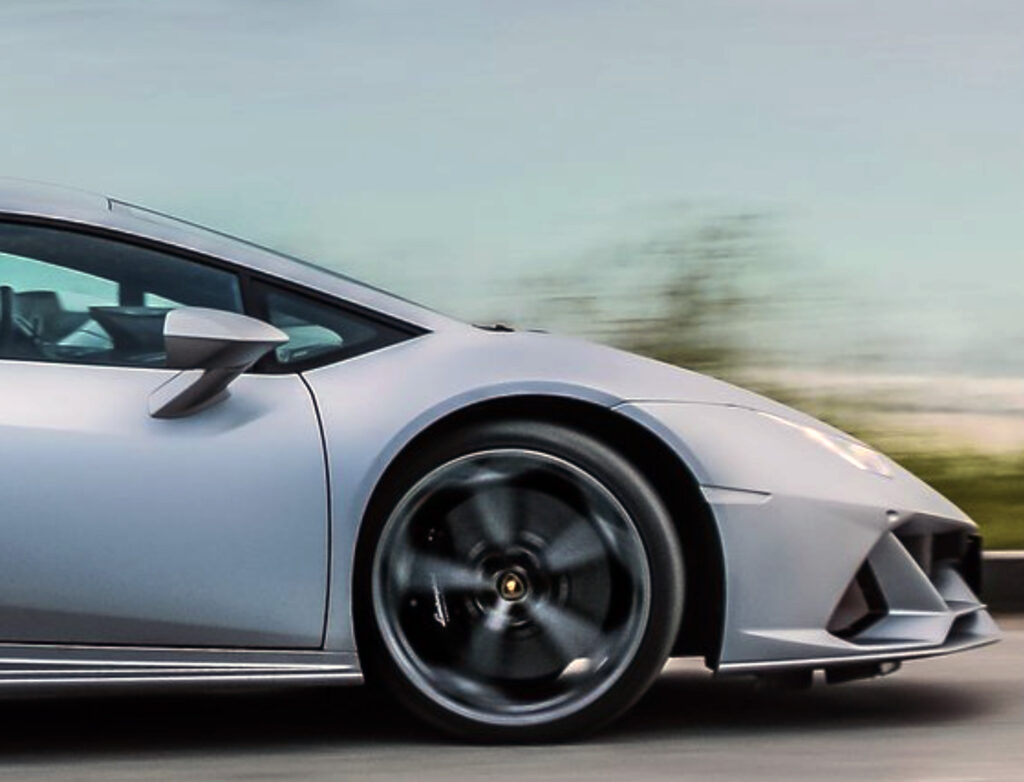
The fixed front window and broad greenhouse can make the Huracán look cab-forward, a quality more often associated with space-conscious transport. A mid-engine layout already places the cabin well forward, and the additional glass around the A-pillar adds visual bulk. The door and fender cut lines also look more accommodating than the difficult, low-slung openings of older exotics. That’s a practical gain for getting in and out; stylistically, it gives the Sterrato a less uncompromising character.
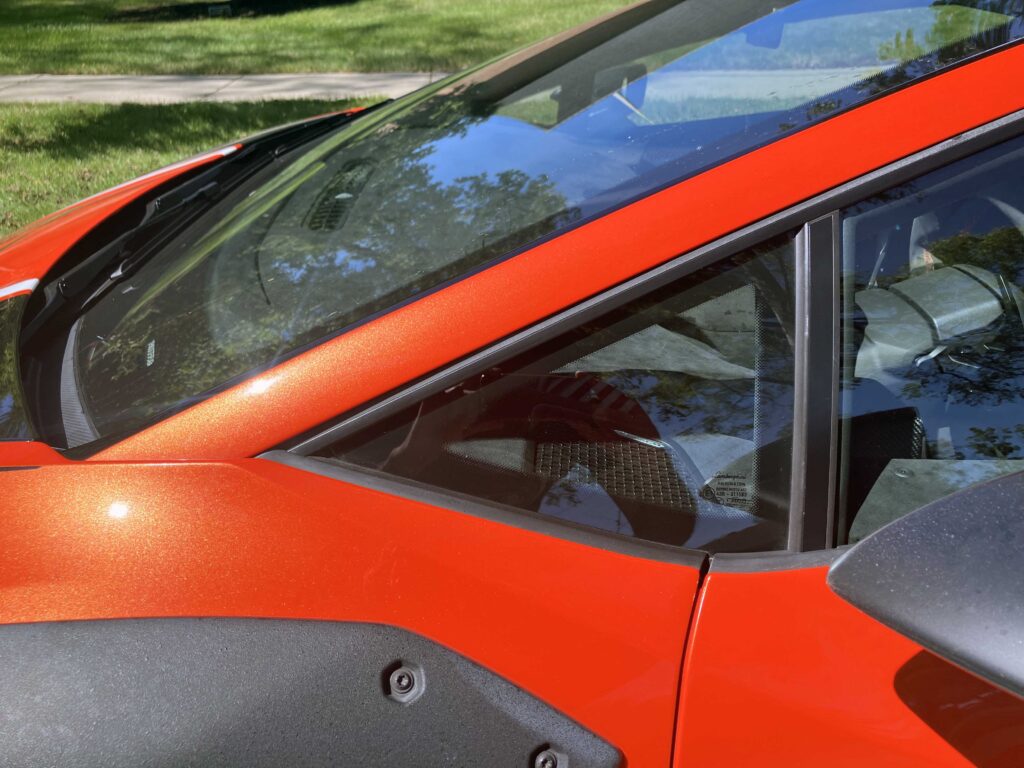
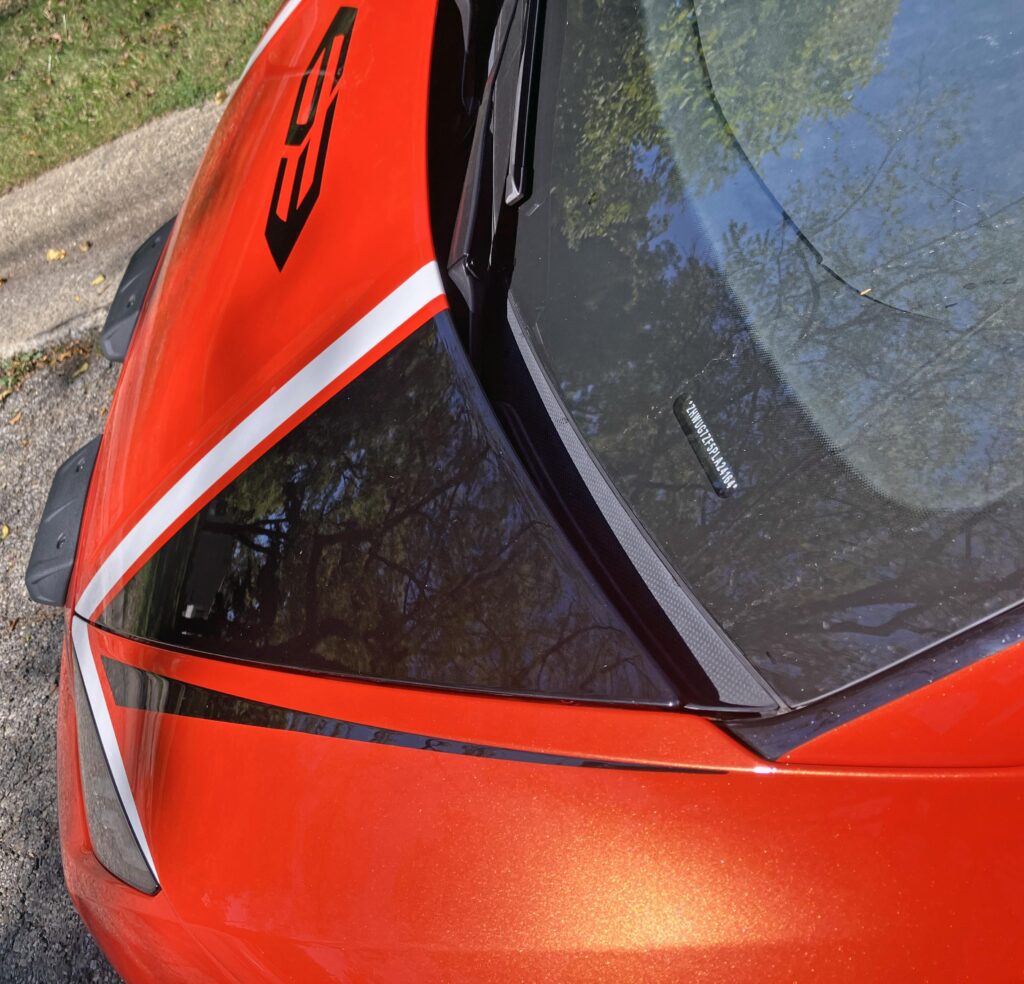
Here’s the thing: the same proportions work better on the Sterrato than on a road-focused Huracán. Its lift, cladding, all-terrain tires and roof rack make the tall glass feel more at home. The roof rack doesn’t appear to blunt the car’s forward motion in profile, and the fixed lights are shaped into the front bodywork with more care than their exposed mounts initially suggest.
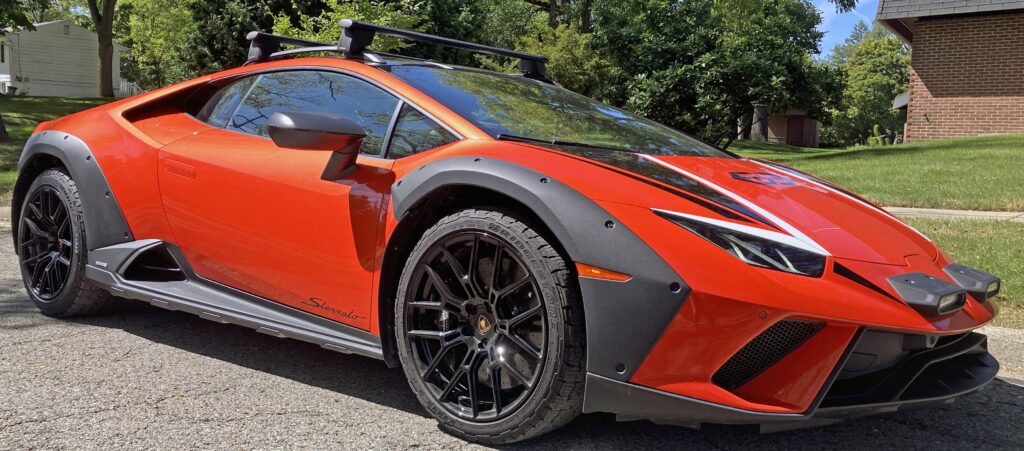
The all-terrain tires are among the Sterrato’s most persuasive details. Their substantial sidewalls look more forgiving than the low-profile rubber on a typical exotic, while their tread suits the car’s rough-road brief. The Y-spoke wheels still follow familiar performance-car fashion: a deeply set hub and slender spokes. The combination gives the car a wheel package that looks ready to work without losing its connection to the Huracán.
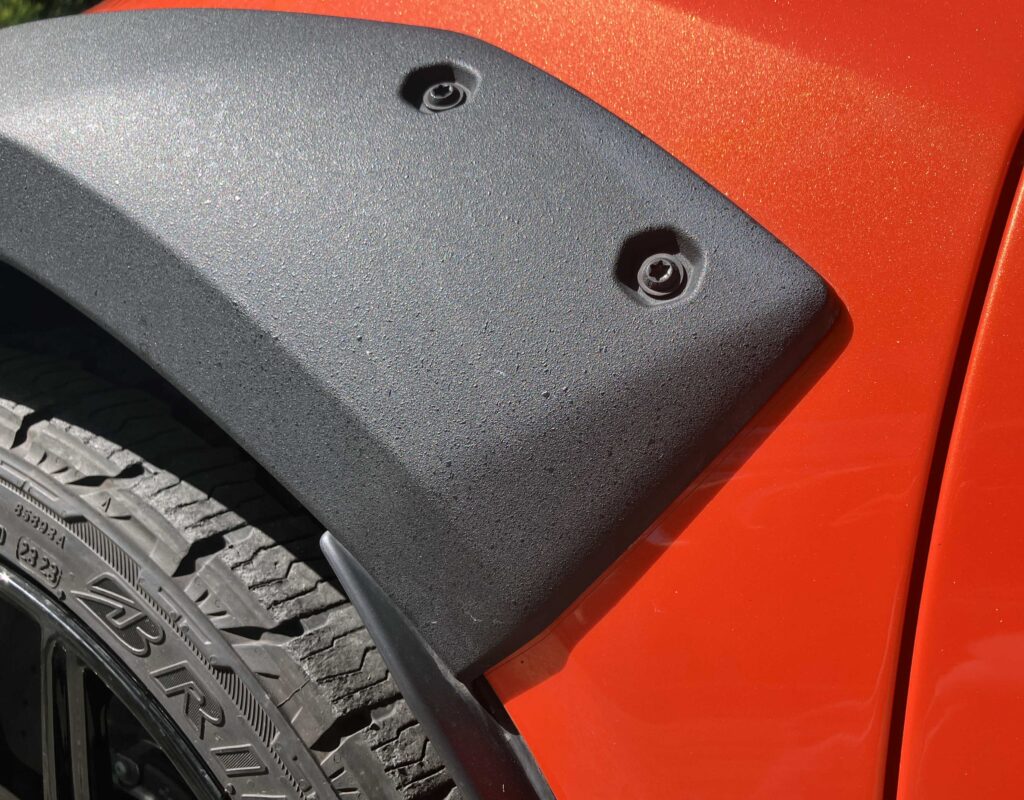

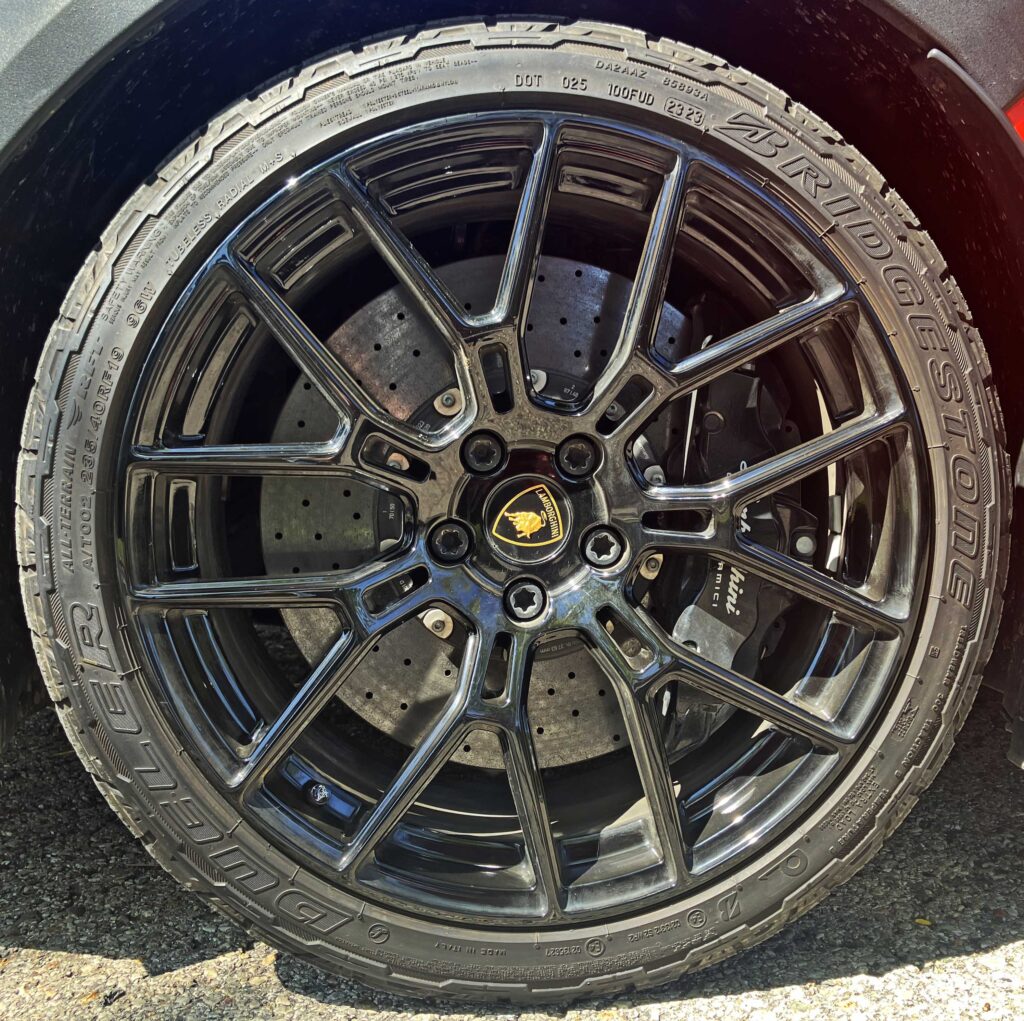
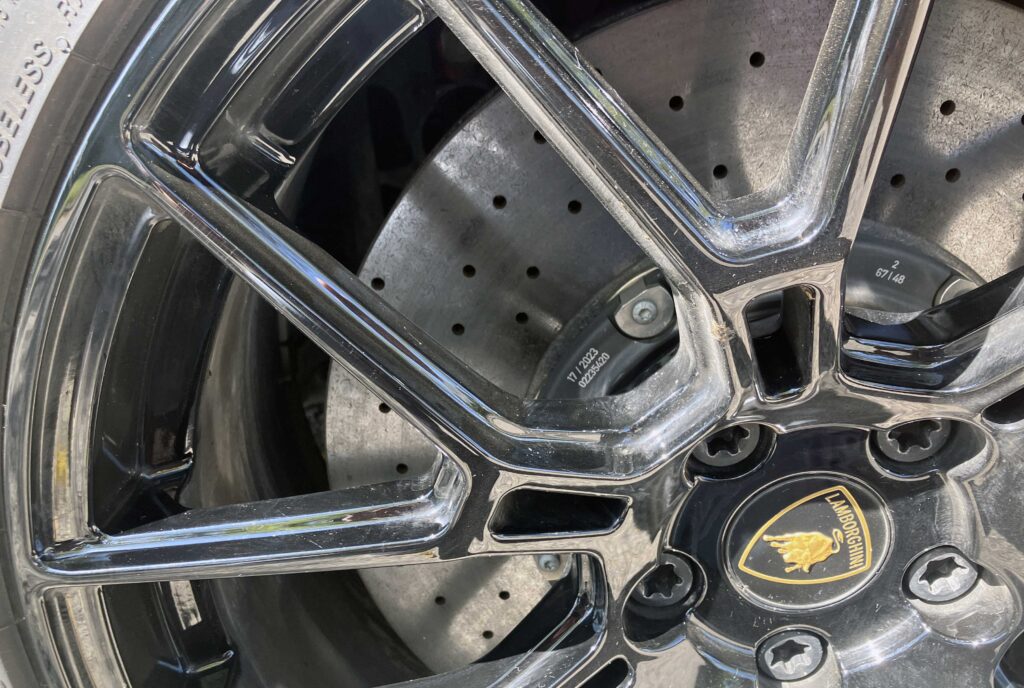
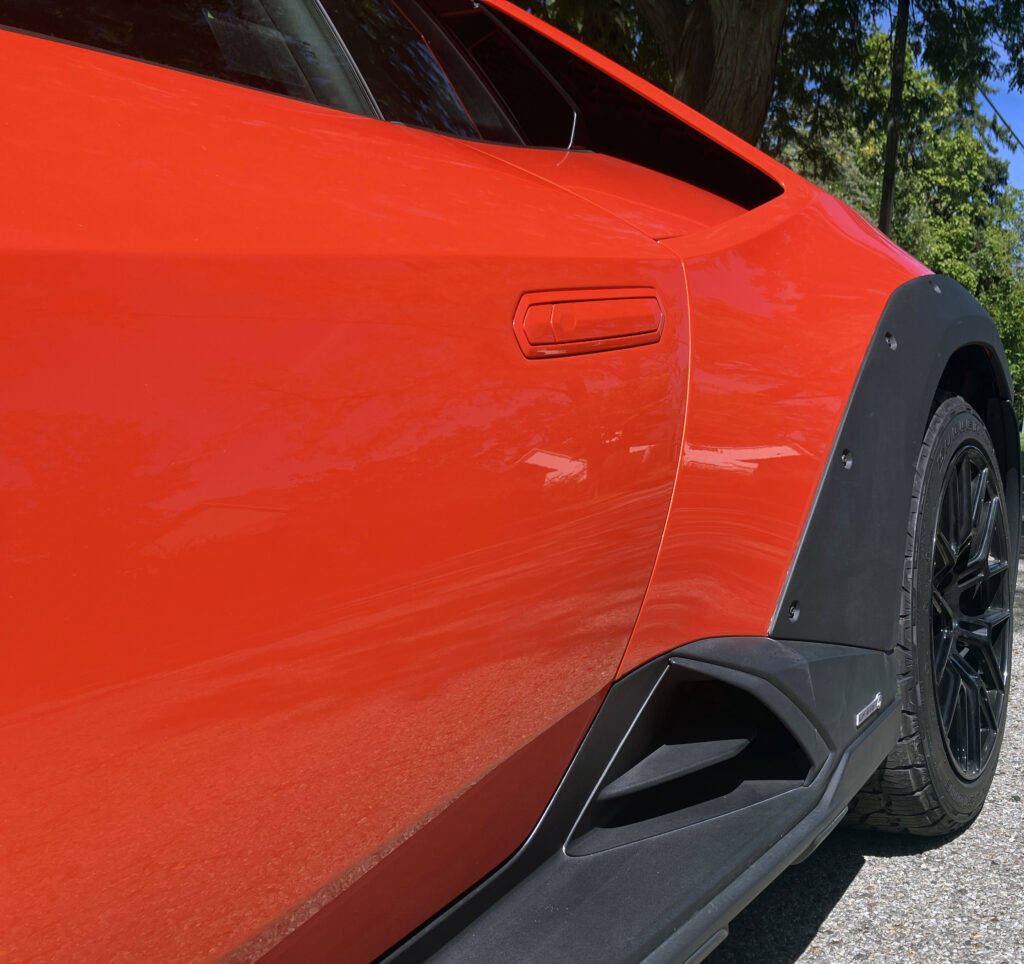
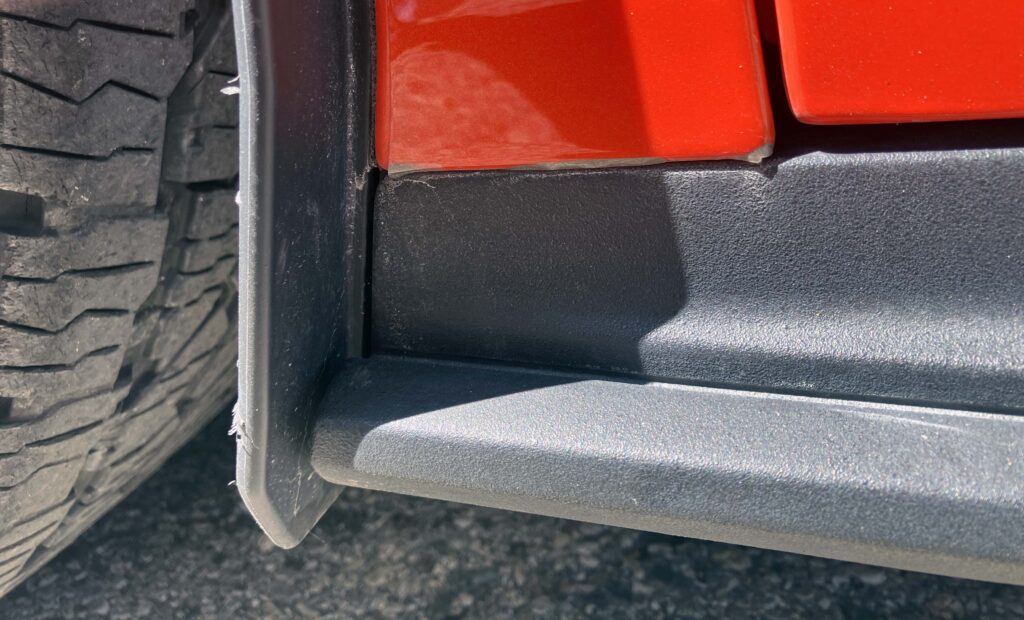
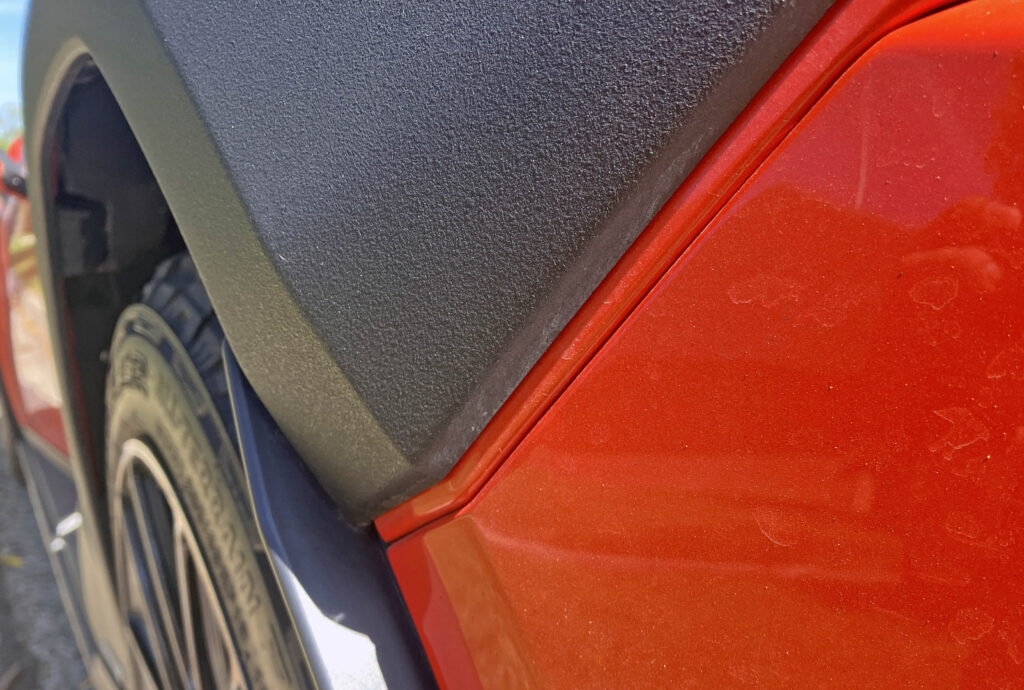
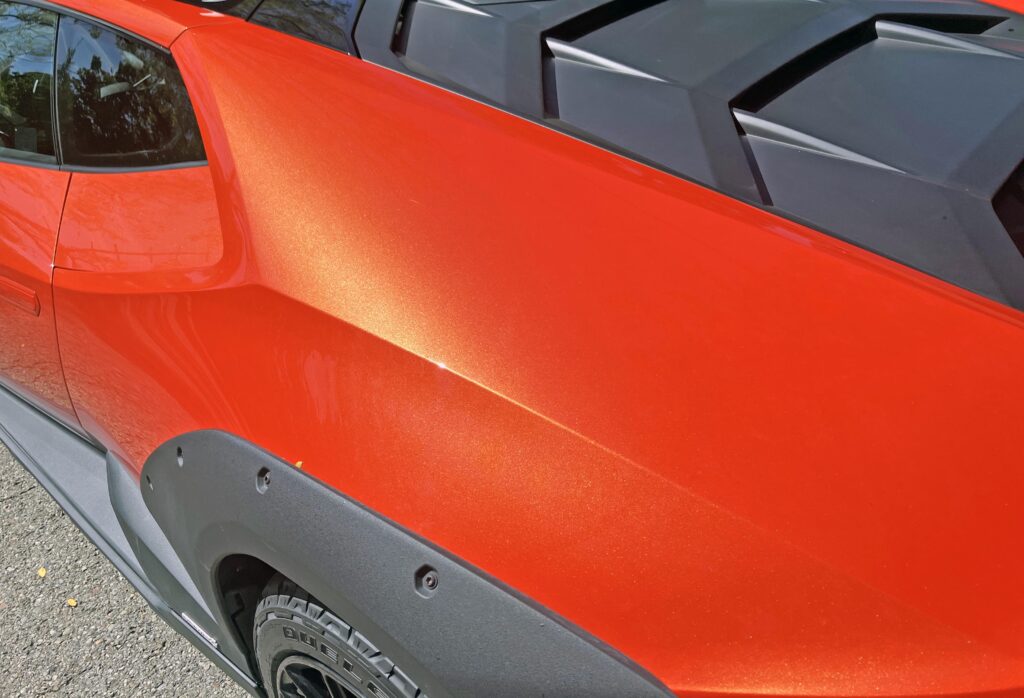
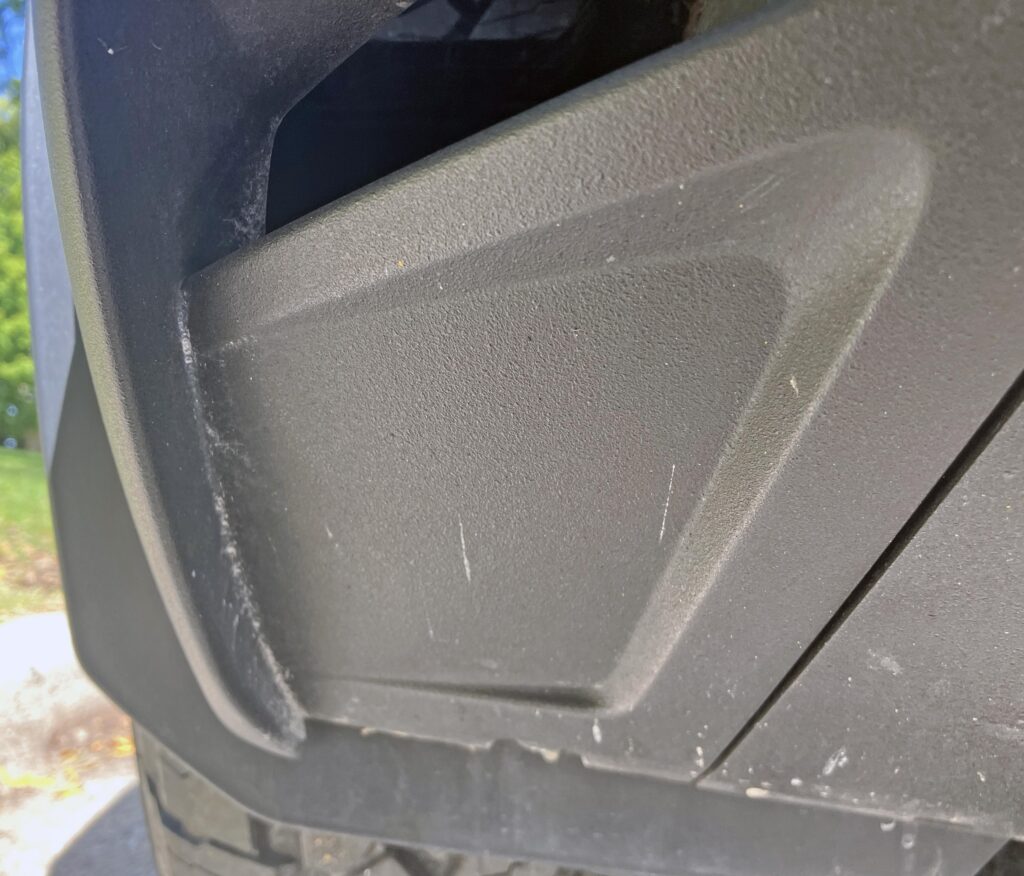
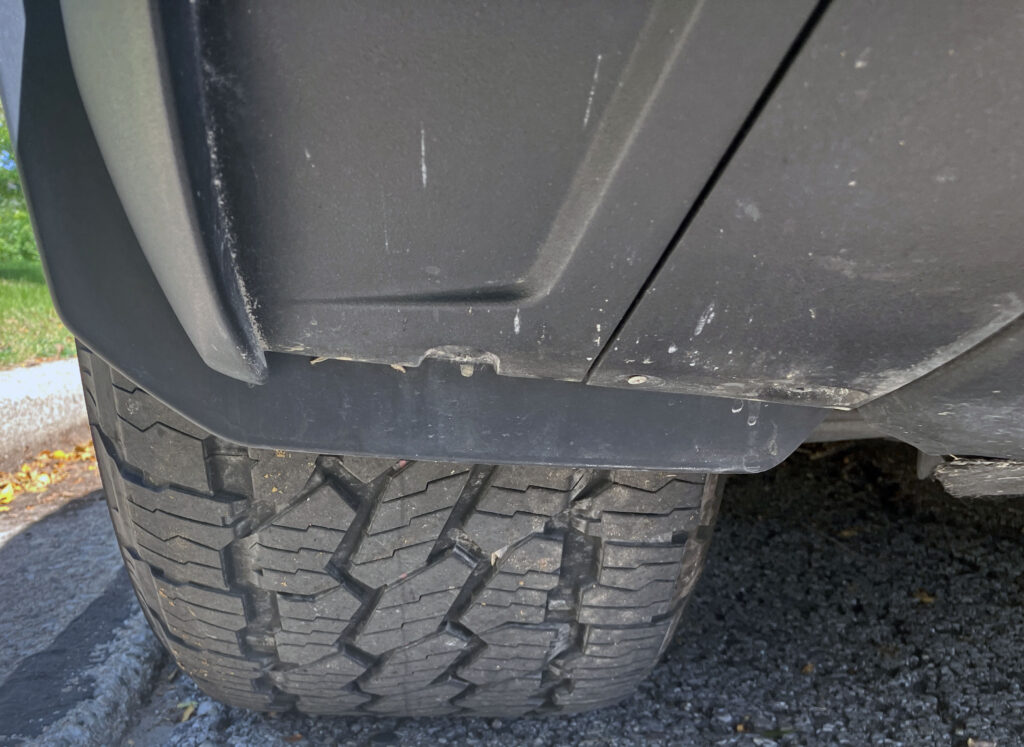
The side details are less consistent. The front flare follows the aggressive bumper, but the rear portion stops abruptly at the driver’s door. Its fasteners are prominent, and the join between the flare, fender and mudflap looks unresolved. The short arch is especially noticeable because the Sterrato’s other elements work so hard to appear purposeful.
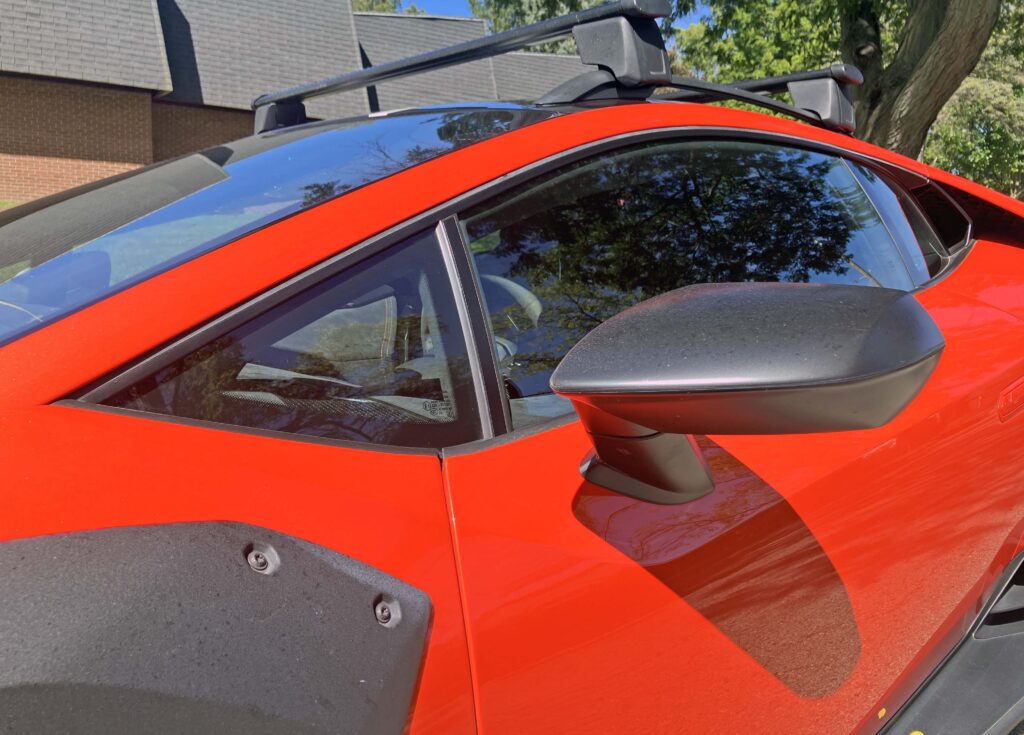
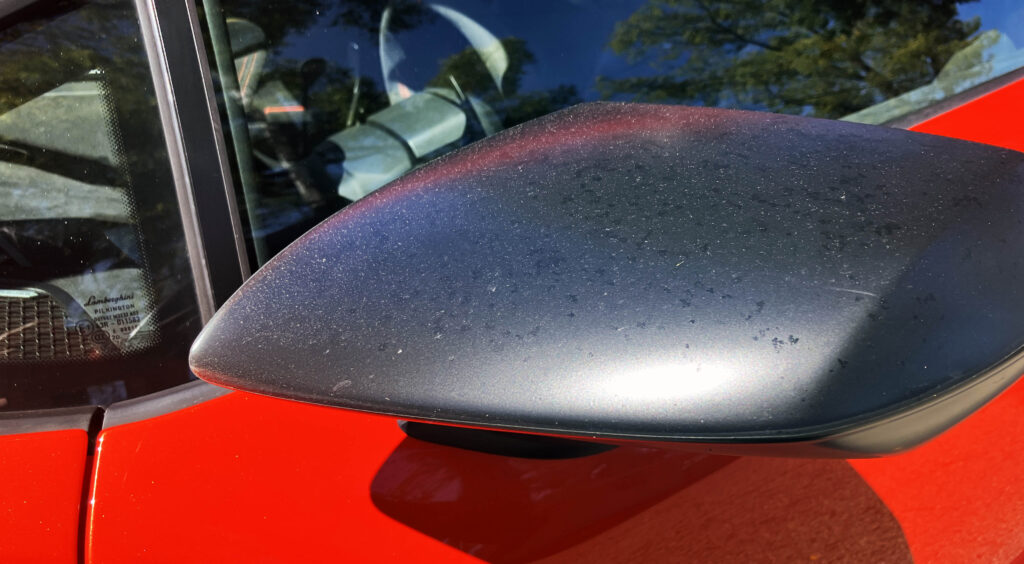
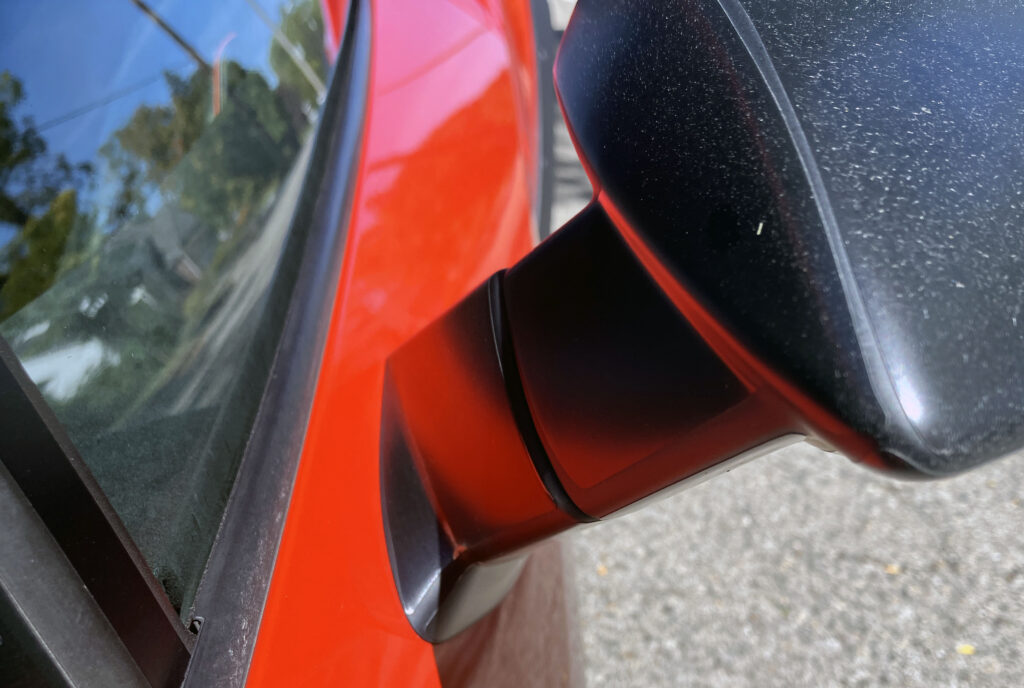
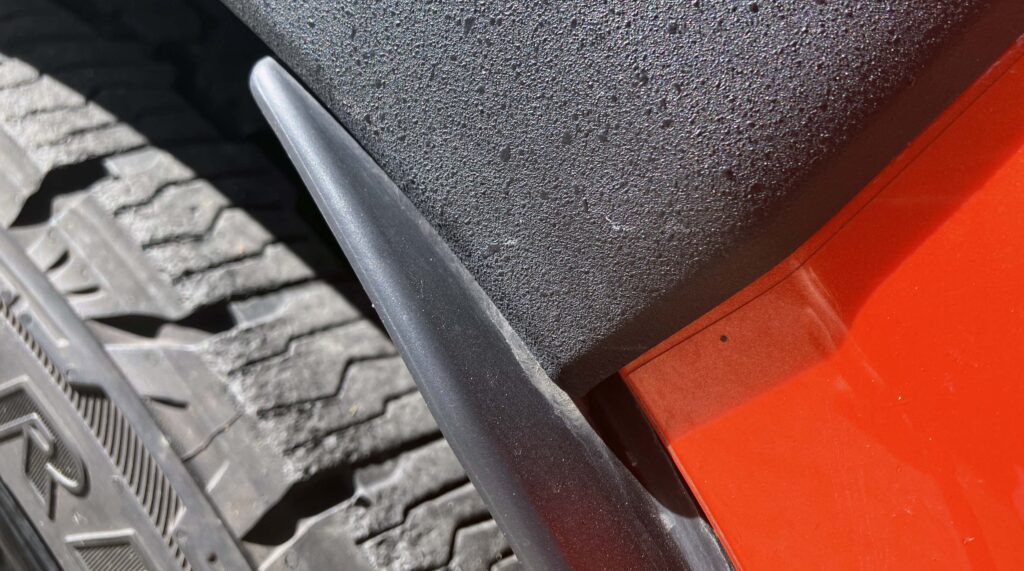
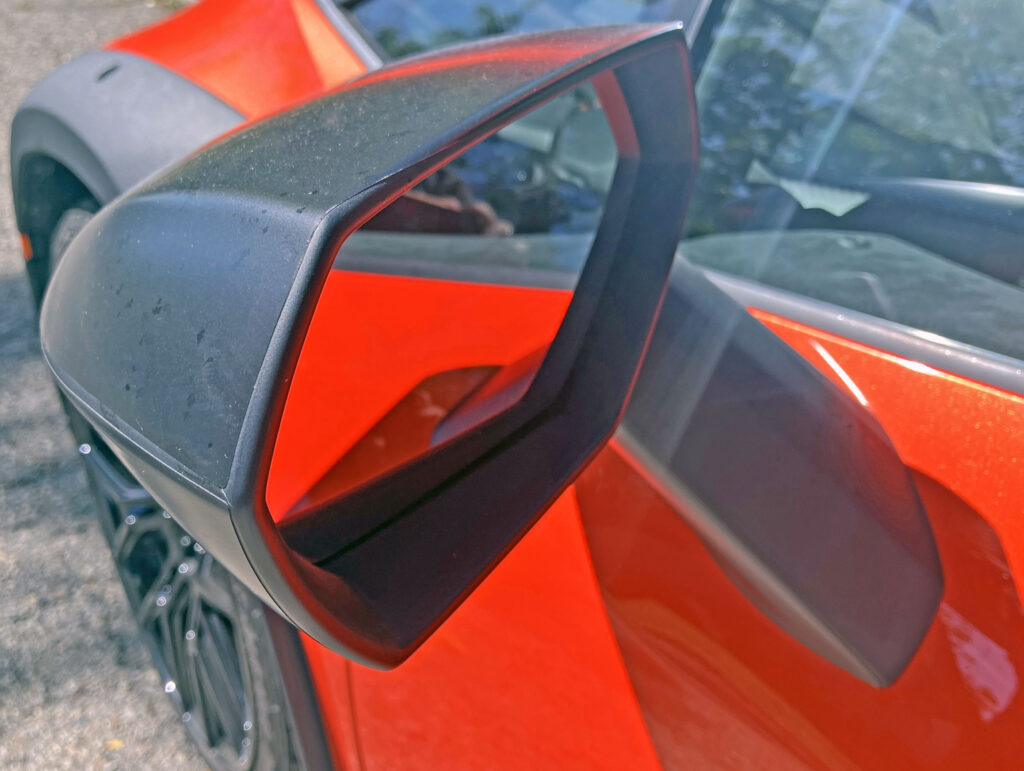
The mirror is a stronger piece. Its pointed outline matches the glass and body creases, while its hexagonal form gives it a distinct Lamborghini identity in a part that many cars render as a generic wedge. The front window still makes the greenhouse look static, and the bulky flare exaggerates that effect, but the mirror shows how a small detail can reinforce the brand’s design language.
The cab shape sits beneath a fast A-pillar and a pronounced C-pillar buttress. The fixed window adds a quiet, almost static shape between them. Yet the extra mass is less conspicuous with the Sterrato’s higher stance and rough-road details. The car’s proportions feel deliberate as a package, even if some of its individual lines remain awkward.
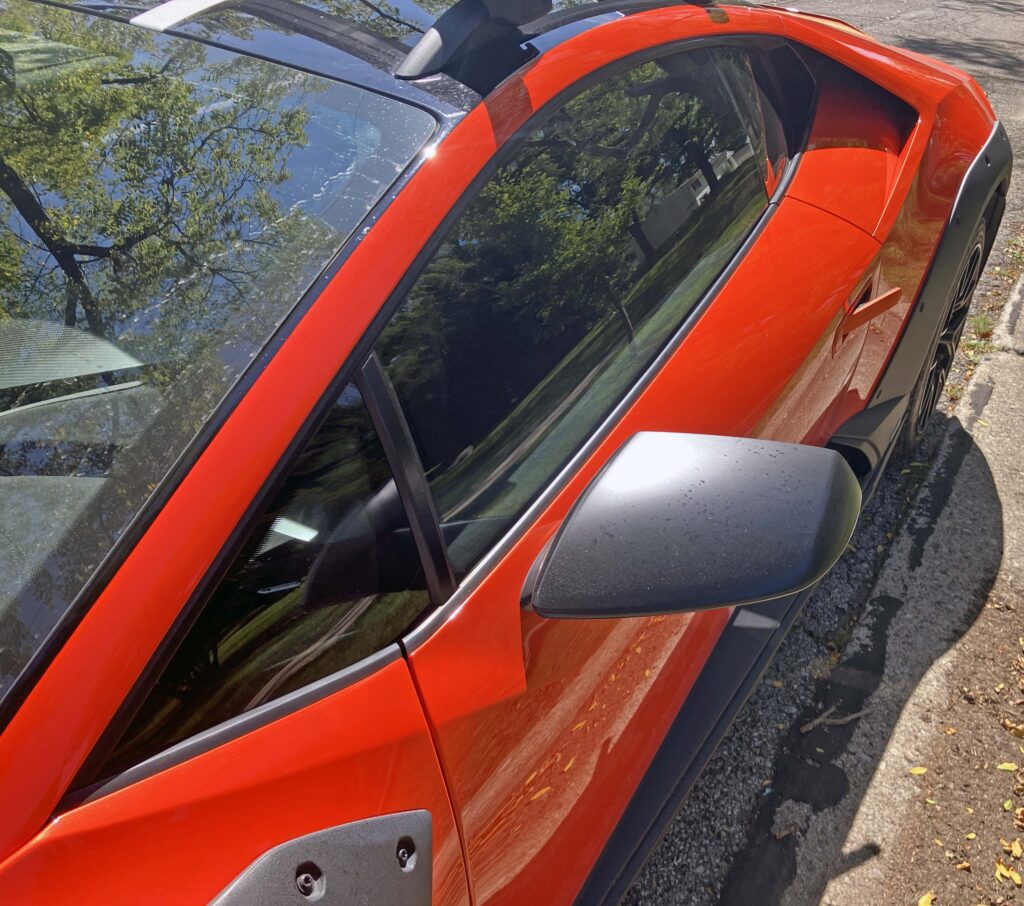
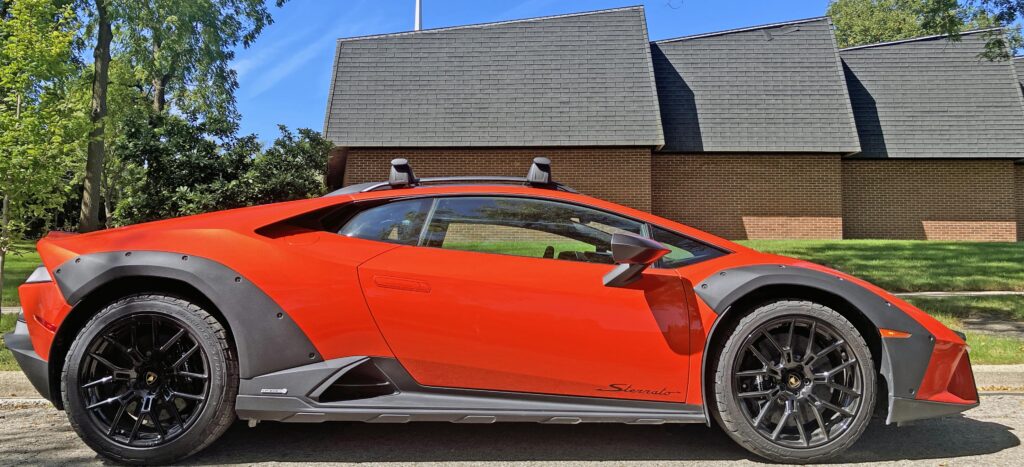
The Sterrato uses the Volkswagen Group Modular Sports System Platform, and the modern Huracán’s more accommodating cabin is part of that underlying package. Its side glass, black cladding and pointed daylight opening are a complicated combination. The cut-off at the front arch looks especially abrupt; a termination aligned with the subtle crease above the door handle might have been calmer.
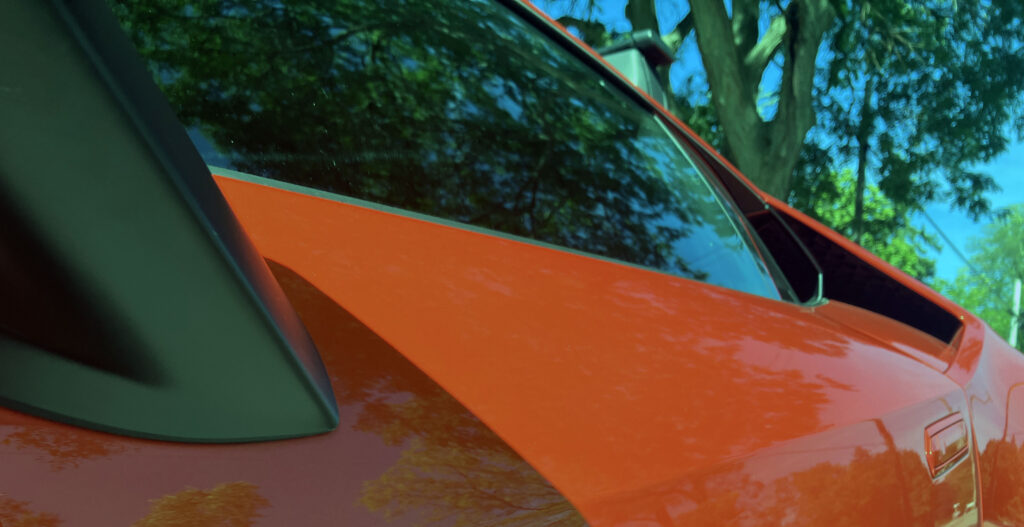
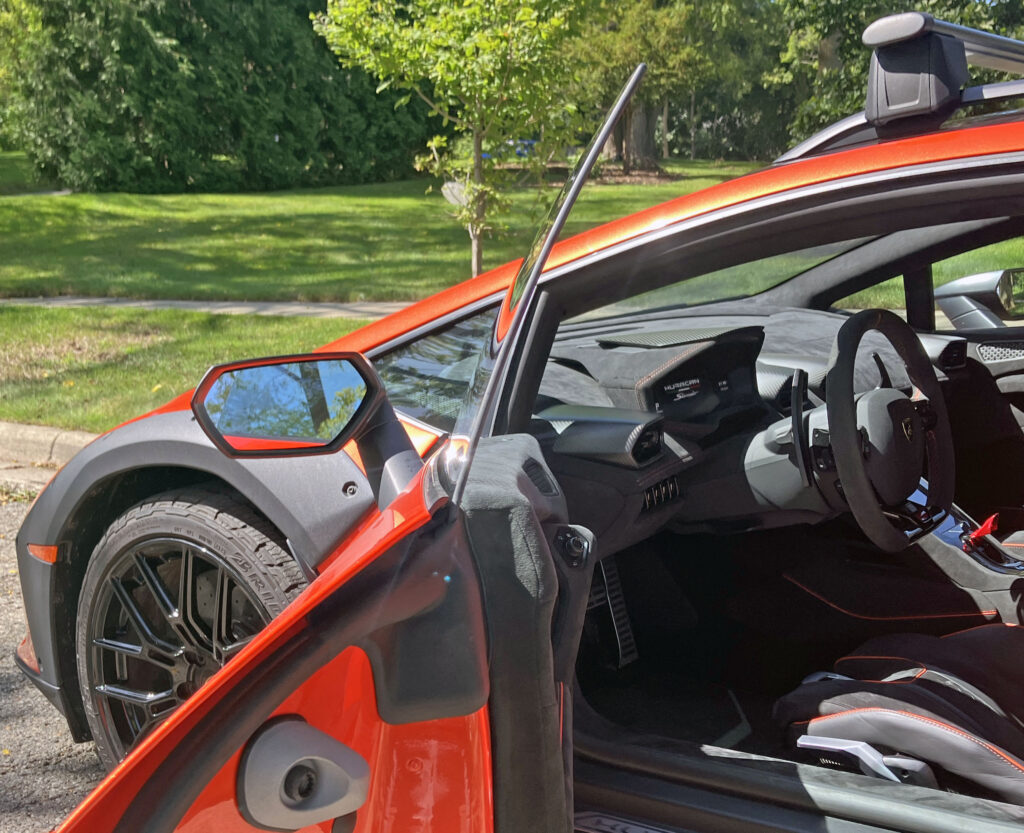
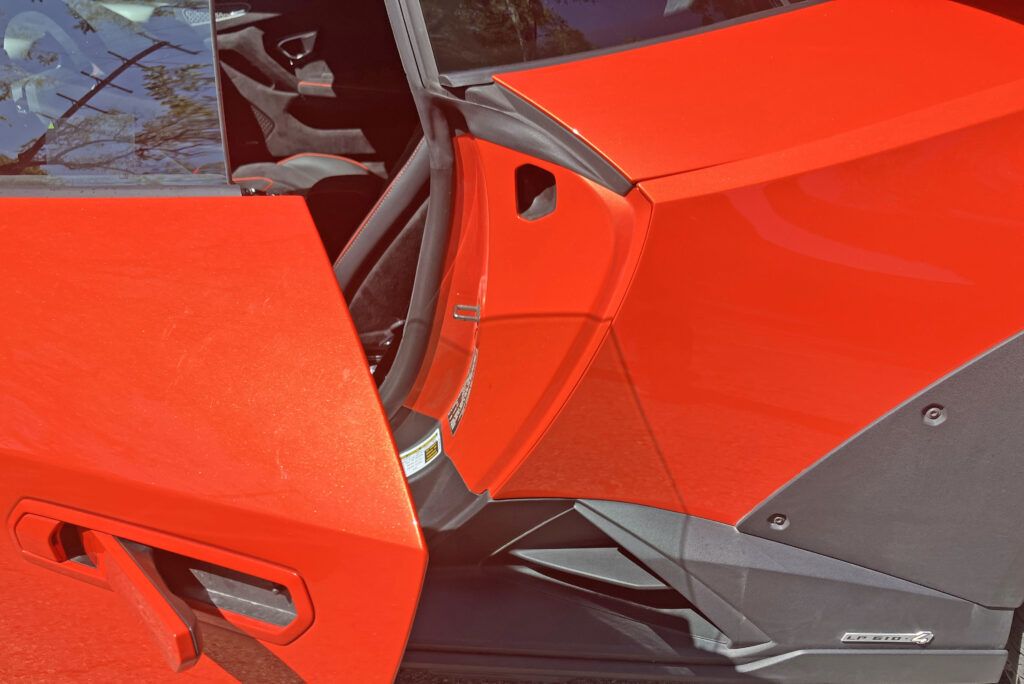
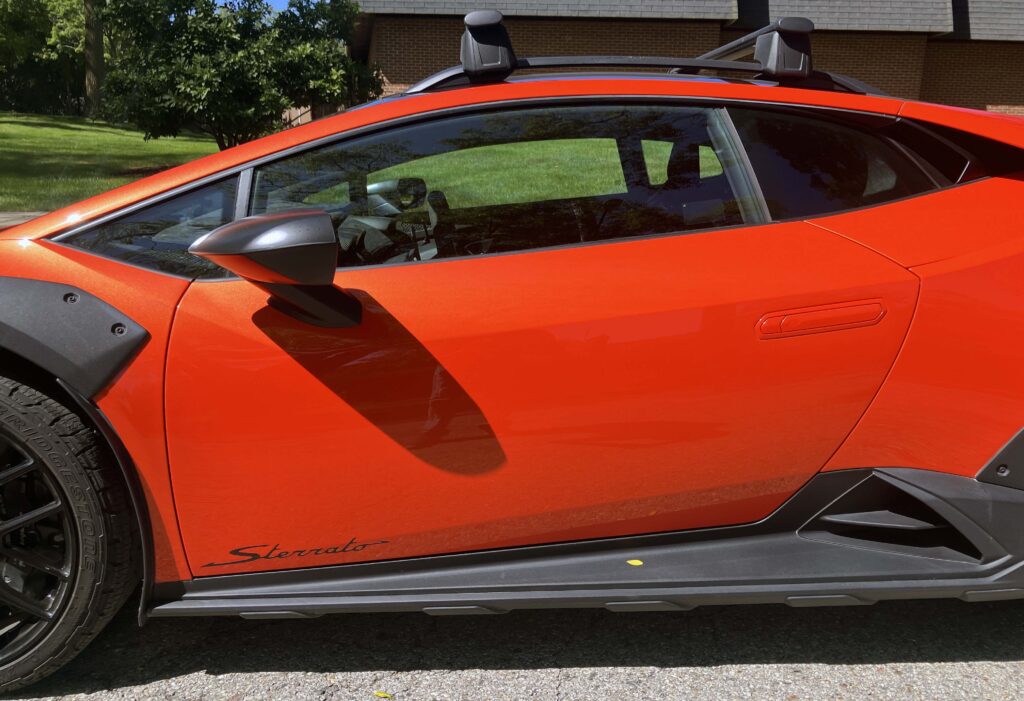
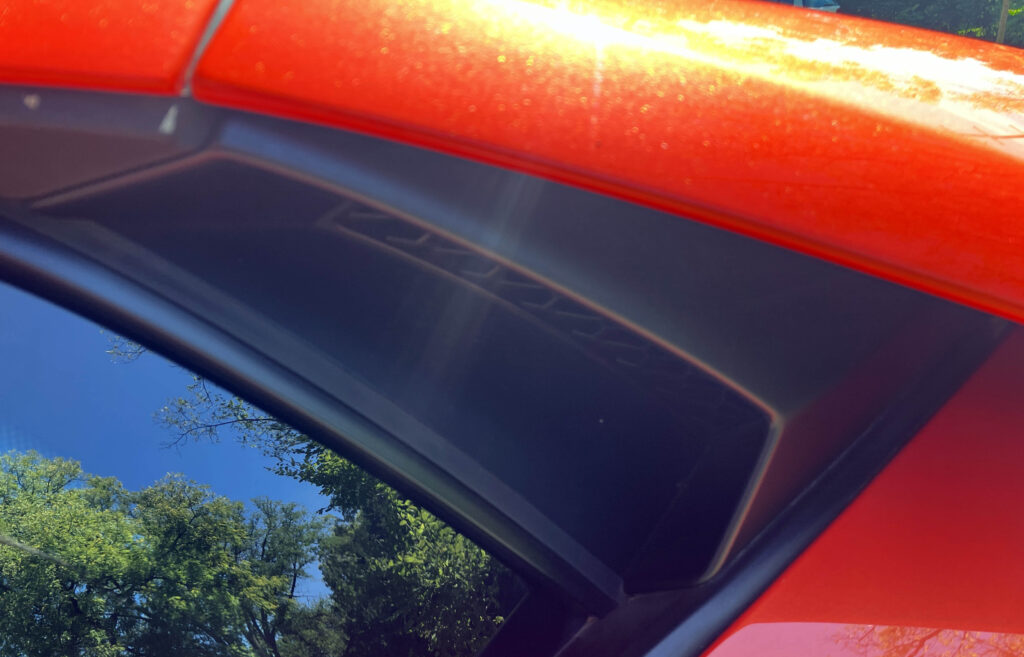
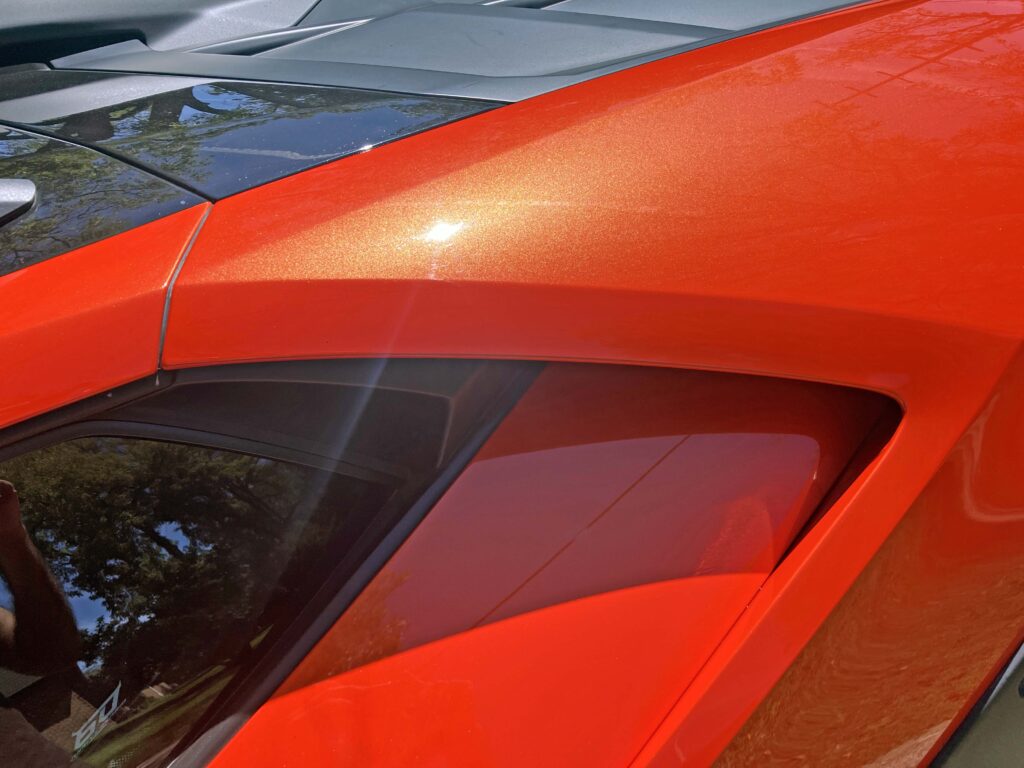
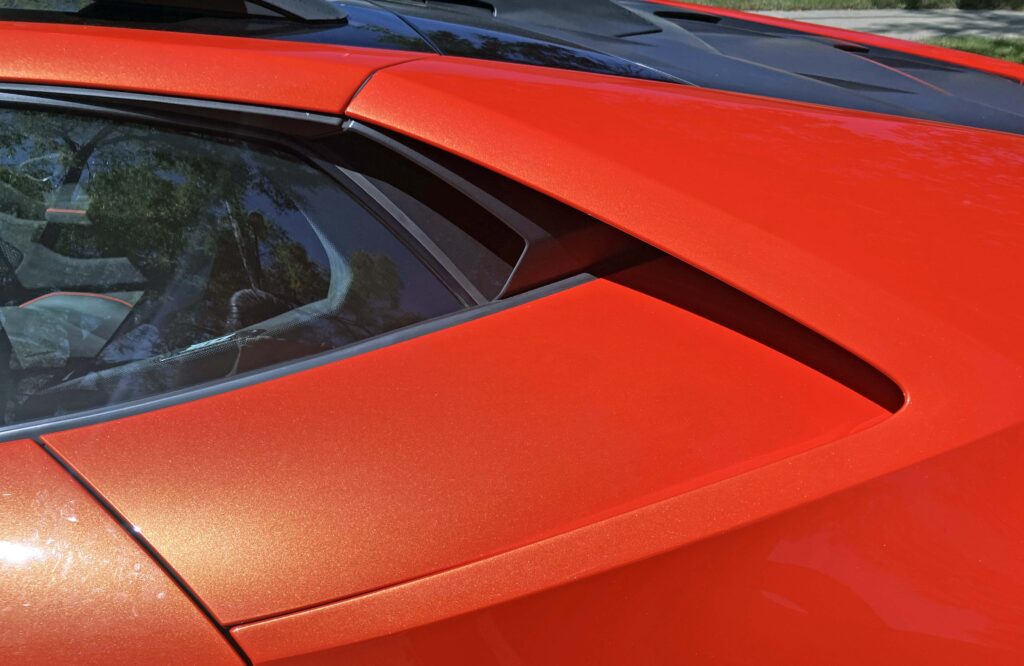
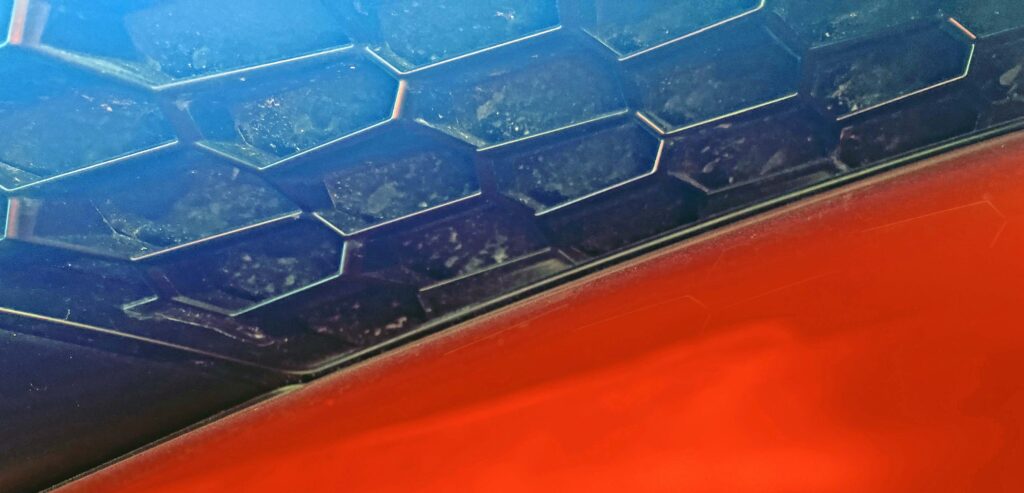
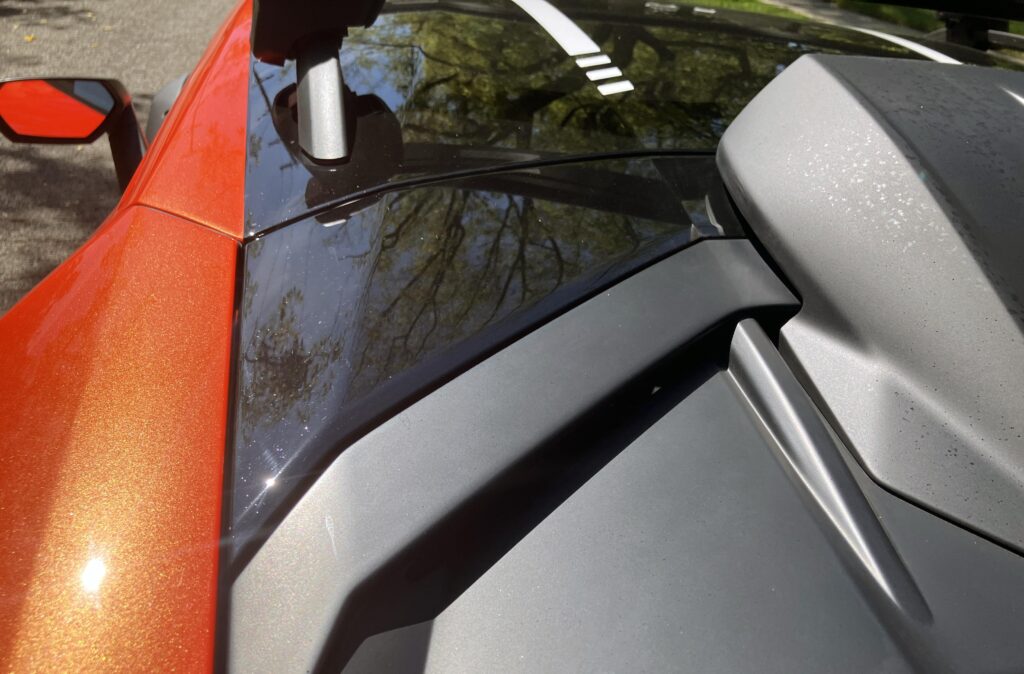
Photographs flatten a design that depends on depth. The painted body sits well outside the glass, with substantial surfaces between the two. The quarter window changes appearance as you move around the car because of its curved glass, the shadows cast by the buttress and the way the cooling ducts sit behind it. That shape-shifting effect is difficult to appreciate in a side-on view.
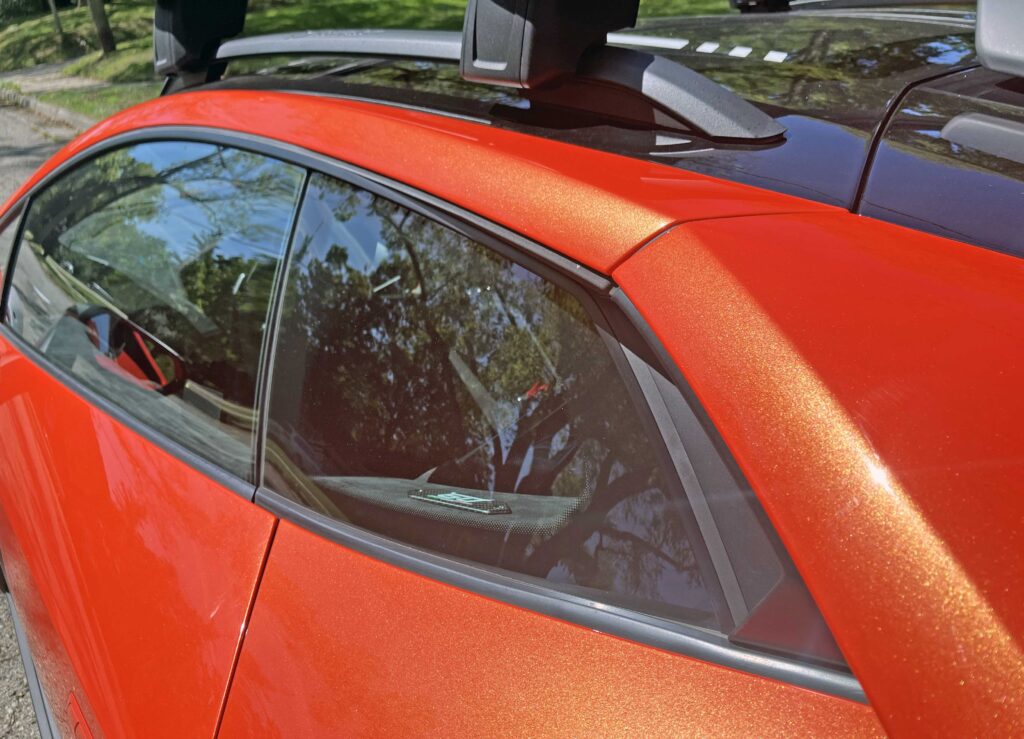
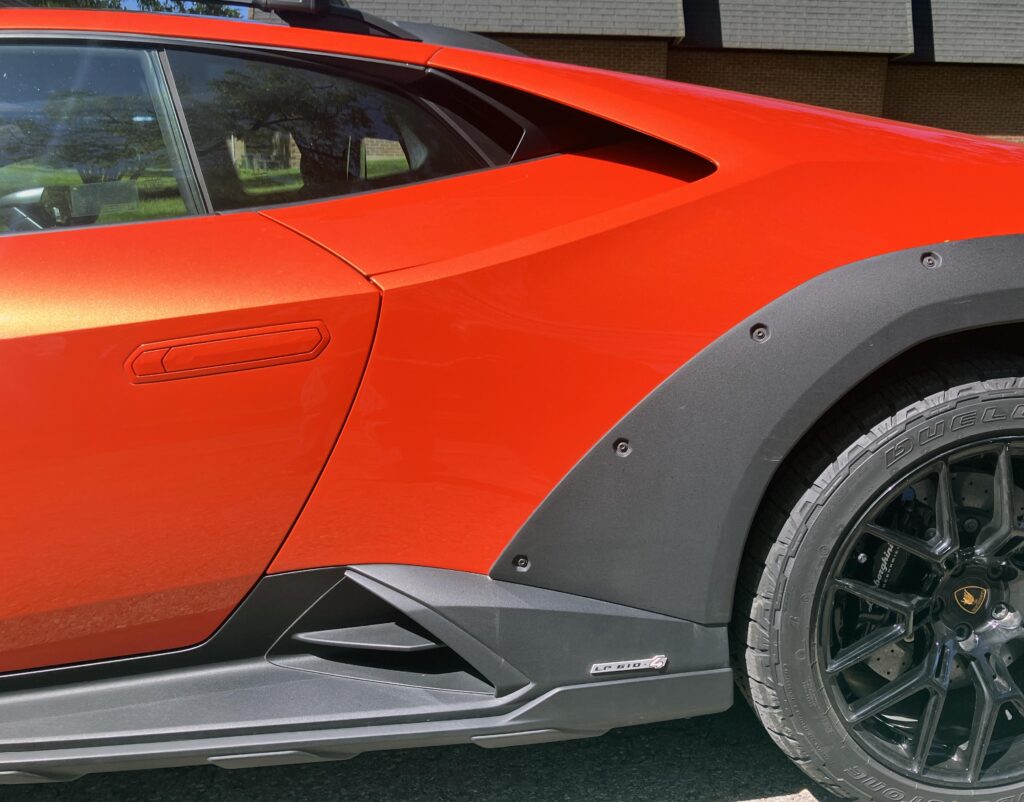
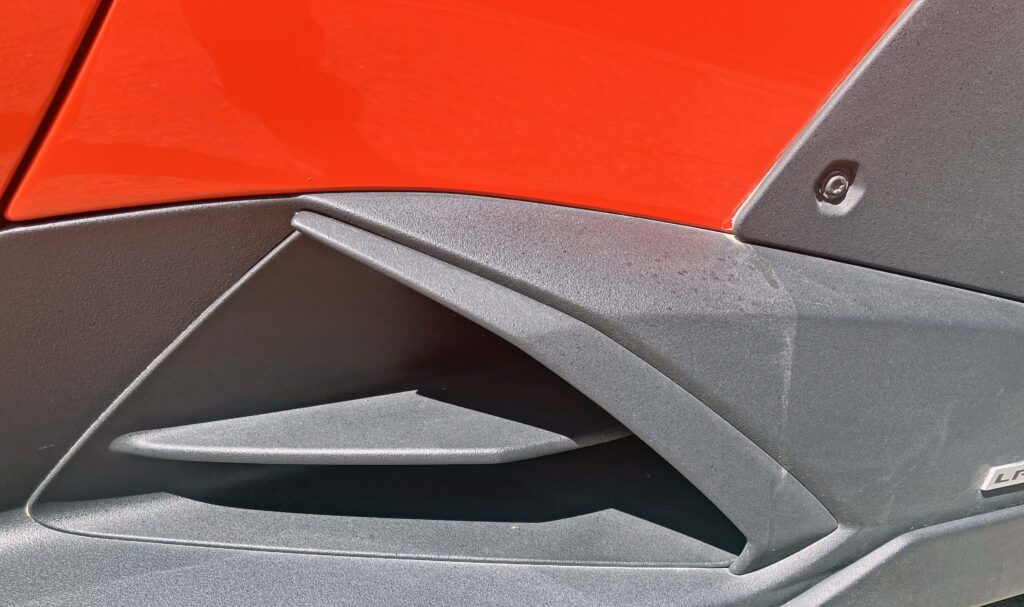
The hard bend in the buttress breaks up what could otherwise be a large, plain panel. Lamborghini’s hexagonal theme carries through to cooling vents tucked into this area. They’re not the first small details a passerby will notice, but the depth and shadow around them make the work legible when you take a closer look.
Cladding, roof rack and snorkel
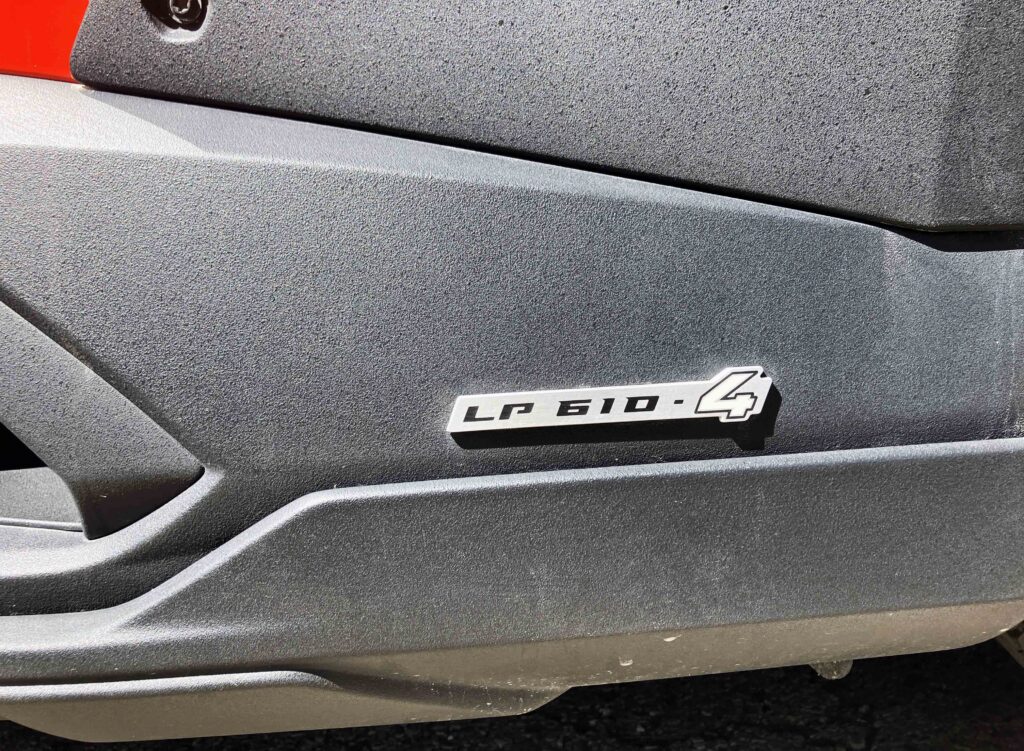
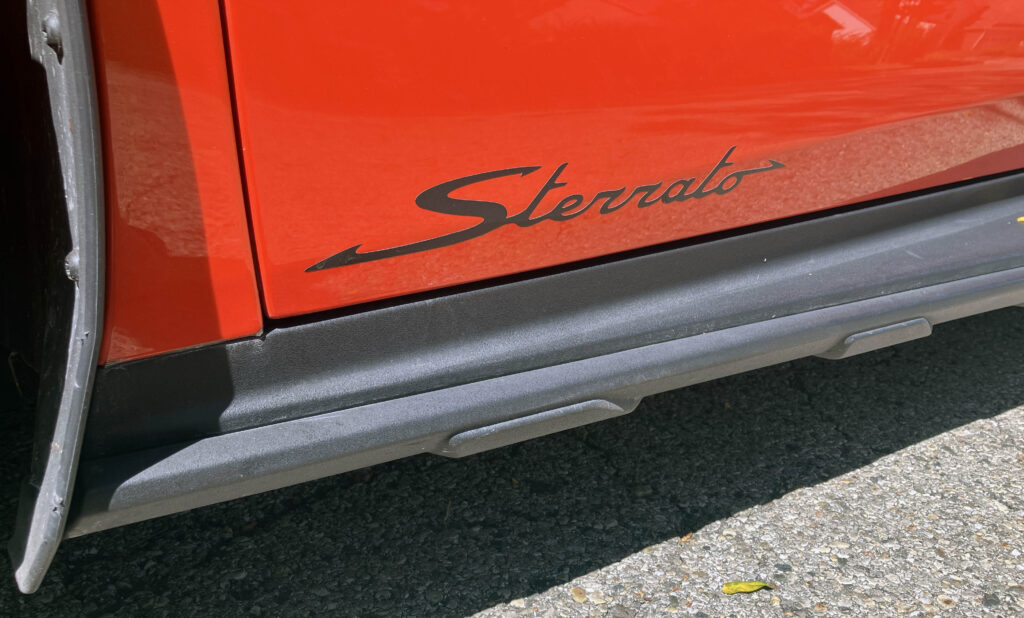
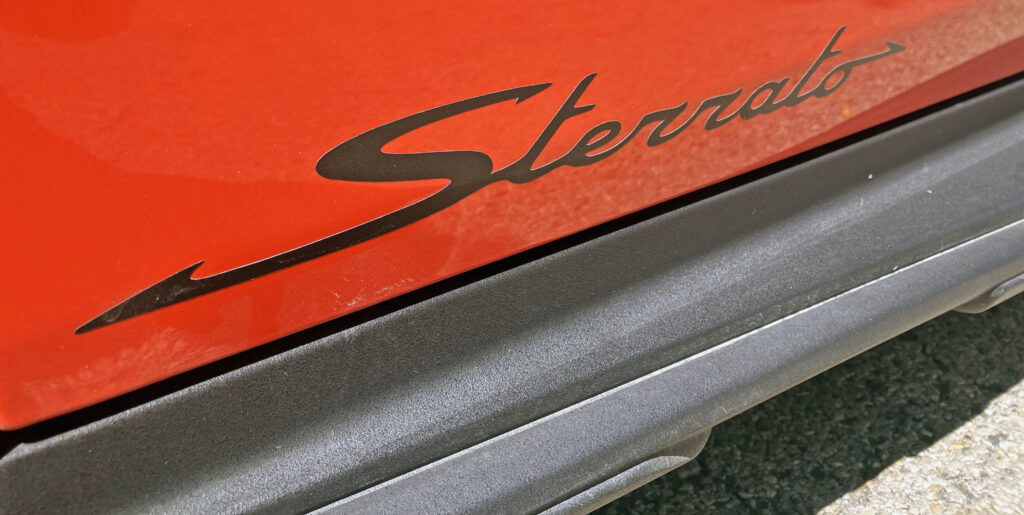
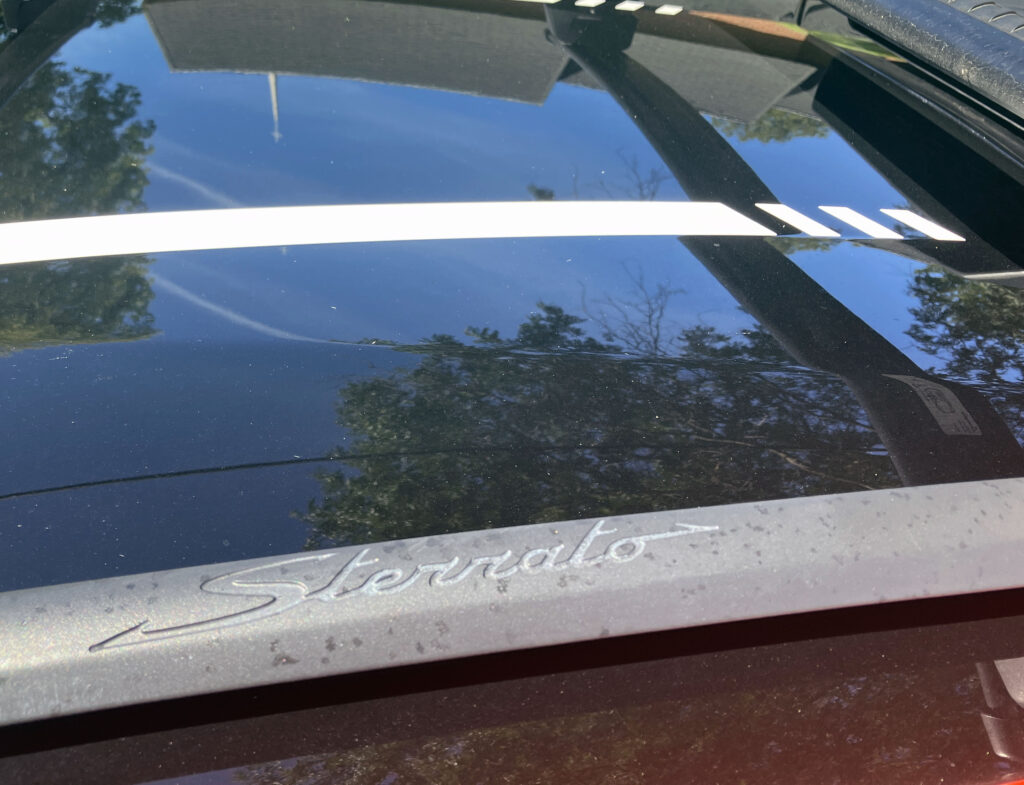
The rocker panels bring together several of the car’s ideas: a horizontal strip that resembles a running board, a textured intake scoop carried over from other Huracáns, and a mudflap that reaches below the sill. The apparent running board is too narrow to serve as a useful step, and the Sterrato’s low overall ride height gives it little practical reason to be there. Its job is mainly visual. Hexagonal recesses and the Sterrato lettering make the side look ready for a rougher route, while the door’s built-in crease gives the decal a natural home.
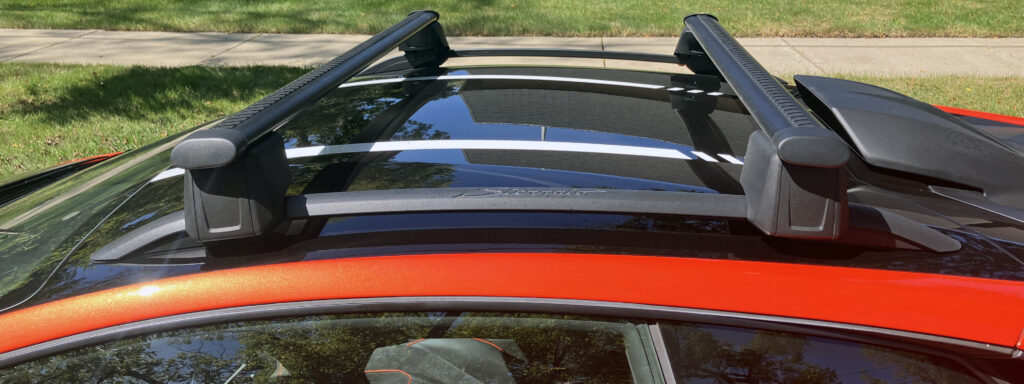
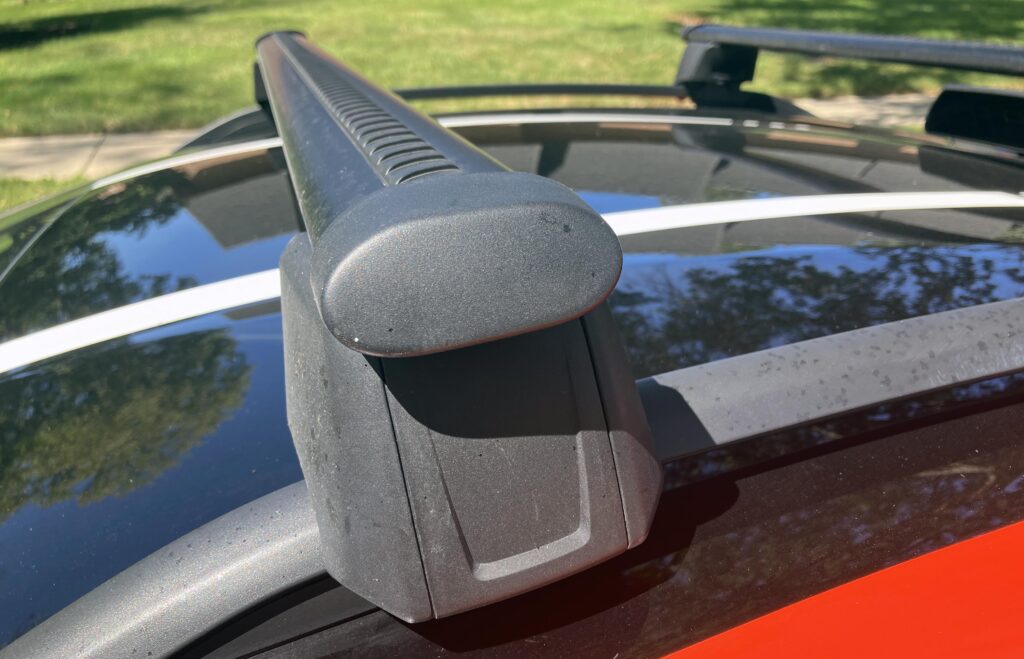
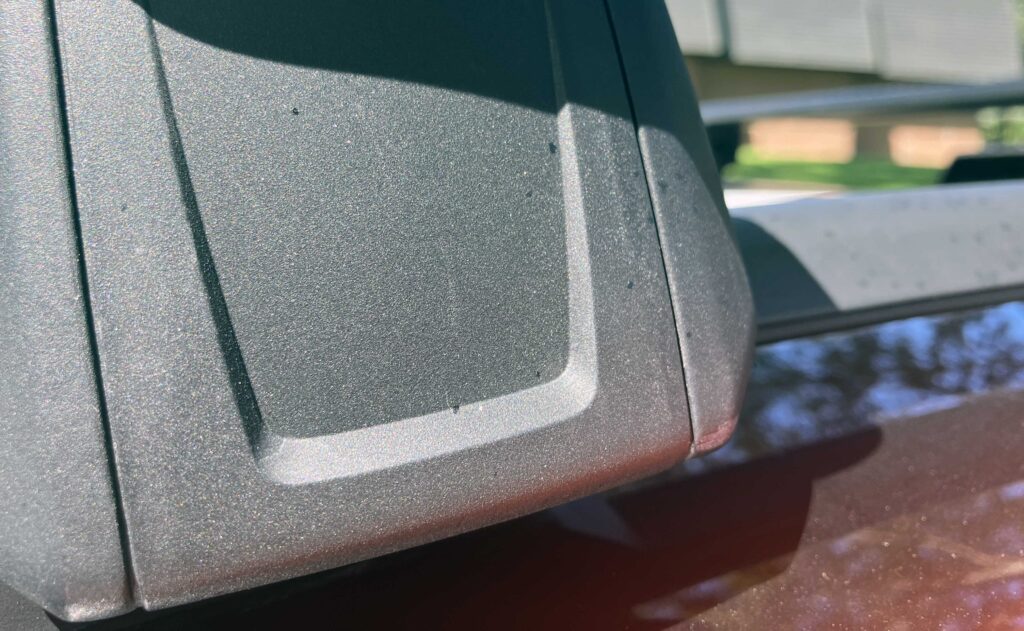
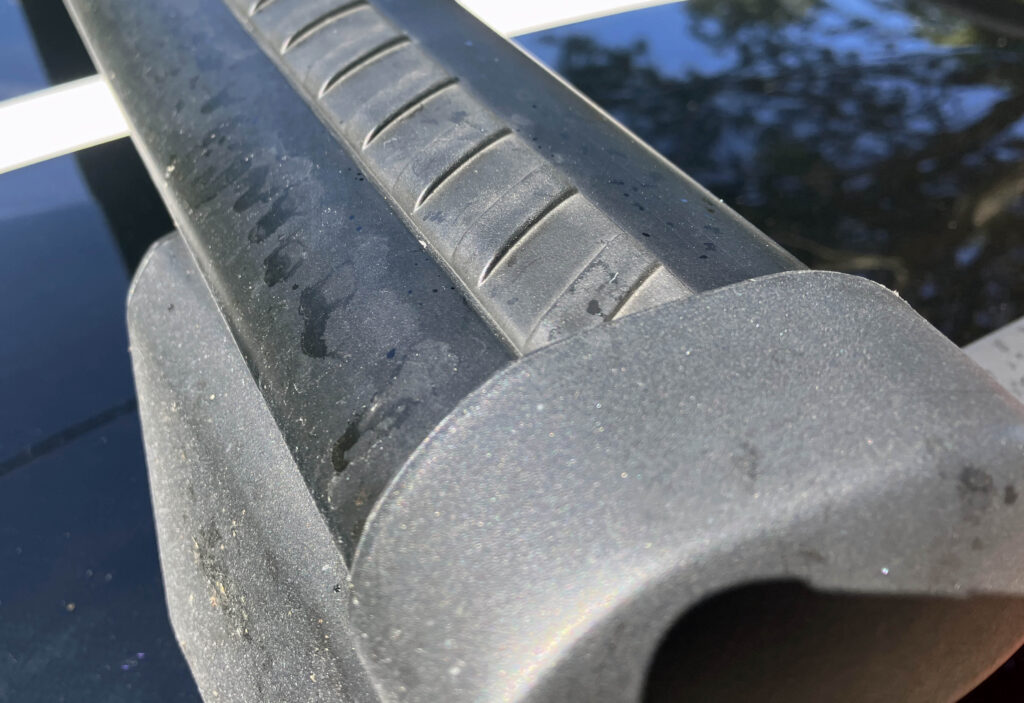
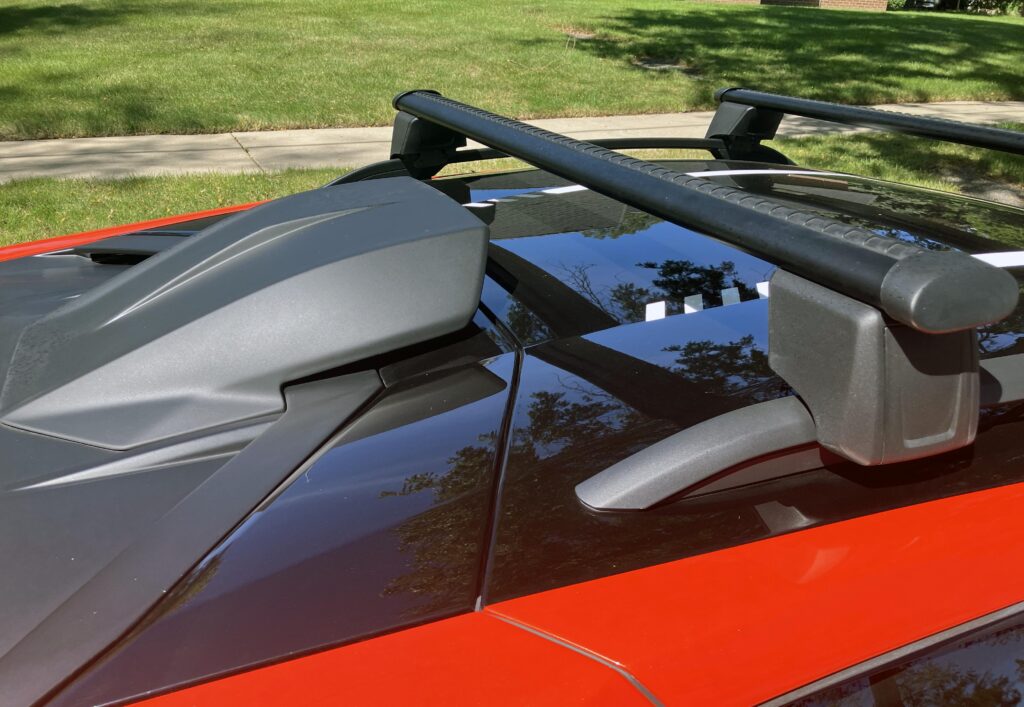
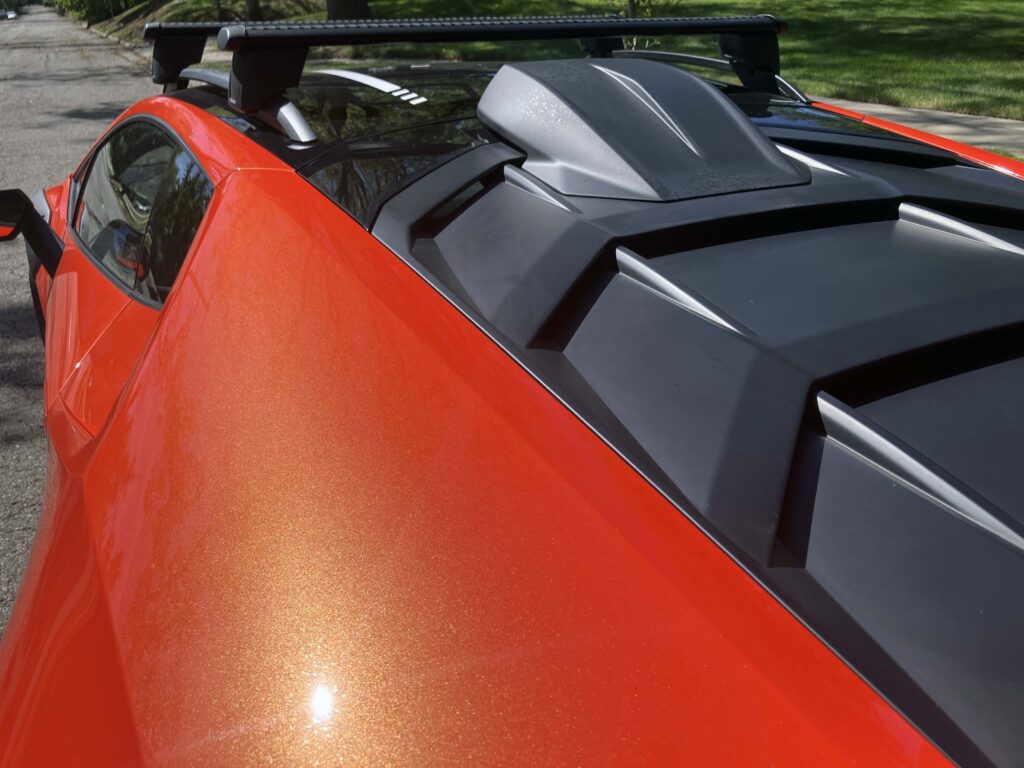
The roof rack is more than a generic accessory. Its supports have patterned surfaces that relate to the driving-light housings, and its trim makes the roof look purpose-built for the Sterrato. That matters because a rack can easily interrupt the roofline of an exotic. Here, it adds a practical-looking counterpoint to the car’s sleek profile without making the whole design feel slower.
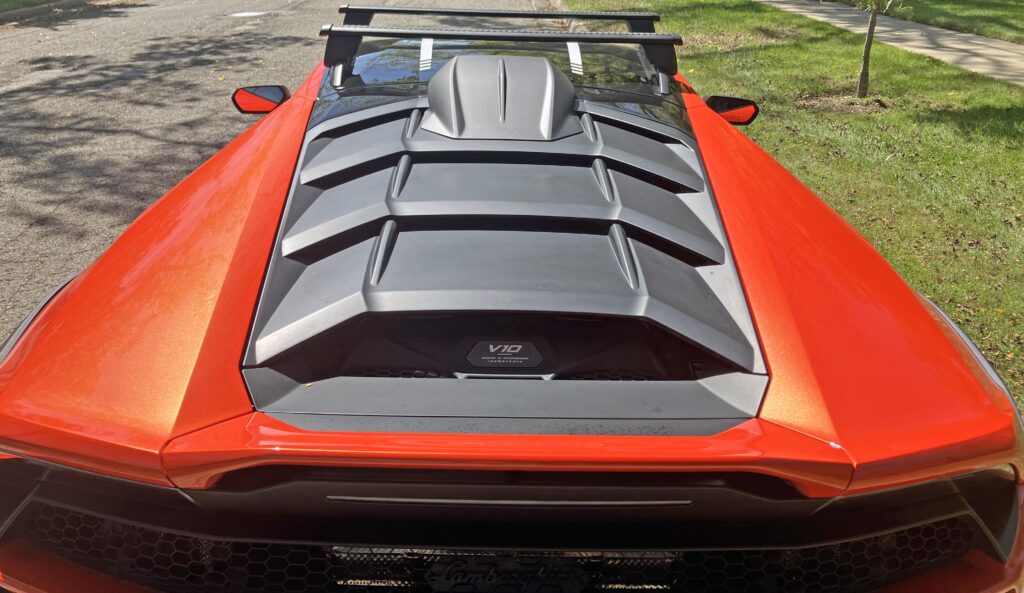
The roof-mounted scoop is the intake snorkel for the Huracán’s V-10. A snorkel paired with a cargo rack may strike a purist as an odd combination, but the Sterrato is built around a rally theme rather than a stripped-back track-car brief. Porsche’s 911 Dakar, introduced a year earlier, showed another route for bringing rally references to an exotic. Lamborghini’s answer gives those cues its own styling language, with custom-looking hardware and repeated hexagonal details.
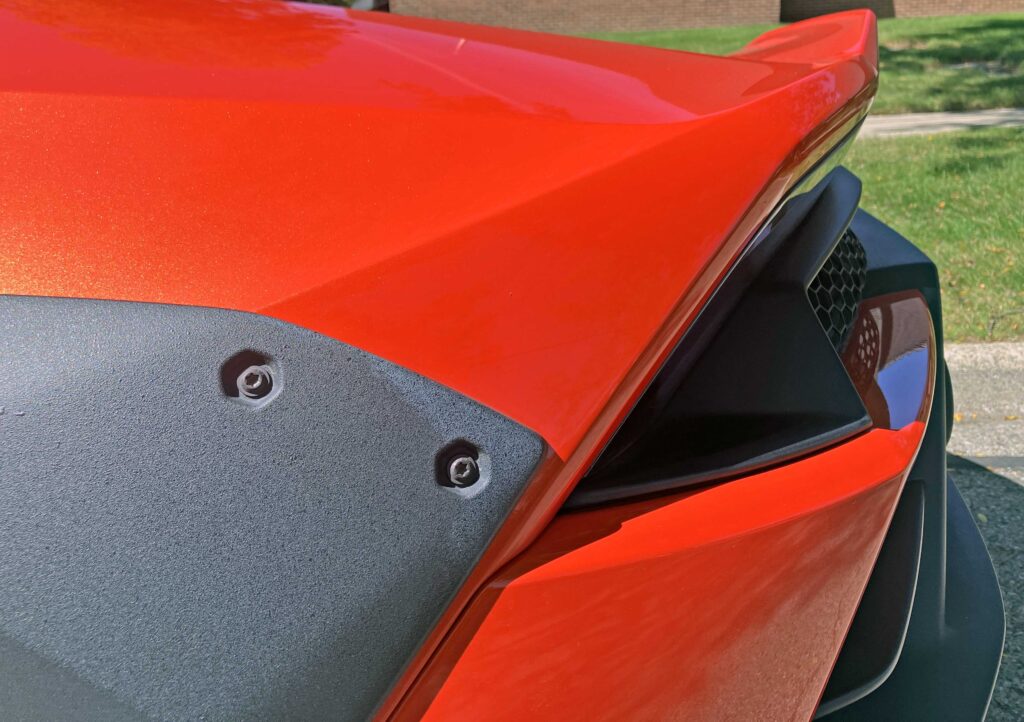
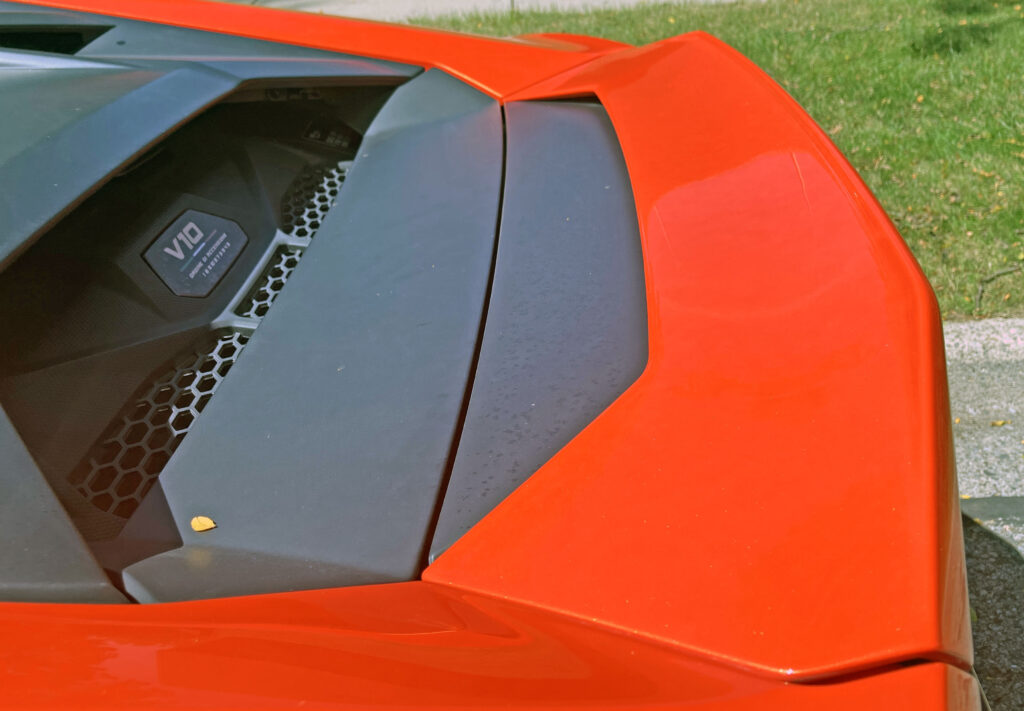
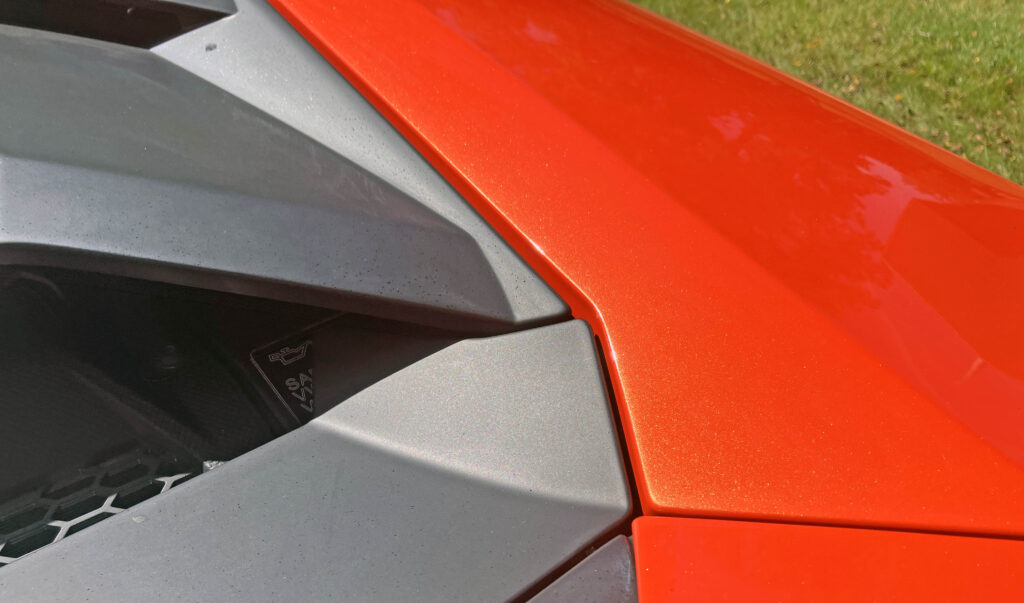
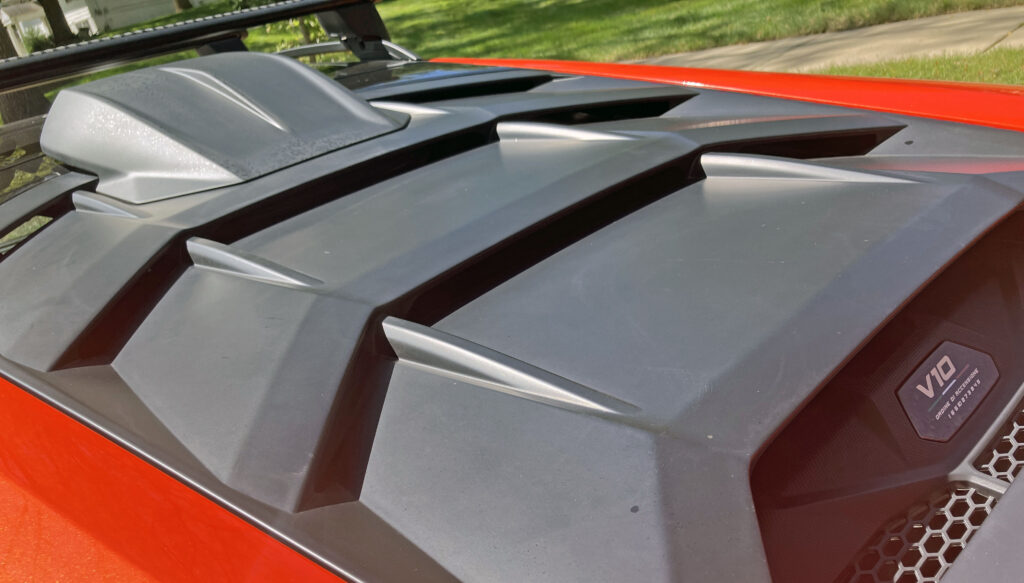
The engine cover extends the angular language, with hexagonal blades that call back to details on the 2007 Lamborghini Reventón. It has an armored, science-fiction look, and its hard edges suit the flying buttress behind it. In a crowded view, the roof rack and flares compete with the cover for attention; from a more deliberate angle, its layered forms and the folds in the black trim make the whole rear section look carefully composed.
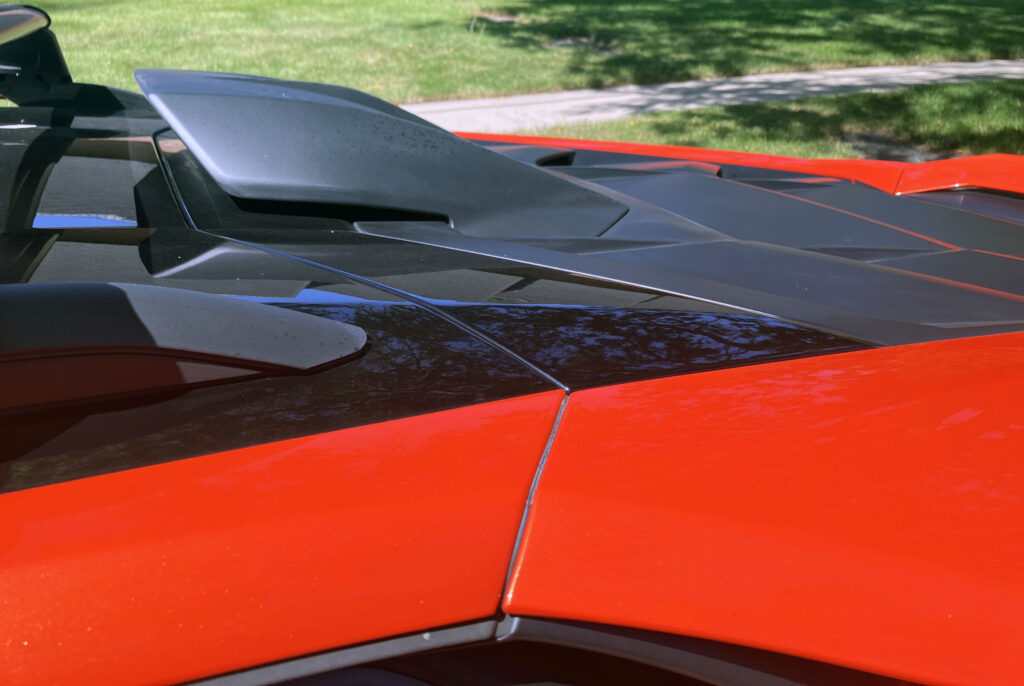
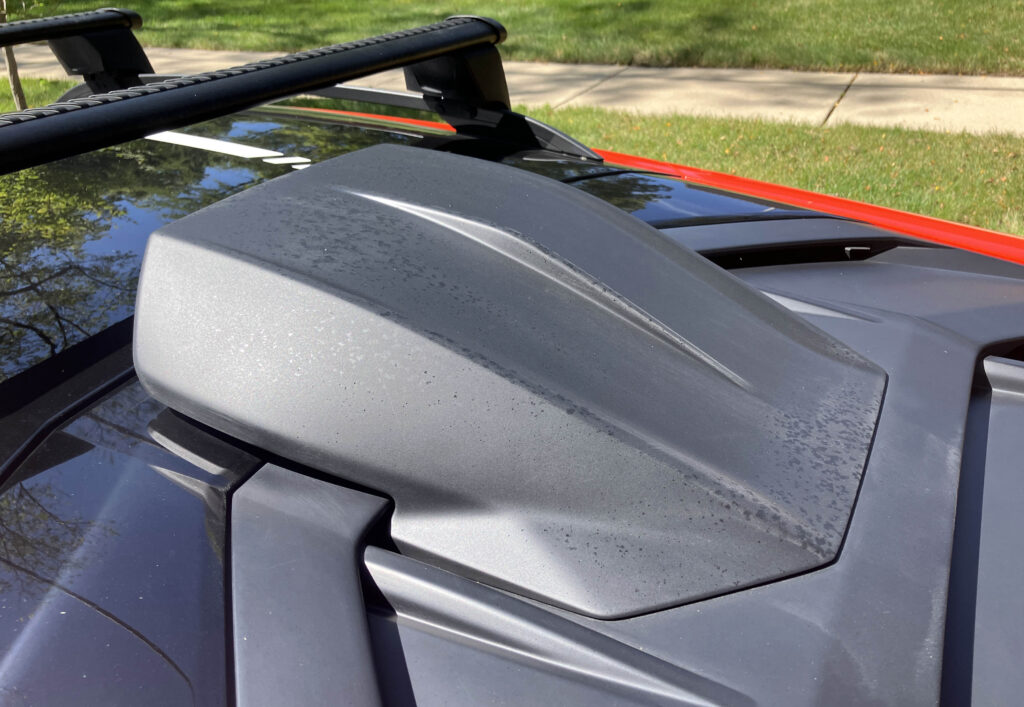
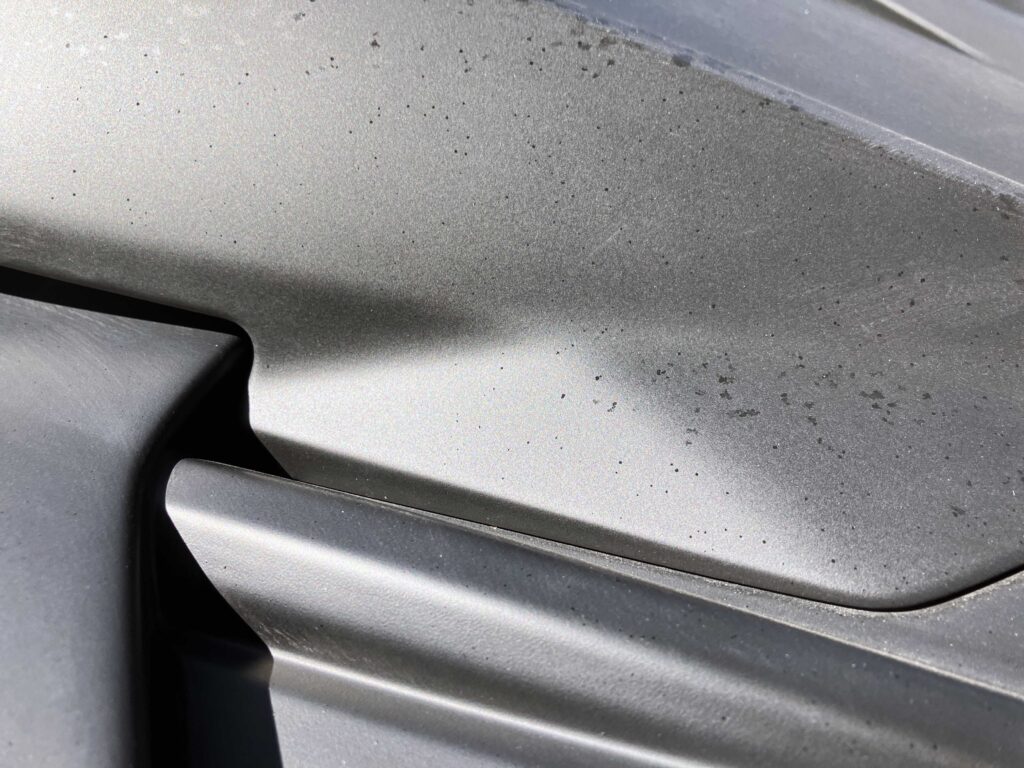
The rear deck is subtler than the engine cover. Its shallow folds and triangular surfaces don’t announce themselves immediately; the changing reflections reveal the shape more clearly as you move around the car. That contrast is useful. The Sterrato has plenty of visible add-ons, but the body beneath them still has carefully worked surfaces of its own.
A distinctive rear, with a few rough edges
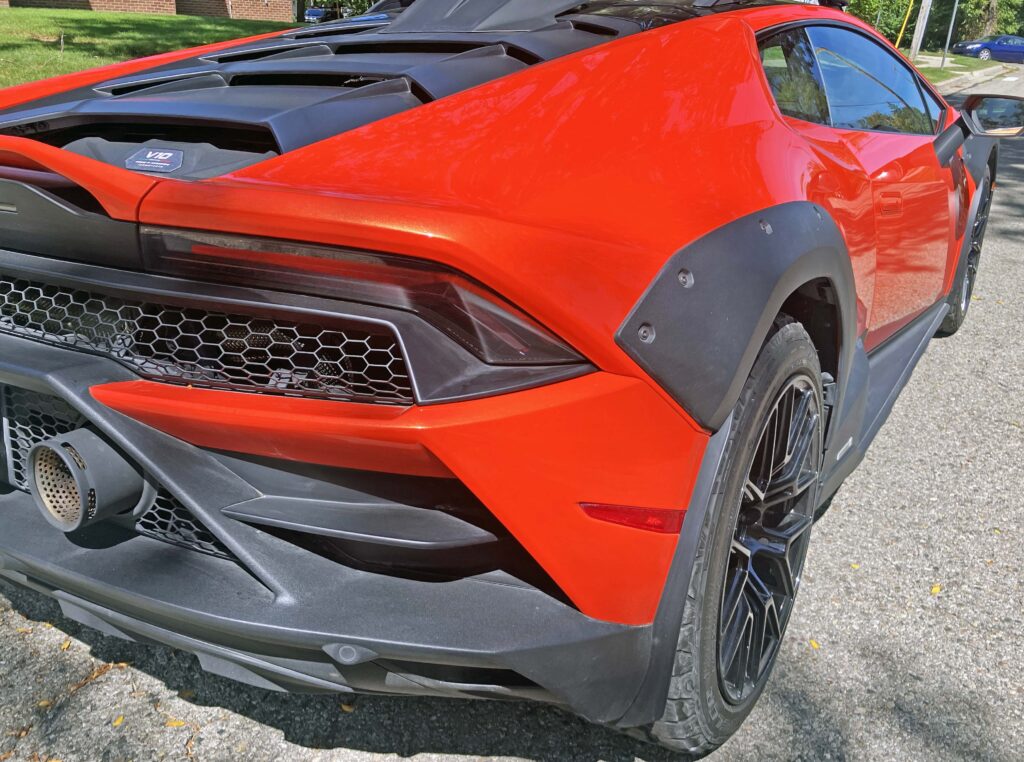
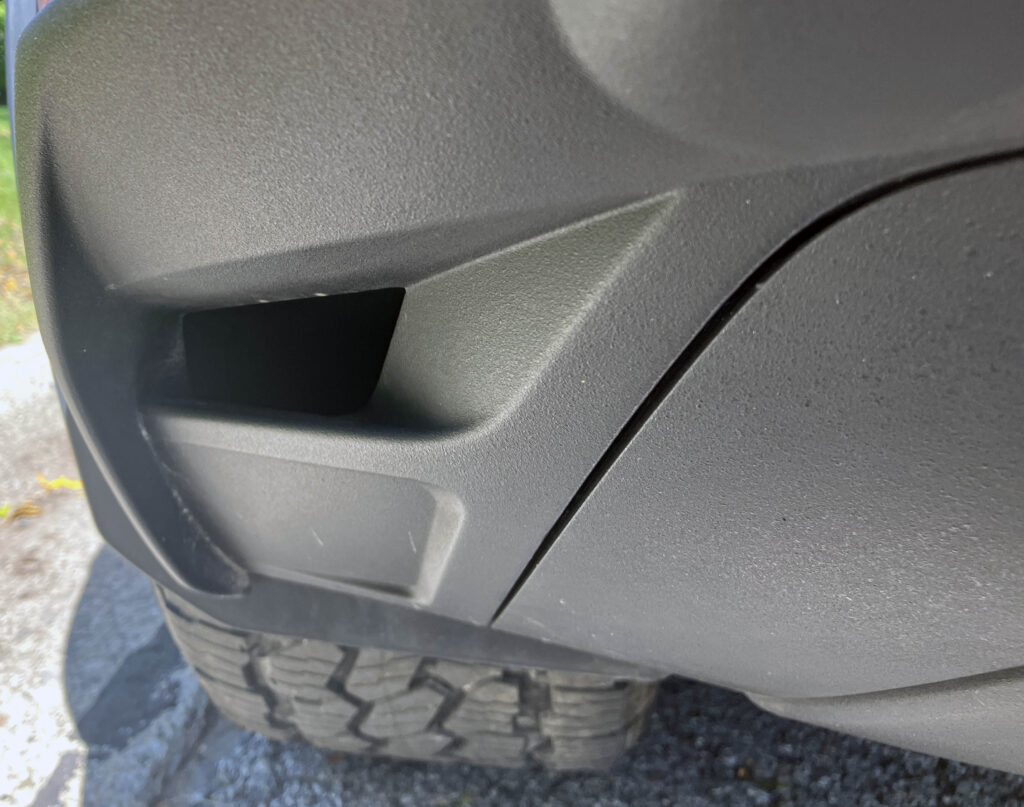
The rear flares repeat the exposed fasteners and flat sections found at the front. The rear arch’s clipped shape has a reason: it aligns with the front flare’s angled end and suits the Huracán’s tapered quarter panel and small dovetail spoiler. Even so, matching the front to the rear creates a sharp cut-off that doesn’t look as resolved on the front wheel. The rear flare also ends at the bumper cut line, leaving the design feeling unfinished when viewed from some angles.
From behind, the engine cover is the main event. Its armored appearance is more assertive than the equipment on a road-focused Huracán, while the V-10 badge keeps the mechanical identity in view. The cover doesn’t blend as smoothly as the rest of the rear design, where Lamborghini has tucked the brake, turn and reverse lights into shaded recesses. Those concealed lamps let the bumper’s horizontal lines and the cooling mesh hold attention.

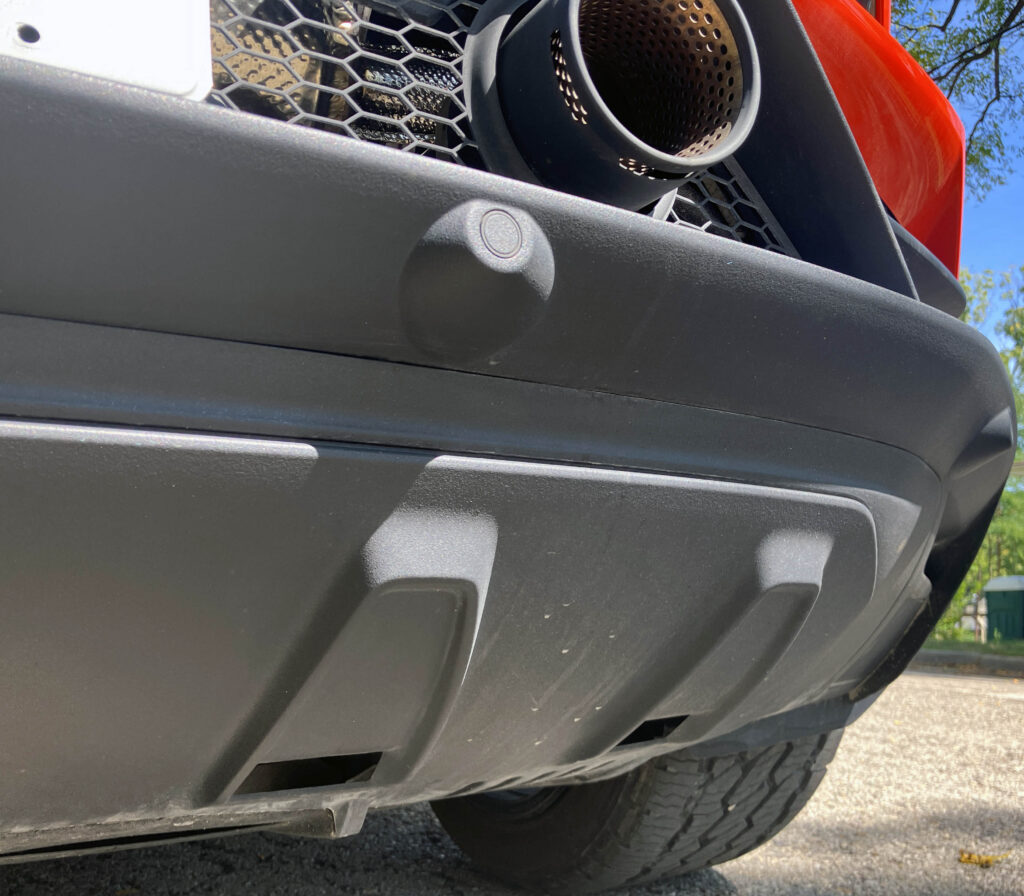
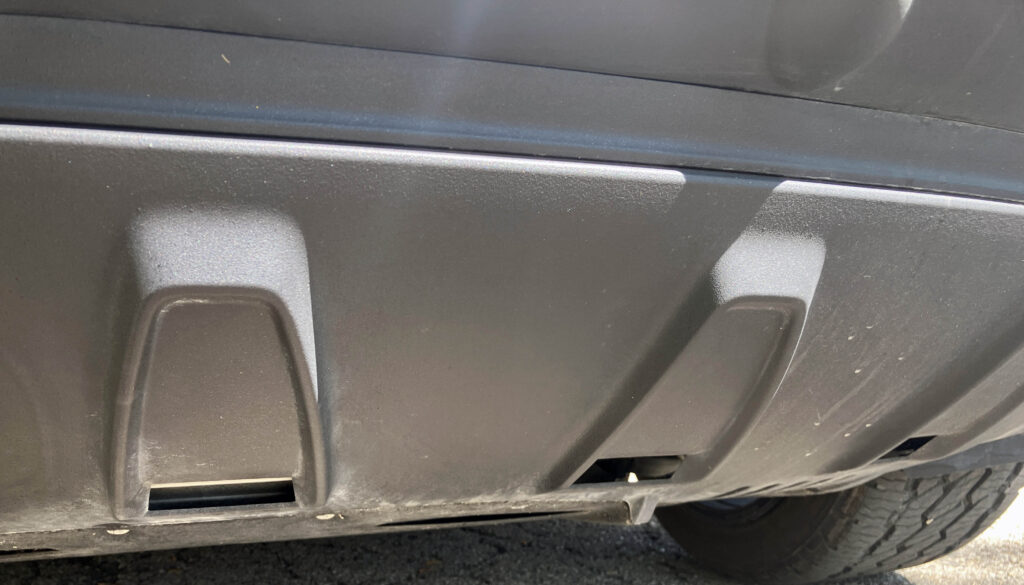
Bevels and folds add depth to the rear fascia, while the spoiler is present without dominating the tail. The red strip below it serves as the high-mounted brake light and blends into its background more effectively than the larger pieces of equipment around it. Below, the hexagonal mesh continues the brand’s familiar pattern, joined by a lower valence with sharper angles and less symmetry.
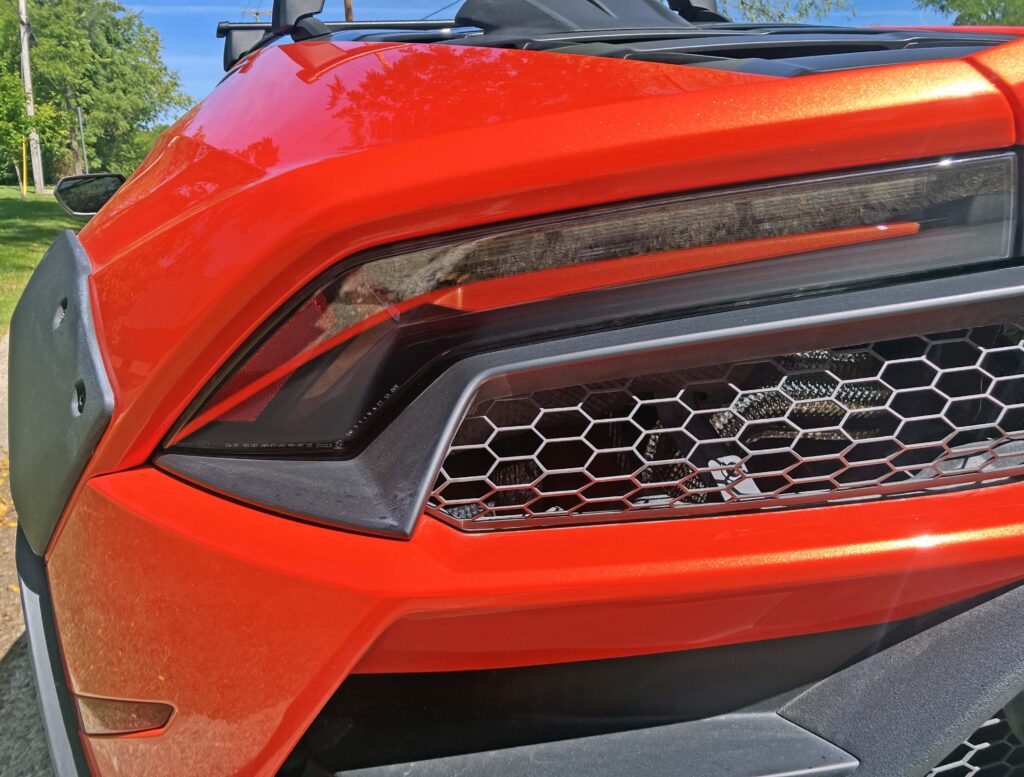
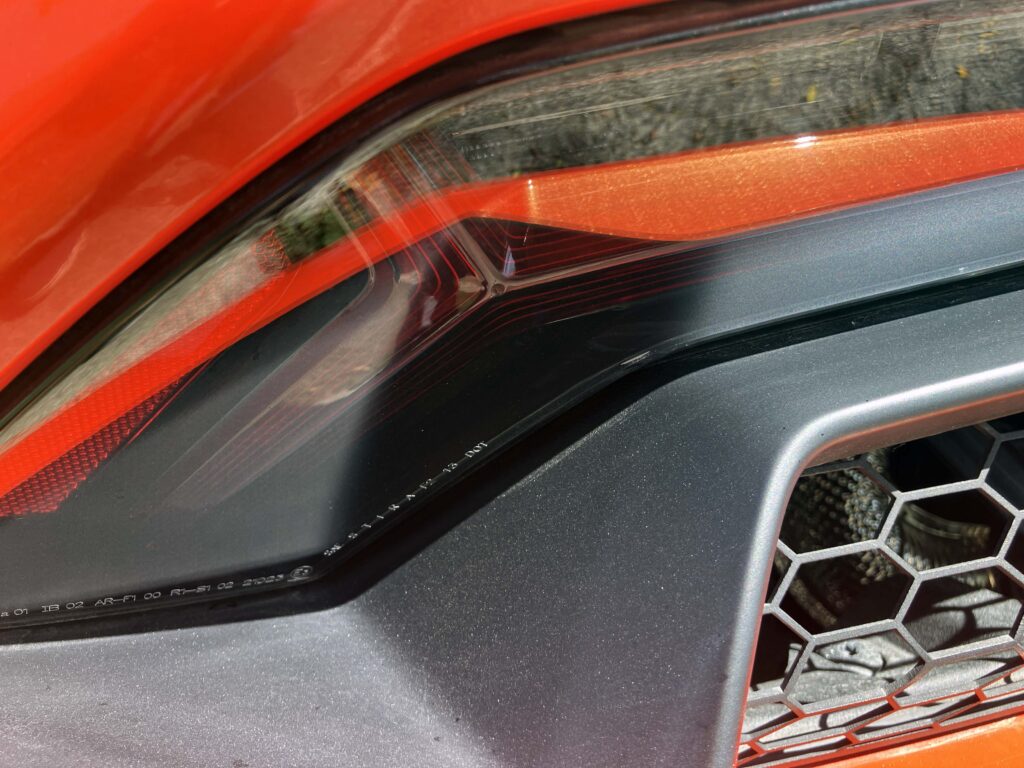
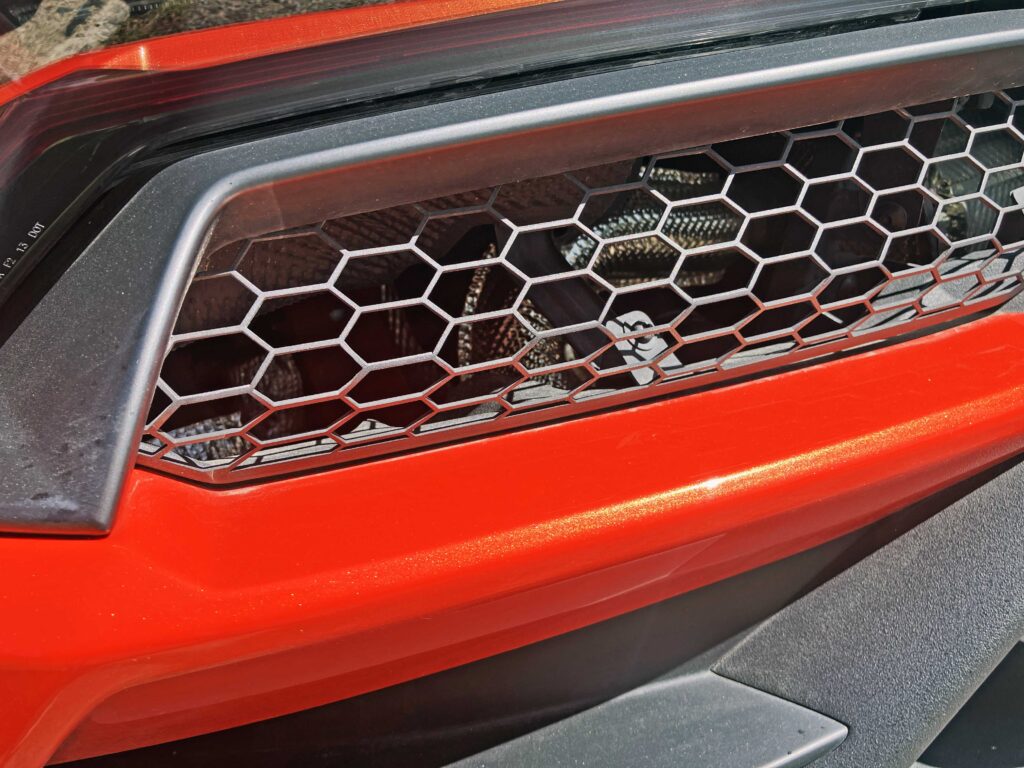
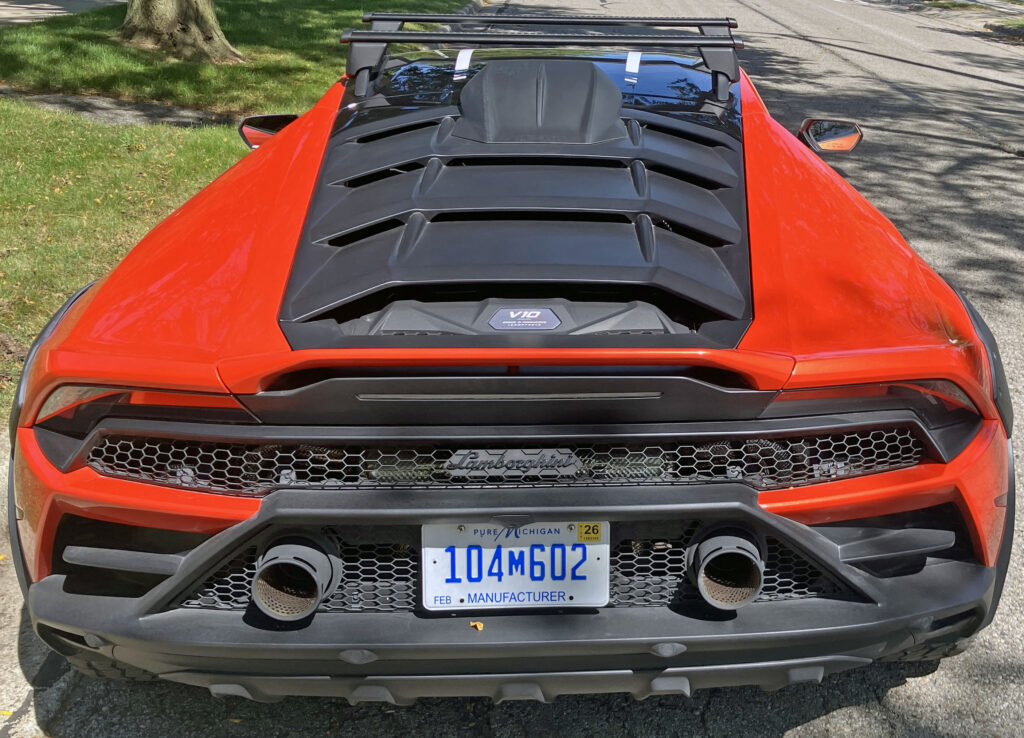
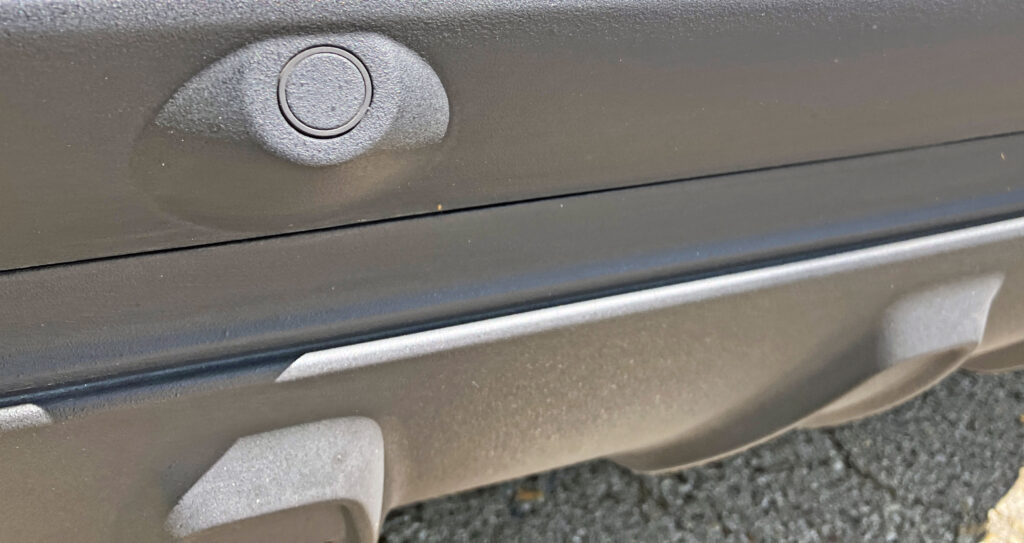
The lower bumper contains some of the most useful-looking details. A channel at each corner gives a view of the rear tire’s tread, while trapezoidal sections echo shapes repeated on the roof rack and driving-light cases. They might help direct airflow, but their function isn’t established here; visually, they suit the car’s rally theme. The tailpipe is notably plain and industrial in finish, a small departure from the more polished details elsewhere that makes sense for the Sterrato’s rough-road character.
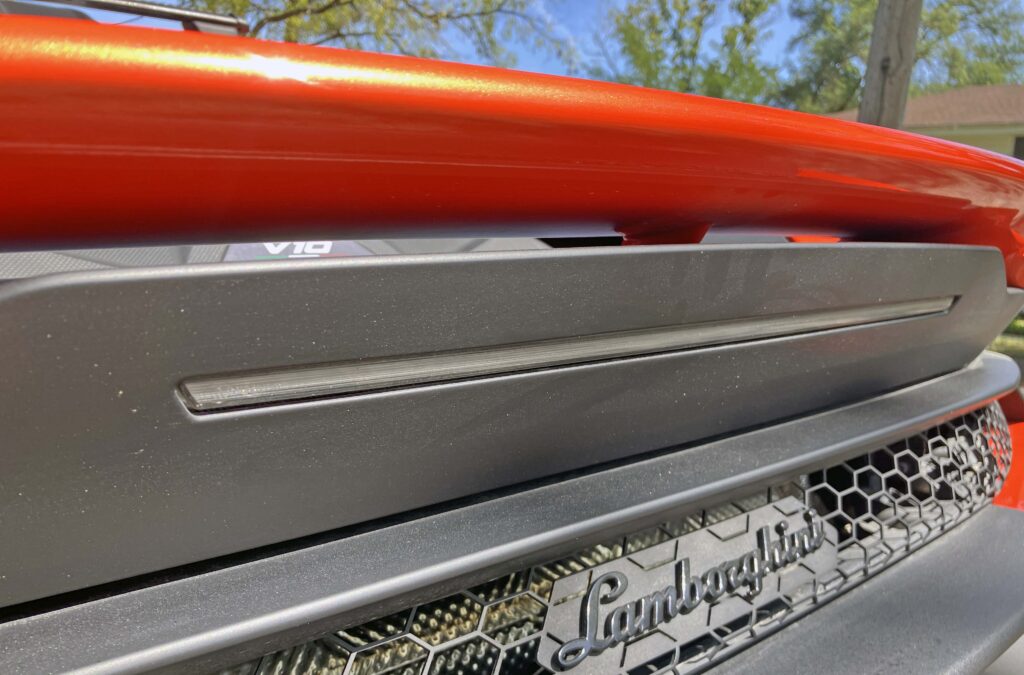
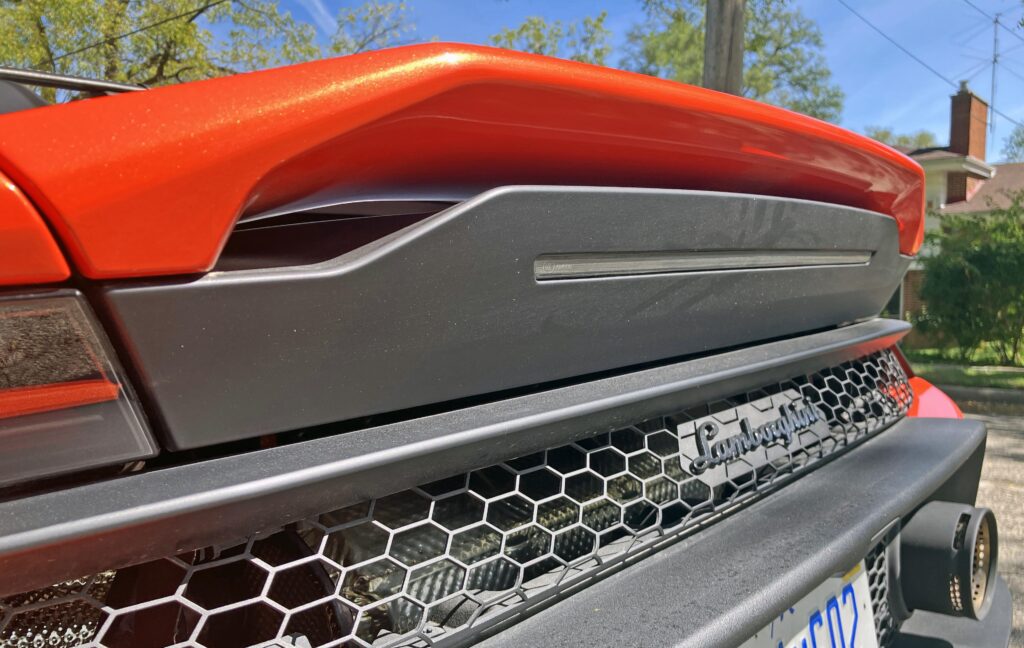
The central rear emblem uses a shaped panel that turns the grille pattern into a sort of negative image. It’s a clever way to carry the hexagon motif through the bumper, but on a car priced just below $280,000, the plain mounting panel feels less special than the surrounding details. The lower section’s unpainted plastic and sensor housings give the tail a rugged look, while a horizontal crease helps keep the busy forms in order.

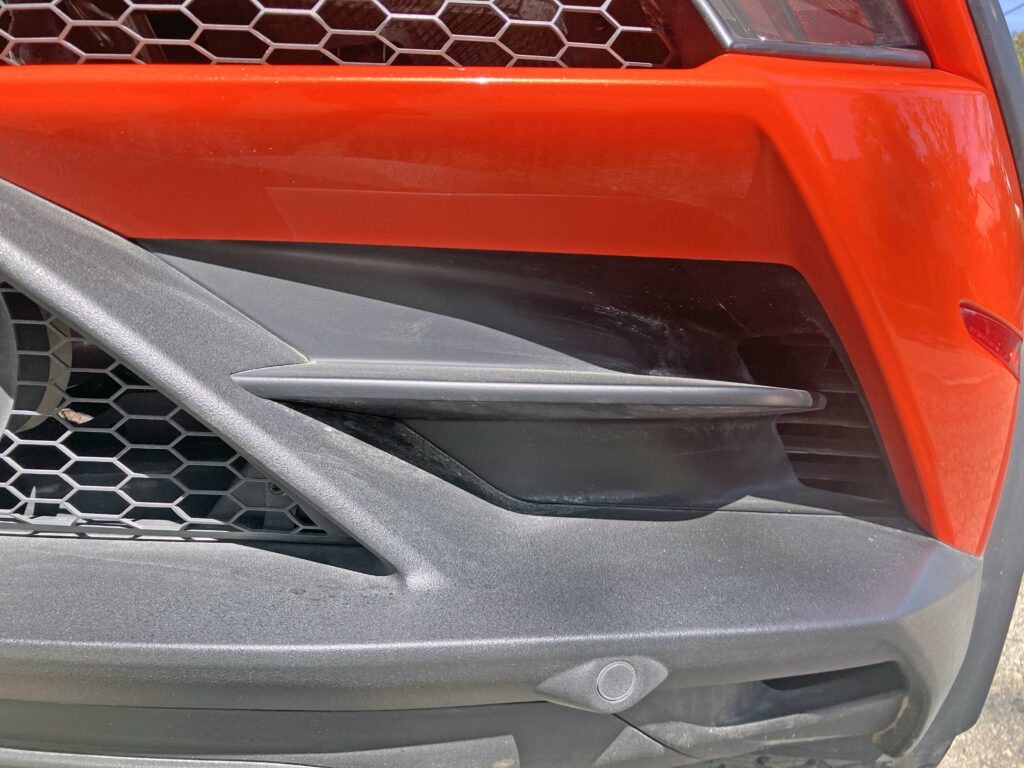
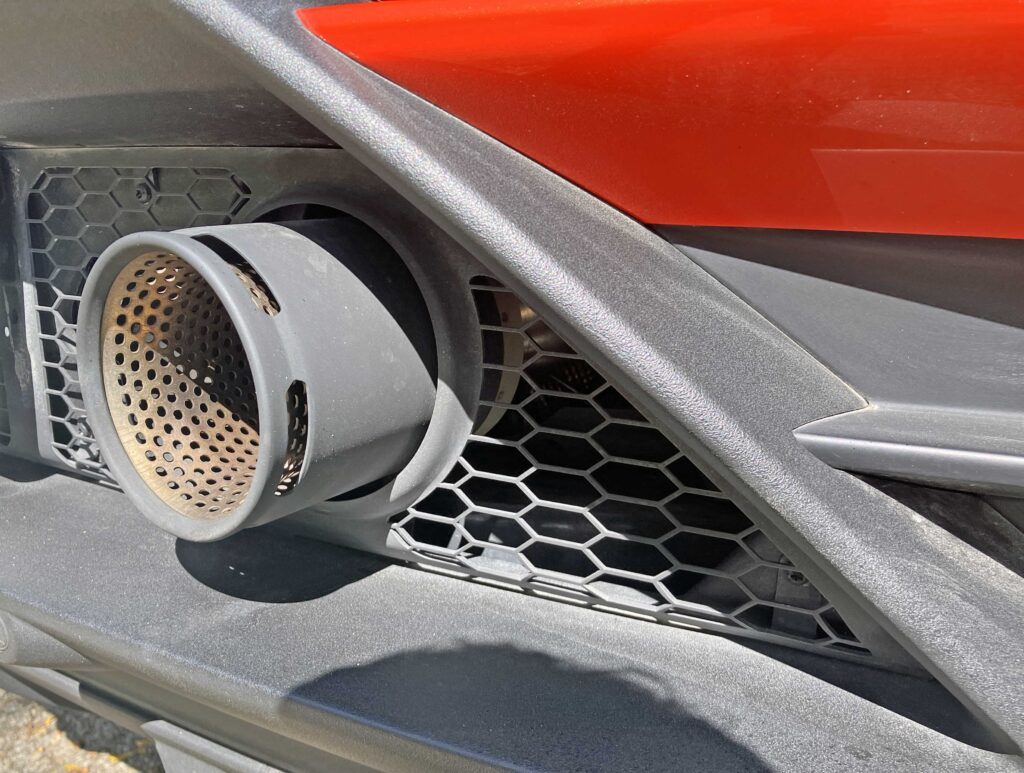
Some details are hard to judge from a photograph alone. A vent set deep into the rear valence, for example, invites questions about where its airflow goes. What’s clearer from the road is that the Sterrato is not simply a show car dressed for a photoshoot: the car’s raised stance, tires and equipment support a different driving brief, and its road manners remain part of the experience.
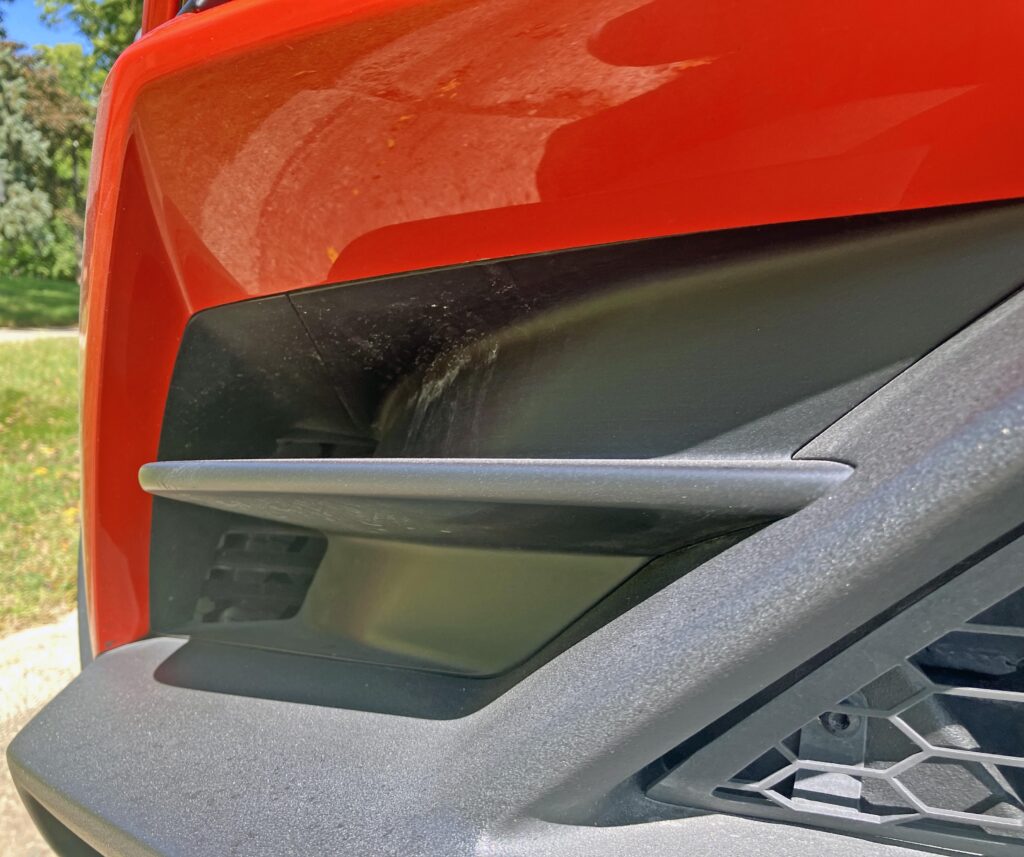
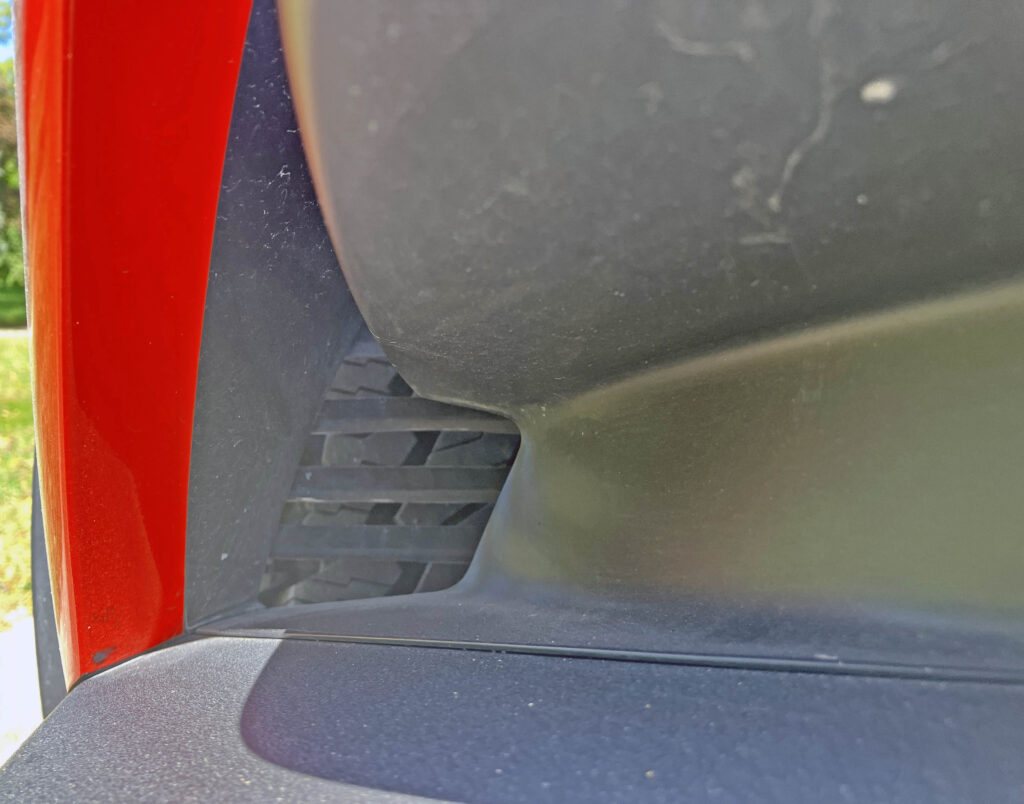
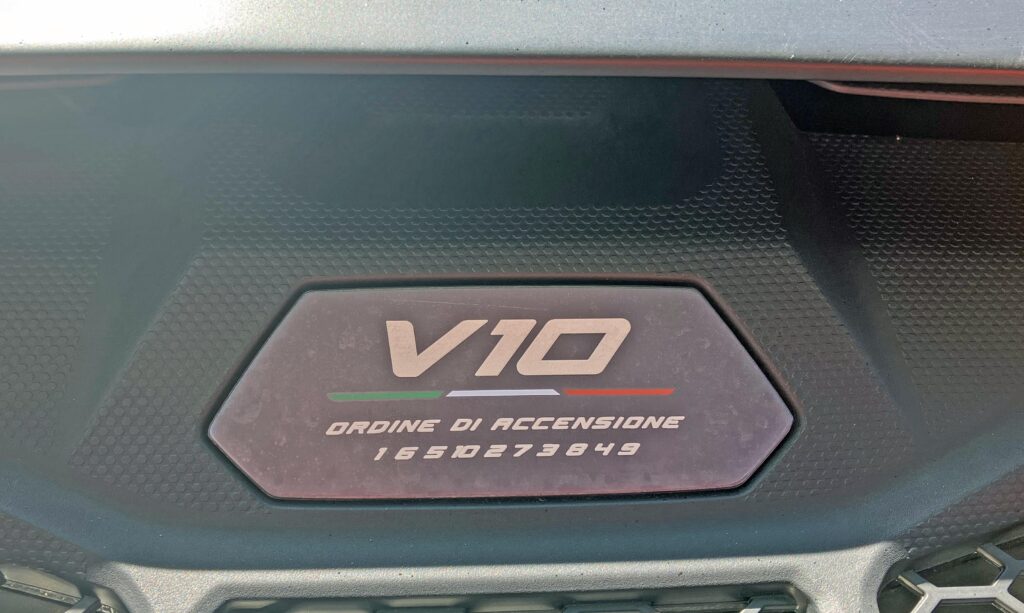
The Sterrato’s details are not merely crossover-style trim placed over an unchanged silhouette. The lights, cladding, rack and intake all have distinct shapes and relationships to the body. Some still look bolted on, particularly from close range, but Lamborghini has given the add-ons enough shared angles and textures to make the package feel intentional.
The front and rear arch shapes also show the risks of matching details too literally. The rear flare’s clipped end makes sense beside the quarter-panel shape and spoiler, but carrying the same treatment forward gives the front arch a hard stop that feels arbitrary. A fuller extension might have been difficult to package, yet the current solution leaves the wheel-arch treatment short of the visual confidence shown elsewhere.
That tension is part of what makes the Sterrato interesting. A design this far from the usual exotic template invites scrutiny, and it doesn’t resolve every detail perfectly. Yet the raised ride height, tire sidewalls, fixed lamps and roof equipment make a coherent whole, while the V-10 and familiar Huracán proportions preserve the car’s identity. The Porsche 911 Dakar is a useful reference for the broader rally-exotic idea, but the Lamborghini’s angular bodywork and exposed hardware give it a much harsher visual tone.

My read is that the Sterrato’s strongest quality is the way its equipment changes the character of the Huracán without erasing it. It can look ungainly in close-up, especially around the truncated flares and mounting hardware, but step back and its graphics, lights, cladding and roof gear start to work together. The car gives drivers a V-10 Lamborghini with a rough-road attitude, and its most convincing angles make that unusual brief look entirely natural.
The post Vellum Venom: 2024 Lamborghini Huracán Sterrato appeared first on Hagerty Media.


