In lane Electric Vehicles
Corvette CX Concepts Draw on the 1959 Stingray XP-87’s Design
Description
The XP-87 shaped the electric CX and hybrid CX.R concepts, while Chevrolet says future Corvettes can pair familiar styling with different powertrains.
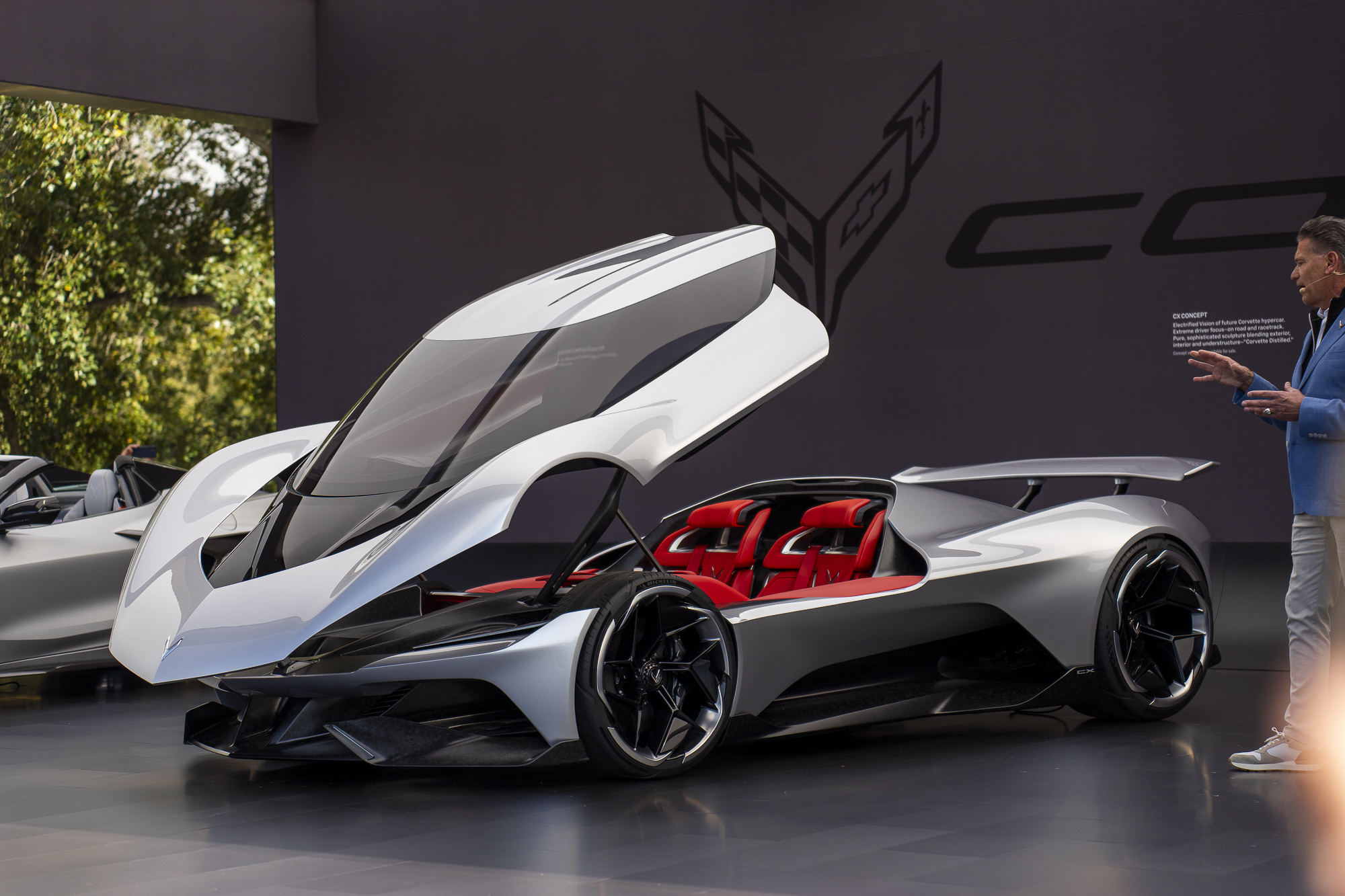
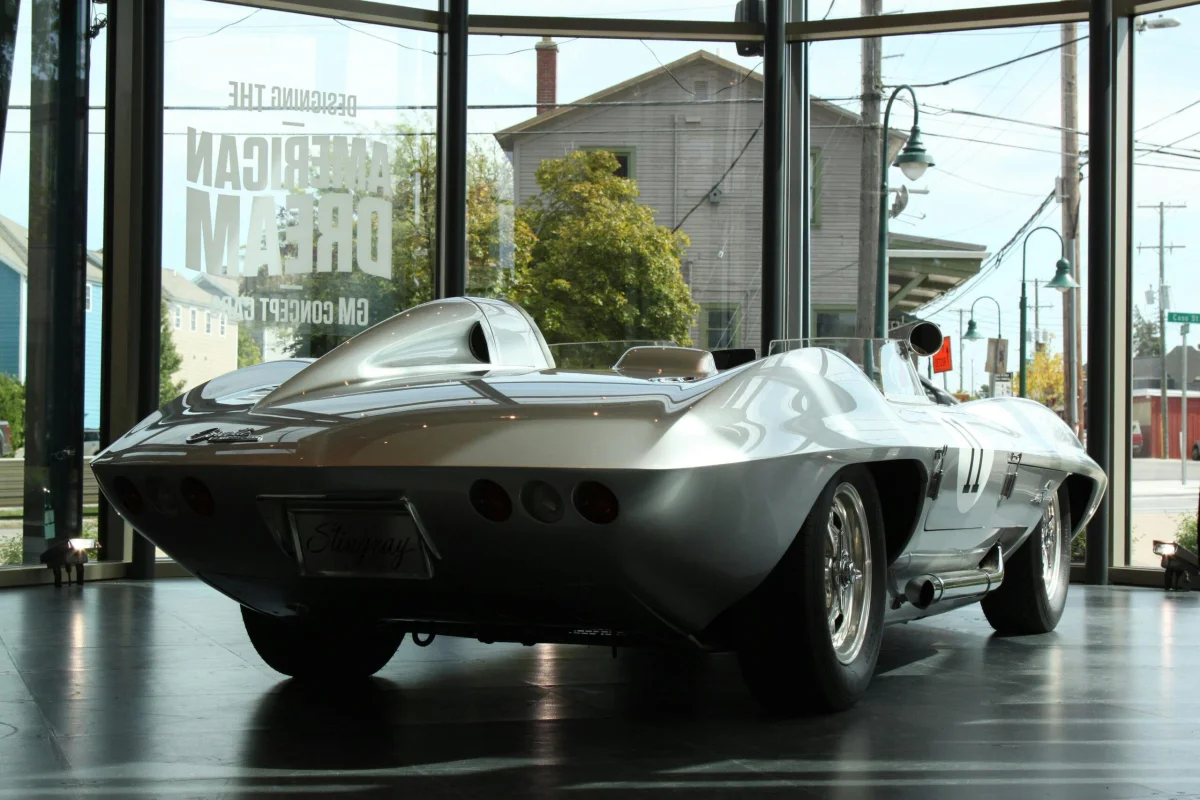
The 1959 Stingray XP-87 was more than a design reference for Chevrolet’s CX and CX.R concepts: it sat in the Corvette design studio throughout their development. That connection helps explain how two futuristic show cars can still read as Corvettes, even as one uses electric propulsion and the other a hybrid system.
Chevrolet displayed the concepts beside the XP-87 at The Quail during Monterey Car Week this August. The CX twins are the first Corvette concepts since 2009, and their relationship to the older car was deliberate. Vladimir Kapitonov, Corvette advanced design manager, said the XP-87 stayed near his desk for much of the project, which took more than a year. He also recalled the car’s unusually loud engine drawing attention whenever it was moved around the studio.
The CX and CX.R concepts don’t copy the XP-87’s shapes. Kapitonov says the older car treats its chine, or character line, more literally, using it as a continuous feature around the body. The CX takes a less direct approach, but he sees a shared attitude in the two designs: both look unmistakably like Corvettes.
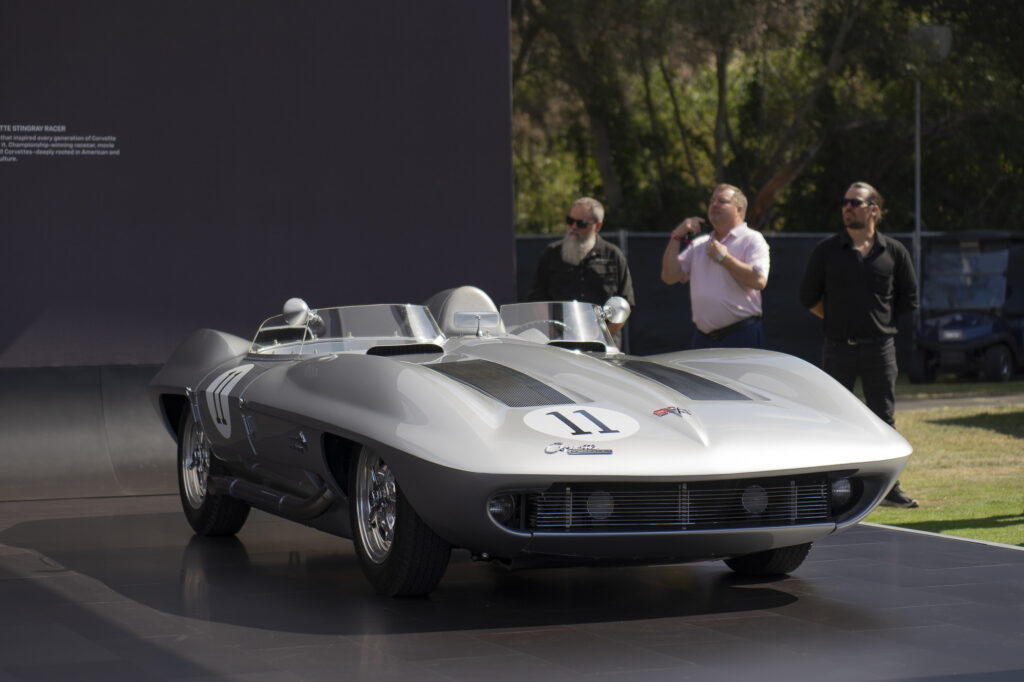
The XP-87 itself began as a styling exercise built on the tube-frame chassis of the 1957 Corvette SS race car, which came from Zora Arkus-Duntov’s private collection. Designers Bill Mitchell, Larry Shinoda and Peter Brock shaped the car in the late 1950s. Mitchell later drove it in competition, earning an SCCA championship in its second season.
Its original engine was a fuel-injected 283-cubic-inch small-block V-8 rated at 315 horsepower at 6,200 rpm under SAE gross measurements. A 327 later replaced it to improve the car’s road manners. Mitchell drove the XP-87 on public roads, and its design helped point toward the 1963 Corvette Sting Ray, known as the C2.
Car and Driver’s account of the XP-87 describes its unusual route from a racing-derived chassis to a design showcase. Mitchell’s involvement also linked the car’s visual ambition with its ability to compete. For the CX team, having that machine in the studio made the lineage tangible: the reference was a working car with a distinct sound, not just an image on a screen.
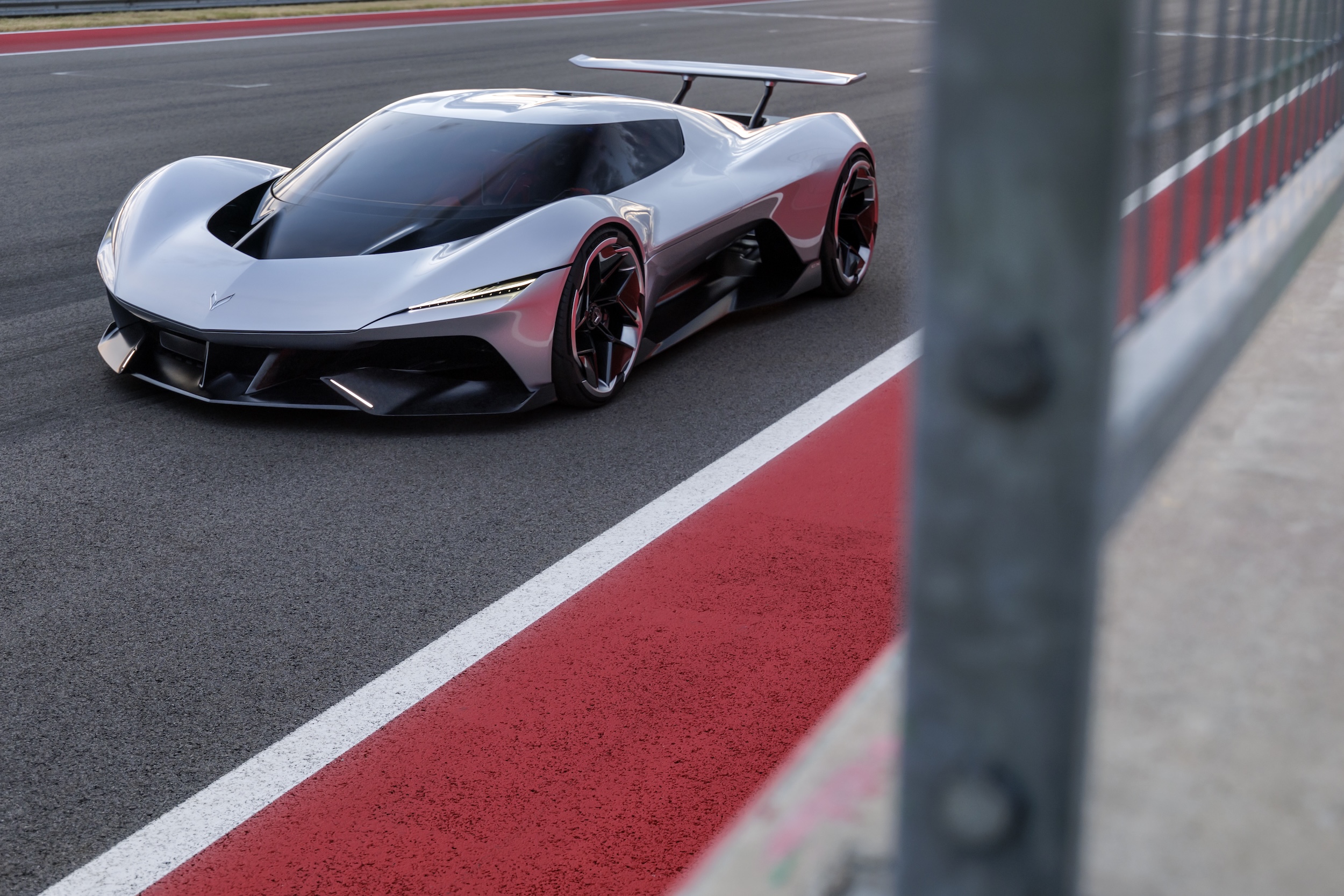
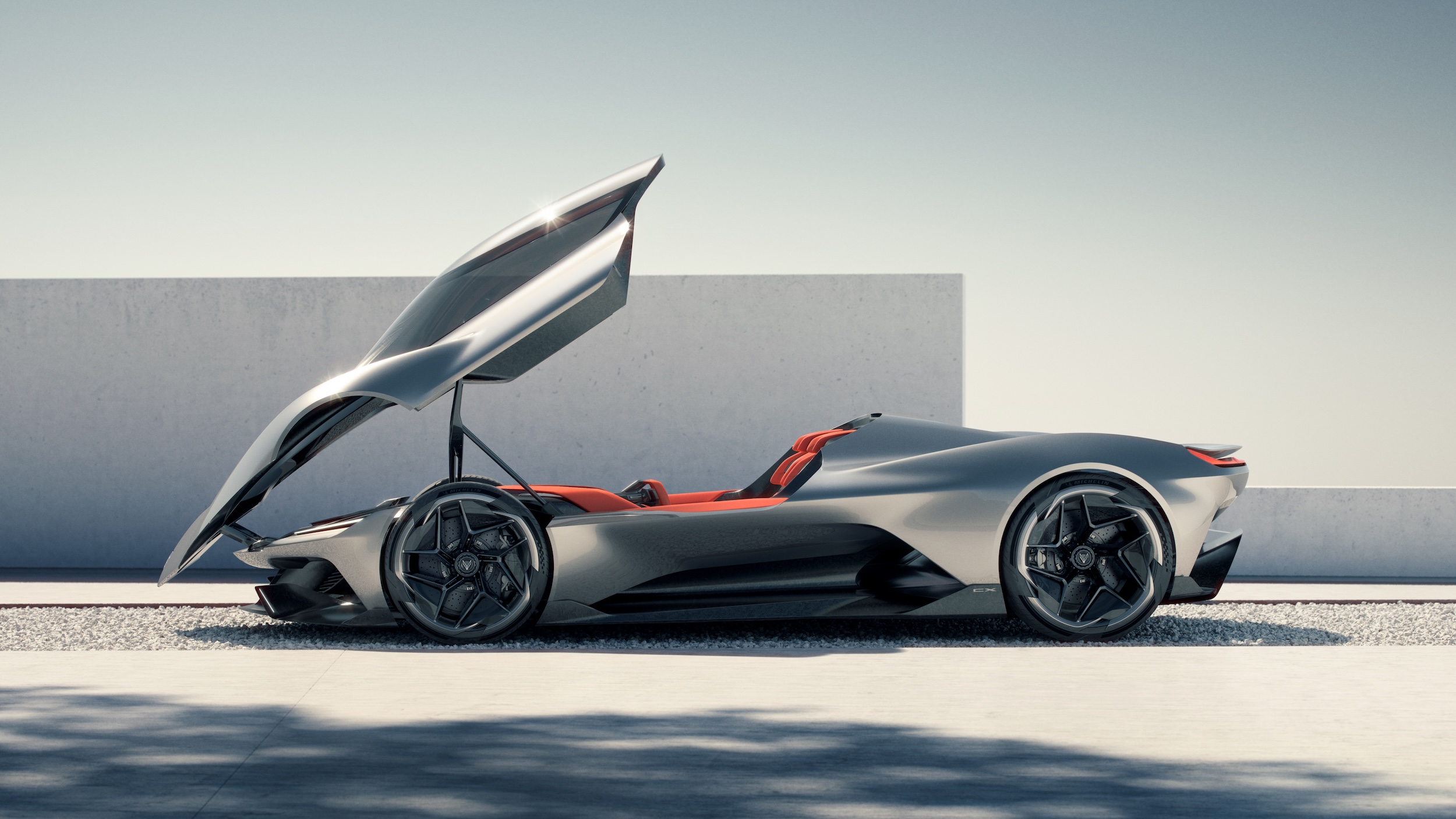
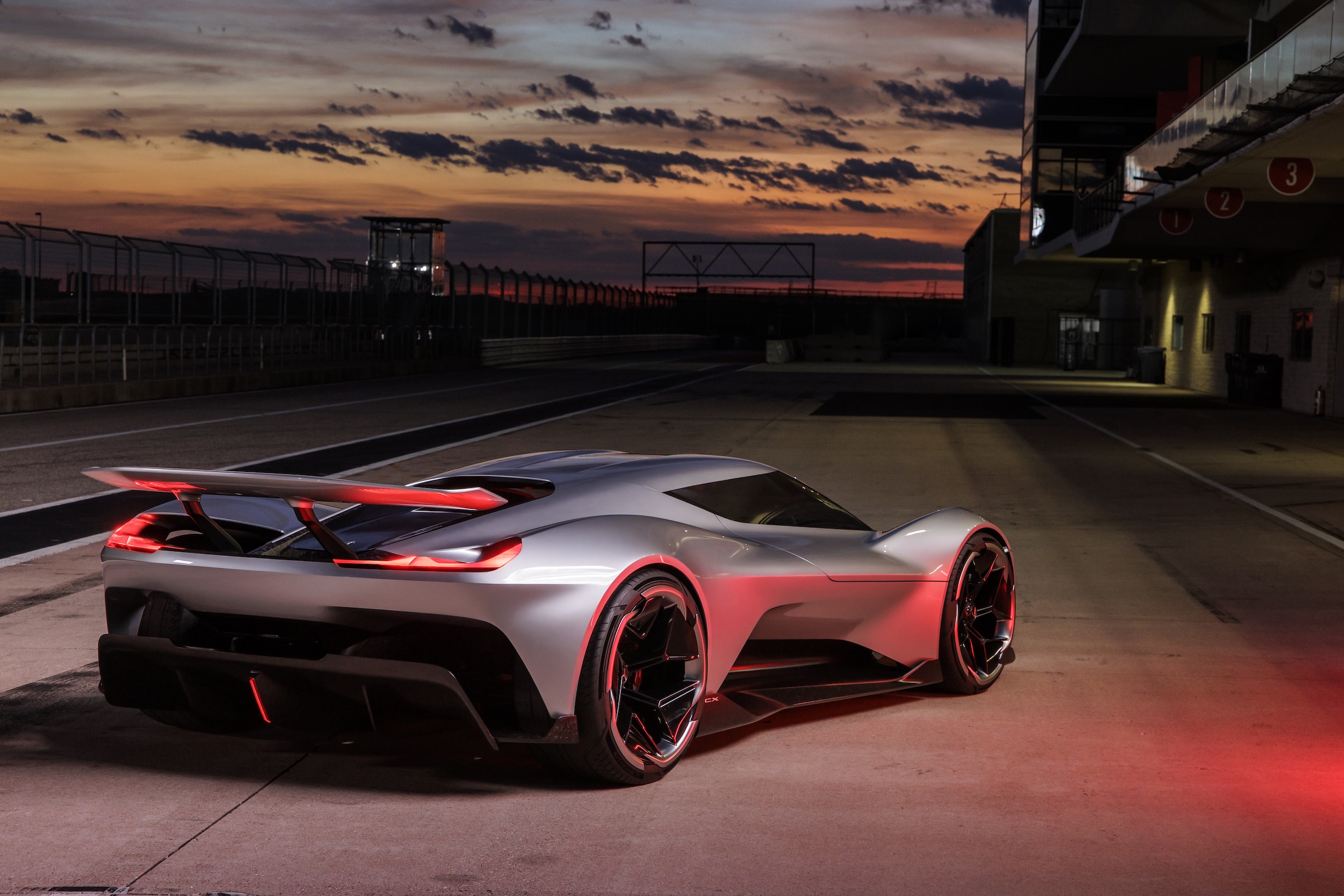
The design cues are meant to carry beyond concept cars. Kapitonov points to the pointed, shark-like nose, a canopy set between pronounced rear haunches and dual-element lights as familiar Corvette signatures. He says those themes aren’t disappearing from production models. That gives the CX concepts relevance as design studies, even though Chevrolet hasn’t presented them as previews of a specific next-generation car.
The powertrains make that distinction useful. The CX is fully electric, while the CX.R is a hybrid. Kapitonov said electric propulsion brings different packaging and power possibilities, along with its own challenges. His stated priority is choosing the system best suited to delivering high performance, rather than committing the Corvette name to one type of propulsion.
Corvette spokesperson Trevor Thompkins made a similar point: Chevrolet can design Corvette bodywork around different powertrains. He noted the brand’s experience with internal-combustion engines across seven decades of Corvette production and said the choice should reflect customer needs. For buyers, the concepts therefore signal design continuity more clearly than they signal a change in what will power a production Corvette.
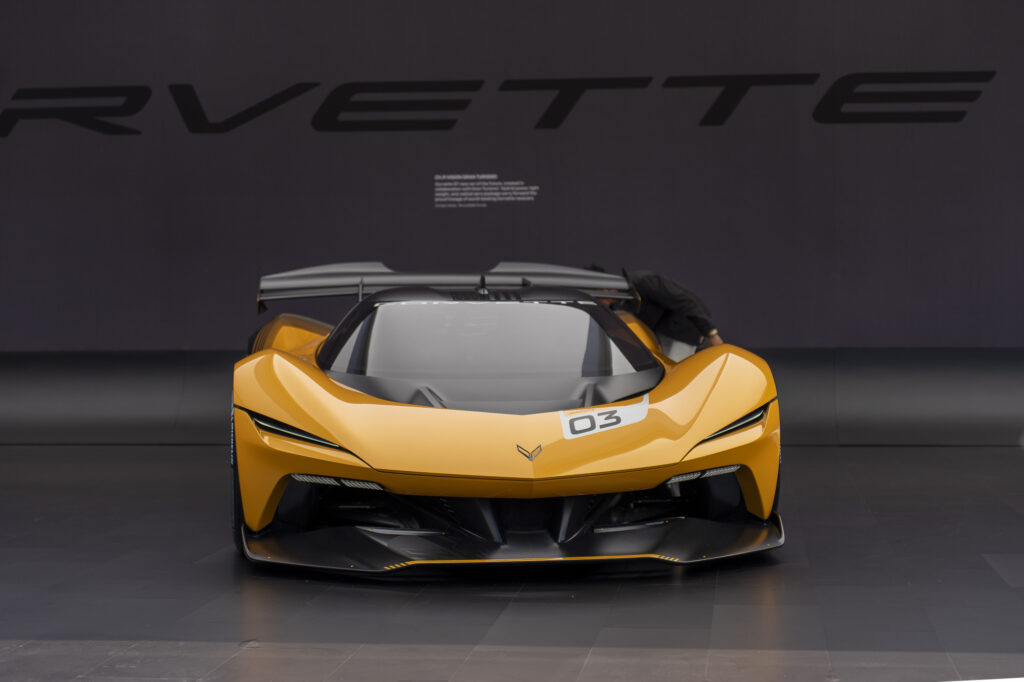
The CX twins are the last of three Corvette designs shown in 2025. Earlier concepts came from GM design studios in the U.K. and Pasadena, California. Chevrolet marketing director Amy Masica described the CX and CX.R as an expression of where the brand could go, adding that it intends to stay responsive to customers and pursue performance that can compete with luxury models from other brands.
Both concepts also connect the design exercise with Gran Turismo: the CX, CX.R and XP-87 can all be driven in the game. Kapitonov, an avid player, called seeing his work there a personal thrill and singled out meeting series creator Kazunori Yamauchi as part of the experience. The link suits a project built around possibility. The CX pair show how Corvette designers can carry recognizable shapes into very different powertrain layouts, while the XP-87 shows how far back that design conversation reaches.


