In lane Electric Vehicles
Next BMW M3 Spied Testing Ahead of 2026 Debut
Description
BMW’s next M3 is expected in 2026 with both combustion and electric versions. Spy photos hint at its design, while power and gearbox details remain unknown.
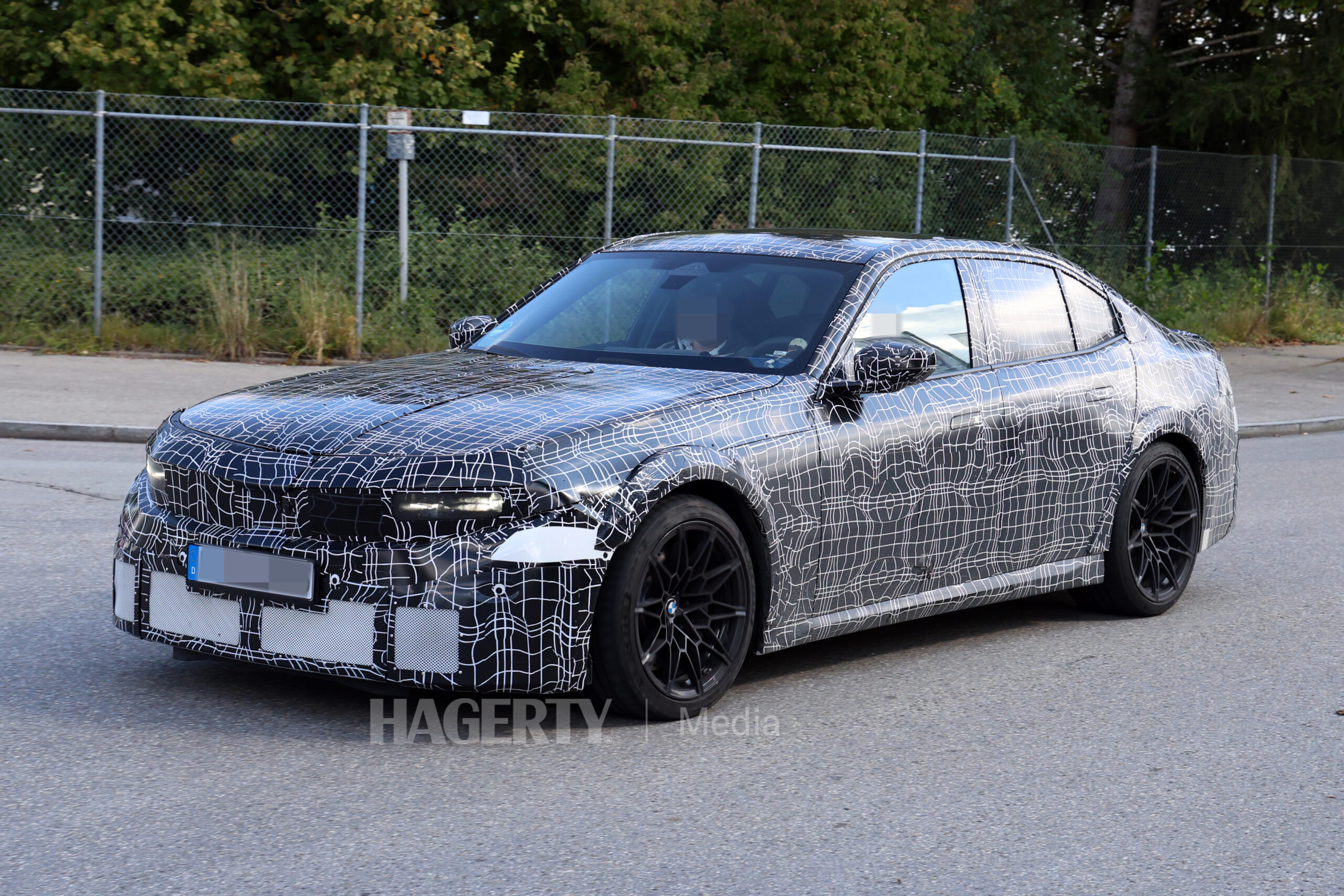
BMW’s next M3 has to carry two very different ideas of performance at once: a familiar combustion model and the nameplate’s first electric version. Spy photos of the combustion car give us an early look at how BMW may bring the sedan into its next design era, while leaving the details buyers will care about most—power, transmission and price—unconfirmed.
The current generation, comprising the G80 M3 sedan and G81 M3 Touring, arrived alongside the two-door F82 M4 in 2020. Its styling drew plenty of debate, but the M3 remained a key reference point for sports sedans. The next car enters a busier field, with more electric and combustion rivals vying for drivers who want performance and everyday usability. BMW’s challenge is to make the two powertrain versions feel like members of the same family without asking buyers to treat them as interchangeable.
BMW has already indicated that an electric M3 is coming, and the company says it will use four electric motors, one at each wheel, with extensive torque-vectoring technology. That setup gives BMW a way to manage drive to each wheel individually. It’s a different route to performance from the combustion car, and the technical promise will need to translate into a clear driving character when the EV arrives. The spy car shown here is the internal-combustion version, so these images tell us little about the electric model’s final shape or specification.
Design clues beneath the camouflage
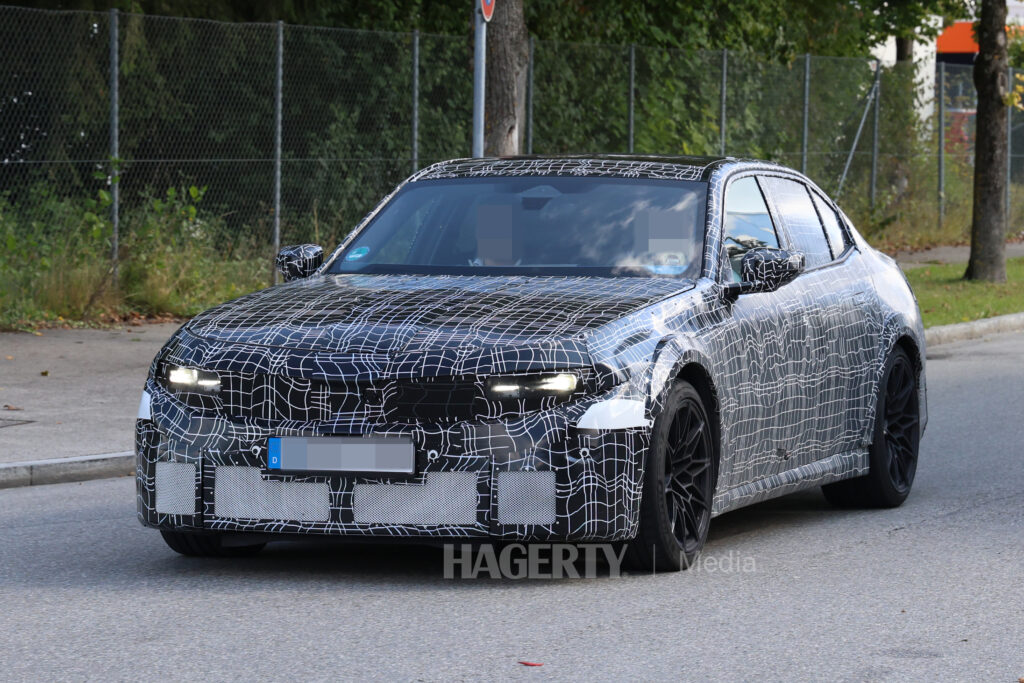
Heavy camouflage and apparent false body panels obscure much of the prototype’s surface. Manufacturers use added panels and patterned wraps to disguise the shape beneath, making it risky to read too much into a single crease or panel gap. Even so, the broad outline looks close to the concepts BMW has shown, and the front end appears to follow the company’s Neue Klasse design direction.
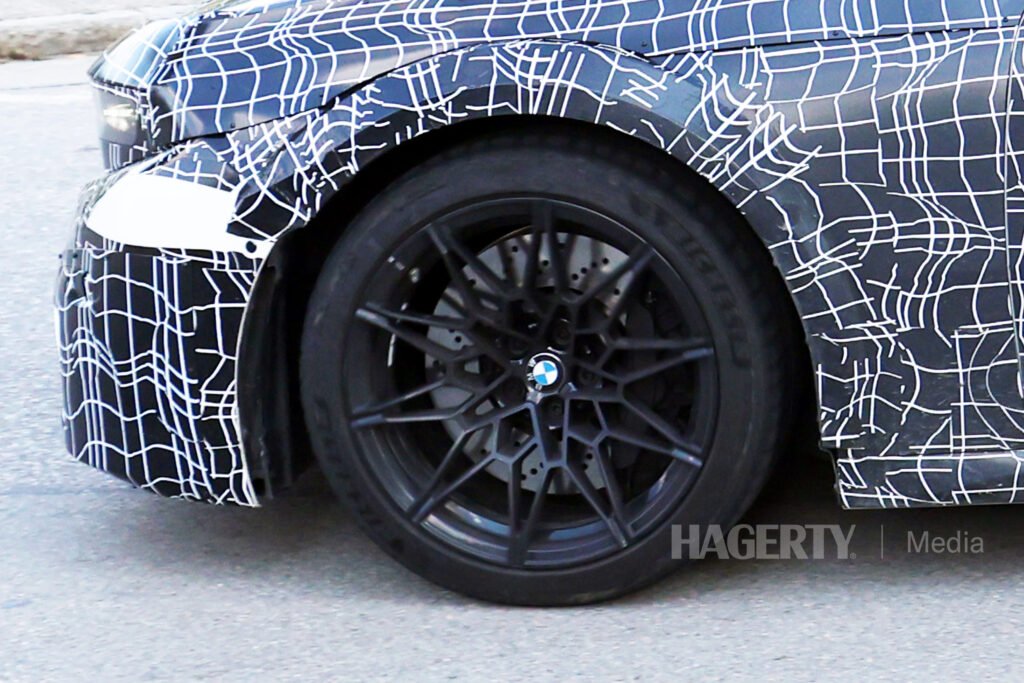
The large grille openings that defined the current M3’s controversial nose seem to be gone. The new front treatment pairs a different grille arrangement with headlights that fit the wider design shift. That’s a meaningful change for a model whose face has been a major part of the discussion since the present generation launched. The visible front fenders are broad, though the camouflage makes it hard to tell whether their pronounced arches will look integrated or add-on once the production body is exposed.
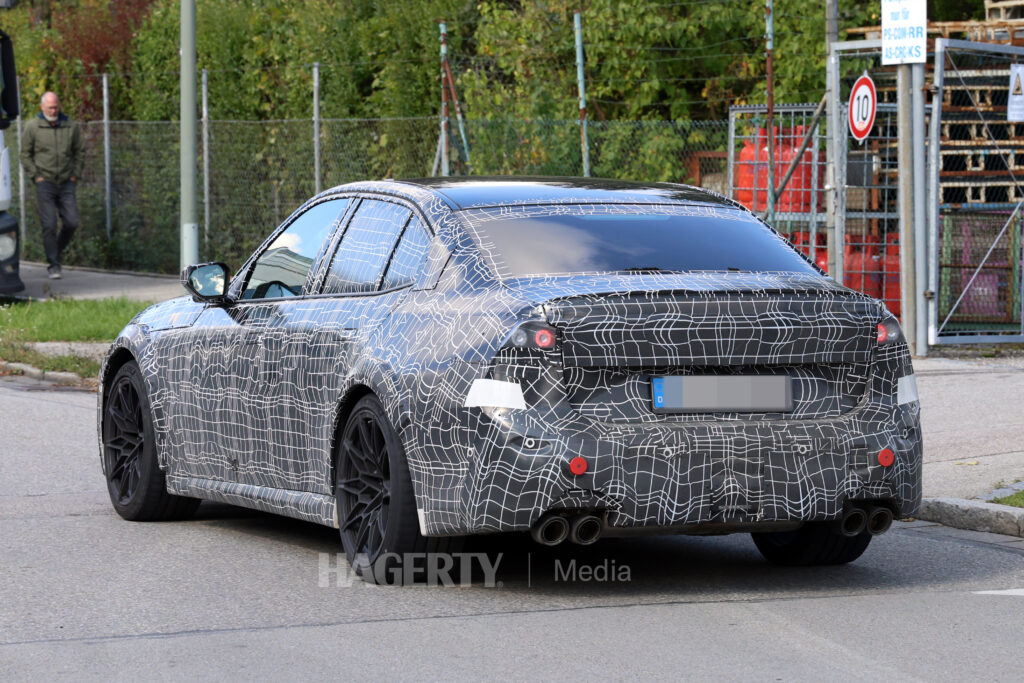
There are a few more useful hints around the sides and rear. A cover obscures the area where the rear window meets the C-pillar, but a view through the cabin shows the return of BMW’s Hofmeister kink. Another covered section sits low in the center of the rear bumper. It may conceal a split in the rear aerodynamic treatment, similar to the body-colored section used on the current M5, but that remains a visual guess rather than a confirmed feature.
Powertrain and gearbox remain open questions
Four exhaust outlets appear to be present on the combustion prototype, continuing a familiar M3 cue. The arrangement has been part of the model’s look since the third-generation E46, and its apparent return helps distinguish this car from the electric version. It doesn’t, by itself, confirm the engine’s configuration or output.
The current M3 uses BMW’s 3.0-liter S58 twin-turbo inline-six. Output ranges from 473 hp in the base model to 523 hp in the all-wheel-drive M3 Competition; the rear-wheel-drive Competition produces 503 hp. Those figures offer a point of comparison, but BMW hasn’t confirmed what the next combustion M3 will make. A base output around 500 hp is a reasonable expectation based on the current lineup, not a published specification.
The six-speed manual is another unresolved detail. BMW currently offers it on the base M3, while the Competition packages don’t include that option. Keeping a manual would give the next car a distinct appeal for drivers who want a more involved connection to the engine; dropping it would narrow the range of ways buyers can configure the combustion model. There’s no confirmation either way, so the prototype’s exterior can’t answer that question.
Timing and what buyers should watch
The next M3s are expected to appear in some form in the coming months, with sales planned for 2026 as 2027 model-year cars. BMW hasn’t said whether the electric and combustion versions will arrive together or in sequence. That timing matters: the first version to reach buyers will shape how the two-car strategy is understood, especially if their designs, pricing and driving character differ substantially.
For now, these photos are strongest as evidence of the combustion car’s broad proportions and changing front-end treatment. They don’t settle the questions that will define the purchase decision: output, transmission, price, equipment and how the two powertrains compare in daily use. The next useful clues will come when BMW shows more of the production design and confirms the specifications. The key takeaway is already clear, though: the next M3 is being developed as both an electric performance car and a continuation of the familiar inline-six formula.
More on the BMW M3’s evolution, the next M3’s expected colors, pricing and specifications, the E46-generation M3 and driving the current M3.
Read the original report at Hagerty Media.
===END===

