In lane Electric Vehicles
Chevrolet Corvette Indy: The Mid-Engine Concept That Shaped Later Corvettes
Description
The 1986 Corvette Indy paired a mid-engine layout with Lotus engineering. Its running versions tested ideas and hardware that later reached production Corvettes.
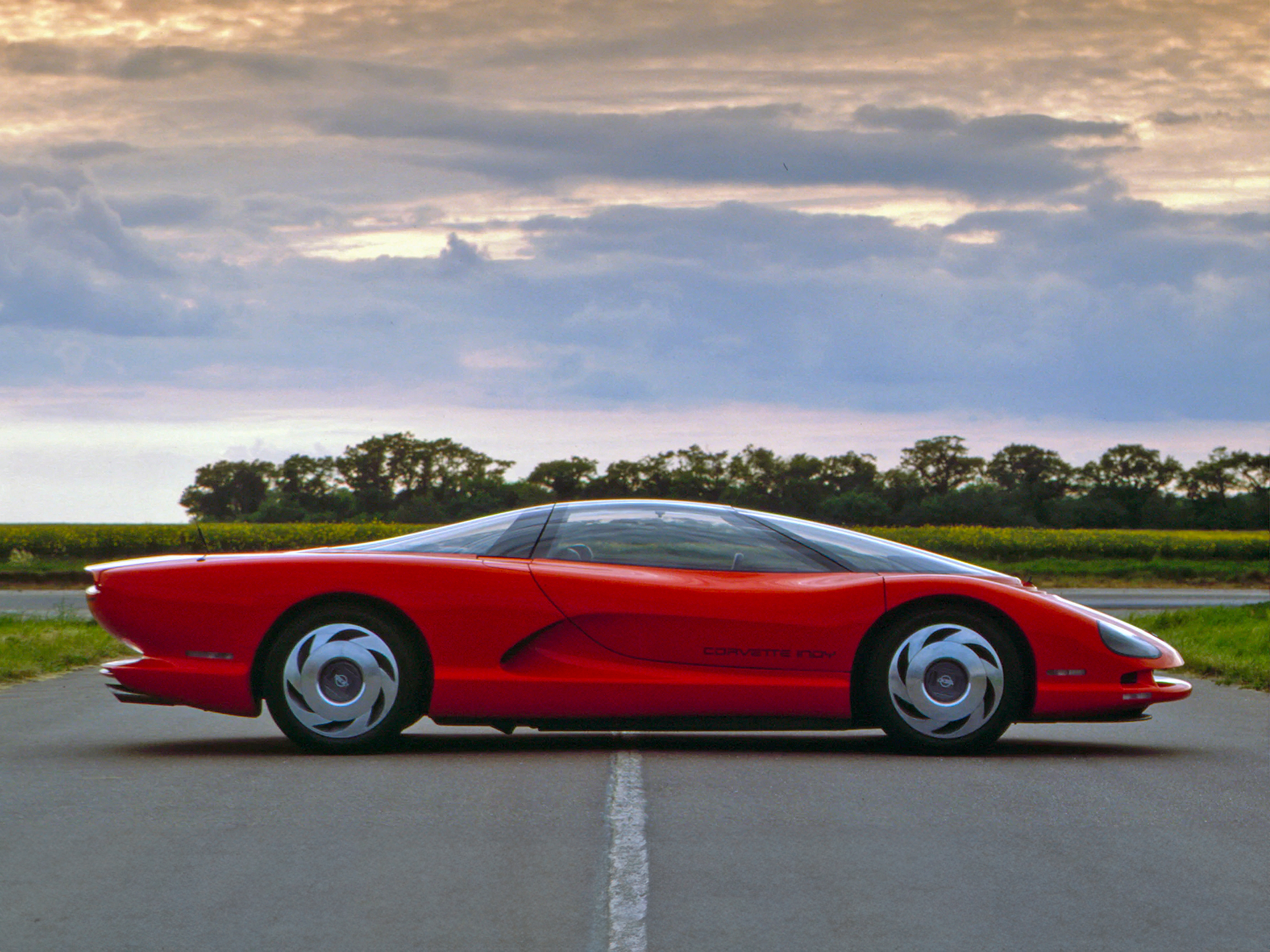
The 1986 Chevrolet Corvette Indy made the mid-engine Corvette look close enough to touch. Three cars were built, though only two ran: the first was a static showpiece, while the later examples became working prototypes. Their mix of four-wheel drive, active suspension and Lotus-designed V-8 engineering made the Indy more than a styling exercise. It also previewed technologies that would reach later Corvettes.
Chevrolet had explored mid-engine layouts for decades by then. The single-seat CERV 1, begun in 1959, was an open-wheel research vehicle with little connection to a road-going sports car. The 1964 CERV 2 pushed the idea further, with Chevrolet describing it as the first mid-engine car with permanent four-wheel drive. Other experimental cars followed, including concepts that drew attention to rotary engines. The Indy brought that long-running interest into a more complete, road-car-shaped package.
For background on the longer path to a production mid-engine Corvette, see this account of Chevrolet’s mid-engine Corvette efforts. The Indy arrived as a particularly vivid chapter in that history, with a brief to connect Chevrolet’s road-car identity to the racing engine built by Northampton’s Ilmor Engineering.
From show car to working prototype
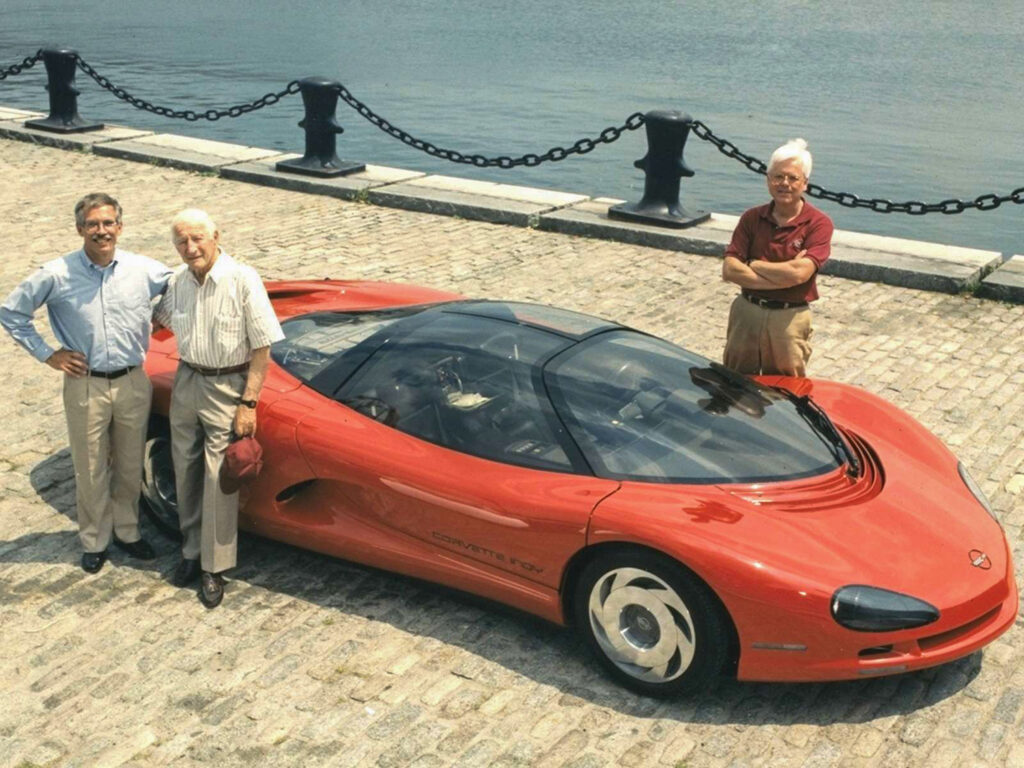
GM approved the project in late 1985, with the first car scheduled to appear at the following year’s North American International Auto Show in Detroit. The timetable was exceptionally tight: the design moved from clay model to full-size show car in six weeks. The result looked ready for the road, but its transversely mounted twin-turbo 2.65-liter racing engine was fitted for display. That first Indy could not run under its own power.
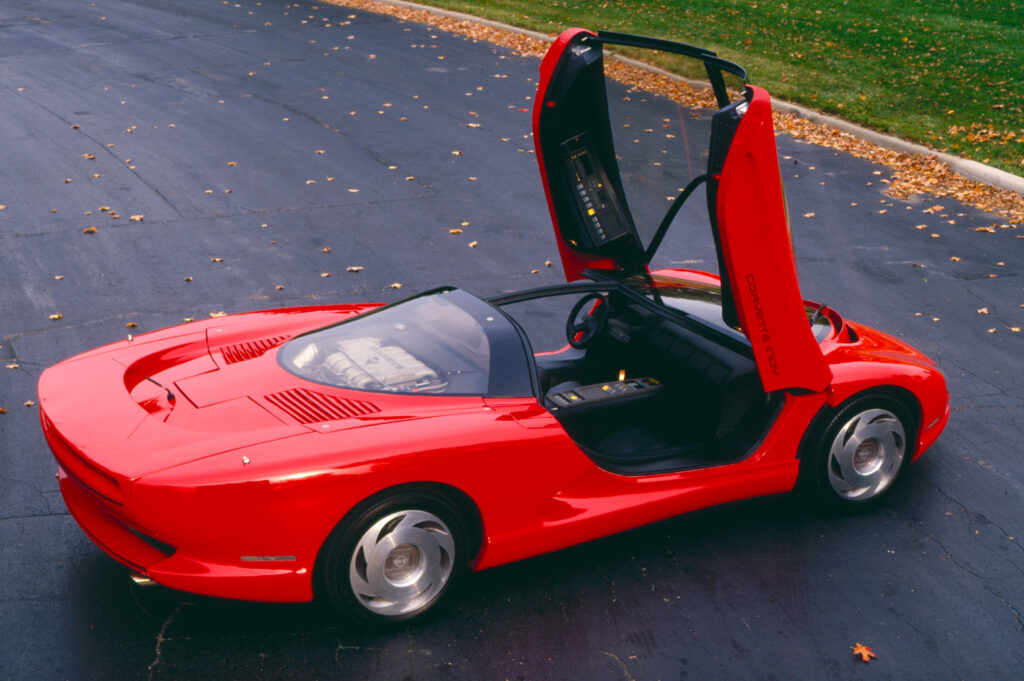
The reaction from visitors and the automotive press persuaded the Corvette development team to ask for more. Chevrolet built two additional cars, one for public relations appearances and another as a mobile test bed. Those cars swapped the show car’s race-engine installation for a purpose-built, all-aluminium 5.7-liter V-8. Designed by Lotus, the double-overhead-cam, 32-valve engine produced 380 hp at 6,000 rpm and 370 lb-ft of torque at 3,800 rpm.
That engine had a longer life than the concept itself. It formed the basis for the V-8 used in the 1990–95 Corvette ZR-1, linking the Indy’s experimental brief to a production Corvette with a very different body and layout. The ZR-1 connection is a useful reminder that a concept car’s significance isn’t measured only by whether its own shape reaches showrooms; powertrain work can carry on elsewhere. Details of the production model are available in this 1990 Corvette ZR-1 reference.
Hardware aimed at speed and control
Chevrolet insiders said the Indy could reach 180 mph and accelerate from 0 to 60 mph in five seconds. Those were claimed figures, not independent test results. The car’s traction setup included four-wheel drive and unusually broad tires: 275/40ZR17 at the front and 315/35ZR17 at the rear. The concept’s proportions and equipment point to a car conceived around high-speed capability, with four driven wheels and a large contact patch supporting that ambition.
Active suspension was another major part of the package. Team Lotus began its work on the system in 1981–82, and Lotus Engineering continued the effort. In 1984, it received a contract from General Motors to develop a group of active systems. The work was tried first on the Lotus Esprit, then on GM vehicles including the Buick Park Avenue and several conventional Corvettes. The Indy gave that wider engineering program a striking, high-performance showcase.
A research car with a longer reach
The Indy’s influence extended into the 1990 CERV III, a later research vehicle powered by a twin-turbo version of the Lotus-Chevrolet engine. The broader concept also anticipated technologies that appeared on mainstream Corvettes, including fly-by-wire throttle control, antilock brakes and electronic traction control. Carbon-fiber construction and a satellite-navigation system were part of the ideas explored around the Indy and its related research program.
That list doesn’t mean every feature transferred directly from the Indy to a production car, or that the concept itself was a near-ready showroom model. Its first example was only a static display, and the performance figures came from Chevrolet insiders. But the two running cars gave engineers a platform to work through systems and packaging ideas that mattered beyond the auto show floor.
The Corvette Indy remains compelling because it joined a distinctly American sports-car nameplate to engineering shaped in part by Lotus. GM held a 91 percent stake in the British carmaker at the time, giving the relationship a practical industrial foundation as well as a technical one. The project’s lasting story is that a dramatic mid-engine concept could serve two jobs at once: attract attention in Detroit and help test ideas for future cars. Its road-going promise stayed a promise, but parts of its engineering story carried on.
Read the original feature at Hagerty Media.
===

