In lane Electric Vehicles
AMC Javelin Pierre Cardin: A Pony Car With a Fashion Designer’s Eye
Description
Pierre Cardin’s vivid cabin and AMC’s sculpted body gave the Javelin a distinctive blend of pony car aggression and touring car polish.
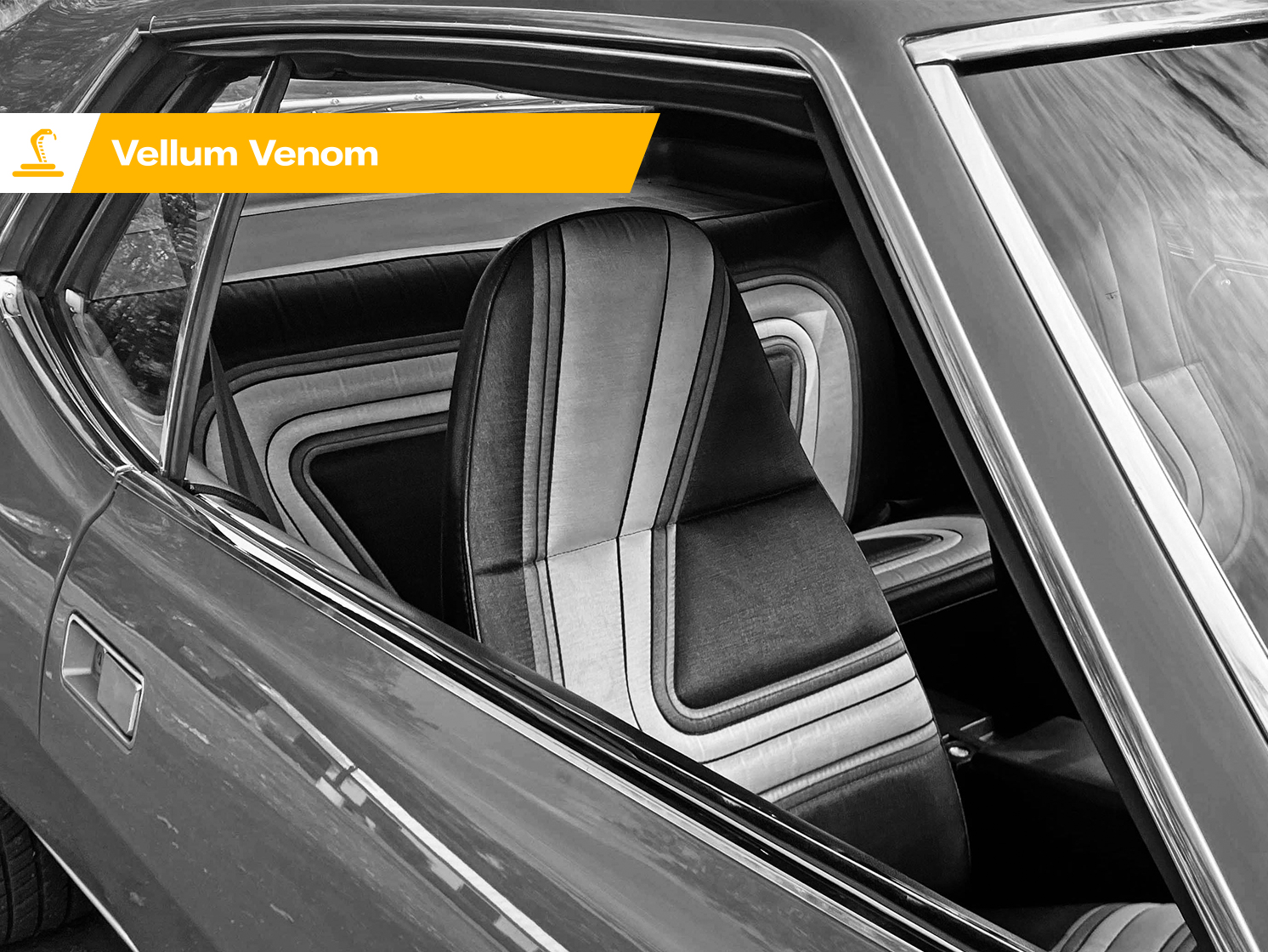
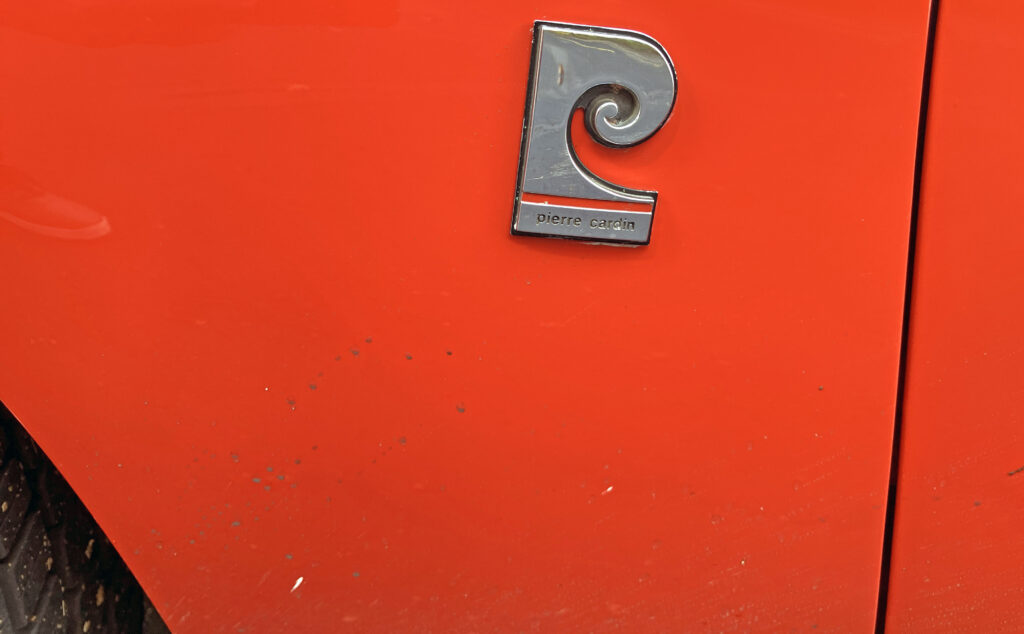
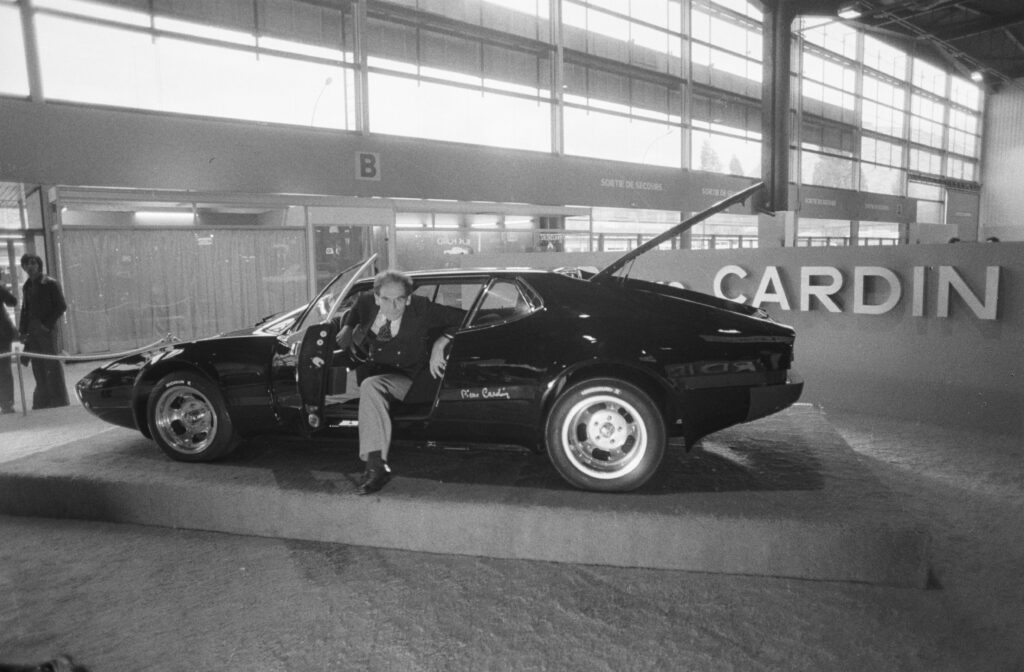
The Pierre Cardin edition makes the AMC Javelin’s case through design rather than numbers. Its cabin turns bold color and geometry into a coherent theme, while the 1971–74 body refresh gave the pony car long, sculpted fenders and a distinctive chrome-framed nose. Together, they make this Javelin feel closer to a well-dressed touring car than its rivals’ familiar sport-and-luxury trim formulas.
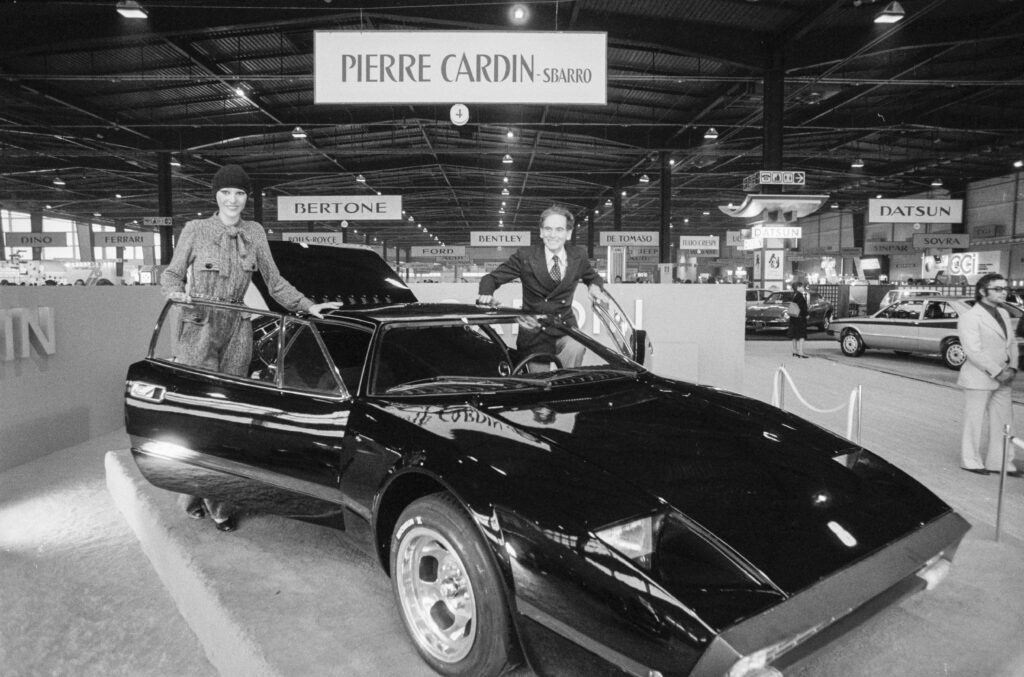
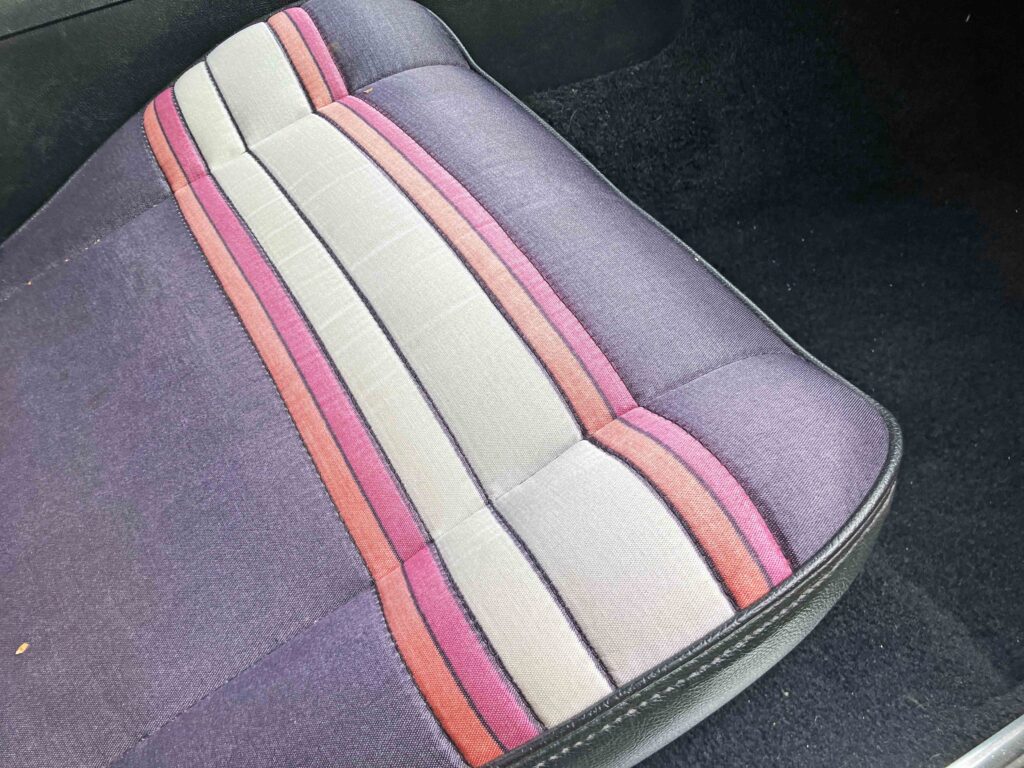
Cardin had already made his name by challenging expectations in fashion, and he brought a similarly assertive eye to automotive interiors. He once described his clothes as “worrying,” comparing them to contemporary music. That attitude suits the Javelin’s cabin: orange and fuchsia cut through grayscale seat contours, and the result asks the eye to follow the design rather than settle into a conventional pattern.

A cabin built around color and shape
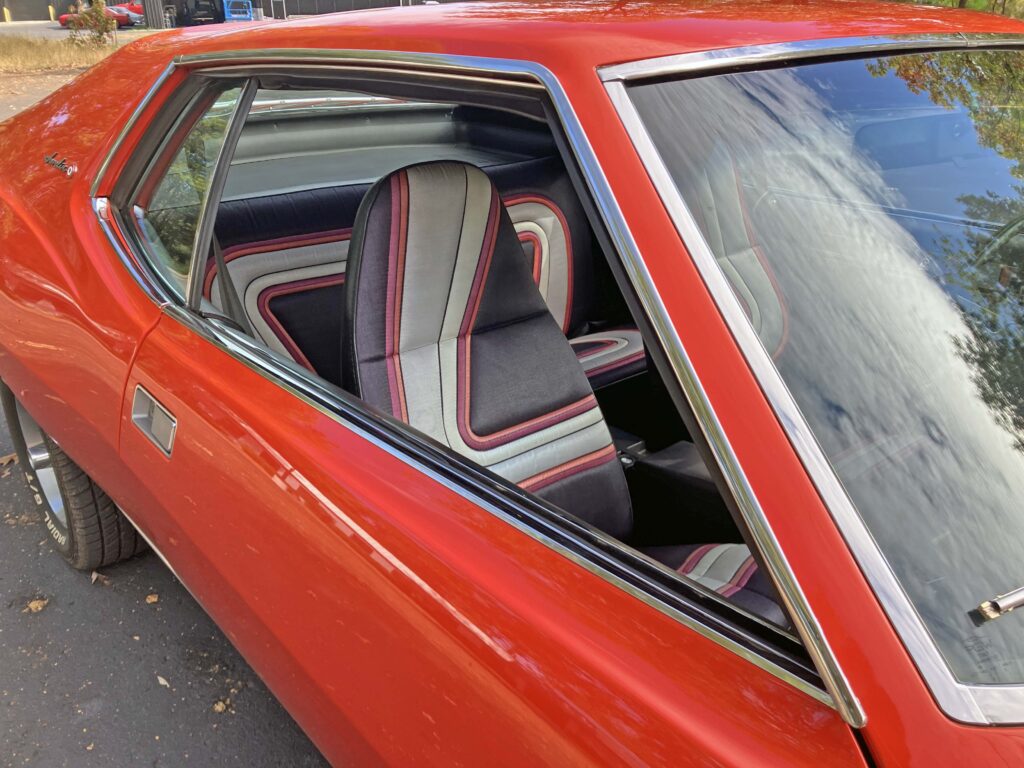
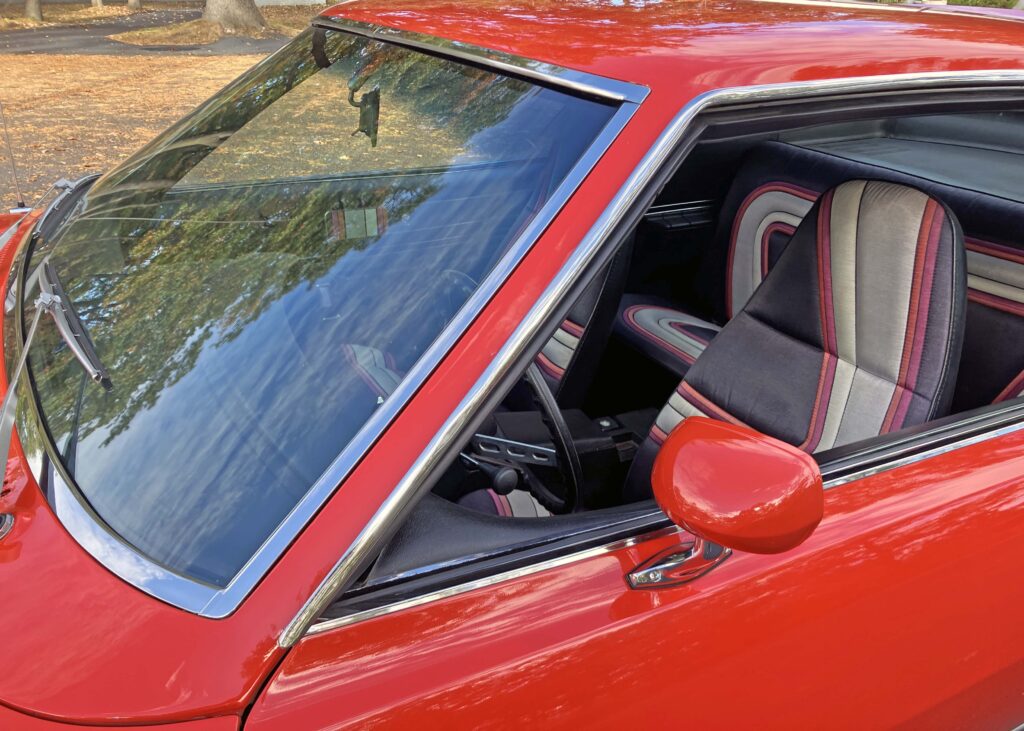
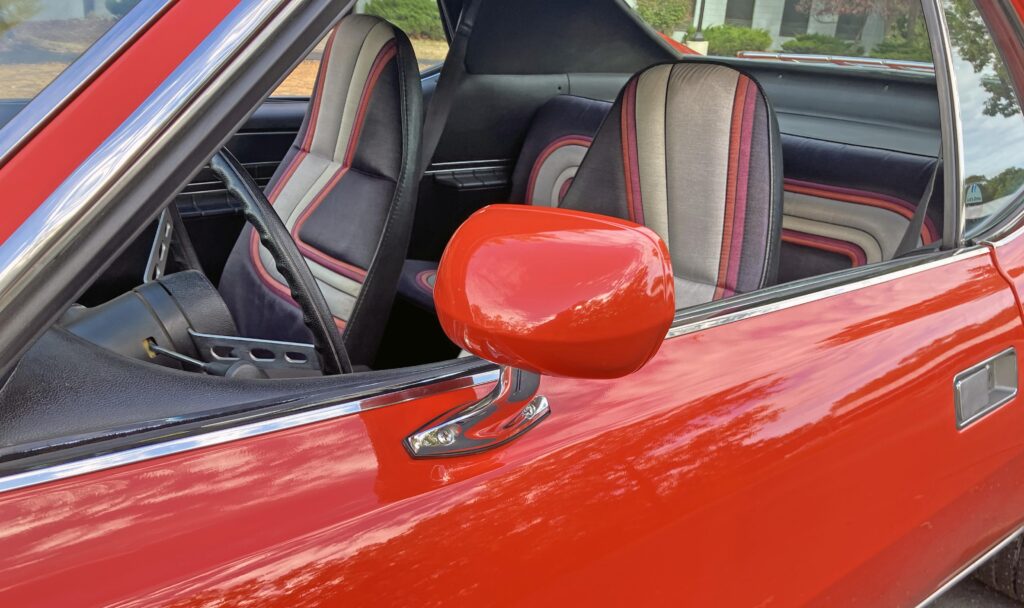
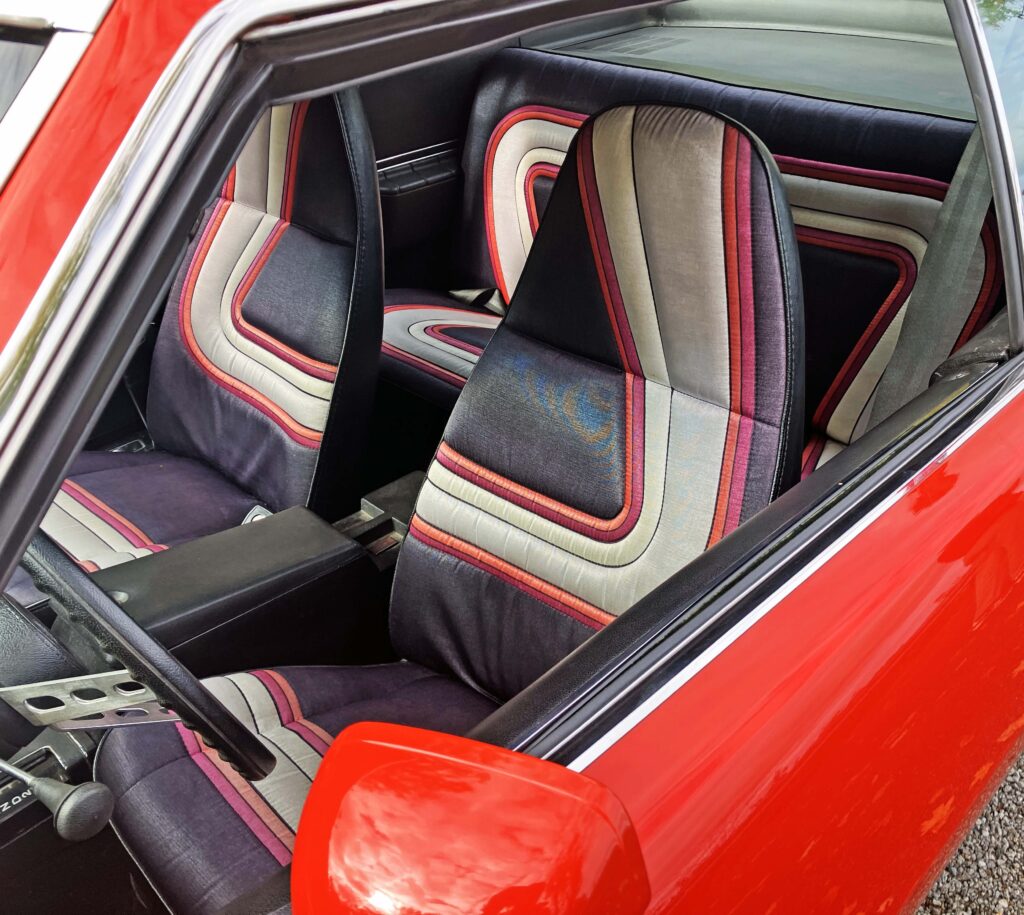
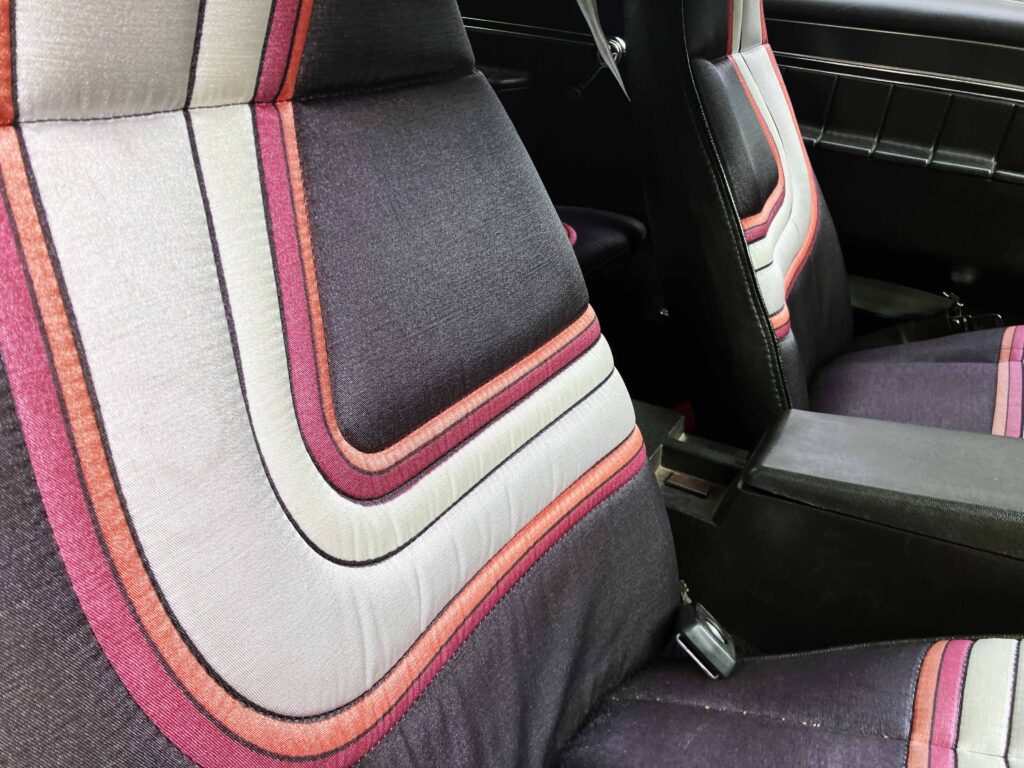
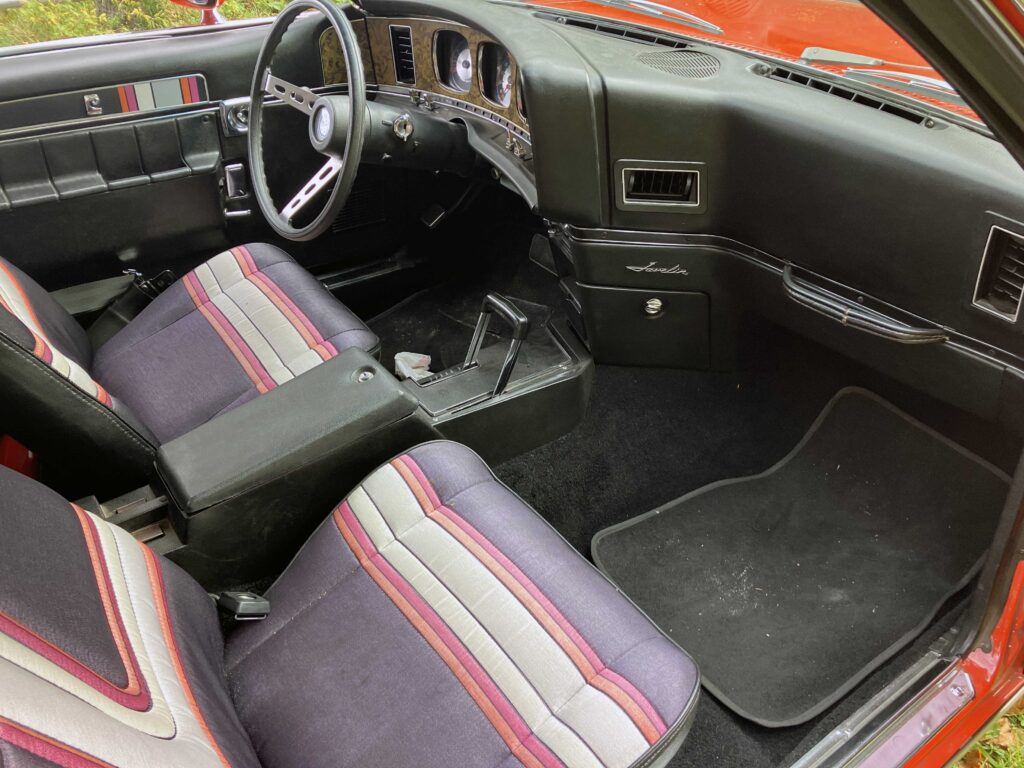
The front bucket seats are the interior’s strongest statement. Their linear forms meet at the center and read almost as one broad design when viewed together. Grayscale bands temper the bright colors, giving the upholstery a balance that’s dramatic without becoming visually chaotic. The comparison with the split-bench treatment in the 1996 Ford Taurus is instructive: both cars make the front seats feel connected, but the Javelin’s stronger contours and bolder palette make the idea more convincing.
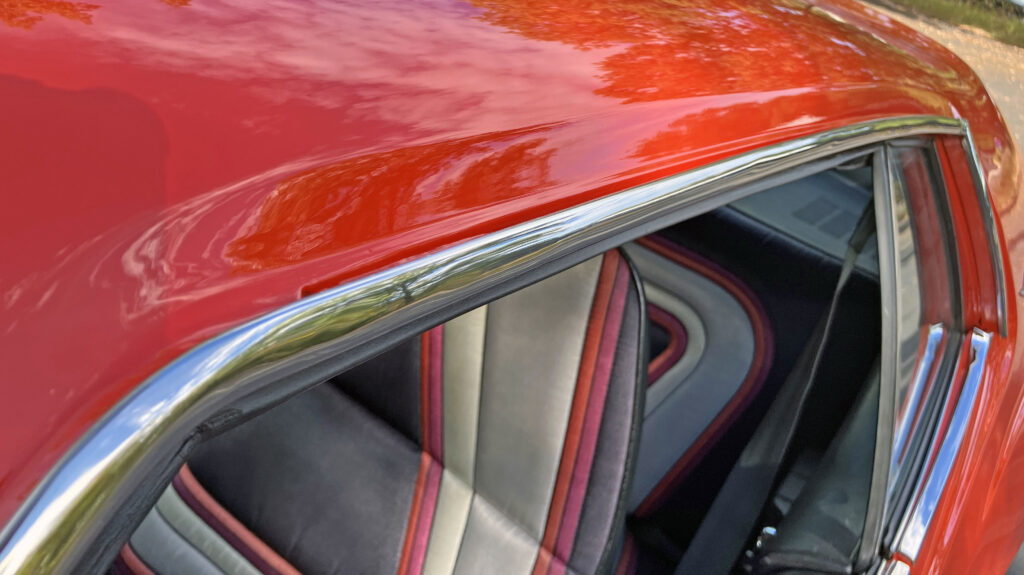
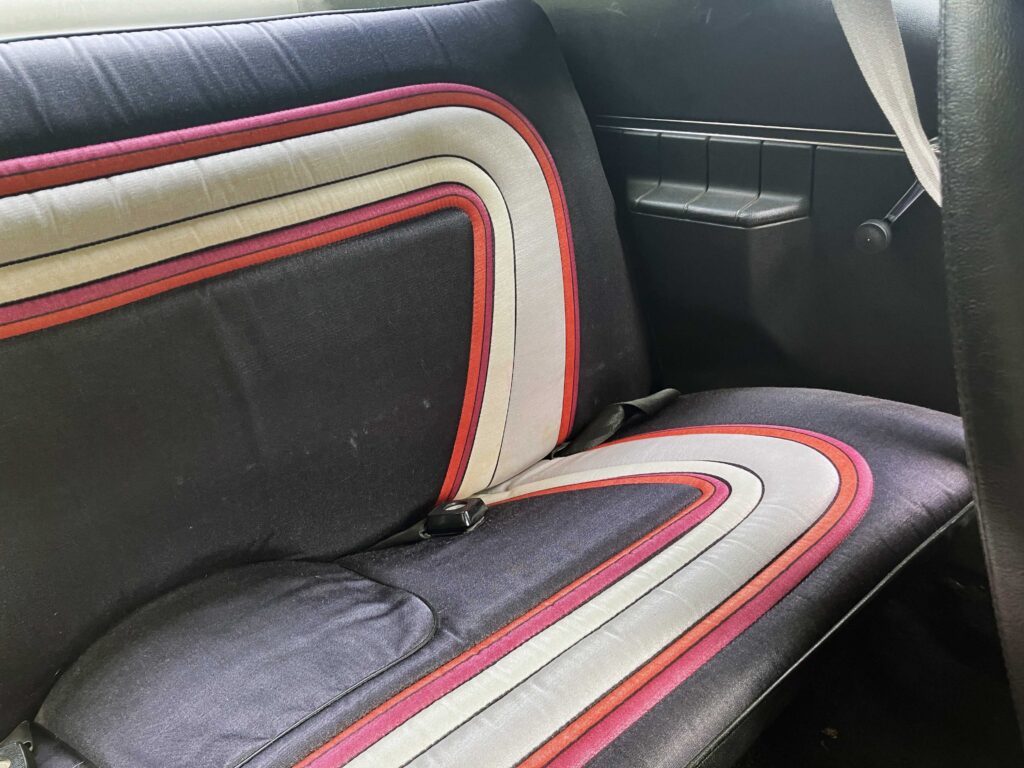
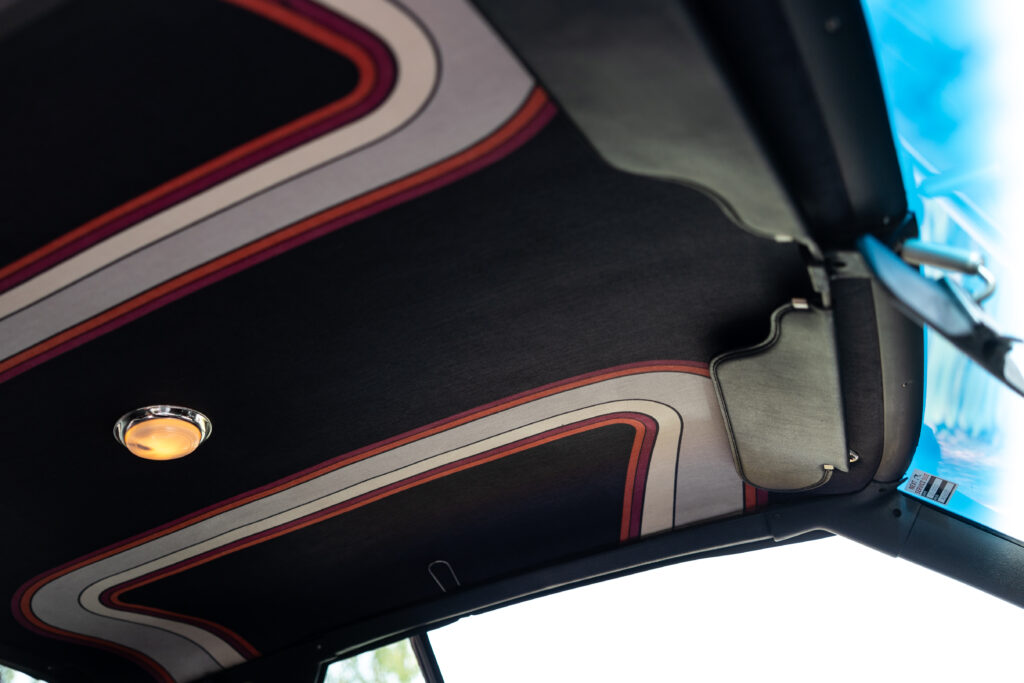
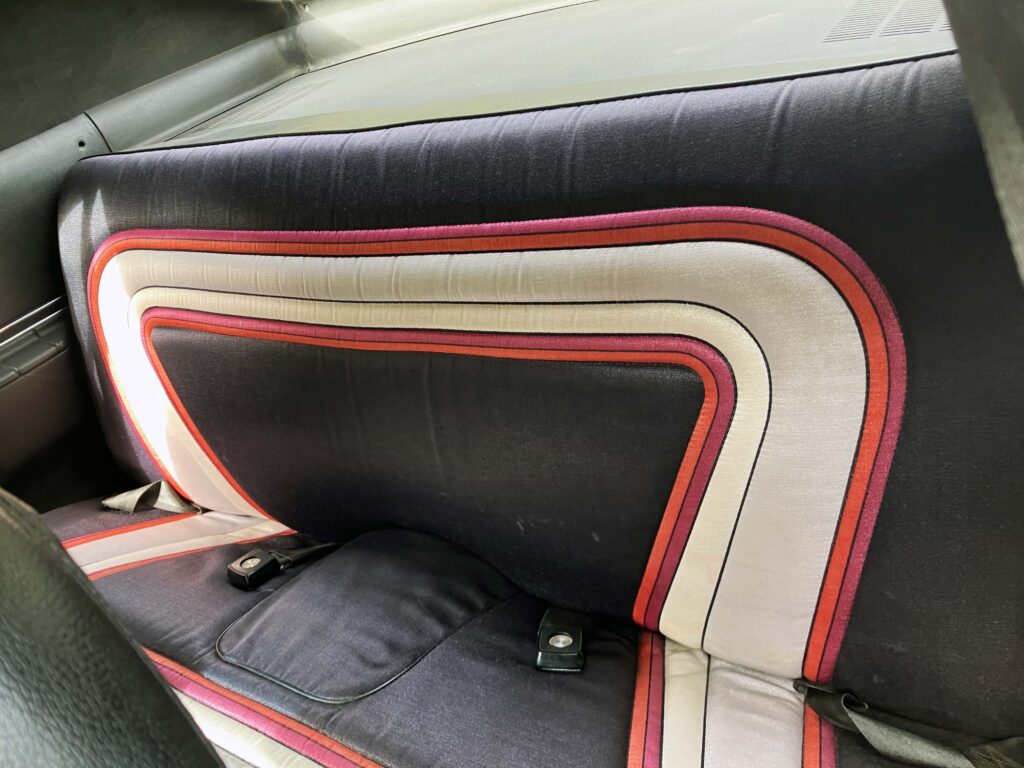
That geometry continues beyond the front seats. The rear bench uses paired U-shaped forms that meet near the seat-belt anchors, while the headliner carries related curves outward across the roof. Seen as a whole, the front and rear seating and the ceiling feel like parts of one composition. The shapes can call to mind the T-roof treatment of a C3 Corvette, though the resemblance may be coincidence.
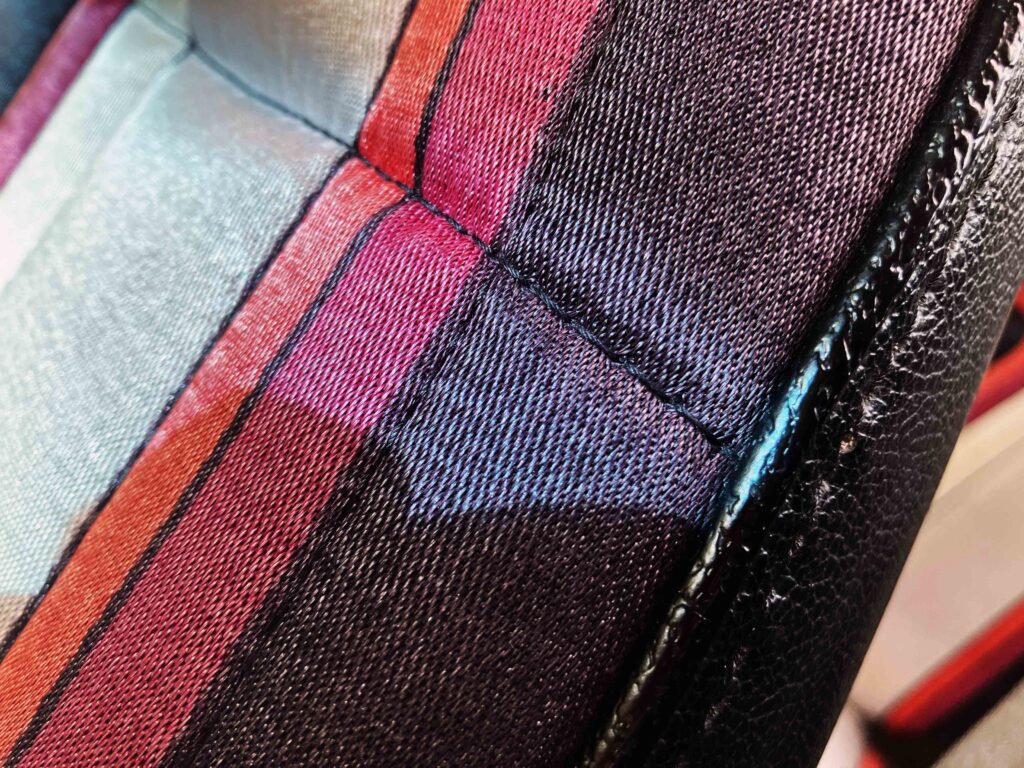
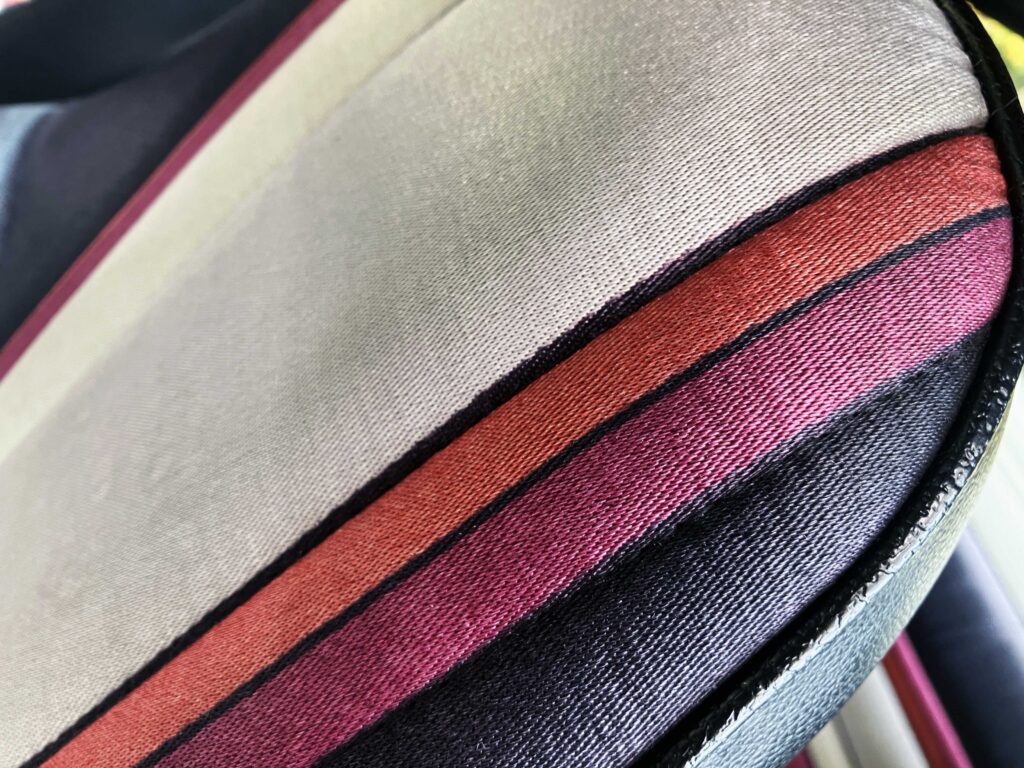
Color is doing more than decorating the cabin. The gradients change how the seat shapes read, and the vivid bands seem to move as the viewing angle changes. It’s a little like a garment that looks ordinary on a hanger and comes alive once it’s worn: the Javelin’s upholstery depends on the relationship between its form, color and setting.

The rear seat is especially free of the usual visual cues that divide a bench into prescribed places. Rather than relying on stitched outlines to mark separate seating positions, it uses the broad color pattern to guide the eye. That approach gives the back seat a sculptural quality, even if the design is more concerned with visual effect than with making each place look individually defined.
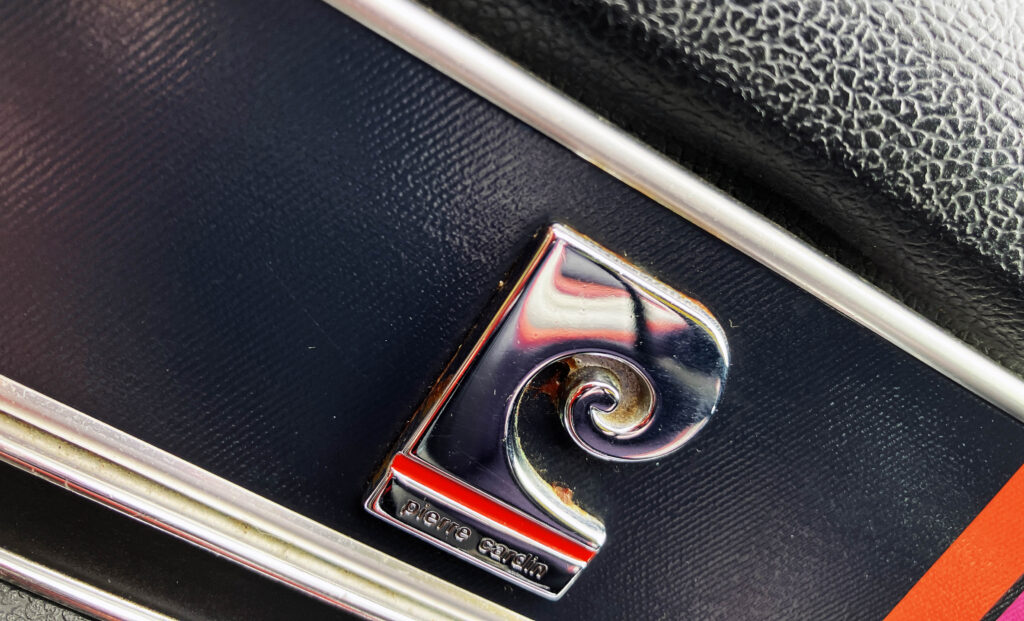
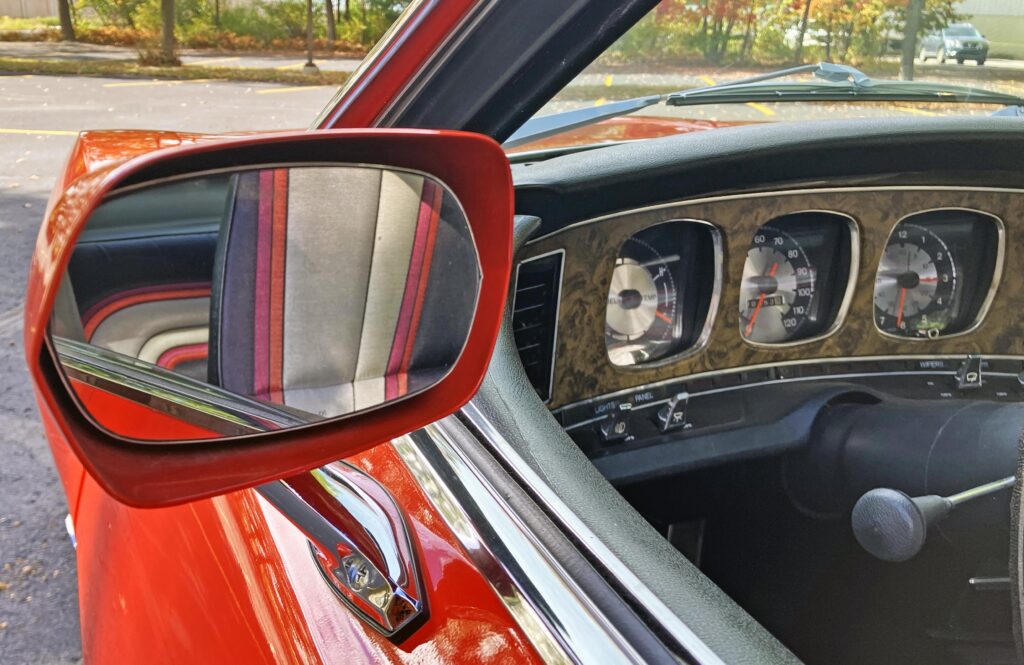
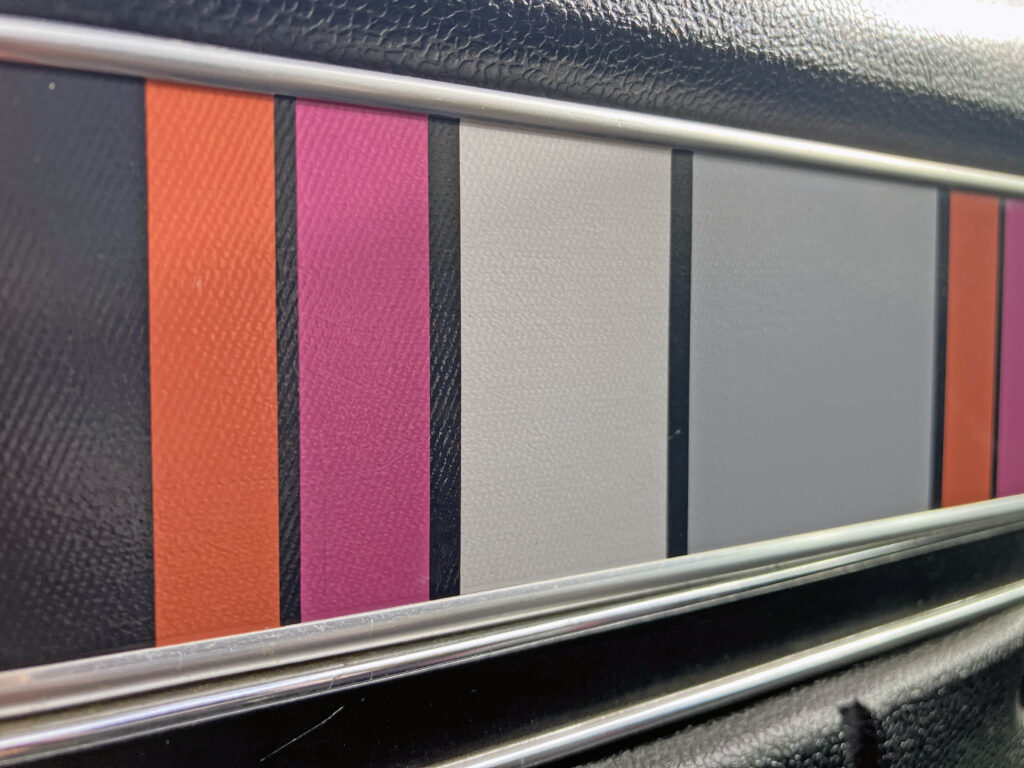
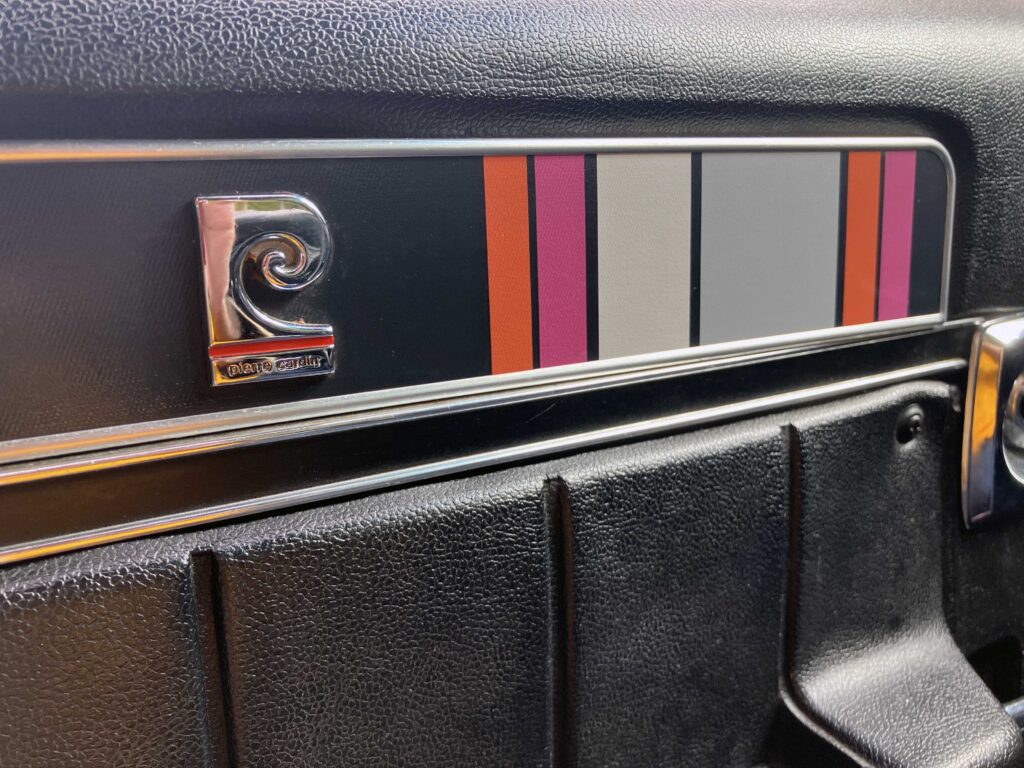
The door panels don’t carry that idea as far. Their colors repeat the cabin’s palette, but the stripes stop short of the armrests instead of flowing into them. There’s no U-shaped continuation to link the doors with the seats and headliner. Beside the upholstery’s elaborate curves, the panels feel like a missed opportunity.
AMC’s dashboard, by contrast, has enough character to stand on its own. Its sweeping shape and low-set glovebox, positioned beneath the Javelin emblem, give the fascia a distinctive profile. The faux burl wood adds a more traditional luxury cue, while the sculpted dash and instruments keep the overall effect firmly modern for the period. Cardin’s influence is less apparent around the gauges and on the doors, but the broader cabin still feels unusually considered for a pony car.
A distinctive take on pony car proportions
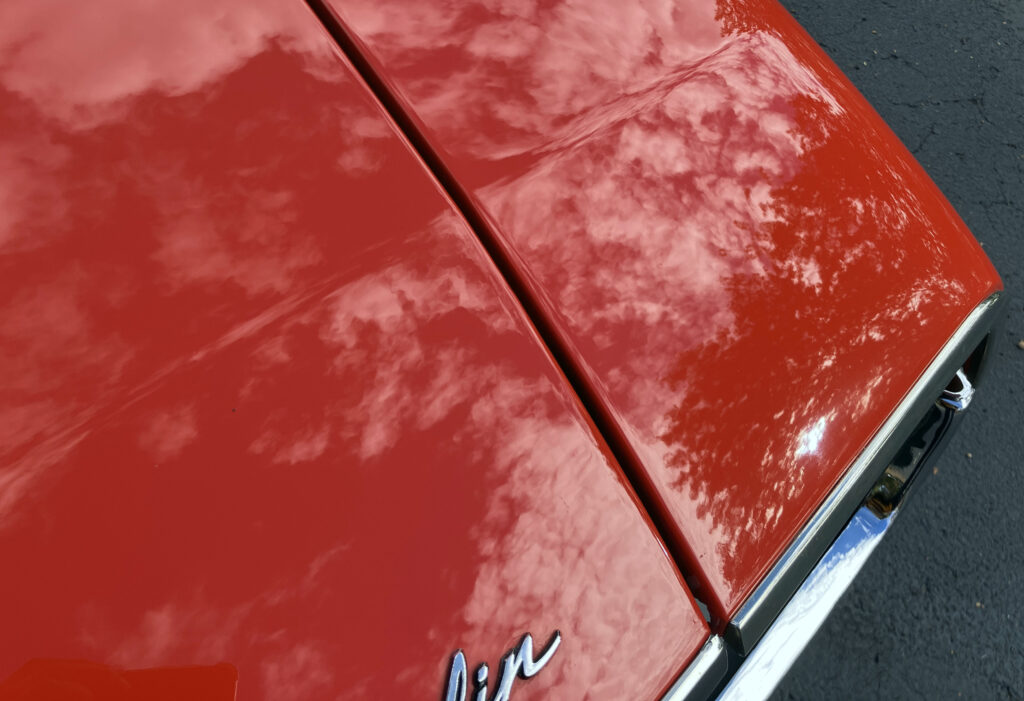
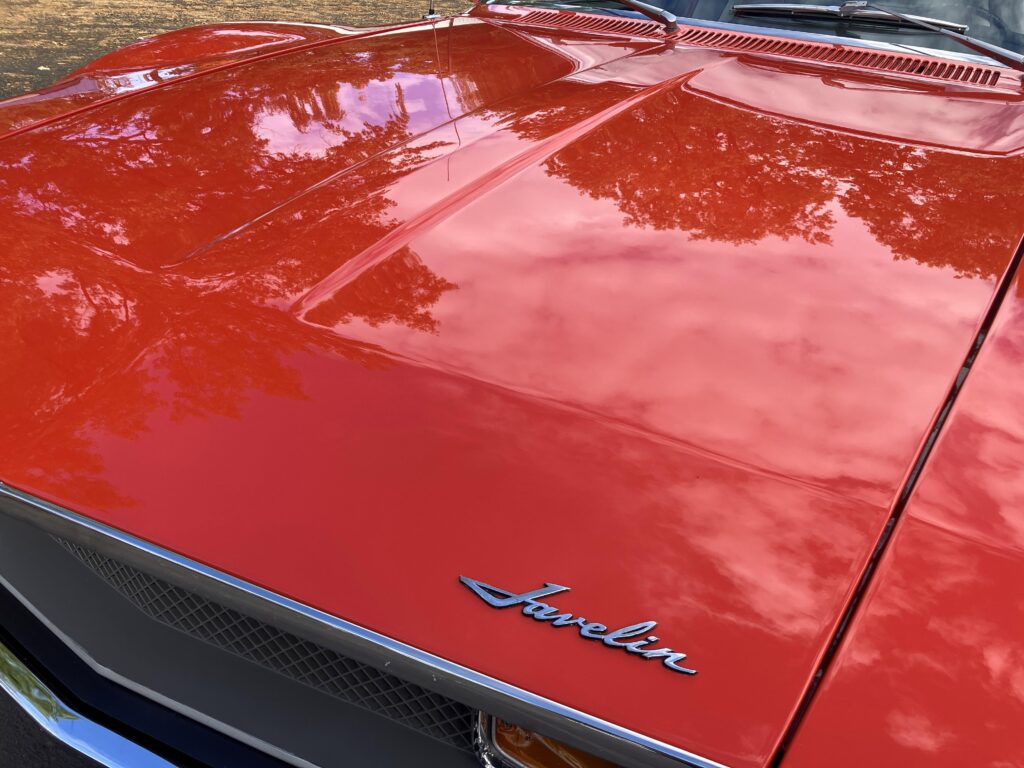
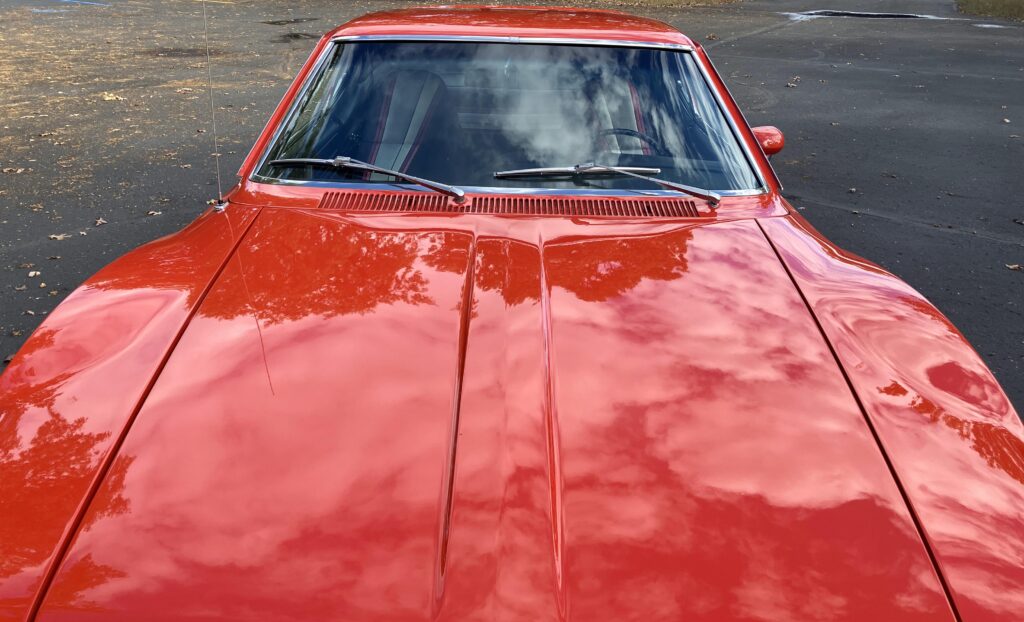
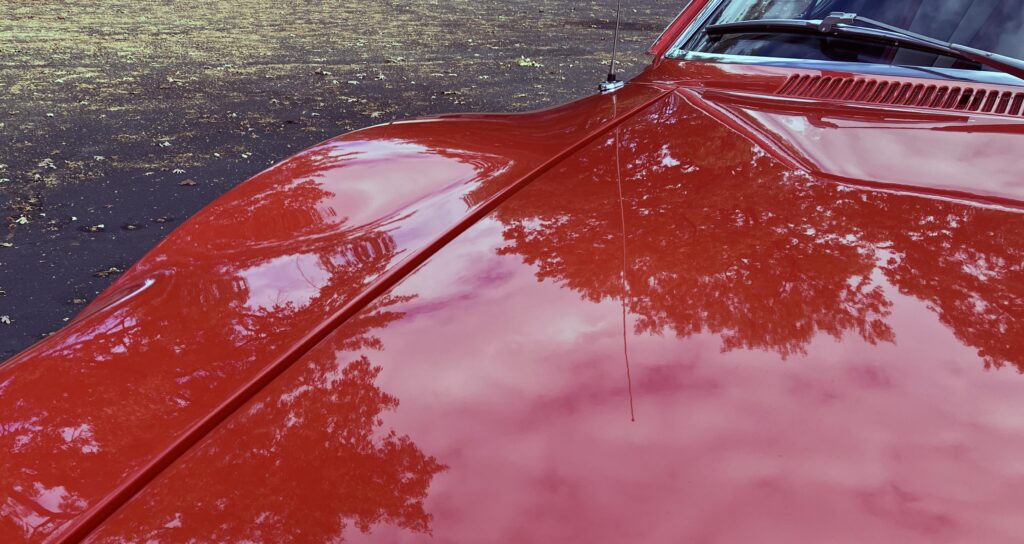
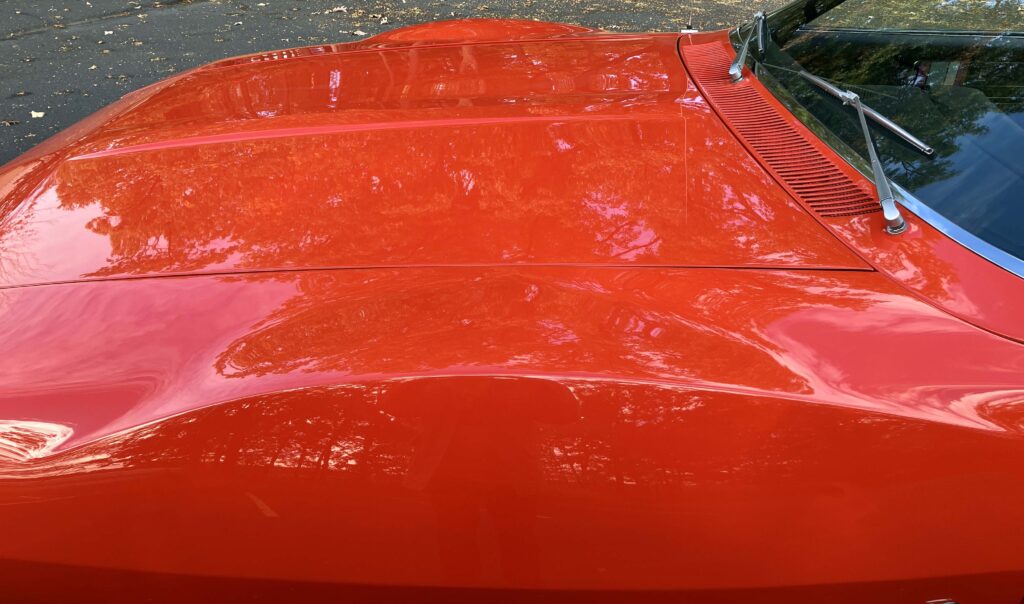
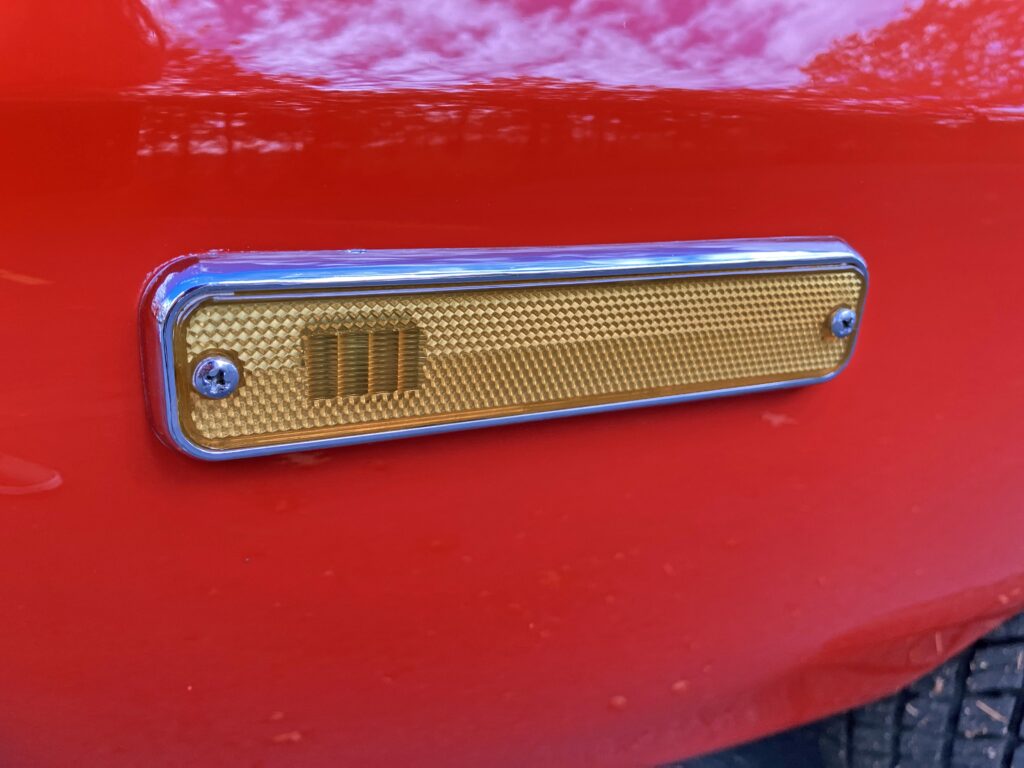
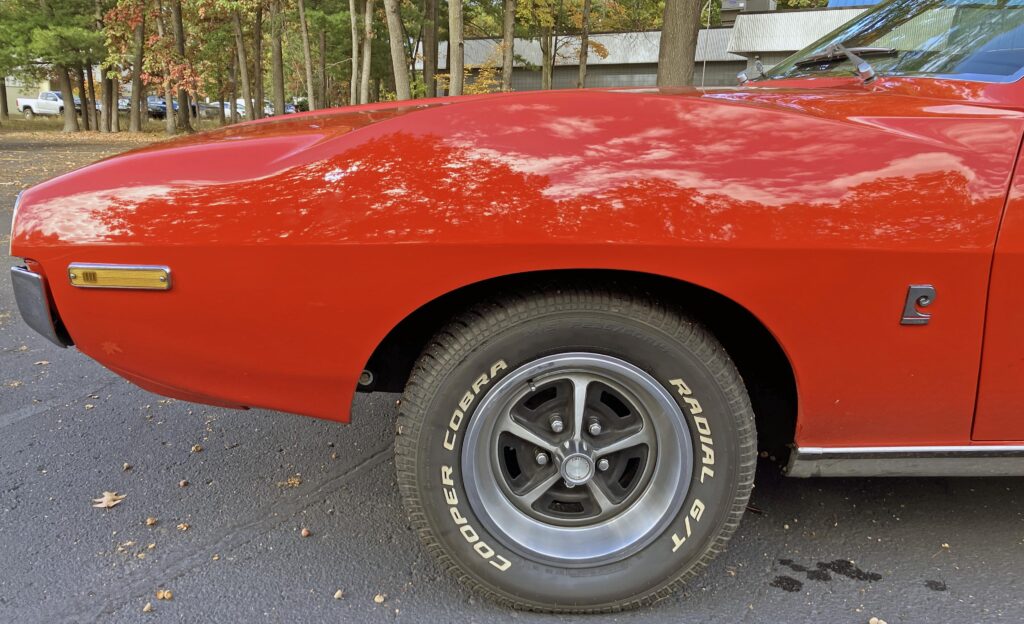
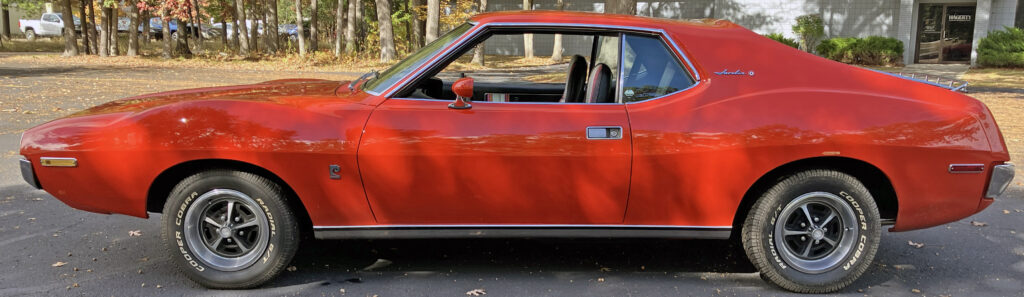
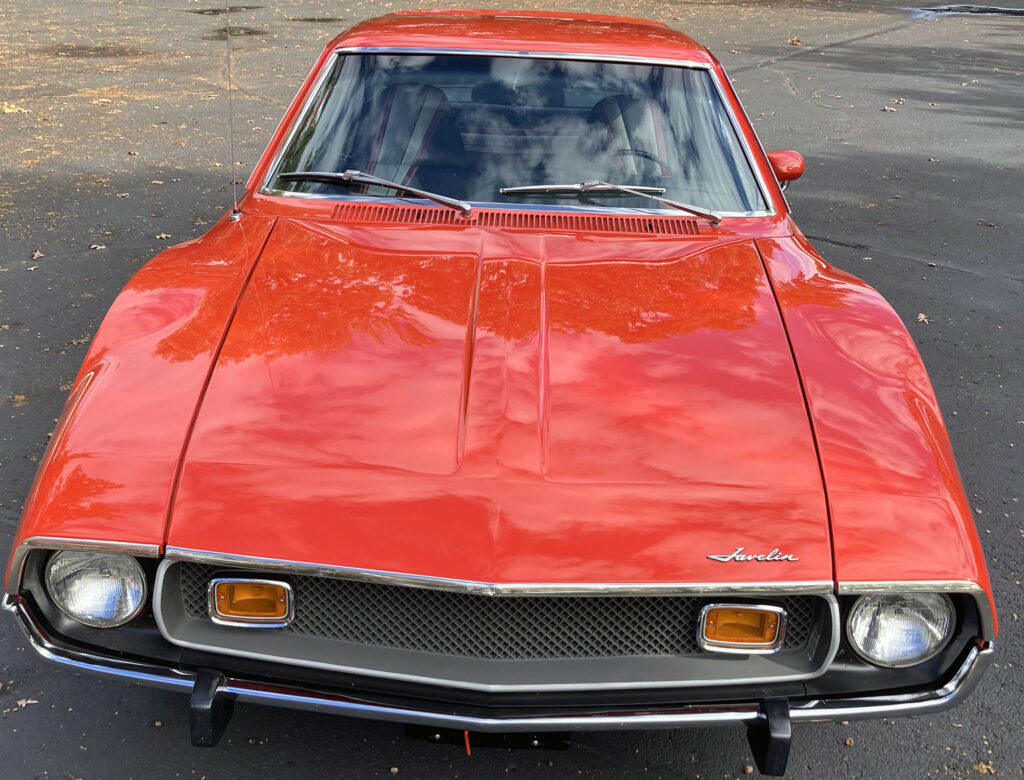
The exterior refresh for 1971 sharpened the Javelin’s attitude. Earlier versions could be grouped more easily with the Chevrolet Camaro and Pontiac Firebird; this shape pushes harder toward an individual identity. Its deeply contoured hood, substantial fender forms and long front overhang can suggest the C3 Corvette, yet the Javelin remains a pony car based on a more conventional passenger-car layout. It borrows some of the Corvette’s visual drama without sharing its low-slung proportions.
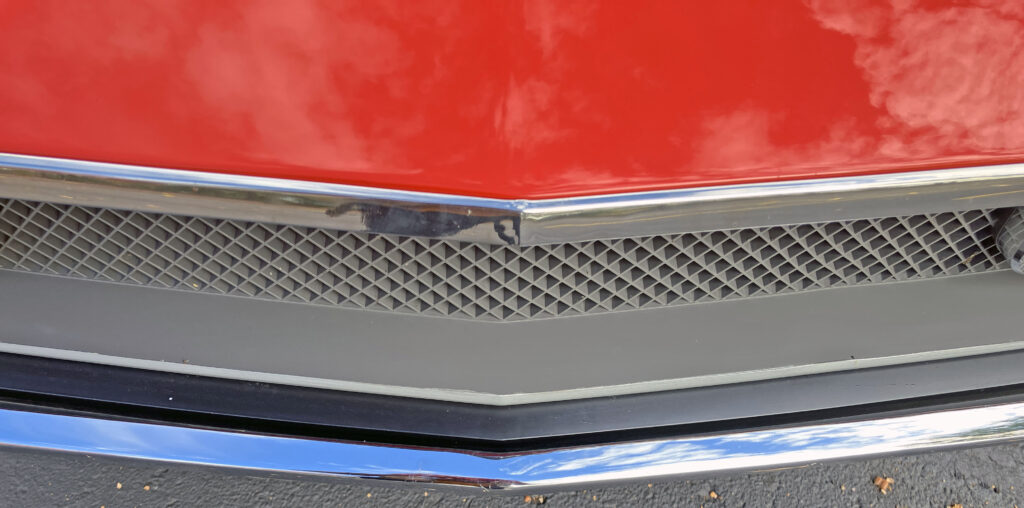
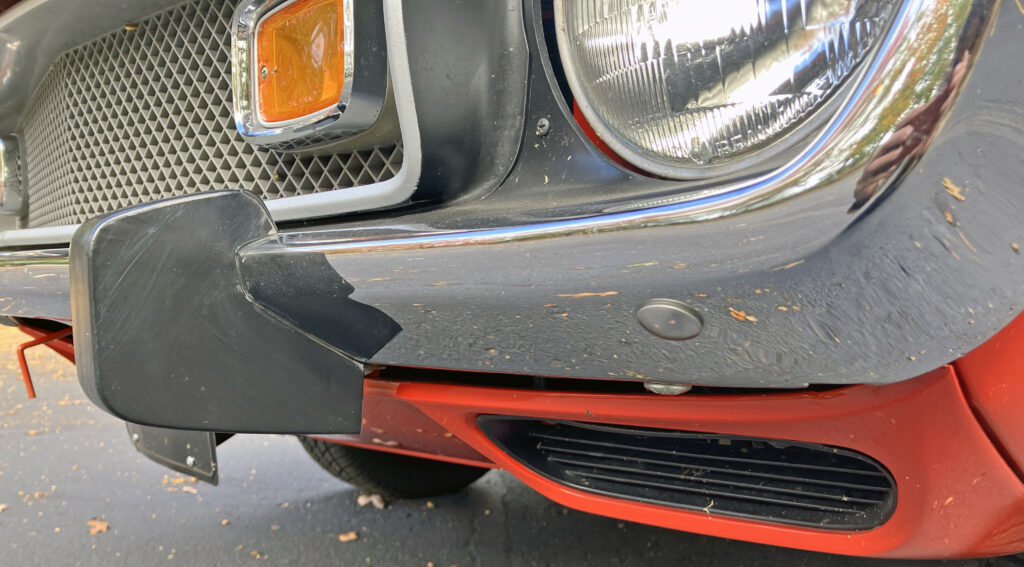
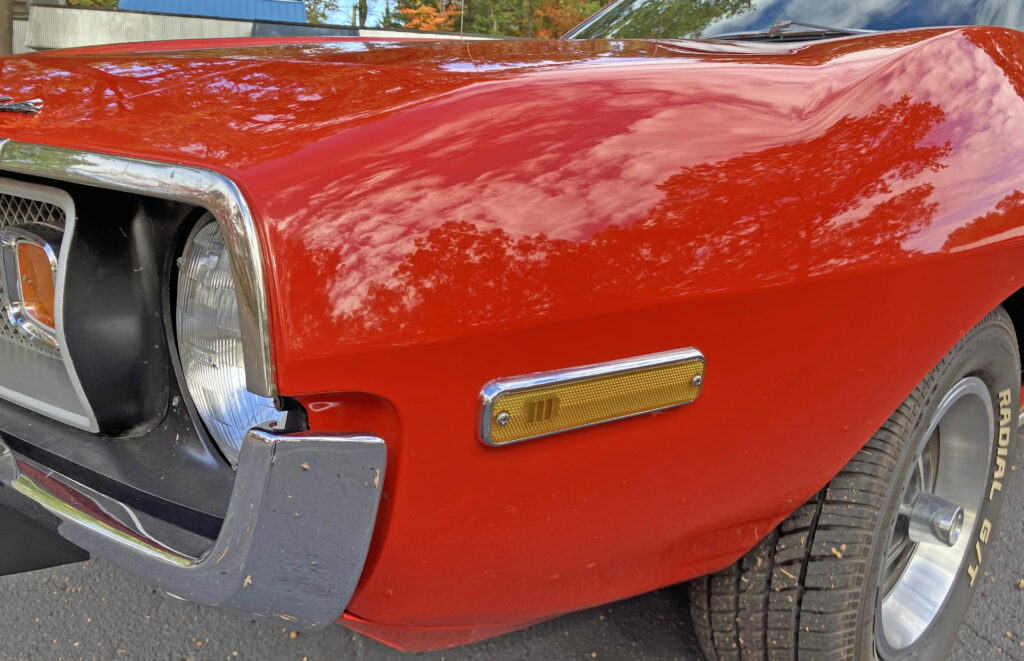
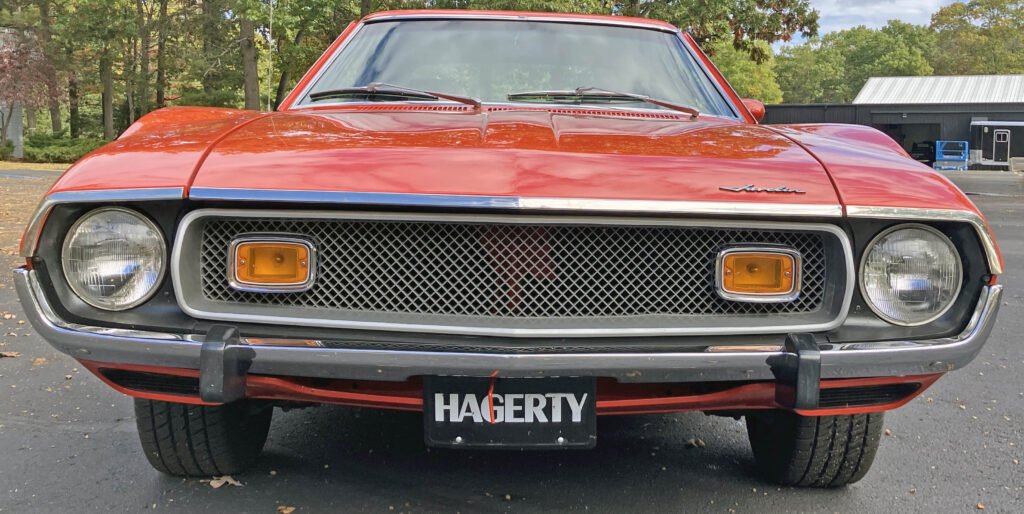
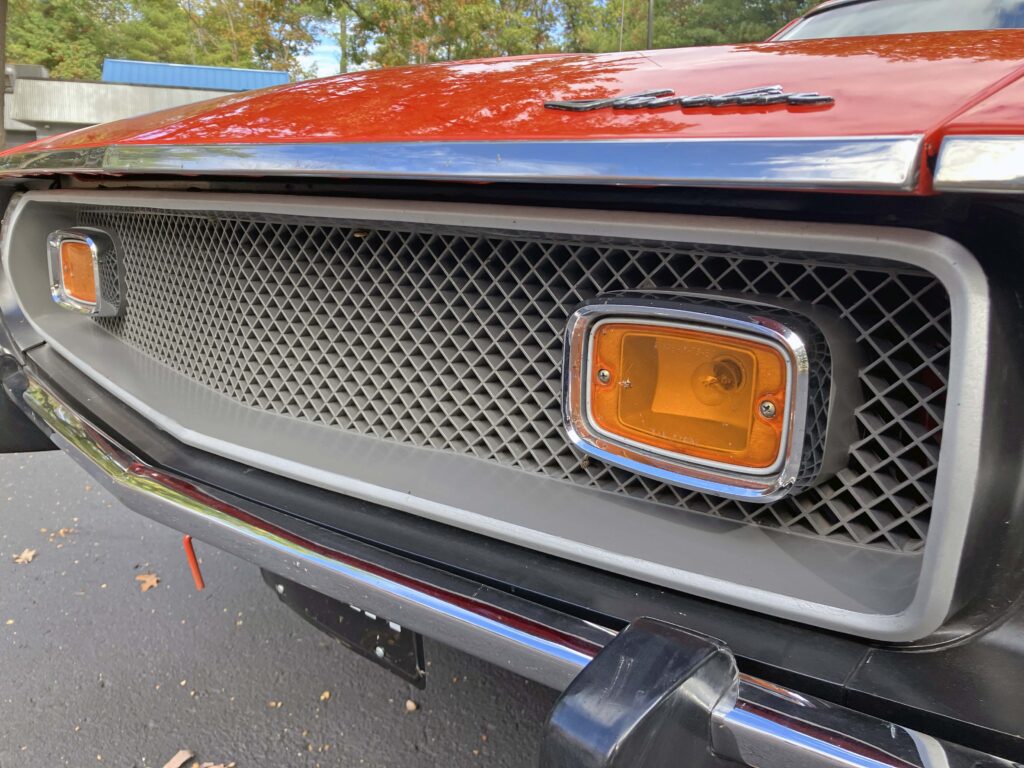
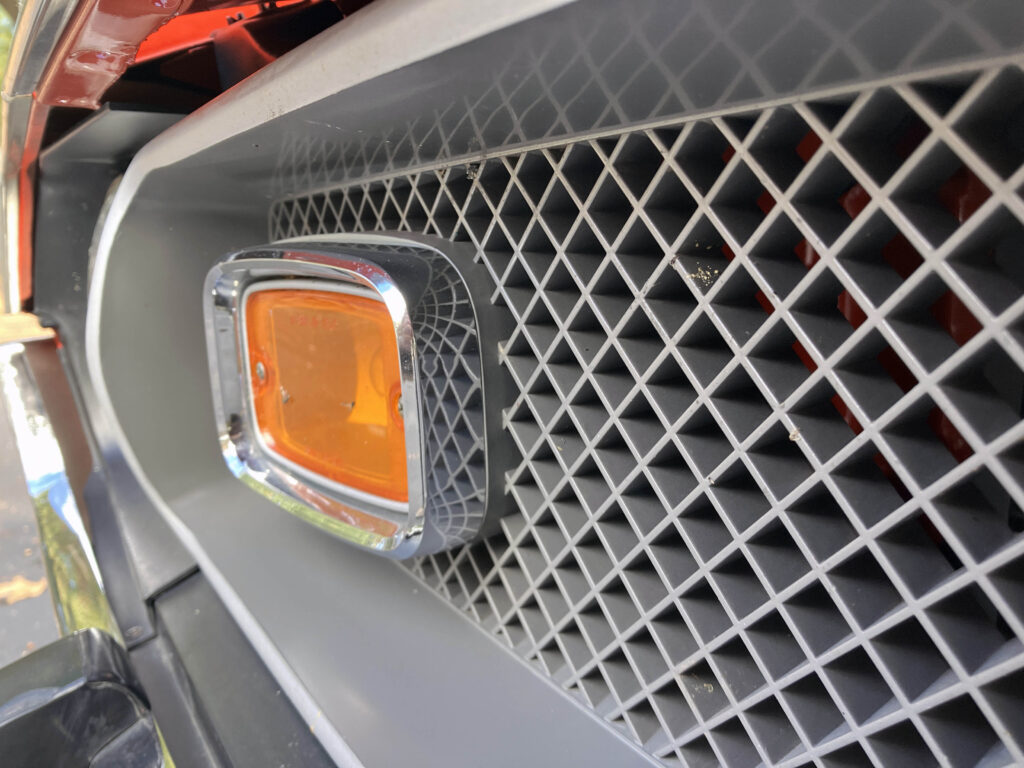
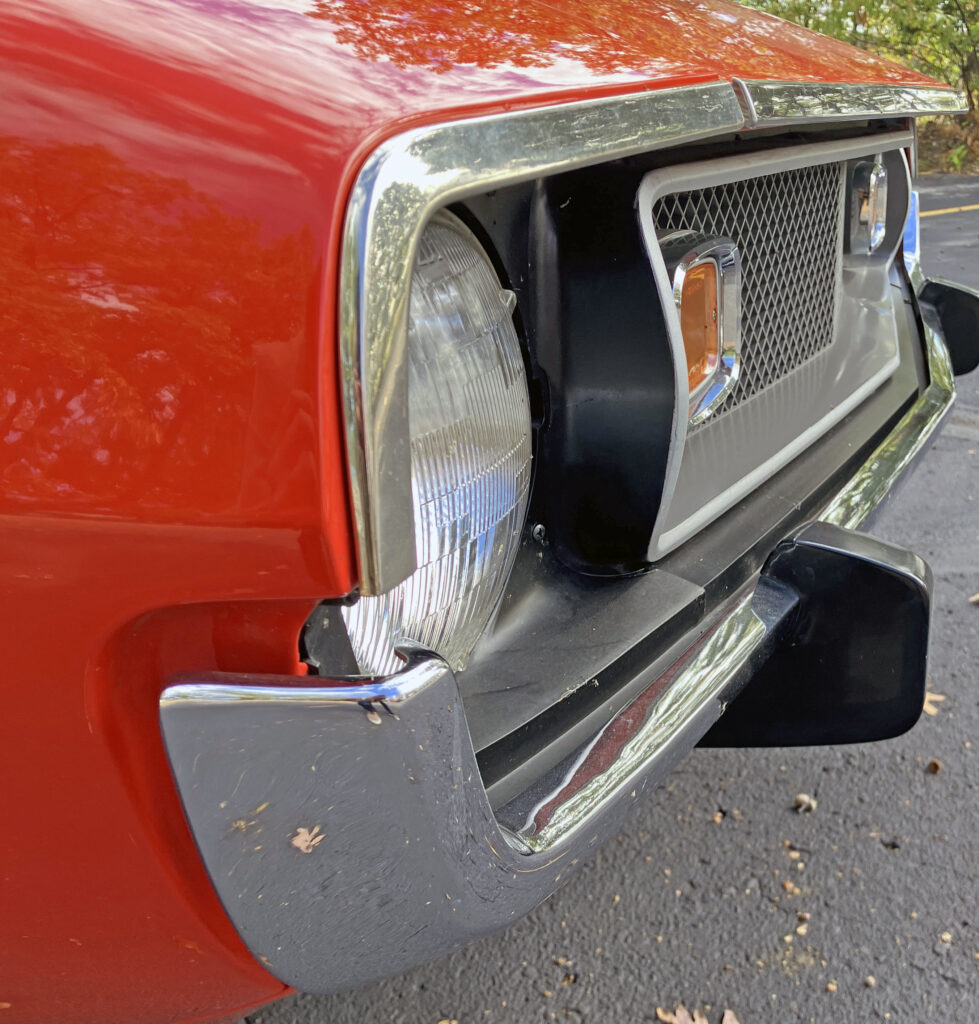
At the front, a waffle-pattern grille sits below rounded marker and turn-signal lights. The chrome bezel gives the dark grille a crisp border, and the chrome bumper frames the nose. Against the silver-colored trim, exposed fasteners are a reminder of the period’s straightforward construction. The details don’t pretend to be hidden; they’re part of the car’s hardware and visual texture.
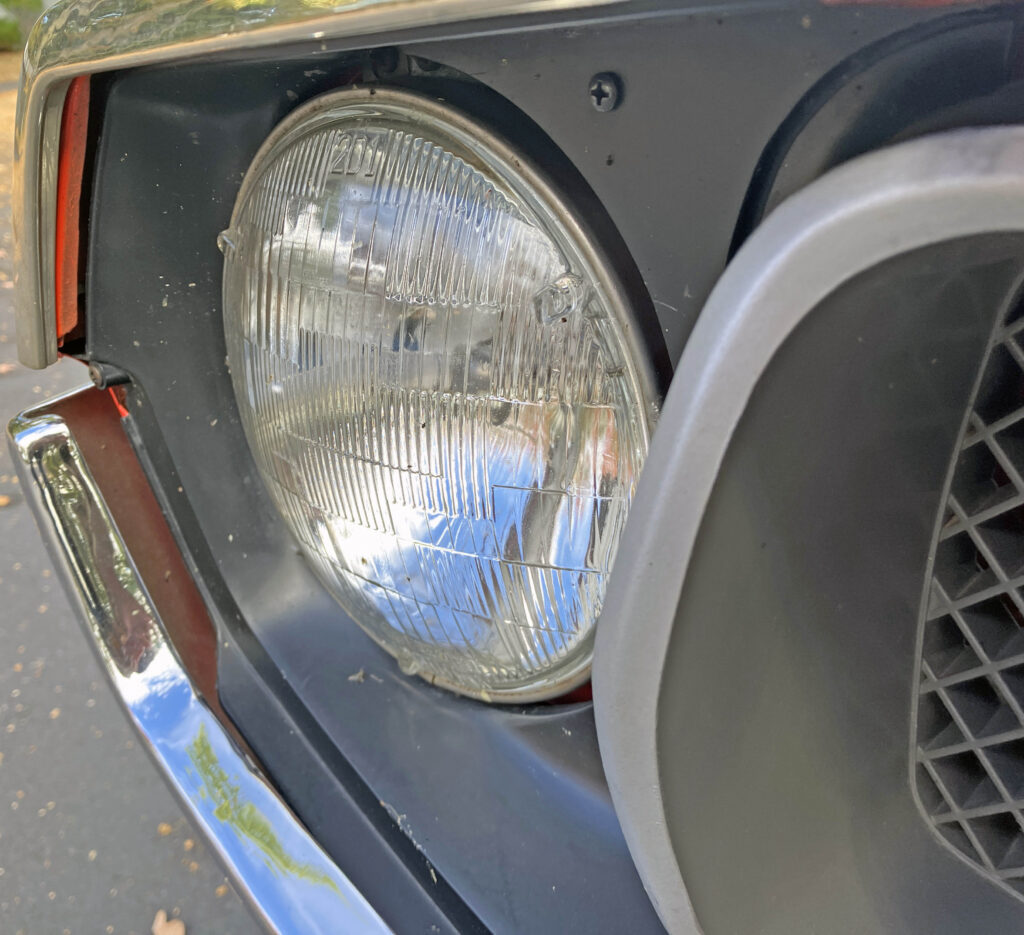
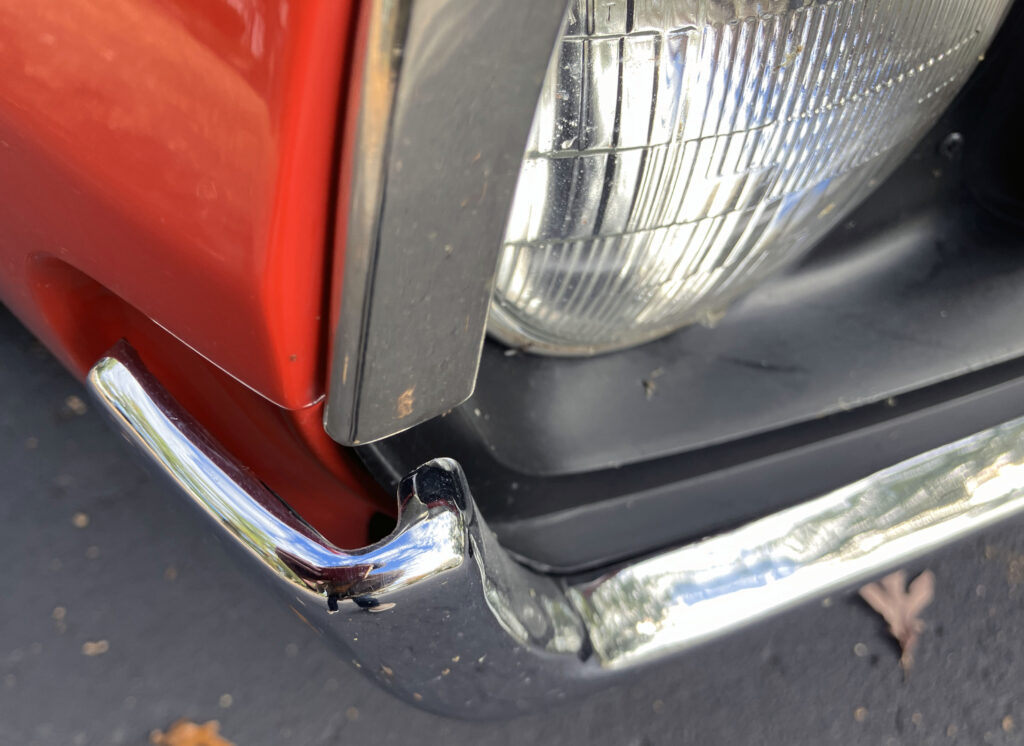
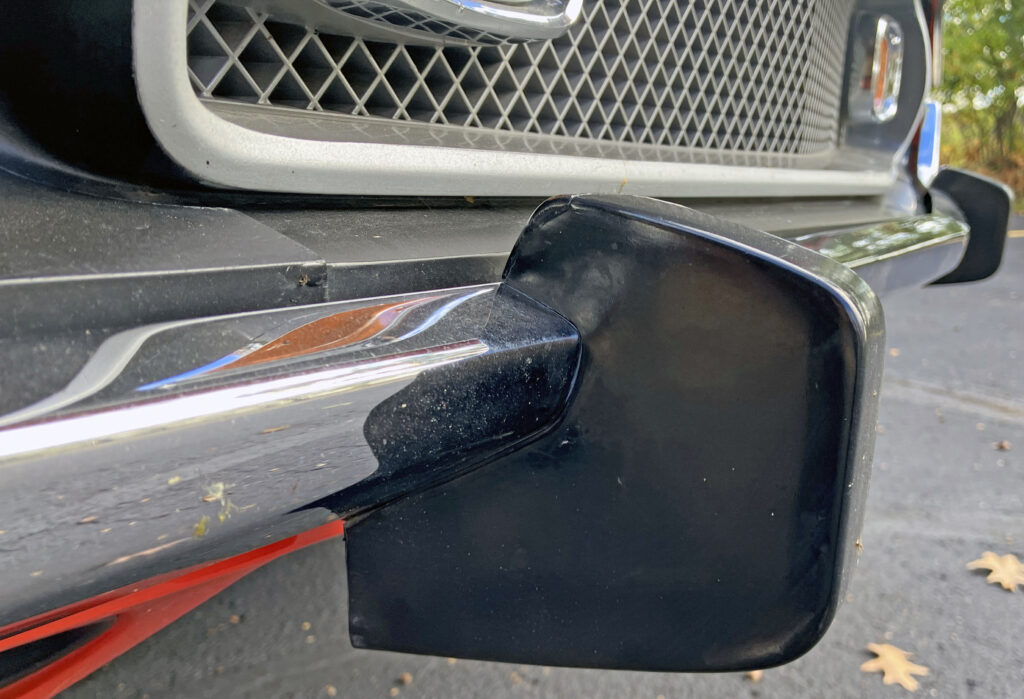
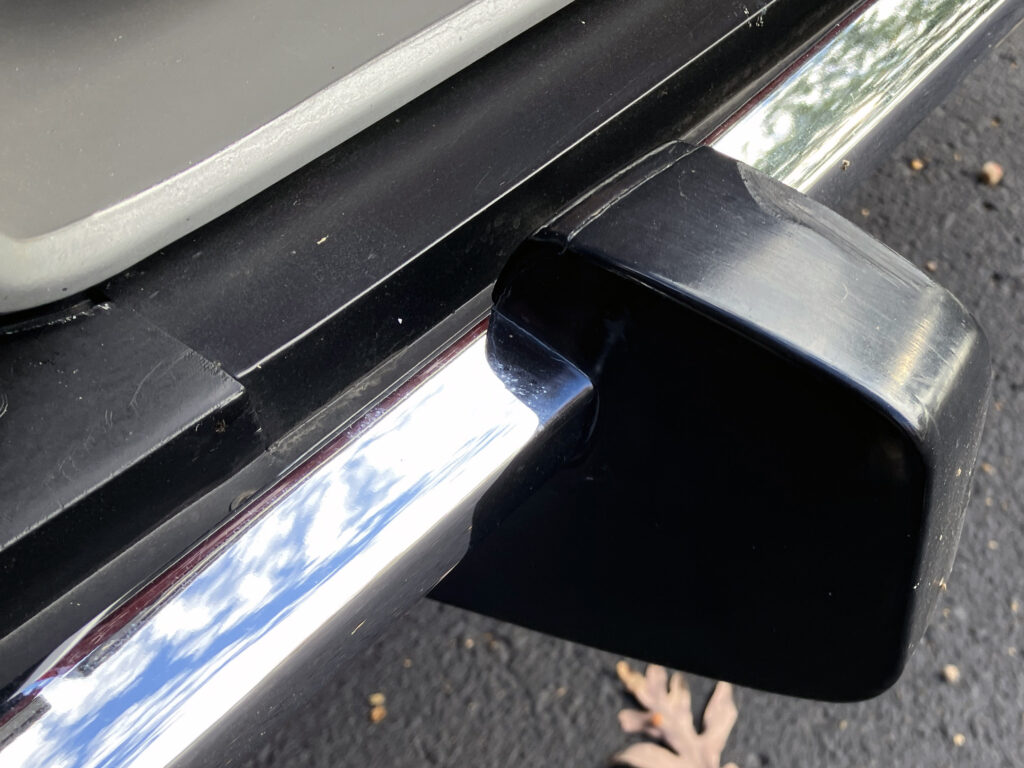
The headlamps sit within recessed, dark surrounds that were common on cars of the era. Chrome adds a brighter edge around the Javelin’s nose, while the bumperettes introduce the more substantial bumper treatment associated with the period’s changing design priorities. The result is a front end balancing a pointed, expressive shape with a more substantial bumper assembly.
The Javelin’s nose is flatter than its predecessor’s, but the chrome center still gives it a recognizable profile. The contrast with rivals is useful: Mustangs of the period presented a more level face, while Camaros leaned into busier detailing. AMC’s grille and bumper treatment gives the Javelin its own visual signature without relying on an oversized opening.
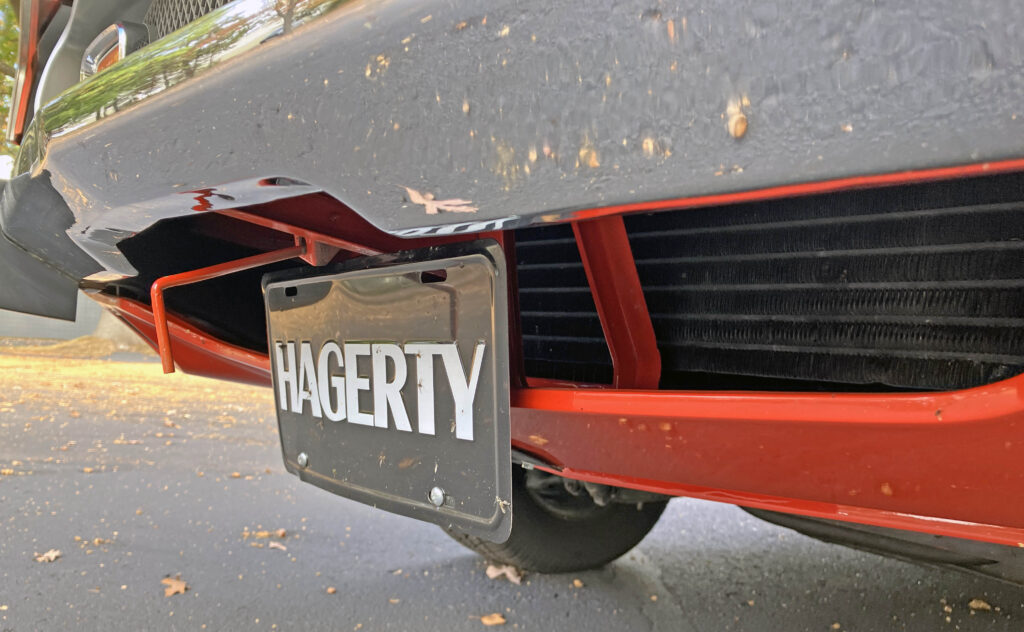
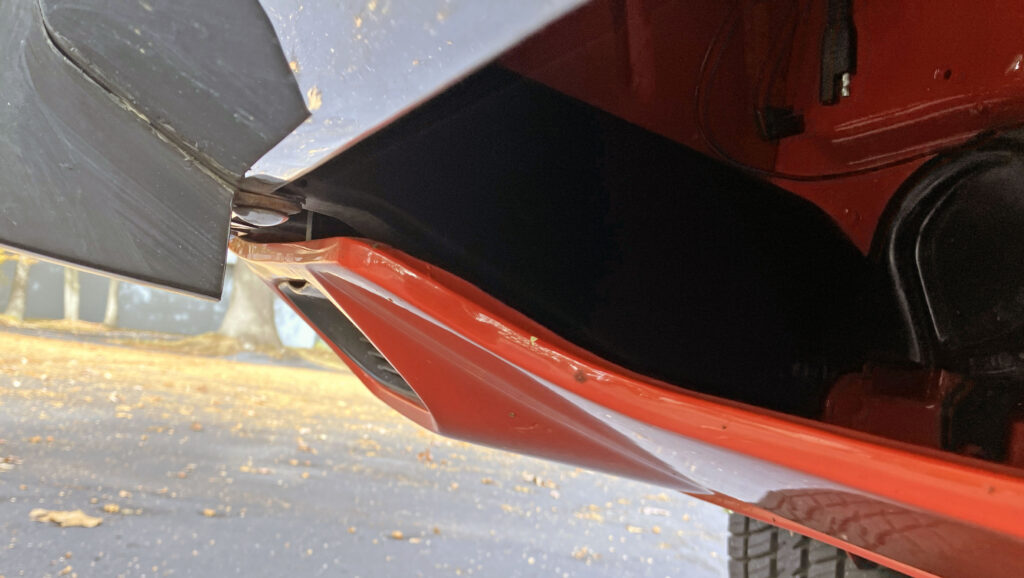
Below the grille, the lower valance is restrained. It doesn’t dominate the front fascia, and the open area beneath it keeps the nose from becoming a wall of cooling ducts and blacked-out trim. The hood release is operated by a cable from inside the cabin, a reminder of the mechanical conventions of the time. The hood itself blends harder, late-1960s creases with a central recessed area. That mix of relief and forward slope gives the car a layered front profile rather than a single flat plane.
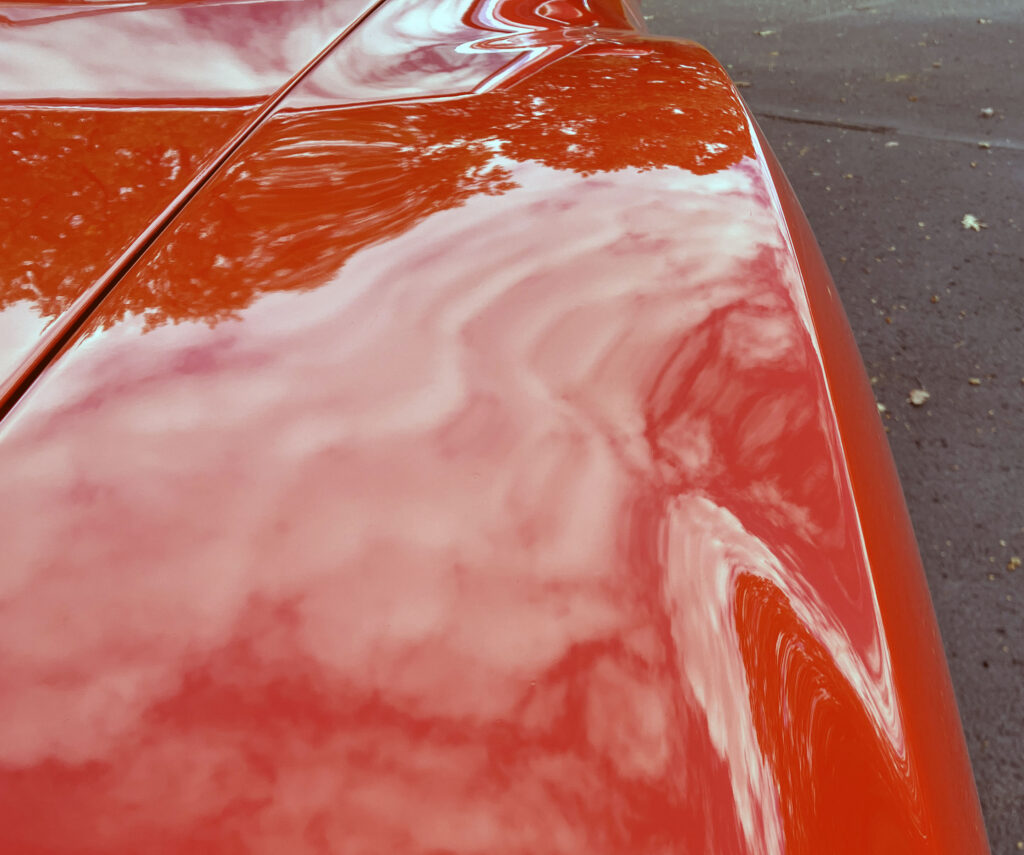
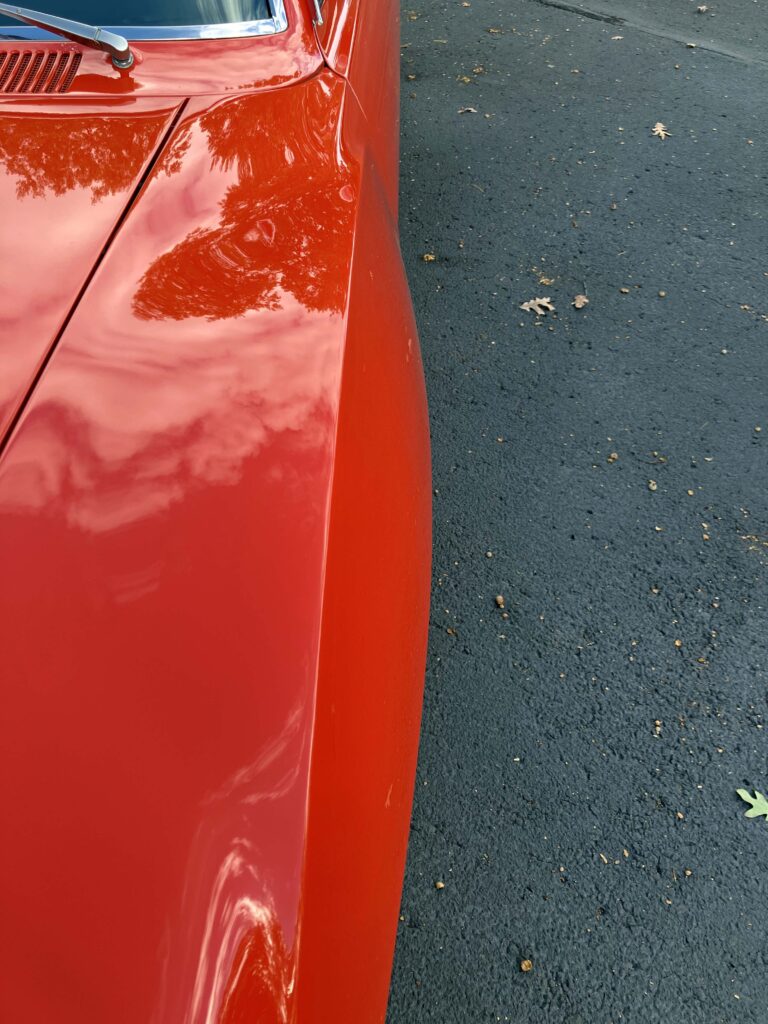
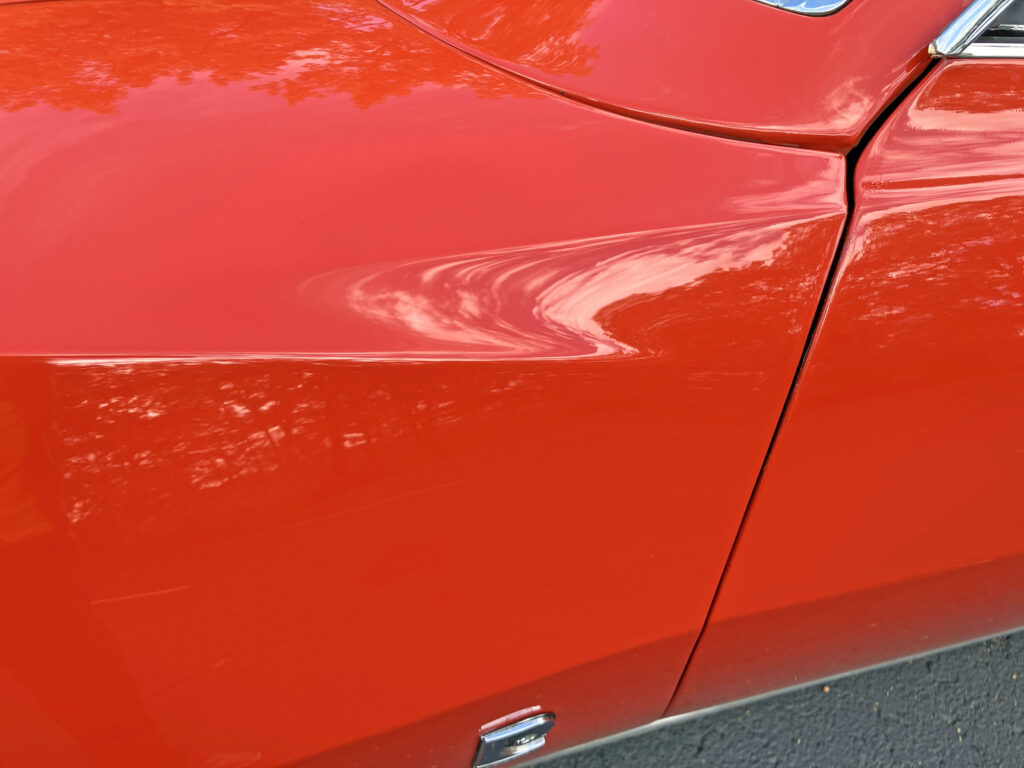
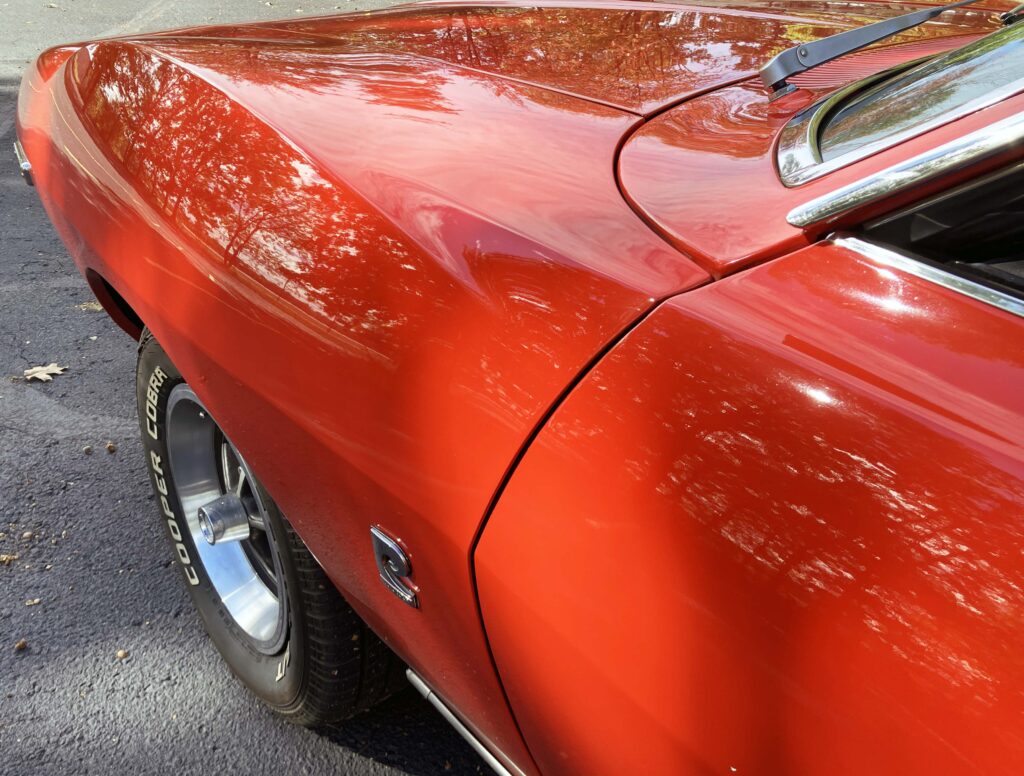
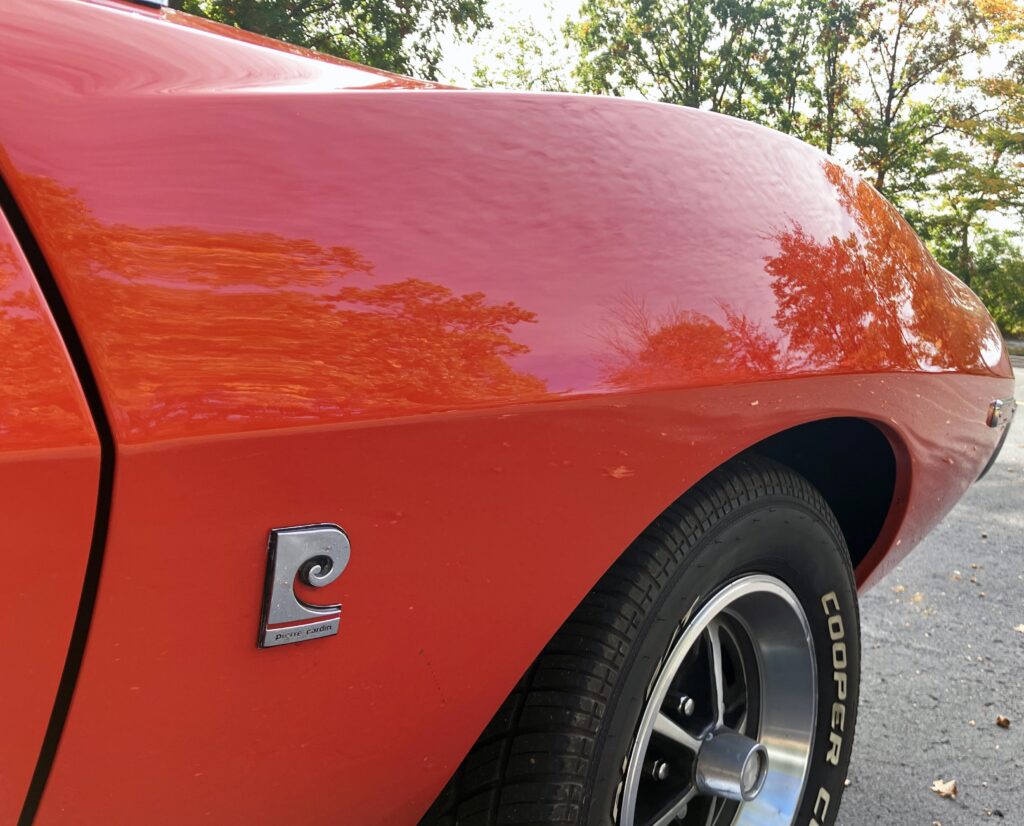
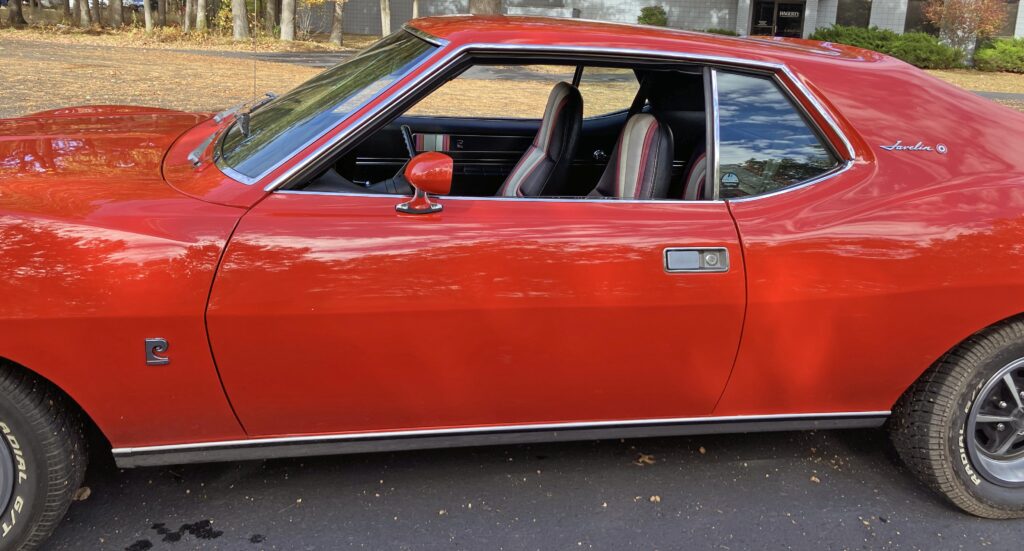
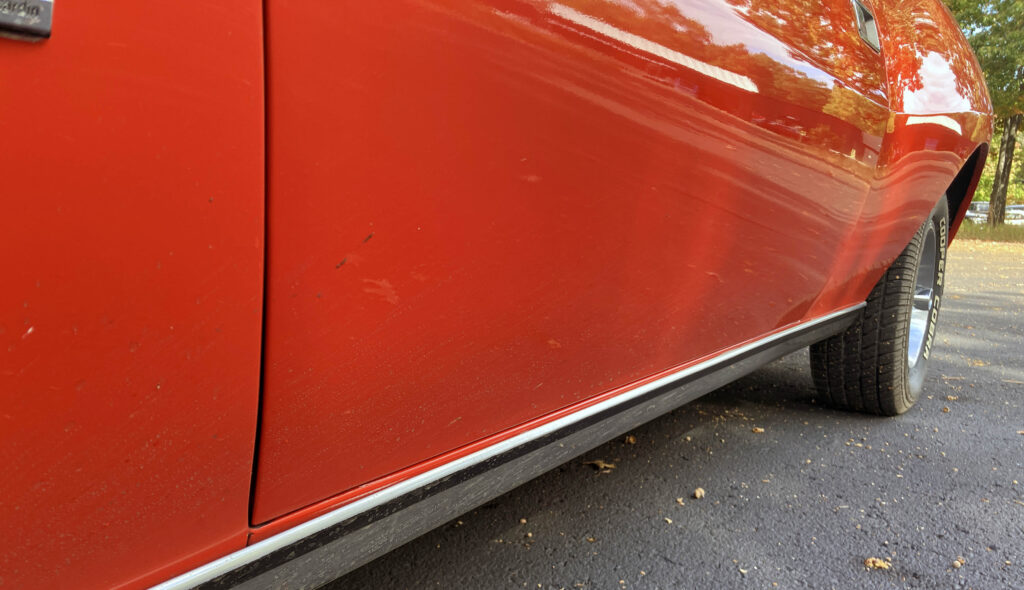
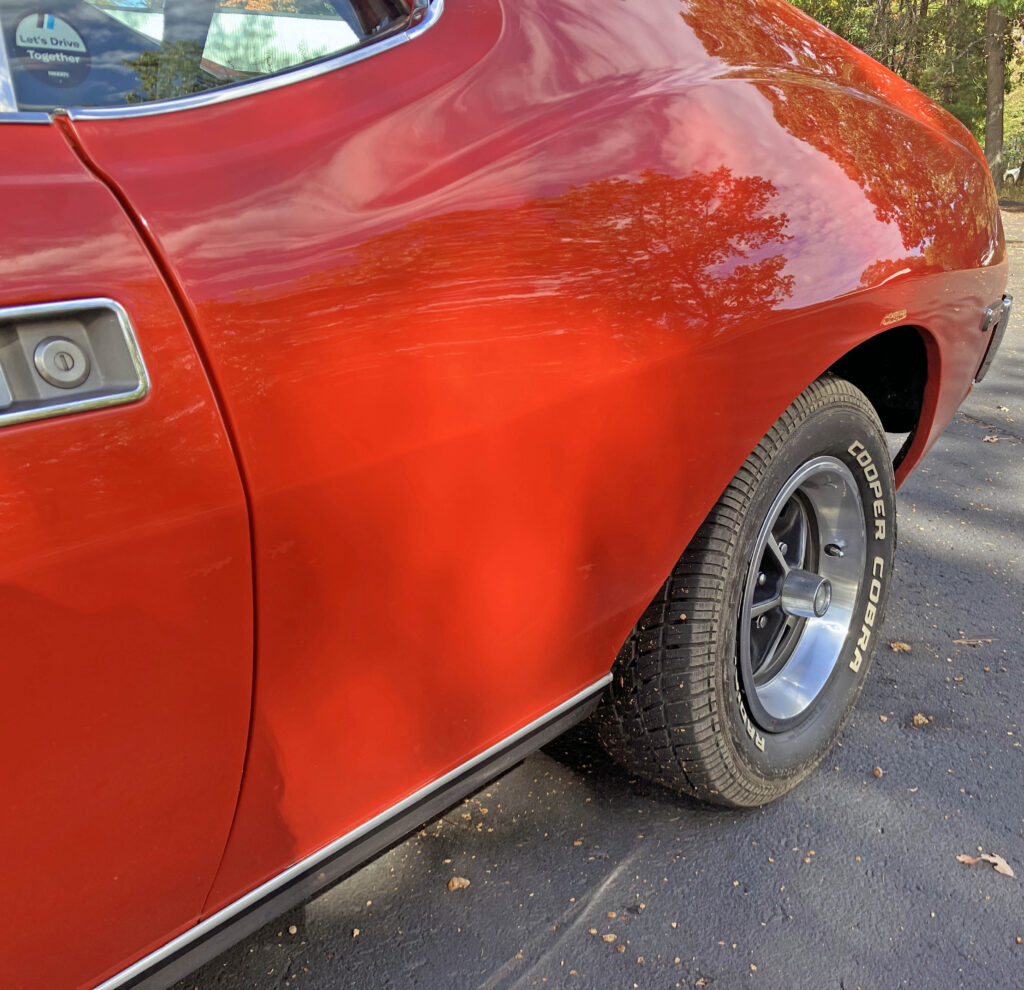
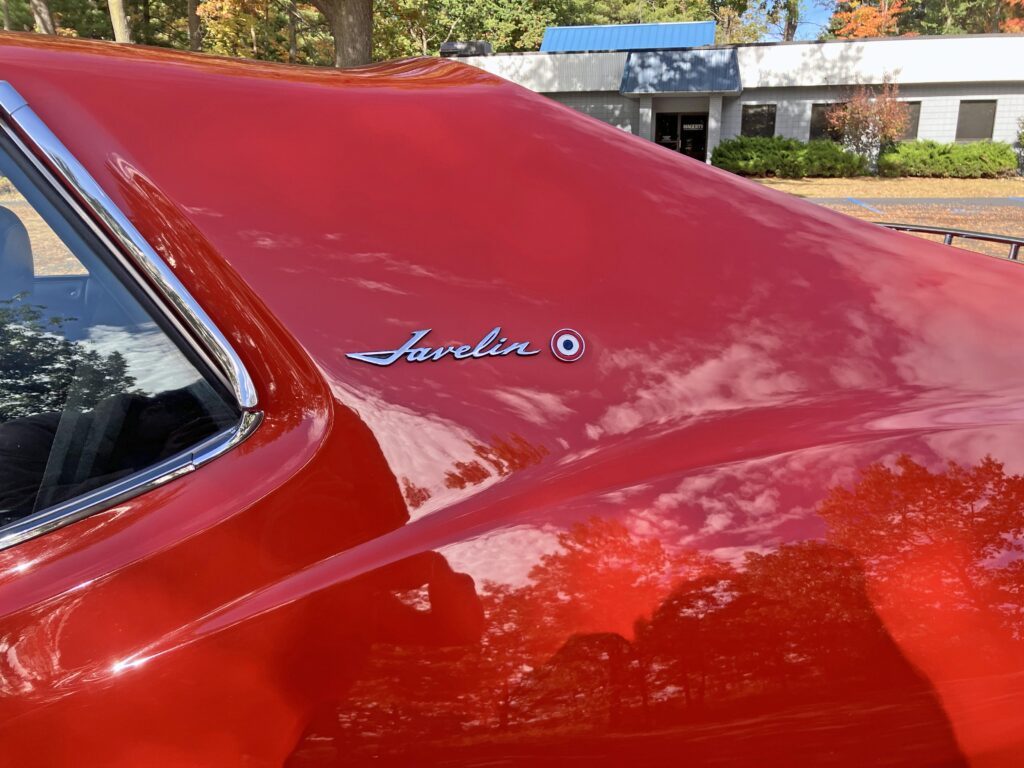
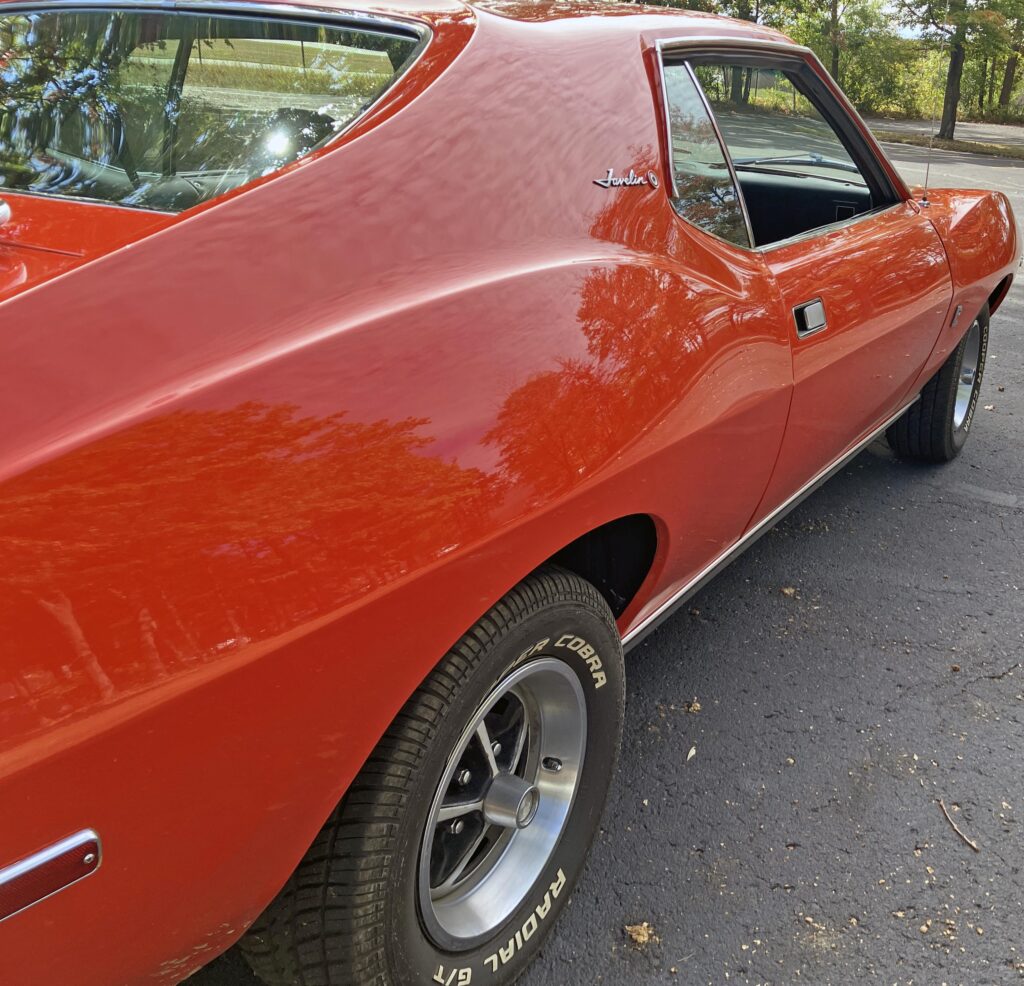
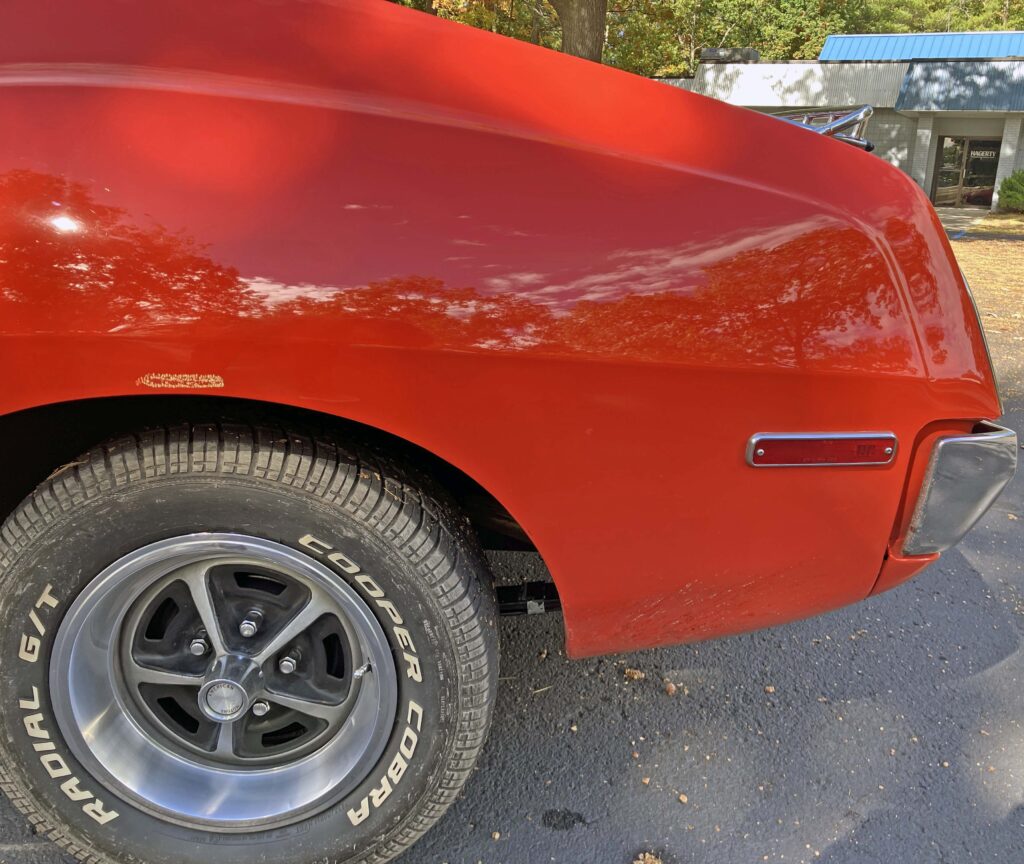
The fenders are the exterior’s most expressive feature. They bulge above the wheels, then sweep toward the cowl, creating a profile that can evoke both the C3 Corvette and the more exaggerated custom-car forms of the period. From the side, the fenders flow into a fast cowl and slender A-pillars. The sculpting is assertive enough to suggest speed, though some of it is aesthetic theater: the Javelin is not a low sports car, and its pronounced forms make the most sense as a deliberate display of motion and muscle.
At the front, the fenders hood the headlights and make the nose look longer. A long marker and reflector at each front corner extends that impression. At the rear of each fender, a sharp crease pushes forward toward the cabin, adding tension to the rounded surface. These forms are the core of the refresh: the Javelin looks muscular from some angles and sculptural from others.
The fast A-pillar and long dash-to-axle proportion reinforce that aggressive stance. Thin pillars help the roofline appear sleek, and the absence of a vent window keeps the side glass visually clean. The long front overhang does interrupt the sense of compactness, but the body’s crease and fender shapes give the Javelin a character distinct from the more familiar silhouettes of its competitors.
Touring-car details in a sporty package
Small details help shift the Javelin toward a more upscale impression. The side mirror’s painted housing rests on a chrome neck, a more polished treatment than the painted sport mirrors common on competitors. Inside, the dashboard’s faux wood and sculpted form continue that theme. The combination supports the case for the Cardin Javelin as a sporting touring car, pairing a dramatic cabin with a body that still looks ready for a spirited drive.
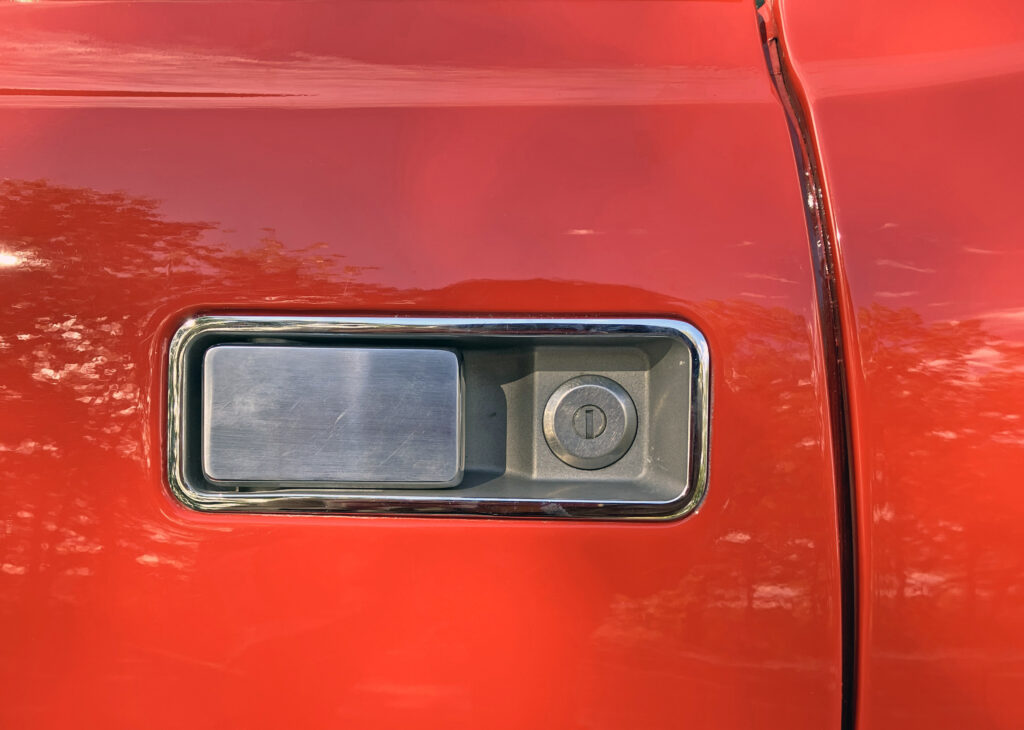
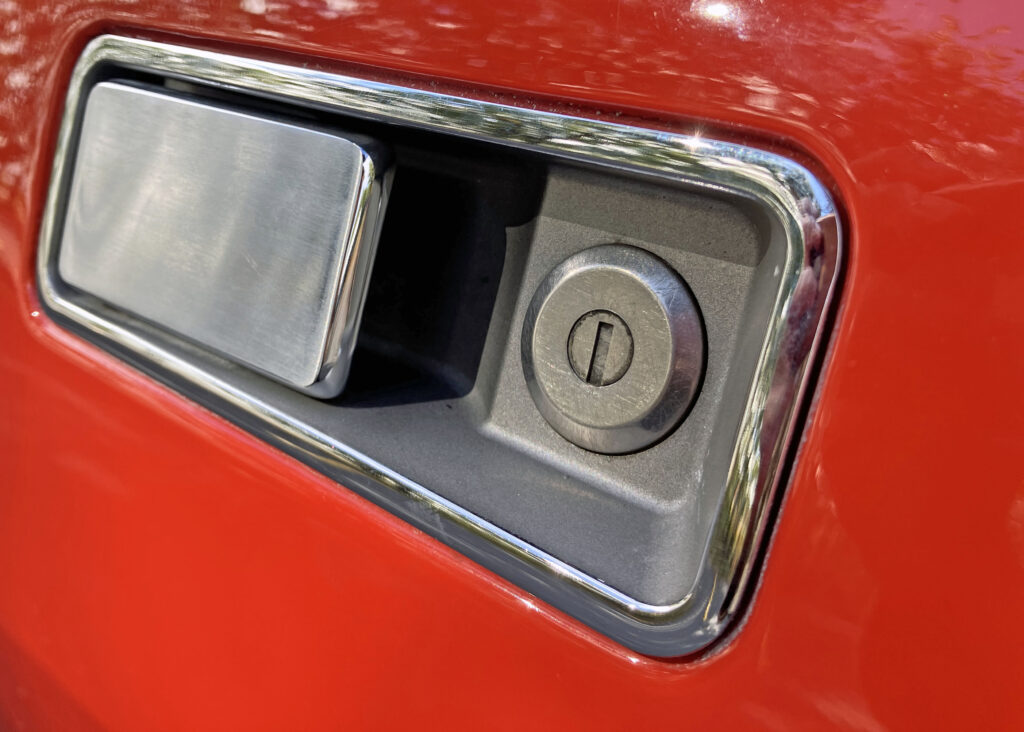
The door handles are another thoughtful touch. Their aircraft-like shape sits against relatively restrained rocker panels, with the lock cylinder tucked into the handle’s recessed area. A polished frame and machined pull give the hardware a crafted feel. They look as though they could belong on a more expensive personal luxury car, yet they sit naturally on the Javelin.
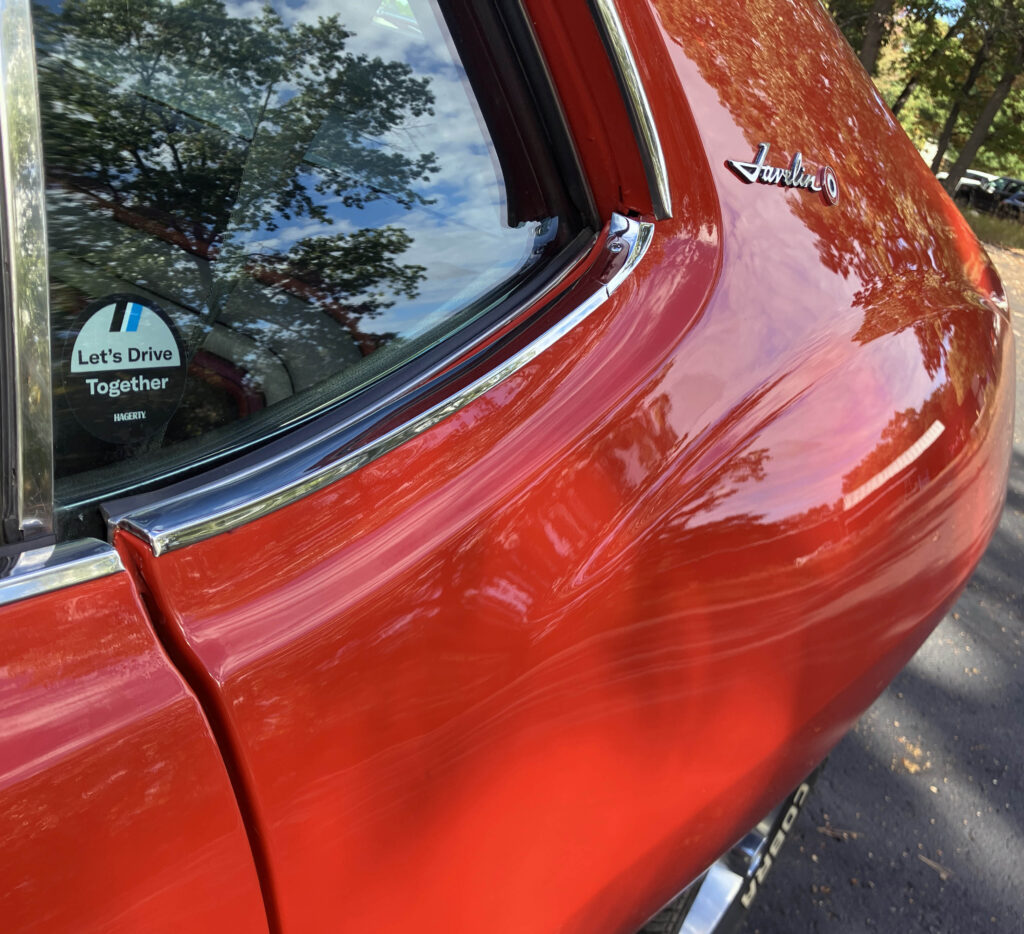
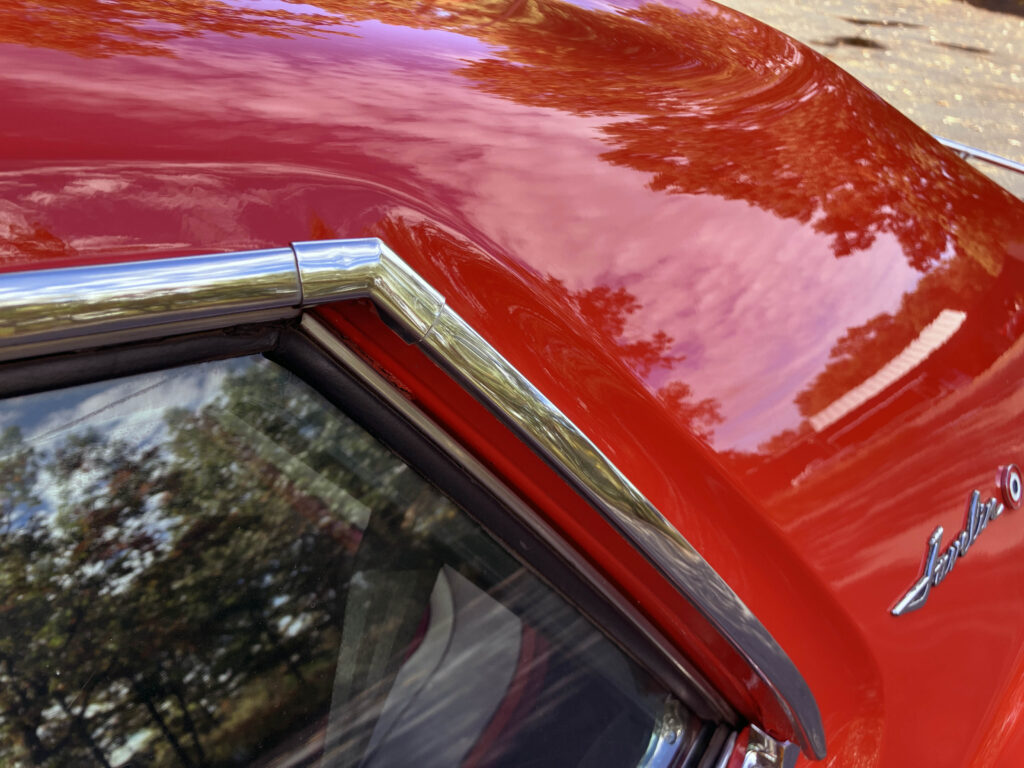
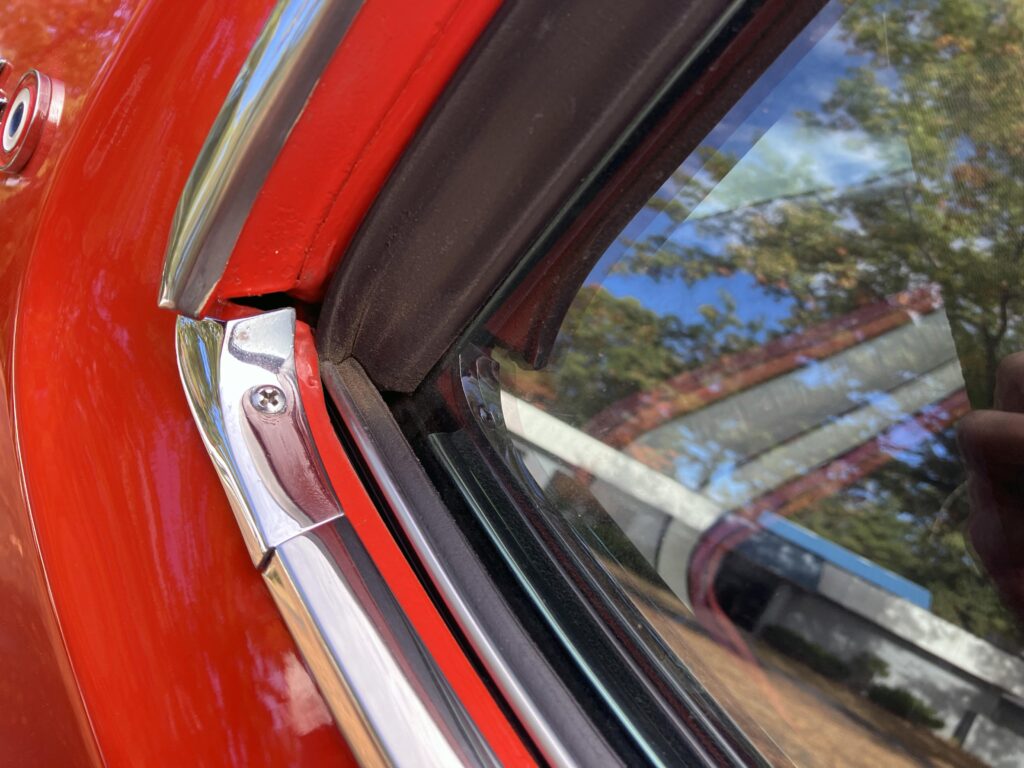
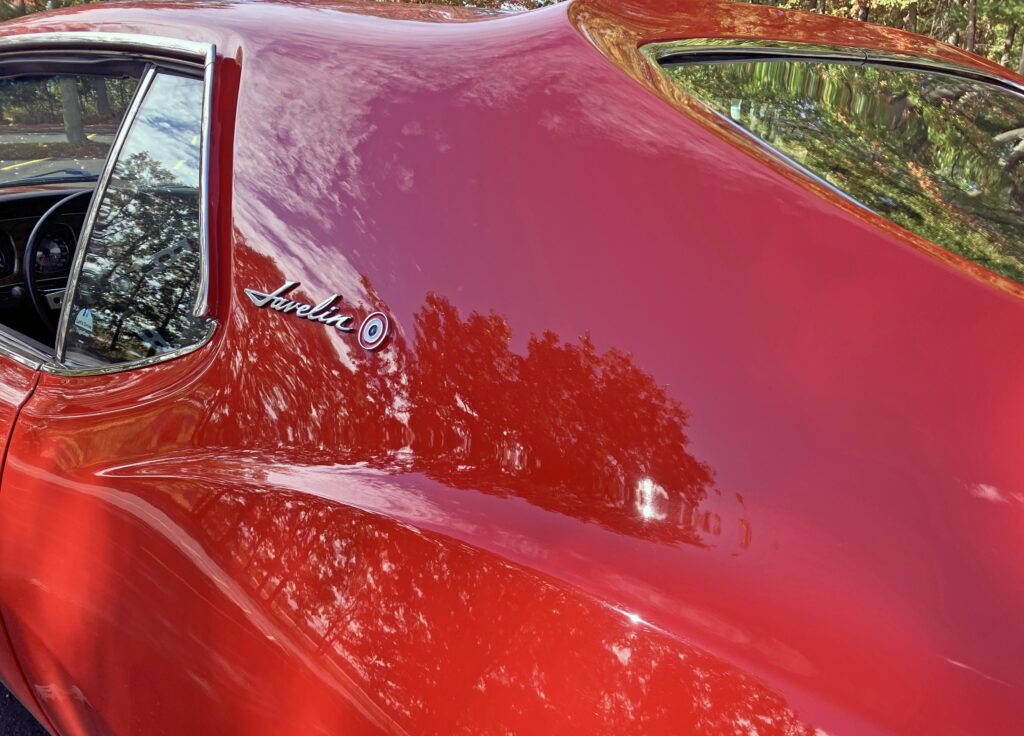
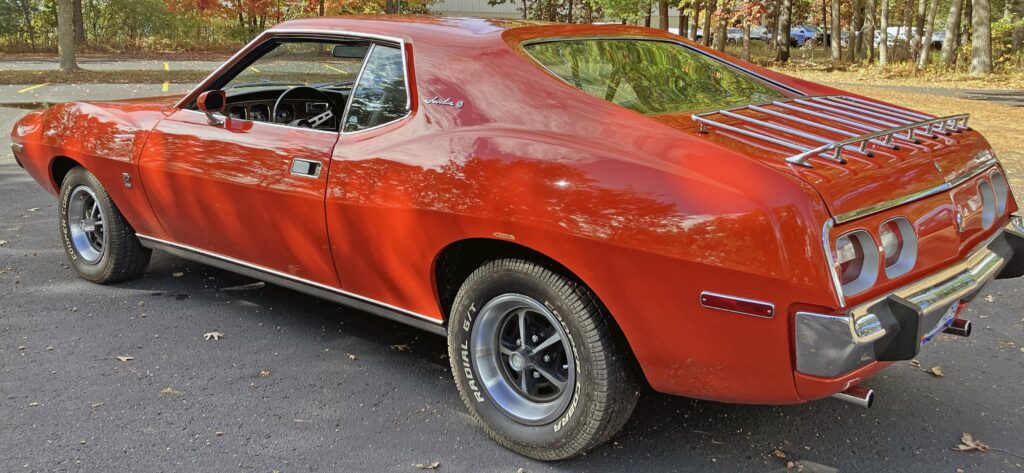
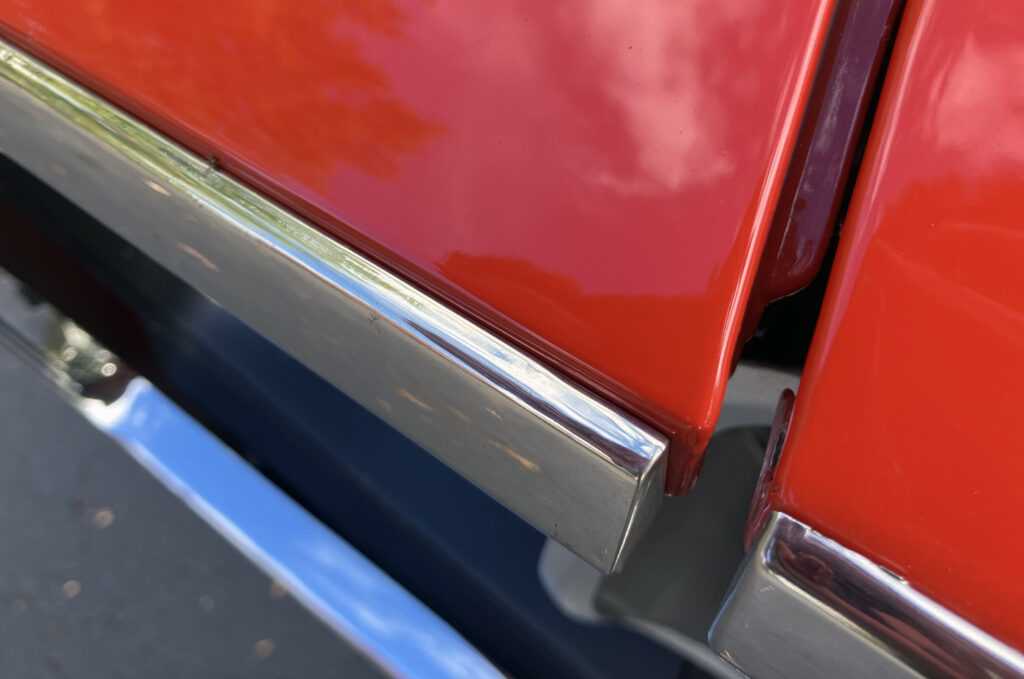
Behind the doors, the quarter panel echoes the front fender’s contouring. Its sweeping character lines have an almost nautical quality, though the rear can look bulky from certain angles. The fastback roof and long C-pillar make clear that the Javelin remains a sporty coupe rather than a personal luxury car. A thin chrome band outlines the side glass, and its joints and exposed screws reveal how the bright trim was assembled.
The roofline has a lighter, more open appearance than the Camaro’s, while the Mustang’s C-pillar follows a more uniform slope. The Javelin’s shape also brings to mind the column-like roof treatments appearing on other cars of the period. These differences matter because the roof and glass determine much of a coupe’s personality: AMC’s version looks slender and airy without losing the long, fastback profile.
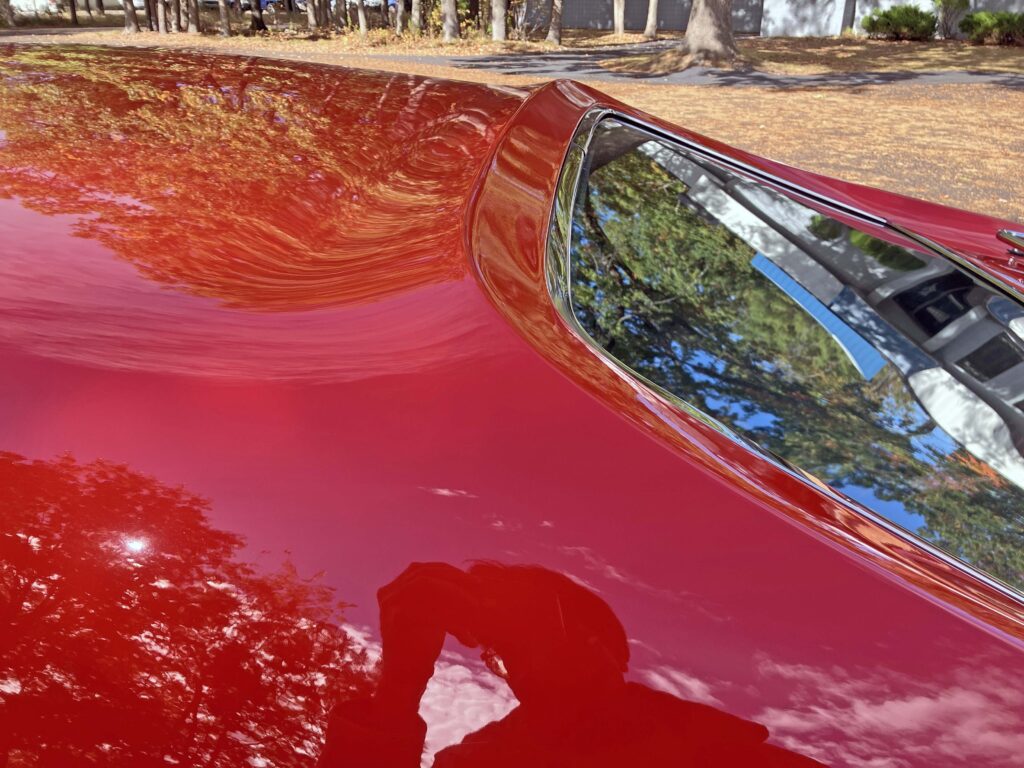
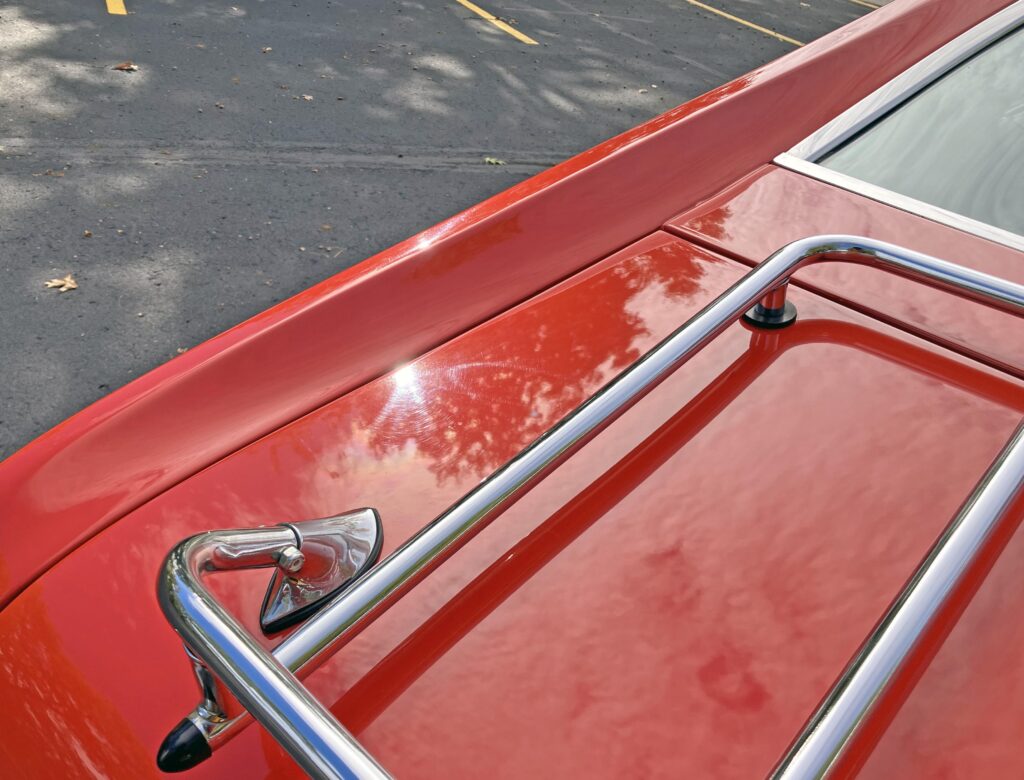
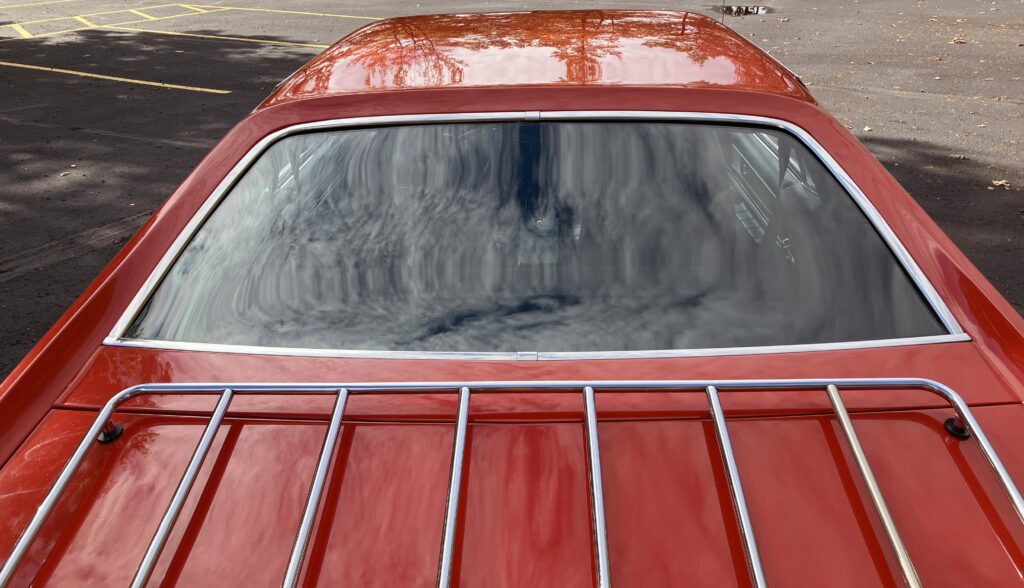
An integral ducktail rises from the rear window frame. Whether it was meant to influence airflow or simply finish the roofline is unclear. Craig Breedlove had made a separate spoiler with a similar shape for the previous-generation Javelin, and the Javelin AMX could also be fitted with a ducktail on the rear deck. Whatever its function here, the roof spoiler works visually: it creates a hard break at the C-pillar, then feeds into the quarter panel’s character line.
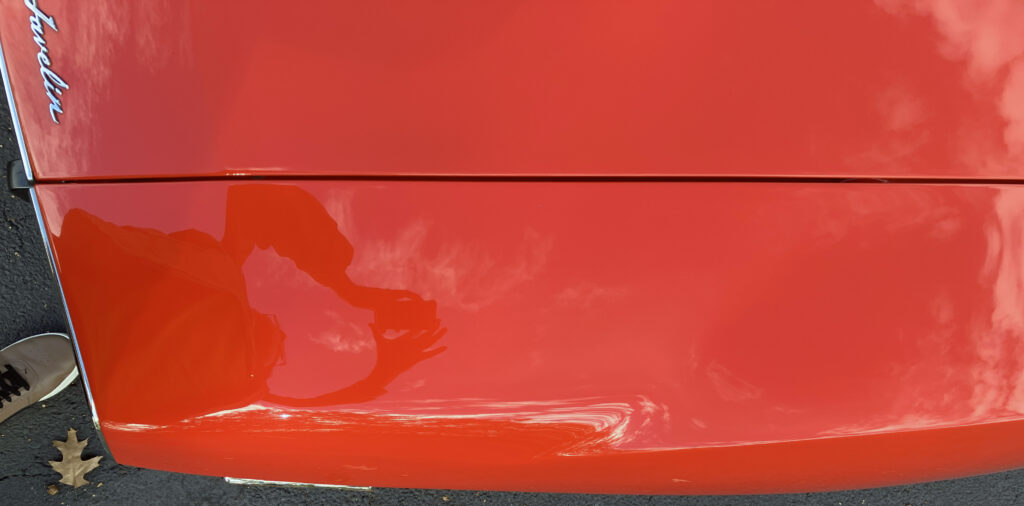
The side surfacing is at its best where the long crease through the door meets the quarter panel. The line stretches forward and rearward, stopping the body from looking too soft or swollen. Just ahead of the rear bumper, it drops to meet another hard edge, giving the bumper a clear place to begin. The rear roof spoiler, quarter-panel curve and chrome strip also connect in a sequence that makes separate pieces feel related.
Rear design and a changing market
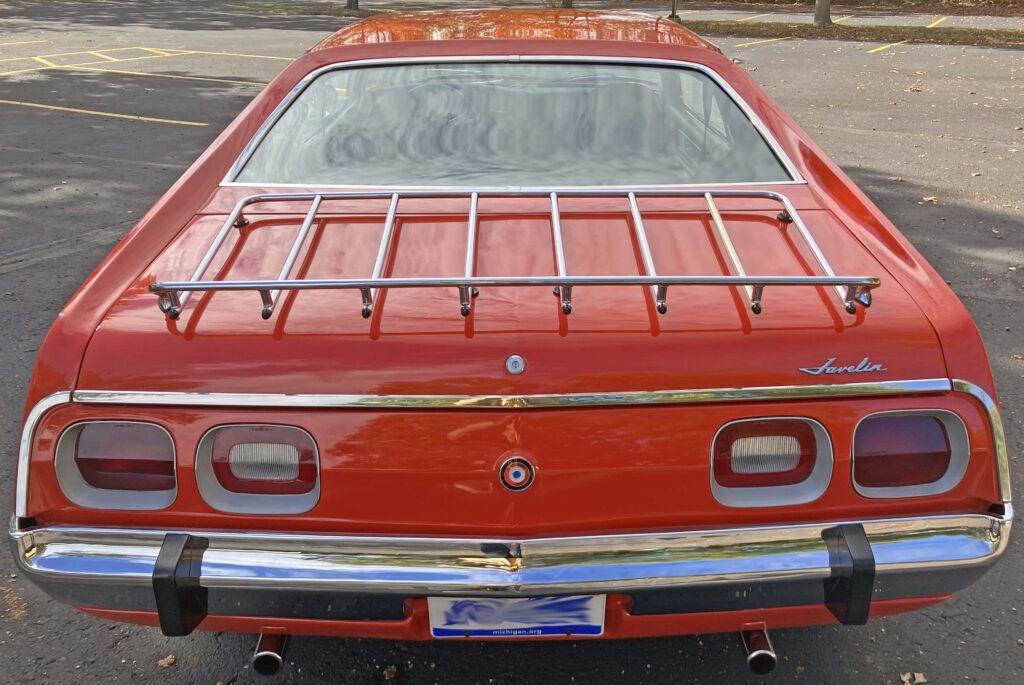
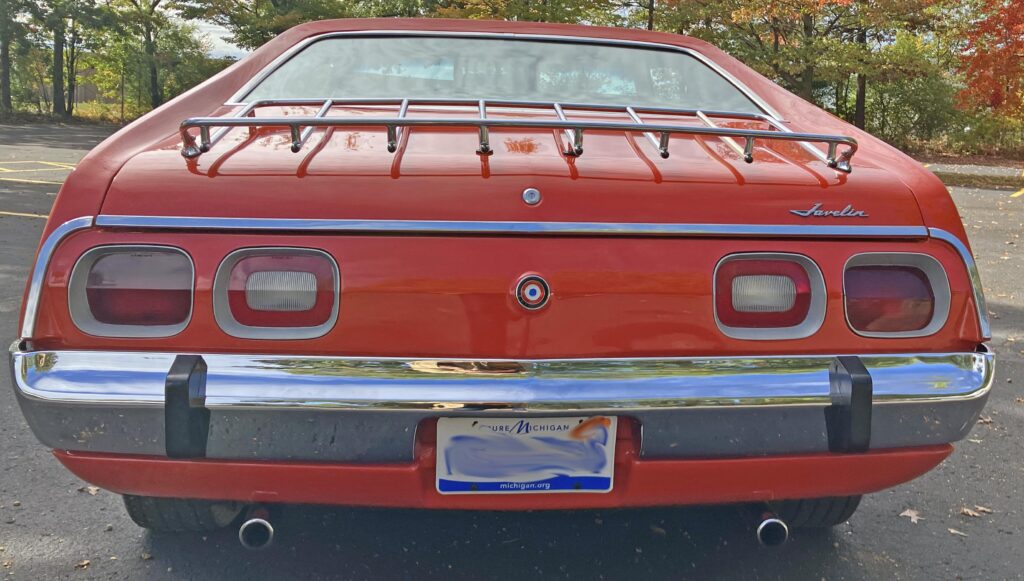
The luggage rack fits the deck lid more neatly than many period accessories. Its footprint sits within the lid’s flat section, and the rear bar bends toward a low, angled base. That small detail makes the rack feel integrated with the car’s form rather than perched above it as an afterthought.
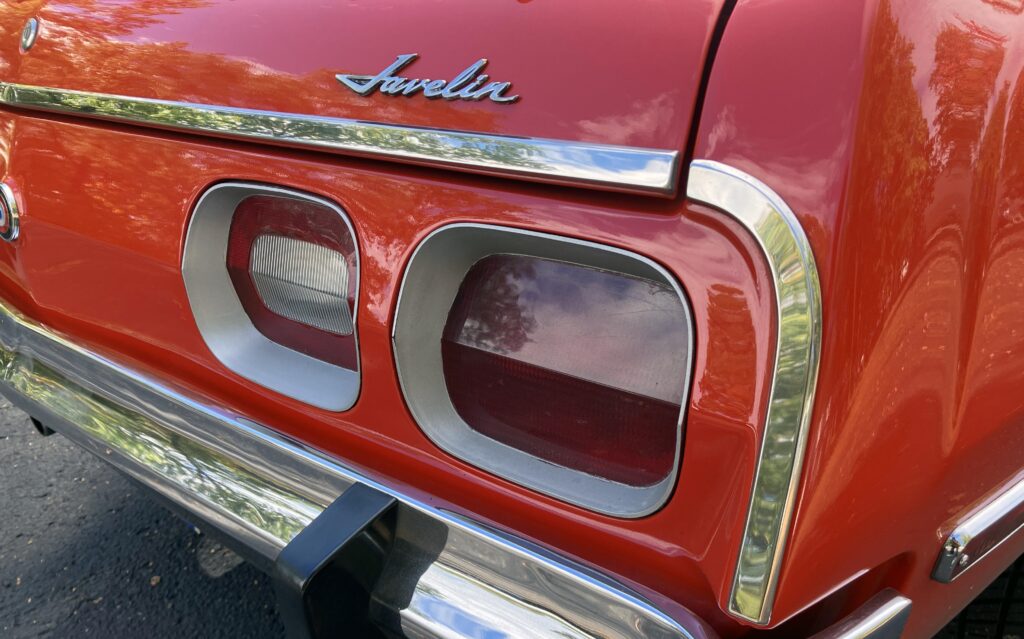
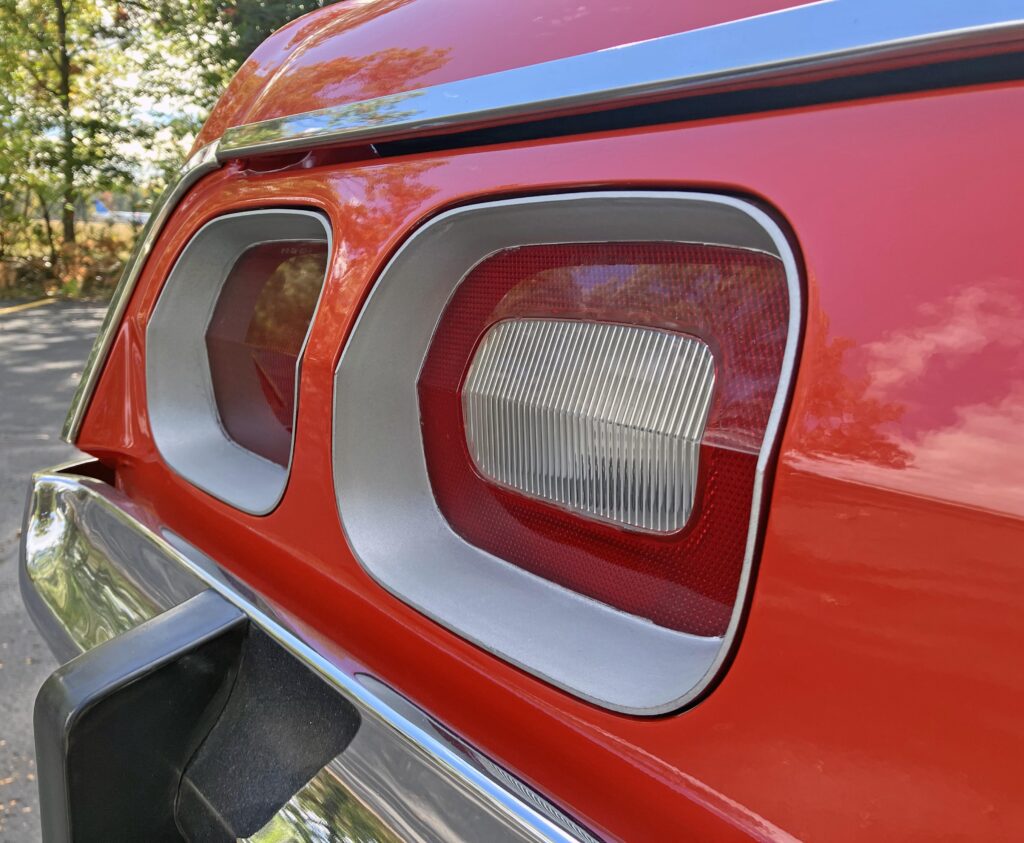
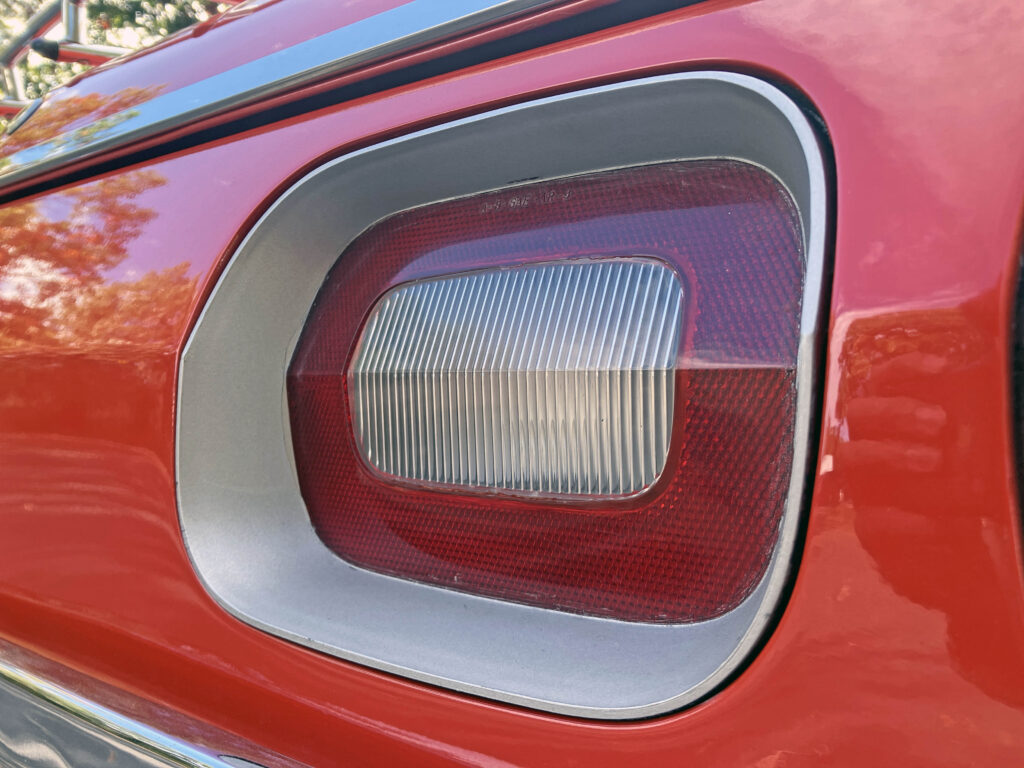
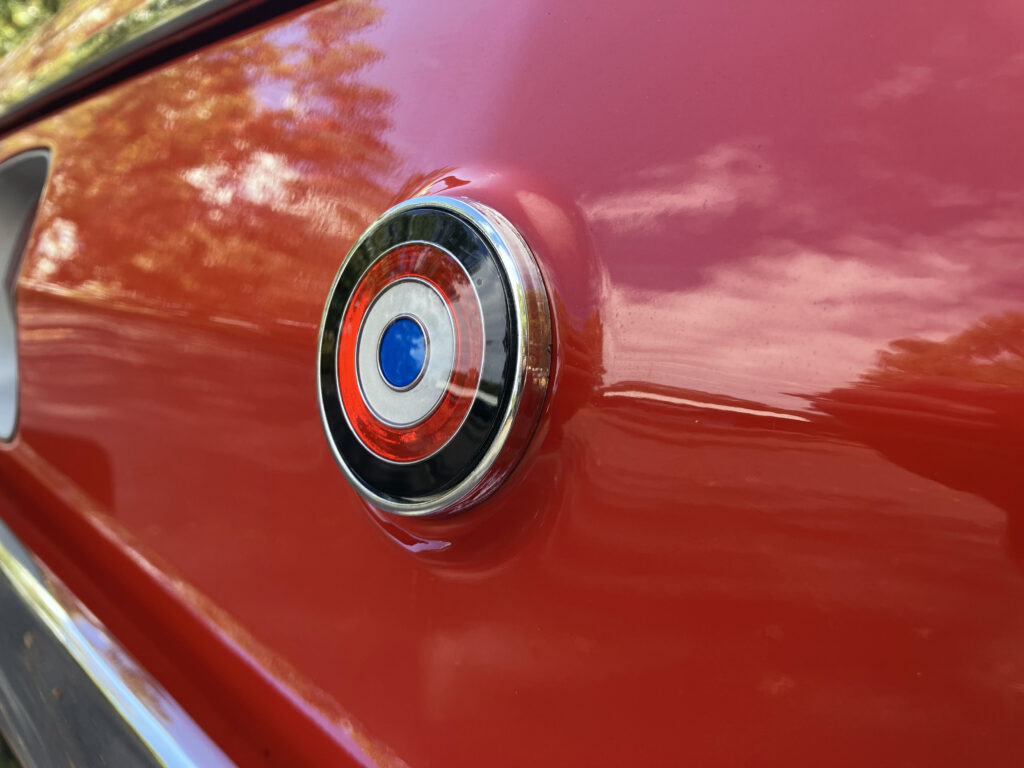
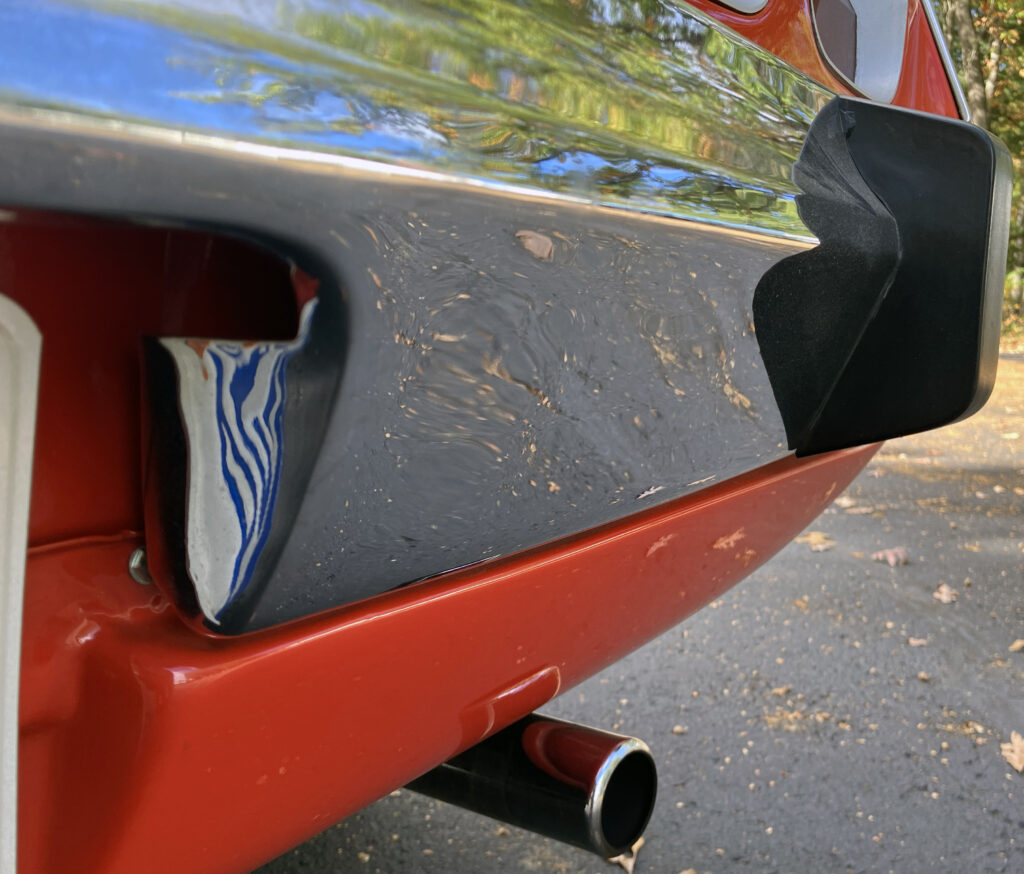
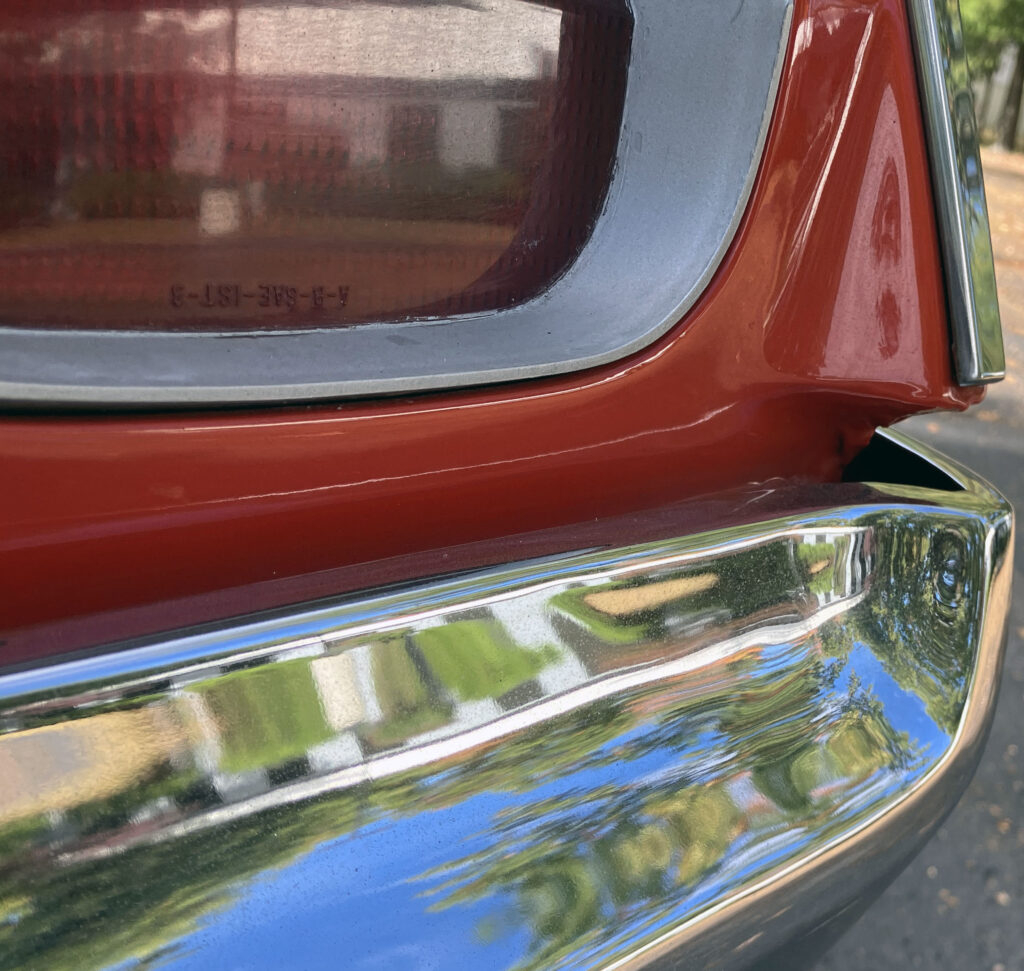
At the back, chrome frames the taillight panel, replacing the earlier Javelin’s painted contours and full-width lamp treatment. The lamps have strong bevels and silver centers that echo the grille. In the middle, the Javelin target emblem sits on a raised section of the panel, which gives it a level surface on the gently curved rear fascia. The bumper’s cutout adds depth and shadow, while the chrome strip carries the quarter-panel line into the bumper assembly.
The rear combines the first-generation Javelin’s character with lighting forms that fit the early 1970s. The design also shows AMC searching for a stronger identity in a crowded field. The company’s sculpted fenders and unusual nose set the car apart, while the brighter rear trim gives it a more dressed-up finish.
The Javelin looks lighter and more sporting than the Mustang, but the second-generation Camaro and Firebird made especially dramatic changes to meet the new decade. Ford’s 1974 Mustang II took a different direction as well. The Javelin ended after 1974 without a direct successor, leaving AMC’s striking blend of pony-car shape and upscale detailing without a next chapter.
That absence is particularly noticeable in the cabin. Cardin’s interior gave the Javelin a visual identity that went well beyond a badge or a color option. Its bold upholstery, sculpted dashboard and carefully linked shapes made it feel richer than the more restrained Mustang Grande and Ghia trims. The exterior’s fender sculpture and fastback roof completed the proposition: a distinctive sporting coupe with a designer’s sense of proportion and finish.
The Cardin Javelin’s appeal is in that unusual balance. It has the long nose, muscular body and fast roofline expected of a pony car, but its cabin and small exterior details aim higher than the category’s usual trim-package playbook. Decades later, the combination still feels individual—and the seats remain the clearest expression of why.