In lane Electric Vehicles
Why Older Cars and Aftermarket Parts Need Regular Inspection
Description
Metal fatigue, aging fasteners and poorly matched aftermarket parts can turn hard driving into a failure. The author explains what to inspect and why.

A 1997 Mazda Miata can still charge up a mountain road, but every hard corner asks its aging components to do real work. During one drive, the author’s attention shifted from the apex to a left rear control arm bolt installed decades earlier. The car had handled years of autocrosses and mountain miles without trouble, yet that history couldn’t prove the bolt had been fitted correctly or that it would remain sound forever.
That tension is familiar to anyone who drives an older car enthusiastically. We rely on thousands of mechanical and electrical parts, and newer vehicles add software to the mix. Most of the time, they do their jobs so consistently that drivers stop thinking about them. But parts age, fasteners can loosen, fittings can leak, and metal flexes under load. Repeated movement can gradually damage a component even when no single drive seems severe.
Race teams and pilots build regular checks into their routines because small faults matter when equipment is pushed hard. The same habit makes sense for an older road car, especially before a long trip or spirited drive. The goal isn’t to treat every old fastener as an imminent failure. It’s to remember that past reliability doesn’t guarantee future condition.
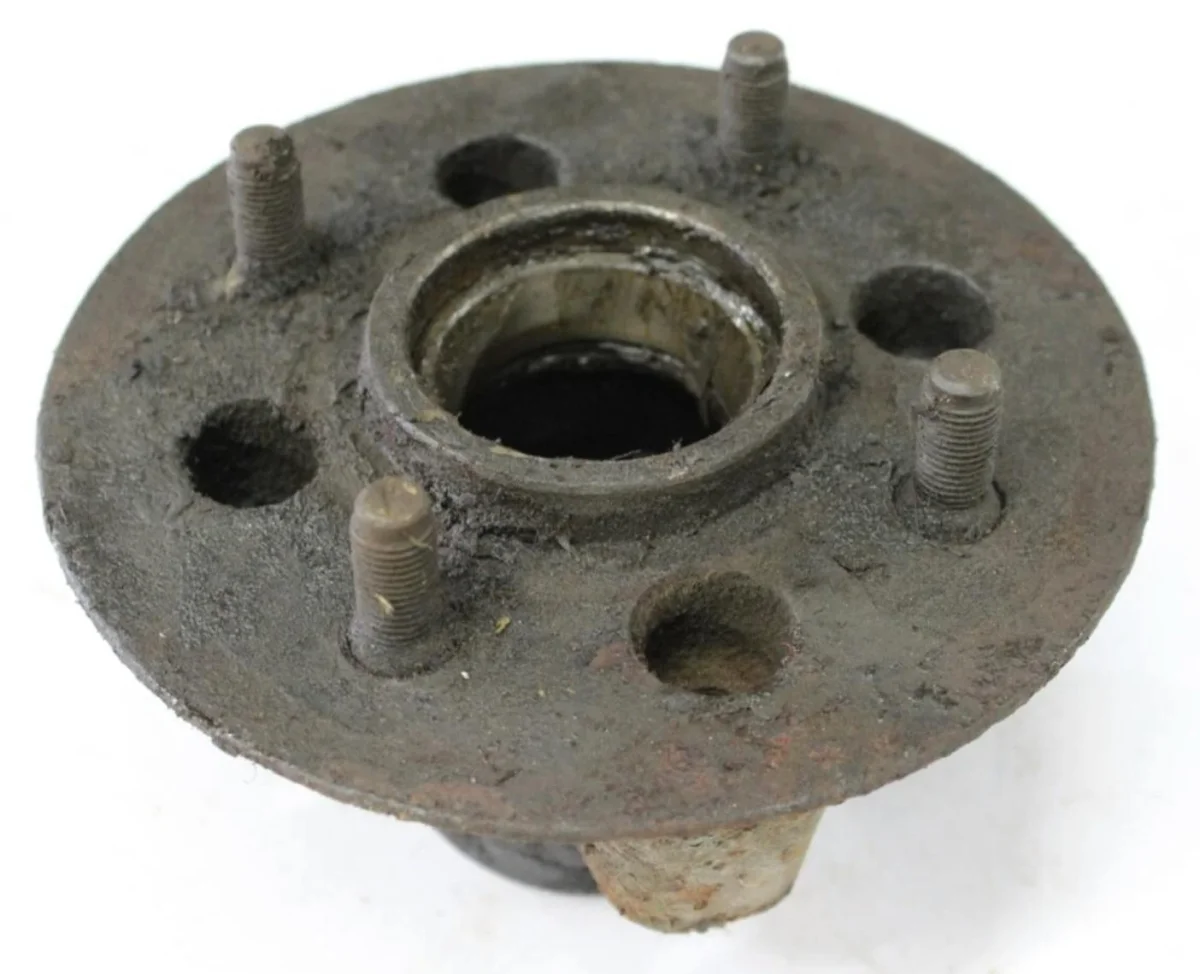
Fatigue builds one cycle at a time
Metal parts bend and flex under load. That movement is normal, but repeated cycles can create microscopic cracks that grow until a component fails. A casting flaw or a small nick from machining can give a crack its starting point. The stress pattern matters, too: a part may be pulled in one part of its working cycle and compressed in another.
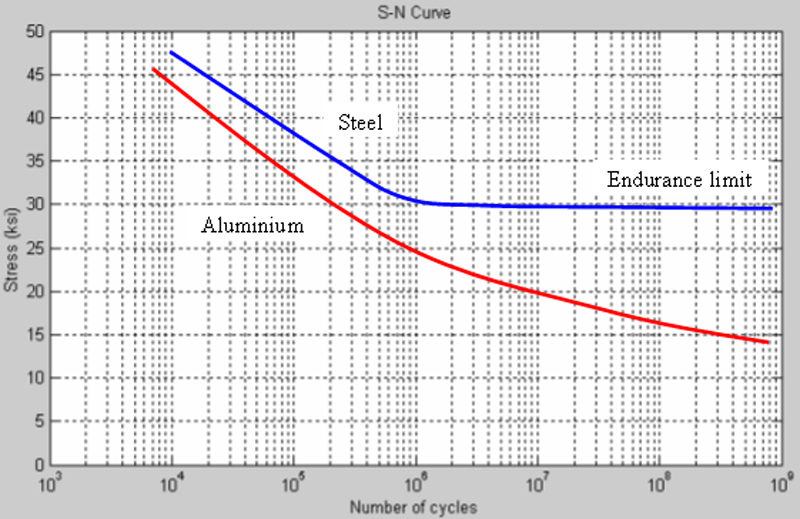
The author uses 10 million cycles as a rough illustration of how quickly fatigue can accumulate in some metals. That number isn’t a universal service limit: material, design, manufacturing quality and load all affect a part’s life. Still, the example shows why a component that looks intact can be closer to failure than its appearance suggests.
Steel and aluminum also behave differently under repeated stress. In broad terms, steel can reach a stable fatigue range when kept below a certain load, while aluminum’s resistance can continue to decline as cycles accumulate. The article describes a rough threshold of about 40 percent of steel’s ultimate strength, while stressing that the actual behavior is more complex and has exceptions. Engineers account for those limits by designing in safety margins and matching materials to the job.
That helps explain why well-designed steel parts can remain in service for a long time, and why the author points to surviving Model Ts as an example. Henry Ford specified 23 steel alloys for the Model T, including vanadium steel. The broader lesson is that material choice and careful design matter as much as age alone.

Aircraft illustrate the same principle at a larger scale. An airframe can look complete while having accumulated enough fatigue that it is no longer considered suitable for flight. The author uses retired aircraft in Arizona to make the point: visual condition alone can’t reveal how much repeated stress a structure has endured.

Why connecting rods face unusual stress
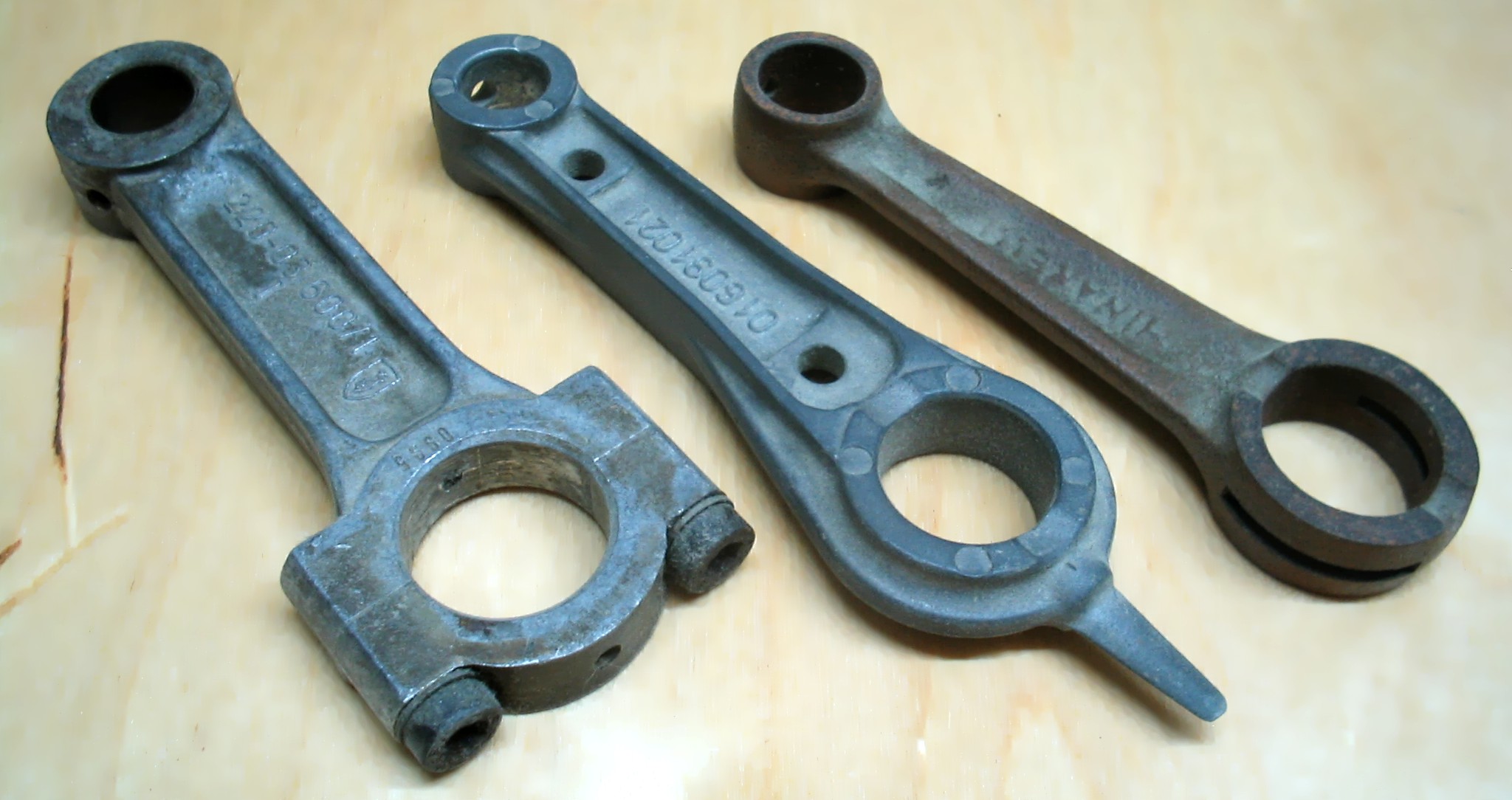
A connecting rod experiences changing forces every time the engine turns. It sees tension and compression at different points in the cycle, with especially high loads during the power stroke. Each reversal puts stress on the metal’s internal grain structure. If the part has a flaw, or its design and use leave too little margin, small cracks can spread over time.
At 7,000 rpm, the author estimates that a connecting rod reaches 10 million stress cycles in about 12 hours. Higher loads shorten the time available. That’s one reason race engines are rebuilt or retired on a schedule: their parts see operating conditions far more demanding than typical road use. Passenger-car components are designed around a different duty cycle, with safety margins intended to keep ordinary loads within a suitable range.
A missed shift can upset those assumptions. An over-rev may impose unexpected tensile forces on the piston and rod near top dead center. A rev limiter takes milliseconds to respond; at 9,000 rpm, the author calculates that 50 milliseconds equals 7.5 crankshaft rotations. If the driver also lifts off the throttle, the resulting intake vacuum can add force on the piston during the overlap between exhaust and intake. The combined load can stretch the rod past its limit. When it breaks, the loose pieces can damage the crankcase as the engine continues turning.
Hydrolock is another way to destroy an engine, but it isn’t the focus here. The point is that even a brief mistake can put a component through loads the original design wasn’t intended to handle. A part’s reputation for durability depends on using it within its operating limits.
Modifications can change the loads
Aftermarket parts deserve the same scrutiny as original components, particularly when a modification changes a part’s weight, dimensions or position. The author cites oversized wheels as one example. A heavier wheel, or an unsuitable offset, can increase the load on a ball joint and hub assembly. A car may work normally for a while before repeated stress catches up with the affected parts.
Not every aftermarket component is poorly designed, but buyers can’t assume that appearance or a “race” label proves the engineering is sound. Automakers have extensive experience designing and testing parts for their intended applications. Smaller suppliers may have less time and fewer resources for long-term testing. Online owner communities can help identify recurring problems, but a good report from other drivers still doesn’t replace checking whether the part suits the car.

The article’s example is an aluminum alternator and fan pulley fitted to an early Porsche 911. Porsche had used steel for this working component, which helps charge the battery and cool the engine. A previous owner installed an aftermarket aluminum version, apparently for its appearance or performance image. That choice put a lightweight material in a part that had to withstand repeated engine-driven loads.
At 3,000 engine rpm and 70 mph, the author estimates about 50 cycles per second, with three power strokes per revolution acting on the pulley. On that simplified calculation, 10 million cycles arrive in 18.5 hours. The aluminum pulley survived longer than that, but its eventual failure left the car stranded three hours from home on a trip with friends. A part can outlast a rough estimate and still be a poor bet; extra life by chance isn’t proof of sound design.

Aftermarket quality has improved in some areas as owner reports spread quickly online. The author contrasts that with the pre-internet era, when weak parts could circulate with less feedback. He also recalls a wave of low-quality components from Chinese suppliers in the 1990s, describing some as little more than a “suggestion” of the part they were meant to replace. His view is that quality has improved over the decades as suppliers gained experience and their parts went through repeated original-equipment use.
That history is a reason to assess parts on their design and track record, rather than a country label. The useful questions are whether the component uses appropriate materials, matches the original part’s dimensions and loads, and has performed reliably on the same model. A bright finish or a lower weight doesn’t answer those questions.

Make inspections part of old-car ownership
The author’s own history includes two wheels coming off the same 1963 Triumph Spitfire. The first incident followed a failed front suspension hub, which he attributes to his own assembly mistake as a 15-year-old. In the second, a rear axle nut came loose and the wheel rolled past him into a friend’s yard. Those episodes were decades ago; since 1978, he says, he hasn’t had another wheel come off. The stories are a reminder that failures can come from both component condition and assembly.
For older cars that see hard use, pay particular attention to steering and suspension parts, wheel hubs, ball joints and brake hoses. Check for looseness, leaks, damage and signs of wear before a demanding drive. If a vintage car will be raced, the author recommends having critical parts such as front suspension vertical links inspected for cracks. A local machine shop can use Magnaflux testing to help find defects that aren’t visible to the eye.
There’s no call to fear every old car. The author and his friends regularly drive and race pre-1970 sports cars with few problems, and he notes that many older steel and iron components were designed with generous margins. The practical message is to treat age and use as reasons to inspect, not as proof that a part has failed.
When choosing a replacement or upgrade, compare its size and material with the original and look for a record of good results on the same model. A decorative aluminum air-filter base is a different proposition from an aluminum front control arm carrying suspension loads. Older cars can still be driven hard, but the driver should know which parts are carrying the stress—and check that they’re ready for it.
Norman Garrett was the Concept Engineer for the original Miata during his time at Mazda’s Southern California Design Studio. He teaches automotive engineering classes at UNC Charlotte’s Motorsports Engineering Department in Charlotte, North Carolina, and maintains a small collection of cars and motorcycles.


