In lane Electric Vehicles
Encor’s Lotus Esprit Restomod Revisits the Original’s Design and Driving Character
Description
Encor is rebuilding 50 Lotus Esprit V-8s with carbon-fiber bodywork, revised mechanicals and a cabin shaped around the original car’s clean design.
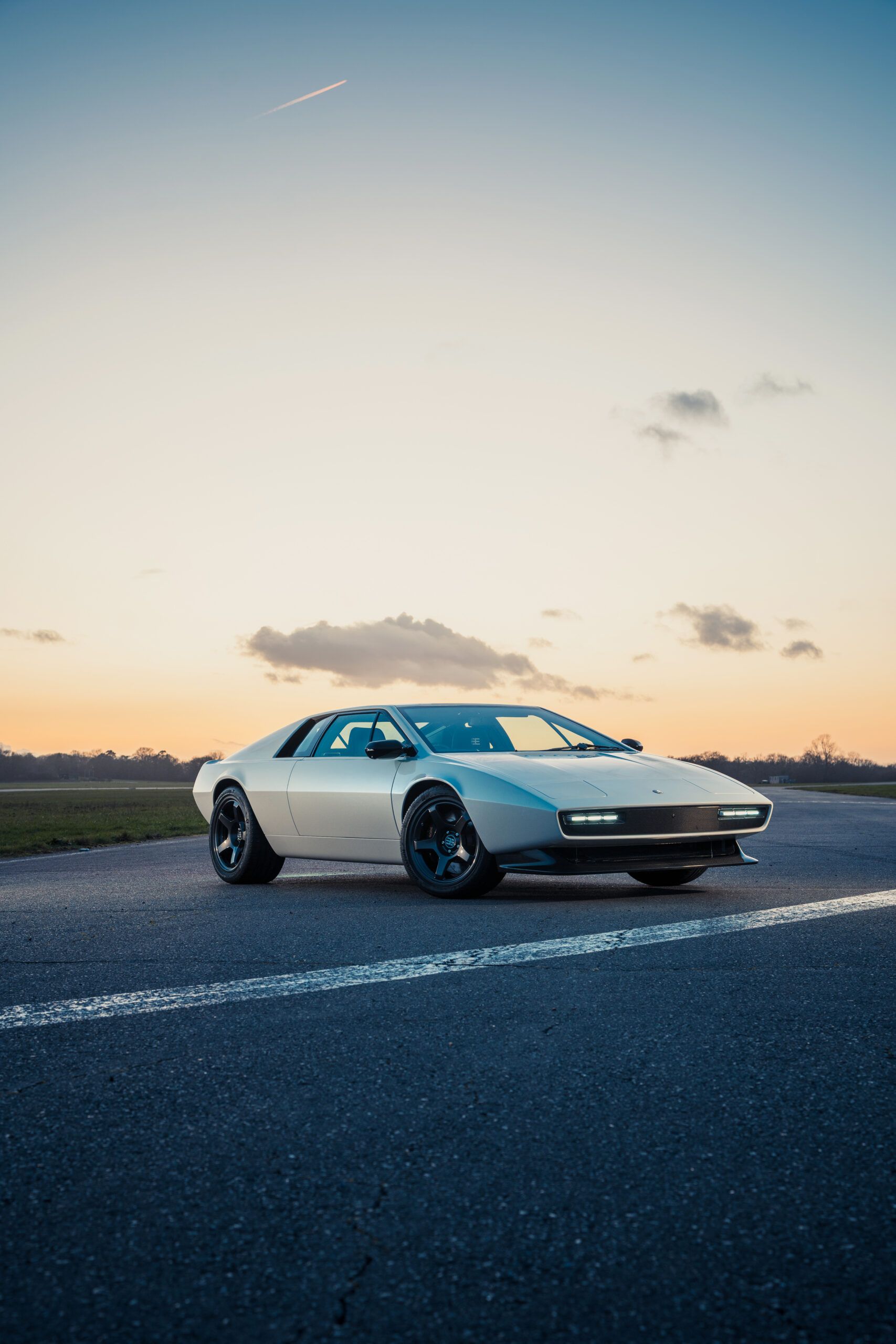
The Encor Esprit’s central idea is to bring the original Lotus closer to the promise of its design: a clean Giugiaro wedge with road-focused handling, more consistent build quality and a powertrain that’s easier to live with. The small project will produce 50 cars, each rebuilt around a late-production Esprit V-8 donor and retaining that car’s identity.
The timing marks 50 years since the Esprit’s launch. Its sharp, spare shape came from Giorgetto Giugiaro, while its mid-engine layout and chassis reflected Colin Chapman’s preference for light weight and agility. The Series 1 also gained a lasting pop-culture role as Wet Nellie in the 1977 James Bond film The Spy Who Loved Me.
Yet the production car had compromises that became more apparent up close. Its fiberglass body could leave large panel gaps, undermining the precision of a design that relied on uncluttered surfaces. The chassis and ride-handling balance drew praise, but the early 900-series four-cylinder engine lacked the sound and strong pull owners wanted until the Turbo arrived. The Citroën-sourced transmission, meanwhile, could make gear changes heavy and vague.
Encor’s team sees those shortcomings as areas to address while keeping the Esprit’s character intact. Commercial Director Simon Lane, Managing Director Will Ives and Technical Director Mike Dickison all have personal histories with the model. Lane previously owned a GT3; Ives bought a Sport 350 in 2001 that remains in his family; and Dickison has owned a Series 2 since 1987.
“We’re all huge fans of the Esprit,” Lane says. The team began discussing the project three years ago, with the anniversary in view. Its aims were to improve usability, drivability and build quality, while strengthening the qualities that made the car special in the first place.

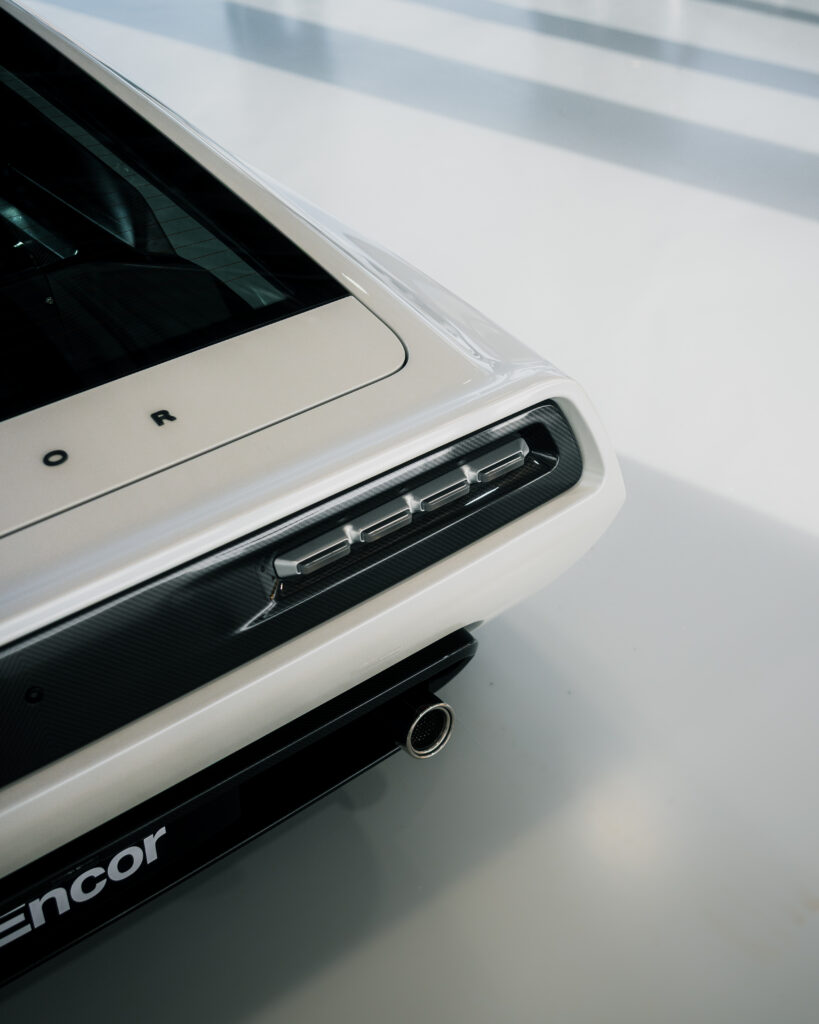
The late-production V-8 provides the mechanical foundation, bringing its track, wheels, tires and brakes. Design work was led by Daniel Durrant, who headed the Lotus Design studio for 15 years. He resisted the wider body treatment often seen on restomod projects, choosing instead to return to the original Series 1’s proportions and visual restraint.
That meant drawing on the early car’s front and rear overhangs, roof height and beltline while working with the later V-8’s underpinnings. Durrant argues that the first Esprit had the clearest expression of the model’s design intent. Later versions adapted that base to new purposes and extended the chassis’s commercial life, but the original shape remained his reference point.
The approach also reflects a distinction between the Esprit’s concept and the practical limits of production in its day. As manufacturing, budget and parts-bin constraints took hold, details were added or adapted to solve production problems. Encor’s task, as Durrant describes it, was to recover the visual clarity of the early sketches using materials and methods that weren’t available to the original team.
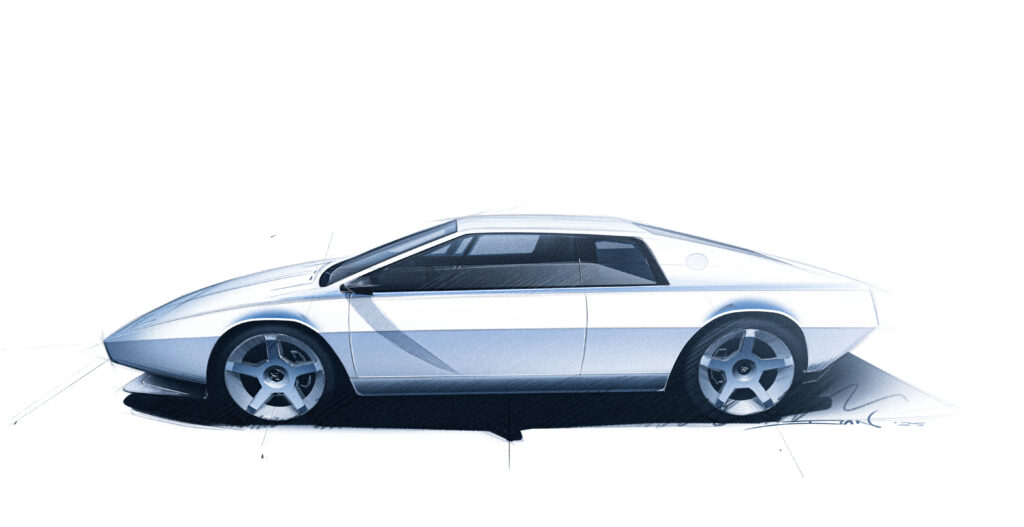
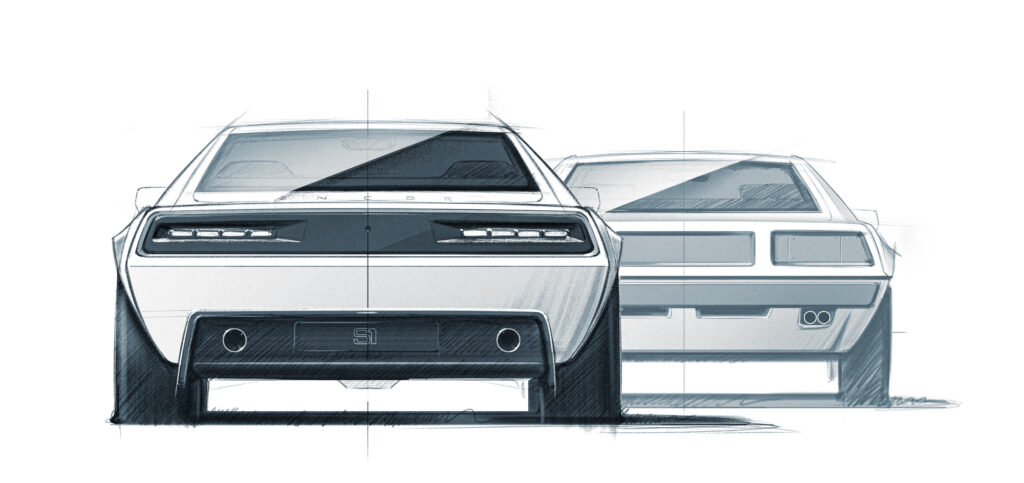

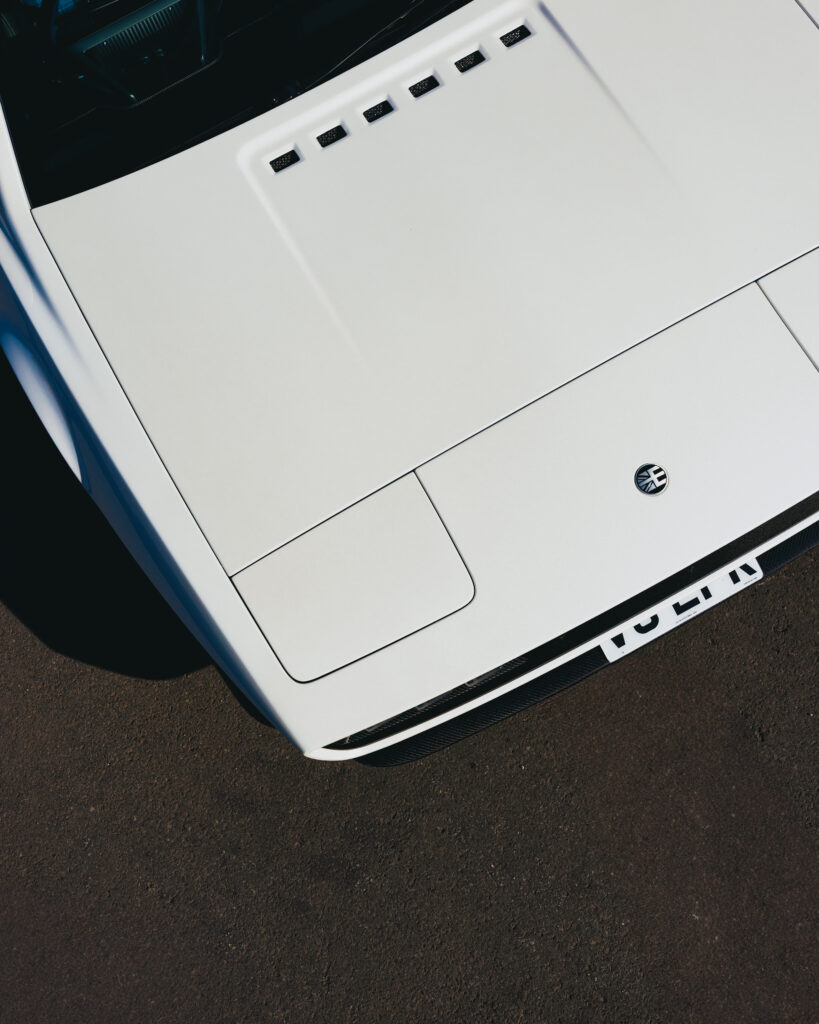
Carbon fiber is key to getting the body surfaces and shut lines under control. On a design with few decorative elements, each gap between panels is easy to see, so precision matters more than it might on a busier shape. Durrant says the material gave Encor the control needed to meet its target for those joins.
Some details disappear altogether. The original’s square door handle, shared with the Austin Allegro, is gone. Durrant sees it and features such as chrome trim around the glazing as evidence of production compromises: trim could conceal uneven gaps between glass and body. Encor’s redesign aims to remove such additions where modern engineering makes them unnecessary.
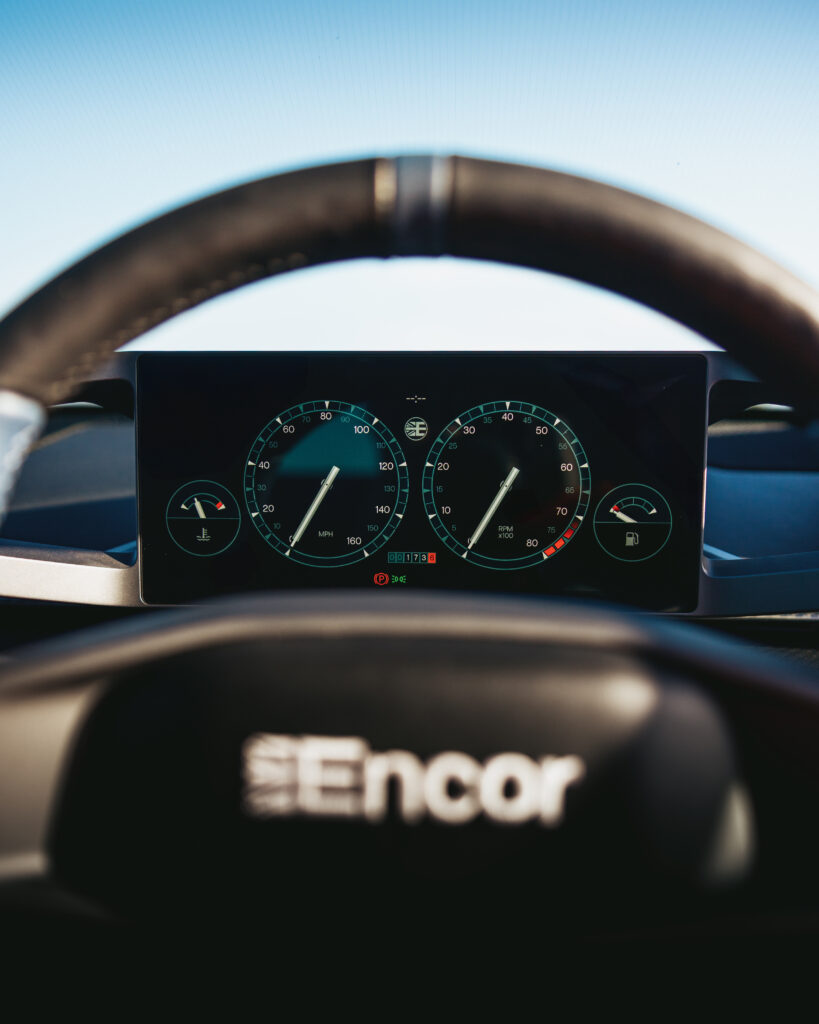
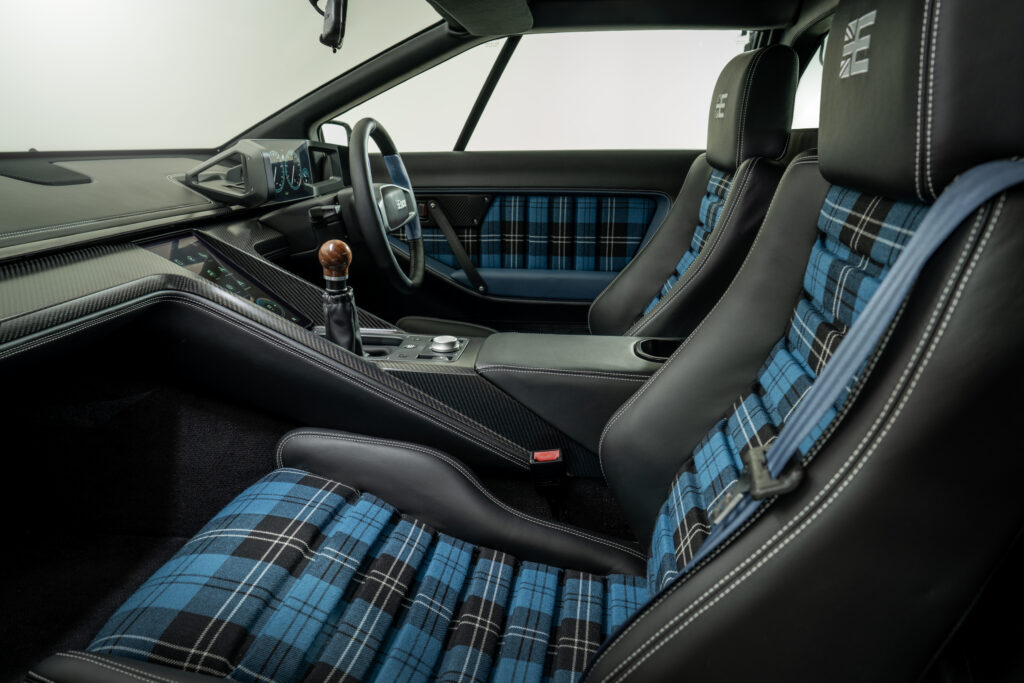
The same balance of heritage and updated execution shapes the cabin. Encor worked with Skyships Automotive on an electronic instrument pack, starting from the original wraparound binnacle. Durrant wants to preserve the way its wings sweep toward the driver, while giving the layout a contemporary finish.
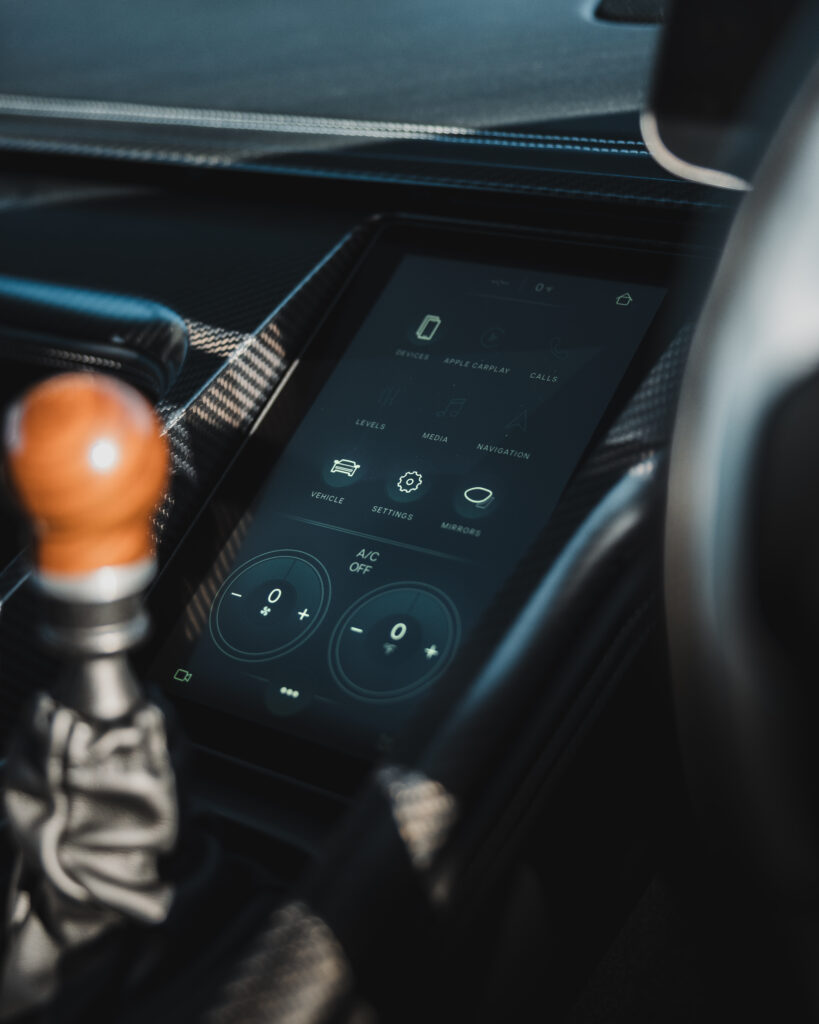
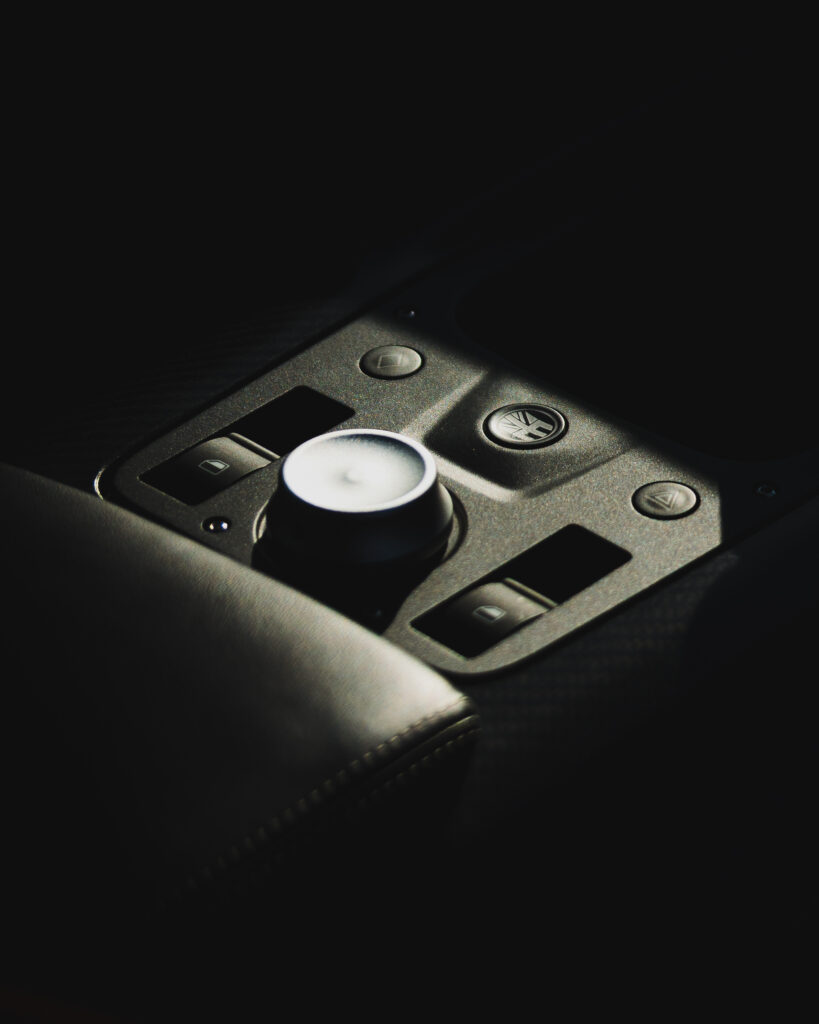
Under the bodywork, Encor is rebuilding rather than replacing the Lotus V-8. Lane says the engine’s poor reliability reputation is tied to how it was made at the time, rather than being an unavoidable flaw in its design. The engine was developed under GM ownership and has visible GM markings, with some shared features with the LS series.
Each engine is stripped to its block, vapor blasted and rebuilt in a process Lane describes as taking 50 hours. Forged pistons and new injectors are fitted. The cable throttle is replaced with electronic control, paired with a new engine ECU and a redesigned crank position sensor. That sensor supplies the ECU with 36 data points per crank revolution, which Encor says supports a smoother idle and sharper throttle response.
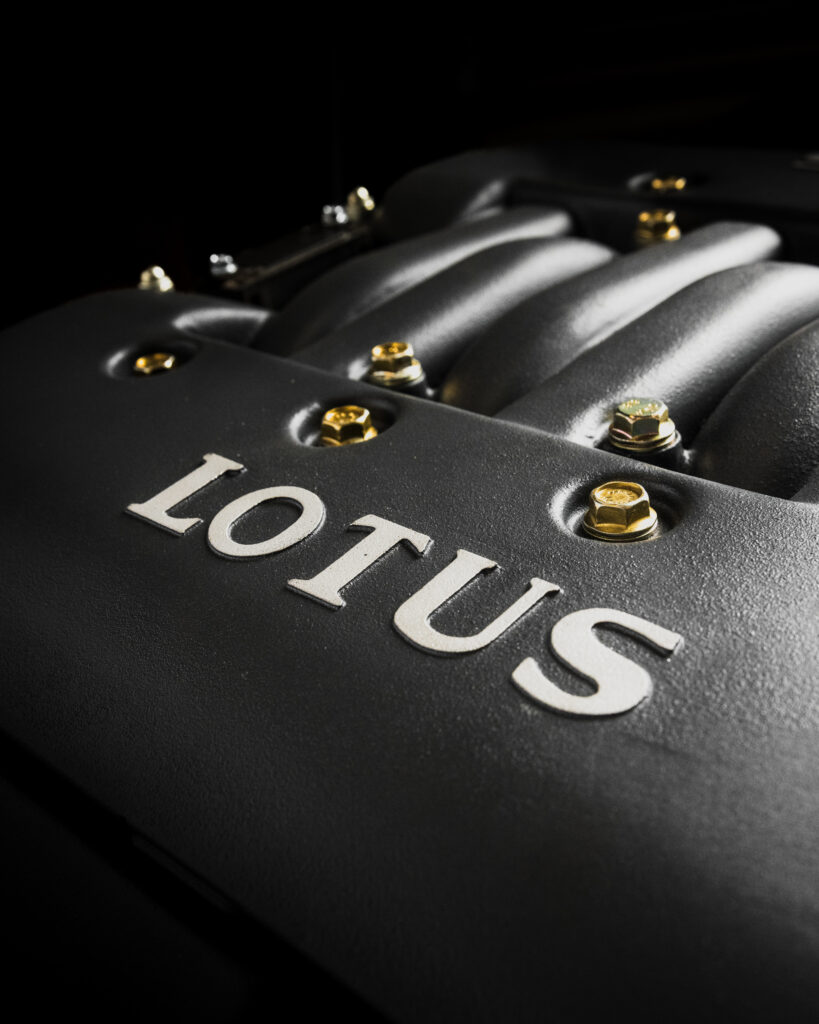
The Garrett T25 turbo casings remain, but Encor replaces their internal components, including billet-machined impellers. A new exhaust system and catalytic converters complete the engine work. Lane says the engines are bench tested before delivery, and the team is building up mileage in its prototypes to assess reliability.
The gearbox keeps its original casing, but gets a new internal gear set using Quaife engineering upgrades. A stronger input shaft is intended to handle the added power. Third, fourth and fifth retain their ratios, while first and second are slightly shorter. Encor also fits new synchro rings, bushes, a twin-plate clutch and a Quaife limited-slip differential.
For the suspension, Bilstein dampers and Eibach springs account for the Encor car’s lower weight compared with its donor. The steering rack and power-steering system are refurbished rather than replaced, preserving a feature Lane says Esprit drivers already valued. Encor is tuning the car for comfortable road use, not as a track-focused machine.
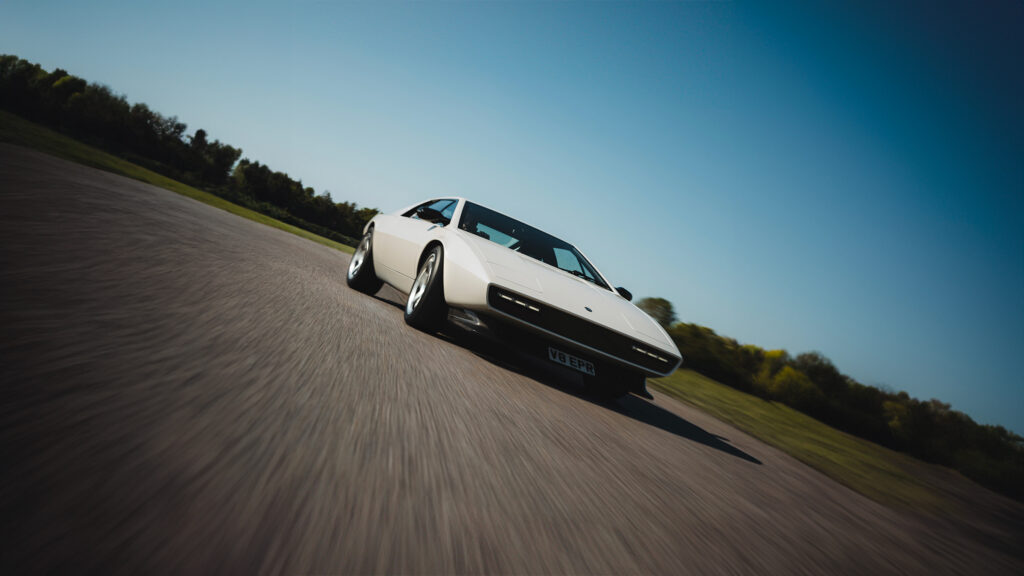
That road-going focus helps define the project’s limits. Encor has revisited every area of the car, but Lane says it has sought to preserve both the Esprit’s identity and the way it drives. Each finished car will retain the chassis number of its donor, along with its original engine and gearbox numbers.
Lane describes one donor arriving from the United States on Michigan plates. After the work, Encor plans to return it on the same plates, with its original build, engine and gearbox numbers intact. The company has also received cars from Australia and New Zealand, as well as the United Kingdom. Lane says around 650 Esprit V-8s were imported to the United States, giving the project a pool of potential donor cars.
Encor plans to build just 50 examples, matching the Esprit’s 50th anniversary. The order book is full for the first year, and the reported cost is $575,000 on top of the donor car. That price and limited run put the project firmly in boutique territory. Its appeal will depend on whether the careful bodywork, rebuilt V-8 and road-focused setup can deliver the more usable, better-finished Esprit the original design seemed to promise.

The post How Encor Created the Consummate Lotus Esprit appeared first on Hagerty Media.


