In lane Electric Vehicles
Harvard Study Raises 2030 U.S. EV Sales Forecast to 38%
Description
A revised Harvard estimate puts EVs at 38% of U.S. new vehicle sales by 2030, with lower costs, better batteries and broader charging access supporting growth.

A revised Harvard estimate puts electric vehicles at 38% of U.S. new vehicle sales in 2030, up from an earlier forecast of 32%. That would be a sharp rise from the 8% share reported for 2025, even after the end of the $7,500 federal purchase credit. The revised projection suggests the credit’s removal will slow adoption, while improving vehicle costs, battery capability and charging access continue to support it.
The forecast and what changed
The research, produced through Harvard University’s Salata Institute for Climate and Sustainability, was published July 6 under the title “Simulating Impacts of Trump Policy Changes on Electric Vehicle (EV) Adoption”. The Harvard Gazette reported on September 17 that the study’s 2030 estimate had been corrected from 32% to 38%.
That revision still leaves a substantial gap from the study’s comparison case. With the energy policies in place at the end of 2024, the authors estimate EVs could reach 48% of new vehicle sales by 2030. Their revised 38% figure points to slower growth under the policies they modeled, while still indicating that EVs could claim a sizeable share of the market.
The study attributes most of the difference to the One Big Beautiful Bill Act and its removal of EV-related credits. The authors estimate that eliminating those credits lowers the 2030 EV sales share from 48.0% to 39.4%, relative to the December 2024 baseline. Of the changes they assessed within the act, removing credits for new, used and commercial EV purchases, including retail leases, accounts for the largest single reduction: 6.2 percentage points.
Those figures describe modeled outcomes, not a guaranteed sales trajectory. The gap between the study’s 39.4% estimate tied to the credit changes and the later 38% figure also makes the revised projection the one to watch when comparing the study’s results with future sales.

Fuel costs and the ownership equation
Fuel prices are another possible influence on buyer choices. The source article points to conflict affecting oil and gas infrastructure in the Middle East, as well as damage to Russian energy assets amid the continuing war in Ukraine, as factors adding pressure to global fuel markets. Higher pump prices can make an EV’s running costs look more attractive, but a short-lived spike alone may not shift many buyers. Transportation analysts cited in the article cautioned that the fuel-price increase during the COVID period did not produce a major change in EV sales.
The difference now, the study suggests, is that the conditions around the vehicle have changed. Battery improvements have made longer journeys more practical for more drivers, while reducing EV purchase costs. The source gives no specific range or price figures for that progress, so the effect is best understood as a broad improvement in the ownership proposition rather than a quantified comparison between models.
Charging access has also expanded. The article describes a wider public network, including fast chargers, stations at quick-serve restaurants and other locations that cater to motorists, and early growth in curbside charging. Home charging remains a convenience advantage for many EV owners, but more public options can help drivers who lack a home charger or need to recharge during a longer trip.
Routine maintenance and exposure to gasoline prices also shape the ownership calculation. EVs can require fewer routine service visits, and drivers who charge electrically rely less on gasoline. That doesn’t make every EV the right fit: purchase price, access to charging and the kind of journeys a driver makes still matter. But the study’s projection suggests the tax credit may no longer be the only factor capable of moving adoption.
Charging plans and more familiar brands
Public charging remains an area to watch. The article reports that a $5 billion program intended to support a national fast-charging network along interstate highways and other major routes was halted midstream, then allowed to continue after a judge overturned the halt. Its future pace could affect the experience of drivers who depend on public charging for long-distance travel.
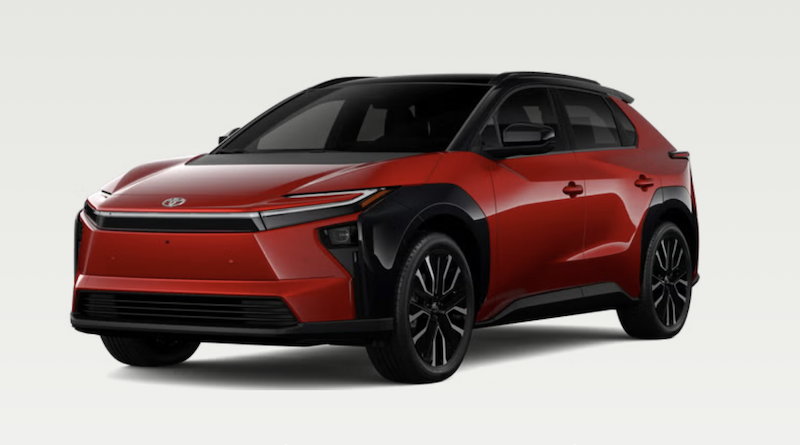
More EV choices from established automakers could also broaden the market. Subaru introduced new EV models in the U.S. earlier in 2026, and Toyota added three EVs to its lineup during the year. The source points to these launches as examples of legacy brands filling out the selection as some automakers reassess their electrification plans.
Ford, meanwhile, is preparing for volume production of its forthcoming Fathom electric pickup. The company is aiming to sell it for just under $30,000. If that price target holds when the truck reaches the market, it would put an electric pickup at a more accessible starting point than many buyers may expect, though the source does not provide a launch date or further specifications.
For buyers, the revised forecast is a sign of how quickly the market outlook can change as costs, fuel prices and charging access evolve. The 38% estimate isn’t a promise of the sales mix in 2030; it is a reminder that removing purchase credits alone may not determine how many drivers choose an EV. The next signals will come from actual sales, the prices and capabilities of new models, and whether charging networks keep expanding.
Photo: Toyota is among the established automakers continuing to expand its EV lineup in the U.S. (2027 bZ image courtesy of Toyota; Toyota bZ.)


