In lane Electric Vehicles
US EV Sales in Q3 2026: Toyota and Rivian Gain as Rivals Slide
Description
US EV sales weakened across much of the market in Q3, while Toyota’s lineup and Rivian’s growth stood out. Slow charging and uneven demand remain key concerns.


US electric vehicle sales in the third quarter of 2026 showed how uneven the market has become. Many established brands reported steep declines, while Toyota added momentum with several battery electric models and Rivian set a delivery record. For buyers, the figures point to a market where demand is still present but concentrated in particular products and price brackets.
The contrast is sharp against a wider international shift toward battery powered cars. In the US, the Big Three automakers have struggled to translate their model lineups into sales. GM and Ford were each down 6 percent year on year through the third quarter. Stellantis was up 3 percent, helped largely by the Ram 1500, but its all electric Jeep Wagoneer S fell 96 percent in Q3 to 146 units.
Toyota finds traction as GM and Ford fall back
Toyota, long a cautious player in battery electric vehicles, has become one of the clearer bright spots among established brands. Its bZ, an updated version of the bZ4X, was the fourth best selling EV in the US during the first half of 2026, behind the Tesla Model Y and Model 3 and Hyundai IONIQ 5. Toyota has delivered more than 25,000 bZ SUVs so far this year. More than 7,500 electric C-HR crossovers have also reached customers, alongside a smaller number of bZ Woodland models, which have a more off road oriented design.
Electrified vehicles also account for a large share of Toyota’s broader business: hybrids, plug in hybrids and battery electric models together represented more than 57 percent of its US sales in Q3. That mix gives Toyota a wider set of options for customers than brands relying more heavily on pure EV growth.
Cadillac’s all electric push is having a particularly difficult year. In Q3, Lyriq sales fell 51 percent, Vistiq dropped 34 percent, Escalade IQ declined 29 percent and Optiq was down 7 percent. Ford’s Mustang Mach E fared worse by the quarterly measure, with sales falling 72 percent to 5,574 vehicles. It was down 59 percent for the year.

Chevrolet’s electric models also recorded steep declines. Equinox EV sales dropped 92 percent in Q3 to 1,905, leaving the model down 66 percent year to date. Blazer EV sales fell 84 percent to 1,261, and were down 79 percent for the year. Silverado EV sales declined 58 percent in the quarter; the related GMC Sierra EV was down 51 percent.
Charging speed may be one factor for shoppers weighing GM’s offerings against rivals. The source says most of the company’s electric cars top out at 150 kW under ideal conditions, while some competitors are pushing much faster charging. That gap matters in daily use, particularly for drivers who rely on public fast chargers during longer trips.
The Bolt’s sales raise questions about its production run
The second generation Chevrolet Bolt has also struggled to find buyers despite improvements over the original. Chevrolet had planned to build 150,000, but sales so far this year total 8,090. Car and Driver reports that production may be shortened, while Reuters says the company may stop building the Bolt after 35,000 units at its Kansas City factory. The difference between the original target and current sales makes the car a telling example of how quickly automakers may need to adjust production when demand misses expectations.
Hyundai and Kia are seeing similar pressure in their electric lineups, even as conventional and hybrid models perform better. Hyundai IONIQ 5 sales fell 53 percent in Q3 and 24 percent for the year; IONIQ 9 was down 47 percent in the quarter. Kia EV6 sales declined 57 percent in Q3 and 77 percent so far in 2026, while EV9 sales dropped 28 percent. Genesis reported 816 GV60 sales, down 53 percent year to date, and 234 electrified GV70 sales, down 87 percent.
Tesla’s share of the US EV market has risen amid these declines, though its own sales have weakened. US sales fell 16 percent from the same period a year earlier, marking an eighth straight month of year over year declines in September. A larger share, then, does not necessarily mean a stronger sales picture across the category.
Rivian’s growth stands out
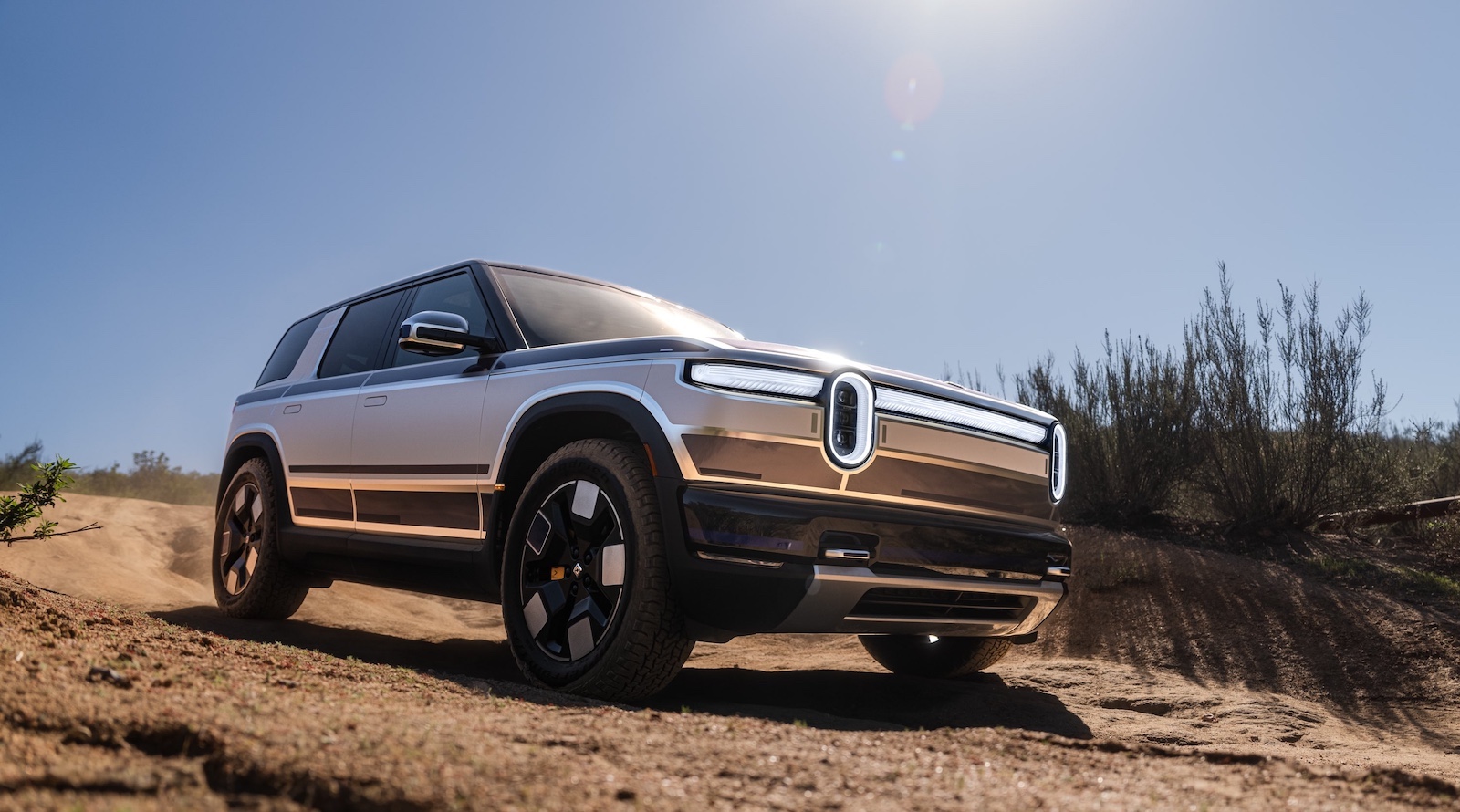
Rivian is the notable exception in the source’s account of Q3. After introducing the R2 midsize SUV earlier this year, the company built 19,751 vehicles and delivered 19,248 in the quarter, up 45 percent from Q3 2025. The R2 starts just under $60,000, and Rivian expects to deliver as many as 25,000 before year end. That would put it among the fastest selling EVs in US history and could help the company set a new annual sales record, after hovering around 50,000 deliveries a year. Rivian says less expensive models starting around $45,000 are planned for the future.
Shifting demand makes planning harder
Higher gasoline and diesel prices are renewing interest in fuel efficient vehicles. Large models such as the Chevrolet Suburban and Ford F-150 are seeing lower sales, while midsize SUVs are gaining attention. That shift may benefit EVs that fit everyday family use, but the sales figures suggest efficiency alone isn’t enough to guarantee demand. Price, charging convenience and the appeal of the vehicle itself all shape the decision.
US buyers have shifted toward smaller, more efficient cars before, then returned to larger vehicles when fuel became cheaper and more plentiful. The current change in preferences could prove just as difficult for automakers to predict. With billions committed to vehicle development and factory capacity, a mismatch between what companies build and what customers want can be costly. Toyota’s broad electrified mix and Rivian’s rapid growth offer two different paths through the market; the next test is whether other manufacturers can match their products more closely to buyer priorities.


