In lane Electric Vehicles
China EV Sales Reach 67% Share as September Car Market Shrinks
Description
Plug-in models took a record 67% of China’s September sales as total deliveries fell 28%. BYD led, while Leapmotor gained ground.
Plug-in cars reached a record 67% of China’s market in September, even as the country’s overall vehicle sales fell 28% year over year to around 1.6 million. The shift came less from a surge in plug-in deliveries than from a steep contraction in combustion models: plug-in sales declined 17%, while internal-combustion vehicle sales dropped 49%.

Battery-electric vehicles accounted for 45% of September sales and plug-in hybrids for another 22%. Across 2026 so far, plug-ins have reached a 58% share, four percentage points above the full-year 2025 figure. Battery-electric models alone are at 39%, compared with 33% for all of last year. The source expects the 2026 plug-in share to exceed 60%, with battery-electric cars passing 40%.
That distinction matters. A record share can reflect falling sales across the market as well as growing demand for electric models. Still, the scale of the change puts more pressure on established brands whose strongest business remains in combustion vehicles. China’s sales mix increasingly divides between a shrinking combustion segment, where foreign legacy makers remain prominent, and a larger plug-in segment led by domestic brands.
Plug-in models dominate the rankings
The September top ten included two combustion models from Toyota: the Corolla Cross in eighth place and the RAV4 in tenth. Their presence stood out because recent monthly rankings have often been made up entirely of plug-in models. The broader pattern is clear, even if combustion vehicles can still break into the leading positions.
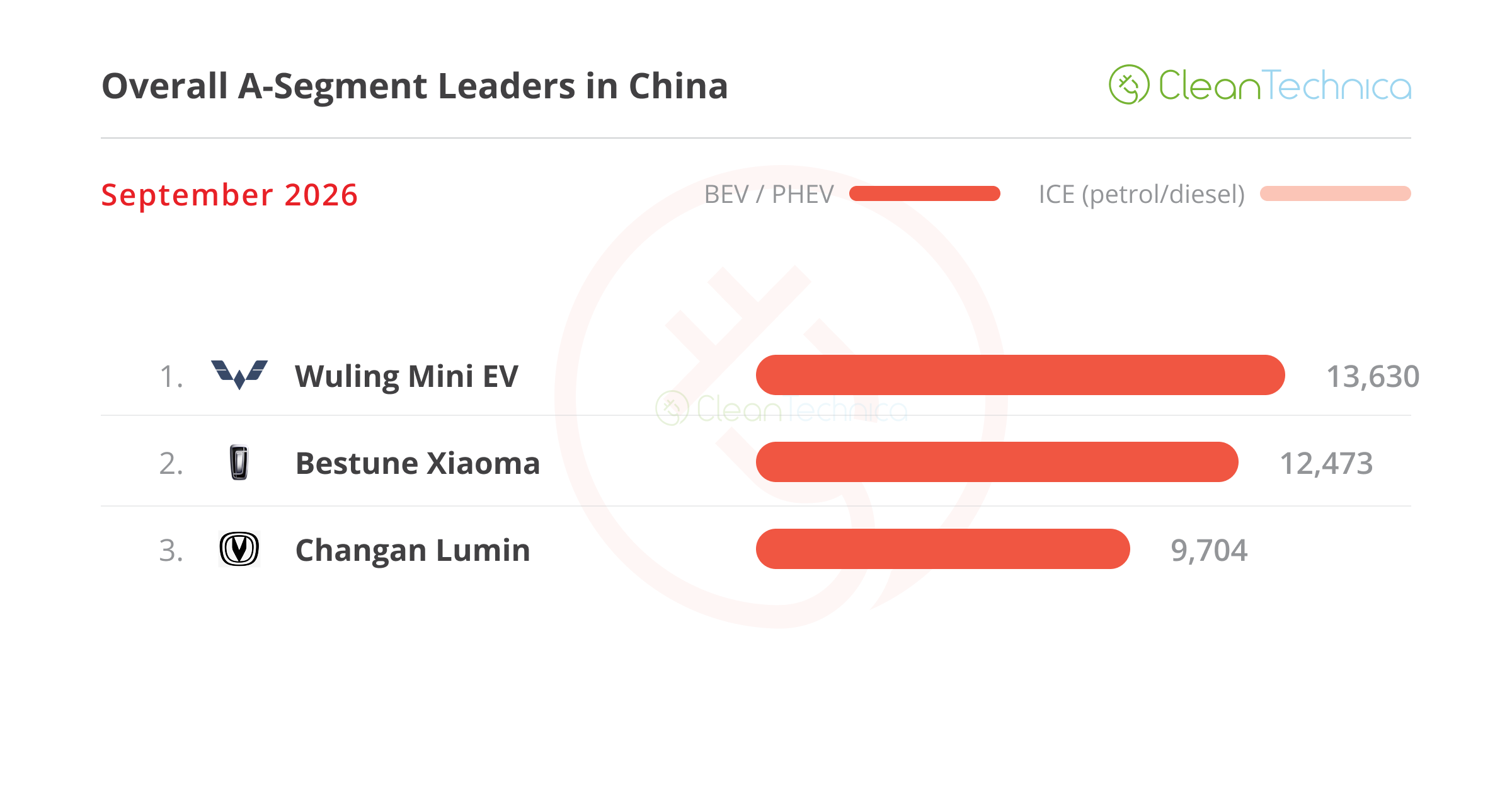
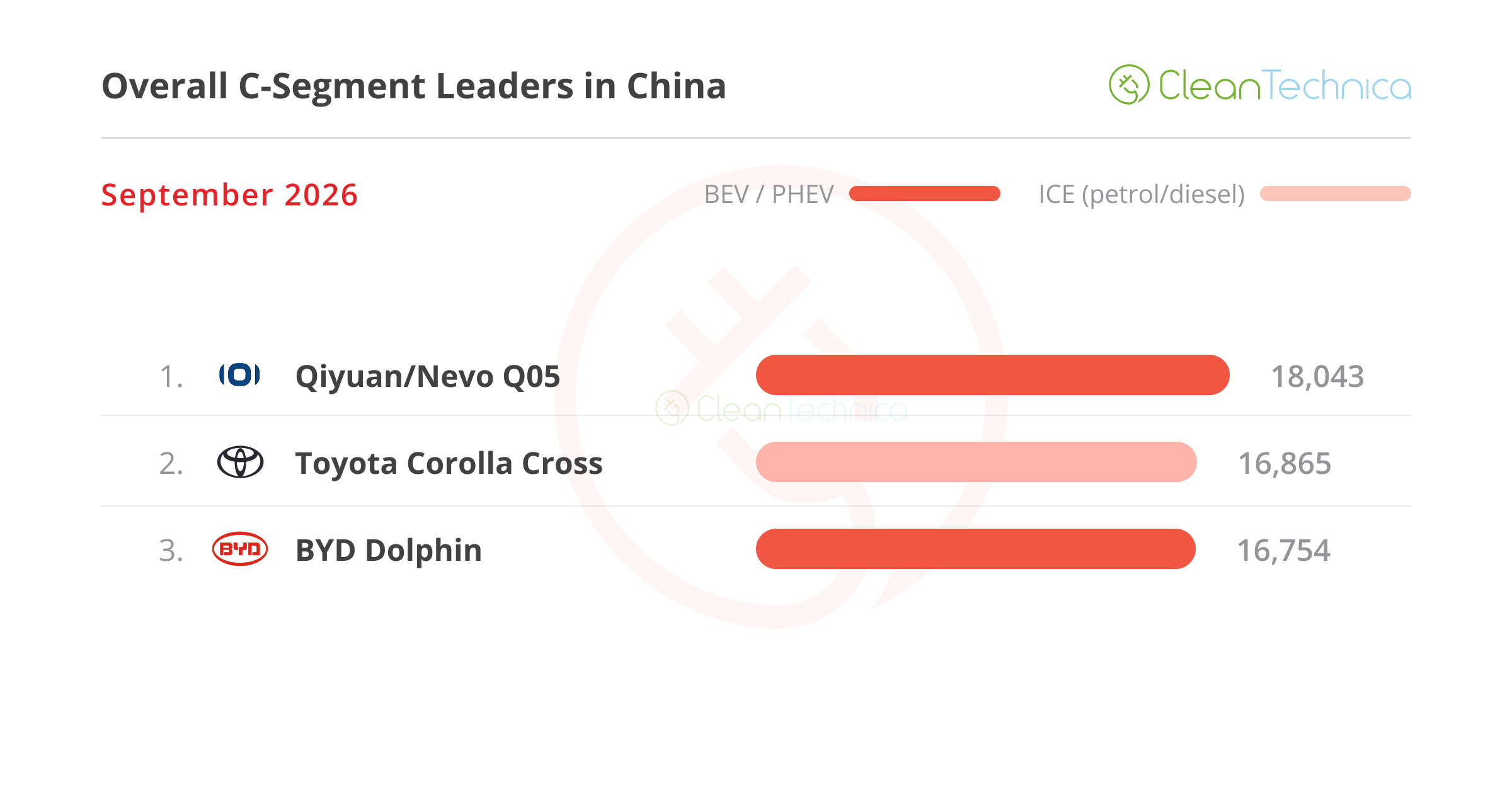
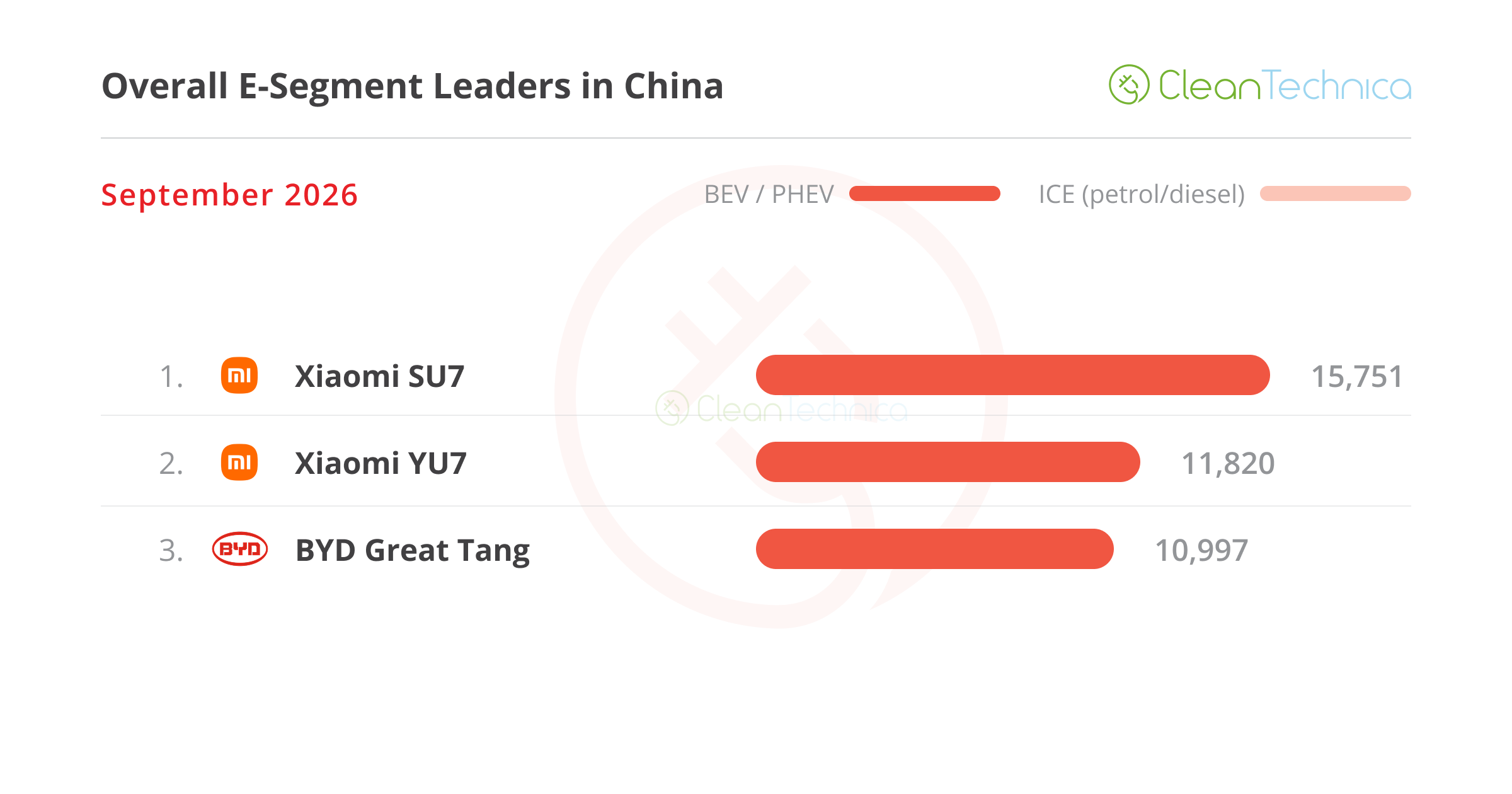
The segment rankings tell a similar story, with the compact C-segment the main exception. The Toyota Corolla Cross placed second there, behind the Nevo Q05 and ahead of the BYD Dolphin. In the smaller category, the Bestune Xiaoma placed second as sales returned to more substantial volumes. BYD’s new flagship SUV, the Great Tang, also reached the podium, in third behind Xiaomi battery-electric models.
Tesla tops the monthly model list
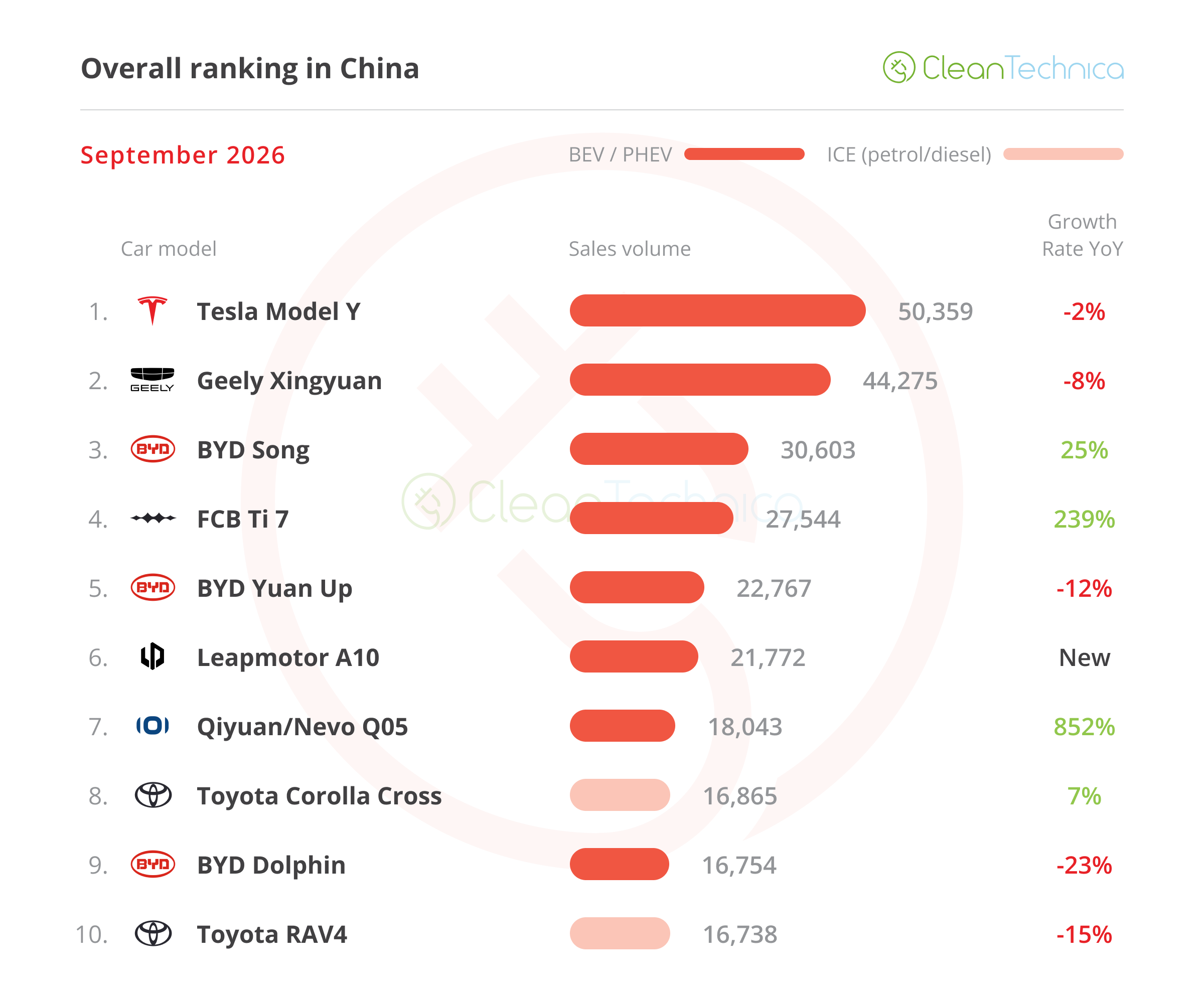
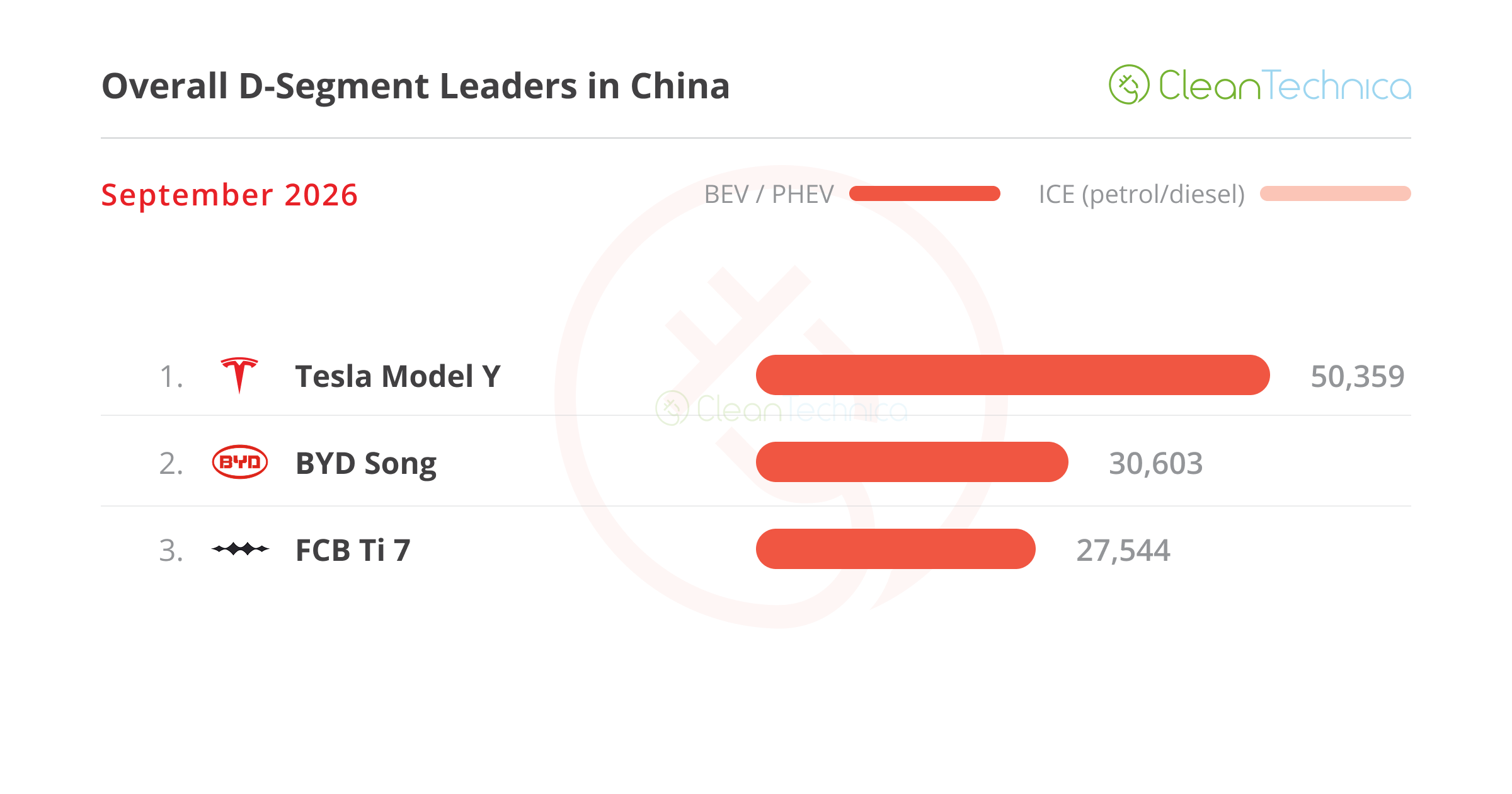
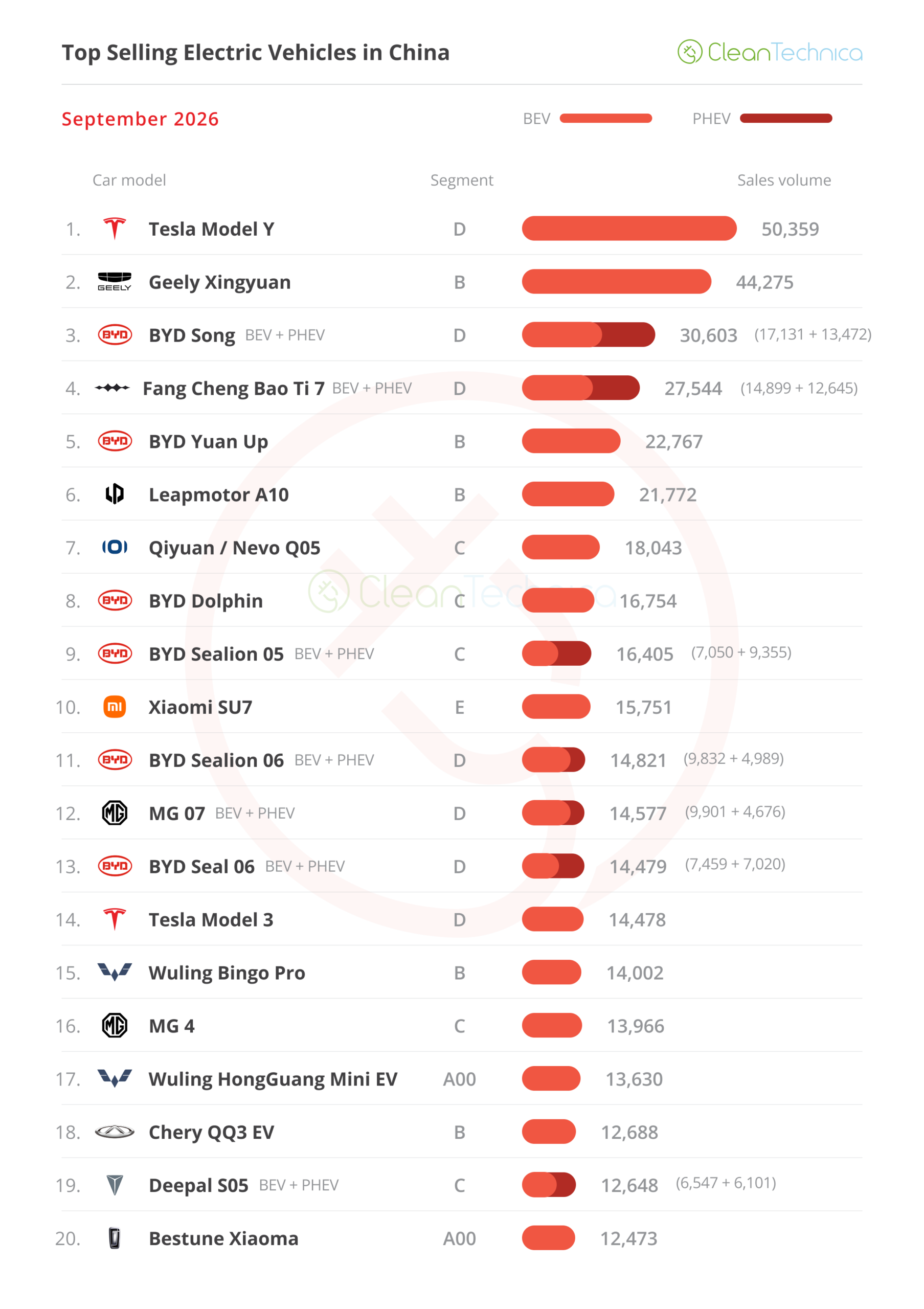
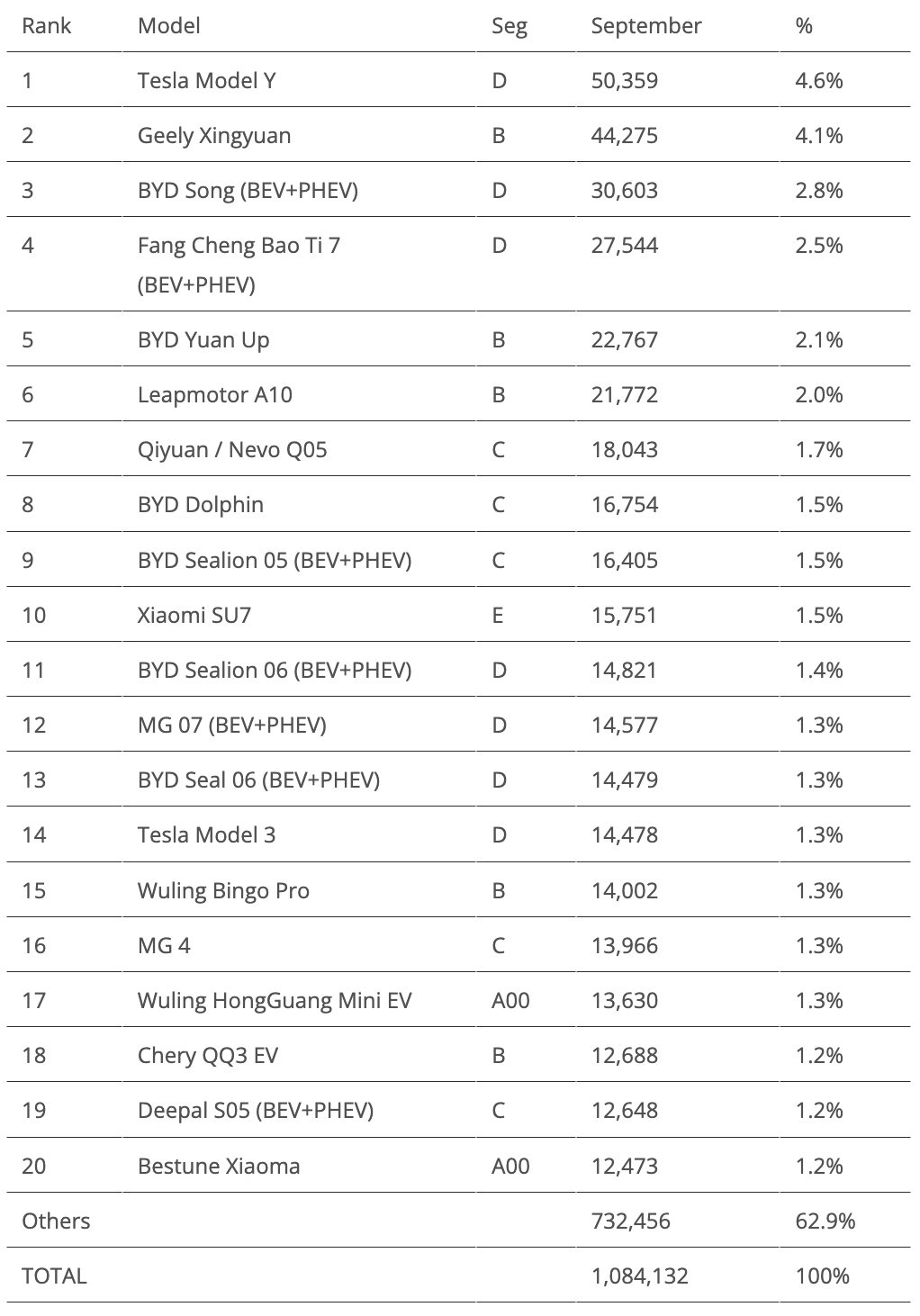
The Tesla Model Y was September’s best-selling electric model, with 50,359 deliveries, down 2% from a year earlier. Its extended-wheelbase Model Y L is helping the crossover hold its position in China. That support has limits, though: the report describes the model as six years old and says rivals are moving to 800-volt platforms and adding features. The Model Y remains on course for a podium finish in the 2026 annual ranking, but its standing next year looks less certain.
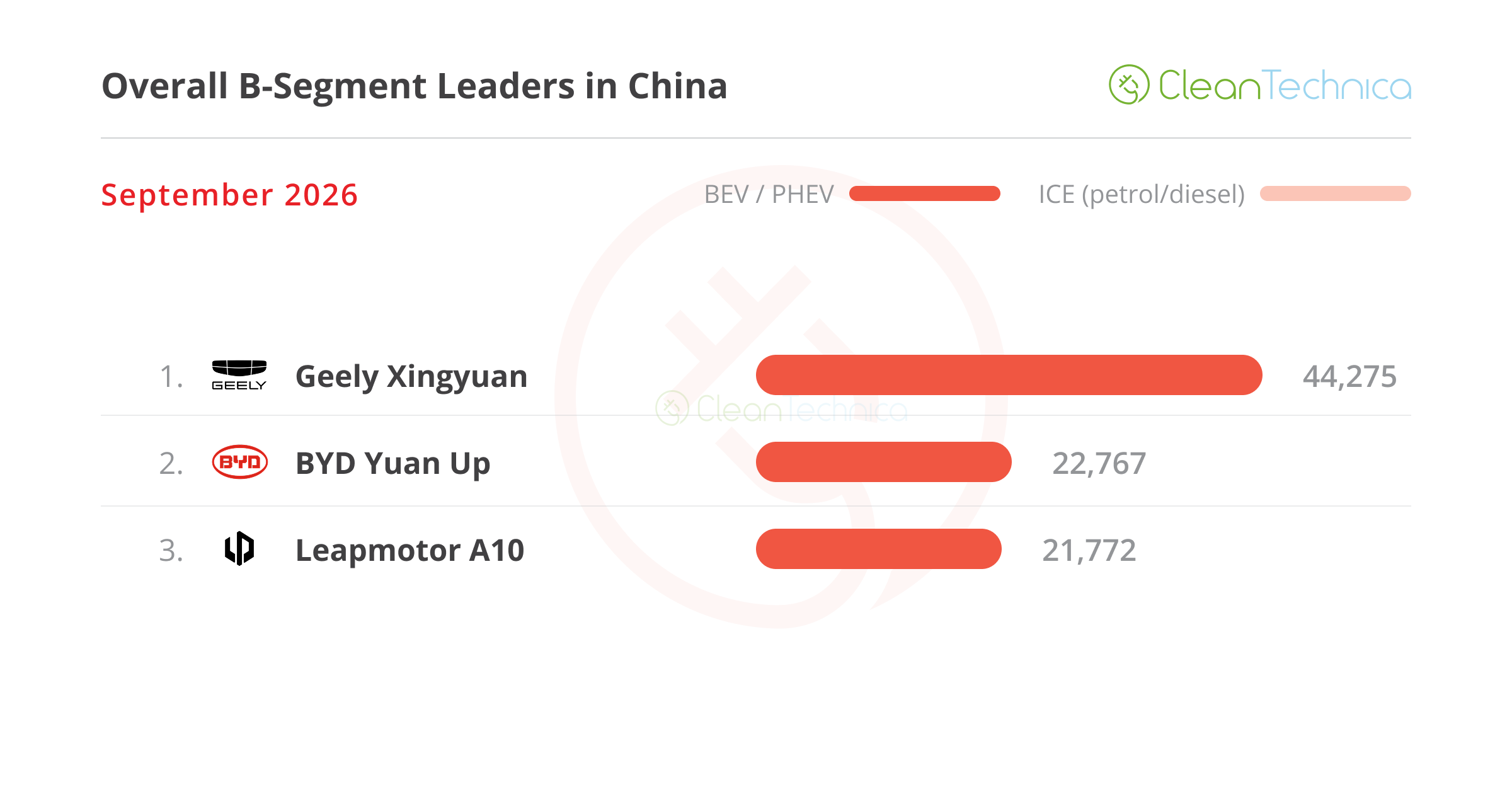
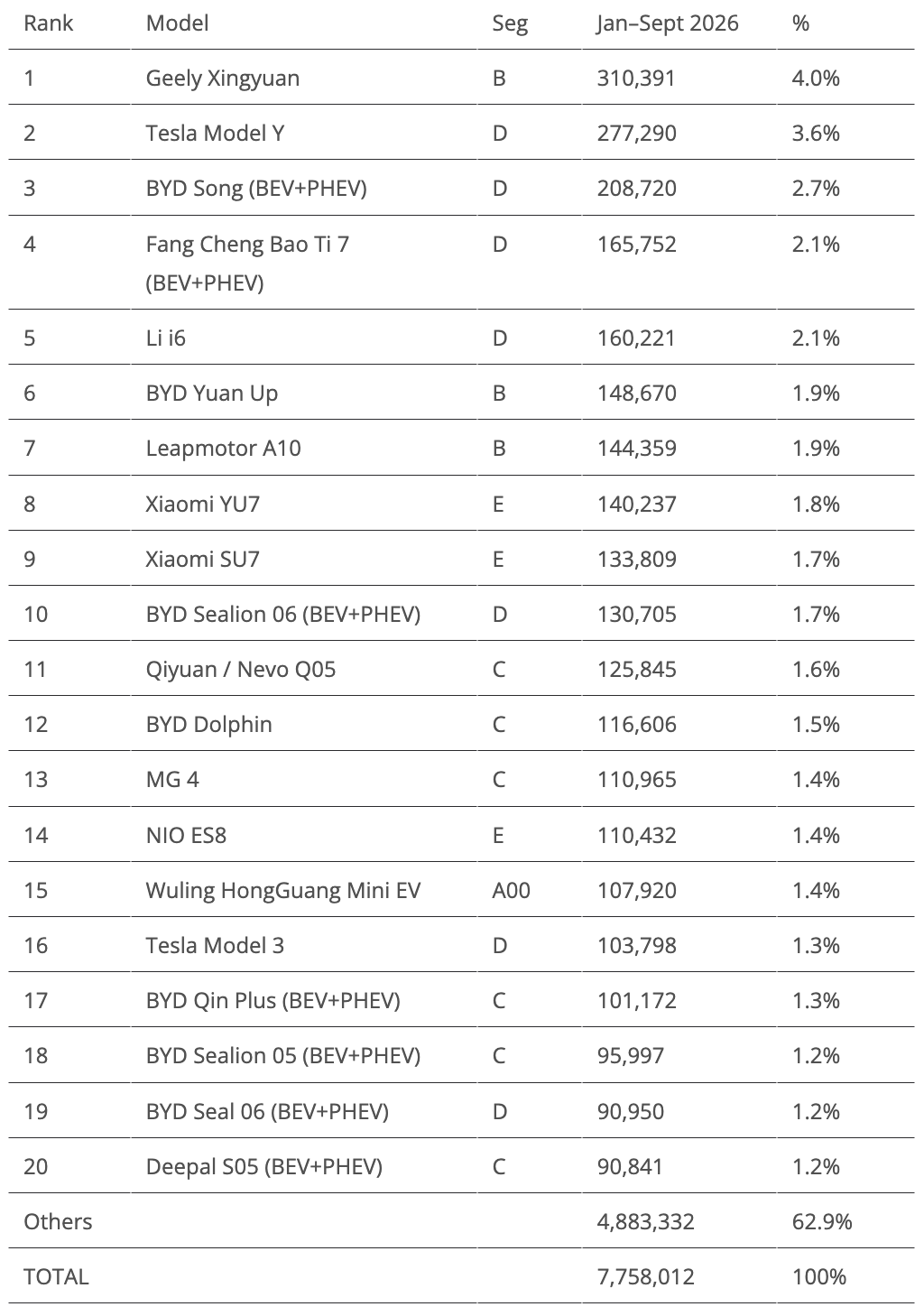
Geely’s Xingyuan placed second with 44,275 registrations, an 8% annual decline. The hatchback’s formula was to offer a BYD Dolphin-style proposition at a price associated with the BYD Seagull, around $10,000. Its competition is growing, including Leapmotor’s A10 and A05, the next-generation Wuling Bingo and BYD Seagull, Chery’s new QQ3, and BYD’s Yuan Up. The new Seagull is positioned to challenge the Xingyuan for the annual sales lead.

BYD’s Song, offered as a battery-electric vehicle and plug-in hybrid, ranked third with 30,603 registrations, up 25% year over year. Deliveries are building as the new Ultra body enters production. The report lists lidar and 1,500 kW DC charging among its features, alongside two battery and price combinations: 76 kWh from 152,000 yuan ($22,000), and 83 kWh from 180,000 yuan ($26,000). For comparison, the Tesla Model Y starts at 259,000 yuan ($38,250) in China. The Song’s position will depend on the pace of its new-generation rollout and how it fares against rivals in the rest of the year.
Fang Cheng Bao’s Tai 7 took fourth with 27,544 registrations, its best monthly result of the year. Its battery-electric versions, with 92 kWh and 106 kWh batteries, have recently launched and include Flash Charging technology. The model combines a boxy SUV design with specifications and an interior that the source considers competitive for its price range.
BYD’s Yuan Up rounded out the top five with 22,767 registrations, down 12% year over year. The compact crossover’s appeal is value: prices start at $11,000, and higher trims include BYD’s driver-assistance system. Its September result suggests the model can return to the top five as demand for smaller cars grows.
New arrivals add pressure across segments
The MG 07 made an immediate impression, recording 14,577 deliveries in its first month. The midsize fastback is available as both a plug-in hybrid and a battery-electric model. Its styling and positioning put it in the same contest as the Xiaomi SU7, BYD Seal 06 and Tesla Model 3; the source also reports a waiting list in the tens of thousands.
Two smaller battery-electric models were among the other notable entries. Chery’s QQ3 EV reached 18th place with a record 12,688 registrations, while the Bestune Xiaoma appeared in 20th with around 12,500. Just outside the top 20, Xpeng’s Mona L03 and Leapmotor’s A05 each recorded about 12,000 deliveries, putting both close to the ranked list.
Other new models also began strongly. Xiaomi’s Sky Nomad pair recorded around 7,000 deliveries for the N70 and 5,000 for the larger N90. Geely’s Galaxy TT, pitched against the Xiaomi SU7, came close to 7,000. Volkswagen’s ID.ERA 5S reached a similar level; the source describes it as the brand’s latest attempt to retain Lavida buyers.
Leapmotor climbs as larger groups lose volume
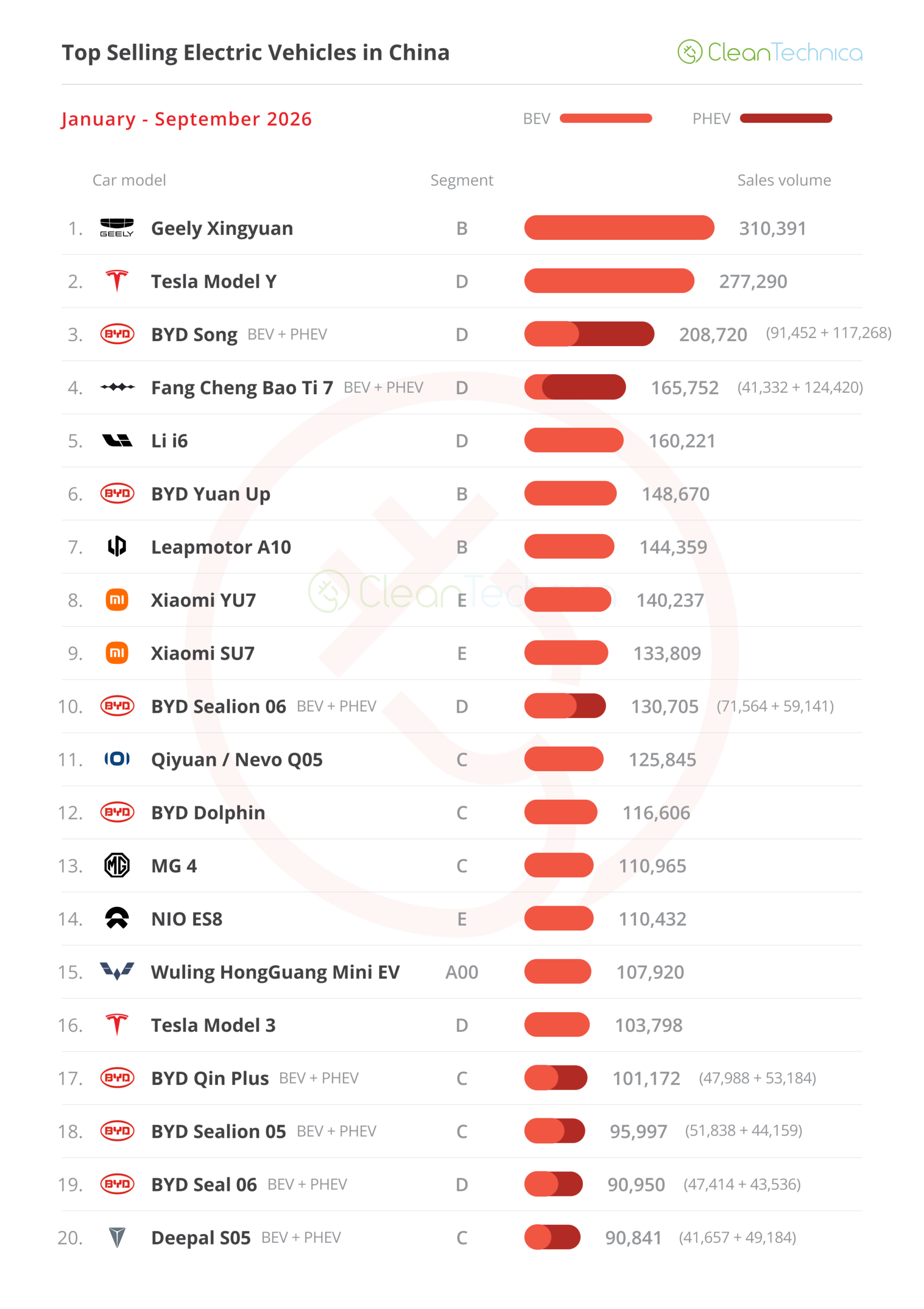
The 2026 model ranking’s top three remained unchanged: the Geely Xingyuan, Tesla Model Y and BYD Song are expected to keep those positions through year-end. That would put the Xingyuan back on top after its 2025 win, with the Model Y moving from third last year to second and the Song returning to the podium. Further down, the Tai 7 rose to fourth, while the Yuan Up and Leapmotor A10 moved into sixth and seventh.
The BYD Dolphin climbed to 12th, and the Seal 06 entered the ranking at 19th. BYD now has seven models in the top 20, excluding the Fang Cheng Bao Tai 7. The spread of BYD models across the table gives the group a strong presence beyond its leading nameplates.
At manufacturer level, nearly every major player recorded lower sales. Tesla’s 9% decline and Xiaomi’s 5% drop were relatively restrained beside declines of more than 20% for many competitors. Leapmotor went the other way: the Hangzhou-based startup increased registrations 31% year over year to 78,000. The A10 and A05 are ramping up, with the D19 and D99 also listed among upcoming additions. That growing lineup could bring Leapmotor into closer competition with Geely, Volkswagen and Toyota.
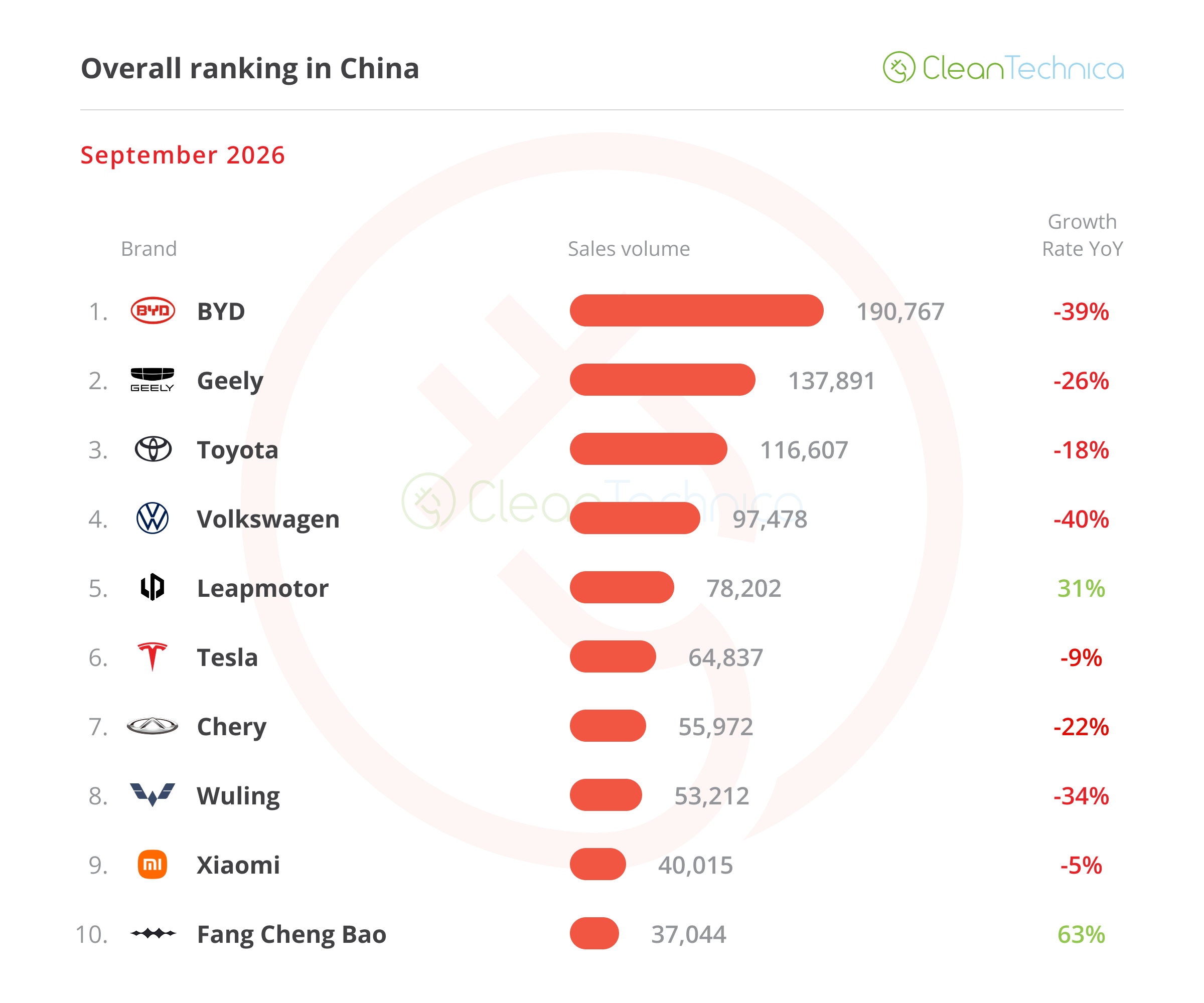
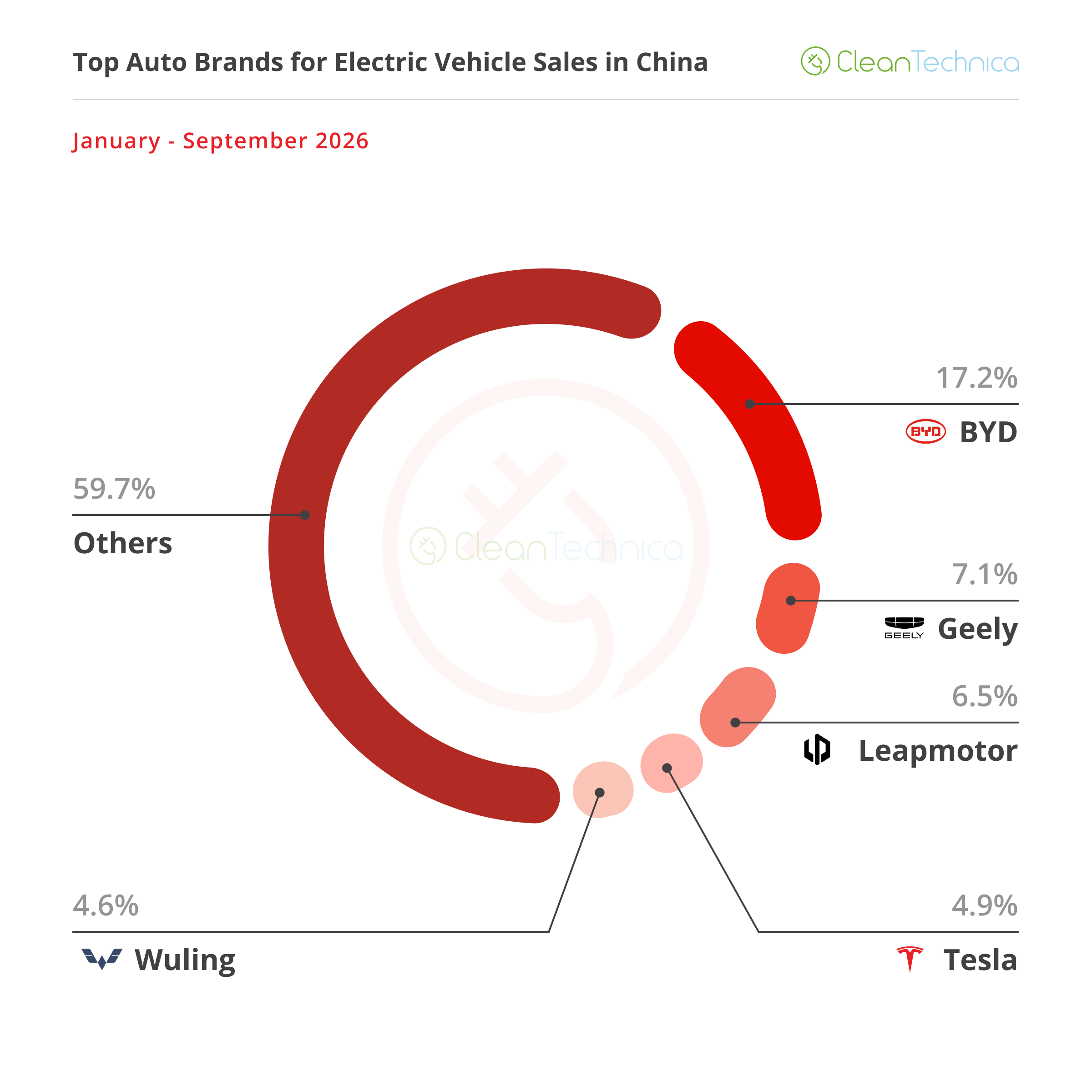
BYD remained the leading brand with 17.2% market share. Geely held second place at 7.1%, but its share was sliding; Leapmotor was close behind at 6.5%, up 0.1 percentage point. Tesla reached 4.9%, up from 4.7% in August, edging ahead of Wuling at 4.6%, down 0.1 point. September’s strength could help Tesla preserve fourth place in the brand table.
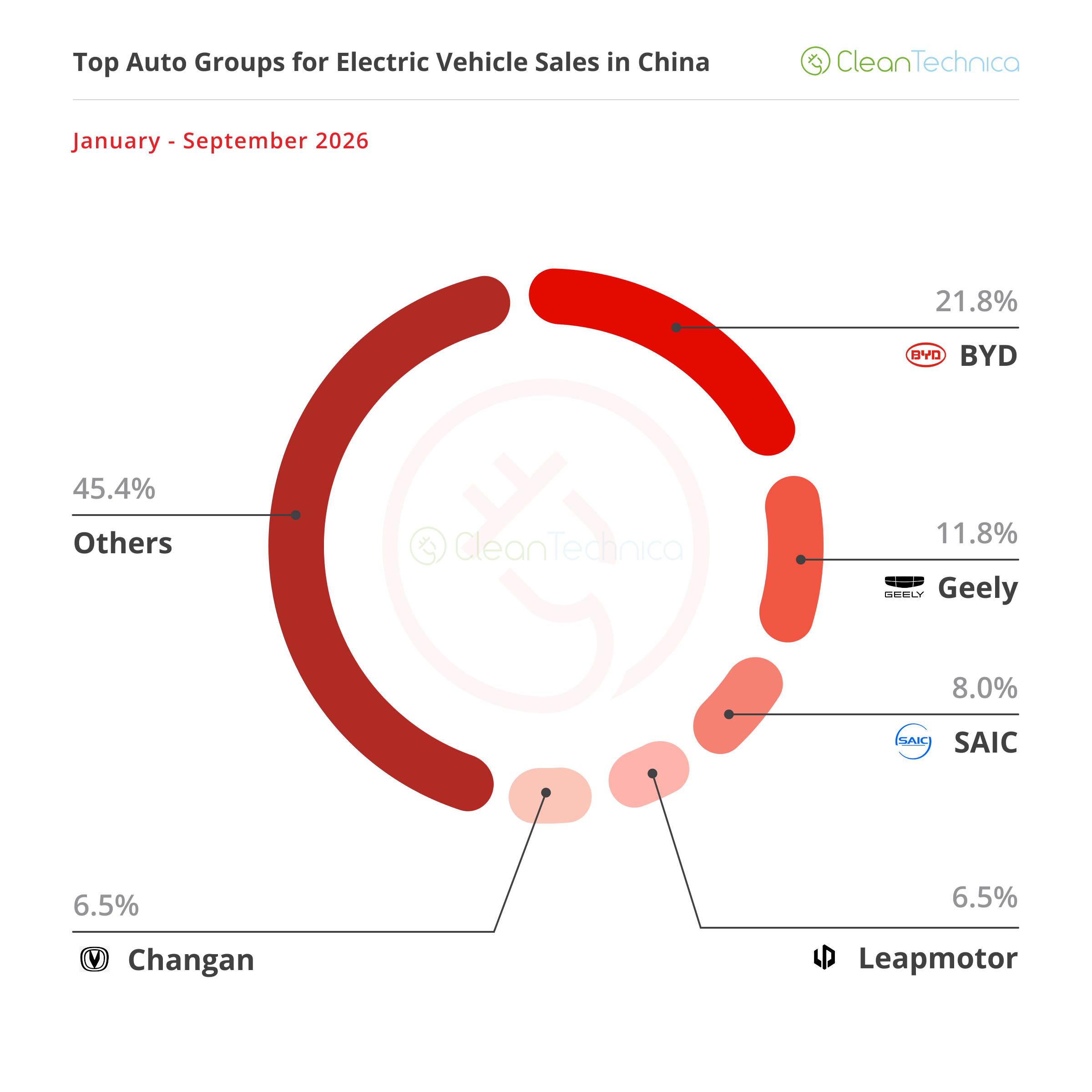
At the group level, BYD led with 21.8% share, up 0.1 point in September. Its result benefited from Fang Cheng Bao’s continued growth and a strong first month for Denza. Geely remained second at 11.8%, down 0.1 point, while SAIC held steady at 8%. Leapmotor took fourth from Changan, reaching 6.5% of the market. The next question is whether its expanding range can keep closing the gap with the larger groups as China’s plug-in market continues to grow.