In lane Electric Vehicles
2026 Kia Stonic Prices, Specs and Features: More Power, Higher Costs
Description
The updated Stonic adds mild-hybrid assistance, more power and extra boot space, while Australian prices rise by up to $3260.

The 2026 Kia Stonic’s biggest change is beneath the bonnet: a 48V mild-hybrid system joins its turbocharged 1.0-litre three-cylinder engine, lifting power while trimming claimed fuel use. Buyers pay more for the refreshed small SUV, though, with prices rising by $2000 to $3260 across the range.
Kia has also revised the cabin and exterior, added connected services to Sport and GT-Line versions, and increased boot capacity. The changes give the Stonic a stronger specification sheet, but its infotainment still has a split personality: the entry S supports wireless smartphone mirroring, while the larger-screen models require a cable.

Australian prices and range
| Variant | Price before on-road costs | Increase |
|---|---|---|
| Stonic S | $28,180 | $2020 |
| Stonic Sport | $32,290 | $2000 |
| Stonic GT-Line | $35,740 | $3260 |
The Stonic competes in the light SUV class against models including the Mazda CX-3. Its new starting price is $28,180 before on-road costs, while the GT-Line now sits at $35,740. That higher flagship price brings additional comfort and cabin equipment, including a sunroof, heated front seats and a heated steering wheel.

More power, lower claimed fuel use
The 1.0-litre turbo petrol engine retains its 172Nm peak torque figure, available from 1500 to 4000rpm. Maximum power rises from 74kW to 88kW at 6000rpm. Kia pairs the engine with a 48V mild-hybrid system and a seven-speed dual-clutch automatic transmission driving the front wheels.

Claimed combined-cycle consumption falls from 5.4L/100km to 5.0L/100km. Listed CO2 emissions drop from 125g/km to 116g/km. The Stonic runs on 91-octane regular unleaded fuel and has a 45-litre tank. Its listed kerb weight is 1265kg, and towing capacity is 900kg braked or 450kg unbraked.

Those figures point to a modest efficiency improvement alongside the power increase; they don’t establish what owners will achieve in everyday driving. The mild-hybrid system is the notable mechanical update, while the engine’s torque output and front-wheel-drive layout remain as before.
Cabin technology and equipment
The Sport and GT-Line gain Kia Connect services, over-the-air software updates and a 12.3-inch infotainment touchscreen. The GT-Line also gets a new 12.3-inch digital instrument display. A redesigned steering wheel and gearshifter, USB-C outlets and Kia’s touch-sensitive controls for climate and media functions update the cabin presentation.
There’s a practical trade-off in the multimedia setup. Stonic variants fitted with satellite navigation use wired Apple CarPlay and Android Auto. The S has a smaller 8.0-inch infotainment screen and offers wireless Apple CarPlay and both wired and wireless Android Auto. The local specification also leaves out Highway Driving Assist, which combines adaptive cruise control and lane centring with navigation data.
The S includes 16-inch alloy wheels, cruise control, proximity entry, manual air conditioning, cloth seats and a six-way manually adjustable driver’s seat. Its screen is paired with a 4.2-inch instrument display, and the rear seats split and fold 60:40.
Sport adds 17-inch wheels, rain-sensing wipers, rear privacy glass, satellite navigation, DAB+ digital radio and climate control. Its cabin also gains cloth and leatherette upholstery, a leatherette-wrapped steering wheel and shifter, and an extra USB-C outlet. Kia Connect can provide remote lock control and vehicle status information through an app.
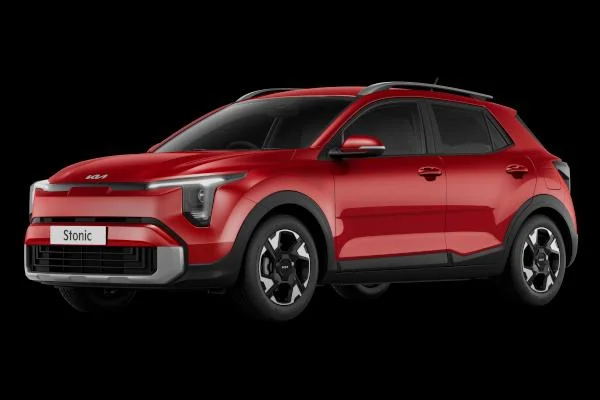
The GT-Line builds on that equipment with reflector LED headlights, a sunroof, heated front seats, alloy pedals and ambient lighting. It also adds a ventilated wireless phone charger and a two-tone leatherette sports steering wheel.
Dimensions, design and everyday utility
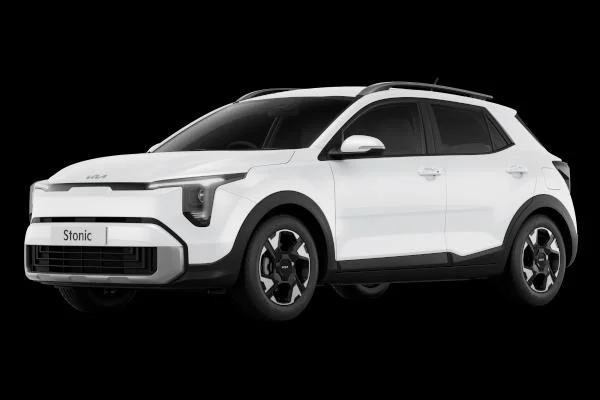
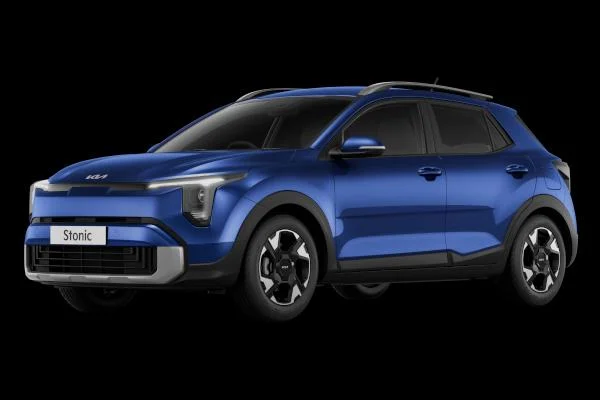
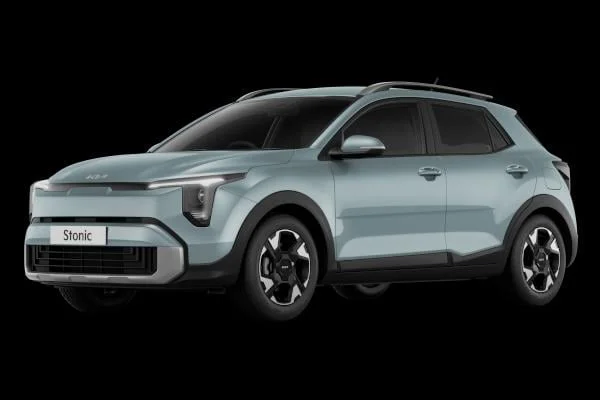
The second Stonic facelift brings Kia’s “Opposites United” design language to the small SUV. The revised front styling is joined by a redesigned tailgate, tail-lights, bumpers and wheels. The more angular treatment draws on styling seen across Kia’s newer models, including the EV3 and K4.
Length increases by 25mm to 4165mm, while boot capacity grows by 30 litres to 352L with the rear seats up. Folding them expands the stated cargo volume to 1155L. The Stonic measures 1760mm wide, has a 2580mm wheelbase and stands 1500mm tall in S trim or 1520mm in Sport and GT-Line versions.
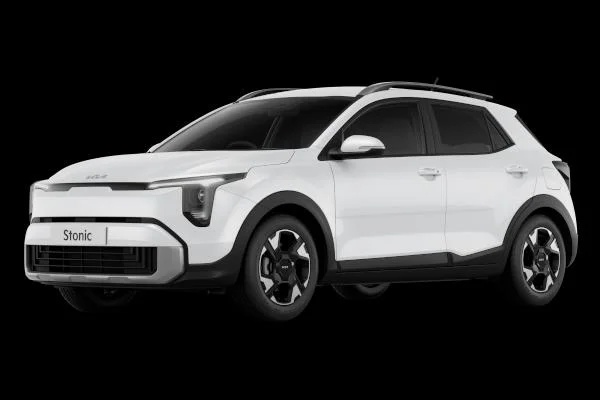
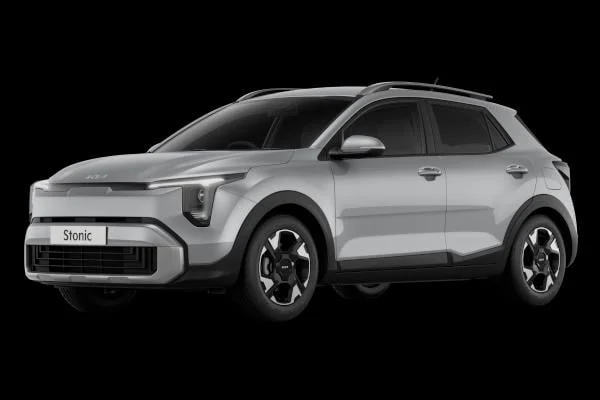
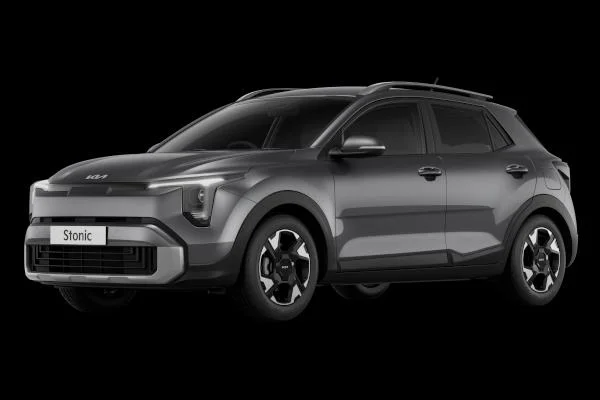
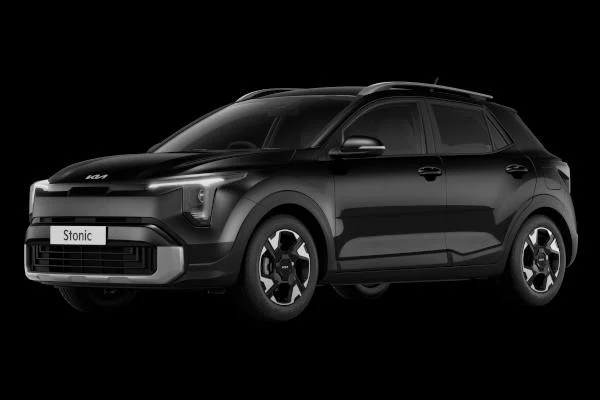
Clear White is the standard exterior finish. Sparkling Silver, Astro Grey, Aurora Black Pearl, Signal Red, Yacht Blue, Adventurous Green and Snow White Pearl each cost an additional $550. All Australian Stonics have a black interior.
Safety, warranty and servicing
Listed standard safety equipment includes autonomous emergency braking with vehicle, pedestrian and cyclist detection, blind-spot assist, lane-keep assist, lane centring, a reversing camera and front and rear parking sensors. The Sport adds emergency braking assistance for junction turns and adaptive cruise control with stop-and-go operation; both are new for 2026.
The Stonic’s former five-star ANCAP rating, awarded in 2017, expired on December 31, 2024. Kia backs the model with a seven-year, unlimited-kilometre warranty, while capped-price servicing details for the 2026 model year have yet to be announced. For buyers comparing the updated range, the key choice is whether the Sport and GT-Line’s larger screens and added equipment justify their higher prices, given that the wireless CarPlay option is reserved for the base S.


