In lane Electric Vehicles
2026 Lexus ES prices and specs: Electric models start at $77,000 in Australia
Description
The new ES brings two electric powertrains, up to 510km of WLTP range and a larger cabin, with the hybrid arriving later this year.
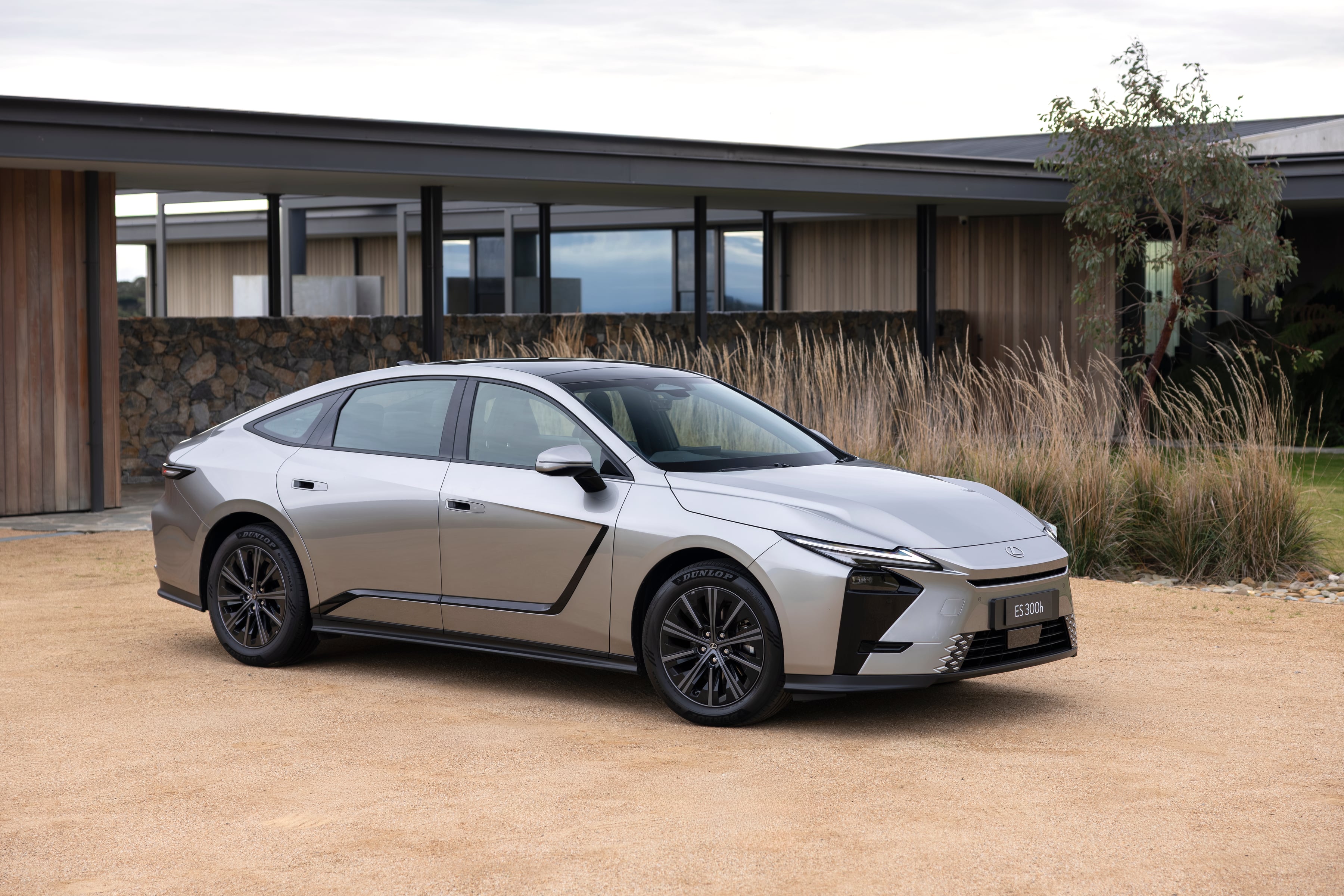
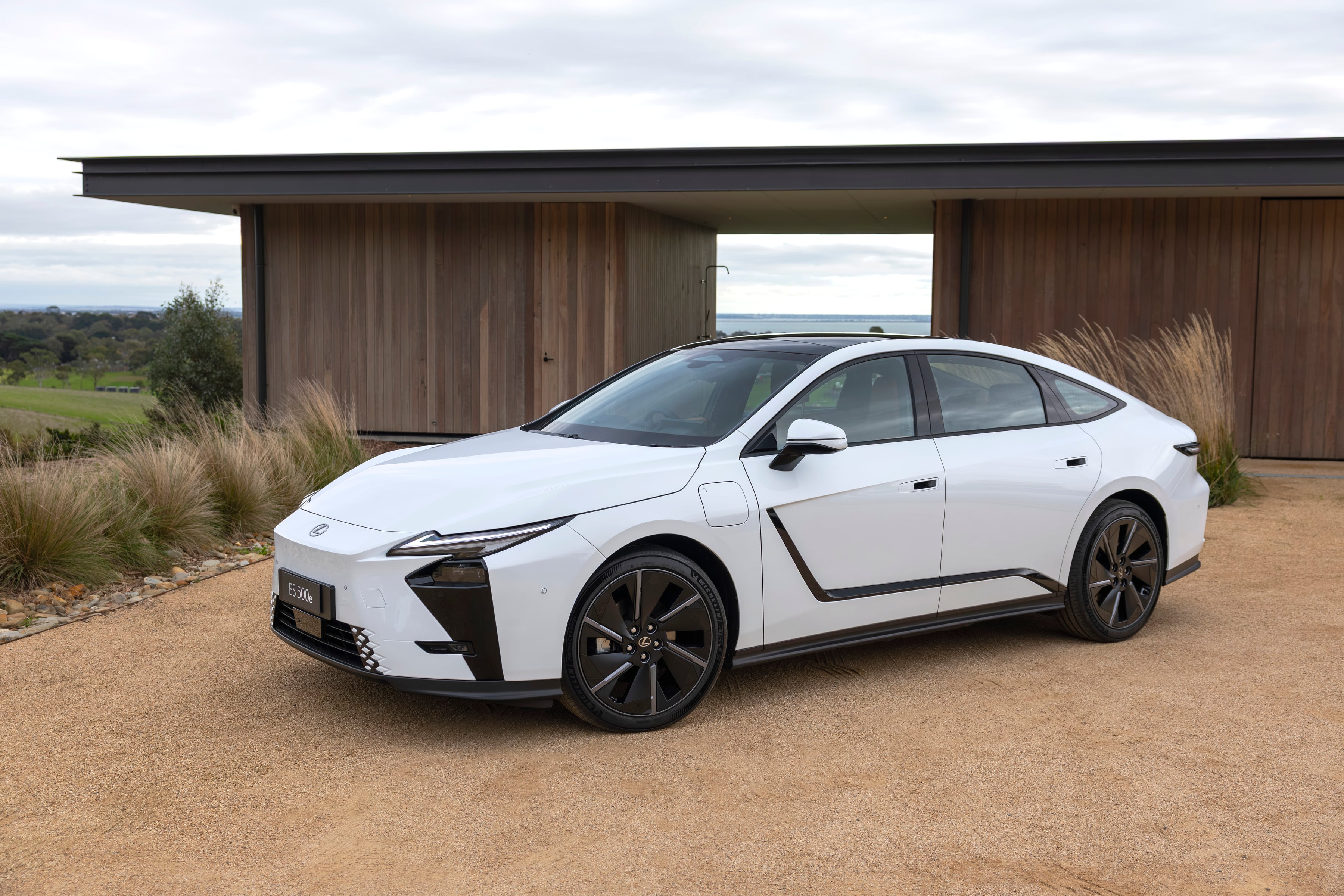
The 2026 Lexus ES makes a notable shift for the Australian range: buyers can choose the nameplate’s first battery-electric versions, and the brand’s first electric sedan. The new generation is due in Australia “in the middle of this year”, with electric models arriving before the ES300h hybrid later in the year.
At $77,000 before on-road costs, the front-wheel-drive ES350e Sports Luxury costs just $2,000 more than the $75,000 ES300h Luxury. The electric model brings additional equipment and a claimed 510km WLTP range. Lexus also lists the dual-motor, all-wheel-drive ES500e Sports Luxury at $84,000. The hybrid’s starting price has risen by $9,460 compared with the outgoing model.
The full Australian price list is $75,000 for the ES300h Luxury, $77,000 for the ES350e Sports Luxury, $82,000 for the ES300h Luxury with Enhancement Pack, and $84,000 for the ES500e Sports Luxury. All prices exclude on-road costs. That narrow gap between the entry hybrid and the electric ES makes equipment, driving range and charging access central to the comparison.
Three powertrains, two electric ranges
The ES300h pairs a 2.5-litre four-cylinder engine with an electric motor and e-CVT, producing a 144kW system output. It’s front-wheel drive, weighs 1,825kg and has a claimed 0–100km/h time of 7.7 seconds. Lexus quotes fuel consumption of 4.5L/100km, CO2 emissions of 103g/km, a 55-litre tank and a requirement for 95-octane premium unleaded.
Both electric variants use a 74.7kWh lithium-ion battery. The single-motor ES350e produces 165kW and 269Nm, weighs 2,180kg and has a claimed 0–100km/h time of 8.0 seconds. Its WLTP range is 510km, with stated consumption of 16.4kWh/100km. The ES500e combines a 167kW, 269Nm front motor with an 88kW, 170Nm rear motor for a 252kW system output. It weighs 2,280kg, reaches 100km/h from rest in a claimed 5.5 seconds and has a 465km WLTP range, at 17.9kWh/100km.
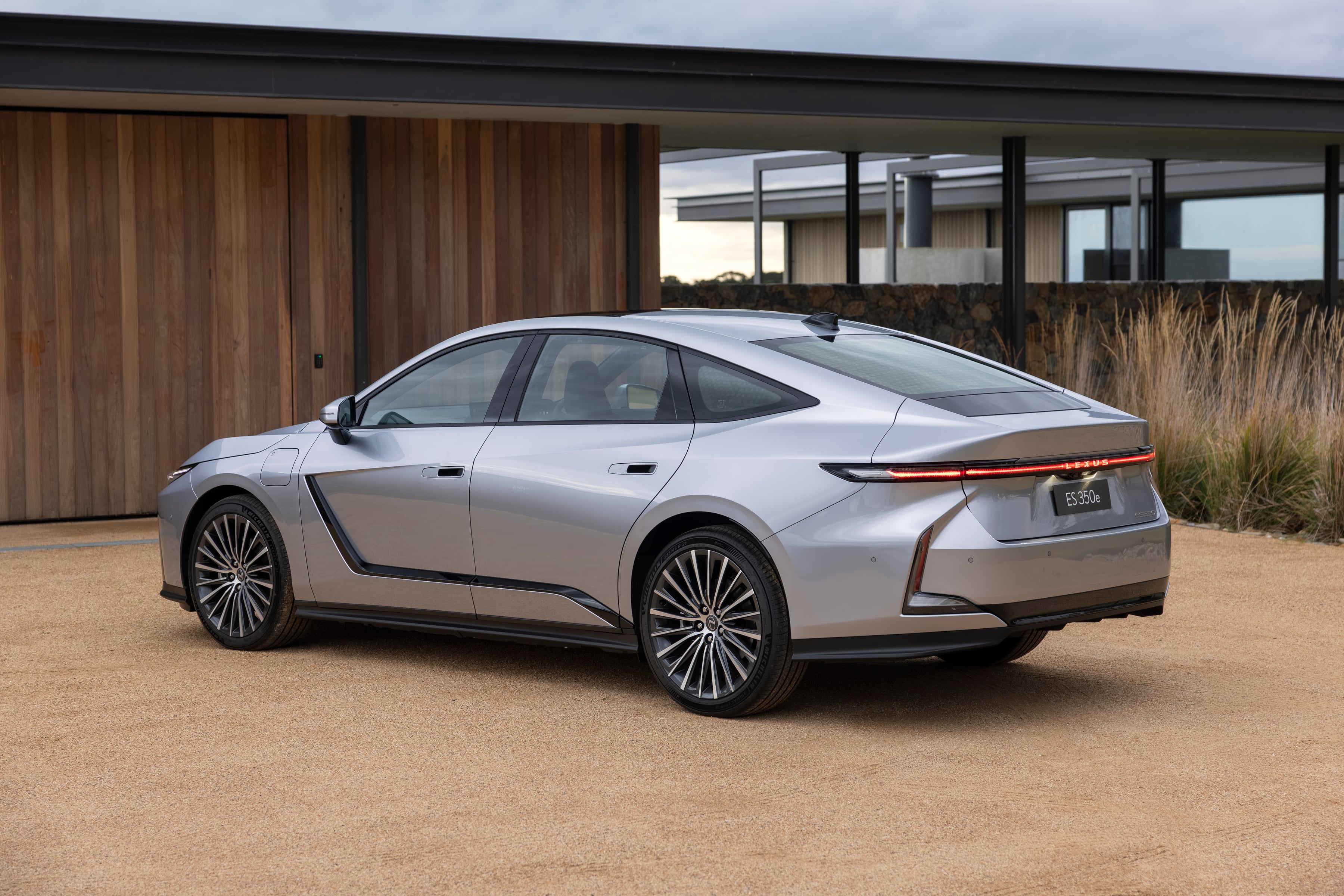
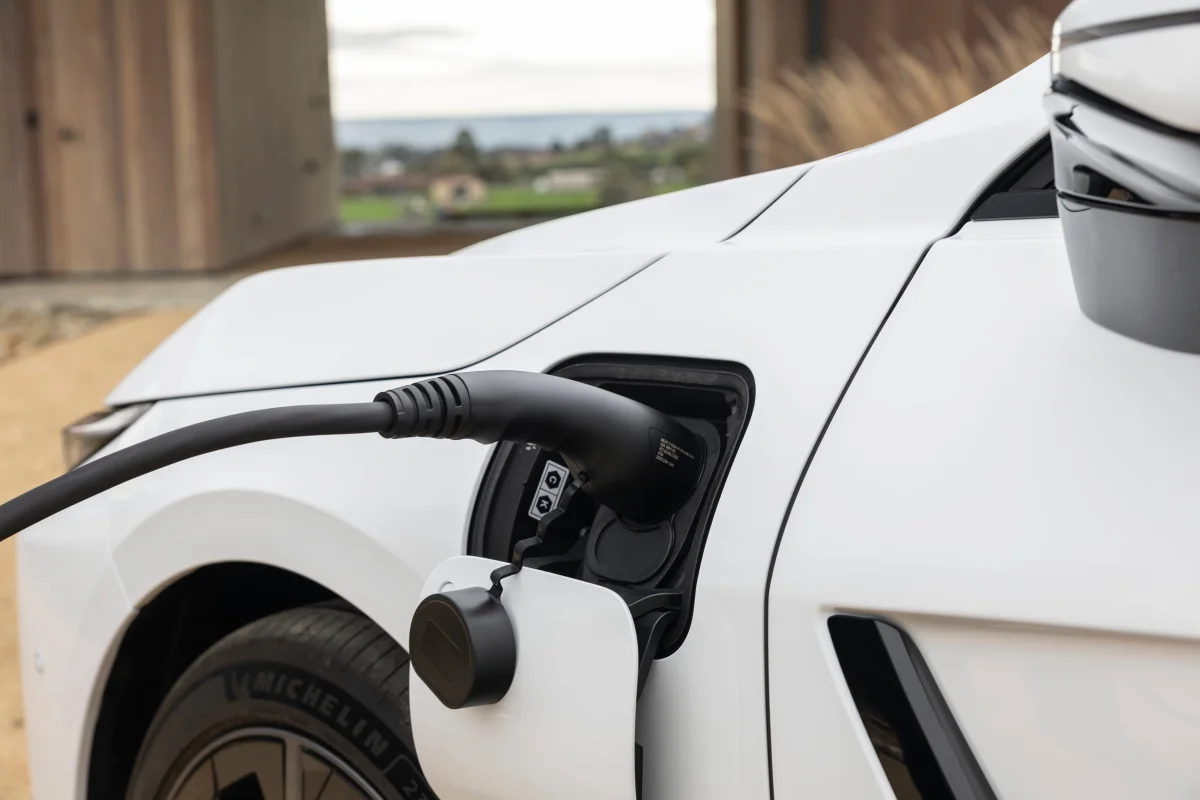
Both EVs support charging at up to 22kW on AC and 150kW on DC. The ES500e’s DIRECT4 system varies front-to-rear torque distribution from 80:20 to 25:75 during cornering, with the ability to send all drive torque to either axle. It also adds Interactive Manual Drive: paddle shifters select among eight simulated ratios, accompanied by synthetic sounds and a simulated tachometer.
All three versions use MacPherson struts at the front and multi-link rear suspension. Lexus has updated the GA-K platform for greater rigidity, replacing the previous trailing-arm rear setup with the multi-link design. The brand also says it has improved soundproofing. Electric models get larger brake rotors than the hybrid: 340x38mm front and 338x18mm rear, compared with the ES300h’s 328x28mm front and 317x18mm rear discs.
A larger cabin and revised interface
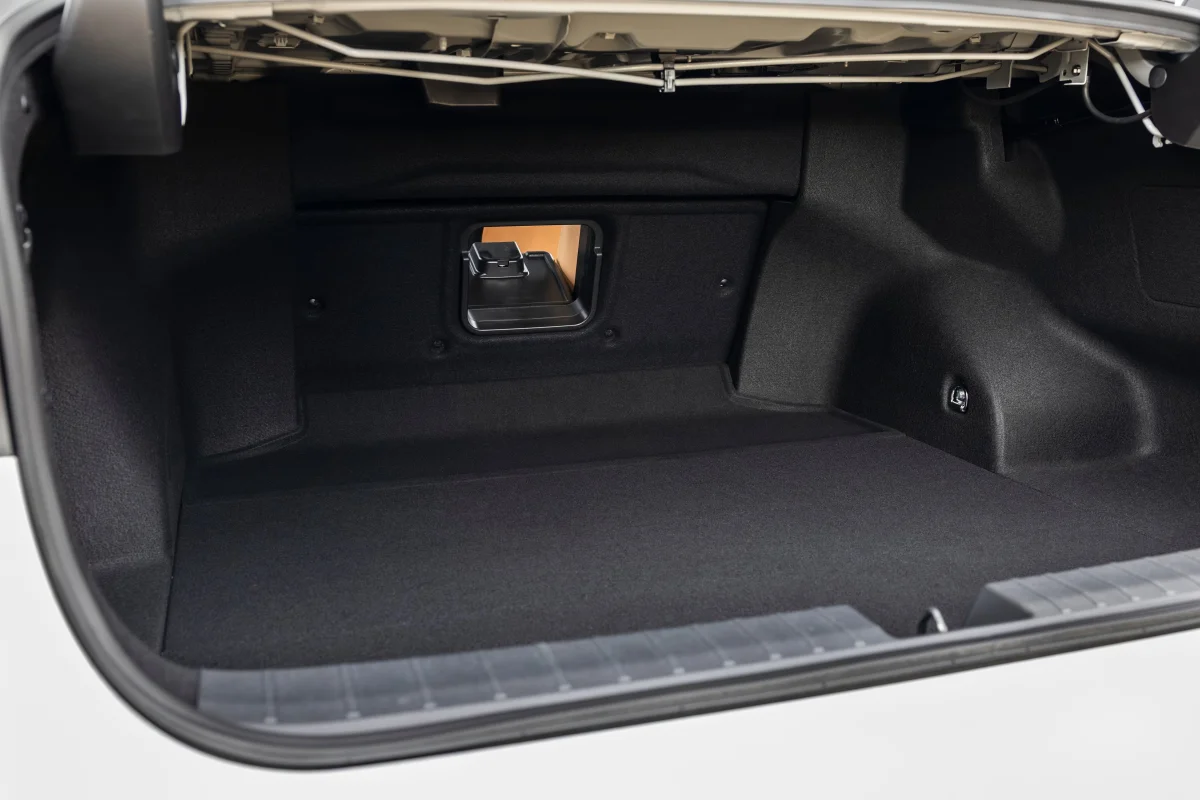
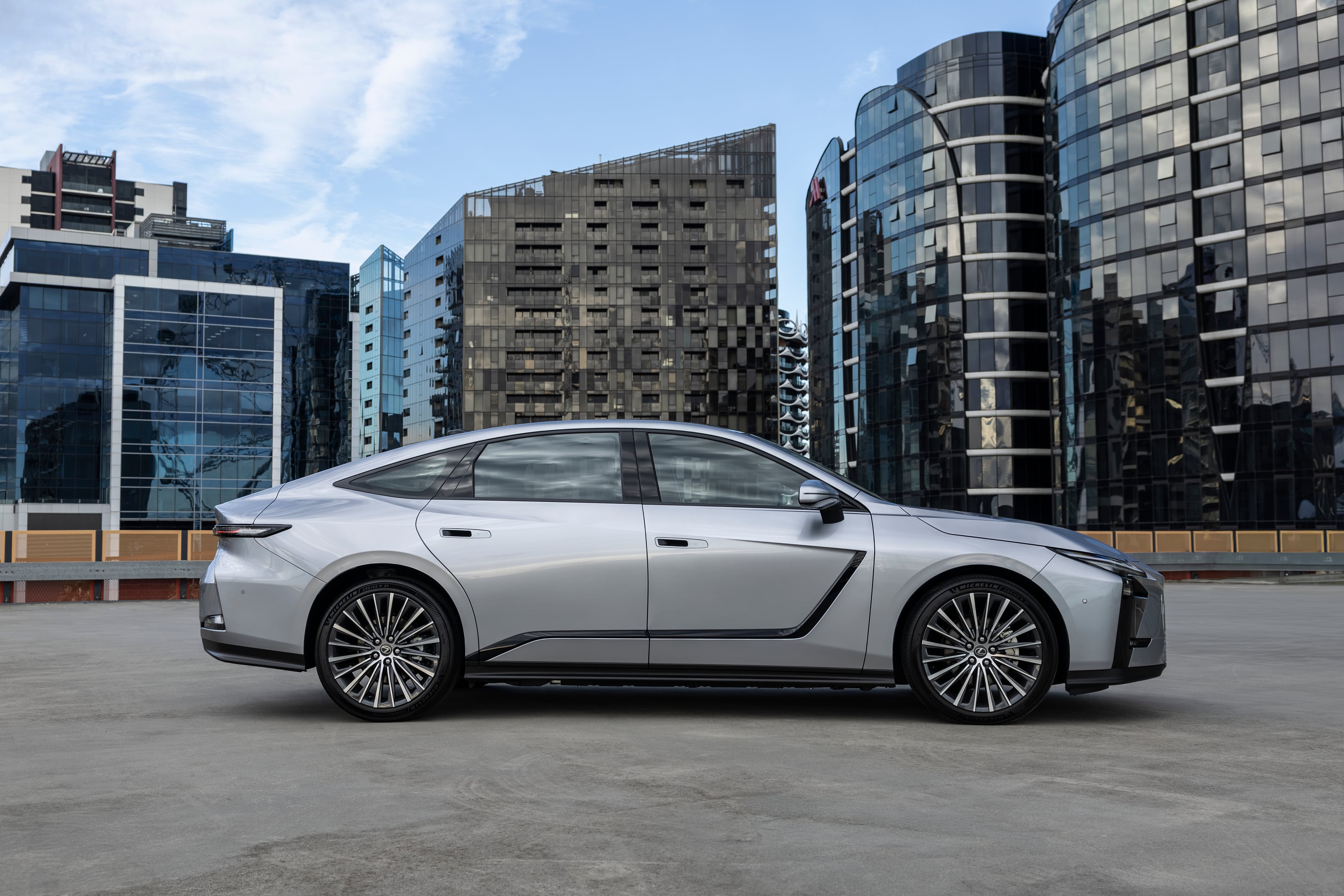
The ES is now 5,145mm long and 1,920mm wide, with a 2,950mm wheelbase. It has grown 170mm in length and 55mm in width compared with its predecessor, while the wheelbase is 80mm longer. Height is 1,555mm for the hybrid and 1,560mm for the EVs. Luggage capacity is 493 litres in the ES300h and 517 litres in the electric models. At more than five metres long, it’s a substantially larger car than the outgoing mid-size sedan.
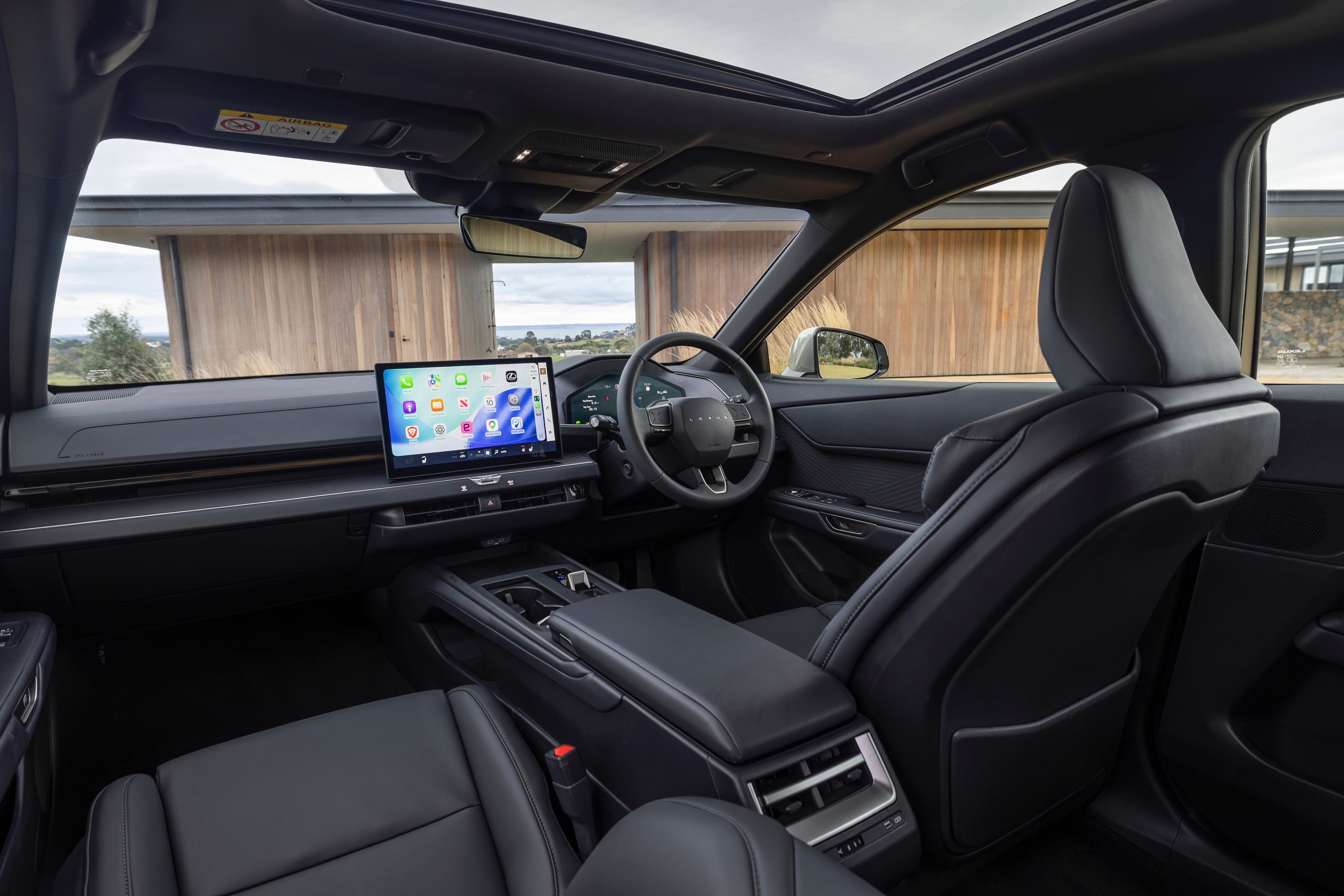
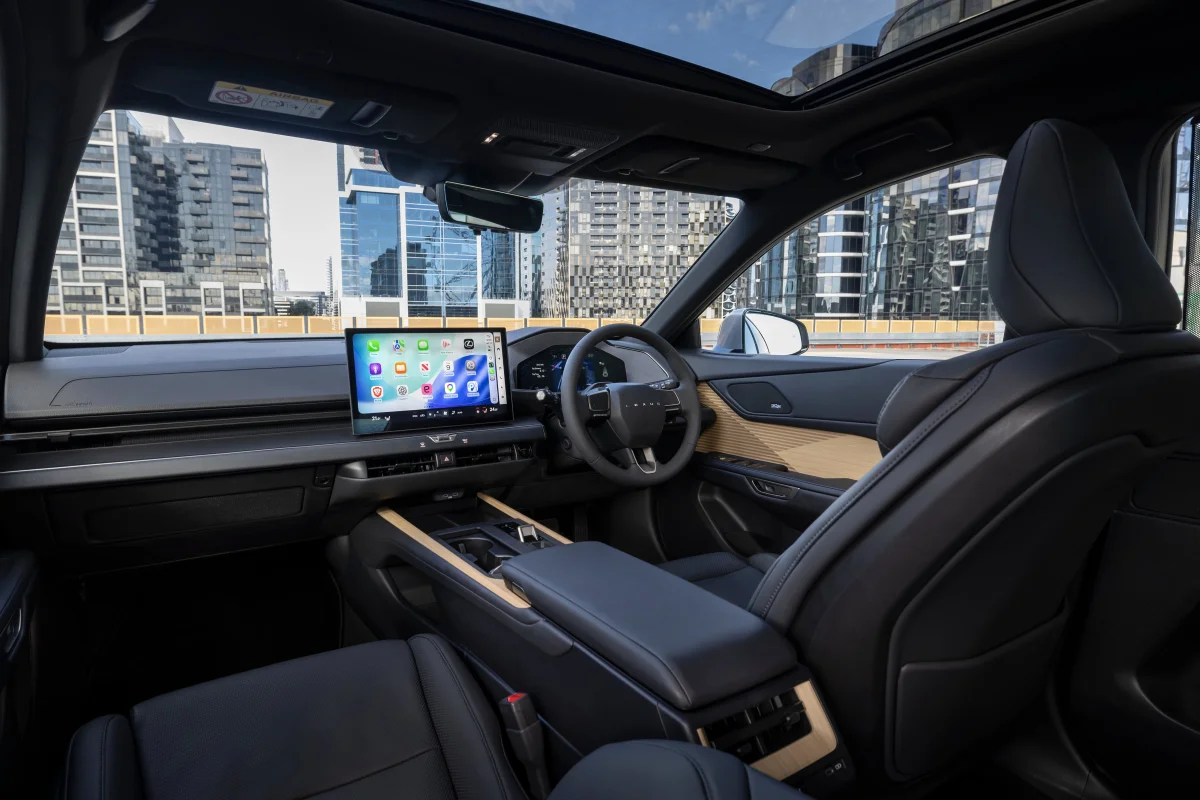
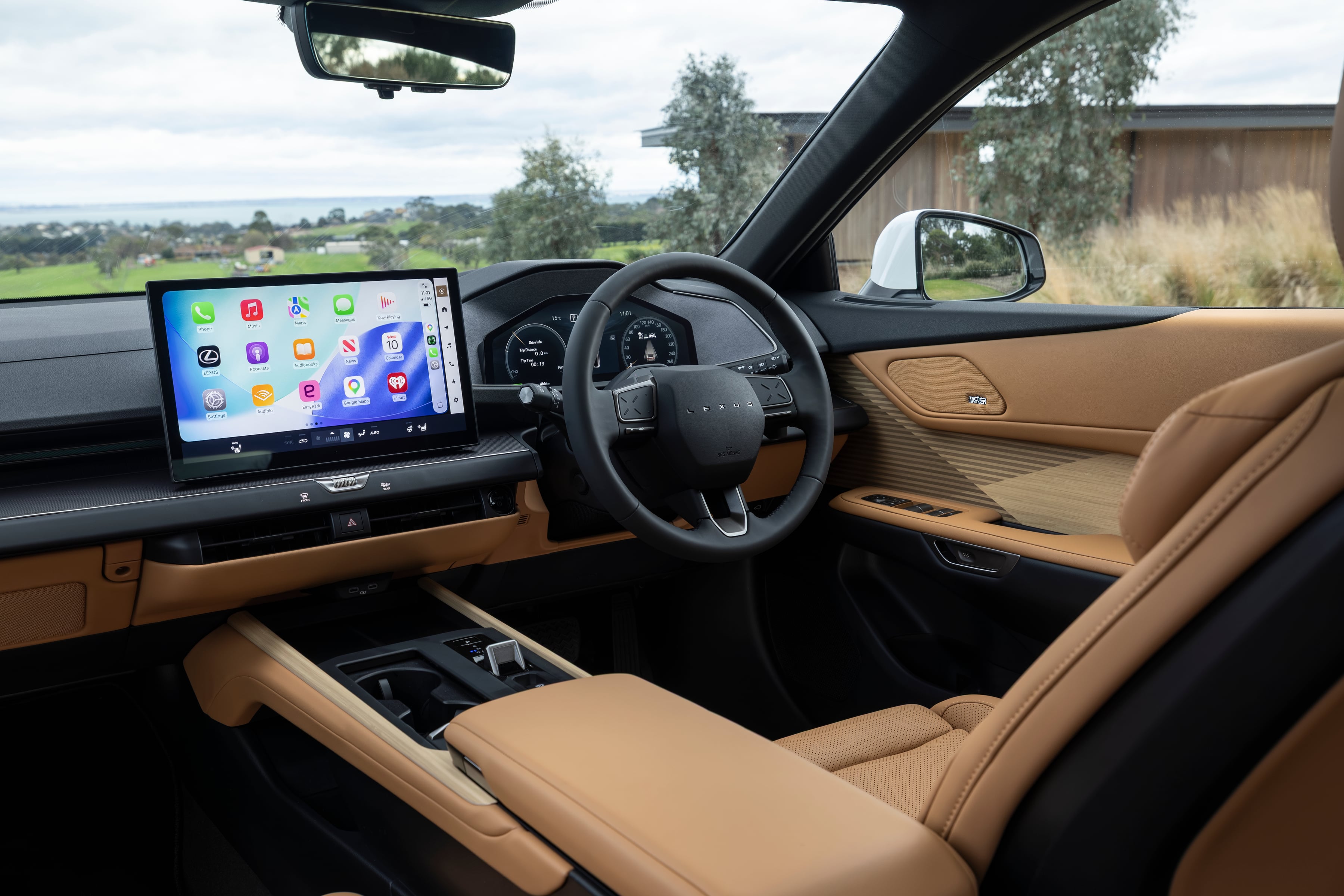
The cabin introduces Lexus’s Arene software platform and a 14-inch touchscreen, up from 12.3 inches. Climate controls are integrated into the screen, while the system adds cloud-based satellite navigation, customisable widgets, embedded Spotify and an updated voice assistant. The digital instrument display offers six layouts, including a full-screen map. Steering-wheel and centre-stack switches illuminate as a finger approaches.
An embedded drive recorder can save footage from the exterior cameras through continuous loop, manual or incident-triggered recording. Drivers can review and export clips from the touchscreen. On the safety side, front cross-traffic alert joins the equipment list, and rear cross-traffic alert can detect bicycles. A new emergency driving stop system can warn the driver when cruise control and lane-centring are active but inputs stop; if the driver remains unresponsive, it can bring the car to a gradual halt, switch on the hazard lights, unlock the doors and place an SOS call.
Connected features include remote checks of battery charge, fuel level or vehicle location, plus automatic collision notification. Lexus says these emergency-connected services remain complimentary for the vehicle’s life or until the 5G network is discontinued. A separate Lexus Connected+ subscription is complimentary for five years, then costs $9.95 per month; it covers remote operation of the locks, climate control, lights and horn, along with stolen-vehicle tracking.
Equipment, ownership and availability
The ES300h Luxury includes 19-inch wheels, a panoramic glass roof with power sunshade, power boot-lid, heated front seats, NuLux upholstery, dual-zone climate control, a 10-speaker audio system, five USB-C ports and wireless Apple CarPlay and Android Auto. The Enhancement Pack adds features such as ventilated front seats, a head-up display, digital rear-view mirror, digital key and a 17-speaker Mark Levinson sound system.
The ES350e Sports Luxury adds 21-inch wheels, adaptive suspension, easy-close doors, semi-aniline leather-accented upholstery, rear door sunshades and two front wireless phone chargers. The ES500e adds Interactive Manual Drive. A surround-view camera is fitted to every variant except the base ES300h without its Enhancement Pack.
Warranty coverage is five years with unlimited kilometres. The first five services are capped at $625 each for electric variants and $675 each for the hybrid, at intervals of 12 months or 15,000km. The ES has not yet been independently tested by ANCAP or Euro NCAP. Its Australian arrival will reveal how the electric range, charging specification and price premium stack up for buyers considering a large luxury sedan.
The eighth-generation ES is only the sixth generation sold in Australia since the nameplate’s local debut in 1992. The country skipped the first generation and the left-hand-drive-only fifth generation. Upholstery choices are Black, White and Hazel; exterior paint options are White Nova, Sonic Iridium, Sonic Titanium, Sonic Chrome, Graphite Black, Sonic Copper and Wavelength, a new blue finish.