In lane Electric Vehicles
How Ford Settled on the Mustang’s Galloping Emblem
Description
Ford tested several horse designs and badge concepts before choosing the side-profile Mustang that became a defining part of the pony car.
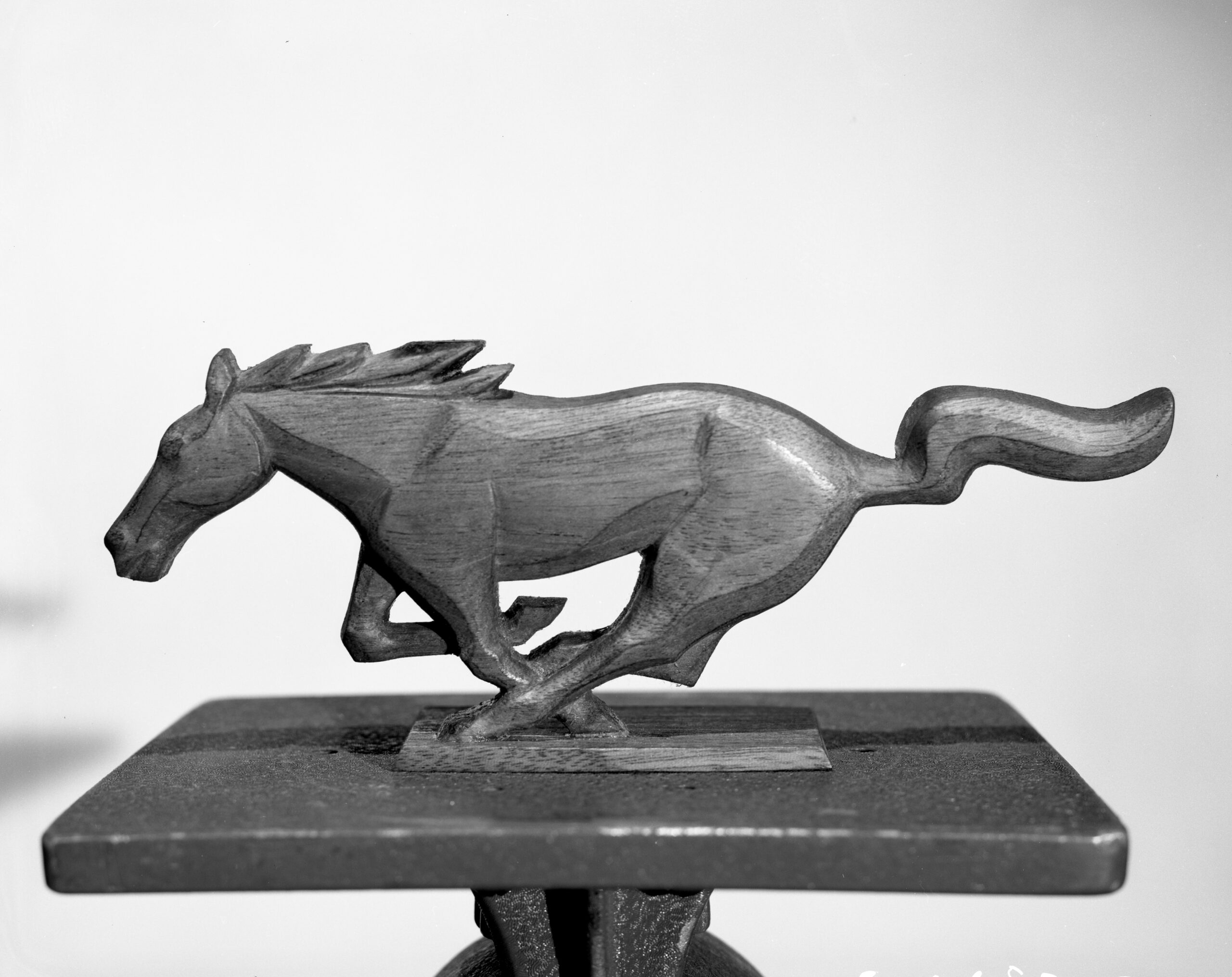
The Mustang’s galloping horse feels inseparable from the car, but Ford tried several directions before settling on the familiar profile. Those early designs track the car’s own development: the badge moved from a horse running toward the viewer to a cleaner side view, while ideas from the Cougar concept and the Mustang’s circular “corral” helped shape the production identity.
That choice mattered because the Mustang quickly became more than a model name. Since its 1964 debut, it has built a long record in sales, popular culture and motorsports. The horse badge gives that history a compact visual signature. Looking at the alternatives makes clear how much of the final emblem’s impact comes from its simple silhouette and forward motion.
April 17 marked 60 years since the Mustang’s public debut at the 1964 New York World’s Fair. The original car helped establish the pony car formula, pairing sporty styling with an accessible price. Ford’s early concepts show that the company was still deciding how best to express that promise. Hagerty’s 60 Years of Mustang coverage follows the launch, early cars and owners’ stories.
A horse appears on the Mustang I
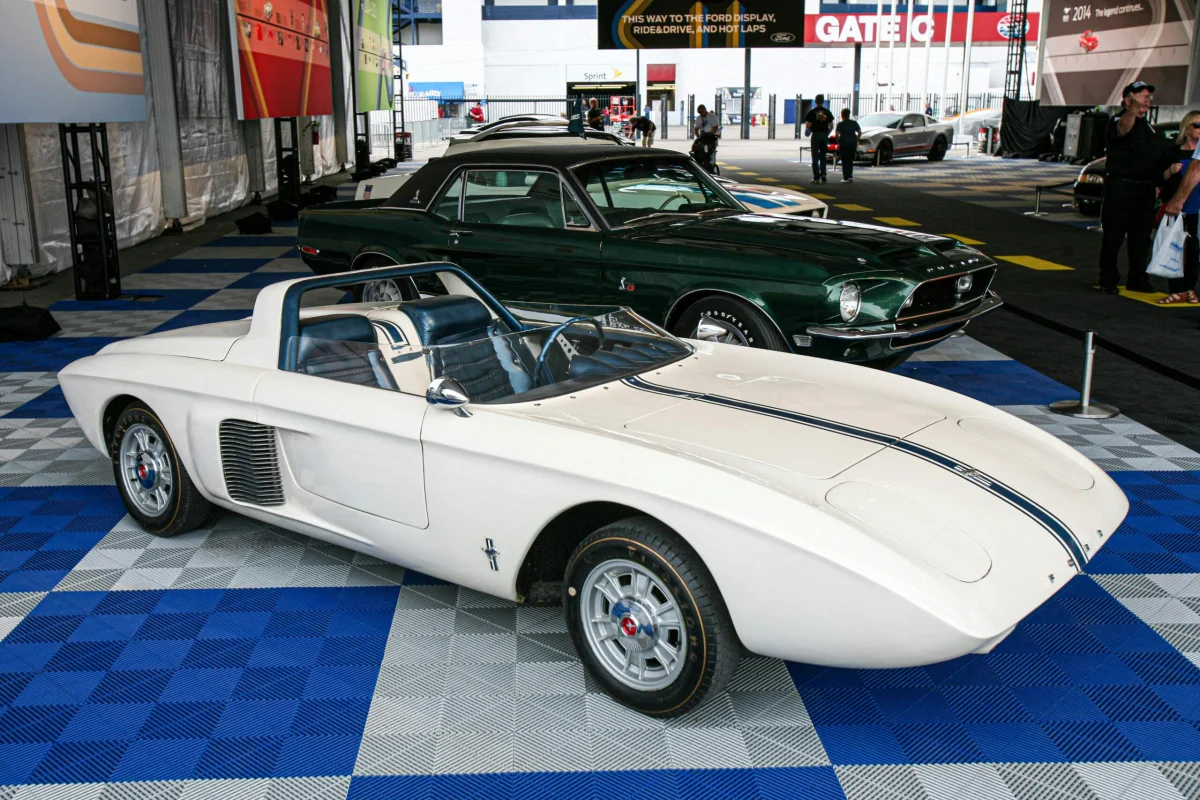
The first running Mustang emblem appeared on the Mustang I concept, shown in October 1962. This small, mid-engine roadster was powered by a 1.6-liter Ford Taunus V-4, an engine used widely in Ford’s European models and in some Saab cars. The concept reflected Ford’s interest in attracting younger buyers drawn to affordable, sporty cars, including the rear-engine Chevrolet Corvair.
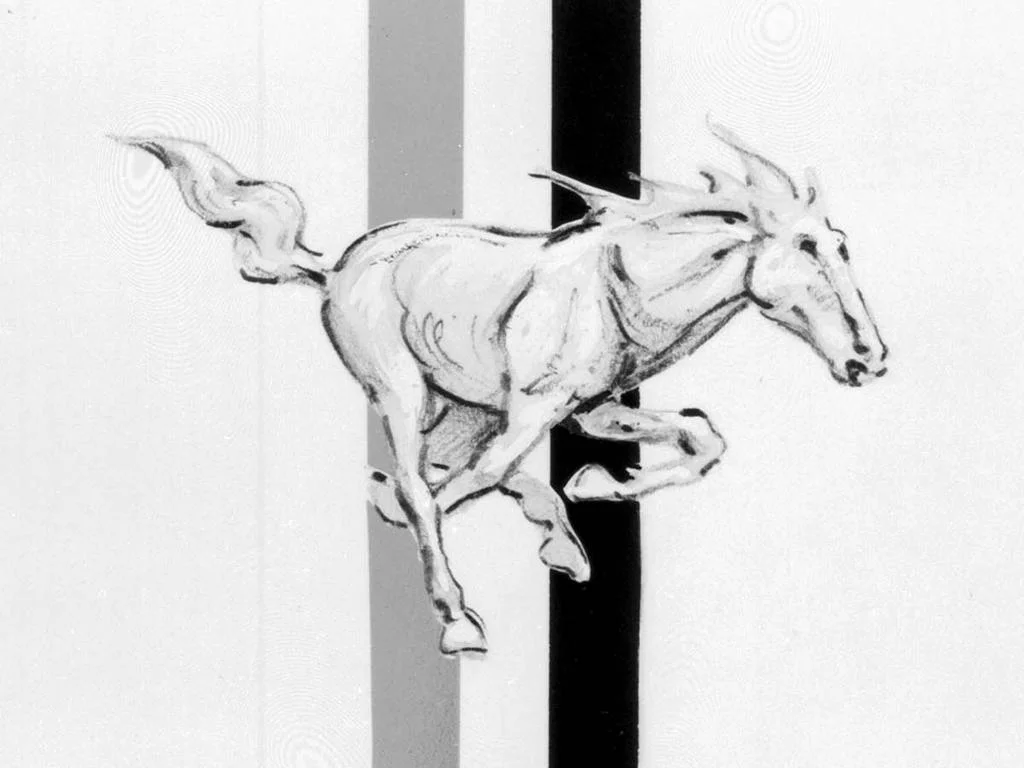
Its horse was recognizable, but the design differed from the badge that would reach production. Rather than a crisp side profile, the early mustang ran at a slight angle toward the viewer. It conveyed movement, though the less familiar perspective made the animal’s shape harder to read at a glance. The production emblem’s profile would prove easier to identify and reproduce across the car.
The Cougar leaves a mark
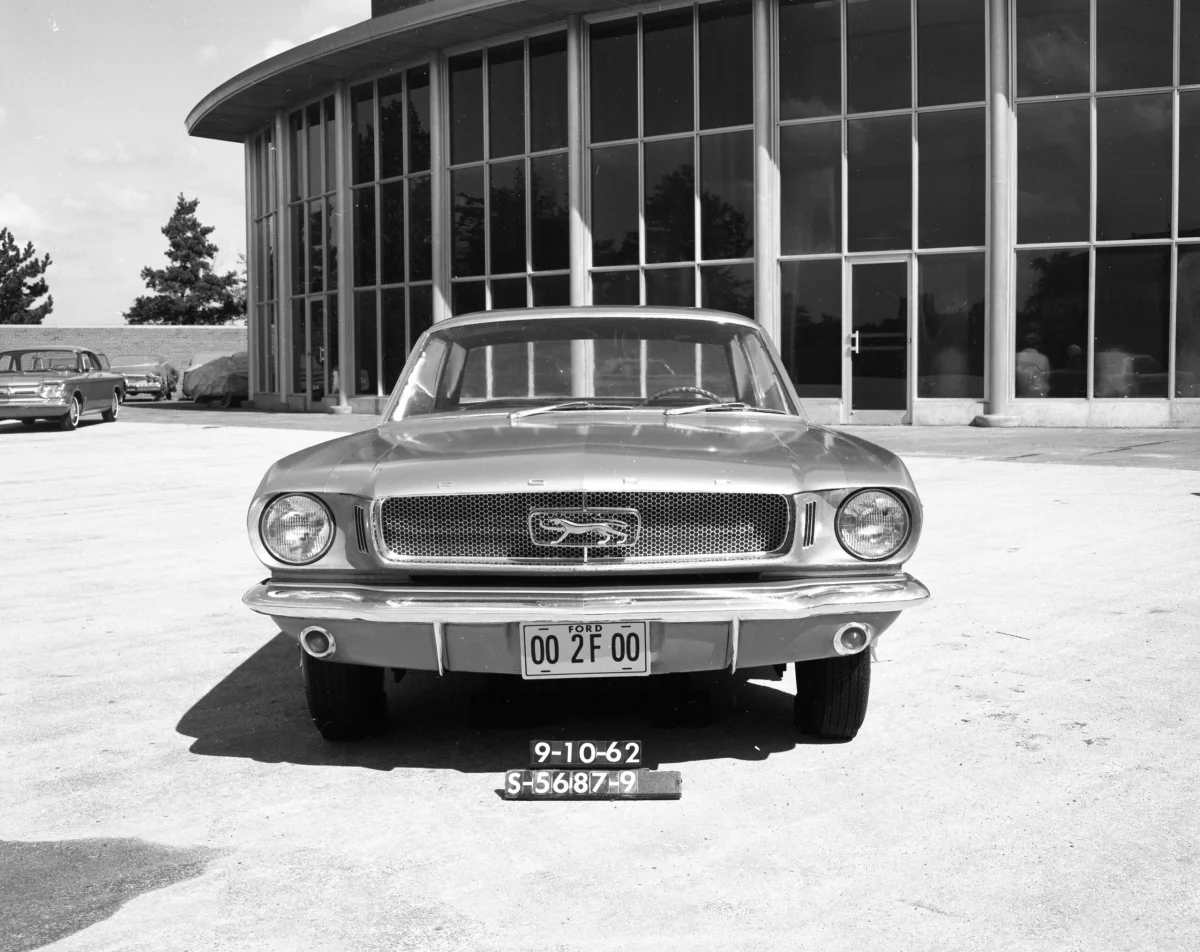
“Mustang” wasn’t a settled name from the start. Ford asked its designers to develop a sporty four-seat car, and more than a dozen proposals emerged. Gale Halderman, who designed the form that became the Mustang, initially called his proposal “Cougar.” One of the early badges matched that name with a feline instead of a horse.
The cat design didn’t become the Mustang’s emblem, but the Cougar idea carried over in another way. The early feline badge sat within a ring, a treatment that Ford later used around the Mustang horse. That border became known as the corral. The production badge thus combined a clearly recognizable running horse with a frame that helped anchor it on the grille.
Halderman’s original name also found a home. Ford used Cougar for the Mercury model introduced in 1967. The name and animal suited that car, while the Mustang gained an identity with a stronger connection to its own name. That split shows how fluid the design process remained: ideas could be redirected as Ford refined both the car and its branding.
A square badge that didn’t make the cut
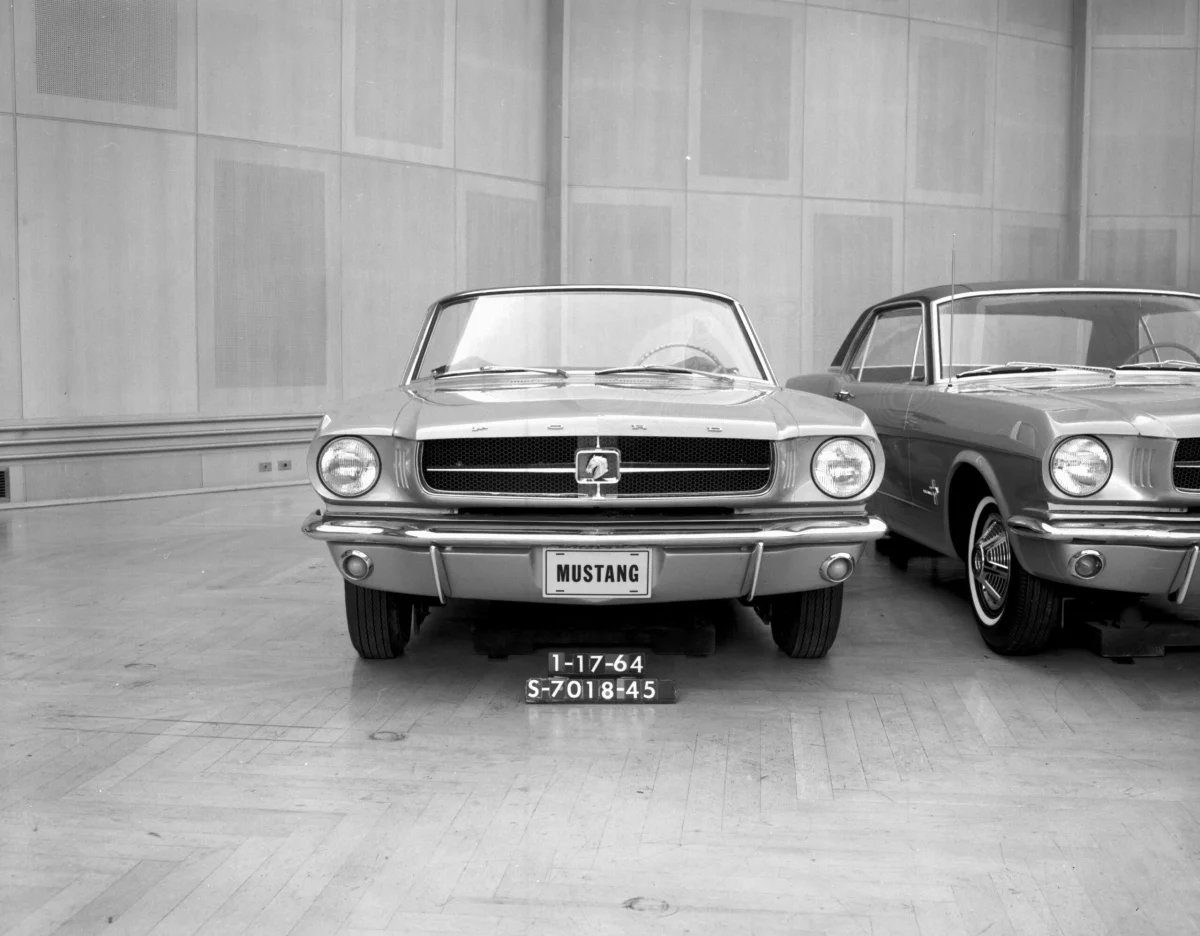
Not every proposal had the clarity of the horse or Cougar. One alternative was a square badge, a static shape that lacks the direction and energy of the galloping animal. Its geometric outline may have been easy to place, but it didn’t offer the same immediate link to the Mustang name. Set beside the final emblem, it looks like a very different answer to the question of what a sporty Ford should represent.
That contrast is useful because a badge has to work quickly. A driver should be able to pick out its shape at a distance, and the design has to hold together on different parts of a vehicle. The horse’s side profile, with its legs extended in a run, supplies both a distinct outline and a sense of motion. Ford’s final choice made that identity legible without needing a wordmark to explain it.
Mustang II brings the corral into view
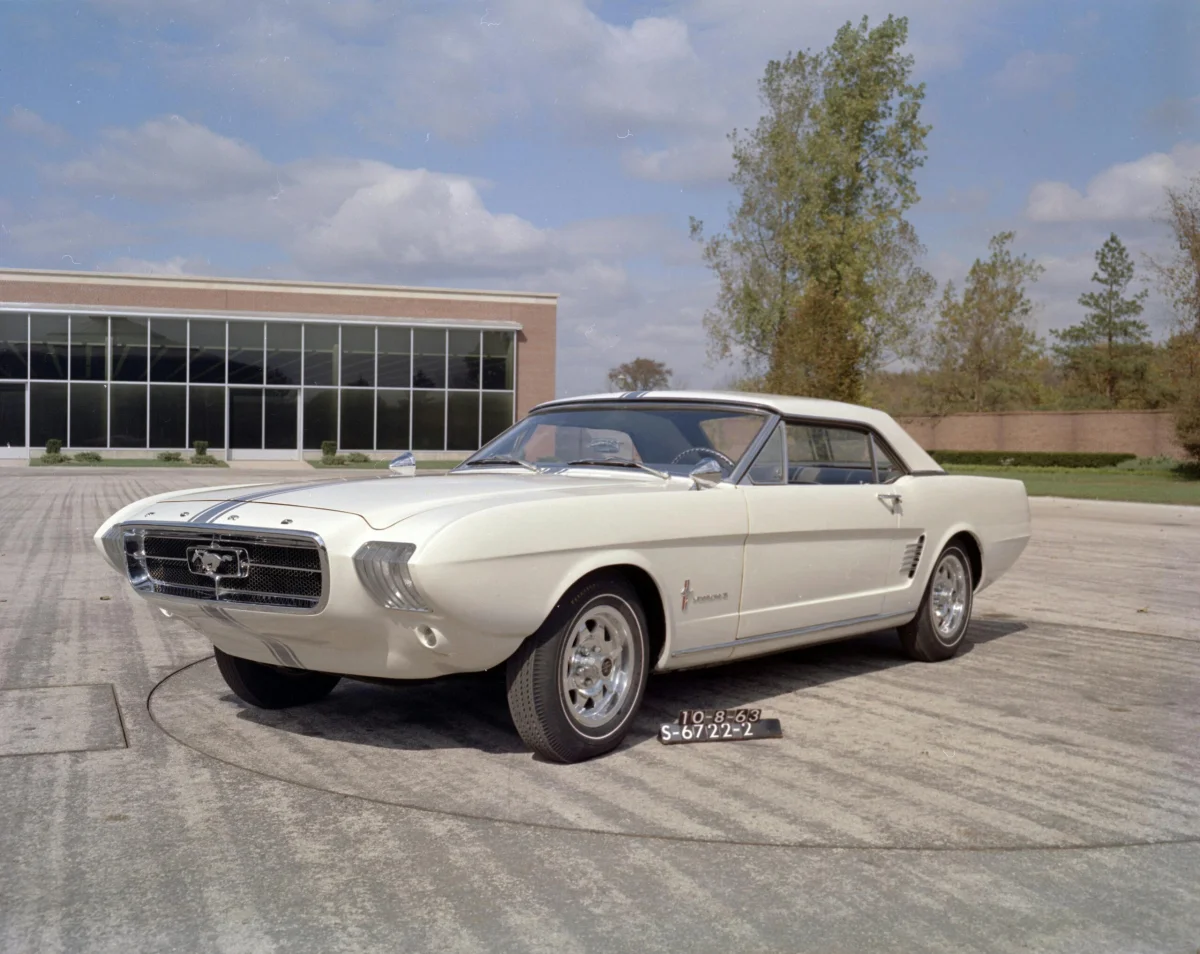
The Mustang II concept, revealed at Watkins Glen on October 5, 1963, brought the car much closer to its eventual shape. Its steeply angled windshield wasn’t meant for production, but the roof and body sides were moving in that direction, and the grille already looked close to the finished design. At the front, the headlights remained more experimental.
This concept also gave the public its first look at a running Mustang inside the corral. By then, the badge and the car were beginning to work as a single idea: a sporty, compact Ford with a horse emblem that communicated motion and a frame that gave the symbol a defined place on the nose.
Why small changes matter
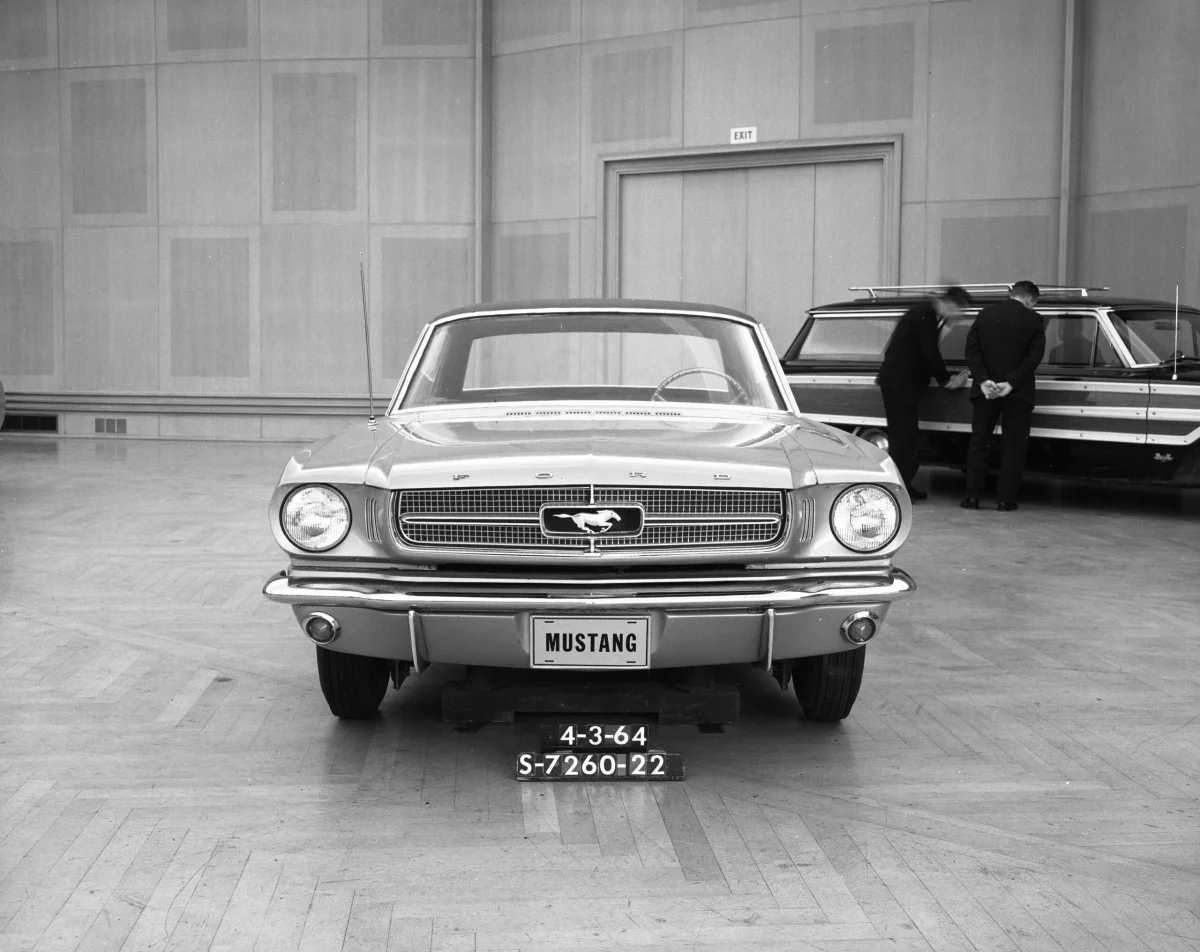
A final alternate horse design shows how sensitive the identity is to small adjustments. Change the animal’s angle or the shape of its run, and the badge can feel unfamiliar even when it still depicts a galloping mustang. The chosen emblem became distinctive through the particular profile Ford settled on, not simply through the decision to use a horse.
That recognition is part of the Mustang’s staying power. The badge can identify the car before its name is readable, while the corral helps the symbol hold its place across generations. The early proposals make the result look less inevitable and more considered: Ford tested different animals, angles and frames before arriving at the combination drivers still recognize.
For more automotive history, visit the Hagerty Media homepage or subscribe to its newsletters.
The original story appeared on Hagerty Media.


