In lane Electric Vehicles
2024 Tesla Cybertruck Design Review: Bold Geometry, Uneven Details
Description
The Cybertruck’s stainless steel geometry makes a striking first impression, but awkward wheels, uneven finishes and practical compromises complicate the design.
The 2024 Tesla Cybertruck is most convincing when you examine its details one at a time. A trapezoidal windscreen, a sharply cut fender or a tailgate that spans the truck’s width can look purposefully composed. Step back, though, and those moments don’t always add up to a cohesive vehicle. The design is memorable by intent; refinement is less consistent.
That tension is the right way to approach the Cybertruck. Its pared-back geometry recalls the abstract work of Kazimir Malevich, whose Suprematist paintings reduced subjects to basic forms. But a production pickup has to accommodate working parts, durable finishes and everyday use. Tesla has found striking ways to package some of those requirements. In other areas, the truck’s visual idea appears to have outrun the details needed to make it feel finished.

A front end reduced to its essentials
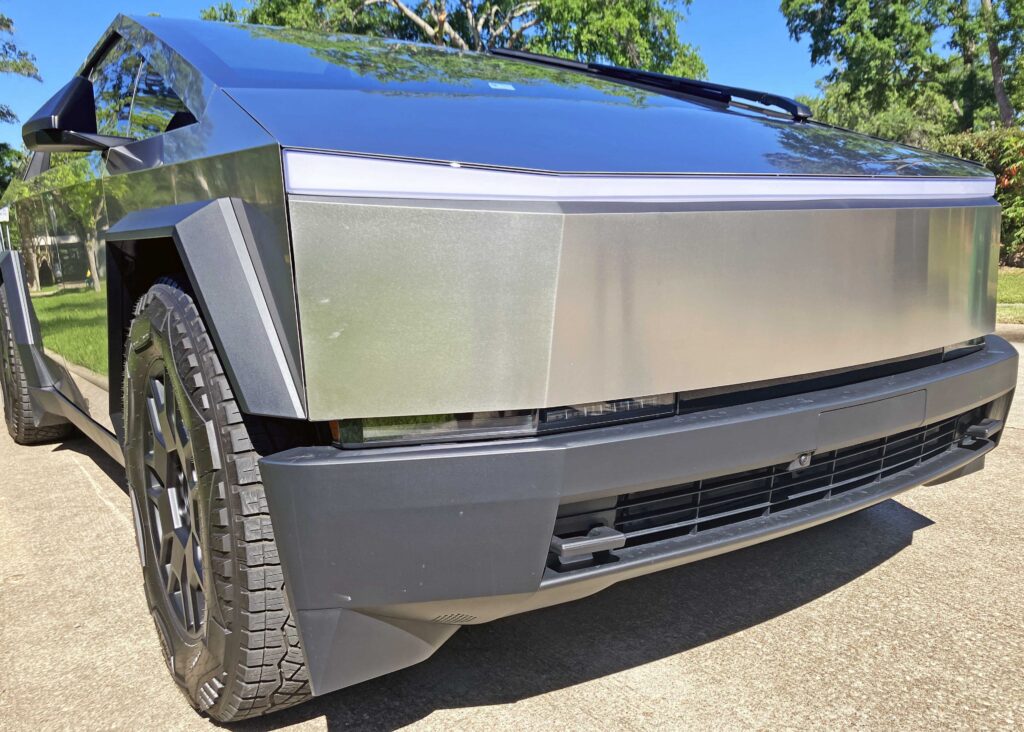
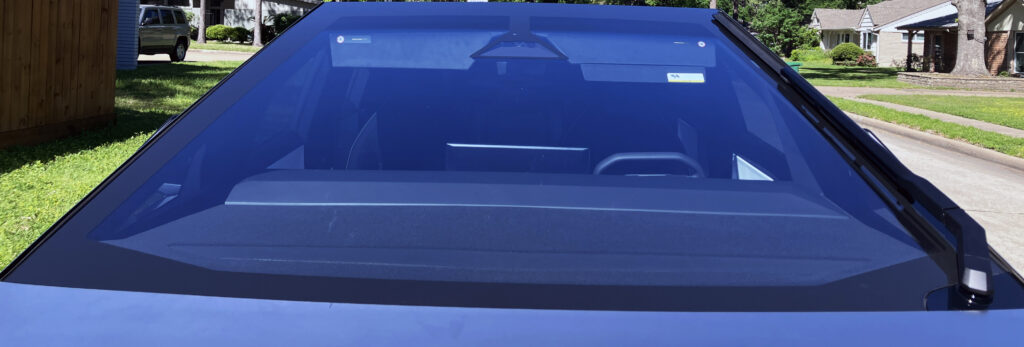
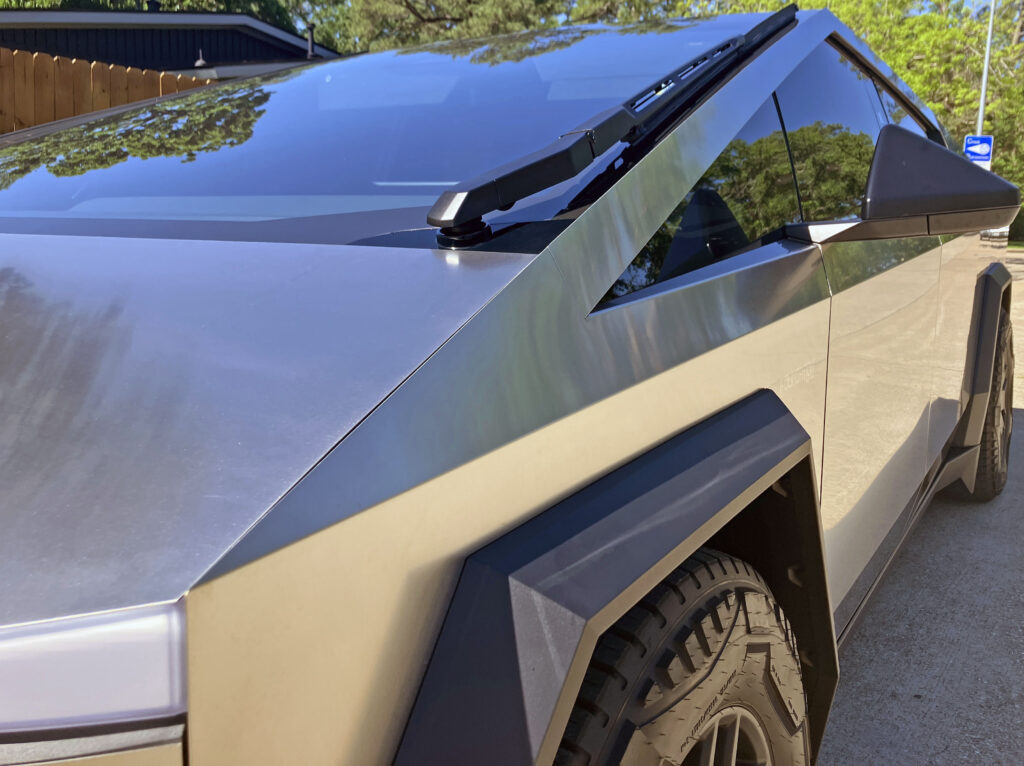
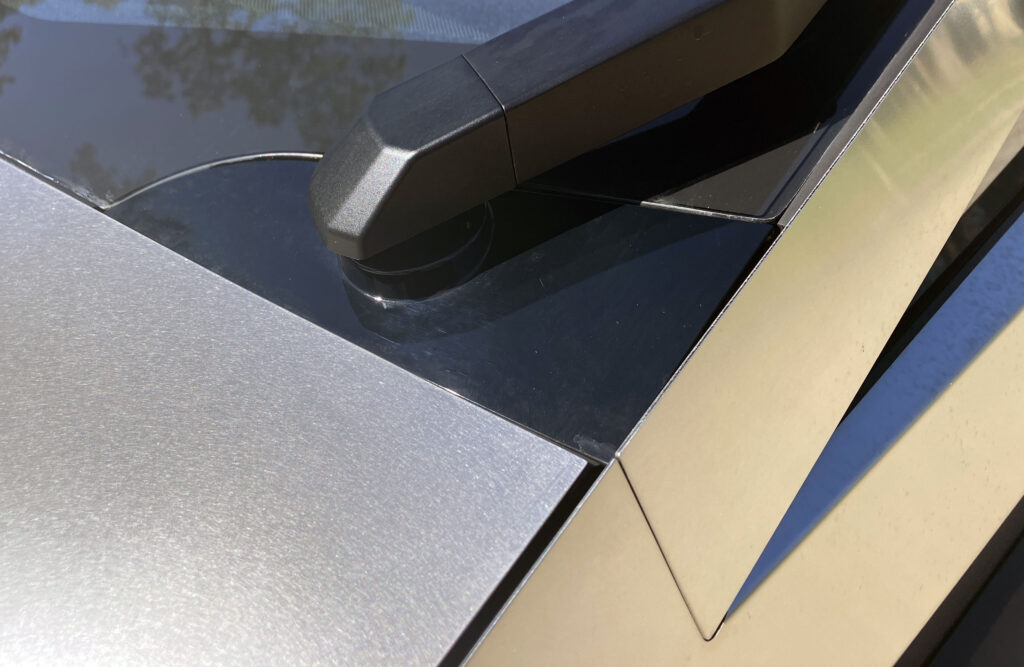
The stainless steel face, thin light bar and steeply rising glass give the front end a graphic quality that’s hard to mistake for anything else. The hood is unusually plain for a pickup, while the windscreen appears to flow into it without the conventional visual break of a prominent cowl. One oversized wiper arm sits low on the passenger side; the other side of the glass is left visually bare.
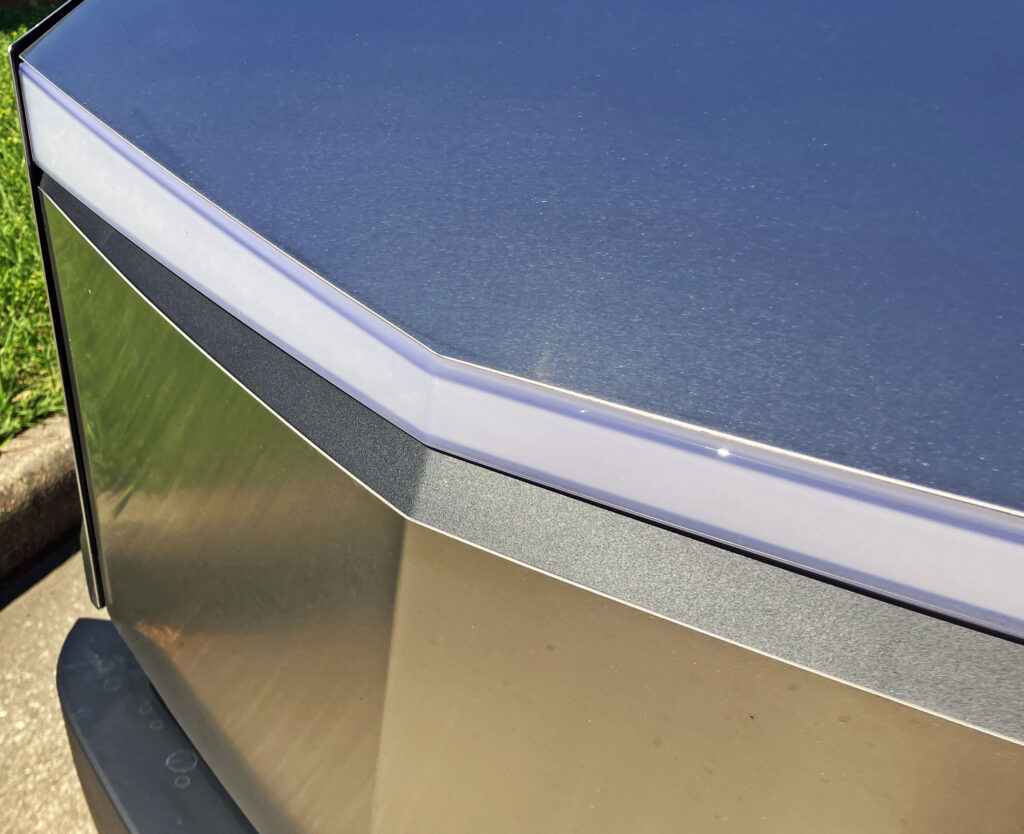
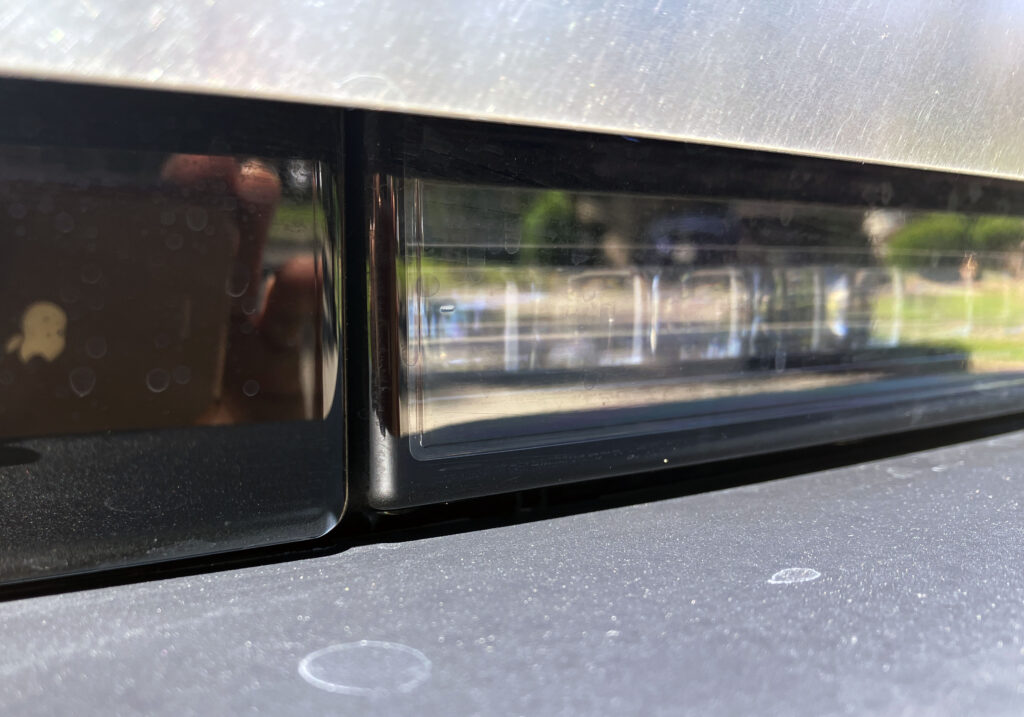
The headlights are easy to miss at first glance, tucked below the light bar and into a dark panel. That placement helps preserve the broad, flat impression of the front fascia. It also means the lighting doesn’t read like a conventional pair of headlamps: the bright horizontal strip does most of the visual work, while the lamps themselves recede into the structure.
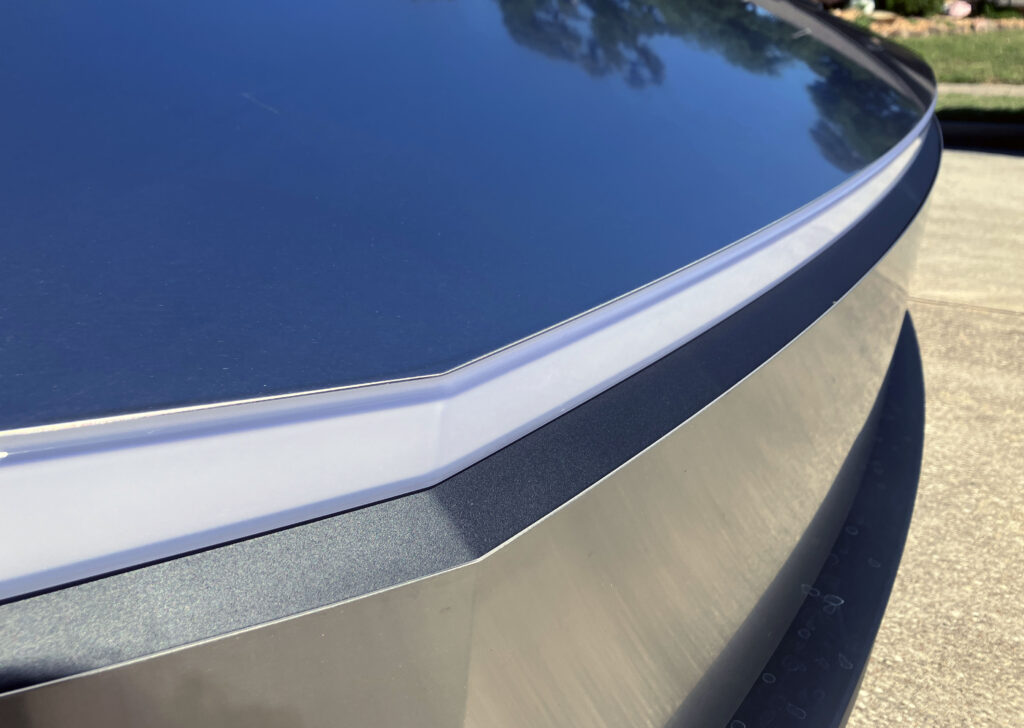
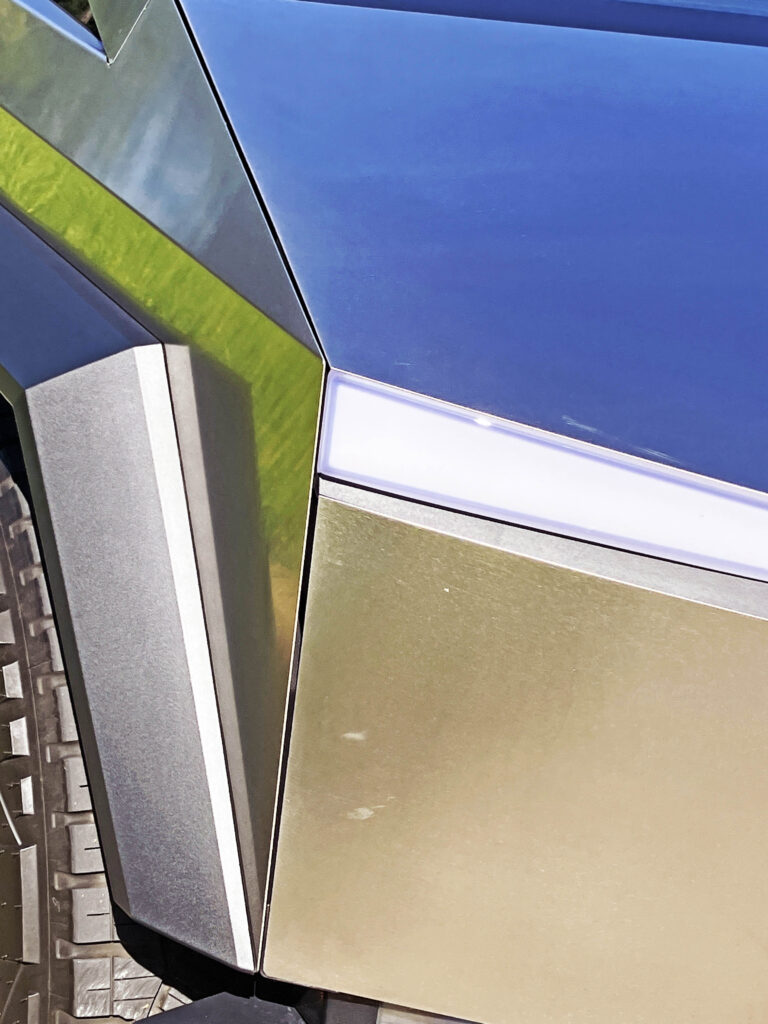
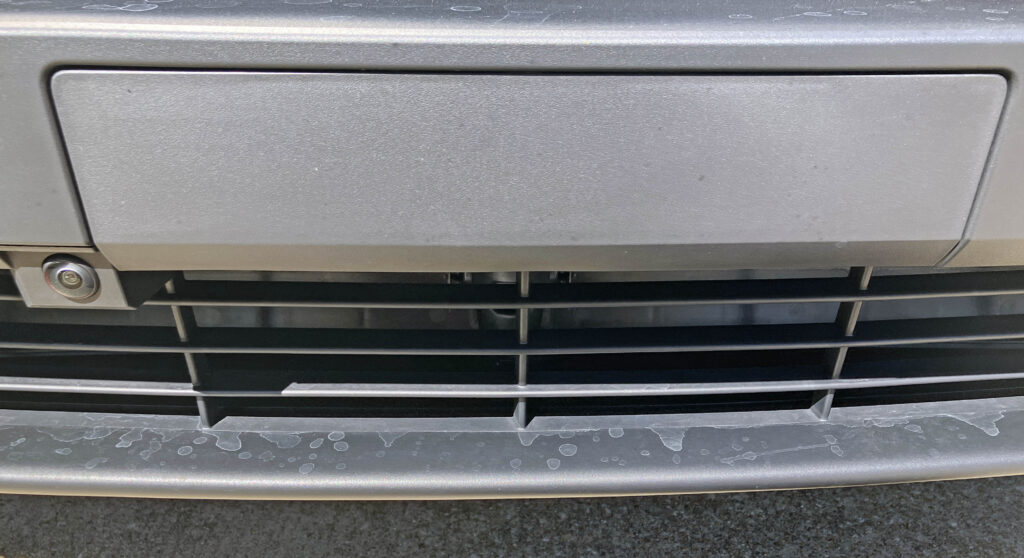
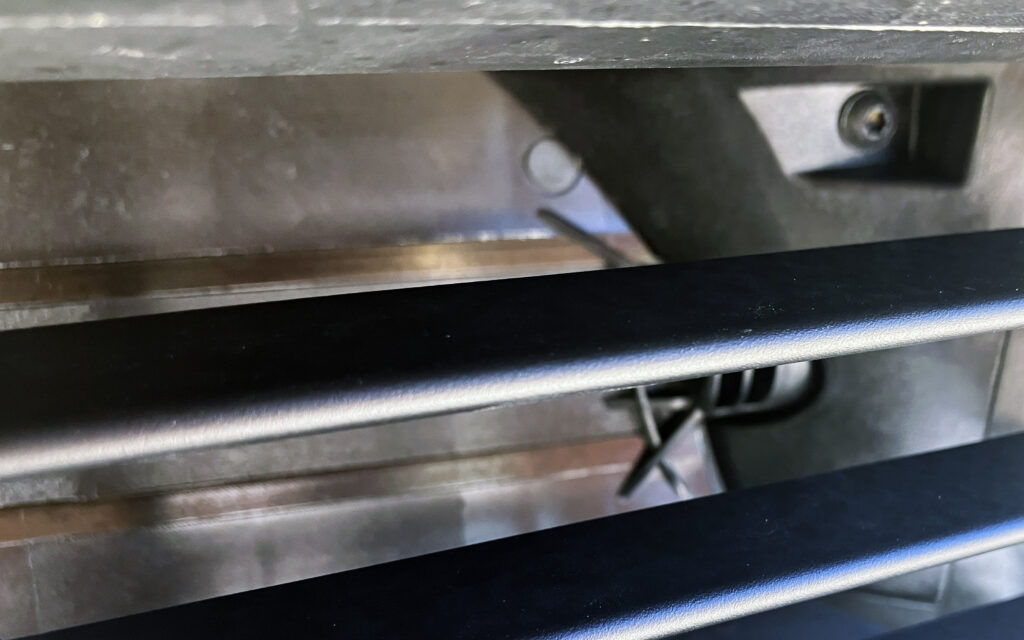
Making those forms meet takes more effort than the spare appearance suggests. The hood’s outer edges help define the shape of the light bar, and a dark textured insert bridges the bar’s steep angle to the flatter stainless steel below. On the example examined, the fit between those pieces looked notably better than some of the more exposed body joints. Beneath the front license plate area, an ordinary-looking grille and a shutter mechanism bring a practical touch to an otherwise theatrical face.
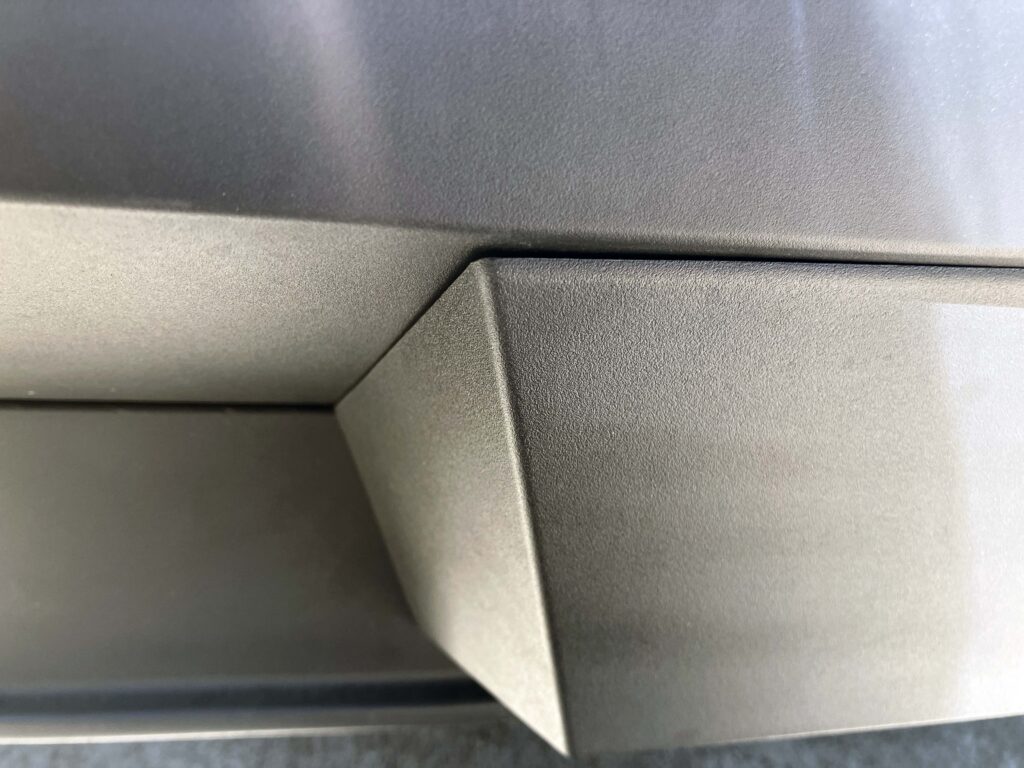
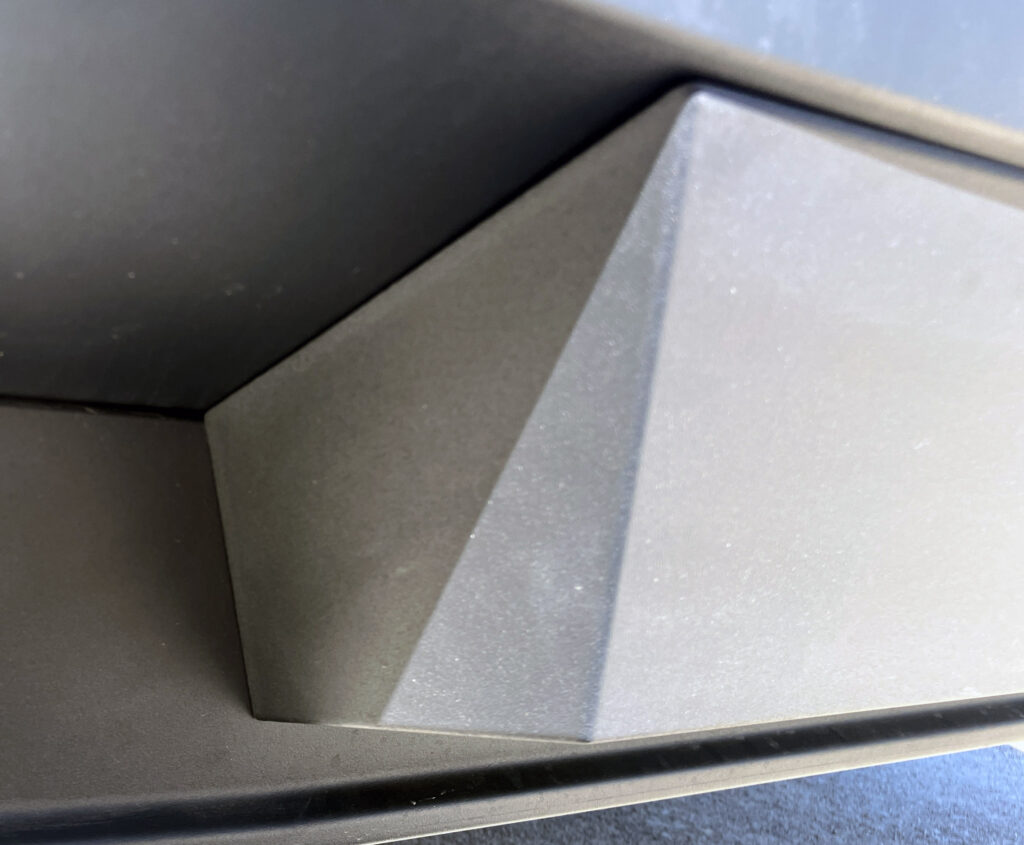
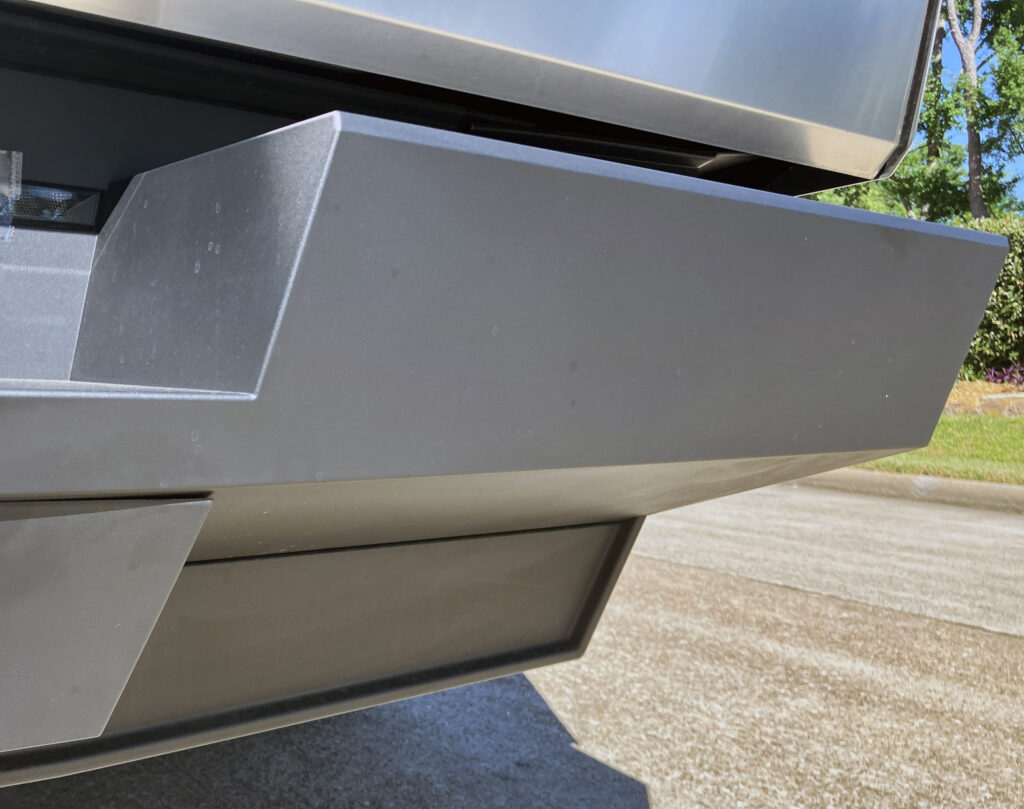
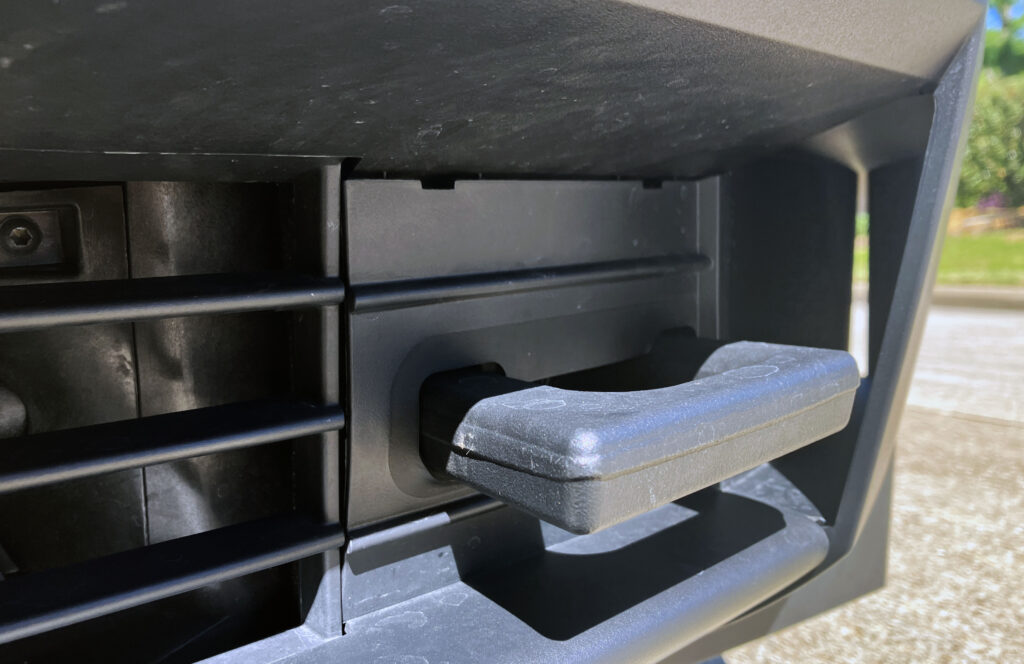
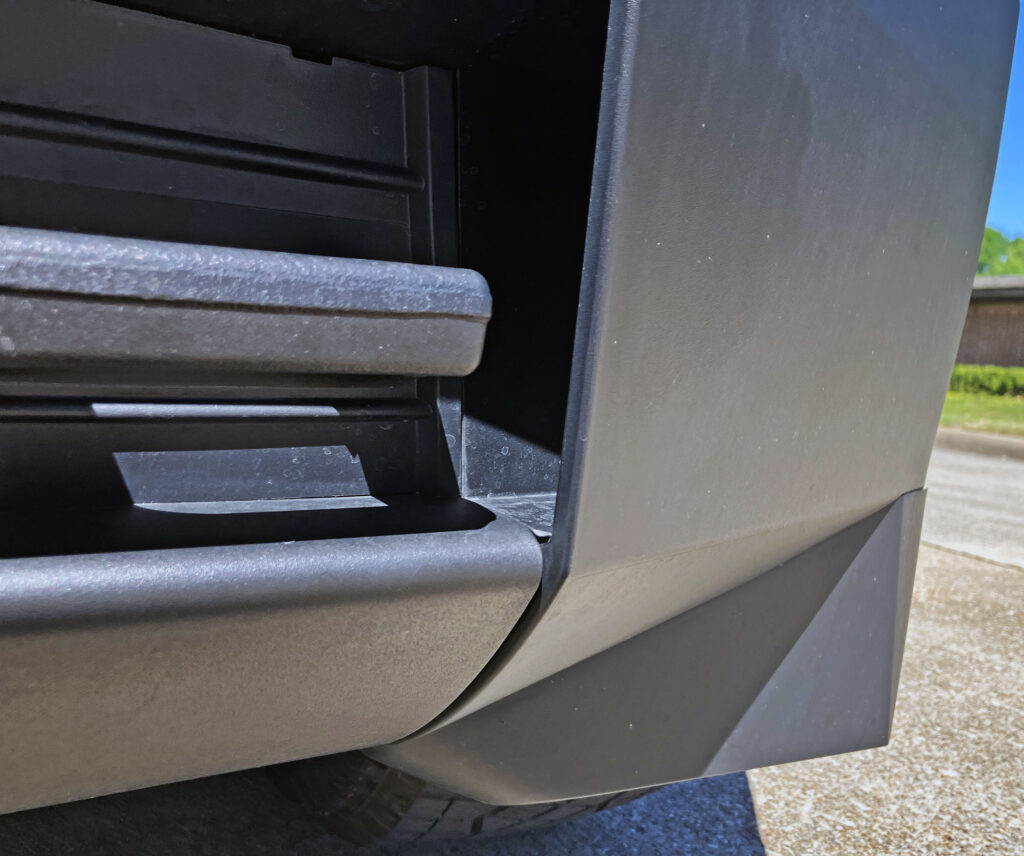
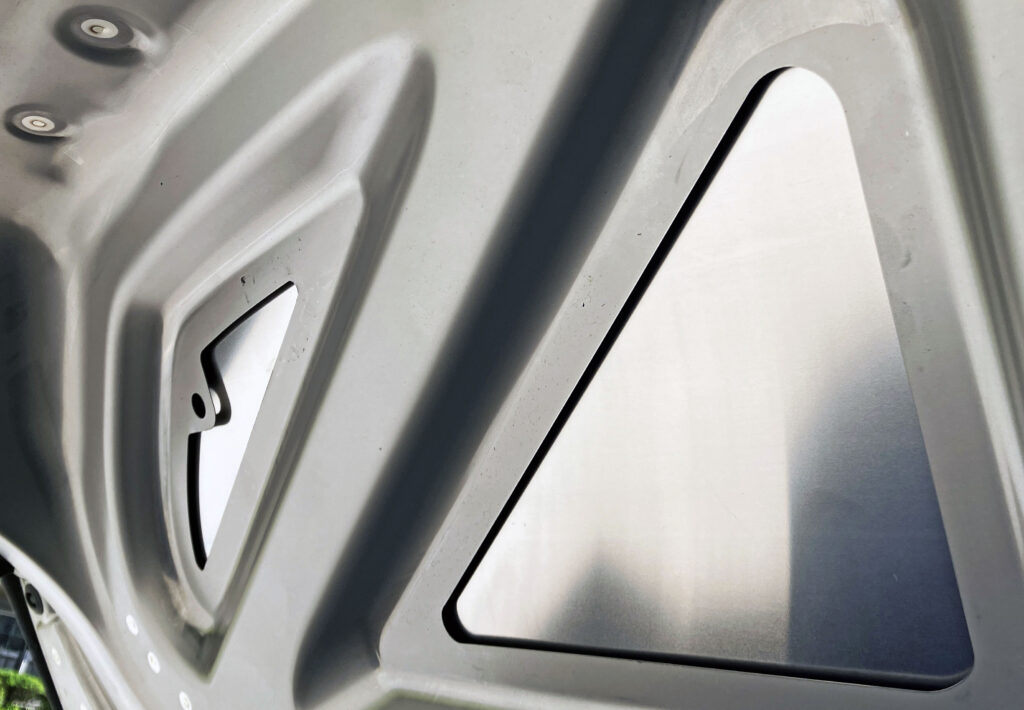
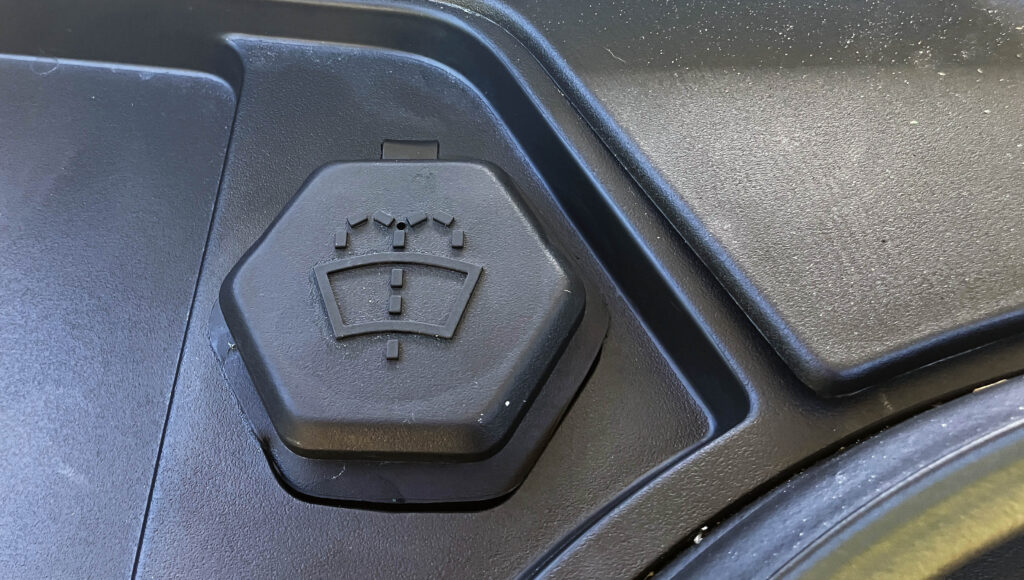
The bumper carries the same split between utility and visual effect. Its tow hook sits in a chunky recess that suggests loading equipment, while angled sections of the lower valance catch light along their edges. The front trunk adds another small study in contrasting surfaces: stainless steel over an aluminum structure, with a hexagonal washer-fluid cap as a fittingly geometric accent.
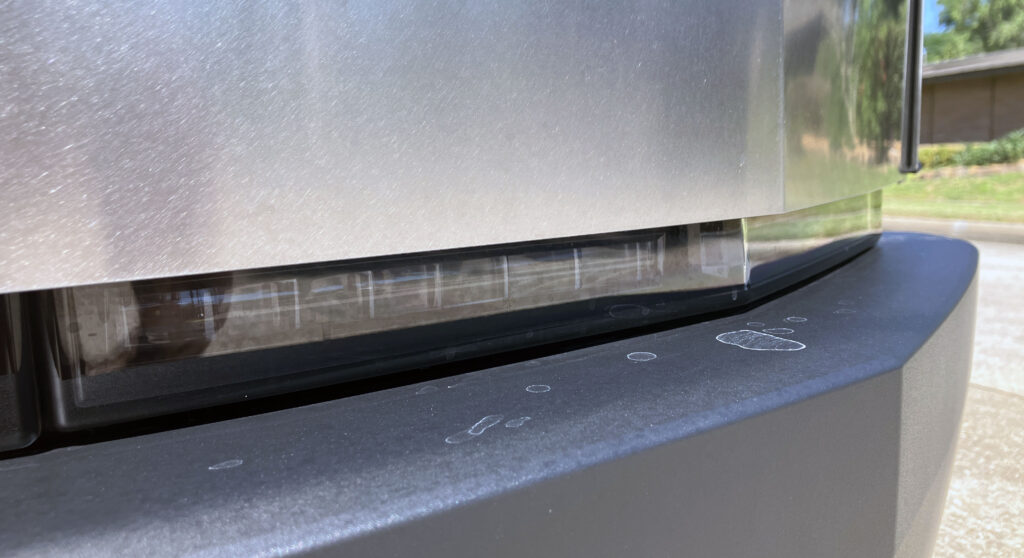
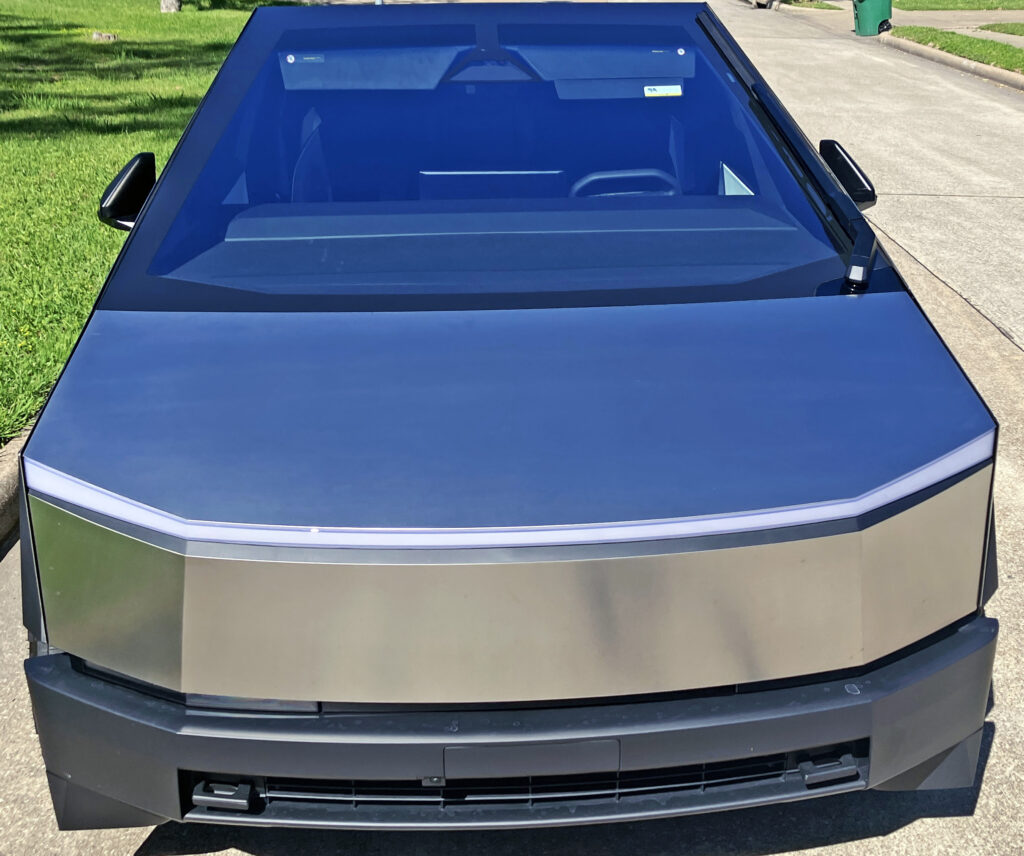
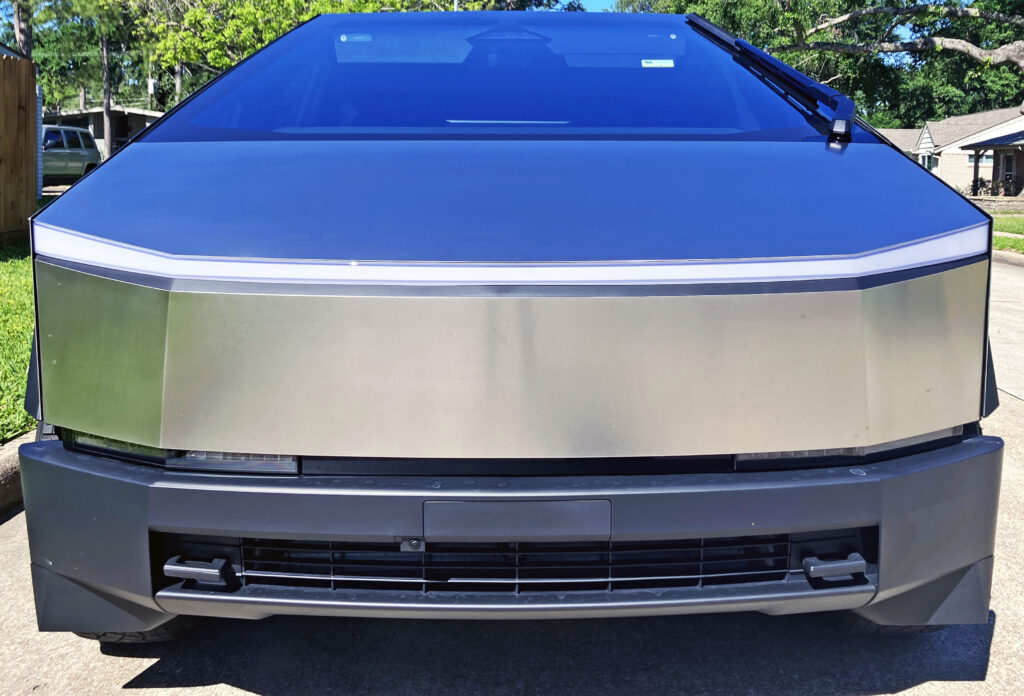
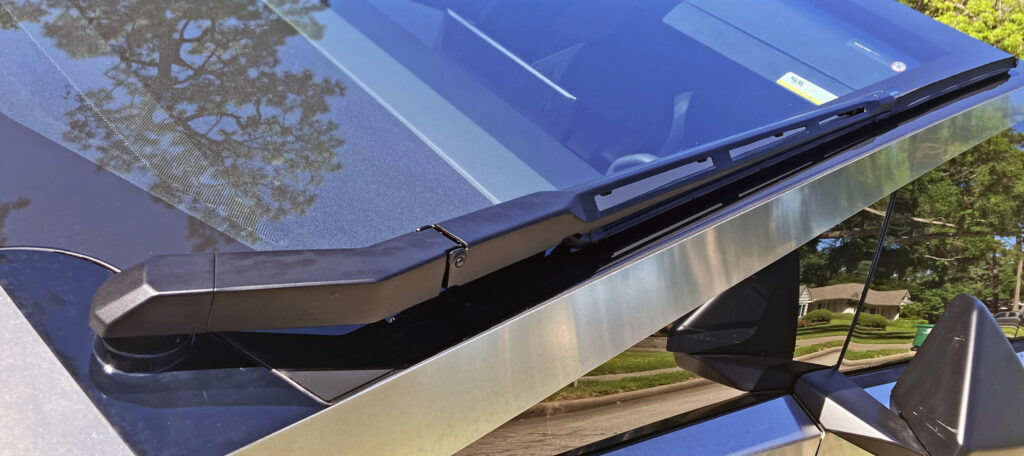
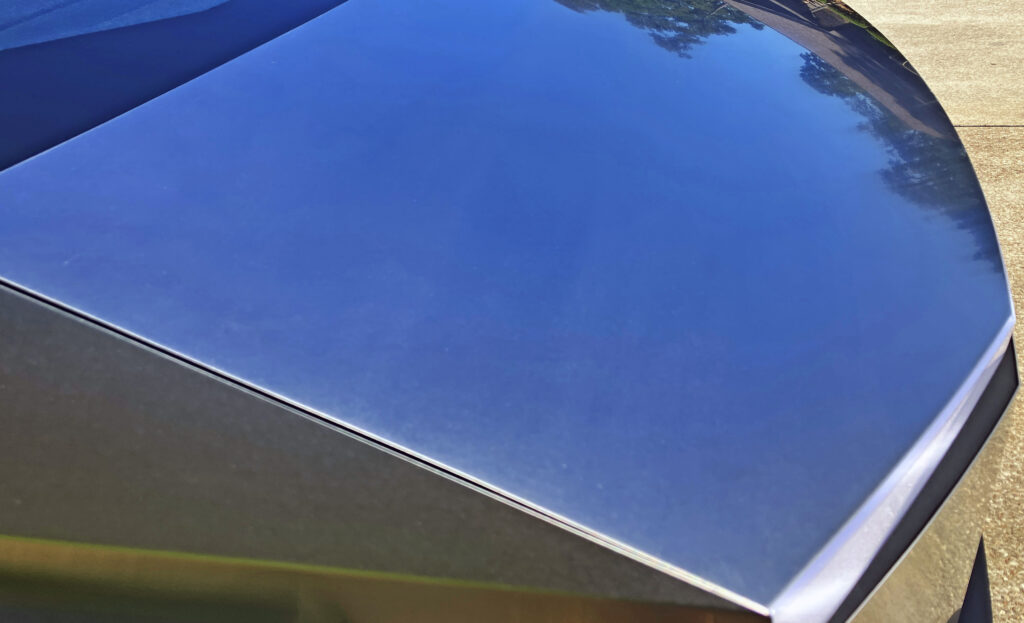
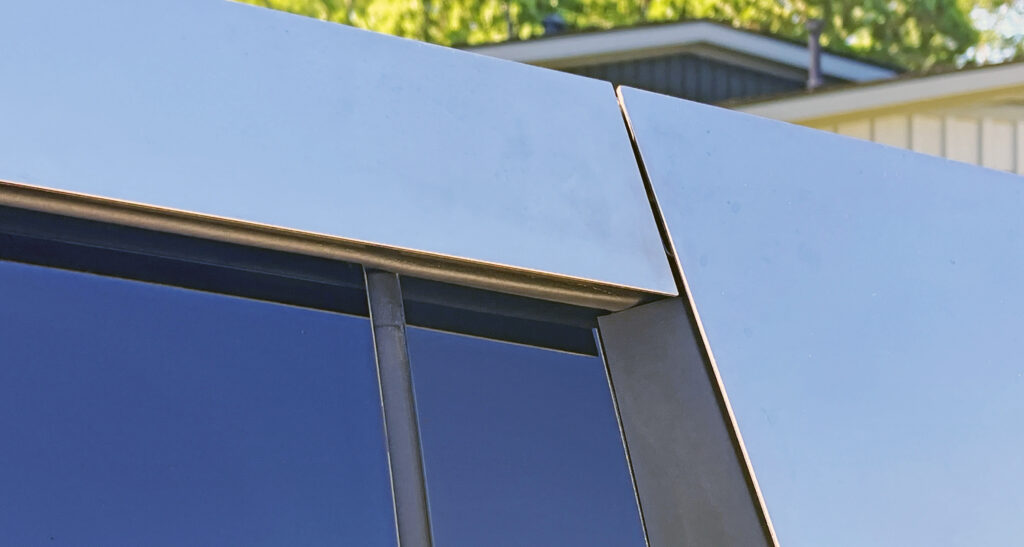
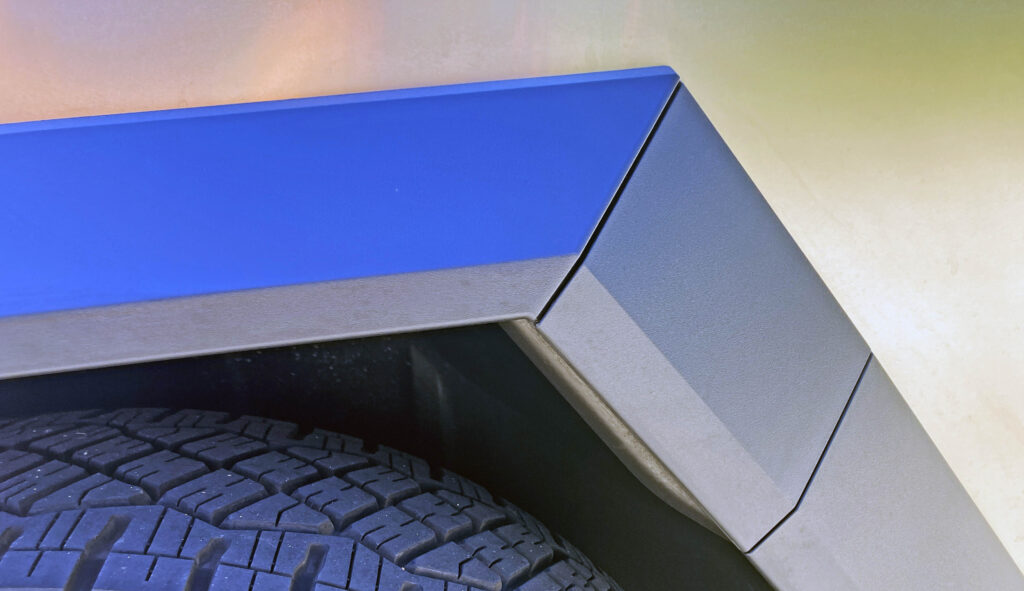
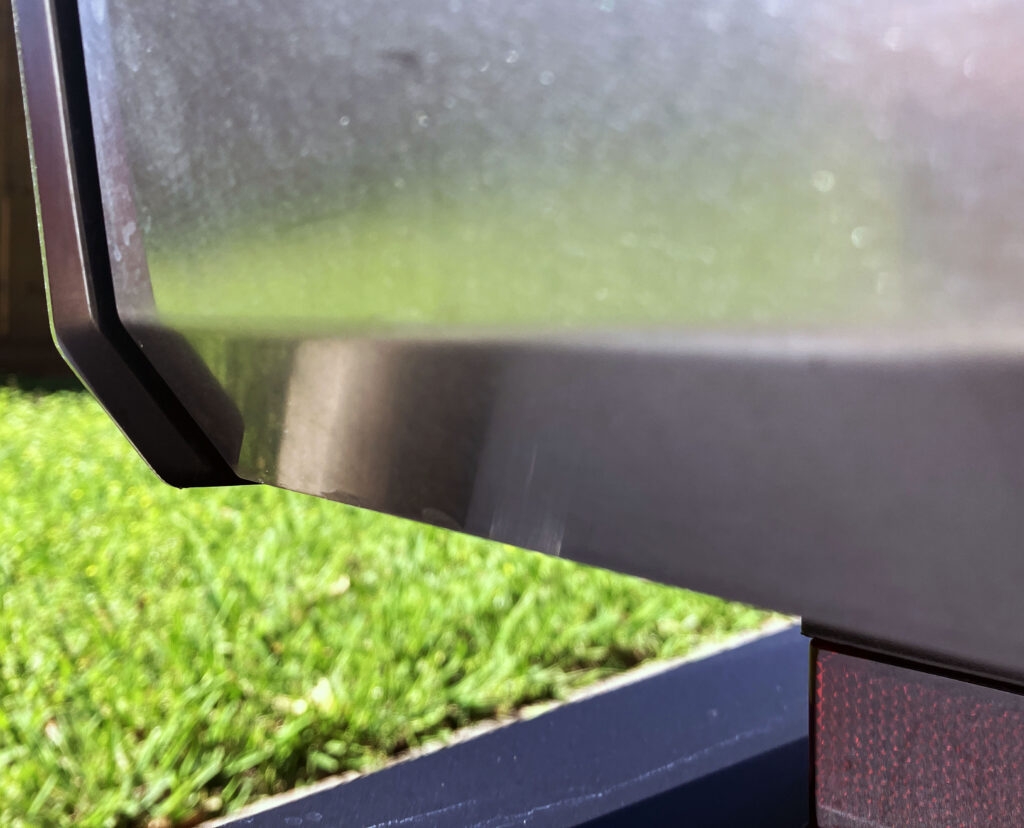
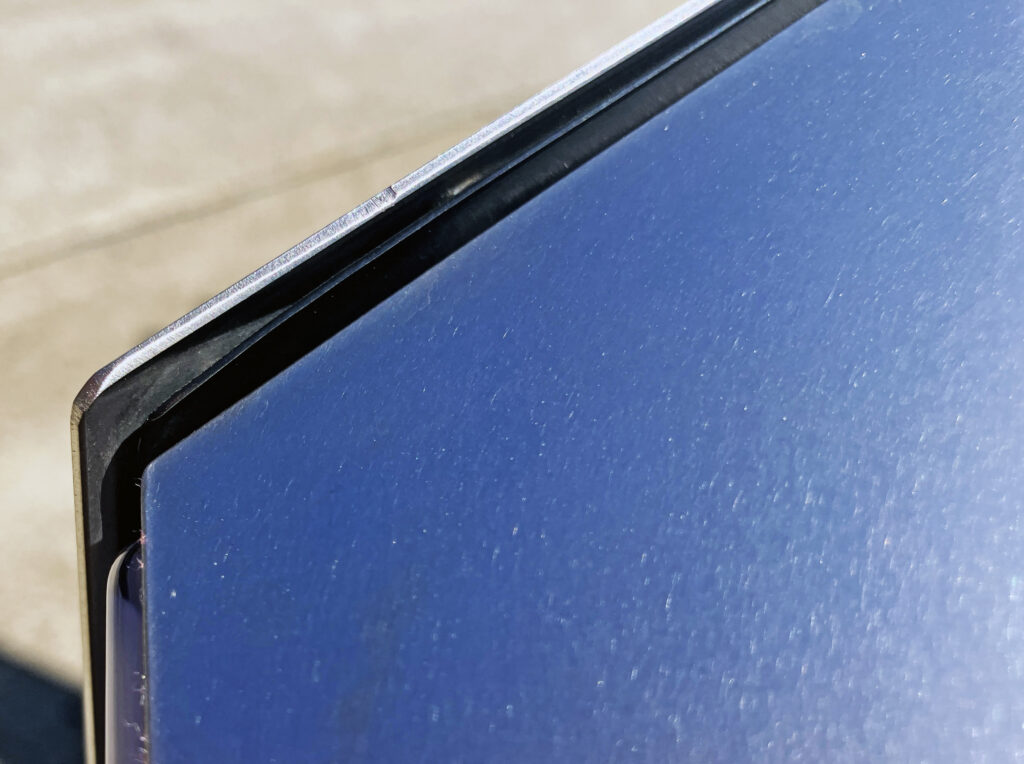
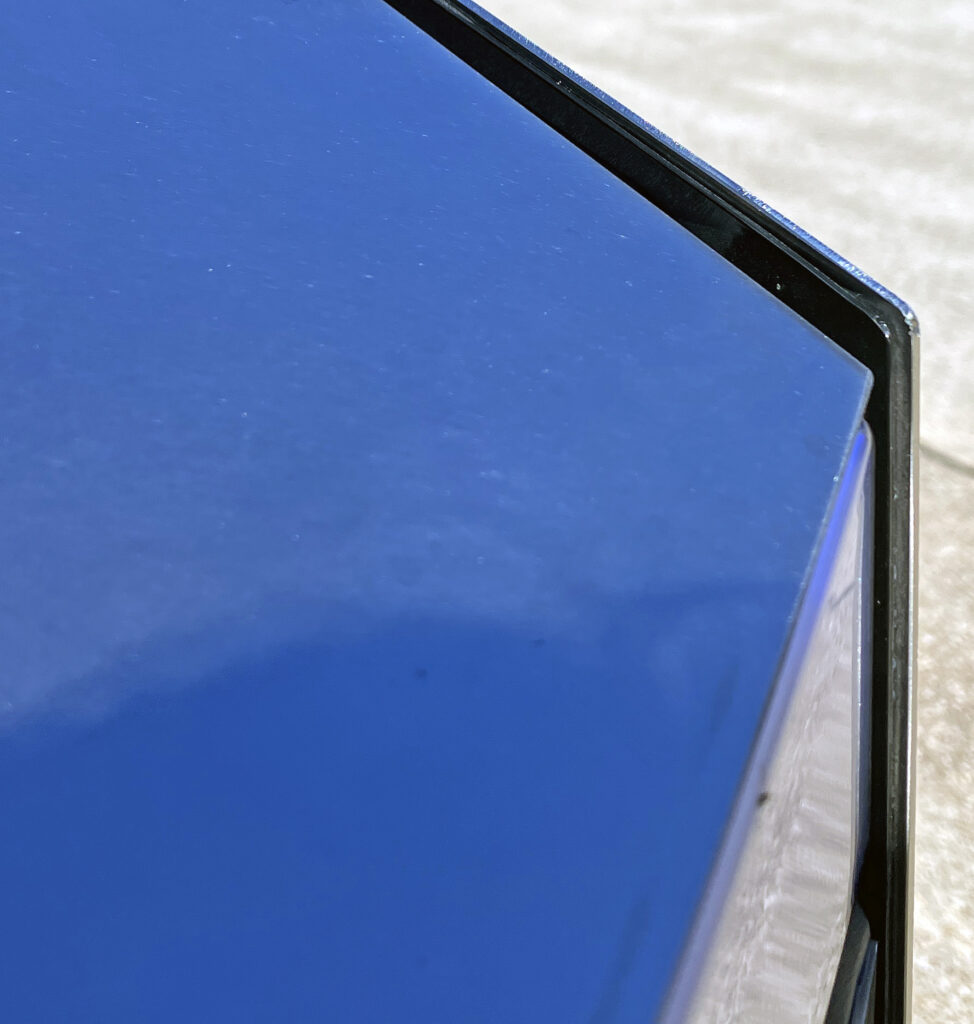
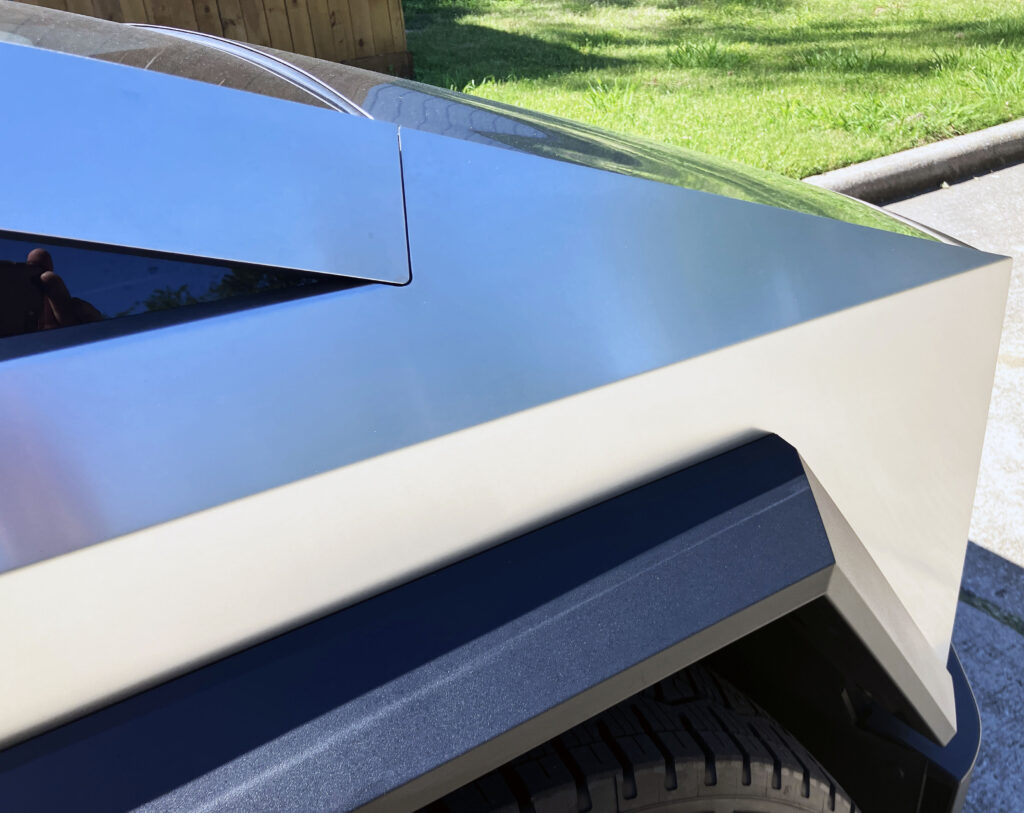
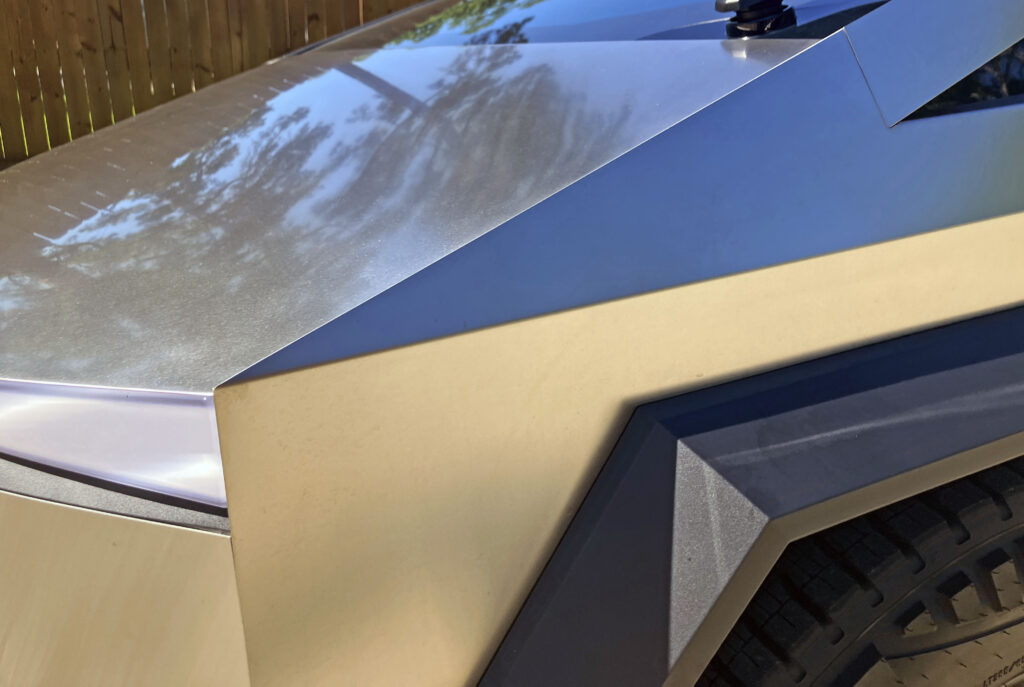
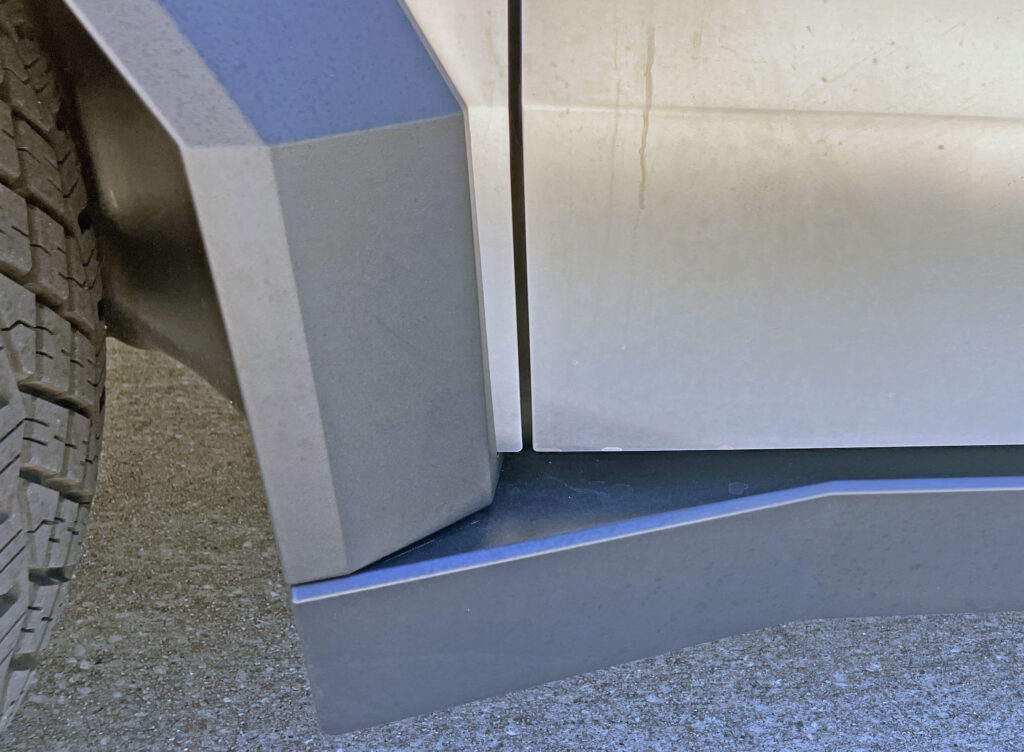
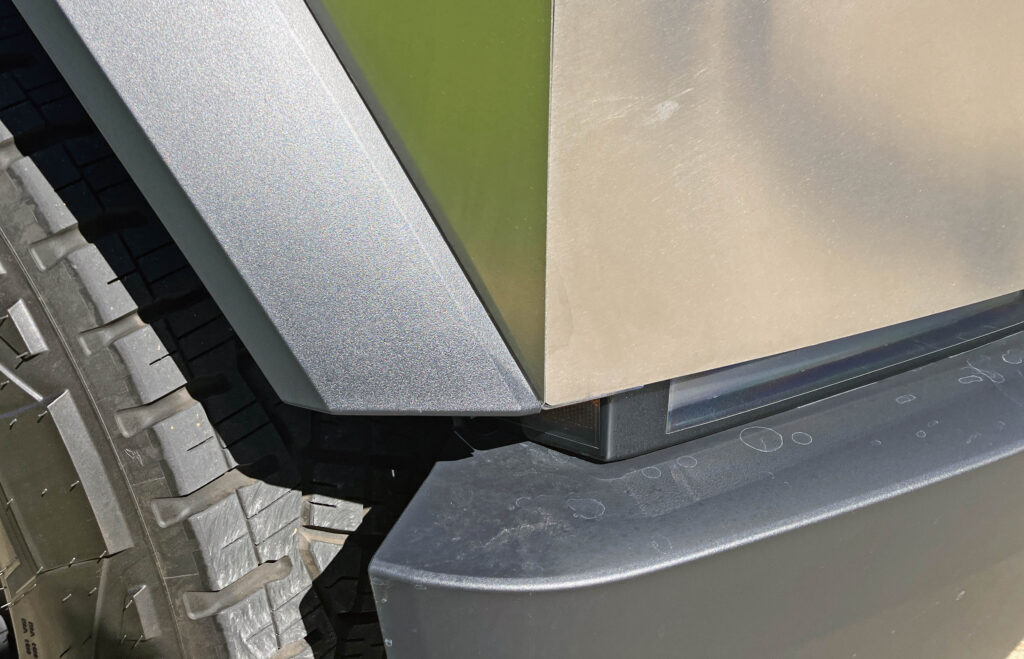
There’s a caveat to all that visual clarity. At the hood and fenders, stainless steel panels meet in a way that can look unfinished, and their gaps invite close inspection. The unusual construction may make the abrupt edges seem like part of the concept, but that explanation only goes so far when the truck is a production vehicle. Even the sharply drawn front corners, which simplify familiar elements such as the hood, fender and lamp into basic shapes, can’t make every joint feel deliberate.
The side view: compelling lines, competing forms
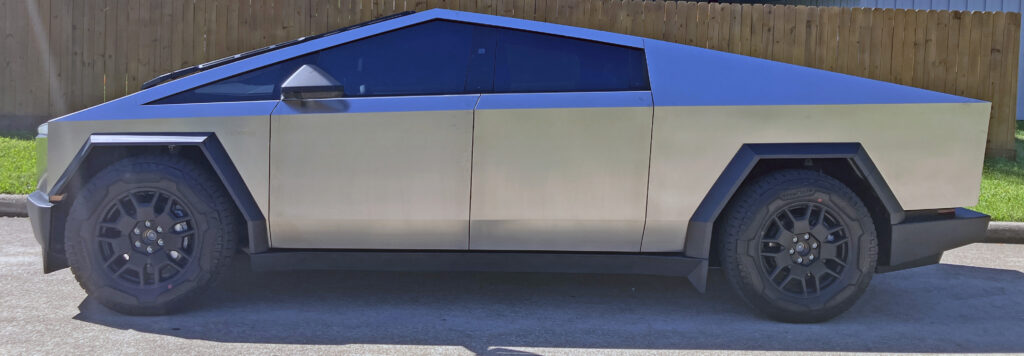
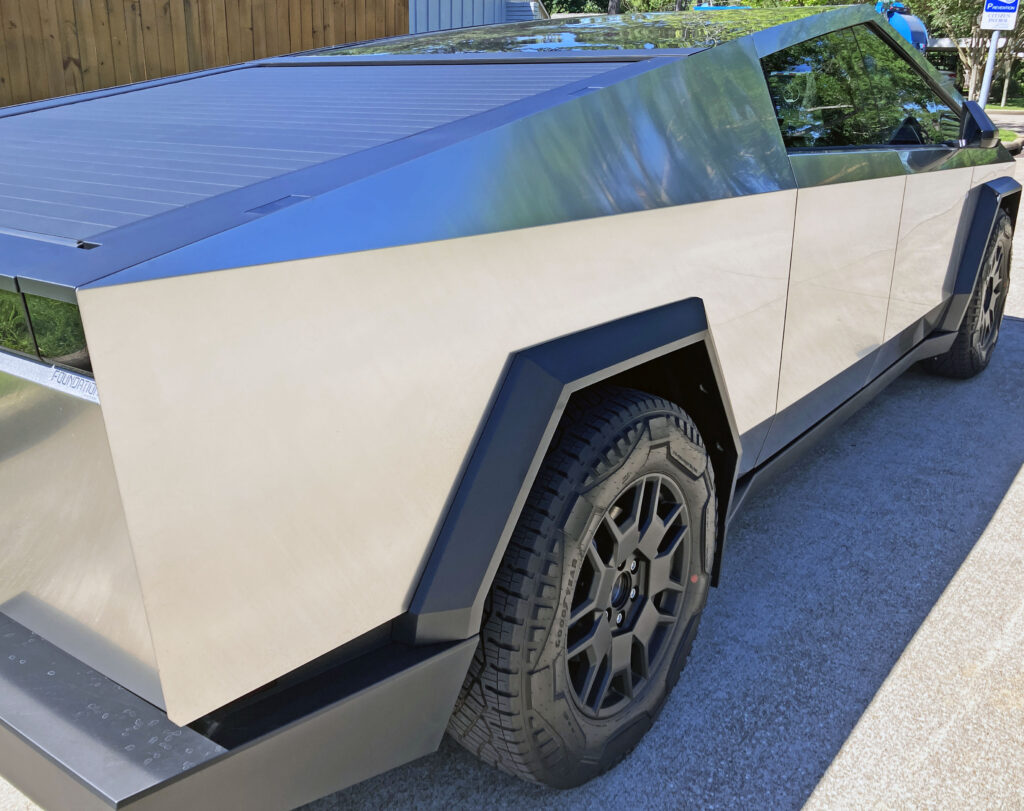
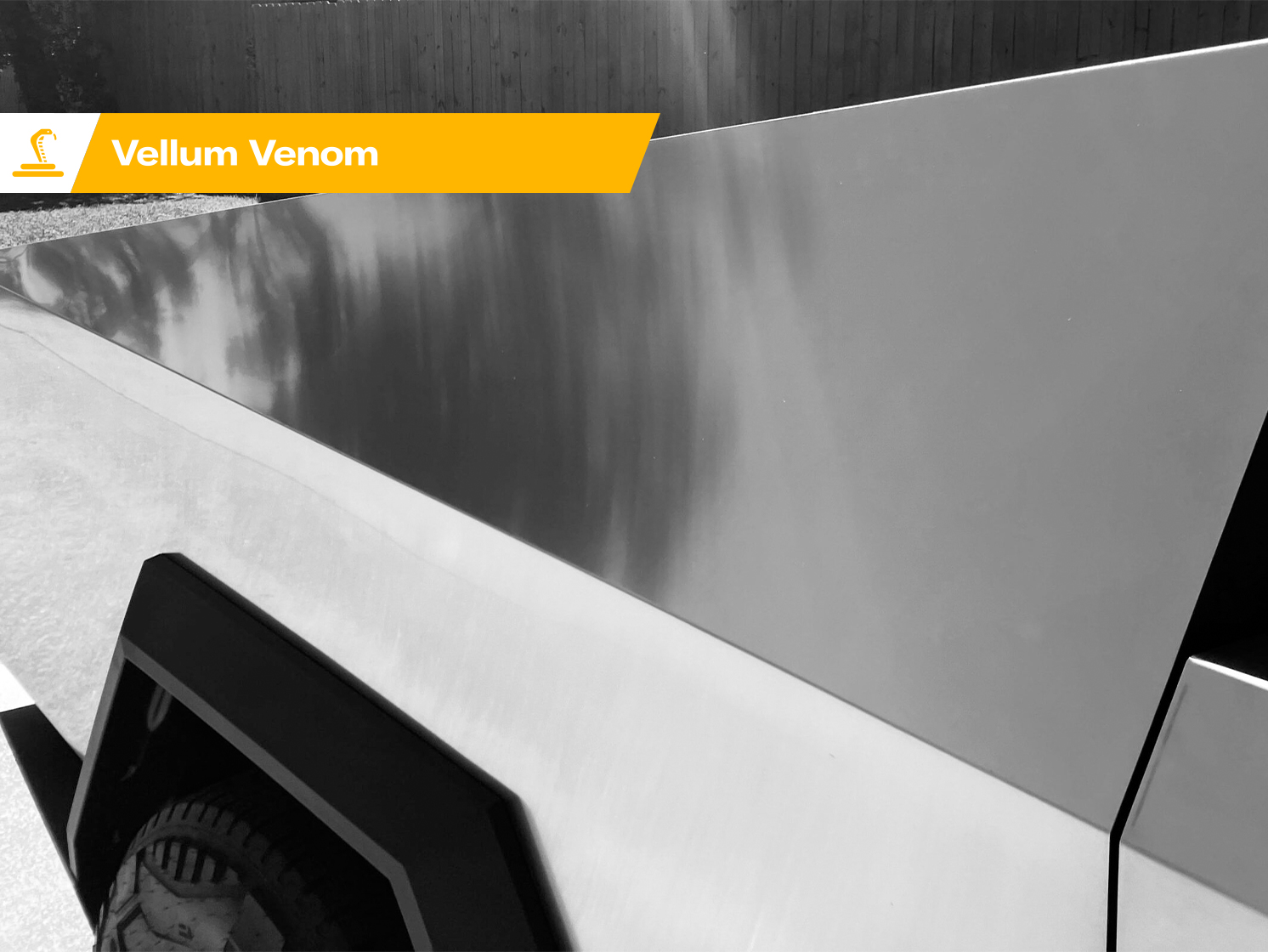
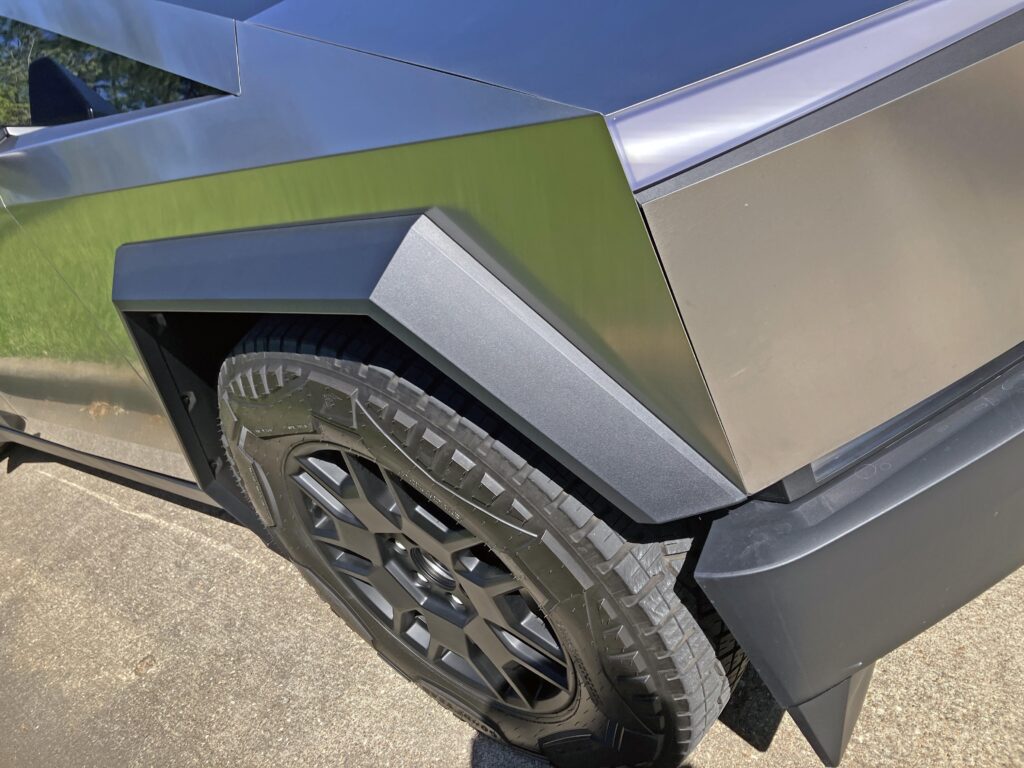
The transition from the front to the side is one of the truck’s harder moves. The upright front fender can appear disconnected from its sloping wheel opening, until you step back and see how the A-pillar visually ties the two together. That pillar, the front fender and the hood form a long, forceful sweep. Sun and shadow travel across the stainless steel, giving its large planes more animation than their simple shapes might suggest.
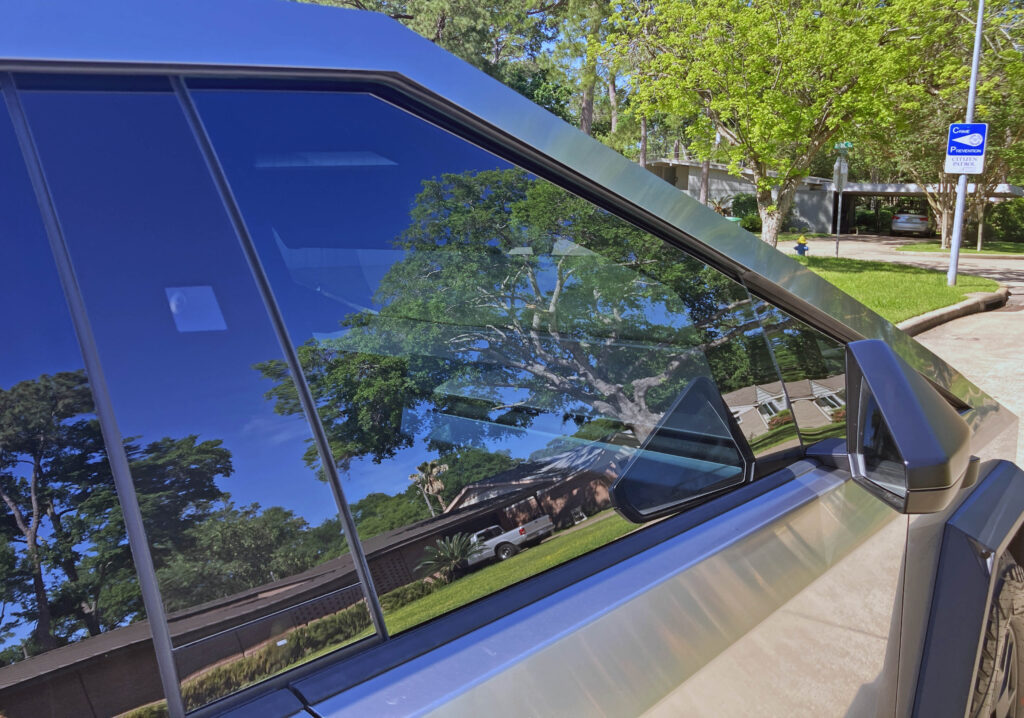
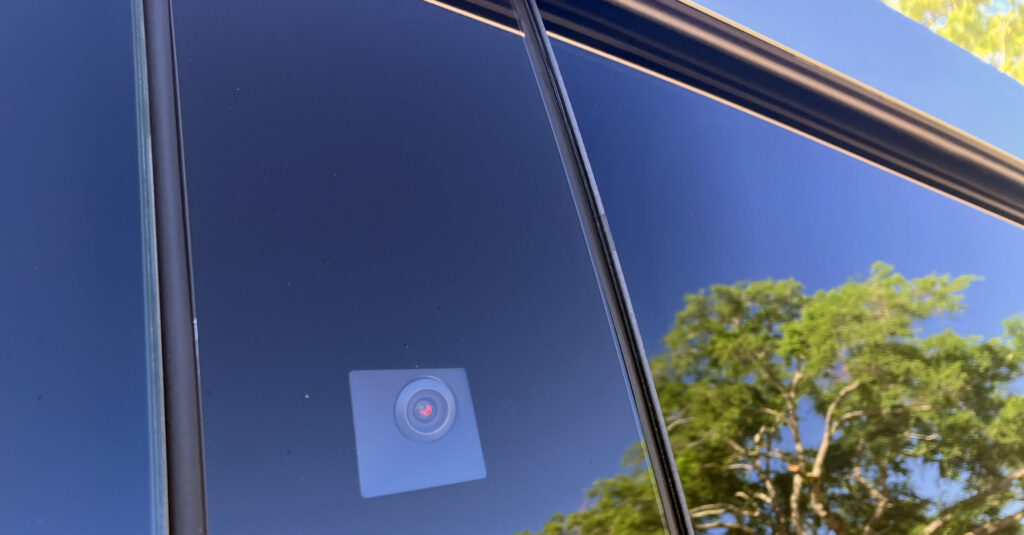
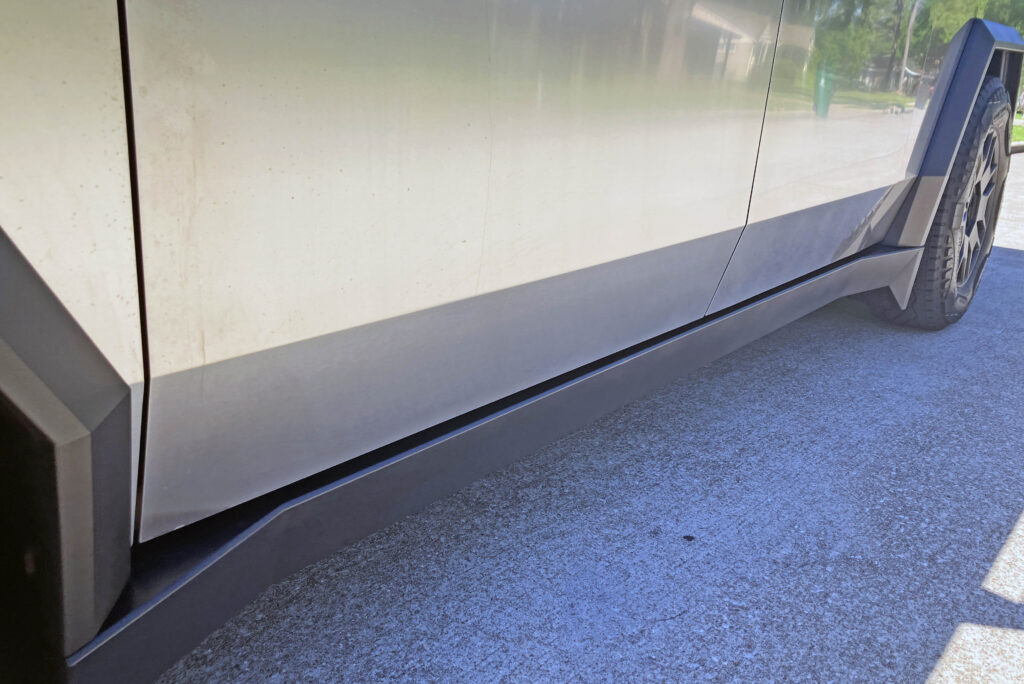
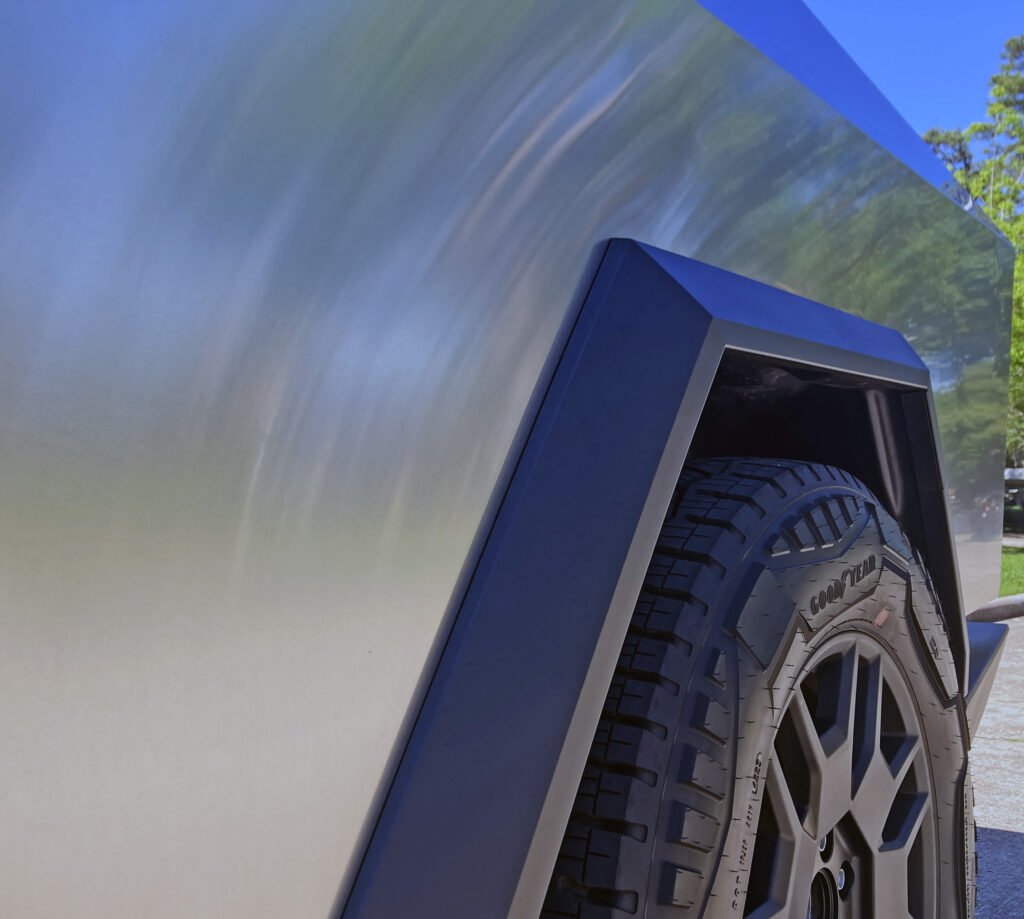
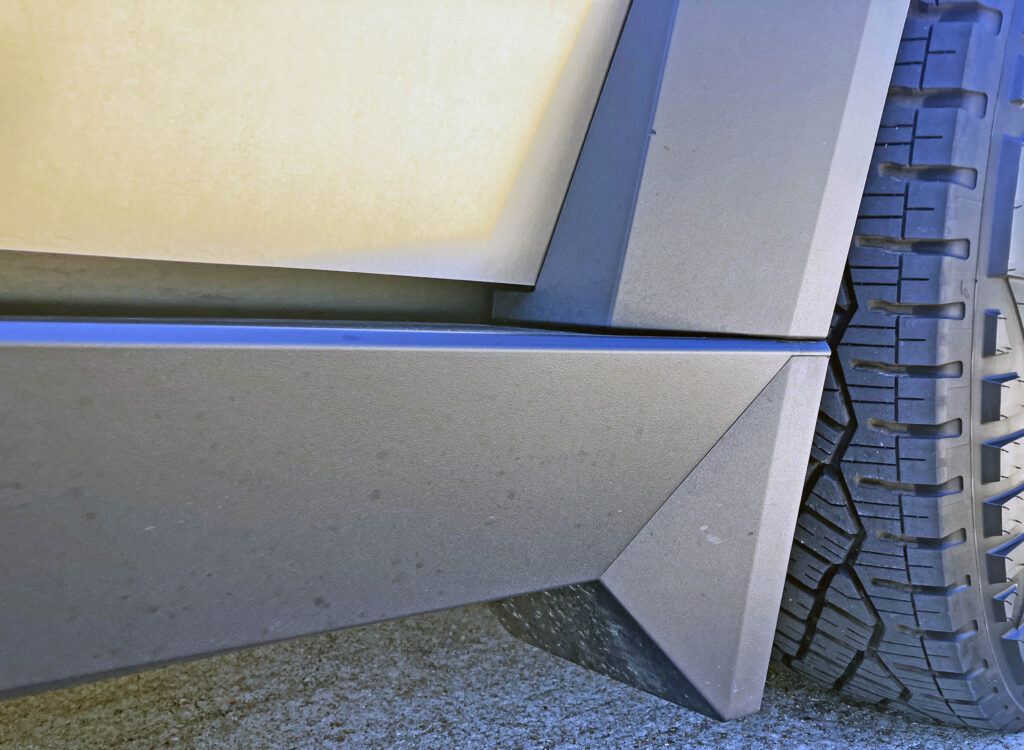
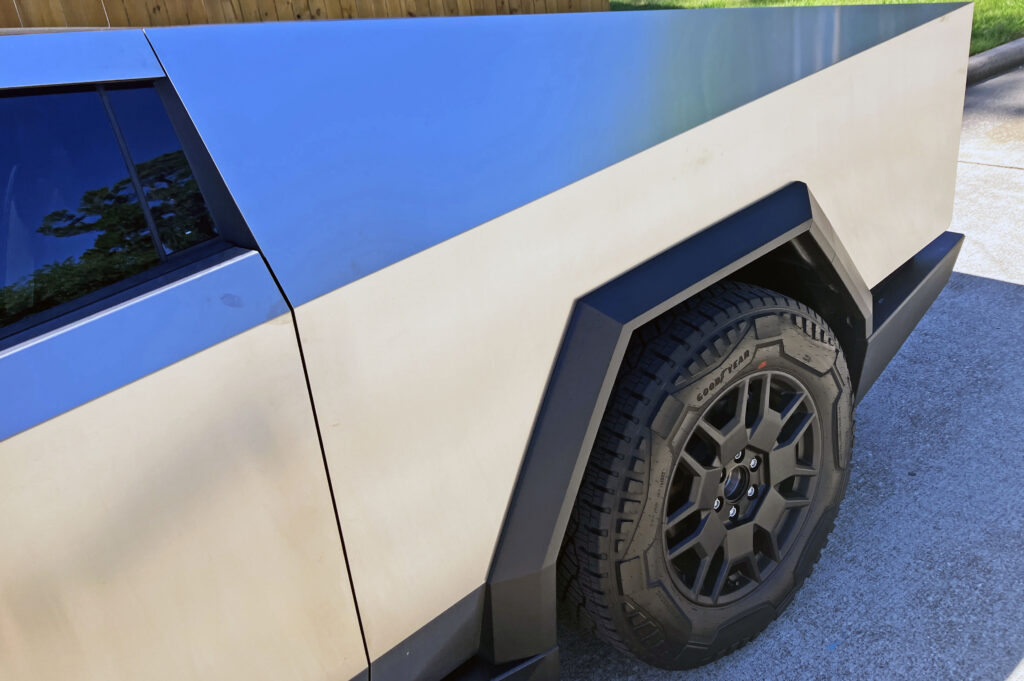
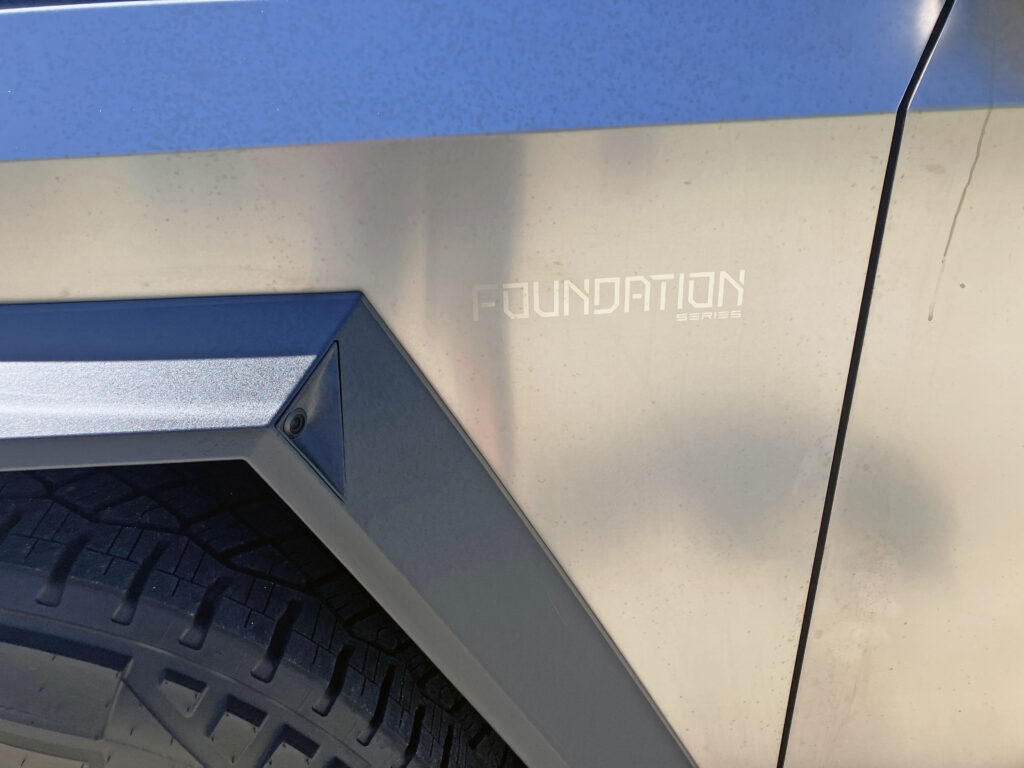
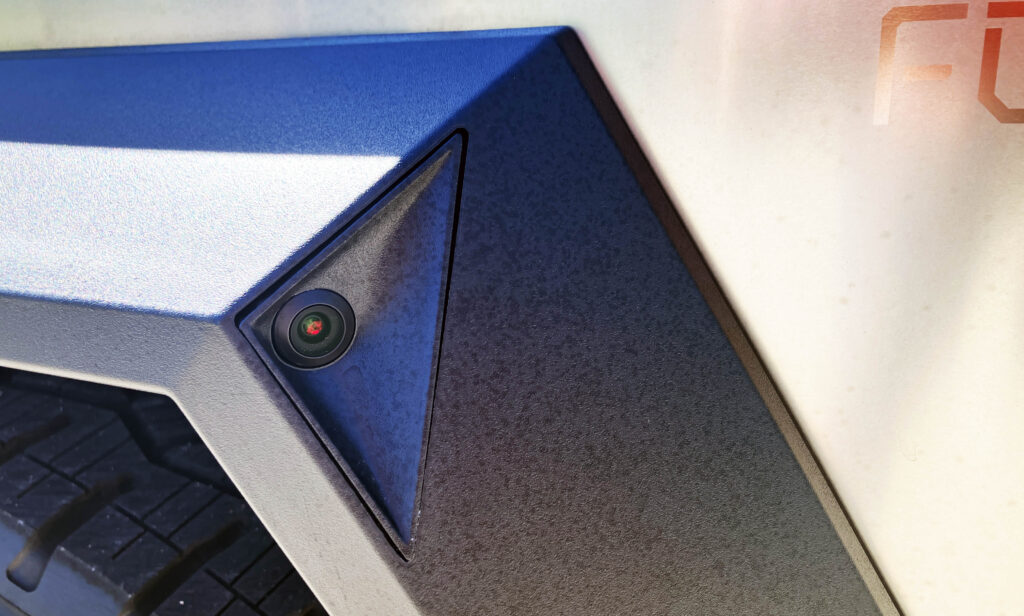
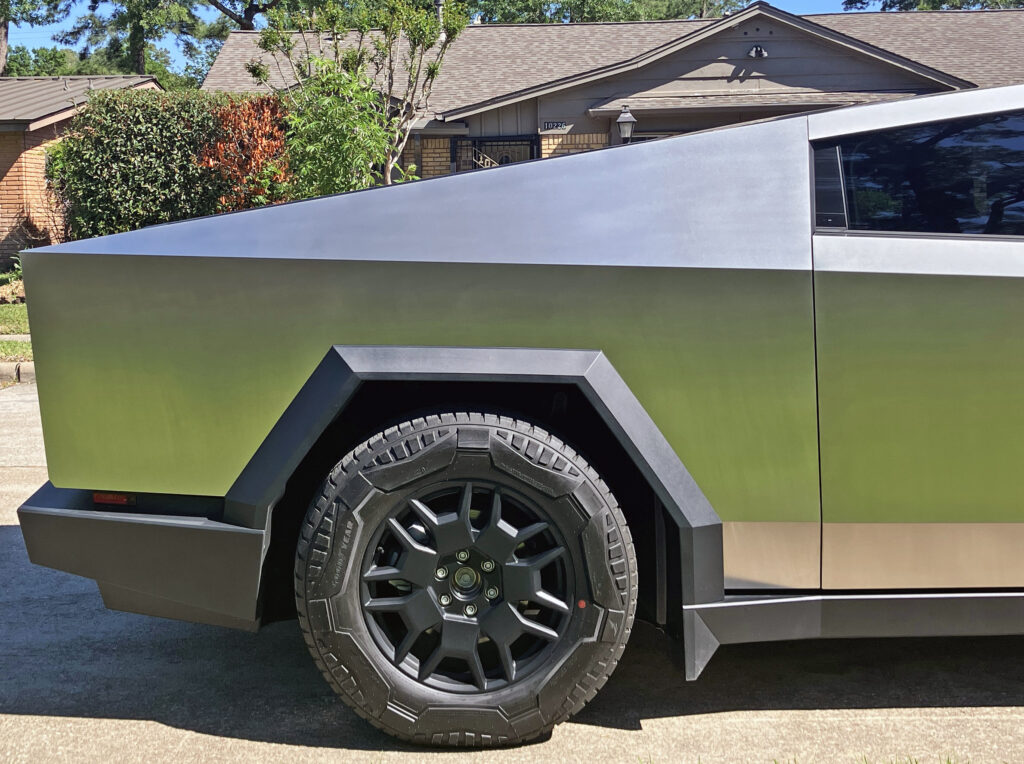
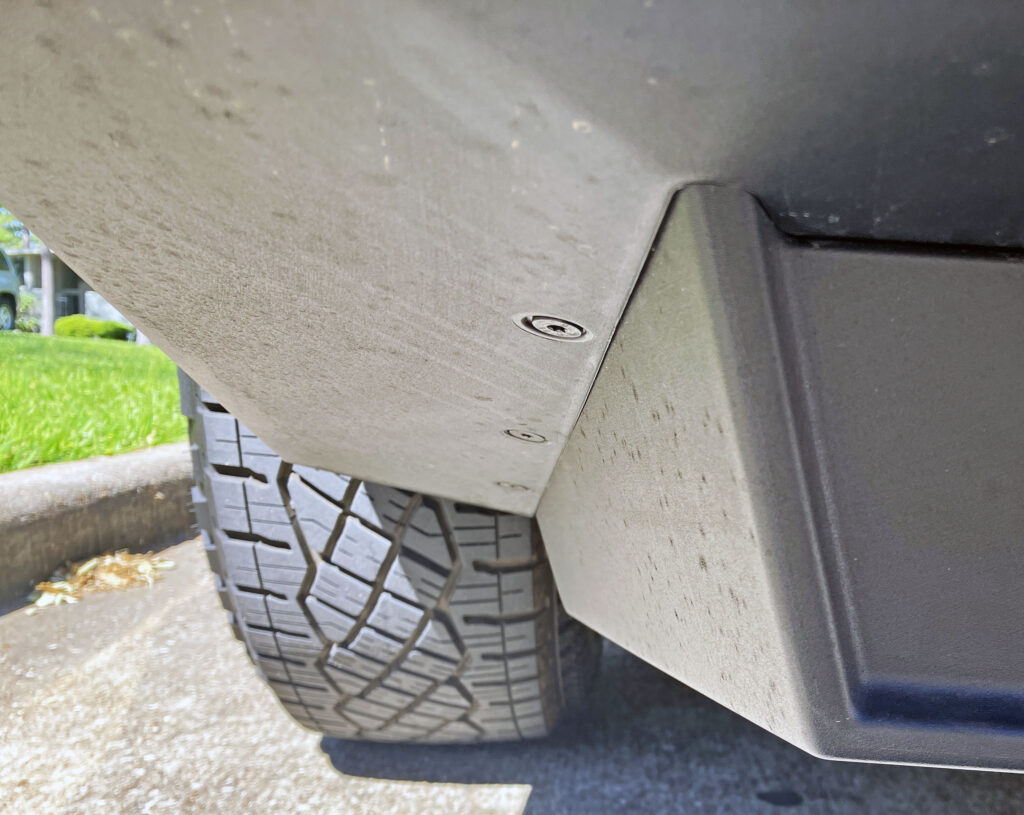
Below that sweep, the body’s forms don’t always agree. The wheel arches have sharp outlines that echo the creases in the metal, but the dark rocker trim introduces a different shape at the bottom. A small triangular camera recess is one of the more satisfying details; it looks composed as part of the body rather than added as a separate lump.
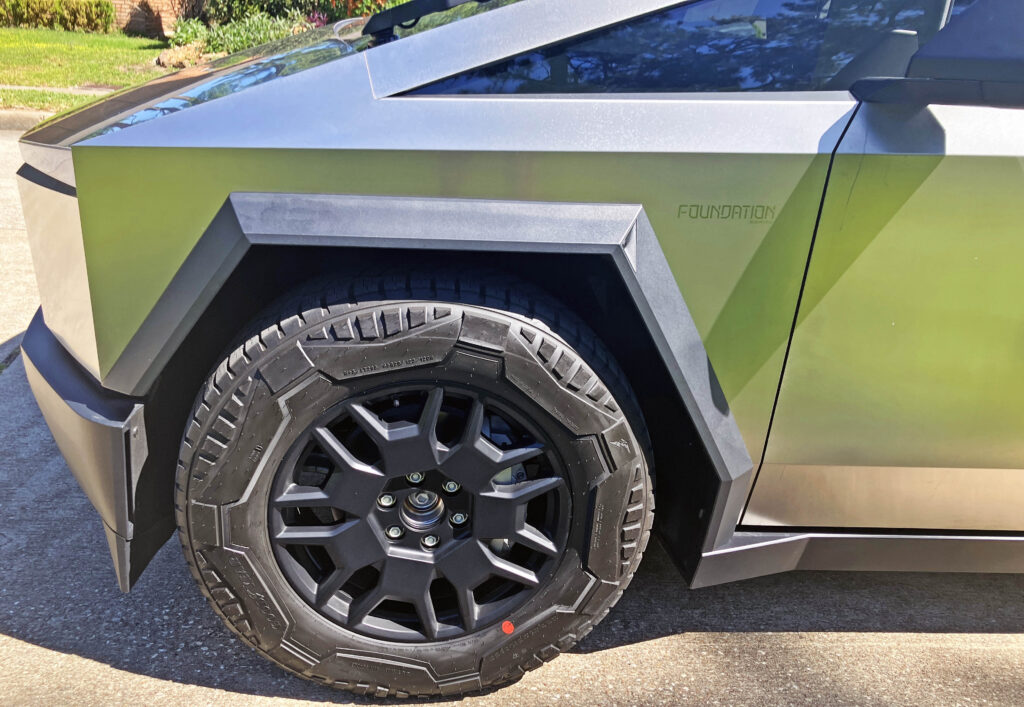
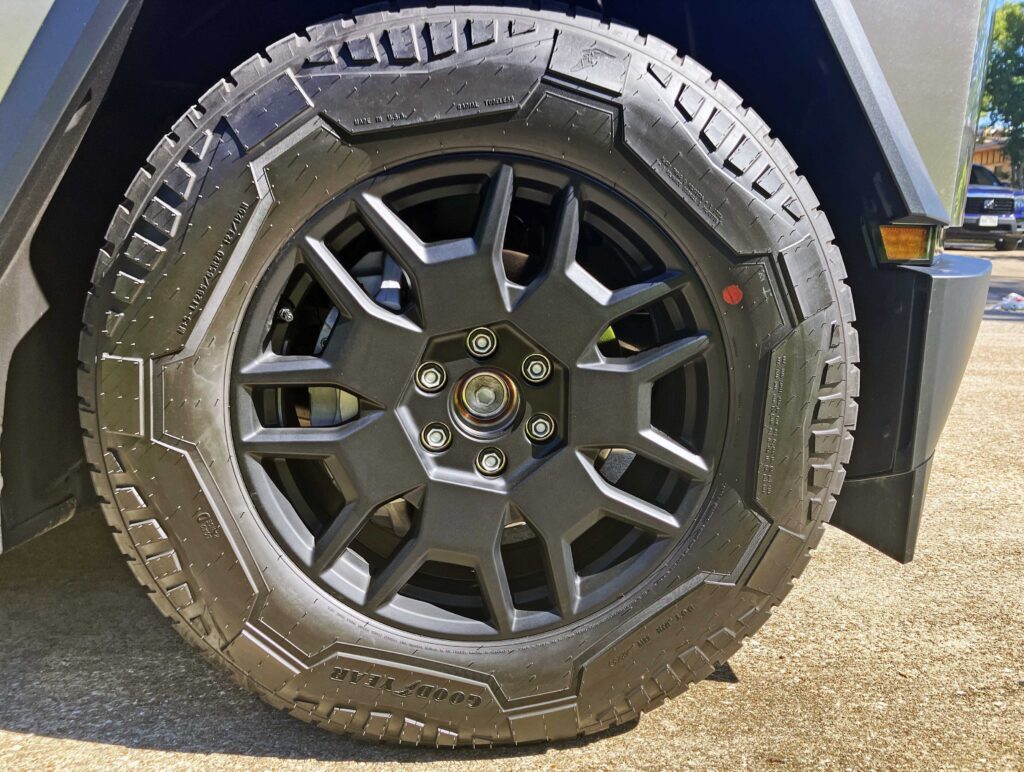
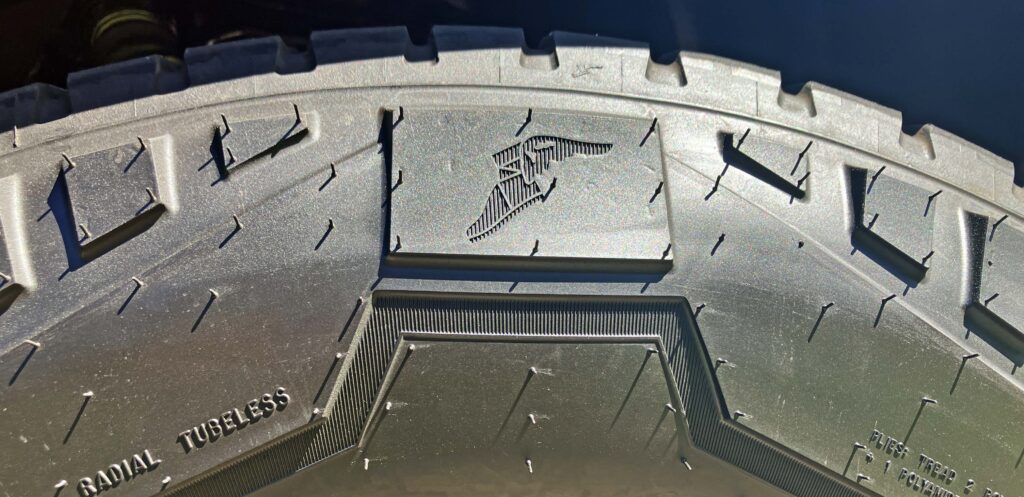
The wheels are a more awkward compromise. The bespoke Goodyear tires and the wheel openings carry angular details to match the body. Tesla’s angular wheel covers were designed to reach into recesses in the tire sidewalls, but the covers reportedly dug into the rubber during real-world use. The uncovered wheel looks less resolved beside the truck’s crisp bodywork. The source describes talk of a replacement cover with spokes that stop short of the sidewall, possibly paired with a more conventional tire, but presents that as a possibility rather than a confirmed change.
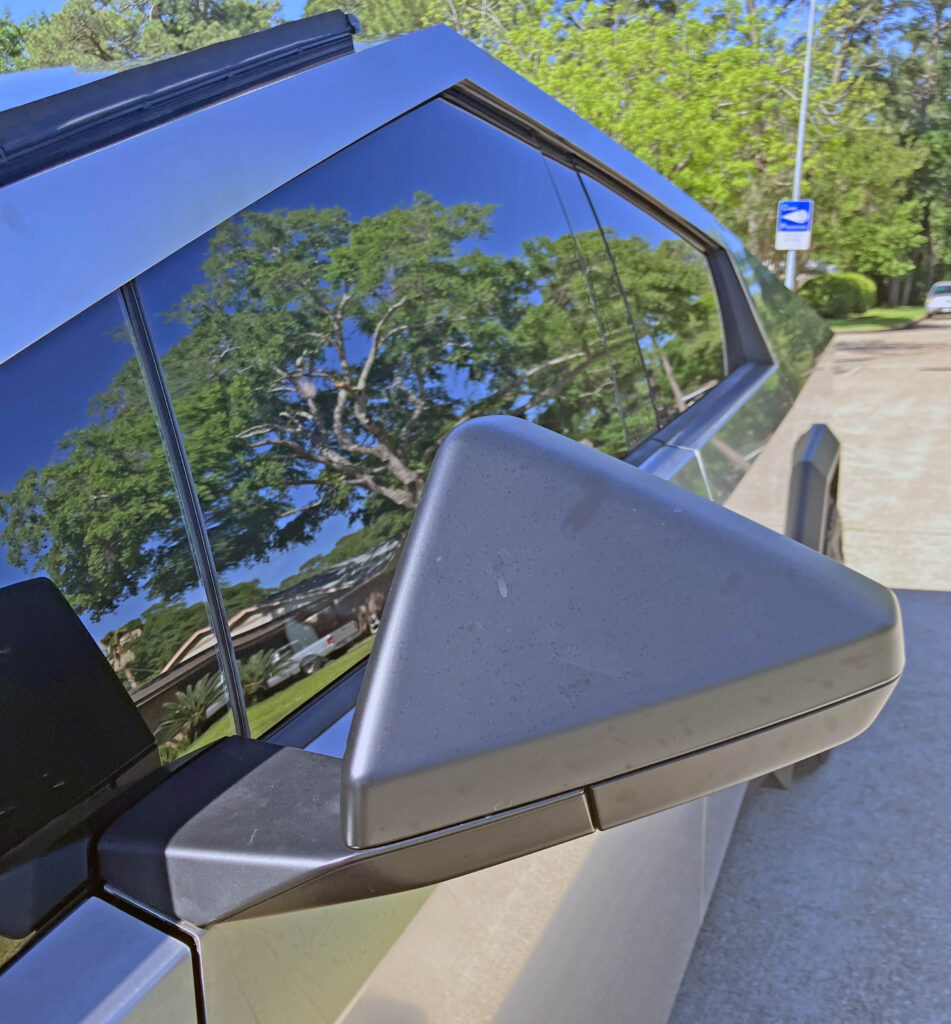
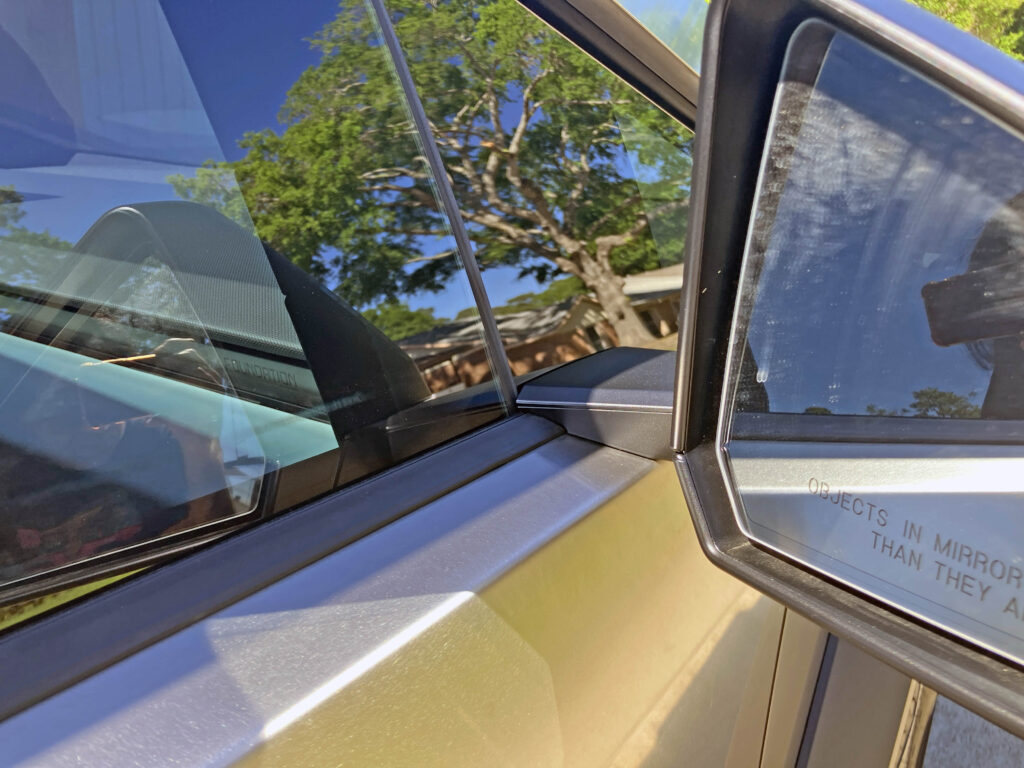
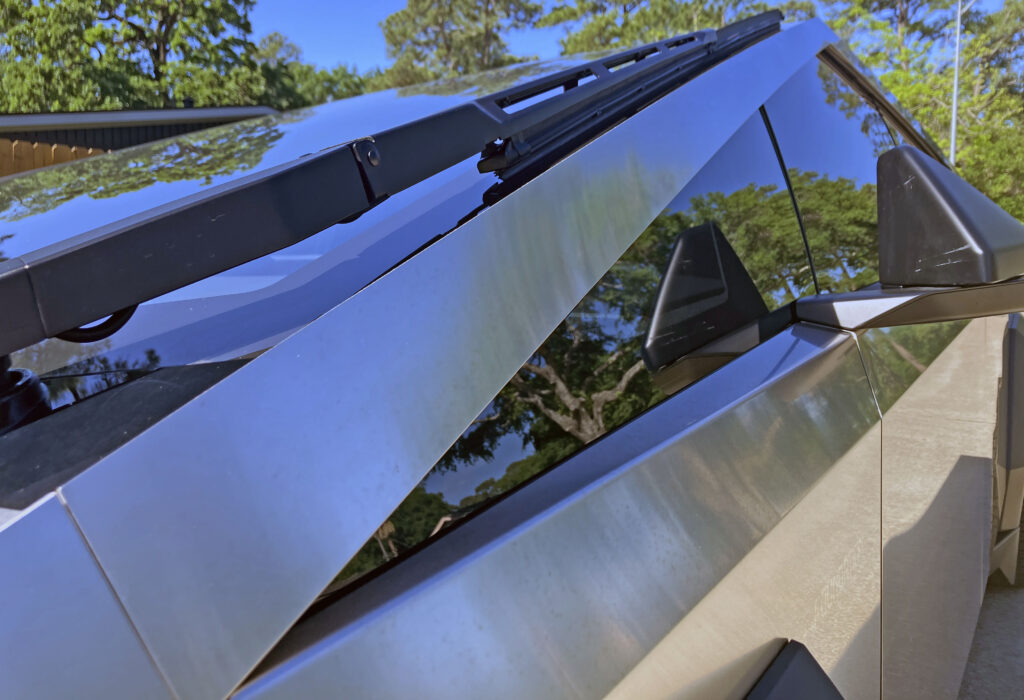
Above the front wheel, the body crease runs toward the sharply angled A-pillar and the forward-reaching edge of the side glass. The resulting triangle is a memorable piece of the profile. The window area is all glass at the front, and the mirror is mounted on the door. Even the mirror has a wedge-like shape, with a base that changes thickness to keep it from looking like a fixed block from every angle.
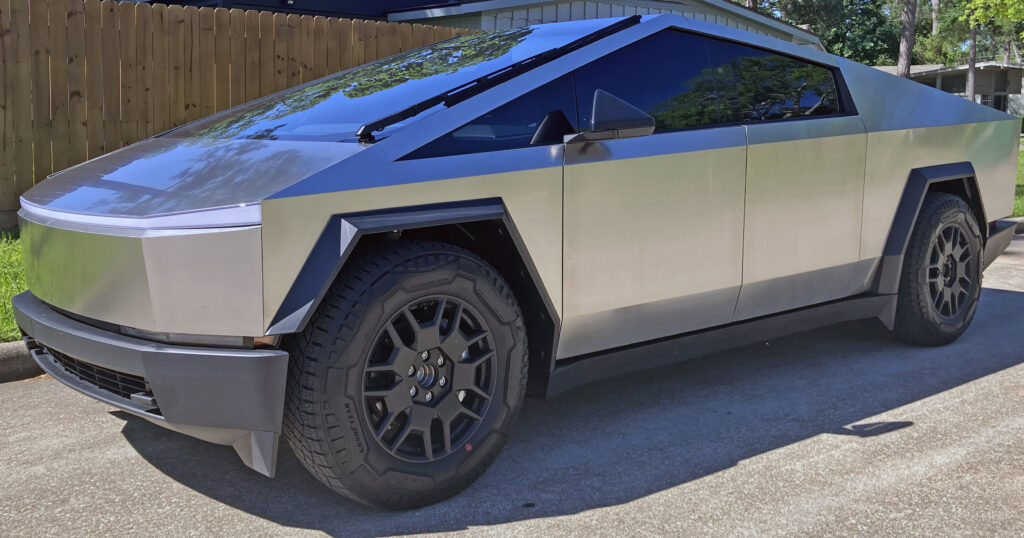
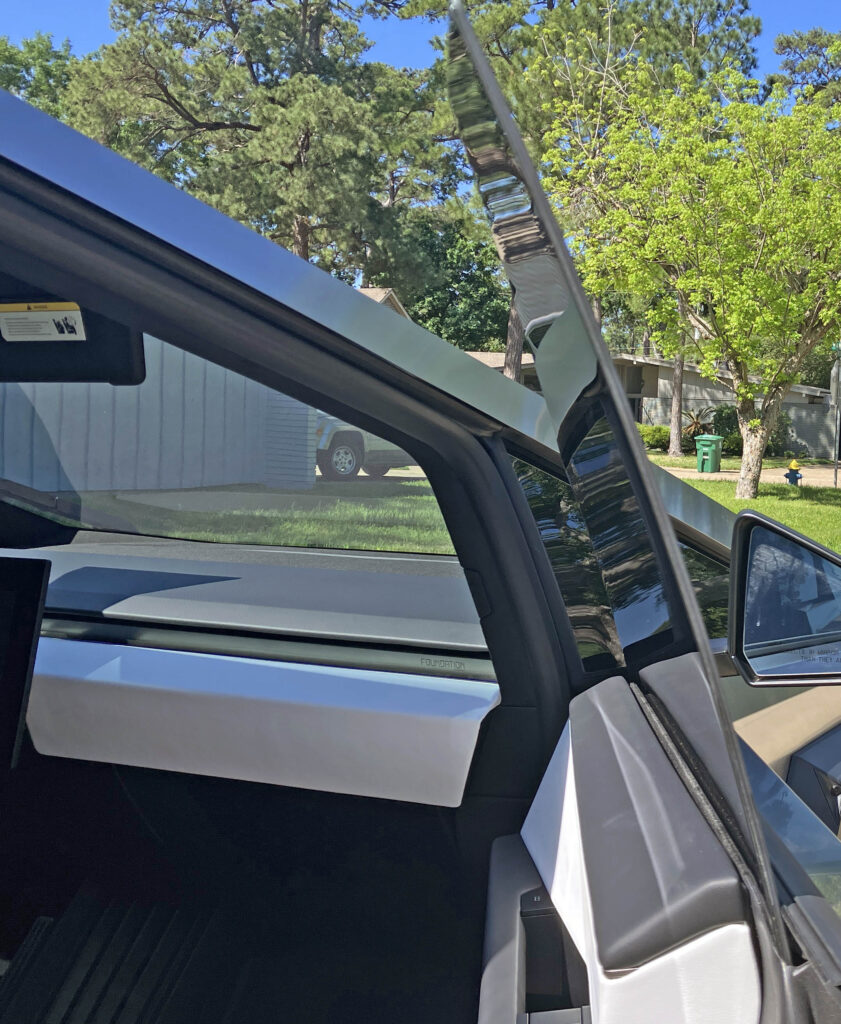
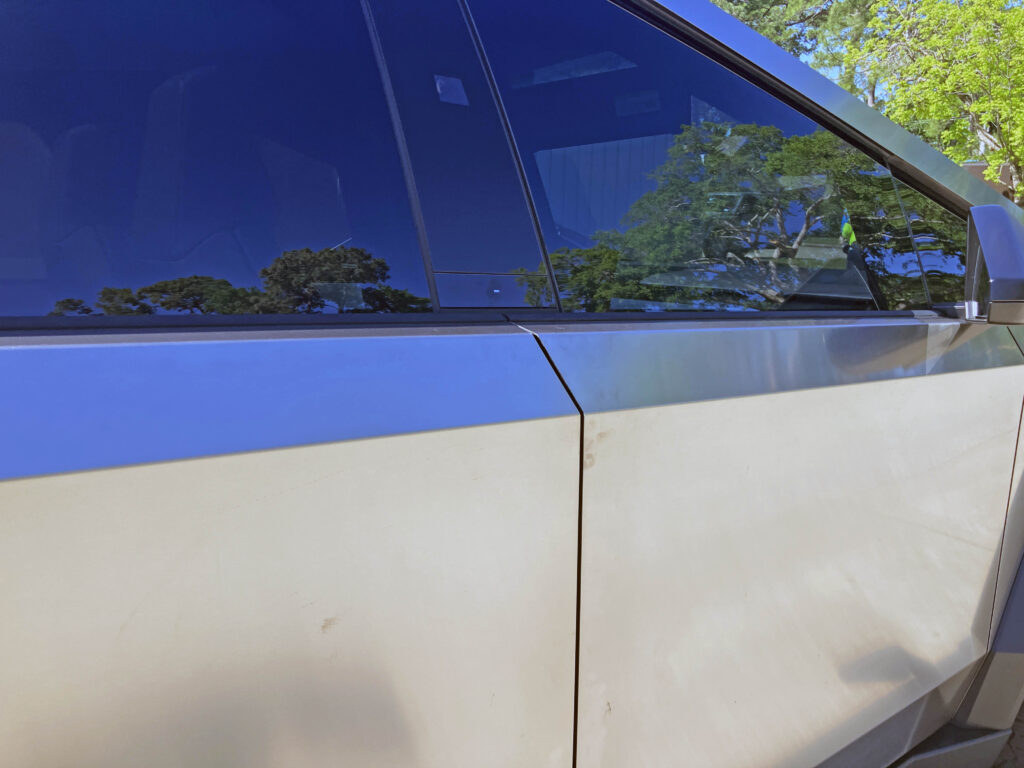
The front door glass is sharply raked and distinctly triangular, while the roofline keeps climbing instead of settling into the nearly horizontal shape most truck buyers expect. The angle looks dramatic from outside, yet the opening is tall enough that occupants can get in without their heads reaching the roof’s narrow upper edge. A conventional B-pillar interrupts the glass and gives the broad, hard-edged side a familiar structural anchor.
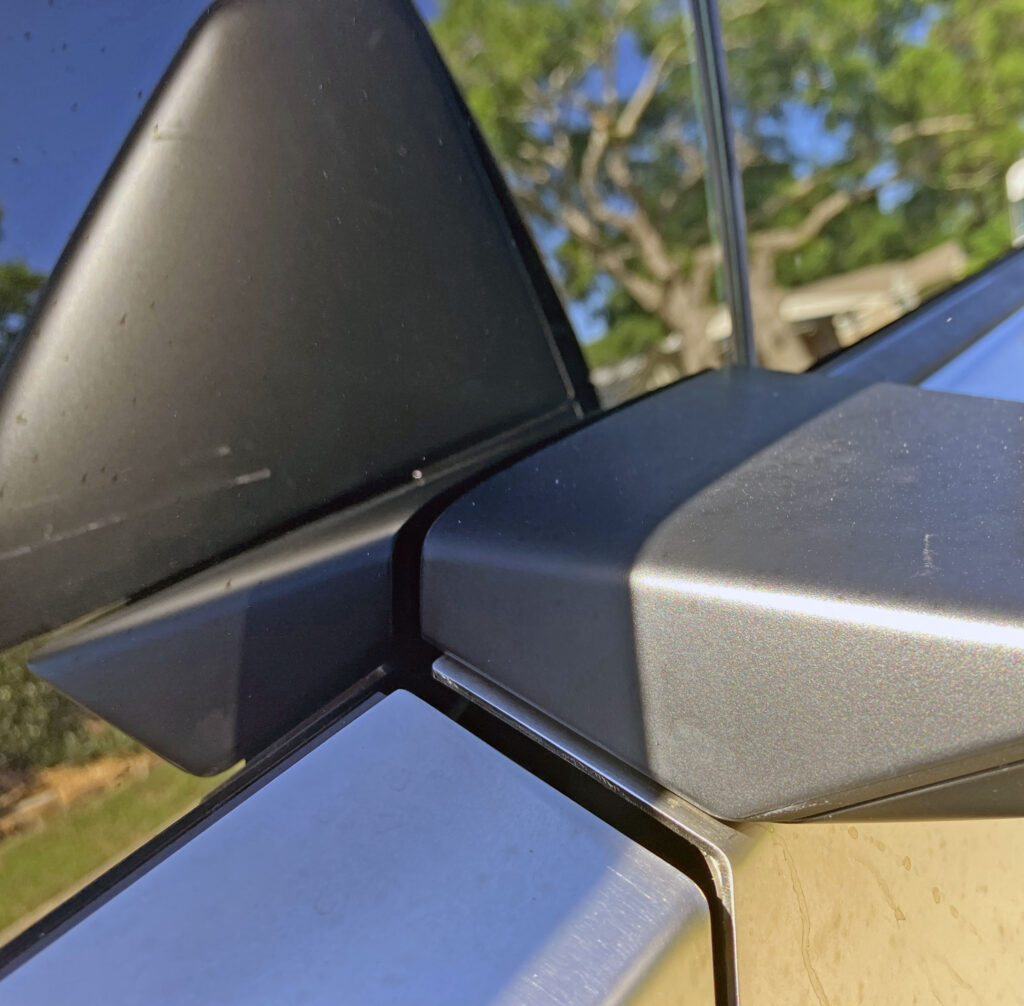
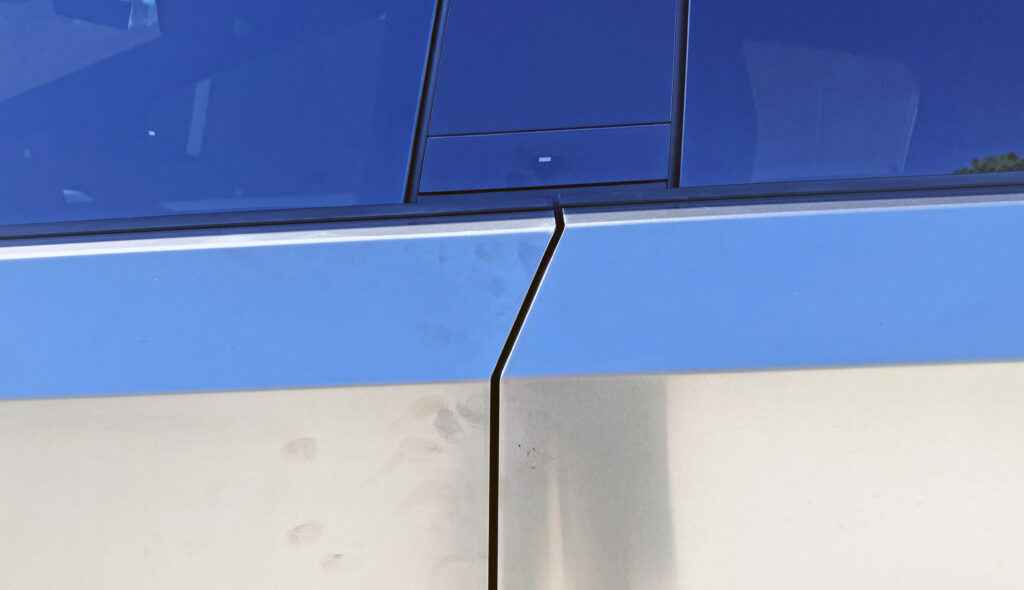
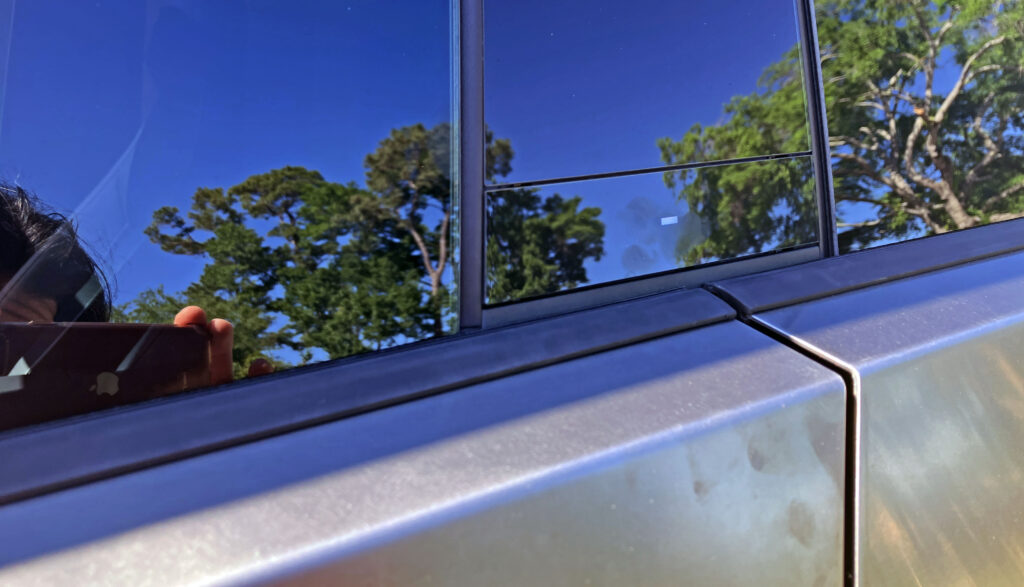
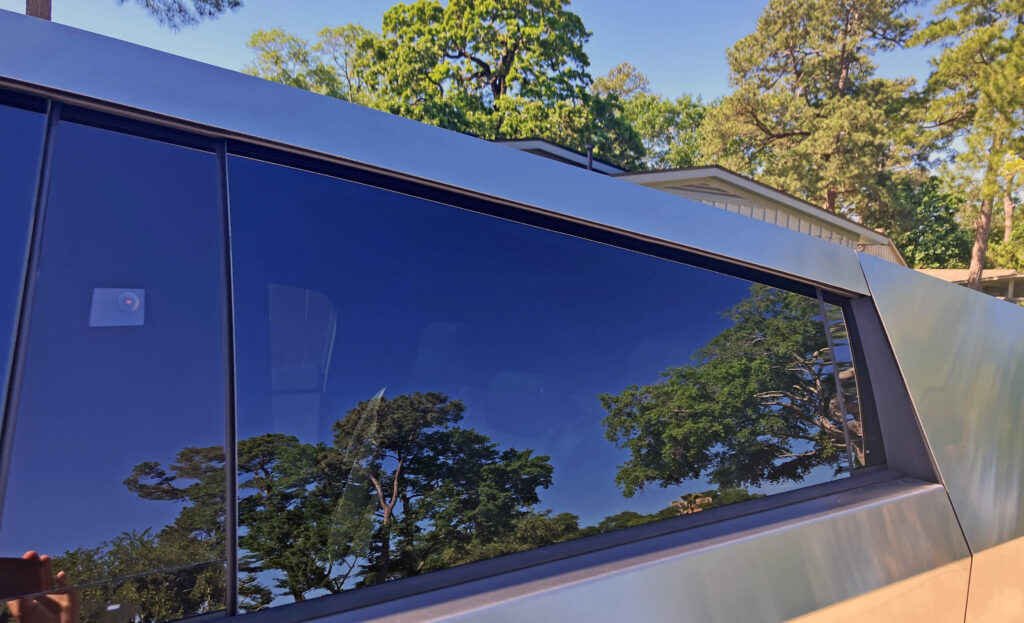
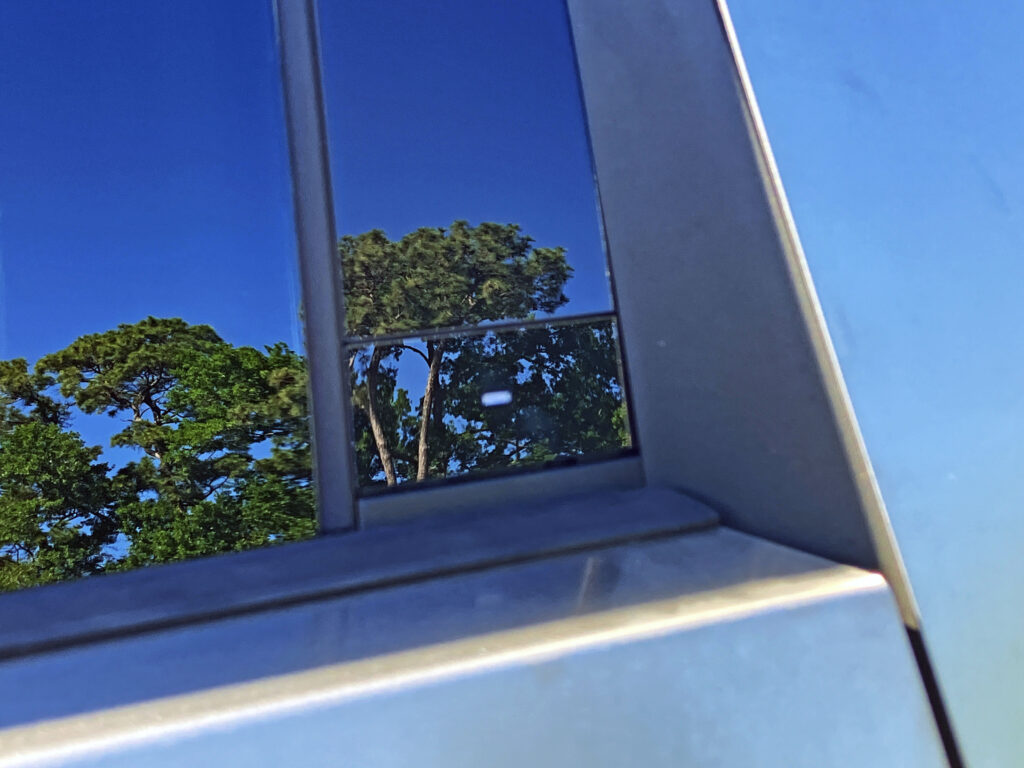
At the rear door, the window is a more conventional four-sided shape. Its outline doesn’t quite match the point where the stainless roof ends, so a black plastic piece with an electronic door release fills the gap. Here the extra part has a clear job, even if it complicates the otherwise spare greenhouse. Below the windows, the doors have a single main crease and a relatively restrained rocker cover.
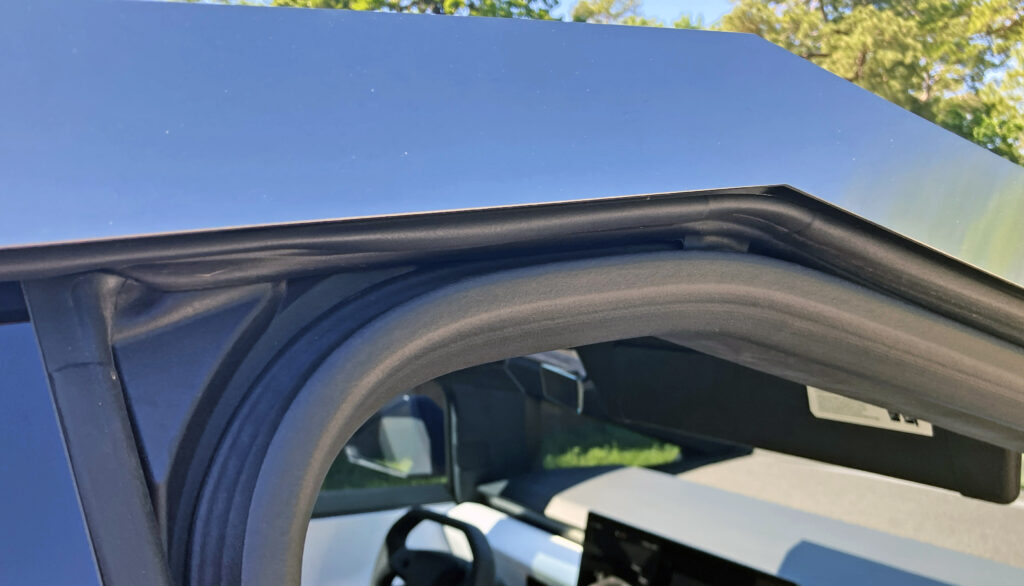
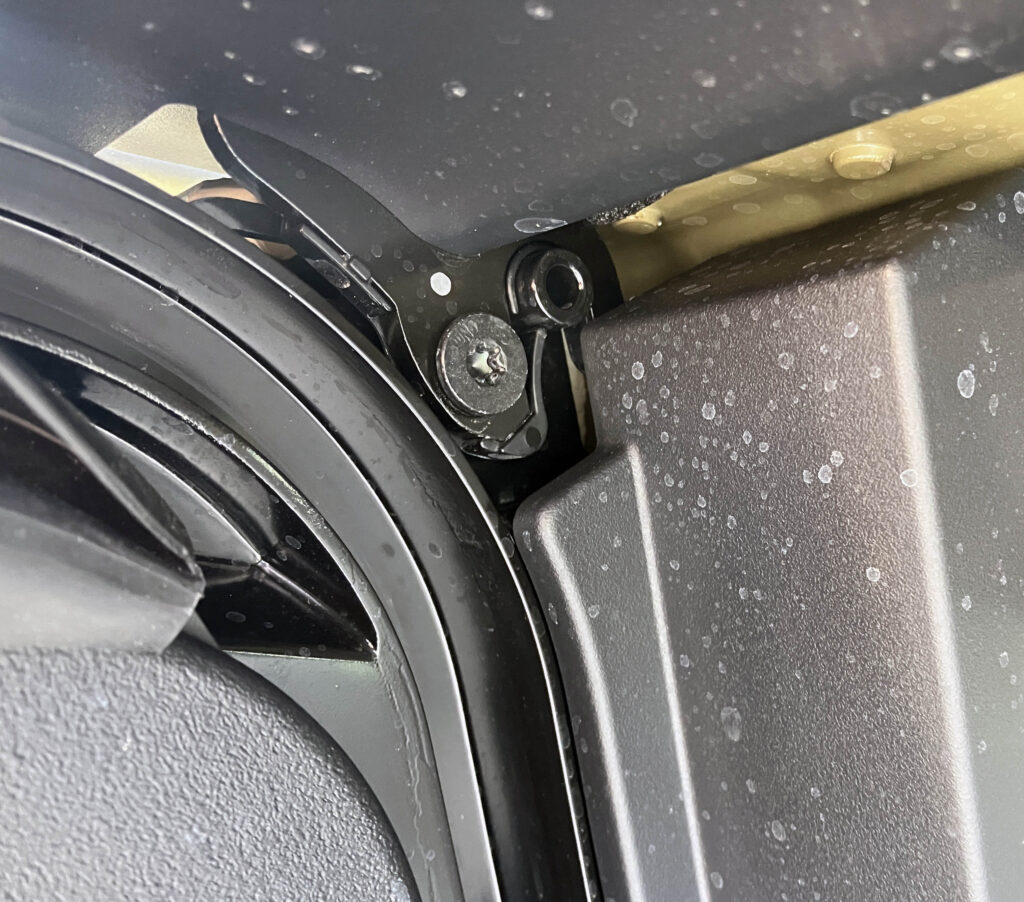
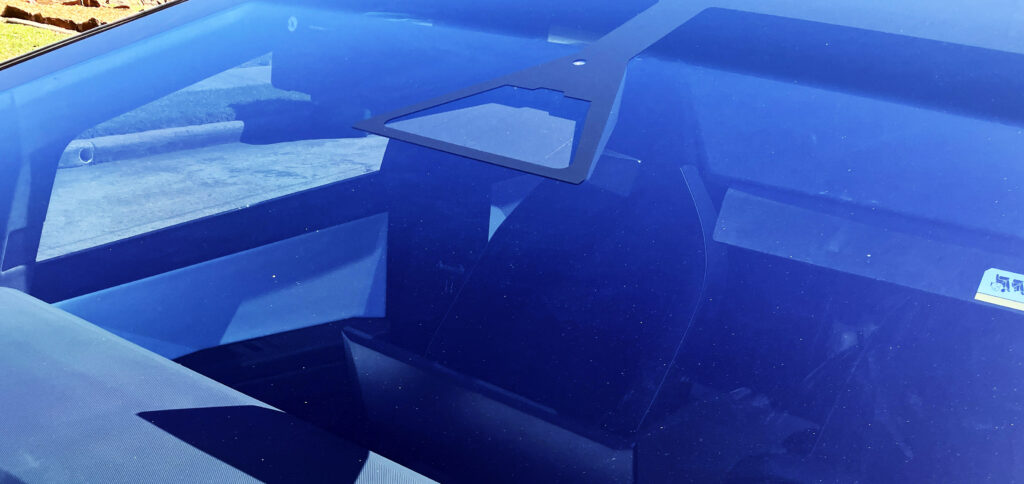
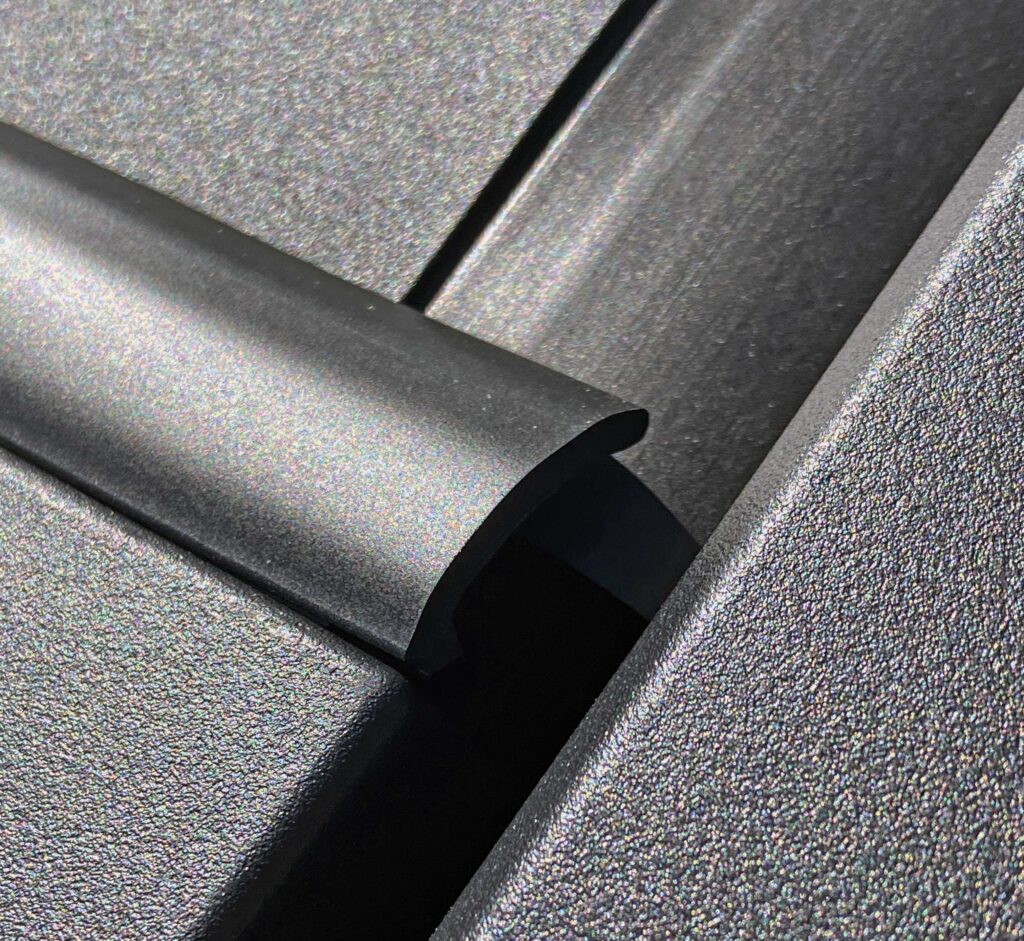
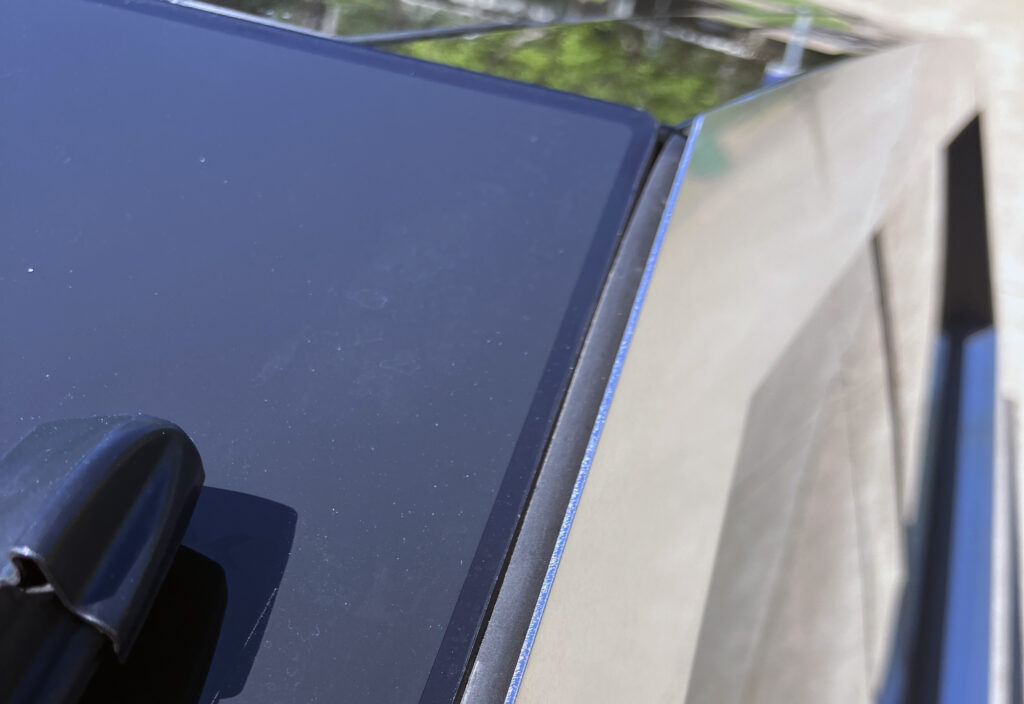
Other details make the side view feel considered. The vehicle identification number is on the A-pillar behind the windscreen, a consequence of the minimal area at the base of the glass. Tinted glass, rubber weatherstripping, black trim and exposed stainless steel meet in unusual combinations. At the top of the A-pillar, the weather seal appears to taper away. Despite that visual concern, the example was described as quiet at speed.
Rear design meets pickup utility
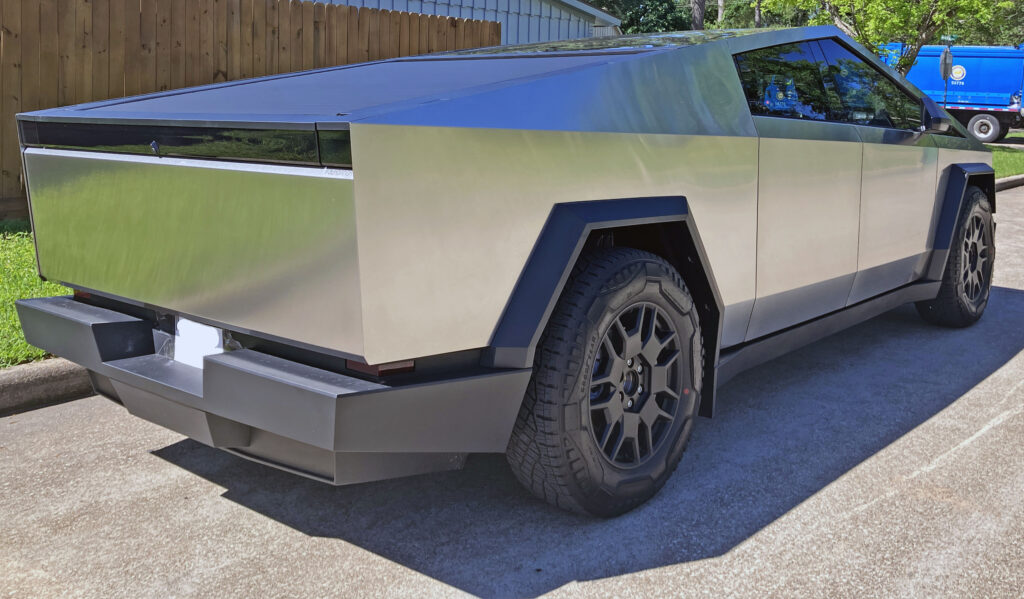
The rear quarter continues the truck’s sharp geometry. Its C-pillar turns the familiar idea of a flying buttress into a narrow arrowhead, and the reflections across that surface change with every step around the vehicle. The effect is strongest in profile. From a lower, more direct angle, the tall rear cladding looks more like a conventional truck, a reminder that the design can shift substantially with the viewing position.
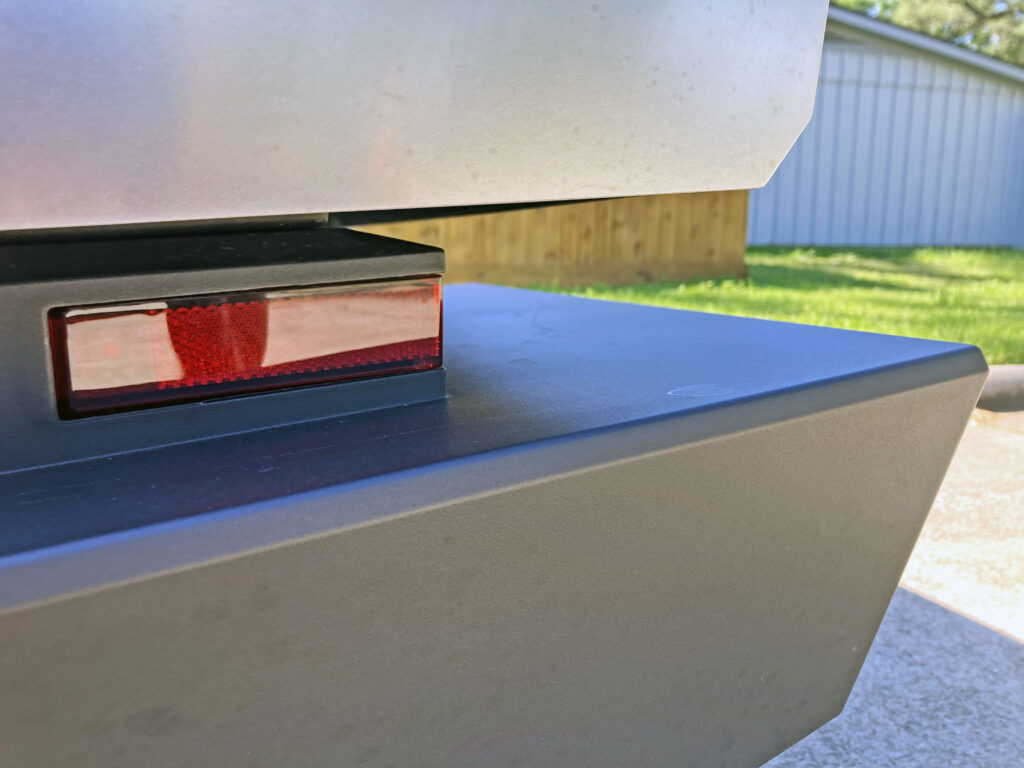
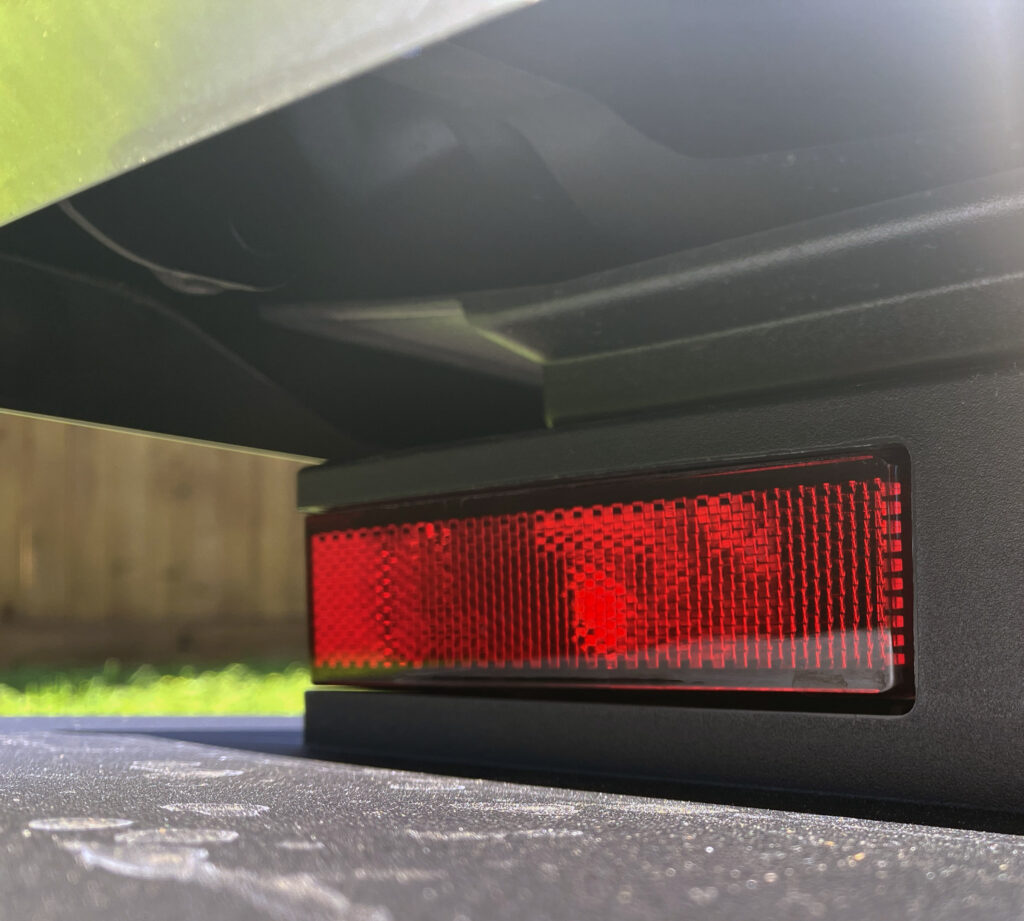
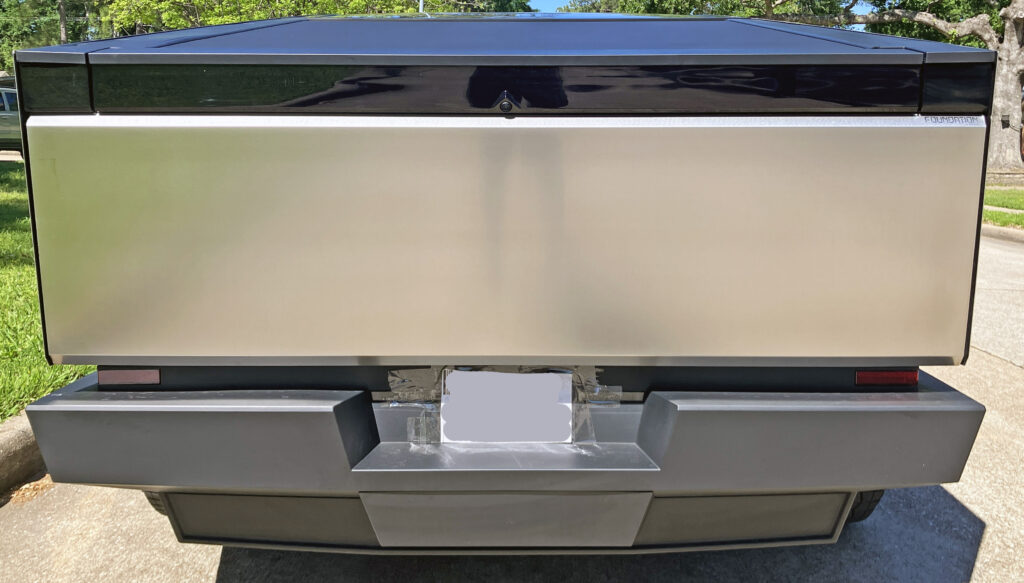
A long crease links the front light bar to the rear lighting assembly, giving the body a clear line that runs nearly its full length. At the back, a red marker occupies the gap between the bed and bumper, then wraps around the side. The rear lamp sits above a wide, flat tailgate, while angular cuts at its lower corners reduce the apparent mass over the bumper.
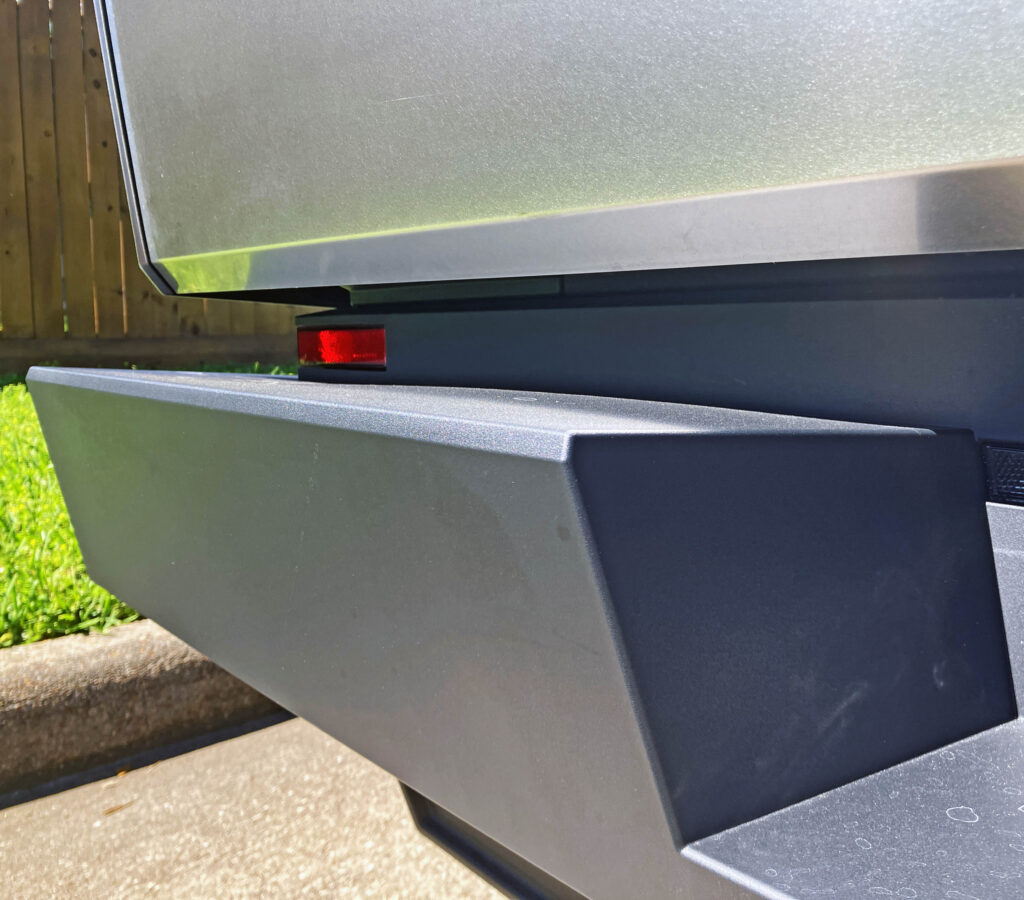
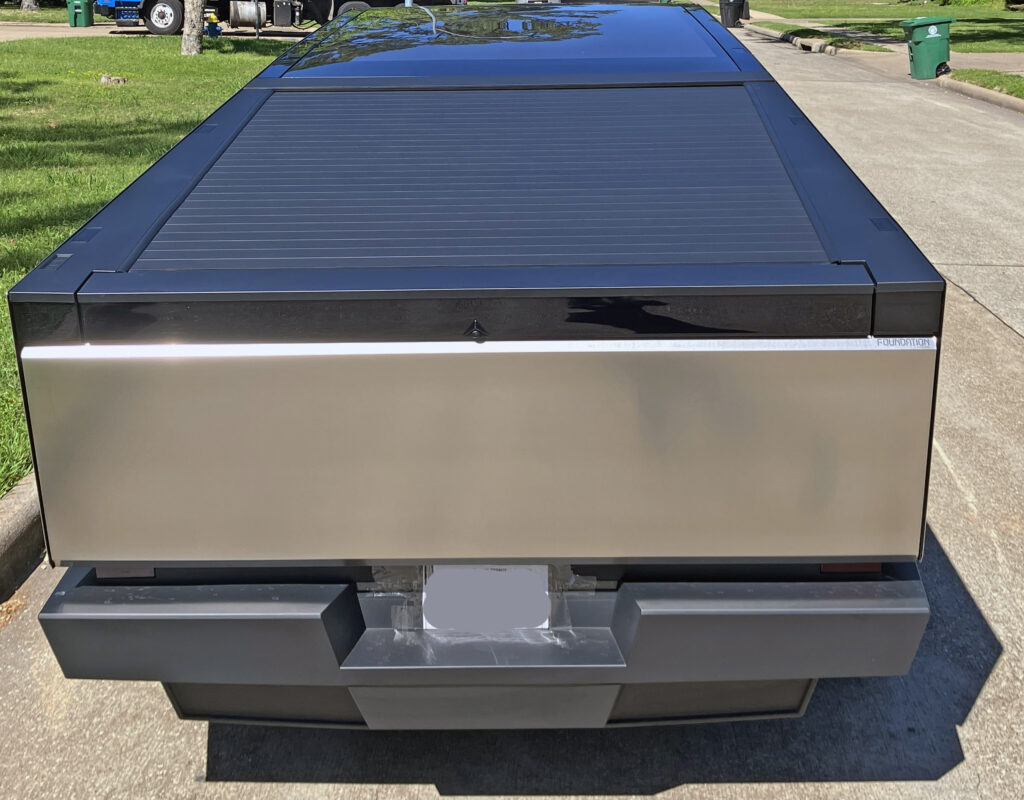
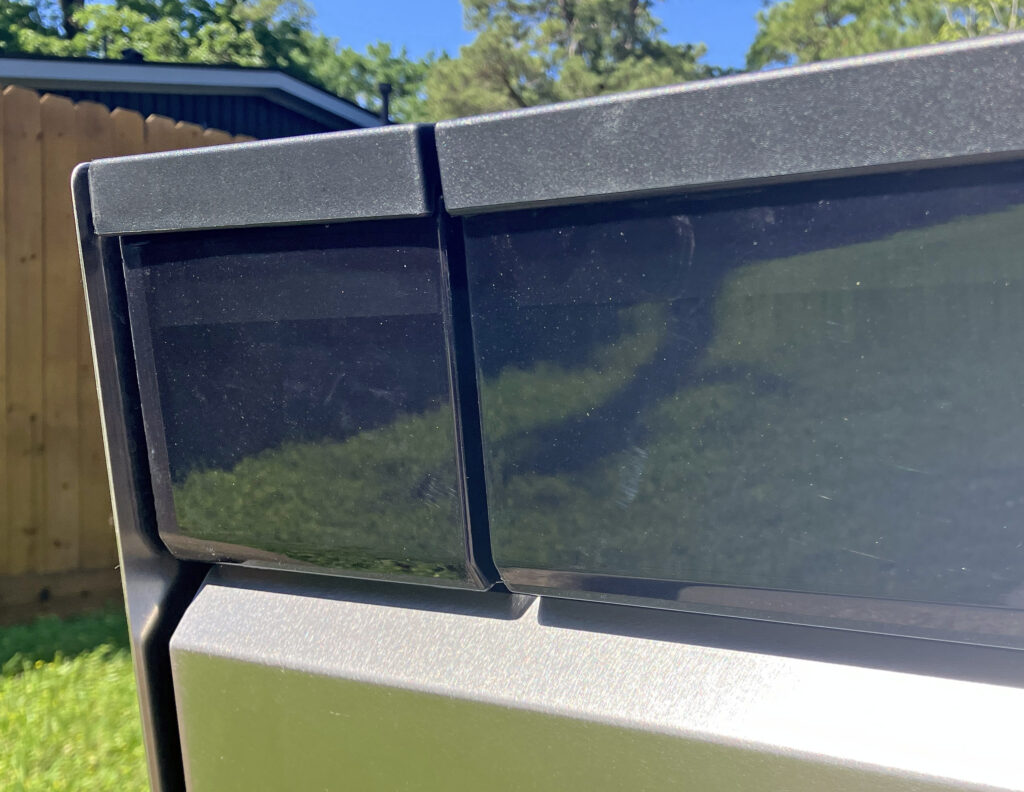
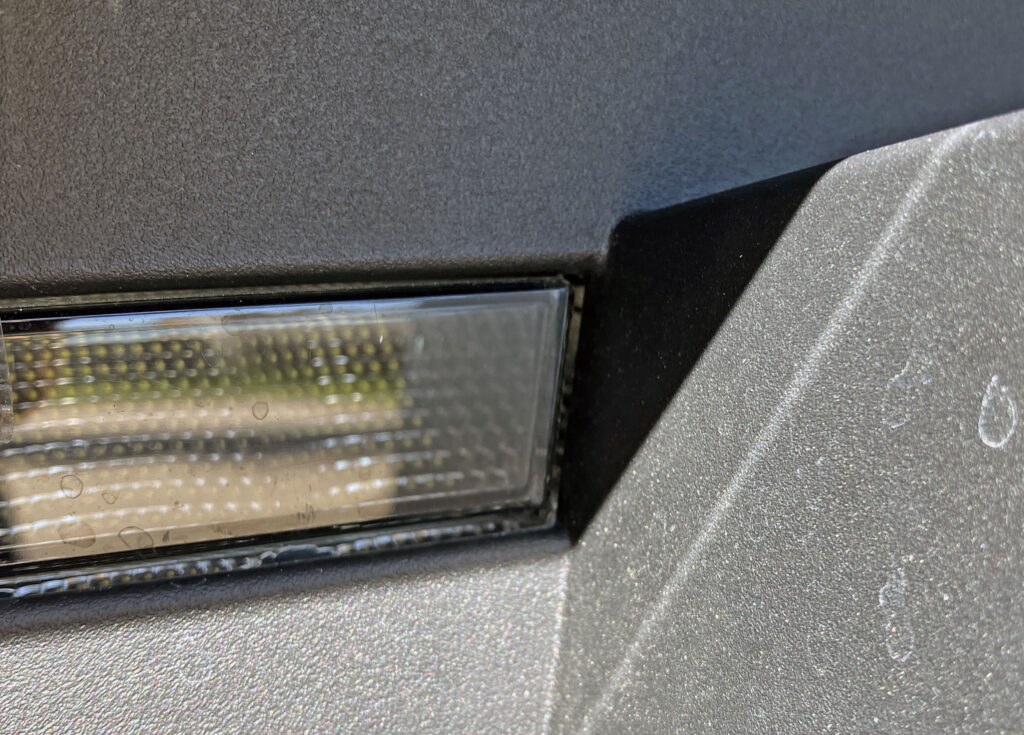
The bumper is built from deep, block-like forms. They frame a central step and conceal the receiver-hitch cover without interrupting the geometric theme. Reverse lights sit low and recessed. Above the tailgate, a smoked panel houses the parking and brake lamps; beveled edges and the upright fenders give that otherwise flat area some definition. The review raises a specific concern about how much of the panel illuminates under braking, suggesting its full-width appearance is more convincing with the parking lights on.
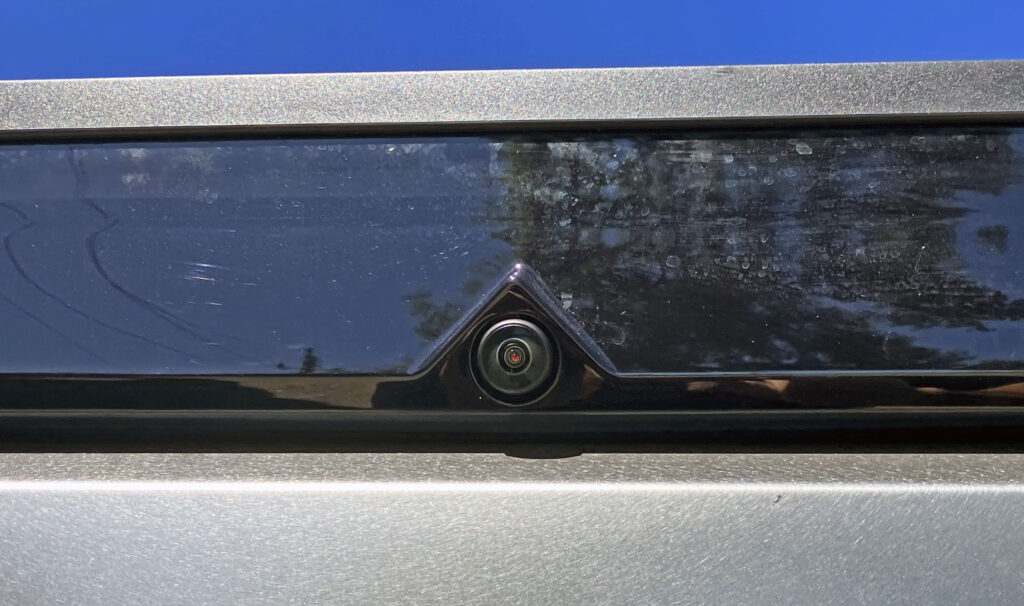
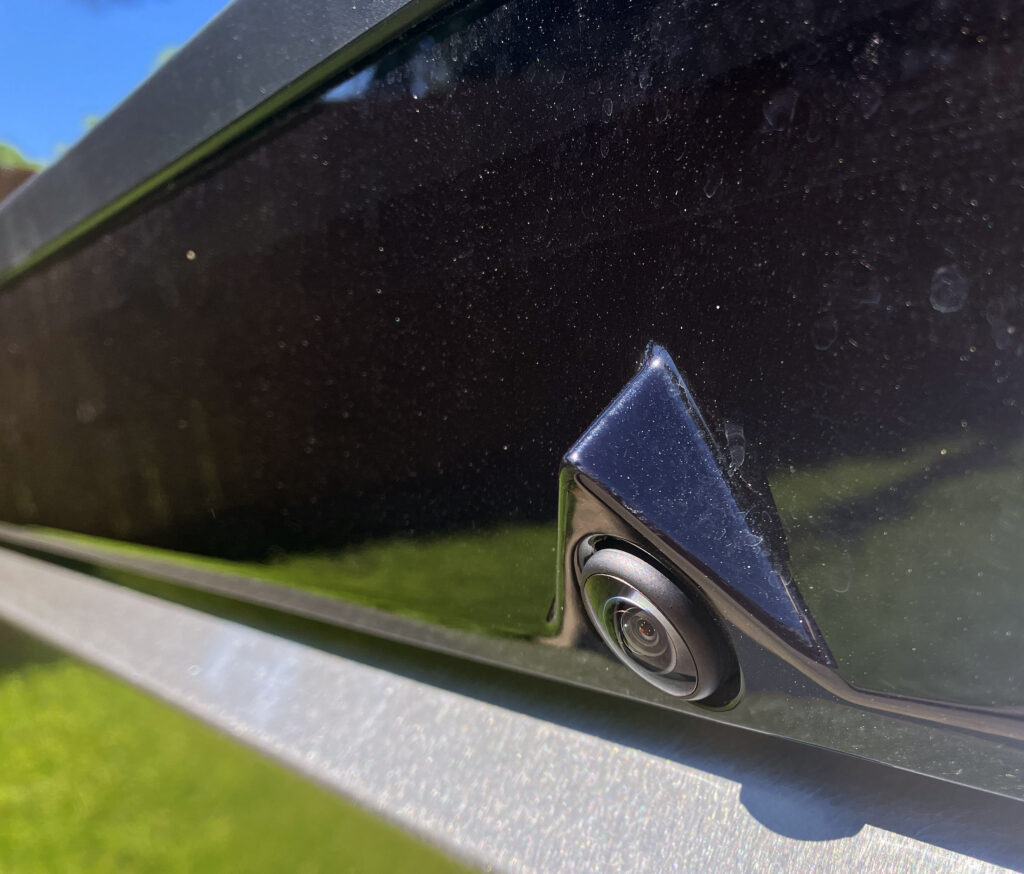
A triangular housing gives the rear camera a shape that fits the rest of the design and helps aim it. That small piece is more than decoration: it shows how a functional component can become part of the truck’s visual language when its form is considered from the outset.
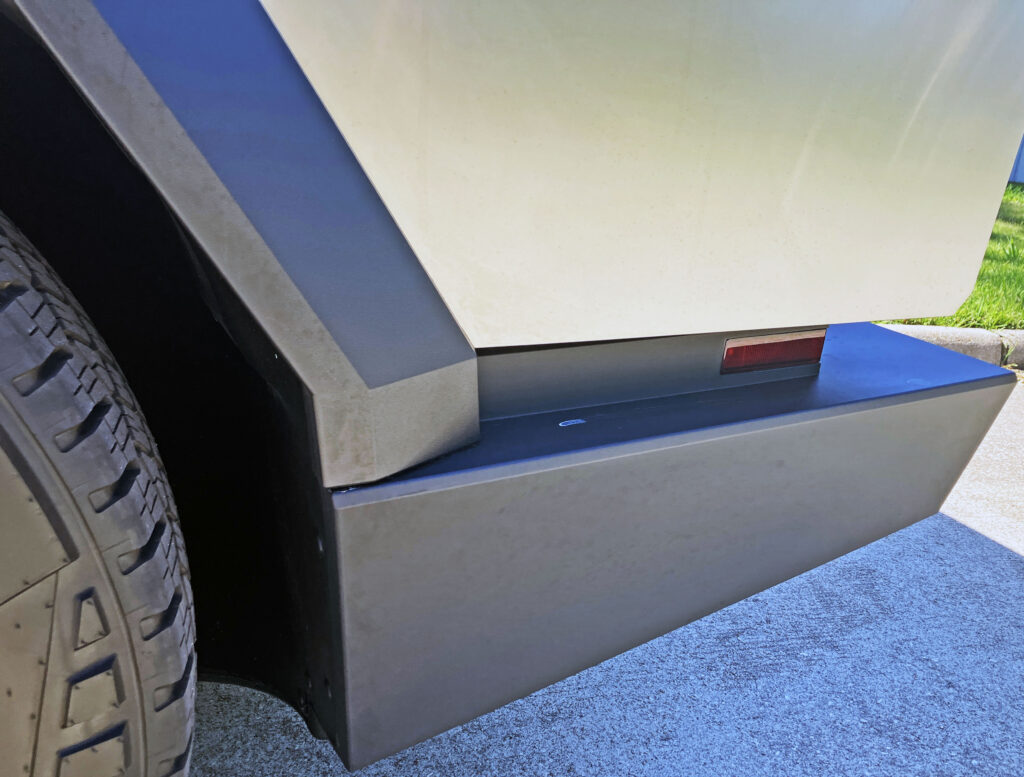
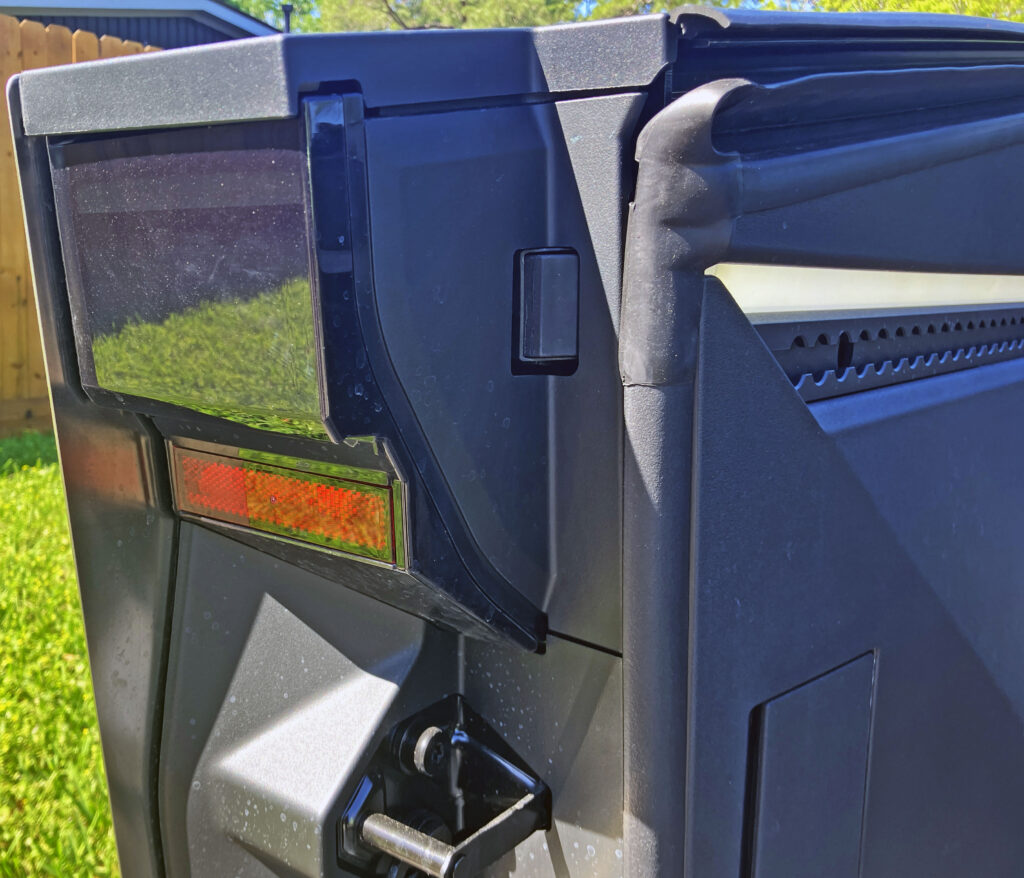
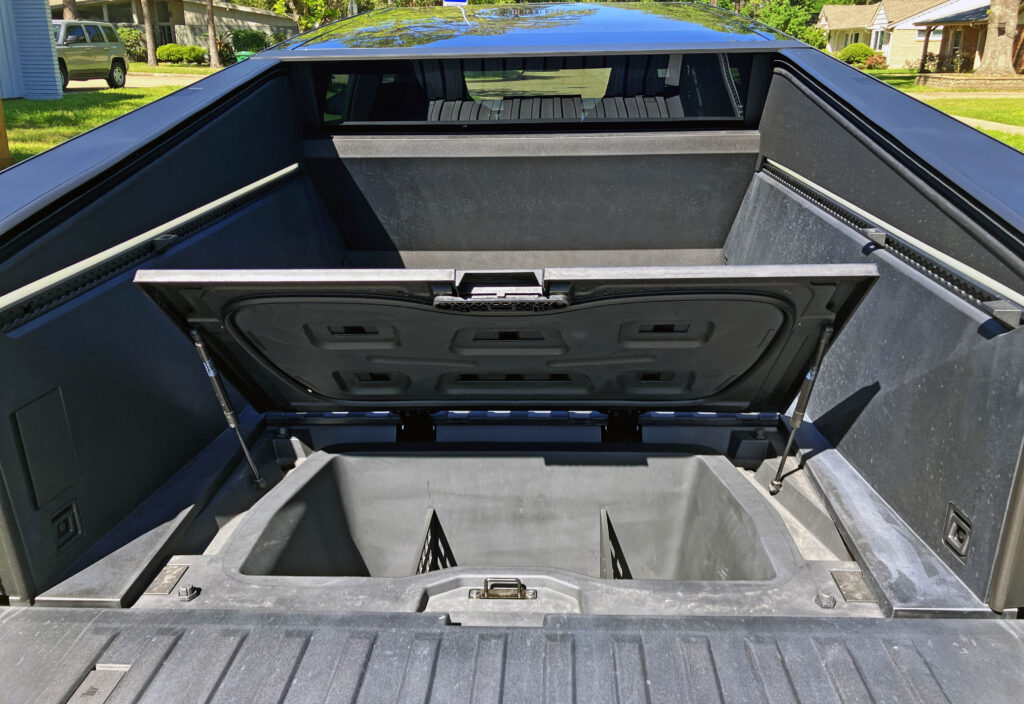
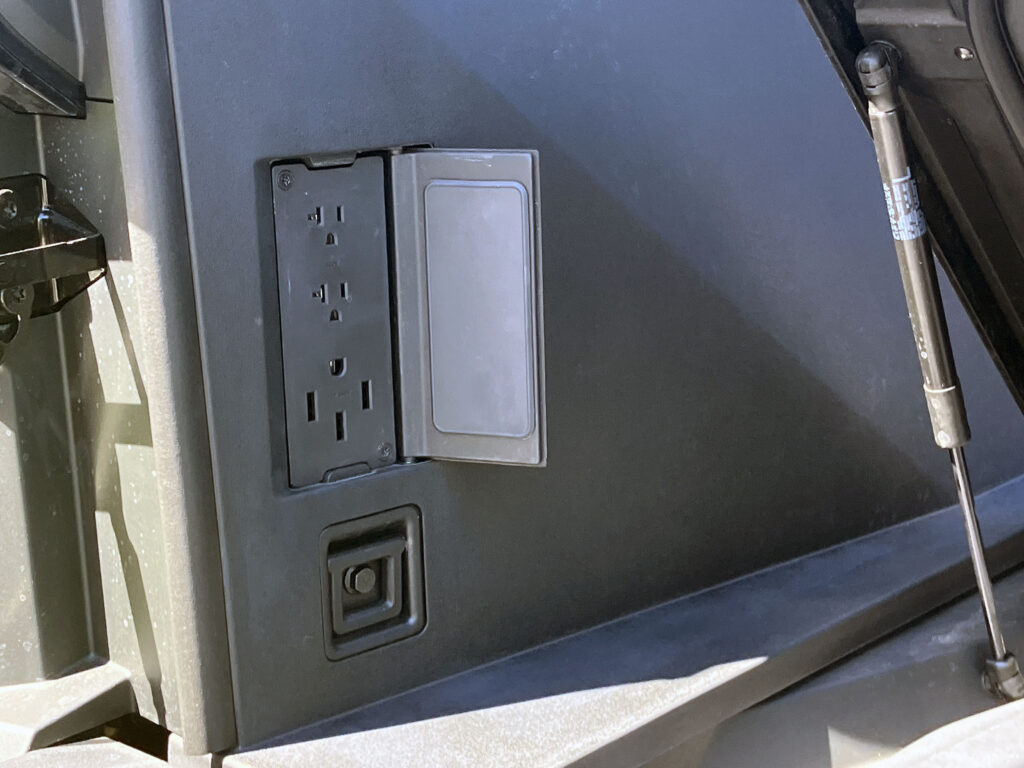
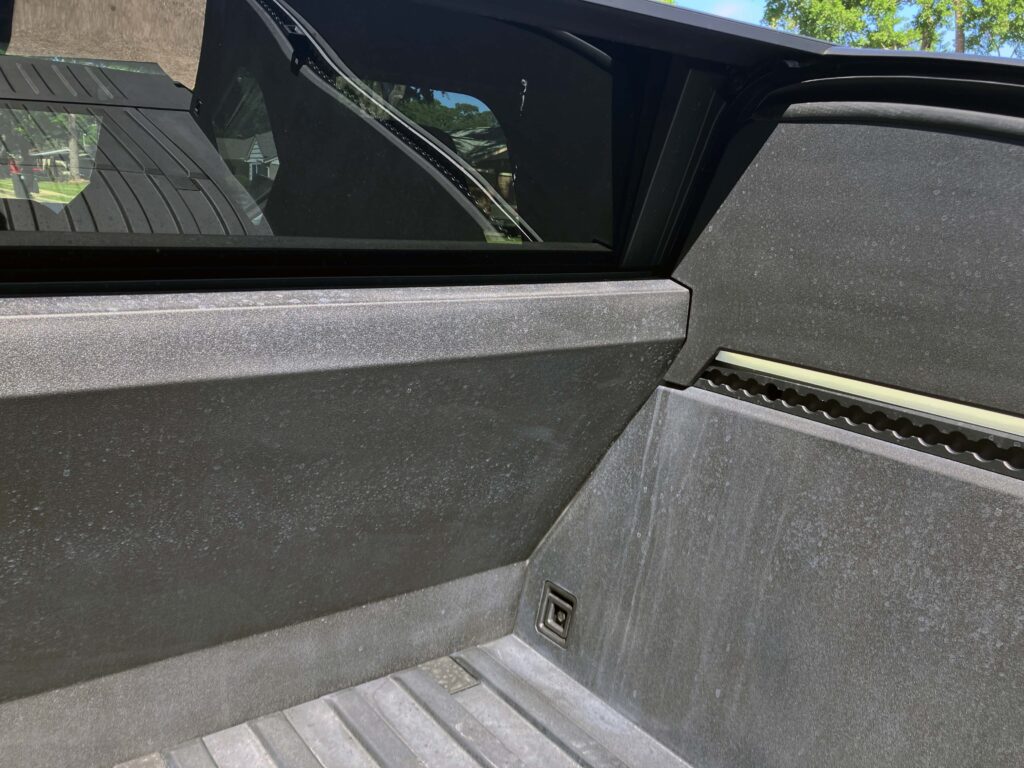
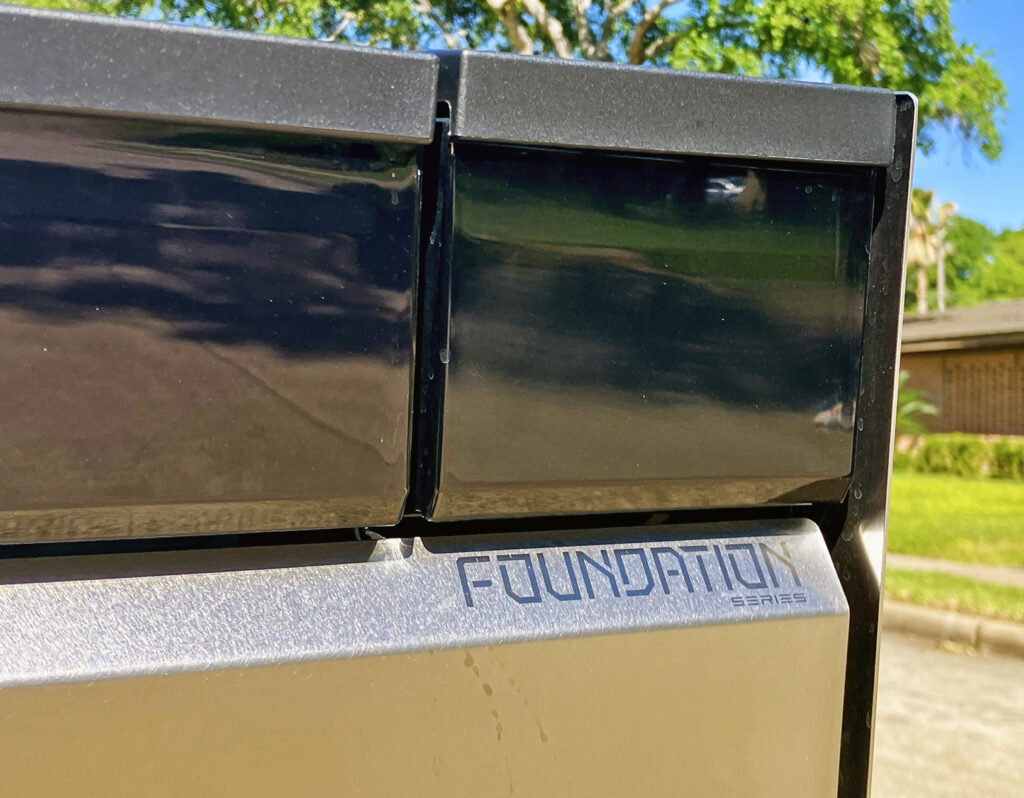
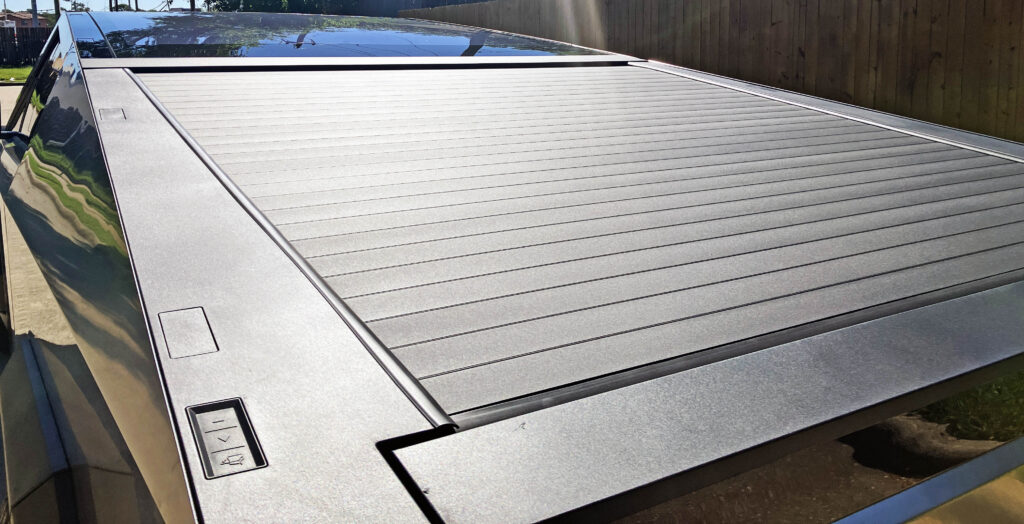
Open the bed and the truck becomes easier to judge on practical grounds. There’s a deep storage well, a red reflector and power outlets that remain out of sight until needed. The outlets are useful, but the source’s comparison with the Ford F-150 Lightning is unfavorable: the Ford offers more outlets across its bed, cabin and front trunk, with covers described as easier to use. The Cybertruck’s tonneau cover also blocks the rearward view through the mirror, adding another everyday compromise to the bed’s otherwise tidy appearance.
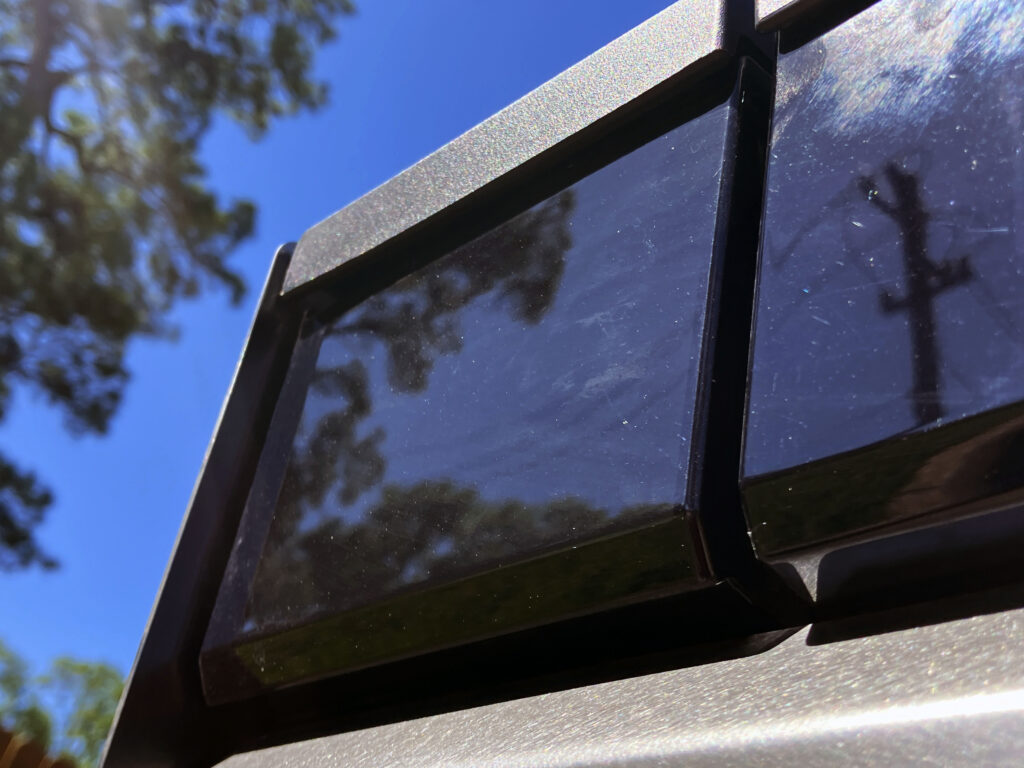
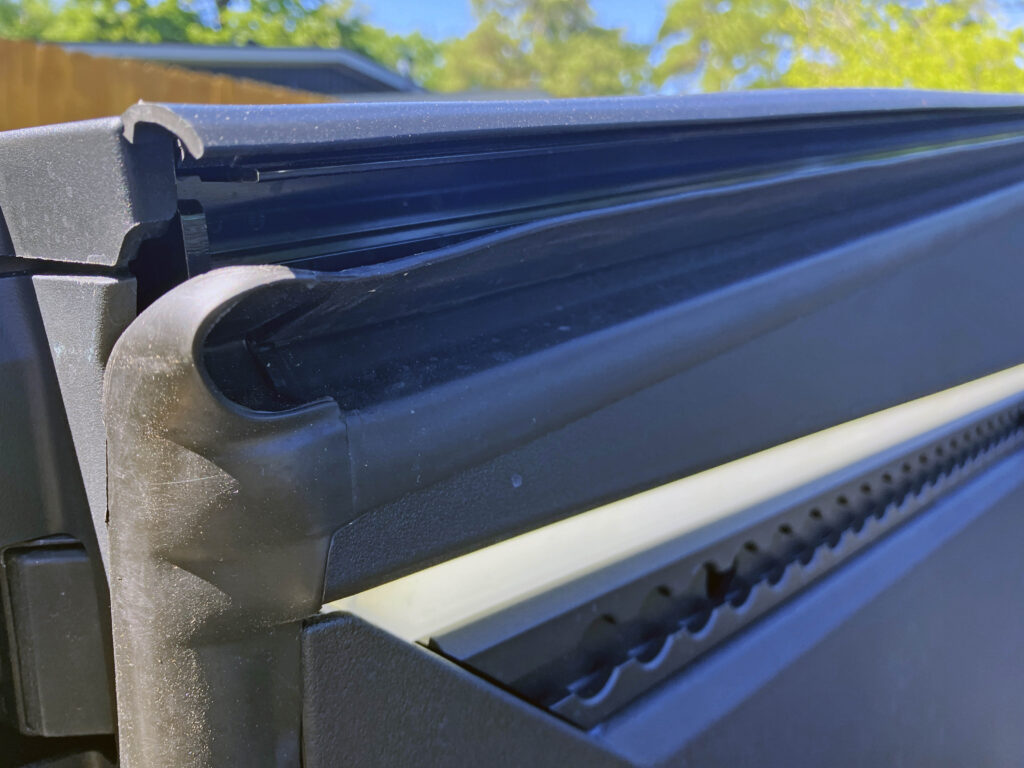
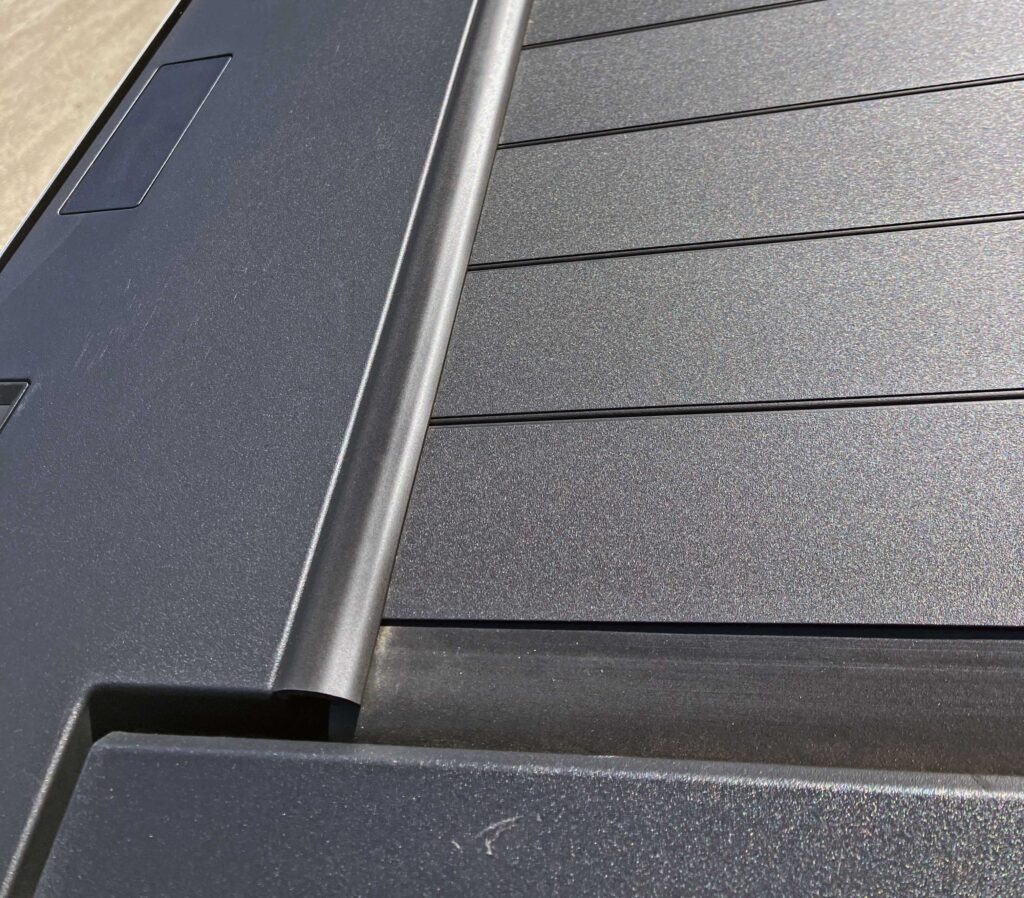
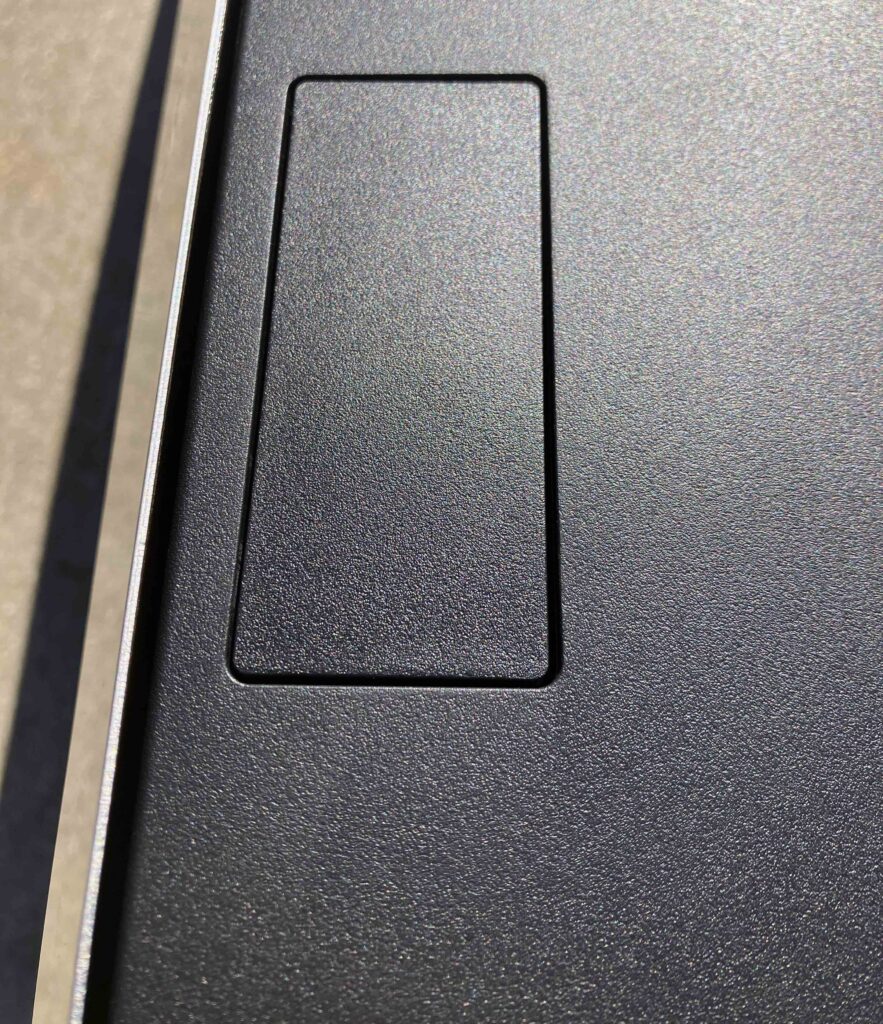
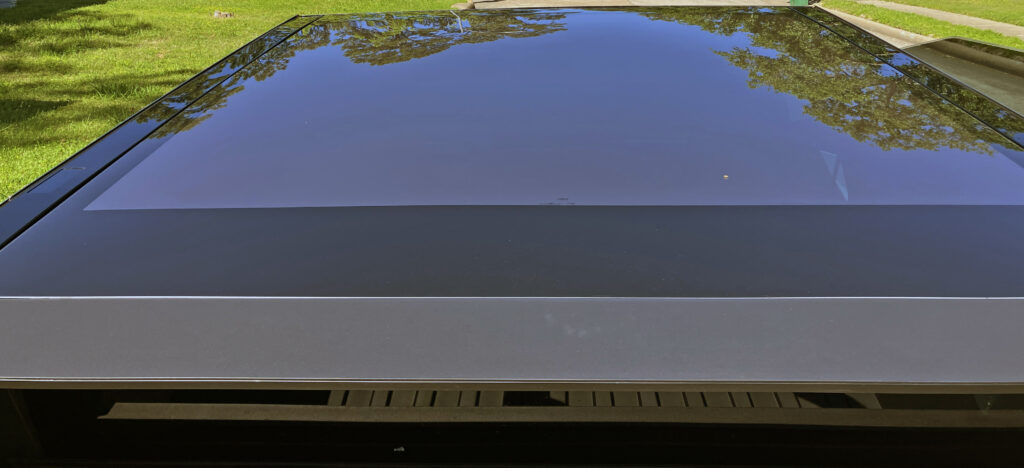
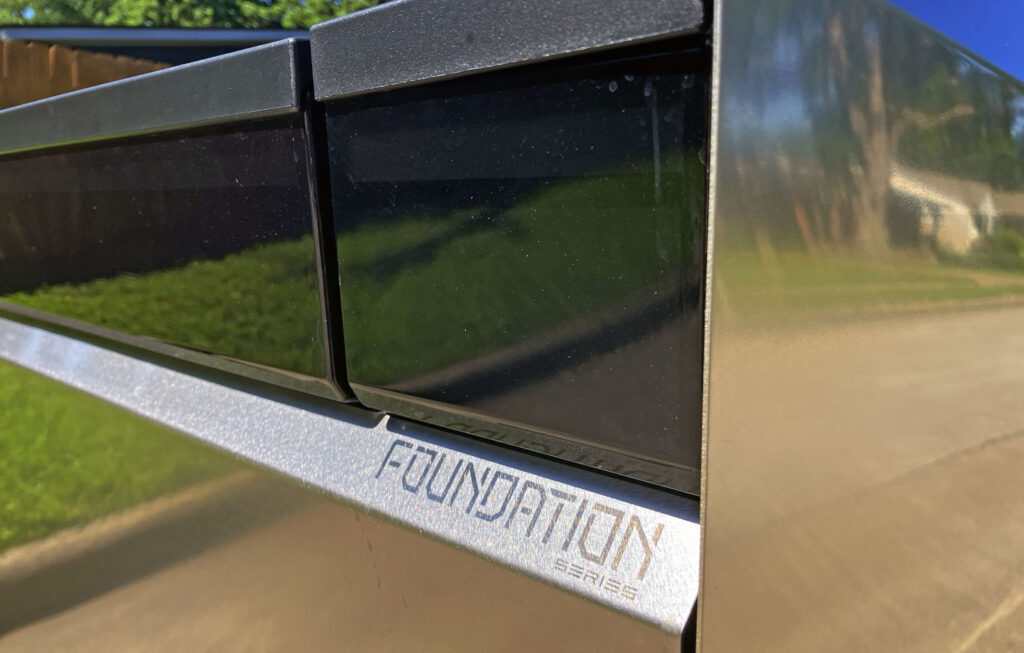
The powered tonneau cover operates quickly, but the surrounding plastic cladding is likely to demand attention if owners want it to stay looking clean. The source describes the trim as easy to stain and raises a similar concern about the stainless steel body, which can show marks. Both materials look striking in good condition; keeping that appearance may take more care than the truck’s stripped-back surfaces imply.
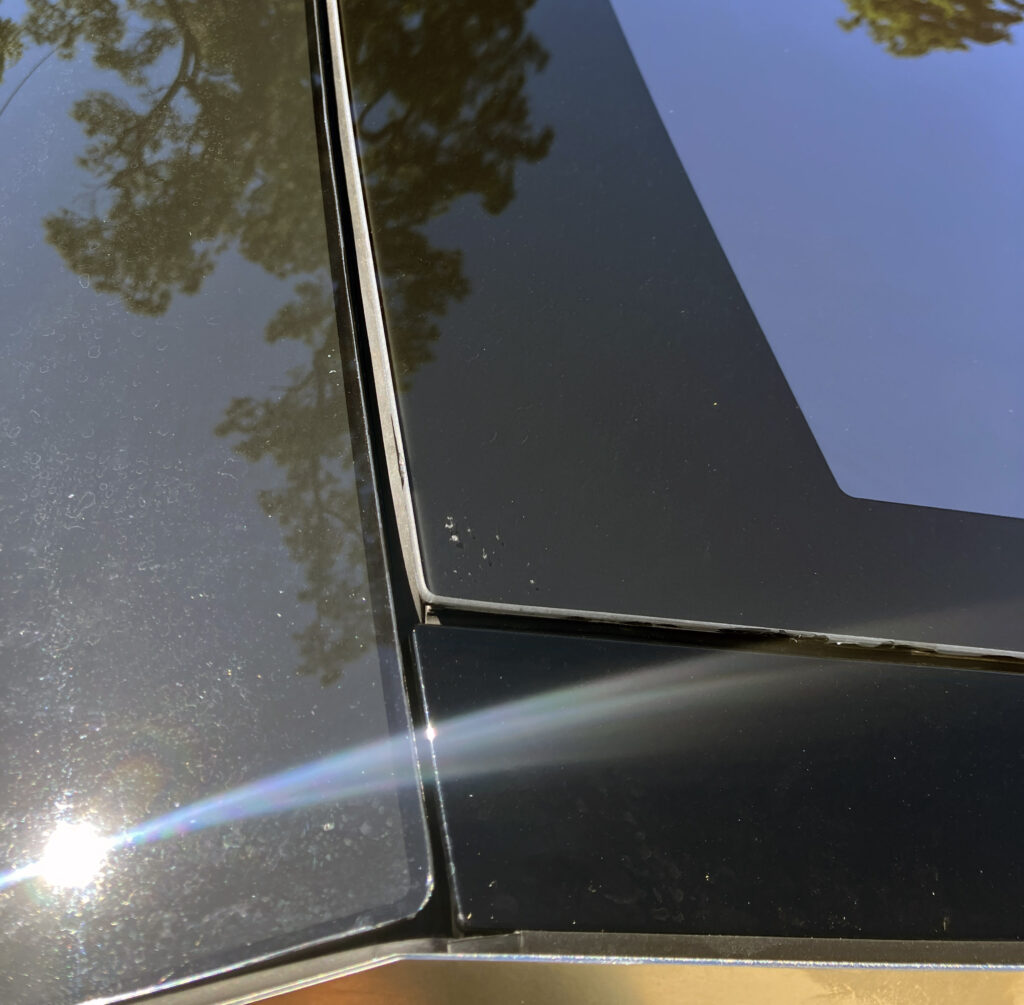
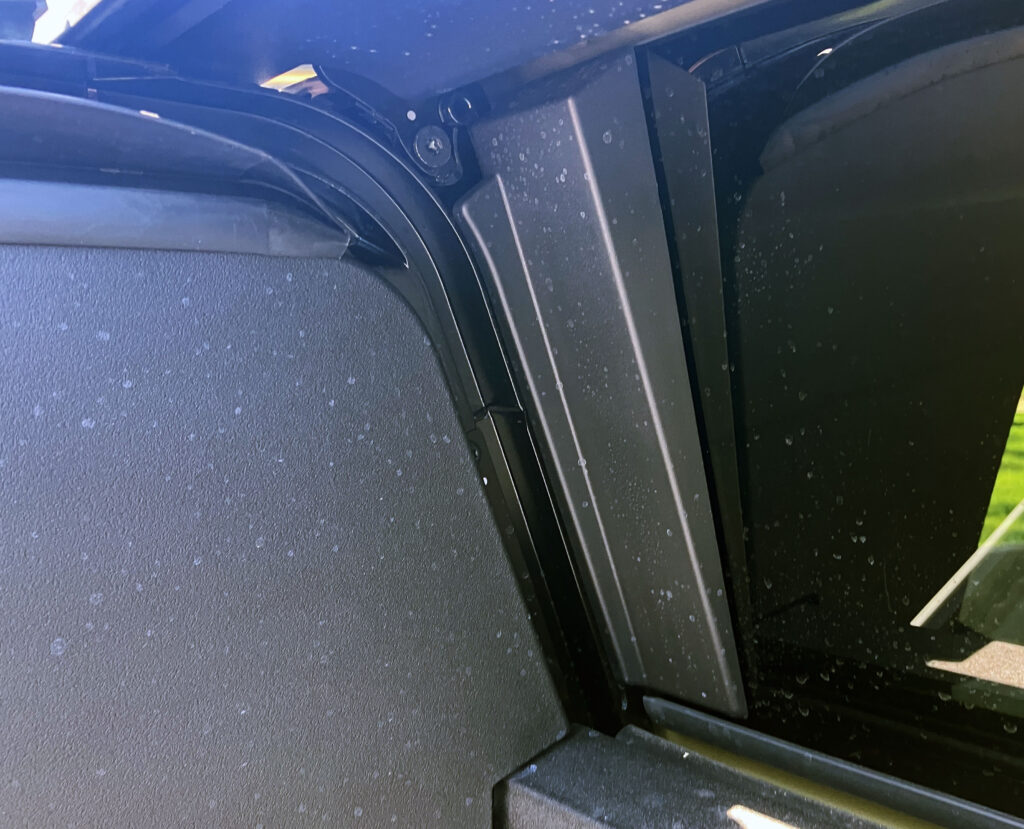
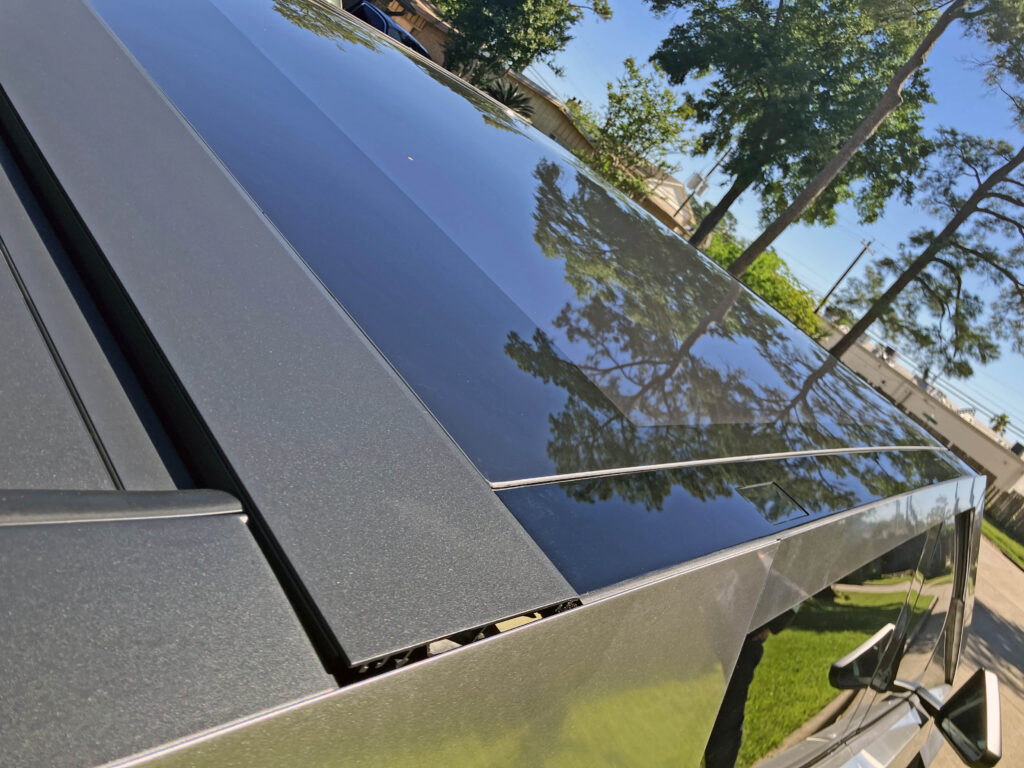
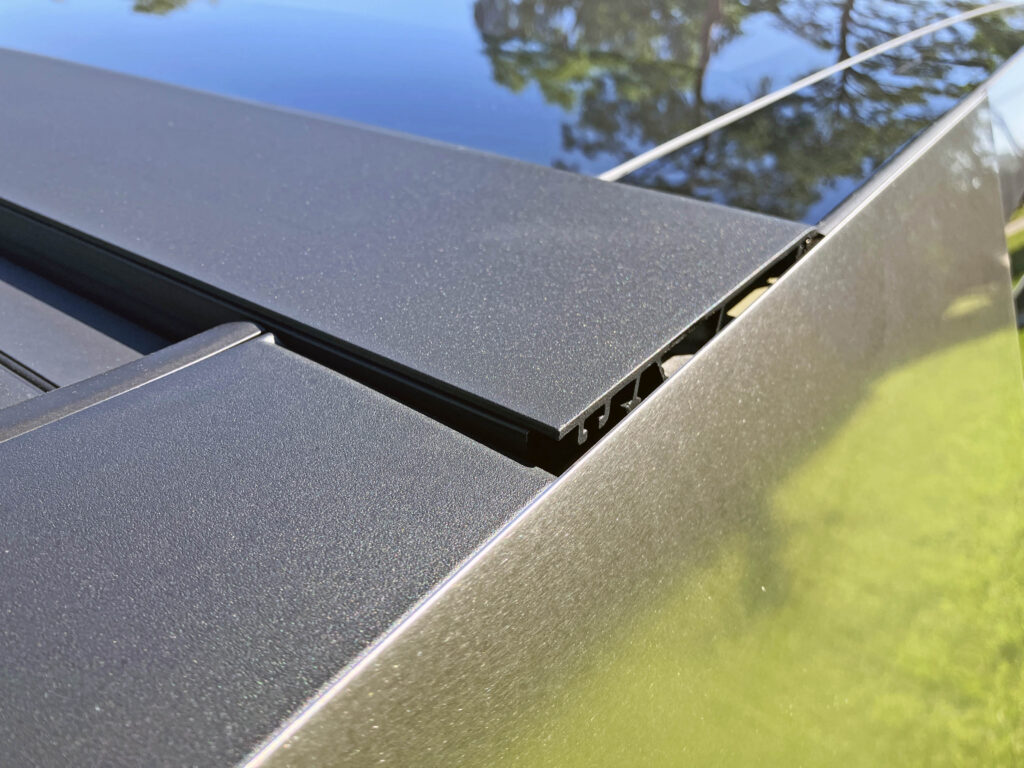
With the cover shut, plastic, glass and steel meet in a long, nearly uninterrupted composition. The transition between bed and roof looks expensive, helped by the one-piece glass roof, and the rear bumper’s recessed lighting keeps the functional hardware visually quiet. Yet the gaps around the tonneau cover and roof glass on the example examined fell short of the standard the design seems to promise. A strong overall idea makes those small inconsistencies more noticeable, not less.
A distinctive design with a narrow appeal
The Cybertruck’s strongest quality is also its challenge: it asks buyers to accept a highly specific idea of what a pickup should look like. Its stainless steel wedge, minimal hood and hard-edged cabin won’t have the broad appeal of a conventional Ford or Chevrolet truck. This isn’t the familiar recipe of a metal roof, softer body surfacing and exterior trim chosen to disappear into daily use. The vehicle is closer to a luxury object whose appearance is central to the purchase.
That makes comparisons with mainstream trucks useful only up to a point. The bed’s power outlets and storage matter to owners, but the Lightning comparison exposes a practical difference. The tonneau cover’s effect on rear visibility matters, too. These are concrete ownership considerations, distinct from the broader question of whether a buyer likes the shape. The source offers no range, price or performance figures to compare here, so the case rests on the design, observed finish and the specific utility details it describes.
There’s a similar divide between the truck’s close-up details and its complete form. The lighting, camera housings, front trunk and sculpted bumper show how much care went into fitting individual elements to the angular theme. Yet the larger body can feel unresolved, especially where panel gaps, wheel design and different trim surfaces interrupt the clean geometry. The design makes a powerful first impression, then gives you reasons to scrutinize it.
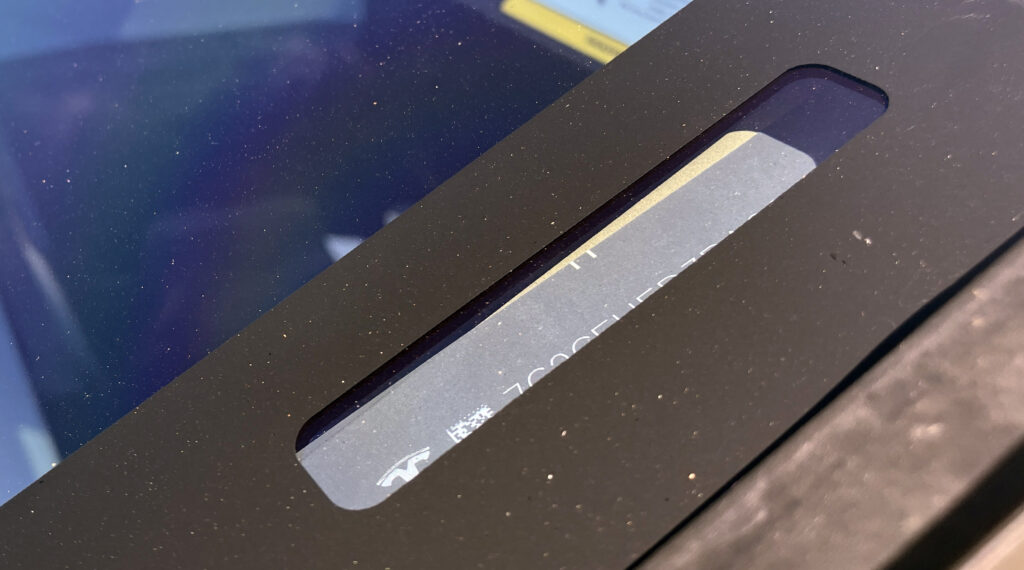
One observed delivery detail sharpened that concern: a paper tag was attached to the rear of a vehicle with packaging tape. On an example described as costing $102,000, that small presentation choice felt poorly matched to the truck’s luxury ambitions. The review also reports that build quality on the vehicle was better than online criticism might suggest, while pointing to visible gaps around the cover and glass roof. Both observations matter. The result isn’t uniformly careless, but the finish doesn’t always support the design’s premium posture.

The 2024 Cybertruck succeeds as an unmistakable expression of Tesla’s geometric, cyberpunk brief. It has details that reward inspection, and a silhouette that makes even familiar truck parts seem newly arranged. But its surfaces and utility don’t consistently carry that idea through. For buyers, the key question is whether the radical form and standout details outweigh the upkeep concerns, fit-and-finish lapses and practical compromises. The truck is at its best when you appreciate it as an uncompromising design object; its harder test is living with the whole vehicle.