In lane Electric Vehicles
1990 Cadillac Aurora Concept: From Chicago Auto Show to Junkyard
Description
Cadillac’s fully realized 1990 Aurora concept paired a 200-hp V-8 with all-wheel drive. Recent junkyard photos show how close it may be to destruction.
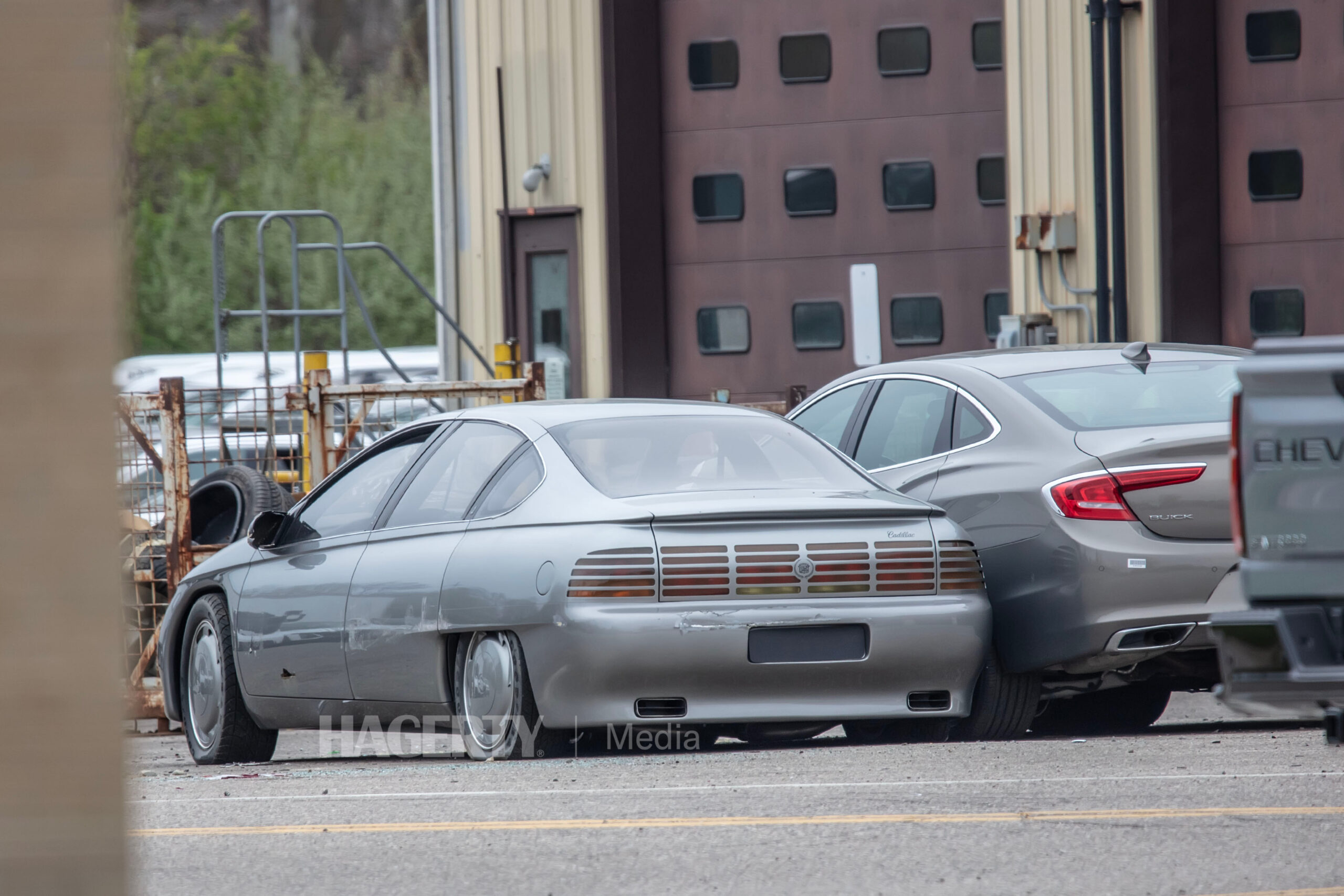
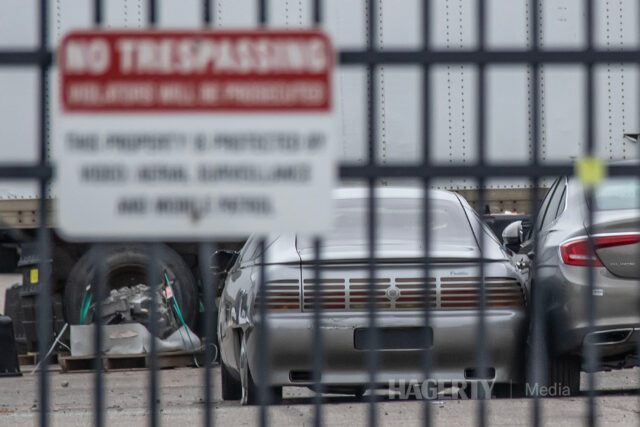
The Cadillac Aurora was built to look like a car that could reach a showroom. More than three decades after its 1990 debut, photos place the concept in a junkyard, battered and seemingly awaiting the crusher. Its fate is a stark reminder that a complete, ambitious show car can still have little protection once its display career ends.
A concept with production-car detail
Cadillac unveiled the Aurora at the Chicago Auto Show in February 1990. The show followed Detroit’s event by about a month, giving the car a prominent public debut in a city known for drawing large crowds. At the time, major manufacturers regularly devoted budgets to the four major U.S. auto shows: Detroit, Los Angeles, New York City and Chicago. Their displays ranged from near-production previews to design exercises that might never advance beyond the stand.
The Aurora appears to have received unusually thorough development for a concept. A series of General Motors images collected by Carstyling.ru follows the design from early sketches through a full-size clay model. That process matters here: the finished car wasn’t just an exterior shell made to catch attention. Cadillac presented it with a completed cabin and a specified powertrain, giving visitors a more convincing picture of a potential road car.
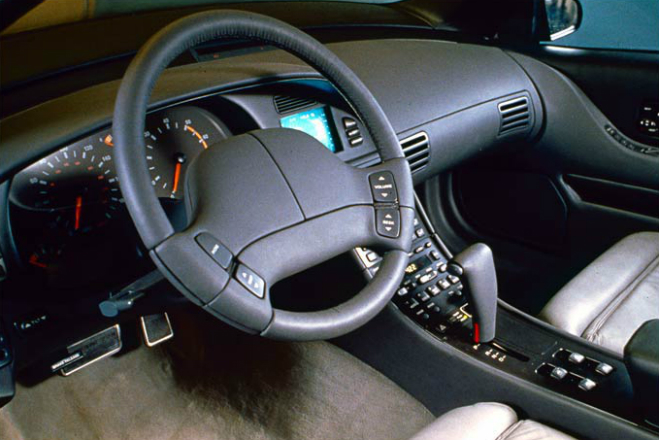
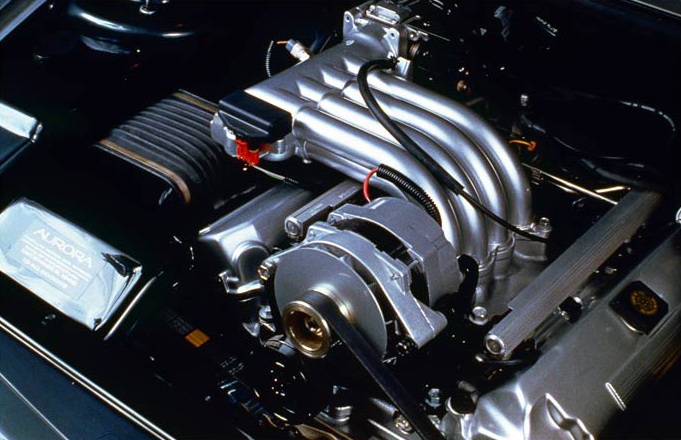
Power came from a longitudinally mounted 4.5-liter V-8 rated at 200 horsepower. Cadillac paired it with all-wheel drive and advanced traction control. The source doesn’t give performance, fuel economy or production plans, so the concept’s specifications tell us what the company chose to display, not how a customer version would have performed or cost.
The interior’s clean, functional layout suggests a serious effort to make the car feel usable, while the drivetrain arrangement points to packaging as part of the design brief. That combination sets the Aurora apart from concepts that leave the cabin unfinished or hide a generic mechanical setup. It doesn’t establish how much of the engineering could have transferred to a production model, but it makes the car more than a styling proposal.
Styling between eras
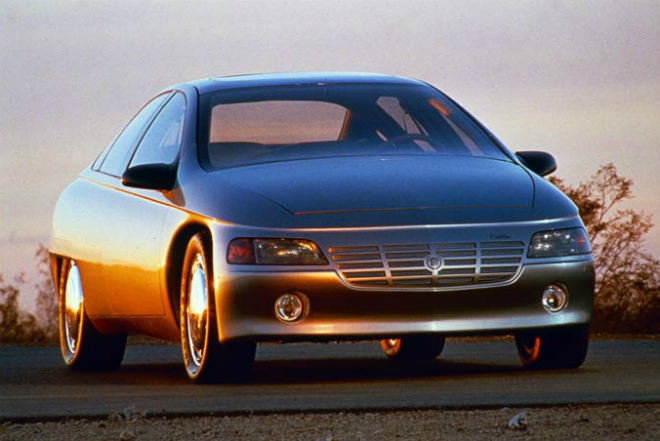
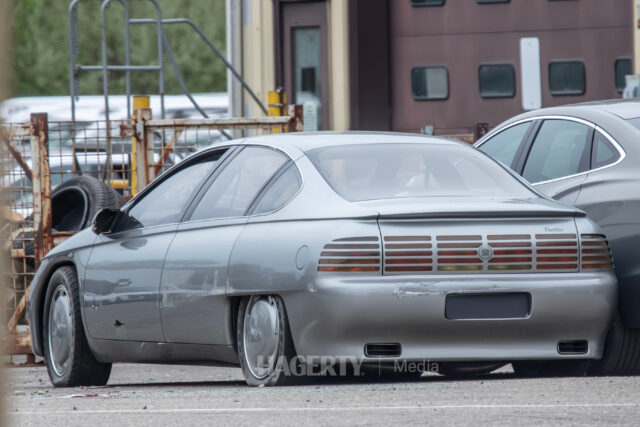
From the outside, the Aurora steered away from the sharp-edged look common to several GM sedans of its period. Its rounded form carried hints of different directions in the company’s design work, including European Opel influences and shapes that would appear later on the 1992 Oldsmobile Achieva. Both cars share a horizontal crease above the rear wheel; on the Cadillac, that line is especially pronounced. The concept also invites comparison with the EV1, though the Aurora was a V-8-powered sedan rather than an electric car.
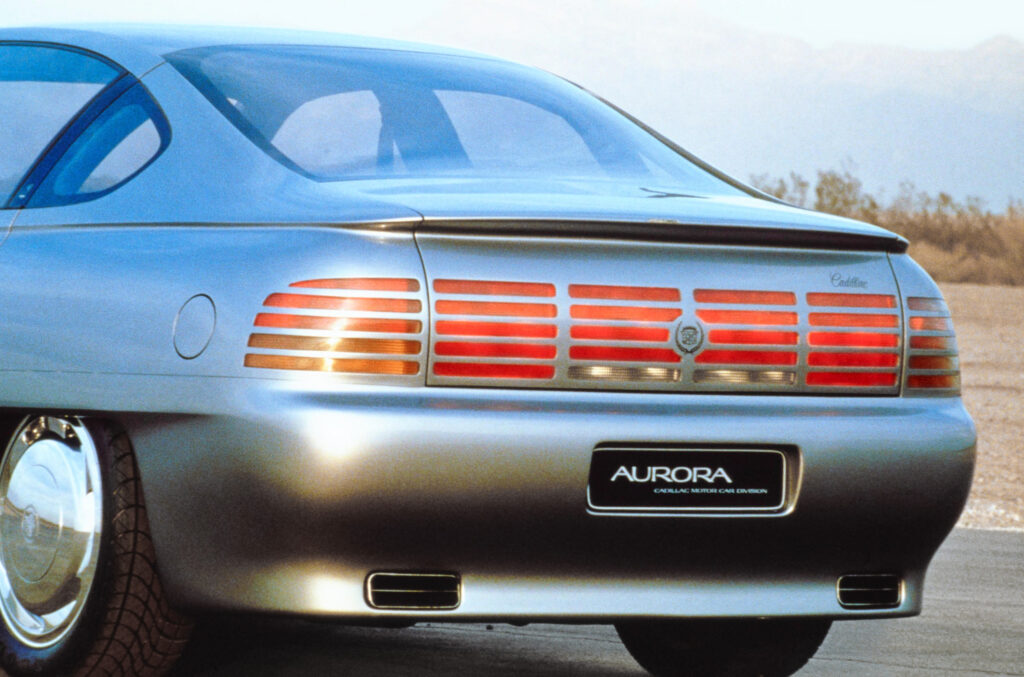
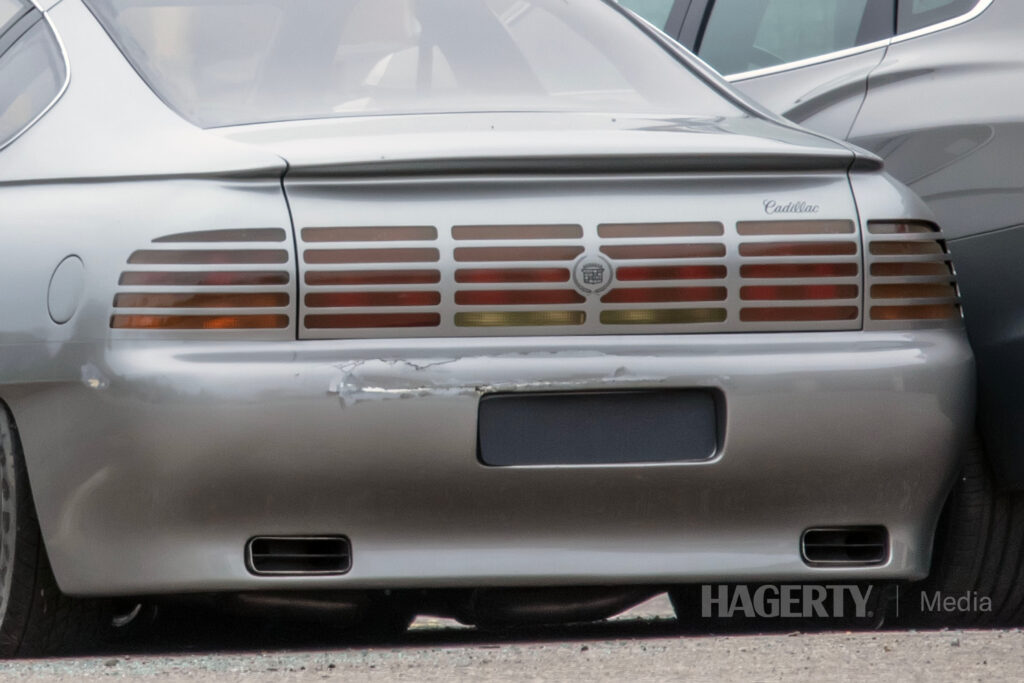
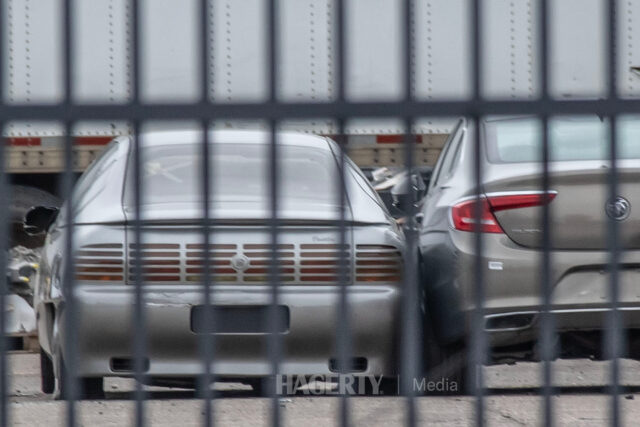
The rear is less restrained. Thirty horizontal bars span the back between the lamps, above dual exhaust outlets. It’s a distinctive treatment, but it makes the tail look busy and ties the car more closely to its era. The front and sides have aged differently: even now, they read as a deliberate attempt to give Cadillac a smoother, less angular profile.
At the Chicago display, the Aurora sat on a revolving platform beneath a “Cadillac Style” sign. That presentation gave the car a clear identity, but the name outlasted its design. Oldsmobile later used Aurora for the sedan that became its four-door flagship in 1994. None of the Cadillac concept’s most recognizable styling features carried across to that Oldsmobile.
A brief screen appearance, then a rough final chapter
The concept had one more public afterlife before the junkyard photos surfaced. It appeared in the background of the 1993 film Demolition Man, starring Sylvester Stallone. A still on Imcdb.org shows the silver car and its custom wheels. Its shape, futuristic when it debuted, still suited a film set in the future.
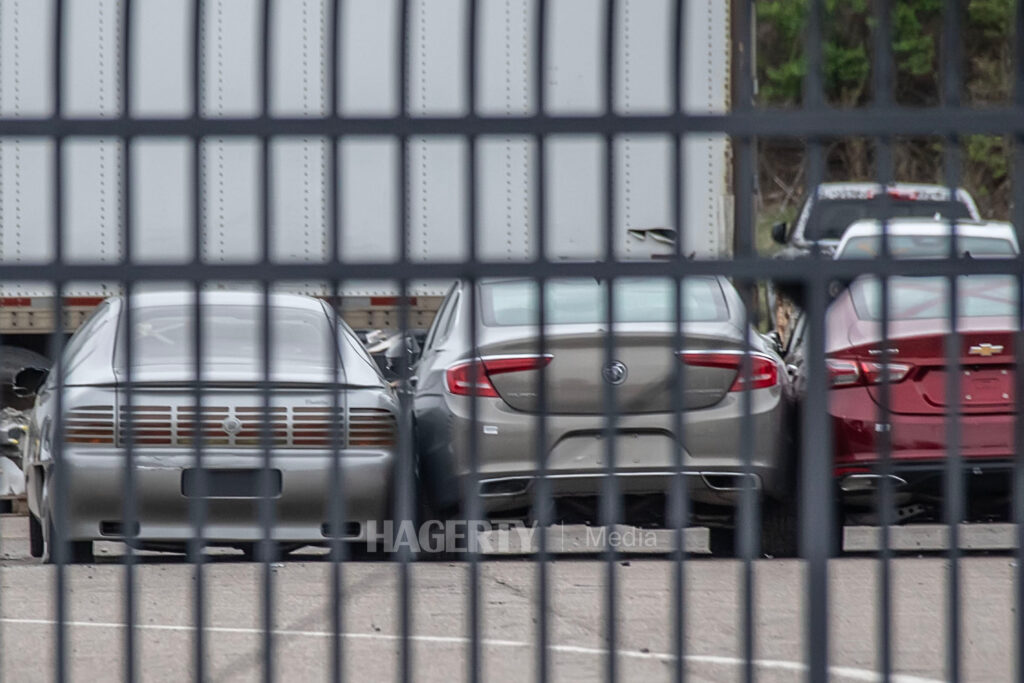
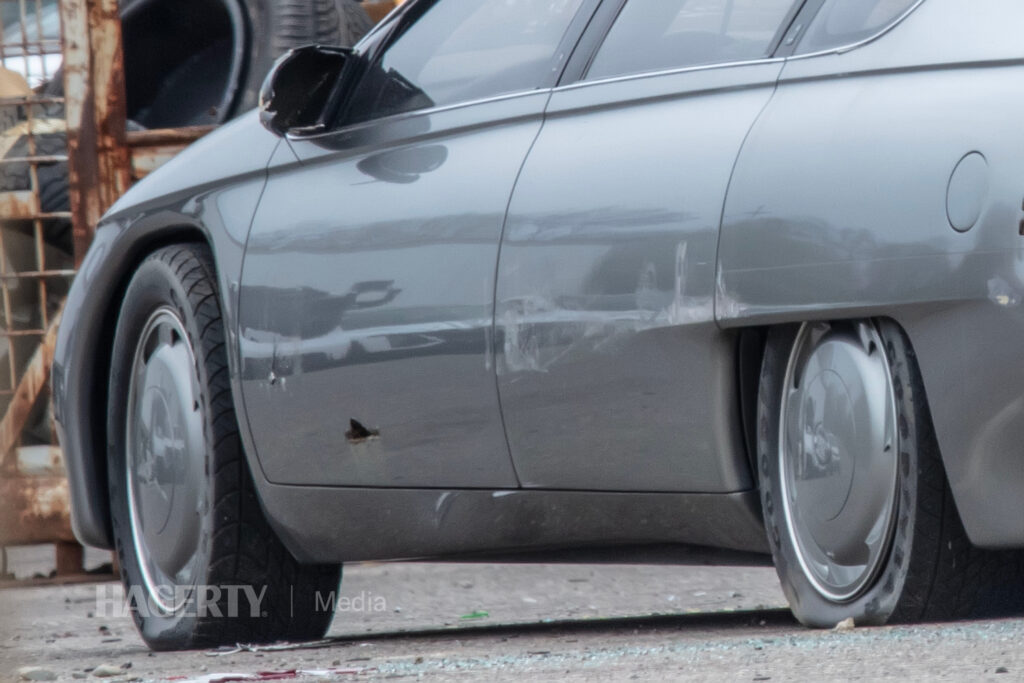
The more recent images show a much harsher setting: the Aurora is scratched and dented, with a large hole in the driver’s door and a nearly flat left rear tire. It sits between a Buick LaCrosse and a Chevrolet Malibu. The photos place it in line at a junkyard, apparently awaiting its turn to be crushed, though they don’t confirm what happened next.
Concept cars were produced in large numbers during the 1980s and 1990s. Cars that didn’t earn a museum place could be destroyed rather than kept in storage, and the Aurora’s apparent condition shows the cost of that practice for automotive history. Its complete interior and powertrain once made it a particularly persuasive preview of what Cadillac might build. Now those details survive mainly in photographs.
The Aurora never became a production Cadillac, and its later namesake followed a different design path. Still, the car offers a useful snapshot of Cadillac testing a softer profile, all-wheel drive and a carefully finished cabin in one ambitious concept. The junkyard pictures make that record feel precarious: preserving the design images may be the only way to keep this particular car’s story intact.
More stories are available on the Hagerty Media homepage, and readers can subscribe to its newsletters.
The original post is at Hagerty Media.


