In lane Electric Vehicles
Bugatti Tourbillon Design: The Details That Set It Apart
Description
The Tourbillon reshapes Bugatti’s familiar design with lower proportions, a tighter cabin and a watch-inspired interior built around intricate physical controls.
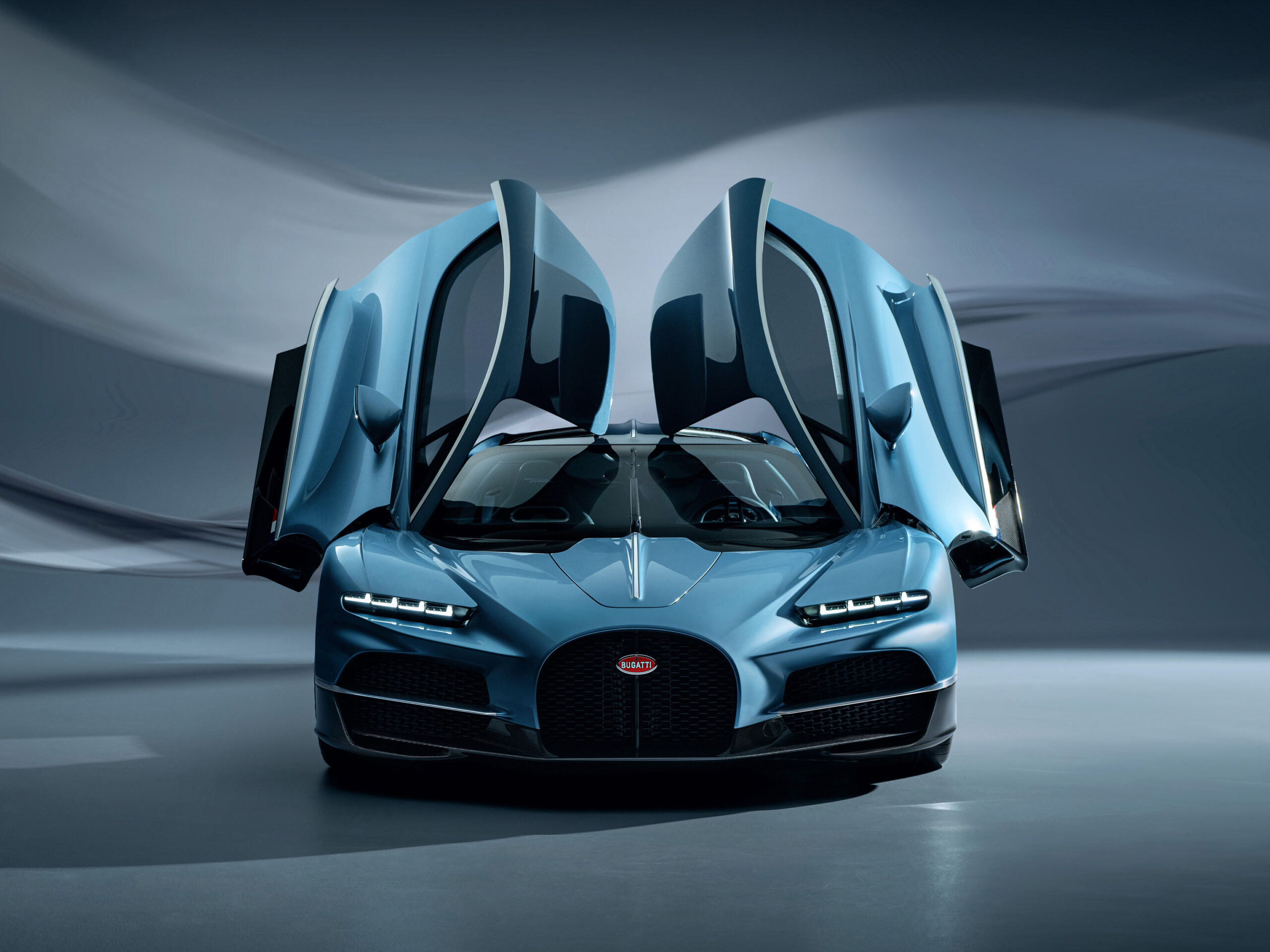
The Bugatti Tourbillon makes its strongest case through design. Its combustion engine and electric motors give the new hypercar a distinct technical direction, but the visual achievement is more revealing: Bugatti has kept the signature themes established by the Veyron and refined their proportions and execution for a new generation.
That continuity matters in the context of Bugatti’s recent history. The brand’s revival under Volkswagen Group was closely associated with Ferdinand Piëch, and his departure, alongside the group’s shift toward electric vehicles, left the marque’s future looking uncertain. The 2021 Bugatti-Rimac joint venture could be read as a handoff of a legacy project. The Tourbillon suggests a more assured path: it retains internal combustion while adapting the car’s layout and styling around electrification.
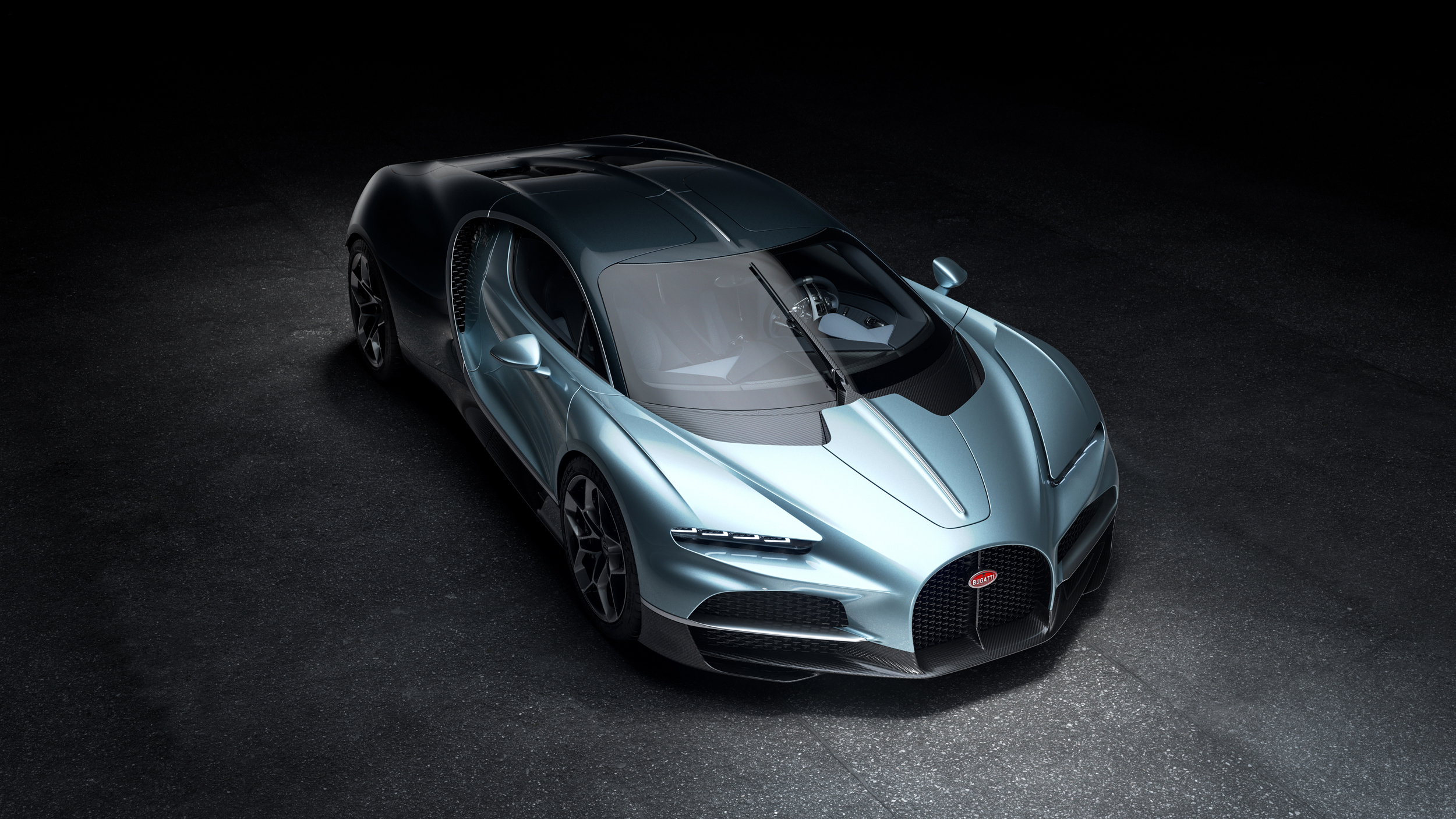
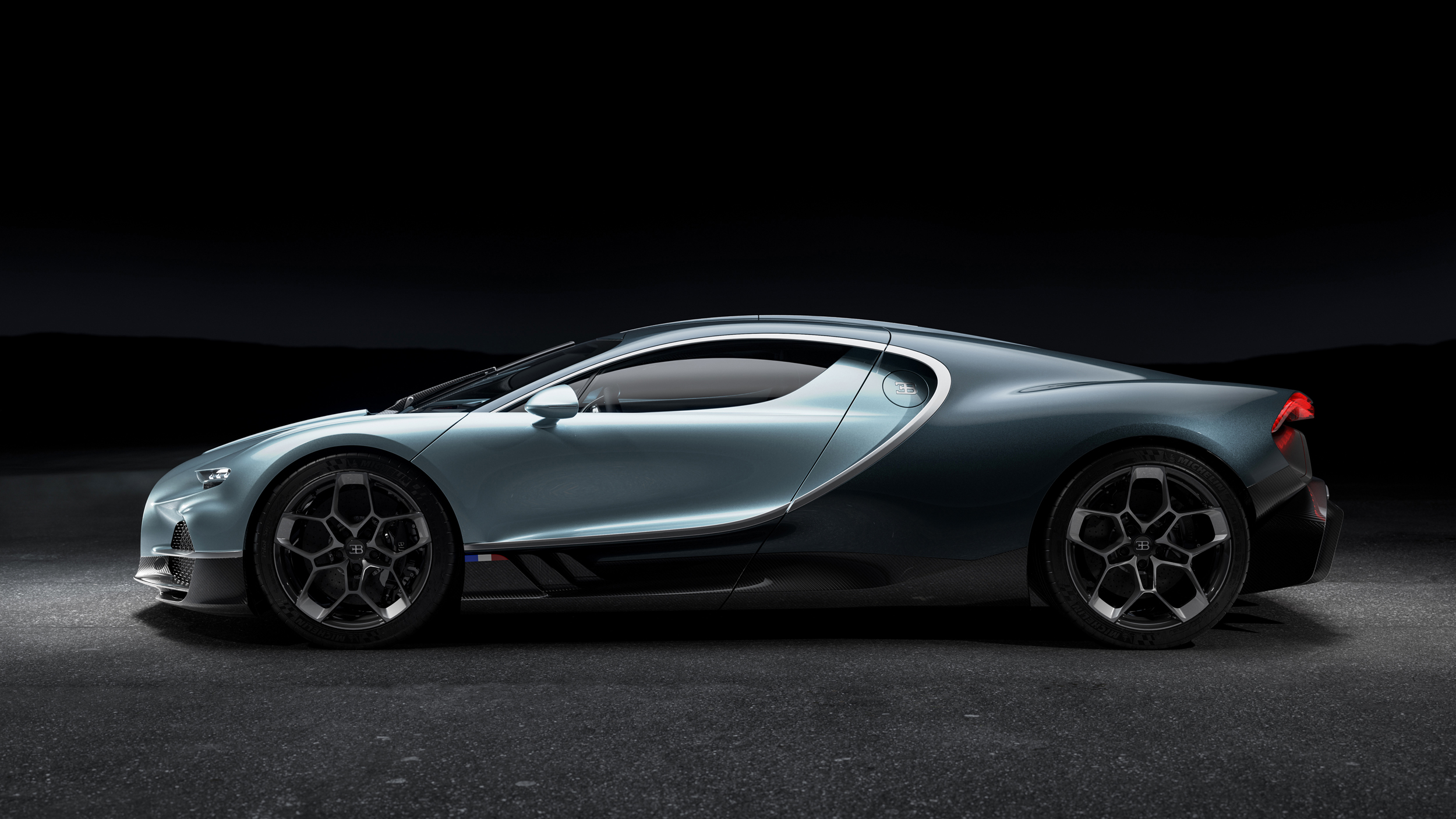
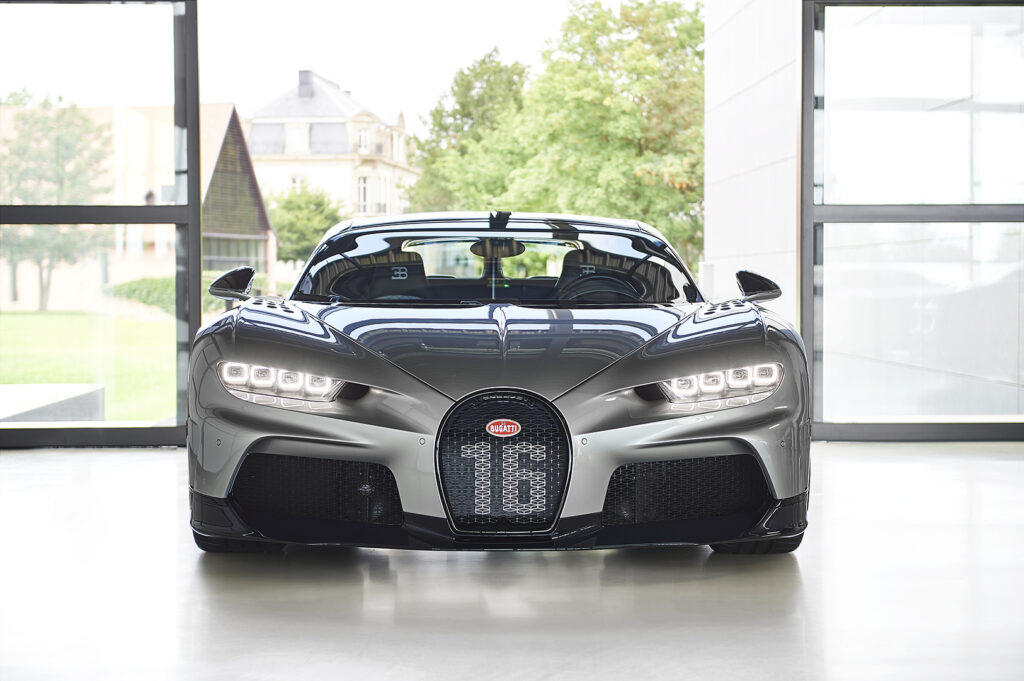
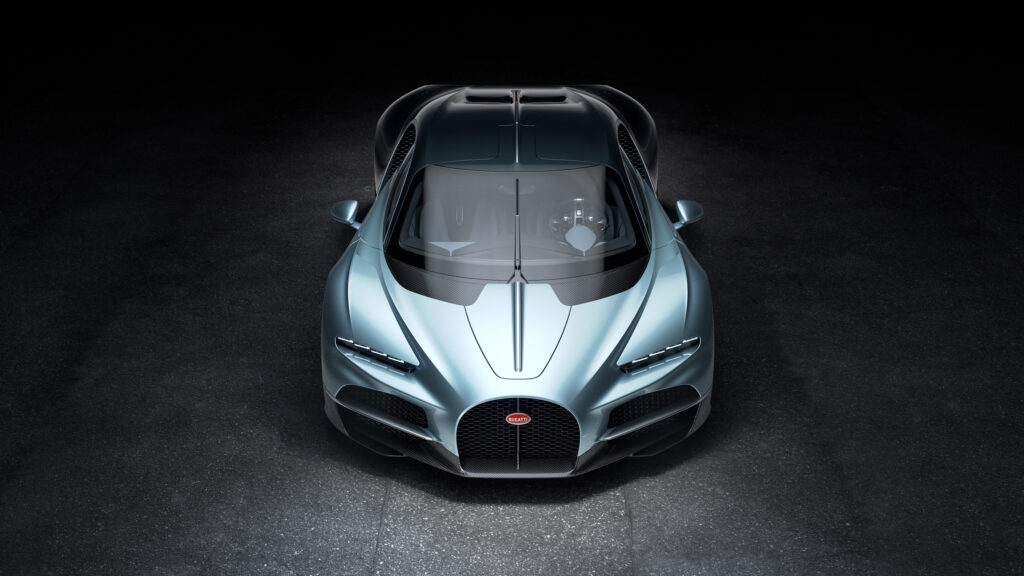
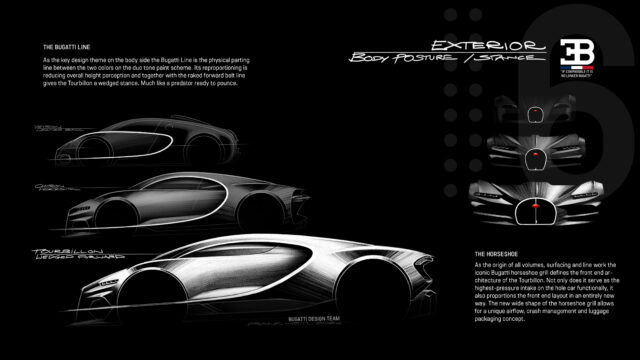
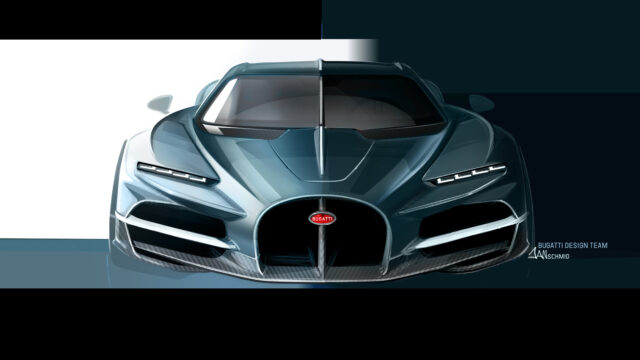
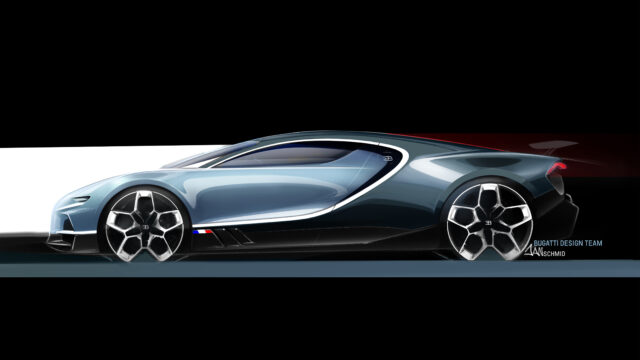
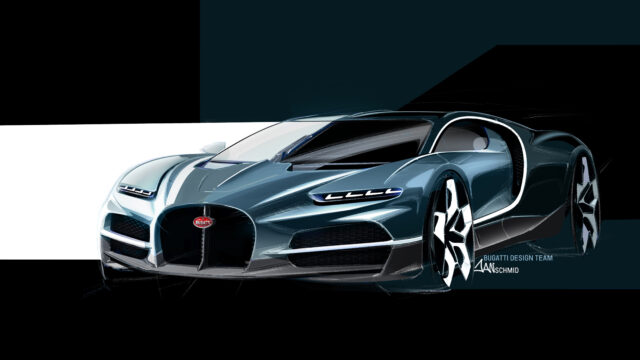
Its design language doesn’t reject the Veyron-era template. The sweeping side curve, drawn from Jean Bugatti’s 1930s cars, remains a defining feature, dividing the body behind the doors. The horseshoe grille is still central, now larger and more prominent. The fresh impression comes from the way these established cues sit within a revised shape.
Proportions change the character
The Tourbillon’s footprint hasn’t changed dramatically from the Chiron, but the car is longer, wider and, most significantly, lower. A 23-millimeter reduction in height may sound minor in isolation. On a hypercar already close to the ground, it changes the relationship between the body, cabin and wheels—and gives the whole design a more planted stance.

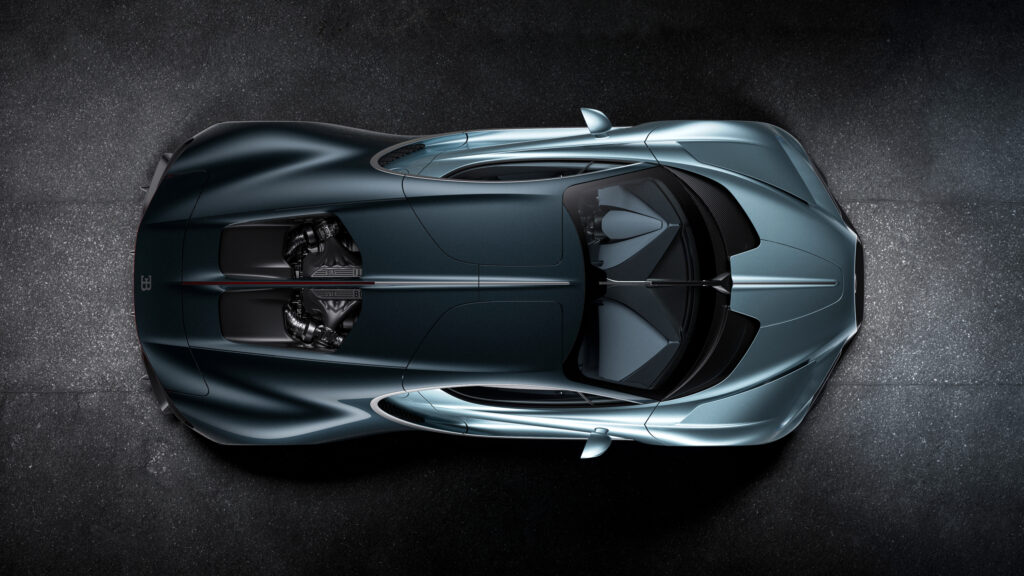
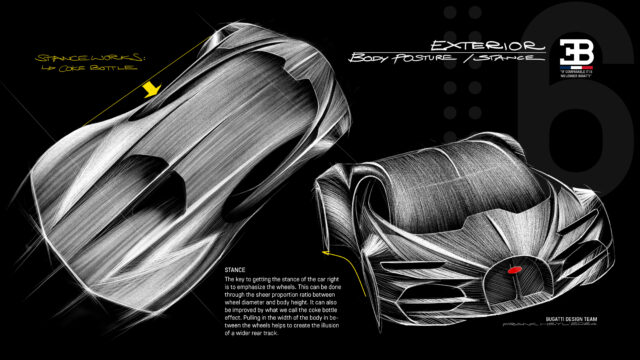
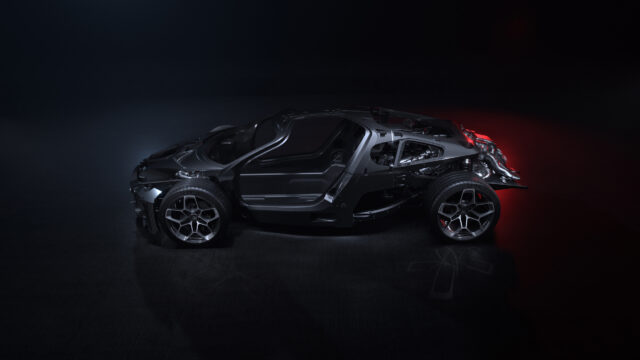
The more consequential shift is the increased tumblehome: the body now narrows more noticeably as it rises toward the roof. The new driveline layout places electric motors at the front and clears mechanical components from the tunnel between the occupants. That let the engineers position the seats closer to the centerline, freeing the designers to draw in the bodysides more tightly around the cabin.
It’s a change with a visible payoff. The Chiron’s broad, powerful shape could look heavy; the Tourbillon’s fenders sweep outward from a compact cabin, forming a pronounced Coke-bottle profile. Its surfaces give light and shadow room to play across the body, making the car appear more athletic and poised. The design’s impact comes less from a single dramatic gesture than from the way its volumes work together.
A spine with a purpose
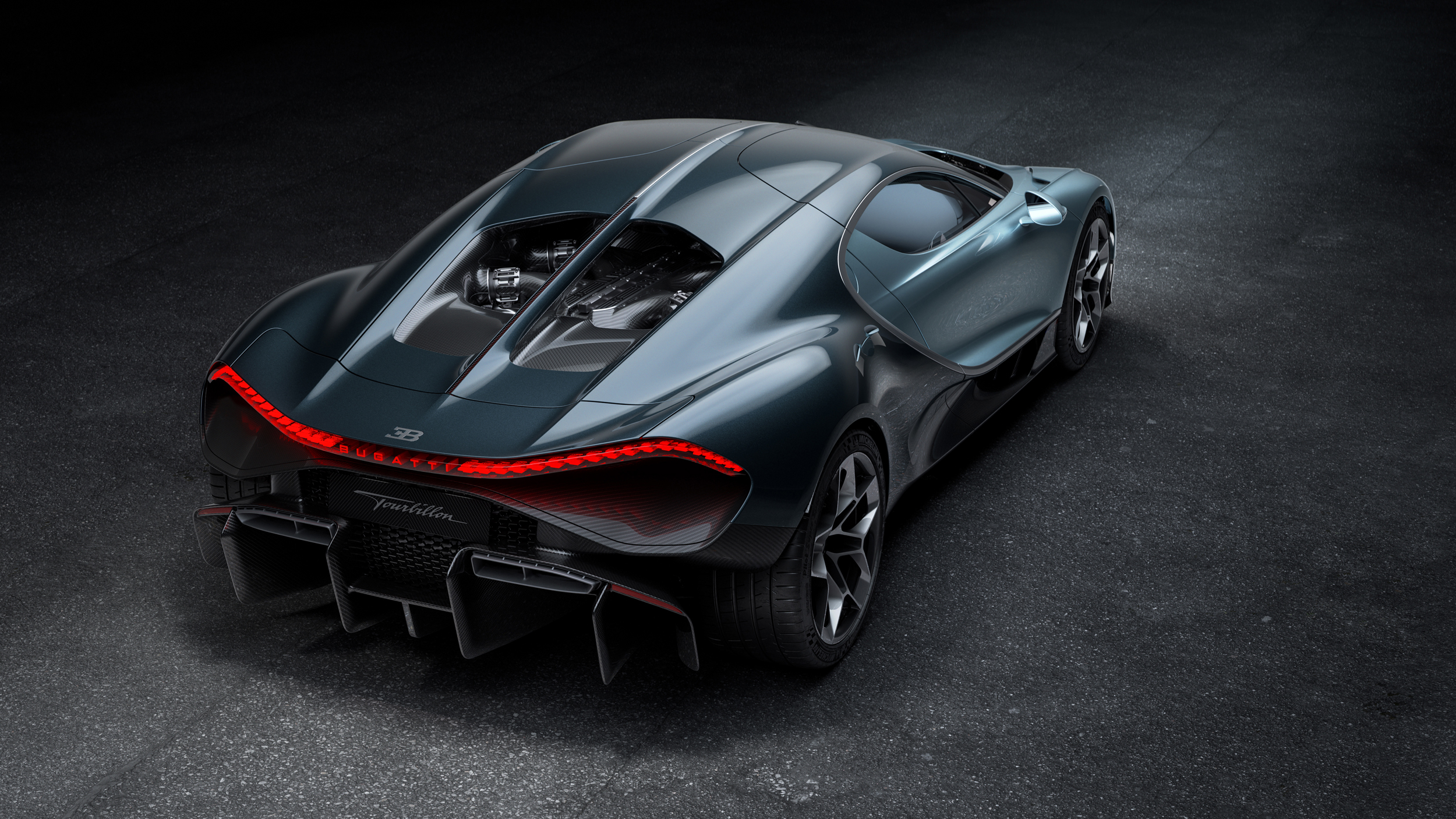
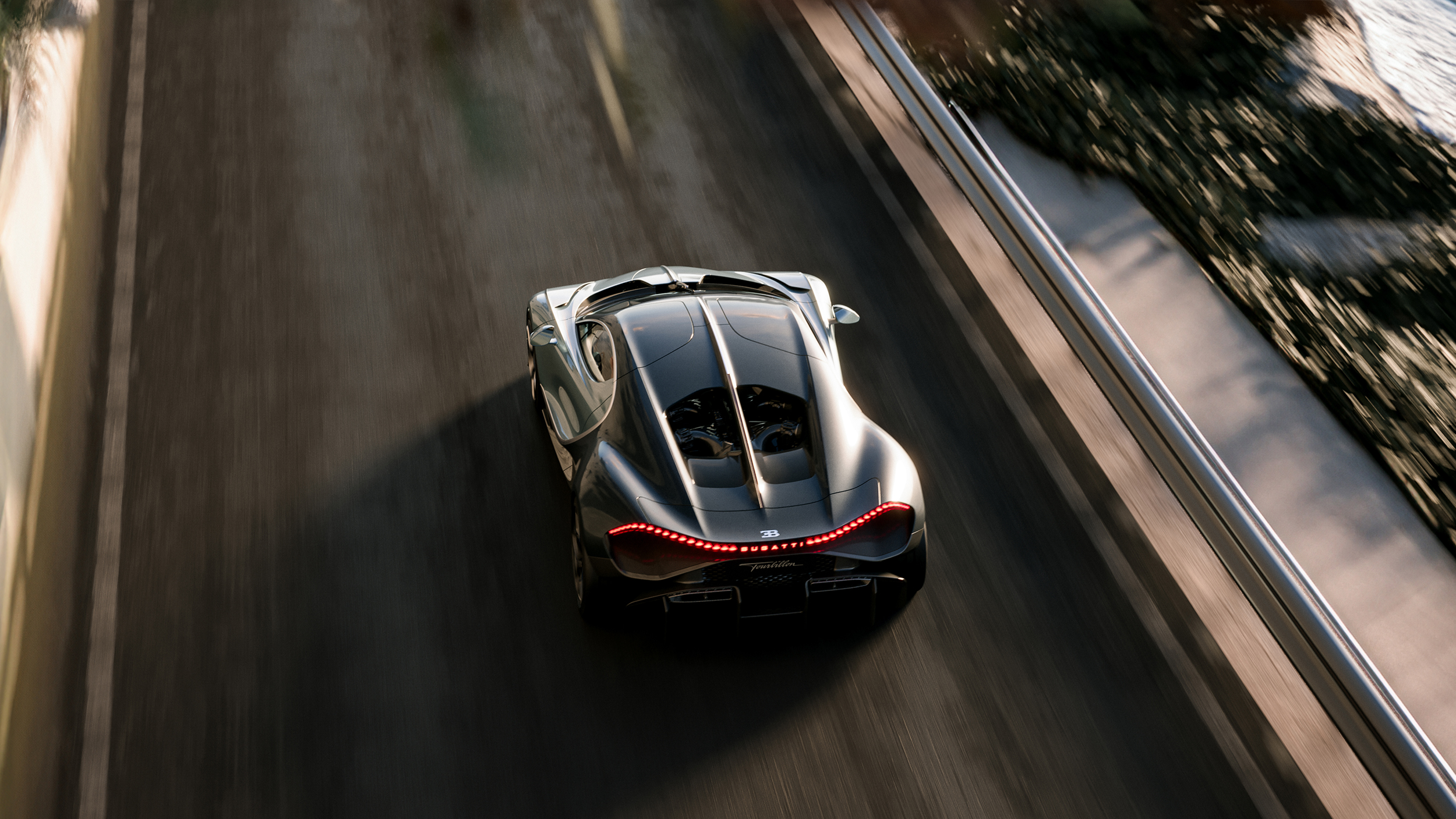
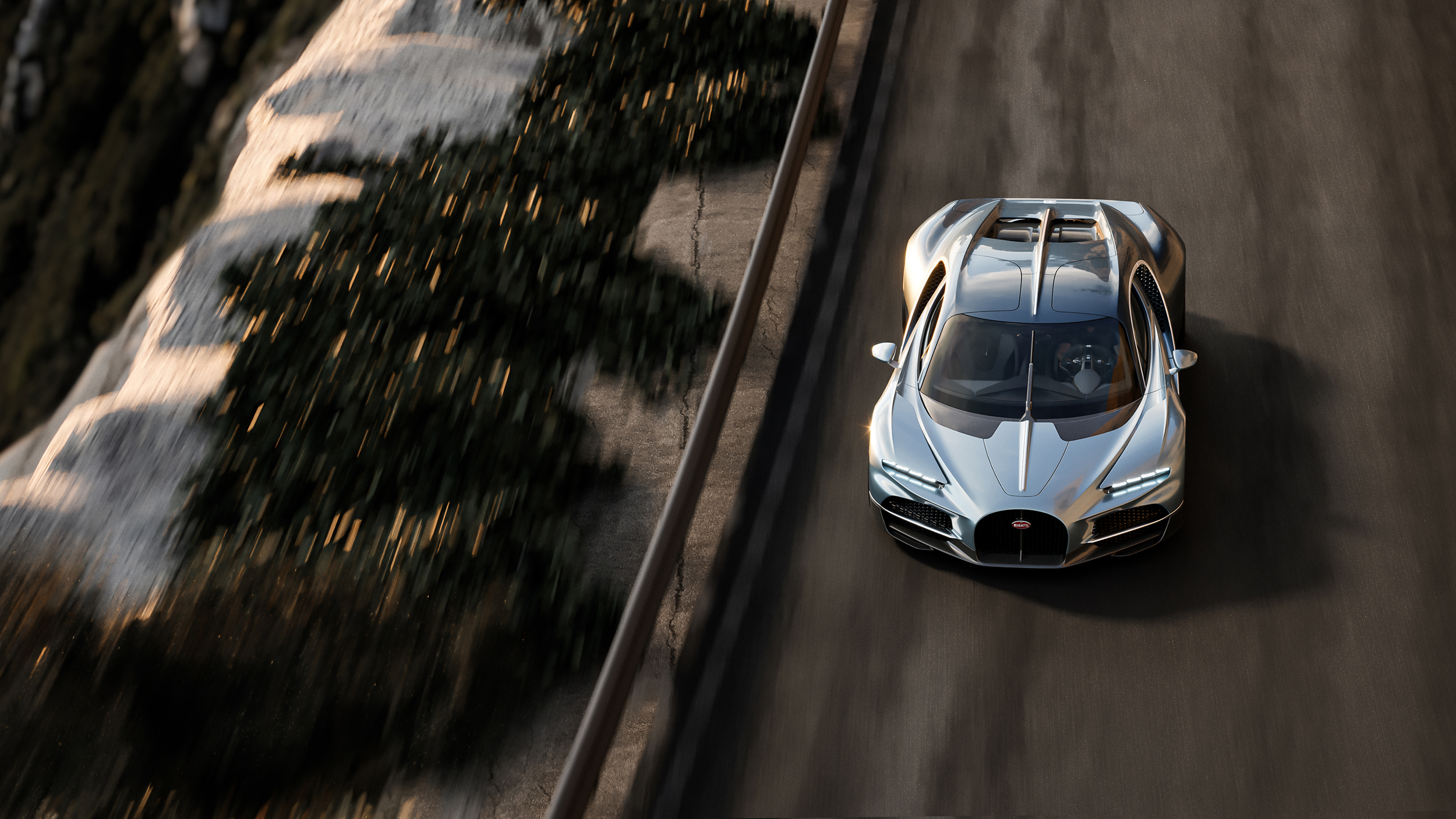
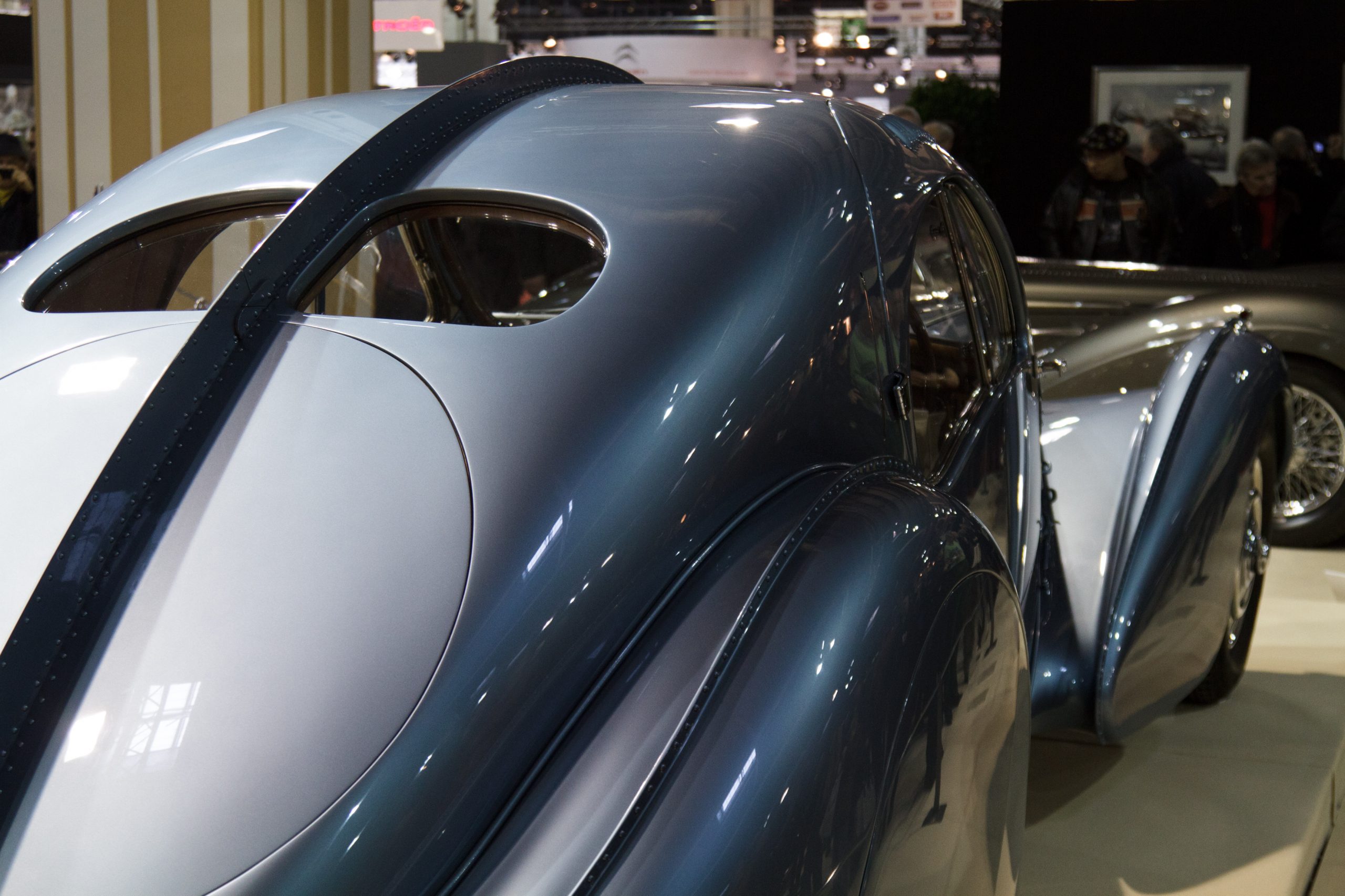
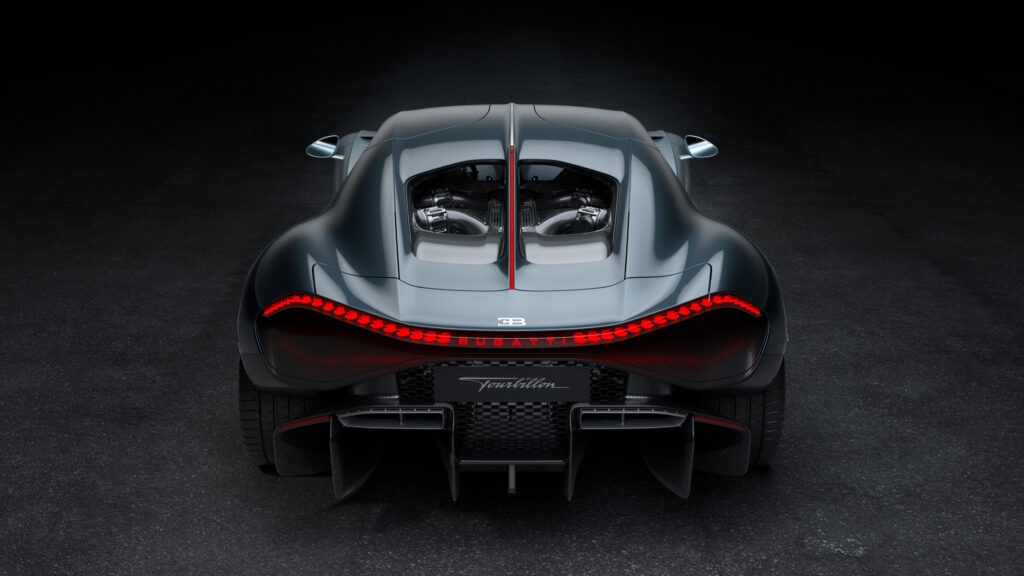
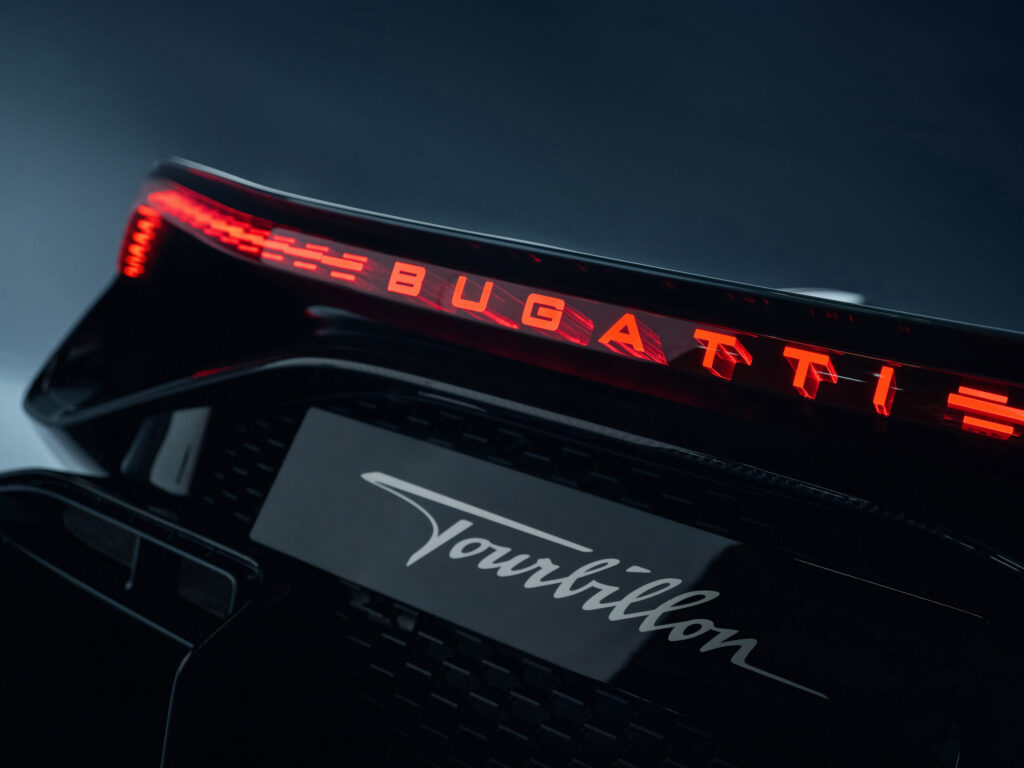
The central spine draws on the Type 57S Atlantic, a familiar reference for Bugatti designers. Here, the connection is handled with restraint. Two openings above the engine echo the contours of the Atlantic’s rear windows without copying them directly. The spine also houses the third brake light, making the motif part of the car’s distinctive lighting signature.
The theme continues at the windscreen, where the single wiper rests in the center. It’s a small detail, but a telling one: the motif links separate parts of the car while giving each a clear visual role. That attention to function and form is the Tourbillon’s recurring strength.
The cabin puts watchmaking first
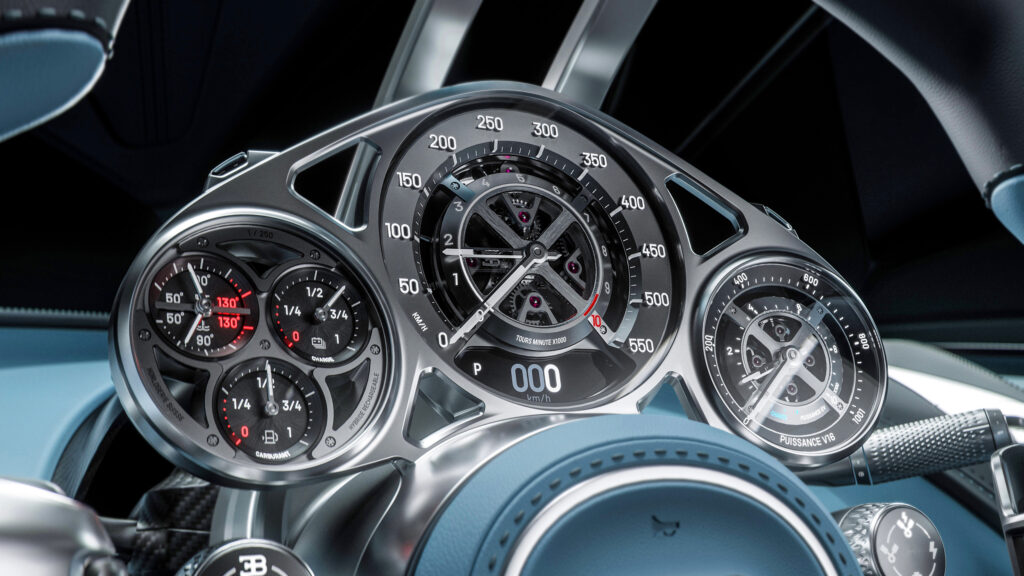
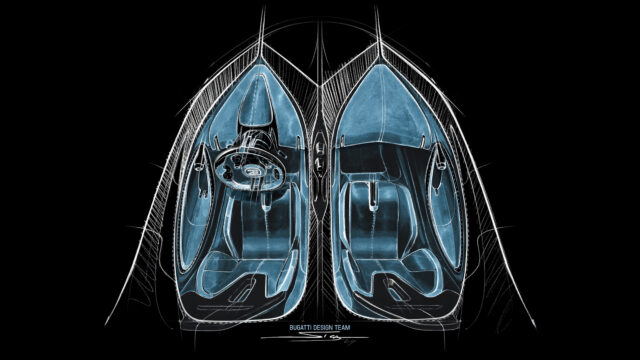
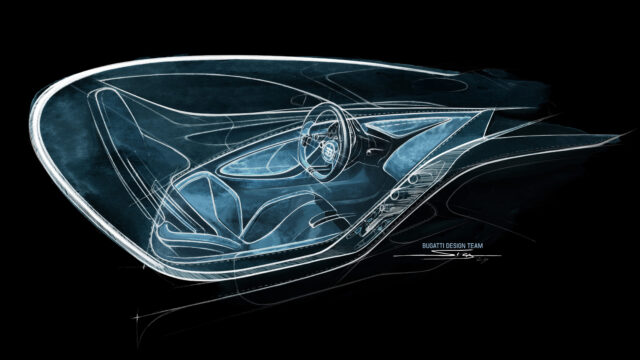
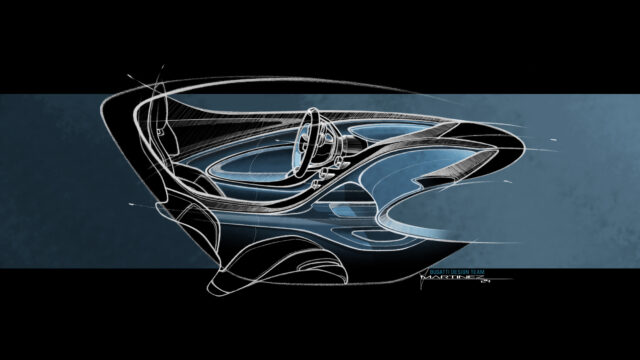
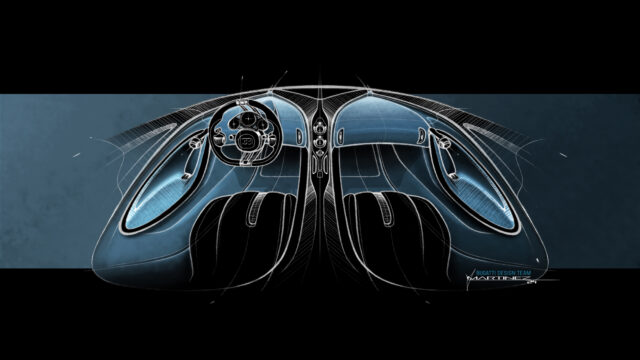
The interior is the more surprising part of the design. Its uncluttered layout looks inviting, yet the details are anything but plain. Bugatti’s designers have taken the project’s mechanical-watch inspiration into the cabin, shaping an intricate instrument cluster and carefully finished secondary controls. The result gives the driver a tactile, visually rich alternative to the touchscreen-heavy interiors common across the industry.
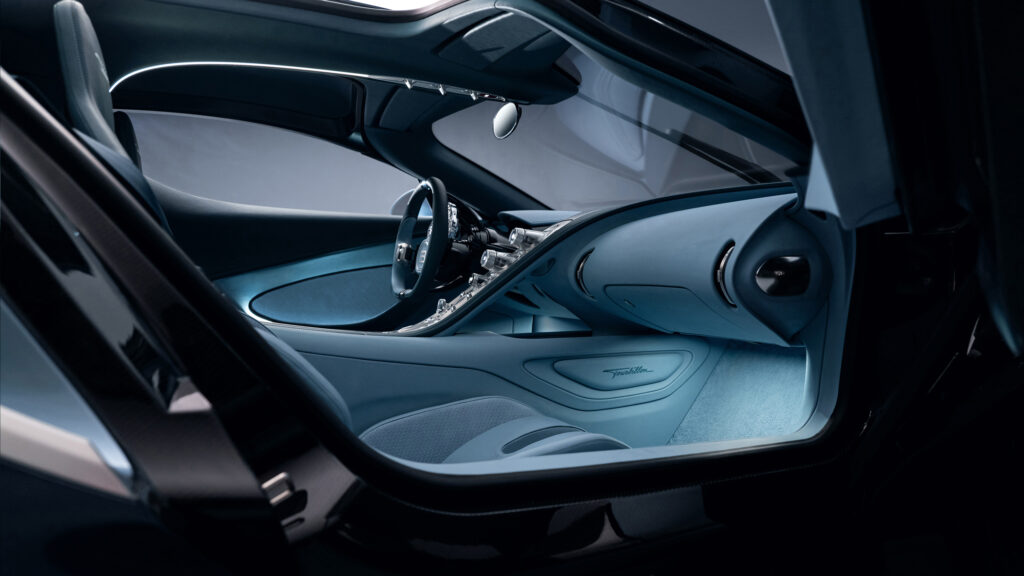
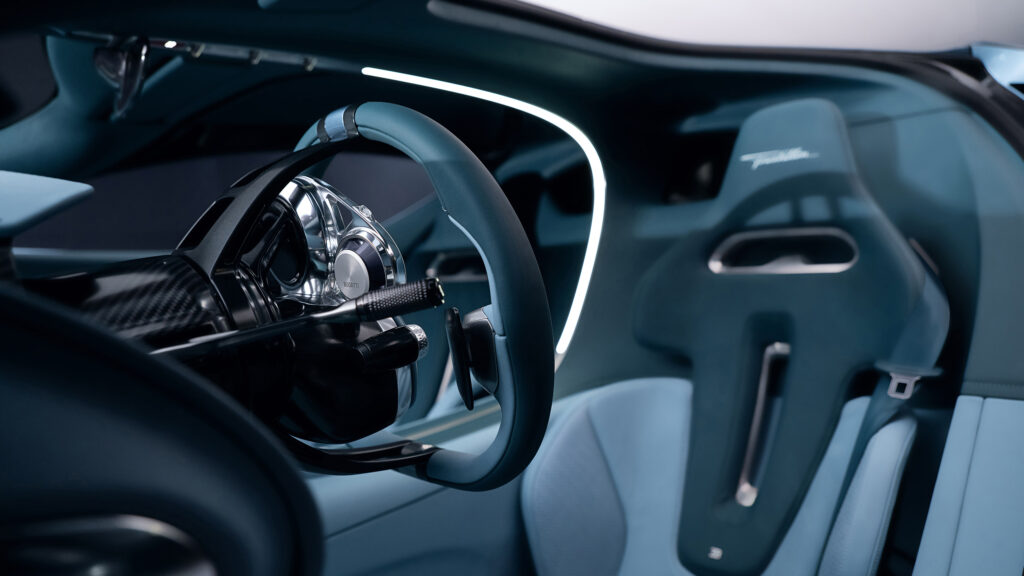
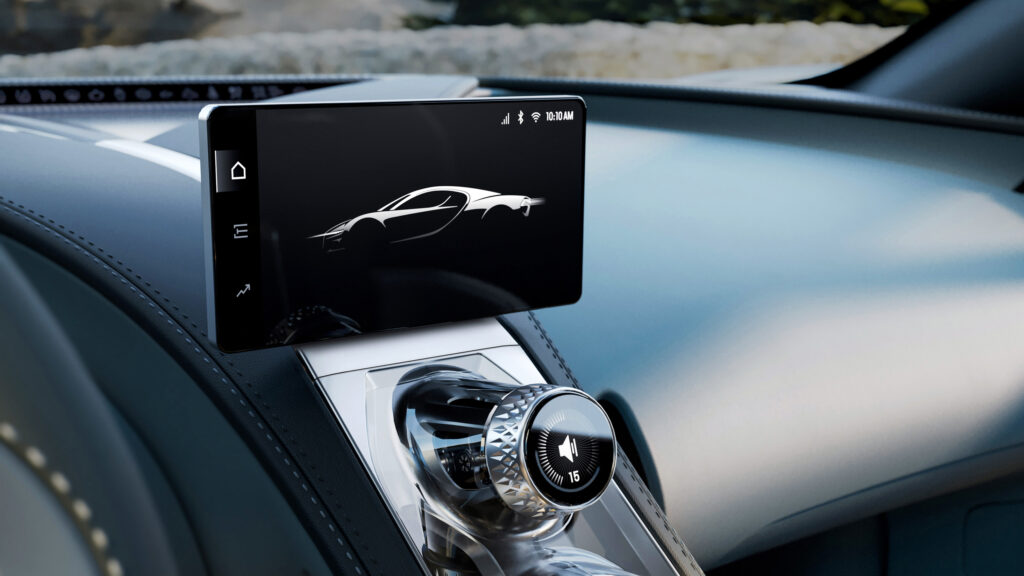
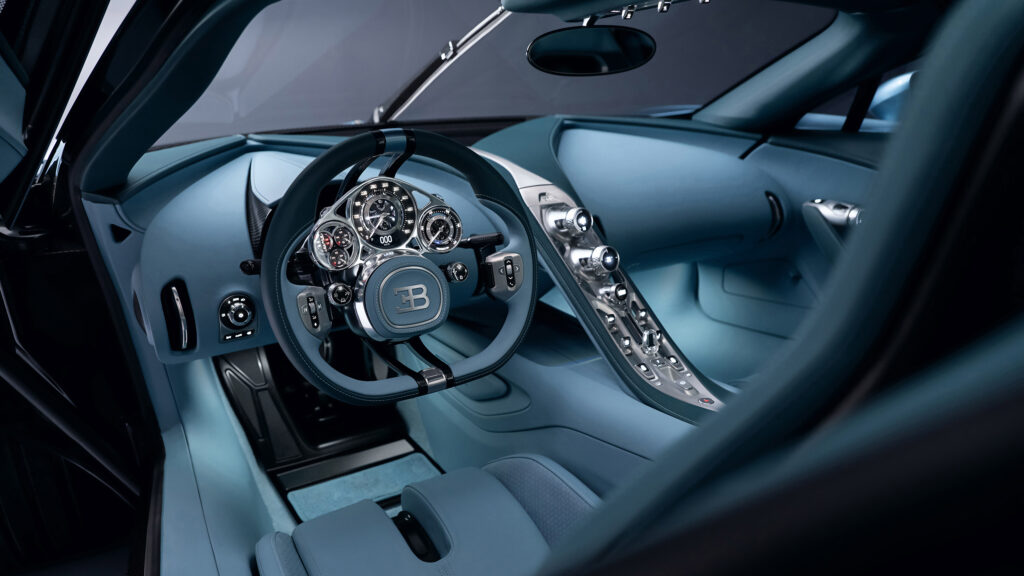
That choice also fits the brand’s history. Ettore Bugatti cared about how every component looked, down to the smallest fastener; the Tourbillon’s cabin carries that principle into its instruments and controls. The cluster doesn’t simply display information. It makes precision and craftsmanship part of the driver’s experience.
The Tourbillon’s design succeeds because it makes continuity feel purposeful. Its references to earlier Bugattis are clear, but the tighter cabin, lower stance and considered detailing give those cues fresh weight. Mate Rimac and the team behind the car have delivered a compelling answer to the question of what a modern Bugatti should look like: the next chapter keeps the marque’s visual identity intact while giving it a more focused shape.
Hagerty Media | Subscribe to Hagerty newsletters
Originally published by Hagerty Media.


