In lane Electric Vehicles
Ian Cameron’s 2003 Rolls-Royce Phantom Redefined the Modern Luxury Limousine
Description
Ian Cameron helped Rolls-Royce balance heritage and modernity in the 2003 Phantom, a design that gave the reborn marque a distinct identity.


Ian Cameron’s defining contribution to Rolls-Royce wasn’t a line he drew. It was the direction he gave a design team at a moment when the marque needed a fresh identity. The Phantom that arrived in 2003 showed how a car could feel unmistakably rooted in its past while making a forceful case for a new era.

That distinction matters in car design. A design director typically sets a vision, guides a team and helps its members do their strongest work; the director may receive the public credit, even when many designers shape the finished car. Put the right person in that role and the team can produce work that gives a brand lasting appeal. Put the wrong person there and a talented group can lose its focus.
Cameron took charge of Rolls-Royce design in 1998, after BMW acquired the marque. The timing left little room for a cautious update. The acquisition followed a contest with Volkswagen, but BMW secured the Rolls-Royce name while the company’s historic production site in Crewe, England, went to Volkswagen along with Bentley.
Rolls-Royce still carried extraordinary prestige, yet years without sufficient investment had left the brand struggling to support its old claim to make “the best cars in the world.” BMW had the engineering resources to build a formidable luxury limousine. The harder question was whether buyers would accept a BMW-era Rolls-Royce as a true member of the marque. Design would have to make that answer visible before the car even moved.
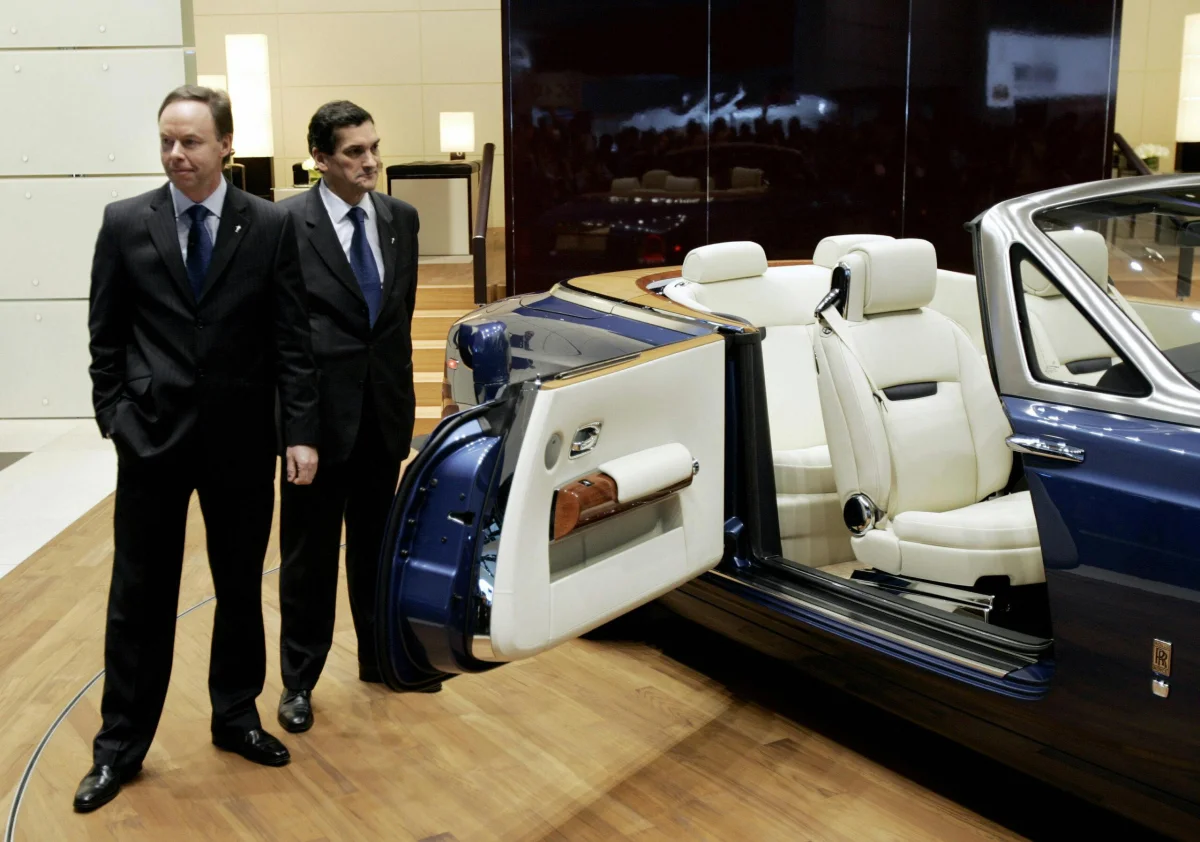
The brief carried two demands that could easily pull in opposite directions. The new car needed details that made its heritage legible, while also projecting a future that could attract customers who might never have considered older Rolls-Royce models such as the Silver Spirit. The team had to respect the brand without turning the result into a nostalgic exercise.
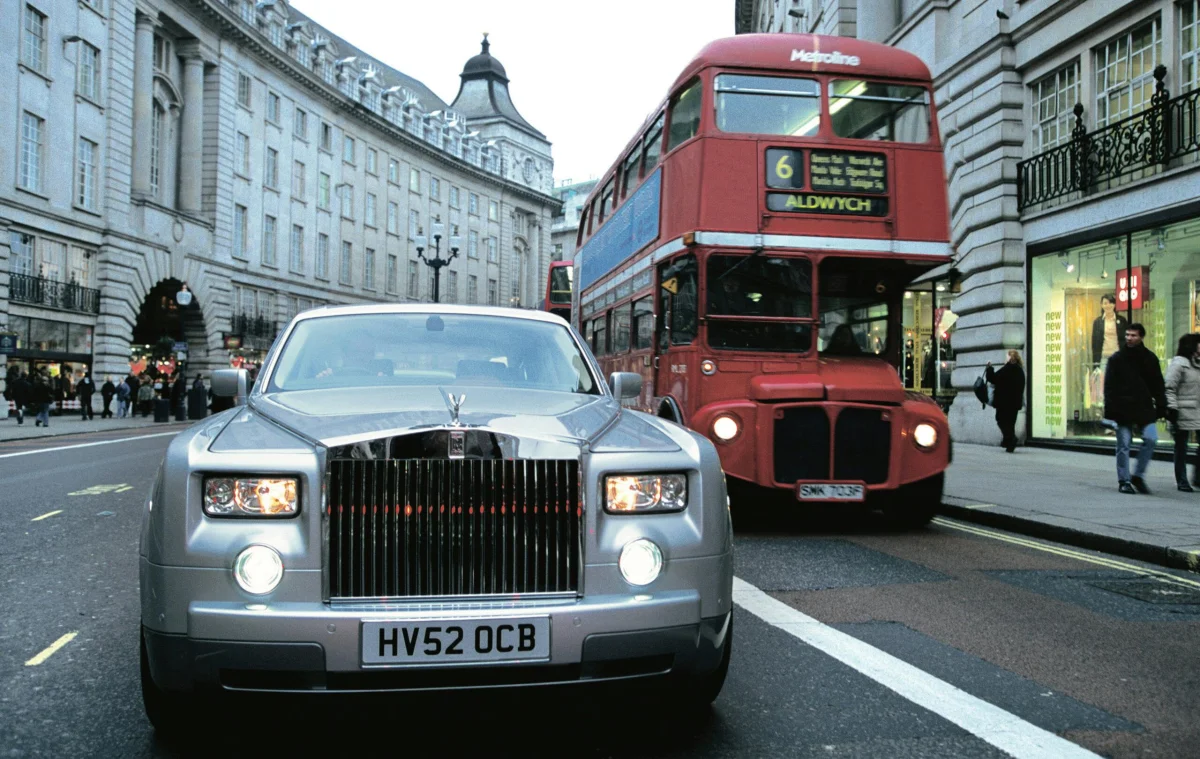
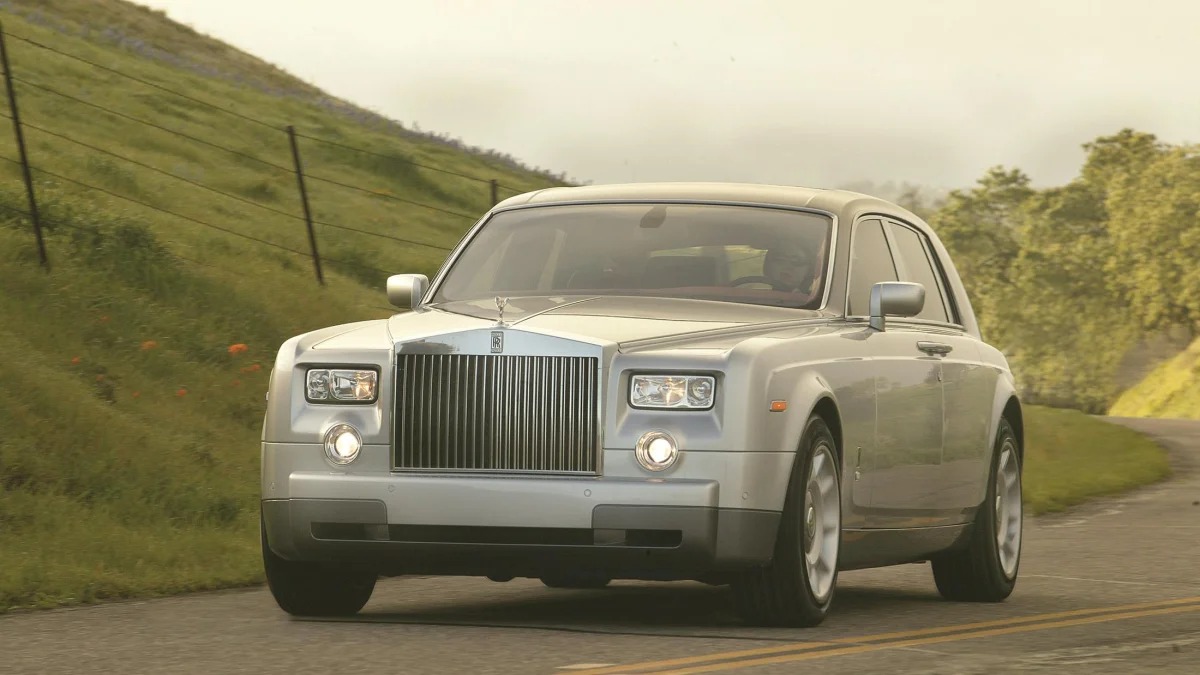
The answer became clear when the Phantom was unveiled on January 3, 2003. Its scale was the first message: a lofty front end, a long bonnet and a cabin that placed passengers high above the road. This was an unabashedly imposing car, and not every observer, particularly in Europe, welcomed its extravagance. Still, even critics could recognize the essential achievement: the Phantom looked like a Rolls-Royce.
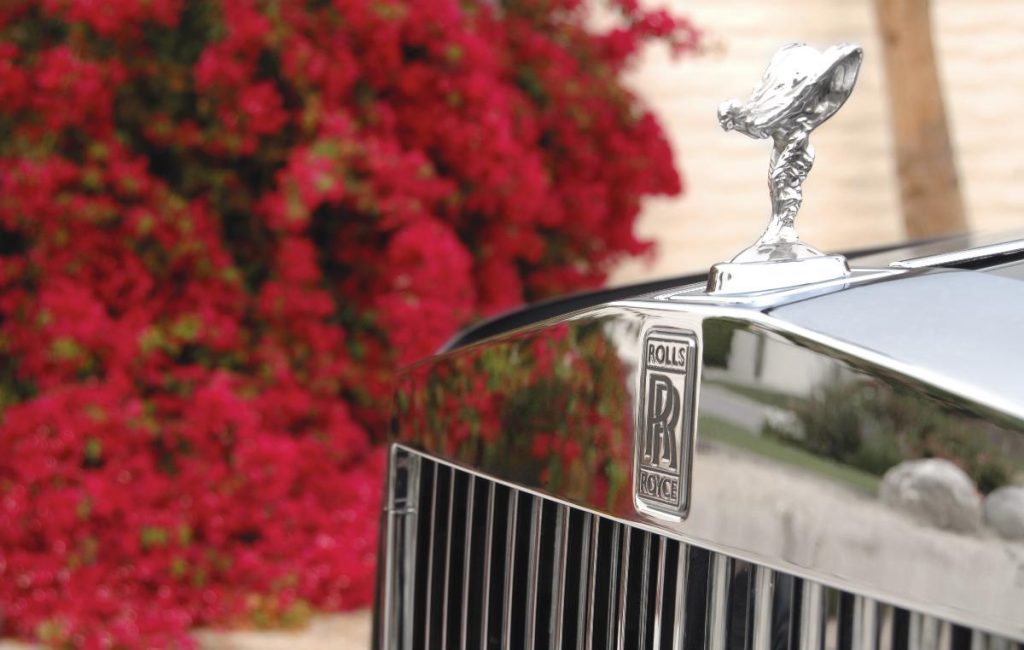
Its proportions keep that size from becoming awkward. Large wheels balance the tall bonnet and high waistline. The front axle sits far forward, reducing the visual overhang and giving the car the stance of a powerful machine. Behind it, the passenger compartment appears to settle over the rear axle. The broad roof pillars reinforce the sense of shelter and reserve while shielding rear-seat occupants from view.
The shape also resists the rising rear profile common to many cars designed with aerodynamic efficiency in mind. Instead, the Phantom’s roof and body ease down toward the tail in a restrained taper. That silhouette recalls the Silver Cloud of the 1950s, while the roof’s crisp edges can bring to mind some Rolls-Royces built by Hooper in the 1940s. Those references give the design depth, but the car never reads as a replica of an earlier model.
Just as important is the way the Phantom’s surfaces suggest weight and solidity. The body panels have enough curvature to catch light without becoming fussy. Their rounded transitions make the car seem almost carved from a single block, an effect that takes control of surface shape rather than a maze of decorative details. Mercedes-Benz demonstrated similar discipline under design director Bruno Sacco, who held the role from 1975 to 1999.
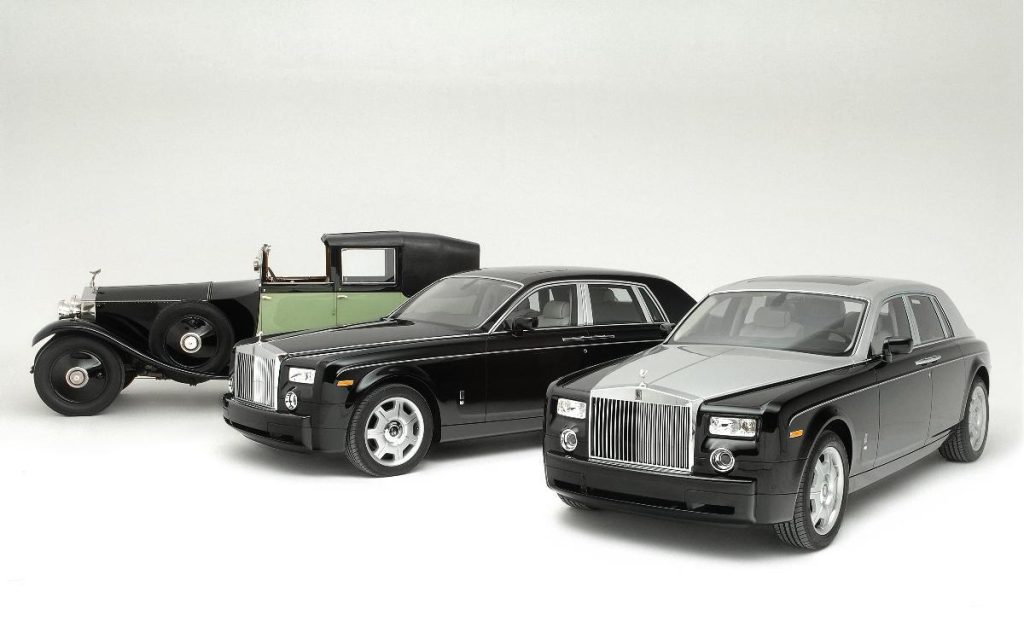
Rolls-Royce kept the Phantom’s broad sides remarkably clean. Two prominent creases run along the body, leading the eye from front to rear and emphasizing the car’s length. On a vehicle with this much visual mass, restraint gives the form room to speak. The effect relies on the shape of the whole car, rather than a long list of ornaments or surface flourishes.
That balance has aged well. More than two decades after its debut, the Phantom stands as one of the defining designs of the modern marque. What could once seem excessive now looks like a clear statement of what a Rolls-Royce can be: large, formal and unmistakable, yet carefully proportioned. The car helped give BMW’s Rolls-Royce a distinct identity at a time when its reputation and operations were in flux.
Cameron retired from Rolls-Royce in 2013. He died at his home in Germany on July 12, aged 74. The Phantom was among his most significant contributions to automotive design. Its legacy offers a useful lesson in how a luxury car establishes credibility: engineering can provide the substance, but proportions, presence and carefully judged references are what let customers recognize the brand in a new shape.
For more on the marque’s later models, see our review of the 2024 Rolls-Royce Spectre and our look at why the Phantom may become a classic. The Phantom’s design also draws on a longer story of the Silver Cloud and Rolls-Royce heritage.
Matteo Licata studied Transportation Design at Turin’s IED, graduating in 2006. He worked as an automobile designer for about a decade, including at Fiat Group’s Turin design studio, where his proposal for the 2010–20 Alfa Romeo Giulietta interior was selected for production. He later worked at Changan’s European design studio in Turin and EDAG in Barcelona. He teaches automobile design history to Transportation Design bachelor students at IAAD in Turin.
The original post appeared on Hagerty Media, a publication covering cars and motoring.


