In lane Electric Vehicles
How Nissan’s California Design Studio Shaped the Hardbody, Pathfinder and Pulsar
Description
Nissan’s California studio paired rival design teams with close production ties, helping shape the Hardbody, Pathfinder and modular Pulsar NX.
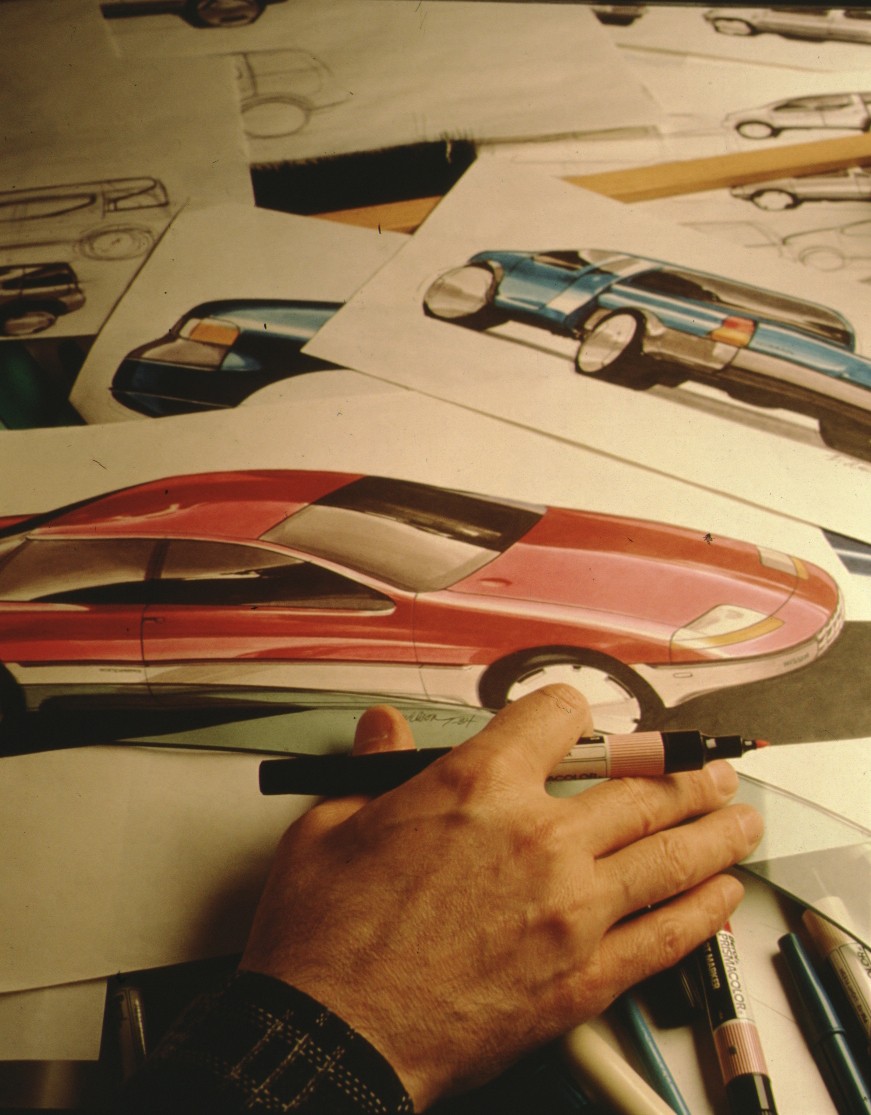
Nissan Design International’s early success rested on a practical idea: give American designers room to challenge the company’s established tastes, then connect their work closely to production. That approach helped shape the D21 Hardbody pickup, the first-generation Pathfinder and the modular Pulsar NX—and made the California studio an influential part of Nissan’s design operation.
By 1987, the studio’s designs were on the road. The Nissan NX Pulsar Mk2, Hardbody and original Pathfinder had entered production months earlier and were earning favorable reviews and awards. Just seven years before, Nissan’s first U.S.-based design staff had been sketching in a house near La Jolla’s Empress Hotel, followed by temporary studios near Miramar Air Force Base.
Nissan Design International, or NDI, began as a deliberate effort to put distance between new design work and what company president Takashi Ishihara considered conservative tastes and restrictive internal politics in Japan. It also gave Nissan a U.S. design presence in a market where Toyota had already established its Calty studio. The plan was for NDI to contribute ideas that would reach production, not simply create showpieces.
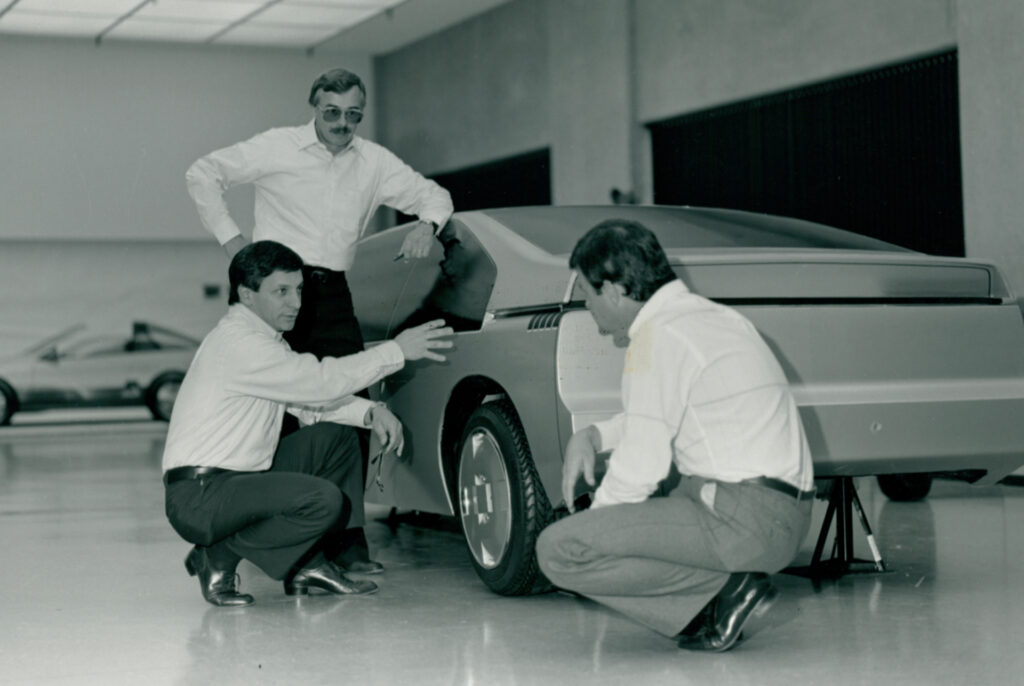
The studio’s founding figures were former General Motors designer Jerry Hirshberg and Nissan executive Kazumi Yotsumoto, an architect by training. Yotsumoto recruited Hirshberg with a promise of creative independence and a collaborative working culture. Hirshberg, in turn, brought in trusted colleagues Allan Flowers and Tom Semple, both established GM designers.
NDI is now known as Nissan Design America, a name it adopted in 2002. Its early work helped build a more direct relationship between Nissan’s U.S. design staff and the company’s production cars than Calty initially had with Toyota. The studio’s influence reached beyond styling: it helped make a bolder design process credible within Nissan on both sides of the Pacific.
Leaving GM for a new studio
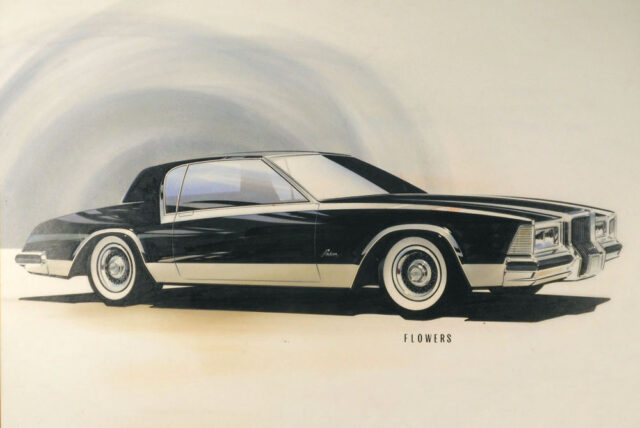
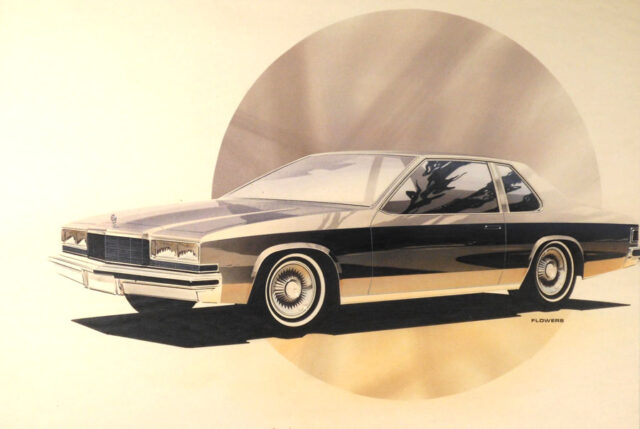
Hirshberg and Flowers joined GM after design school in 1964. By 1979, Hirshberg was Buick’s chief designer and Flowers its assistant chief. Both had worked on high-profile models, including the 1971 Buick Riviera and 1976 Buick Regal. Semple, who had joined GM in 1967, was an assistant chief designer at Chevrolet.
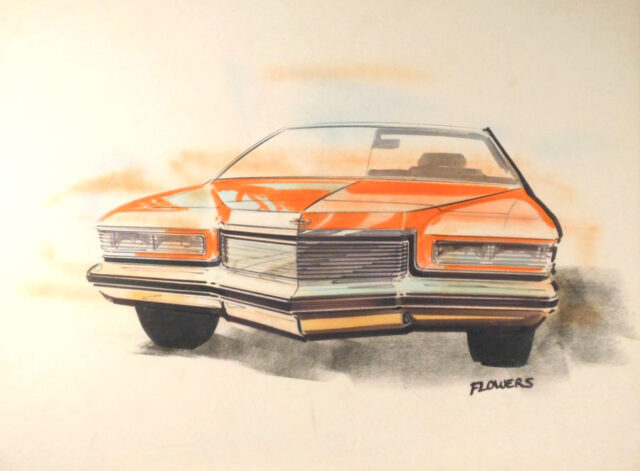
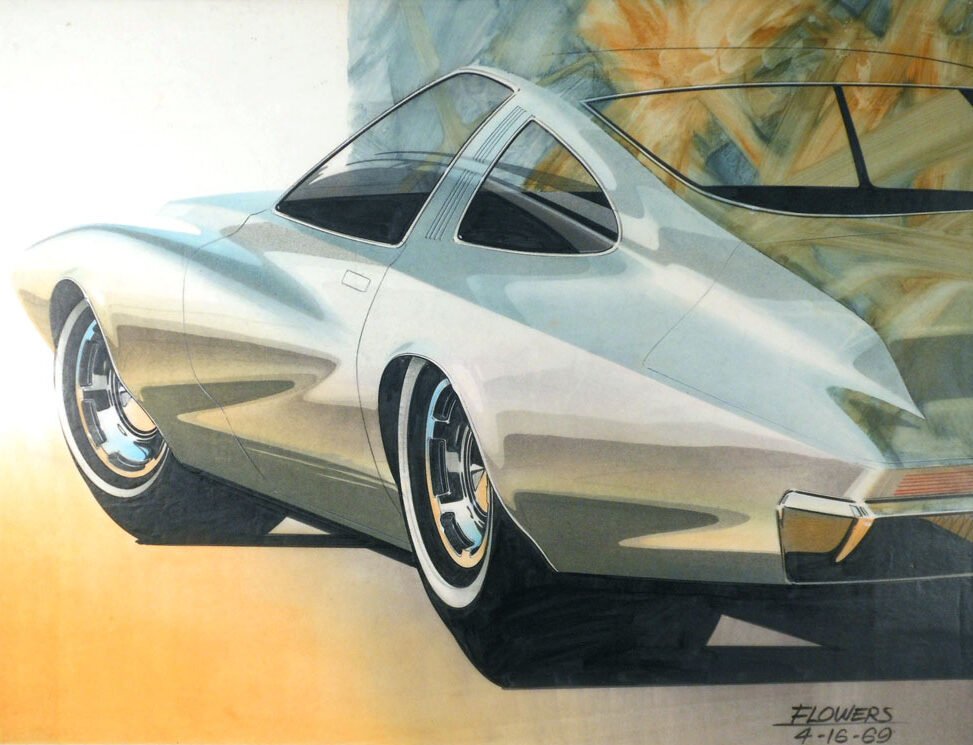
A Nissan headhunter first contacted Hirshberg in the summer of 1979. He assumed the call was a joke. The ensuing interviews and negotiations stretched over seven months, and included discussions about bringing Flowers and Semple with him. Hirshberg accepted the position in February 1980 and resigned from GM. The move startled colleagues: senior designers rarely left GM, especially for a Japanese automaker.
Flowers recalled that he and Semple kept quiet while people at GM speculated about who might follow Hirshberg. Within days of Hirshberg’s resignation, both had offers from Nissan. They faced a consequential choice: a new studio in California, with uncertain prospects, meant giving up the possibility of returning to GM and moving their families across the country. Flowers remembered his children’s reluctance, though he and his wife found California appealing during a Michigan winter.
The opportunity also answered frustrations with GM’s design culture. Hirshberg saw a once-dominant organization becoming rigid, with financial priorities diluting creative work. Nissan offered the chance to build a different kind of studio from the start. Its California location put the team near an active car culture while keeping it apart from established design centers.
NDI’s founders knew of Calty and David Stollery, a fellow former GM designer who had worked on Calty’s first production car. Hirshberg negotiated for two design studios and an engineering function, which would help the team carry projects toward production. Flowers said the offer suggested Nissan wanted a U.S. perspective and fresh thinking about the design process itself.
Flowers and Semple made their decision together over breakfast near GM’s Tech Center, then resigned. By March 1980, they were in California. The move was a gamble, but the studio’s structure gave them a chance to influence real vehicles rather than work only on concepts.
Sketching before the campus was ready
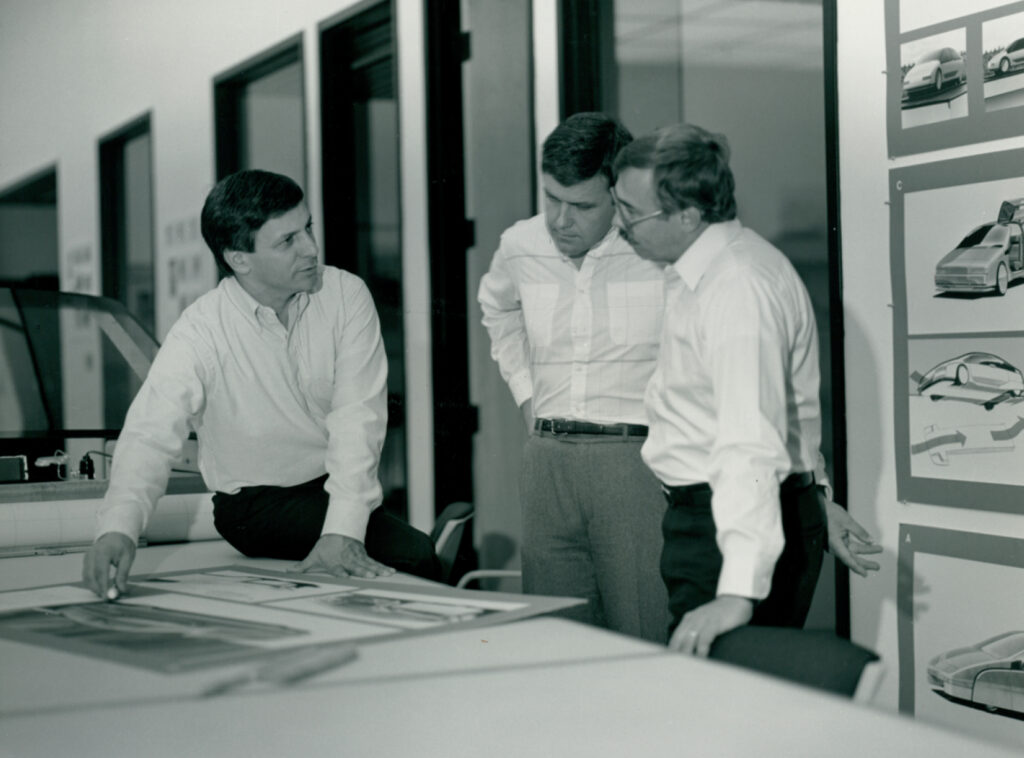
The team’s first tasks ranged from selecting art supplies to discussing the future studio’s architecture. Flowers and Semple initially shared an office in a house on Silverado Street in downtown La Jolla. They helped Hirshberg, Yotsumoto and the administrative staff assess possible sites, but within a month the designers were drawing cars. Hiring modelers and engineers and planning a building could wait; the design team wanted projects.
NDI soon outgrew the house and moved into temporary space leased from Tesa Design, an industrial design company. The roughly 2,000-to-3,000-square-foot studio came with access to contract modelers and designers. Bruce Campbell, an important early hire from Tesa, later helped lead design work on the Gobi pickup, NX coupe and Quest minivan.
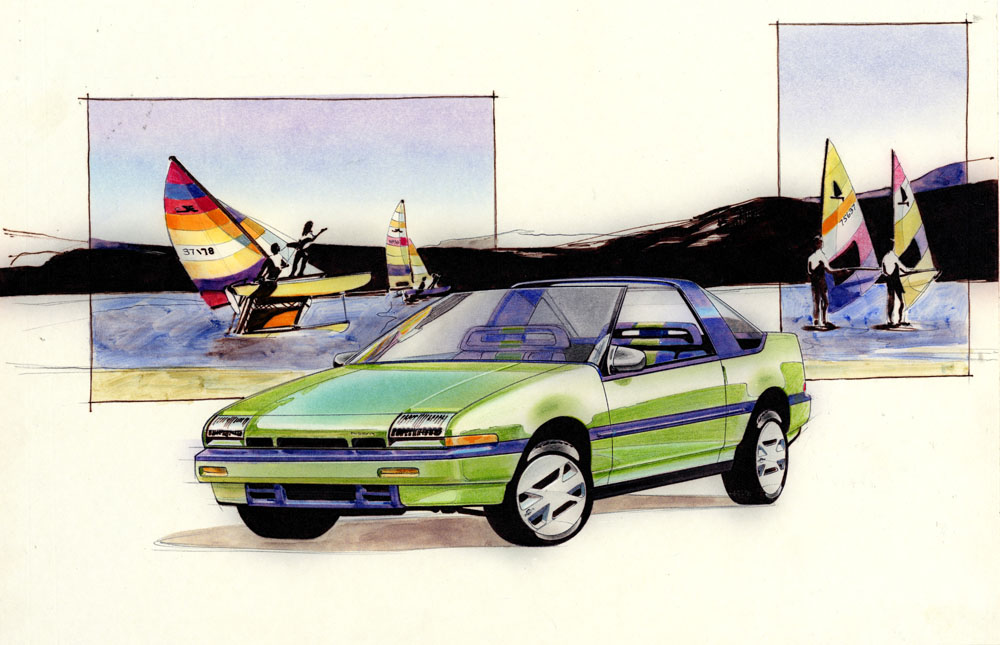
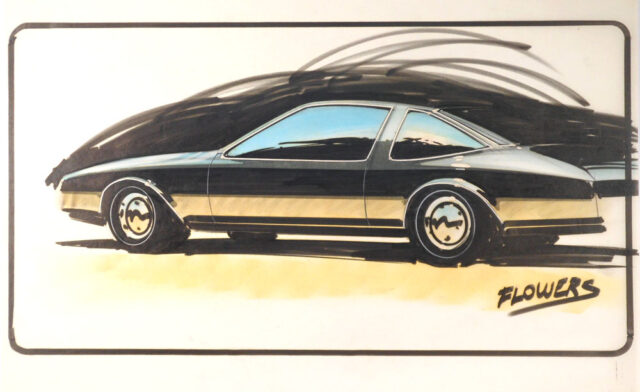
At Tesa, Flowers and Semple explored three ideas: a minivan, a small commuter coupe and a redesigned Maxima. Their minivan sketches came before Chrysler’s minivans arrived, reflecting the designers’ sense that this kind of vehicle had a future. The coupe concept anticipated the compact, sporty approach associated with the Honda CR-X, which had yet to appear. The Maxima, by contrast, was a response to the square, conventional character of the 1980 model. The team nicknamed it “Tofu Maxima.”
NDI eventually organized its work into two teams. Flowers led Blue Studio, while Semple led Red Studio. Among their early production assignments were proposals for the Prairie multi-purpose vehicle, also known as the Stanza wagon, and the Hardbody pickup. Nissan did not select NDI’s Prairie proposal, but the Hardbody design made it through.
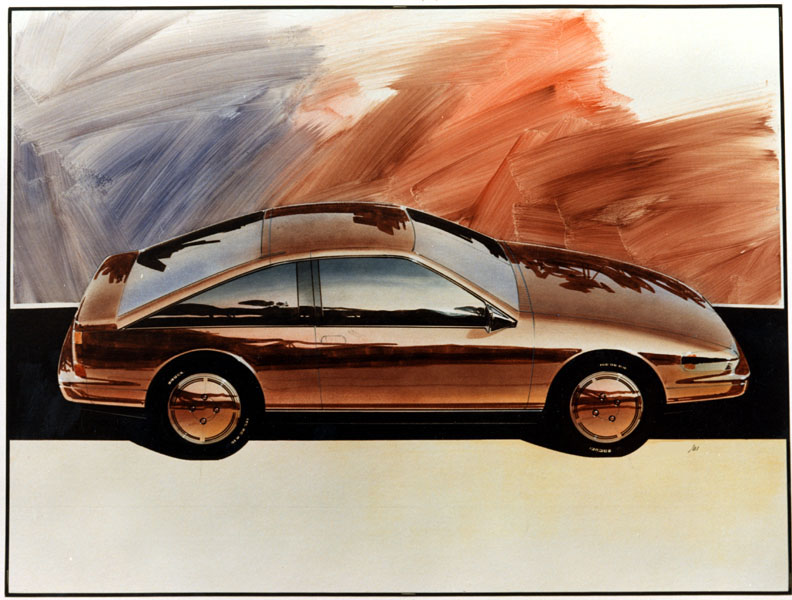
The radical Maxima proposals also lost to the home studio in Japan. Flowers said the team expected the ideas to be difficult to sell but chose not to soften them simply to improve their chances. By the time the third-generation Maxima appeared in 1988, NDI’s earlier thinking was visible in the car’s direction. Competition with Nissan’s Technical Center in Atsugi had by then become more collaborative, even as each team continued to push the other.
That exchange worked both ways. Flowers and his colleagues admired the distinct character of Nissan’s Pike cars—the Be-1, Figaro, Pao and S-Cargo—and wished they had created them. The relationship was not a one-way export of American ideas; exposure to Japanese design expanded the California team’s own sense of what a Nissan could be.
The permanent campus was completed in early 1983. Nissan initially hired Kajima to design the complex, but the proposed building did not fit the Southern California setting or the designers’ needs. Hirshberg insisted on a different approach, and Semple brought in architect Ken Ronchetti, a former Art Center classmate then designing homes along the California coast. Ronchetti was first assigned the interiors, then took over the whole project after Kajima withdrew.
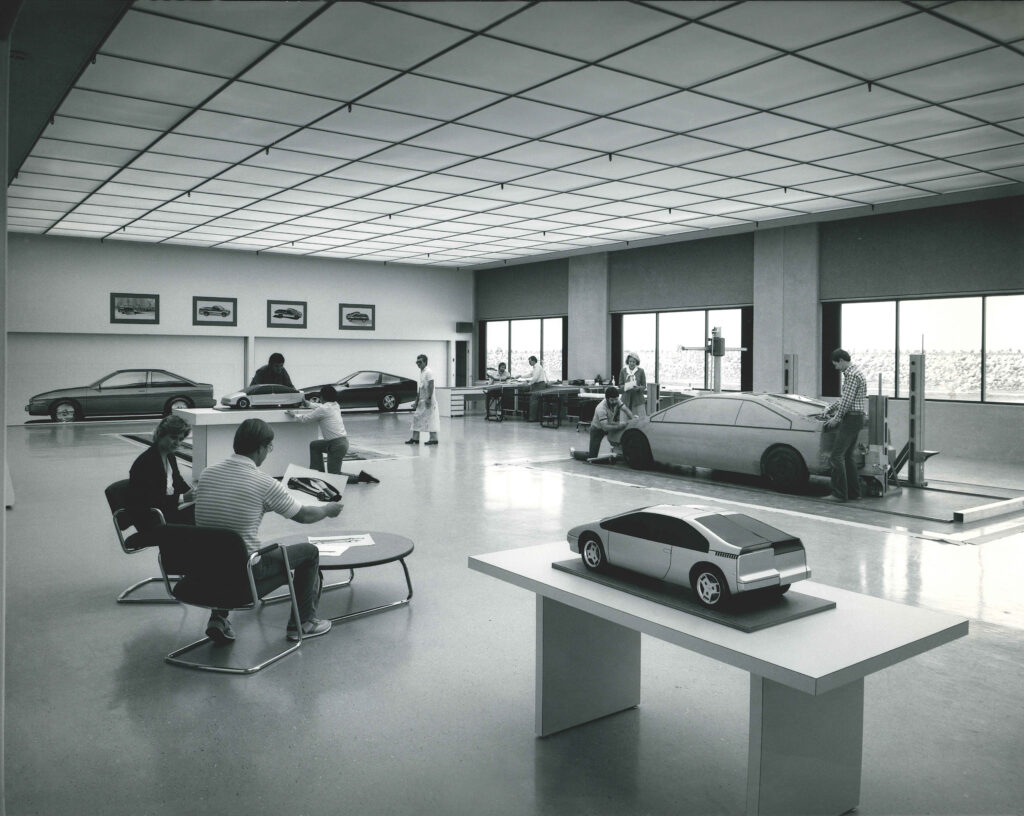
His understated concrete campus included two large studios, a library, offices, and workshops for modeling, painting and machining. It gave NDI room to develop cars and make physical models under one roof. The site remains Nissan Design America’s home.
The Hardbody put NDI into production
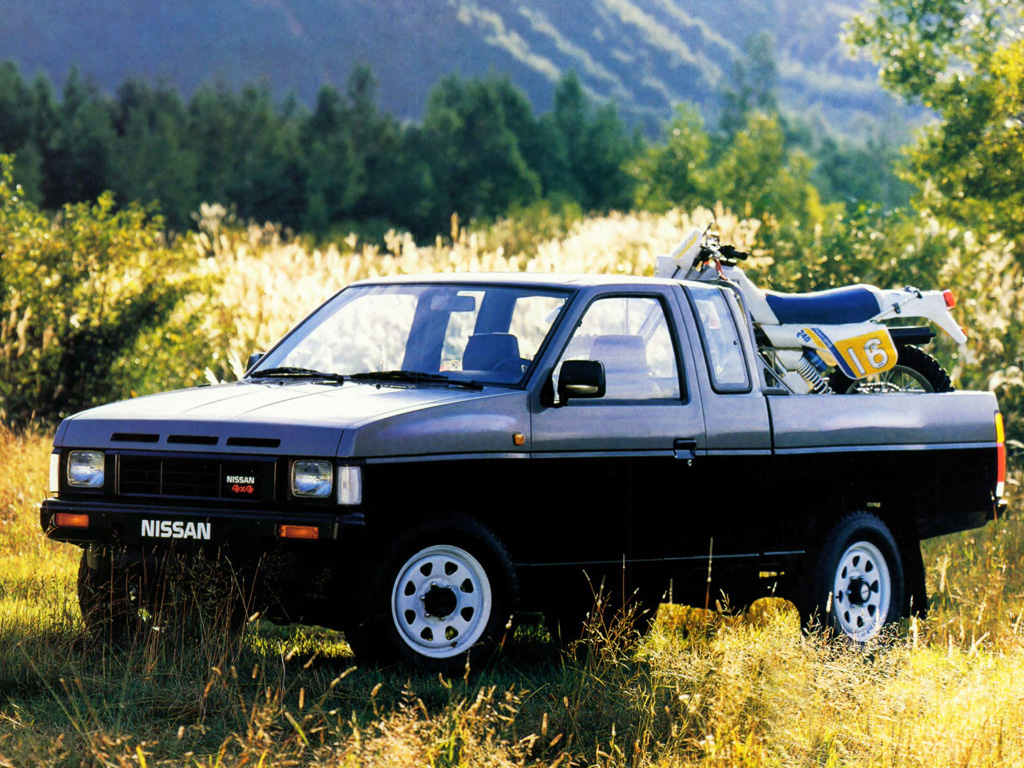
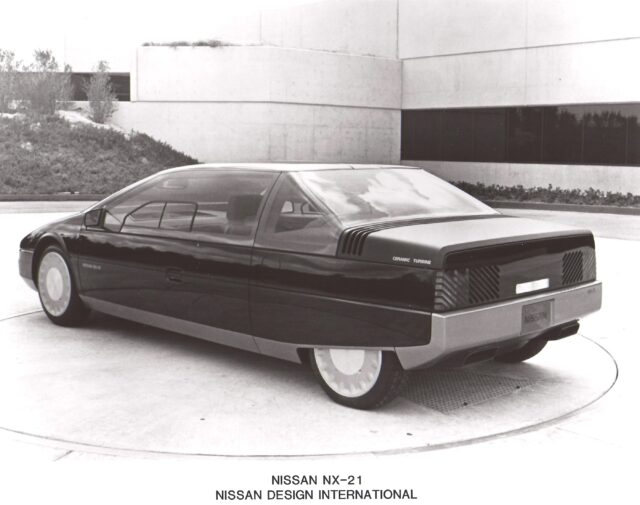
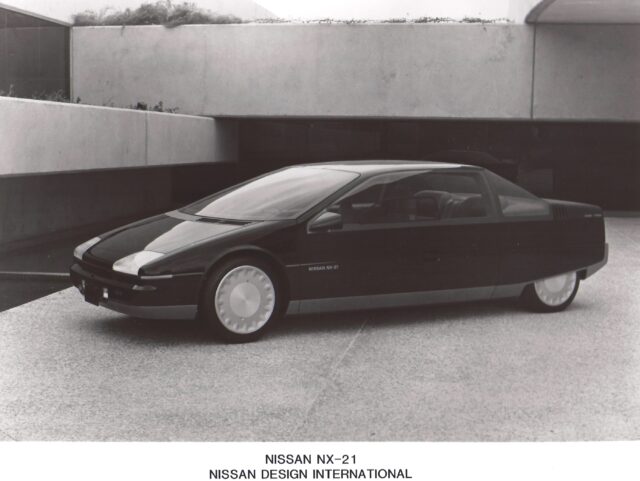
The 1983 NX-21 concept was NDI’s first major showpiece, but the D21-series Hardbody was the studio’s first production vehicle. Nissan’s small pickups had been popular in the United States during the 1970s and helped motivate the company’s decision to build a factory in Smyrna, Tennessee. Yet the way American buyers used them surprised managers in Japan. The trucks were designed primarily as work vehicles for the home market, while many U.S. customers treated them more like everyday passenger vehicles.
Nissan responded to that difference by planning two versions of the D21: one for the United States and one for other markets. The project, initially called Project 850, gave NDI a chance to show why a design operation in the company’s largest export market could matter. The truck needed to reflect local expectations while remaining part of a global product program.
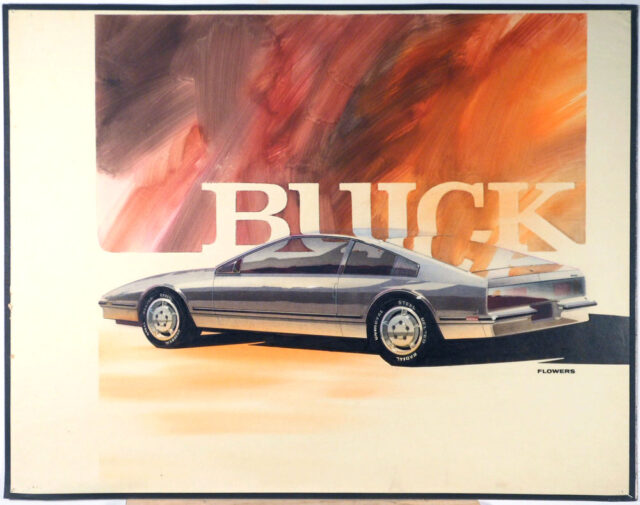
Both studios contributed. Hirshberg’s preference for hiring people with contrasting sensibilities came through in the process. Semple’s expressive approach helped create the Hardbody’s muscular fenders, which he sometimes called “triceps.” Flowers brought a more restrained, Bauhaus-influenced sensibility to the cab and bed. Nissan selected Red Studio’s overall proposal, then incorporated the rear portion of Blue Studio’s design.
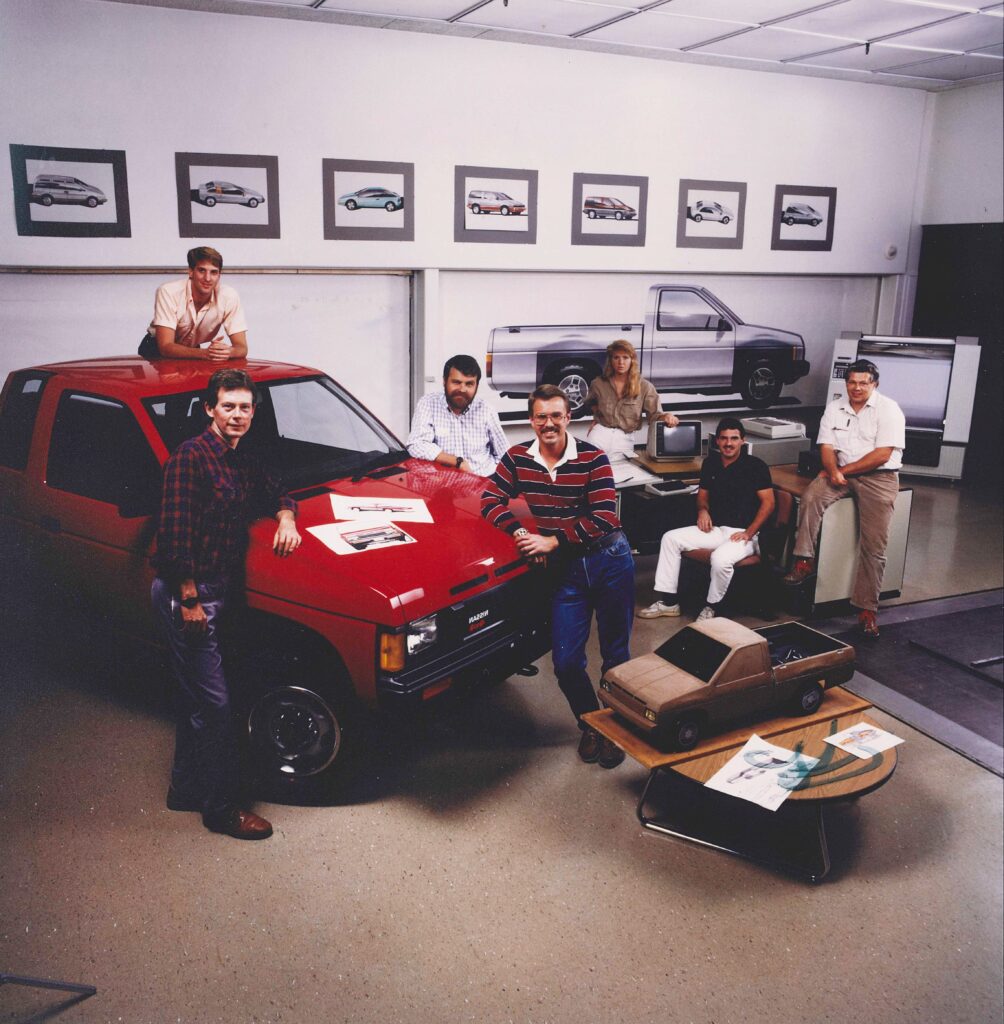
NDI’s creative remit also extended beyond cars. The designers worked on furniture for preschool children and medical equipment for Eli Lilly. The children’s furniture project forced the team to consider how users with different proportions and perspectives experienced an object. To guide the color choices, they looked at which crayons children used most often. The preferred colors were not simply the bright shades adults might assume children would choose; the resulting palette included calmer tones, such as soft gray-blue for nap cots.
Flowers led that work, with designer Diane Allen contributing. Allen later became known for work on the 350Z and Titan. The project illustrates the wider value of NDI’s approach: studying how people actually interact with products could inform decisions beyond vehicle styling.
Hirshberg also opened design reviews to employees outside the senior design ranks. Anyone could attend and offer an opinion, including staff whose jobs had nothing to do with styling. His reasoning was that a reaction from a secretary or janitor might reveal something about how the public would read a vehicle. Employees were encouraged to take on different roles, too. In-house photographers included sculptor Arthur Markiewicz and administrative assistant Marsha Portugal.
Pathfinder and Pulsar turn concepts into signatures
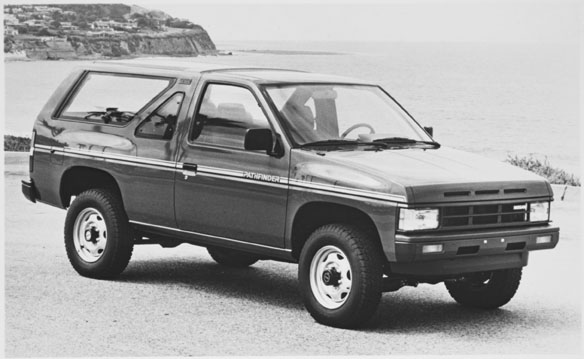
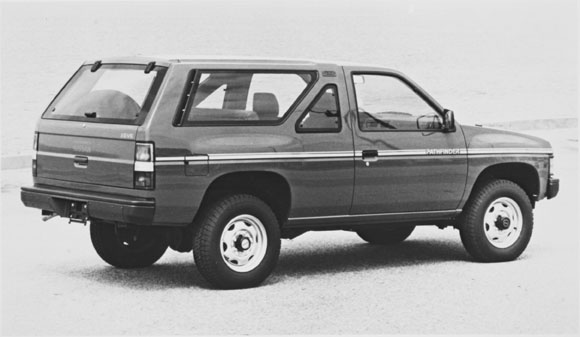
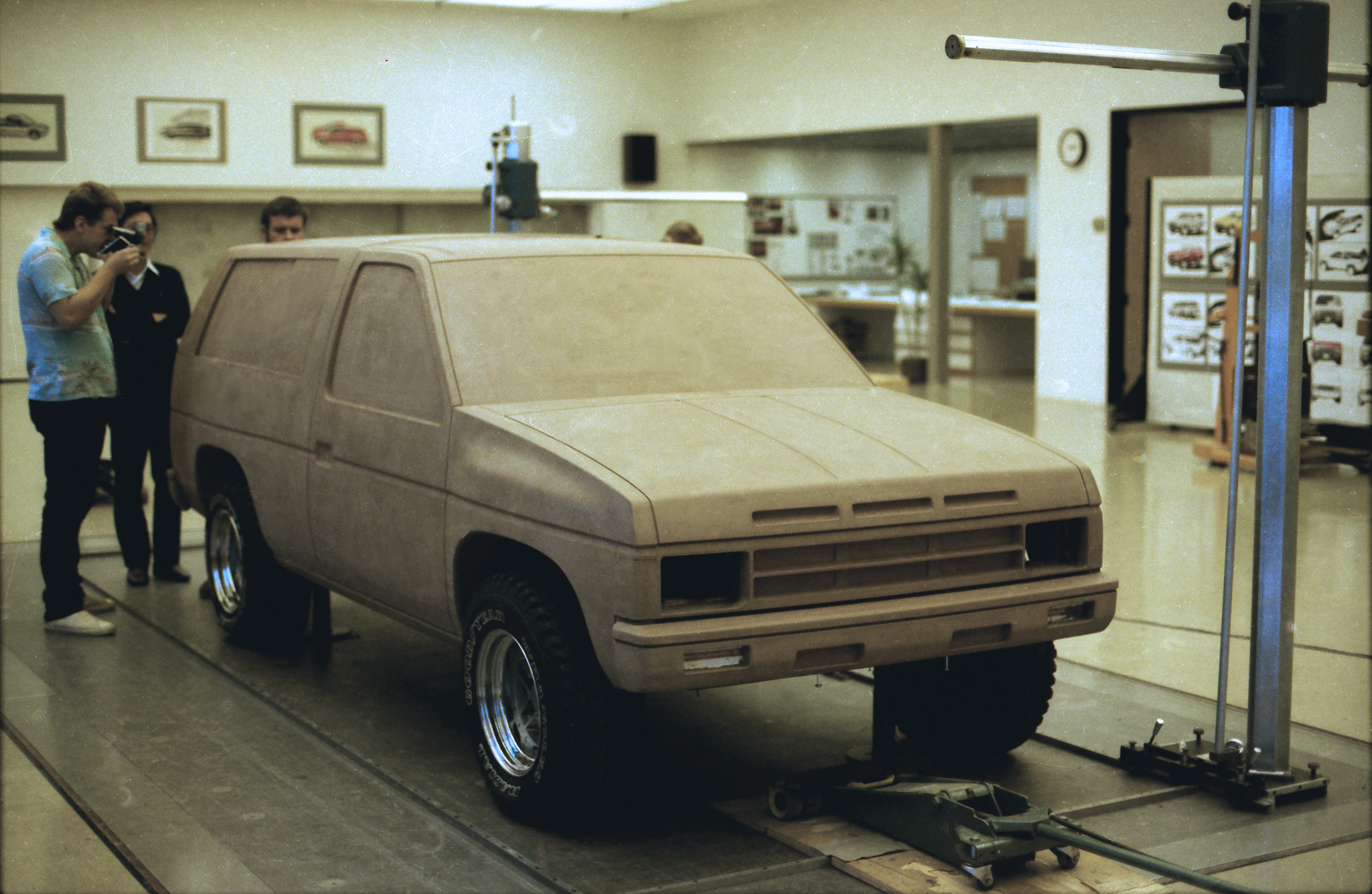
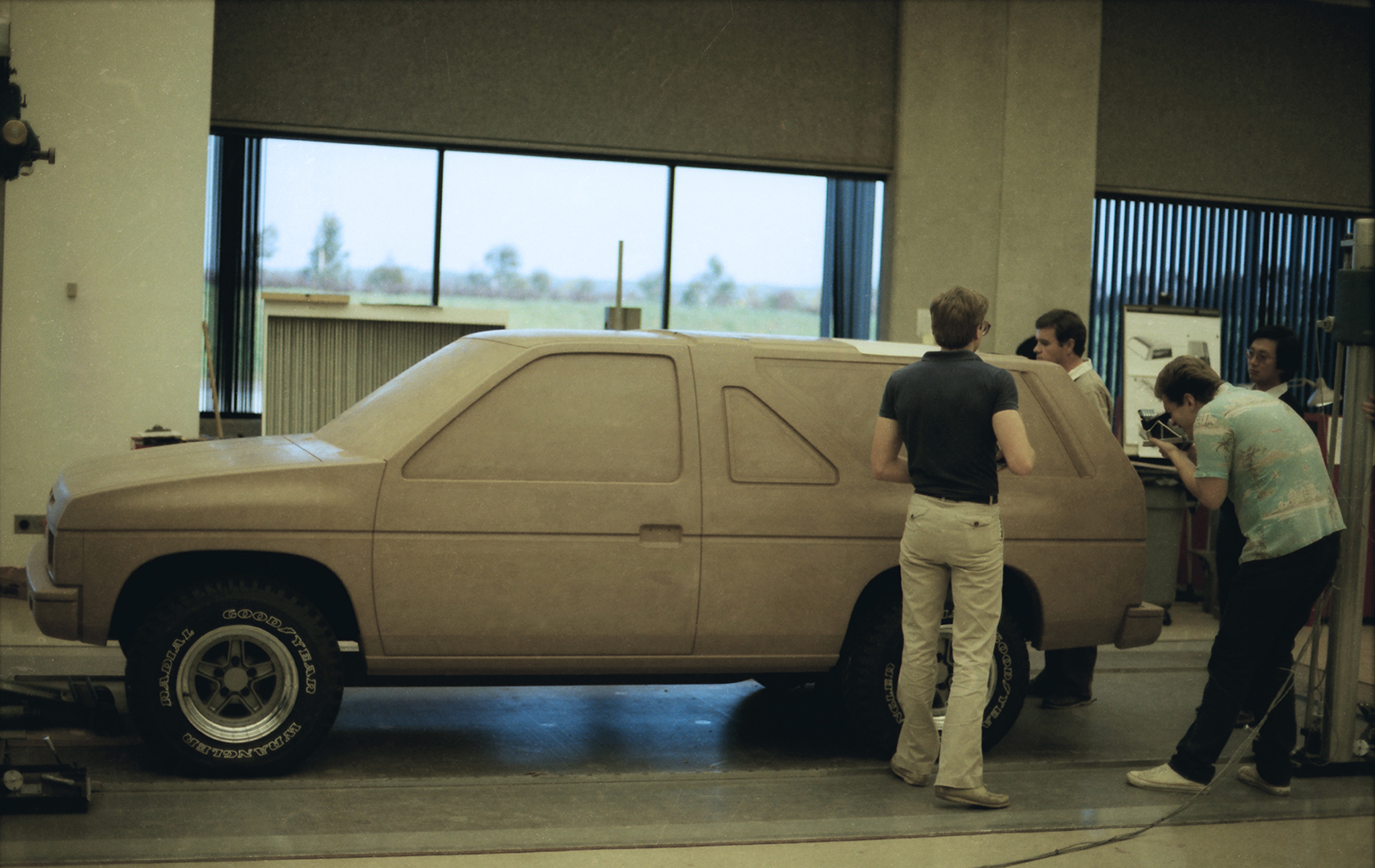
The Pathfinder grew from the Hardbody’s design program, with senior staff—including Hirshberg—contributing sketches. At NDI, vehicle programs could take six months to a year to develop, so work on the SUV began while the pickup was still underway. Hirshberg proposed the Pathfinder’s distinctive triangular side window.
The first sketches showed a taller, boxier vehicle, in the manner of the Isuzu Trooper or Mitsubishi Montero. Linking the SUV more closely to the Hardbody gave it a sleeker shape. Doug Wilson, who had joined Flowers’ Blue Studio from Chrysler in 1982 and had sketched the rear of the pickup, worked across both teams and produced many Pathfinder proposals.
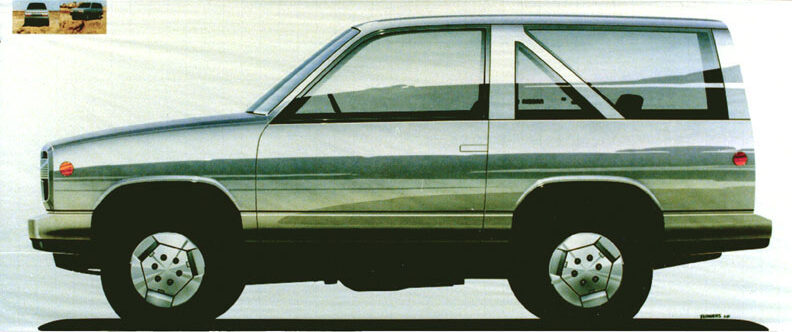
The design team was pleased with the result, but the way owners used the vehicle brought a new challenge. Buyers often drove the Pathfinder like a car, and four-door versions became more important than two-door models. The striking roof treatment was harder to carry over to the four-door body. That practical lesson emerged from the market after the design had taken shape: proportions and styling ideas had to work across the configurations customers came to prefer.
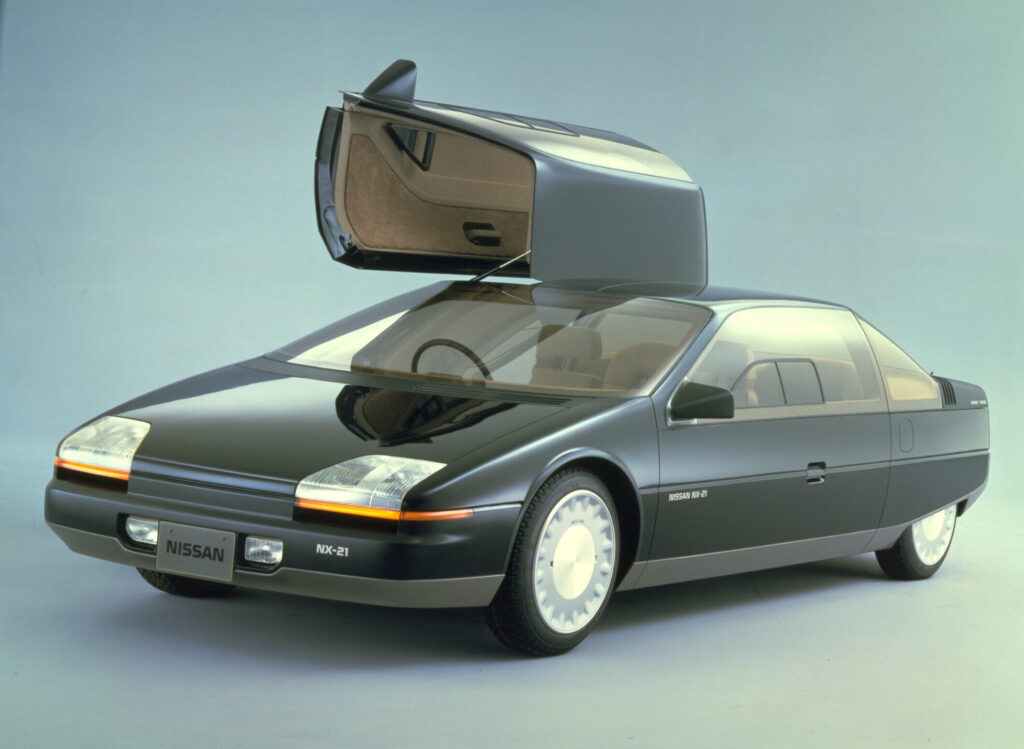
Blue Studio’s first project in the new campus was the NX-21, largely sketched by Wilson. Semple contributed substantially to the modeling, and the effort drew on the wider team. Nissan liked the concept, which became the basis for the NX Pulsar. The production car was Blue Studio’s first project to reach the market as a complete team effort. Flowers was chief, Bill Brown handled engineering, Wilson established the design theme, and Campbell also contributed. Flowers designed the front half.
The Pulsar’s best-known feature emerged from an incidental sketch. Wilson had drawn a revised hatch parting line and colored the section gray. Hirshberg spotted the drawing while Wilson was away, circled it and wrote “Eureka!” The idea of treating the hatch section as a removable module was Hirshberg’s interpretation of Wilson’s mark, rather than the sketch’s original intent. The team developed the concept into the Sportbak and T-top configurations, allowing the car to open up into a convertible-like form.
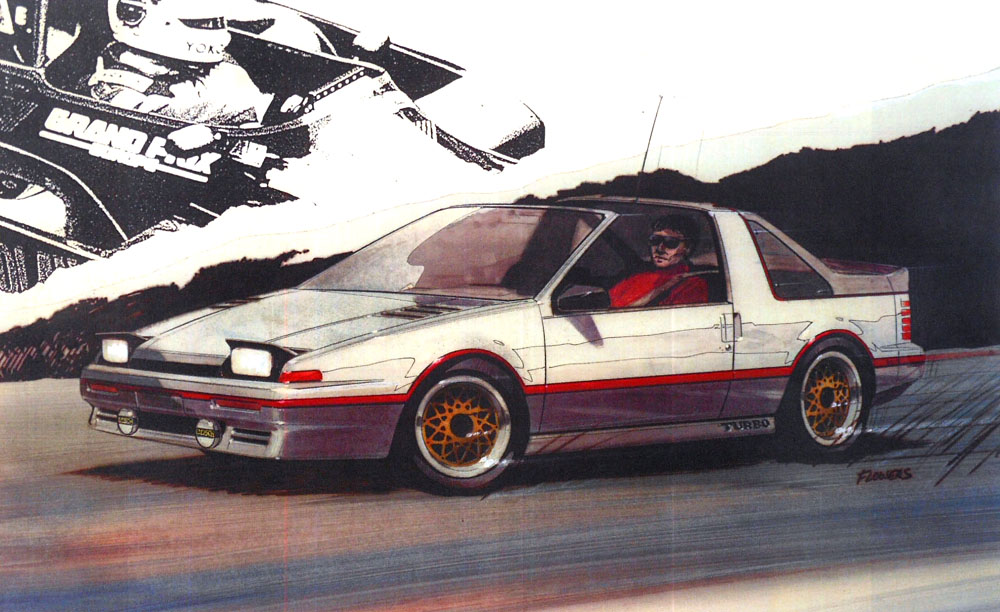
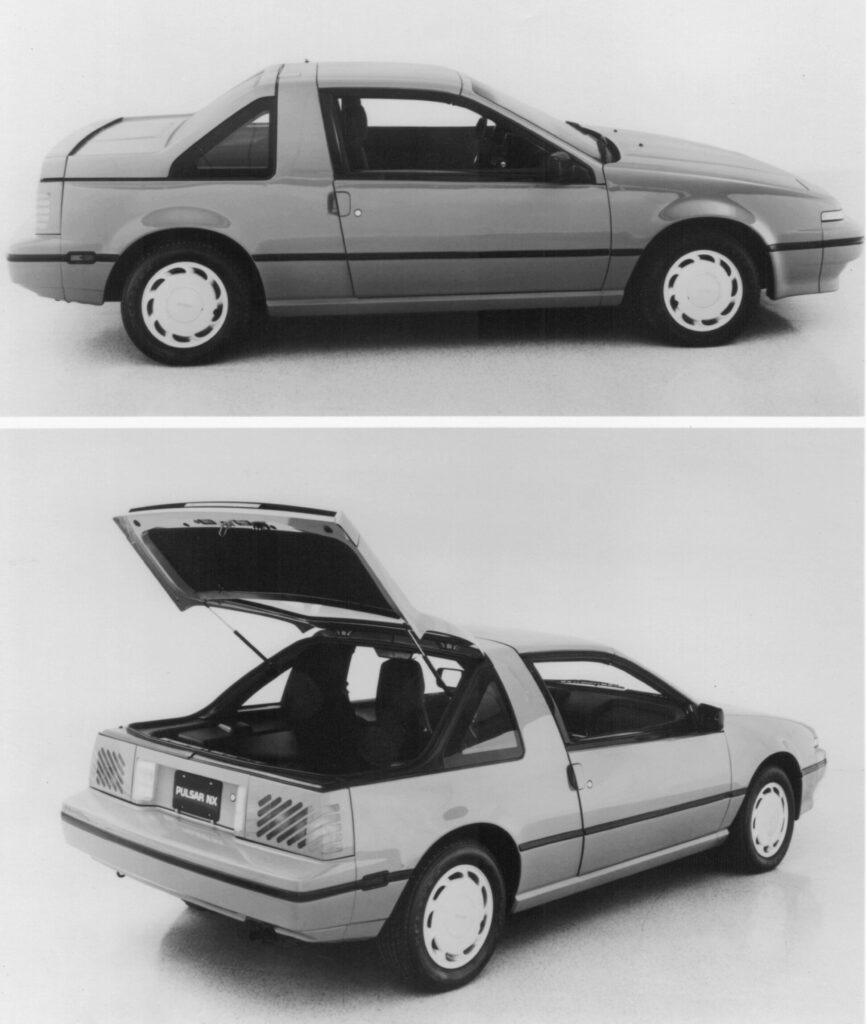
Nissan selected the modular proposal over a competing design from Atsugi. Wilson and Campbell then spent months in Japan helping develop the NX Pulsar for production, as designers commonly did after a proposal was chosen. The travel reinforced the exchange between the California studio and Nissan’s Japanese teams. Designers moved in both directions, sometimes working abroad for six months to a year. Toshio Yamashita, who designed the 1989 Z, was among those who spent time with NDI.
Flowers described the rivalry as increasingly intense but grounded in respect. The point of NDI was to bring new perspectives into Nissan’s design process, and production work gave those ideas a meaningful test. For Wilson, seeing his work reach customers with little change was the reward. He told Car Styling Quarterly in 1989, “There’s no greater joy than to see one’s efforts appear in the product unchanged.”
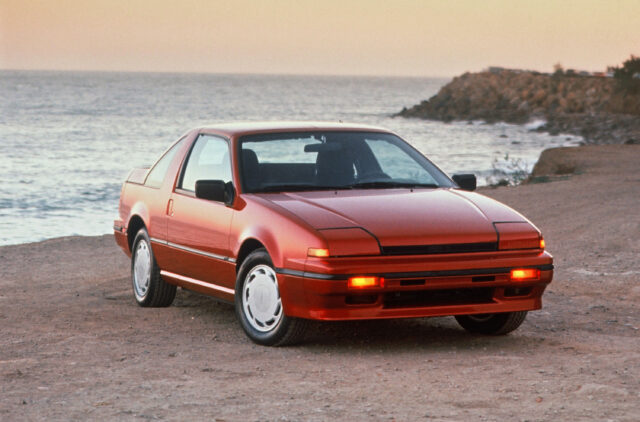
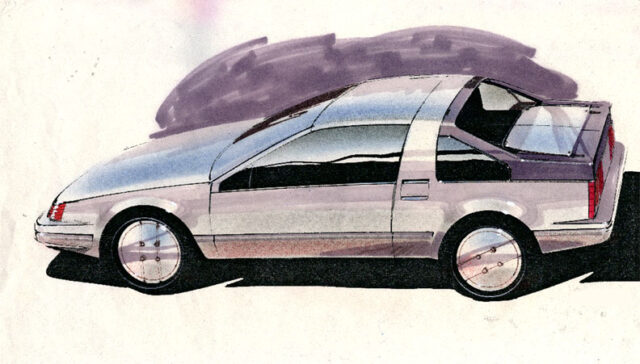
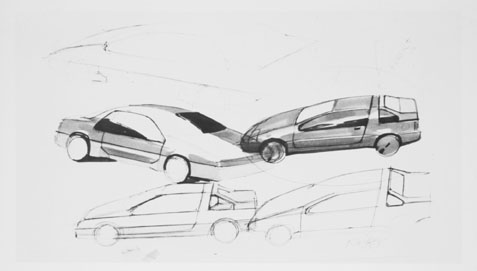
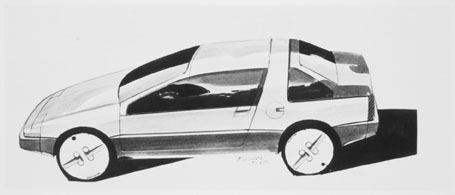
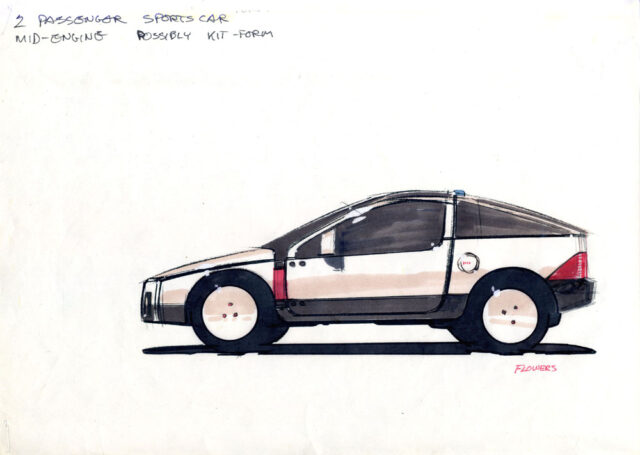
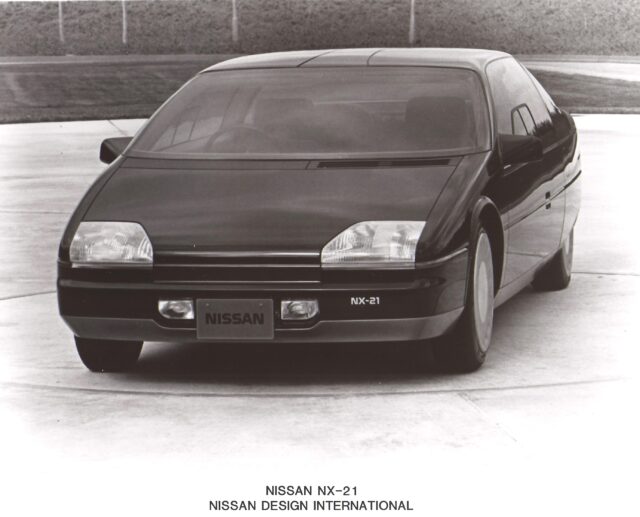
NDI’s early cars show how the studio’s method worked in practice. The Hardbody joined contrasting design instincts to meet a market that used pickups differently from Nissan’s home customers. The Pathfinder adapted that foundation into an SUV, then revealed the importance of four-door usability. The Pulsar NX turned a small visual observation into a modular body concept. Across all three, the lasting lesson was that creative freedom mattered most when designers could carry an idea from sketch to production.
Hirshberg later recounted the studio’s development in The Creative Priority. Flowers’ recollections add the working details behind the larger story: temporary rooms, shared projects, sketches that changed direction and a campus designed around collaboration. Those details help explain why NDI’s first generation had such a visible effect on Nissan’s production cars.
The post Experimental Creativity: The Early Days of Nissan Design International appeared first on Hagerty Media.


