In lane Electric Vehicles
Why 1980s and 1990s Car Dashboards Made Buttons a Pleasure to Use
Description
From Porsche’s oversized rotary controls to Lancia’s perforated dashboard, these cabins show why physical controls still appeal to drivers.
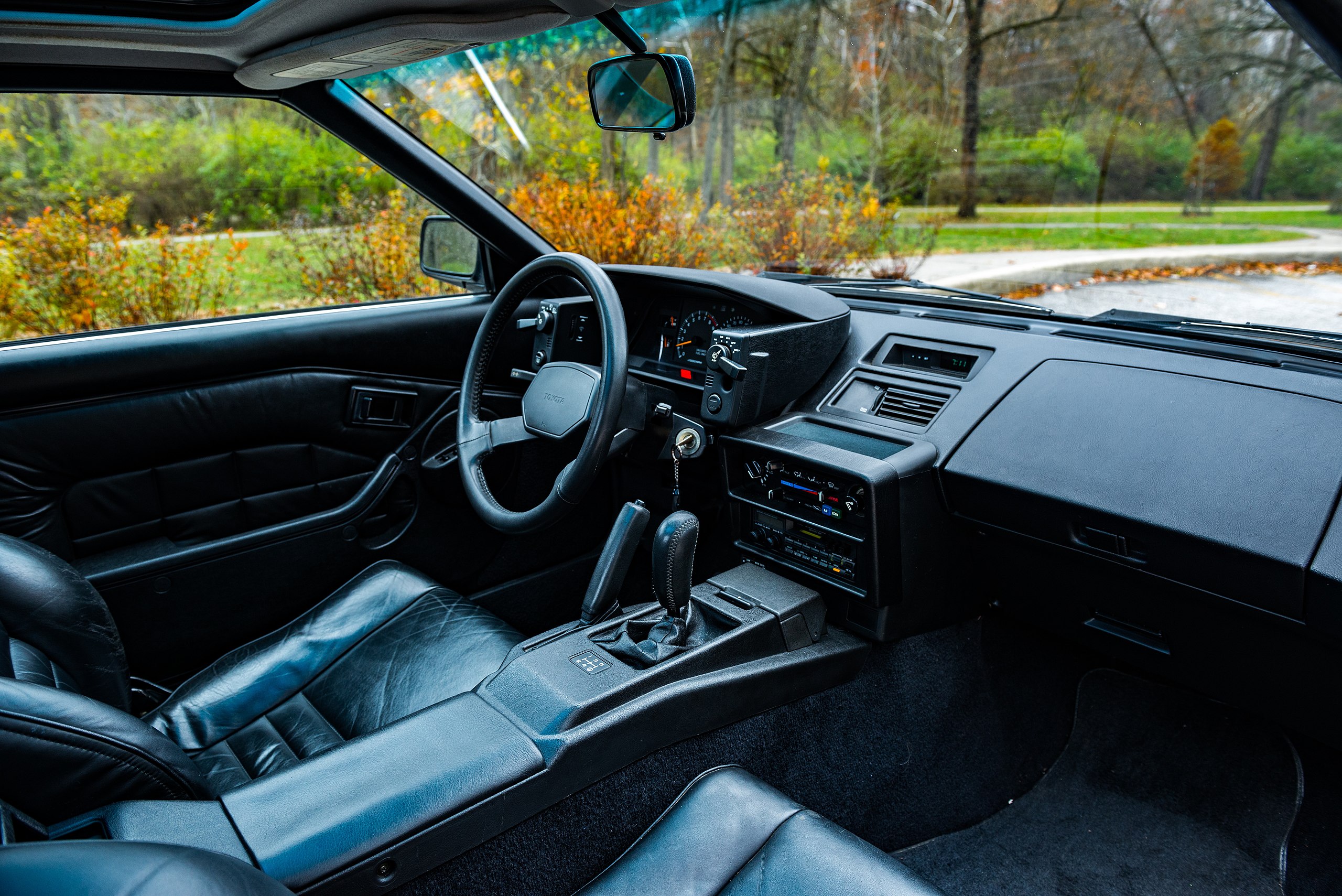
Touchscreens can gather a modern car’s many functions in one place, but they also make simple tasks harder to do by feel. That trade-off is why the dashboards of the 1980s and 1990s still hold such appeal: their buttons, sliders and oversized knobs made the car’s controls part of the driving experience.
As cars gained more equipment, fitting every function within easy reach became a challenge. A single screen can pack a lot into a compact space, at least in principle. In practice, menus can take time to navigate, and even finding an adjustment such as the mirror control can be a puzzle. A well-placed switch, by comparison, gives a driver a physical cue and a direct response without hunting through layers of options.
That immediacy matters on the move. Reaching for a familiar knob or pressing a button lets the hand do more of the work, while a touchscreen may demand the driver’s attention to locate the right control. There’s also the pleasure of the action itself: a firm click or a satisfying turn can make an ordinary adjustment feel considered. Aston Martin has recently refreshed its cabin design with the look and feel of high-end audio equipment, a reminder that tactile controls can contribute to a sense of quality.
The most exuberant examples came during an era when new technology seemed to call for a new switch. Dashboards sprouted controls in clusters, often set into expanses of hard black plastic. The result could look more like a toy than a luxury car, but it gave drivers a cockpit full of things to touch, turn and explore. Here are six memorable interiors that make the case for physical controls in their own distinct ways.
Porsche 928: controls with a sense of occasion
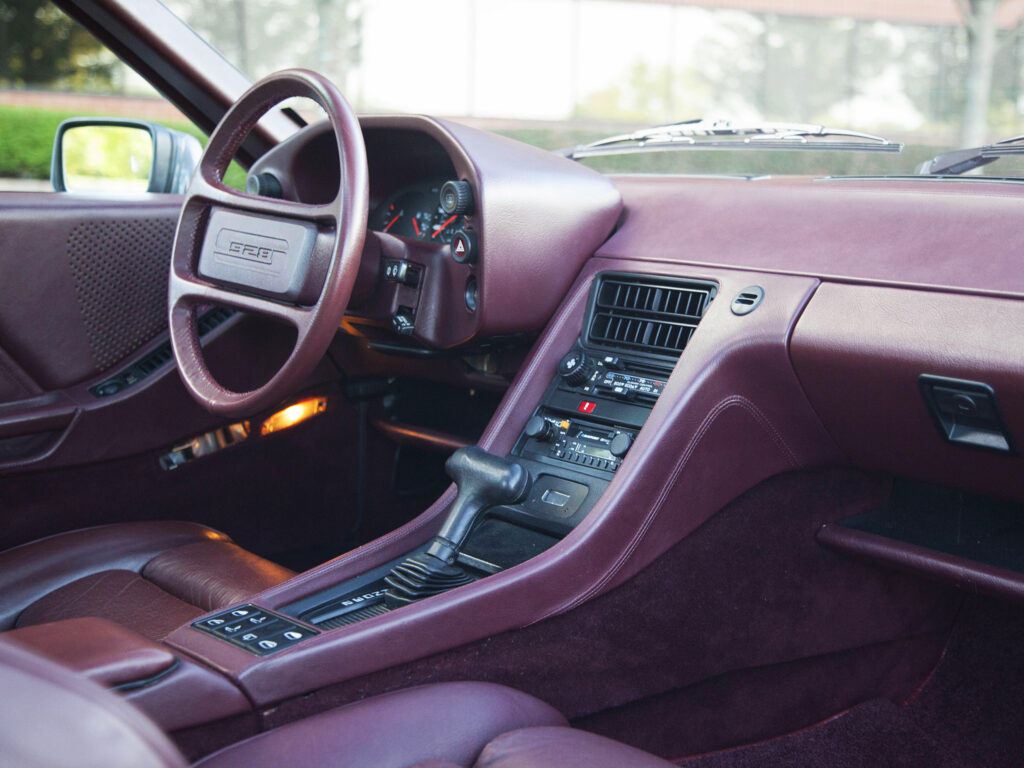
For all its performance, the 911’s cabin could feel less special than its price suggested. The 928 took a different approach, wrapping its driver in sweeping shapes and colorful finishes that feel more like a spacecraft than a conventional grand tourer.
The steering column moved, and the automatic shifter had the character of a thrust lever. But the details that invite repeated use are the large rotary controls for the lamps and windscreen wipers. They’re comically generous in size, yet each turn lands with a reassuring thunk. These are controls that make even a parked 928 interesting to sit in. The cabin’s design is engaging before the engine starts.
Toyota MR2 Mk1: functions within easy reach
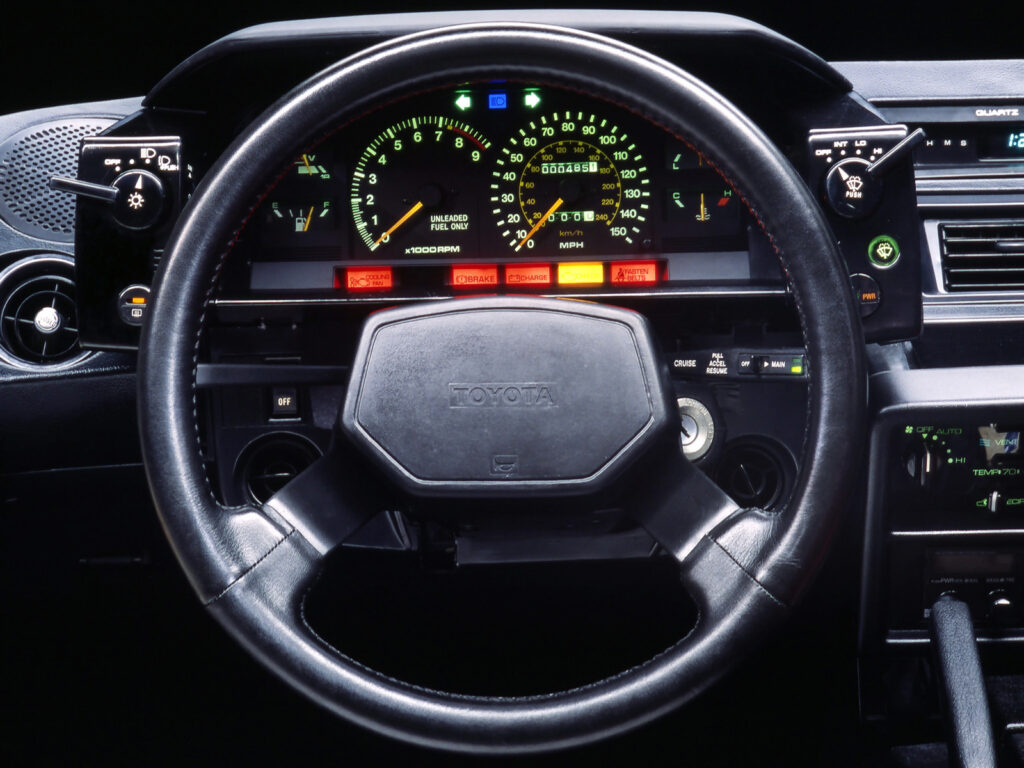
The first-generation MR2 keeps its dashboard relatively simple, with green-tinted lettering as one of its subtle charms. Its standout feature is the set of oversized rotary switches, each with a small lever, arranged around the instrument binnacle instead of tucked behind the steering wheel.
Demister and washer controls add to the direct, hands-on feel. So do the gearshift and handbrake, both outsized compared with the rest of the compact car. The layout makes the MR2 memorable at a glance, while the prominent controls give routine tasks a clear, physical response.
Nissan 300ZX Z32: a cockpit full of functions
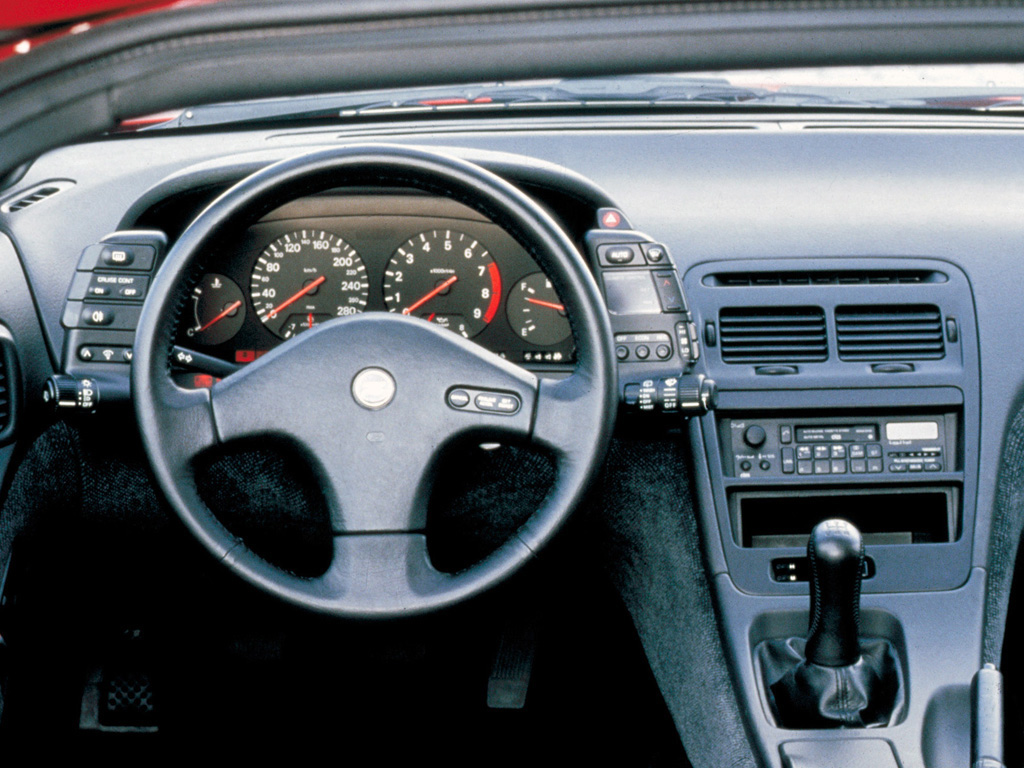
The Subaru XT is another striking example of the Japanese enthusiasm for unusual control layouts, with an offset three-spoke steering wheel and more switches mounted above it. The Z32 300ZX earns its place here as Nissan’s flagship two-door, equipped with enough technology to make its dashboard a busy place.
There’s even a small LCD display amid the controls. Working out where everything lives might take time, but the abundance is part of the appeal. Traditional stalks remain for the lamps and washers, alongside the dashboard functions, so the layout mixes familiar controls with a more ambitious array of switches. It can take some practice to avoid hitting the wrong one during a quick corner, but the result has a clear personality—and a lot to discover.
Alfa Romeo 164: stereo-inspired display
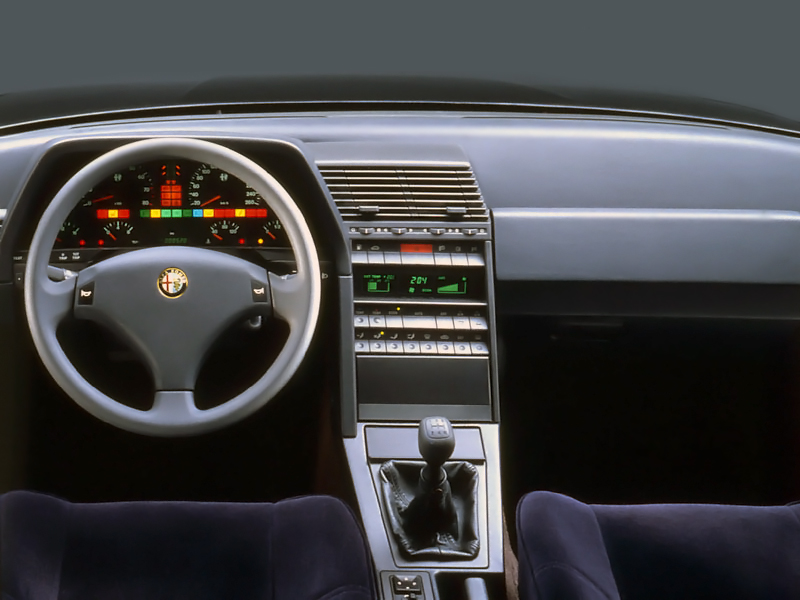
The Alfa Romeo 164 doesn’t rely on exterior flair alone. Its cabin brings together a dense bank of buttons and an LCD display, giving the dashboard the feel of a high-end stereo system. For anyone who remembers watching a graphic equalizer flicker across a family living room, the arrangement has an unmistakable nostalgic pull. It turns a functional control panel into a visual feature.
Renault 25: an interior from another world
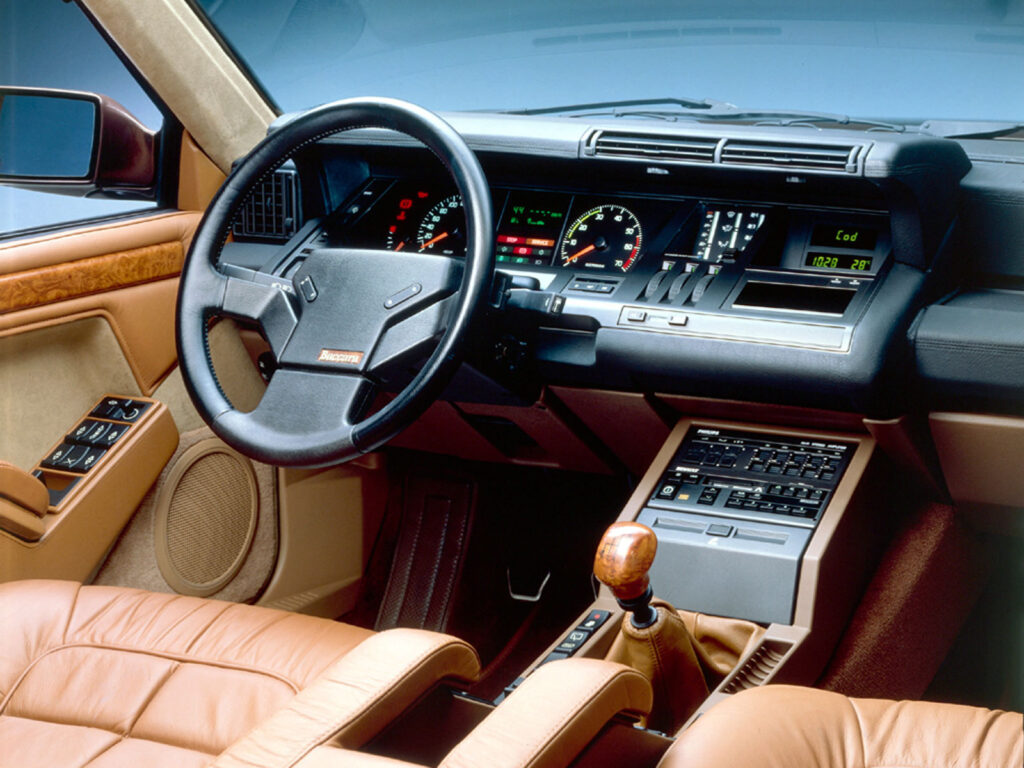
Marcello Gandini brought unexpected drama to the Renault 25’s cabin. This luxurious cruiser was built for long motorway journeys, but its interior can easily steal attention from the road ahead. The shapes suggest the interior of the Nostromo from Alien, while the center console evokes Giorgio Moroder’s living room.
Even the door handles look designed to be enjoyed by hand, and the steering wheel joins in with its own controls. The result is a cabin with an identity of its own: part futuristic control room, part lounge.
Lancia Trevi: an unusual dashboard gains admirers
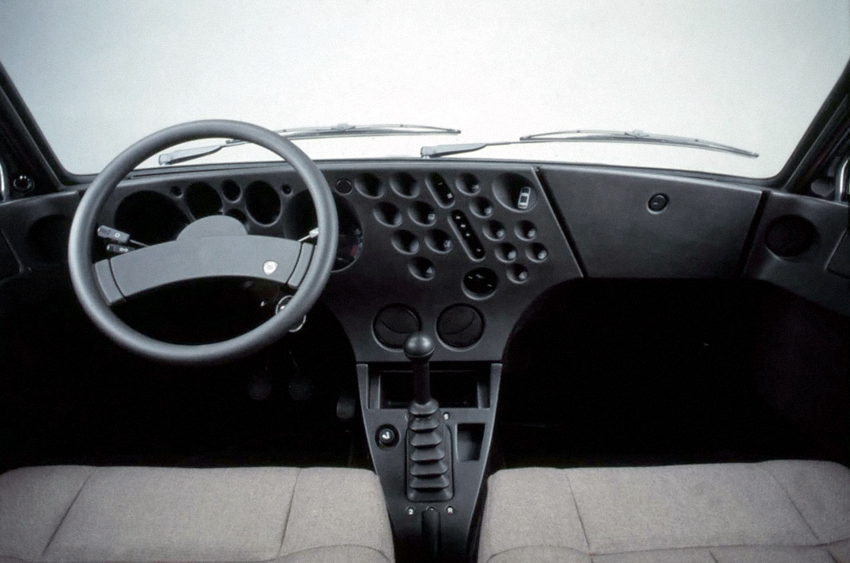
The Lancia Trevi’s dashboard is its main event. CAR magazine described it as a “Swiss cheese Beta,” a nod to the many holes in the design. Mario Bellini, known for his work on homewares and typewriters, developed the panel to fit a large amount of information into a limited space. His explanation was structural; contemporary critics largely found the result ugly.
With time, the dashboard’s unusual pattern has taken on the appeal of outsider art. Its two-spoke steering wheel completes a cabin that refuses to blend in. These cars show that physical controls can make a dashboard more than a place to manage functions. Their shapes and movements give each interior a distinctive character—and a tactile quality a screen can’t easily reproduce.


