In lane Electric Vehicles
1962 Jaguar E-Type Coupe: How the Series I Makes Its Shape Work
Description
The Series I E-Type’s long nose and compact cabin create a striking silhouette, with thoughtful details from the front bumper to its fastback tail.
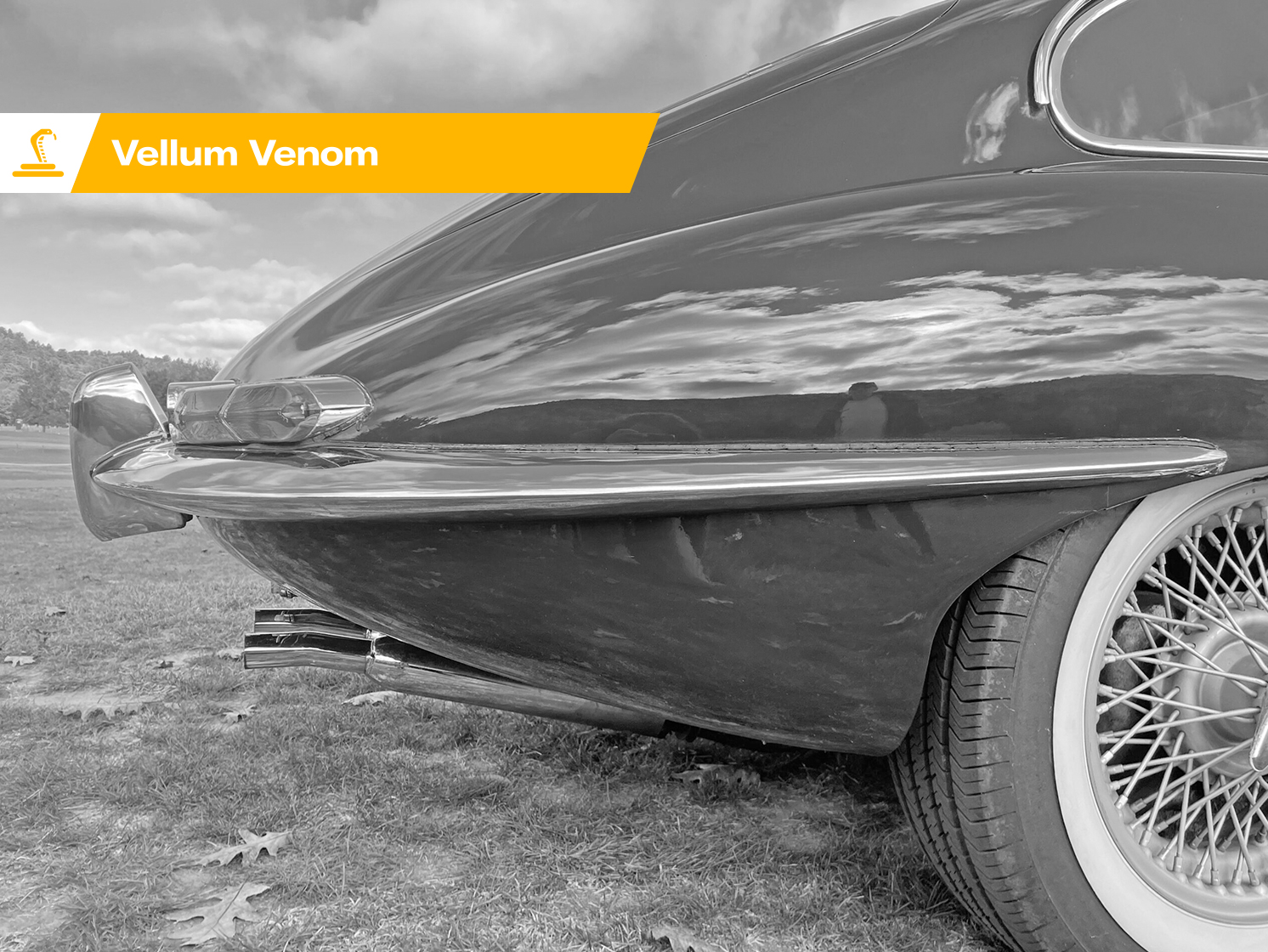
The 1962 Jaguar E-Type Coupe makes its strongest case through proportion. Its bonnet stretches far ahead of a cabin pushed toward the rear axle, and the shape keeps changing as you walk around it. That visual drama helped the E-Type travel beyond the showroom: Donald Byrd’s own car appeared on a Blue Note album cover, and the model showed up on several records from the era. The coupe’s design rewards a closer look because its smooth surfaces rely on small, carefully placed details to hold together.
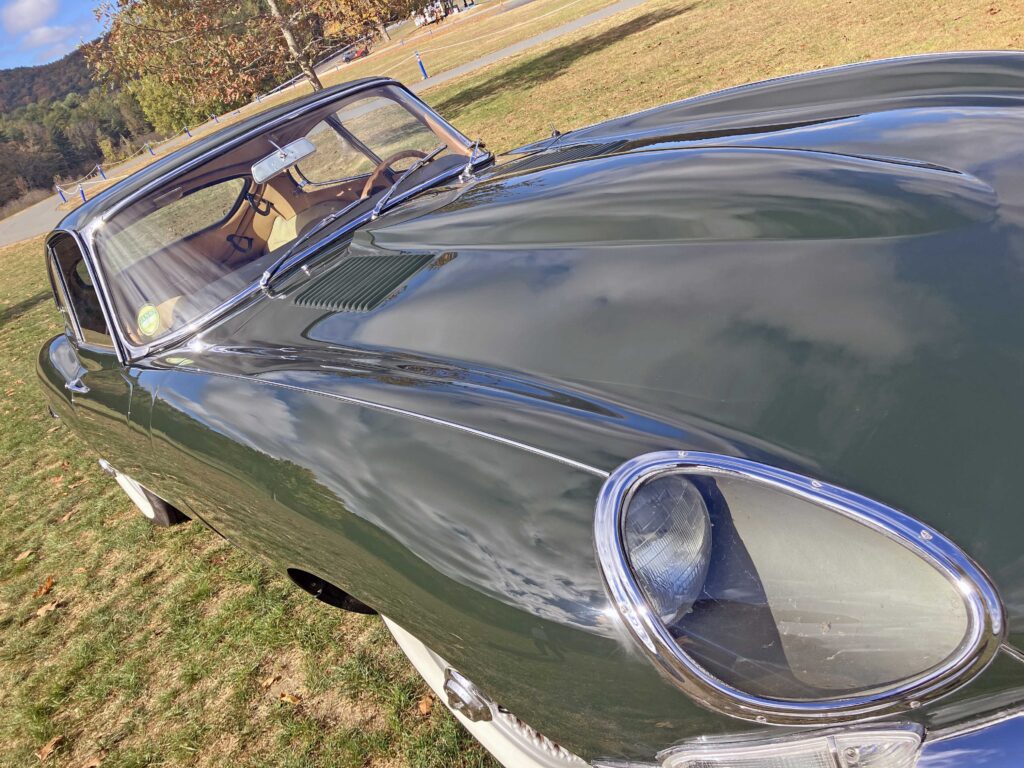
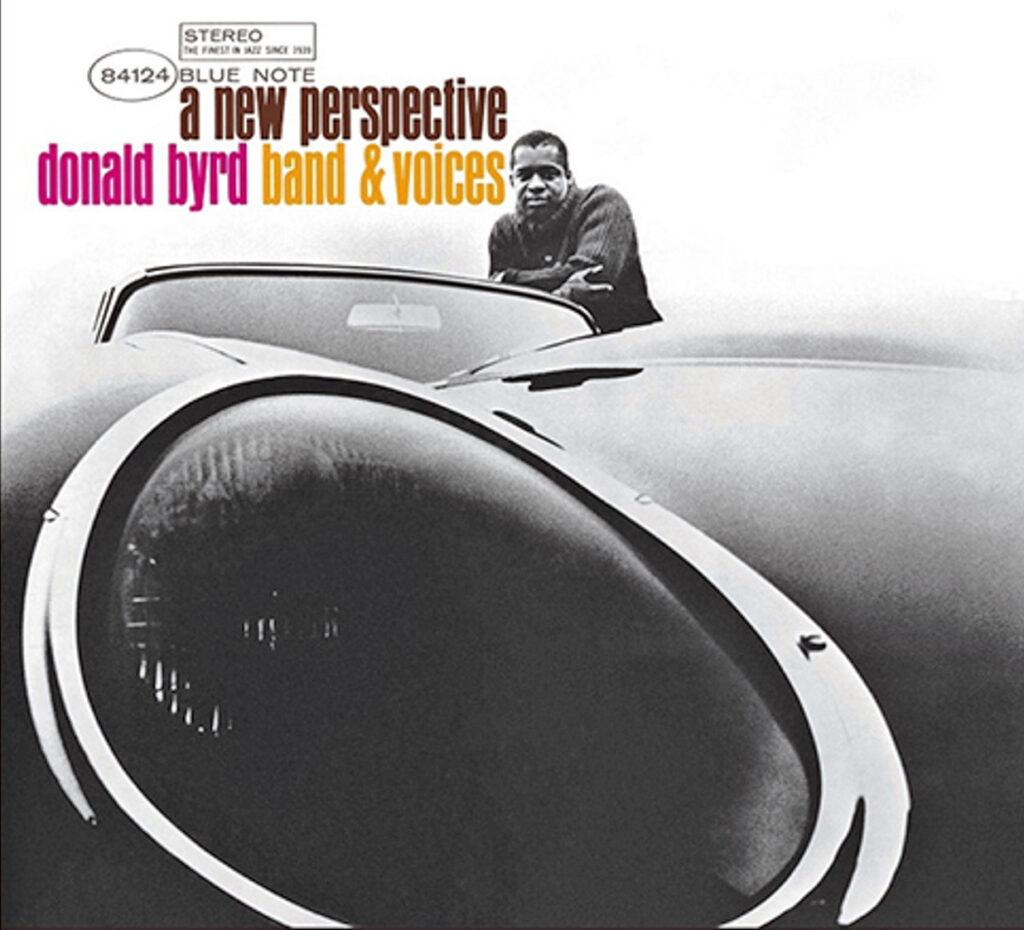
On the Donald Byrd cover, the E-Type’s long bonnet dominates the frame. Byrd stands by the A-pillar, slightly out of focus, while the car remains the visual anchor. The composition makes the proportions legible at a glance: the front end occupies so much space that the artist seems almost incidental. It’s an unusually effective use of perspective, and a reminder that this car’s shape reads just as strongly in a photograph as it does in person.
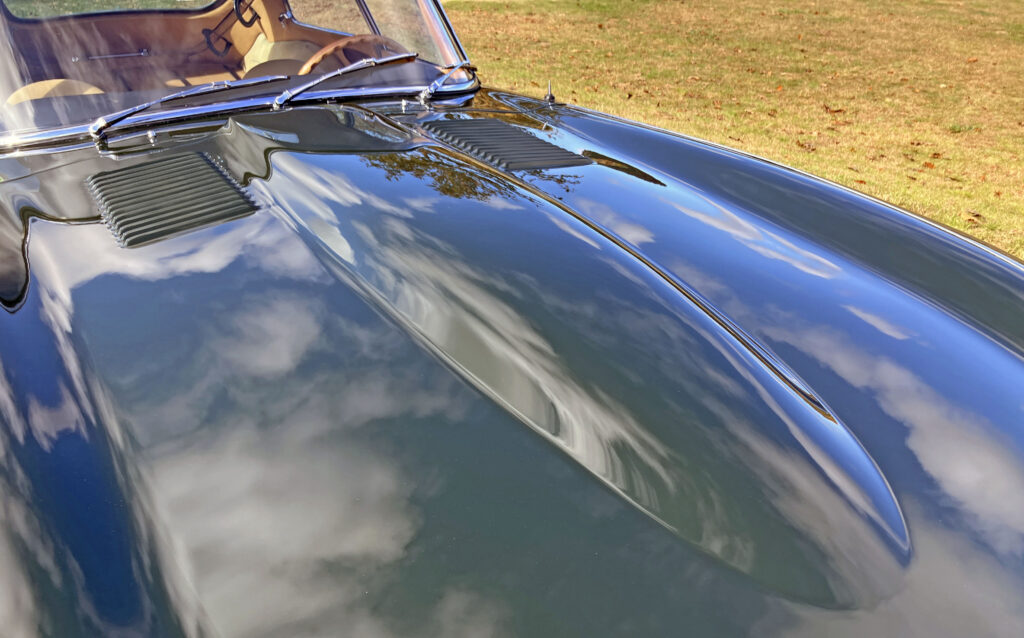
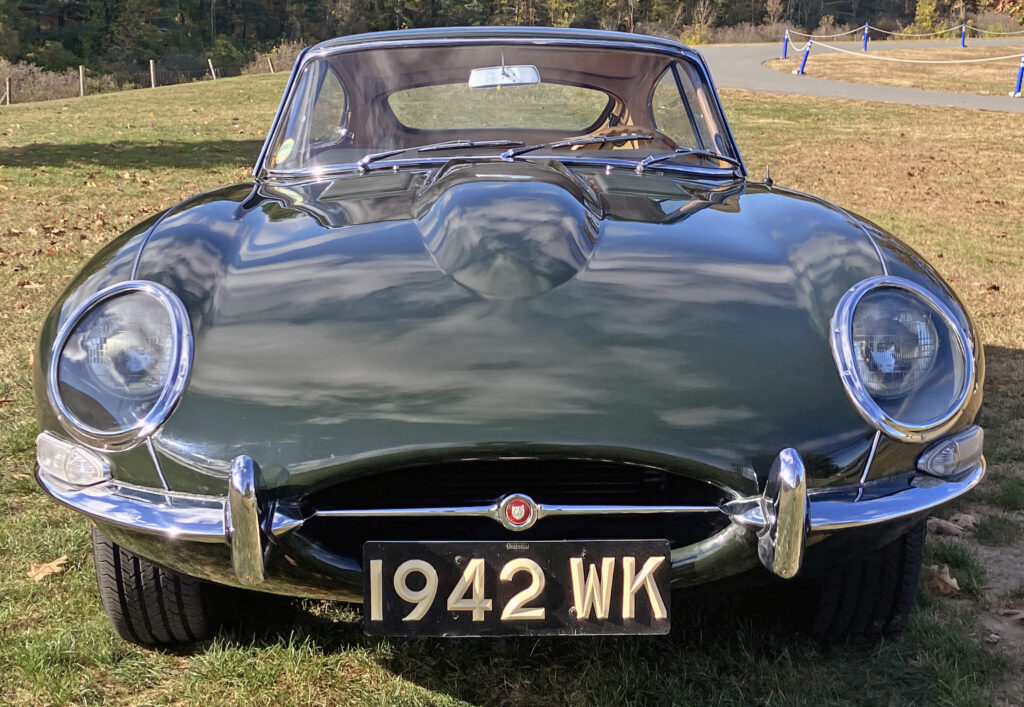
The E-Type drew on the racing-bred D-Type but was intended to replace the XK-150 as a road car. The Series I ran from 1961 to 1968. This 1962 coupe shows the early design at its most elemental: a low nose, a long clamshell bonnet, slender chrome bumpers and a compact passenger compartment. The front view is especially resolved. There’s little visual clutter, and the mass of the bonnet gives the small grille and bumpers a supporting role.
A nose built from curves and brightwork
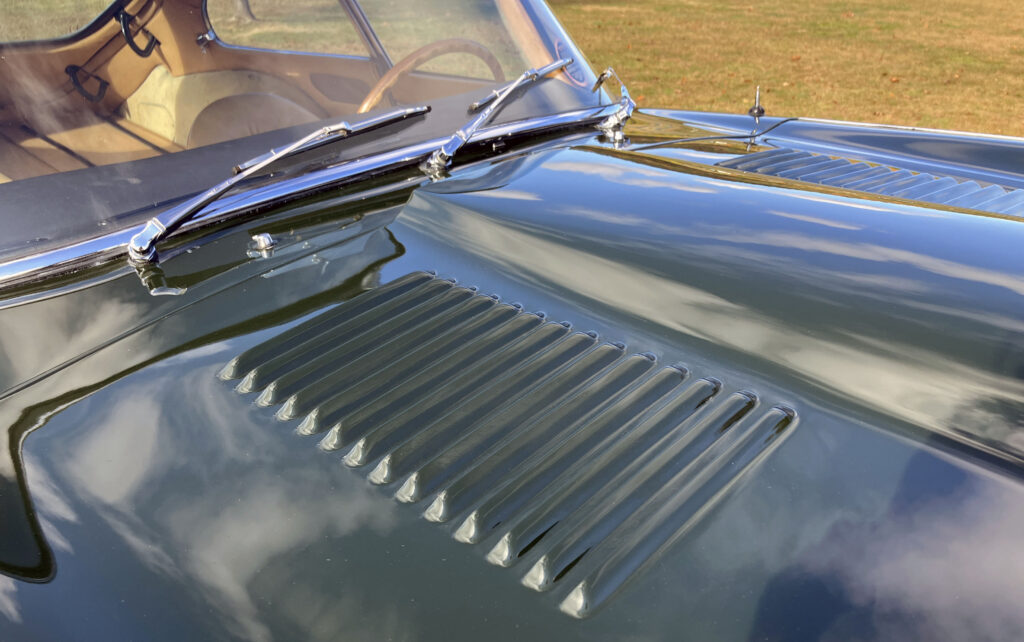
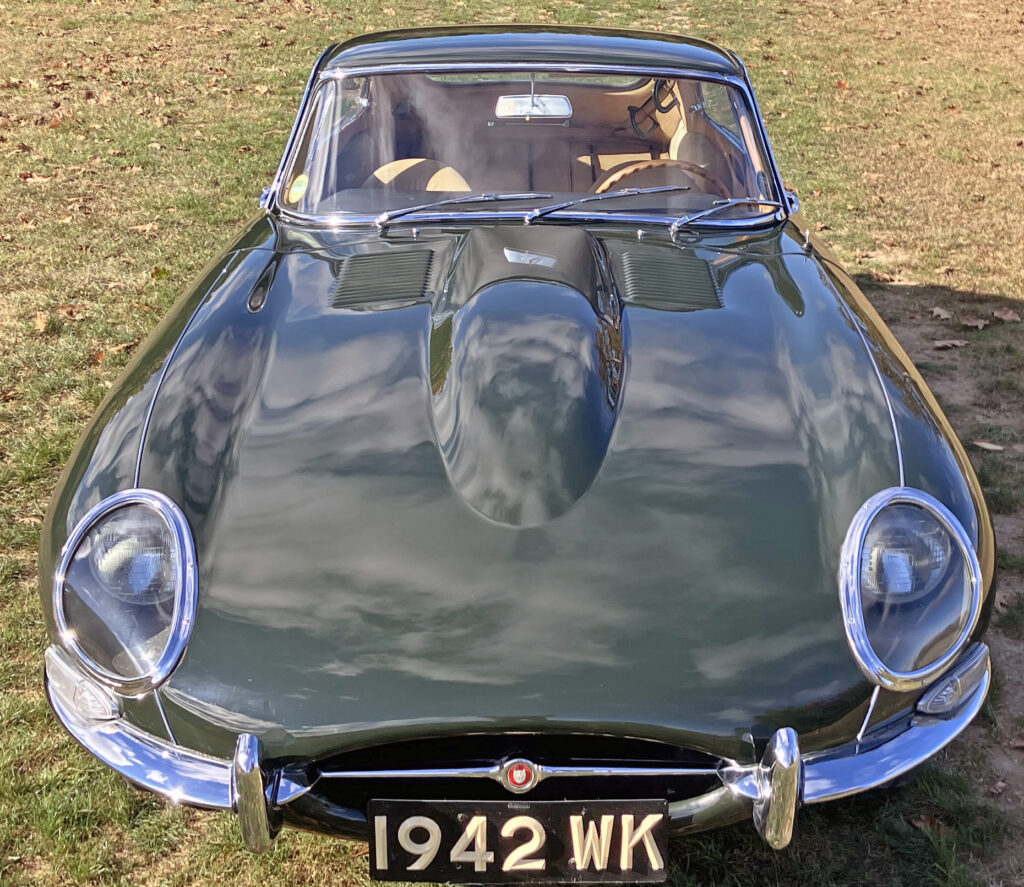
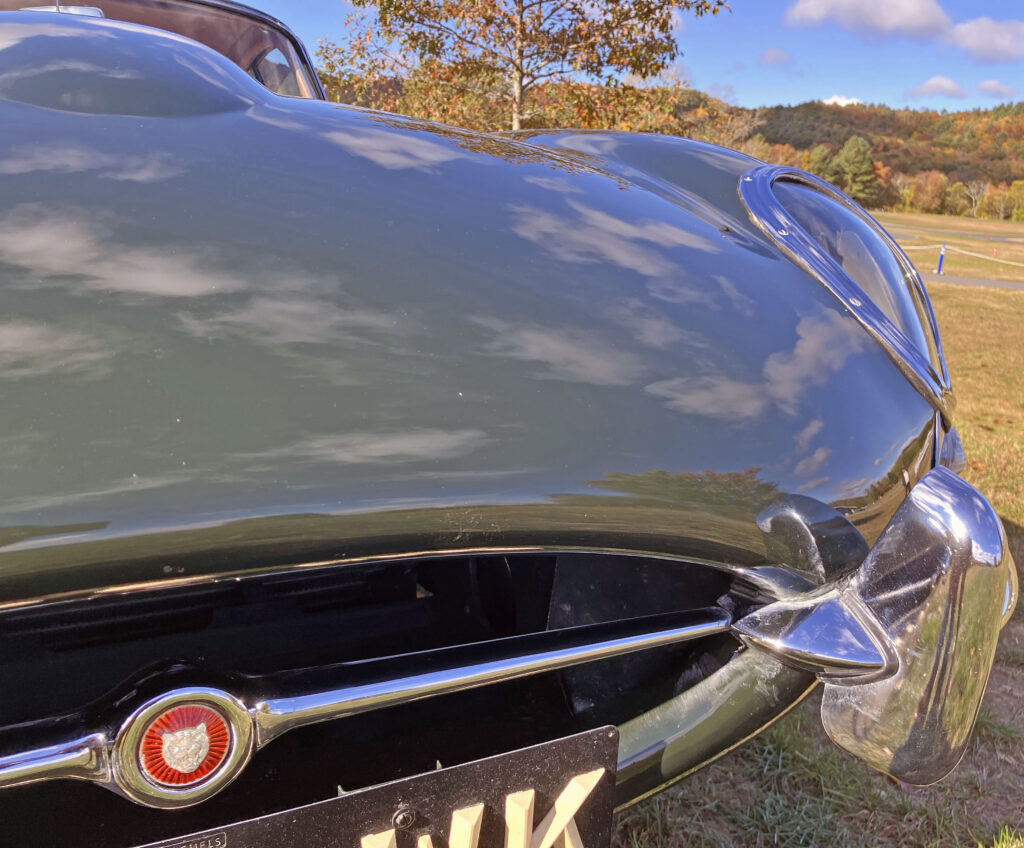
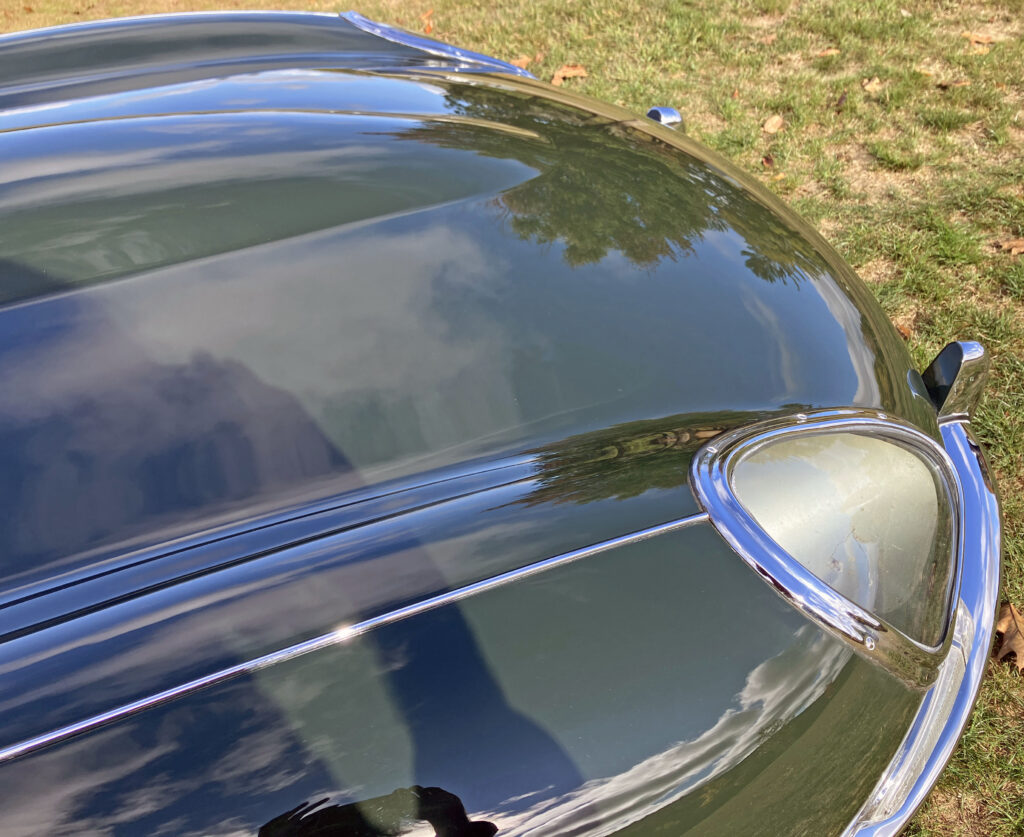
At eye level, chrome traces the face in several directions: around the headlamps, across the cheeks and along the slim moustache-like grille detail. There’s a lot of brightwork for such a low, narrow front, yet it doesn’t overwhelm the body. The raised center of the bonnet and the cooling vents on either side add enough definition to balance the chrome.
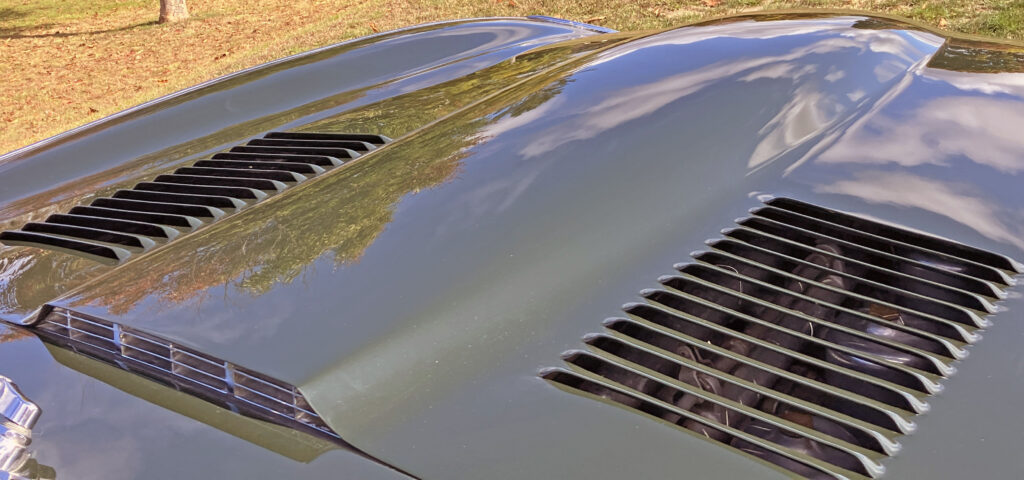
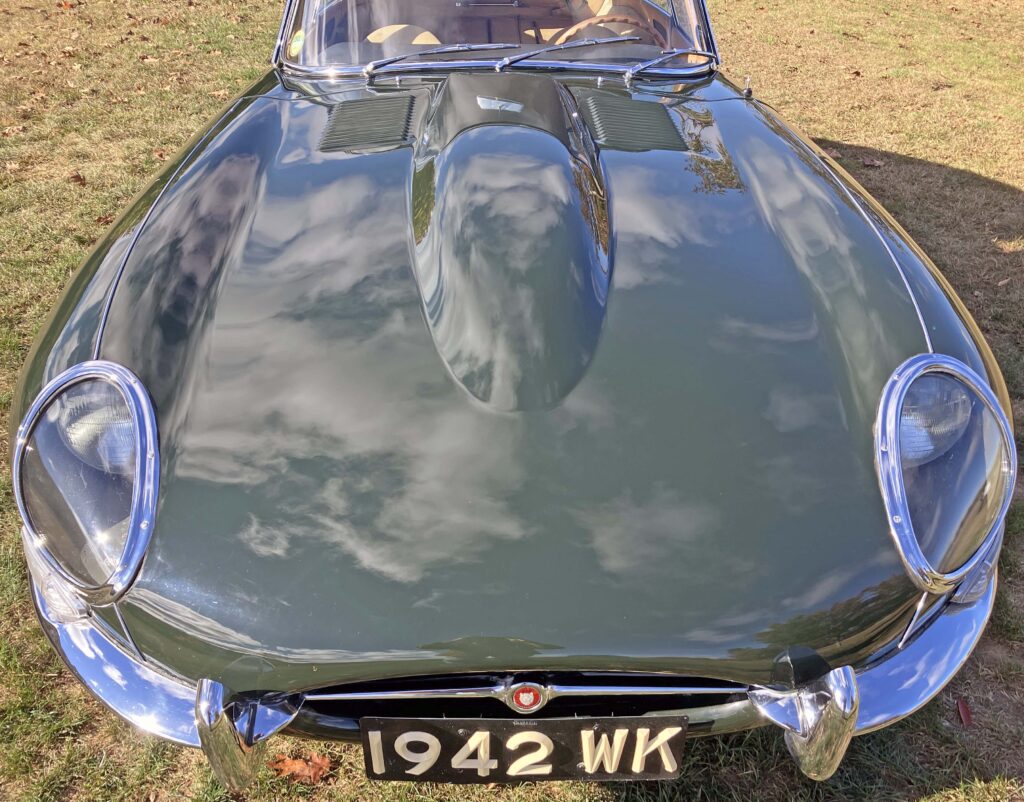
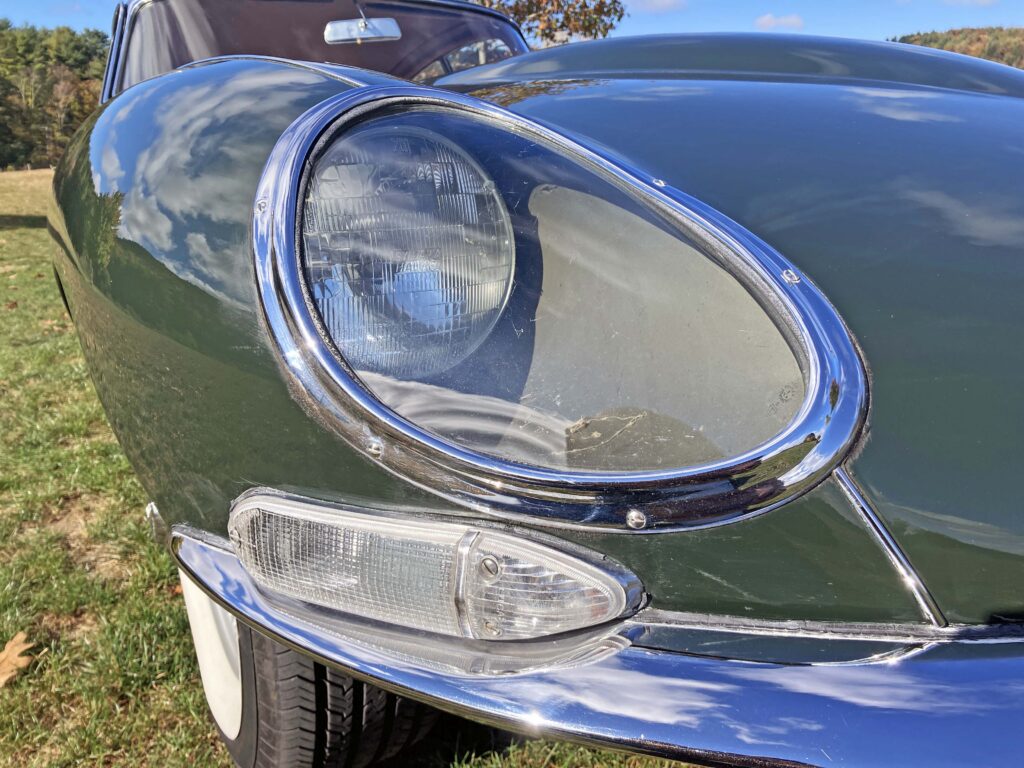
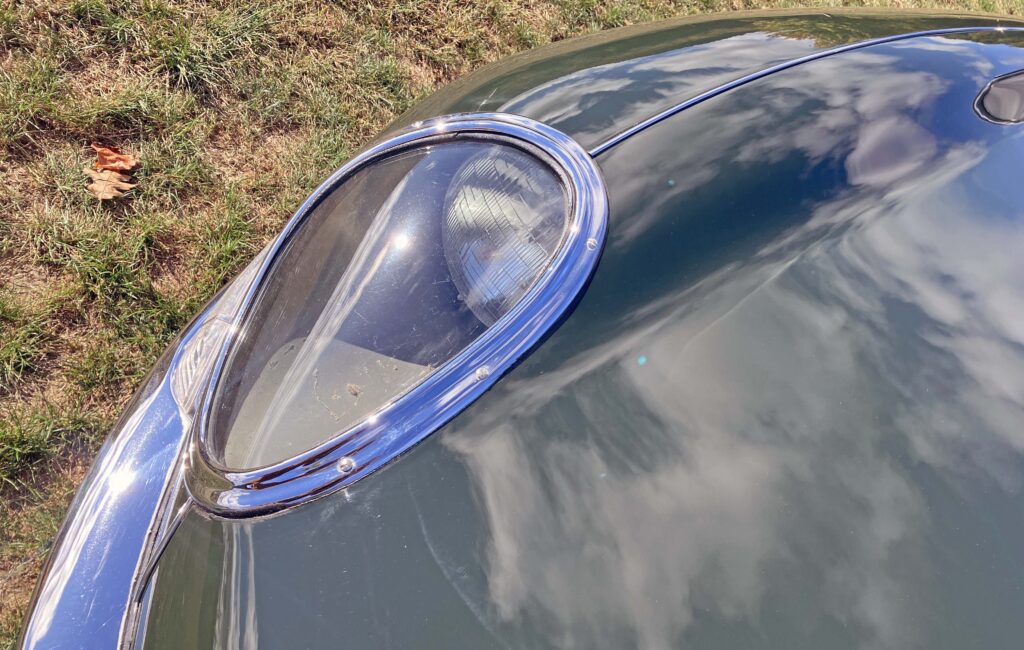
From above, the nose appears to rise in three rounded forms: the central bonnet bulge and the two fender shoulders. The headlamps sit in raised pods that give the front wings a submarine-like profile. That shape is more than a memorable flourish. It lets the front corners swell above the wheels while preserving the smooth sweep of the bonnet.
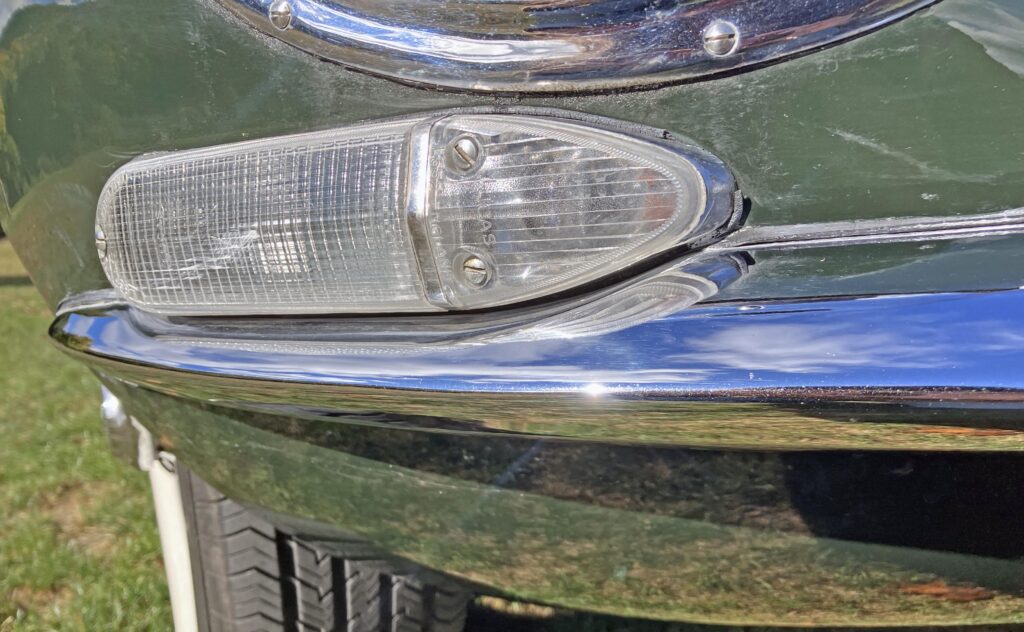
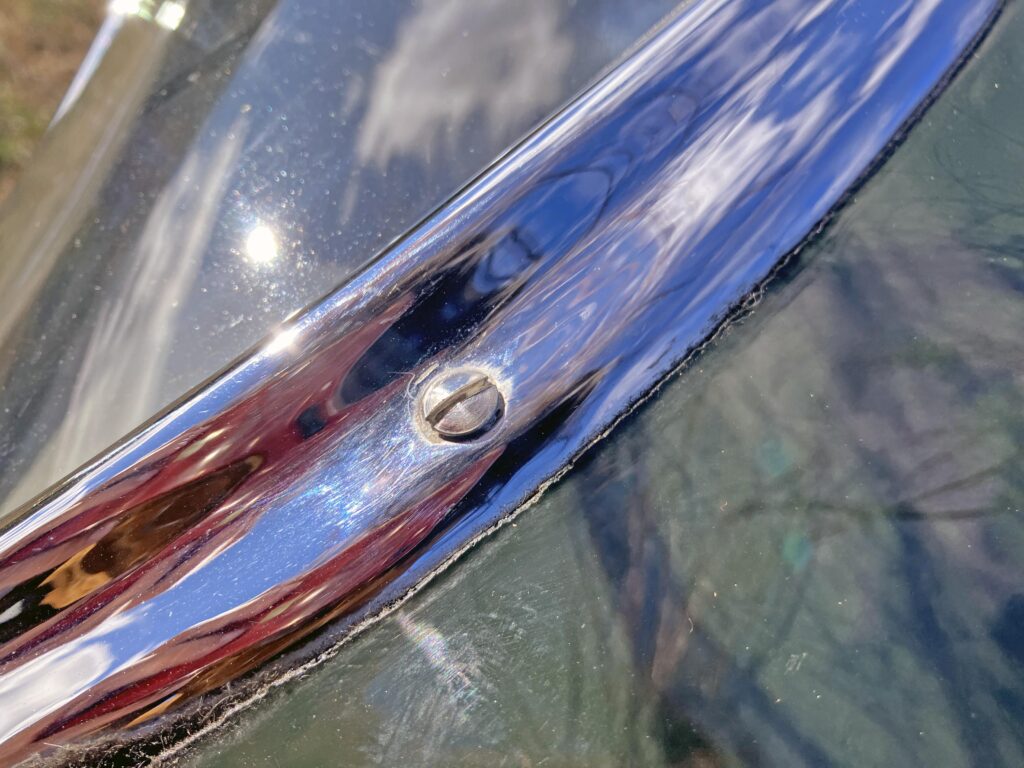
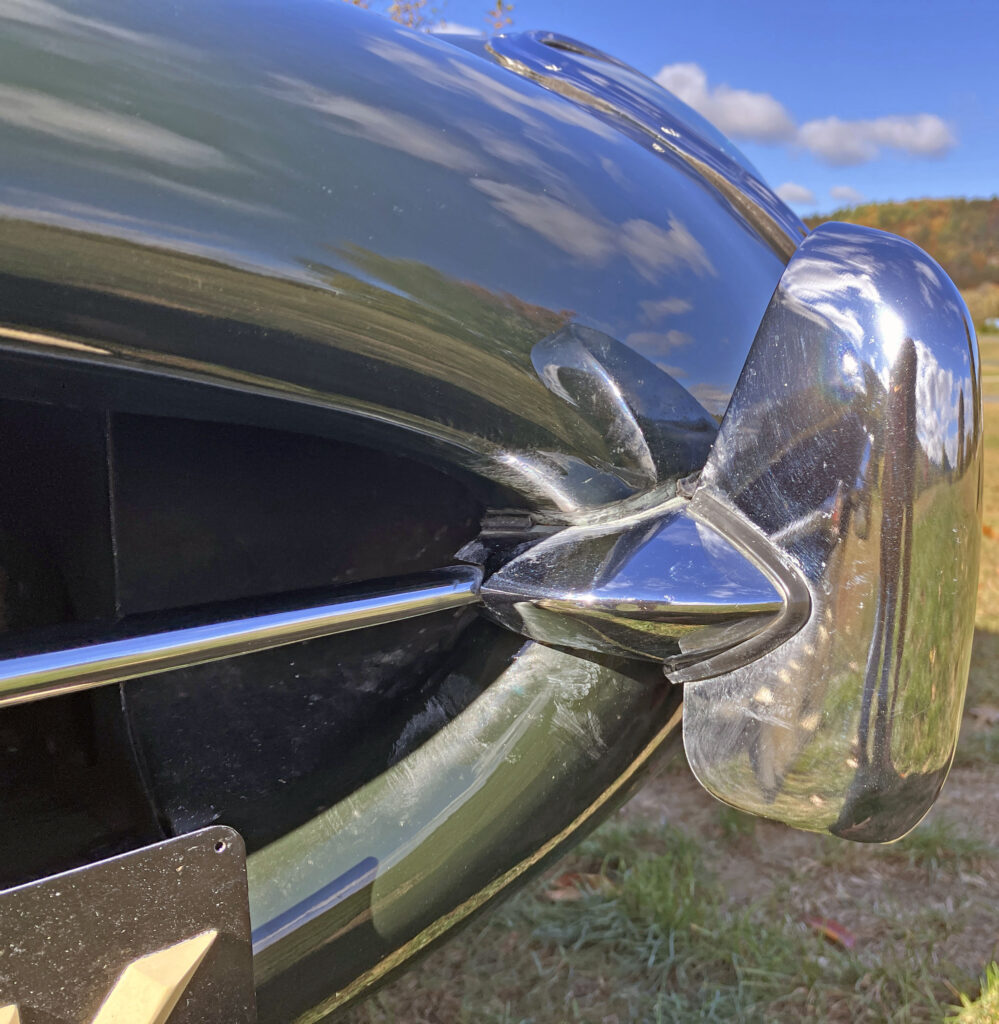
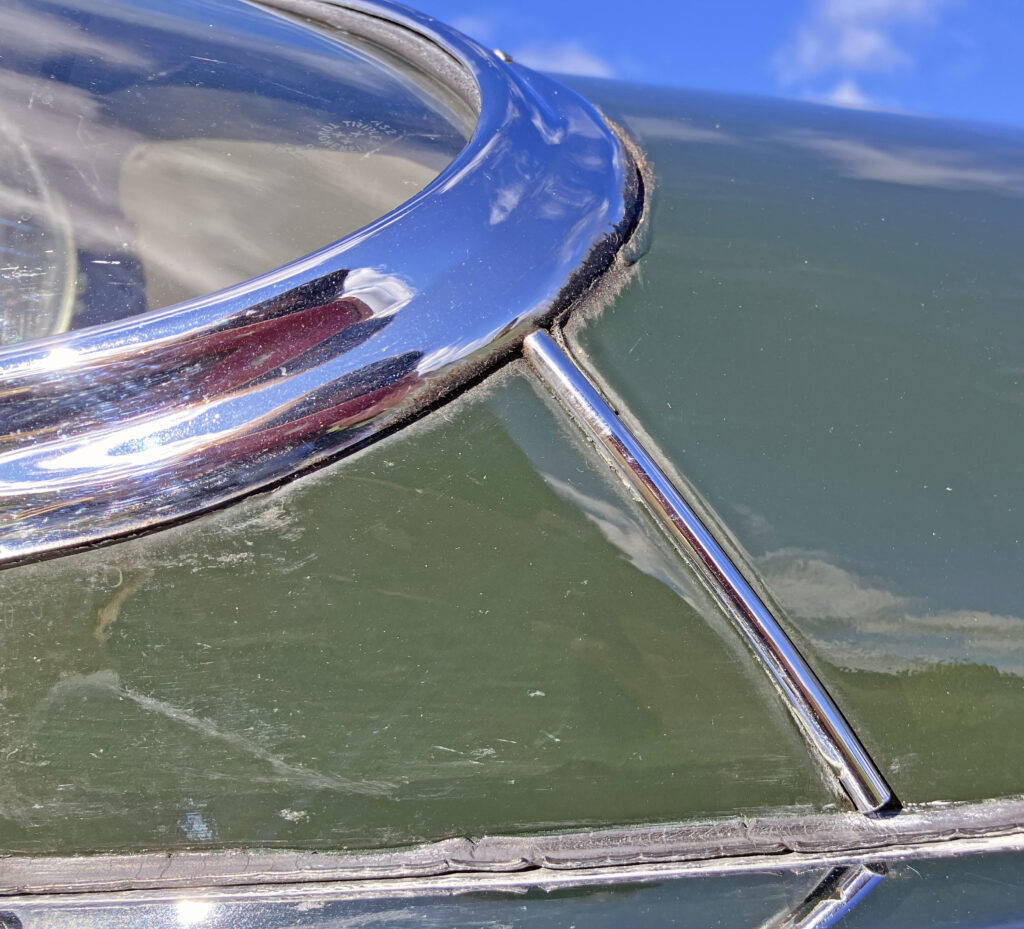
The turn signals sit on top of the small bumpers, their narrow shapes echoing the headlamp pods above. The way each signal meets the curved bumper is particularly neat: the pieces look joined by the body’s own contours rather than added as separate parts. The headlamp surrounds are less subtle. Their exposed mounting hardware has a distinctly period feel; mounting the trim from beneath the bonnet would make for a cleaner finish, but would also erase one of the details that places the car firmly in its time.
The bumperettes, the upright pieces that project from the slim bumpers, add a forward thrust to the front end. The grille offers a different kind of counterpoint. Its fish-like opening follows the surrounding contours, while a delicate central bar and emblem give the broad mouth a little structure. The whole assembly feels light. The front isn’t trying to look tough through a huge grille or heavy trim; its presence comes from the long, low bonnet and the way its surfaces gather at the nose.
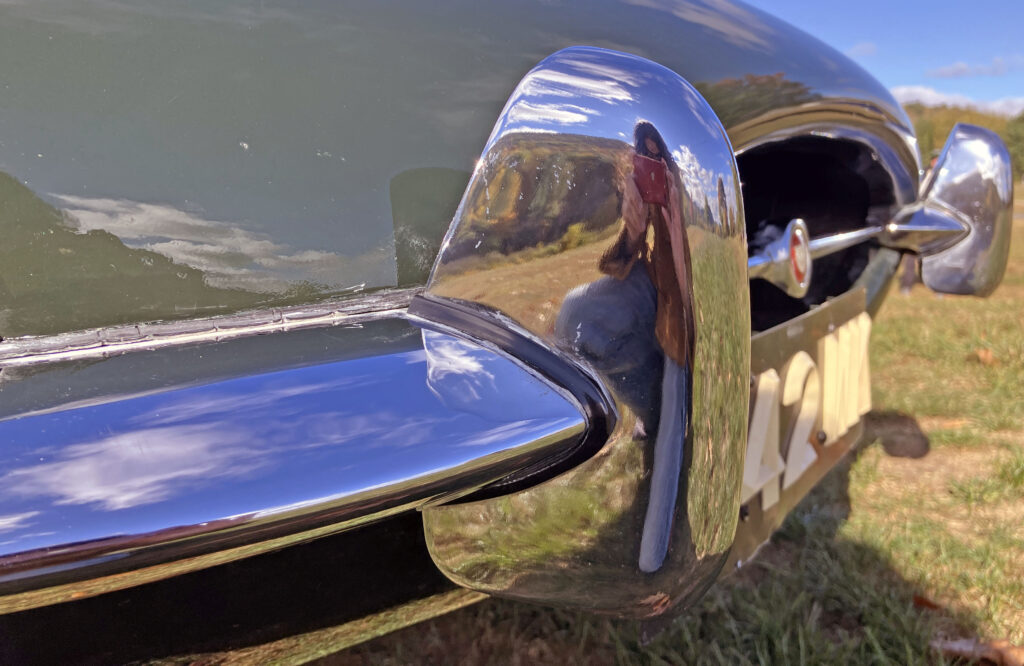
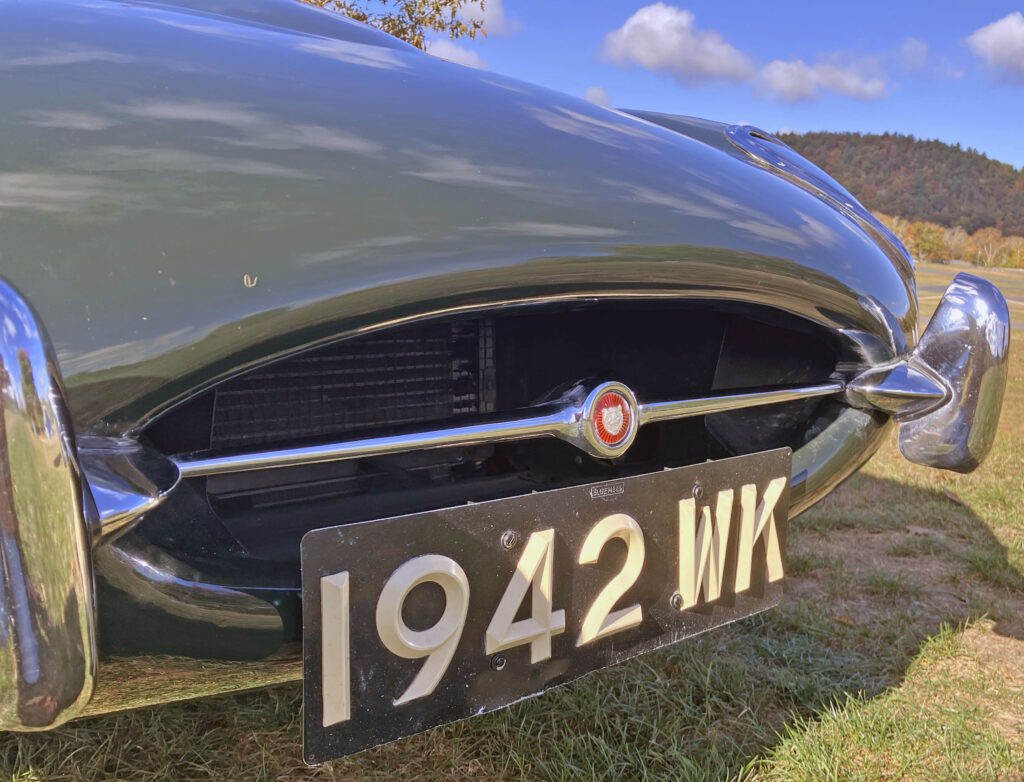
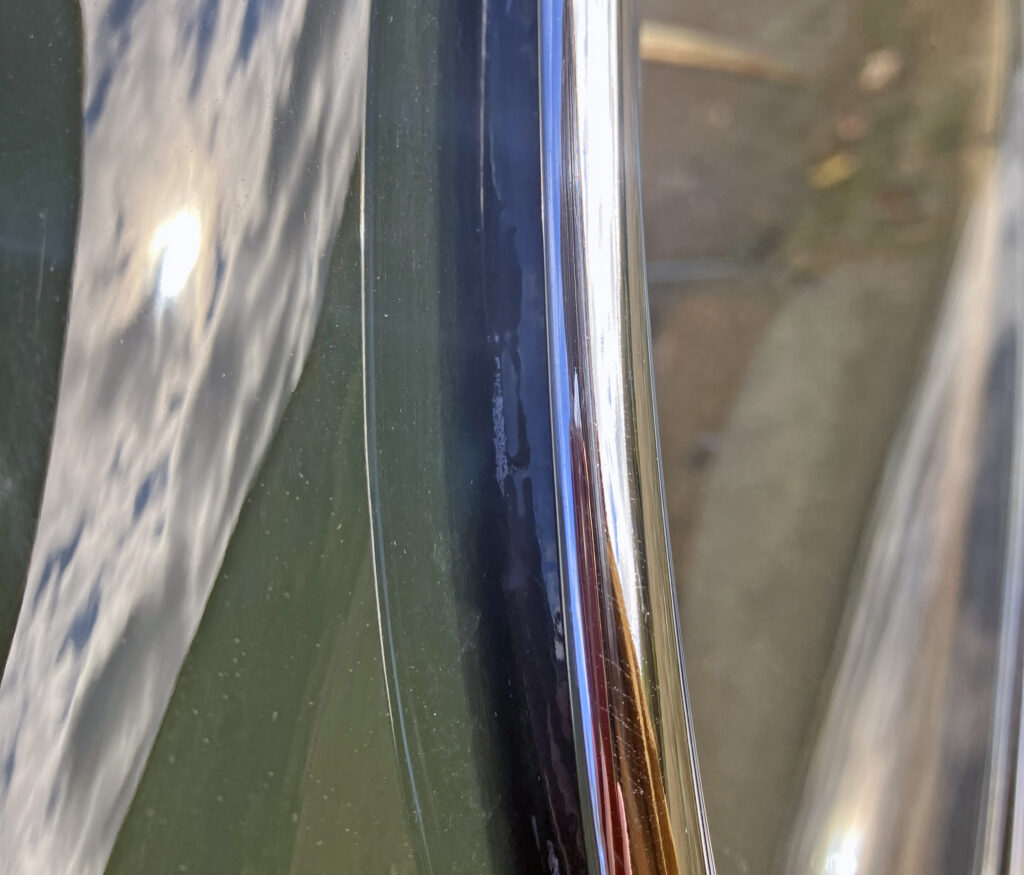
The front bumper’s path into the grille is one of the more easily missed decisions. Its ends continue inward beneath the bumperettes, so those upright pieces appear to grow out of the bumper. Without that transition, they might look like separate blocks wedged between the grille and the bumper. The same careful joining gives the front its impression of a single flowing assembly, even though the bonnet is made from three panels. A restrained chrome line disguises the panel breaks and runs along the body like a drawn stroke.
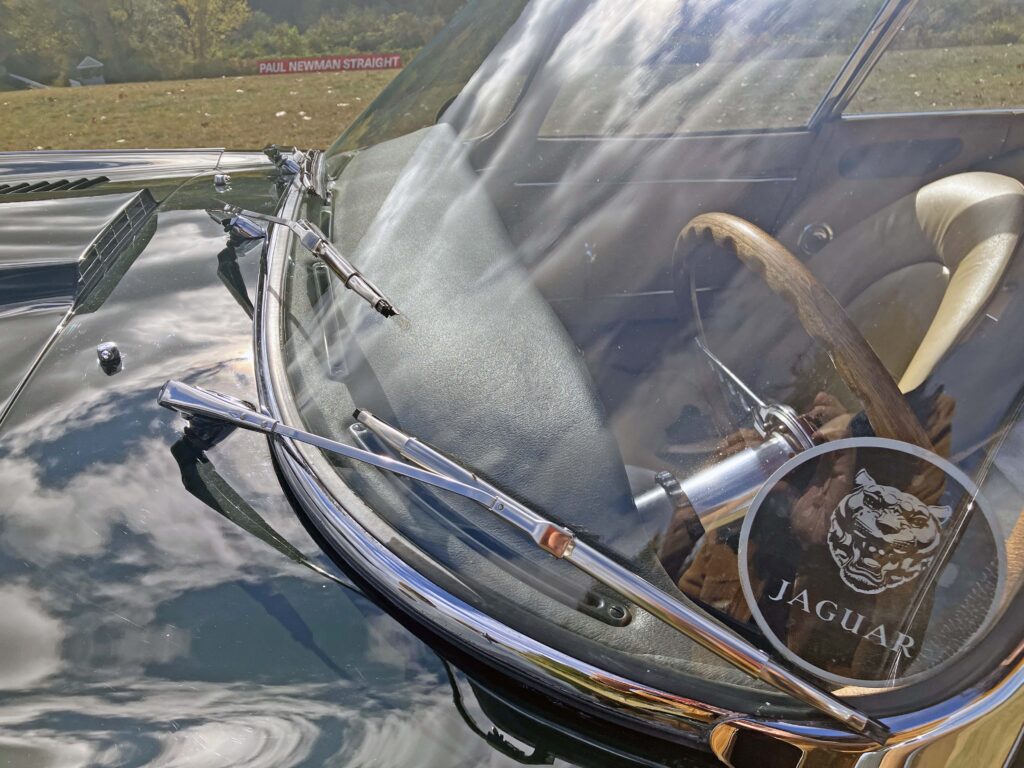
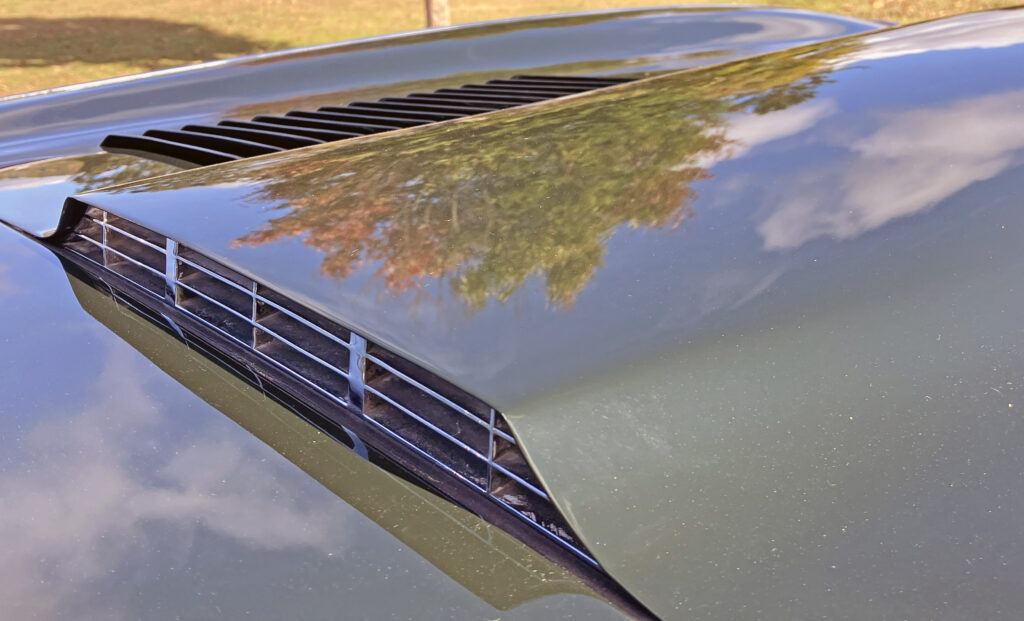
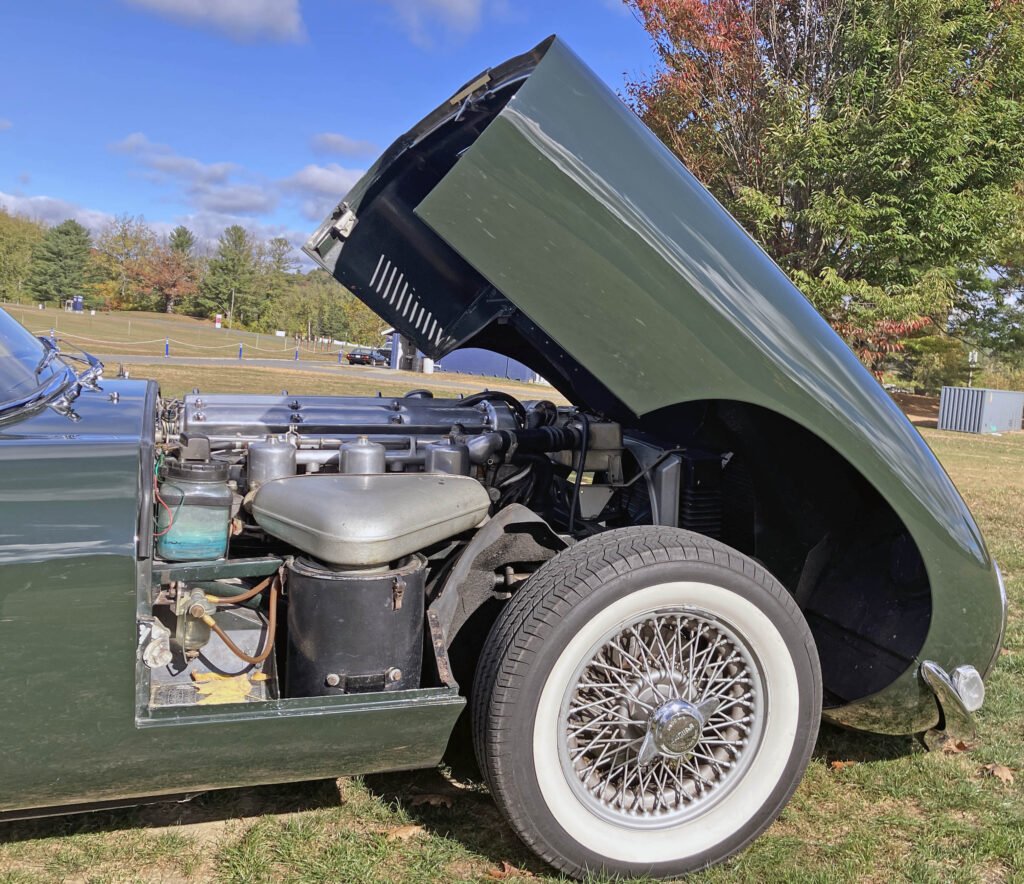
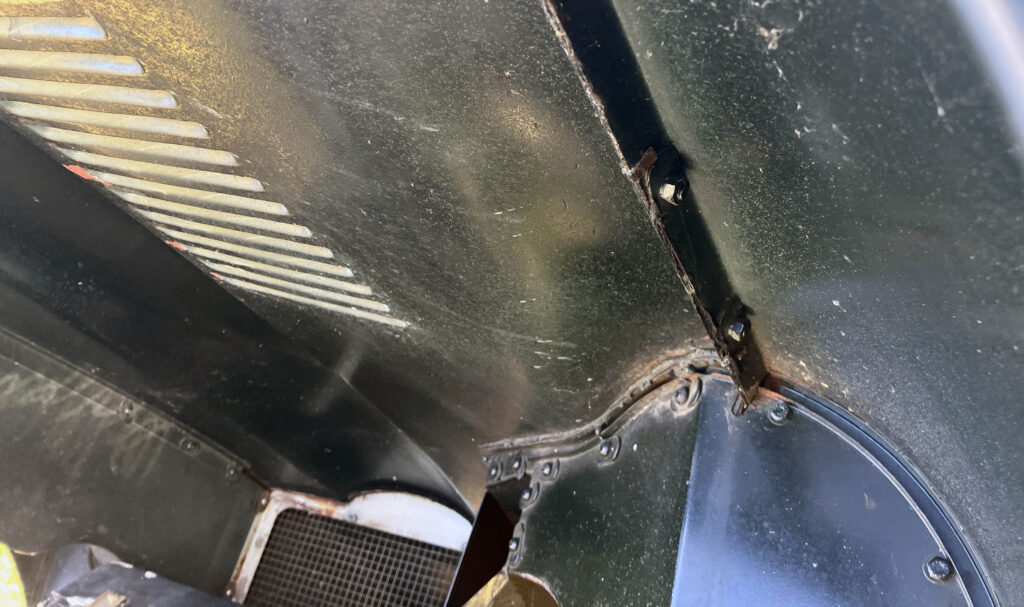
The bonnet’s three-part construction complicates the apparent simplicity. The fenders attach to the large opening panel, and the cooling slots are pressed into the metal between the raised forms. Those slots break up an otherwise broad surface and have a clear functional purpose, though their stamped finish looks plain beside the chrome accents. Opening the clamshell reveals the practical side of the design: multiple pieces and fasteners combine to create the uninterrupted exterior shape.
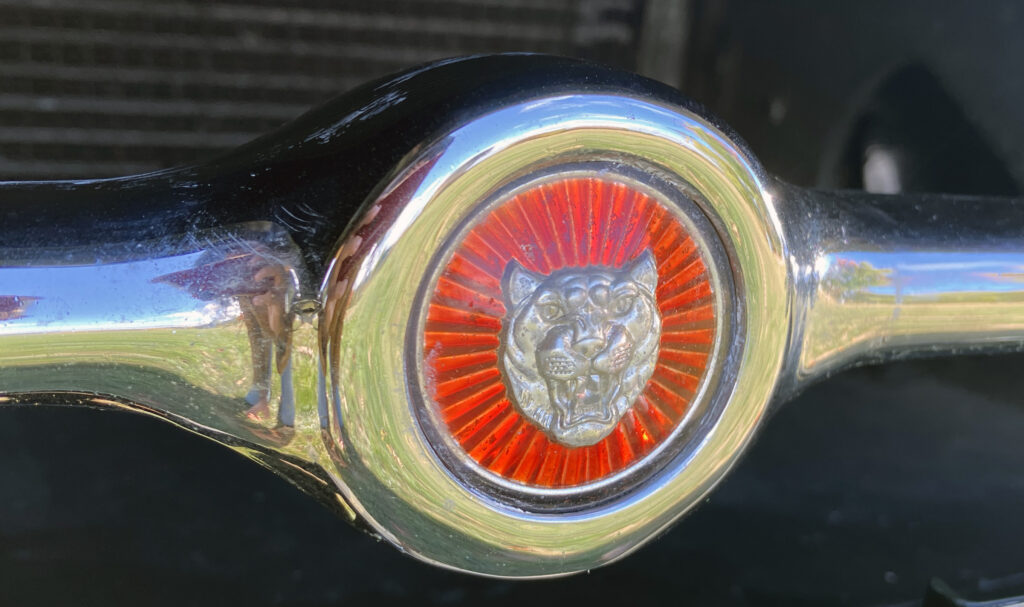
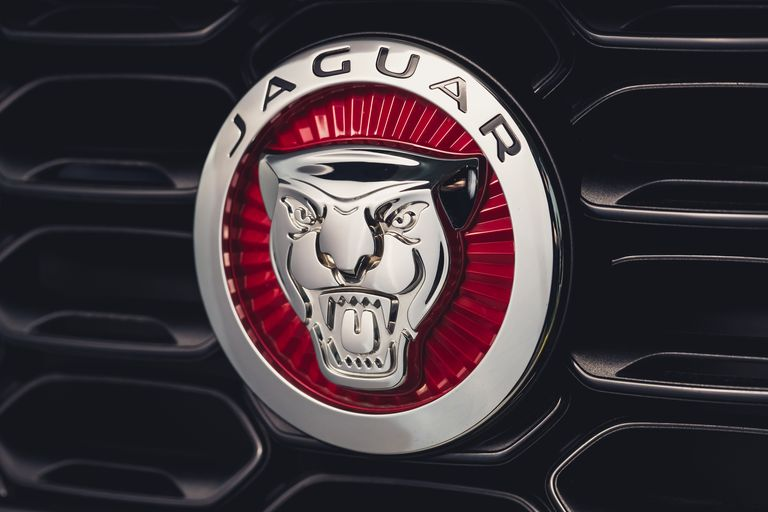
The contrast between Jaguar’s historical and newer visual identities adds another point of interest. The E-Type’s cat-head badge is detailed and forceful, set against a red sunburst. Jaguar’s newer wordmark strips away much of that illustration. The change prompted sharp reactions from traditional enthusiasts, but the spare lettering has a period-modern character that sits comfortably beside the E-Type’s clean shapes. Picture the green coupe parked against a wall bearing the new mark, with Twiggy and Michael Caine in his Get Carter era nearby: the styling references make sense together.
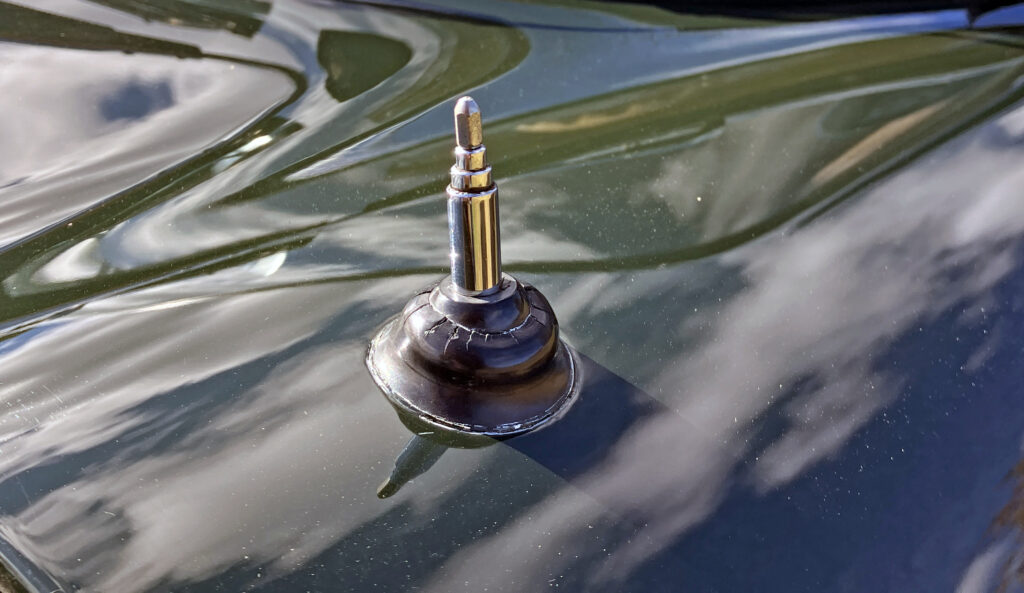
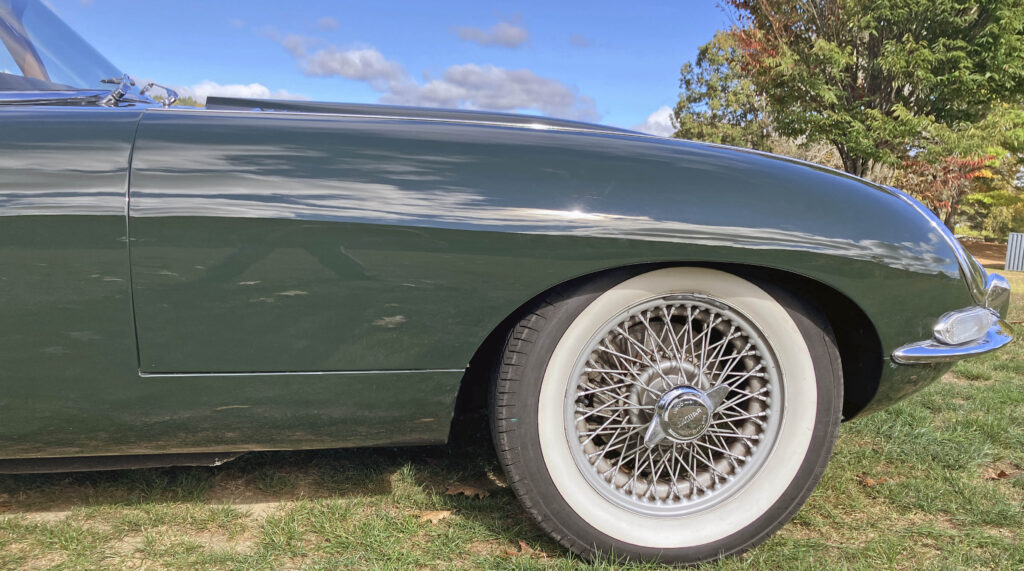
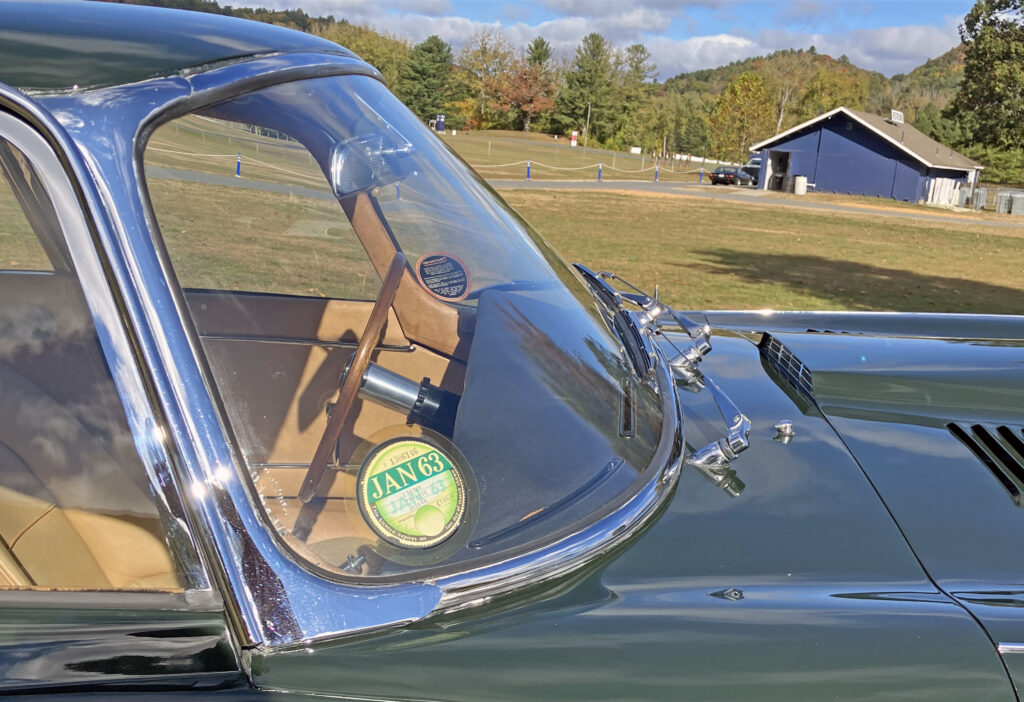
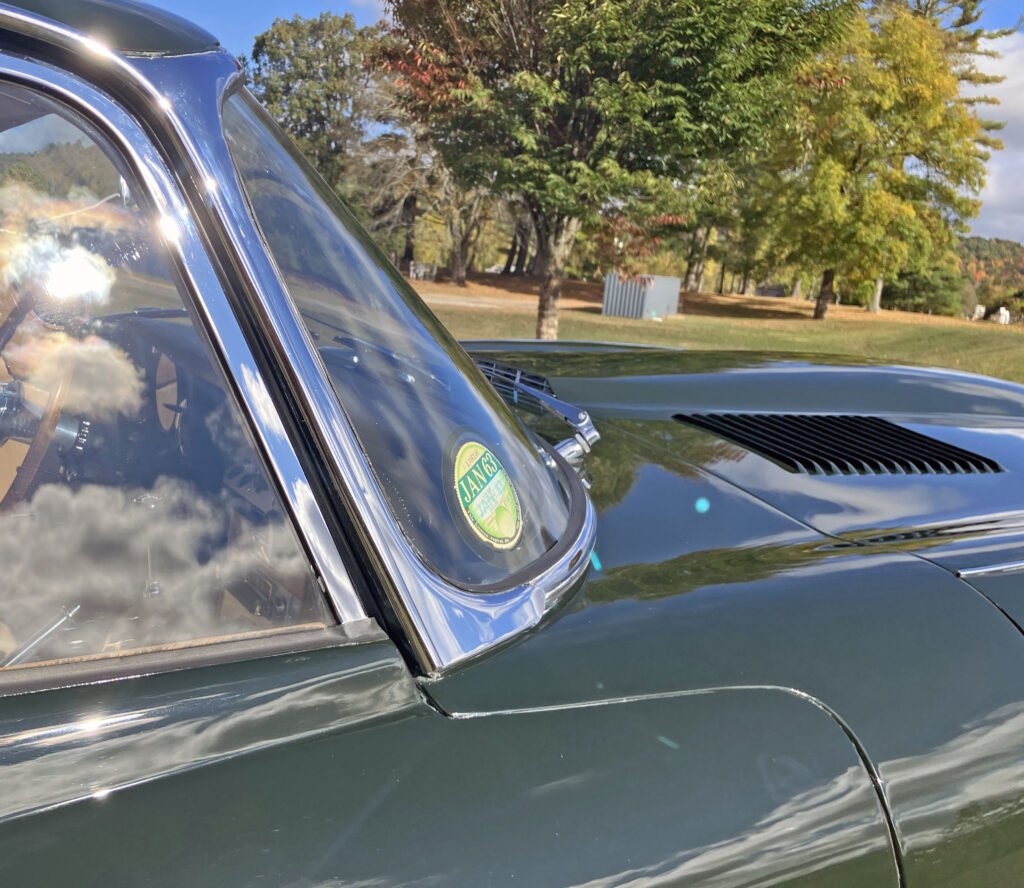
Back at the windscreen, the painted cowl is fully exposed. Three slim wipers serve the short, broad glass, while a cowl-mounted antenna interrupts the otherwise tidy surface. The junction between cowl, fender, door and rocker is unusually easy to read. Its squared-off geometry contrasts with the body’s curves, and trying to soften it further might draw more attention to the way the cowl sits apart from the surrounding panels.
The cabin sits well back
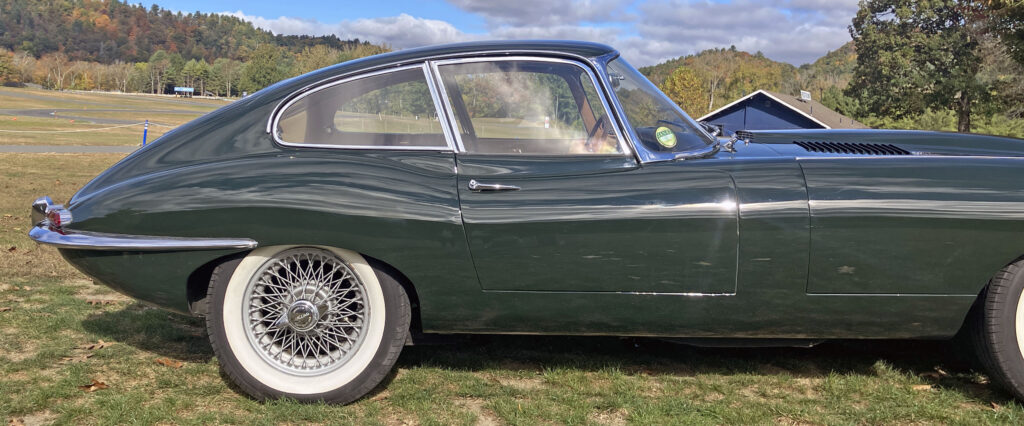
From the side, the E-Type’s dash-to-axle distance is striking: there’s a long span between the front wheels and the base of the windscreen. That proportion pushes the cabin visually toward the rear, a classic example of cab-backward design. The passengers appear secondary to the bonnet and front wheels, which helps explain why Byrd looks so small on his album cover. In this coupe, the roof and glazing keep the cabin compact without breaking the long sweep from nose to tail.
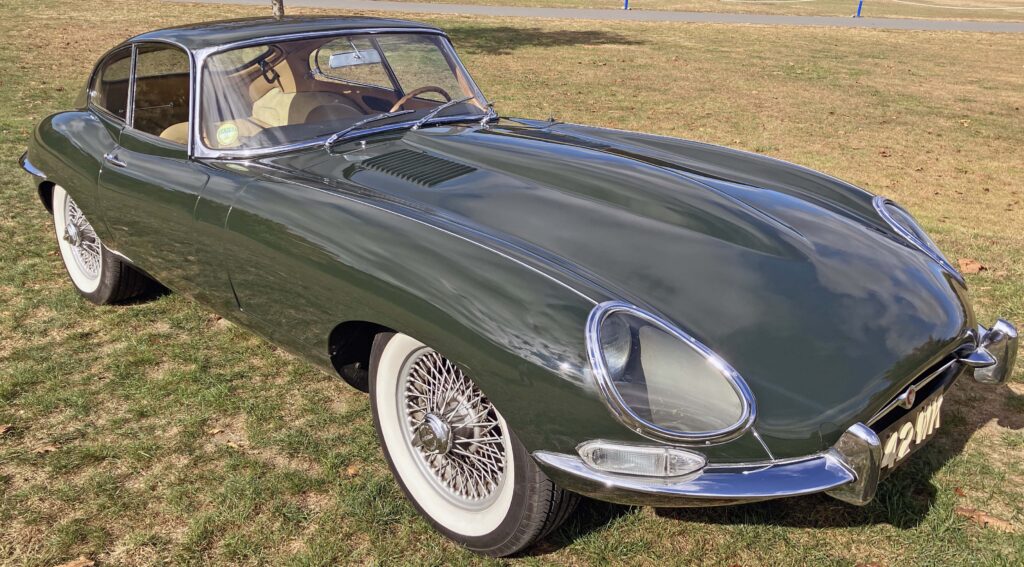
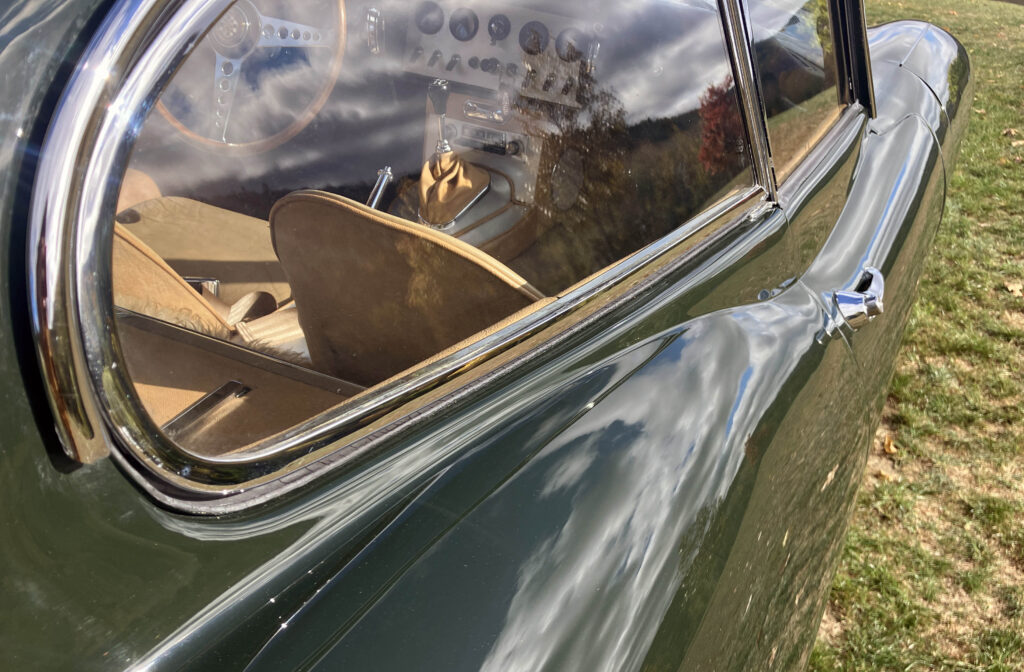
The coupe’s main compromise is at the A-pillar and windscreen. The glass wraps deeply into the space where a conventional pillar might sit, leaving the pillar upright and visually awkward for such a sleek car. It also runs almost parallel to the B-pillar, a rare pairing on a low sports coupe. The chrome around the windscreen has the handcrafted look of the period, though the parallel lines become more noticeable when viewed from the side.
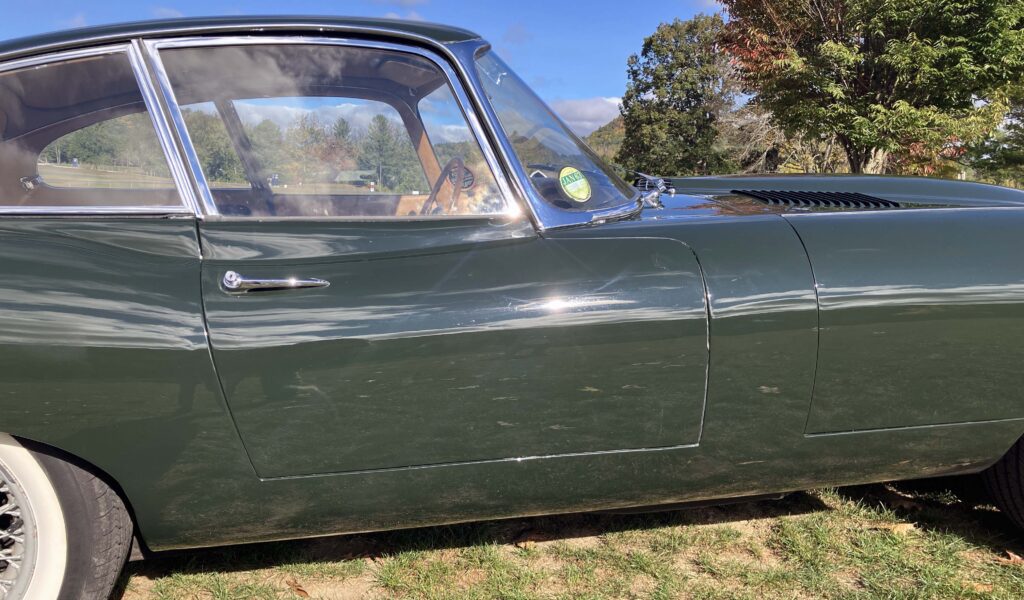
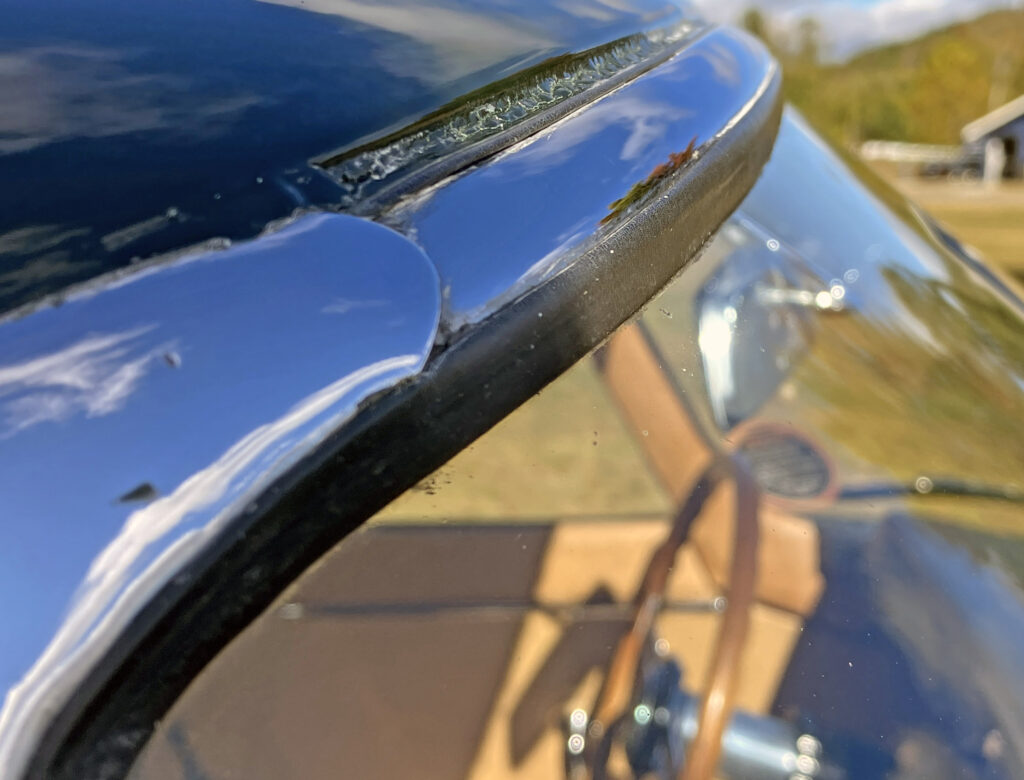
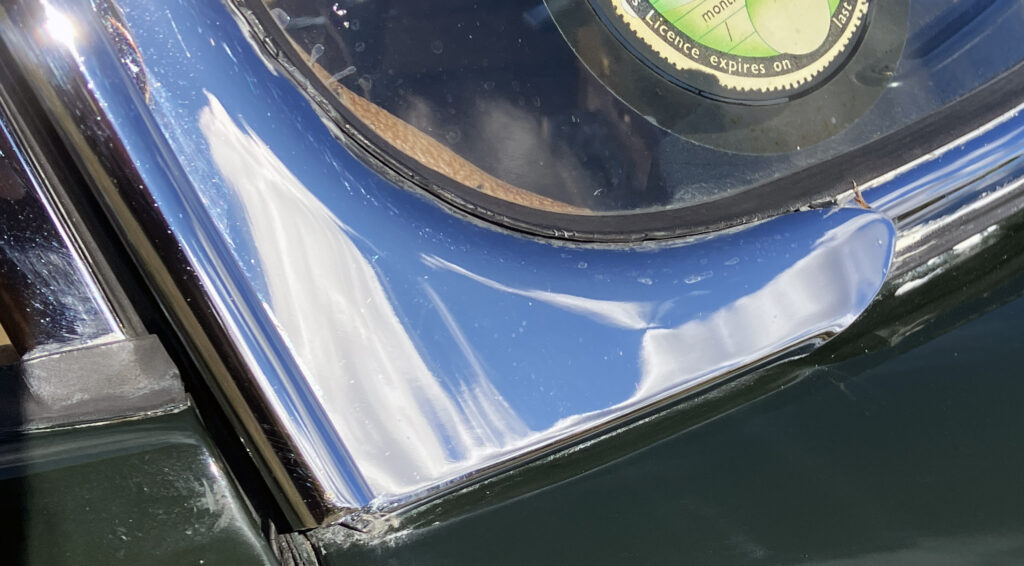
Whether a more laid-back A-pillar would have improved the door opening is an open question. The way the current pillar meets the side glass is distinctive, but it makes the cabin look less fluid than the bodywork ahead and behind it. Elsewhere, Jaguar borrowed a visual cue from the D-Type: the upper door’s curving metal appears to continue the body’s shape, but a vertical filler panel separates it from the glass opening. The added panel gives the side windows a proportion that better suits the coupe’s body.
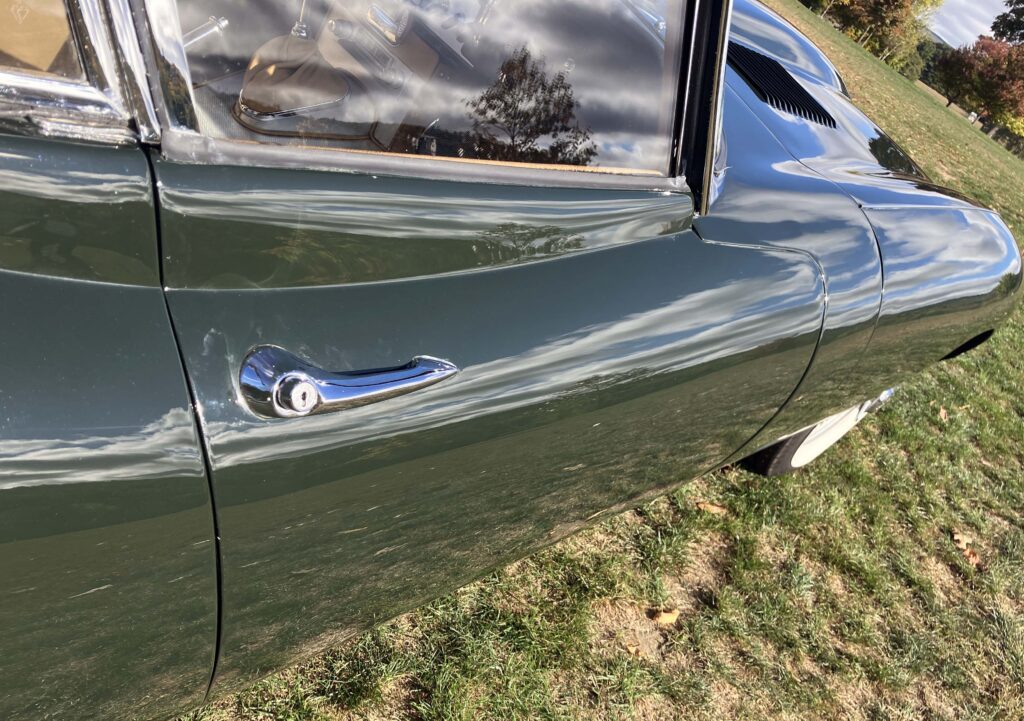
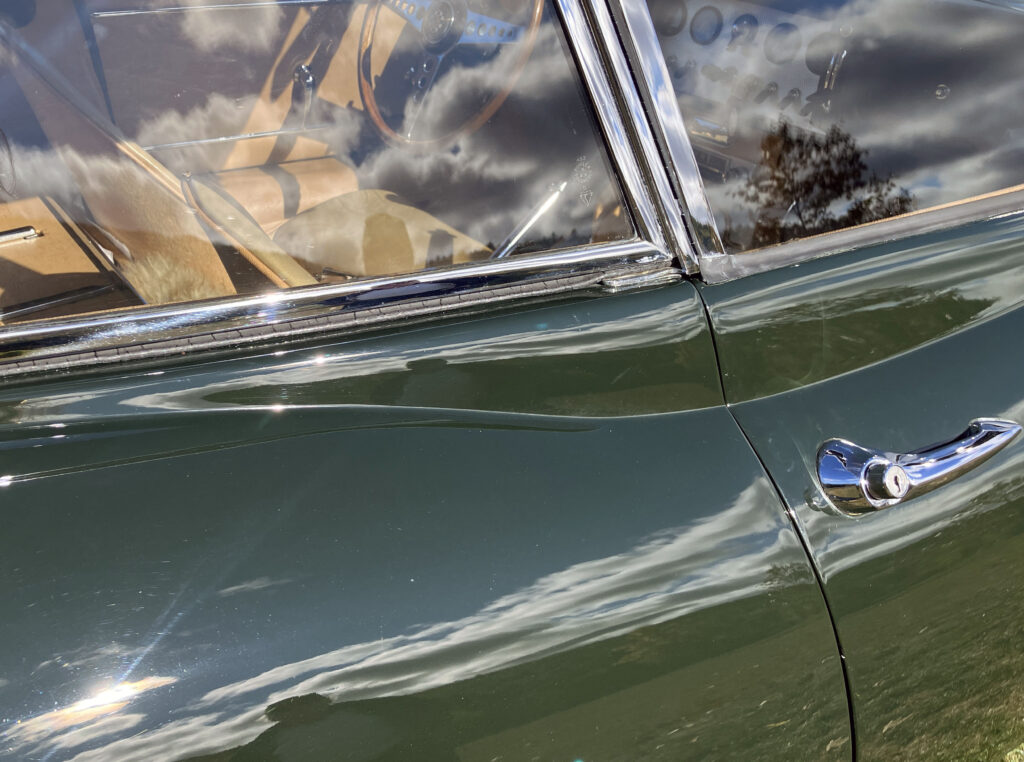
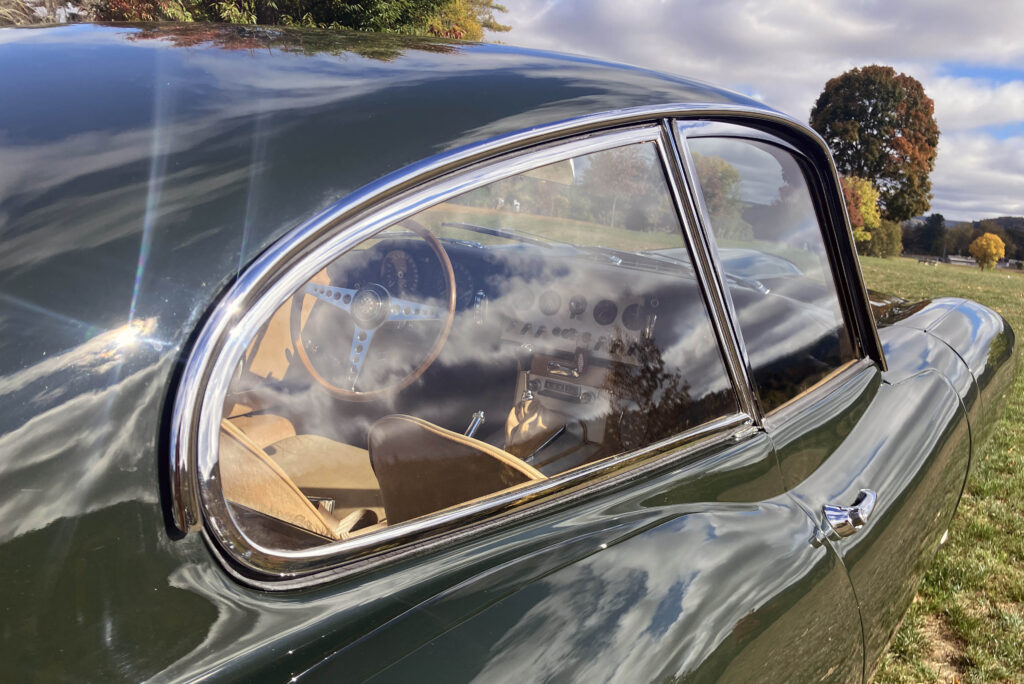
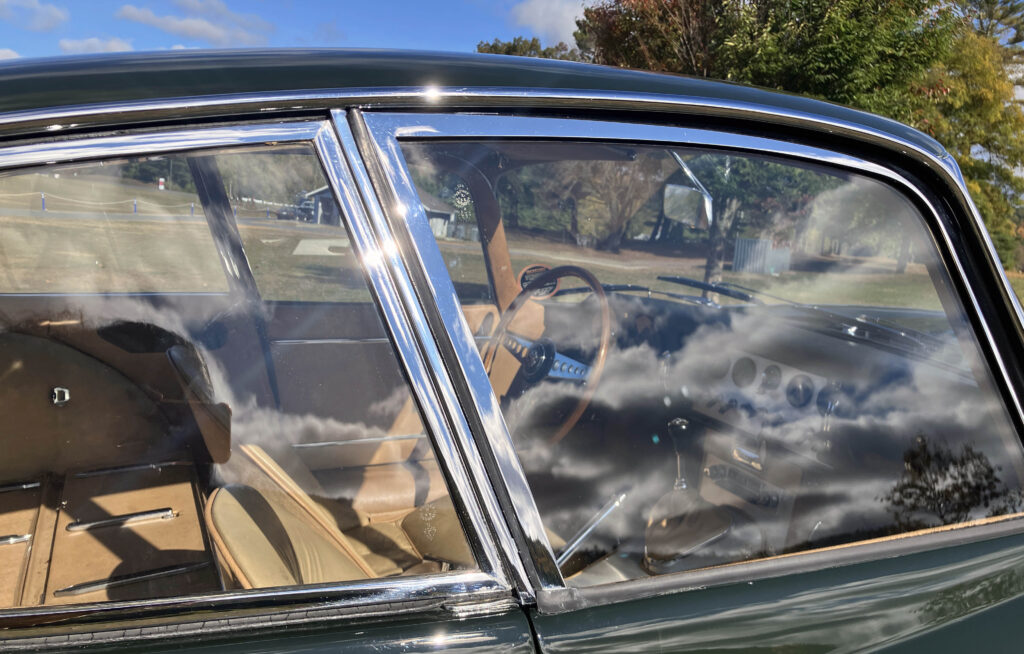
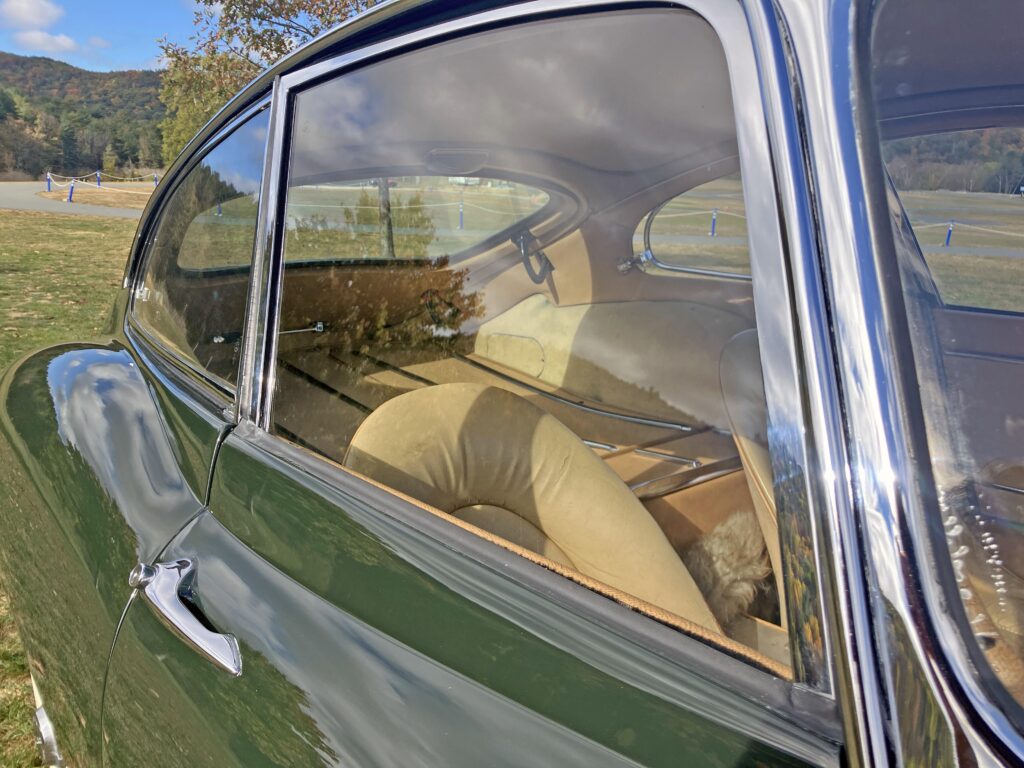
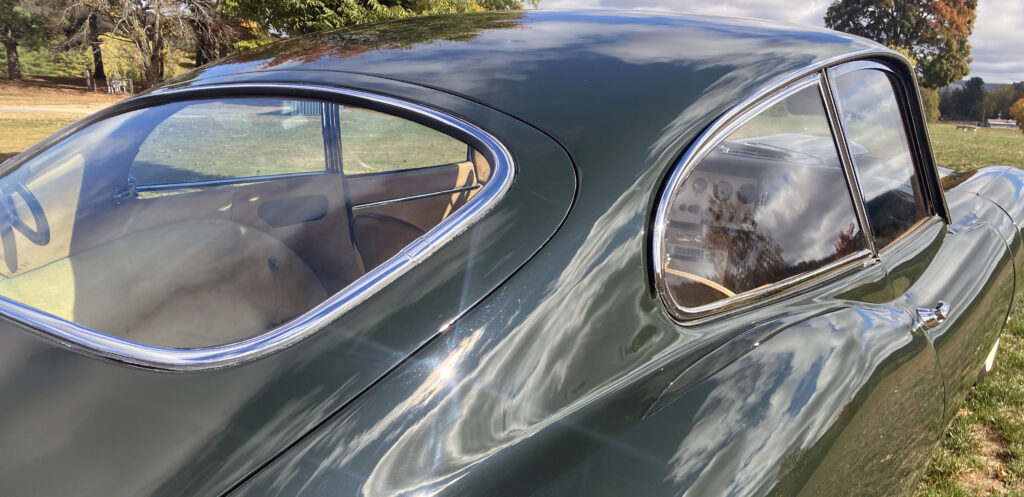
The quarter window and C-pillar complete the coupe’s profile. The elongated rear side glass gives the roof a D-Type flavor, even if the coupe’s length means the shape can’t be a direct copy of the racer’s proportions. A frame around the quarter window also serves as a rain gutter. Open the vent window and the glass changes the silhouette, adding a small flourish to a form that otherwise looks carefully sealed.
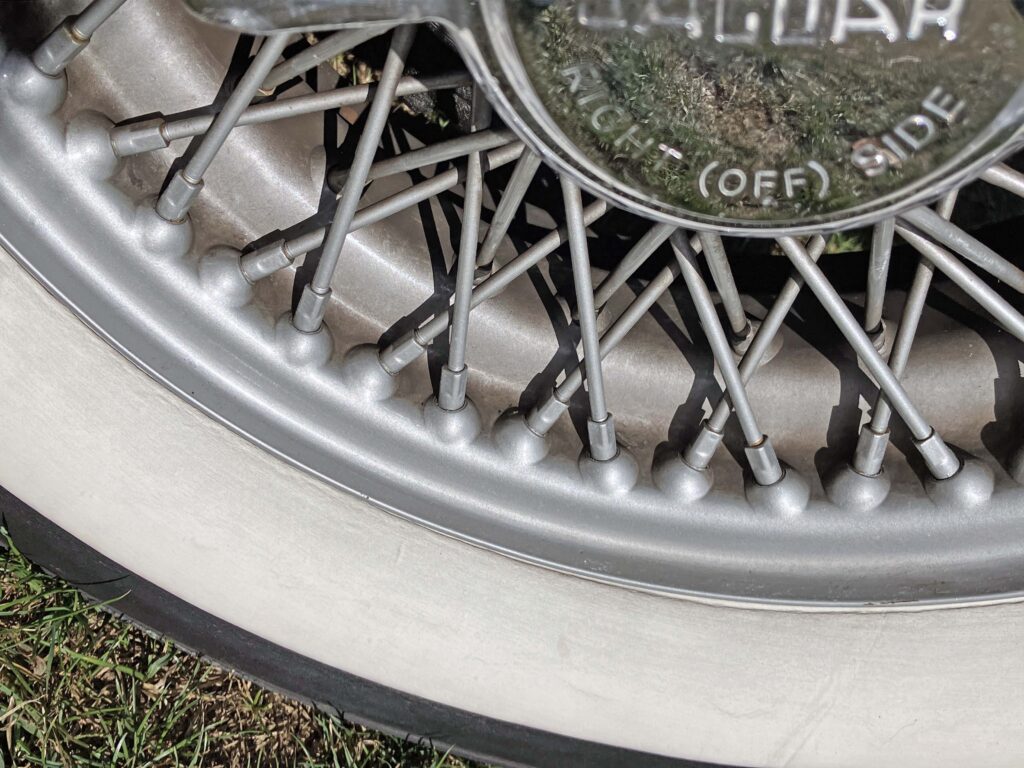
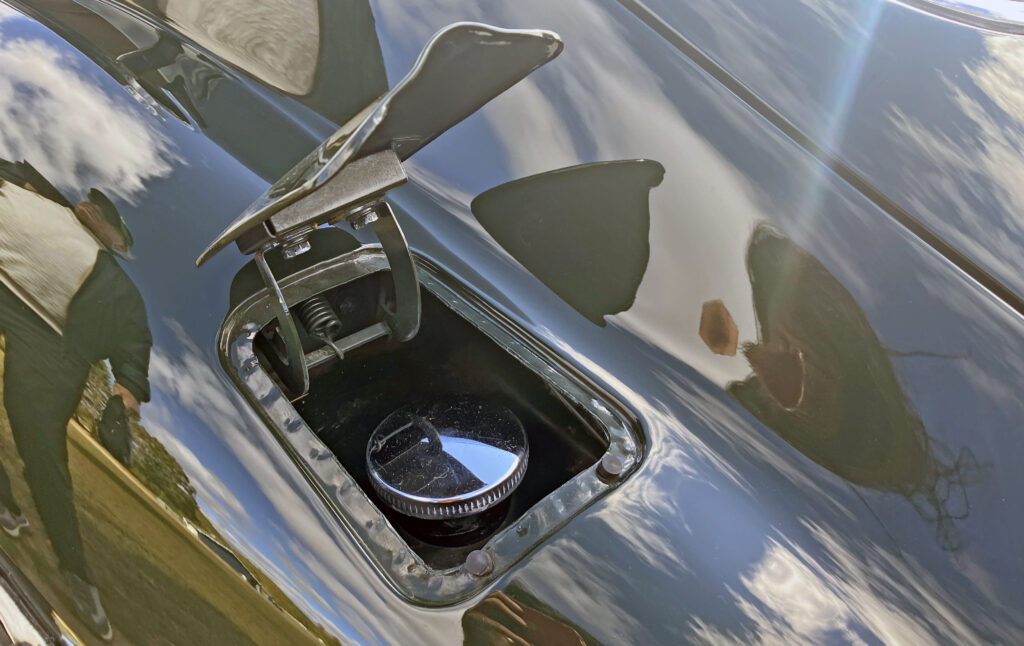
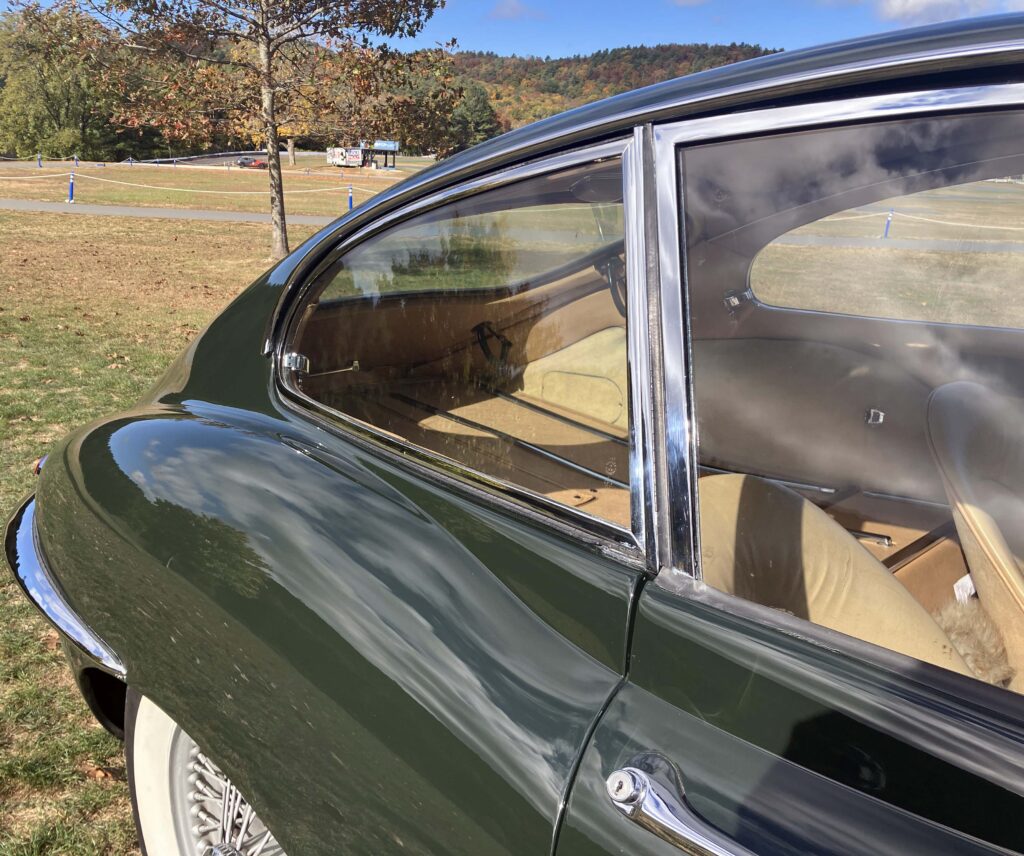
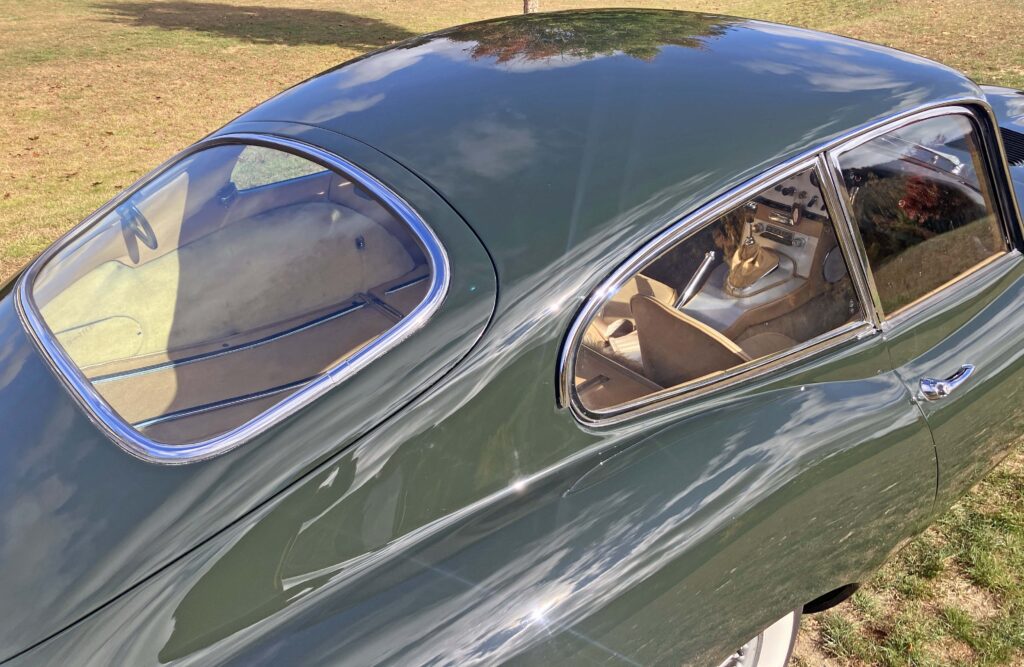
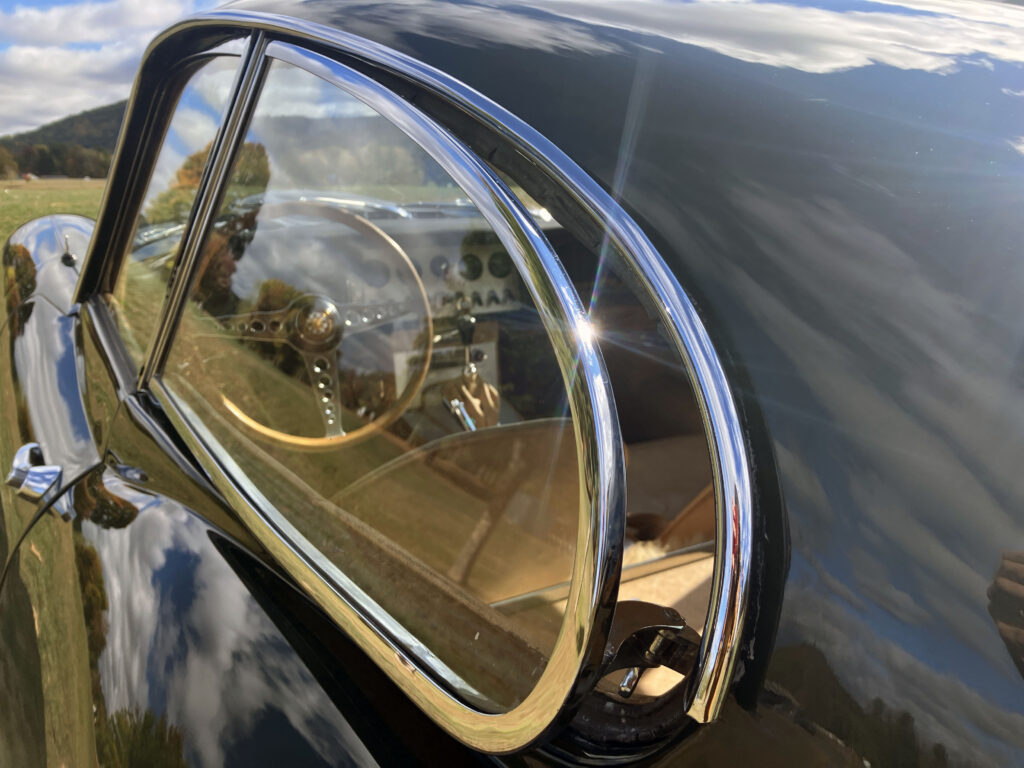
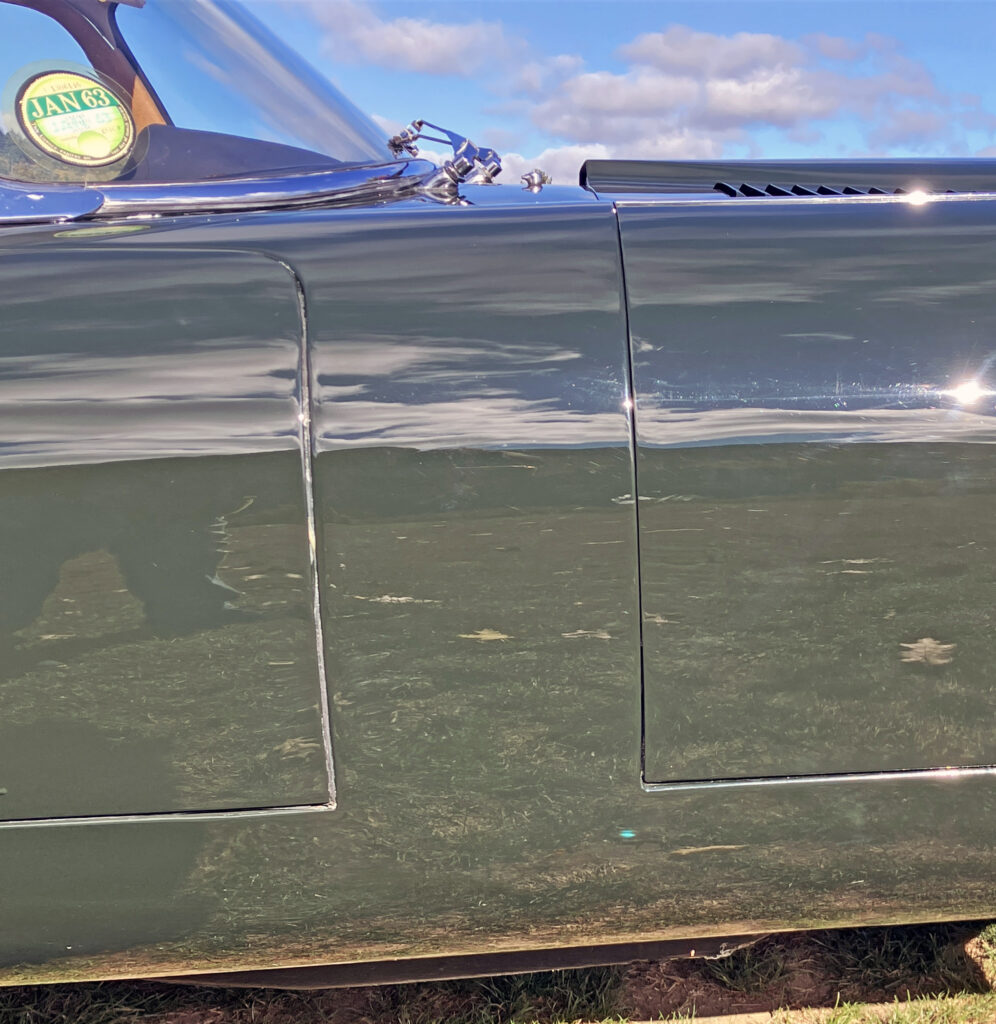
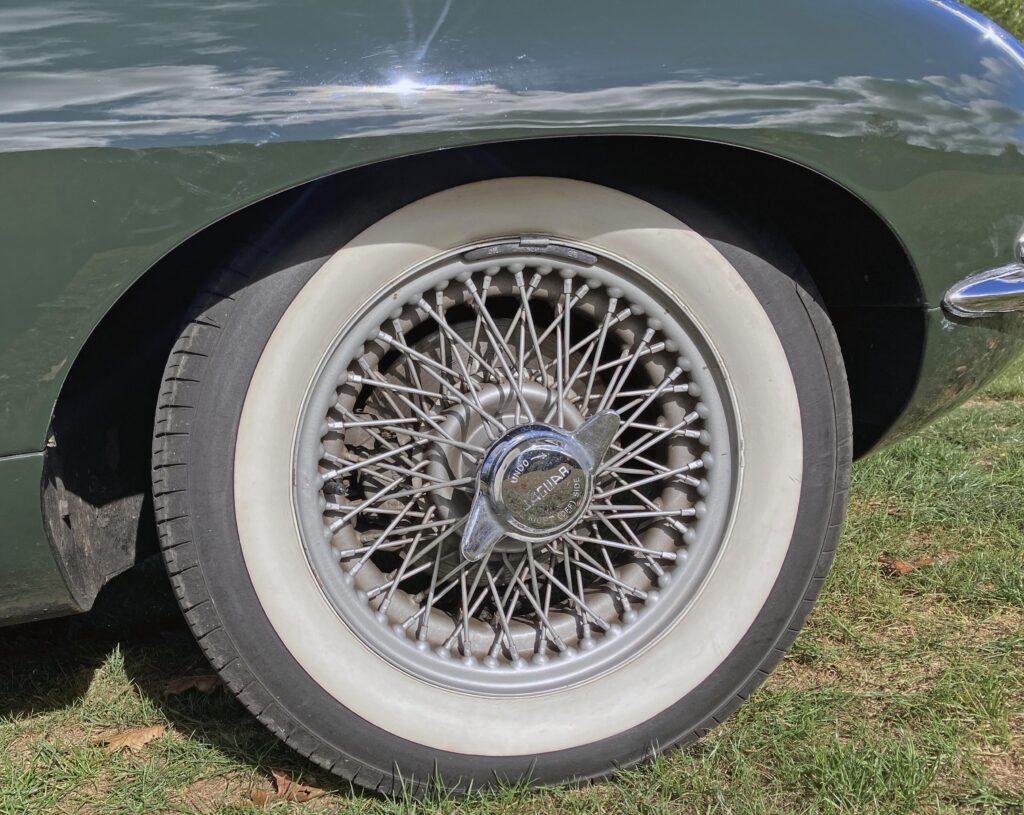
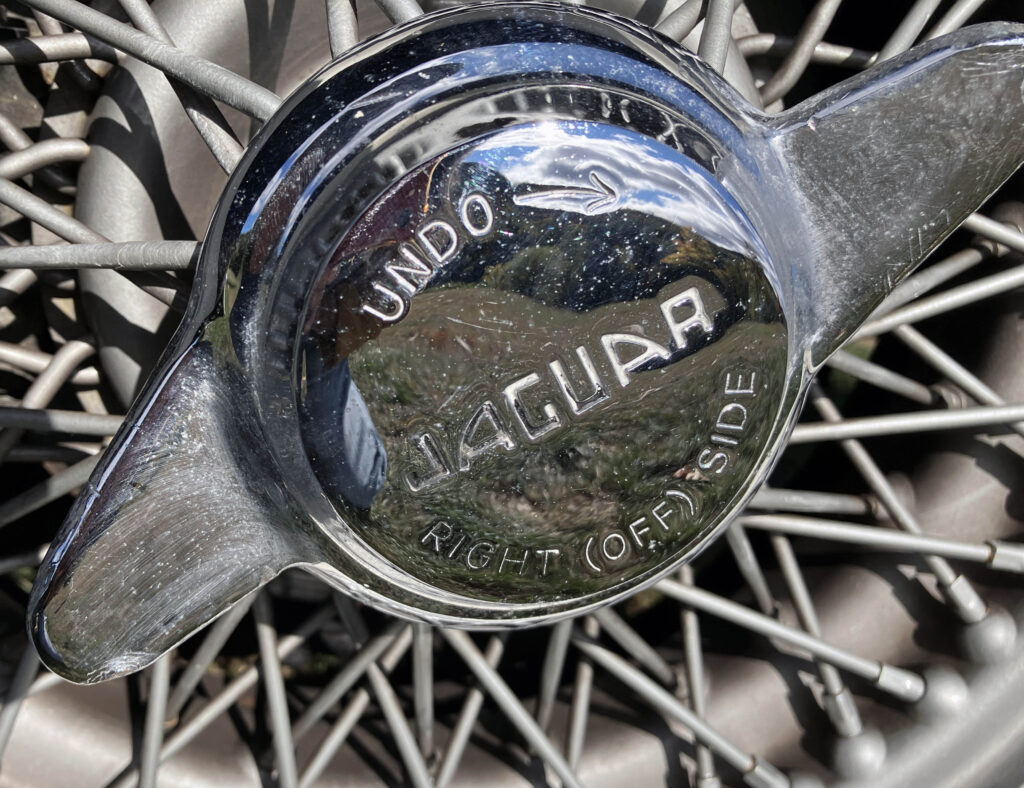
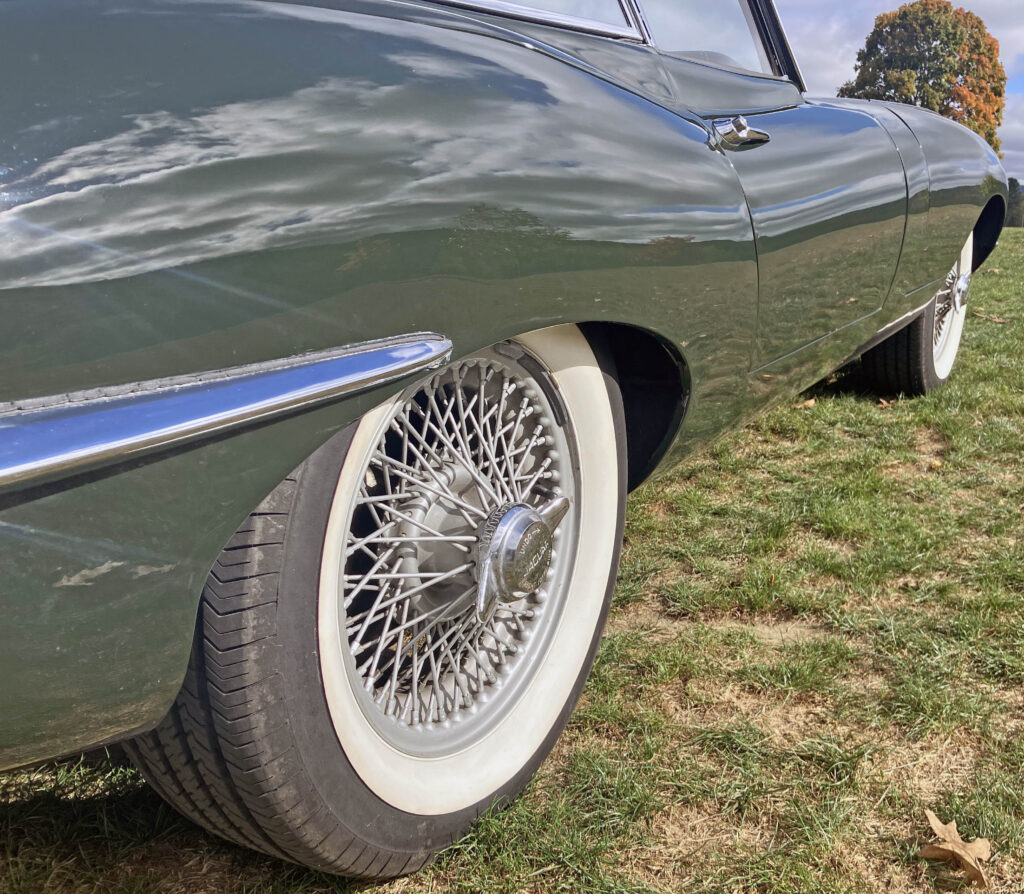
The side treatment has complexity where the body seems simplest. The fuel-filler door sits in a nest of curved sheet metal, and the surrounding contours change as the light moves across them. Jaguar’s wire wheels, secured with knockoff spinners, suit the car’s sporting lineage. They also tie the E-Type visually to other Jaguars: the Mark II saloon, for instance, would lose much of its character without its wire wheels.
The coupe’s changing rear
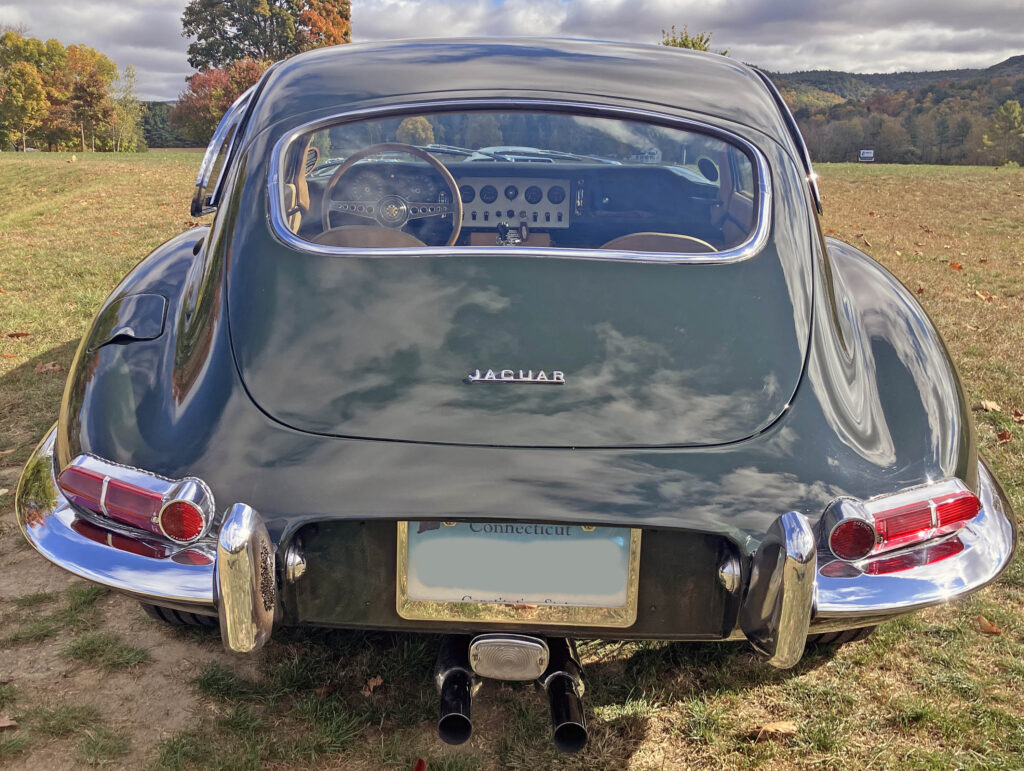
At the back, the roof tapers into a hatch, and the result varies dramatically with the viewing angle. From some positions, the rear glass and body make the car look like a pure sports coupe; from others, the rounded hatch gives the tail a more practical, almost passenger-car stance. Flattening the hatch might make the rear more aggressive, but it would disturb the lines that work so well from the side.
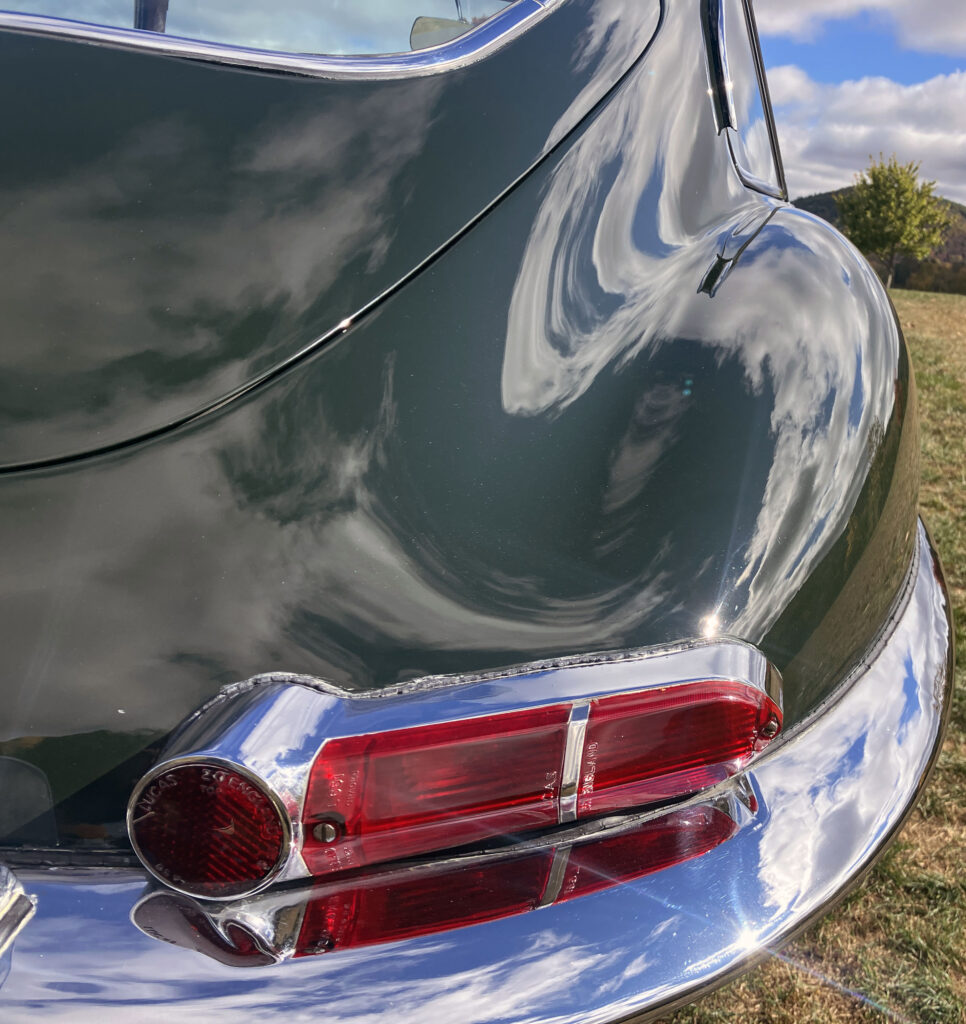
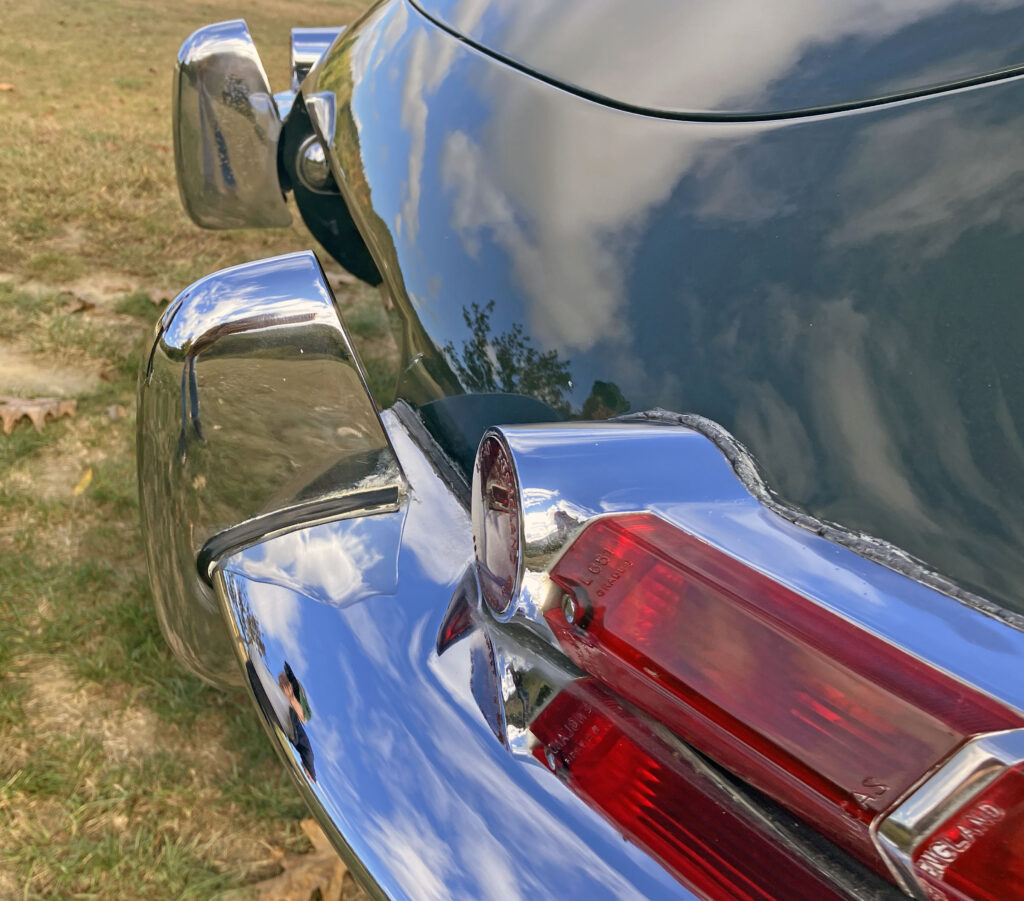
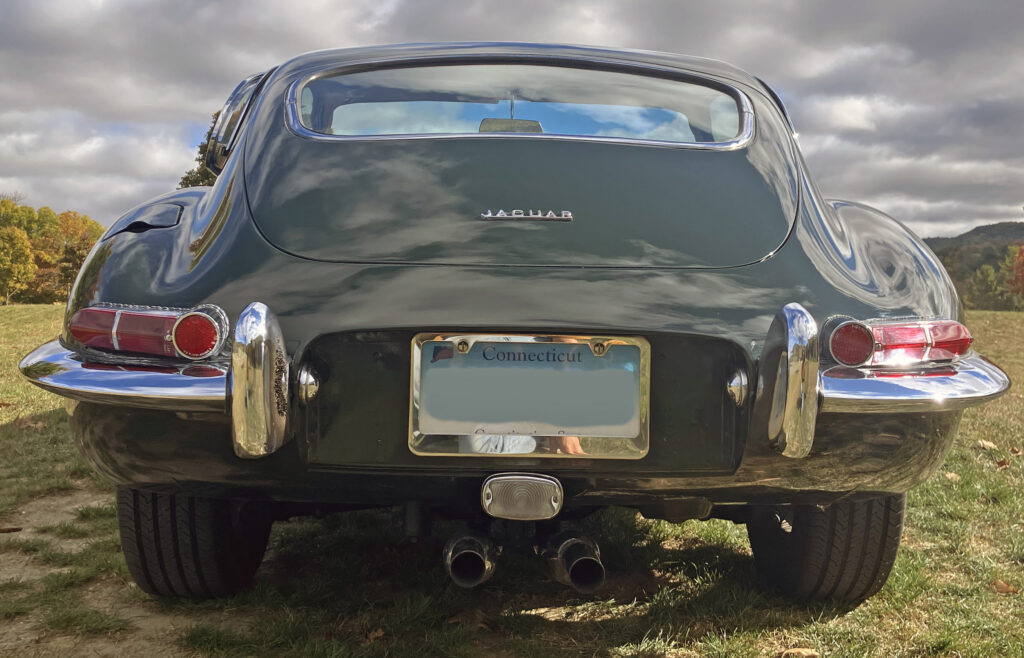
The rear wheel arch receives the same care as the front. The body dips slightly below the wheel before the chrome bumper curves around it, giving the rear corner a deliberate finish. In the three-quarter view, the fastback roof, chrome sweep and raised lighting pods combine into one of the E-Type’s most convincing angles. Even the A-pillar seems less awkward from here.
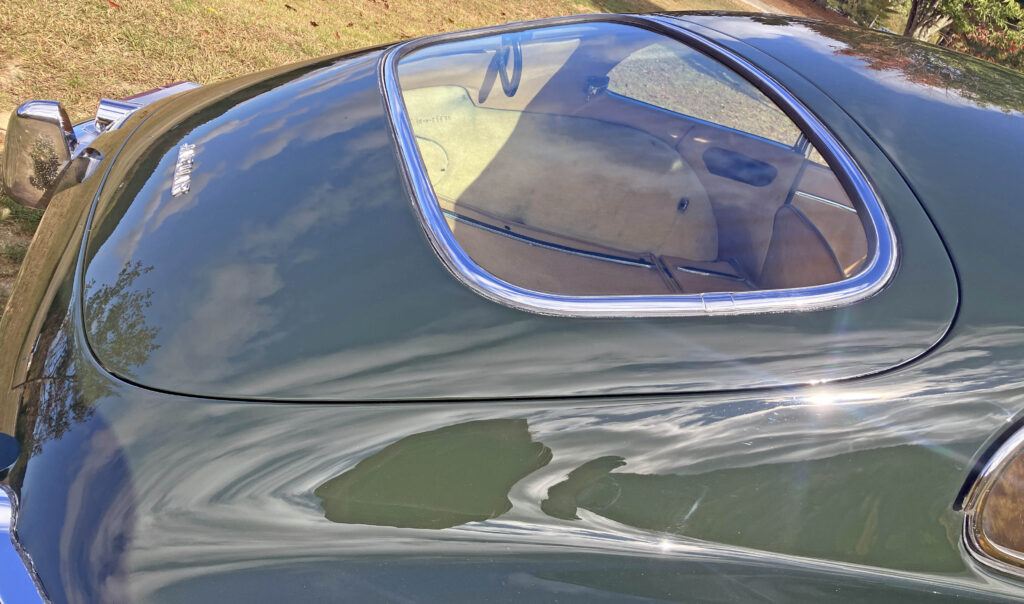
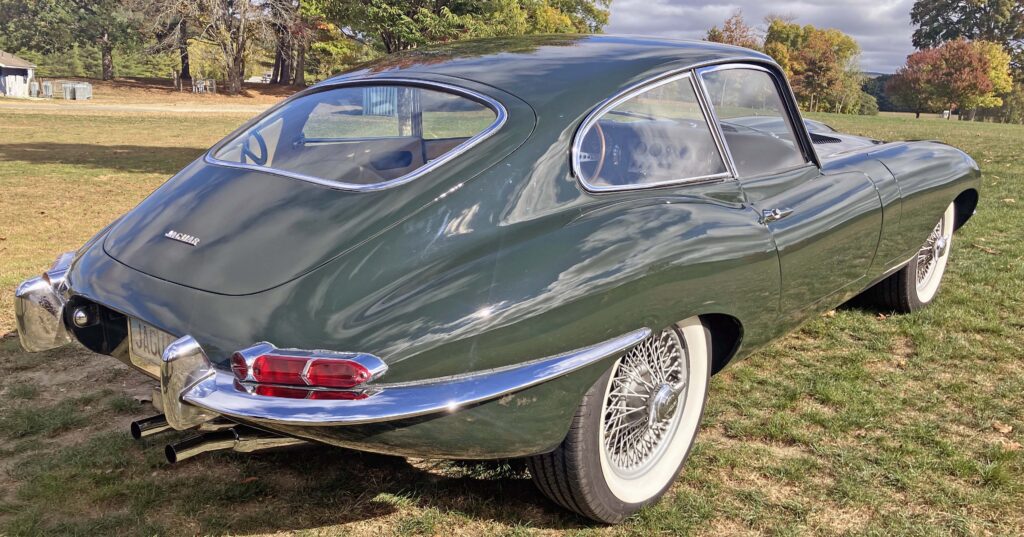
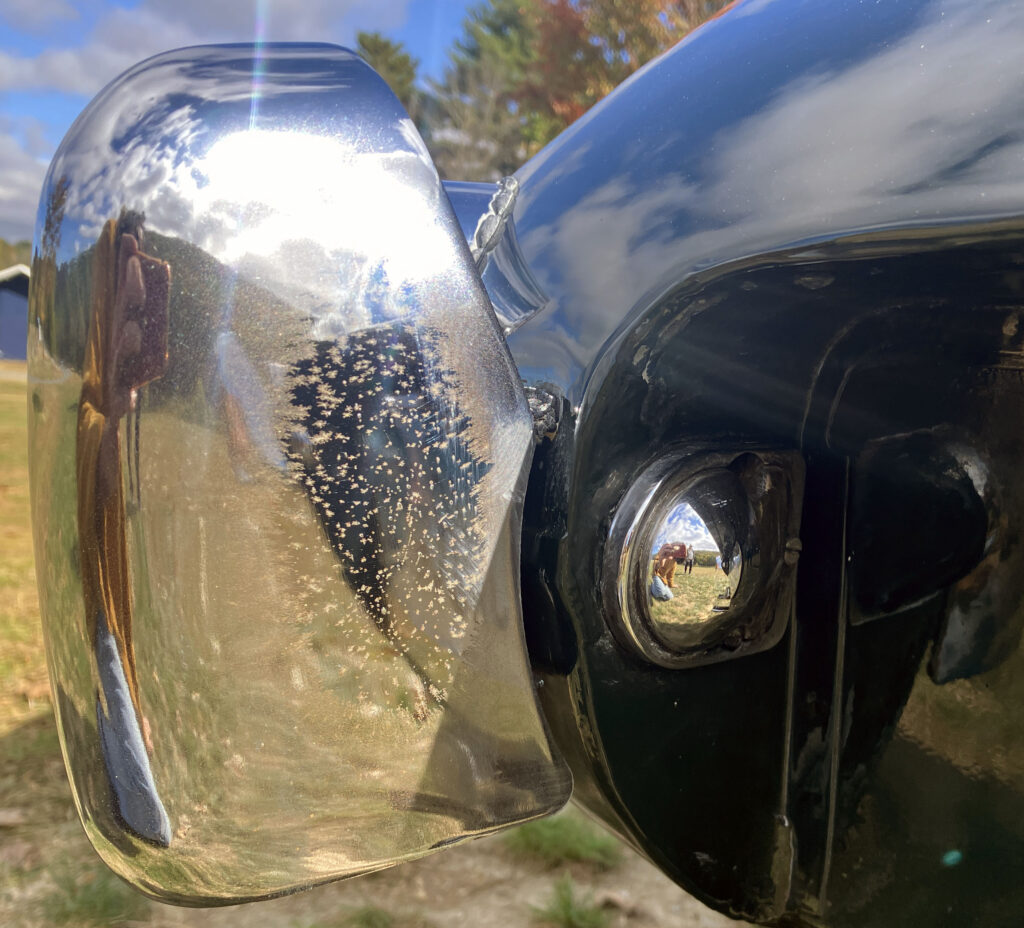
The rear lamps are bold against the broad, relatively flat sheet metal. Their rectangular lenses sit above the bumper, with chrome between and beneath them to keep the lights visually distinct from the metal around them. Reflections reveal how the rounded trim and taut body surface meet; it’s the sort of detail that a flat photograph can only partly explain. The fascia can look upright and substantial from one angle, then suddenly recede beneath the roof’s long, low line from another.
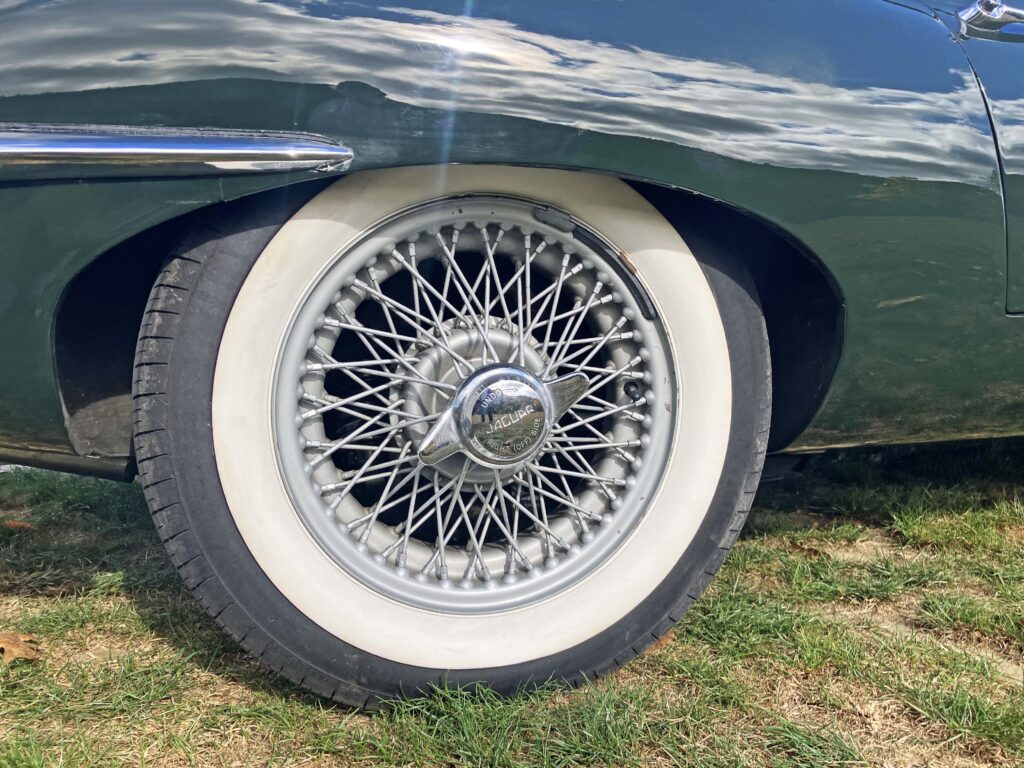
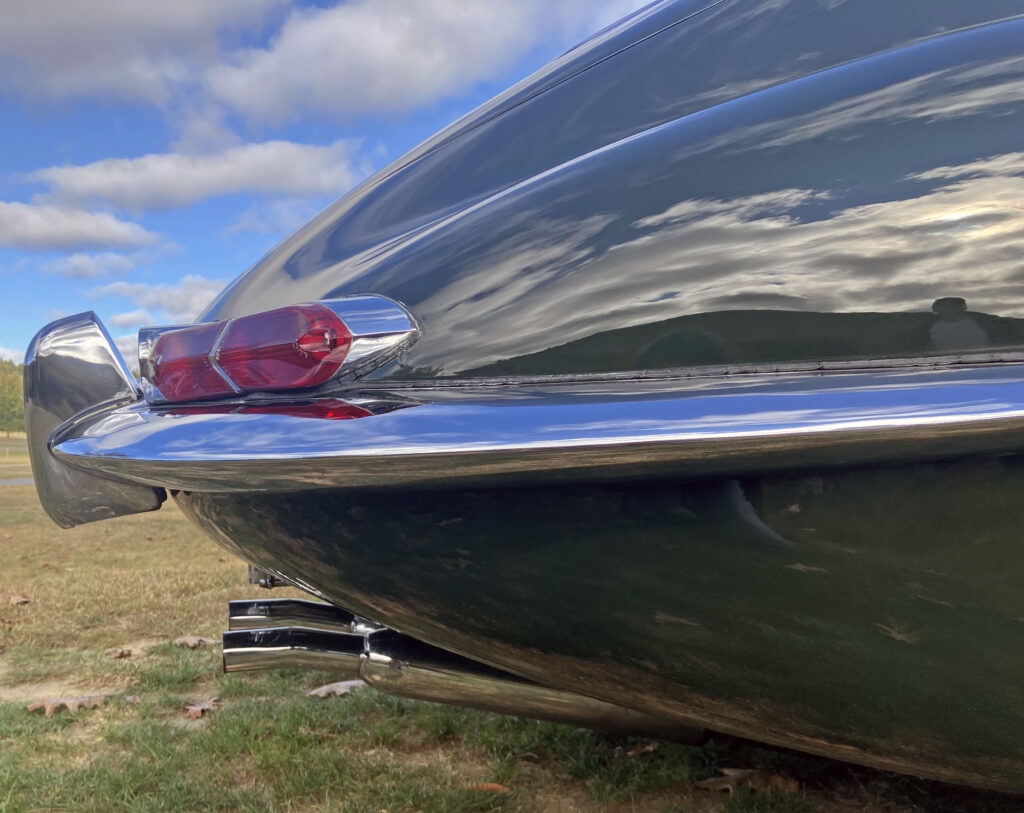
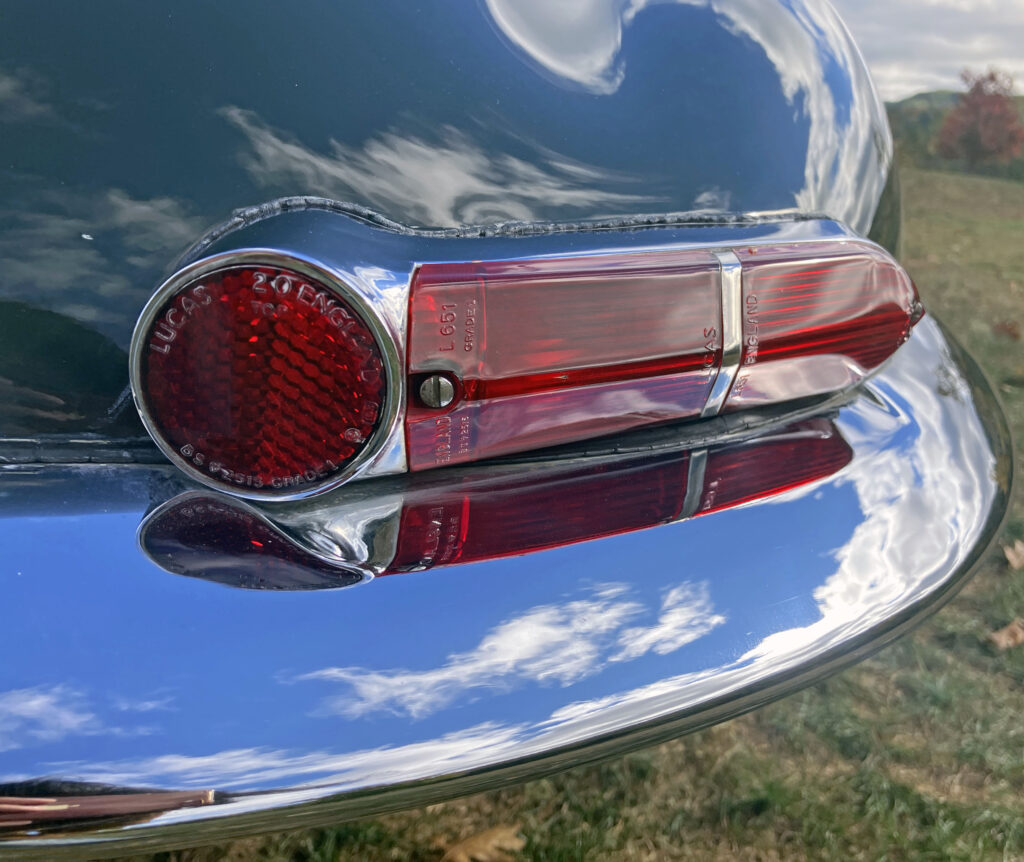
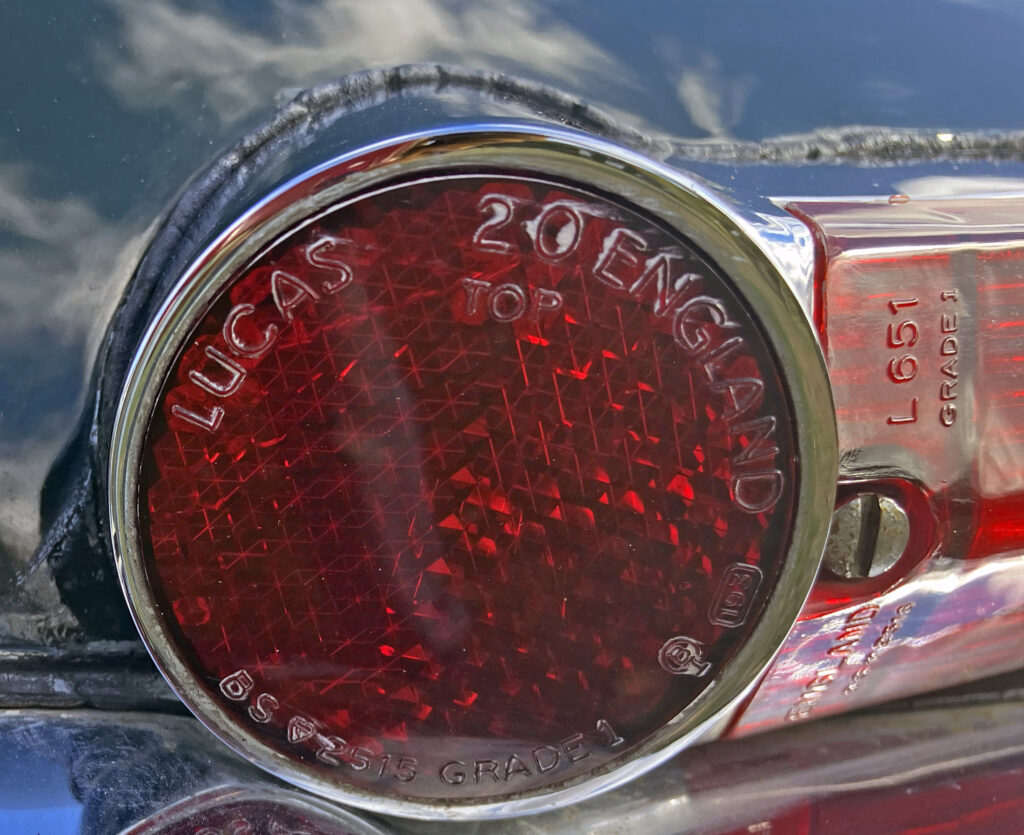
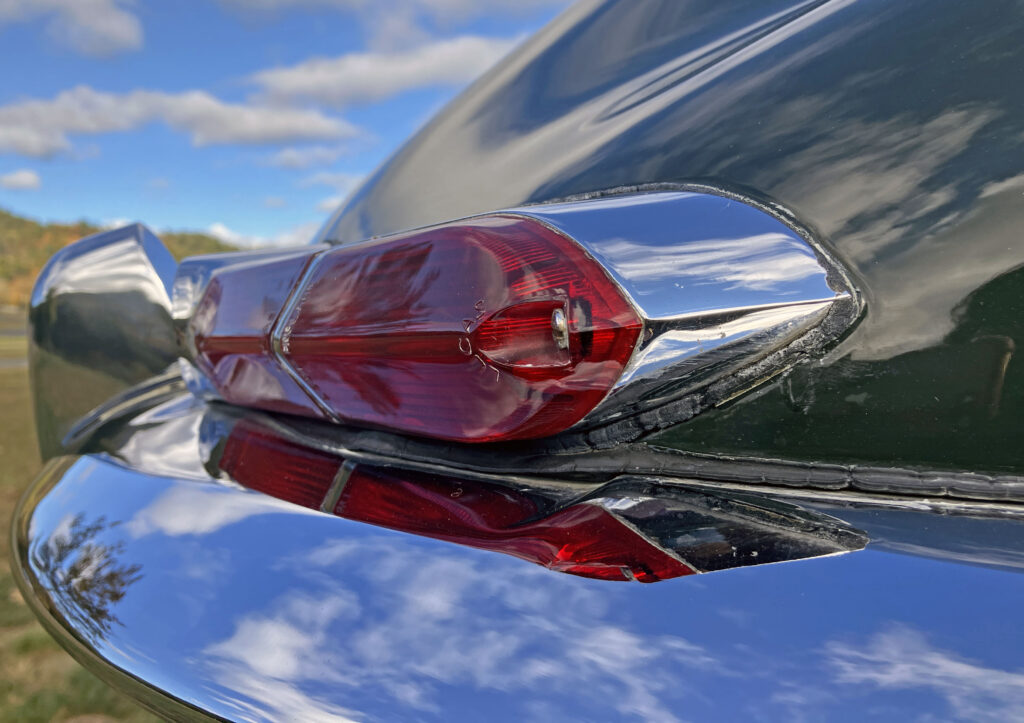
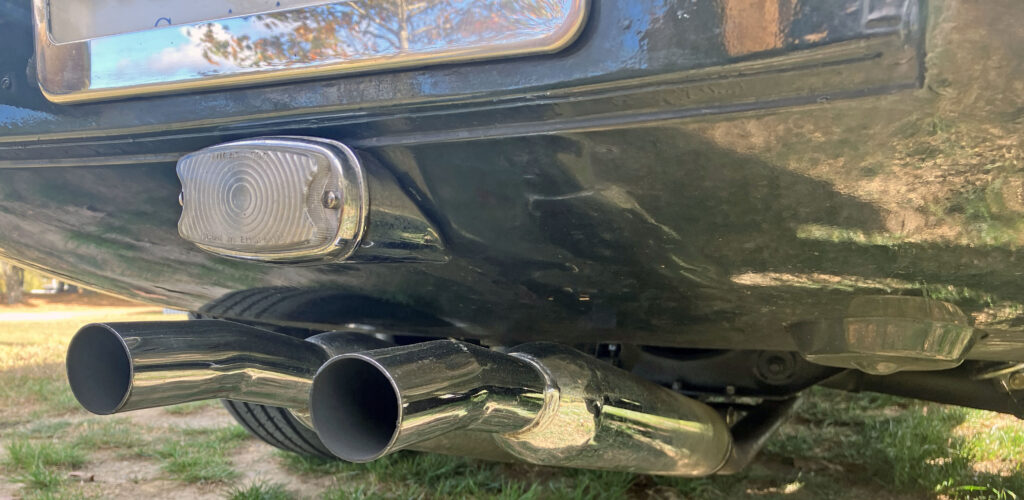
The bumperettes frame a central space for the number plate, though the rear bumper doesn’t flow into that opening as neatly as the front bumper joins the grille. A reverse lamp sits below the plate and is easy to miss. The exhaust is lower still, with its resonators plainly visible beneath the body. That exposed hardware adds a welcome mechanical note to an otherwise polished tail.
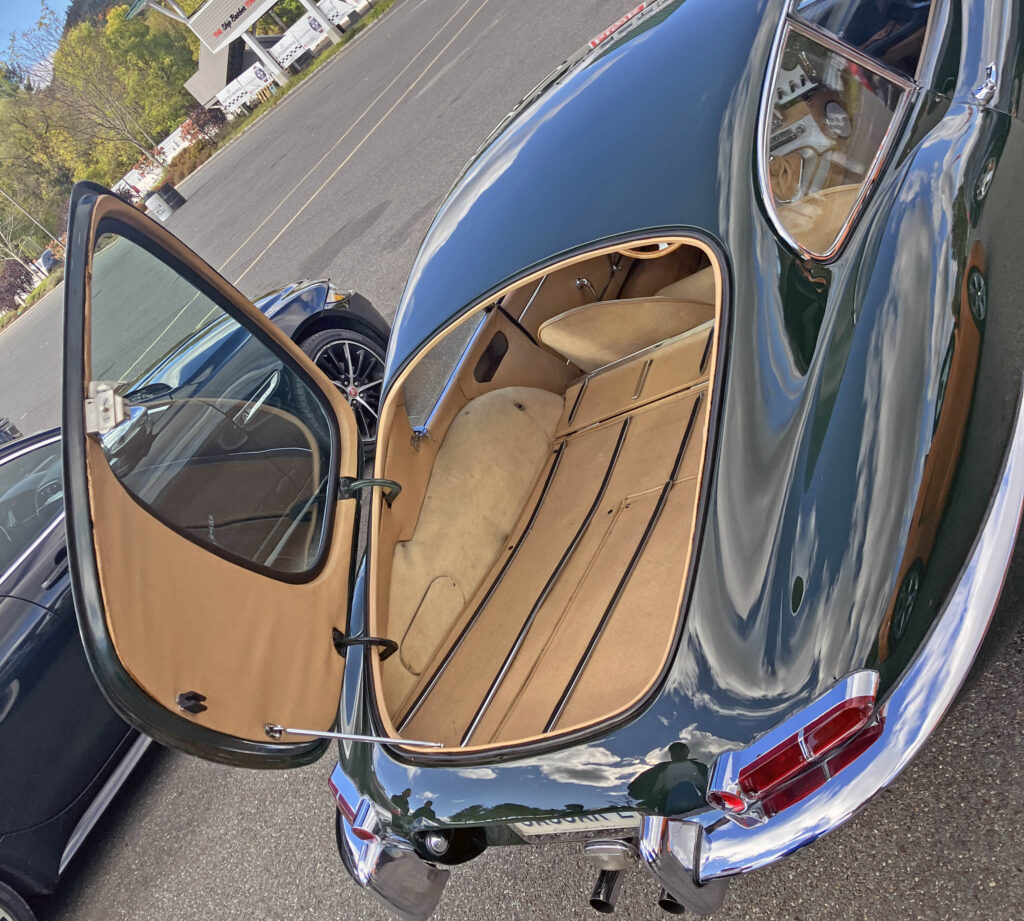
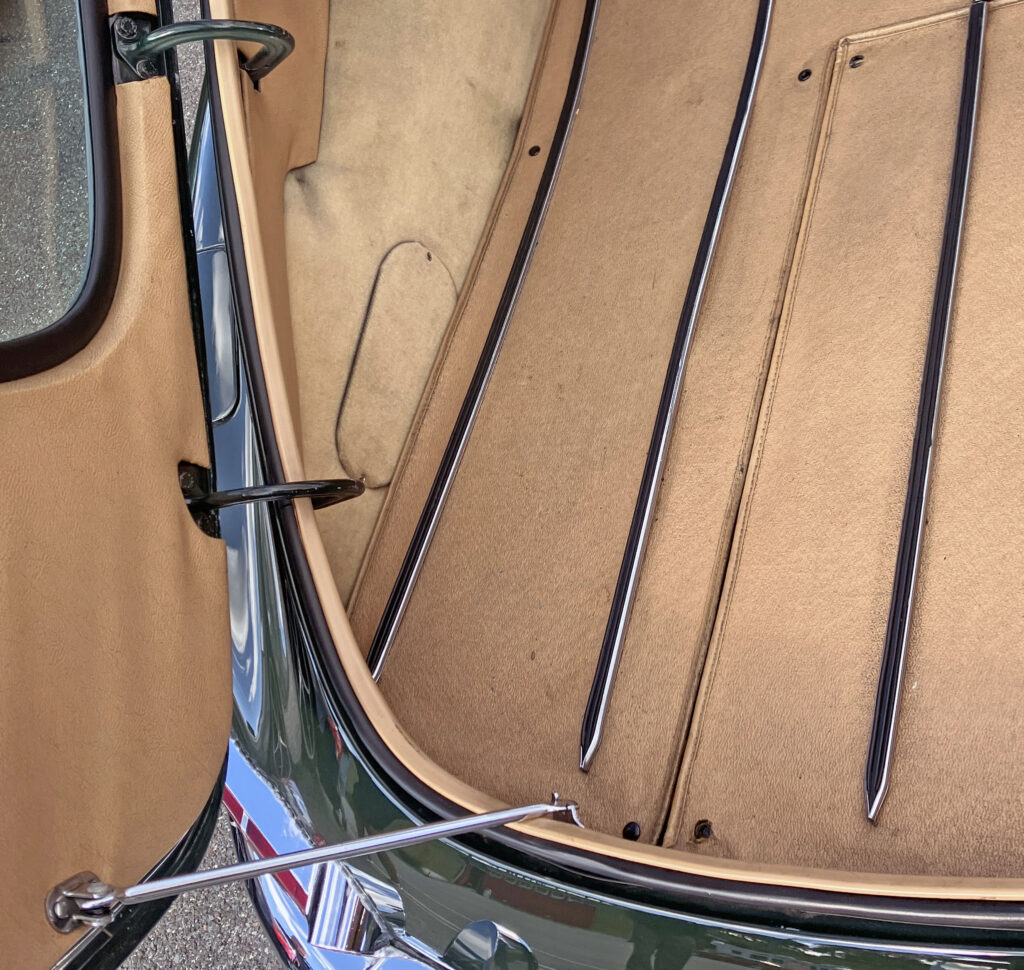
The hatch gives the E-Type a practical dimension, but the bodywork makes no visual concession to cargo space. Its curve echoes the raised center of the bonnet, while the rear wheel arches repeat the fuller shoulders at the front. The luggage area disappears down the same steep slope as the rest of the tail. That trade-off is central to the coupe’s appeal: it has the outline of a fastback grand tourer, yet the body is shaped first around a continuous exterior form.
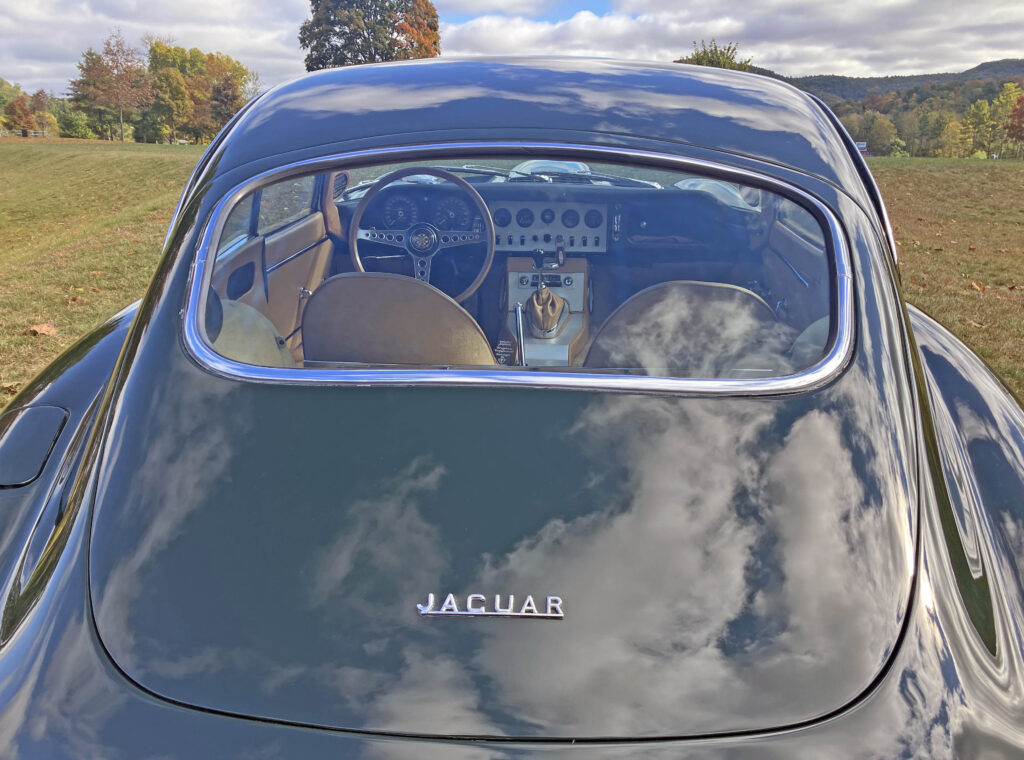
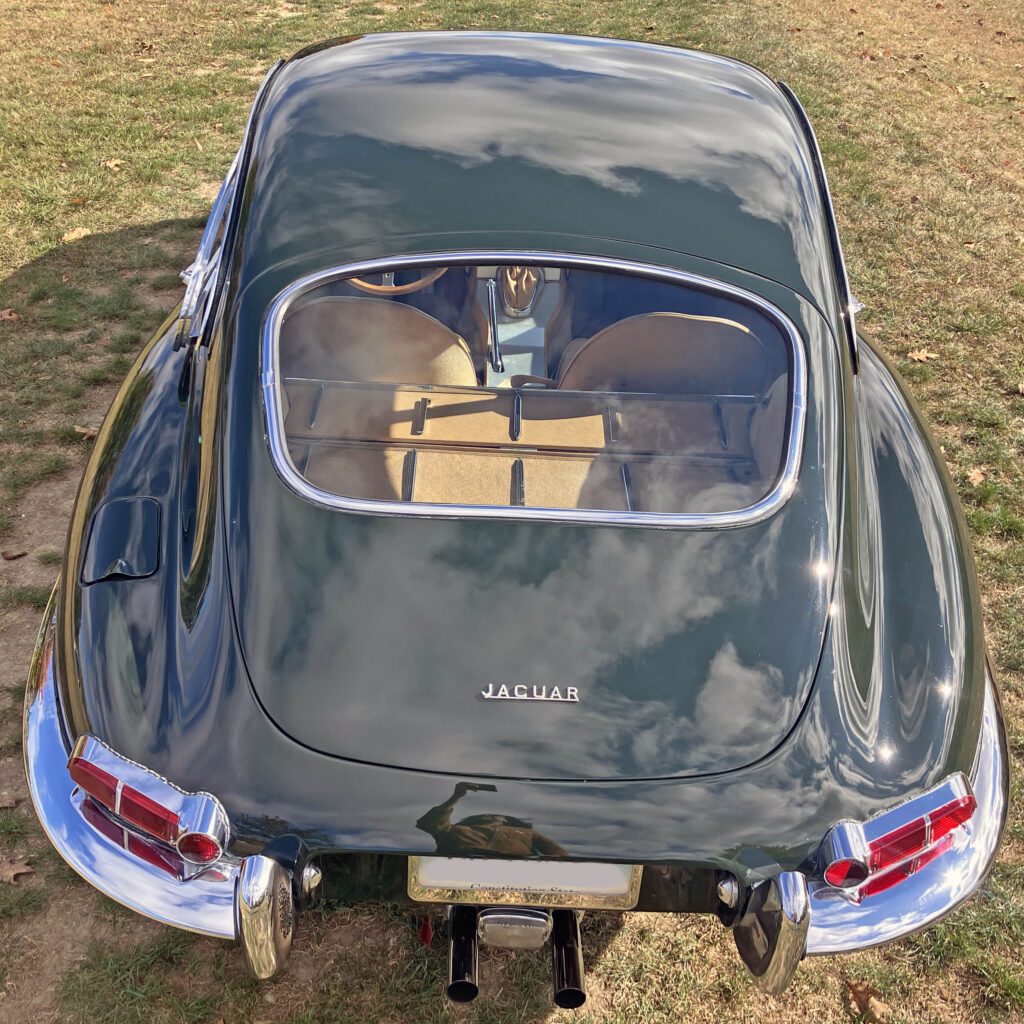
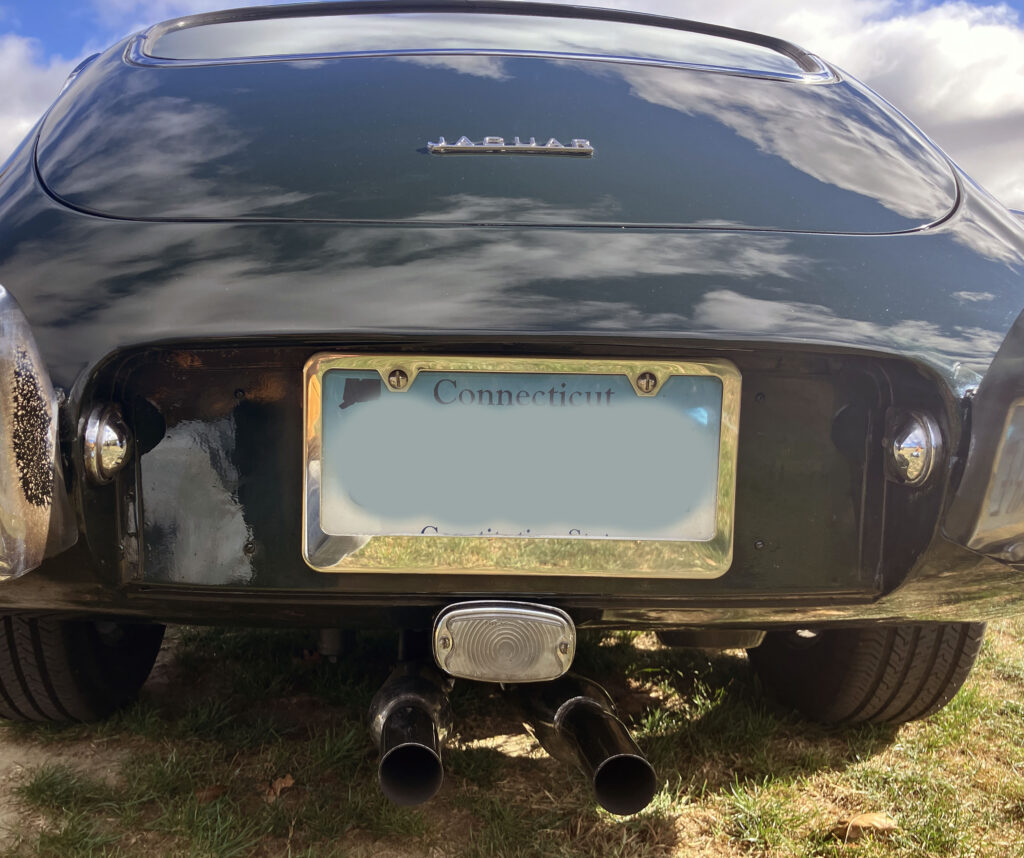
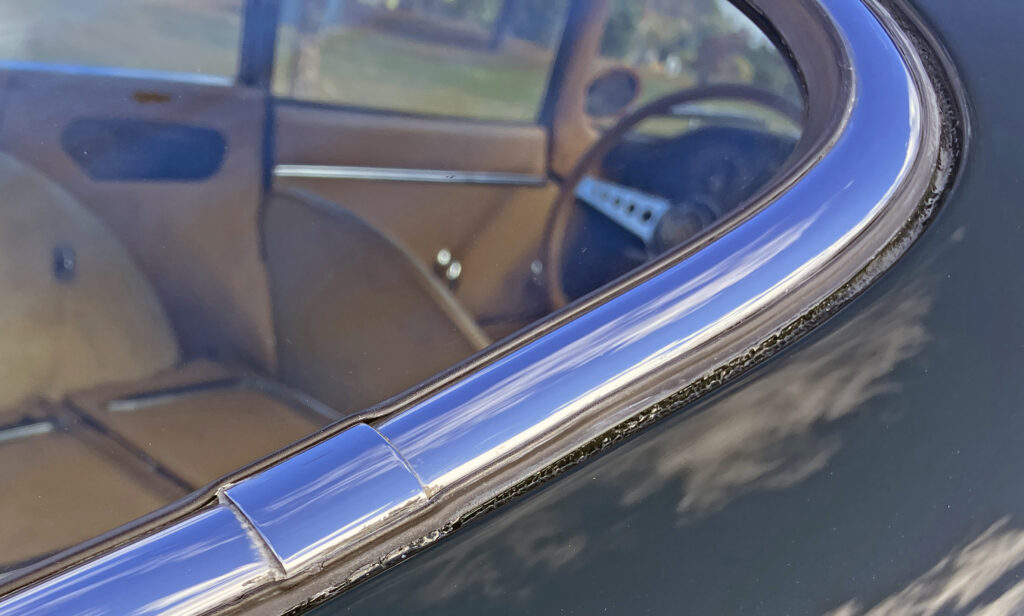
The rear window uses chrome insert sleeves to join the surrounding moldings. It’s a visible assembly detail, but one that suits the coupe’s hand-finished character and looks more considered than a thick, preformed seal. Close the hatch and the cab-backward proportions become unmistakable. The tail’s rounded bulk balances the long bonnet, while the centerline between the bumperettes gives the rear a point of visual order.
The E-Type coupe isn’t flawless. The windscreen and A-pillar interrupt the otherwise smooth cabin shape, and the rounded tail can appear heavy from certain viewpoints. But those are small reservations beside a design that keeps offering new readings as you move around it. The rear three-quarter view is sleek; the direct rear view is fuller; the front three-quarter view turns the bonnet into a sculpture. The coupe’s balance comes from holding those competing impressions together.
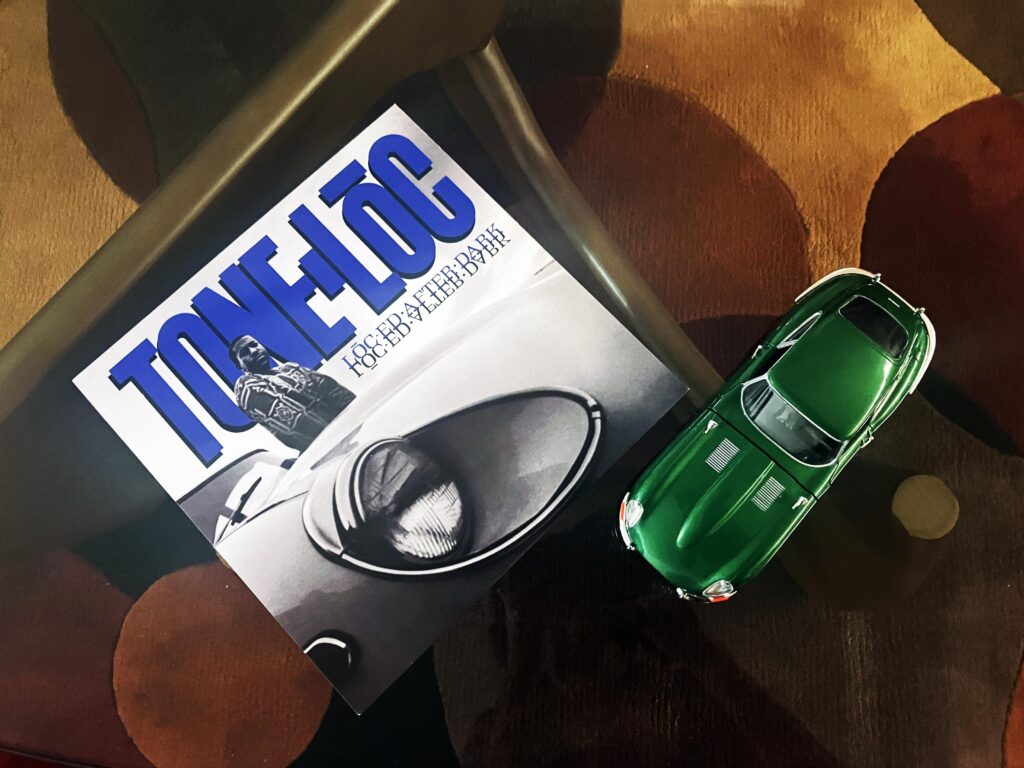
That shape continued to find new audiences. Tone Lōc’s 1980s album featuring “Wild Thing” placed the artist and a Series III E-Type in the same plane of focus, giving the car equal visual standing. Byrd’s Series I, by contrast, was blurred into the background of its Blue Note cover. The difference says something about how a familiar new car can become a cultural object with time: one record treats the Jaguar as part of everyday life; the other presents it as an icon in its own right.
That evolution—from desirable sports car to enduring design reference—is written into the coupe’s details. Its long bonnet establishes the hierarchy, the cabin stays tucked back, and the hatch completes a shape that is both useful and unapologetically sculptural. The chrome is plentiful but measured; the bumperettes, lights and panel seams all support the main form. The 1962 E-Type is a wild design, but its lasting appeal comes from how carefully its excess is controlled.


