In lane Electric Vehicles
Labatt’s Streamlined Semis Turned Beer Deliveries Into Rolling Design
Description
Alexis de Sakhnoffsky’s teardrop trucks paired striking 1930s styling with practical hauling capacity, then became a lasting part of Canadian transport history.
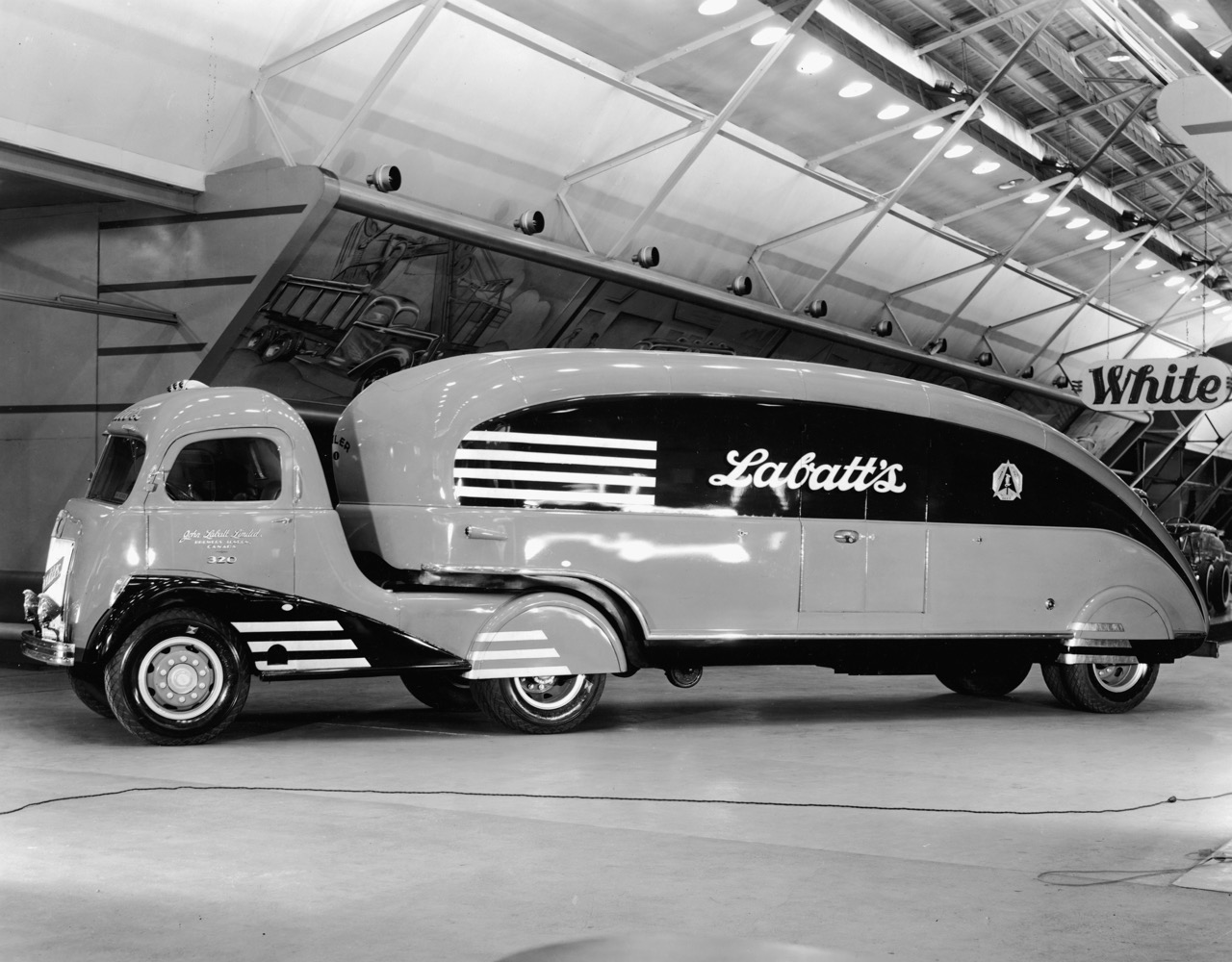
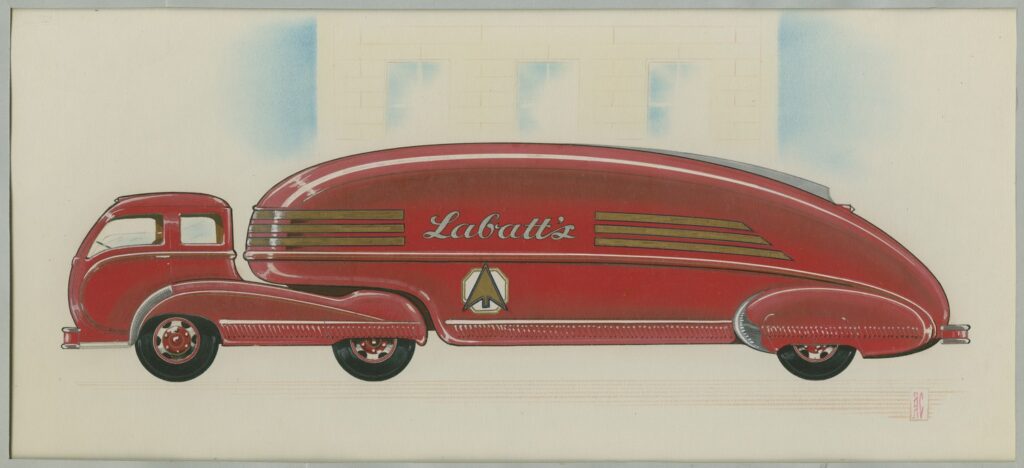
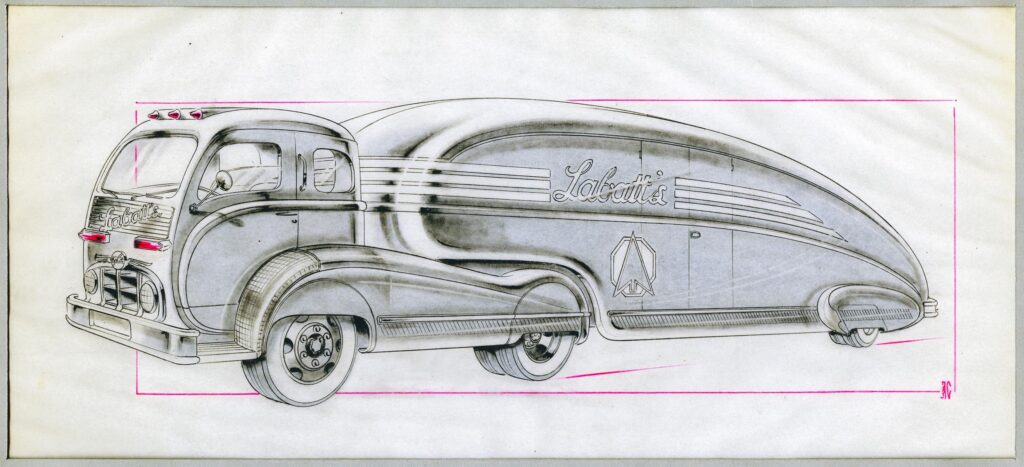
Labatt’s streamliners were designed to make beer deliveries visible. Their teardrop bodies and red-and-gold paint turned working trucks into rolling advertisements, while their scale and engineering made them memorable well beyond the brewery’s routes. The series, created by industrial designer Alexis de Sakhnoffsky and built in stages from 1936, combined Art Deco style with the demands of hauling heavy loads.
A designer with a broad reach
Streamline Moderne took shape in the early 1930s, bringing smooth curves and aerodynamic forms into architecture and industrial design. Its appeal extended to automobiles: French coachbuilders produced cars such as the Talbot-Lago T150, Delage D8 120, Delahaye Type 135 and Bugatti Type 57 Atlantic. Mercedes-Benz and Tatra explored the form too, as did American makers including Pierce-Arrow, Cadillac and Chrysler.
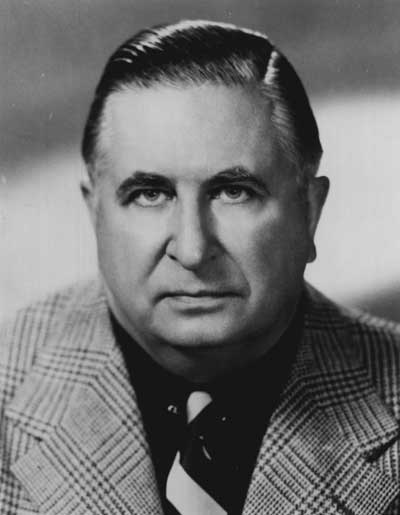
De Sakhnoffsky helped bring that style to a wider American audience. The Russian-born Ukrainian designer worked across products ranging from pens and watches to appliances, cars and trucks. He also served as technical editor at Esquire from the magazine’s first issue in October 1933, giving him a prominent platform for his ideas.
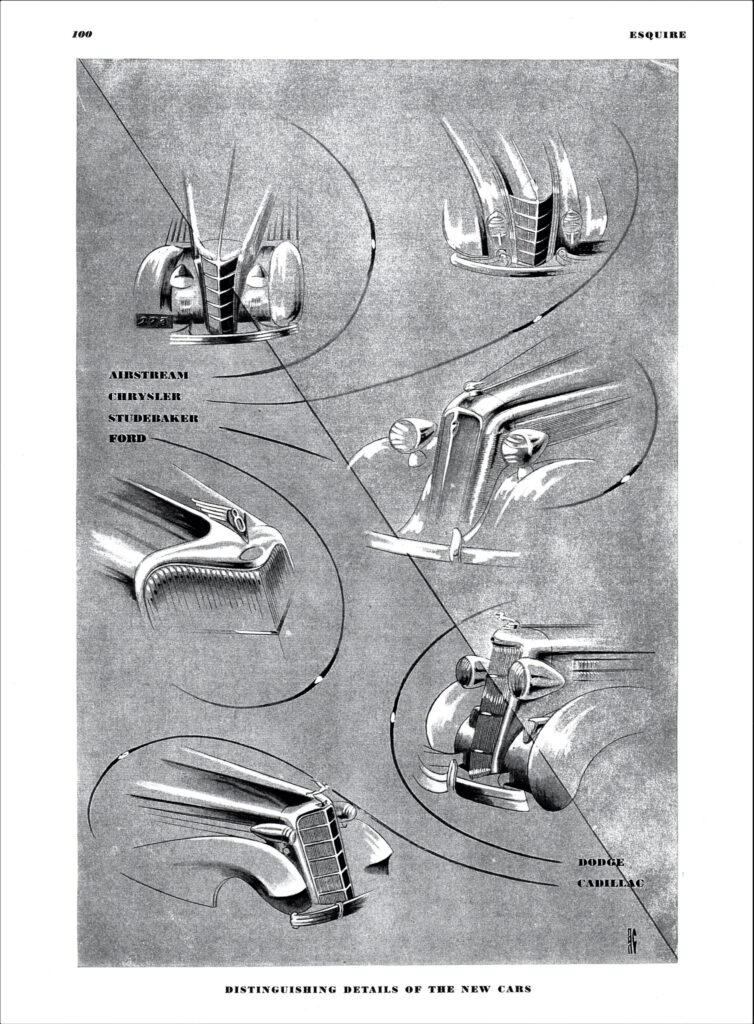
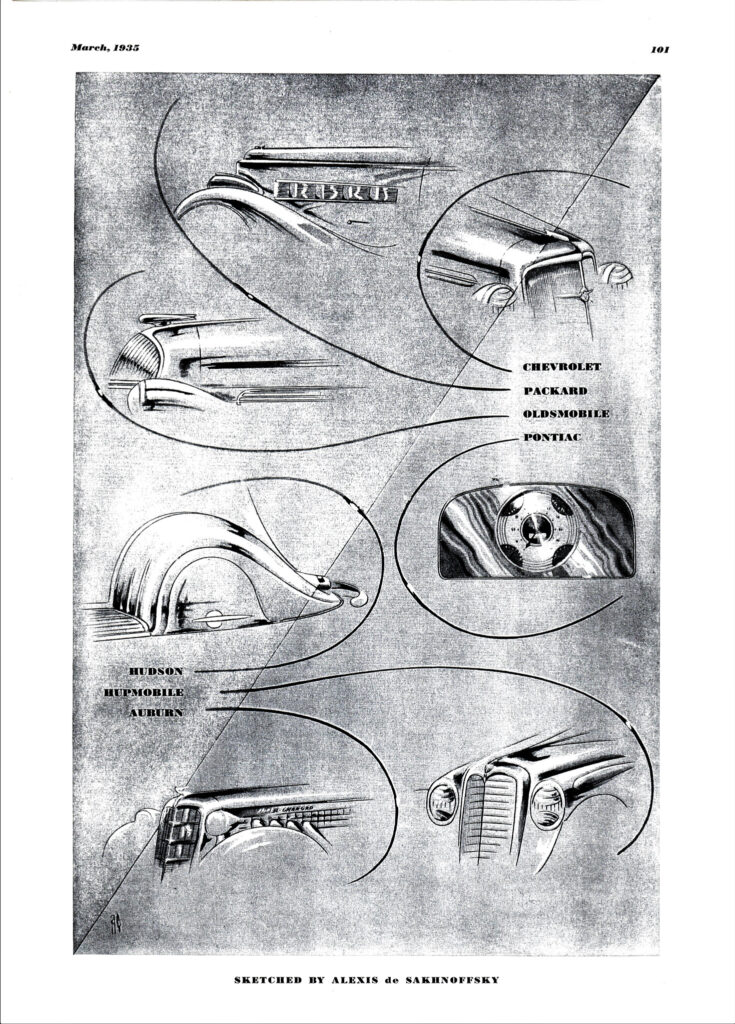
His automotive work included the 1929 Cord Hayes Coupe, also known as the L-29. It won the 1930 Grand Prix design award at the Monaco Concours d’Elegance, the first such honor for an American car; de Sakhnoffsky went on to win five awards in a row at the event. He styled Nash’s 1934 “Speedstream” line and created individual bodies for makers including Bentley, Minerva, Rolls-Royce, Packard, Cadillac, Mercedes, Fiat and Voisin.
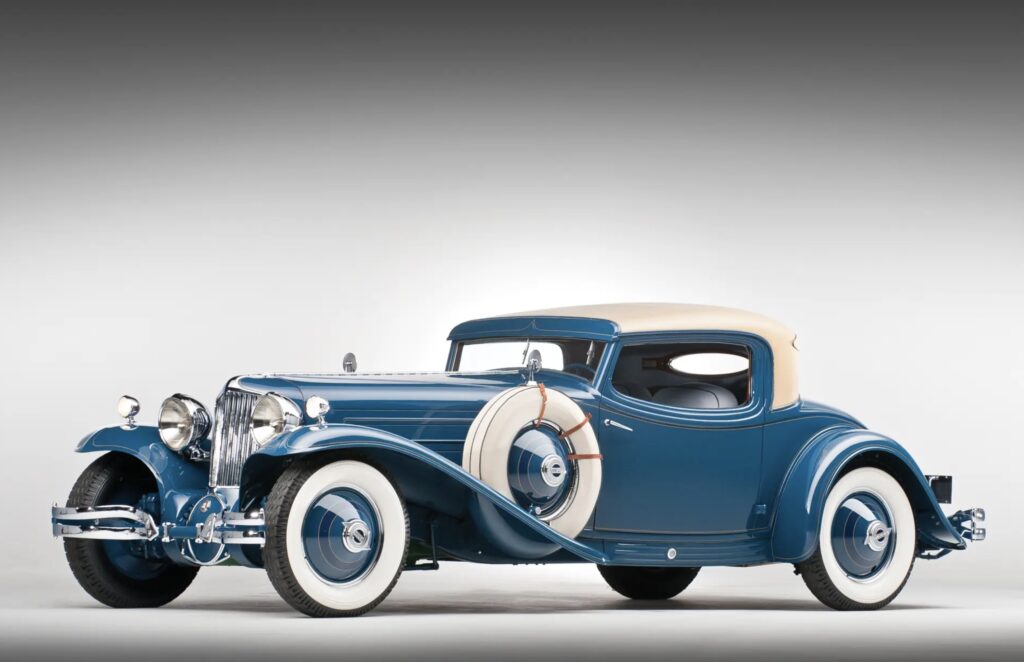
His work with White Motor Company of Cleveland may have had a more lasting effect on commercial vehicles. Alongside the Model 706 sightseeing buses that carried visitors through national parks for decades, he designed Labatt’s distinctive delivery semis.
From horse wagons to a custom fleet
Labatt Brewing, based in London, Ontario, bought its first delivery truck in 1913: a Ford Model T that worked alongside horse-drawn keg wagons. When provincial prohibition began in 1916, the brewery continued making full-strength beer for export to the United States and sold beer at 2 percent alcohol by volume in Ontario. As demand grew, more Fords joined the fleet. By the early 1920s, trucks and vans had displaced the horses and the former stables had become a garage.
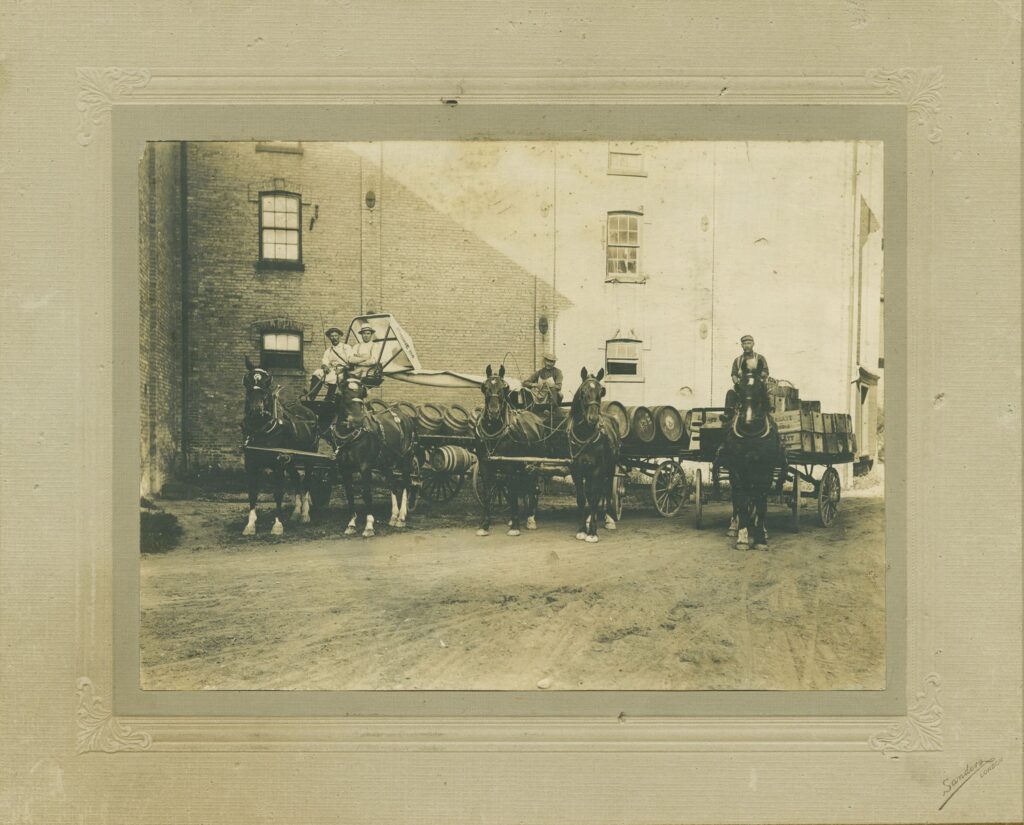
The early trucks had limits. Former mechanic Arthur Robinson recalled that Labatt sold about 18 one-ton Fords in the mid-1920s because they couldn’t handle the work. By decade’s end, the fleet included roughly 10 REO Model Fs, a White, an International and three chain-driven Ruggles, among other vehicles.
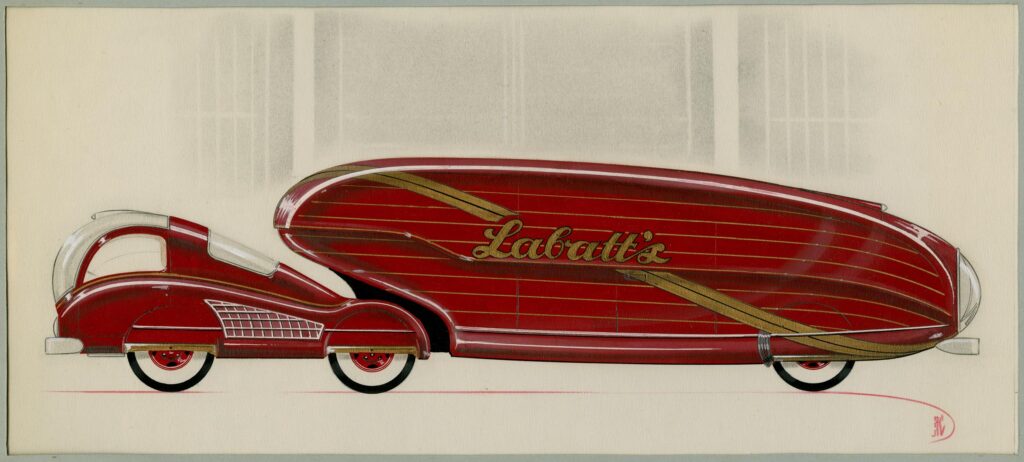
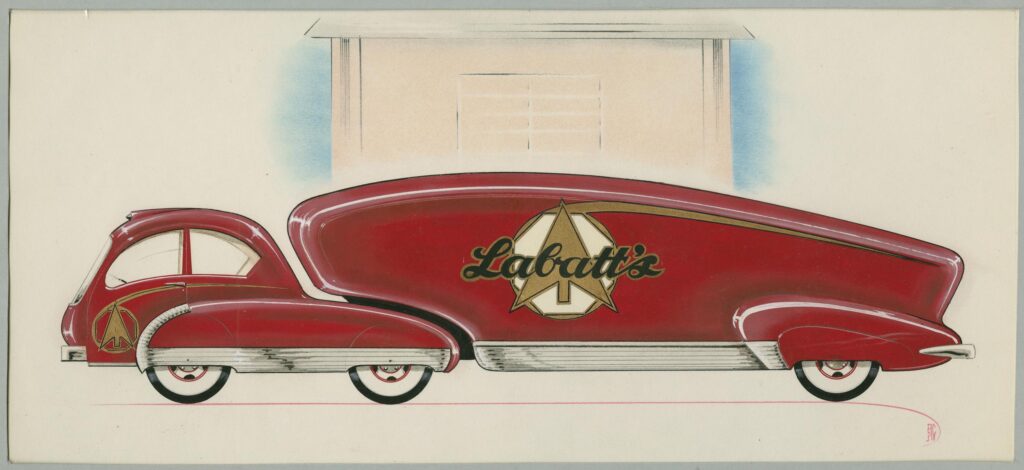
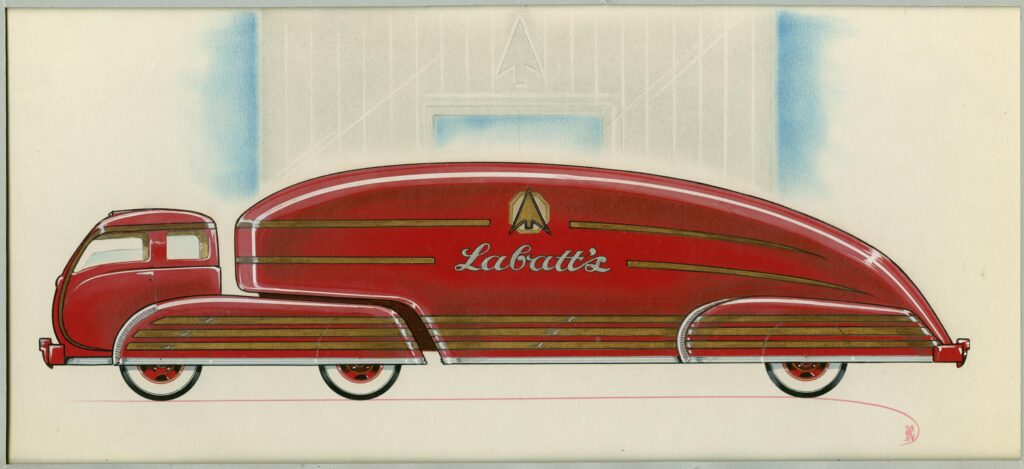
Ontario’s prohibition ended in 1927, but a ban on liquor advertising continued into the 1950s. Labatt owner John Labatt saw a striking delivery vehicle as a way to keep the brewery’s name in view. In 1935, the company contacted White’s London office with the concept, which went to the design team in Cleveland. De Sakhnoffsky prepared four designs, built in sequence over the following decade.
Four series, one unmistakable shape
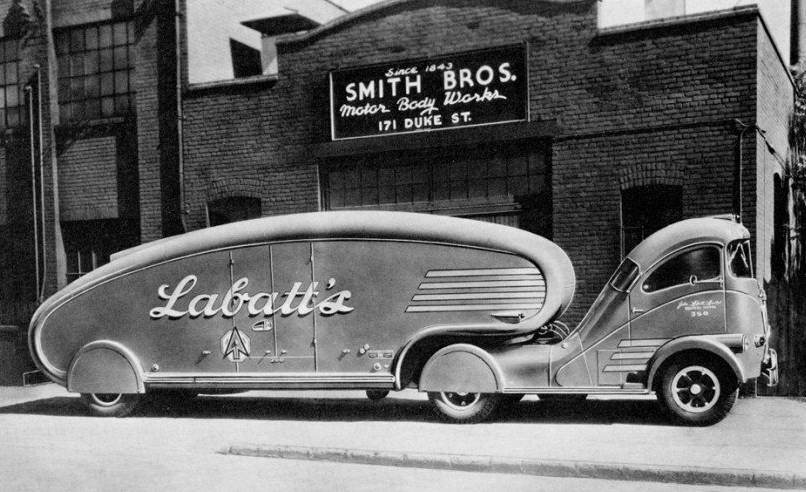
The first truck was completed in 1936 and shown at that year’s Canadian National Exhibition. It paired a standard, single-axle White tractor with a 20-foot, single-axle Fruehauf drop-frame trailer, whose roof tapered toward the rear. Toronto’s Smith Bros. Body Works formed the aluminum exterior over a hardwood frame, reportedly working from de Sakhnoffsky’s sketches without detailed blueprints. Running boards and rear wheel spats finished the cab; Labatt added bright red paint and gold-leaf lettering. Four trucks were built in this first series.
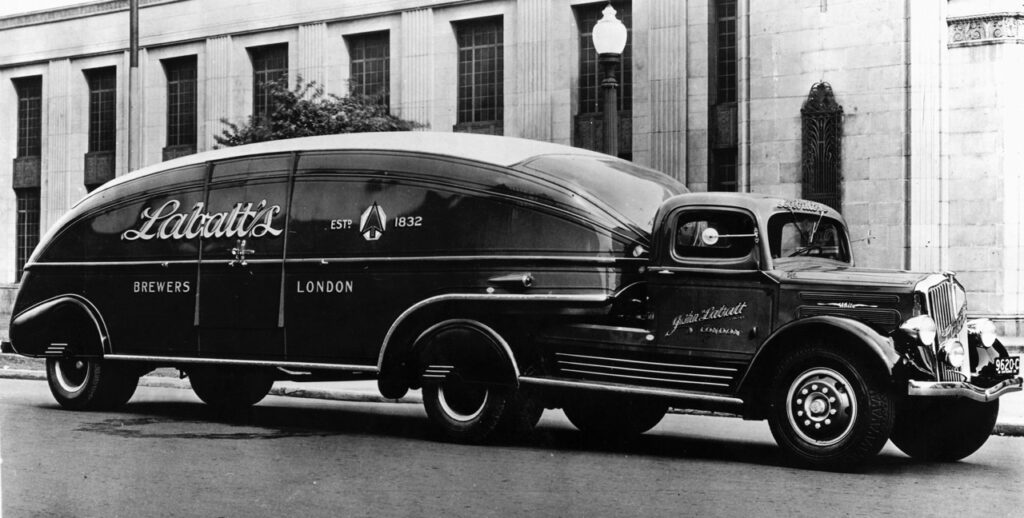
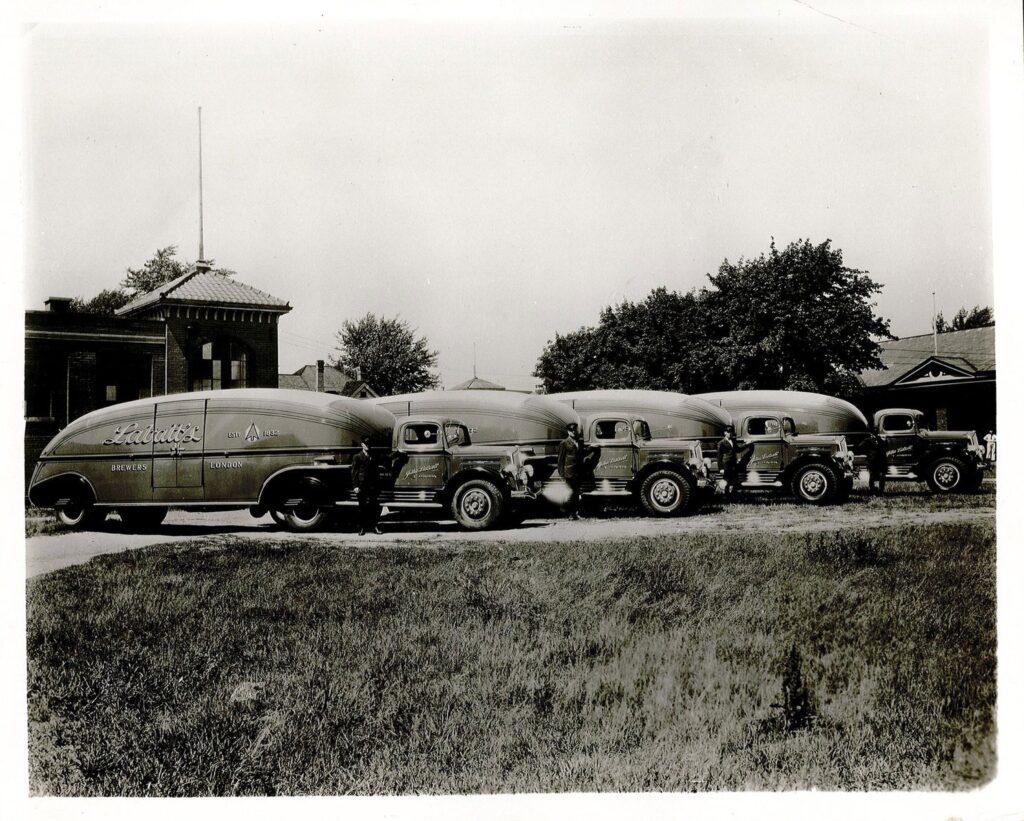
A redesigned White tractor arrived with the second series in 1937. Smith Bros. built 12, some of which appeared at exhibitions in Canada and the United States, including Cleveland’s Great Lakes Exposition. At the 1939 New York World’s Fair, the truck received a design award. A history of de Sakhnoffsky on Coachbuilt.com reports a carrying capacity of 8.5 tons of beer and a cruising speed of 50 mph.
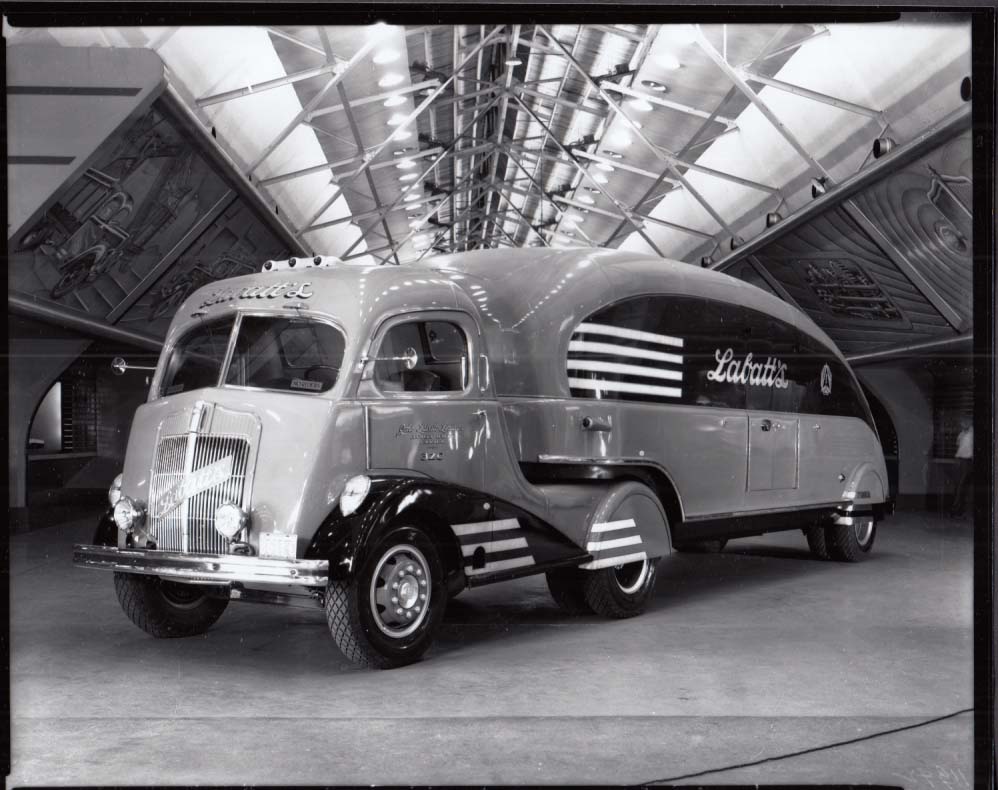
The third series was the rarest: just two trucks were built before World War II halted production. Their paint retained the red body, gold trim and lettering, with deep blue added to the livery.
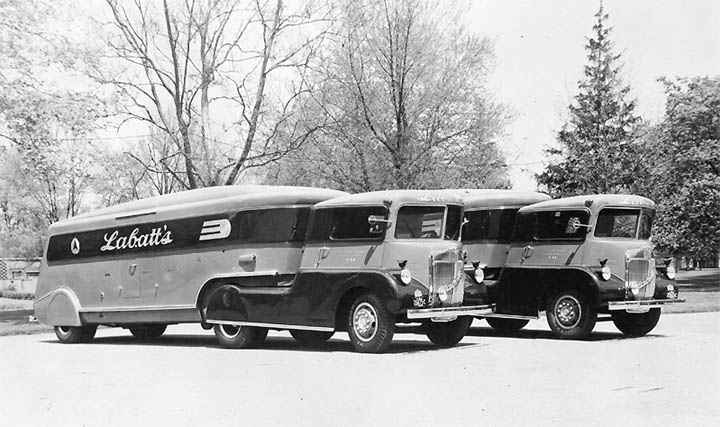
After the war, Labatt commissioned 10 fourth-series trucks, built in 1947. These are often seen as the most fully realized versions. Their White WA122 cabovers had a broad, flat front, large rounded windows and a roof that swept back toward the fifth-wheel deck. The drive wheels were almost entirely enclosed, giving the trucks a shape that stood apart from conventional freight rigs.
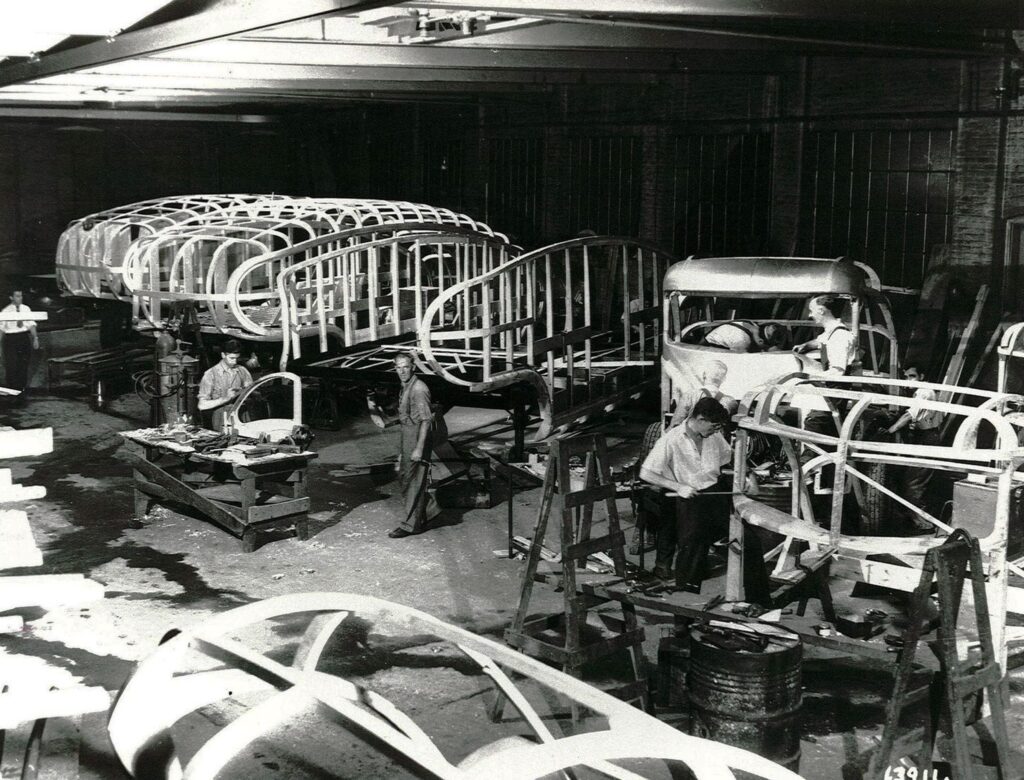
Under the forward-tilting cab sat a 386-cubic-inch inline-six rated at 135 horsepower, paired with a five-speed transmission. The trucks also had an anti-jackknife device, described as the first of its kind on Canadian roads. Fruehauf supplied the 28.5-foot trailers, which sat lower to follow the cab’s profile. The close fit came with a practical restriction: fourth-series tractors and trailers had to stay together, rather than being mixed with other equipment.
A working advertisement, then a survivor
Labatt promoted the trucks through their appearance and through its drivers. The brewery ran a Highway Courtesy Program that required drivers to stop and help stranded motorists. That roadside service added another public-facing element to a fleet already designed to attract attention.
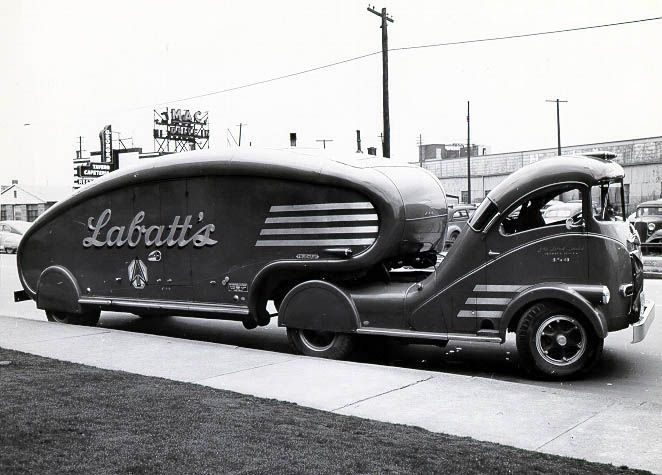
The streamliners remained in use until 1955. By then, their specialized construction had become an inefficient way to move freight, and Labatt sold them, updated its fleet and returned to more conventional advertising. Most of the trucks faded from view.
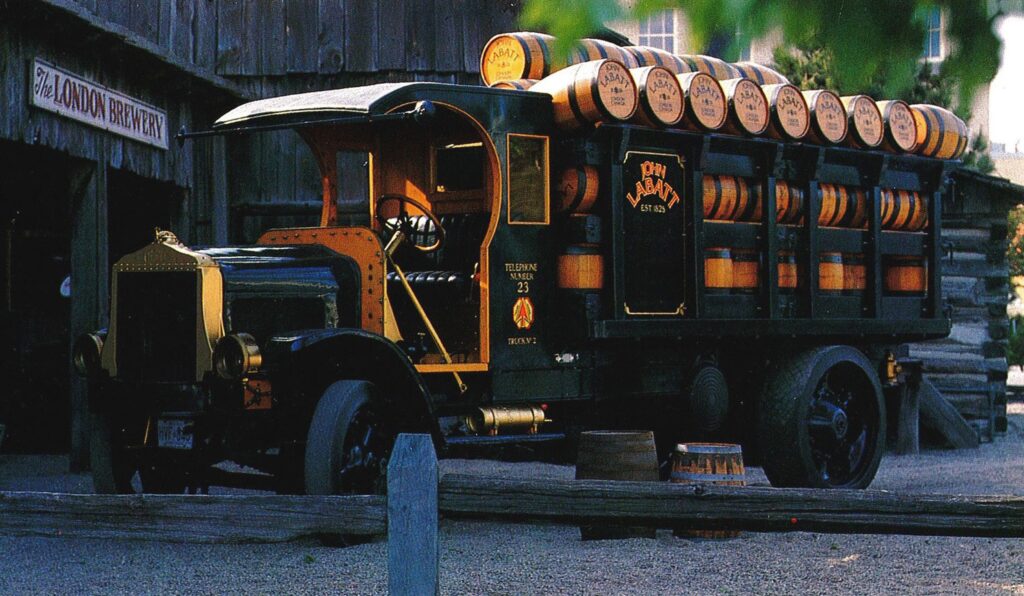
One fourth-series truck survived through the efforts of brothers Joe and Bob Scott. In the mid-1970s, Joe, recently retired as president of London’s White Truck Limited, and Bob, a longtime Labatt employee, began looking for a restorable example. They had already brought back Labatt’s 1919 White keg truck, designed to carry 96 kegs, but the streamliner was their larger ambition.
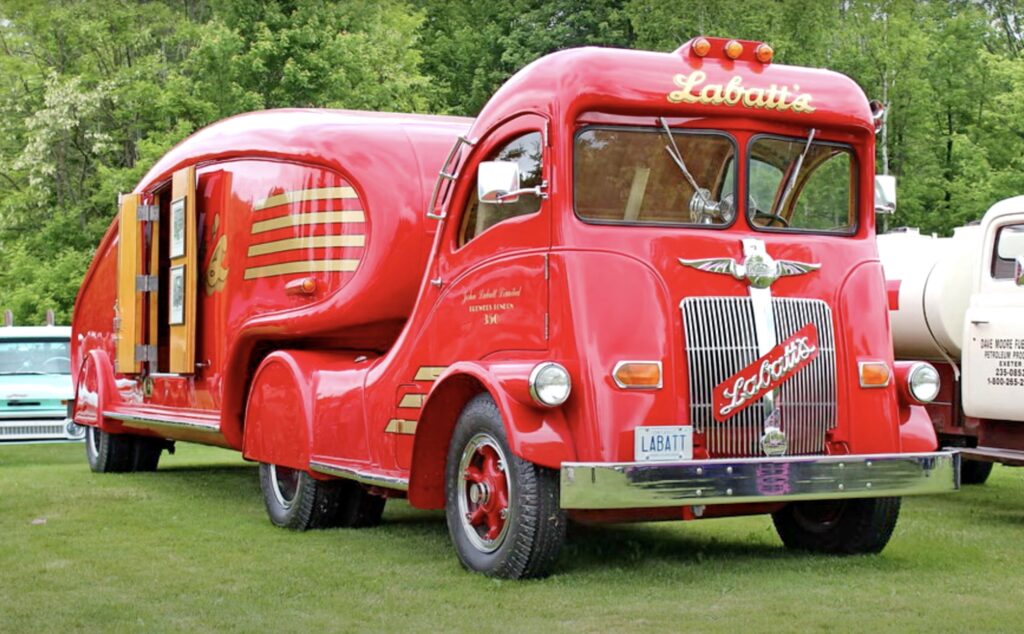
The brothers found a suitable trailer being used as a construction-site office and rebuilt the cab using parts from two standard White WA122 tractors. They searched across North America for components, fabricated missing pieces and even reproduced many of the tools originally used to build the trucks. After more than four years of work, they unveiled the restored red-and-gold vehicle in 1983. Labatt still displays it on occasion.
Canada Post later gave the design a place in a series of stamps celebrating 25 historic vehicles associated with Canadian transport. Its 1996, 90-cent stamp featured the 1947 Labatt streamliner, carrying de Sakhnoffsky’s design onto mail sent around the world. That image, and the restored truck, preserve the appeal of a vehicle that had to earn its keep as a hauler while looking like nothing else on the road.
Are Labatt’s Streamlined Semis the Coolest Trucks Ever? first appeared on Hagerty Media.


