In lane Electric Vehicles
Virgil Exner Jr. on Car Design, Ghia, Ford’s First Computer Studio and His Father’s Legacy
Description
The designer recalls racing cars, the Volvo P1800 S, Ford’s shift to computer design and a career shaped by Virgil Exner Sr.
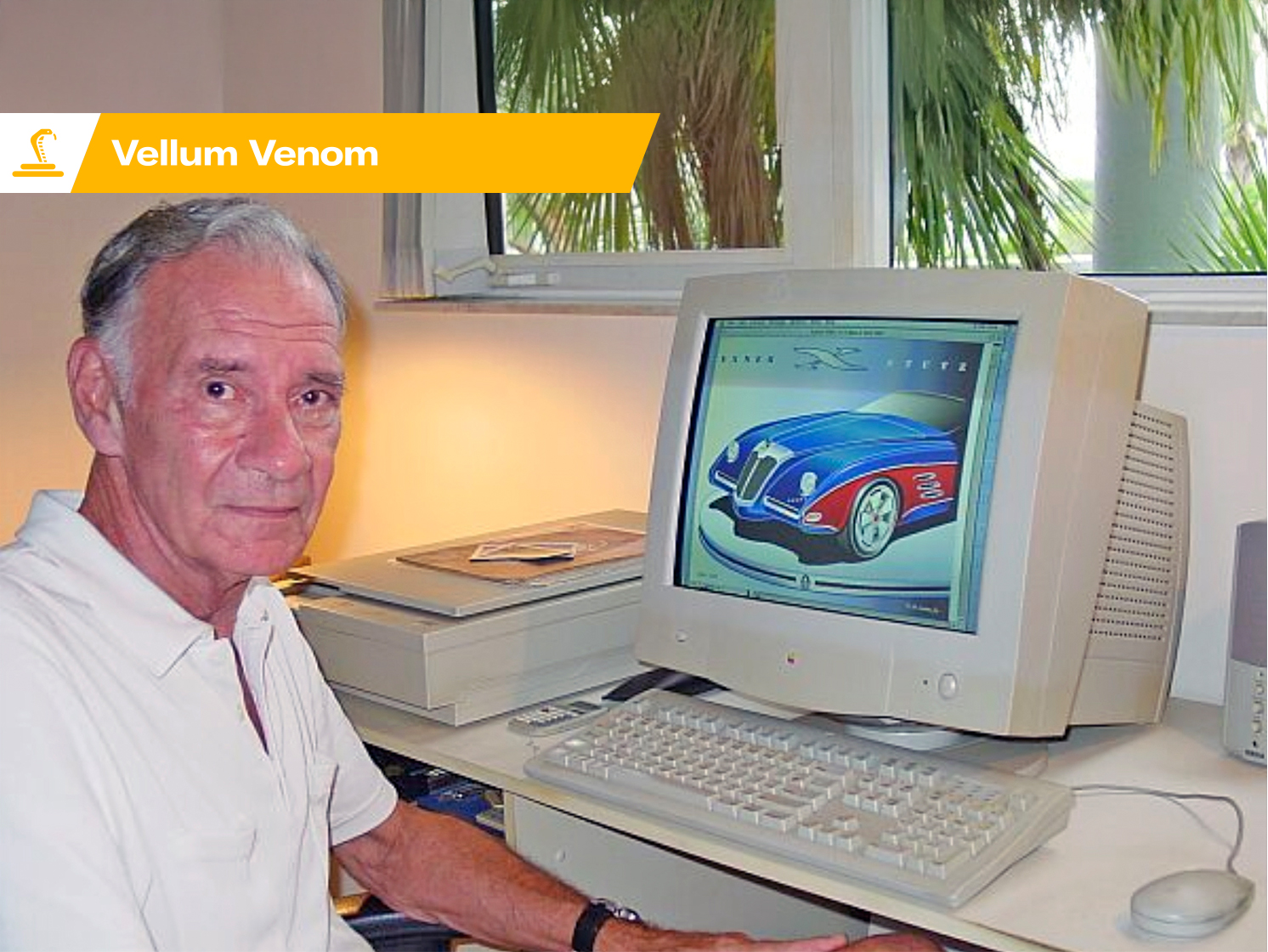
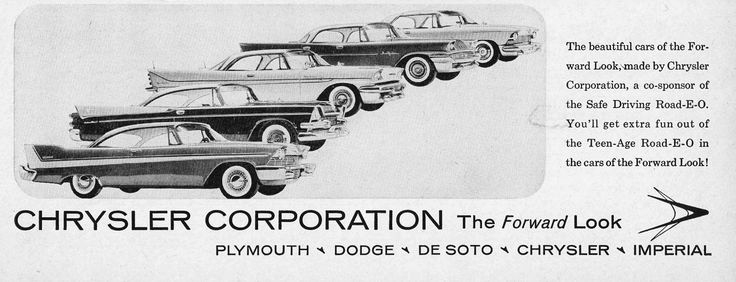
Virgil Exner Jr.’s career connects several turning points in American car design: the postwar styling studios, the revival of historic marques, Ghia’s international projects and Ford’s first computer design studio. Now 91, he still draws vehicles and follows motorsports. His perspective comes from working alongside his father, the designer behind Chrysler’s Forward Look, as well as building a design career of his own.
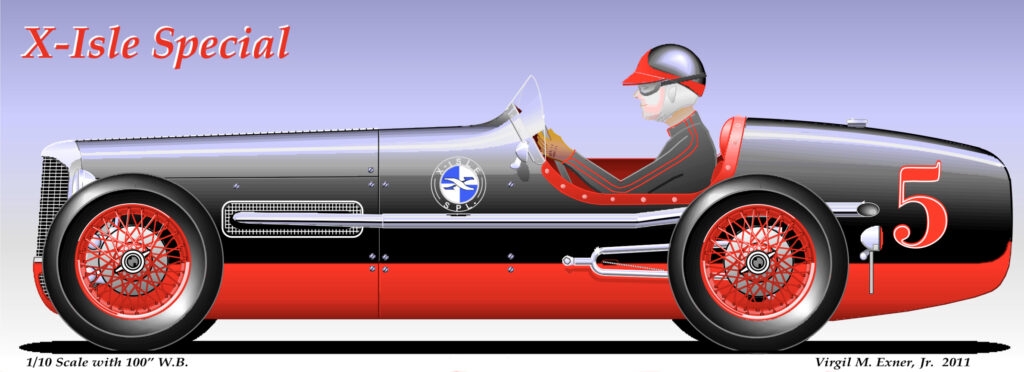
Exner Jr.’s work ranged from a student-built Simca sports car to the 1959 Studebaker Lark, a proposal for the Volvo P1800 S and a 1966 Duesenberg revival prototype. He also helped establish industrial design teaching at the University of Notre Dame and led a studio that helped bring computer-aided design into Ford’s styling work.
A student project with a lasting footprint
At Notre Dame, Exner Jr. built a custom-bodied Simca as his master’s thesis project. He wrote a thesis paper about the car, received the school’s Jacques Gold Medal of Fine Arts and took a graduate teaching fellowship. In 1956, he persuaded Frederick Beckman to offer design classes, helping the university establish the Industrial Design department that continues today.
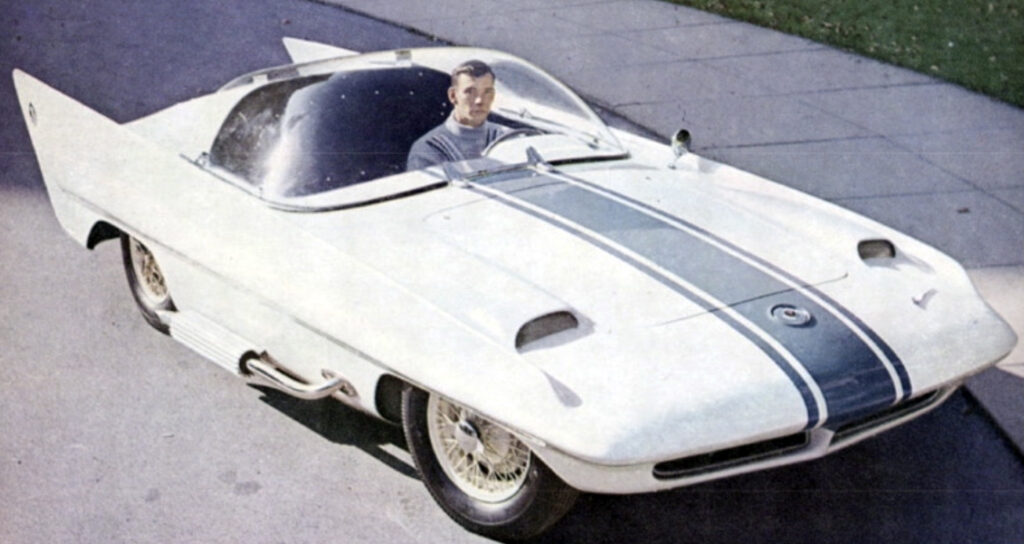
The Simca was more than a classroom exercise. It became the centerpiece of his graduate work and a demonstration of how design training could combine research, drawing and a physical vehicle. The project was shown in Paris in 1959; it was restored in 2006 and now belongs to a private collection in Canada.
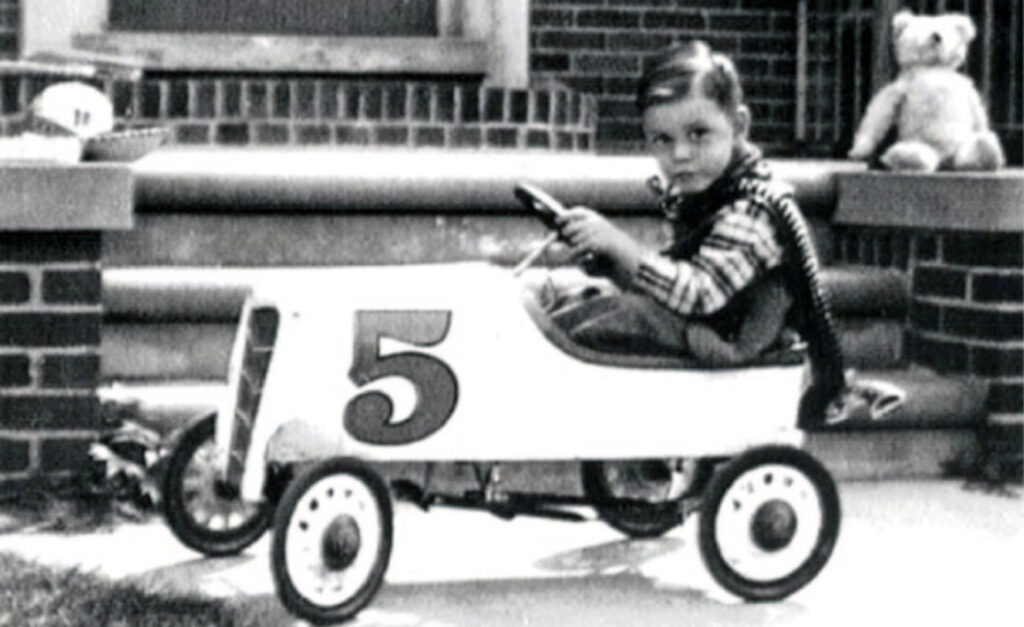
His interest in cars began at home. Exner Sr. took his young son to Detroit and nearby races, making racing sounds in his ears when he was about two to four years old, from 1934 to 1938. The family’s enthusiasm for competition extended beyond cars: Exner Jr. later earned high school letters in both football and basketball.
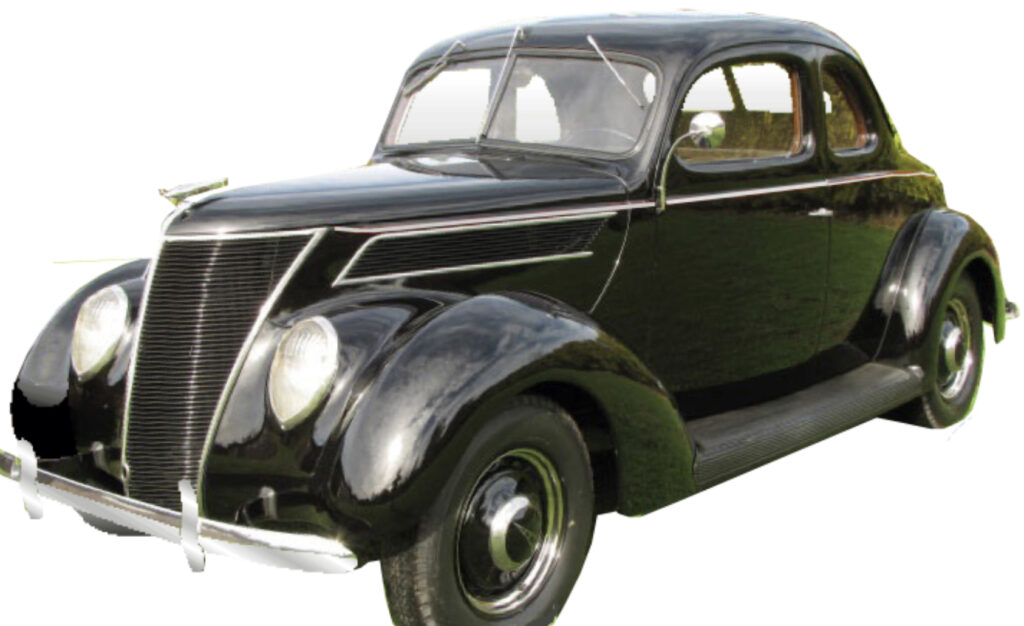
His first car was a 1937 Ford coupe, a graduation gift from his grandparents when he finished Cranbrook School in Bloomfield Hills, Michigan, in 1951. He sold it before starting at Notre Dame that autumn because undergraduates weren’t permitted to own cars.
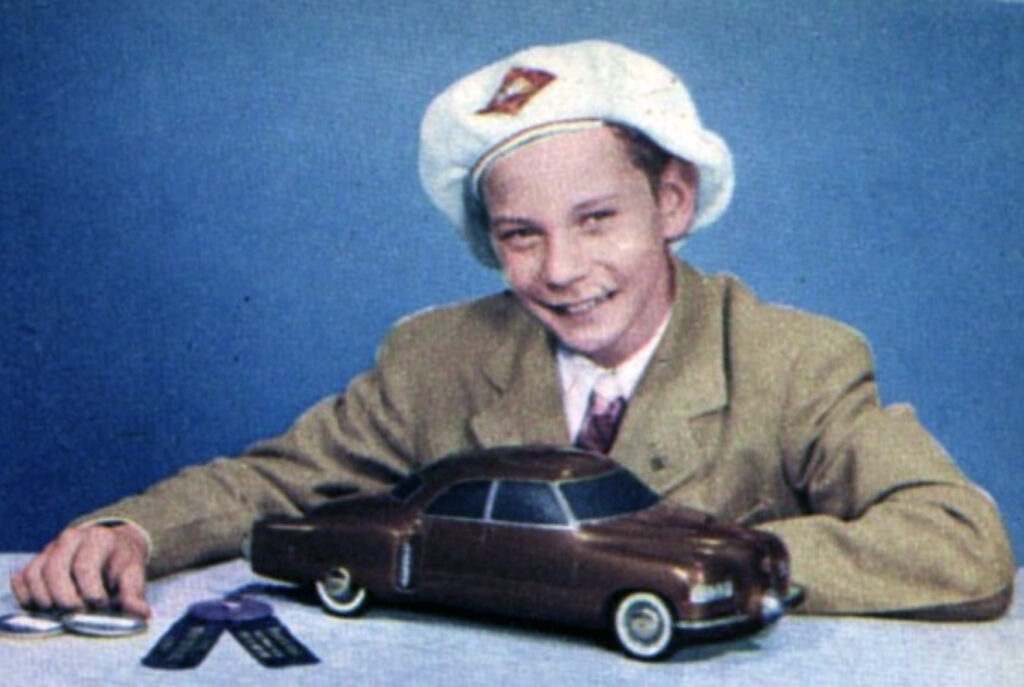
At 13, after reading about the Fisher Body Craftsman’s Guild in a publication, he entered its model competition. His family had moved from Long Island to South Bend, where his father was Studebaker’s chief designer. Exner Jr. says he is believed to have been the Guild’s youngest winner: he took first place in 1946 and used the scholarship money to attend Cranbrook for his junior and senior years.
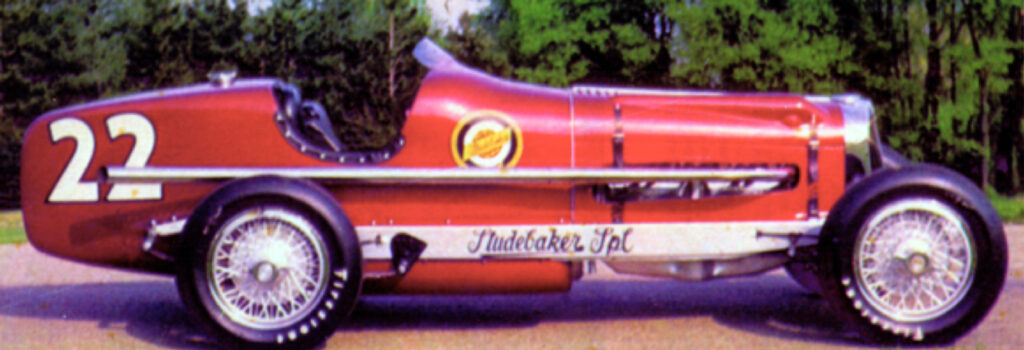
His father had previously led Pontiac styling under Harley Earl at GM and served as a judge for the first Guild competition to include car models, in Dallas. The family also owned a 1932 Indianapolis Studebaker race car from 1944 to 1949. Exner Sr. believed that “Auto Racing Improved the Breed,” and his son’s favorite cars remain racing cars. Exner Sr. became the first Sports Car Club of America member west of Pittsburgh; the family drove to Connecticut each summer for the club’s major meet.
From the Packard studio to Ghia
After finishing his Simca clay model, Exner Jr. worked at the Packard studio in 1958 under designer Duncan McRae, alongside Del Coates and Emil Bocade. He helped design the 1959 Studebaker Lark. That studio experience was one part of a career that also took him to Turin, where he developed a lasting working relationship with Ghia’s Luigi Segre.
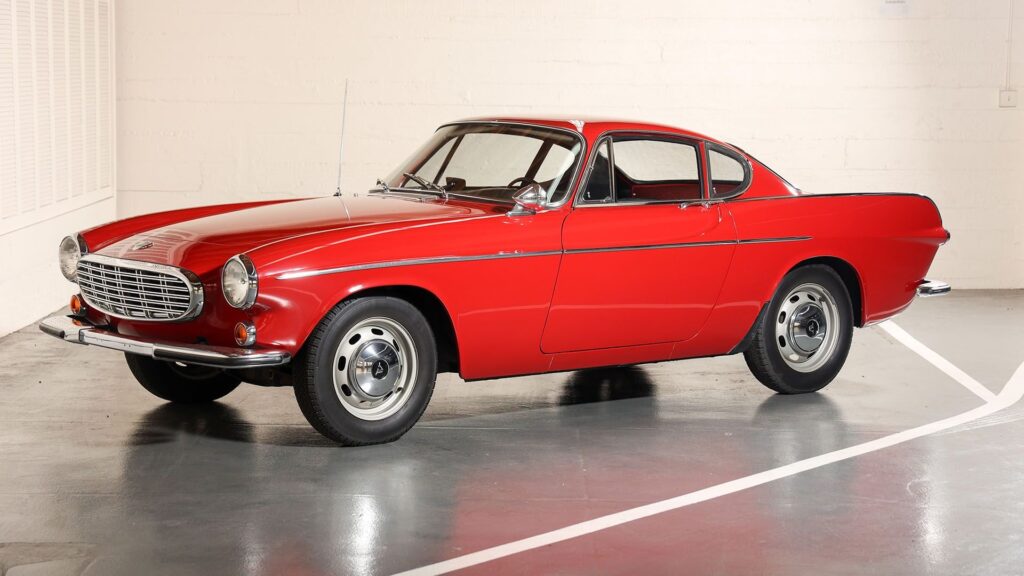
Exner Jr. first met Segre while studying in Vienna at the Kunst Akademie in 1955. Segre saw designs he had made in his spare time and hired him to develop car proposals on a monthly basis. One was a 1958 proposal for the Volvo P1800 S, completed while Exner Jr. was serving a three-year commitment with the USAF after earning his Notre Dame master’s degree.
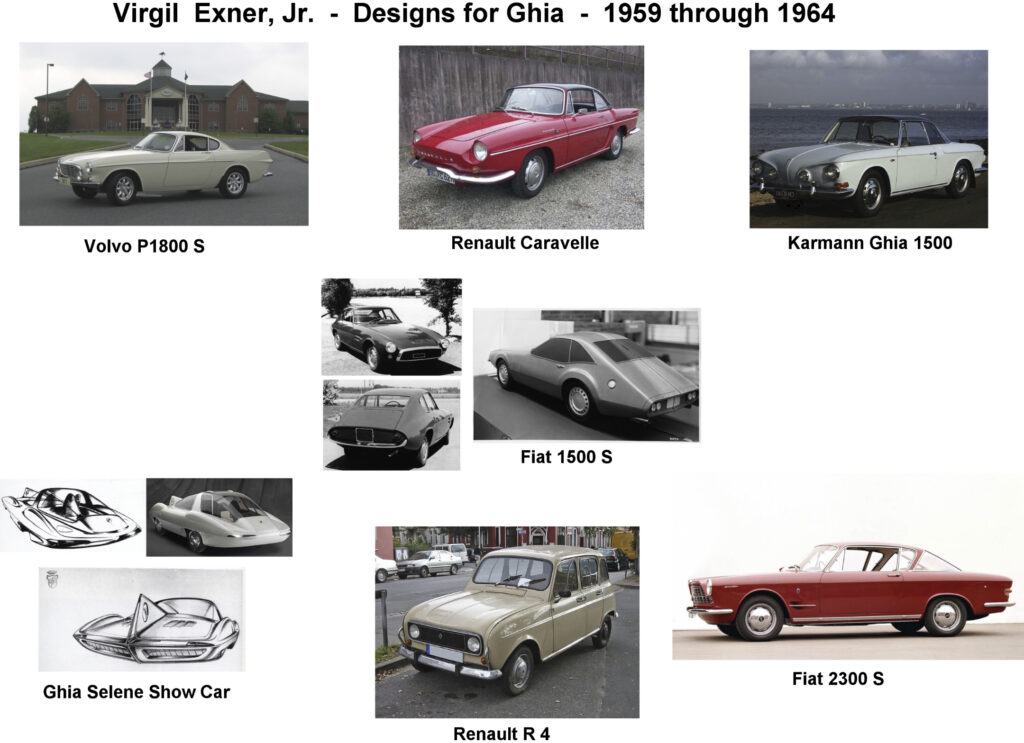
Segre sent him 1/10-scale side-view package outlines. Exner Jr. returned plan, front and rear views, plus perspective sketches. He says the production car closely resembled his proposal, though it didn’t use his fastback rear treatment.
Working at a distance demanded a practical method for showing how a shape would look in three dimensions. While stationed in Korea, he couldn’t copy his drawings because of the terms of their agreement, and he wasn’t to sign his name to the work. At Travis Air Force Base, he made copies of Segre’s projects and kept a 1/4-scale clay model in progress to explore forms. He photographed the clay and mailed the negatives to Ghia, a process that reflected the importance both Exners placed on presenting physical form alongside illustrations.
Ghia paid him $600 a month, twice his Air Force pay. He saved nearly $10,000 over those three years, then returned to Michigan and secured an extended contract with Segre for further projects, working with his father after Exner Sr. retired from Chrysler. Accounts of those Ghia commissions and the Exner projects are available here, here and here.
Bringing computer design into Ford
In 1987, two Apple Computer representatives visited Ford Design to demonstrate computer-aided design. Ford’s engineering group already used Apple computers, but the demonstration persuaded Exner Jr. that designers could use computers directly to develop and illustrate vehicles.
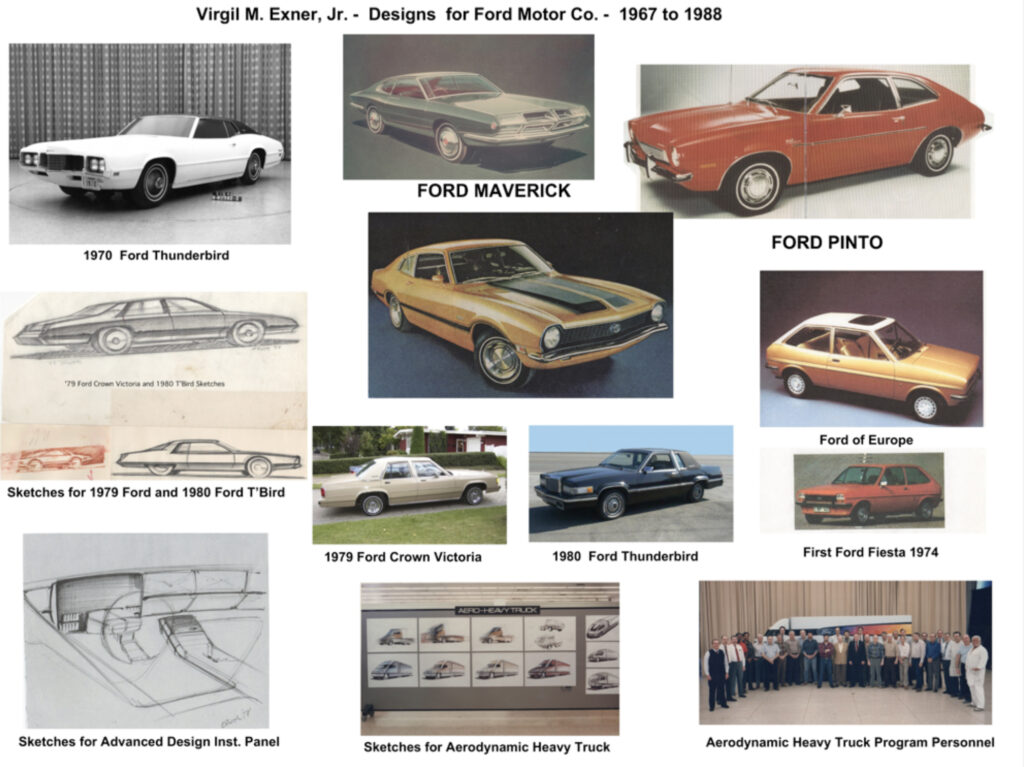
He presented the idea to Ford’s design staff and was appointed head of the company’s first Computer Design Studio. The transition came quickly: designers soon adopted computers as their main design tool. For Exner Jr., the episode stands out as a change in the everyday work of a studio, with digital tools becoming central to how designers developed and communicated their ideas.
A community for retired designers
Exner Jr. also helped create the League for Retired Automotive Designers. The idea emerged over dinner at a 2004 Fisher Body Craftsman’s Guild reunion, where he and Ron Van Gelderen—then president of the Cadillac/LaSalle Club and a former head of GM Styling’s publicity department—talked through the concept.
By 2006, with help from designer Chuck Jordan in California, they had brought in about 65 retired designers from car companies. The first show, held in California, asked participants to create a new design presentation or rendering for Cadillac. Entries had to be two-dimensional, use any design materials and fit on foam core no larger than 24 by 36 inches.
Van Gelderen arranged for automotive museums around the country to host opening dinners and display submitted or delivered work. The annual show drew 25 to 30 entries from retired designers until it stopped in 2020 during the pandemic. Exner Jr.’s 2010 Studebaker rendering was among the work created for the League.
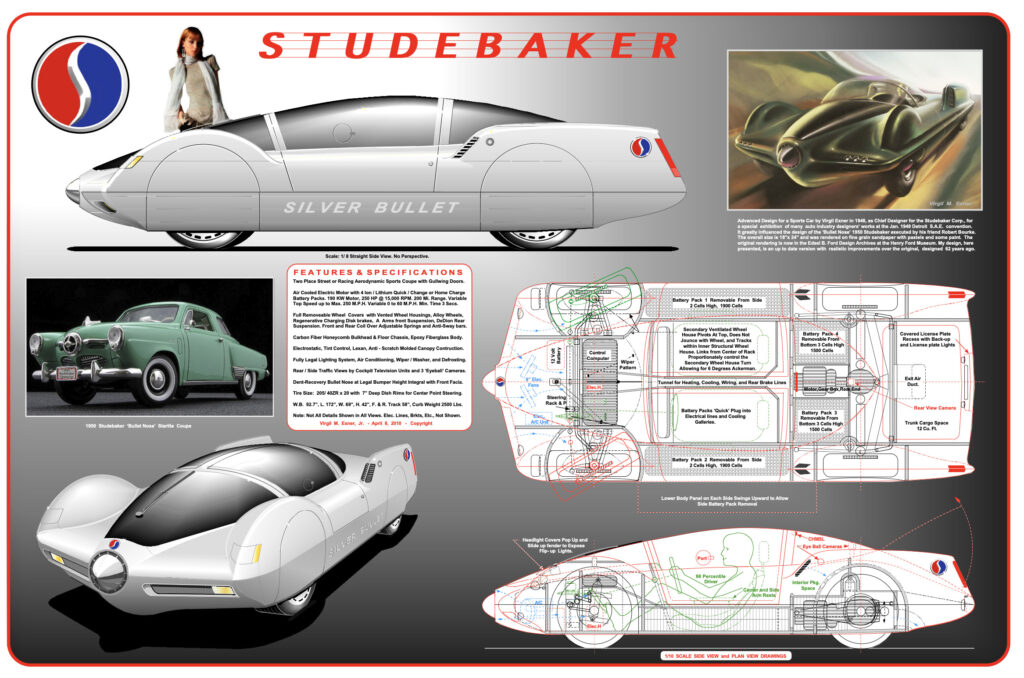
After Van Gelderen died, Dave McIntosh took over and revived the show last year with revised presentation rules. The Studebaker Museum in South Bend hosted it in 2010 and would like to host it again, but McIntosh says only a small group, mostly in the Detroit area, is interested. The League’s history and work are collected here.
Family influence and a sharp view of today’s cars
Exner Jr. describes growing up as a passage of his father’s love of art and design, with cars at the center. The family life he recalls was close and happy, though he also spoke of painful losses: his two-year-old brother died in an accident in 1942, and his sister Bronwen had a mental illness.
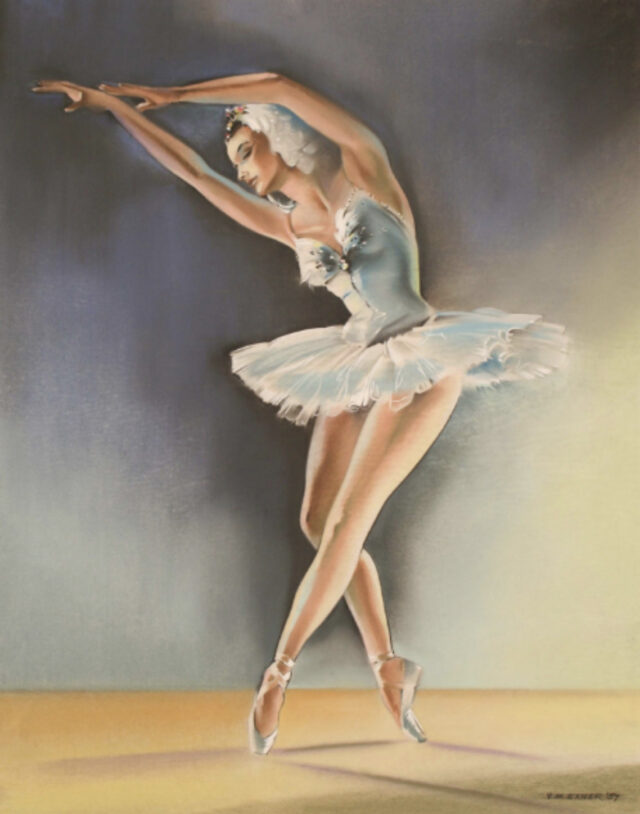
Size: 14” x 18”Virgil Exner
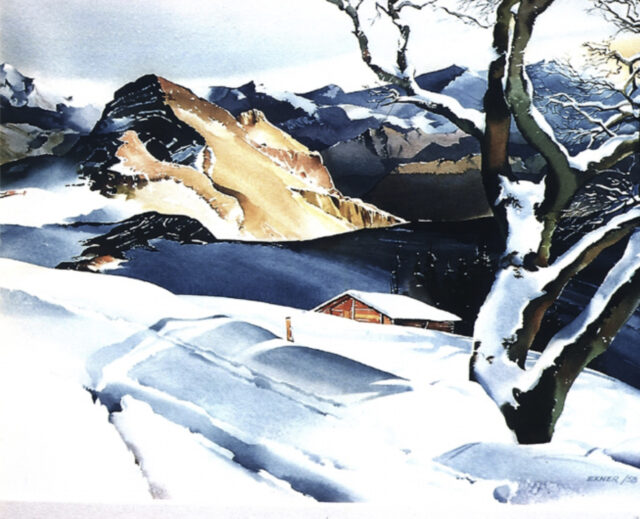
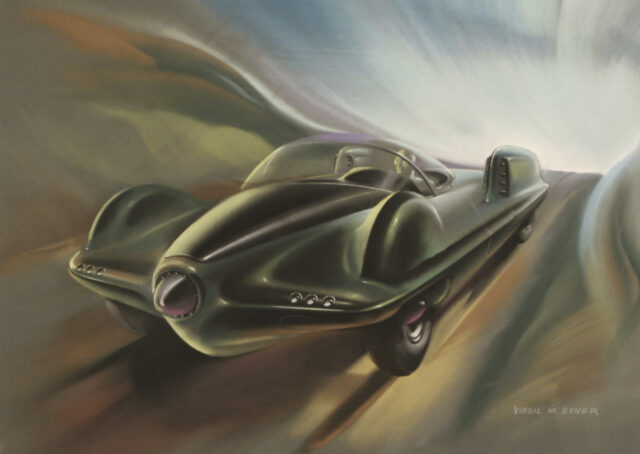
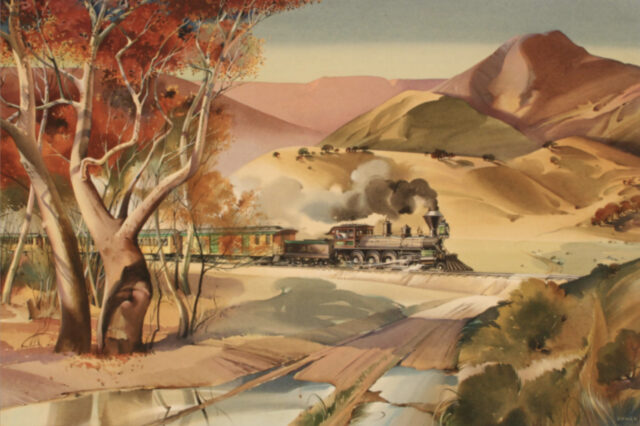

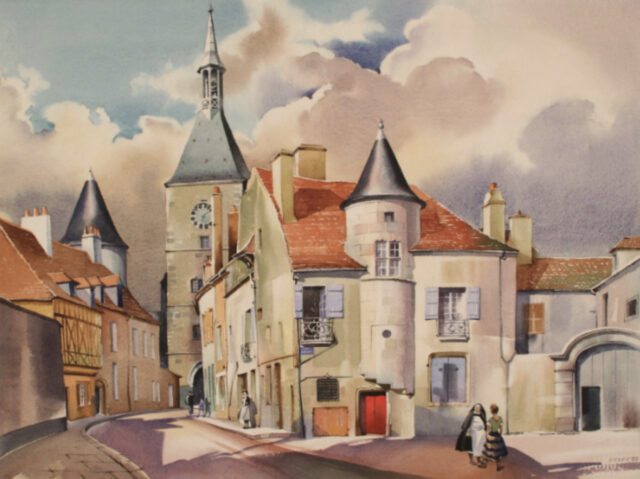
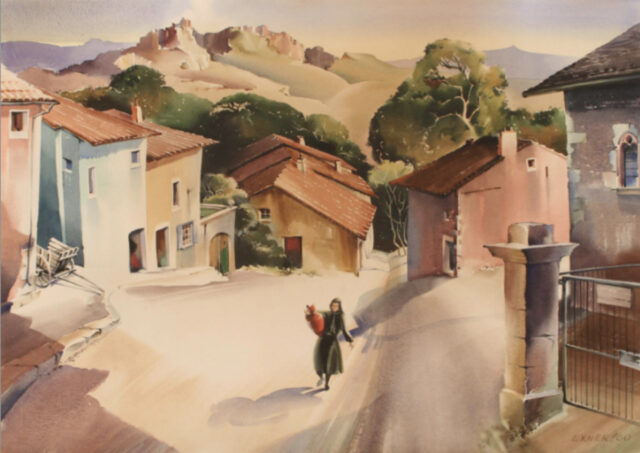
The influence ran in both directions. Exner Jr. says he followed his father’s example, while sometimes shaping his father’s work with ideas of his own. One instance was an early design for the 1966 Duesenberg revival prototype, developed when the two were in business together.
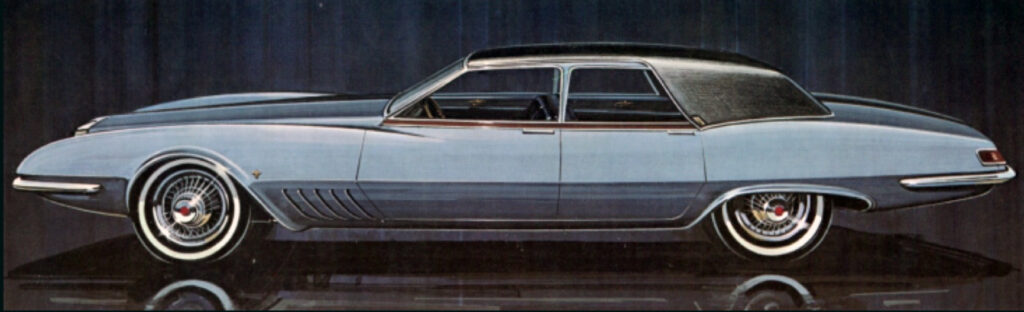
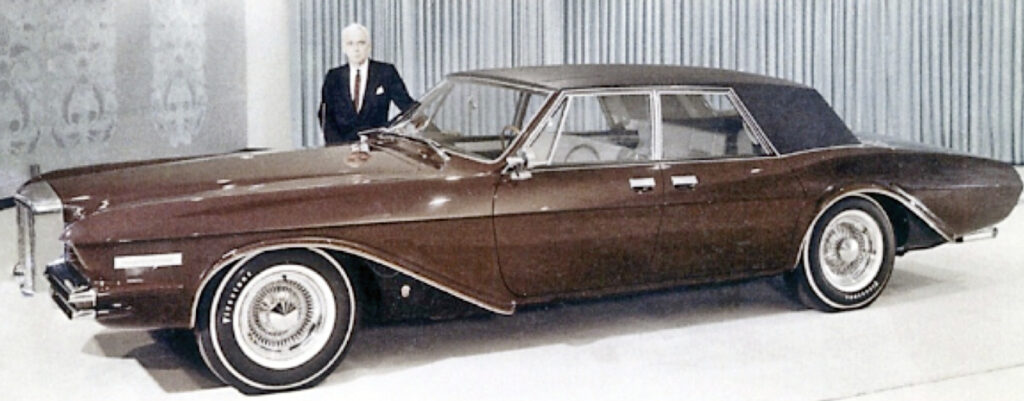
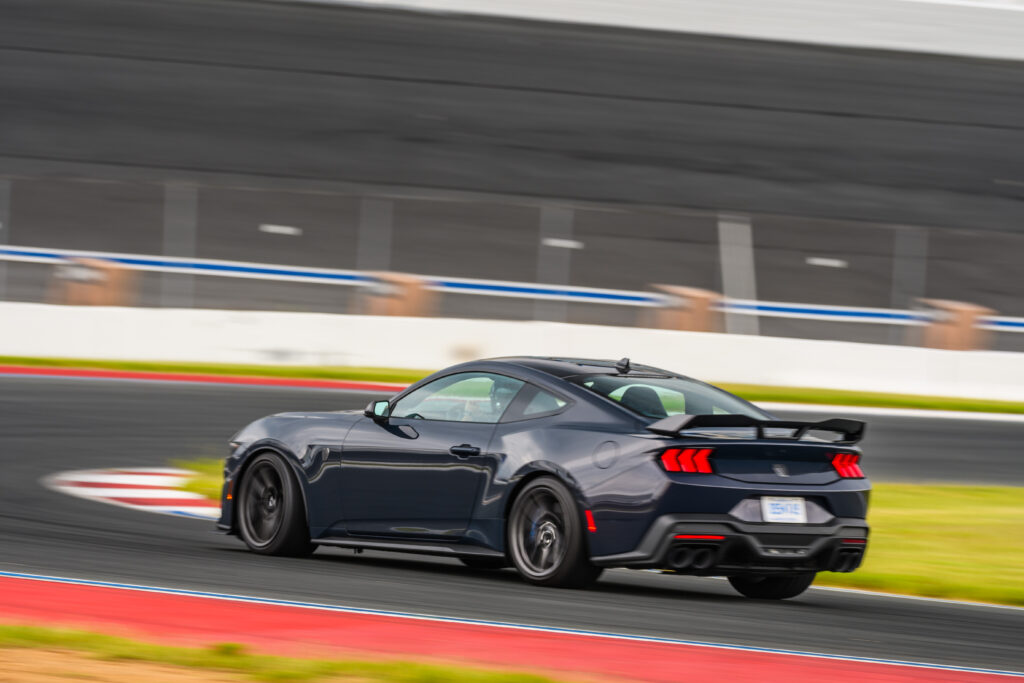
His assessment of current American car design is blunt. He sees less emphasis on sleek, forward-looking shapes and argues that too few designers have the influence to resist management’s focus on cost reduction. In his view, the result is too many forms that lack artistry, with only a few exceptions. He singles out sports cars such as the Corvette and Mustang as vehicles he likes, and says he welcomes the direction of electric cars.
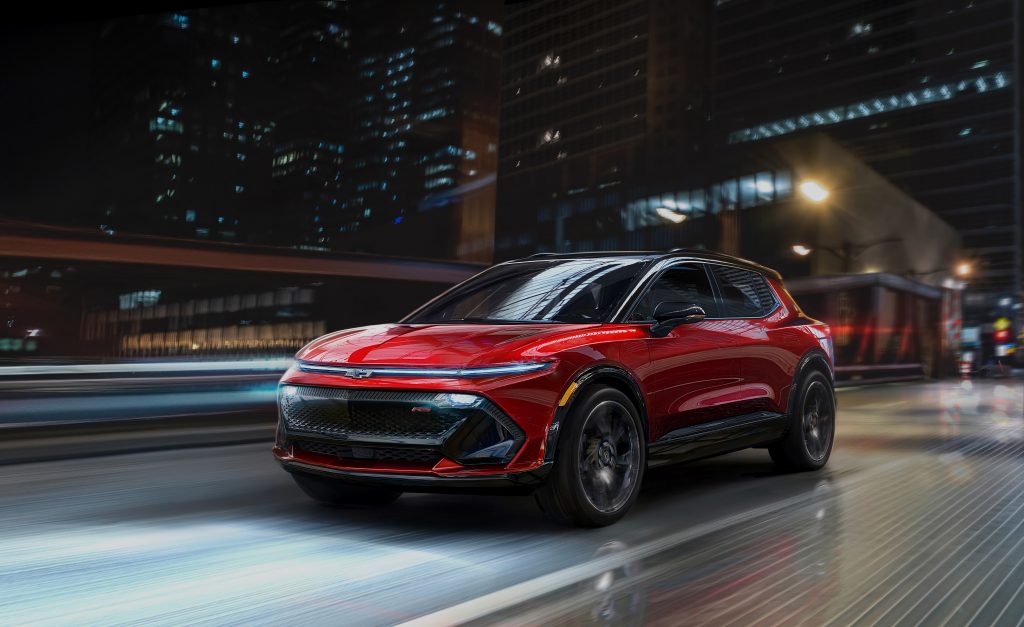
His own recent purchase makes the critique personal. He bought a 2024 Buick Envista at what he considered a good price, despite never expecting to own a Buick. After just 350 miles, he found it unappealing, describing its shape as another “blob” and its controls as gimmicky.
Exner Jr. continues to render vehicles in retirement, a fitting extension of a career that moved from clay models and hand-drawn views to computer-based design. He also remains involved in motorsports. His story offers a view of how design tools and studios changed across generations—and a reminder that the debate over what makes a car beautiful is still very much alive.