In lane Electric Vehicles
1984 Mercedes-Benz 280E W123: The Design Details Behind Its Enduring Appeal
Description
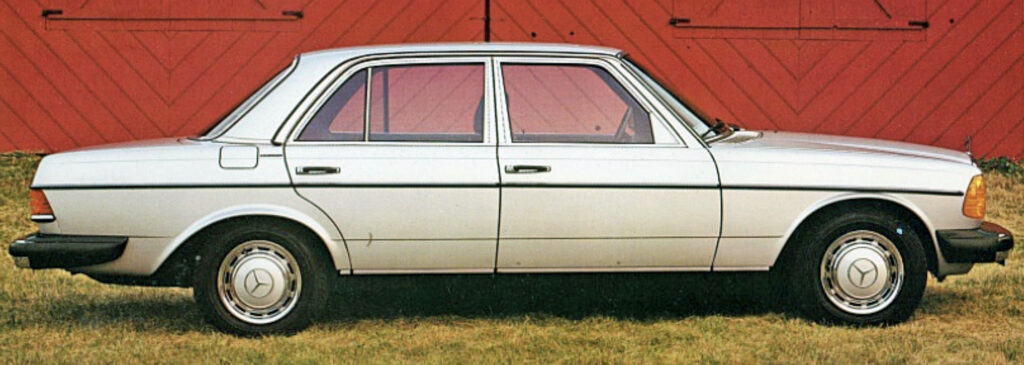
The W123 280E balances upright Mercedes tradition with clean horizontal lines, practical details and a shape built for varied roads.
The 1984 Mercedes-Benz 280E W123 makes its case through proportion and detail. Its upright grille, long body lines and restrained trim give it a formal presence, while compact overhangs, practical fittings and a comfortable ride height point to a car meant to handle more than smooth motorways. That combination helps explain how the W123 could serve as a prestige sedan in one market and a hard-working taxi in another.
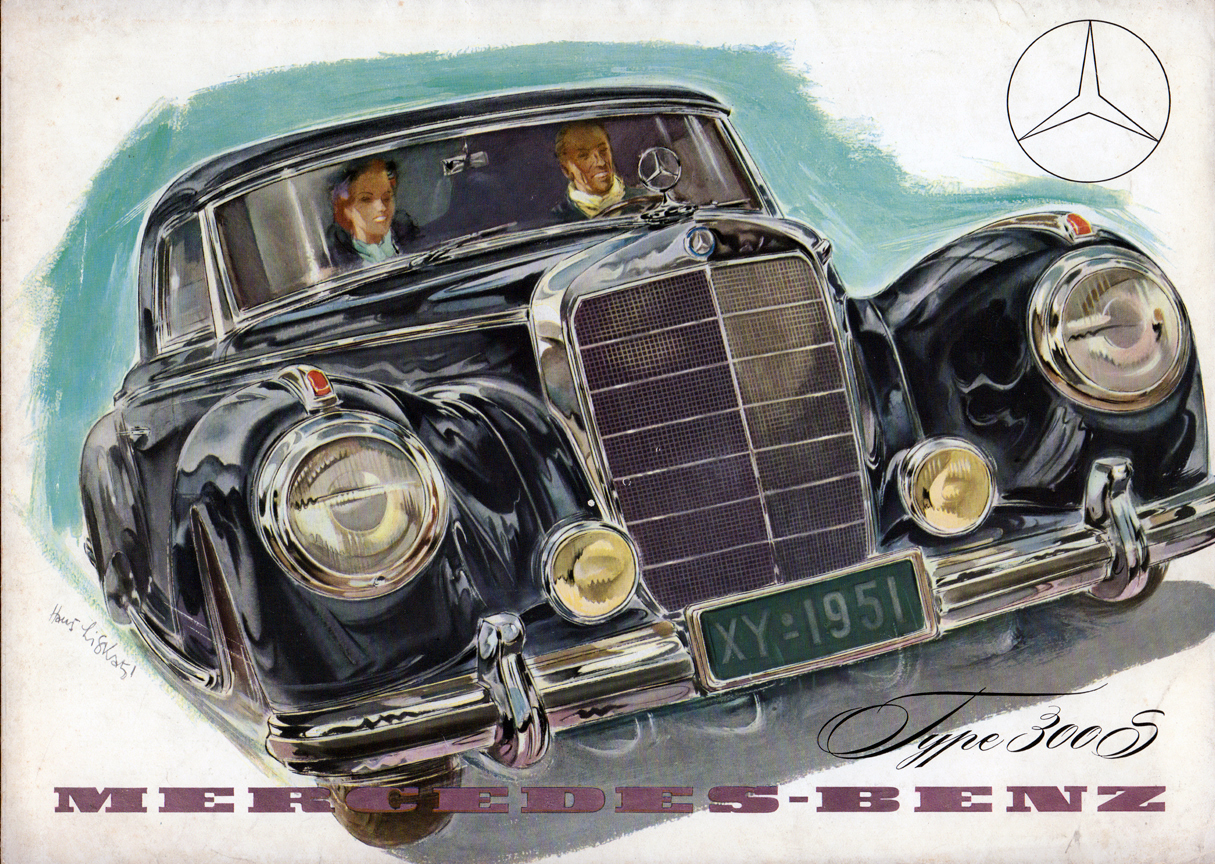
The W123 belongs to a design shift that Friedrich Geiger saw firsthand. As head of Mercedes-Benz styling, Geiger worked across eras, from the 500K touring cars of the 1930s to the more restrained executive cars that followed. By the W123’s arrival, separate fenders and highly decorative grilles had largely given way to industrial design: shapes refined around manufacturing, use and a more modern idea of luxury. The result still carries older Mercedes cues, but puts them to work within a cleaner form.
That balance recalls the design principles associated with Bauhaus professor László Moholy-Nagy, who described design as an integration of technological, social and economic requirements with human needs and the psychological effects of material, shape, color, volume and space. The W123 is a useful example. Its grille and hood retain a sense of ceremony; its long, straight moldings organize the body; and its fittings show how visual choices meet everyday use.
A formal face with a modern rhythm
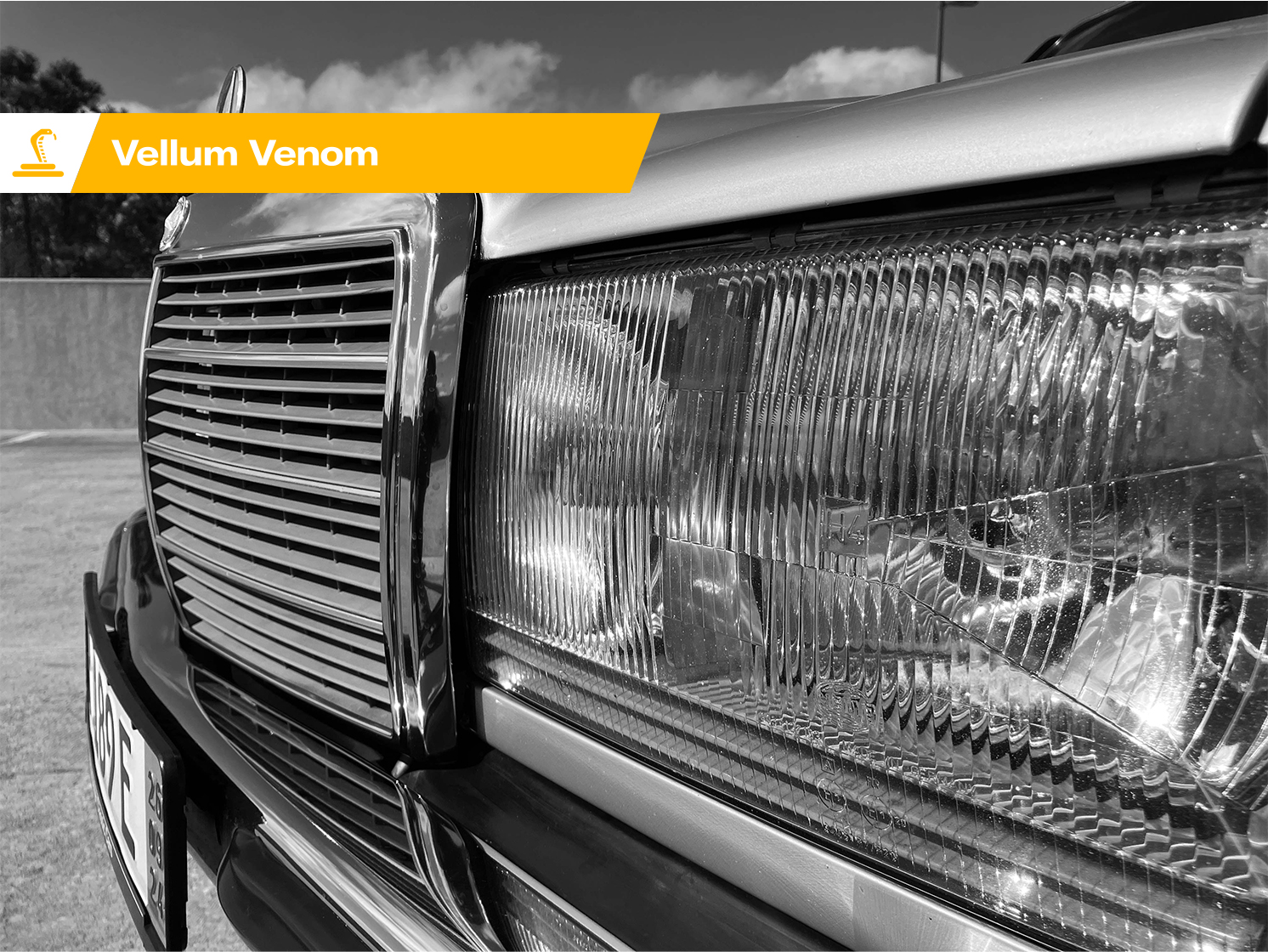
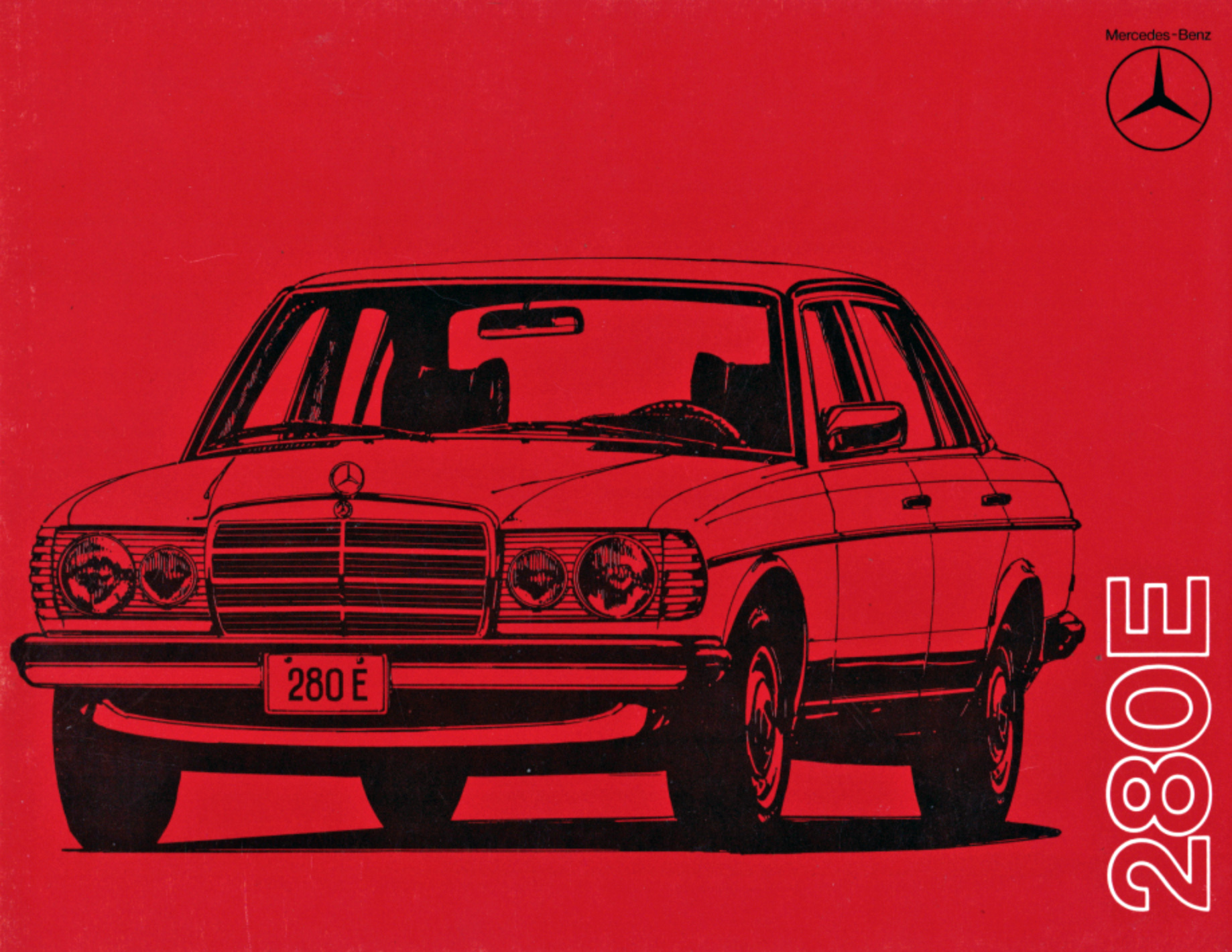
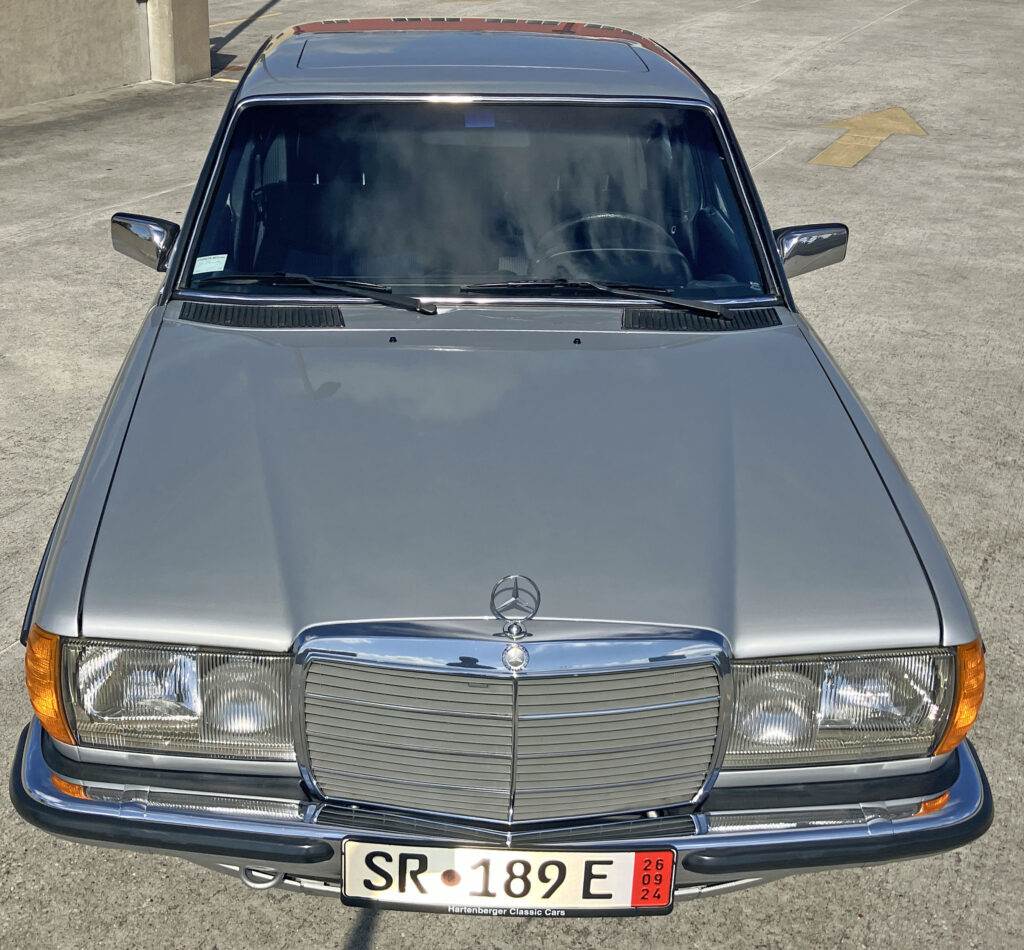
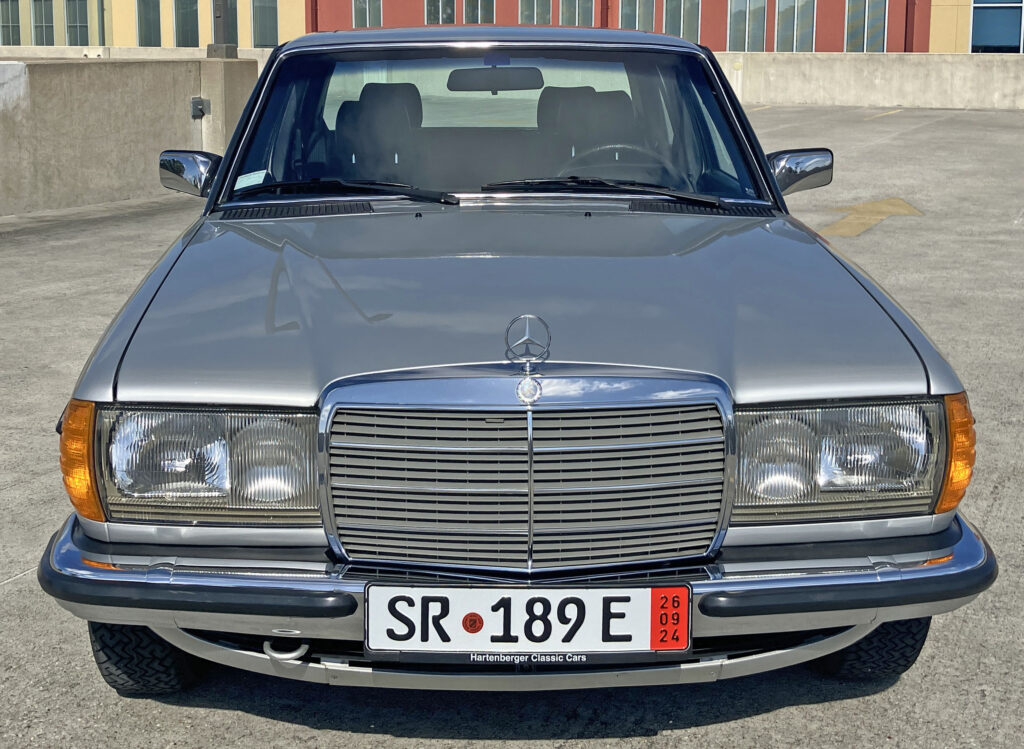
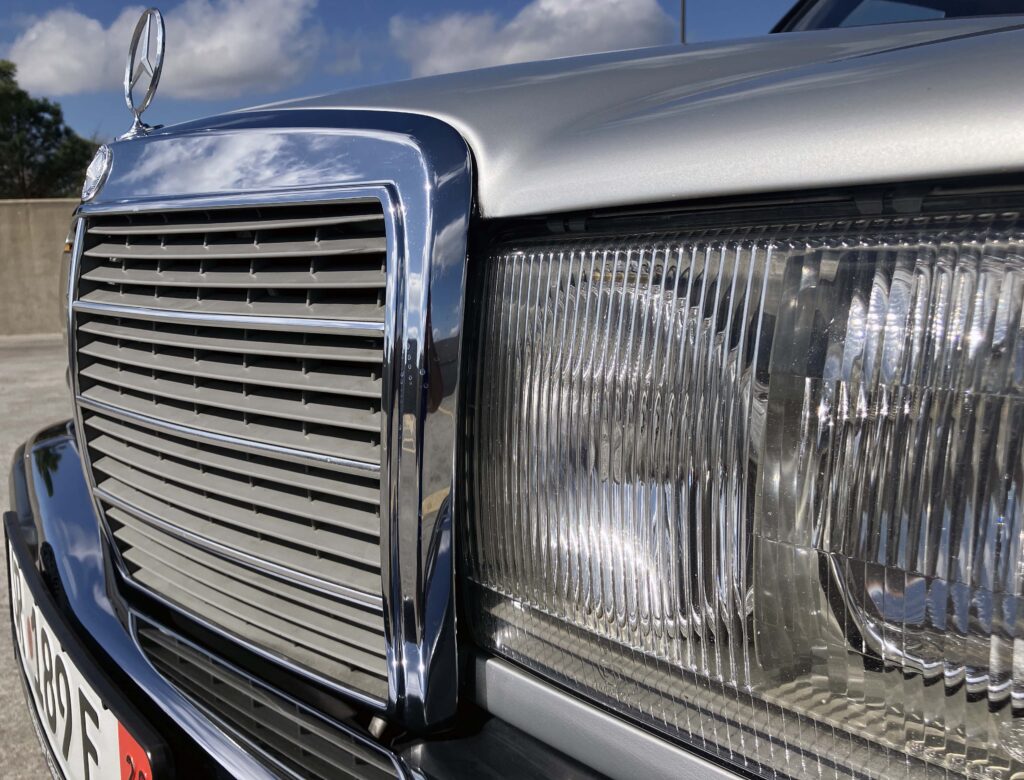
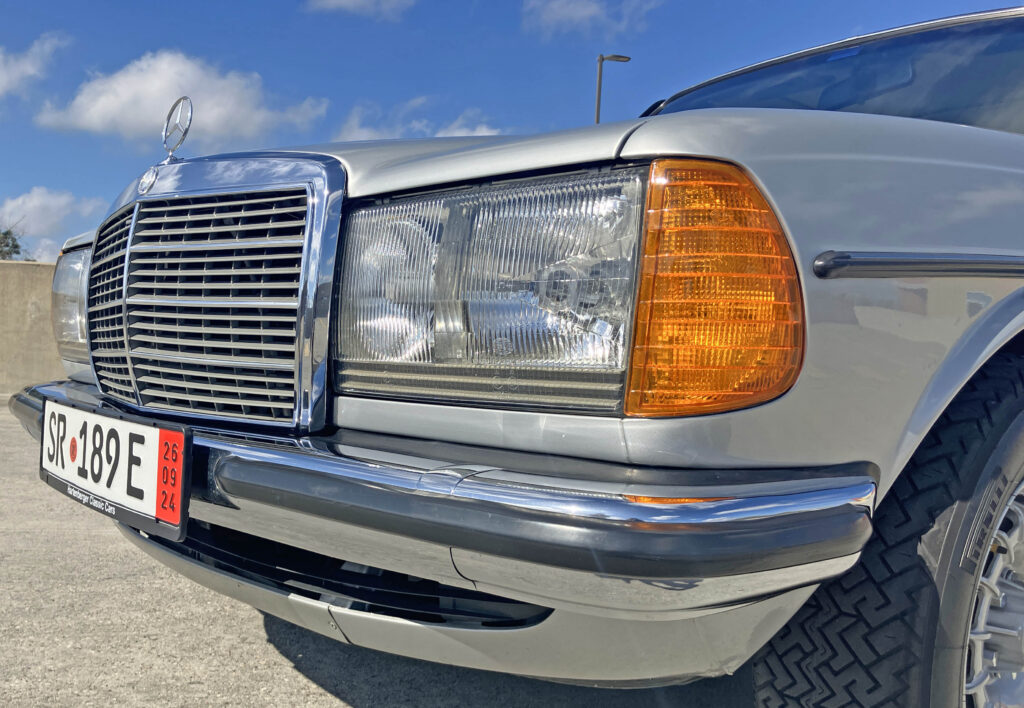
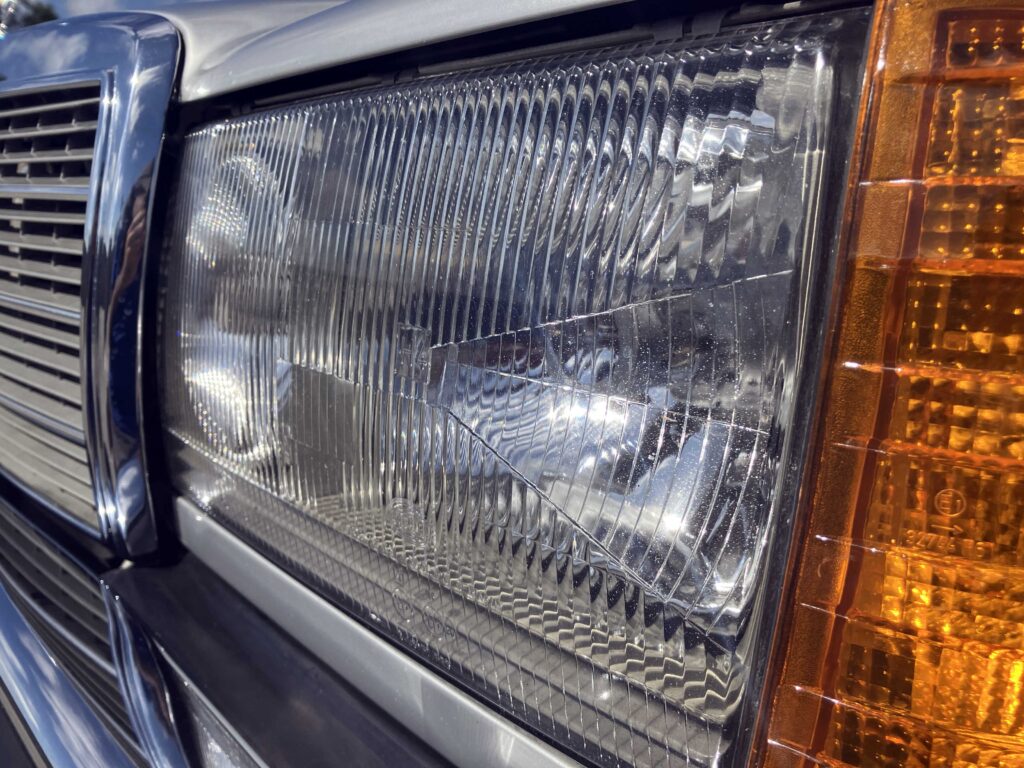
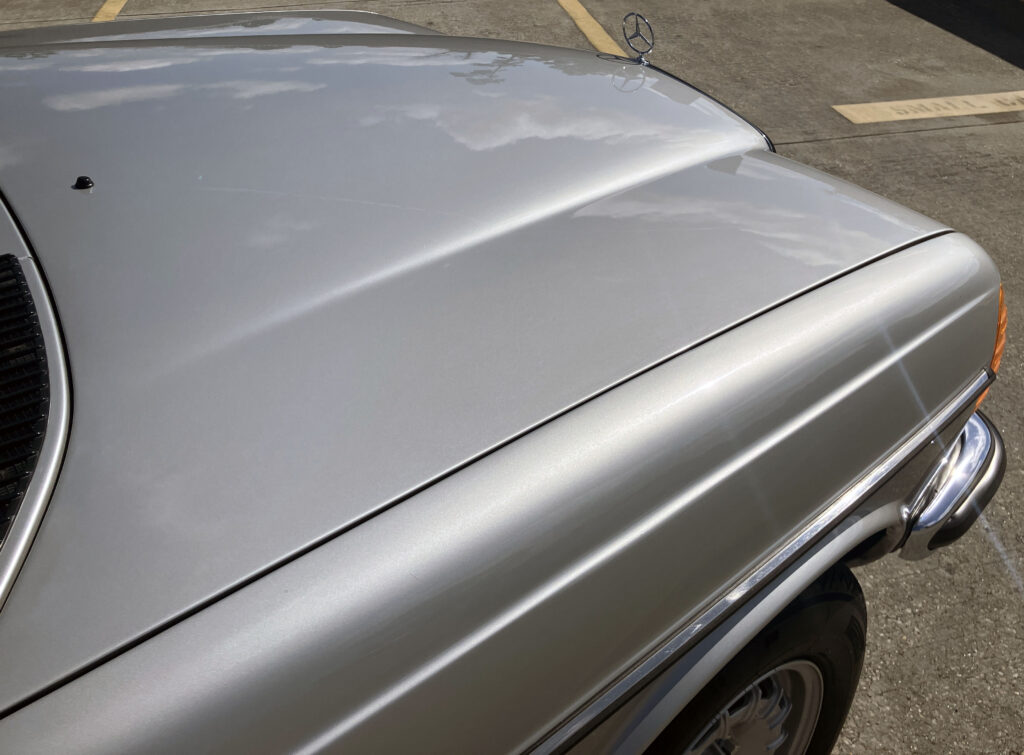
The front end sets up the car’s central visual idea: classic forms framed by repeated horizontals. A traditional Mercedes grille sits between sleek headlamps and long, level bumper elements. The hood’s raised central contour gives the nose authority, then flows into the grille surround. On this German-market car, slim bumpers leave more visual room for those shapes than the heavier bumpers fitted to U.S. versions.
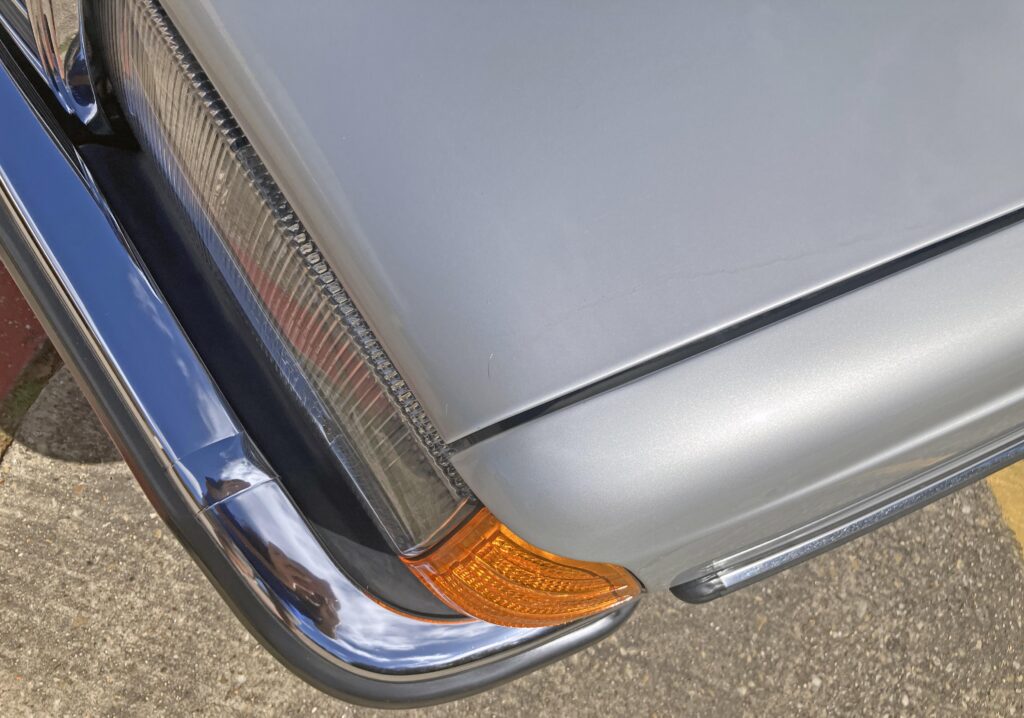
Small panel breaks preserve a trace of the separate-fender era. There’s a vertical gap between the grille and the surrounding front fascia, plus cut lines across the hood. The grille-to-hood transition is more closely aligned, recalling earlier Mercedes designs in which the radiator and hood read as a coordinated assembly. The later W126 would tidy the front-end gaps further, but the W123’s seams still look considered when viewed as part of the whole.
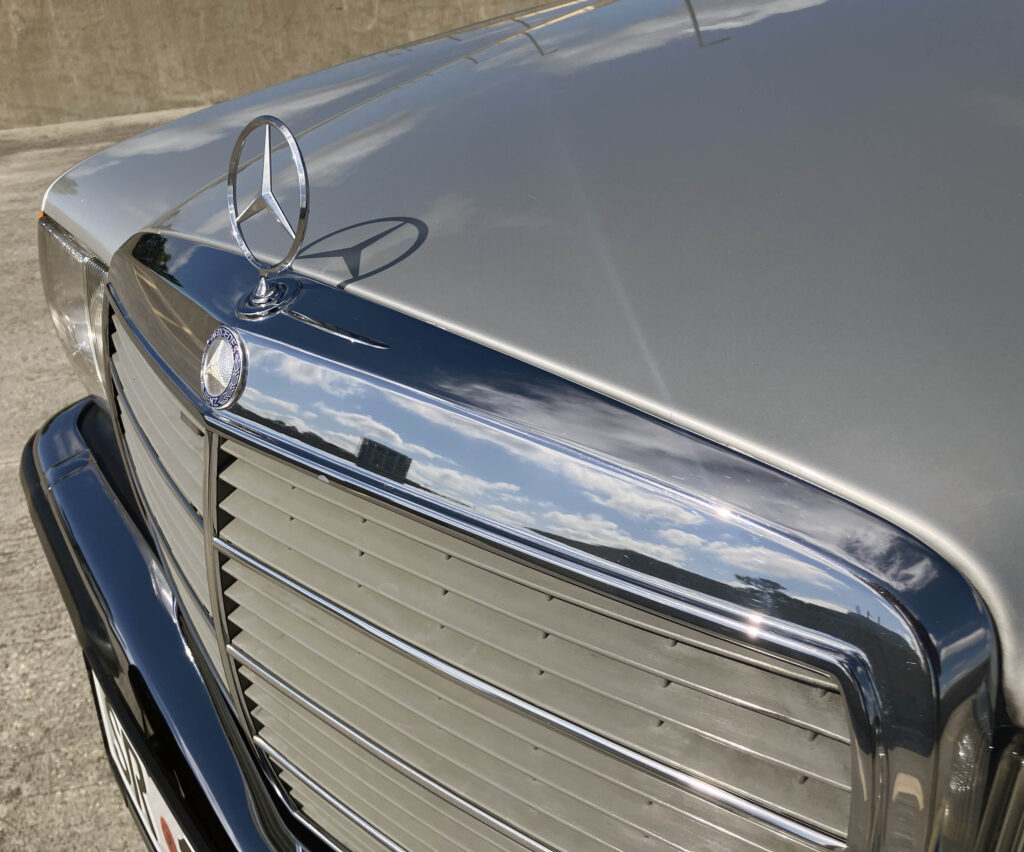
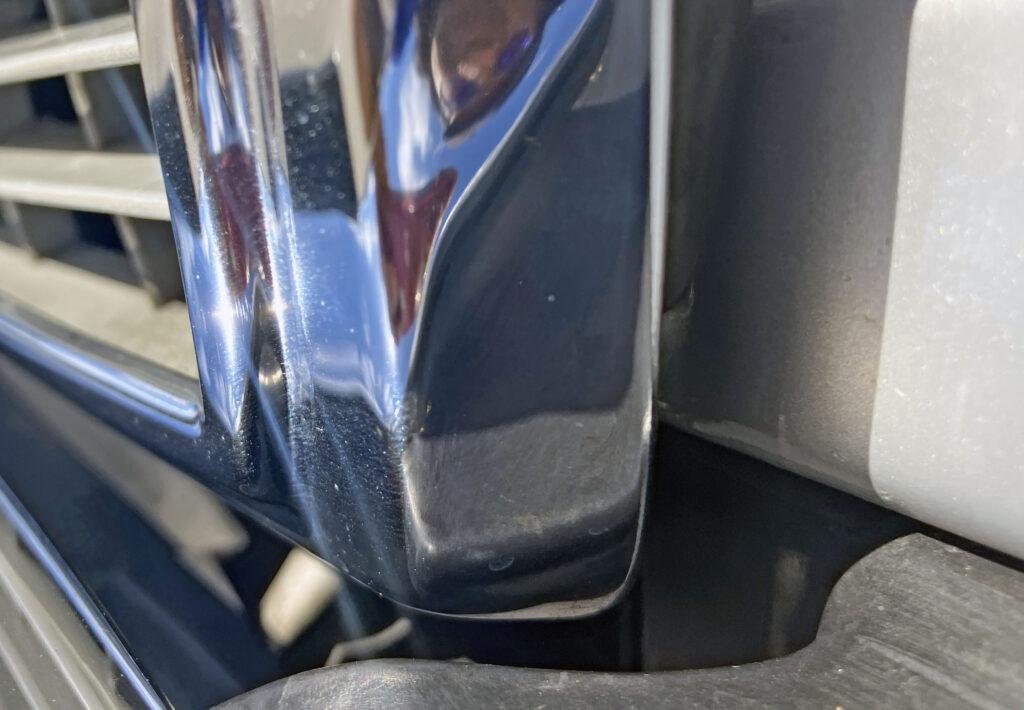
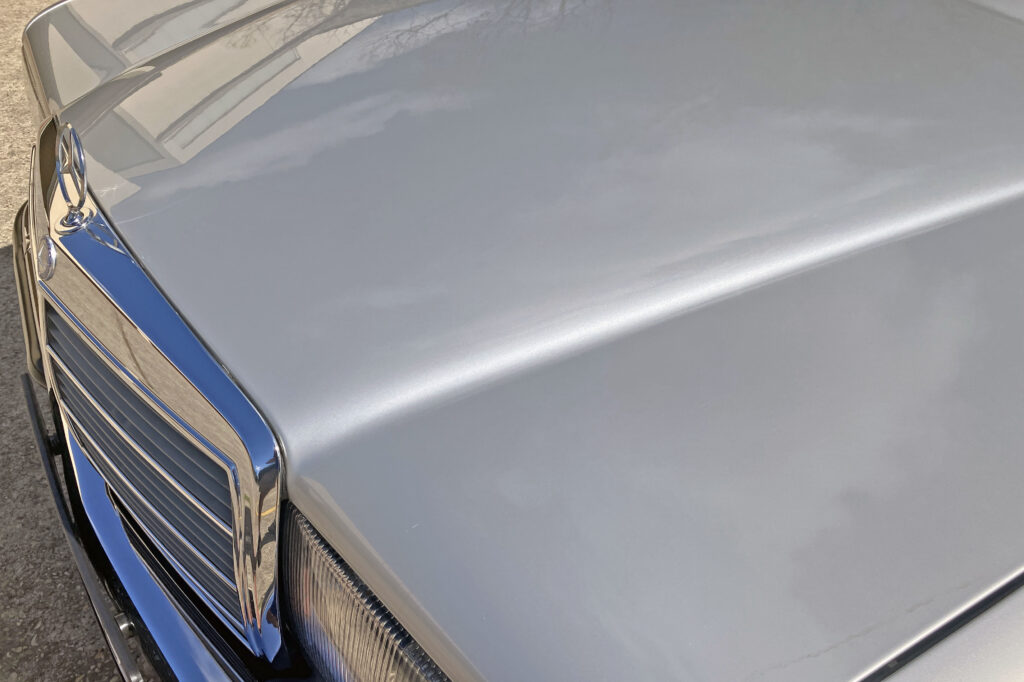
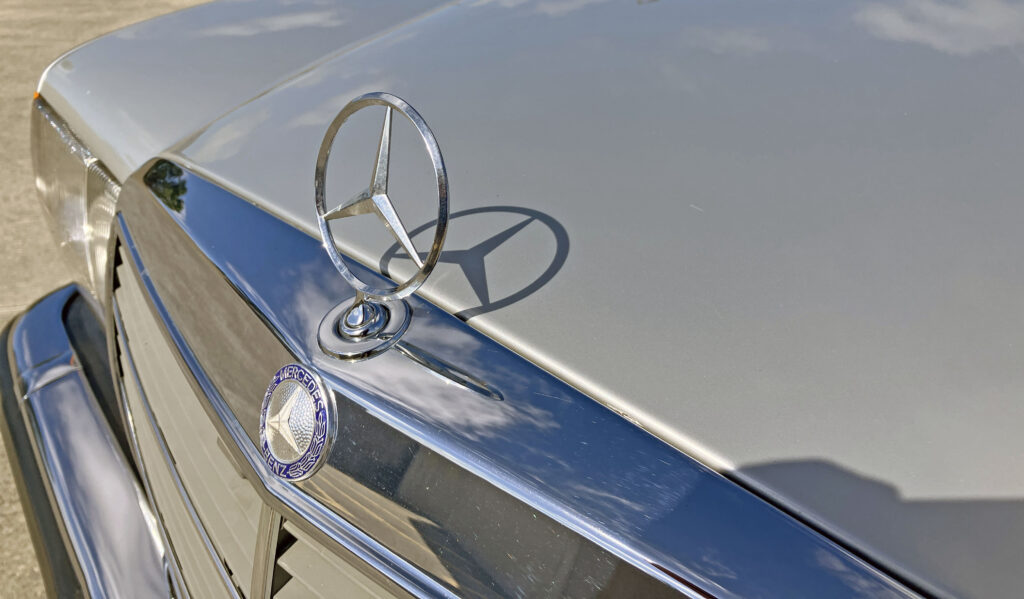
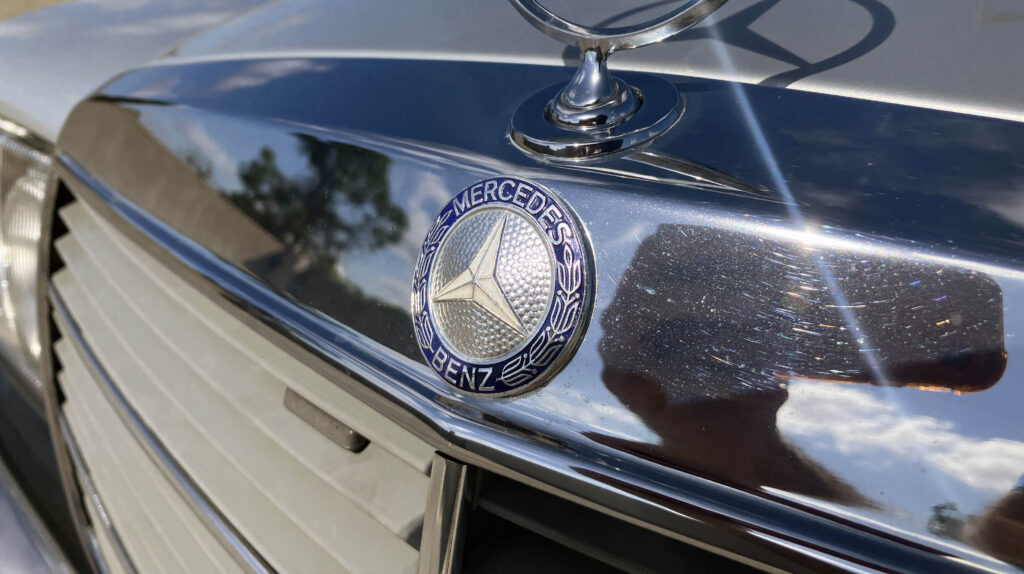
The grille rewards a closer look. Its blue-toned emblem, textured relief and projecting three-pointed star add depth that a flat badge could not. Three chrome dividers cross a field of gray horizontal slats, while the slats angle toward a central V. Vertical supports recede into the pattern. It’s a distinctive treatment that gives the front a tailored quality without relying on excessive ornament.
That grille texture was part of a broader Mercedes identity shared across sedans and coupes. It later gave way to sportier SL-inspired faces and simpler horizontal patterns. The W123’s version feels more specific to the marque: a formal centerpiece with enough surface detail to catch the eye at close range. Its appeal comes from the work embedded in the design, not from sheer size.
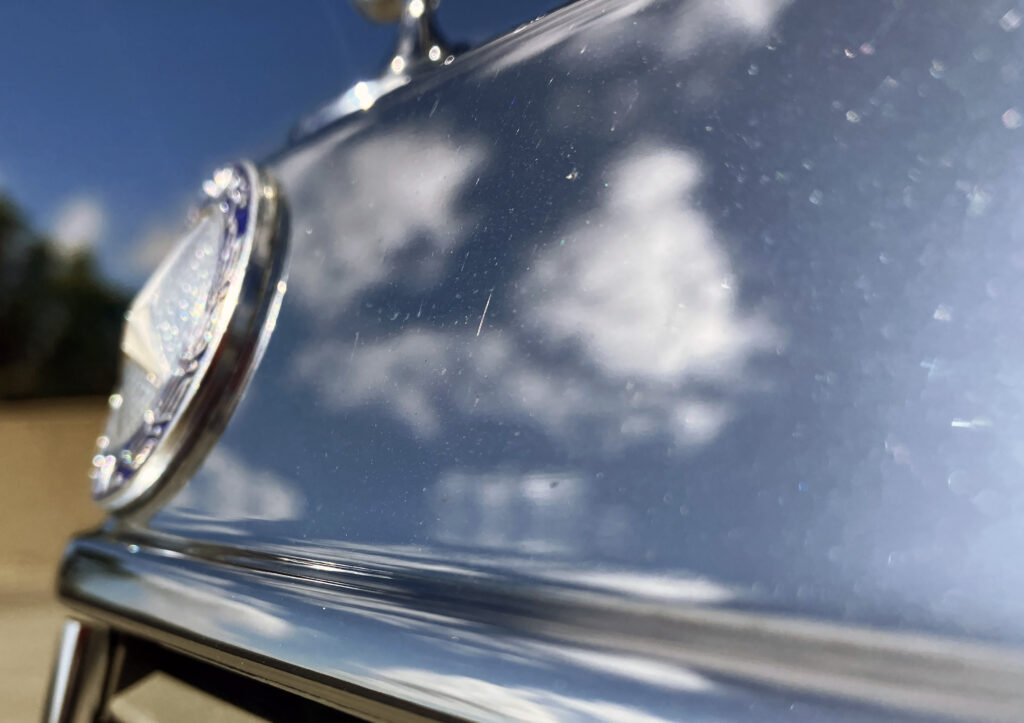
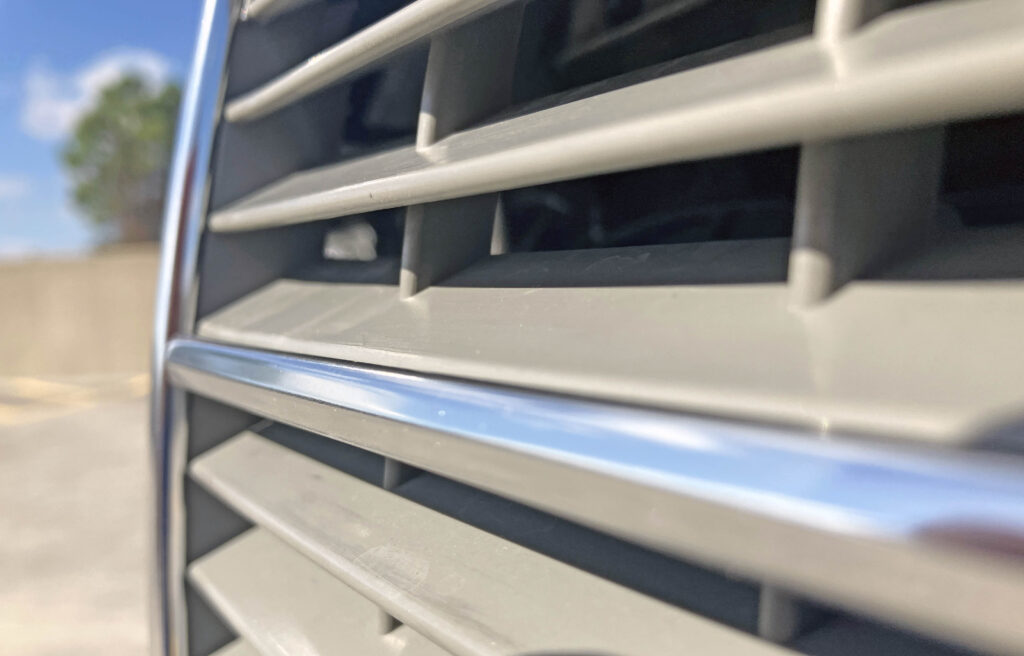
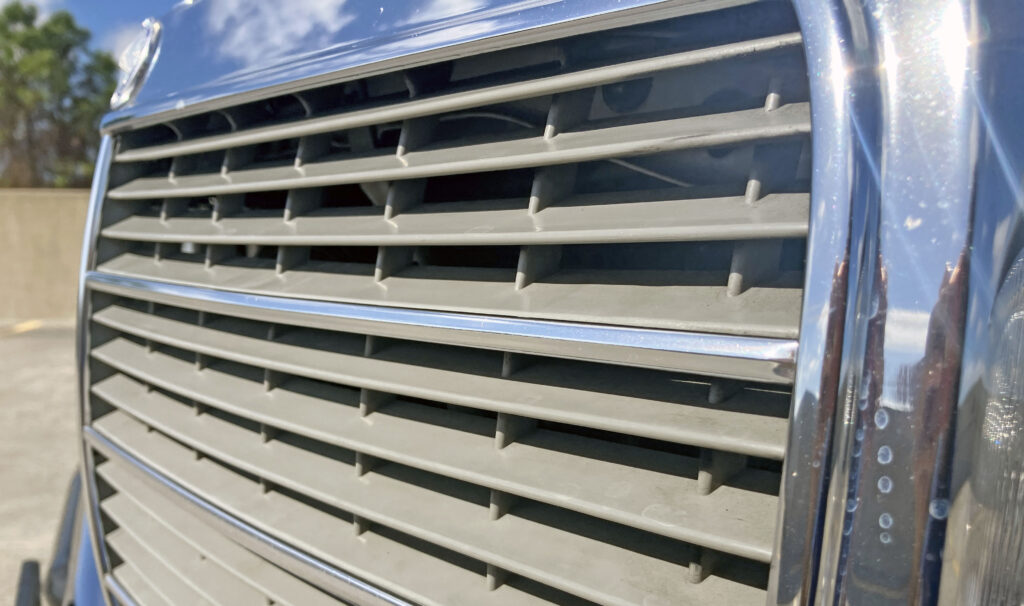
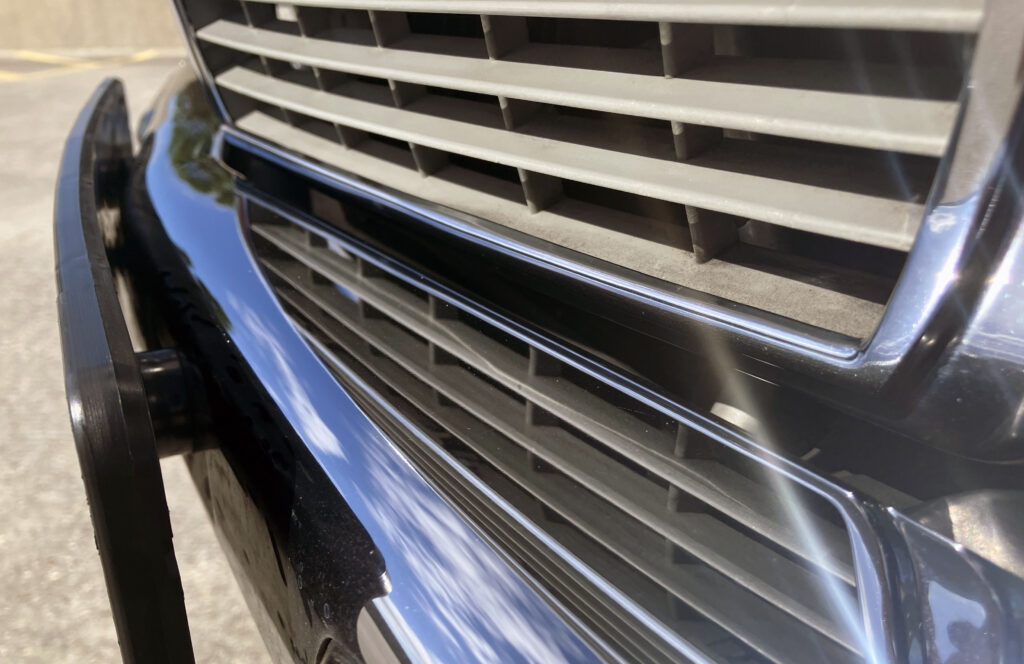
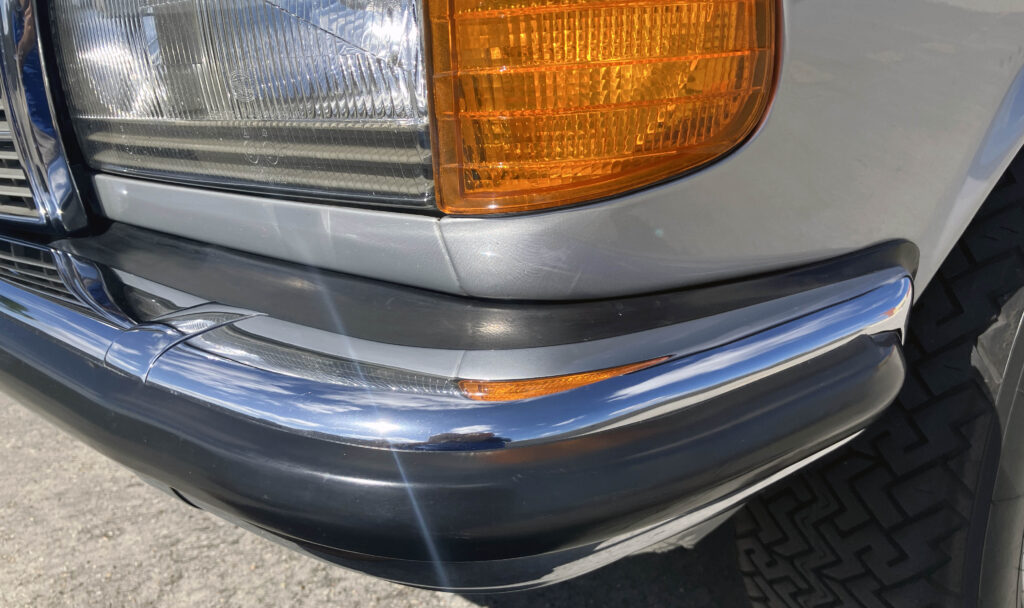
European headlamps carry the same fine horizontal pattern behind glass. U.S.-market cars use sealed-beam units, yet keep the strong horizontal emphasis. The lamp treatment links the grille to the chrome bumper, while the black lower valance visually recedes beneath it. Open space below the bumper leaves room for cooling airflow; the exposed fasteners are a reminder of a more straightforward approach to construction, mostly hidden by the panel’s low position.
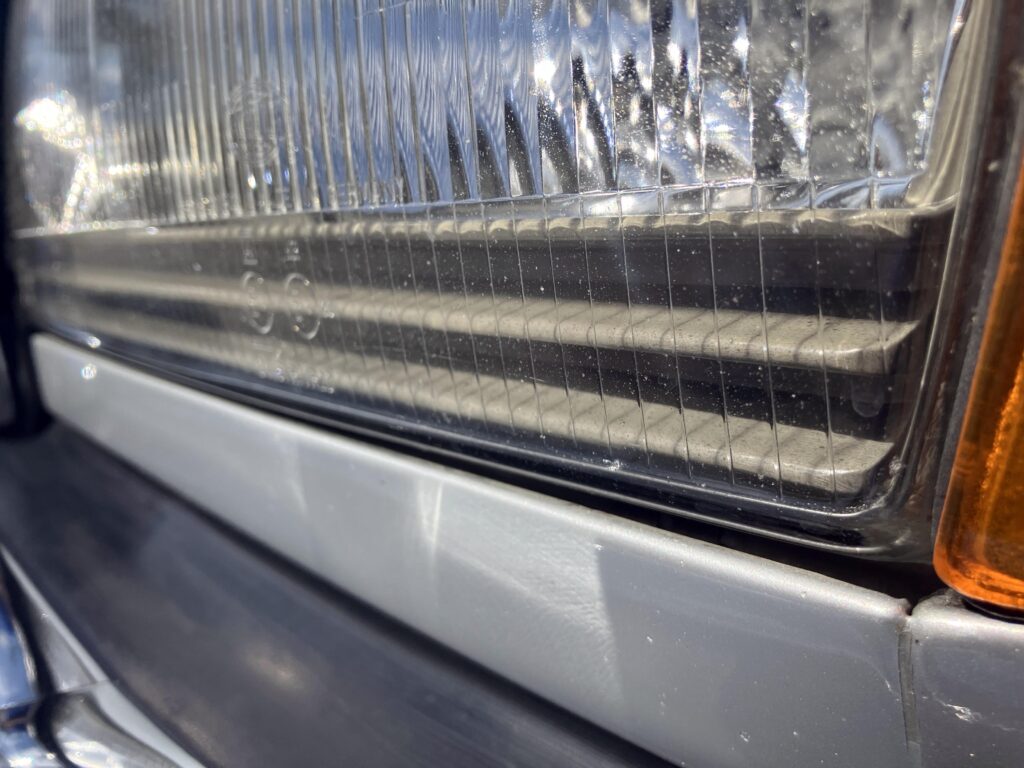
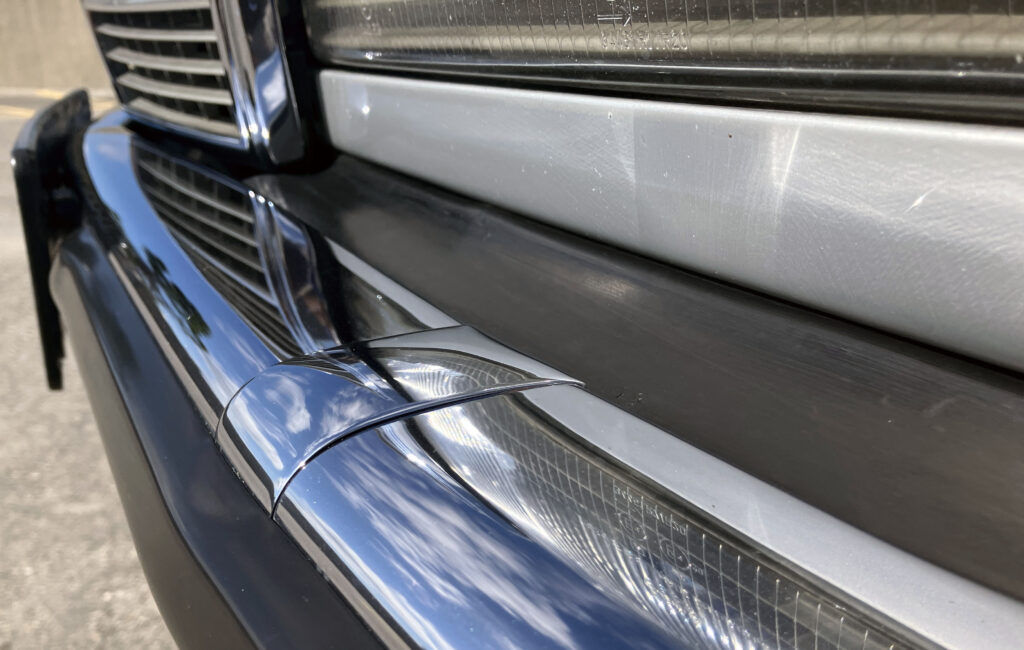
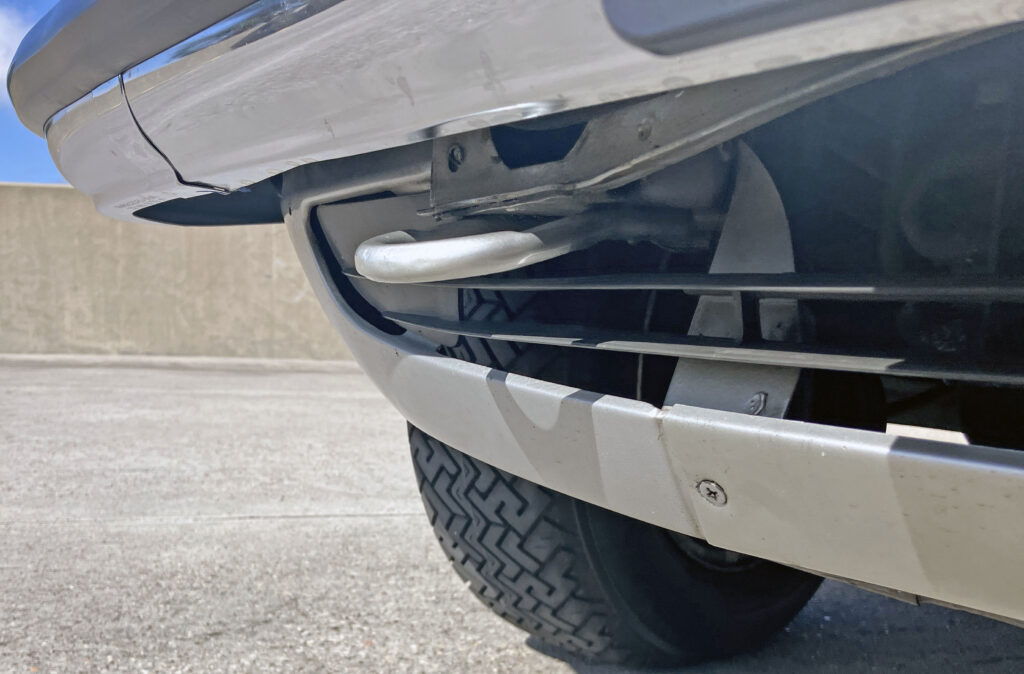
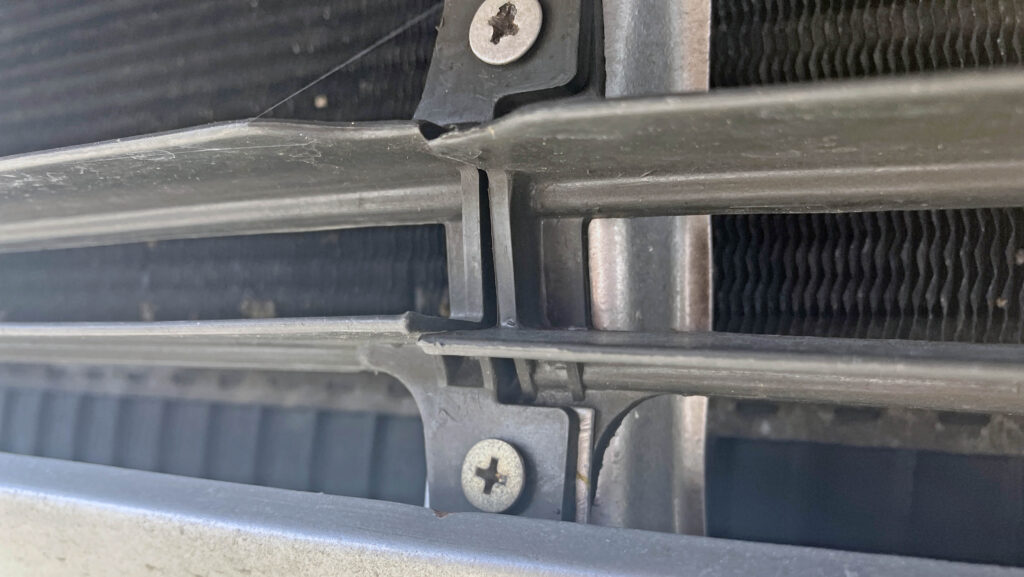
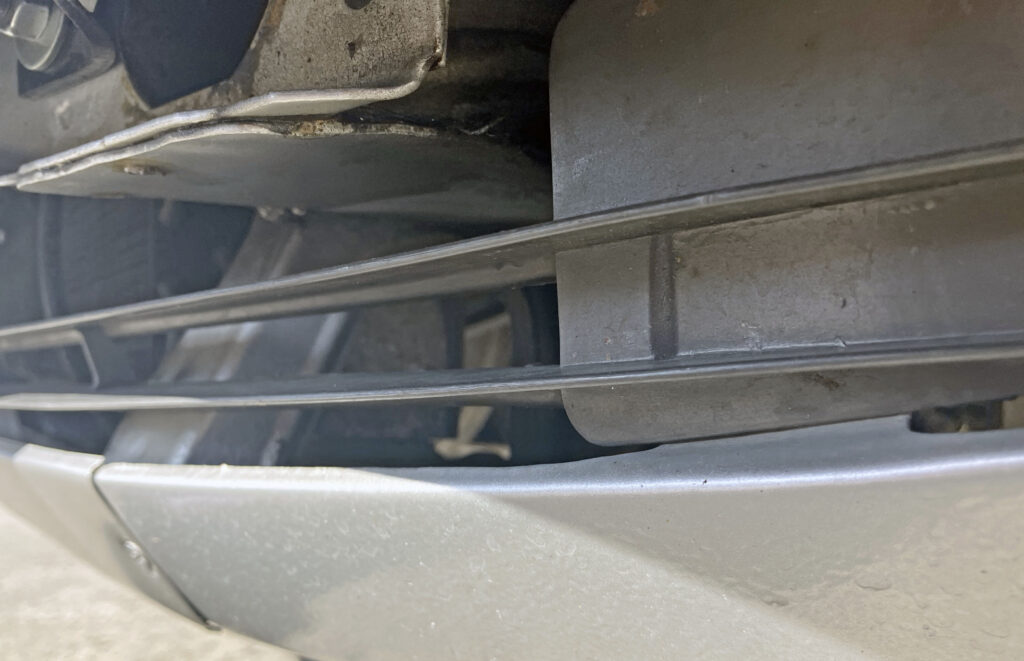
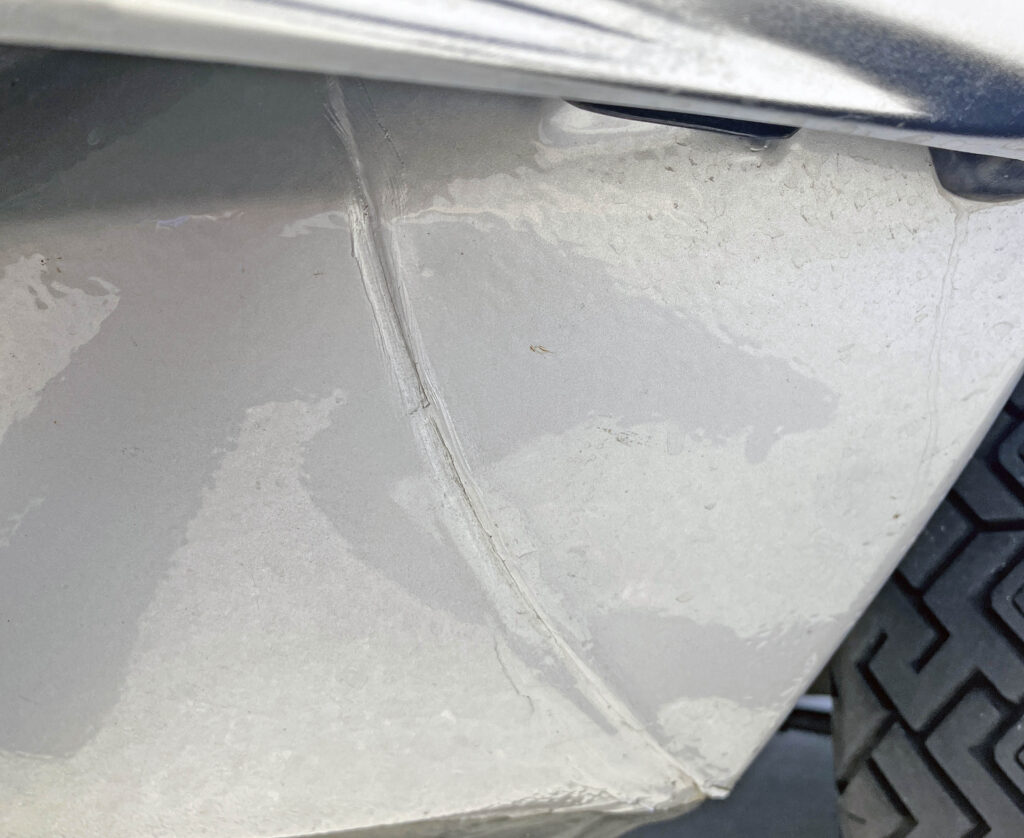
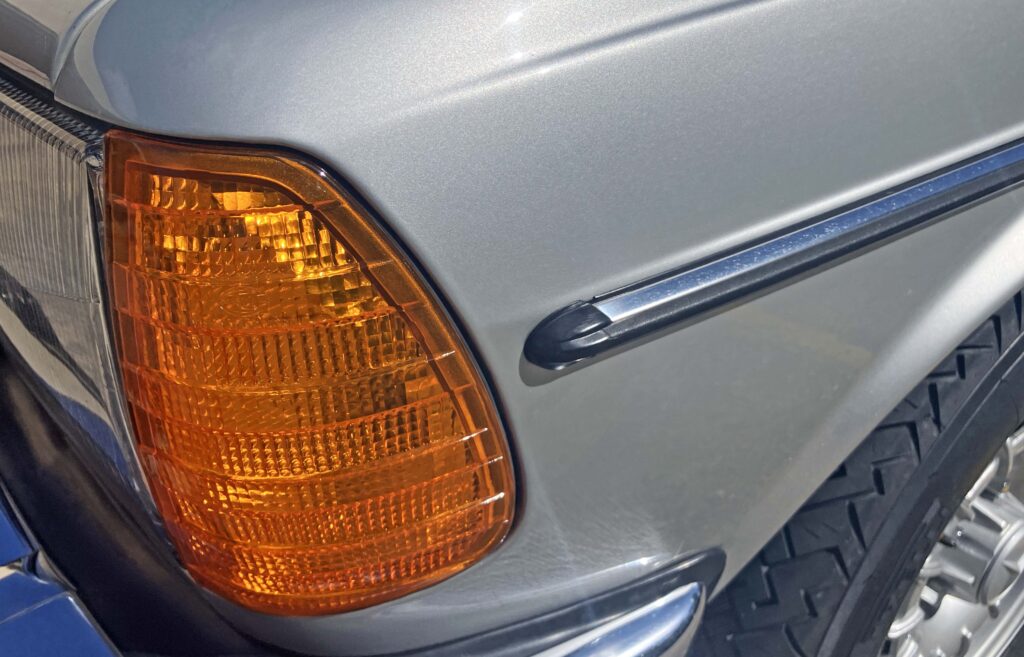
At the corners, softer shapes keep the front from becoming a stack of straight lines. The bumper and turn signals curve around the body, with a rubber seal separating bumper and sheet metal. That mix of straight and rounded edges is repeated along the sides. The lower valance meets the fender with a visible seam, but the horizontal trim above draws attention away from it. The W123’s traditional assembly methods remain legible, yet they don’t overwhelm the design.
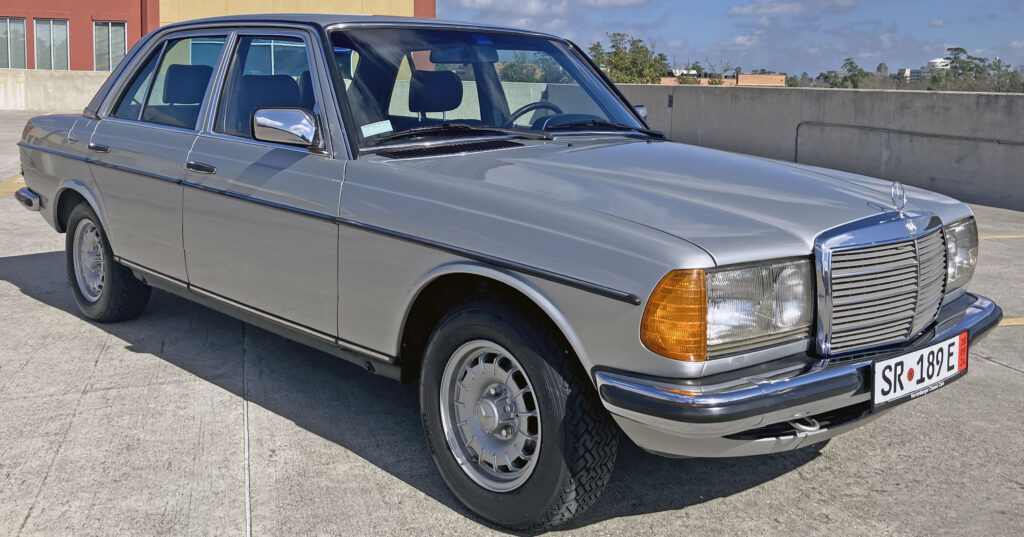
Made to cover distance, with details to match
The W123’s reported drag coefficient is 0.42. That figure looks high by current standards, but it’s notable for a design conceived around 1971 with little or no computer assistance. The contemporary comparison in the source is the C3 Corvette Stingray: its drag coefficient began at 0.503 and improved to 0.443 after revised front and rear fascias arrived in 1980. The Mercedes’ long, integrated surfaces were doing useful aerodynamic work even when the styling still looked upright.
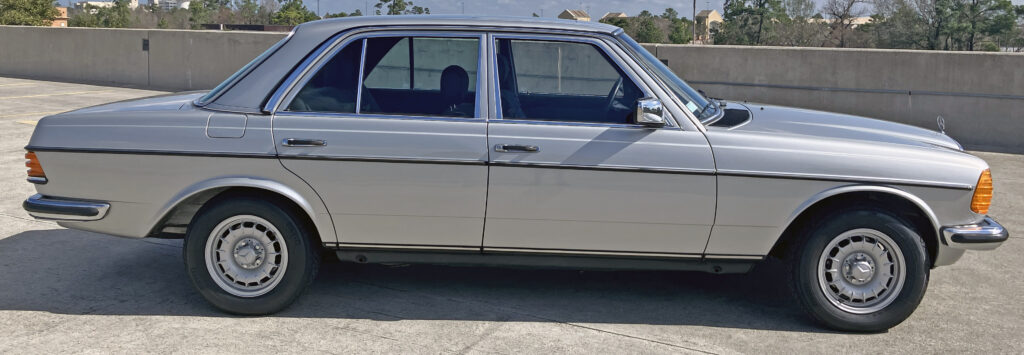
Its proportions also suggest a broader range of roads than a dedicated highway cruiser. Short overhangs, light alloy wheels and a comfortable ride height give the car a more compact, adaptable stance than the long-nosed 1972 Continental Mark IV. The 280E looks composed at speed, but its shape doesn’t make open-road cruising its only purpose. That versatility would become a defining part of the W123’s reputation.
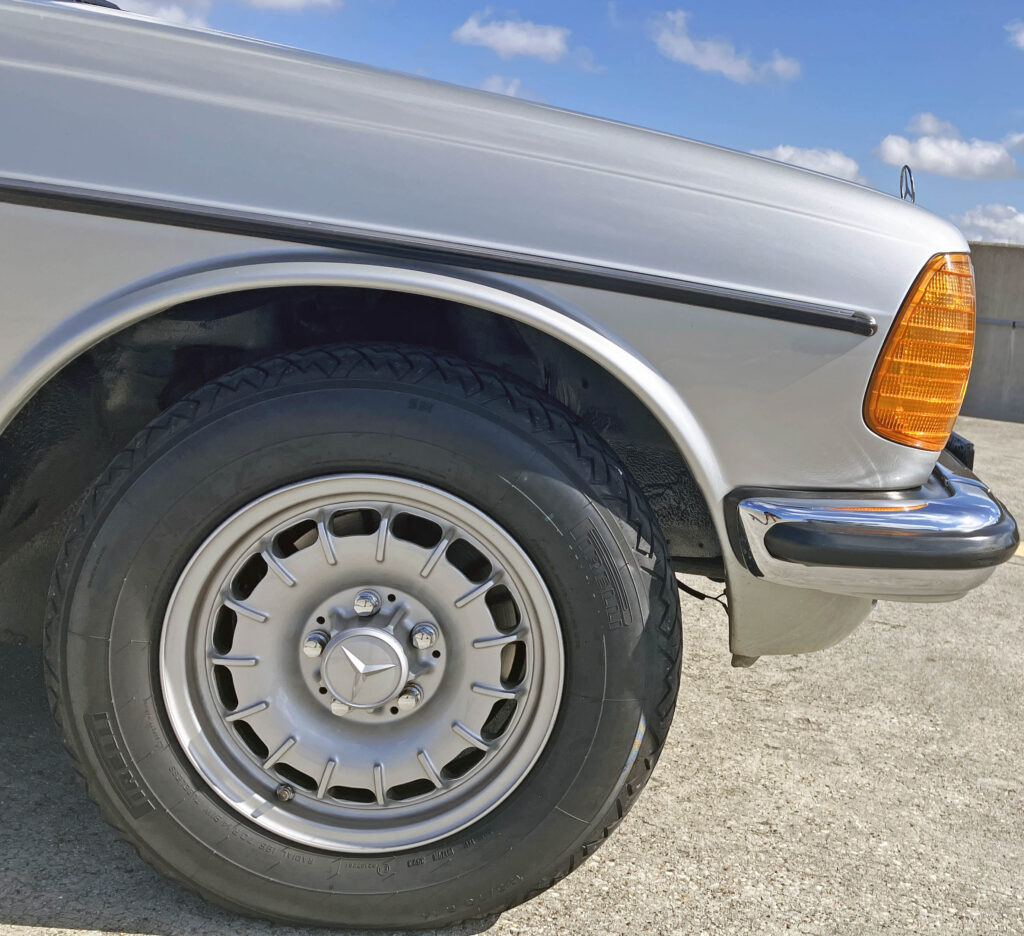
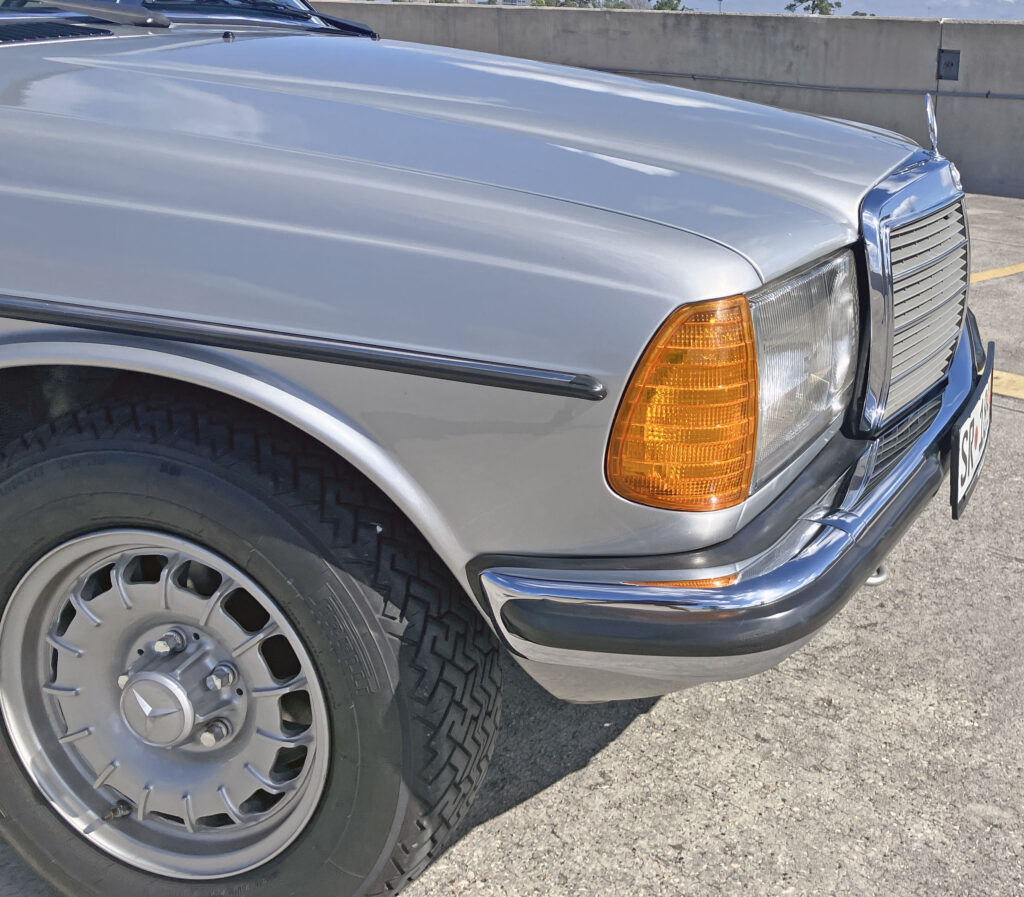
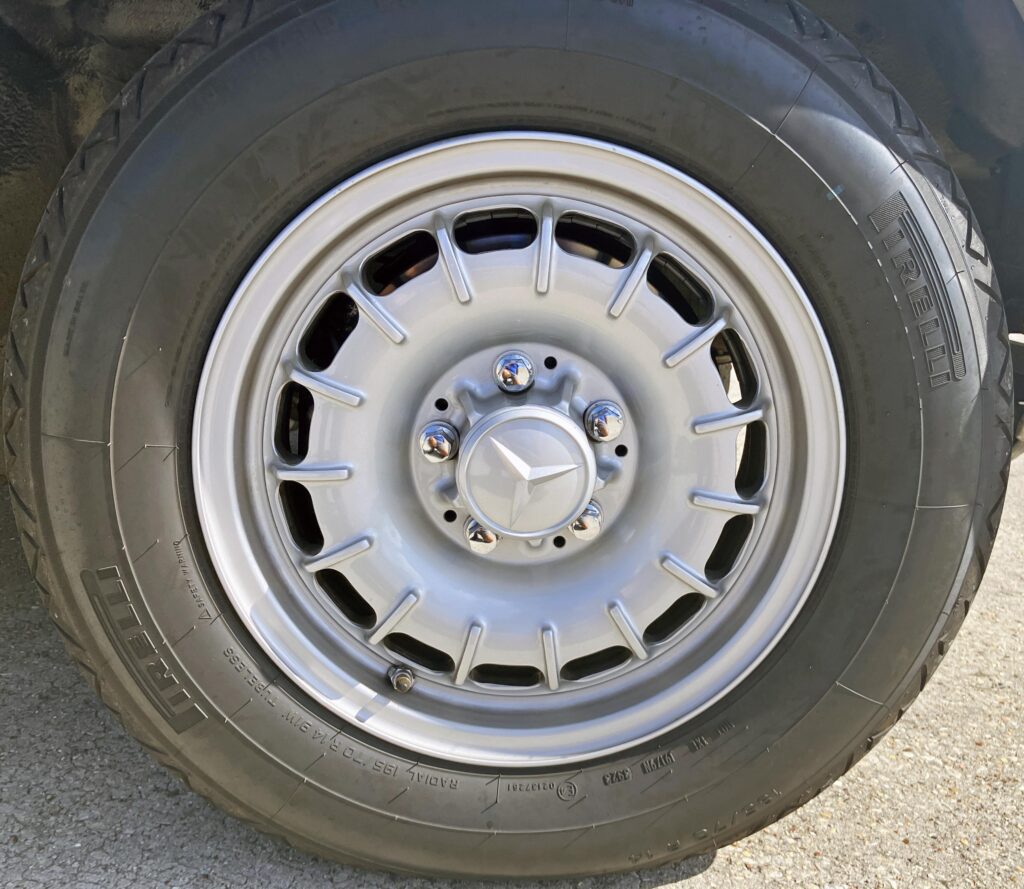
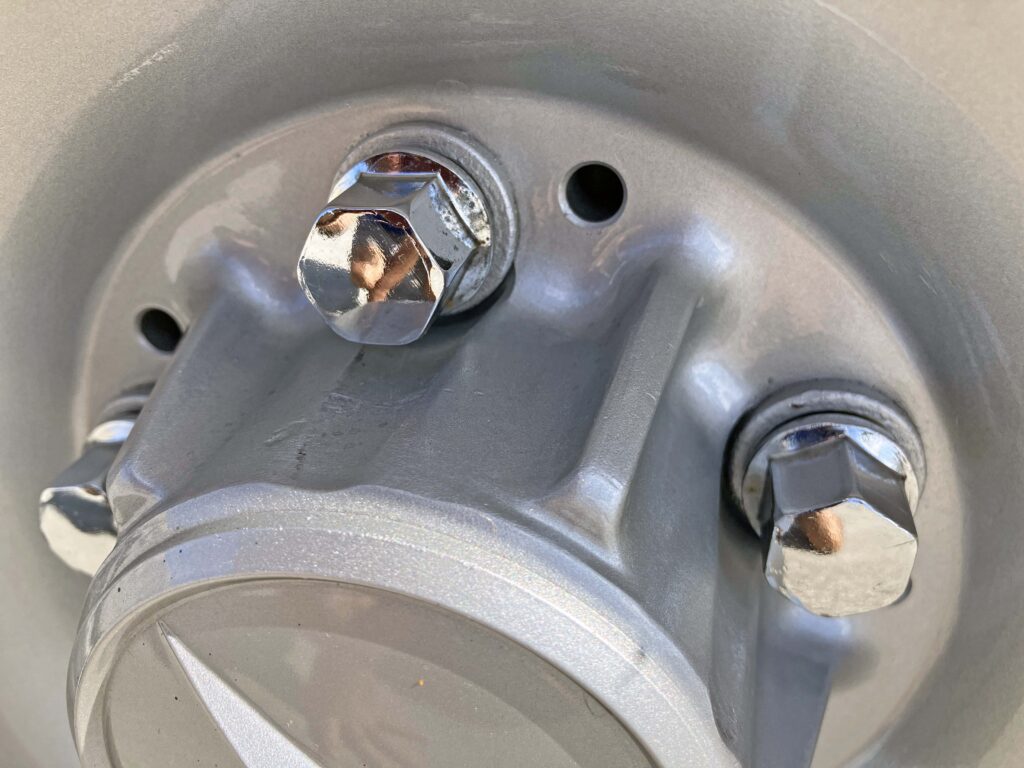
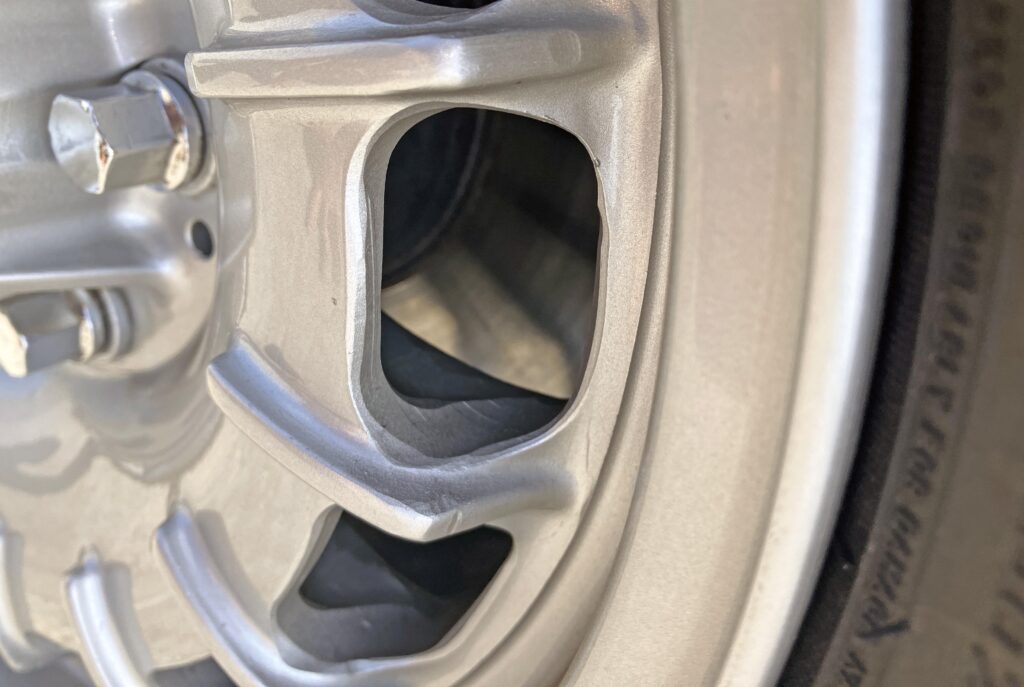
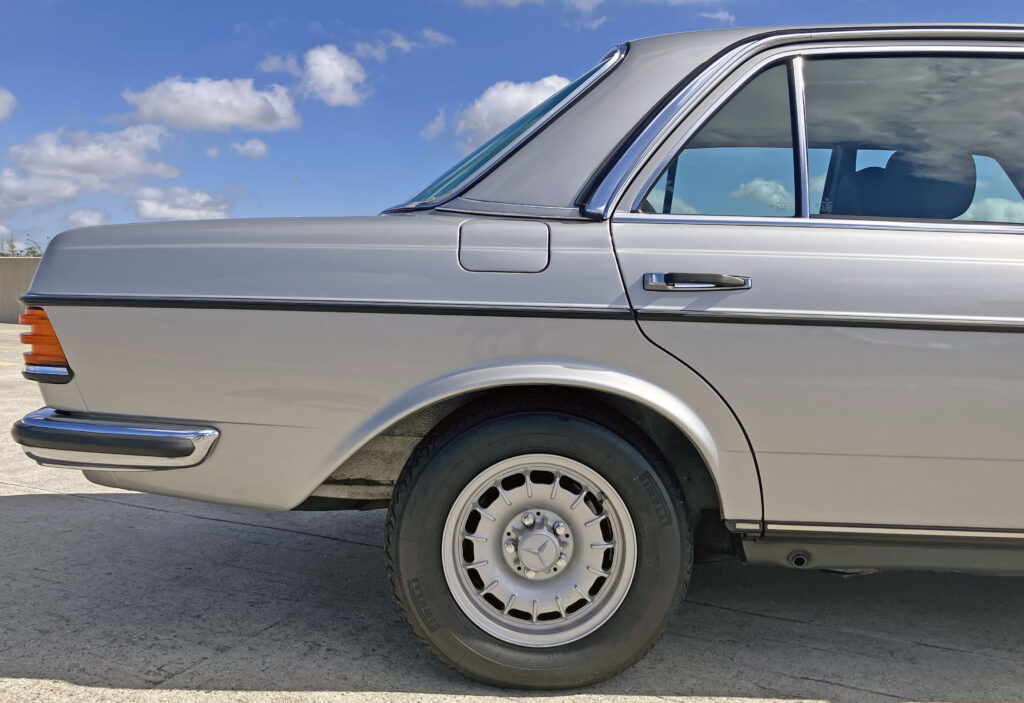
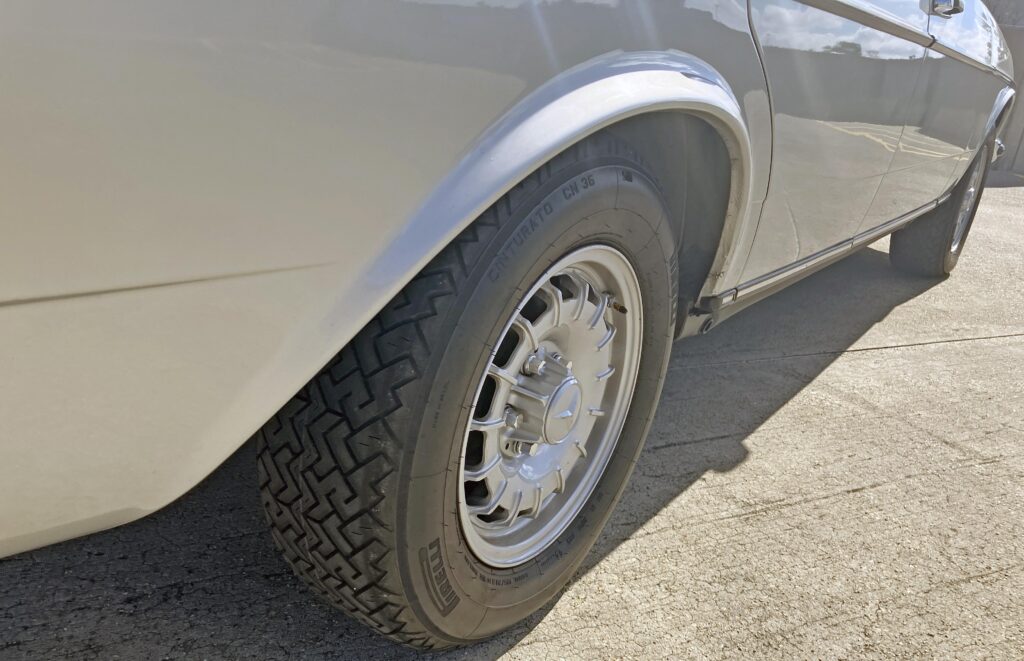
The familiar “bundt” wheels are forged aluminum alloy, with sculpted openings that recall the shape of a cake pan. Their cooling passages are more carefully formed than the simple bowl-like castings used on some contemporary American luxury cars. This is an understated piece of engineering: the wheels have enough visual character to suit the Mercedes, while the open design serves a practical purpose.
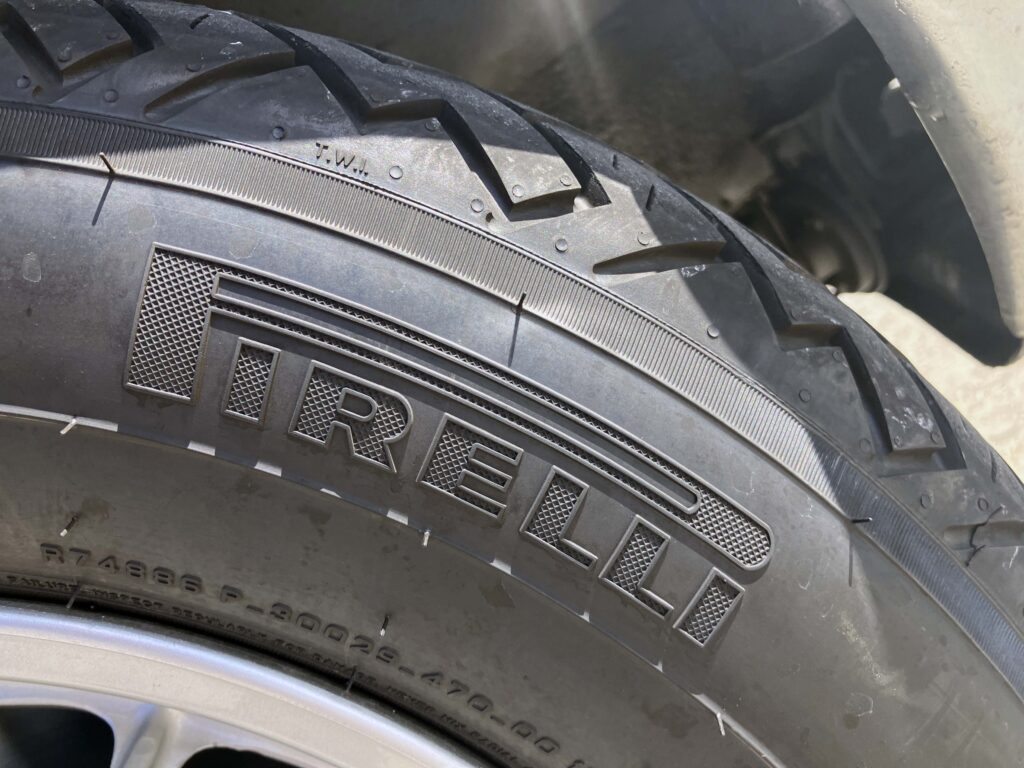
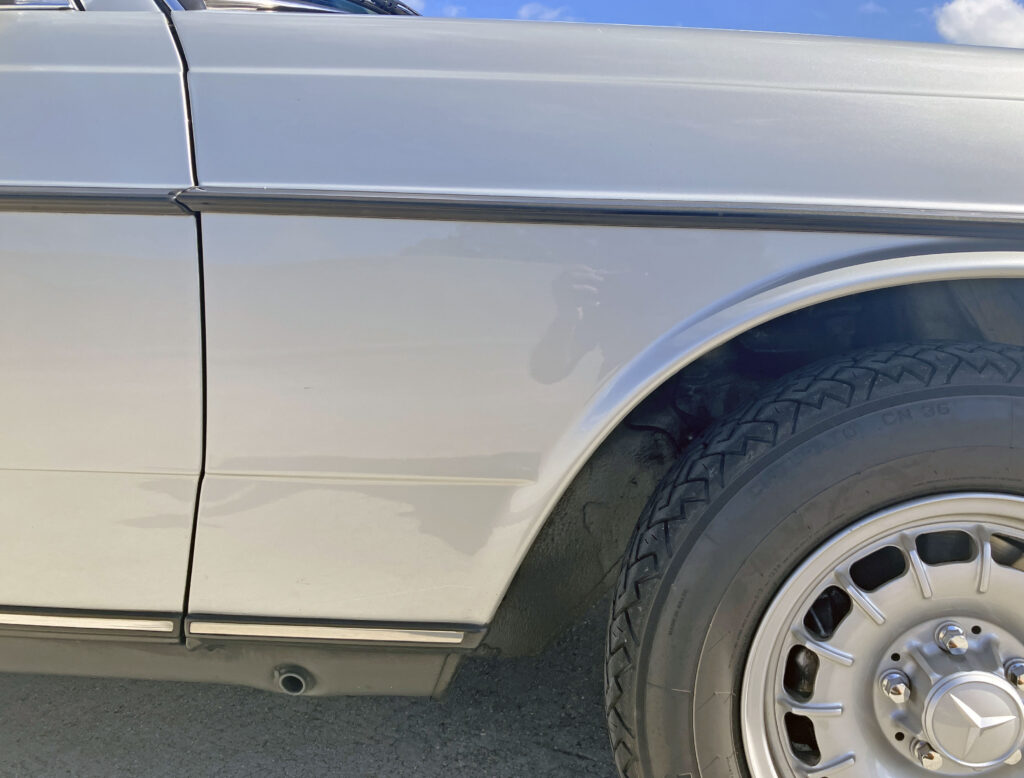
The car wears newly made Pirelli reproduction tires with a period-style sidewall and tread. Their plain appearance suits the era. Black paint conceals some body details, though not the circular jack points in the rocker panels. A chrome strip and pronounced crease above it give the lower body structure, and the long dash-to-axle proportion gives the hood a suitably formal length. By American luxury-car standards, that hood is modest; for a European sedan, it’s a strong part of the car’s presence.
Practical luxury, clearly expressed
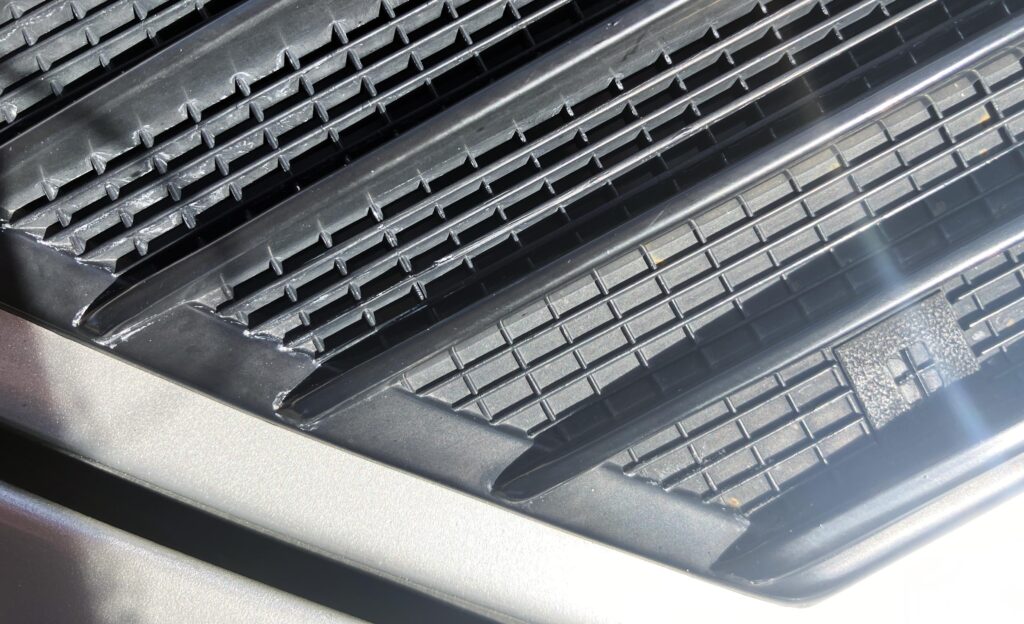
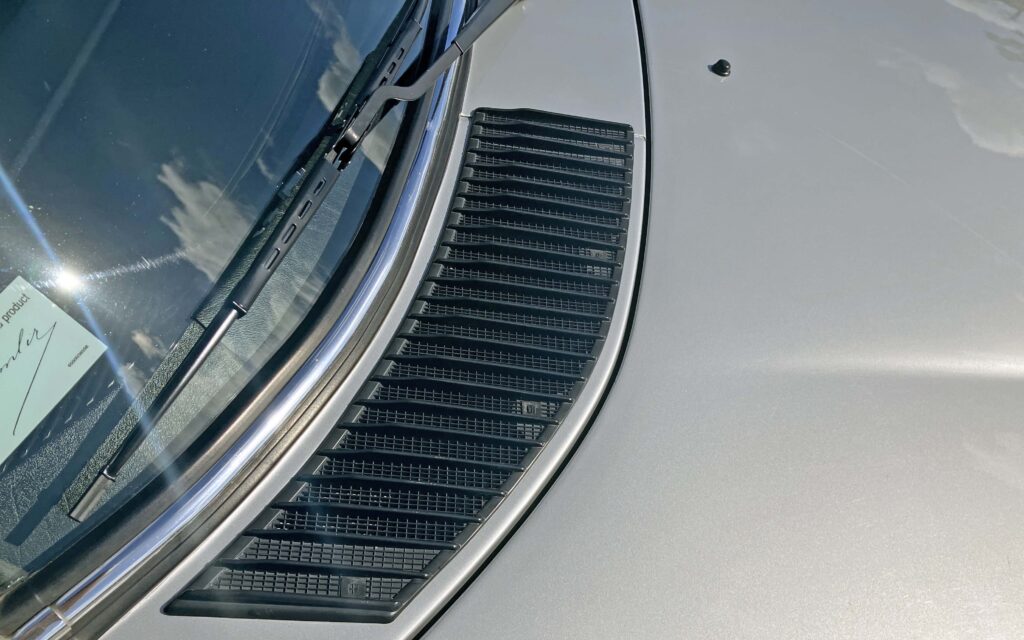
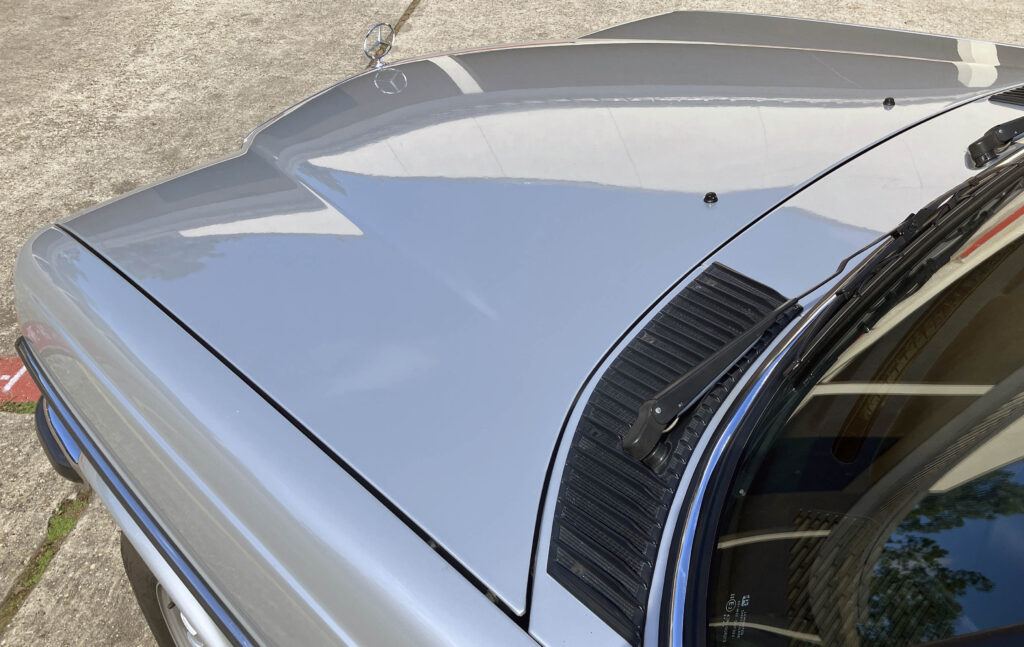
The cowl is one of the W123’s less polished areas. Its exposed wipers, large window seals and visible functional parts look utilitarian beside the covered cowl of a 1976 Cadillac Seville. The next-generation W124 E-Class would extend the hood over much of this area, tidying the intake ducting and wipers. On the W123, the open cowl is a reminder that luxury meant different things in different markets—and that German sedans didn’t necessarily follow American expectations of a dressed-up engine bay.
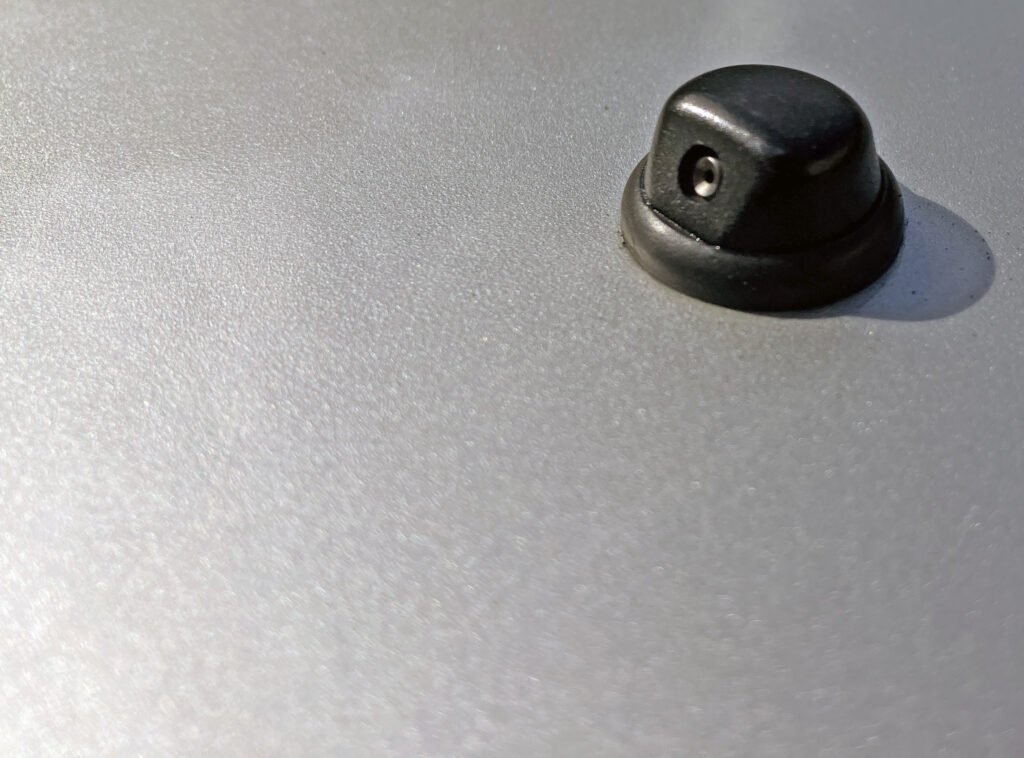
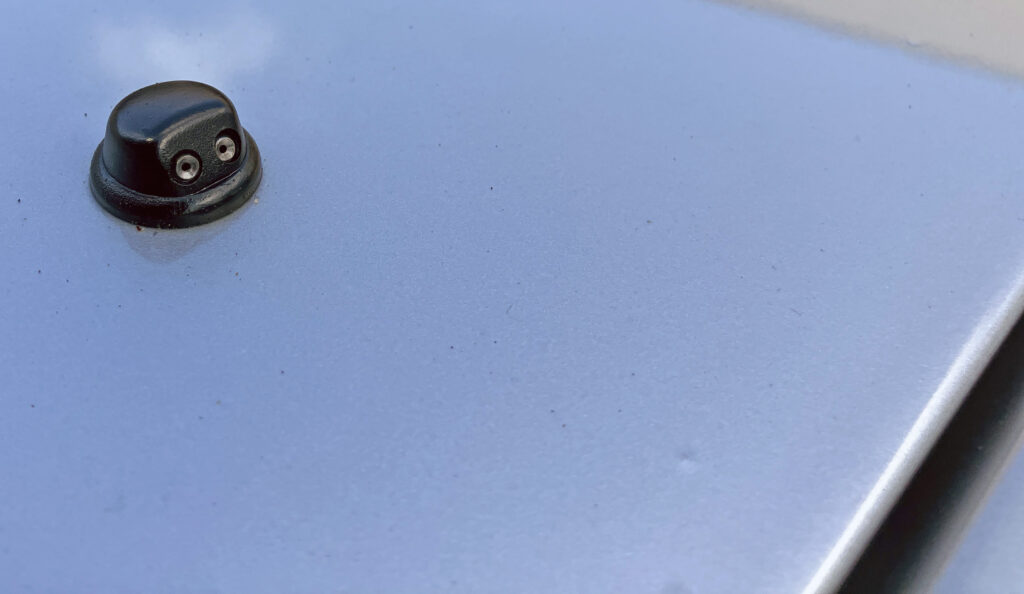
There are small pleasures in the arrangement. The windshield washer uses two nozzles on the driver’s side and one for the passenger. The hood’s contour flows back toward the exposed cowl, though the overall effect would look cleaner with a cover. The A-pillar extension is more awkward: it appears attached rather than integrated, and leaves a small recess. It also serves as a rain gutter, and may reduce noise, vibration and harshness. Its function is easier to appreciate than its appearance.
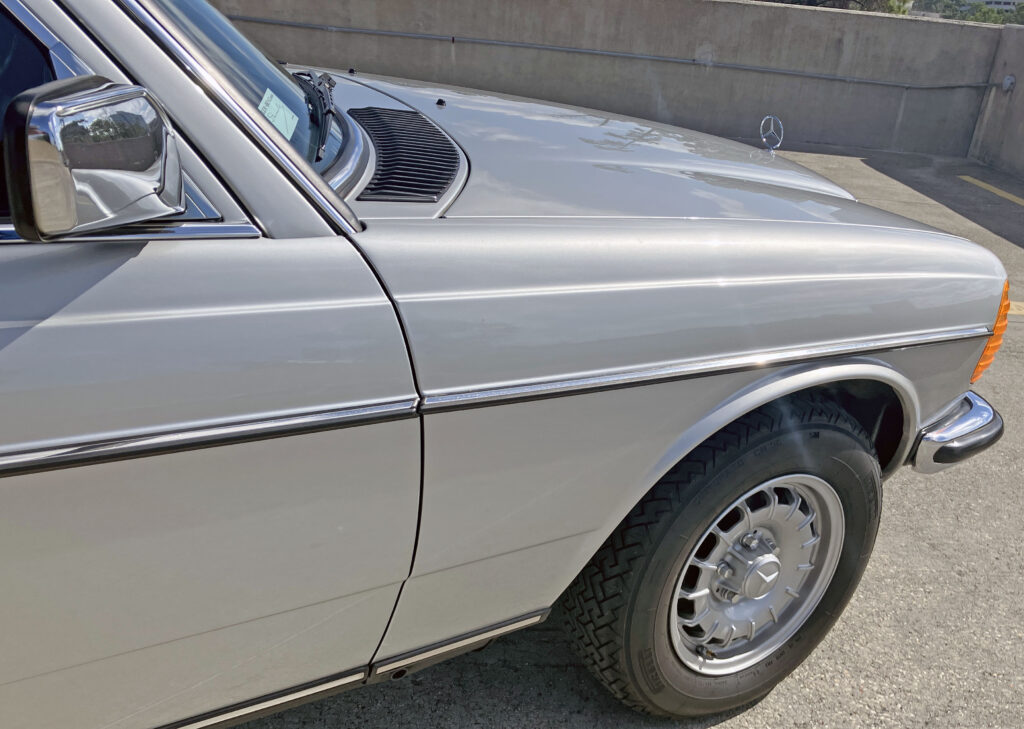
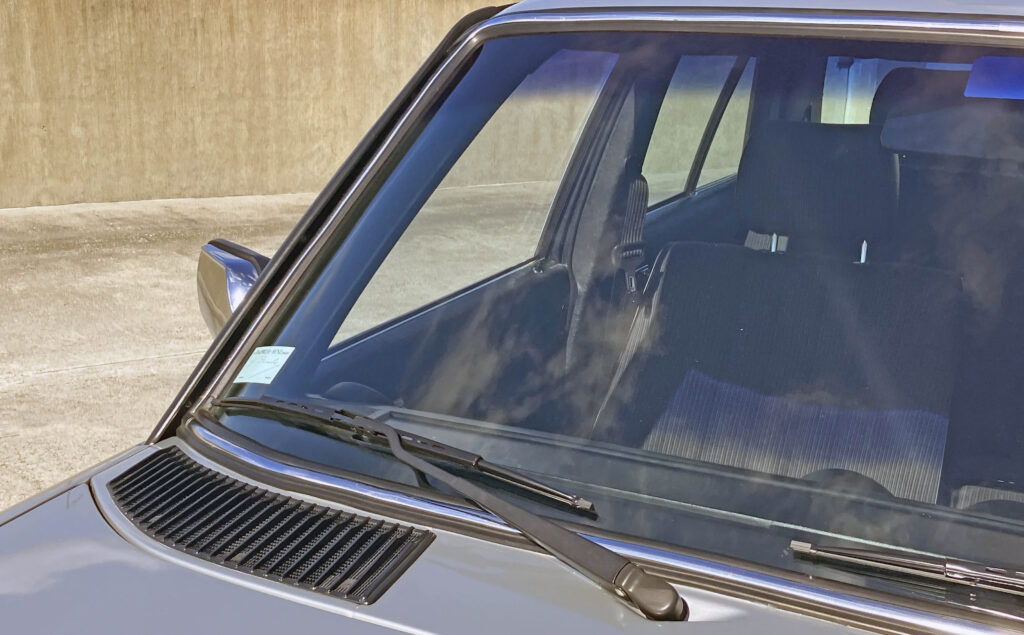
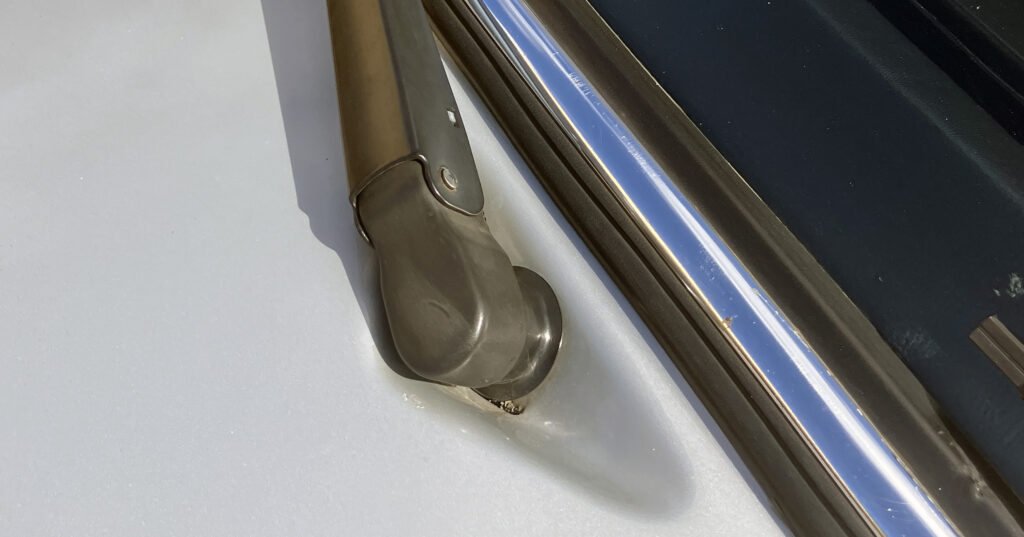
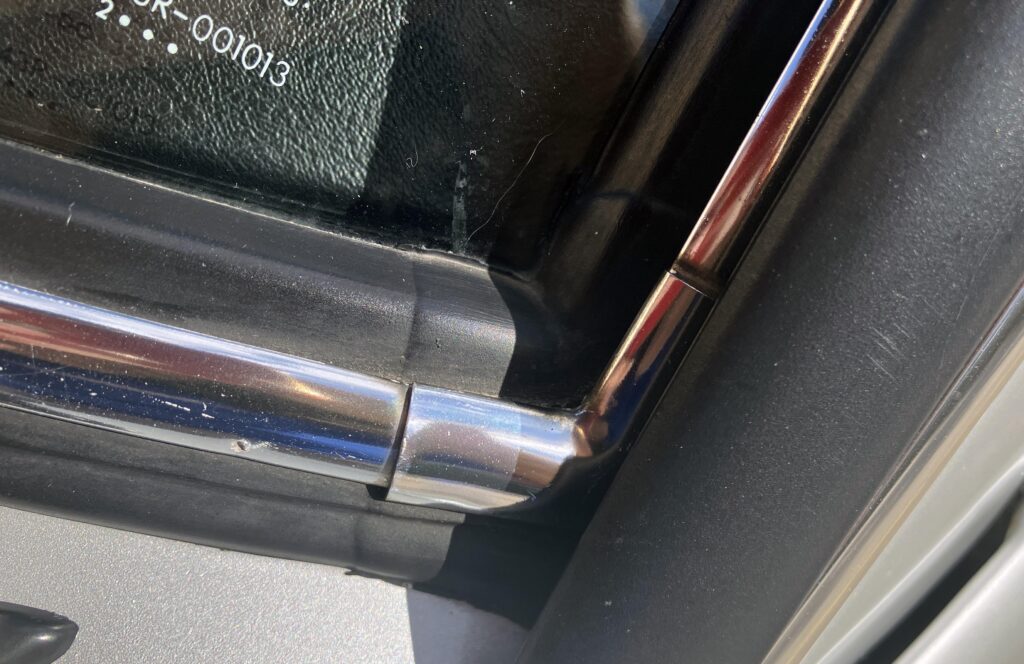
Beyond that A-pillar detail, the cabin glazing and door proportions are restrained. The pillar itself is slender, with a large chrome side mirror mounted at the front of the door. The door has only modest inward taper, which suits a sedan designed for easy entry and everyday use. The W123 was a practical luxury car, not a personal coupe built around dramatically curved glass.
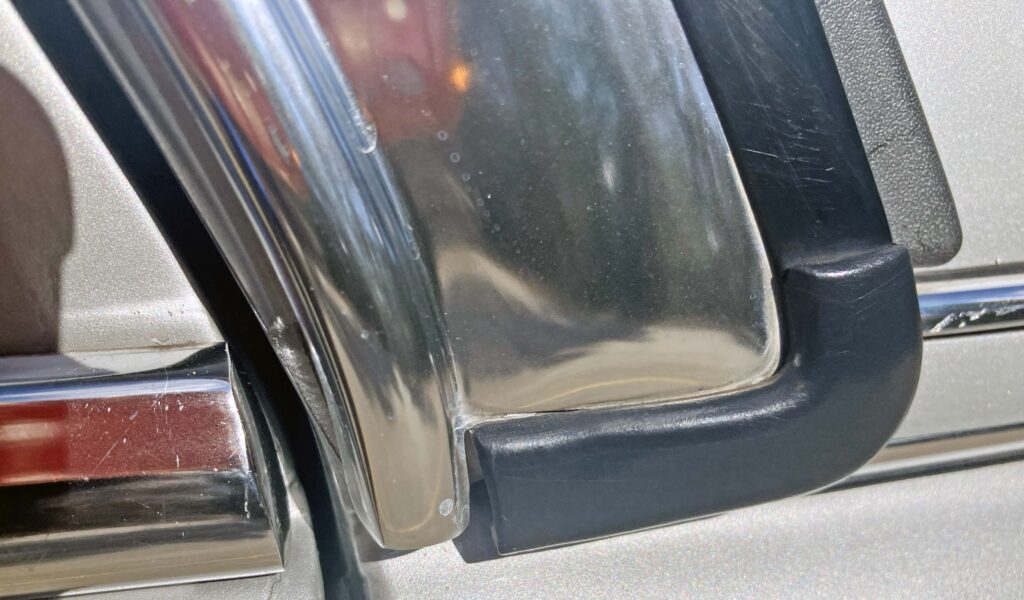
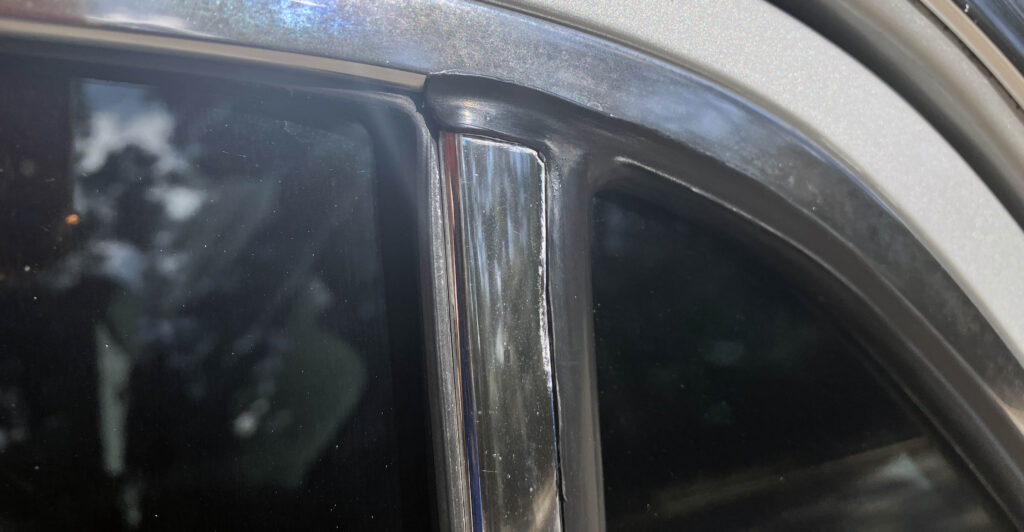
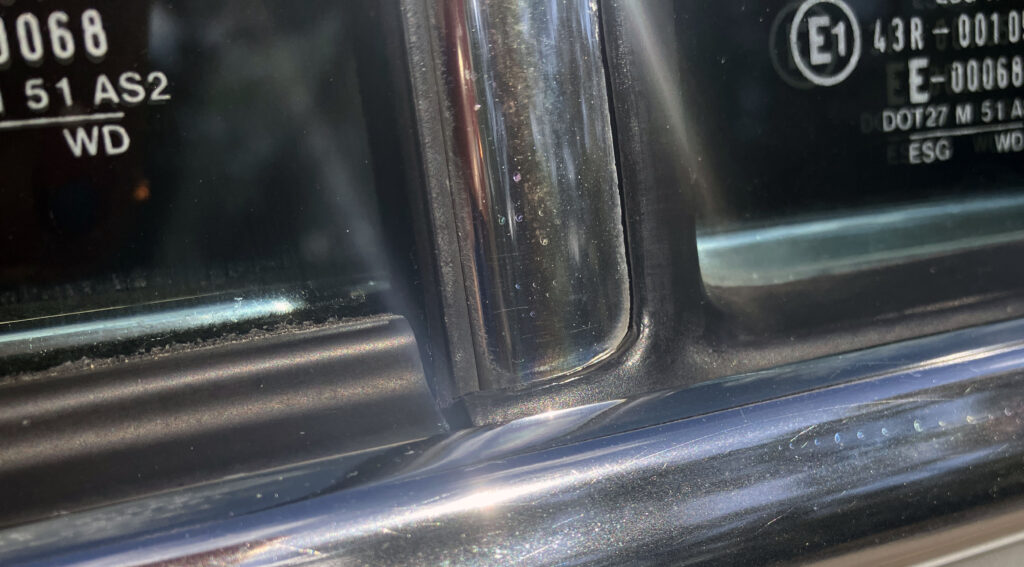
Look closely at the B-pillar and the handmade character becomes clearer: multiple rubber seals, angled joints and panel gaps all sit within a conventional-looking frame. The door handles have a reassuring weight, and their movement produces a solid, satisfying sound. The rear doors are long enough to signal a proper executive sedan, even if the W123 wasn’t the model for buyers seeking limousine length; Mercedes offered the W116 SEL for that role.
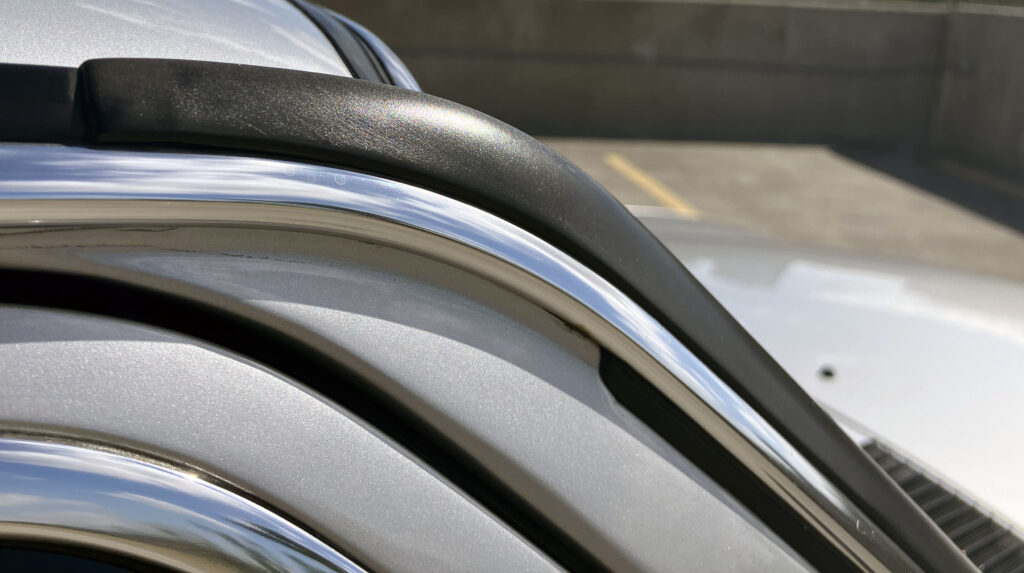
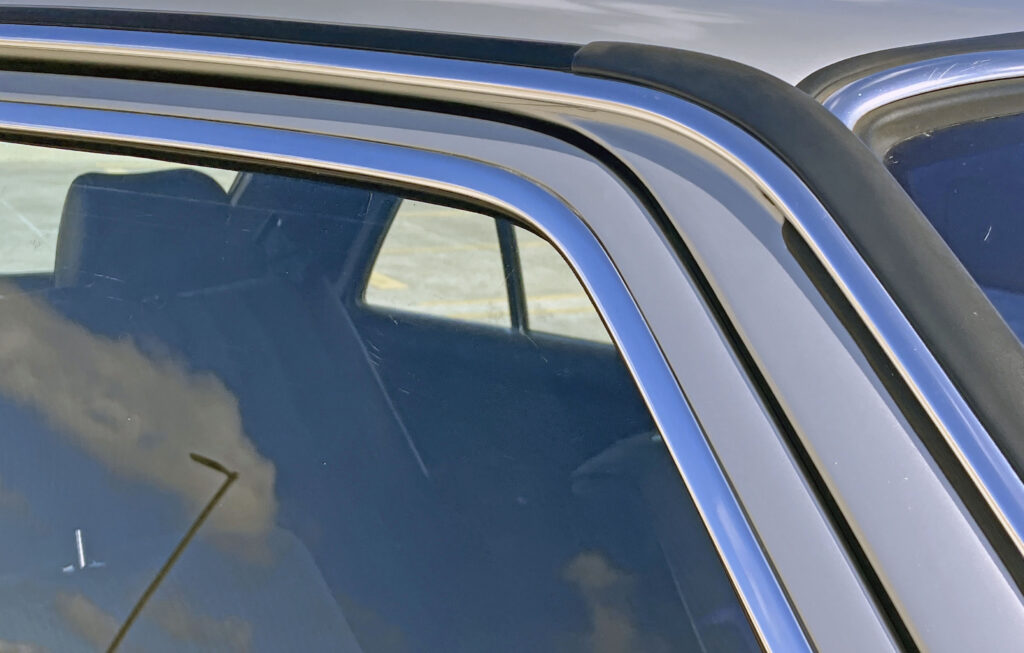
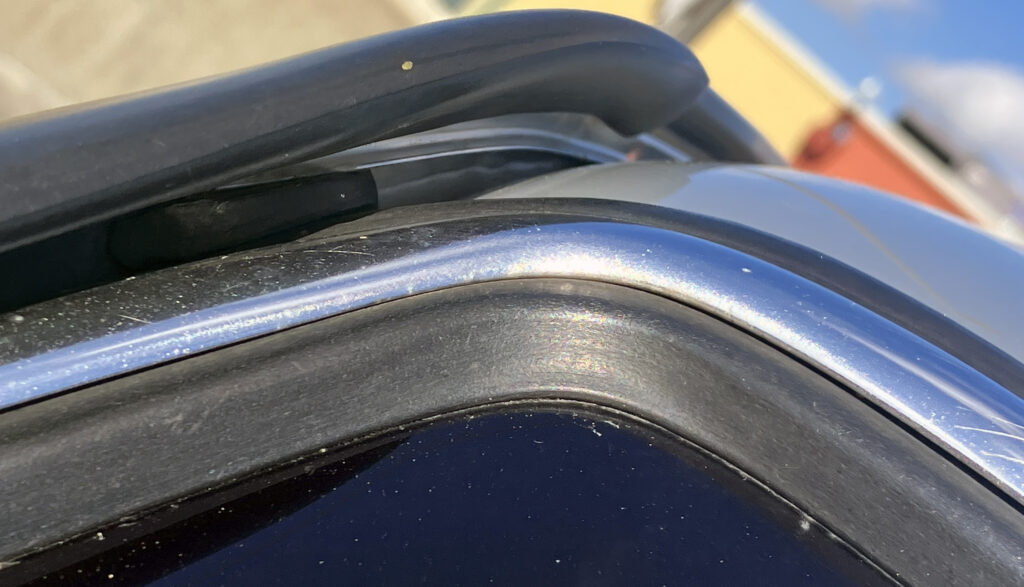
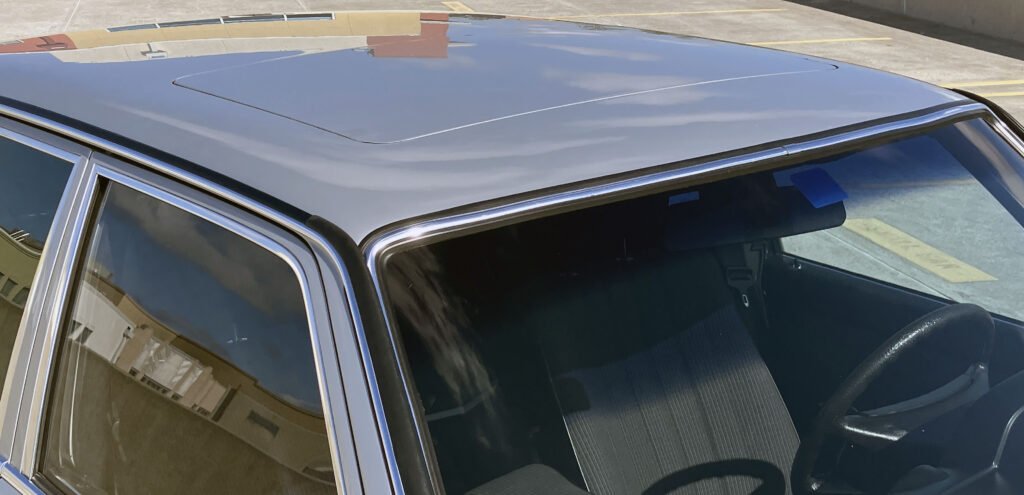
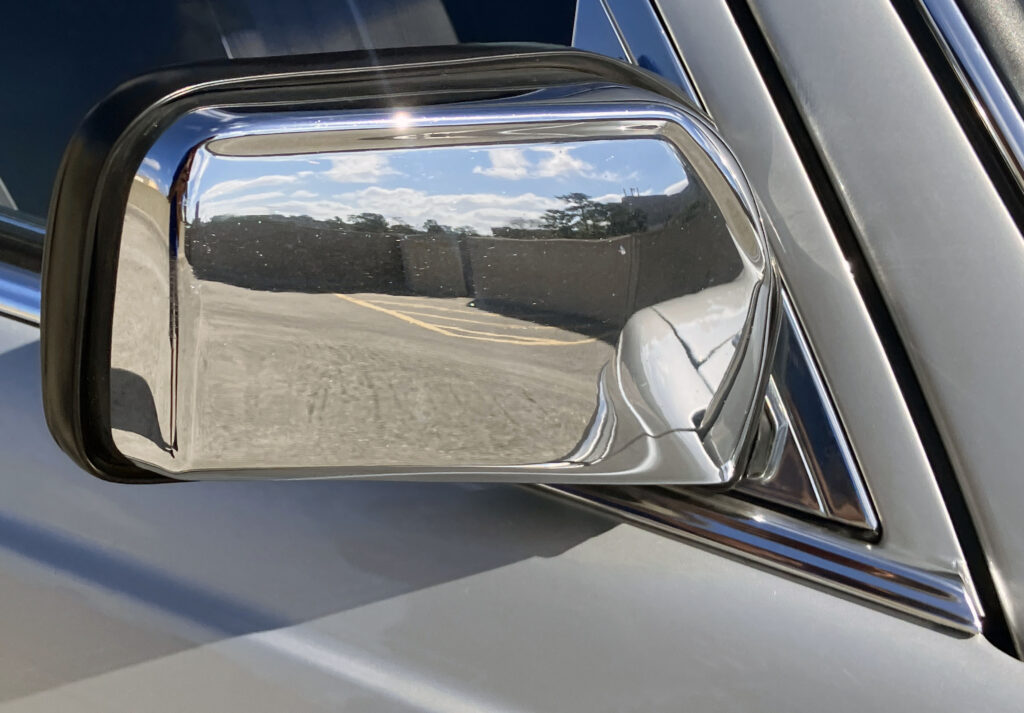
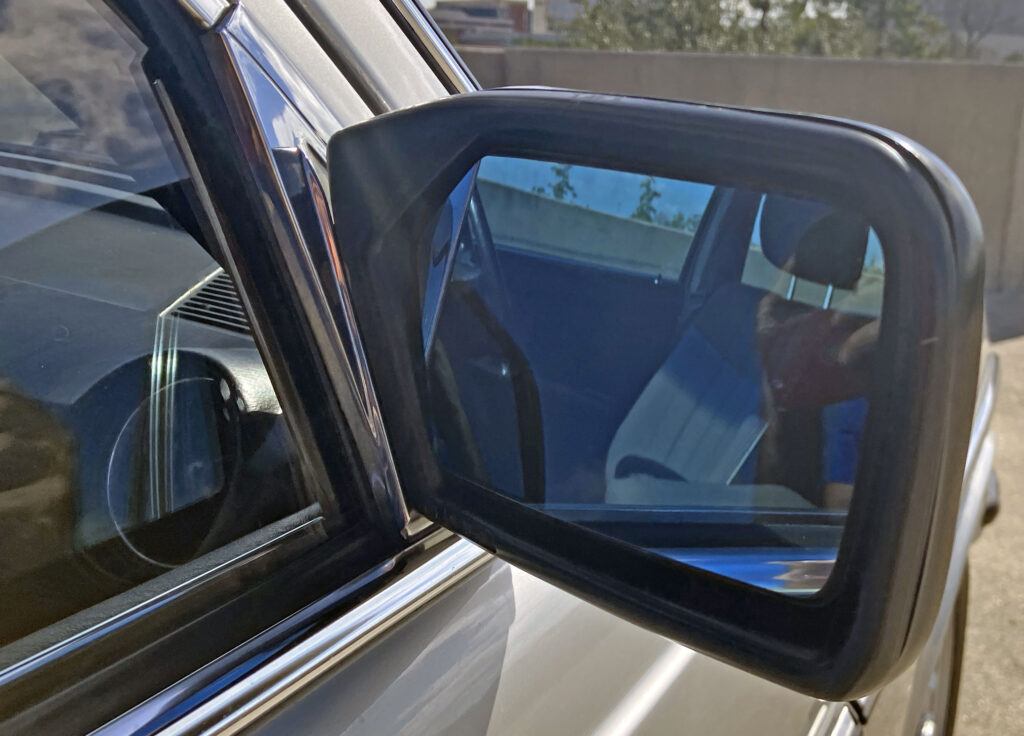
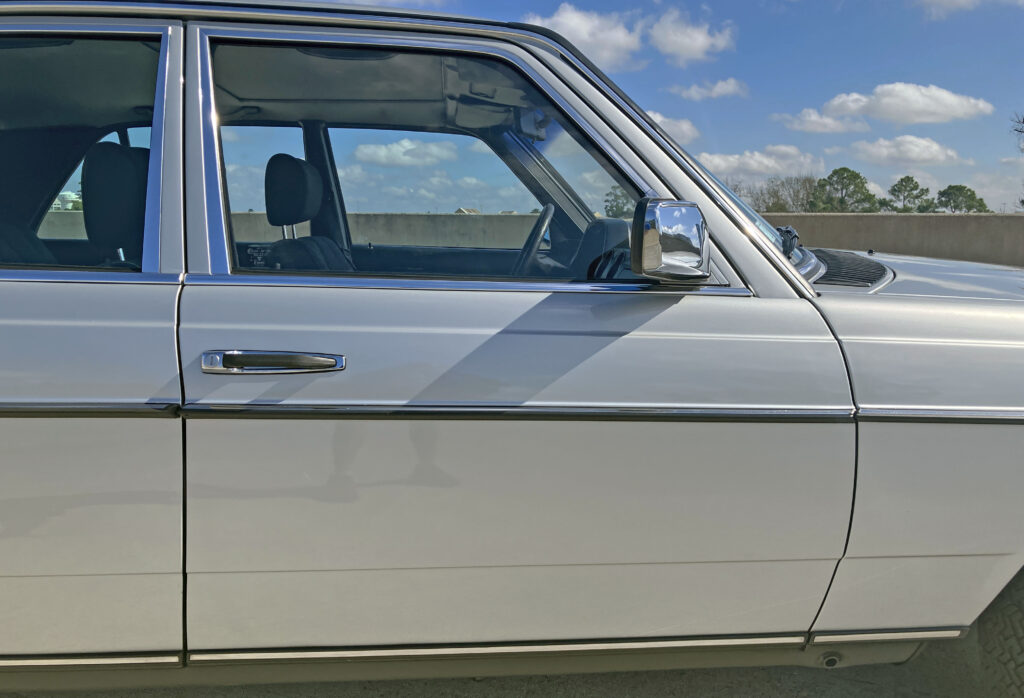
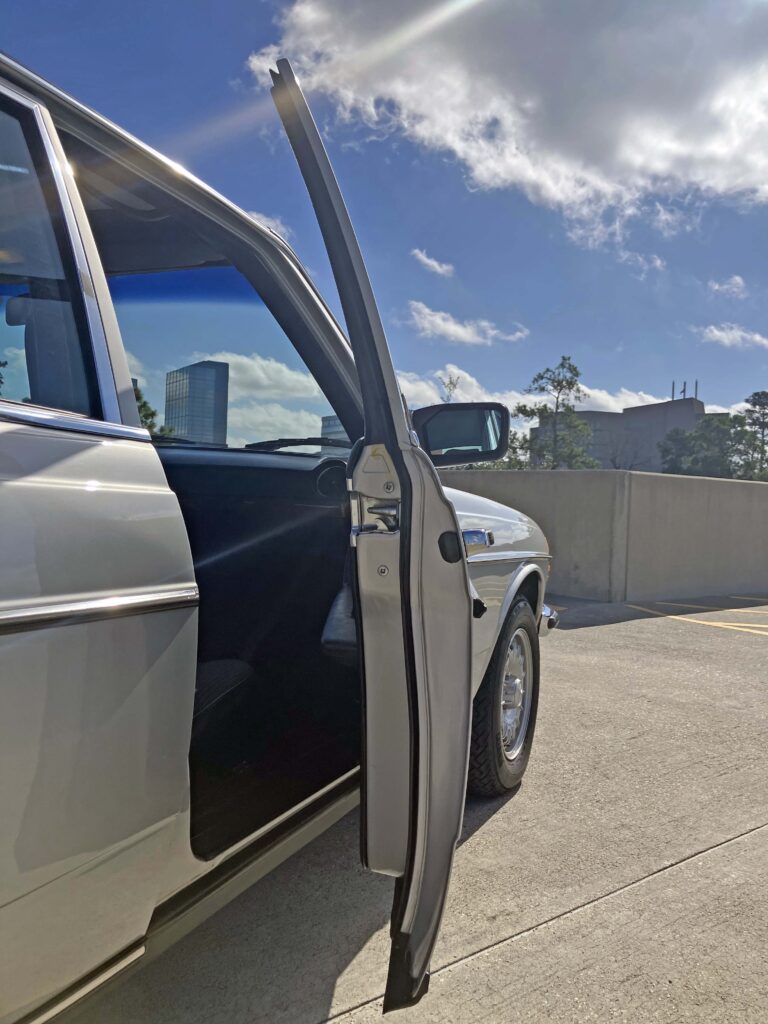
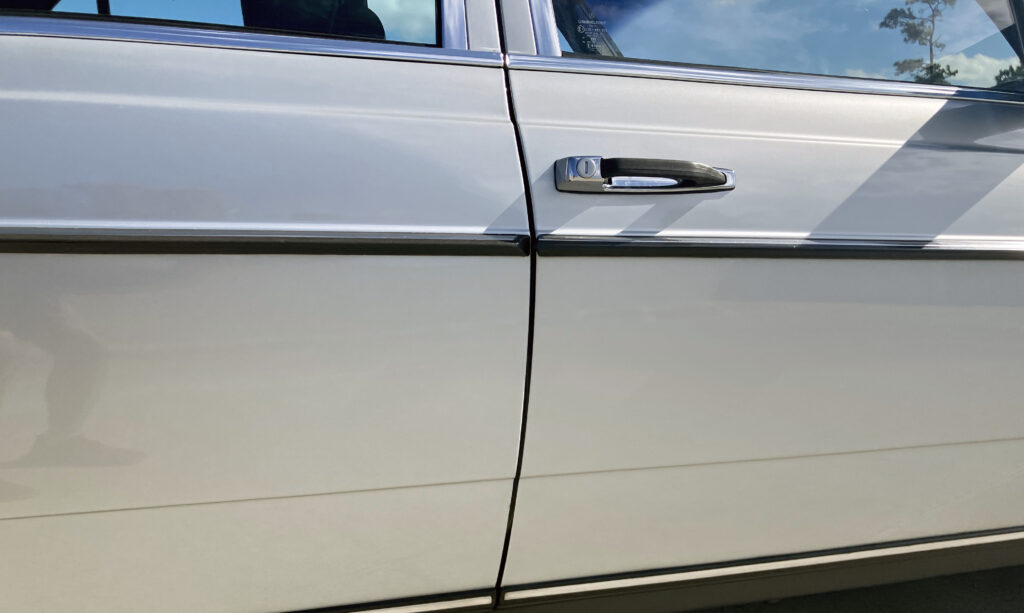
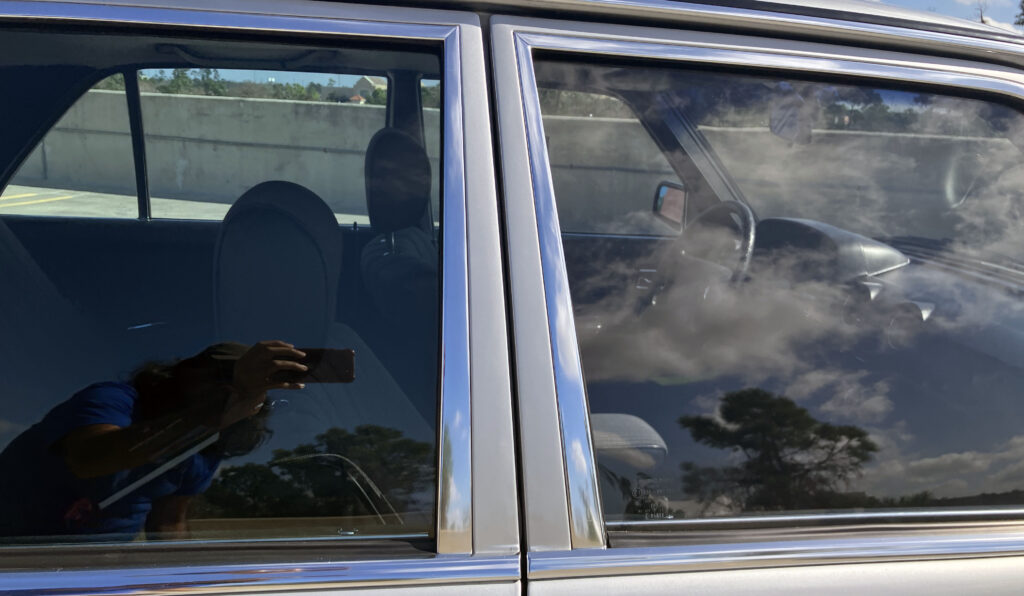
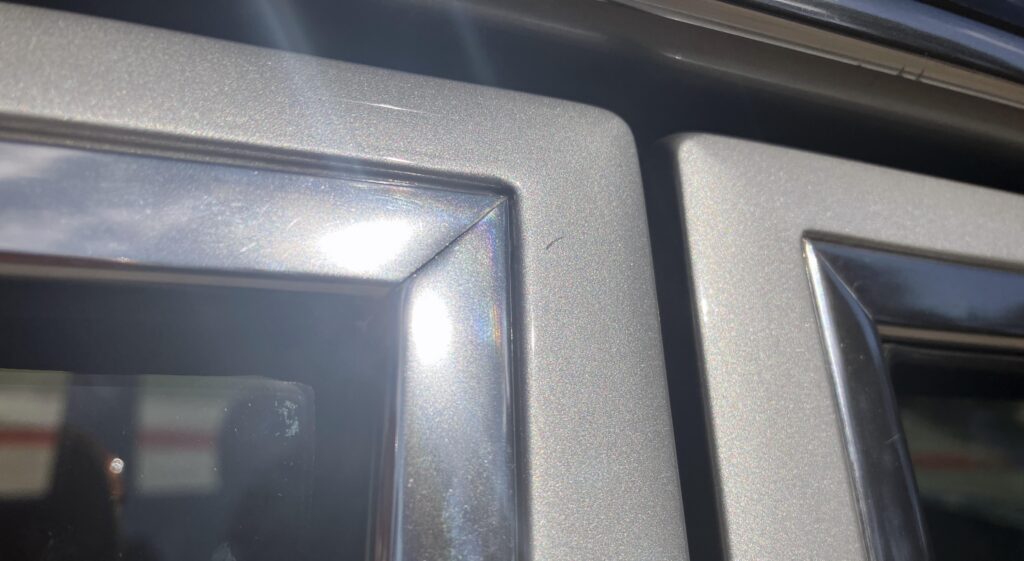
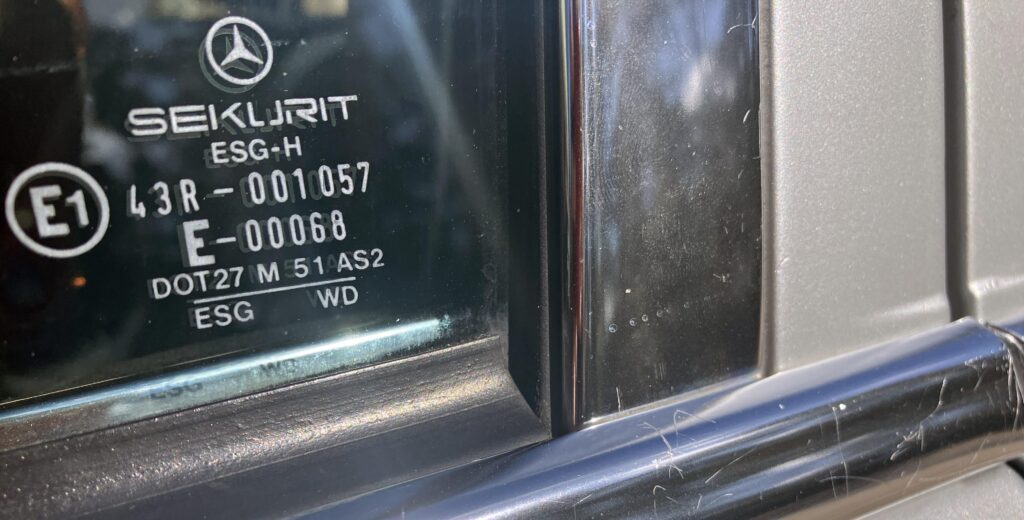
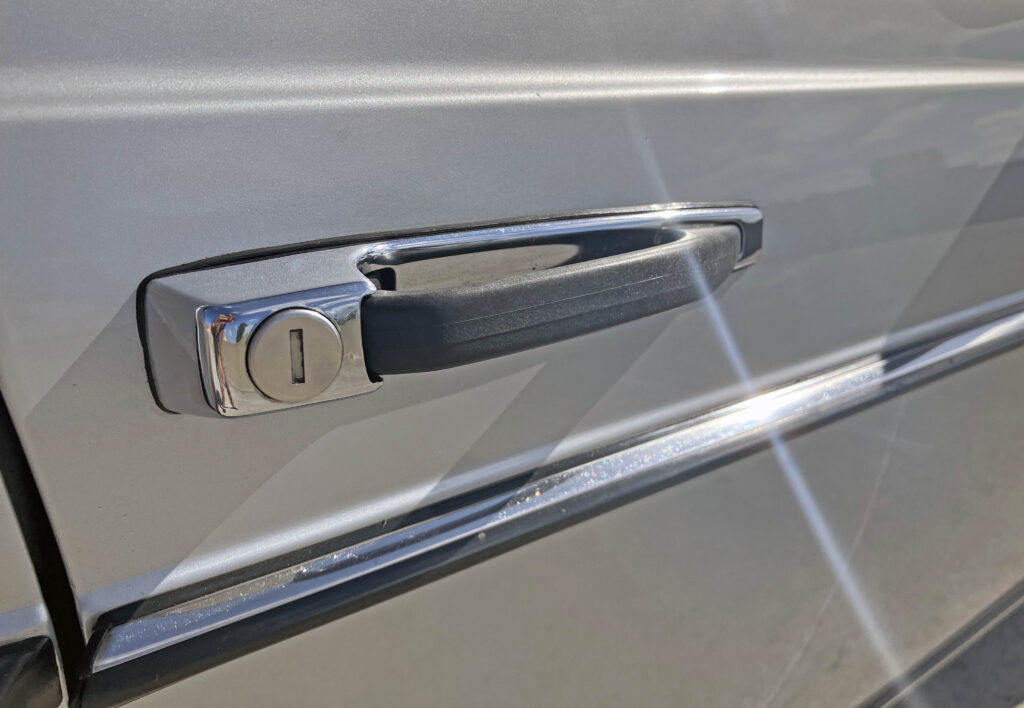
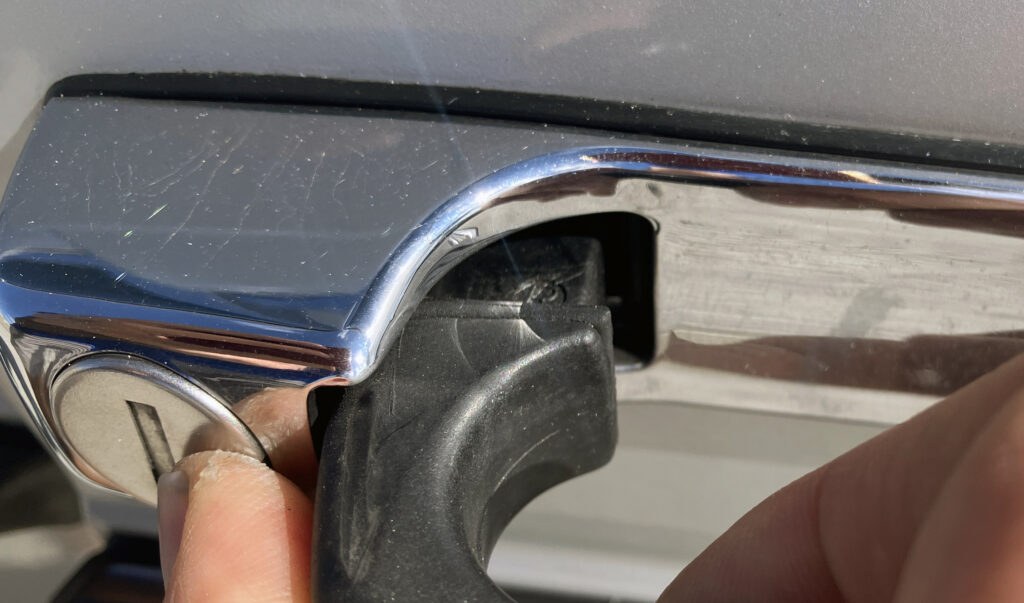
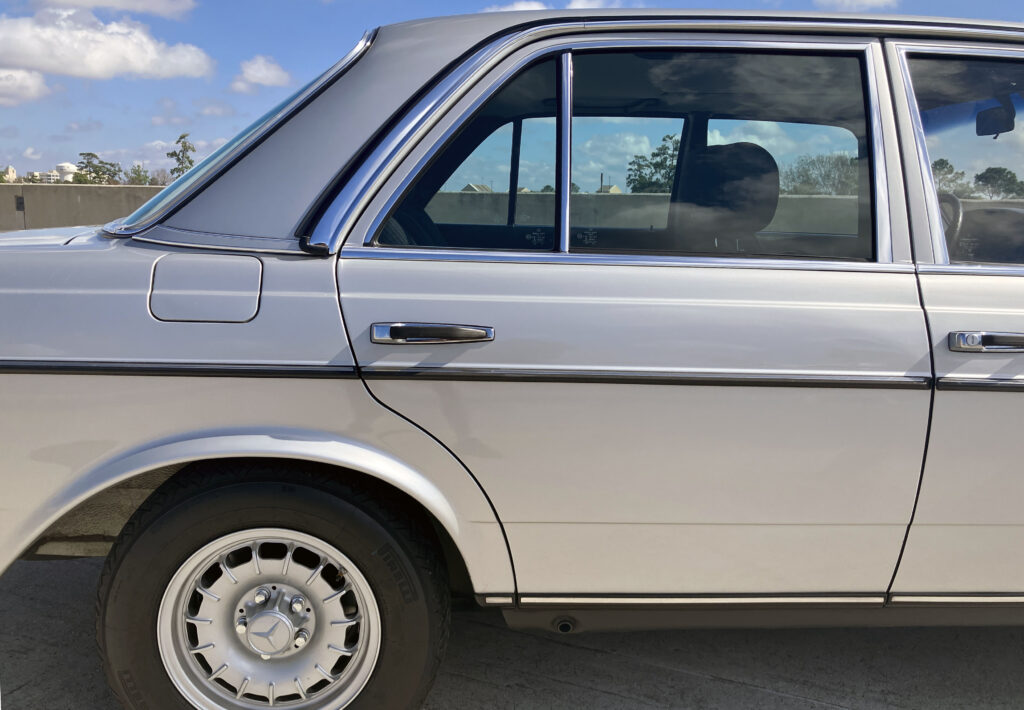
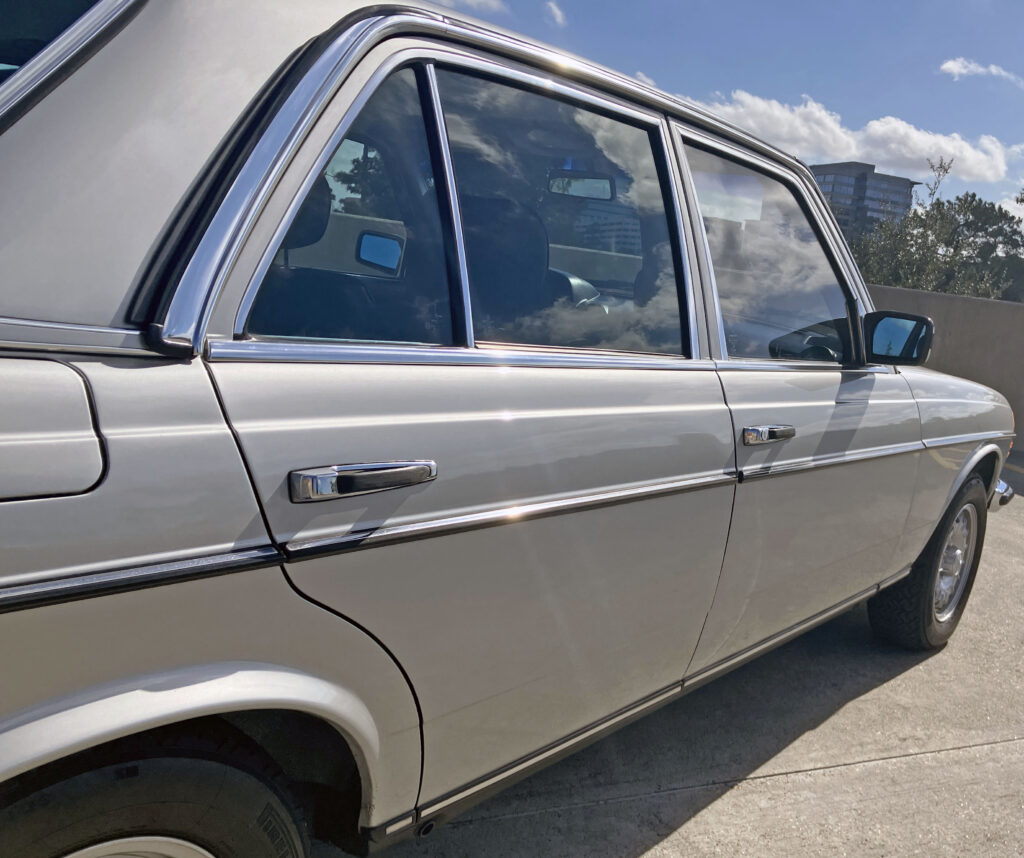
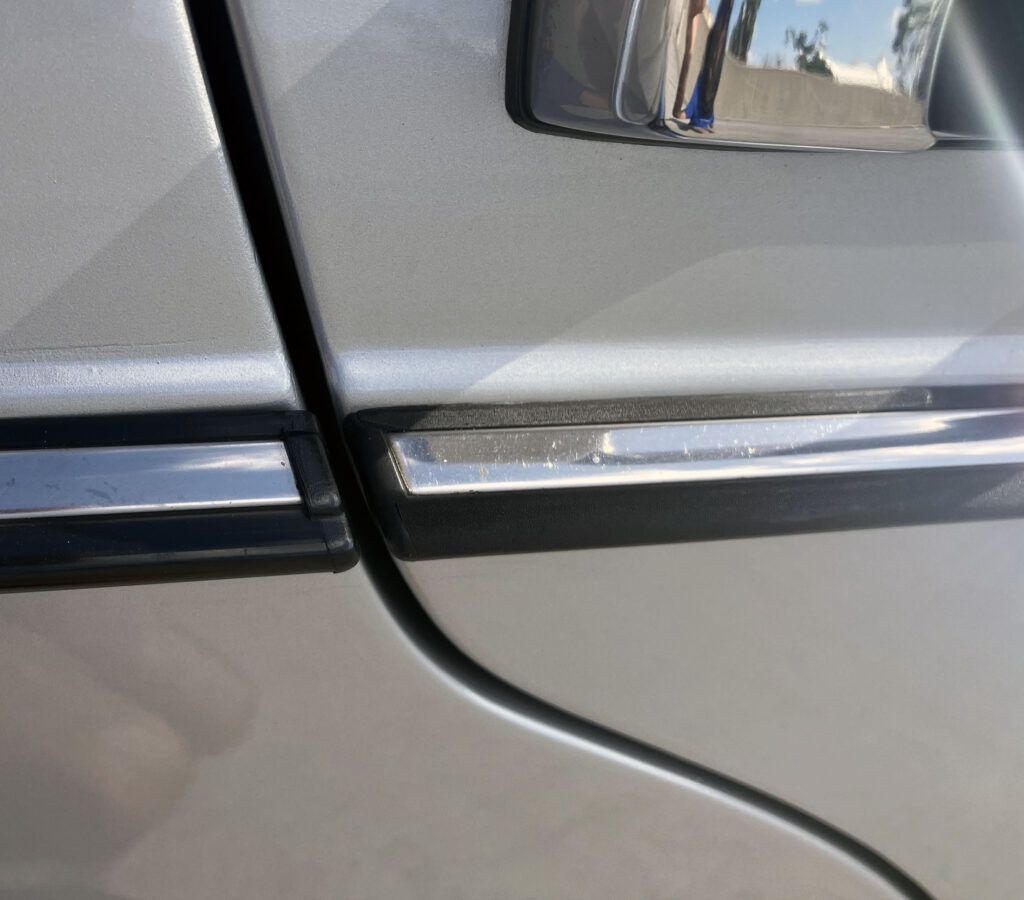
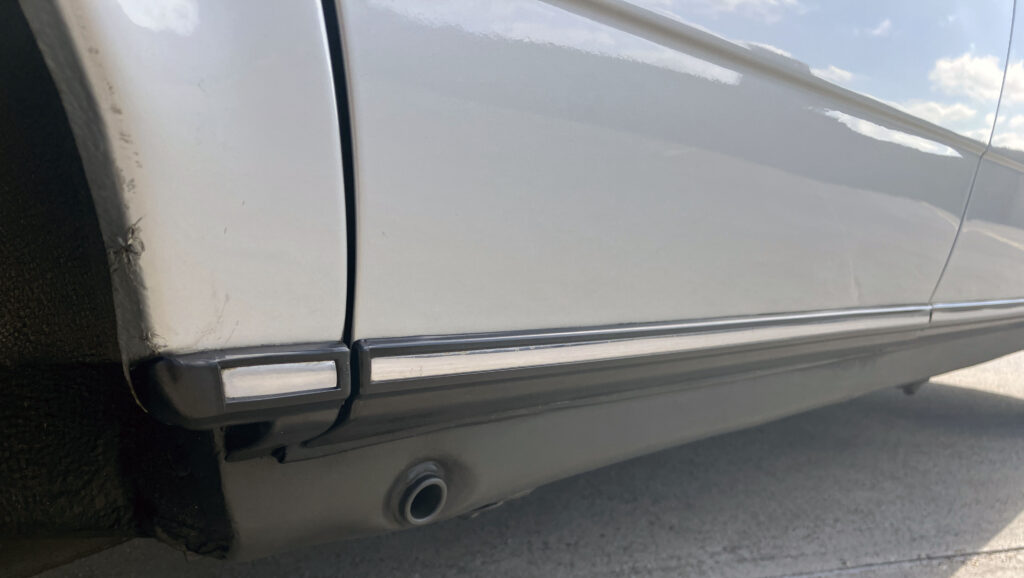
The greenhouse, with its near-even share of glass and metal, gives the W123 a light, upright look. The shape would gain even broader appeal when Bruno Sacco carried its basic proportions into the W126 flagship. The W123’s chrome-and-rubber strips also anticipate the horizontal side moldings associated with Sacco’s later Mercedes designs. They tie the body together without turning it into a slab.
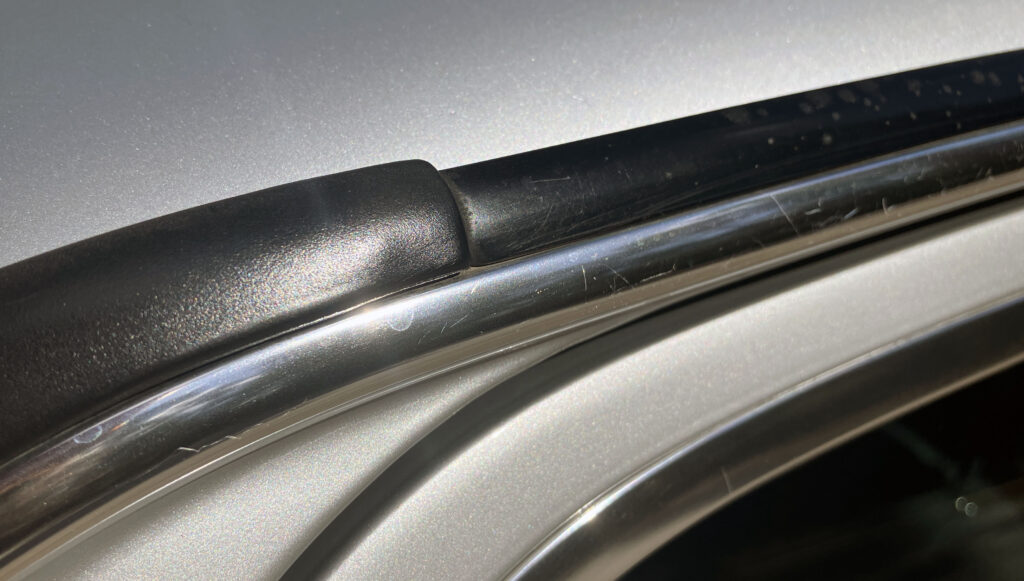
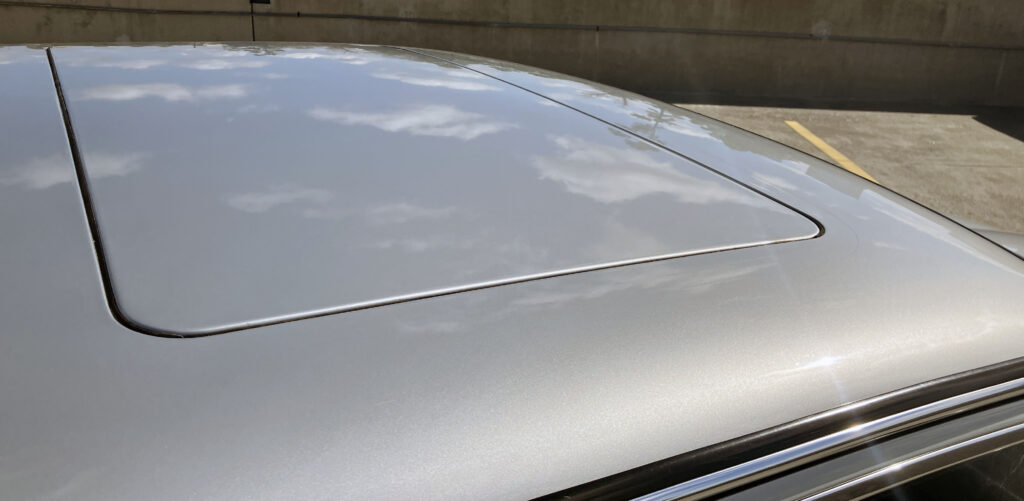
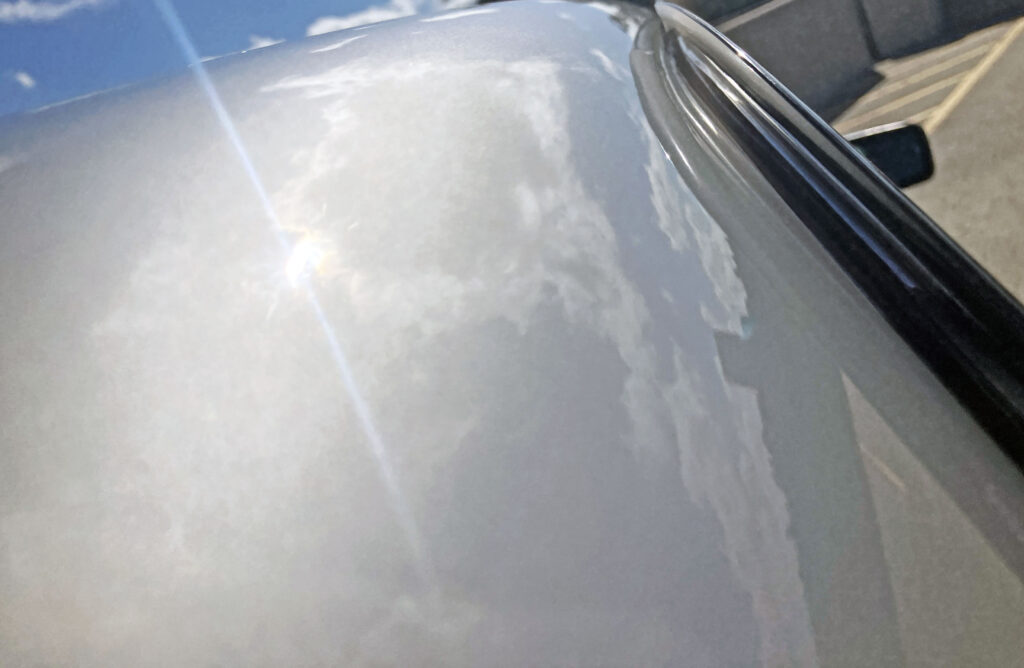
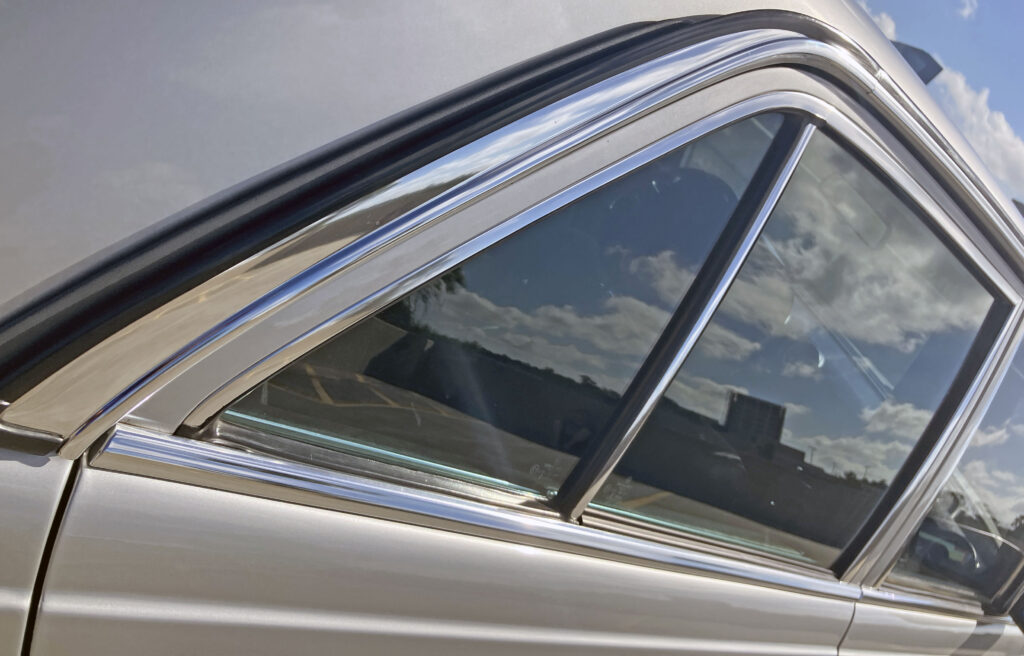
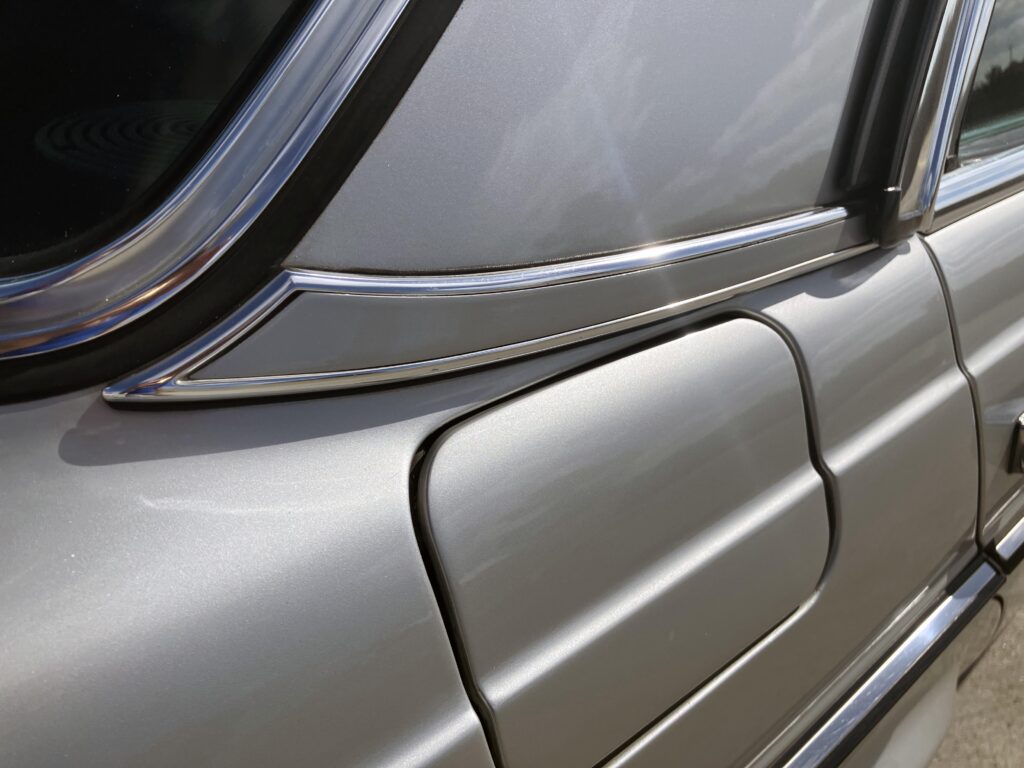
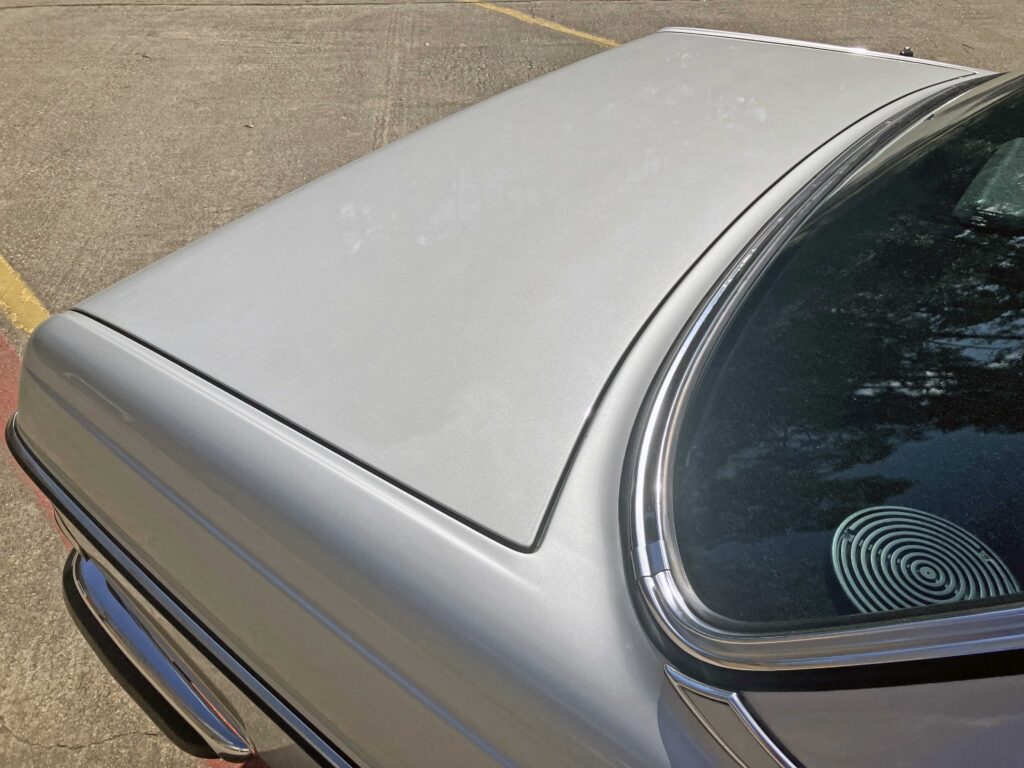
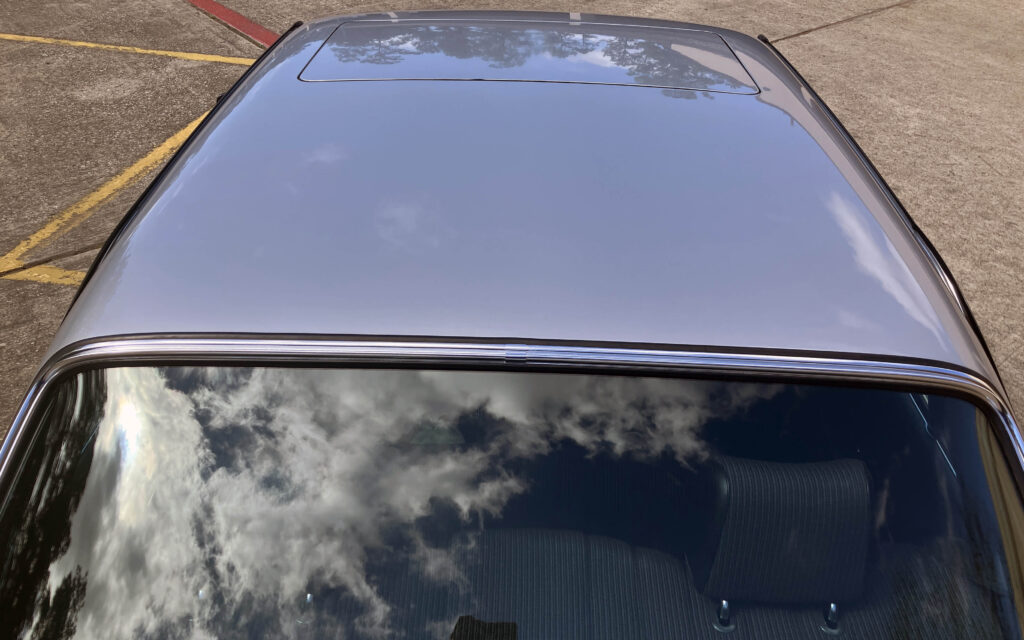
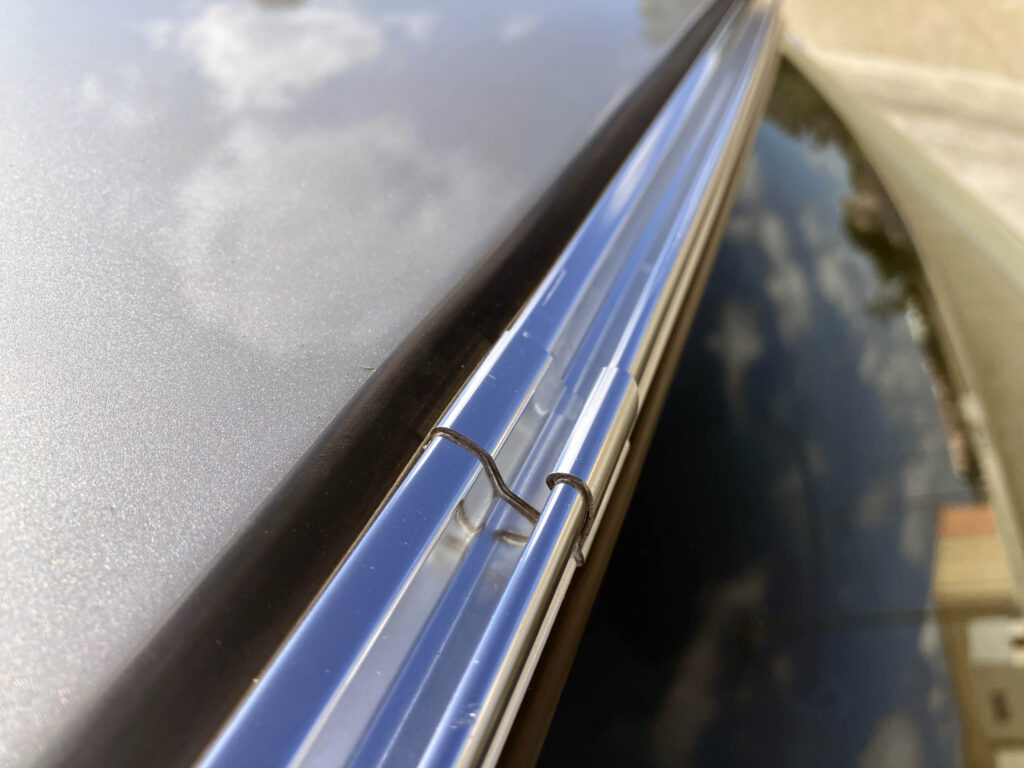
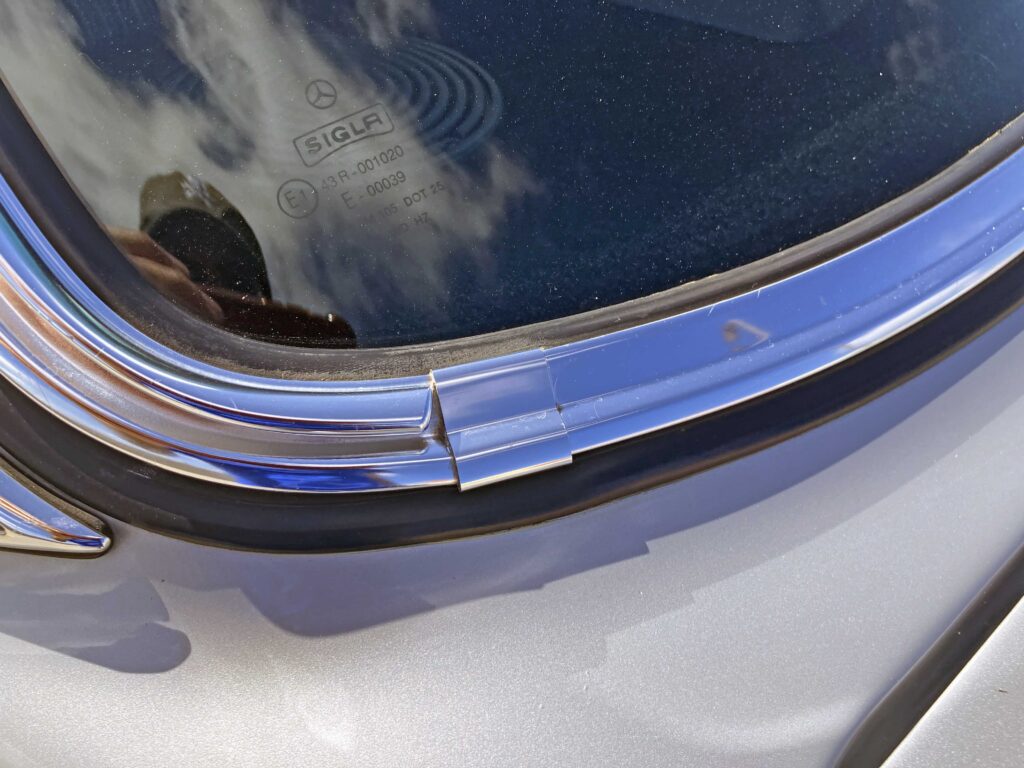
Chrome and rubber do double duty around the windows. The rain gutter follows the roof in a smooth line; the quarter-window seals are thicker and more emphatic. A metal sunroof fits the period and avoids the large glass panel that can make a cabin feel hotter in bright weather. At the rear, the roof curves into a relatively light C-pillar, softening the long side lines and leading the eye toward the trunk.
Horizontal lines carry through to the rear
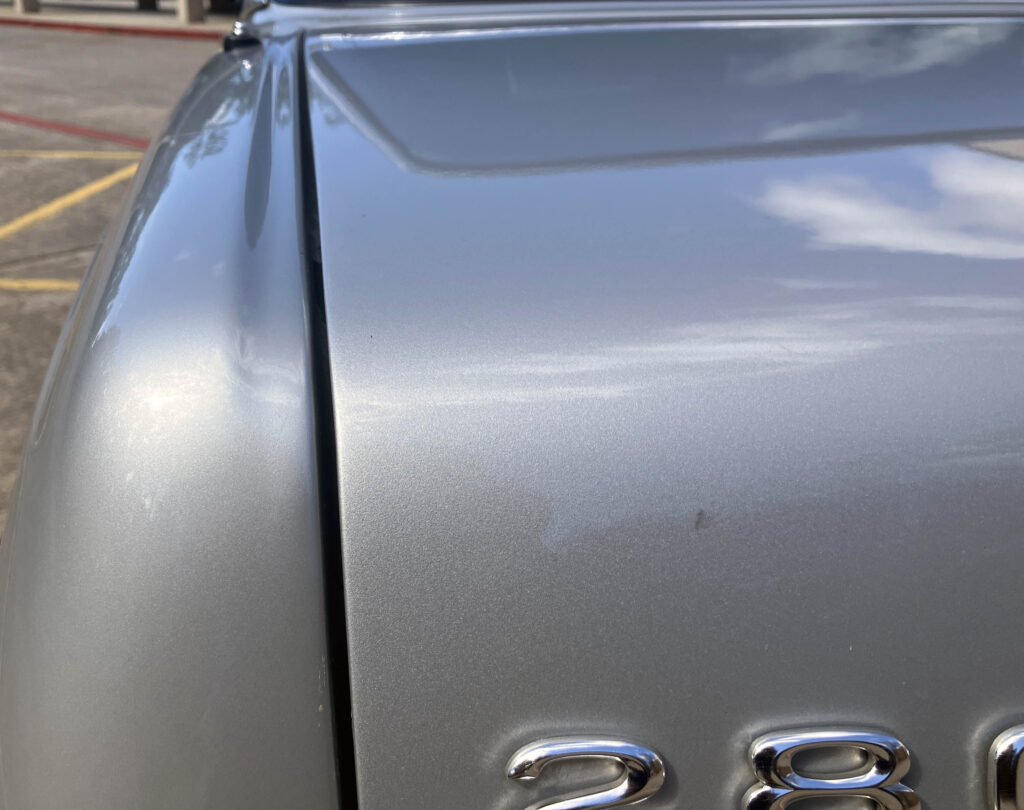
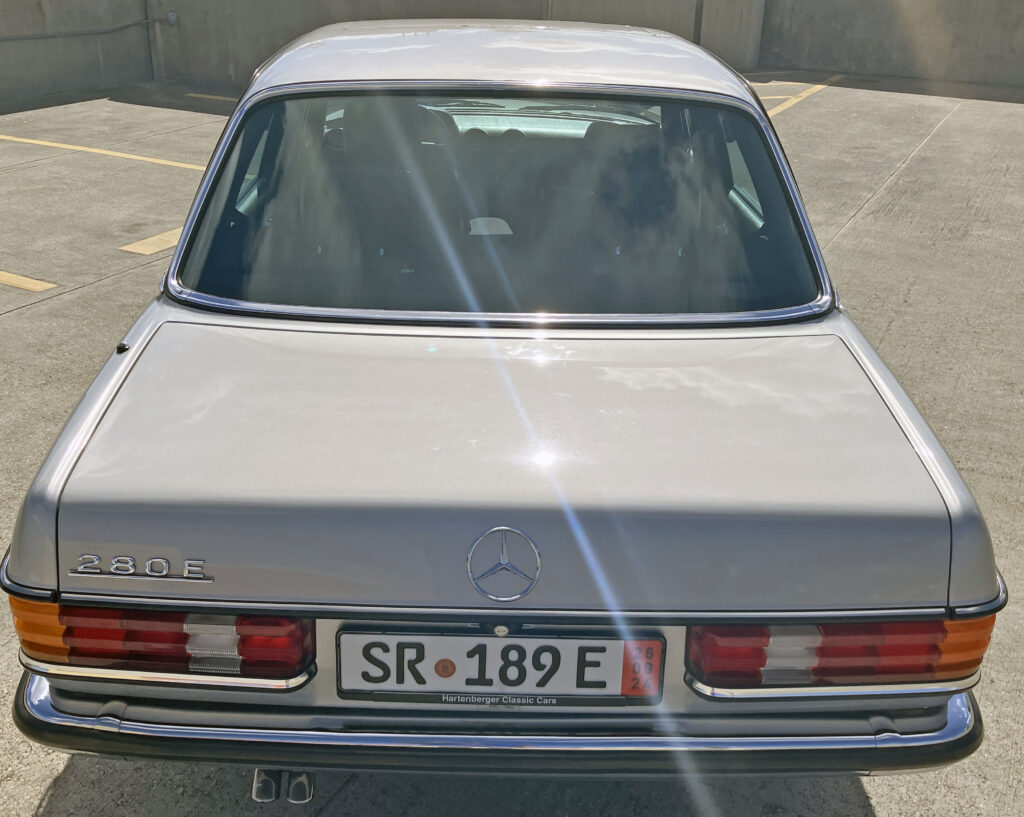
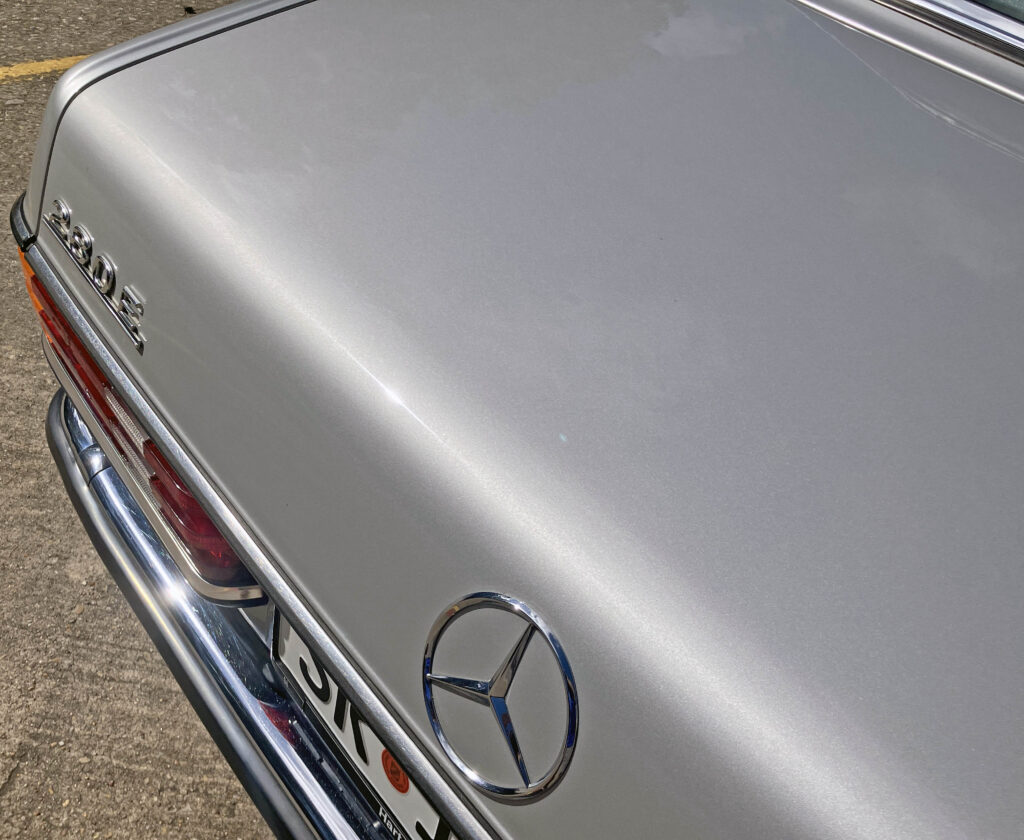
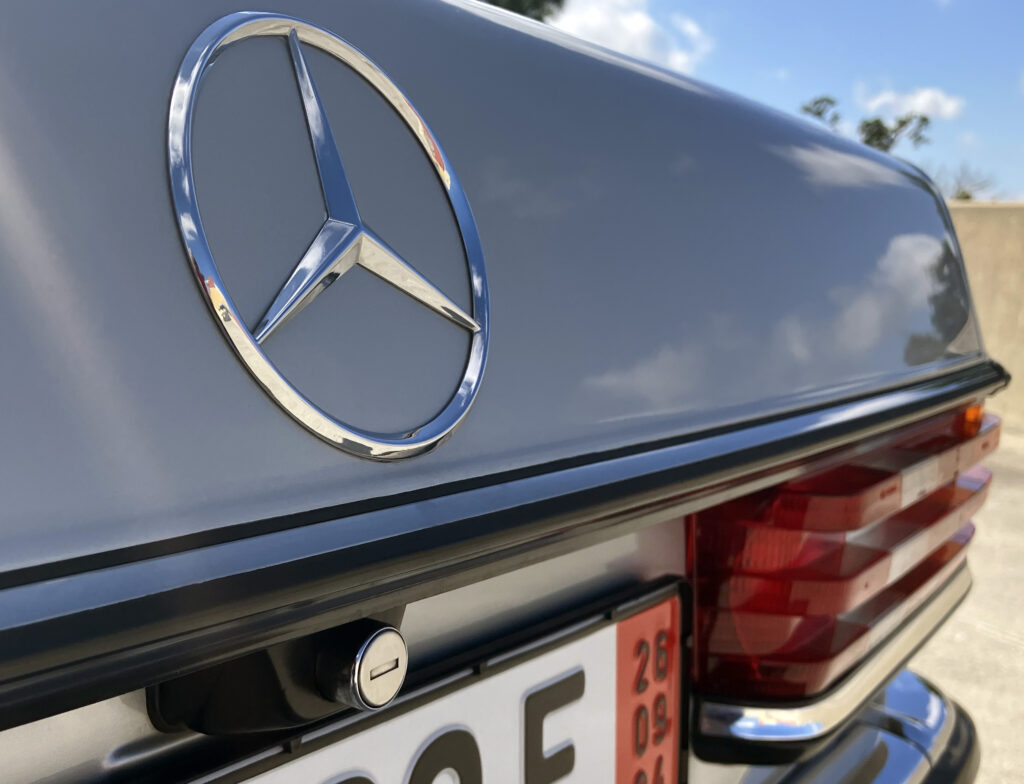
The trunk benefits from the car’s repeated horizontal elements: body moldings, tail lamps and bumper all emphasize width and hint at the W123’s useful luggage space. The rear wheel arch curves back and inward, adding a little movement to the quarter panel. Its shape balances the glass above and interrupts the long side crease at just the right point. The main body lines may read as straight from a distance, but they taper and bend subtly as they meet the rear fender.
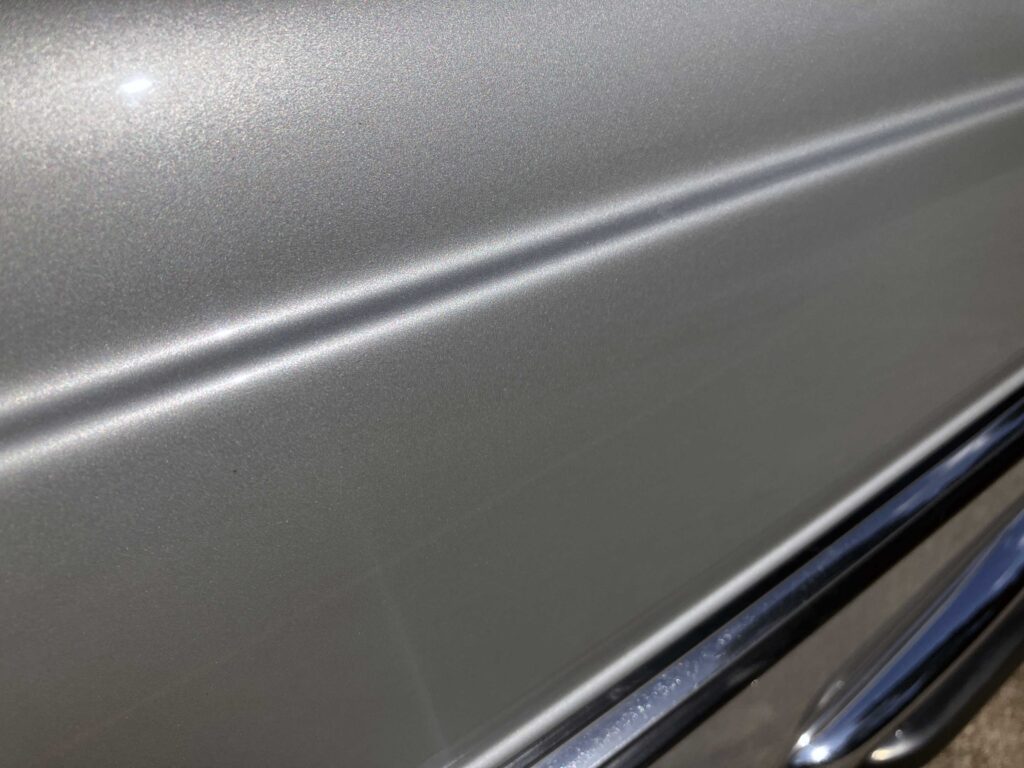
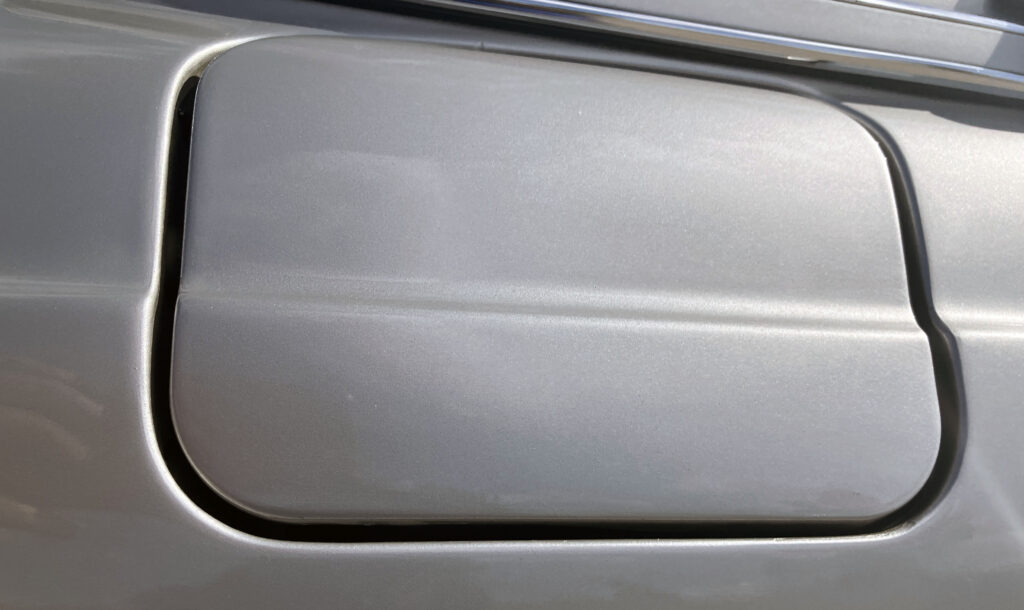
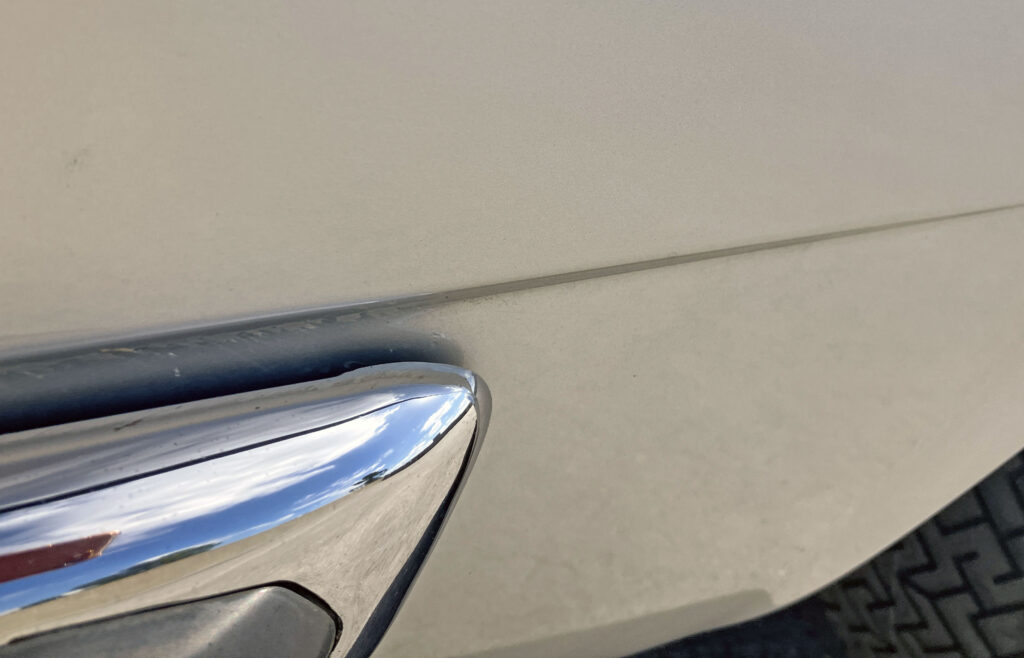
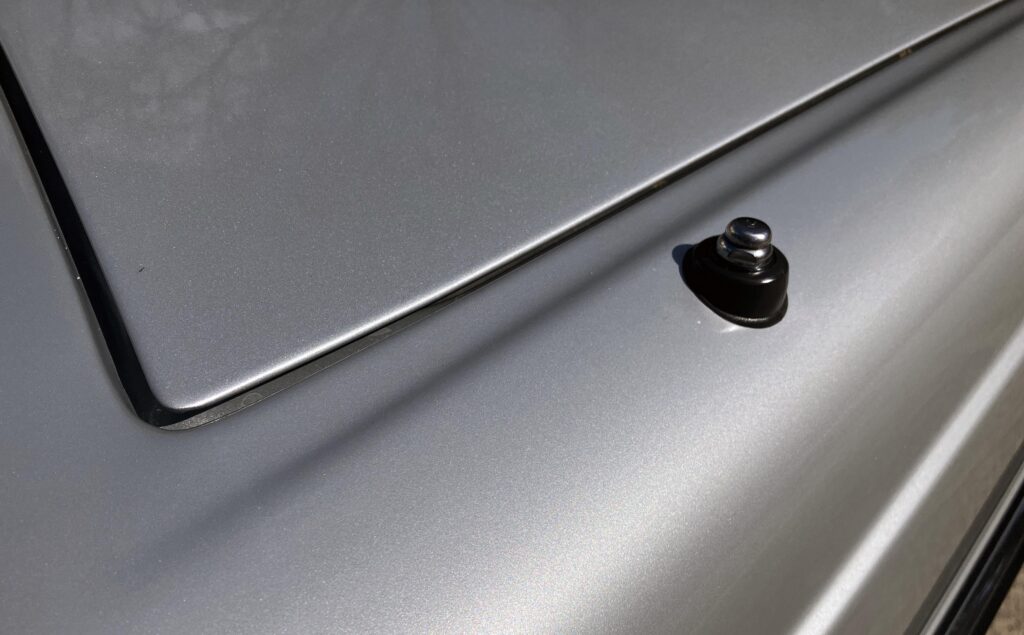
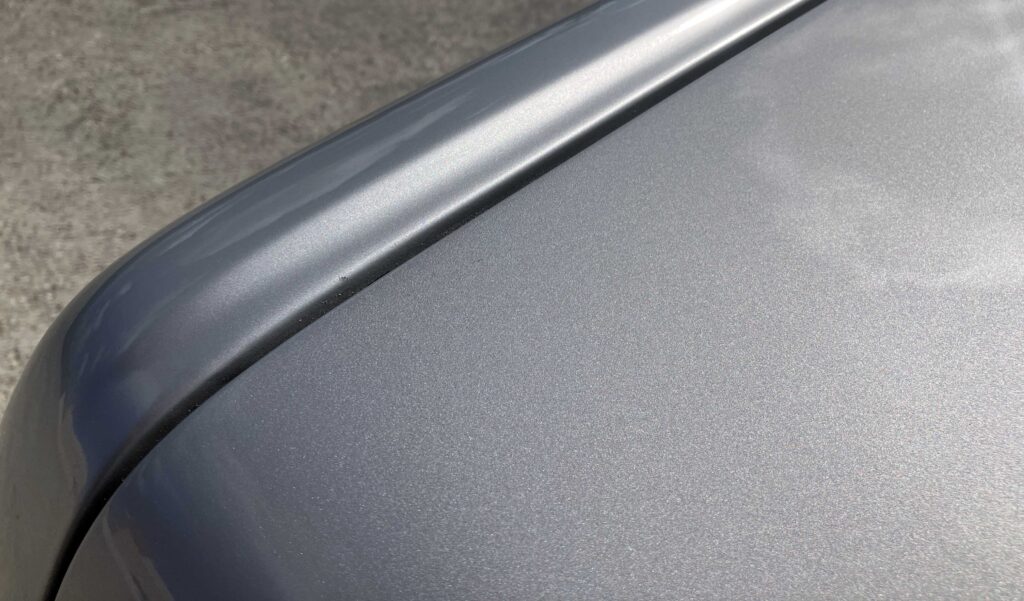
At the deck, the trunk cut line and the fender’s raised contour compete for space. Neither feature dominates, and the fender line can be easy to miss. The result is less sculptural than a car built around strong blade-like fenders, but it keeps the rear composed. Sunlight brings out the tension in the largely flat surfaces, while the gradual crease along the deck gives the otherwise restrained trunk a clear finish.

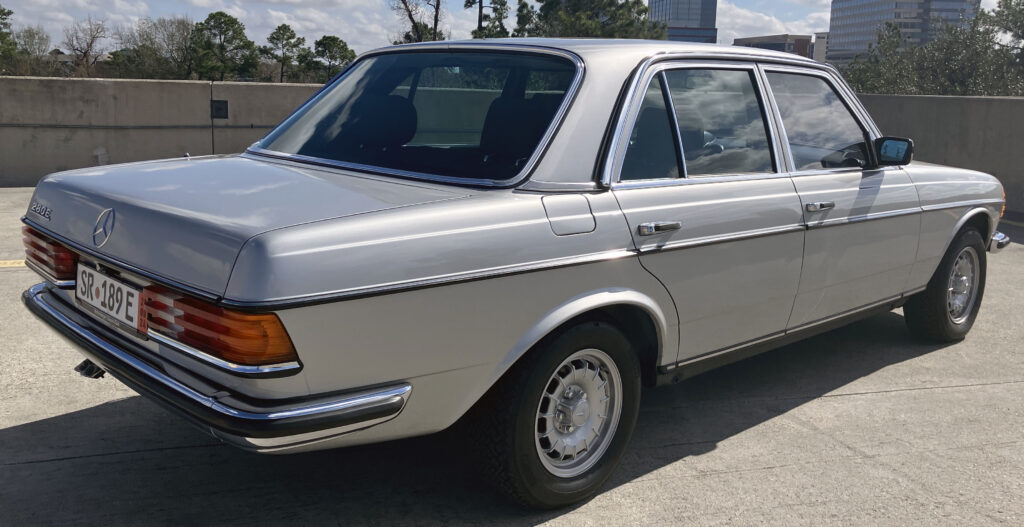
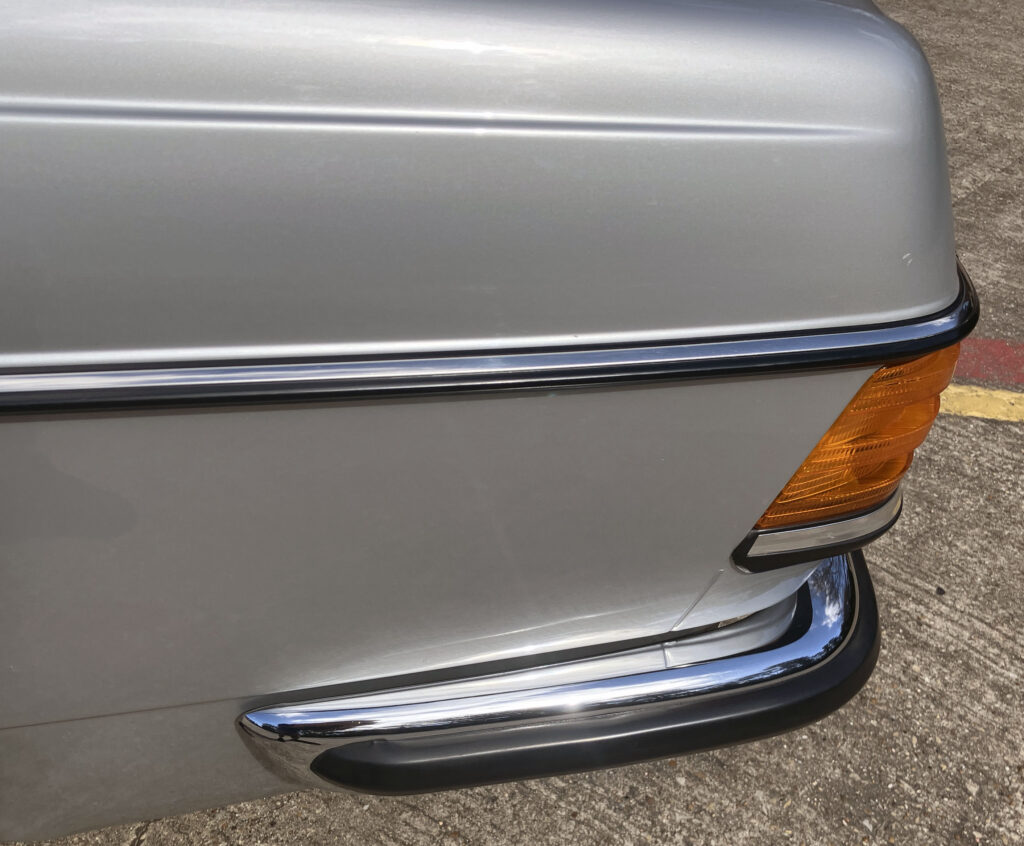
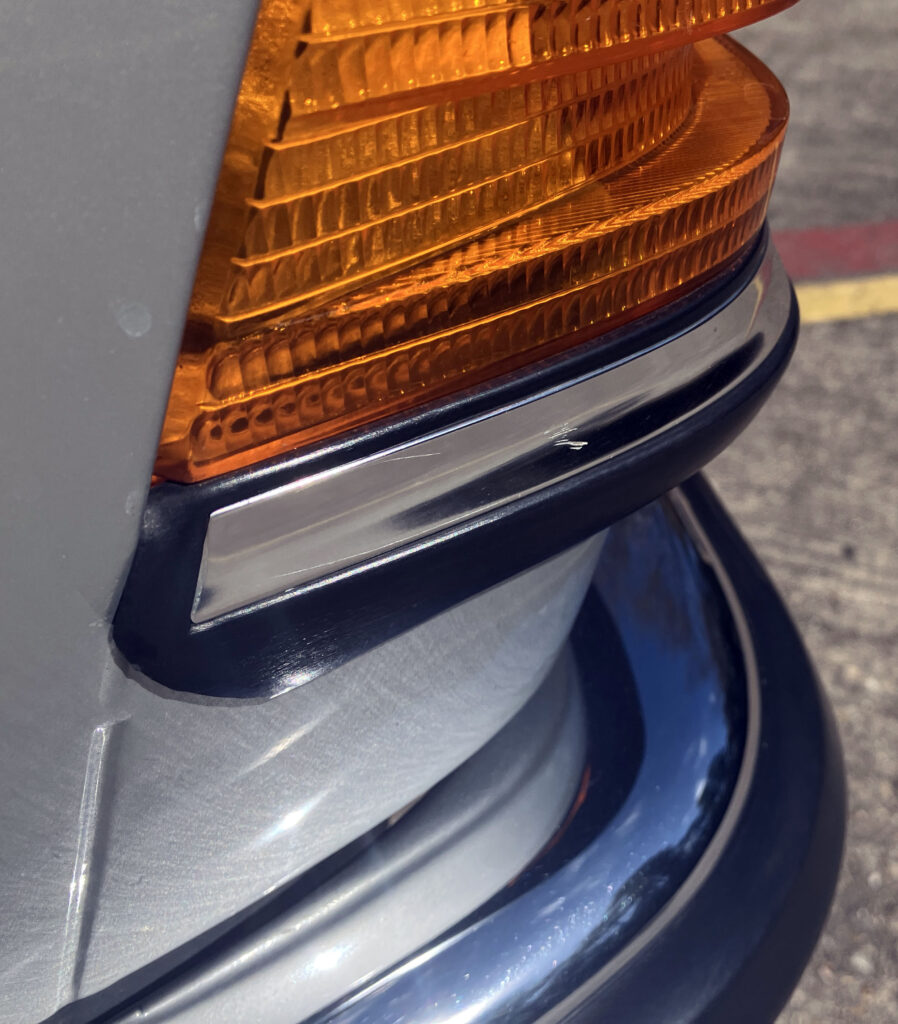
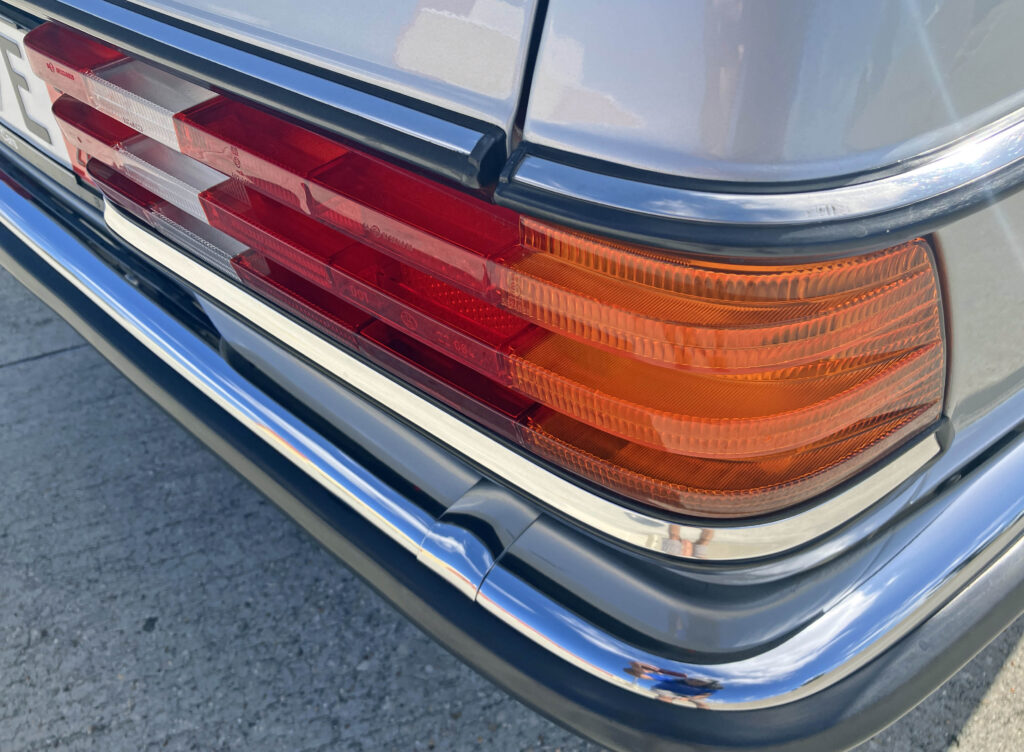
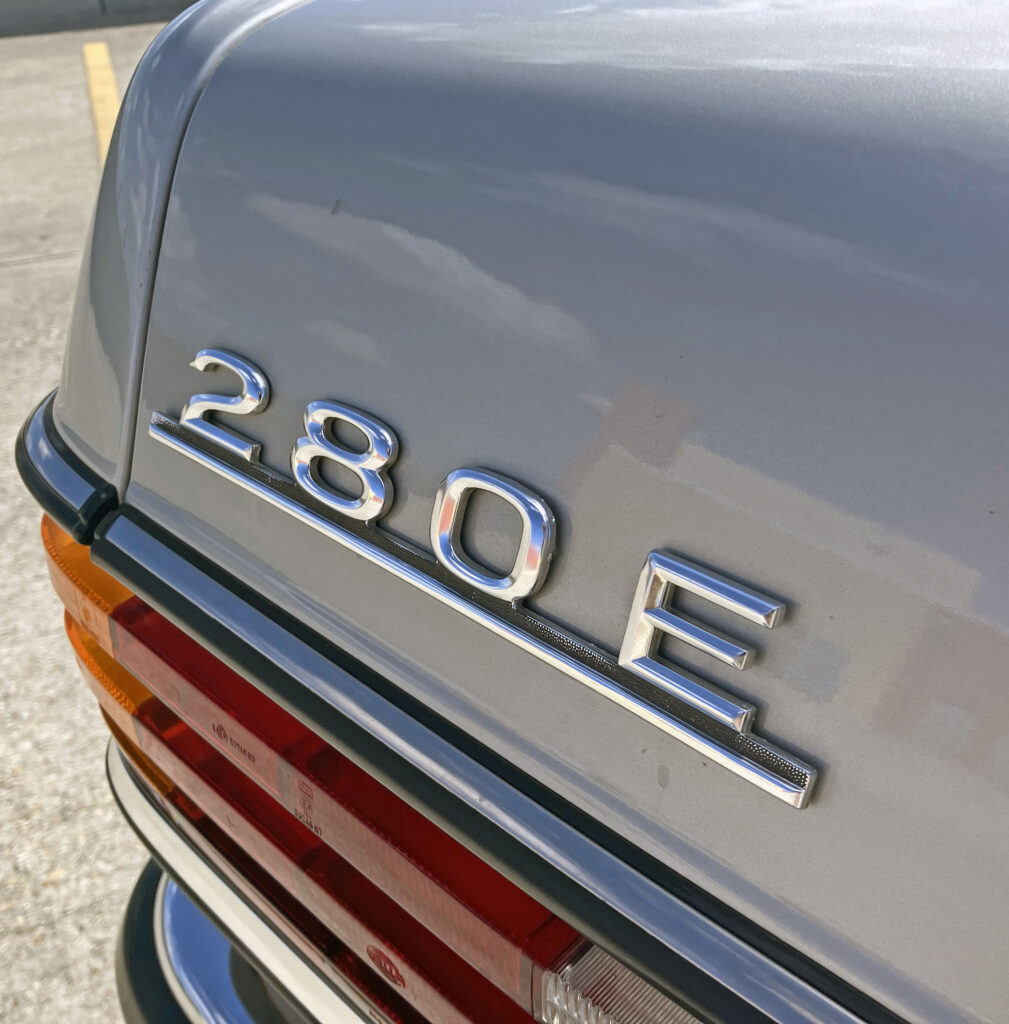
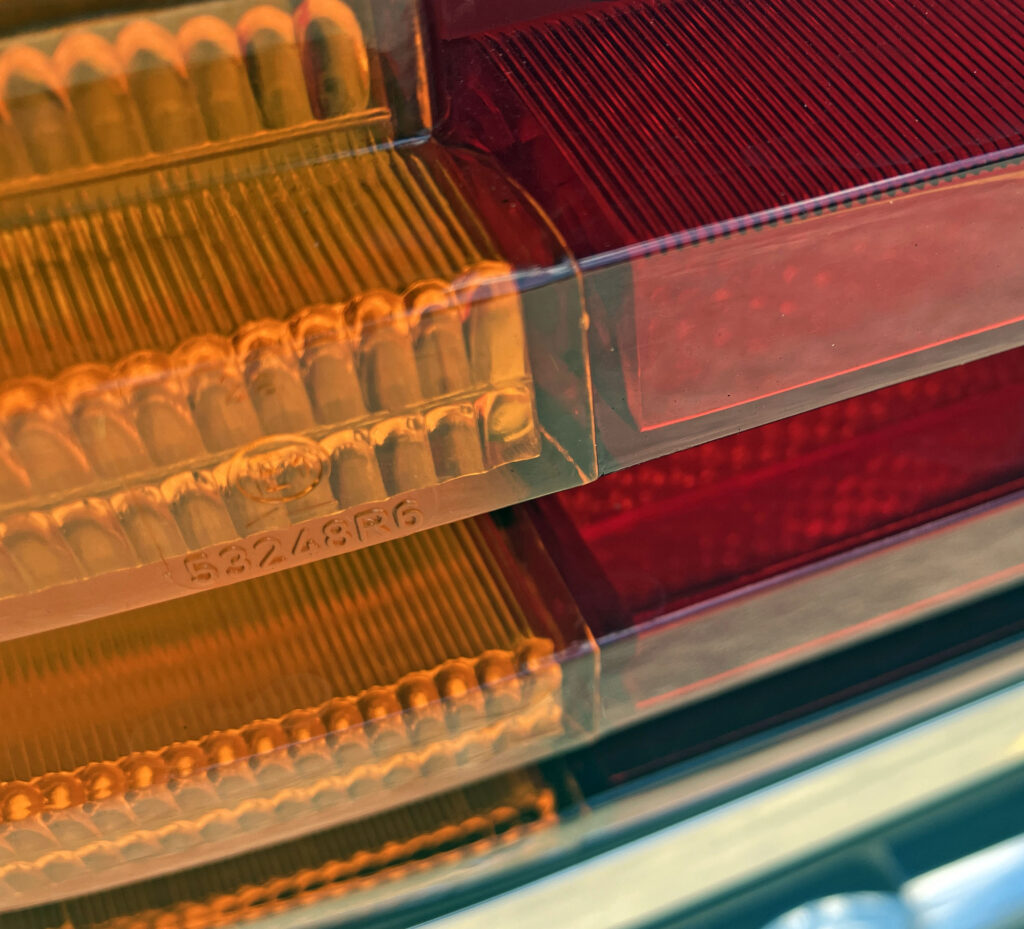
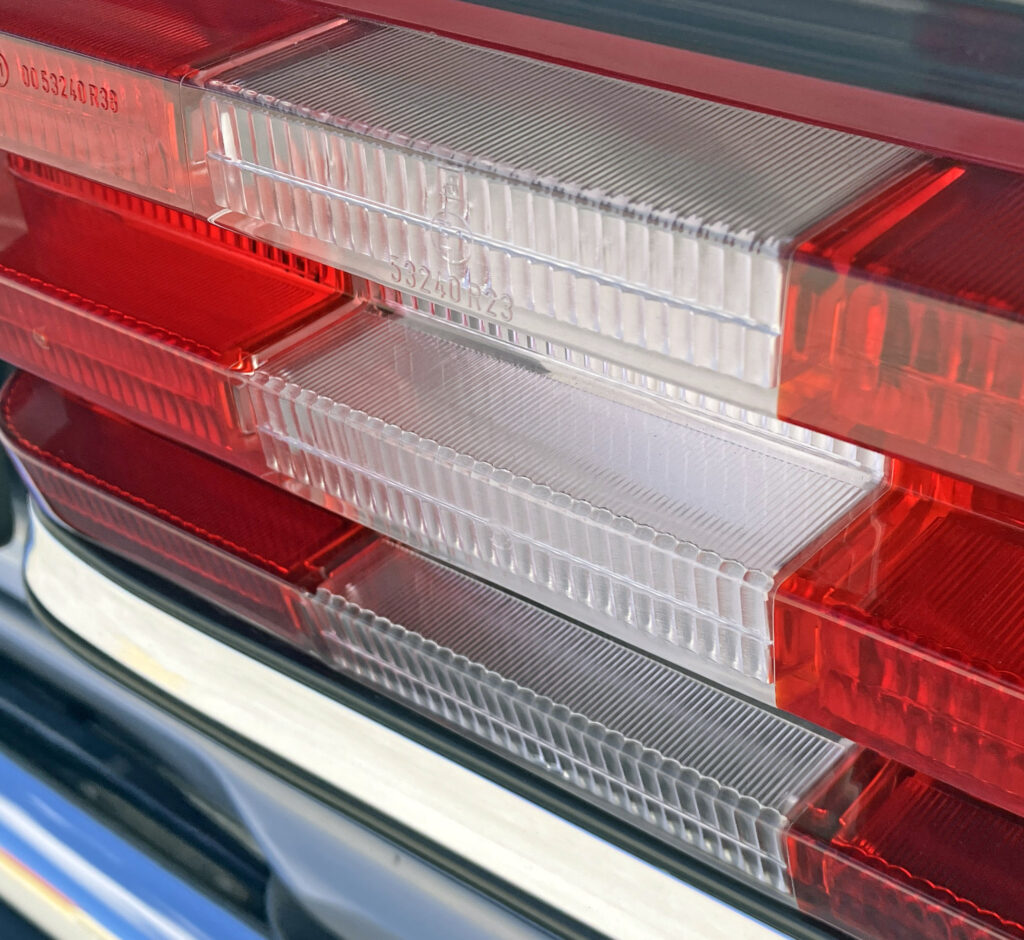
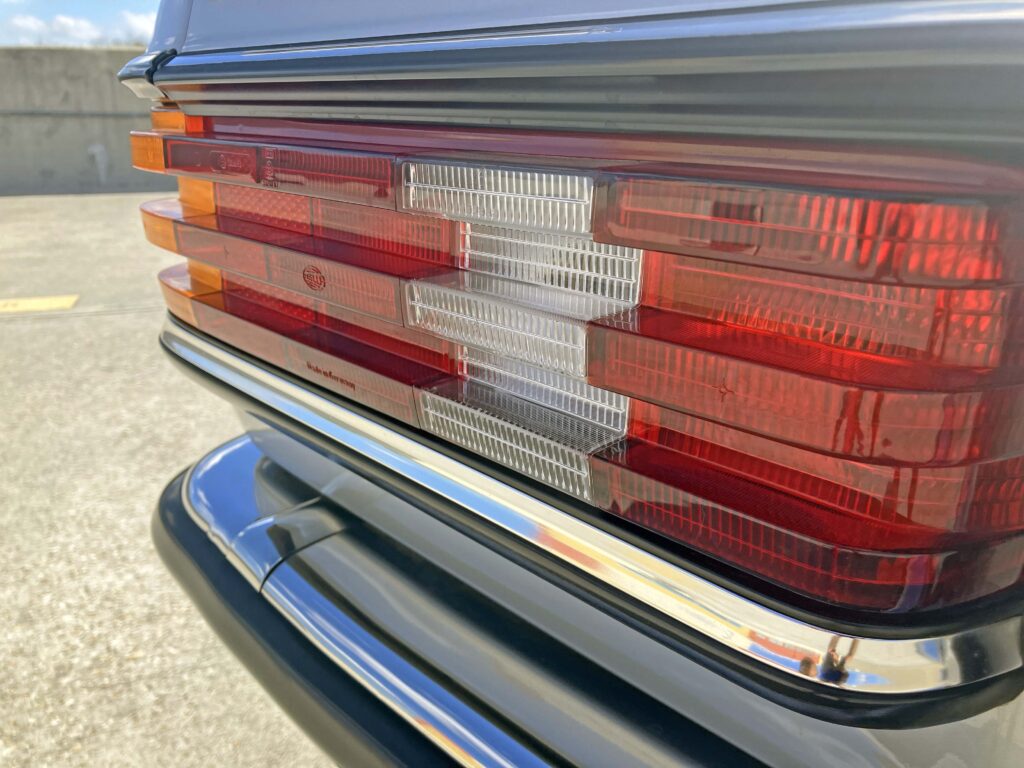
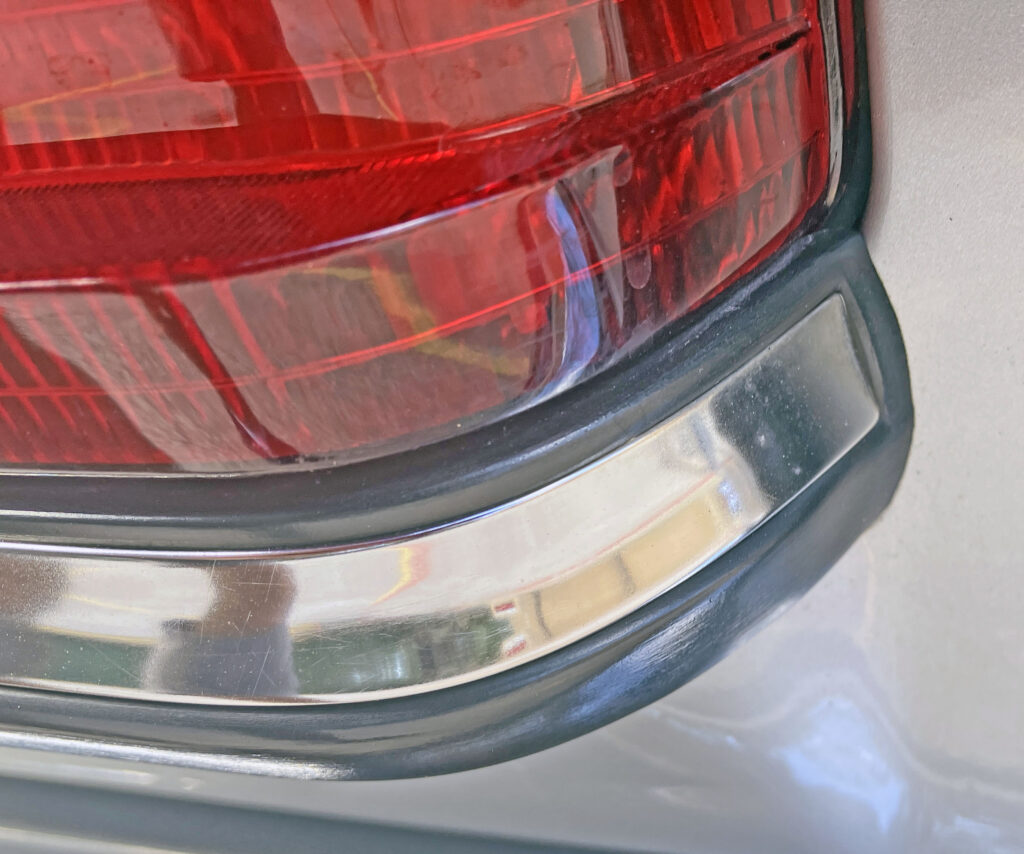
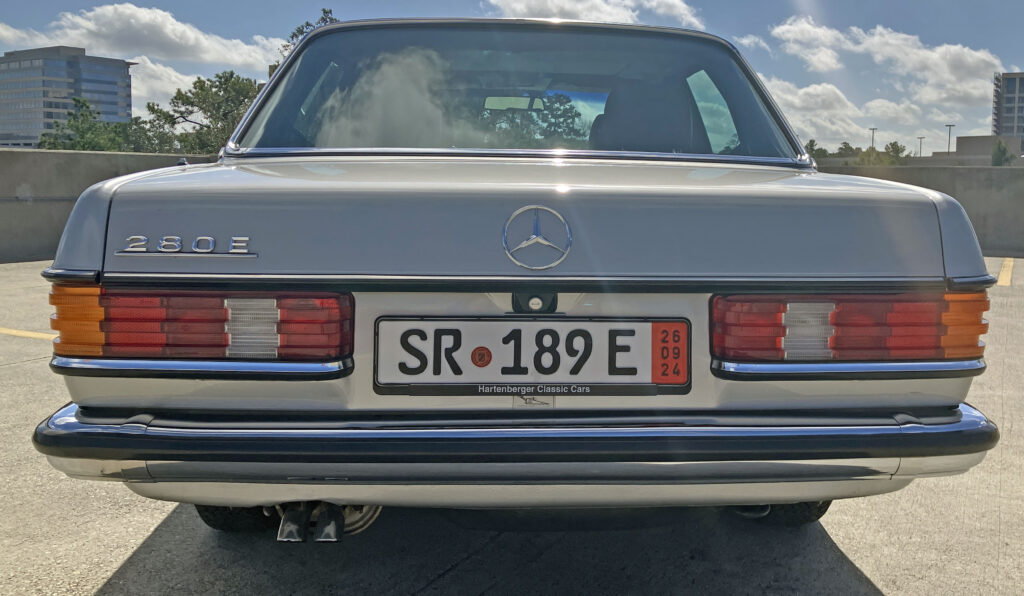
Mercedes’ ribbed tail lamps are among the car’s most functional design features. Their deep channels were tested in a wind tunnel to help keep dirt from fully covering the lights. They also create a richly textured surface, with yellow, red and white sections meeting in a clean sequence. Chrome-and-rubber moldings frame the lamps above and below, then continue across the rear to visually connect the trunk and quarter panels.
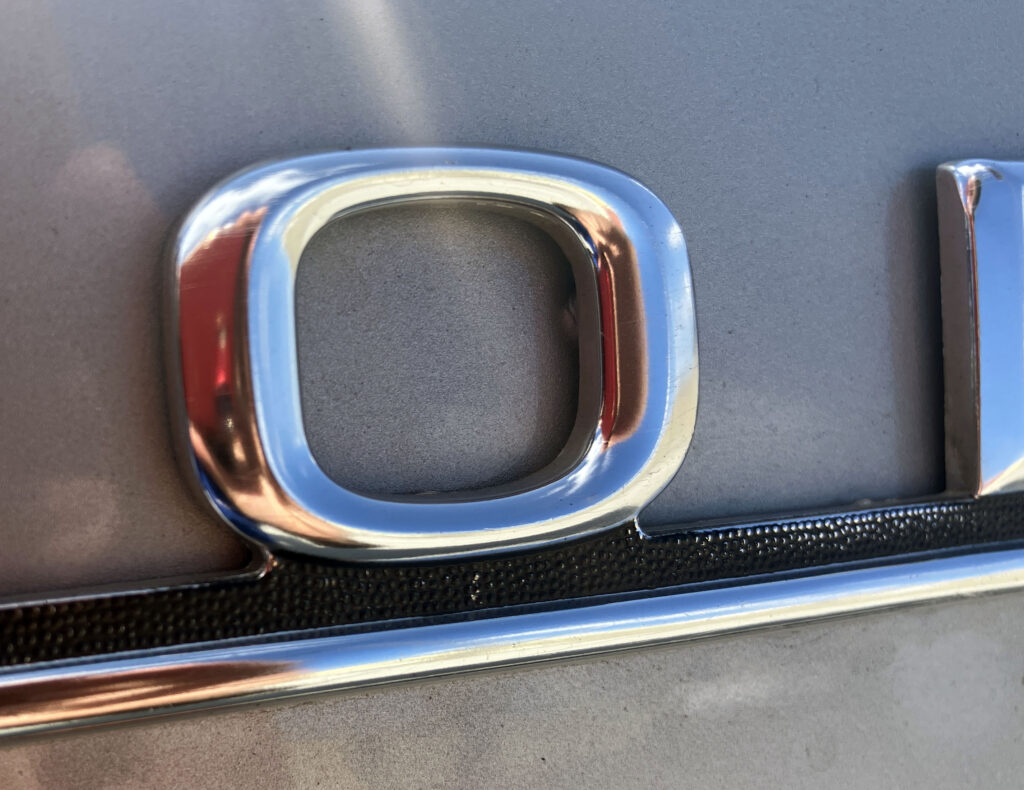
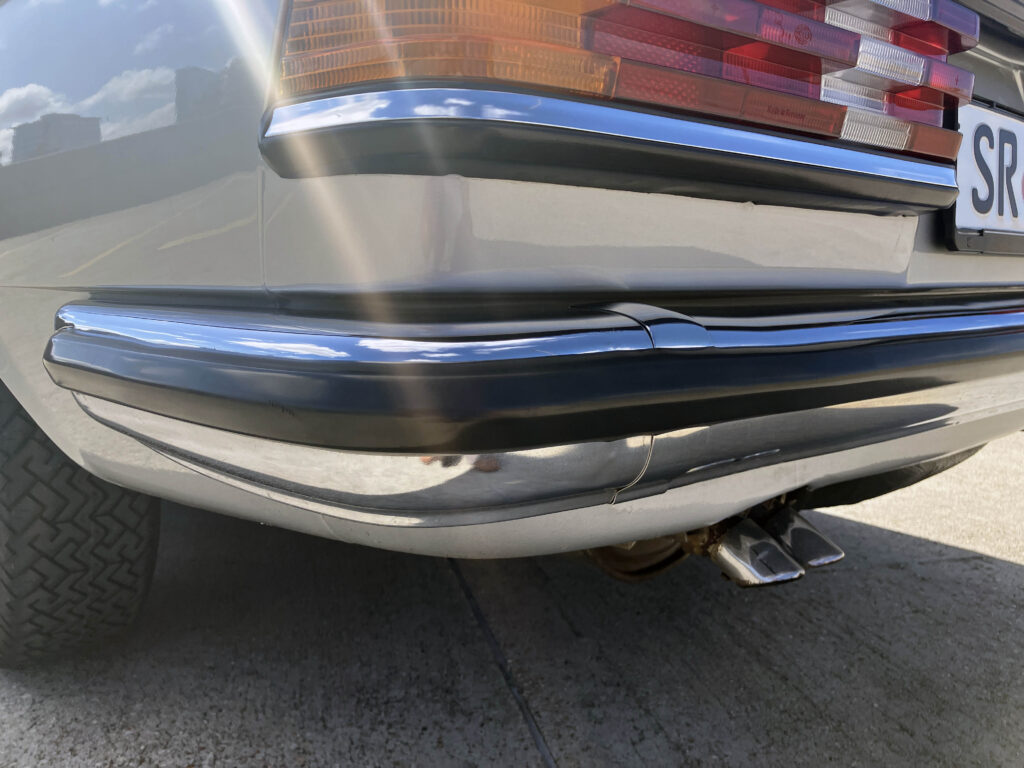
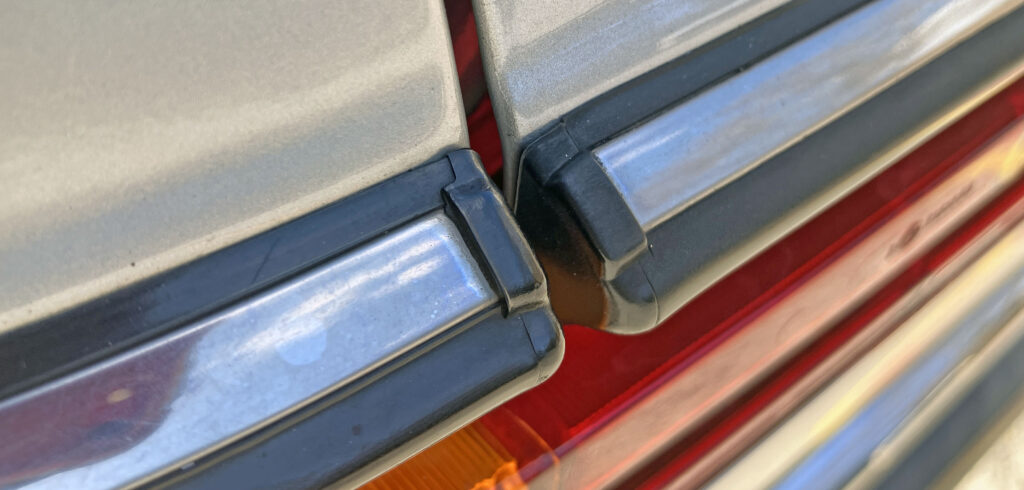
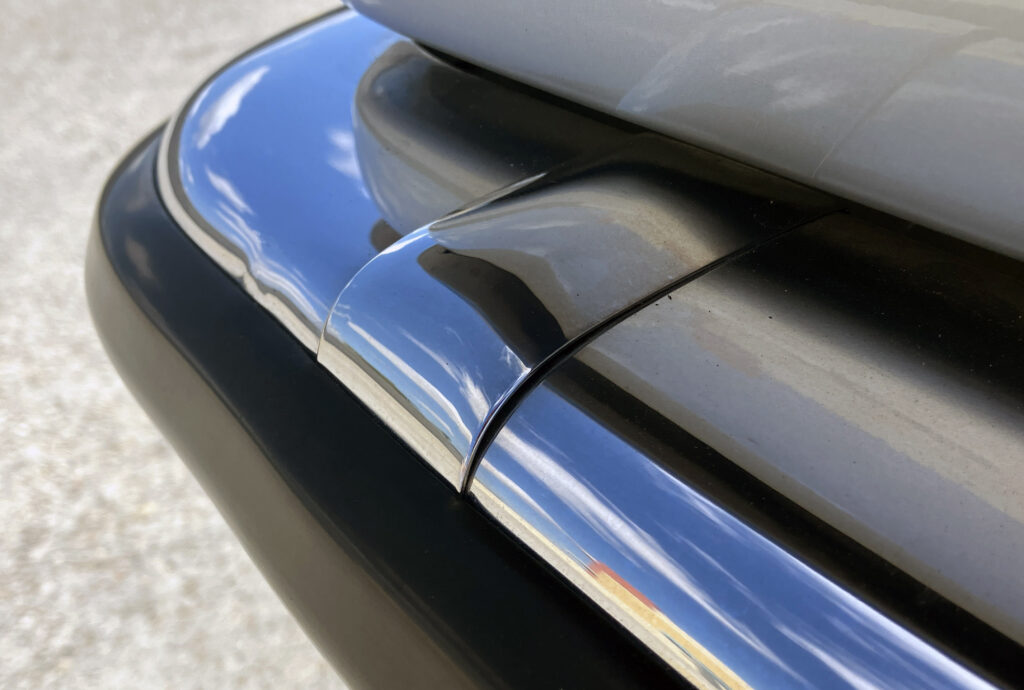
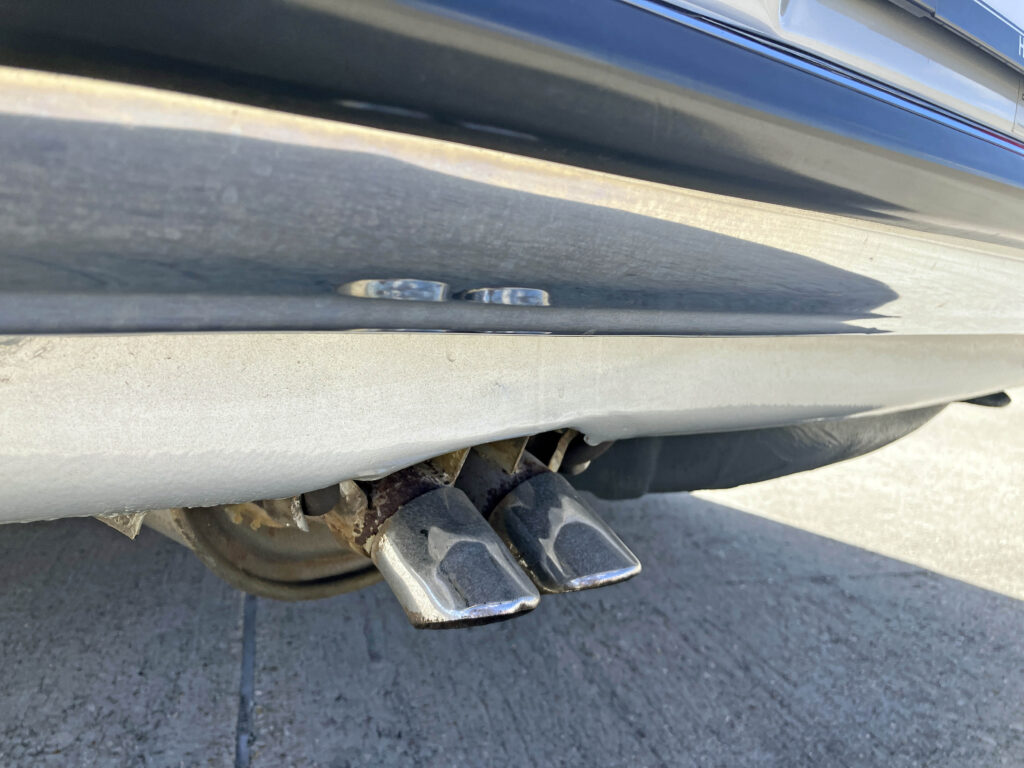
The rear bumper on this German-market 280E has slim chrome corners that keep the lower body visually light. U.S.-market bumpers add more rubber and mass, and their deeper shelves make the car look heavier at each end. Those larger bumpers offer more physical protection, but they interrupt the uninterrupted horizontal theme. On the German car, the bumper joins are less polished than the surrounding trim, yet the parts are straightforward to repair—an apt detail for a model expected to see varied, intensive use.
A sedan designed to serve many roles
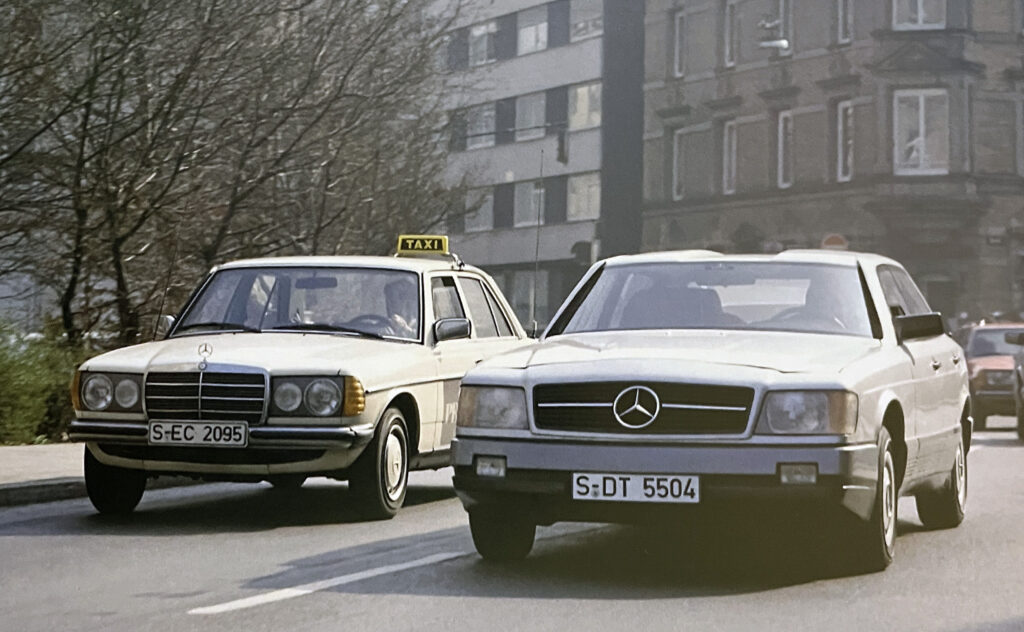
The W123’s identity is bigger than its trim or its formal grille. It could be a prestigious sedan in the United States, a taxi in Europe and a durable working car in other parts of the world. Its proportions, serviceable details and calm cabin presentation suited those different jobs. It sat in the same broad market as the Opel Rekord and Ford Granada, while also being asked to compete with American luxury cars. That range of expectations is part of what makes the design persuasive.
Mercedes’ 1981 Auto 2000 concept showed a different direction: a hatchback body, blockier surfaces and an SL-style grille on a platform based on the W126. Its shape anticipated the company’s later, more generic design language and the wider appeal of crossover-style utility. The W123 stands on the other side of that shift, with a distinct sedan profile and a grille rooted in older brand tradition.
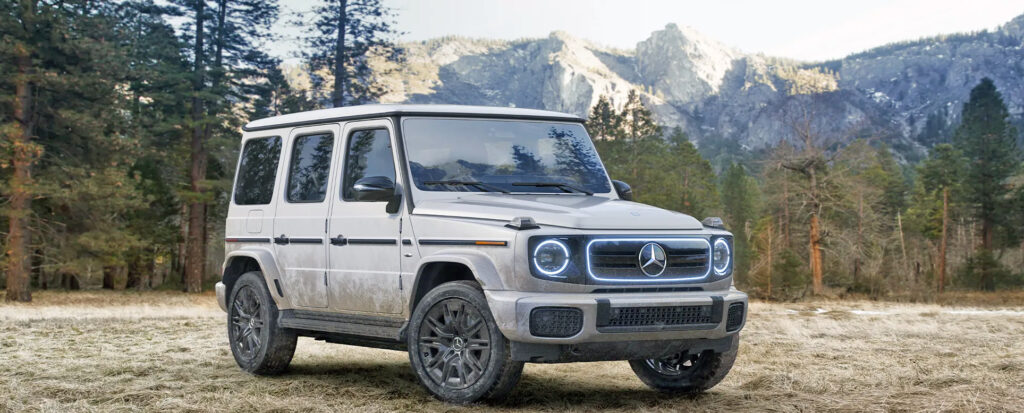
Some of that older design vocabulary remains visible in the 2025 G-Class, whose horizontal body moldings and strong side lines echo the W123’s emphasis on length and visual order. The vehicles serve different purposes, but both show how a simple horizontal theme can become part of a Mercedes identity. The 280E’s lasting appeal lies in how much work that theme does: it joins the grille, lamps, body trim and tail, while the car’s practical details keep the luxury from feeling fragile.