In lane Electric Vehicles
Tom Peters’ GM Design Career: From Camaro Sketches to Corvette Leadership
Description
Tom Peters helped shape modern Corvette design and revive the Camaro, drawing on a lifelong interest in cars and a 35-year GM career.
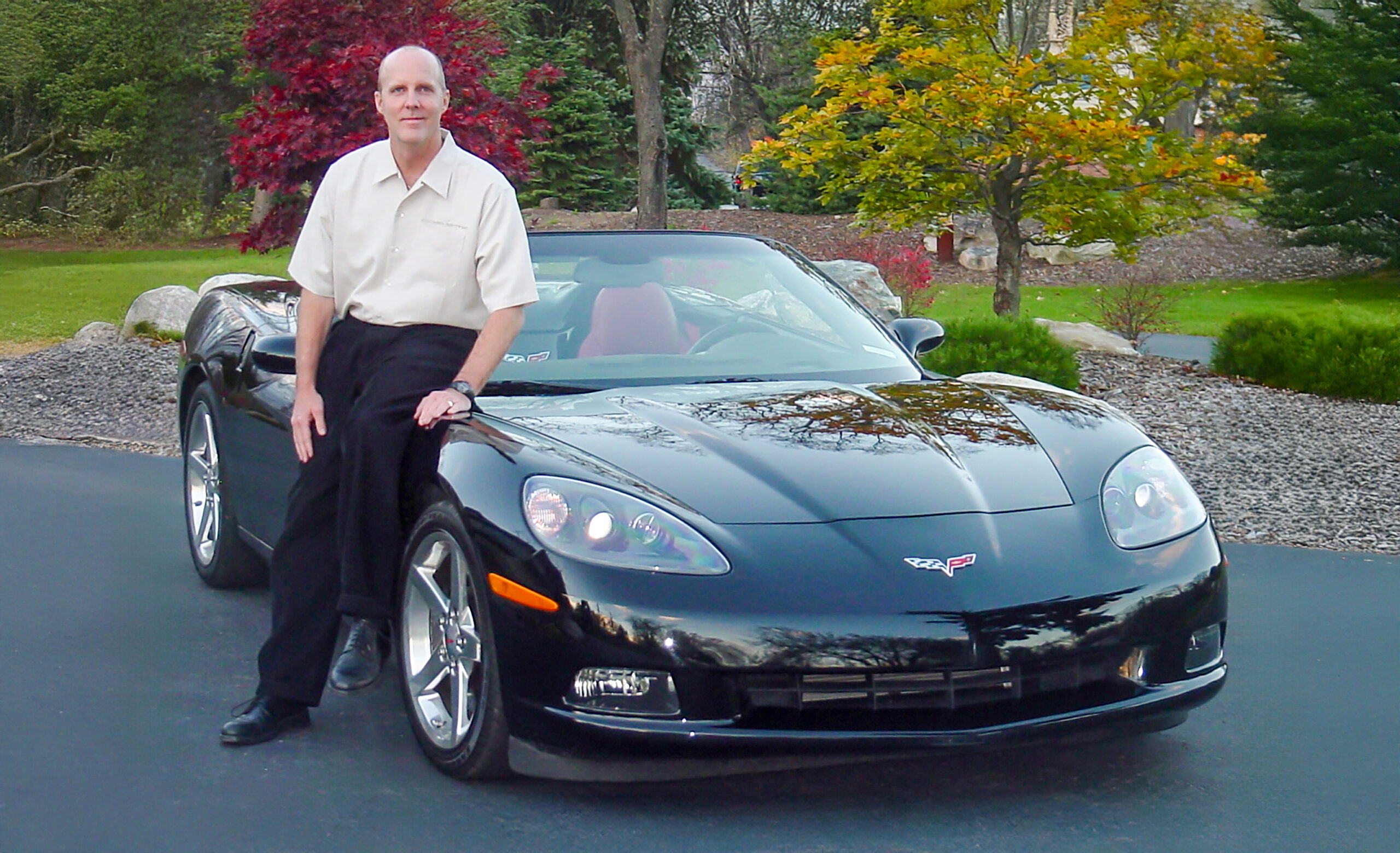
Tom Peters’ influence at General Motors came from a designer’s instinct for making performance visible. Over a 35-year career, he rose to lead the company’s Performance Division and helped guide Corvette design from the C6 era onward. His work also helped bring the Camaro back as a modern muscle car, rooted in the look that had inspired him as a teenager.
The path started with drawings, model kits and an early encounter with a Chevrolet that seemed to belong to the future. Peters retired from GM in 2019. He was later inducted into the Corvette Hall of Fame and took on design consulting work for the National Corvette Museum.
A childhood shaped by cars and drawing
Peters says his interest in automobiles began when he was about four, playing with toy cars on his bedspread. Art was part of family life, too. His mother was skilled with tools and made art, as did an aunt on his father’s side. Peters drew widely as a child, although cars soon became a lasting subject.
One school morning in Minnesota, a silver 1963 Corvette Sting Ray with the split rear window arrived between buses to drop off a student. Peters and his friends waited for it each day. He remembers edging close enough to study the cabin and noticing what looked like a small television built into the center console. The driver later arrived in another apparently identical Corvette, this time without the device, and on a different day brought a silver 1963 Buick Riviera.
Looking back, Peters suspects the driver may have led research and development at Honeywell. What stayed with him was the impression that someone had chosen those cars because they understood design and appreciated what felt new. The Corvette made a powerful impression on a boy who was already paying attention to shape and detail.

Model building gave that interest a practical outlet. Peters saved much of the money he earned caddying to buy model cars and airplanes. He says kits teach patience and hand skills, while introducing builders to shape, paint, adhesives and the way plans translate into a finished object. At one point, he and his friends visited one of the first Target stores in Minnesota, where a large, floor-to-ceiling selection of kits felt like a treasure trove.
He also drew cars in the exaggerated style of Big Daddy Roth’s Rat Fink illustrations, using distorted perspective to suggest force and speed. The American muscle cars around him supplied plenty of real-world inspiration. Mustangs, Camaros and Mopars were familiar sights; Ferrari and Jaguar were part of his awareness, but the local cars spoke most directly to him.
He remembers the muscle cars of the late 1960s as loud, imposing machines with a larger-than-life presence. Peters spent time with other young car fans, rode country roads in a friend’s older brother’s Impala Super Sport, and joined in hockey and baseball. His family moved from Minnesota to Baton Rouge after his father accepted a new job.
Art school opens a route into automotive design
After his father died, Peters worked summers at a paper mill. The difficult work helped him see how a college education might lead to a different future, one in automotive design. He began studying fine art and illustration at the University of Southwestern Louisiana, then transferred to Louisiana Tech after learning that its art program offered stronger preparation for an aspiring artist.
A book shown to him by a fellow student changed the direction of his studies. It was a catalog for Art Center College of Design in California, with a curriculum focused on design and transportation. Peters applied with a portfolio that included fine art and automotive drawings. He was accepted.
In 1976, while a sophomore at Louisiana Tech, Peters sold his tools and stereo equipment and set off for California in a hot-rodded 1968 Ford Galaxie. The trip nearly ended outside Lubbock, Texas, when the car’s 390-cubic-inch engine failed. His cousin David, a retired Top Gun pilot whom Peters admired, helped get the Ford back on the road.
Art Center demanded sustained attention, leaving little room for a weekday job. Summer work helped, but tuition and living costs remained difficult to cover. After his first year, Peters applied to the school’s internship program, which usually went to students farther along in their studies. GM design chief Chuck Jordan selected him anyway.
“It was make or break for me, and it changed my life,” Peters says. The internship gave him income and direct experience in automotive design. His work also earned notice back at Art Center, where he received a full scholarship when he returned for the fall term. Together, the scholarship and his GM earnings made it possible to continue.
Art Center also brought Peters together with Carolyn Rotundo, a California native and fellow design student. Peters has described her as the person who mattered most to him. Their relationship soon became central to a career that was otherwise beginning to gather momentum.
A return to GM, with Carolyn alongside
When Peters graduated in 1980, Jordan offered him a place on GM’s design team in Detroit. Carolyn did not have a position there, so she took work with Texas Instruments in Lubbock while Peters joined GM. The distance proved difficult. Peters eventually decided to leave the company and move to Texas to be with her.
He says it was hard to tell Jordan he was going. Employees who left GM rarely returned, and Peters was walking away from a position at the company’s celebrated design center. He asked Jordan to consider bringing both him and Carolyn back if suitable jobs became available. The couple married and worked on product design at the technology company while they waited.
Jordan later called with an opening for each of them. Carolyn’s portfolio made her a strong candidate in her own right, and both returned to Michigan. They built their careers there. In 1988, after the birth of their daughter, Carolyn left full-time work to spend more time at home, then continued to take on design consulting assignments.
A Camaro built around personal taste
Peters moved quickly through GM’s design ranks. In the early 1990s, the company asked him to lead its California design studio. Working in a region with a strong enthusiast car culture brought his thoughts back to the Camaros that had first inspired his drawings. He wanted a project car that reflected what he considered the model’s defining shape: a 1969 or 1970½ Camaro.
He found a 1969 example at an Orange County beach bungalow. It had no running gear, giving Peters room to build the combination he wanted: the early Camaro’s familiar silhouette with more modern hardware. The big-block engine that had captured his imagination in his youth became a 427-cubic-inch Chevrolet V-8 under the hood.
The car also received COPO-modified front suspension, drag springs at the rear and a six-speed manual gearbox. California Street Rods handled much of the work, while Peters and his daughter Adrienne, who shares his enthusiasm for cars, checked on progress and contributed. The outside stayed close to the original design, but Peters refined it by shaving the bumpers, reducing visual clutter and fitting larger 15-inch wheels that retain a stock appearance.
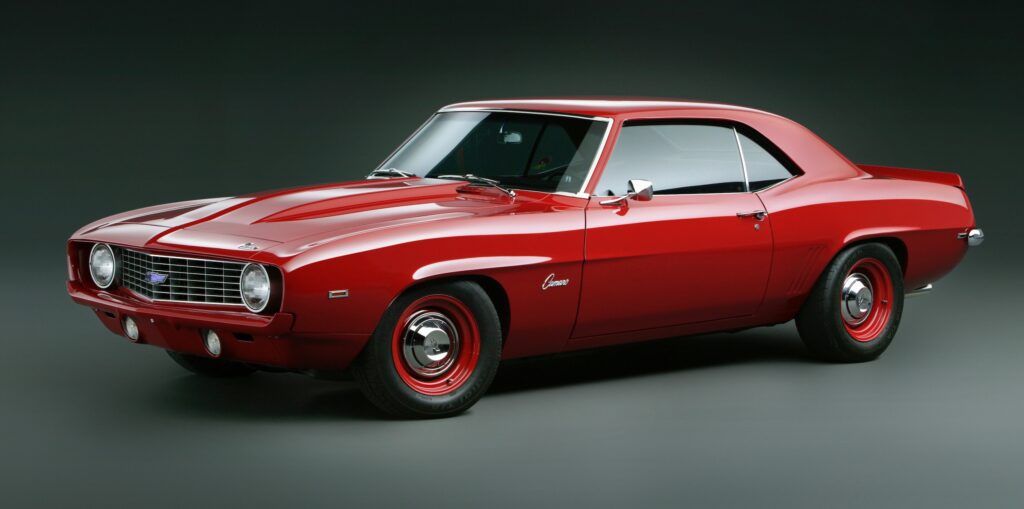
The build reflects a design approach Peters carried into his GM work: performance should be legible in the way a car looks, but visual drama needs to serve the vehicle’s character. His Camaro keeps the recognizable proportions and surfaces of the 1969 model while adding equipment selected for the way he wanted it to drive. It is a personal interpretation, rather than a strict restoration.
Corvette work and the Camaro’s return
Back in Detroit, Peters became a leading figure in Corvette design development. He brought together the visual language of performance and the engineering hardware that supported it. The results are visible in Corvette generations from the C6 onward, each expressing speed and capability through its styling.
The Camaro presented a different challenge. GM ended the model in 2002, disappointing enthusiasts both inside and outside the company. A car driven by passion can be difficult to justify as a business case, but the Camaro’s following remained strong. At a GM gathering in Europe, design vice president Ed Welburn, himself a Camaro fan, said it was time to bring the car back.
Peters was then working in Studio X on a Stingray concept that would help shape the C7 Corvette. Welburn saw the Corvette work and asked him to contribute to the Camaro design effort. Peters’ early sketch drew on the 1969 car, translating its strong proportions and muscular stance into a contemporary proposal. The concept won over GM management, and the company approved a new Camaro for production.
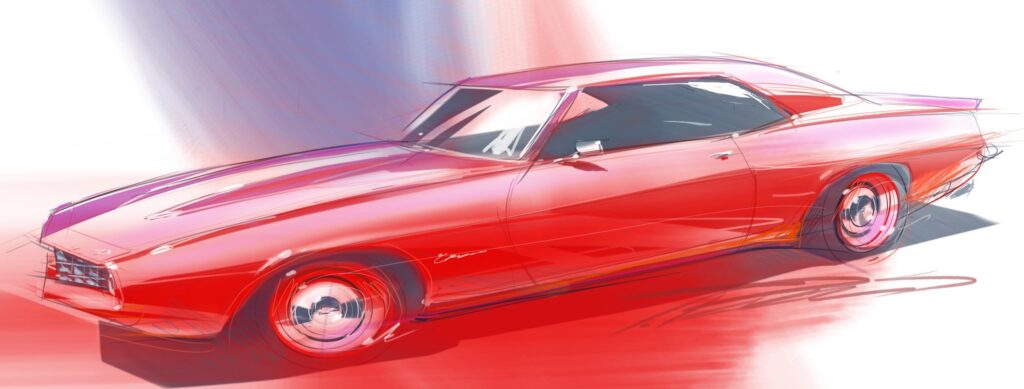
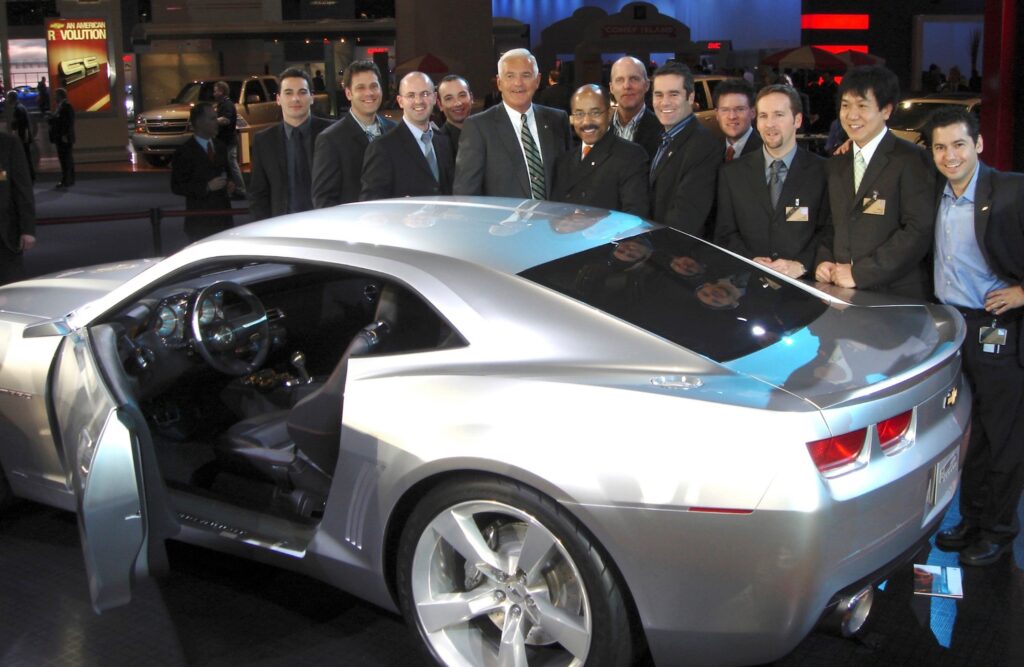
The fifth-generation Camaro arrived as a 2010 model, clearly referencing the 1969 original without simply repeating it. Its launch began a 13-year run that ended only recently. Enthusiasts have continued to talk about another Camaro, but Peters’ contribution to the revived model is already a defining chapter in his career. His design work helped turn affection for the classic car into a contemporary product with a distinct identity.
Retirement with a full garage
Peters retired from GM in 2019 after 35 years with the company. His Corvette Hall of Fame induction followed shortly afterward, and he now consults on design for the National Corvette Museum. Tom and Carolyn live in Michigan, where their shared interest in fast cars remains part of everyday life.
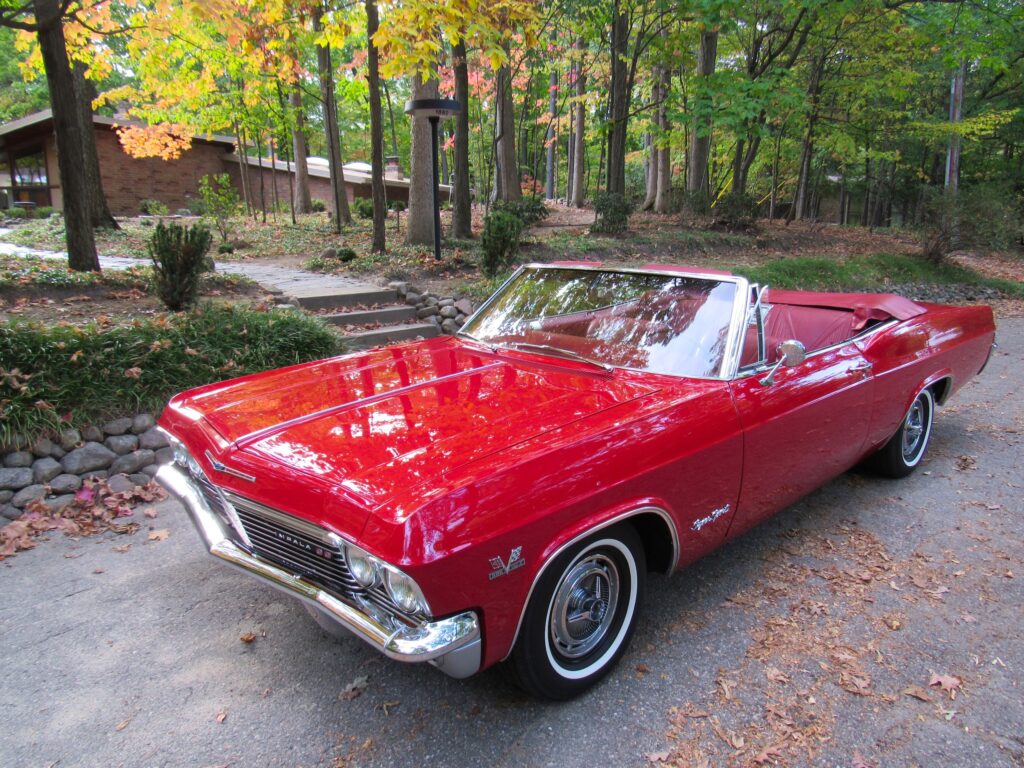
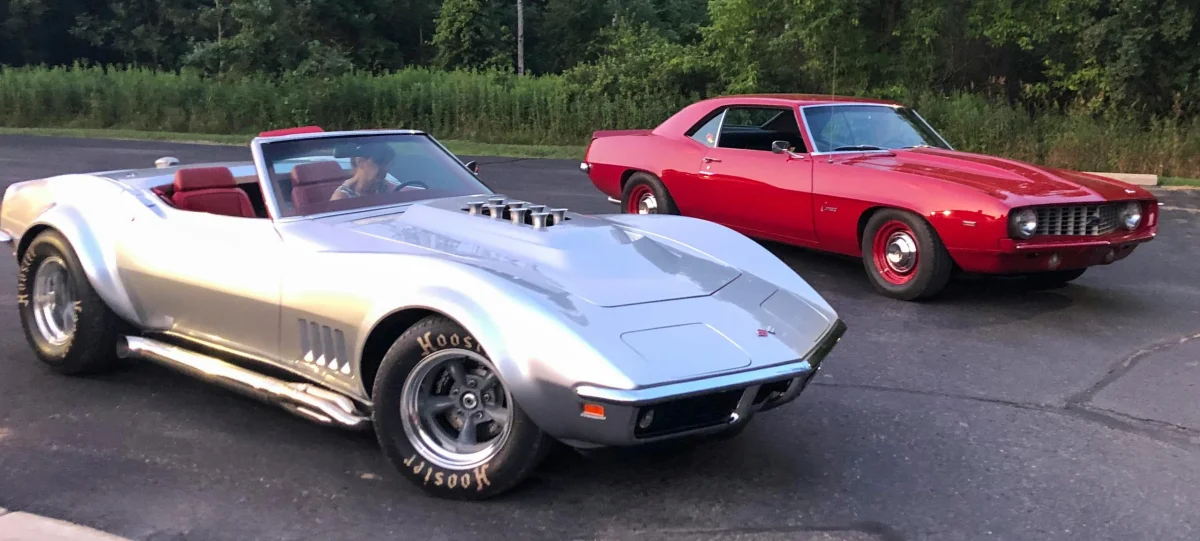
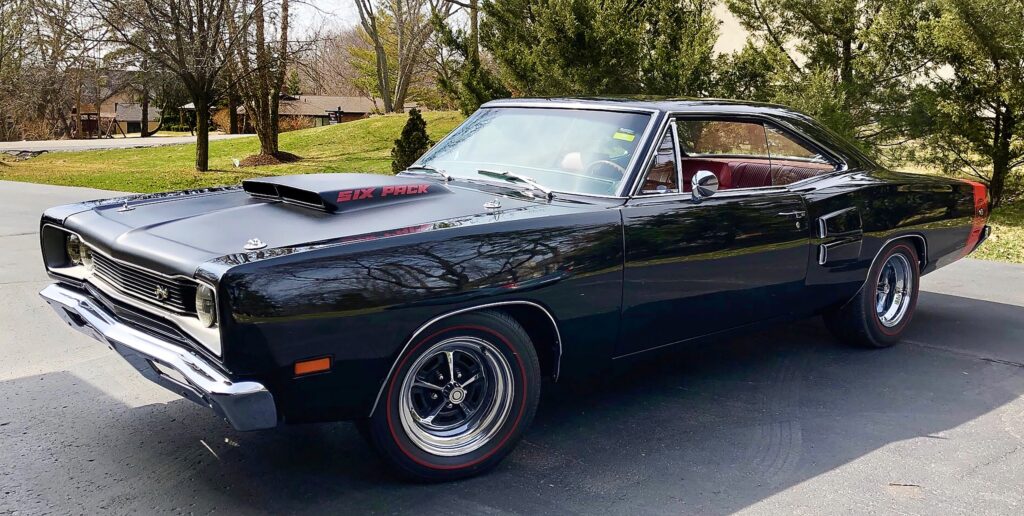
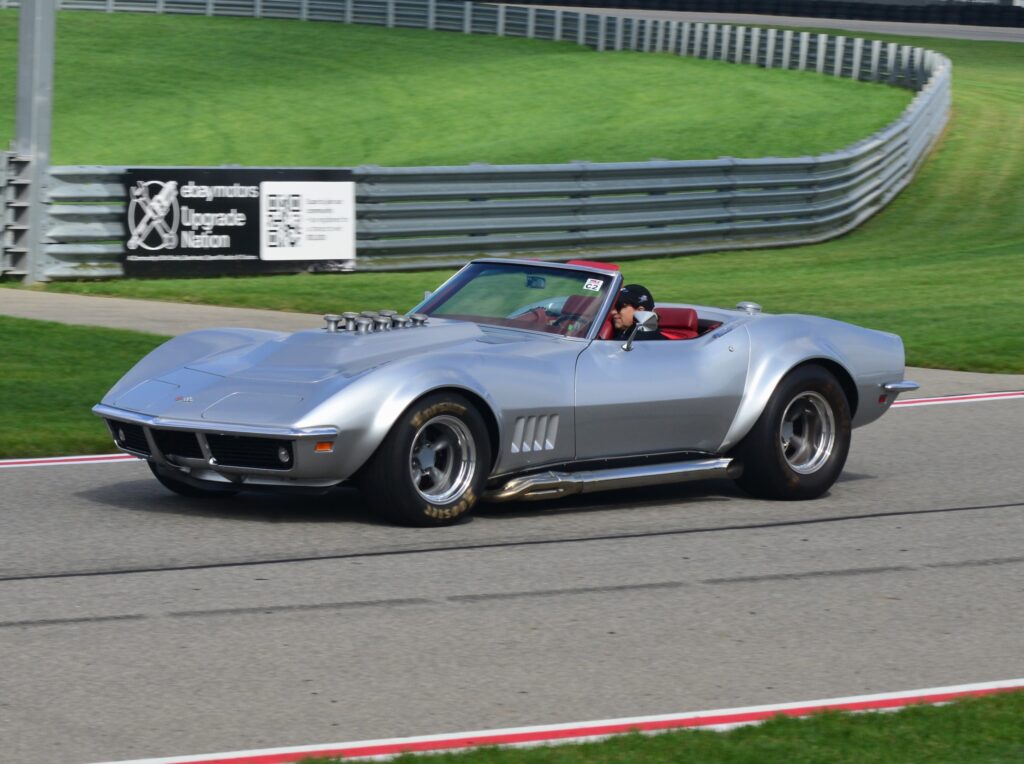
The family collection includes Tom’s 1969 Camaro restomod and Carolyn’s 1969 Dodge Super Bee, fitted with a high-tech 440 Six Pack. Their Chevrolet stable includes a red-on-red 1965 Impala convertible with a 396-cubic-inch big-block and air conditioning, unusual equipment for a convertible of that era, and a 1969 Stingray with a fuel-injected 427. Tom is quick to point out that the Corvette belongs to Carolyn. They also have a Chevrolet 2500 HD diesel truck, and a Corvette C8 ZR1 is on order.
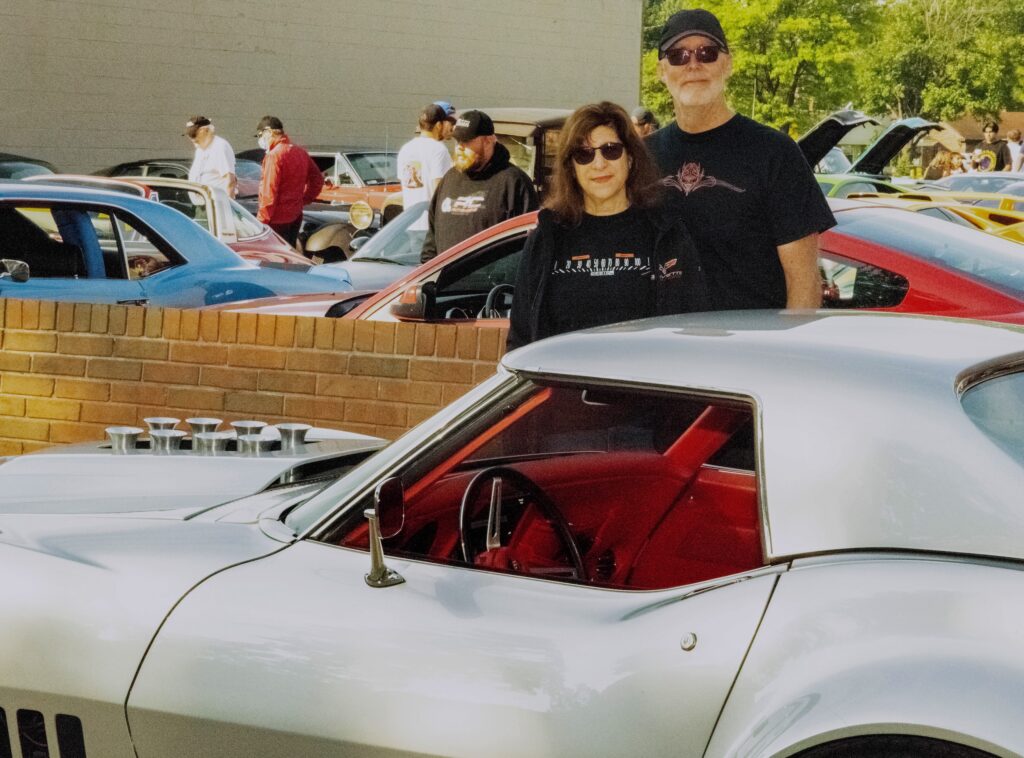
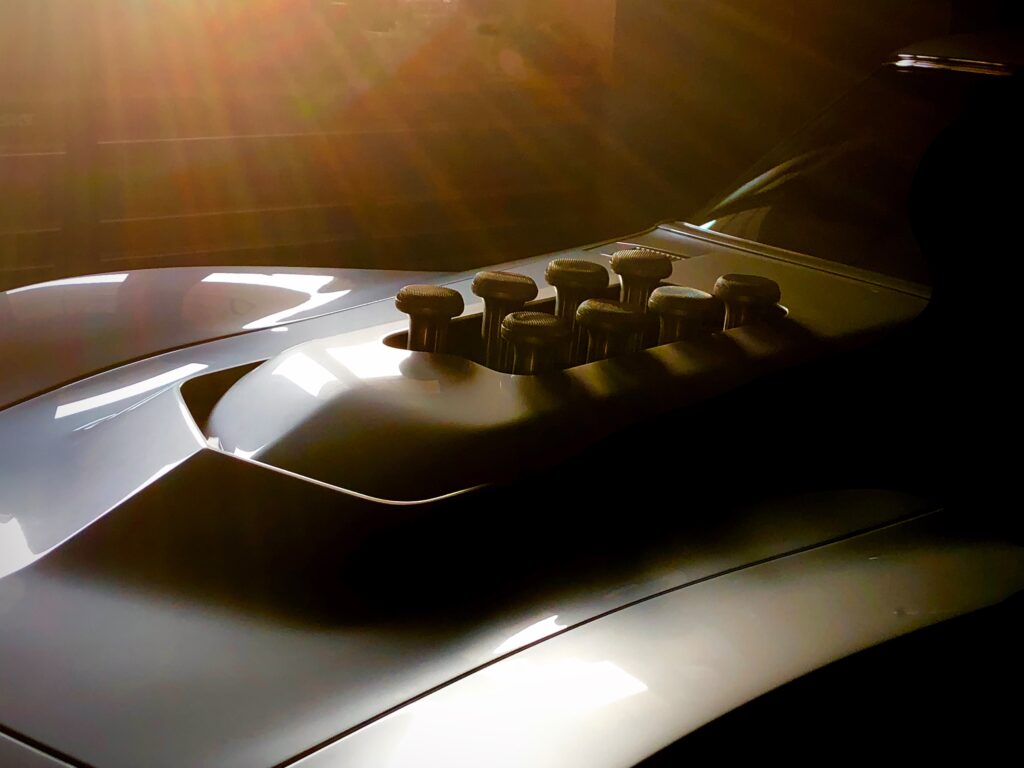
Carolyn’s Stingray is more than a showpiece. She has driven it on track at M1 Concourse in Pontiac, Michigan, not far from home. Its sculpted hood and exposed Kinsler fuel-injection stacks give the 427 a visual presence that suits the car’s performance intent.
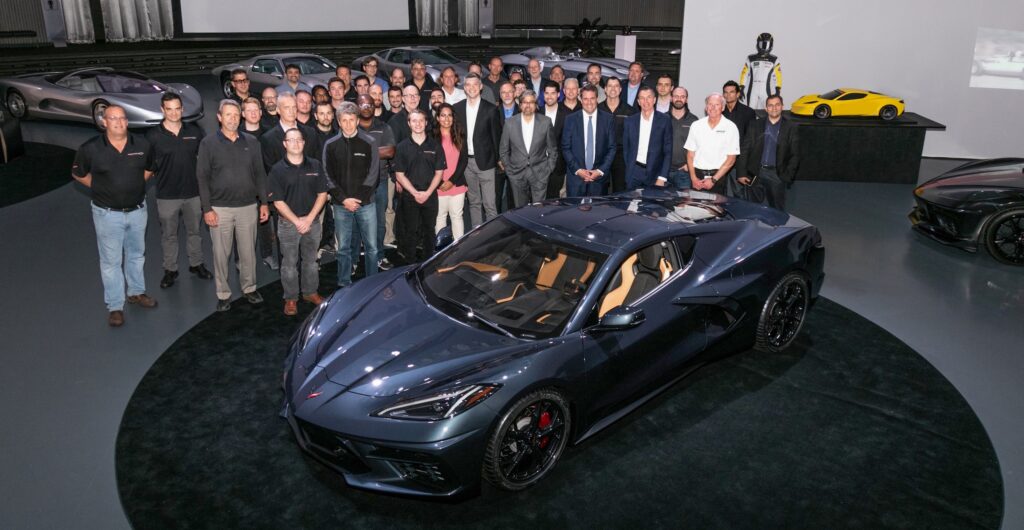
A photograph of the GM development team with the C8 Corvette provides a final link between Peters’ professional life and the cars that still fill the family garage. For him, design has never been separate from the machinery: the shape should communicate what the car can do, while the engineering gives that promise substance. The Camaro, Corvette and his own carefully assembled cars all carry that idea forward.
The post Tom Peters: Making GM Performance Beautiful appeared first on Hagerty Media.


