In lane Electric Vehicles
1977–79 Pontiac Bonneville and Catalina: The Big Ponchos’ Brief Revival
Description
Pontiac’s downsized Bonnevilles and Catalinas sold strongly before a sharp 1980 decline. Their design story starts with a Chevrolet concept and ends with a lasting mark on Pontiac.
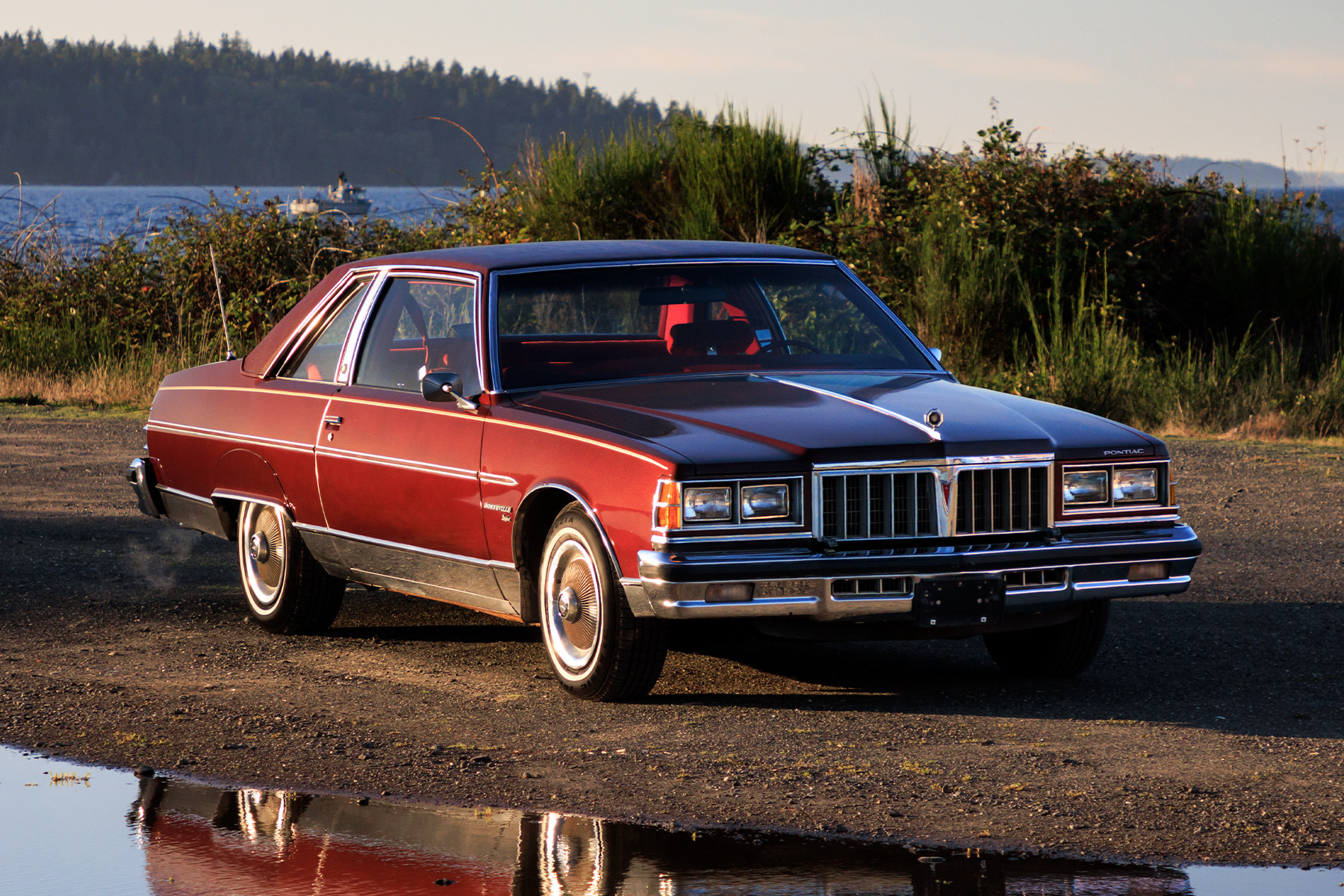
The downsized 1977 Pontiac Bonneville and Catalina were good cars at a difficult turning point for the brand. Lighter and trimmer than the full-size Pontiacs they replaced, they brought buyers a spacious rear-drive V-8 car with a cleaner shape and a more manageable footprint. Sales climbed after their launch, reaching 226,300 in 1979. Then the market for traditional full-size cars collapsed, and Pontiac’s big-car story took a sharp turn.
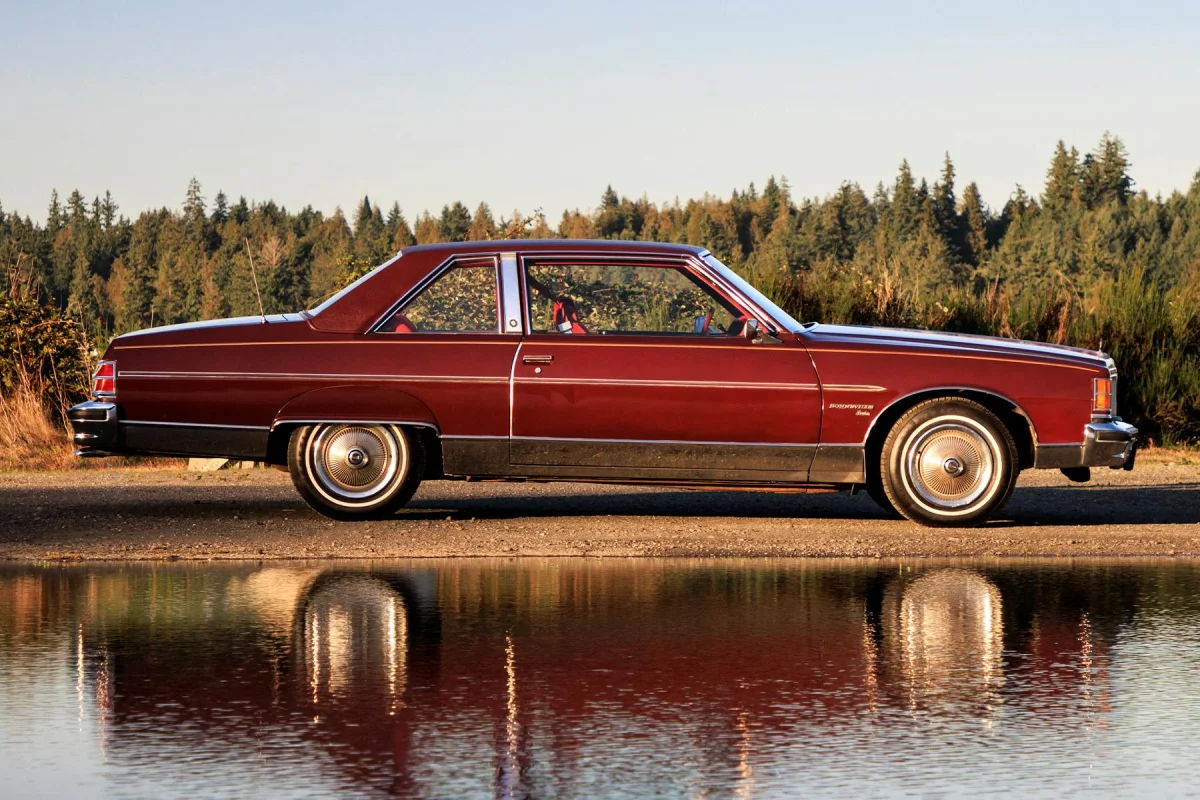
These cars are often overlooked beside the Firebird, Trans Am and Grand Prix, the Pontiacs that tend to define the brand’s 1970s reputation. Their run as downsized B-body models was short, too: Pontiac ended production in 1981. But the Bonneville and Catalina had found buyers, and their distinctive styling gave them an identity of their own alongside Chevrolet, Buick and Oldsmobile versions of GM’s shared platform.
The broader B-body redesign was a major success for GM. The 1977 cars were slimmer, lighter and easier to drive than the large models they replaced, and the platform stayed in production until 1996. Across GM, the range included Chevrolet Caprice Classics and Impalas, Buick LeSabres, Oldsmobile Delta 88s and wagons. Pontiac’s contribution was less celebrated, but it was a meaningful part of that family.
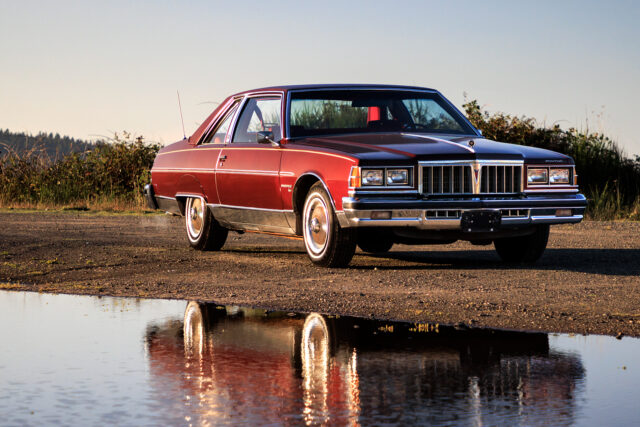
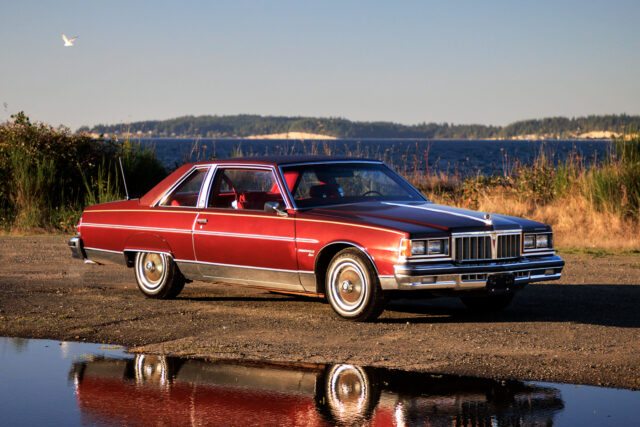
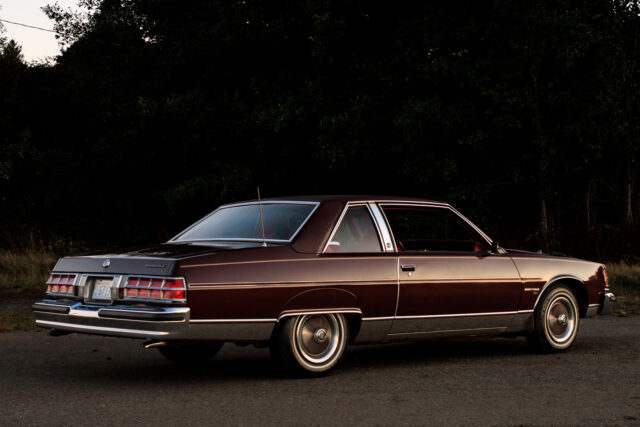
There was a personal reason the cars drew renewed attention years later: a burgundy 1978 Bonneville owned by Washington resident Steve Marchese. Its appeal points to what the specifications alone don’t convey. The car is roomy, comfortable and visually distinct, with the kind of relaxed V-8 character that suited buyers looking for a full-size cruiser rather than a performance model.
A Chevrolet idea becomes a Pontiac
The Bonneville’s design story begins in Chevrolet’s Advanced Studio, where designer Terry Henline was asked by design chief Bill Mitchell to explore a clean, planar look. Mitchell had recently returned from the Turin show and wanted Henline to respond to the spare shapes he had seen in Italy.
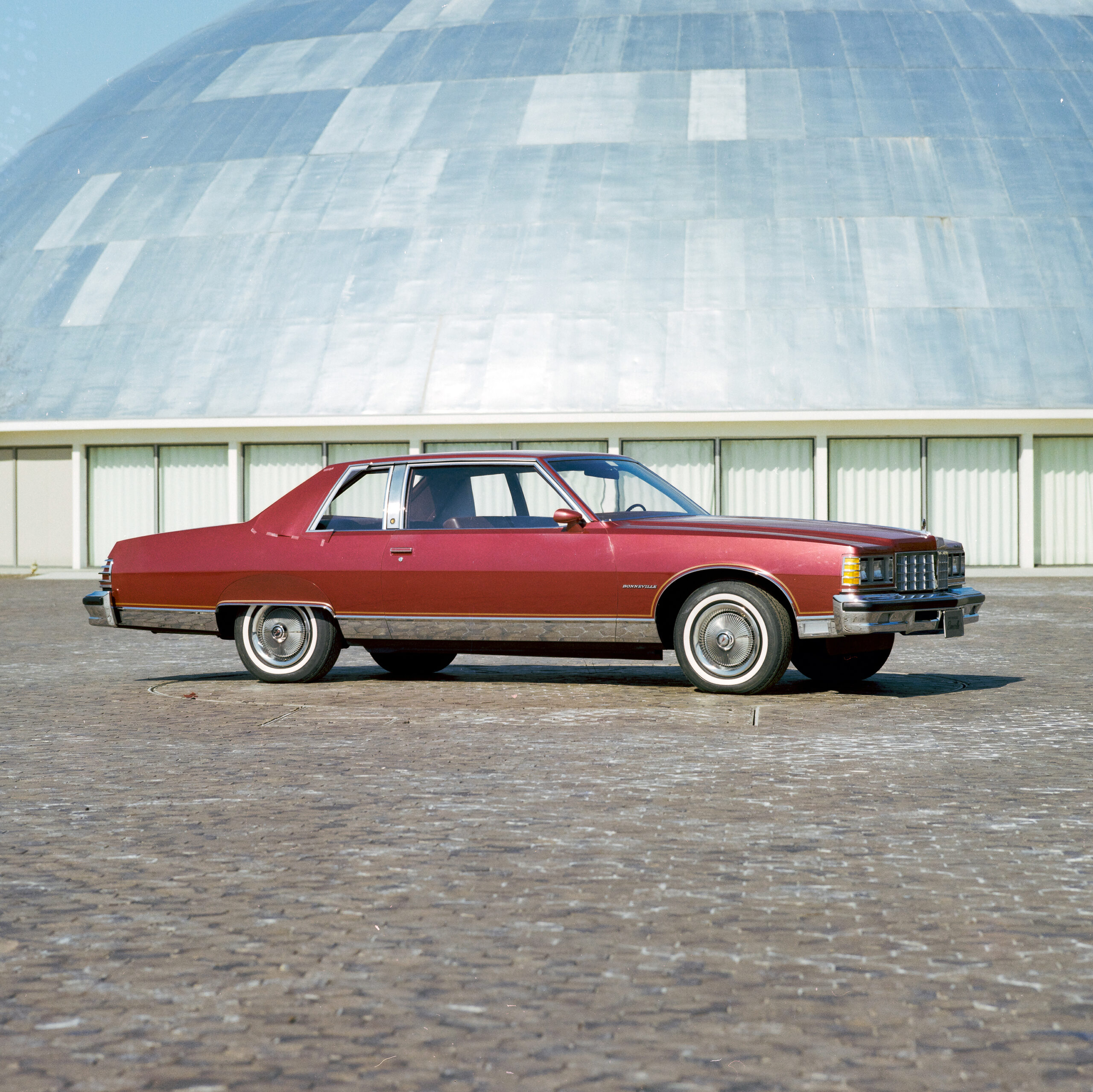
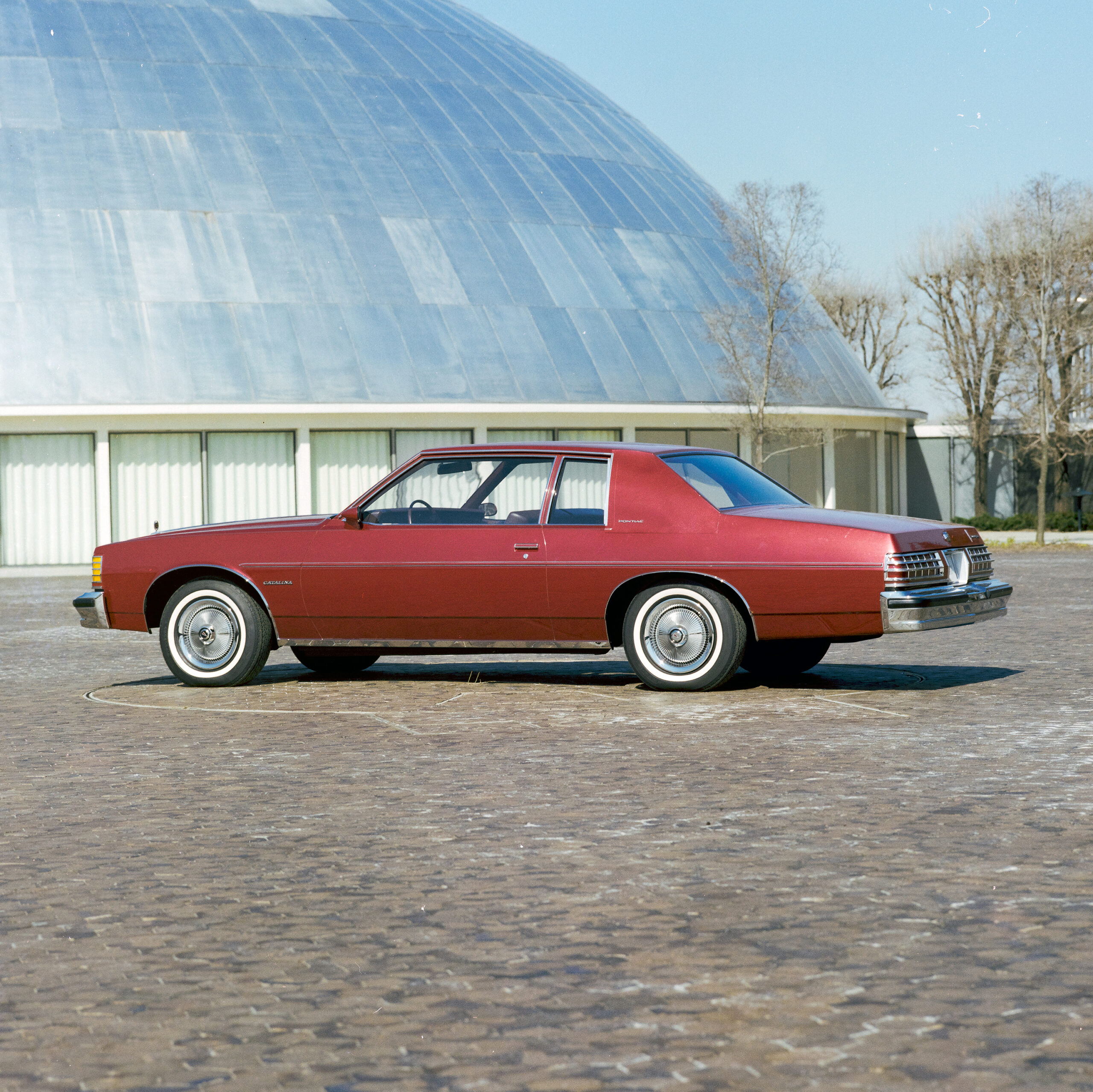
Henline later explained that his brief was to interpret Mitchell’s direction, not to copy a particular Italian car. His renderings did draw on the roof of the Fiat 124 Coupe, though the finished concept developed its own shape: a muscular coupe with simple sides and a light, open-looking greenhouse. The concept also had a family resemblance to the Fiat 130 Coupe, a comparison that makes sense when looking at the clean roofline and broad, uncluttered surfaces.
Working with fellow advanced designers Jerry Brochstein and Hank Cramer, Henline translated the drawings into a full-size clay model. Mitchell and other design leaders, including Chuck Jordan and Jack Humbert, liked the direction. That work established the visual template for the 1977 Chevrolet Caprice and Impala. Production designers then developed the concept into those finished cars.
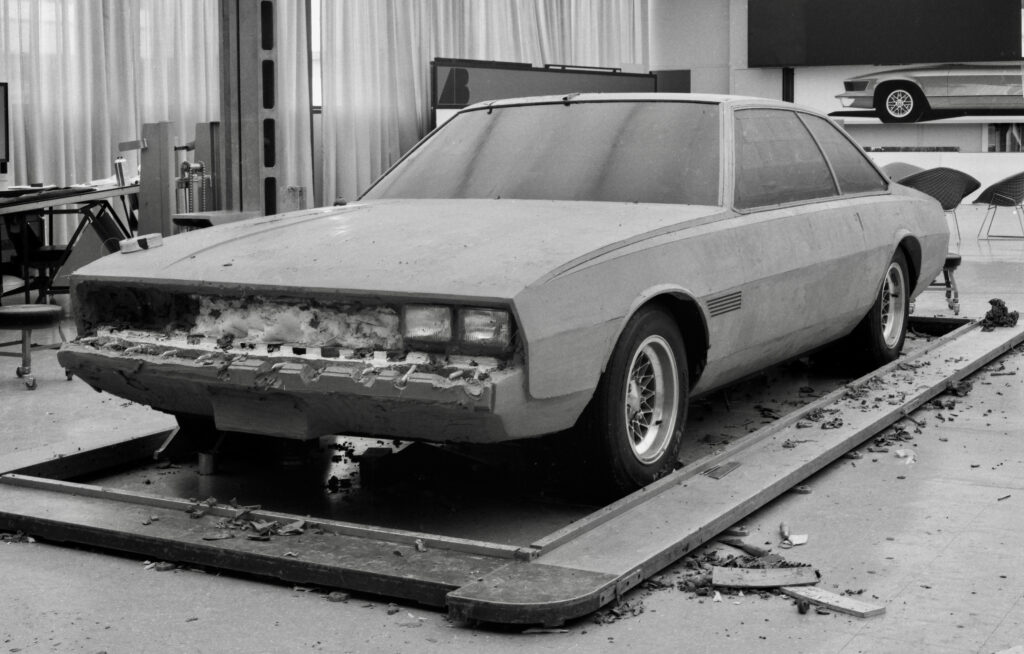
Henline’s next assignment made the story more complicated. After leading the Chevrolet concept work, he was promoted to head Pontiac Studio One and tasked with adapting the shape for Pontiac. His move created a design link between the Chevrolet that set the direction and the Bonneville and Catalina that gave Pontiac its own interpretation.
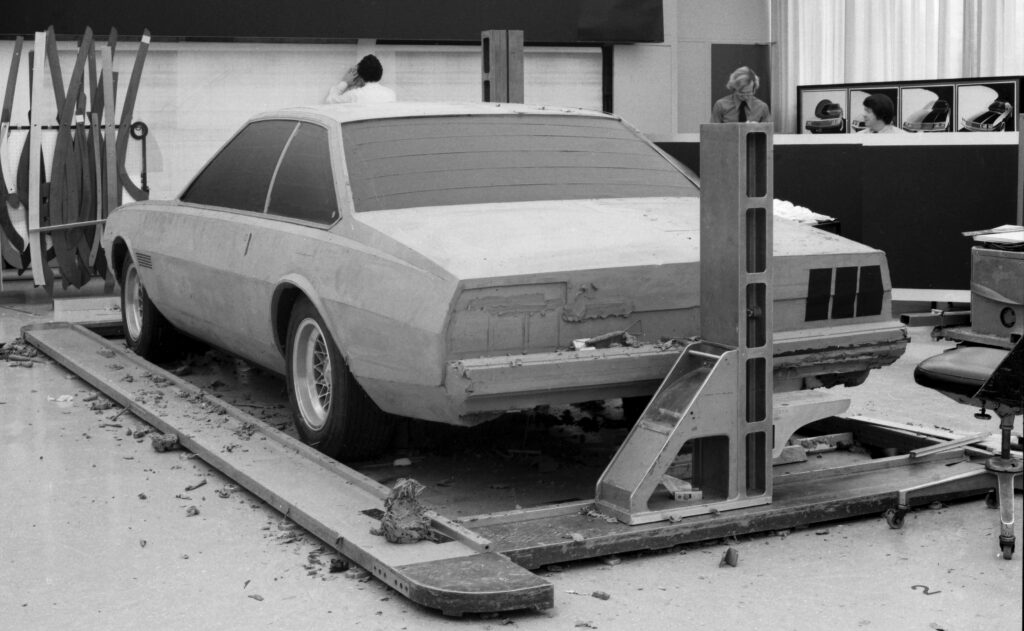
At Pontiac, Henline’s Studio One handled mainstream models such as the Bonneville, Catalina and LeMans. John Schinella led Studio Two, which focused on specialty cars such as the Firebird and Fiero. The studios competed, and that rivalry encouraged each group to build cars with a clear identity. Henline recalled that the teams kept their work separate and tried to outdo one another. He later felt GM lost something when it moved away from that approach.
Pontiac was trying to reconcile its performance image with a changing market. Engine outputs had fallen, customers were paying more attention to comfort and appearance, and Pontiac had cycled through several general managers in less than a decade. The new full-size cars therefore needed to feel glamorous and recognizably Pontiac, without relying on the muscular image of the previous era.
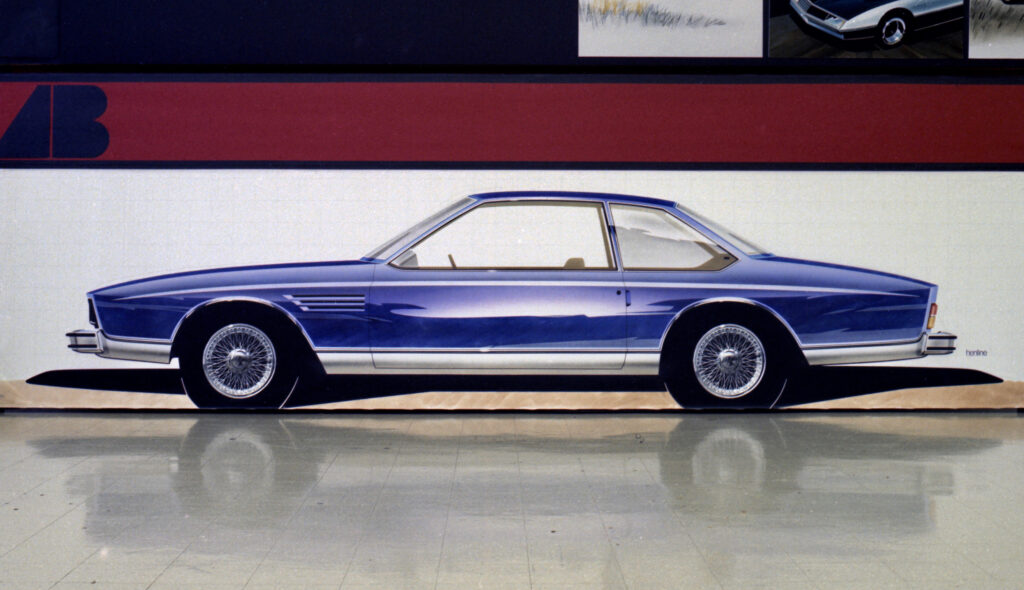
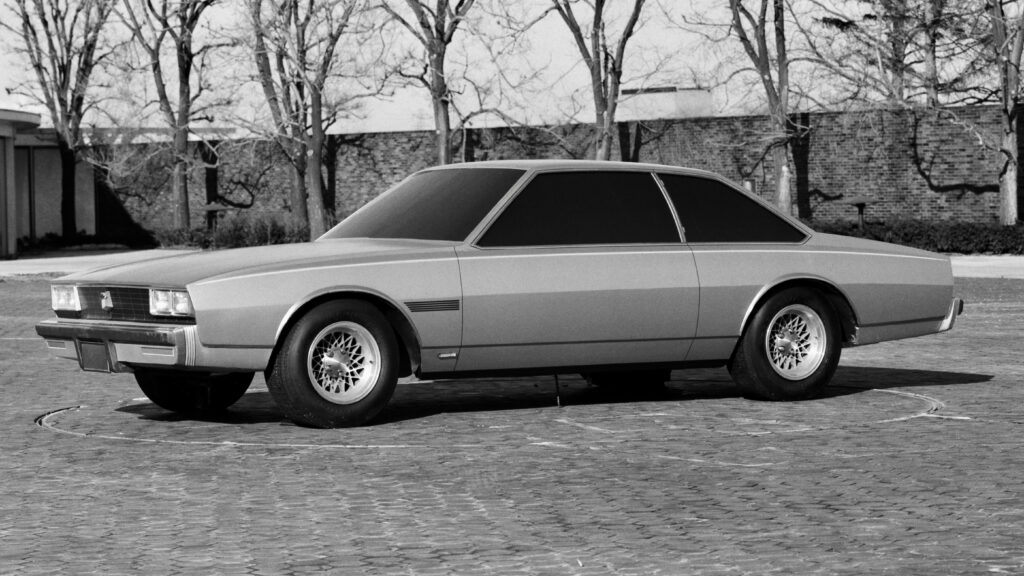
Henline’s team carried forward familiar Pontiac cues, including fender skirts on the Bonneville. He wasn’t especially attached to the skirts themselves; their purpose was to help the car stand apart while sharing some body panels with Chevrolet and Buick models. Pontiac’s marketing team also requested several vinyl-roof treatments. The Catalina, by contrast, had open rear wheels, closer to the original concept’s cleaner form.
Designers tried several roof treatments for the coupes before settling on an airy profile shared in spirit with the Buick LeSabre. The result was a big car that retained the practical scale of GM’s B-body platform while giving Pontiac buyers a different visual character. Henline later admitted he wasn’t sure the team had fully achieved the intended glamour, but he remained fond of the cars.
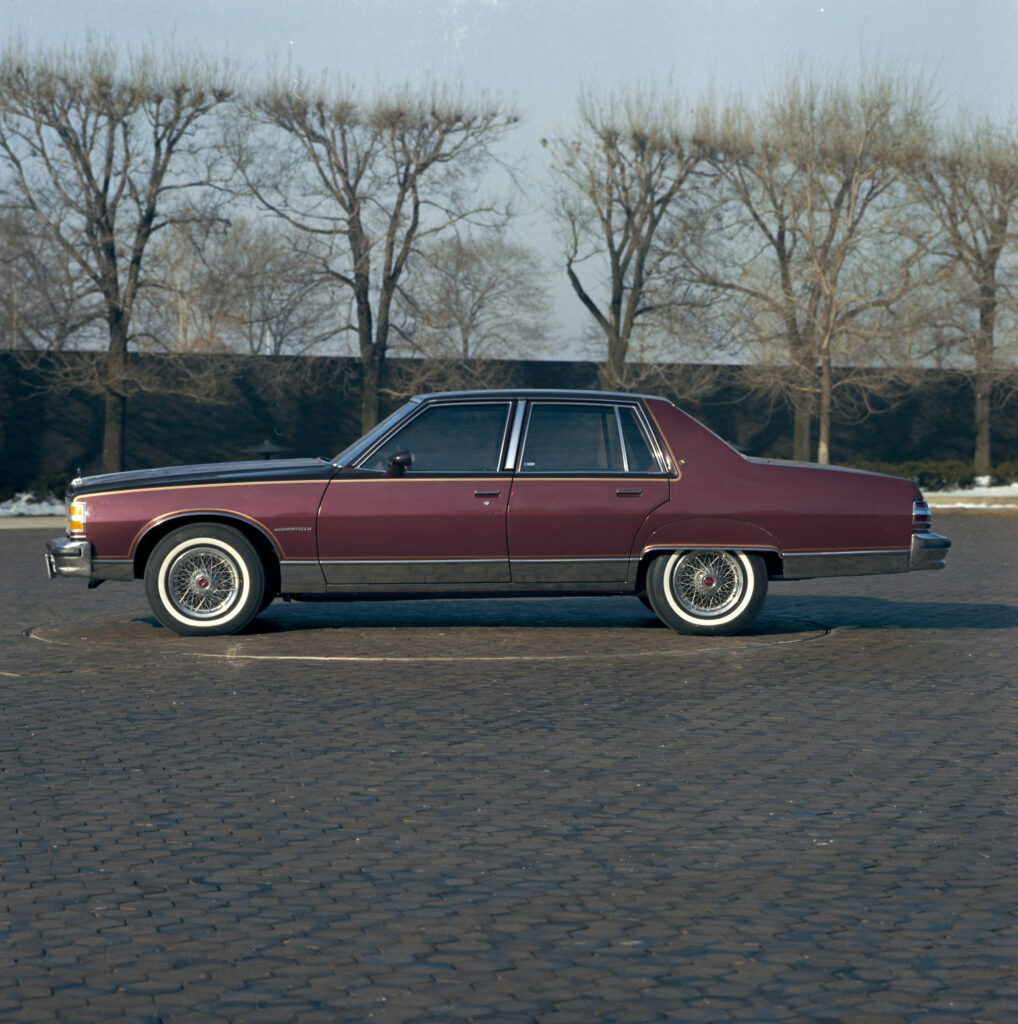
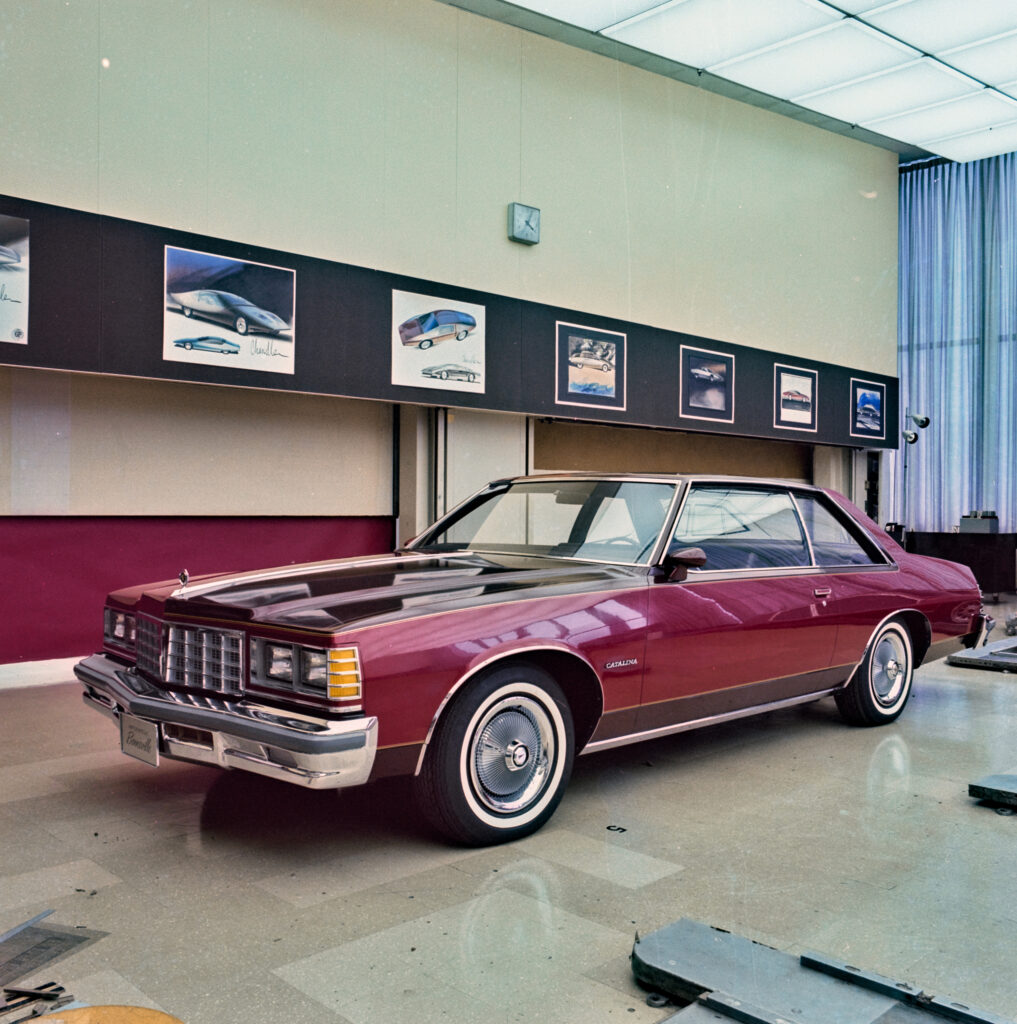
Sales rise, then fall hard
The sales figures challenge the idea that the downsized Pontiacs failed to find an audience. Full-size Pontiac sales rose from 137,216 in 1976 to 207,920 in 1977. They eased to 200,894 in 1978, then reached 226,300 in 1979. The more expensive Bonneville and Bonneville Brougham grew in popularity while Catalina sales weakened, suggesting that buyers were willing to pay for added trim and a more upscale presentation.
The cars weren’t built to be fast. Most used Pontiac’s 301-cubic-inch V-8, and none of the engines listed in the source exceeded 180 horsepower. A small number of Catalinas had Buick’s 3.8-liter V-6, while some examples received Pontiac 350- or 400-cubic-inch V-8s. High-altitude Bonnevilles could also be fitted with Oldsmobile’s 403-cubic-inch V-8. Those less common combinations have become particularly sought after.
For ordinary drivers, the appeal was comfort, space and easygoing torque. The B-body cars were large enough for family use and long trips, with the relaxed ride expected of a full-size American car. Their engines weren’t performance standouts, but they delivered the character buyers wanted in a roomy rear-drive cruiser. In a period when the industry was working through major quality challenges, the Pontiacs were regarded as dependable and comfortable by the people who chose them.
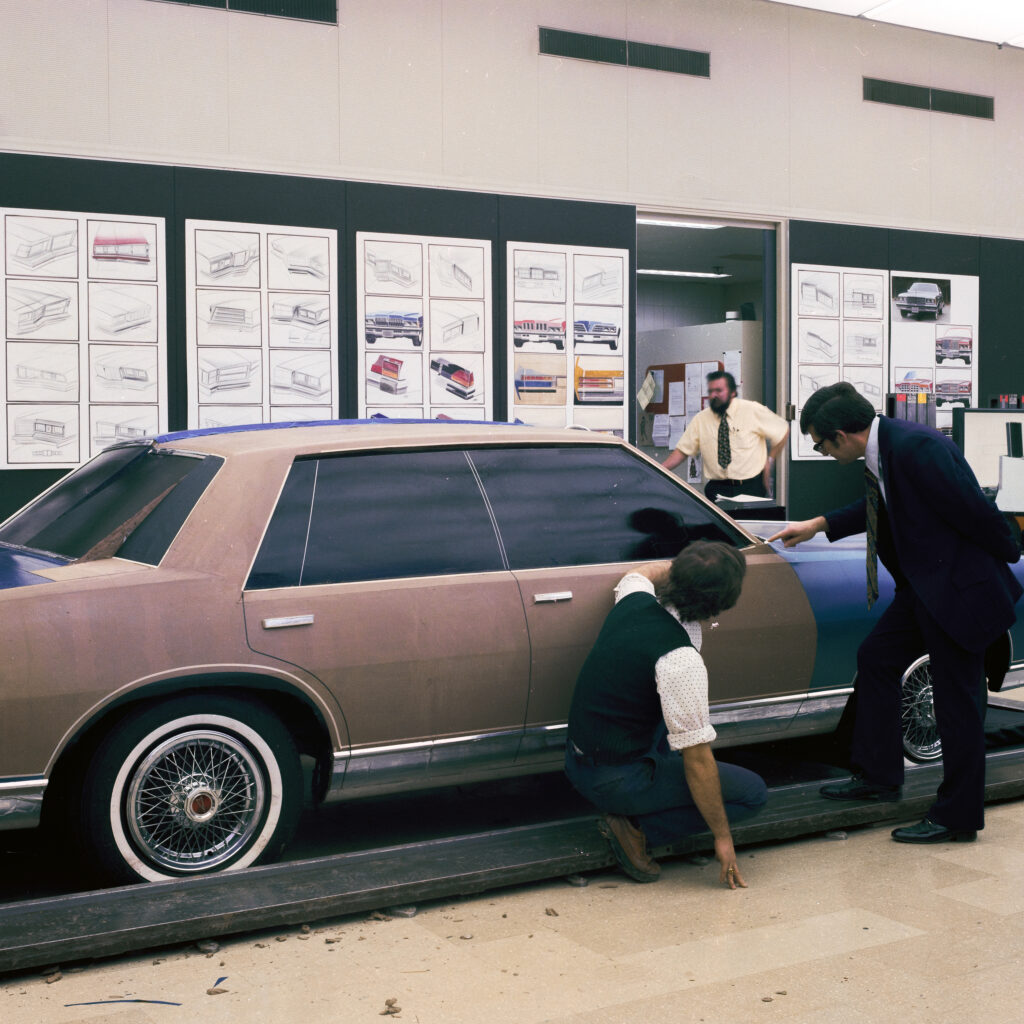
GM had begun work on the 1980 update shortly after the 1977 models went on sale. The refreshed cars wore more formal shapes, with aerodynamic revisions and a reshuffled engine lineup. Early design studies show a less formal appearance than the production models, and some sketches explored a more dramatic evolution of the original design. Henline didn’t think the styling caused the later sales collapse; by the time a car reached showrooms, he was already working on the next project.
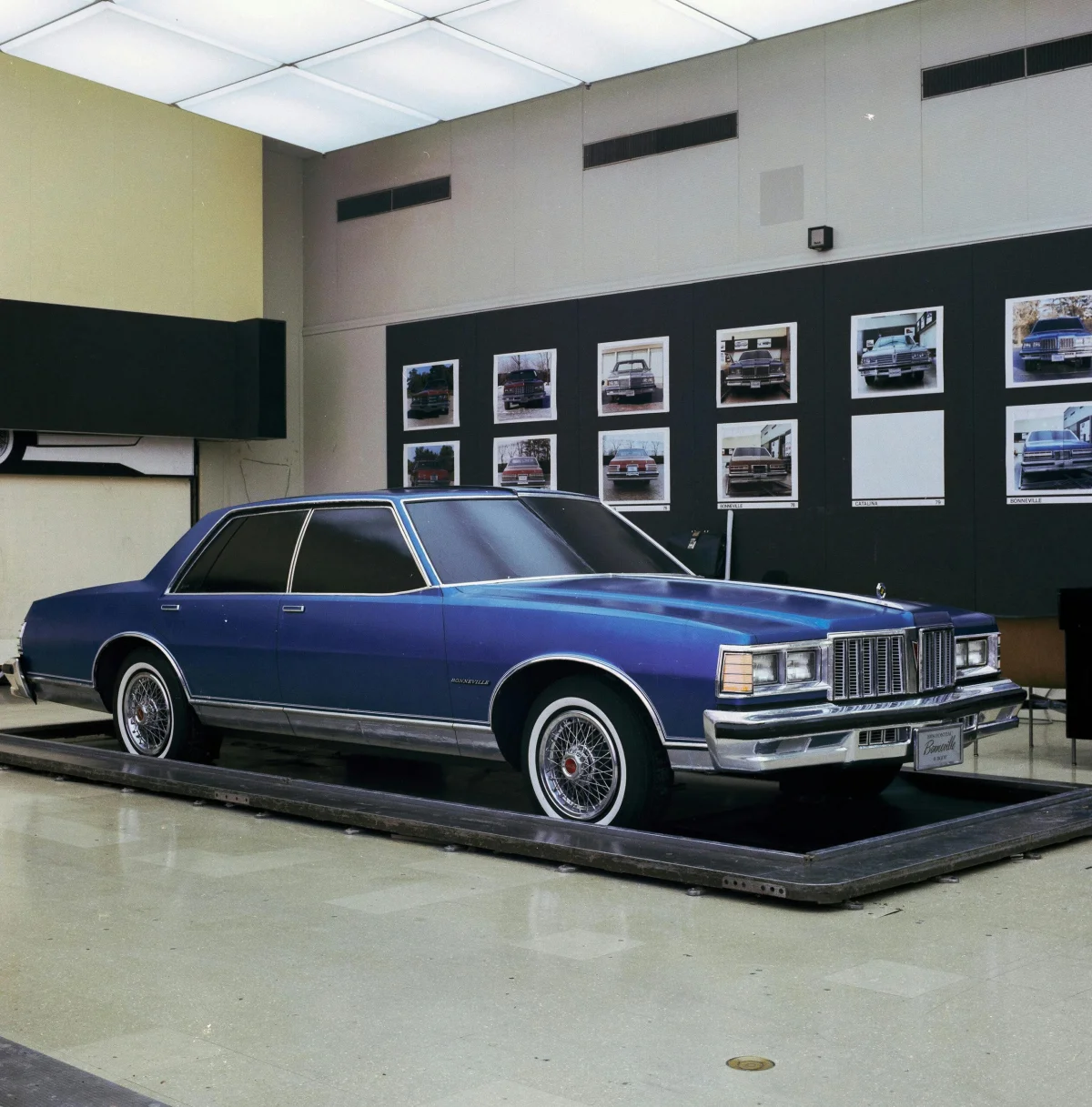
The updated cars arrived as buyers were turning away from traditional full-size models. Pontiac’s big-car sales fell 56 percent in 1980, to 98,533, the division’s weakest year since 1942. The Catalina took the hardest hit. Sales reached 101,335 in 1981, but Pontiac’s leadership had already decided the division needed a different direction.
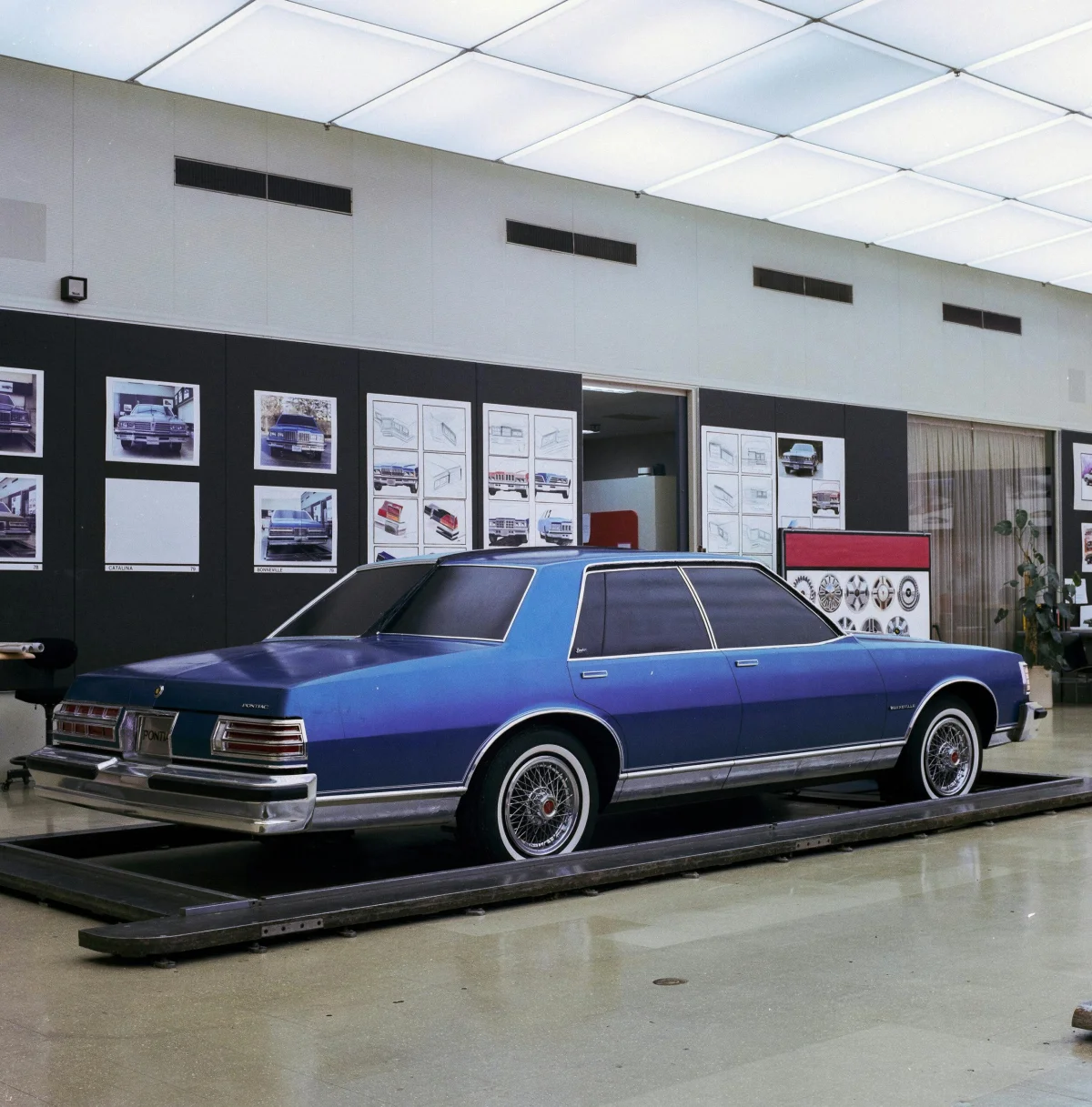
Robert Stempel, who had become Pontiac’s general manager, moved to end the B-body Bonneville and Catalina as the division looked toward smaller cars. Bill Hoglund replaced him in November 1980. The decision came even though Pontiac had sold more than 80,000 Bonnevilles that year, and it left the division without a conventional full-size car for 1982.
What came after the B-body
Pontiac’s interim answer was the Bonneville G, a lightly restyled version of the former LeMans sedan and wagon. The LeMans coupe and its familiar name were dropped. The move reflected a broader problem: Pontiac had spent much of the 1970s reacting to what other GM divisions were selling, adding luxury cues or chasing neighboring market segments without a consistent sense of direction.
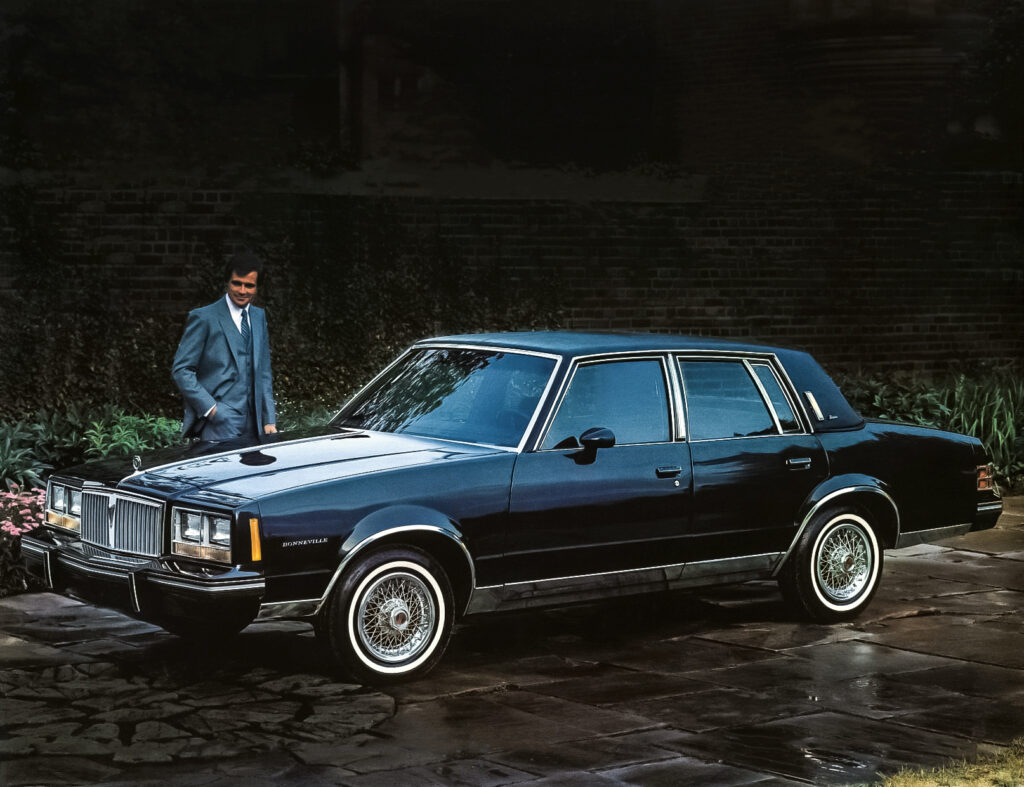
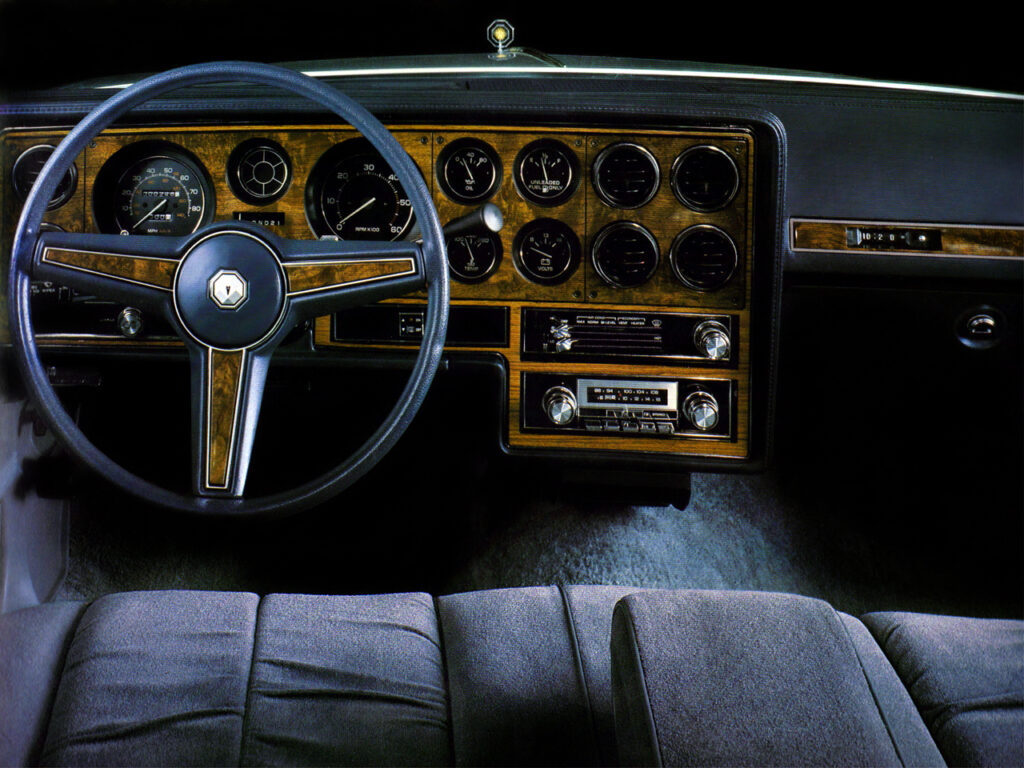
Hoglund had a long connection to Pontiac, dating to 1964, and Henline described him as a committed manager who understood the division. In January 1981, Hoglund brought Pontiac leaders, including Henline and Schinella, together for an “Image Conference” to rethink the brand. The work helped shape the cleaner, European-inspired Pontiacs of the 1980s, including the Firebird and 6000, and the slogan “We Build Excitement.”
That new direction didn’t erase demand for a conventional rear-drive Pontiac. Canadian dealers continued building a B-body version in Oshawa under the Parisienne name after Pontiac ended its U.S. models. Dealers in the American Midwest also wanted a large car as fuel prices eased from their earlier peak. The Parisienne reached the United States in 1983 and sold well enough for Pontiac to restore the rear styling of the 1980 Bonneville for the 1985 and 1986 models.
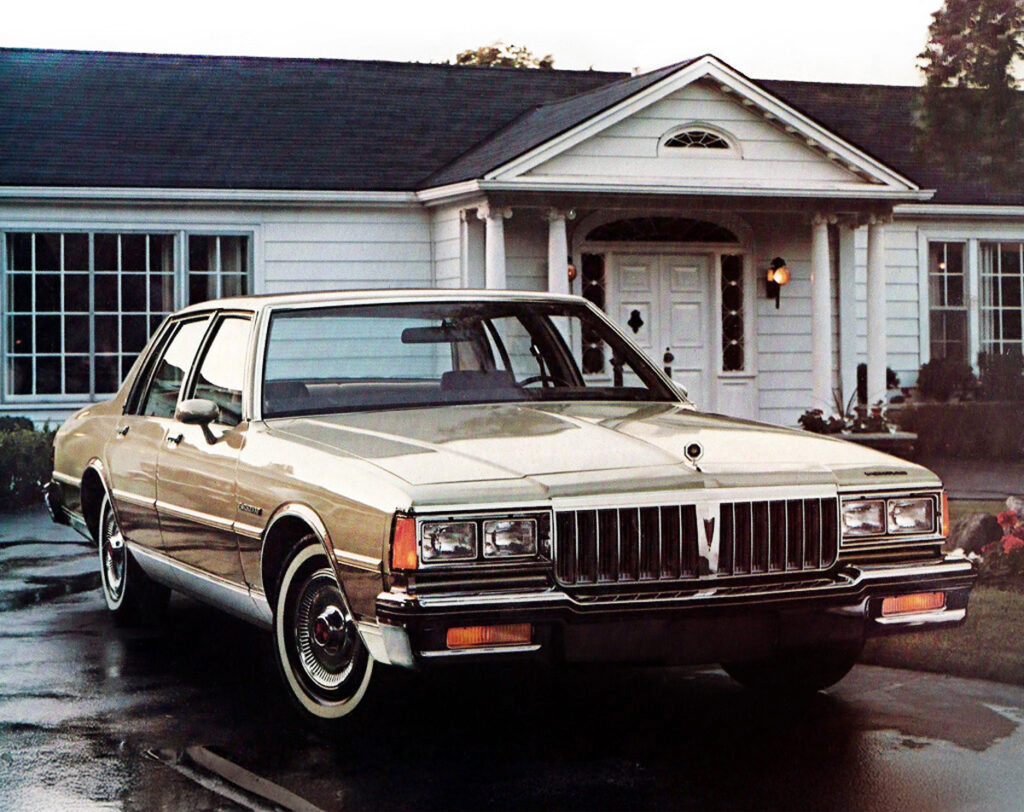
The Parisienne gave way to the front-drive H-body Bonneville in 1987, a clean break designed by Schinella’s group. The Pontiac Safari wagon, which retained nearly the same styling as the 1977 car, lasted until 1989. Its departure ended the final chapter for this generation of rear-drive big Pontiac.
Henline’s career carried on through several later Pontiac projects. His team was beginning work on the 1985 Grand Am around the time the B-body models were being dropped. Demand for the new Grand Am quickly outpaced supply, and it became Pontiac’s best seller. Henline also took particular pride in the 1988 Grand Prix, which paired a fresh design with extensive wind-tunnel work and later competed on track with driver Rusty Wallace.
He continued designing until 2001. His later work included the 1990 Trans Sport minivan, as well as projects outside Pontiac such as the Chevrolet Avalanche and Hummer H2. He still drives GM cars, along with a 2013 Mini Cooper S that he enjoys for its lively response when the turbocharger comes on boost.
A surviving Bonneville on the road
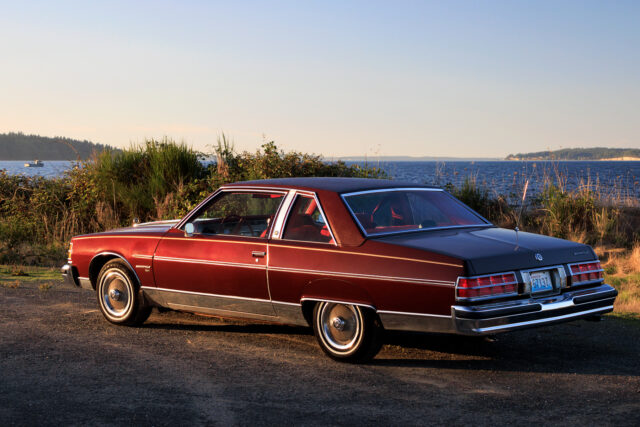
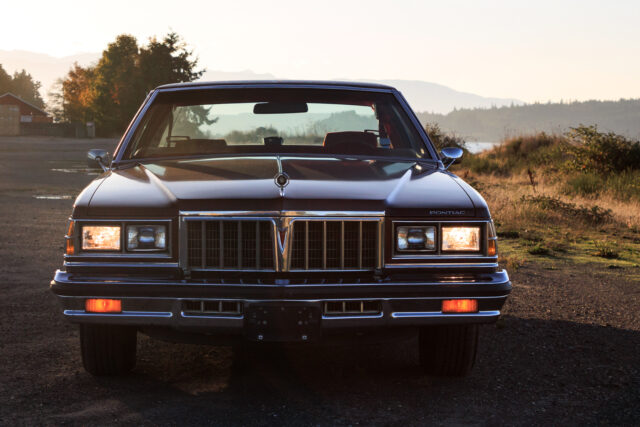
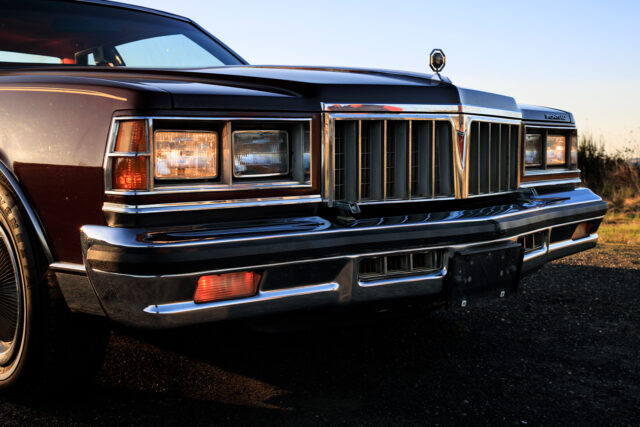
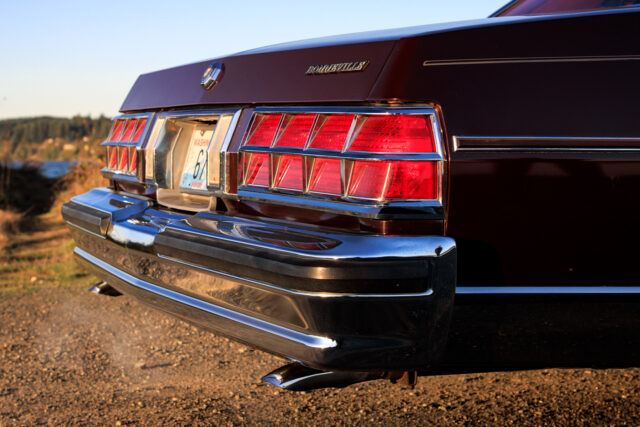
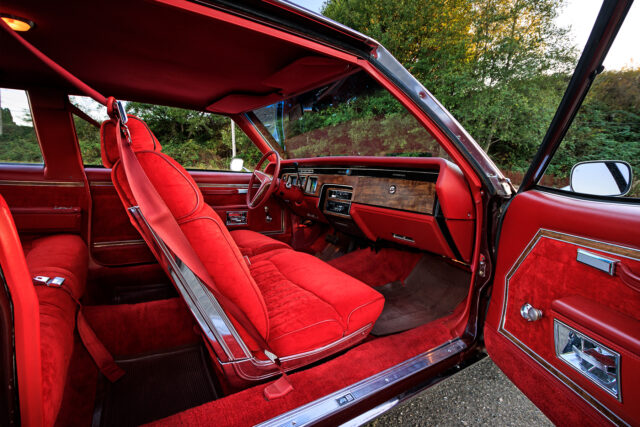
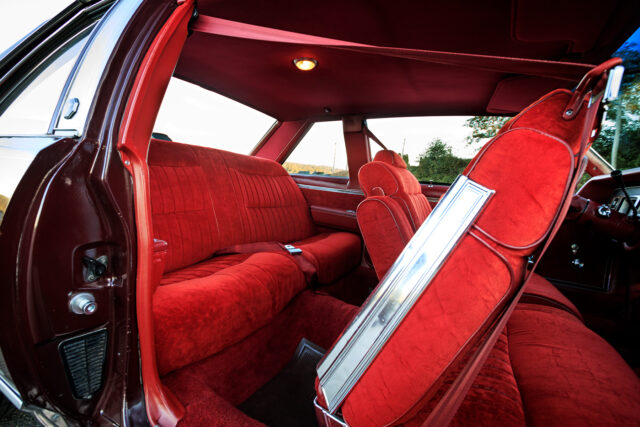
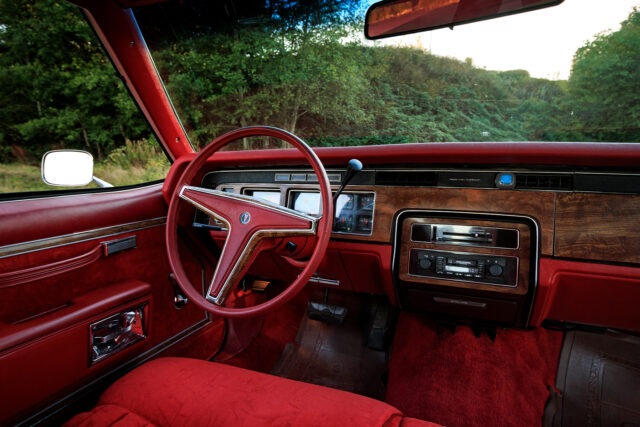
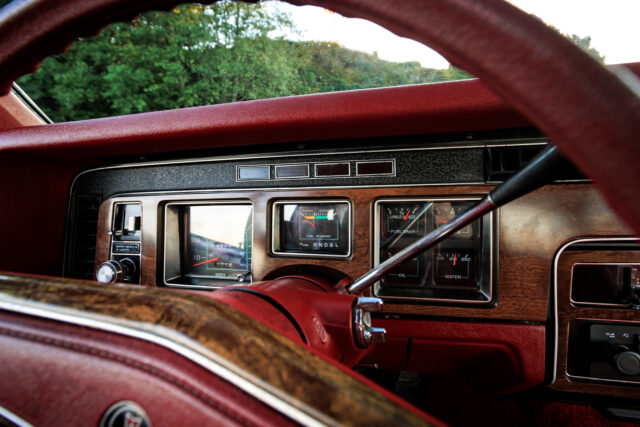
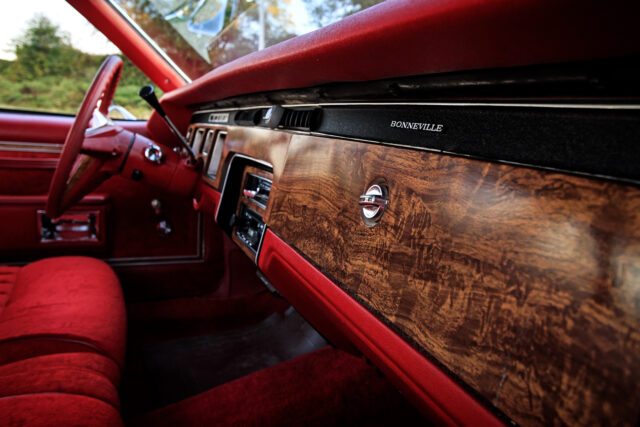
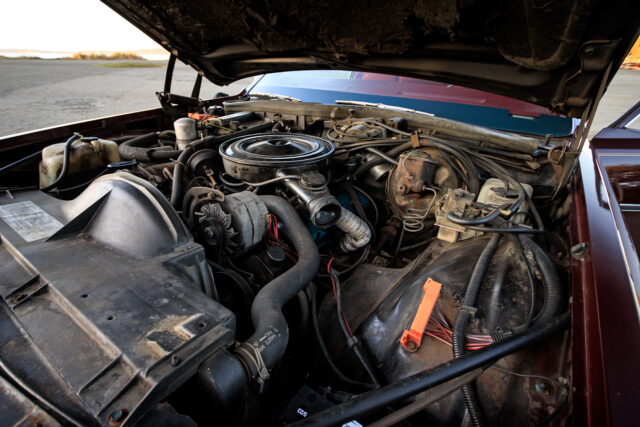
Marchese bought his burgundy 1978 Bonneville after missing a 1977 Chevrolet Impala he had owned in Minnesota. The Pontiac had spent 42 years with its second owner before Marchese acquired it. He later fitted the original turbine-style hubcaps, a small detail that suits the car’s broad sides and formal look.
On a drive across the Kitsap Peninsula, the Bonneville’s strengths were clear: its 301 V-8 makes a pleasant burble, the ride is smooth and the cabin has space comparable to a modern car. It isn’t quick, but speed was never the point. It feels like a well-appointed, full-size cruiser, with the same basic hardware family as an Impala but enough Pontiac-specific detailing to make it feel like its own car.
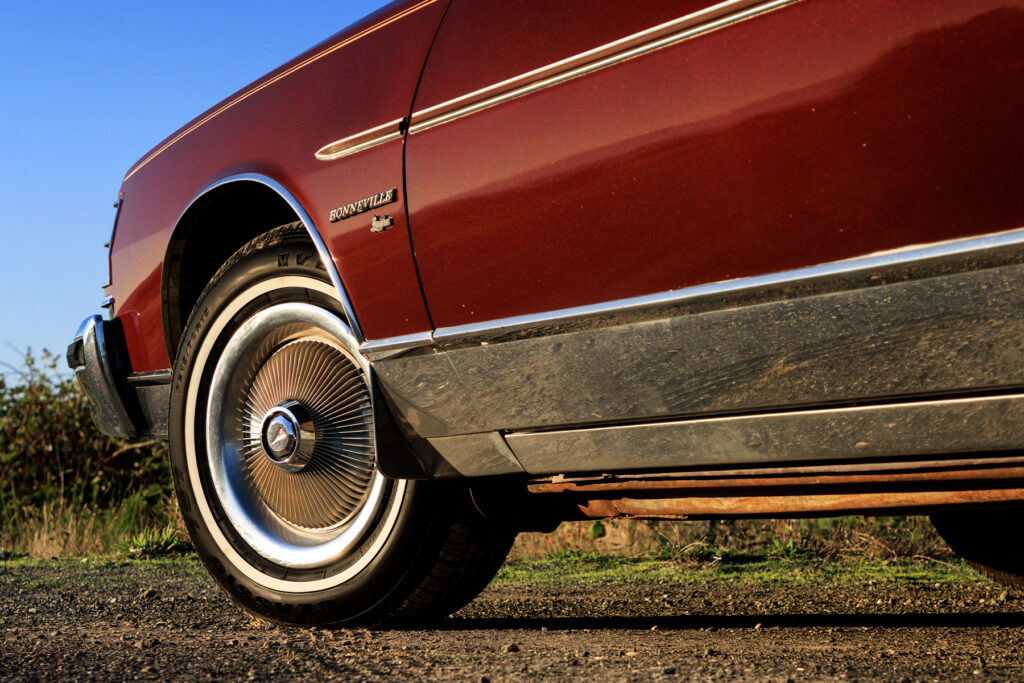
For Marchese, the design also carries the memory of growing up in Queens, where large American coupes and sedans were part of the everyday view. He sees the Bonneville as a high point for GM’s big cars: downsized enough to feel more manageable, yet still spacious and powered by a V-8. The car’s shape and trim distinguish it from Oldsmobile, Buick and Chevrolet counterparts even when the underlying components are shared.
That distinction is part of the Bonneville and Catalina’s lasting appeal. The cars arrived as buyers were beginning to value efficiency and comfort differently, and their later sales collapse makes them seem less successful than they were. Yet between 1977 and 1979, Pontiac’s full-size models drew hundreds of thousands of buyers. Their short run left them scarce today, while the coupes’ disappearance from the market by 1988 makes the survivors especially compelling.
Full-size Pontiac sales by year:
- 1976: 137,216
- 1977: 207,920
- 1978: 200,894
- 1979: 226,300
- 1980: 98,533
- 1981: 101,335
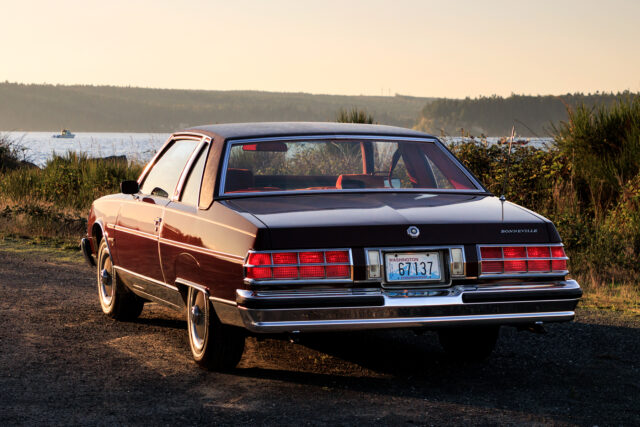
The last full-size Pontiacs weren’t the muscle cars that built the brand’s legend, and they weren’t meant to be. Their achievement was to preserve room, comfort and rear-drive character in a lighter package, then wrap it in a shape buyers could recognize as Pontiac. That combination explains why the Bonneville and Catalina still reward a closer look.
Related background: the Impala SS, the Chevrolet Caprice Classic, the Buick LeSabre coupe, Oldsmobile’s diesel-era cars, Paulo Martin’s Fiat 130 Coupe, and the Fisher Body Craftsman’s Guild.
Source: Hagerty Media.


