In lane Electric Vehicles
Honda CBR500R Four: 71 bhp, Standard E-Clutch and £6,999 Price
Description
Honda’s new 502cc four-cylinder CBR500R arrives in Europe in January 2027, pairing 71 bhp with standard E-Clutch tech for £6,999.
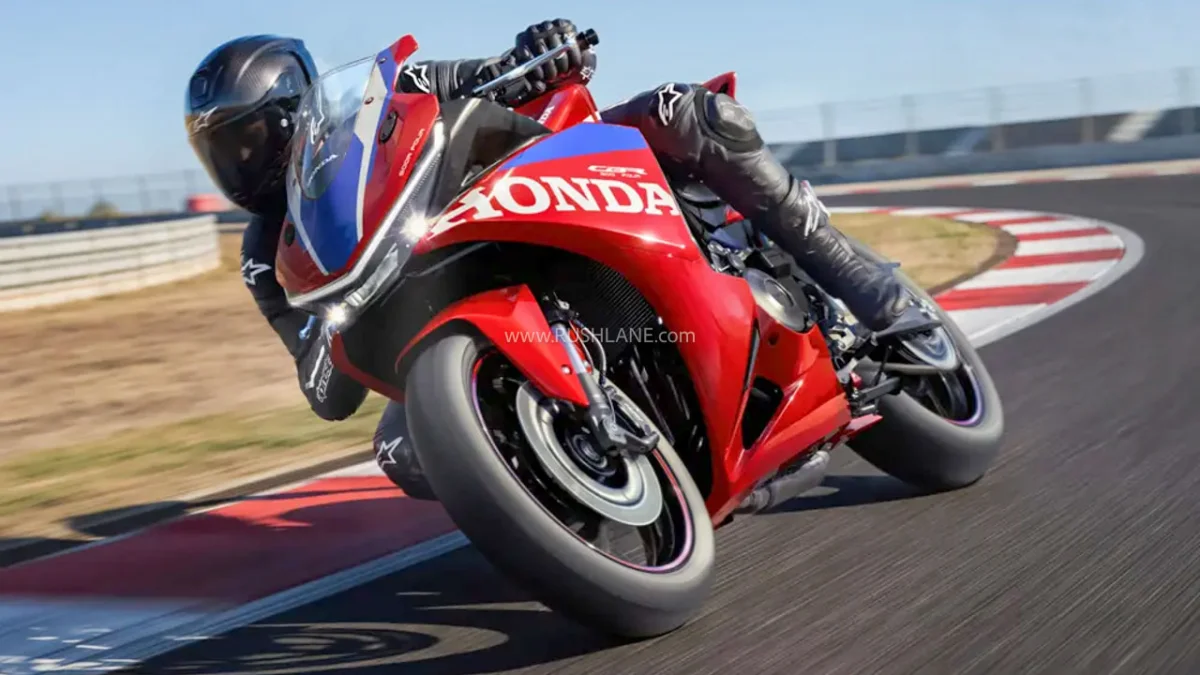
Honda’s new CBR500R Four brings a 502cc inline-four and standard E-Clutch to the middleweight sportbike class, with a UK starting price of £6,999. That’s £100 more than the parallel-twin CBR500R it sits apart from, while its stated rivals include the Kawasaki ZX-4RR, Kove 450RR and ZXMoto 500RR. European showroom availability is scheduled for January 2027.

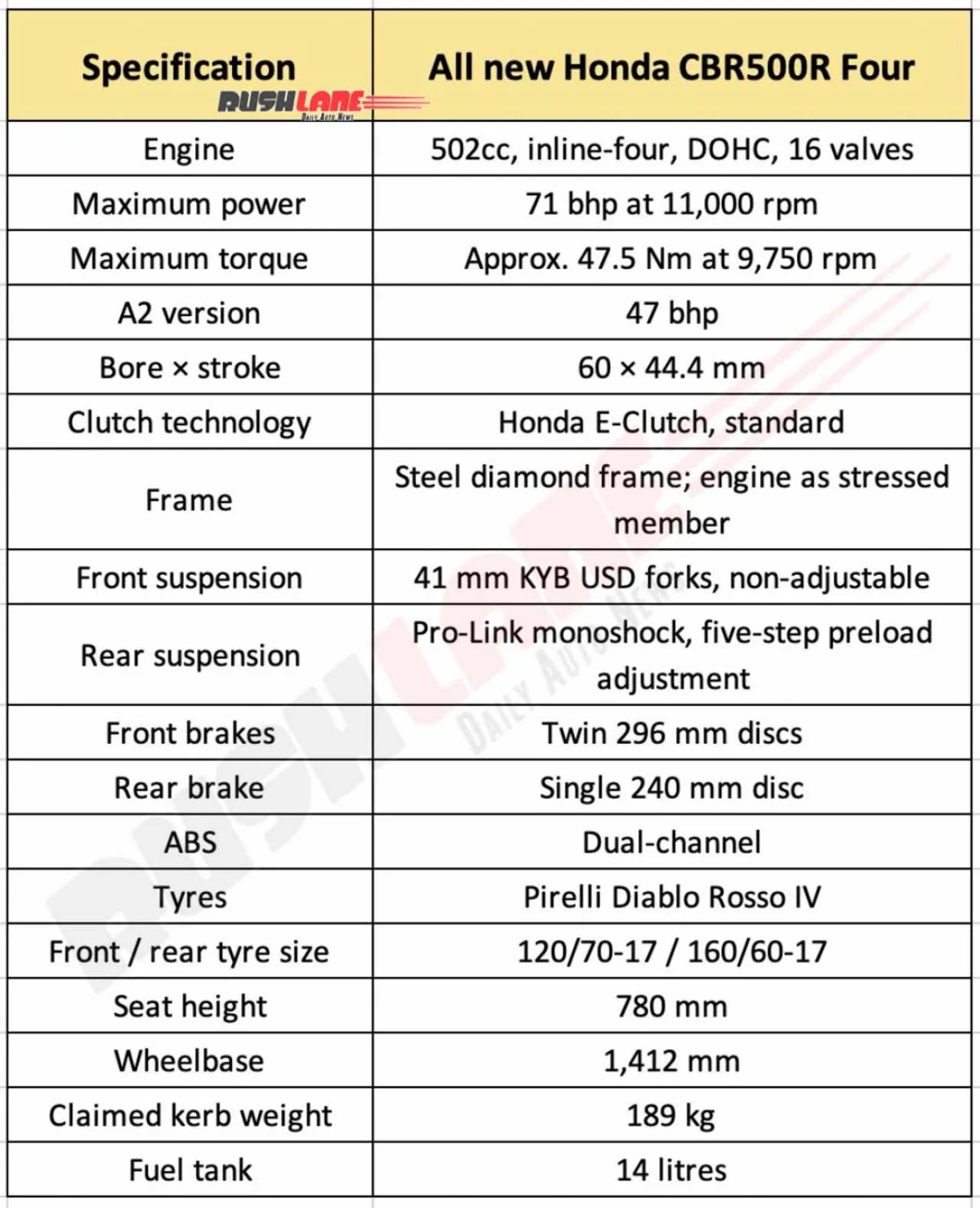
The change in engine layout is the headline. Honda has given the Four a new DOHC, 16-valve engine producing 71 bhp at 11,000 rpm and 47.5 Nm of torque at 9,750 rpm. Riders holding an A2 licence in Europe will also have a 47 bhp version available. The figures point to an engine that makes its peak power high in the rev range, while the torque peak arrives at 9,750 rpm; the source provides no acceleration, top-speed or fuel-consumption figures.
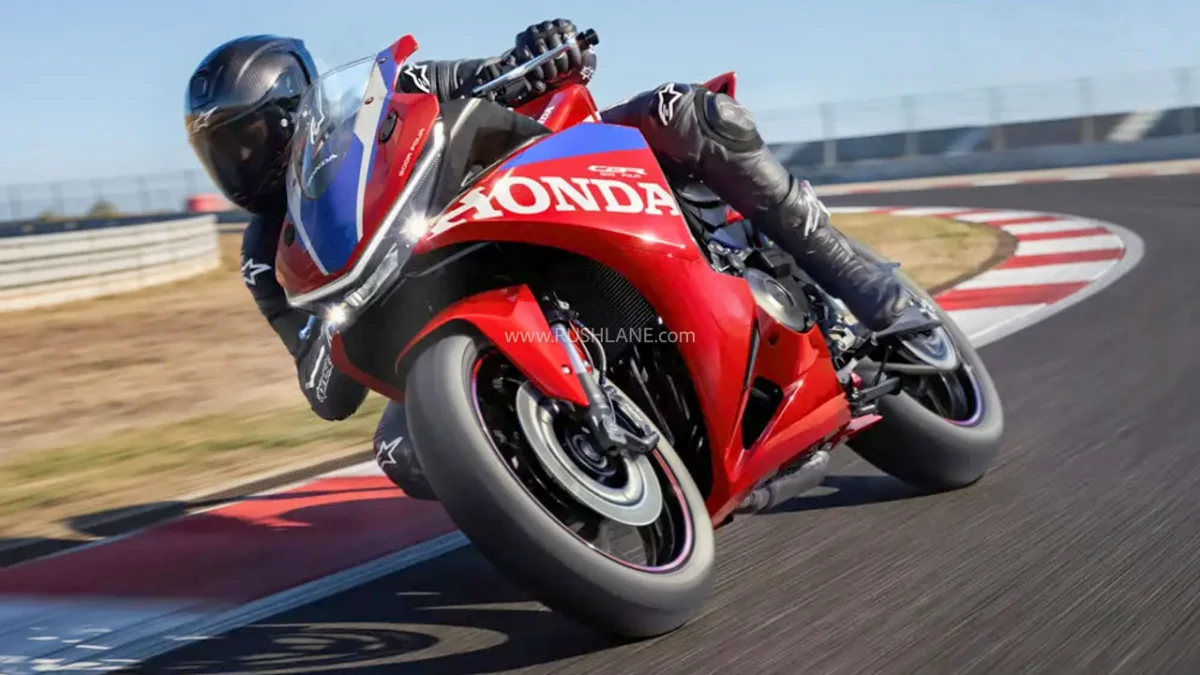
Four-cylinder character, with a focus on friction and airflow
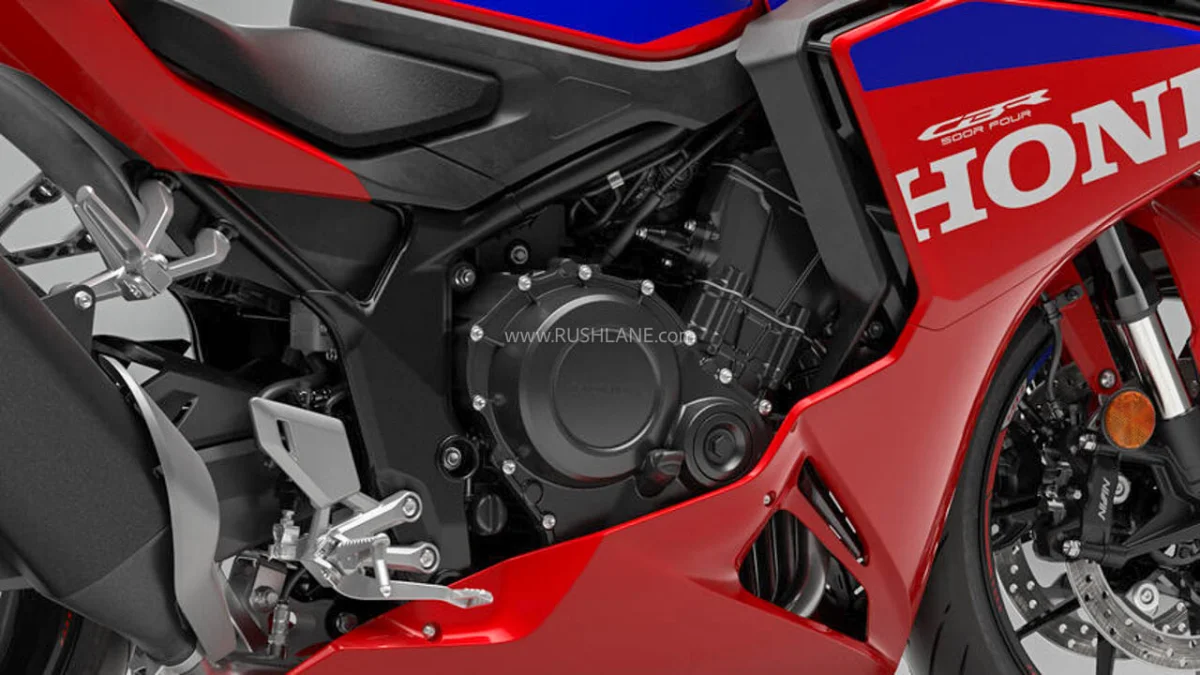
Honda says the engine’s construction and intake are designed to support performance and response. Nickel-silicon carbide cylinder plating replaces conventional cylinder sleeves, while diamond-like carbon coating on the valve lifters reduces friction. A revised valve angle helps achieve a high compression ratio, which Honda says benefits both performance and fuel efficiency. No efficiency data is provided, so the real-world effect will have to wait for riding figures.
A new downdraft intake layout is intended to improve air-fuel filling and sharpen throttle response. Honda also says it gives the engine a distinctive sound. The exhaust uses a 4-2-1 arrangement with a three-chamber return structure. Together, these details give the CBR500R Four a technical identity beyond its extra cylinders, though the available specifications don’t establish how its character compares on the road with the Kawasaki, Kove or ZXMoto rivals.
For buyers weighing it against the older CBR500R, the price difference is relatively narrow: £100 in the UK. That comparison comes with a substantial change in engine configuration, but the source doesn’t provide a like-for-like equipment list or the older bike’s performance figures. The Four’s value will depend partly on how riders rate its engine, standard clutch system and electronic equipment once they can try it.
E-Clutch is standard, with a choice of riding modes
Honda fits its E-Clutch system as standard. It can operate the clutch during starts, gear changes and stops, while still allowing riders to use the clutch lever for manual control. That flexibility is the practical point: riders can let the system handle clutch operation when it suits them, then return to the lever without giving up conventional control. The source doesn’t detail how the system behaves in every riding situation or whether it adds weight compared with a manual setup.
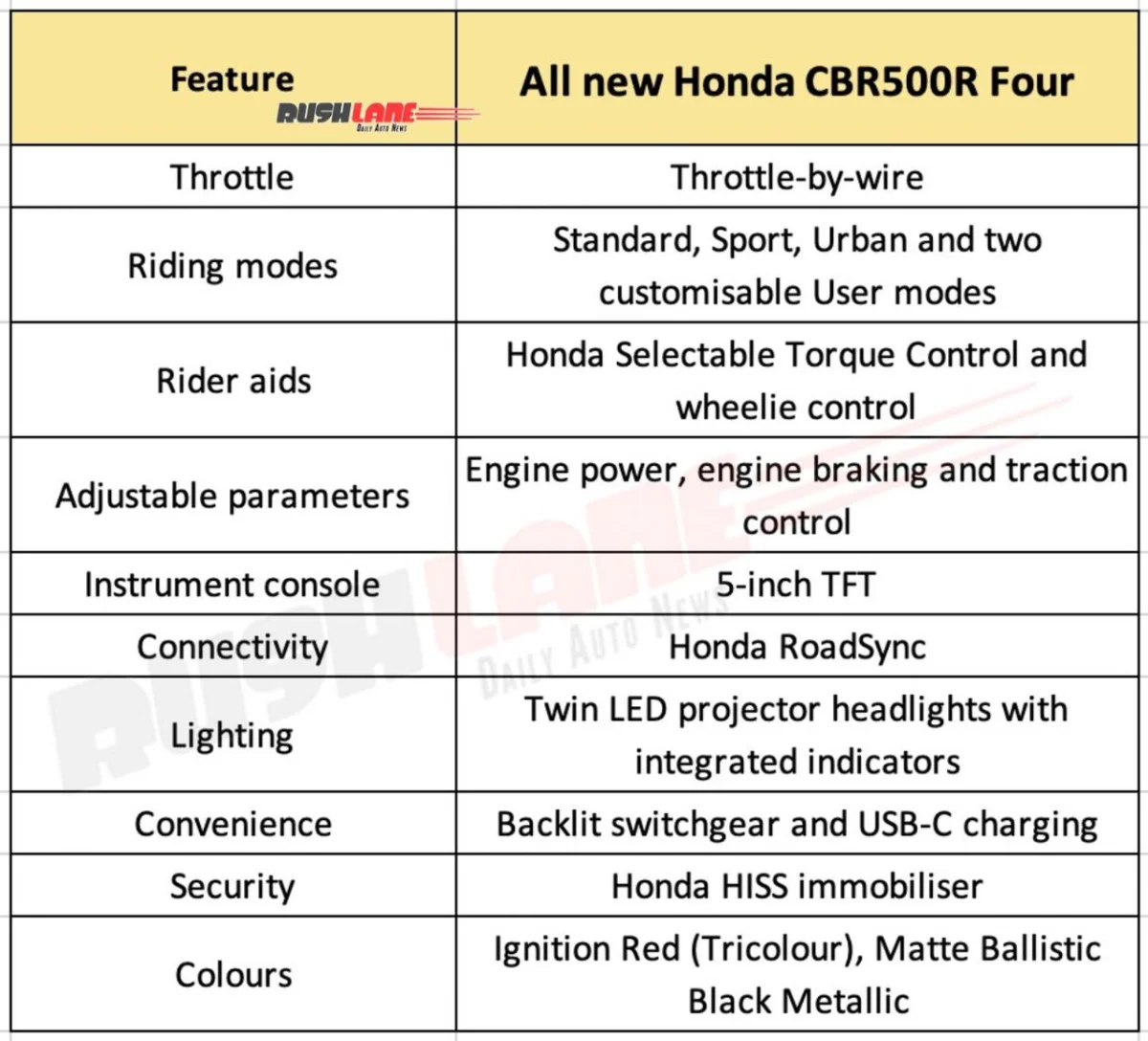
The electronic package includes throttle-by-wire, Honda Selectable Torque Control and Wheelie Control. There are five riding modes: Standard, Sport, Urban and two modes riders can customize. Those settings give the bike several ways to tailor its responses, although Honda’s supplied information doesn’t explain the individual parameters for each mode.

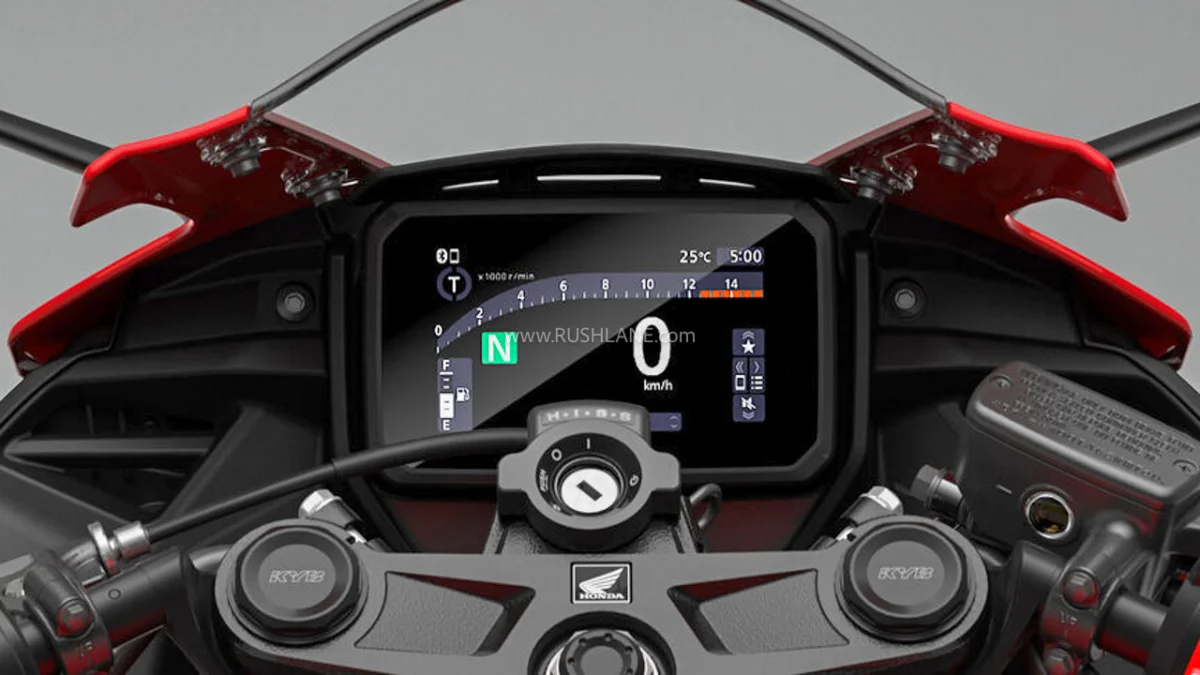
A 5-inch TFT display runs Honda RoadSync and connects to a phone over Bluetooth. Riders can access calls, messages, music and navigation, and choose from three display styles and customizable backgrounds. A USB Type C port adds a way to charge a device on the bike. For everyday use, the screen and phone functions are among the features likely to matter as much as the engine headline, especially for riders who expect navigation and communication tools on longer trips.
Chassis, braking and dimensions
The CBR500R Four uses a new steel tube diamond frame, with the engine serving as a stressed member. Suspension comes from 41 mm KYB upside-down front forks and a rear monoshock. Braking hardware comprises twin 296 mm front discs with Nissin callipers and a 240 mm rear disc; dual-channel ABS is standard.
Both wheels measure 17 inches and wear Pirelli Diablo Rosso IV tyres: 120/70 at the front and 160/60 at the rear. Honda lists a 780 mm seat height and 189 kg kerb weight. Those numbers offer a useful first picture of fit and mass, but the source doesn’t provide seat width, ground clearance or suspension adjustment details to fill out the ownership picture.
Security equipment includes Honda Ignition Security System, with an alarm available as an option. Styling features an aggressive front end with twin LED projector headlights, an aero-efficient fairing, sculpted tank, split seat and upswept exhaust. The two listed colours are Ignition Red (Tricolour) and Matte Ballistic Black Metallic.
Honda’s pitch rests on the combination of a high-revving four-cylinder, standard E-Clutch and a broad electronic feature set at a UK price just above the twin-cylinder model. The next useful comparison will come from full equipment and performance data for its named rivals, followed by road tests that can show how the engine, clutch system and 189 kg kerb weight work together in daily riding.