In lane Electric Vehicles
Shops Bill More Destructive Weld Tests, but Fewer Report Regular Payment
Description
Only one in four shops that bill for destructive weld testing say they’re paid regularly, while more shops report performing the procedure.
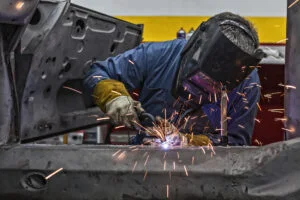
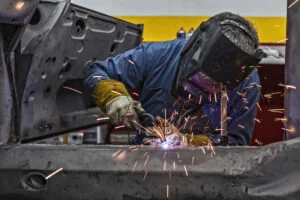
More repair shops are billing for destructive weld testing, but reimbursement is moving in the opposite direction. The latest “Who Pays for What?” survey found that only one in four shops listing the procedure on estimates are paid for it regularly, down from 37% two years ago. Meanwhile, the share reporting that insurers never pay has climbed to 44%, up from 32% over the same period.
That gap puts the time and cost of verifying weld settings at the center of a practical repair question: shops may recognize the procedure as necessary, yet still struggle to recover its labor expense. The survey was facilitated by CRASH Network and Collision Advice.
More shops are putting the work on estimates
A decade ago, more than 80% of shops said they never listed destructive weld testing on their estimates. The latest survey puts that figure at a record low of 31%. CRASH Network and Collision Advice interpret the change as a sign that more shops know the procedure should be performed, even as payment remains difficult to secure.
Mike Anderson of Collision Advice said the reimbursement shortfall concerns him because, in his view, testing should be performed for every type of weld made on a vehicle. He described it as a non-negotiable step and said automakers specify that it should be done. His explanation is practical: weld settings can be difficult to assess without first making destructive test welds.
For repair businesses, the survey figures point to two separate decisions: whether to perform the test and whether to document and bill for the time. The decline in shops that never list the operation suggests broader recognition of the work, while the payment responses show that billing alone doesn’t ensure reimbursement. The survey doesn’t quantify the labor hours or costs involved, so it can’t show how much the payment gap affects an individual shop’s estimates.
Anderson calls for more support
Anderson urged other parts of the collision repair industry to help more shops carry out weld testing. He challenged automakers to sell weld test coupons alongside replacement panels that have welded sections, and called on I-CAR to develop more training and videos on the procedure.
Those suggestions focus on making the process and its requirements easier for shops to put into practice. The survey results, however, describe payment experiences rather than the availability of coupons, training or other resources. They also don’t identify why insurers decline payment, or whether the responses differ by insurer or repair type. The data establishes a reported trend, but leaves those causes open.
Survey shifts to body labor operations
The latest quarterly “Who Pays for What?” survey is open through the end of the month and focuses on body labor operations that aren’t included in standard estimating procedures. Shops can take the survey here. It takes about 15 minutes and is intended for people familiar with their shop’s billing practices and the payment practices of at least some of the largest national insurers.
Participants receive a free report with the full findings, analysis and resources intended to help shops interpret the results. Individual responses are kept confidential, with only combined data made public. Results from earlier surveys are available online.
Earlier findings on adjacent panel preparation
A survey conducted earlier this year asked shops for the first time whether they bill for extra time spent preparing an adjacent panel, and how often they’re paid for it.
The issue arises when a repair plan calls for blending paint into a neighboring panel whose existing finish has texture problems, such as orange peel, or other imperfections. Those defects may need attention before the color is blended or the clearcoat is extended. The work can involve additional sanding, leveling or surface refinement beyond the light scuffing typically used to prepare a new, undamaged panel.
According to CRASH Network, the additional labor isn’t included in standard refinish, blend or clearcoat operations in any of the three estimating systems. The time therefore depends on the condition of the existing finish that needs correction. Just over two in five shops itemize these operations on estimates; about half of that group said the eight largest national insurers pay for them always or most of the time.
Both survey topics turn on work that may sit outside standard estimating operations: documenting what a repair requires, then seeing whether payment follows. For weld testing, the latest figures show more shops listing the procedure and fewer reporting regular payment. How the open survey measures other body labor operations will offer another view of where that gap appears.
Featured image credit: TerryJ/iStock
===

