In lane Electric Vehicles
California BAR Revises Auto Repair Storage Fee Rules Before New Comment Period
Description
California’s repair bureau is clarifying proposed storage fee rules after OAL feedback. Revised text will get a 15-day comment period.
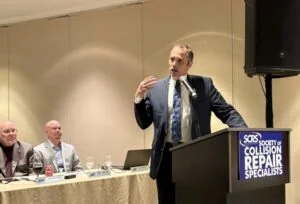
California’s proposed rules for vehicle storage fees at auto repair shops are being revised for clarity before they return for public comment. The Bureau of Automotive Repair (BAR) withdrew its final package from the Office of Administrative Law (OAL) after OAL flagged wording that could be interpreted inconsistently. BAR says the feedback concerned how provisions were written, rather than its authority to address the fees.
The next step is a new 15-day comment period. Its start date hasn’t been set: BAR must first finish revising the identified sections. For repair businesses, that interval will be the next chance to assess how the revised wording could affect storage charges, customer notices and day-to-day vehicle handling.
What changed in the rulemaking process
AB 1263, passed in 2024, gave BAR authority to address storage fees charged by automotive repair dealers (ARDs). It also allows the bureau to codify its guidance and bring existing rules on the subject together. The proposal includes requirements related to teardown disclosures as well as vehicle storage.
BAR’s Advisory Group said on July 30 that the bureau had sent its final package to OAL on May 19, then withdrew it on June 26 to respond to OAL’s concerns about the clarity of several provisions. Ebenezer Arreola, a California Department of Consumer Affairs public information officer, said OAL identified wording that needed refinement to support consistent interpretation and application. BAR plans to resubmit the modified text once those revisions are complete.
The agency’s process allows a revised package to go through another comment window before it returns to OAL. People who sign up for BAR email notifications will receive the modified text notice, including the comment dates and instructions for submitting feedback. The sign-up page is available here.
Workshops on the proposed changes were held April 25, July 18 and Oct. 17, 2024, and Jan. 30, 2025. After the new comment period closes, BAR plans to submit the final package to OAL for final approval and adoption. BAR expects the rules to take effect Jan. 1, 2027.
OAL told Repairer Driven News that an agency may typically resubmit a withdrawn rulemaking within one year of the date its Notice of Proposed Action was published. BAR’s notice was published Nov. 14, 2025. The schedule for the revised text and comment period will determine how the remaining steps fit within that window.
Requirements repairers will be watching
As currently proposed, the rules would require storage fees to be reasonable and specify when a repair dealer may charge them. Shops would need to store a vehicle at the primary business address registered with BAR. Before moving a vehicle, the shop would have to tell the customer where it is going; moving it would not be billable without customer authorization.
The proposal would also require an itemized invoice whenever storage fees are charged. Repair dealers offering storage services would have to post their current daily rates where customers commonly visit. When renewing registration, they would report their maximum daily storage rate to BAR, with one opportunity to change that reported maximum during each registration cycle.
Businesses with a motor carrier permit would have to display the Towing and Storage Fees Access Notice in a place plainly visible to the public and keep copies available. BAR would also create an online search tool showing average and median daily storage rates for a given locale, calculated from the maximum rates that repair dealers report. The proposed definition of a locale uses one of four geographic radii around each reporting business.
Together, these provisions would give customers more information about posted rates and billed charges, while creating a reported rate dataset for local comparisons. The details matter: the way the final text defines when fees may be charged, how a location is identified and what counts as a reasonable fee will shape how shops apply the rules in individual cases.
Disagreement over costs and delays
Repairers and the California Auto Body Association have objected to parts of the proposal, particularly language they say could limit storage fees and reduce storage revenue. Their concerns also include delays in repair authorization. At a Jan. 21, 2025, open meeting of the Society of Collision Repair Specialists board, repairers argued that the proposed rules would not hold third-party payers accountable for authorization delays, including delays in deciding whether a vehicle is a total loss. They said those waits can lead to storage charges being deducted from customer payments.
BAR chief Patrick Dorais and program manager Mathew Gibson outlined the proposal at that meeting. Dorais returned to the subject at the board’s January meeting this year, describing a history of disputes over towing and storage fees in California that dates to the 1960s.
That history helps explain why the next draft will draw close attention from repair businesses and customers alike. The practical test will be whether the revised language makes storage charges easier to understand and apply while addressing repairers’ concerns about who bears the cost when decisions take time. BAR’s new text and the dates for public feedback will show where the proposal stands on those questions.
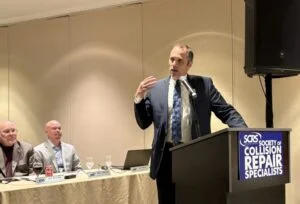
Featured image: California Bureau of Automotive Repair Chief Patrick Dorais speaks at an SCRS open meeting in Palm Springs on Jan. 20, 2026. RDN file photo.


