In lane Electric Vehicles
Brütsch Mopetta Replica: 49cc Three-Wheeler Offered in the UK
Description
A newly built Mopetta replica pairs period-style 49cc running gear with the tiny three-wheeler’s distinctive central seat and 124 mpg history.
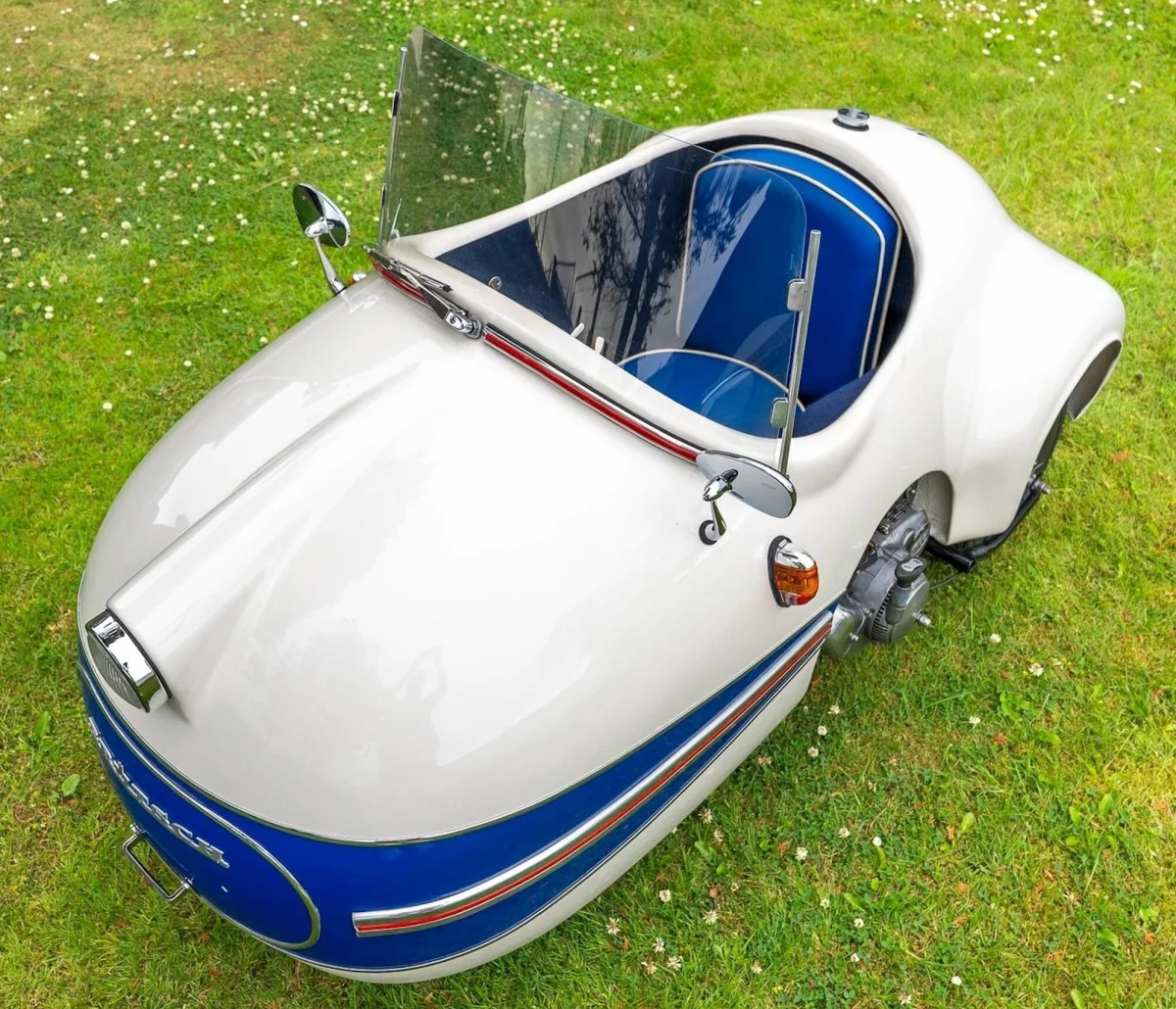
A newly completed Brütsch Mopetta replica puts one of the smallest and rarest 1950s microcars back on the road. Offered from Millisle in the United Kingdom, it recreates the single-seat, three-wheel design with a 49cc JLO engine and three-speed gearbox. The seller says it starts on the first pull and runs and drives well; the car is unregistered and has never been registered since completion.

That distinction matters to buyers: this is a new build using period-correct parts, not one of the few surviving original Mopettas. The original production run amounted to just 14 cars, built between 1956 and 1958. The replica’s listing gives it the look and basic mechanical layout of the German design while sidestepping the scarcity of an original, though no asking price is stated in the source.
A tiny car with a moped’s mechanical logic
Egon Brütsch designed the Mopetta around an unusually compact proposition: a central driving position, an egg-shaped fiberglass body and three wheels. At 1.7 meters (5 feet 7 inches) long and roughly 88 to 91 centimeters (about 35 to 36 inches) wide, it was far smaller than established microcars such as the BMW Isetta and Messerschmitt KR200. Its 50cc classification in West Germany also helped make it cheaper to own and simpler to operate under the rules of the time.
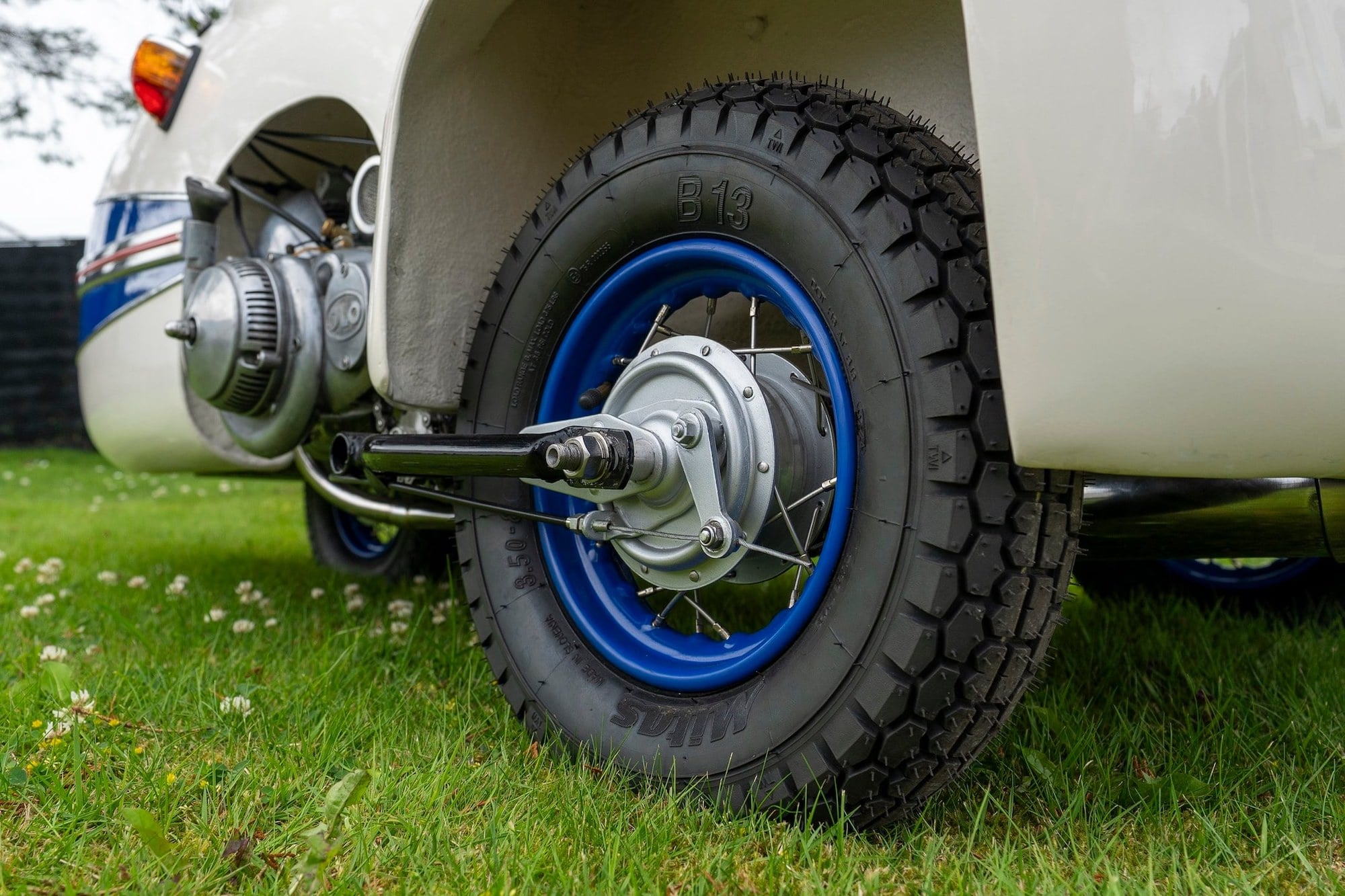
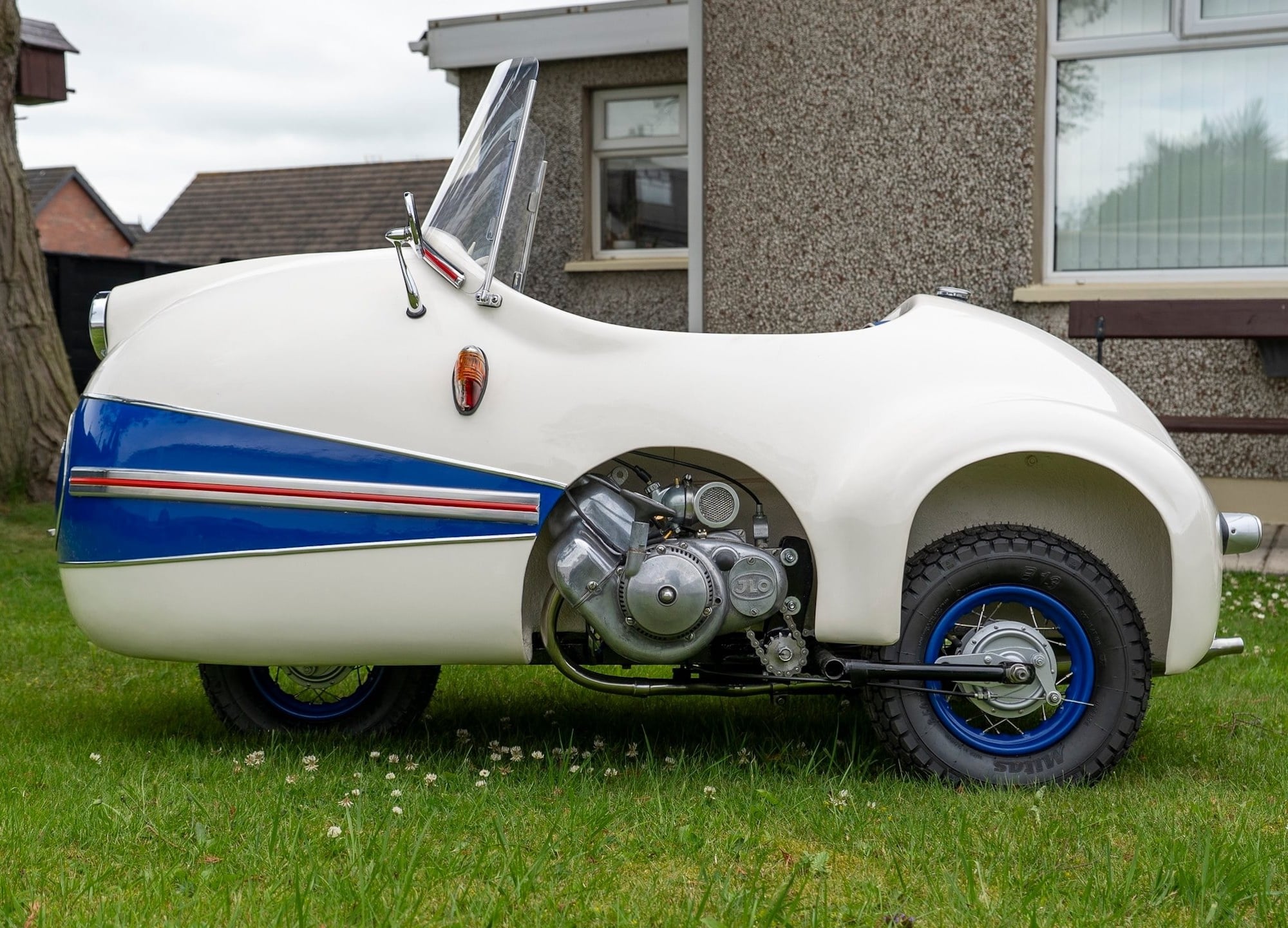
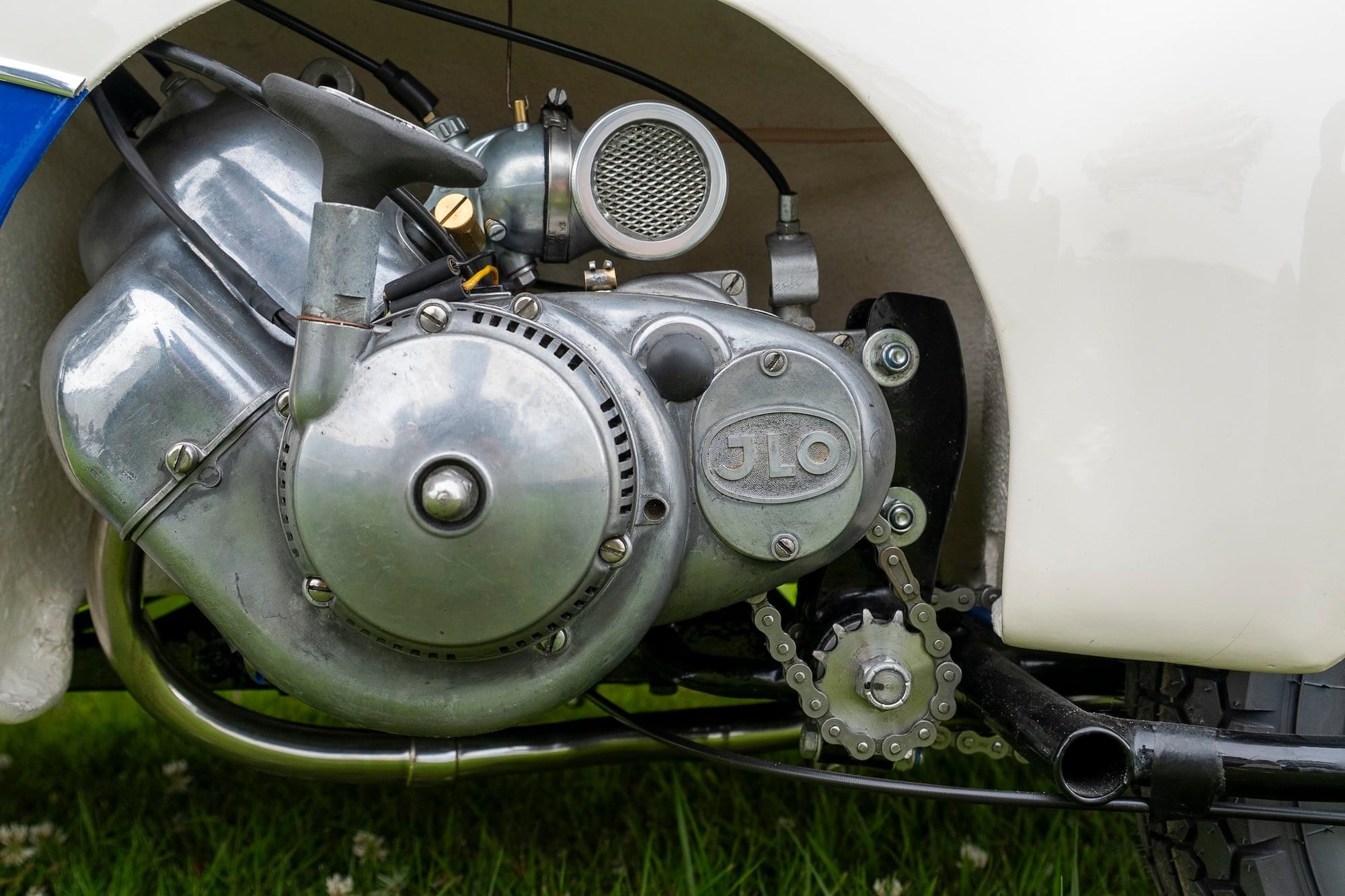
Production cars used an air-cooled, 49cc ILO two-stroke single rated at 2.3 bhp. A pull cord started the engine, which sat beside the driver on the left and incorporated a three-speed gearbox. There was no reverse. A chain transmitted power to the left rear wheel, leaving the front wheel to steer and the two rear wheels to support the tail.
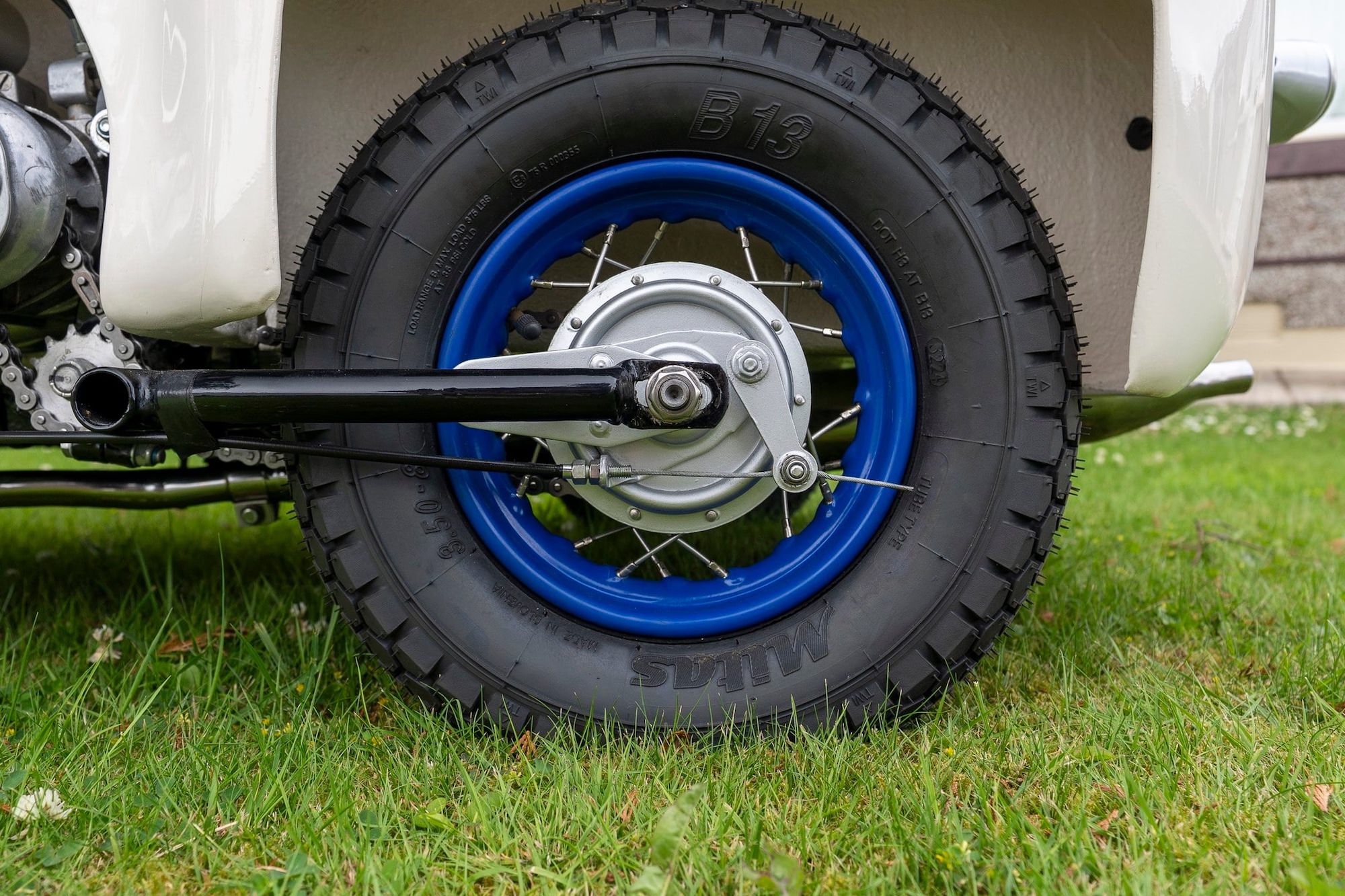
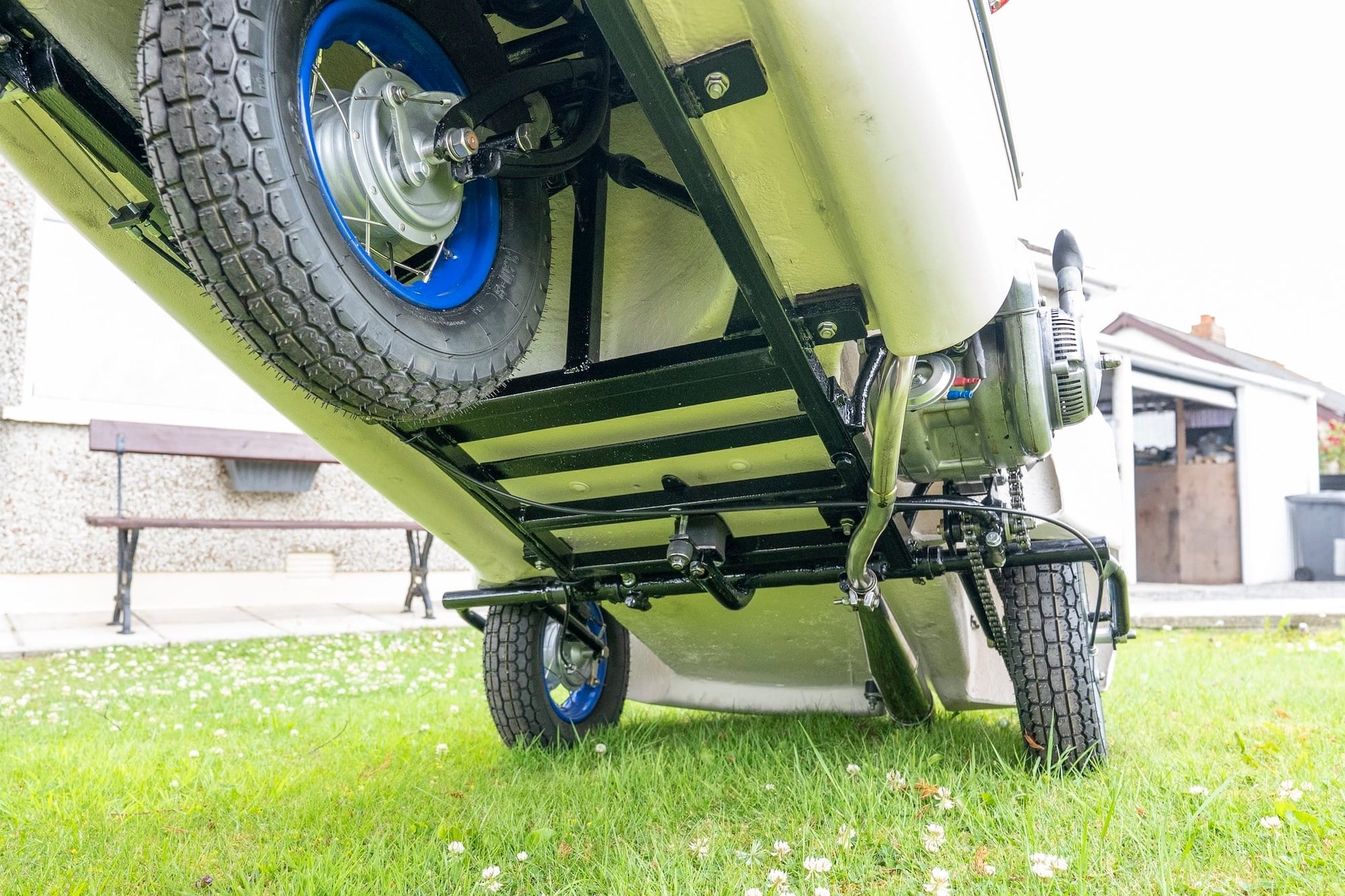
The chassis was a short steel ladder frame with a doorless fiberglass body bolted on top. The front wheel used an Earles-type fork, while trailing arms carried the rear wheels; rubber provided the springing at both ends. Drum brakes served all three wheels. A handlebar lever operated the front brake and a foot pedal controlled the rear pair.
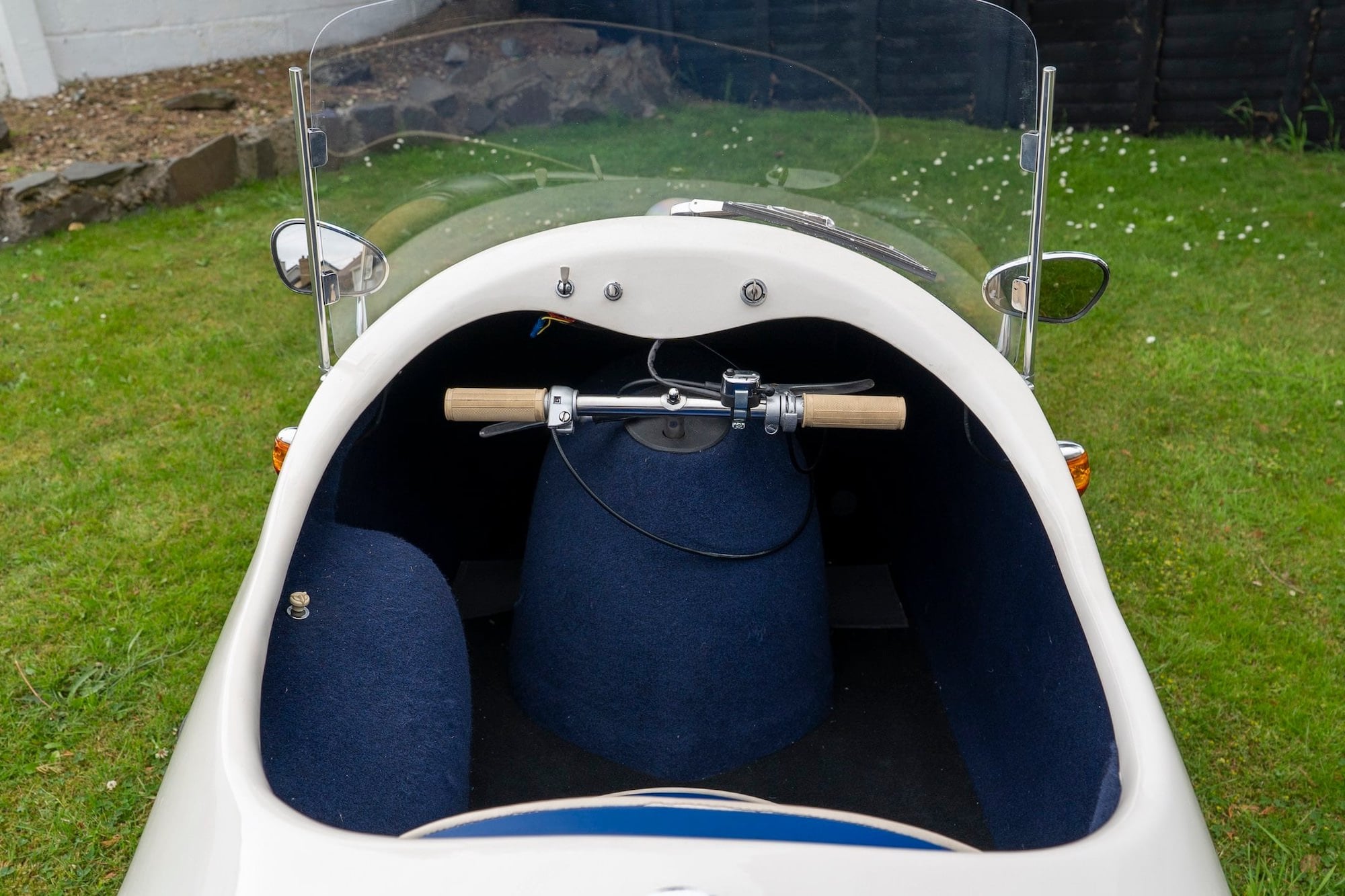
Controls followed motorcycle practice. The bars turned just a quarter-turn from lock to lock, with the clutch and twist-grip gear selector on the left and the throttle and front brake on the right. Magneto ignition and a six-volt electrical system powered a single headlamp, which worked only while the engine was running. The car weighed 78kg (172lb) empty.
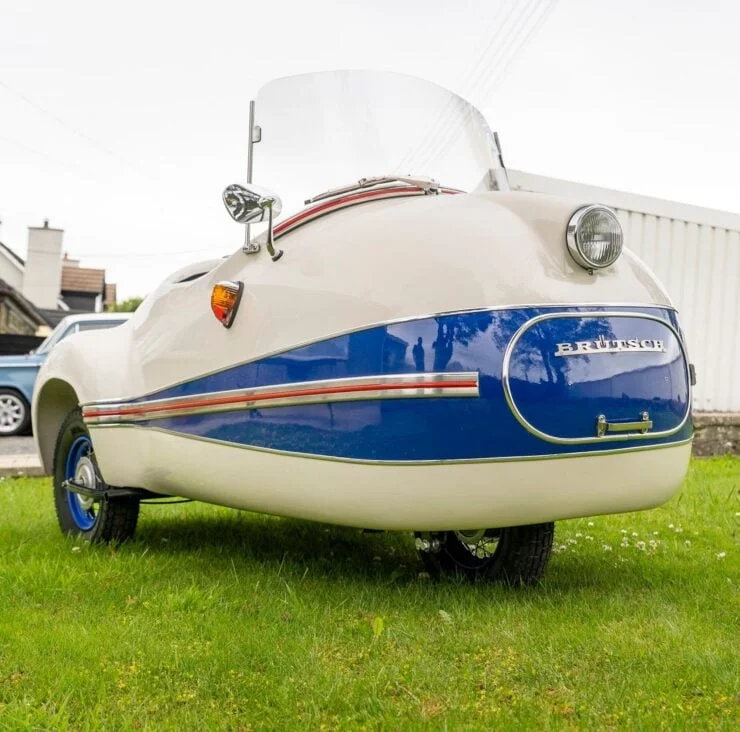
A clear folding hood was available, but it had to be lowered before the driver could get in or out. That arrangement made wet-weather use awkward. The engine’s position also shaped the experience: a 1957 test by British magazine The Motor observed that it warmed the driver’s left thigh. The testers further reported that a hard right turn over a raised manhole cover could lift a rear wheel, a reminder of how much the off-centre engine mattered in such a light, narrow machine.
Efficiency came with modest pace
Brütsch’s tiny car was built for short trips and low running costs, not speed. The factory claimed a top speed of 27mph, but The Motor recorded barely 20mph, rising to around 22mph as the engine warmed. In exchange, the Mopetta returned 124 miles per imperial gallon at a steady 10mph in the magazine’s test. That is an extraordinary period figure, though it came from a very slow, steady run rather than a modern mixed-use fuel test.
The magazine judged the car useful for short journeys and reported a British price of £200, described at the time as reasonably affordable. Its practical limits were just as clear: one seat, no reverse, minimal pace and a hood that complicated entry in rain. For buyers comparing it with the BMW Isetta 250 or Messerschmitt KR200, the Mopetta’s advantage was cost and compactness; those better-established rivals were faster and usually seated two.
In Germany, the Mopetta was announced at DM 750, around $180 at the conversion quoted in the source. The BMW Isetta 250 cost DM 2,550 (about $610), while a Messerschmitt KR200 was around DM 2,500 (about $600). The 50cc category brought favorable tax and driving-licence treatment in West Germany, helping the Mopetta fit its pitch as an inexpensive moped-car.
From show stand to production car
The first Mopetta appeared at the IFMA bicycle and motorcycle exhibition in Frankfurt in October 1956. Brütsch reportedly made the fiberglass body in a hurry, then photographed it with wheels placed against it and his secretary seated inside. The wheels were fitted in time for the show, but the mechanical components were not. The display car was raised high enough that visitors could not see it was an unfinished shell.

Early brochures even described the Mopetta as a vehicle for land and water. The claim appears to have stretched the car’s abilities: its body was not watertight, and publicity images showing it crossing a stream used water only a few inches deep. A working example was ready by May 1957, seven months after the empty shell’s exhibition appearance.
Brütsch had founded Egon Brütsch Fahrzeugbau in Stuttgart in 1950. The company made 11 models and around 80 vehicles between 1952 and 1958, with its work focused largely on developing designs and licensing them to manufacturers. Brütsch himself had raced motorcycles and cars, including a supercharged 1932 Alfa Romeo Monza in German events after the war. His first company product was a children’s scale Maserati racer, but its high price contributed to a quick commercial failure.
The Mopetta also came close to a separate production plan. Georg von Opel, who sold Opel cars through his own dealership, intended to build it at the Horex motorcycle factory and market it as the Opelit. Sales literature was printed, but von Opel withdrew in spring 1958; the reason is not known. Brütsch left vehicle manufacturing that autumn and turned to plastic weekend cabins and holiday houses, drawing on the body-forming skills developed with the Mopetta.
The replica’s finish and sale status
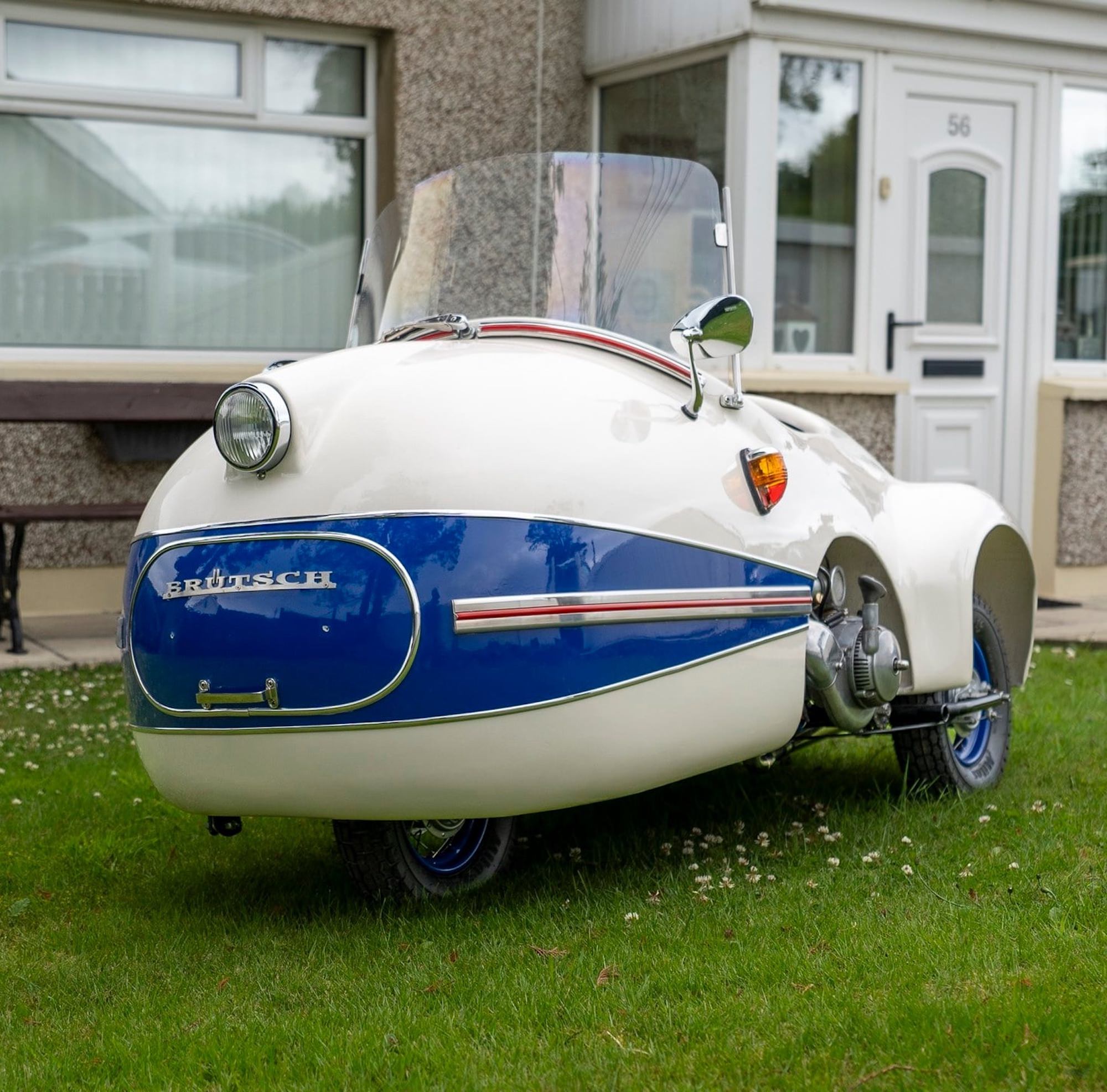
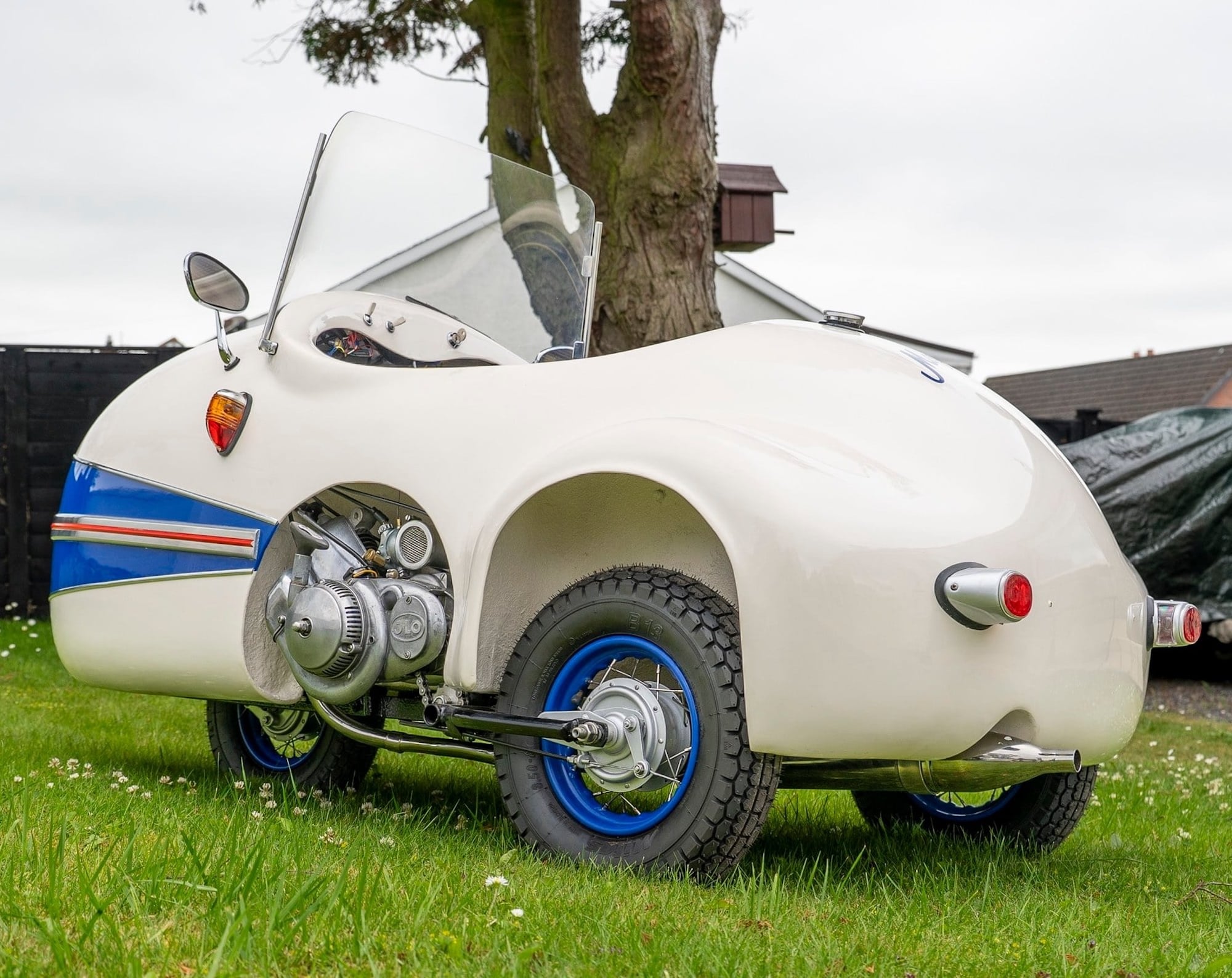
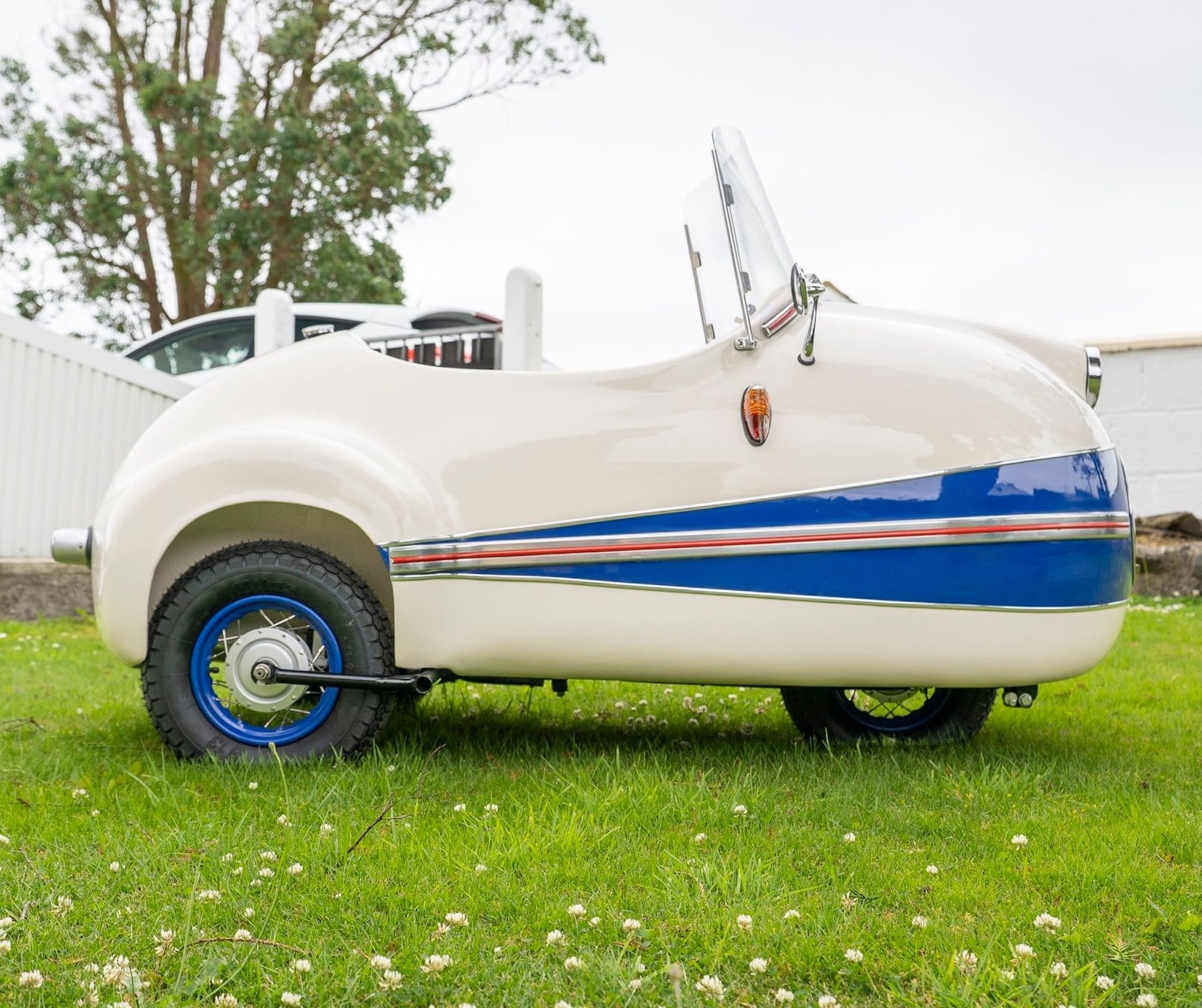
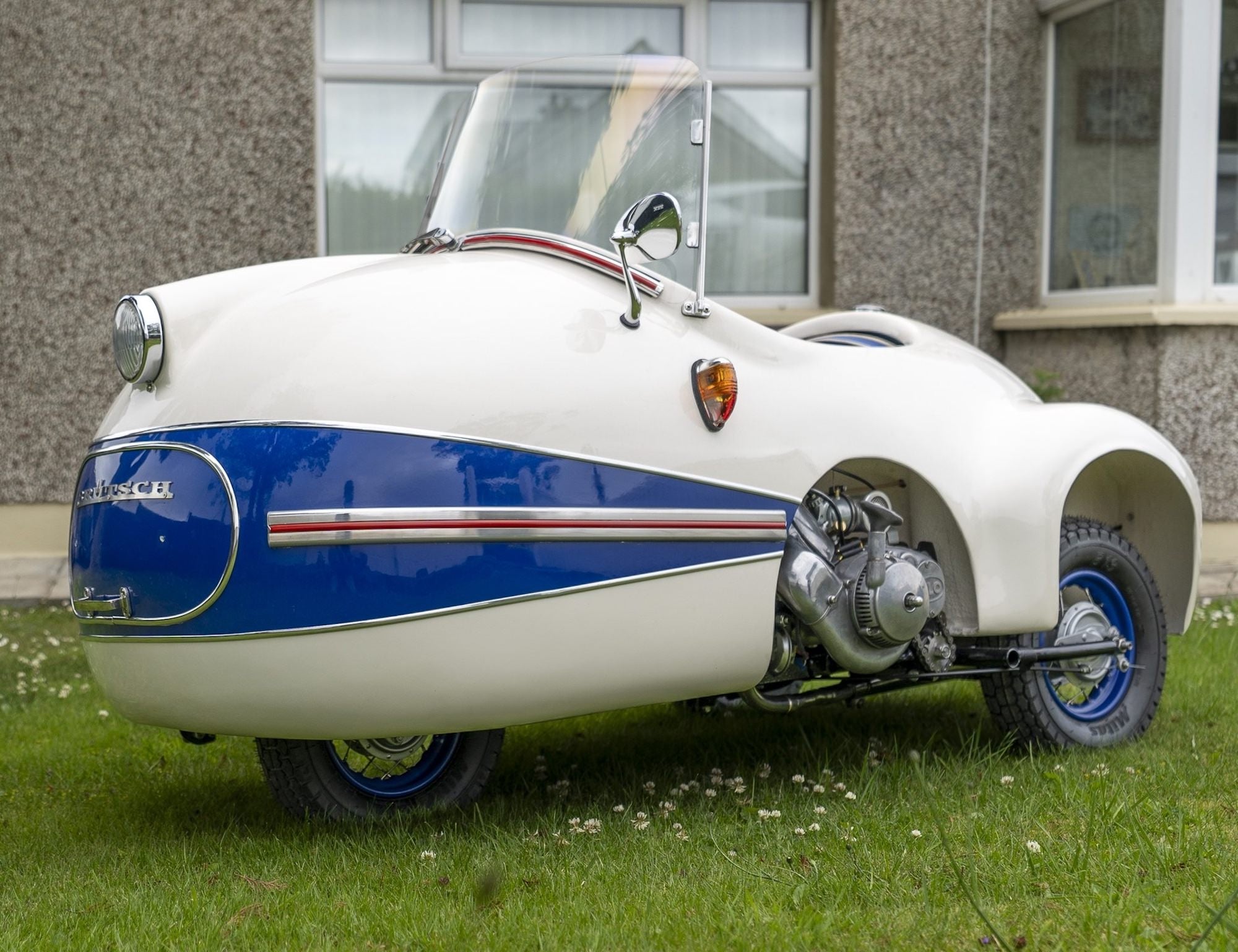
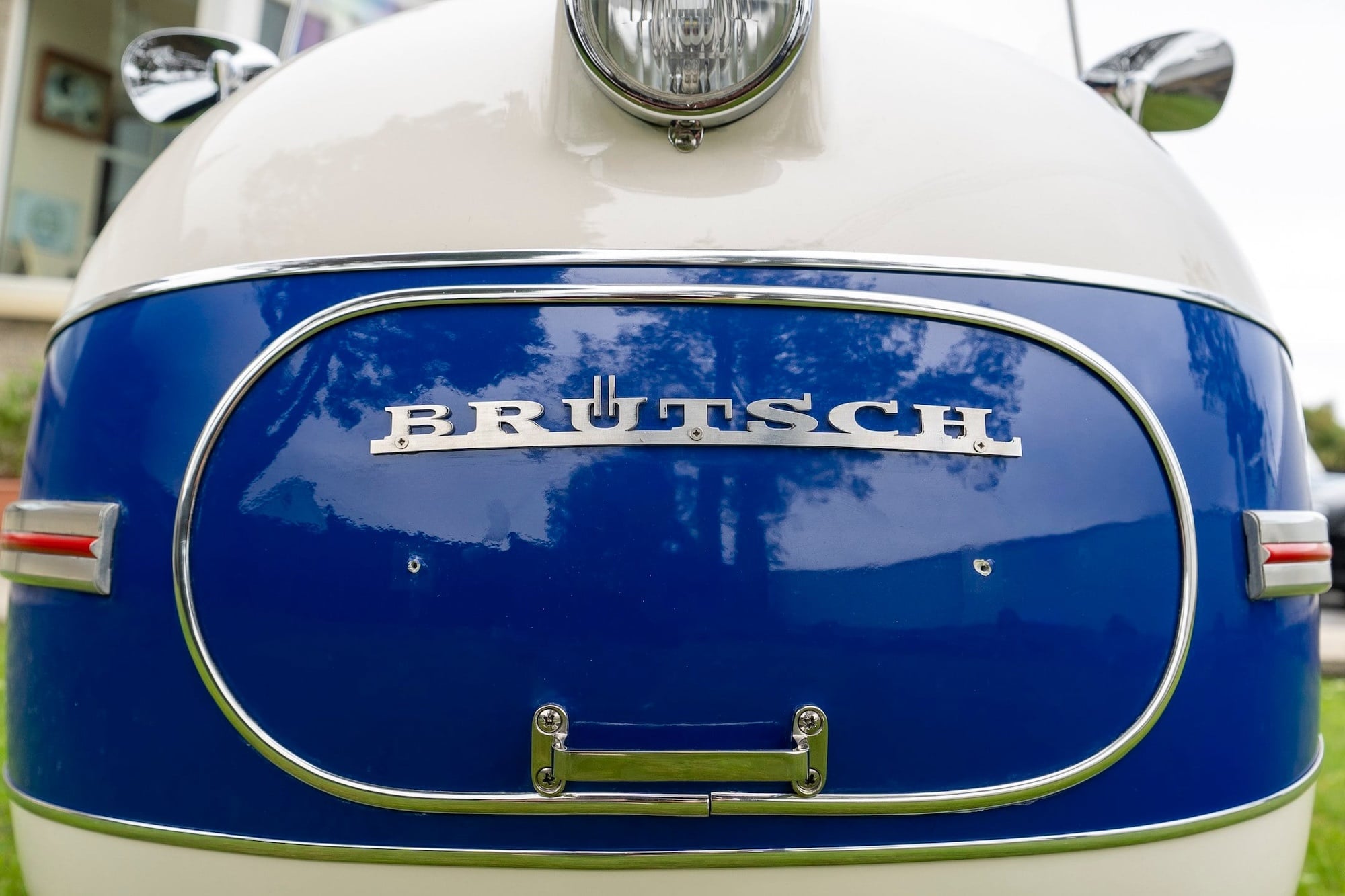
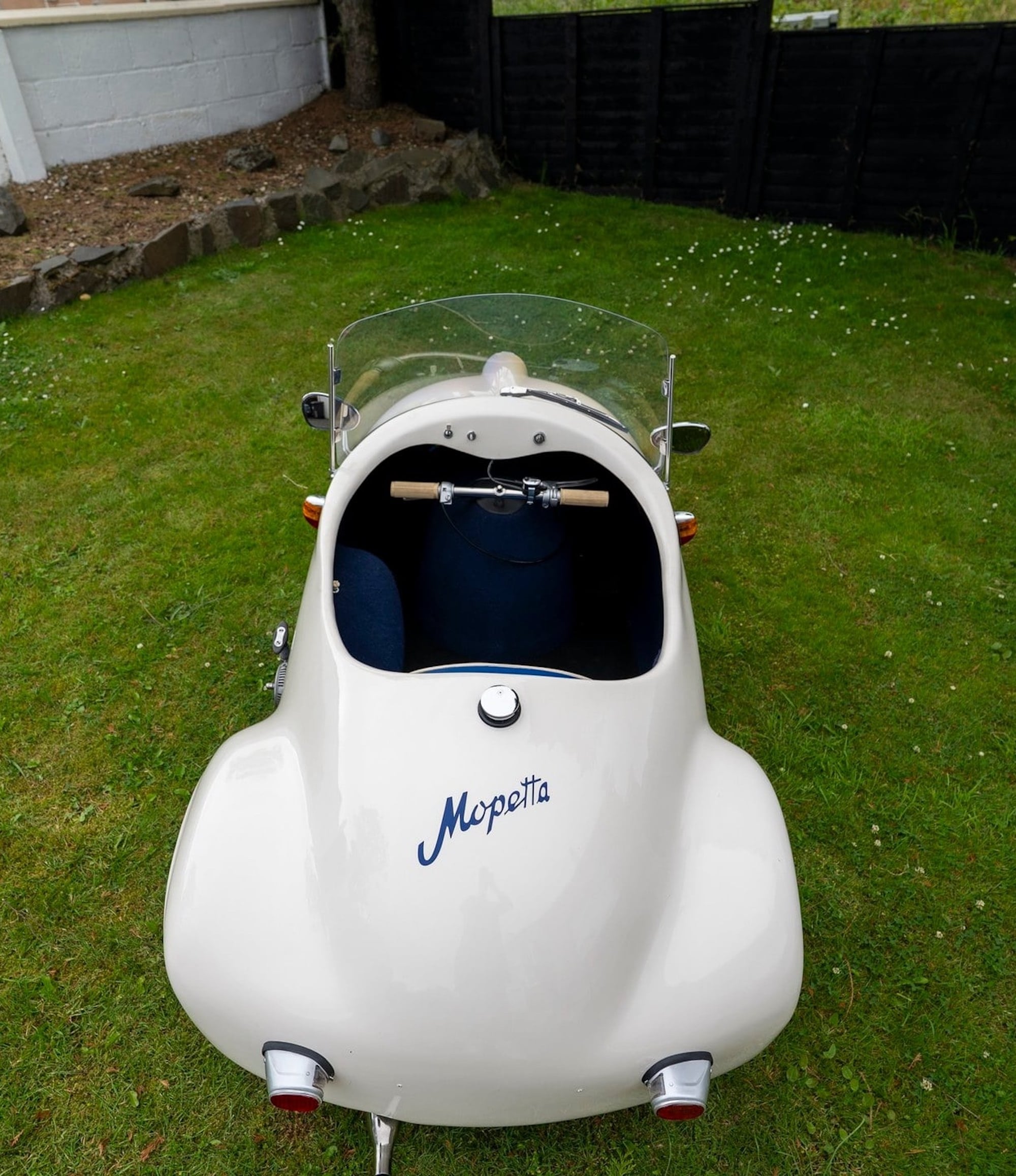
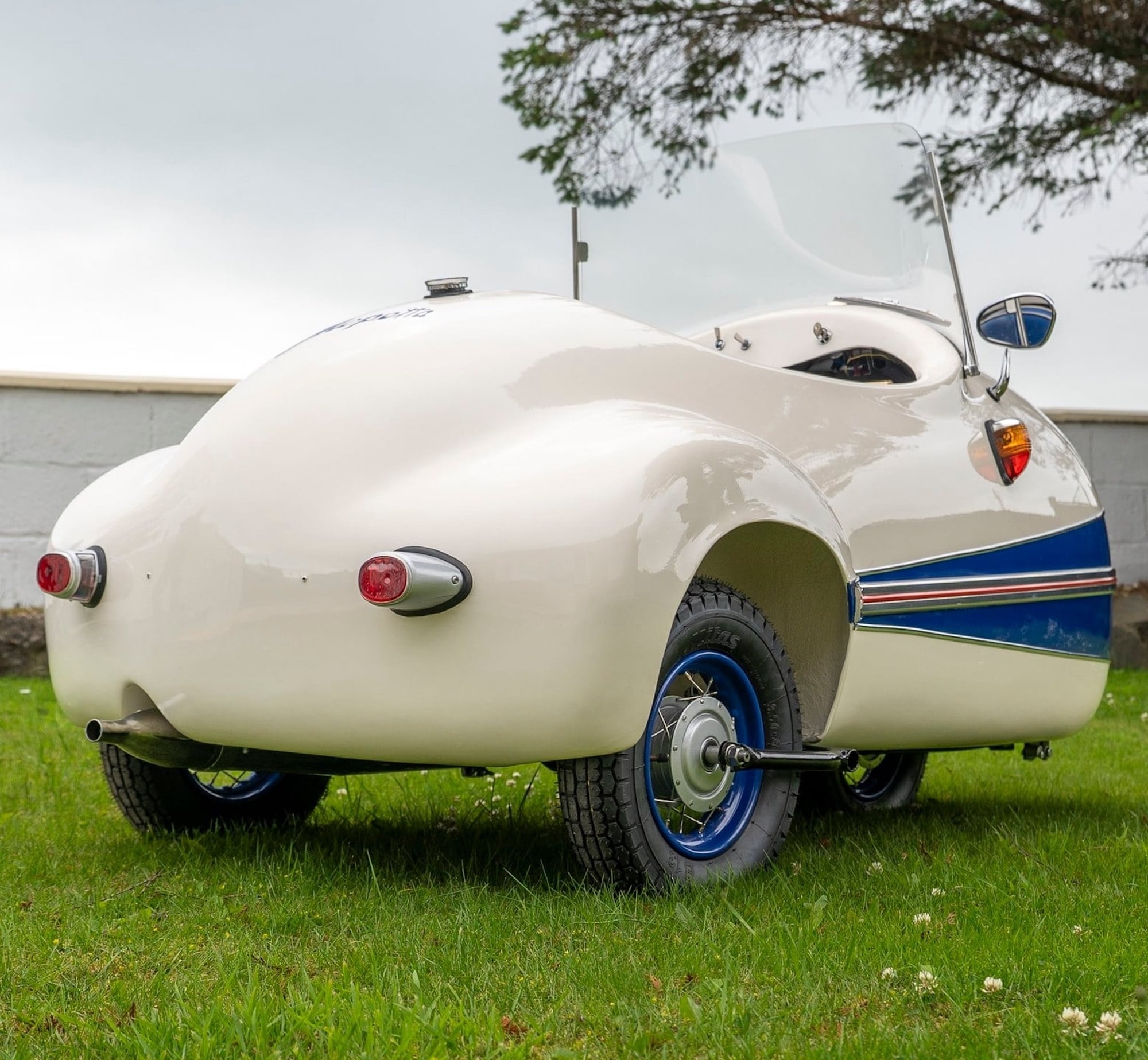
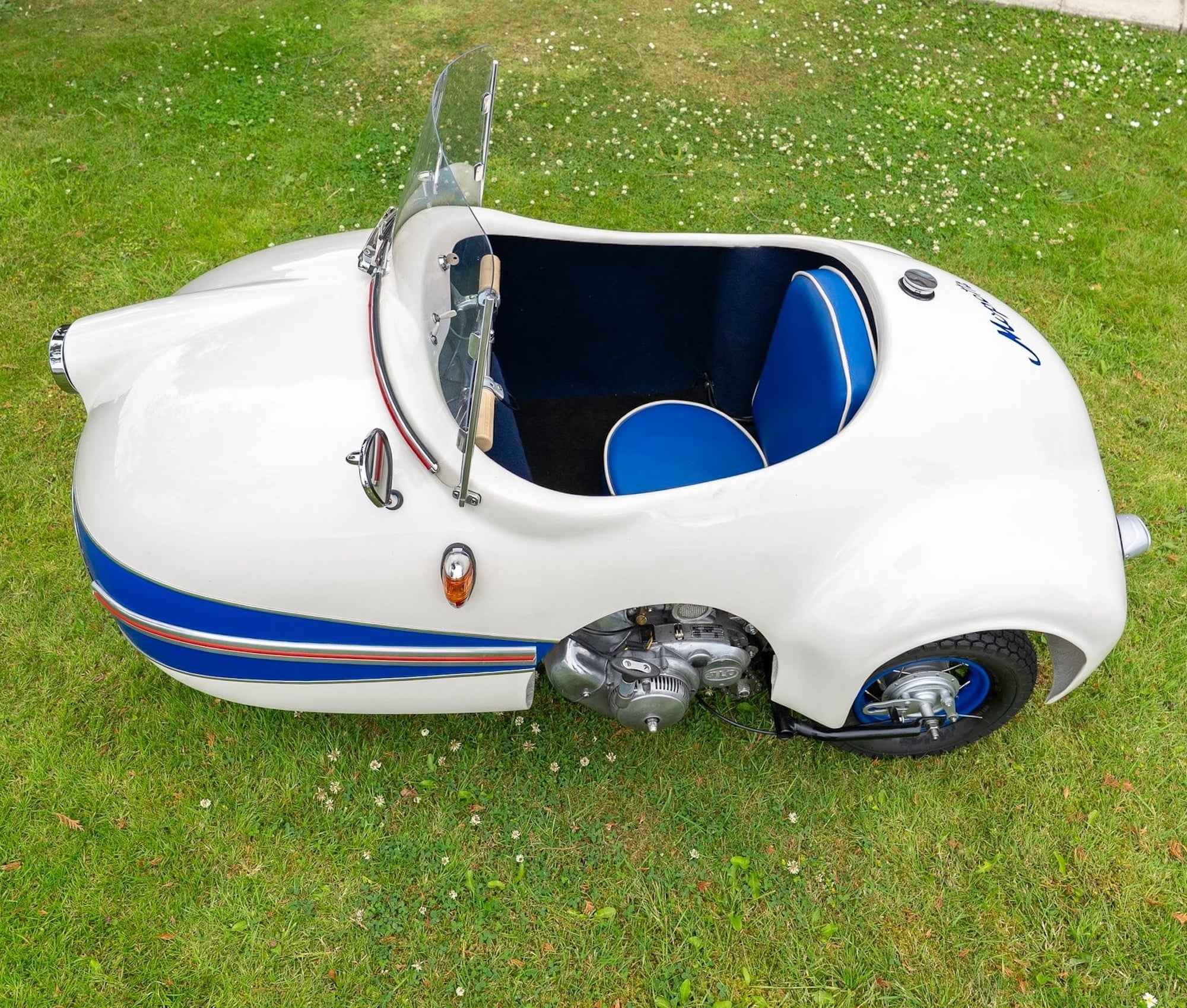
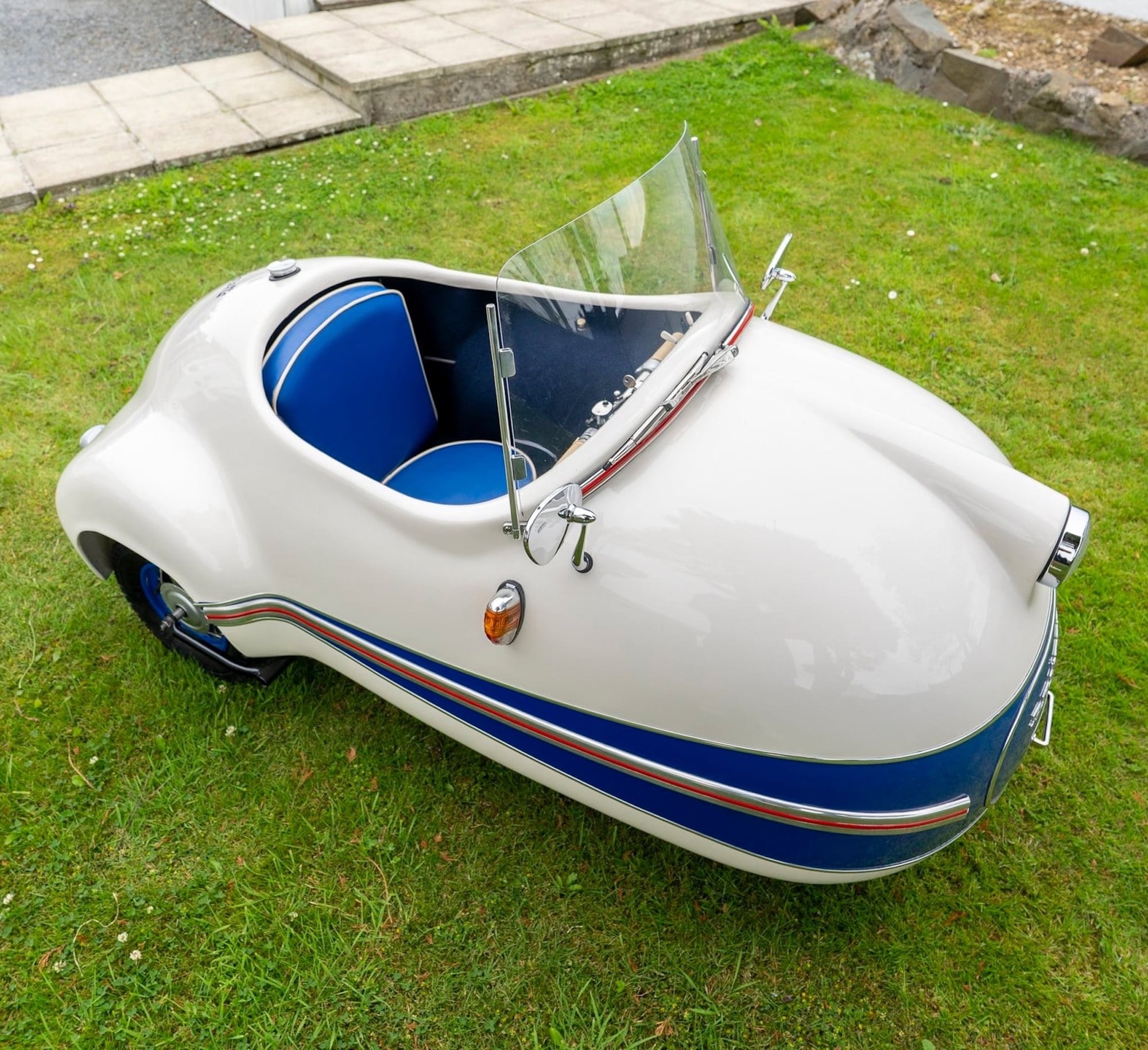
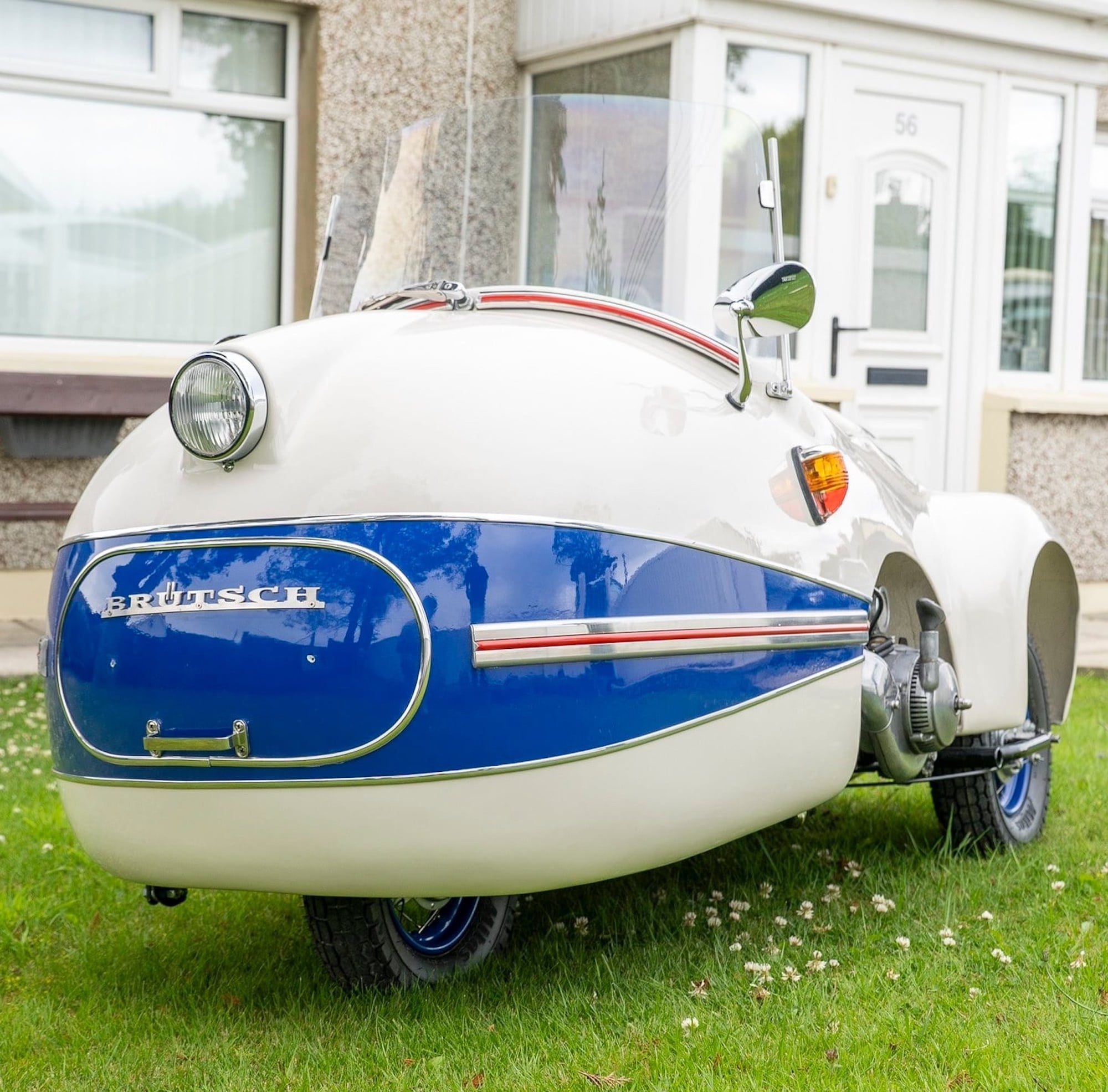
The example on offer is finished in white with a blue front panel carrying Brütsch badging and blue Mopetta lettering at the rear. It has wire-spoke wheels with blue rims, Mitas B13 tires and a blue vinyl seat trimmed in white. Blue carpeting completes the interior. The seller describes it as being in immaculate condition and built with new, period-correct components throughout.
Its 49cc JLO engine and three-speed manual gearbox match the original car’s general specification. The listing describes the replica as exceptionally compact and lightweight, with motorcycle-style handlebars and the familiar three-wheel layout. It is available from Millisle, but remains unregistered, so prospective buyers should treat its registration status as a key part of assessing the car.
Only five original Mopettas are thought to survive, and replicas now outnumber them. With just 14 built, the model was a rarity even before time reduced the original population. This new build offers a way to experience its unusual proportions and moped-derived controls, while its top speed, single seat and basic weather protection define a very specialized kind of motoring.

The Brütsch Mopetta was a tiny German three-wheeler developed by Egon Brütsch in the 1950s. Image courtesy of Egon Brütsch Fahrzeugbau.
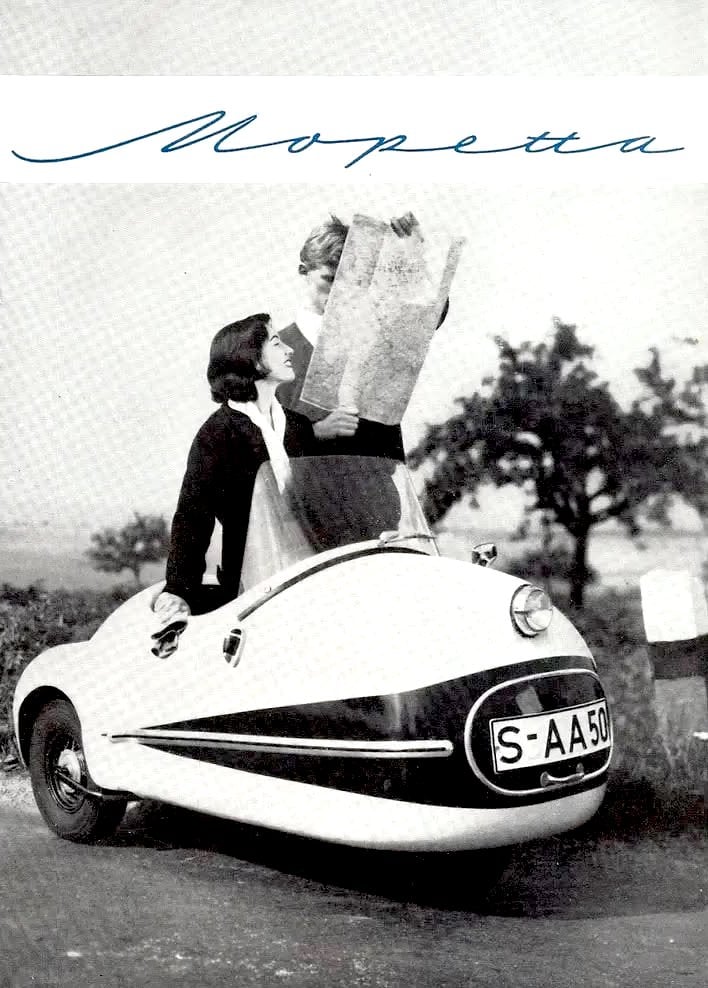
The Mopetta was promoted as a low-cost moped-car at DM 750. Image courtesy of Egon Brütsch Fahrzeugbau.
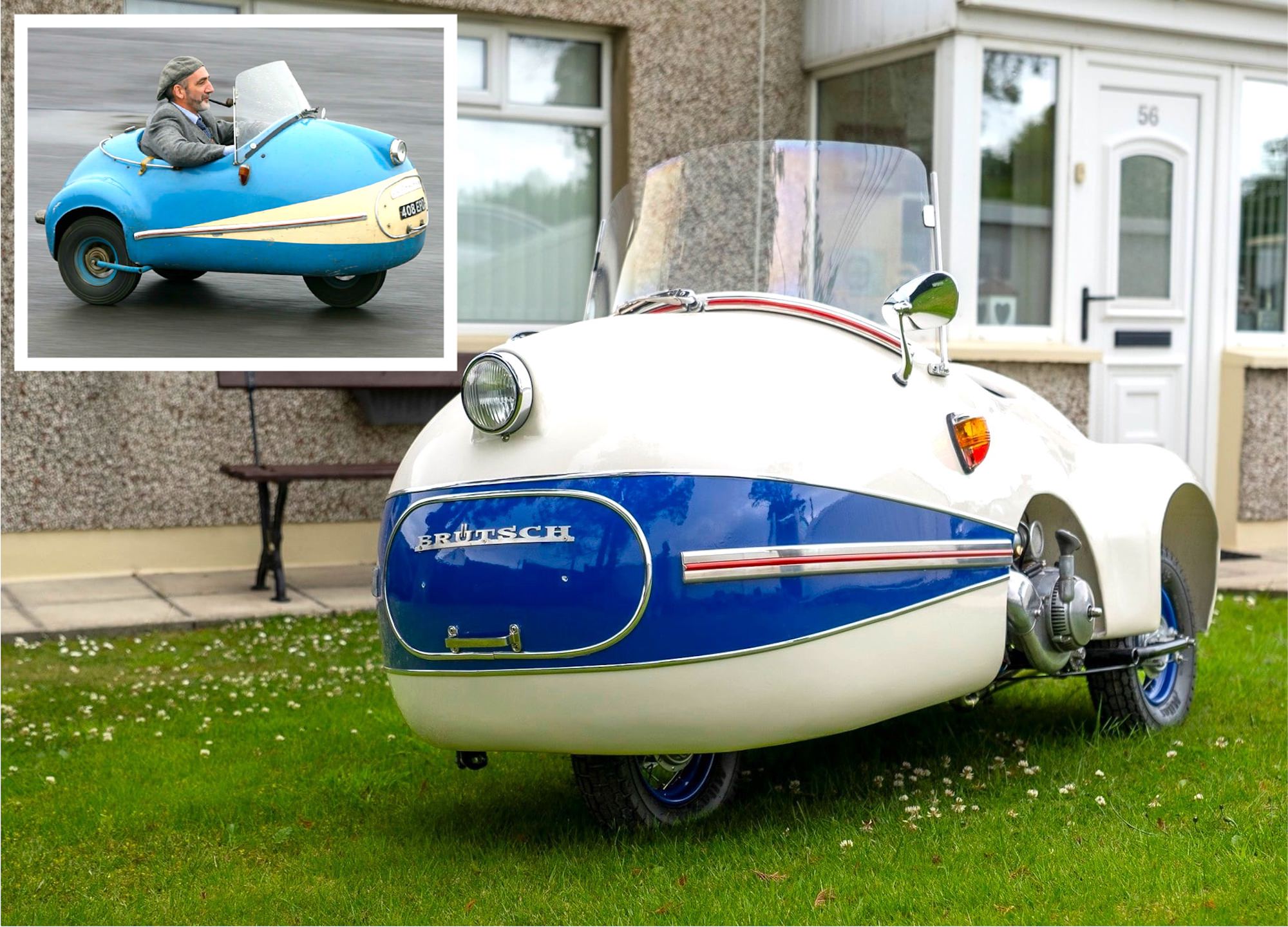
The newly completed replica uses new, period-correct parts.
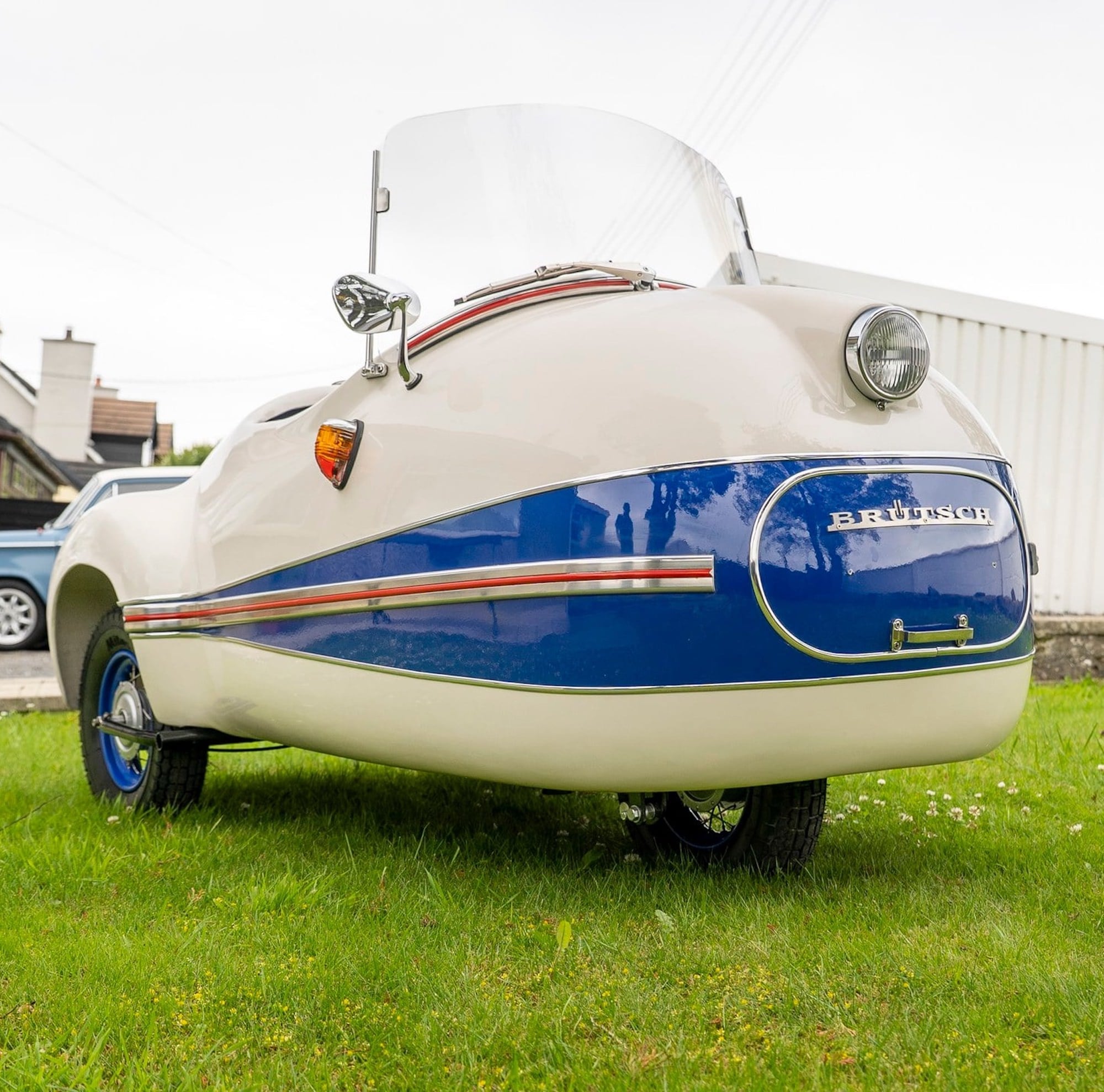
Images courtesy of Car & Classic


