In lane Electric Vehicles
Moonwalker Stratos Zero Replica: A Road-Registered Film Car Is for Sale
Description
Built from a Moonwalker film shell and Fiat X1/9 running gear, this road-registered Stratos Zero replica is now offered in Michigan.
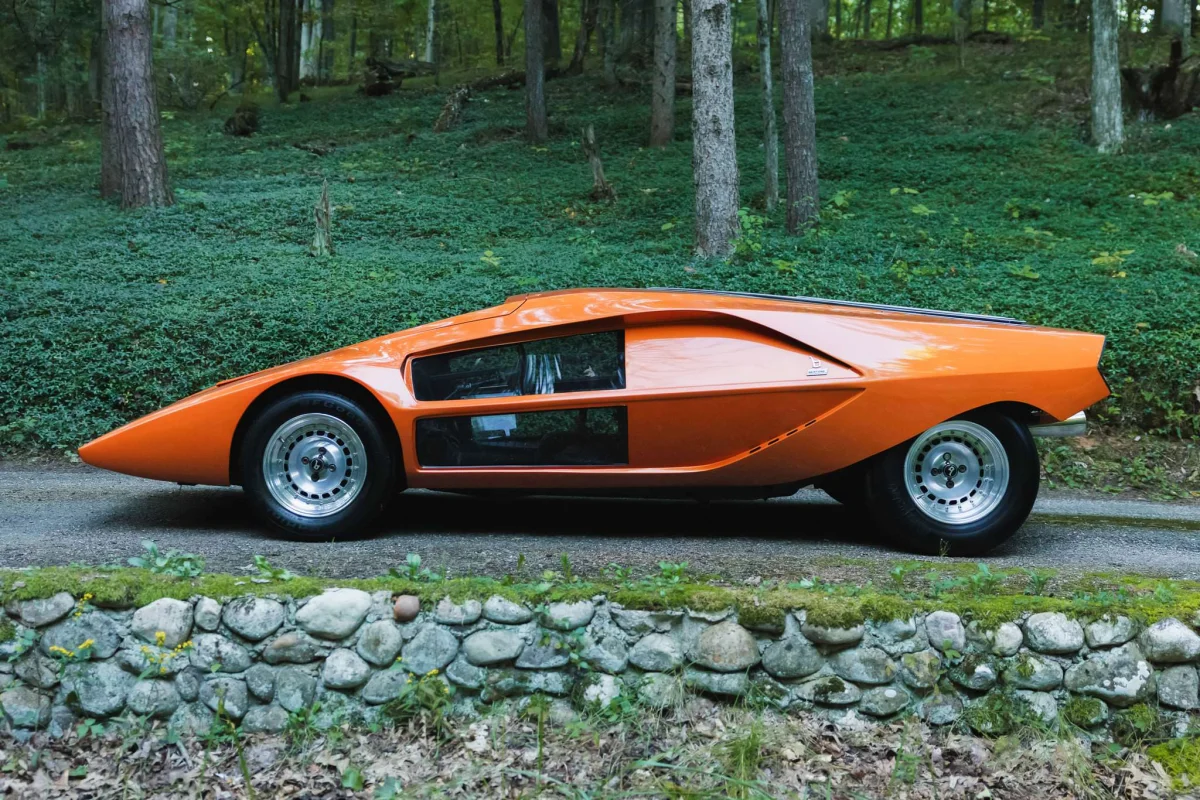
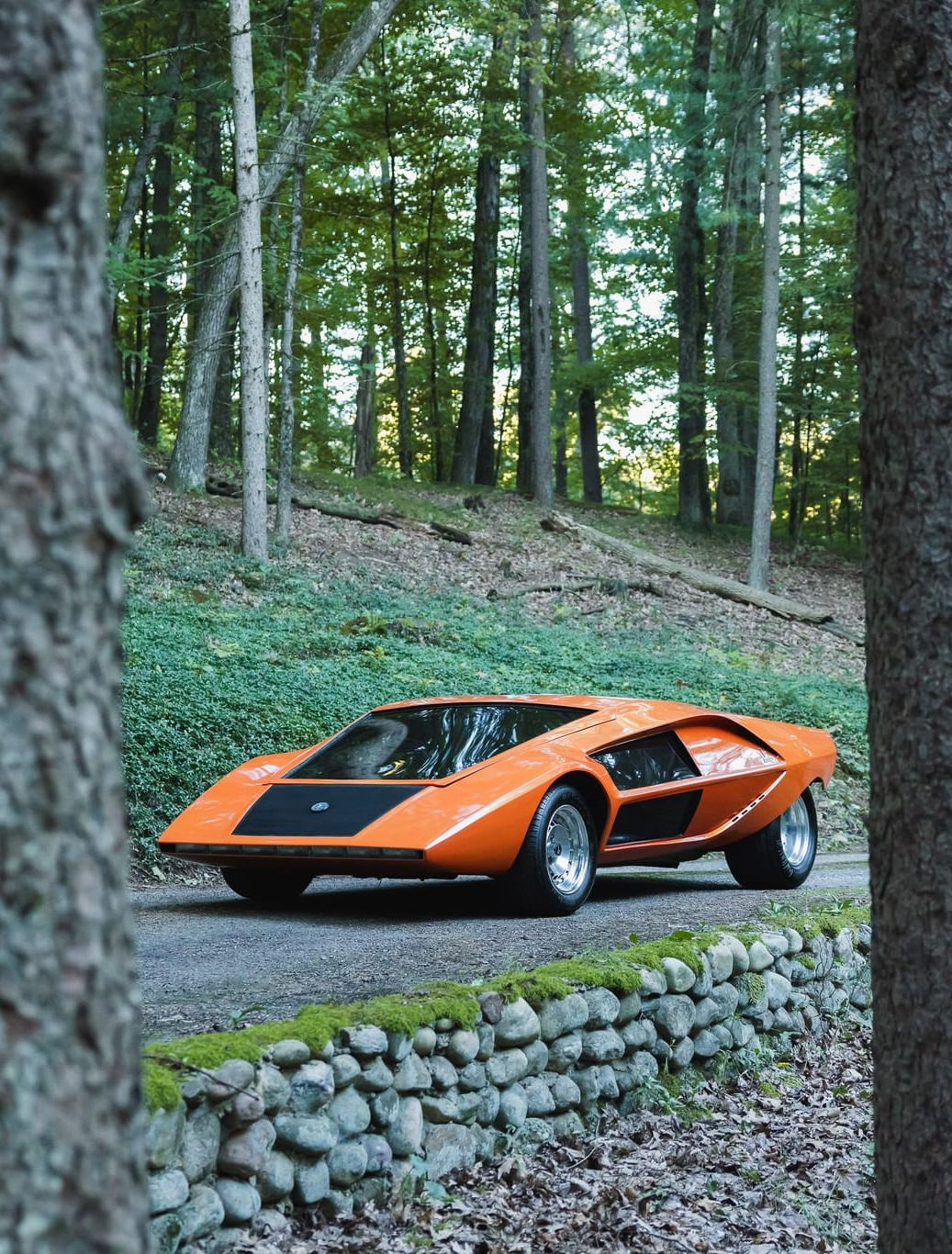
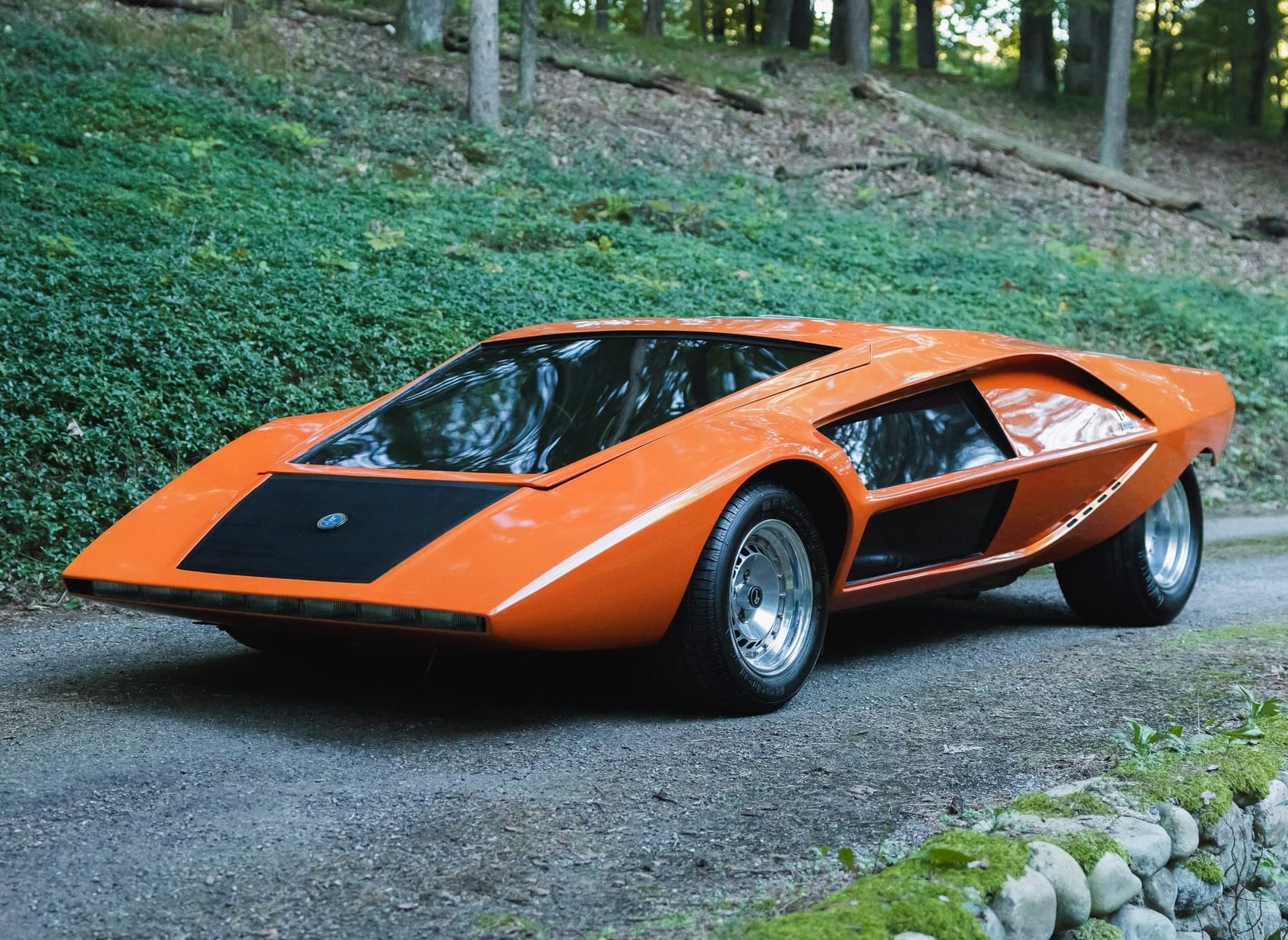
A screen-used Stratos Zero replica with working mechanicals is a rare meeting of concept-car history, film memorabilia and hands-on custom engineering. One of three fiberglass shells made for Michael Jackson’s 1988 film Moonwalker, this example was turned into a functioning, road-registered car by British builder Andy Saunders. It is now being offered for sale in Michigan with service records and its Michigan title.

The car isn’t the original Bertone Stratos Zero, which remains in a private collection. Its significance comes from the route it took from an empty film prop to a drivable vehicle, using a Fiat X1/9 as its mechanical foundation. That donor choice makes the conversion more than a display body: the engine, transmission, suspension and floor pan are all from the Fiat.
A concept car built to win Lancia’s attention
Bertone created the Stratos Zero as a pitch to Lancia, a manufacturer with which the coachbuilder had no established working relationship. Marcello Gandini, Bertone’s chief designer, shaped the dramatically low body around mechanical parts from a crash-damaged Lancia Fulvia 1.6 HF. The concept debuted in 1970 and stood just 33 inches tall.
The Fulvia was front-wheel drive, but the Zero’s layout was different. Bertone repositioned its engine and gearbox behind the cockpit and ahead of the rear axle, driving the rear wheels. The narrow-angle, 1,584cc twin-cam V4 had an 82mm bore and 75mm stroke; Lancia rated it at about 113 bhp in standard form. Four-wheel disc brakes completed a package whose extreme shape also shaped how its occupants got in.
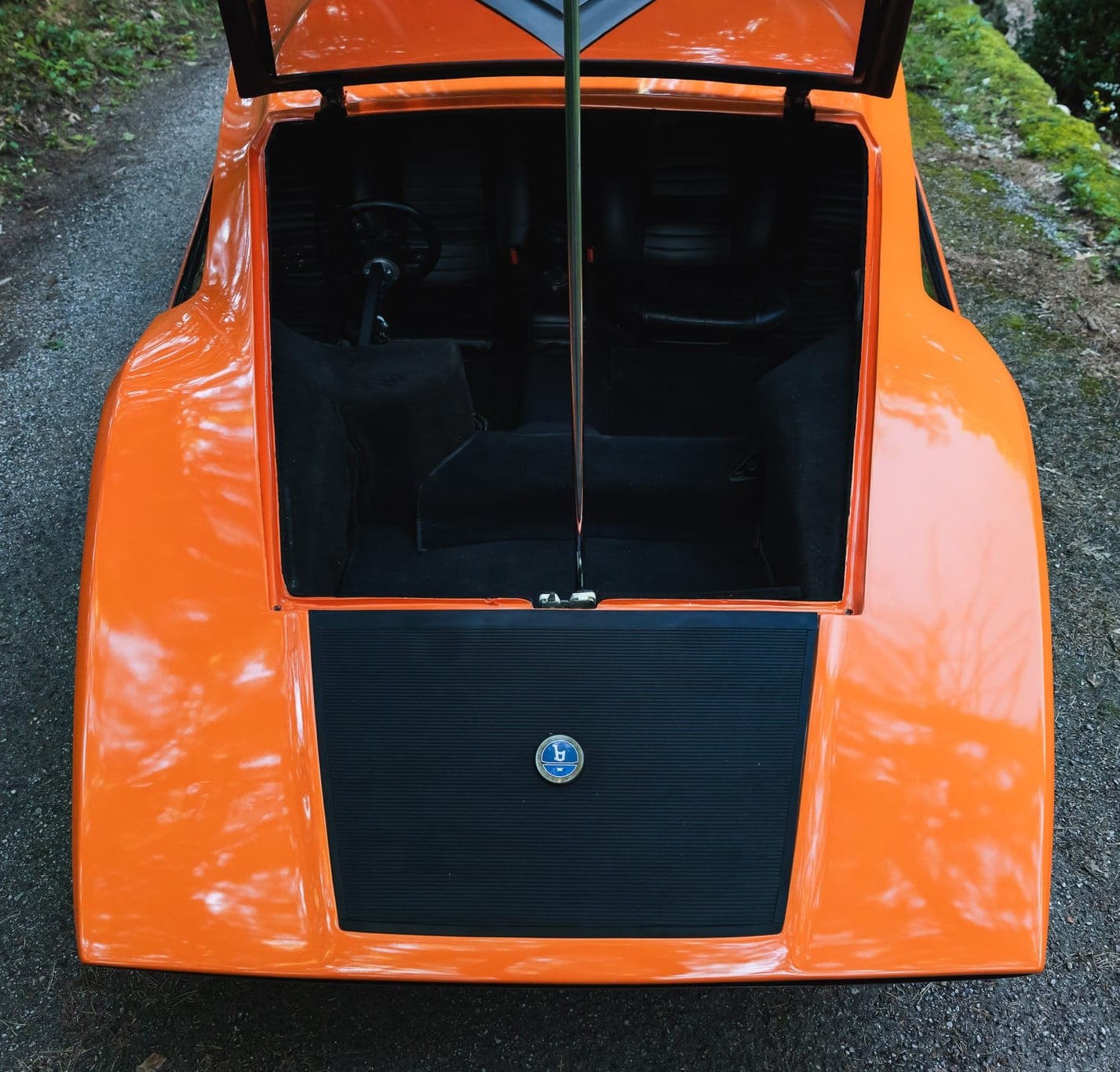
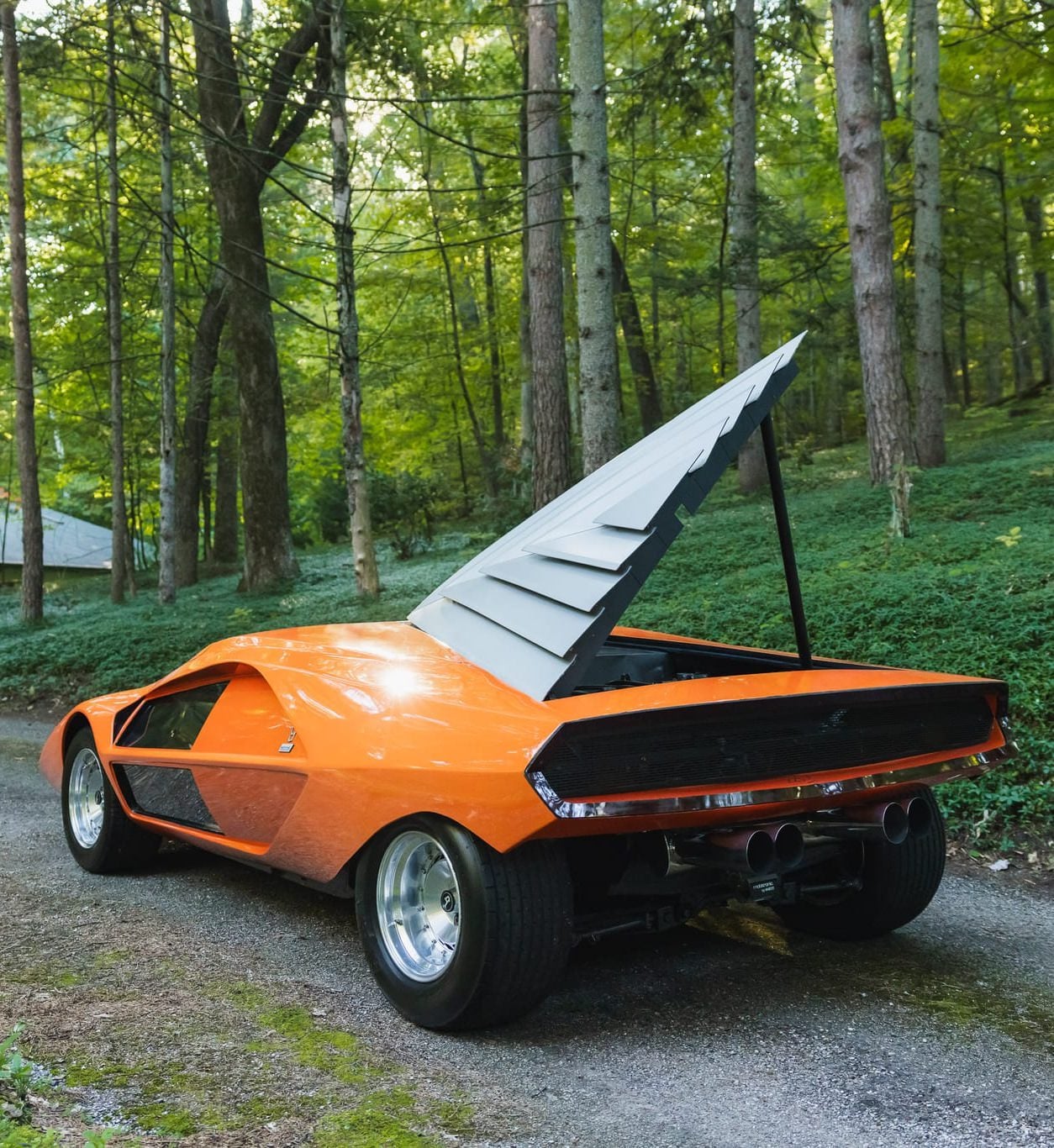
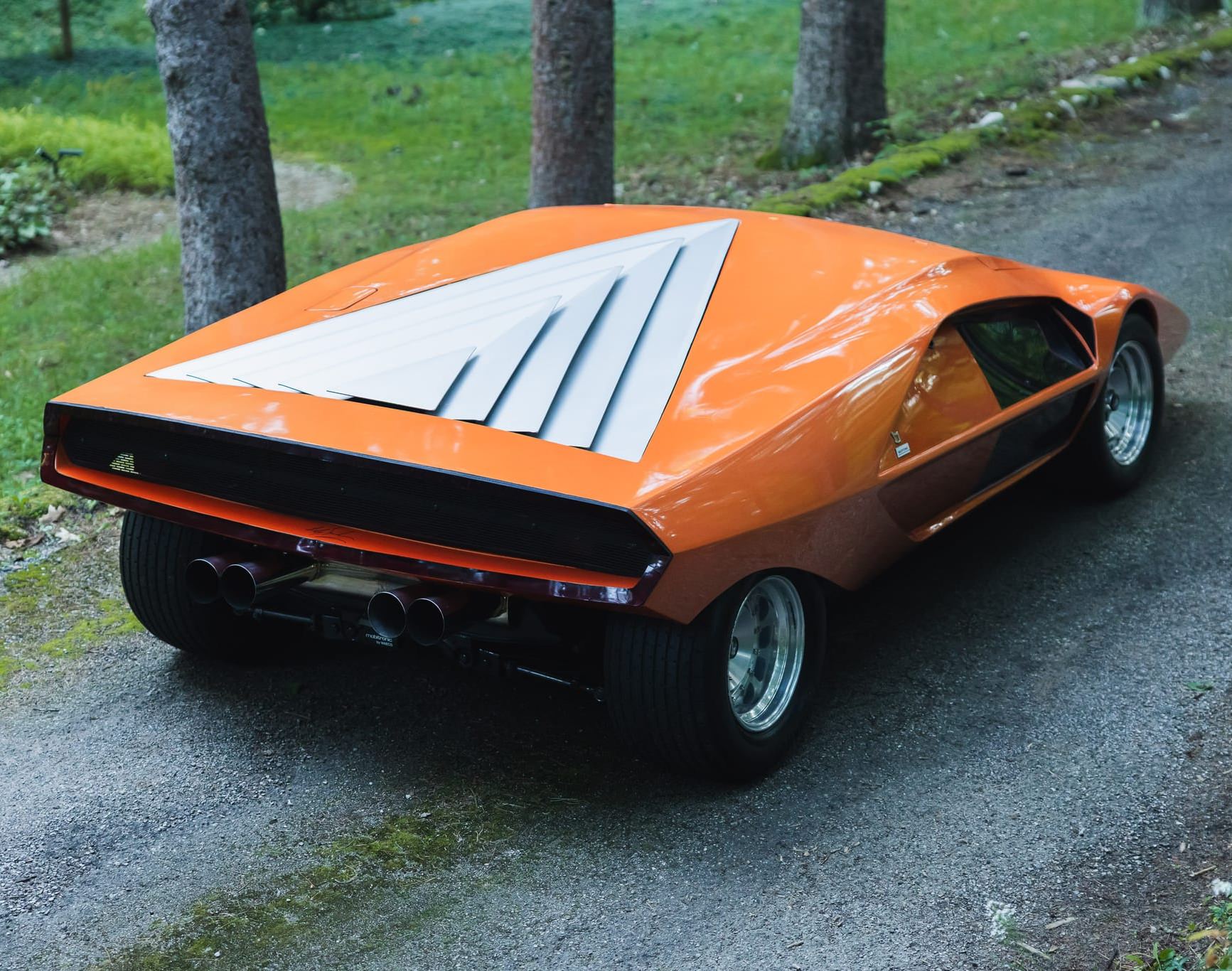
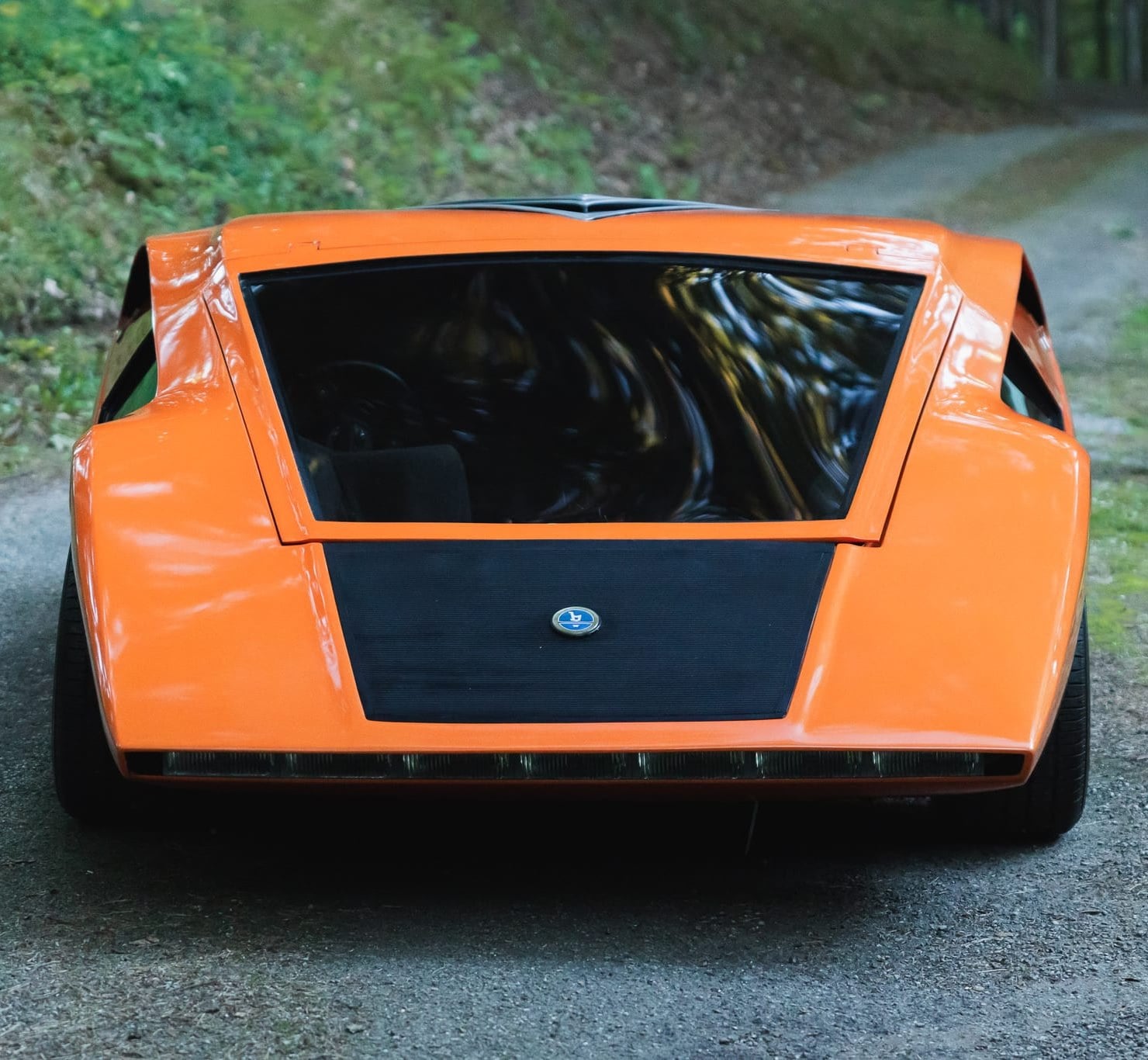
There were no conventional side doors. The driver lifted the top-hinged windshield, stepped across a rubber mat on the nose and climbed into the cockpit, with the steering wheel tilted out of the way. Instruments sat on a panel to the driver’s left. The engine was covered by a vented panel that hinged at the side and used triangular sections.
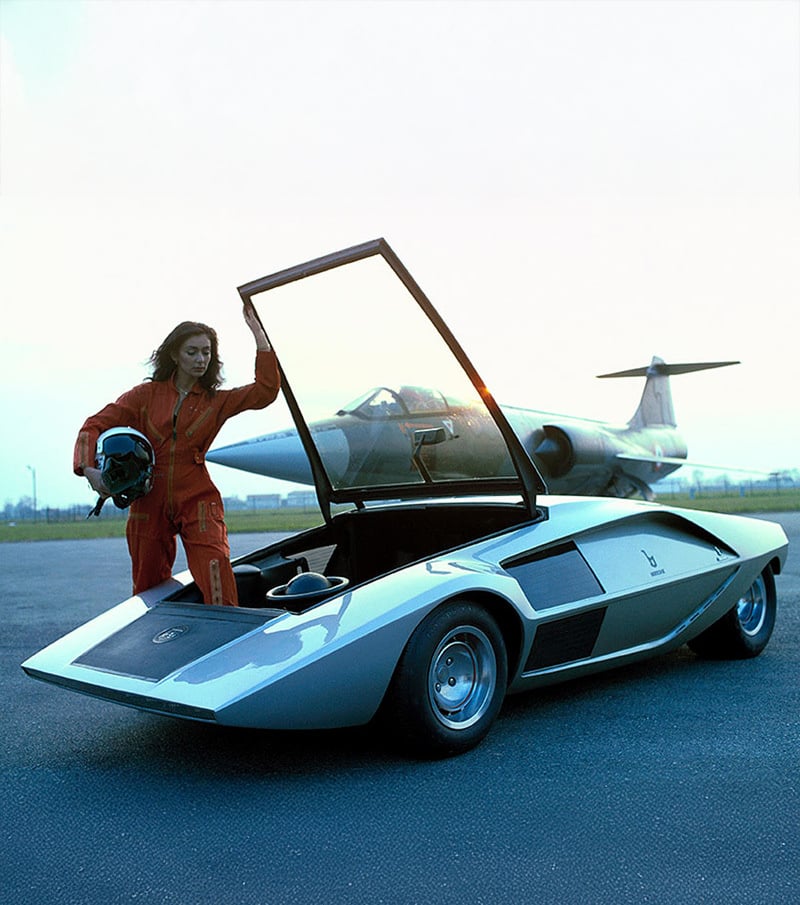
 Bertone created the Stratos Zero to attract work from Lancia. Image provided by Bertone.
The often-repeated story is that Nuccio Bertone drove the concept to Lancia and passed beneath the closed entrance barrier. Lancia rally chief Cesare Fiorio and his father Sandro, the company’s public relations director, responded positively and backed the idea of a Bertone-bodied competition car. The Stratos HF prototype followed at the 1971 Turin Auto Show.
The production-bound rally car shared the Zero’s name, designer and mid-engine layout, but little else. It used a heavily modified Ferrari Dino V6. Lancia’s Stratos HF went on to take the World Rally Championship manufacturers’ title in 1974, 1975 and 1976, giving the concept’s pitch a lasting motorsport legacy.
Bertone kept the Zero, which wore silver paint for a period before being restored to its original copper-bronze finish in 2000. After Bertone’s museum collection was liquidated, RM Auctions offered it at Villa Erba during the Concorso d’Eleganza Villa d’Este weekend on May 21, 2011. Its owner, Phillip Sarofim, later sent it to England for recommissioning ahead of an appearance on the frozen lake at St. Moritz; it also appeared at Pebble Beach.
From a film transformation to a working car
Moonwalker strings together concert footage, biographical material and short music-led segments rather than following one continuous plot. In the “Smooth Criminal” sequence, Jackson’s character is cornered in an alley and transforms into a Stratos Zero to escape. A film prop company reportedly made three fiberglass shells for the scene.
Jackson’s character turns into a Stratos Zero during the “Smooth Criminal” segment. Saunders later bought one of the shells used for the film.
Saunders, a custom-car builder based in Poole, Dorset, bought one of the props in 2003. The shell was an empty fiberglass tub, finished in silver, without separate doors, windows or openings. Saunders had built exceptionally low cars before, including one in 1987 that stood 34.5 inches tall. He shipped the film shell from the United States to England and set about making it usable on the road.
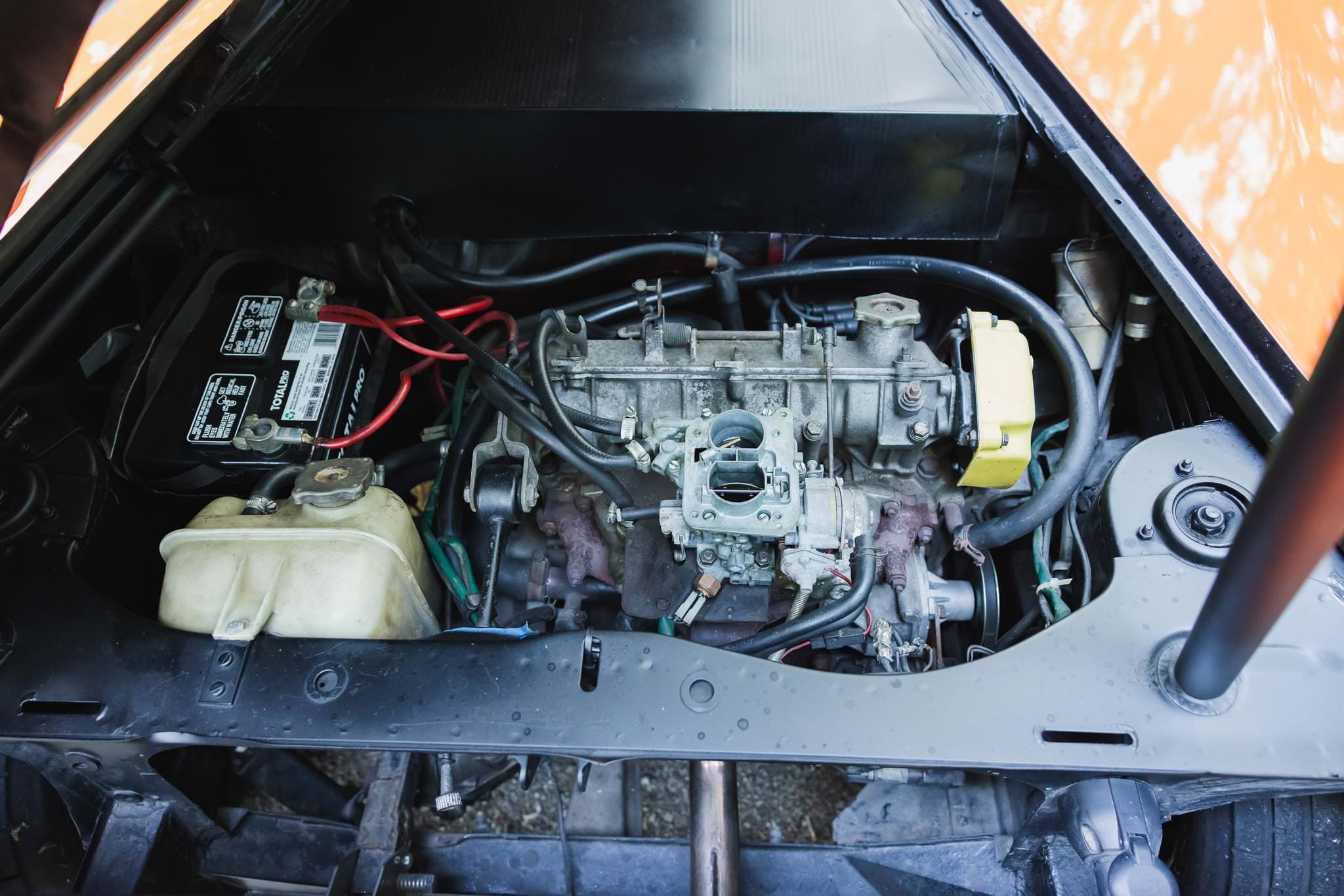
For a donor, he chose a rust-free Fiat X1/9. Its wheelbase was within 0.7 inch (18mm) of the Stratos Zero’s, and both cars were designed by Gandini. Saunders retained the Fiat’s floor pan, engine, gearbox and suspension, cutting away the rest of its body. He strengthened the floor, mounted the replica shell and adjusted its position to match the Zero’s low stance.
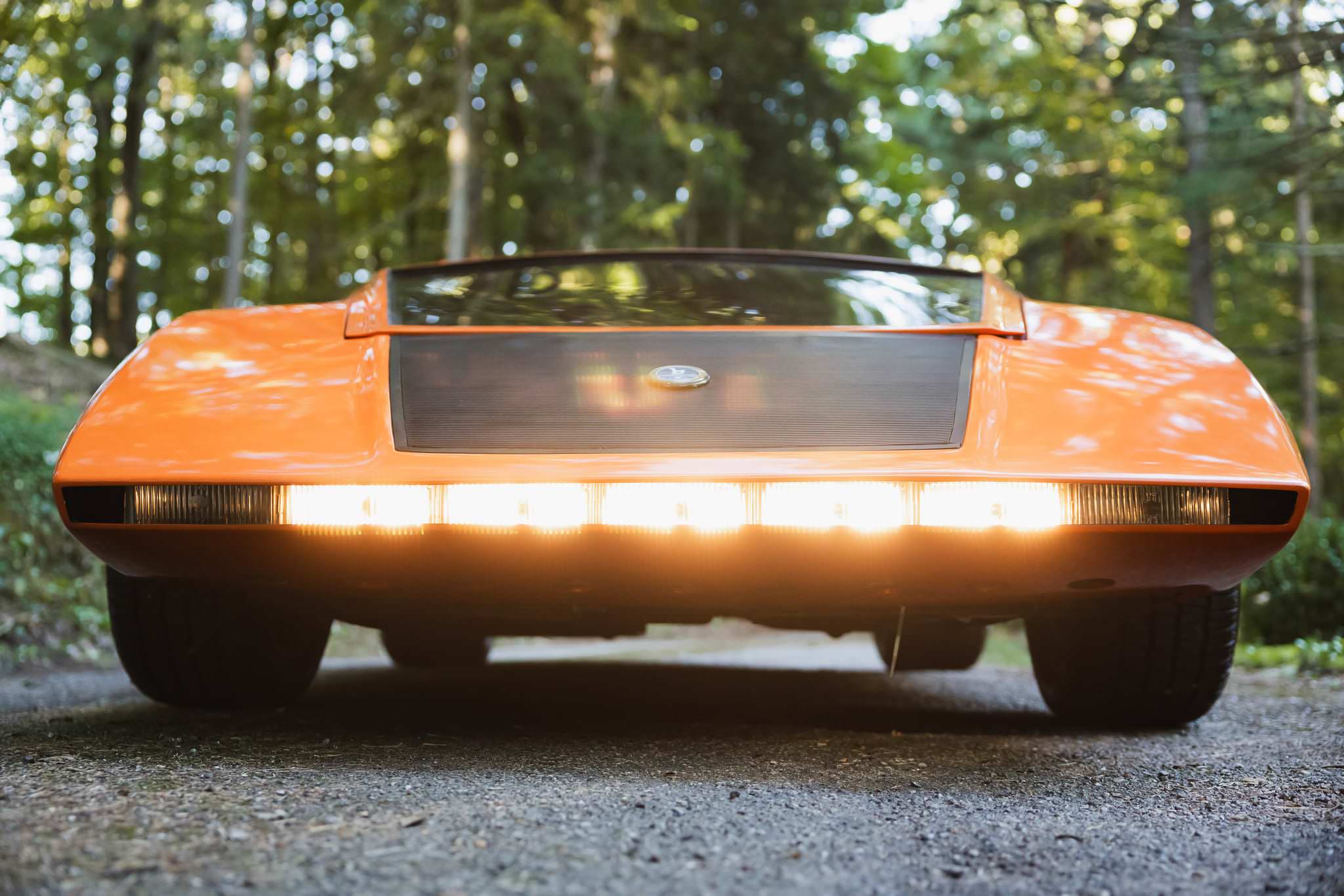
The X1/9 supplied a practical mechanical package for the conversion: MacPherson struts at all four corners, front and rear disc brakes, and rack-and-pinion steering. The donor was a 1500 version, a specification introduced in 1979 with a 1,498cc single-overhead-cam four and a five-speed gearbox. Saunders then added the parts the movie prop lacked, including working lights, windows, grilles and opening panels.
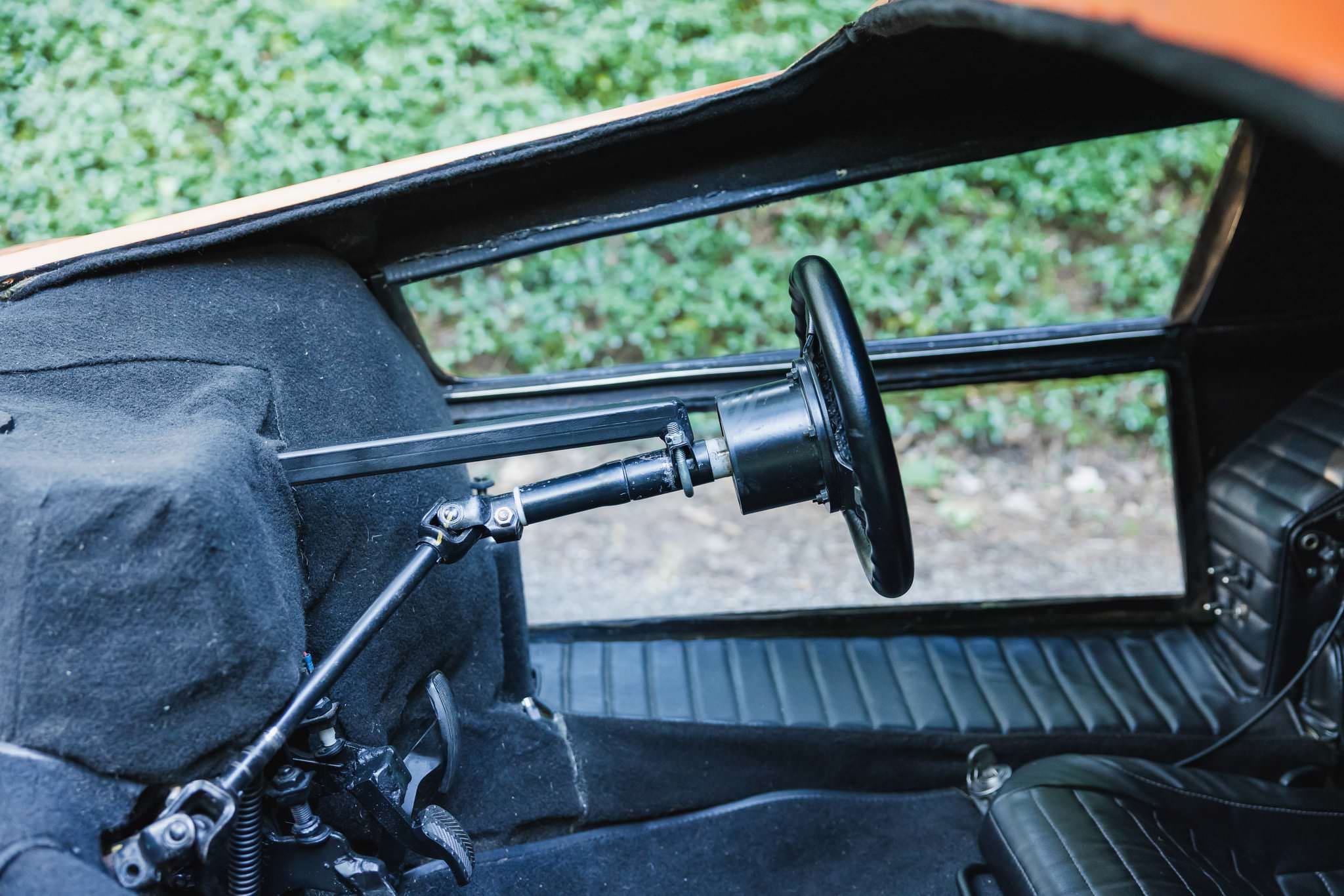
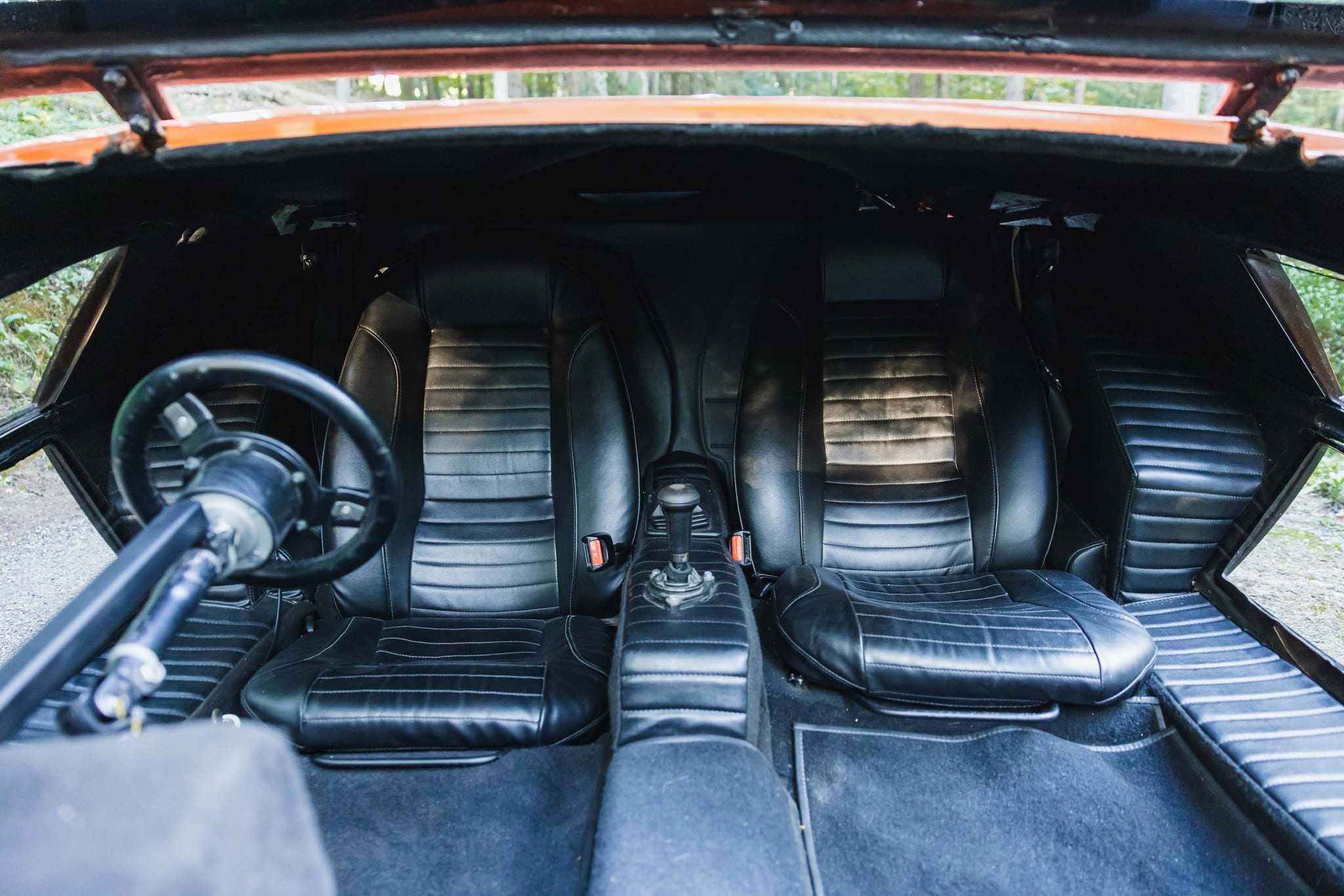
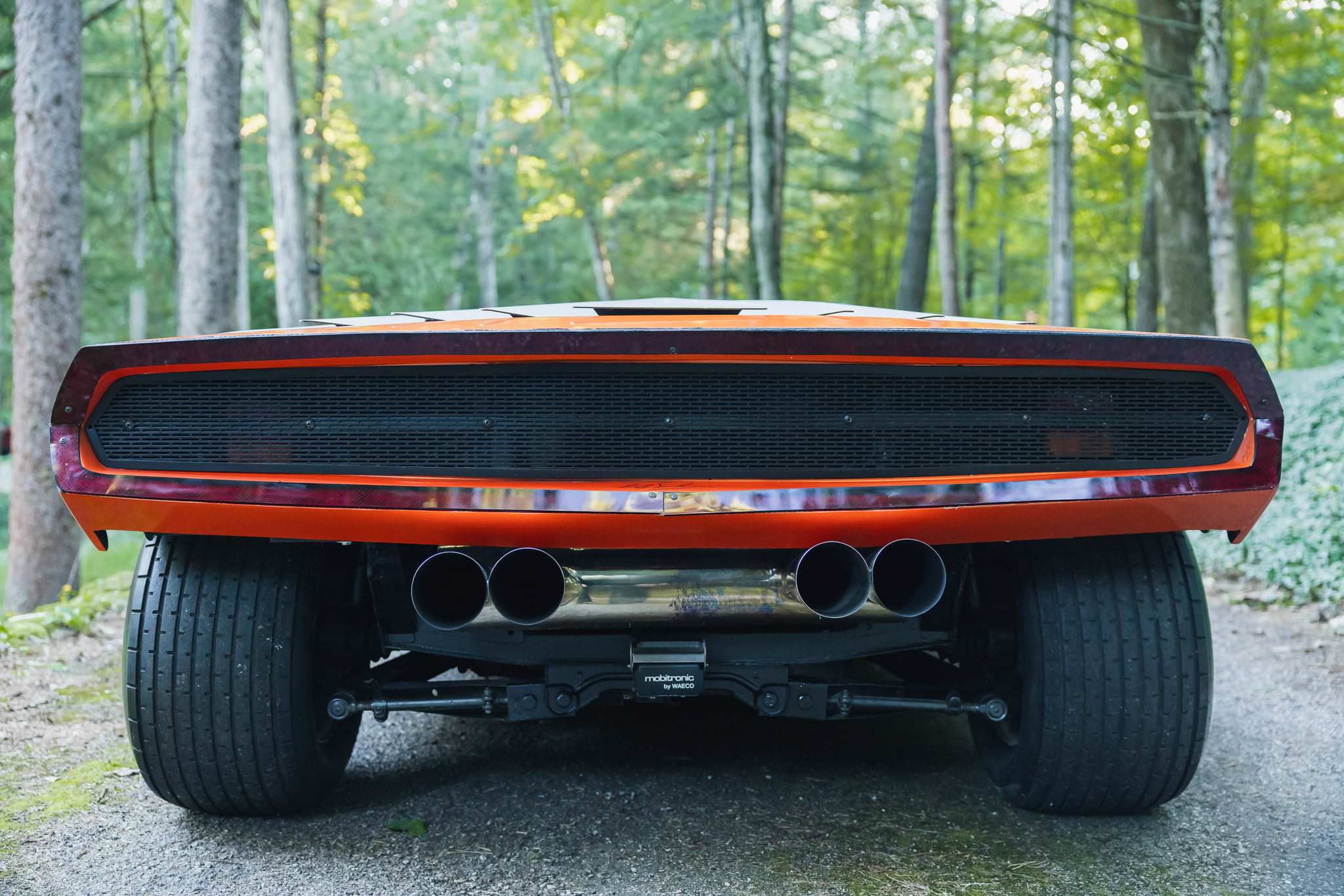
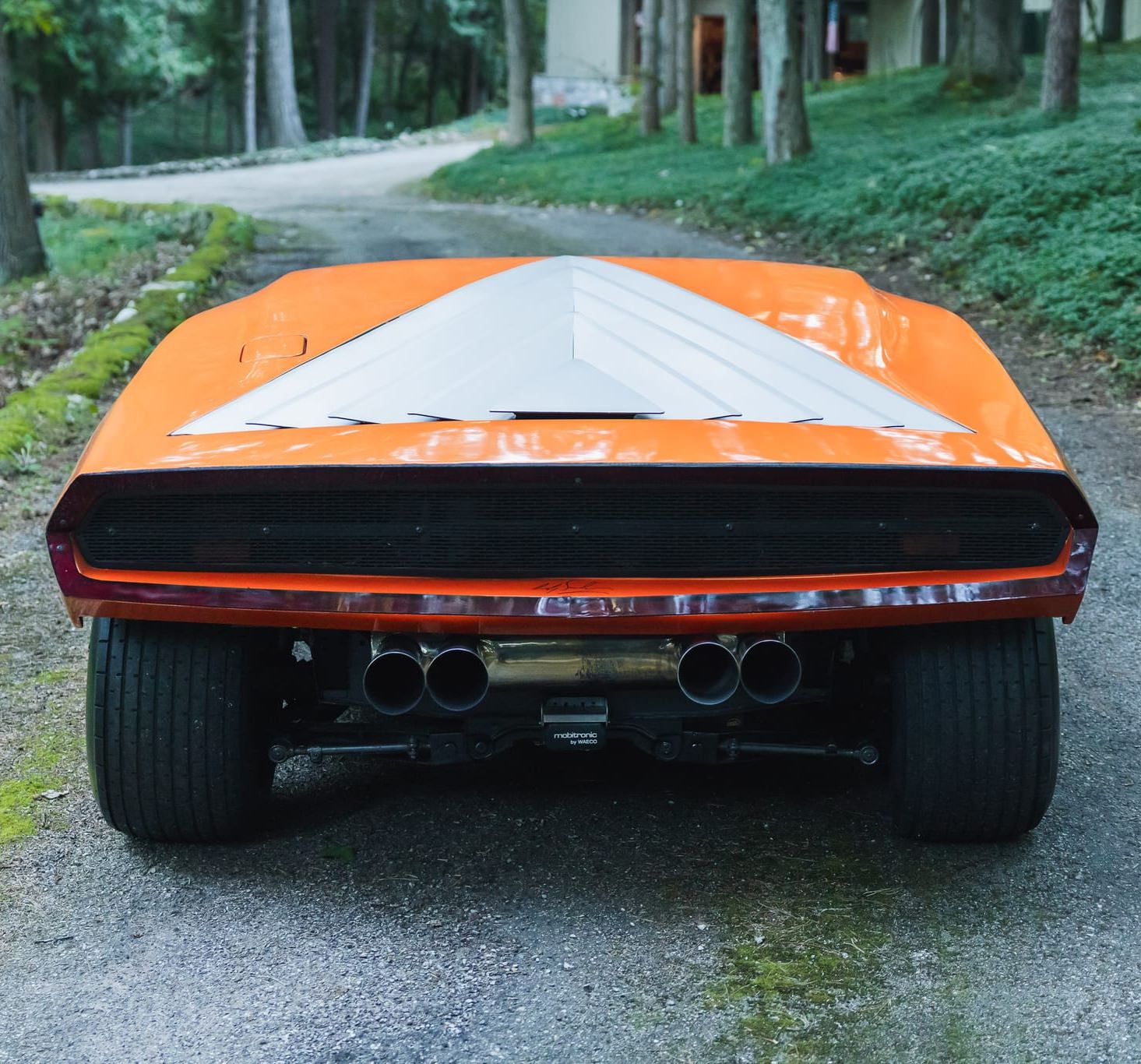
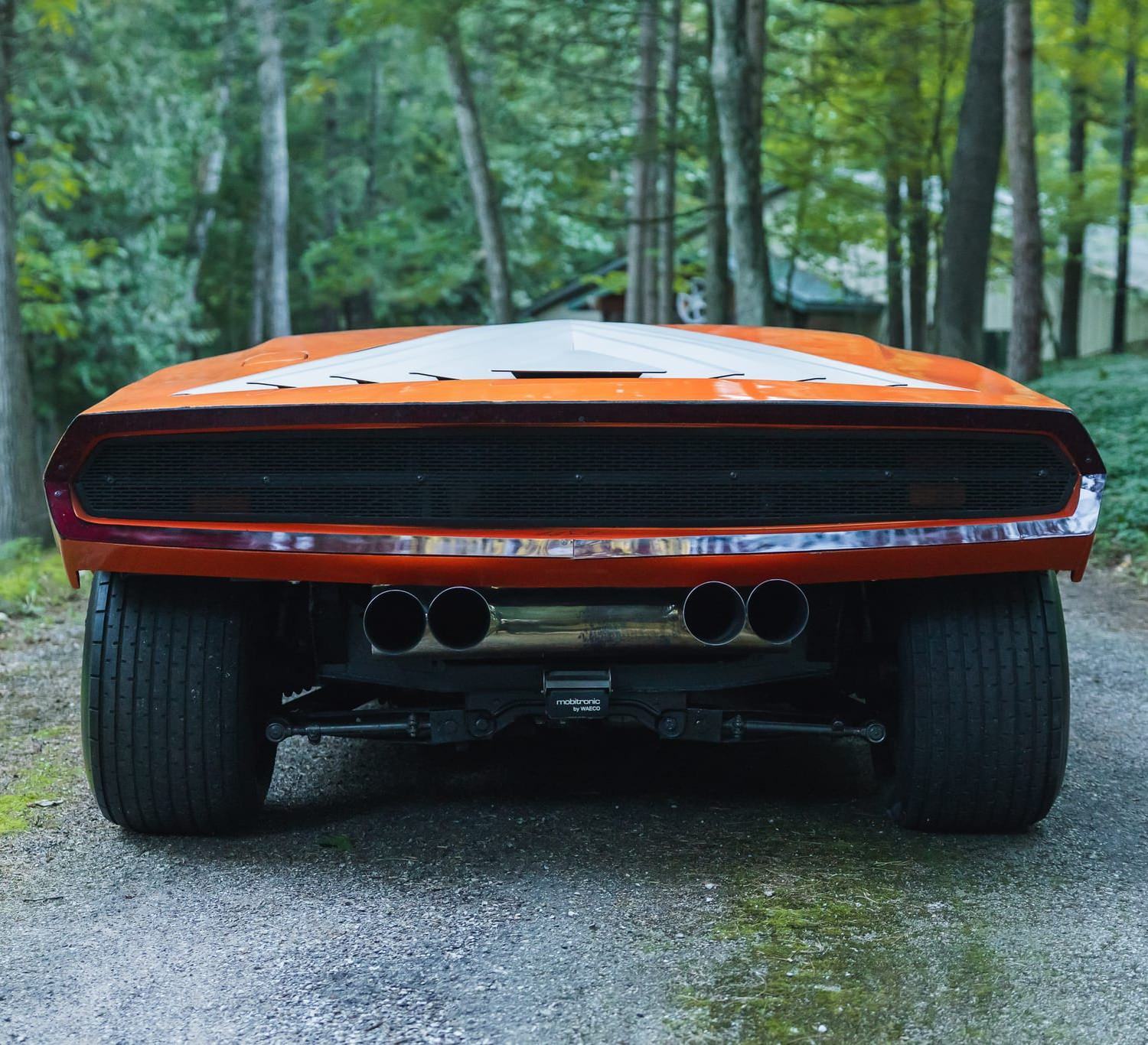
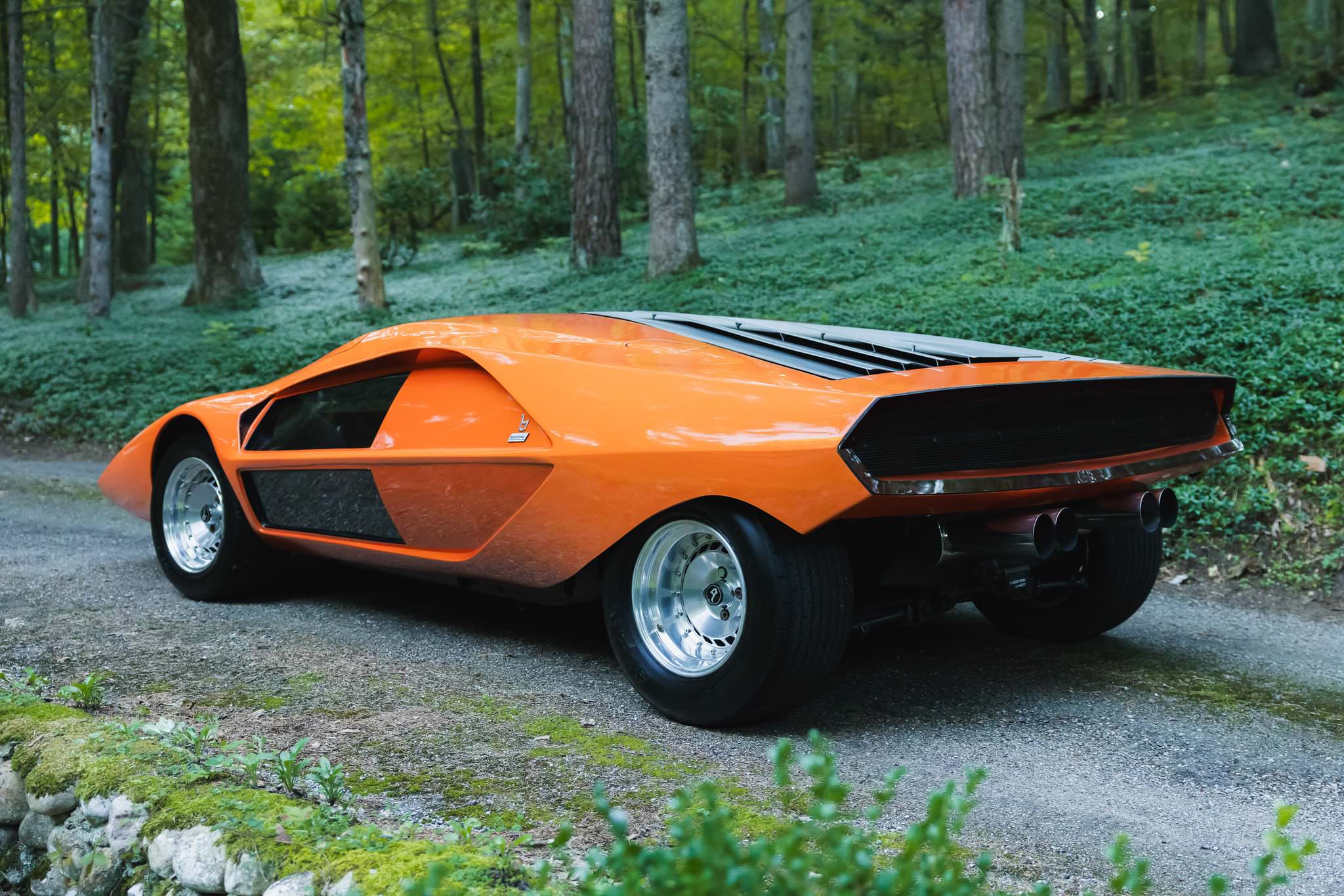
Completed in 2006, the car wears Lamborghini Mica Orange, Bertone badges and Schmidt multi-piece alloy wheels with Bertone center caps. A Mountney steering wheel sits on the right, and Saunders signed the tail panel. The result follows the concept’s visual idea while relying on Fiat X1/9 components beneath the body.
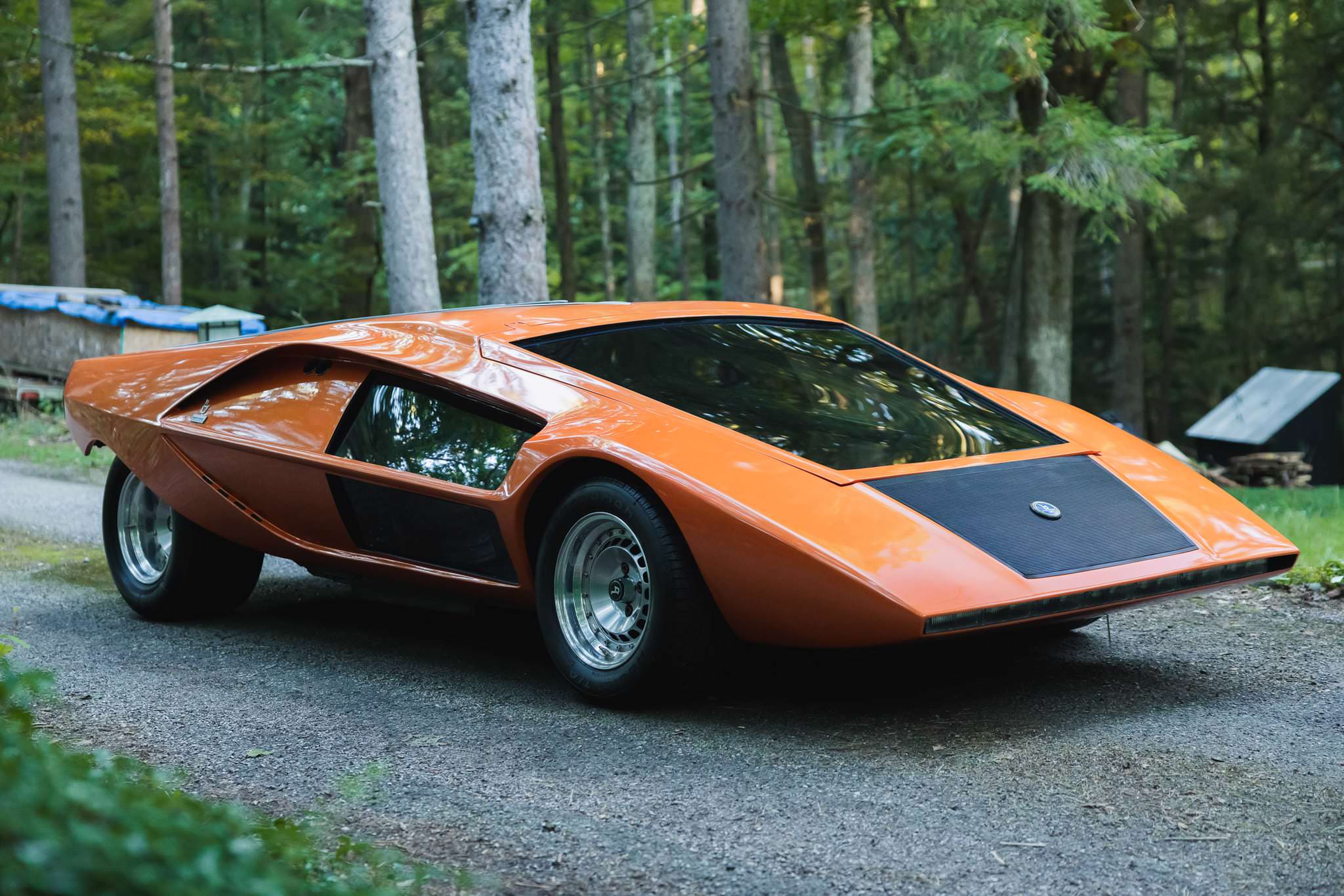
Saunders kept the X1/9’s floor pan and mechanicals, then added working openings, glass, grilles and lights to the shell.
Sale details and identity
The completed car was sold in 2008 and shipped to the United States, where it was registered for road use. A plate in the nose carries the chassis number of a 1970 Lancia Flavia 2000 Coupé, while the Michigan title identifies the car as a 1970 Lancia. It’s now being offered with service invoices from its current ownership, import paperwork, magazine articles, a Moonwalker Blu-ray and a clean Michigan title.
No asking price or mechanical inspection findings are provided in the source material. For a prospective buyer, the central distinction is clear: this is a film-prop-based custom with Fiat X1/9 running gear, not an original Bertone concept or a Stratos HF. Its appeal rests on the documented film connection, Saunders’ conversion and the chance to own a functional interpretation of one of the most recognizable wedge shapes of the 1970s.
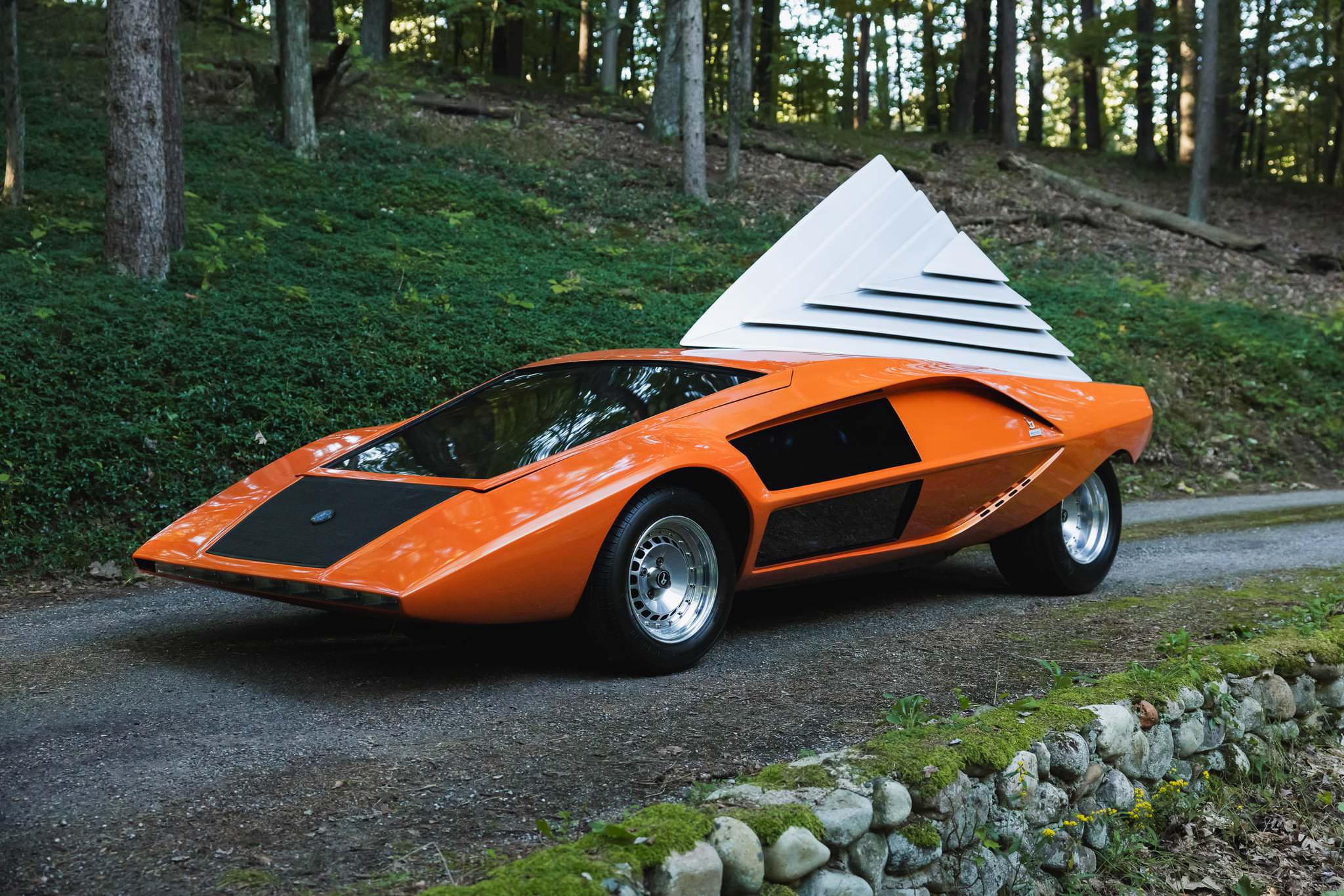
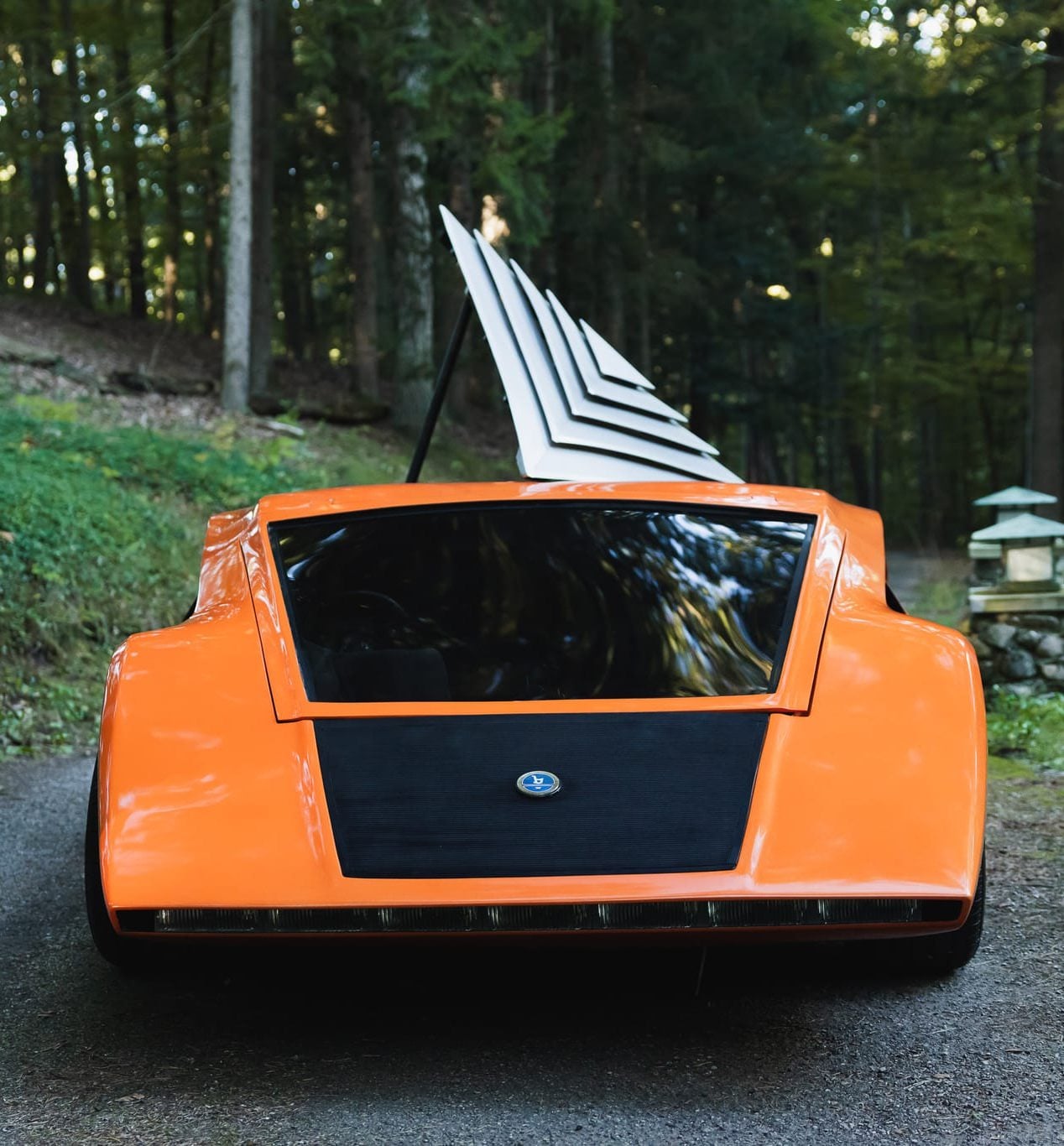
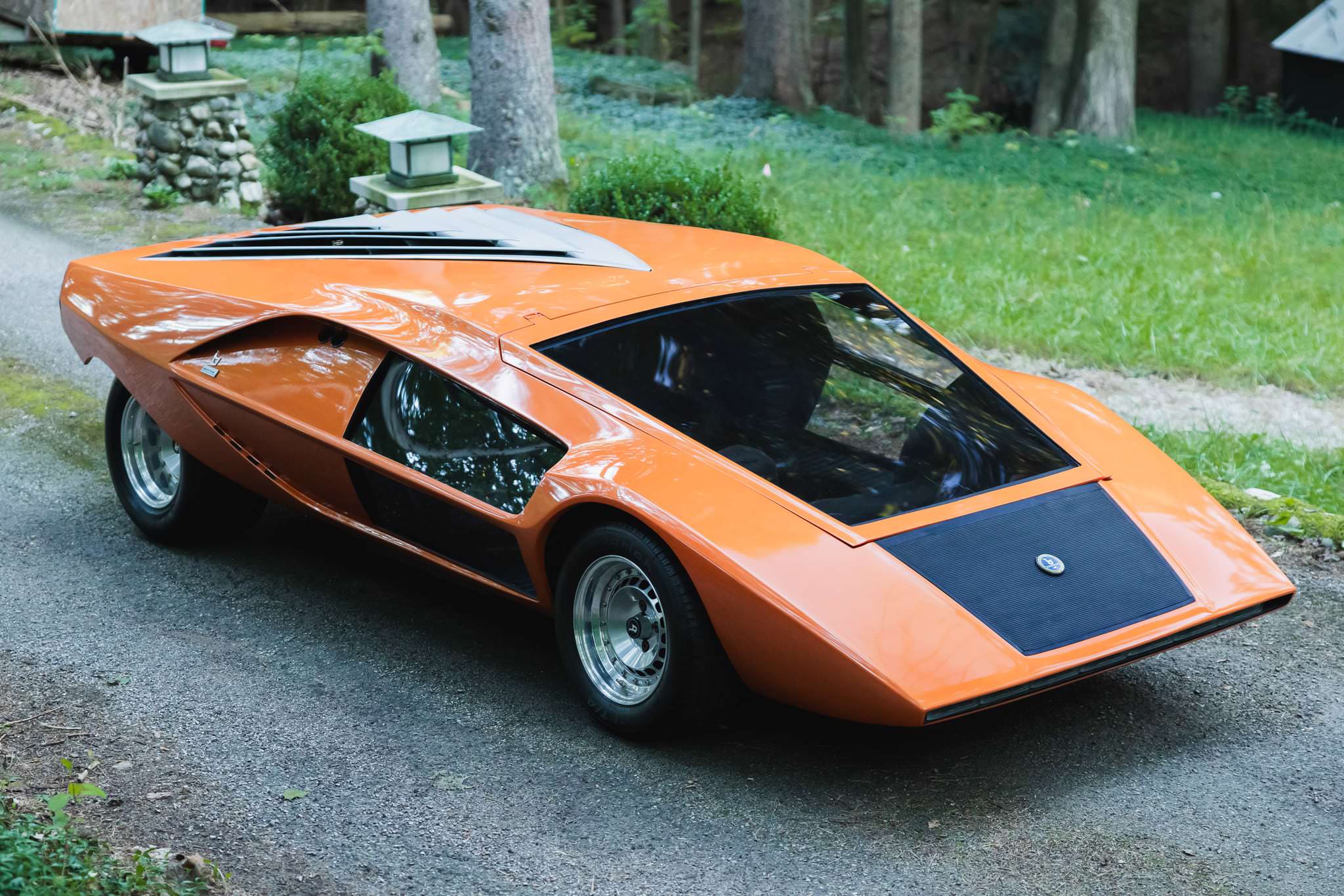
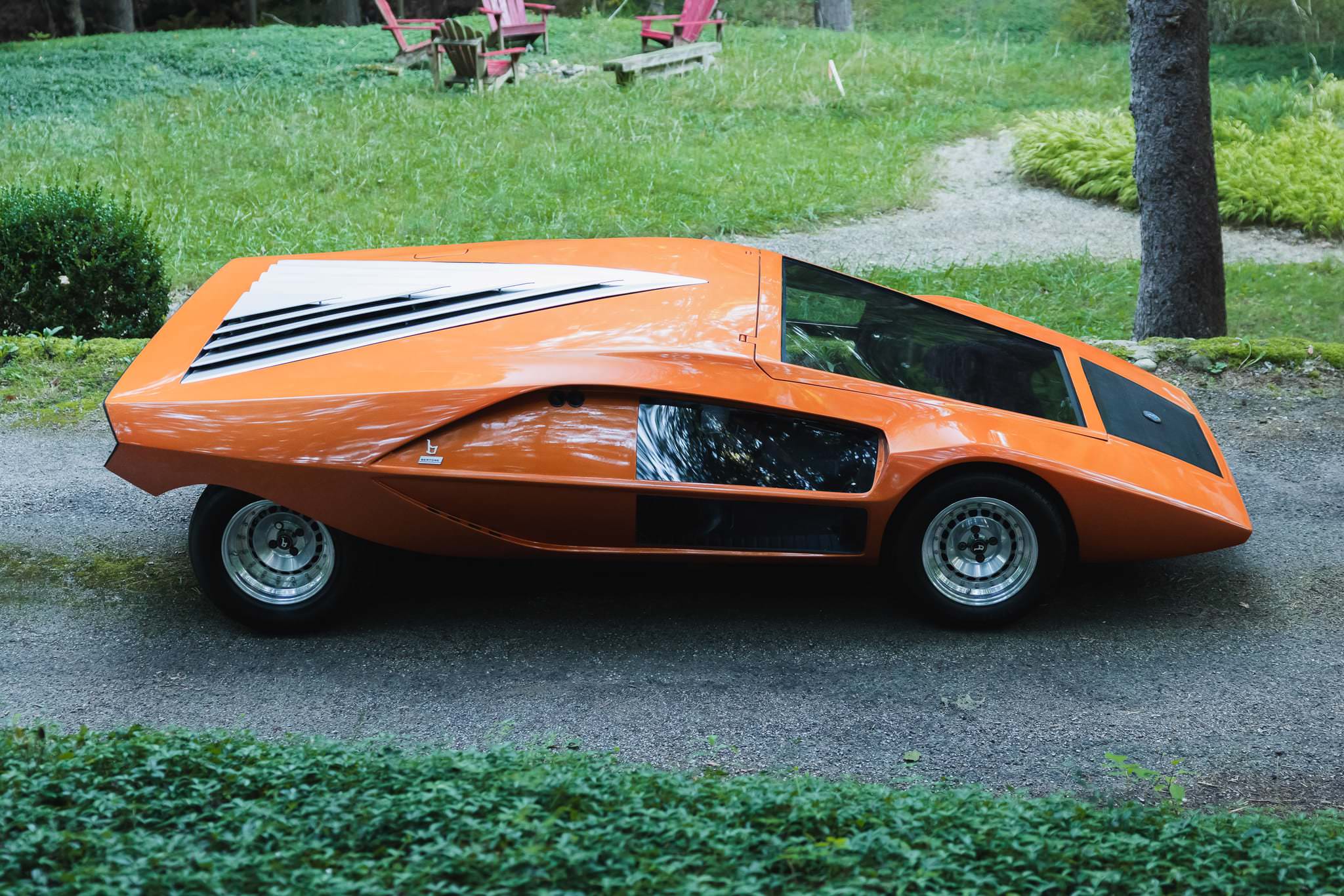
Images courtesy of Bring a Trailer and Bertone.


