In lane Electric Vehicles
1987 Holden Commodore Berlina VL Turbo: Specs, History and a Manual Example
Description
The VL Turbo paired Nissan’s 201bhp RB30ET with family-sedan practicality. This red Berlina has a five-speed manual and 164,207km.
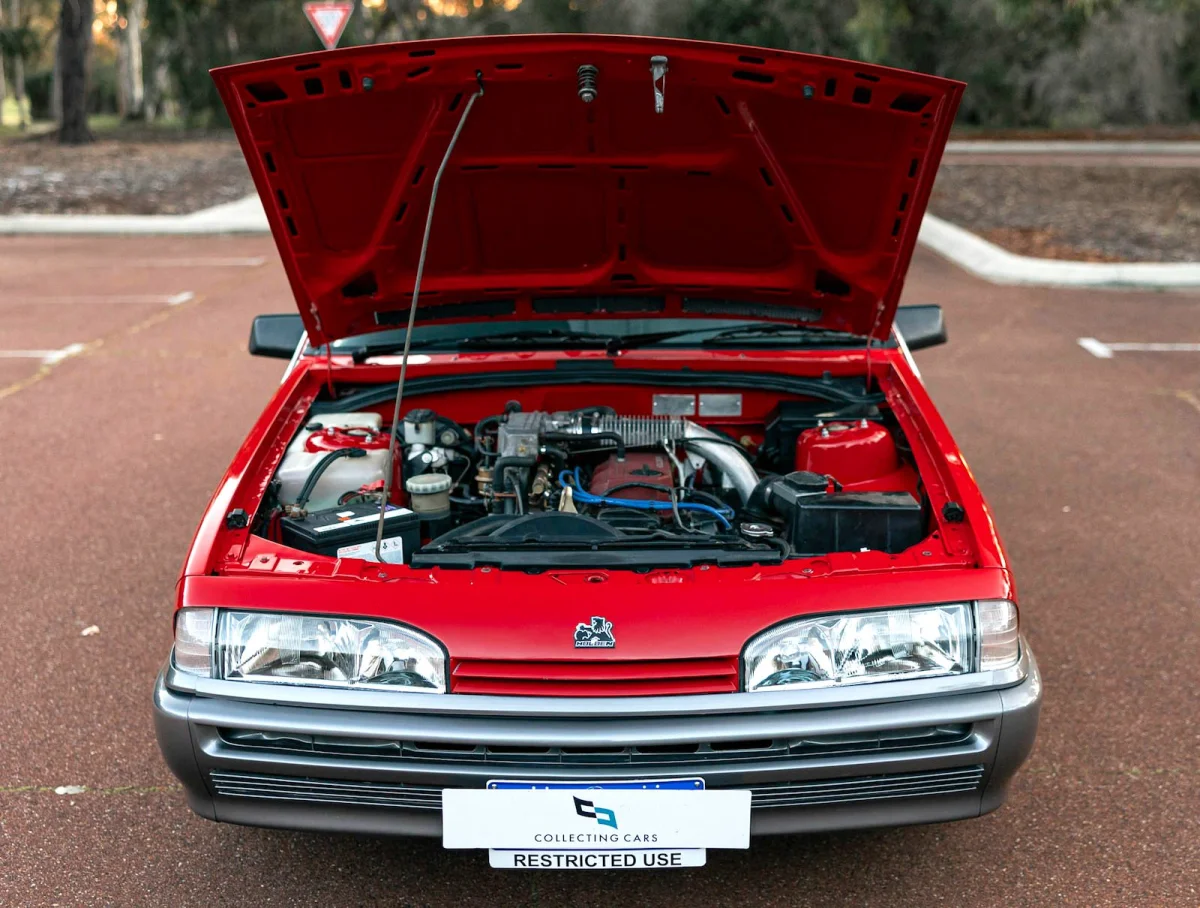
The 1987 Holden Commodore Berlina VL Turbo brought serious pace to a familiar Australian family sedan. Its Nissan-built, turbocharged 3.0-litre inline-six produced 201bhp and 218lb ft, and independent testing put the 0–62mph run at 7.6 seconds. The example offered for sale adds a five-speed manual, a useful reminder of how unusual engine sourcing and everyday practicality met in the VL.

Why Holden chose a Nissan six
The VL went on sale in March 1986, as Holden faced the expense of adapting its long-serving 202-cubic-inch (3.3-litre) “Black” six to run on unleaded petrol. Australian Design Rule 37 required new cars to use 91-octane unleaded from 1 January 1986. Holden had already invested heavily in its Family II four-cylinder engine and judged a clean-sheet replacement six too costly. A supply deal with Nissan provided a quicker route to a fuel-injected engine suited to the change.
The decision was controversial among some Holden buyers and unions. Holden had been in discussions with Nissan by early 1983, but the cost of the imported engines rose when the Australian dollar weakened against the yen between the contract and delivery. Holden trimmed costs elsewhere; the single-stage acrylic paint was one result and later became a source of problems.
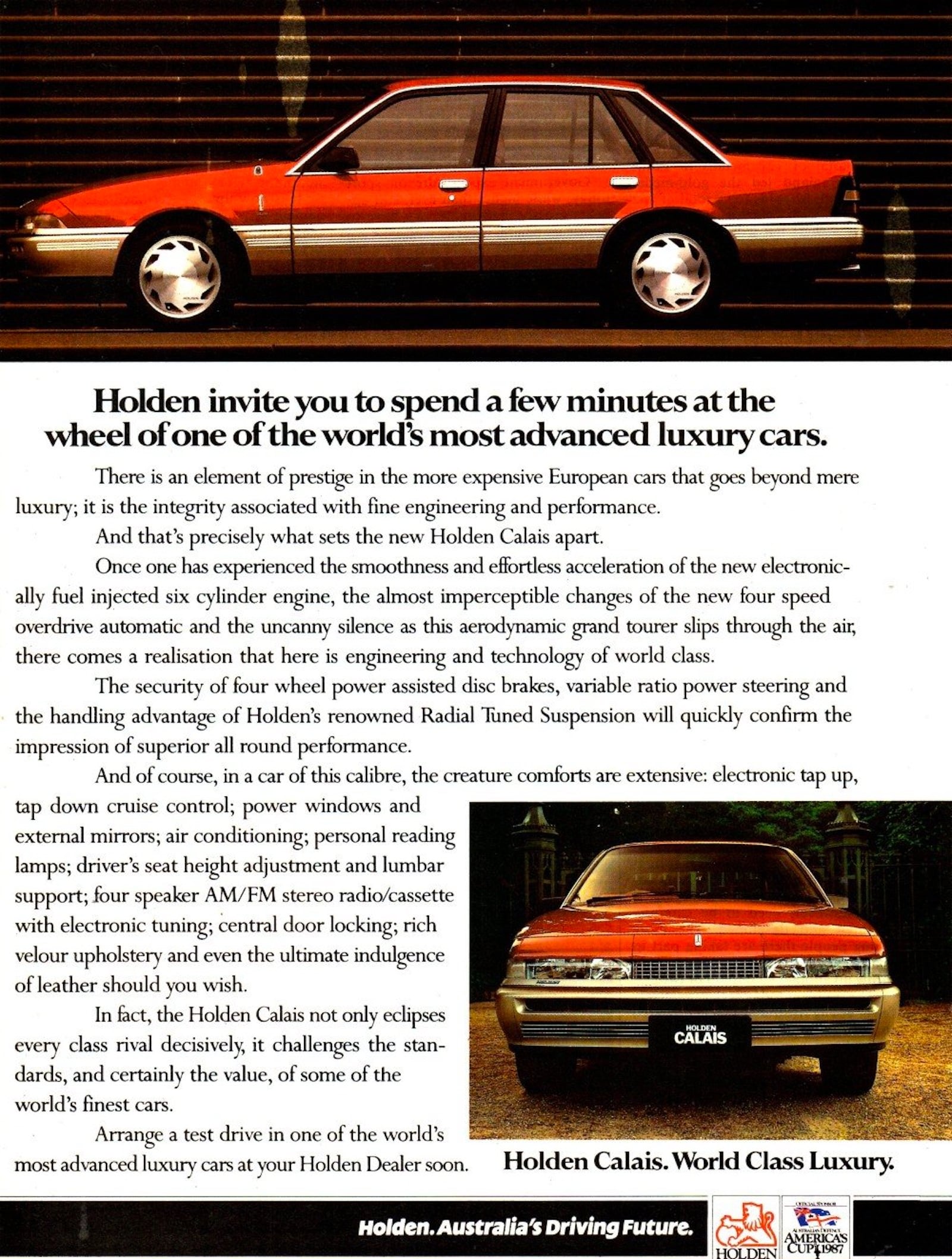
The VL’s 3.0-litre six came from Nissan in Japan. Image courtesy of General Motors Holden.
The naturally aspirated RB30E used a single belt-driven overhead camshaft, fuel injection, an aluminium crossflow cylinder head and an iron block. Its 86 by 85mm bore and stroke gave a displacement of 2,962cc; output was 153bhp and 182lb ft. Both the five-speed manual and four-speed automatic also came from Nissan. Holden marketed the engine as the “Powertech 6Ei,” while Nissan Australia’s advertising invited customers to try it in a Nissan.
Familiar foundations, revised shape
The VL retained much of the earlier VK Commodore’s cabin and window profile, but the bodywork ahead of the windscreen was new. Executive designer Phil Zmood gave the car a more steeply sloped bonnet, lower-mounted headlights and a boot lid that rose into an integrated spoiler. The Calais had semi-concealed headlights.
Under the updated exterior, the Commodore kept a steel unit body, MacPherson struts up front and a coil-sprung live rear axle located by trailing arms and a Panhard rod. Variable-ratio rack-and-pinion steering came with or without power assistance. The rear suspension was a dated arrangement by then, but Holden didn’t have the budget to develop an independent system for the VL.

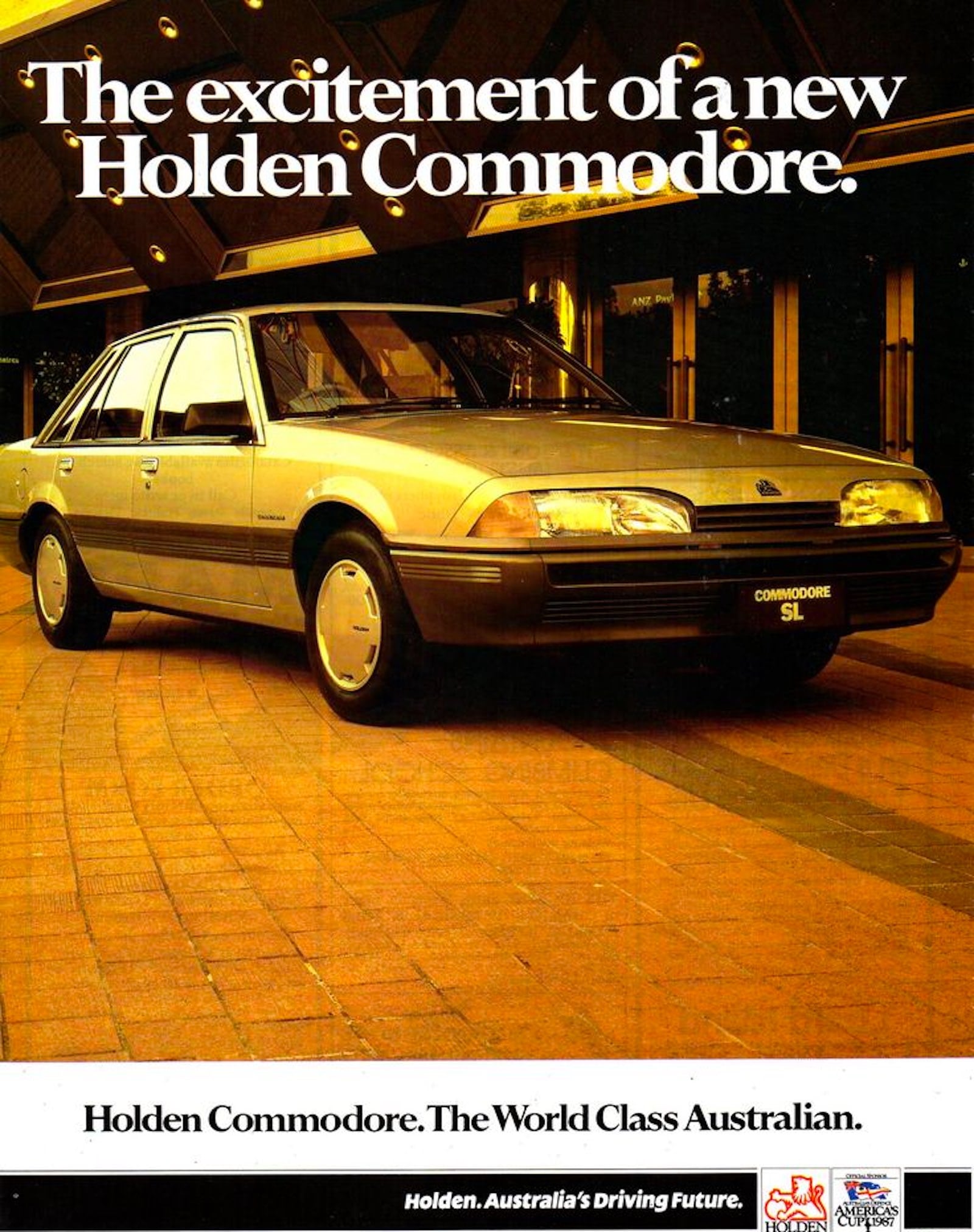
The VL’s front styling changed substantially while much of its cabin profile carried over from the VK. Image courtesy of General Motors Holden.
The range covered SL, Executive, Berlina and Calais trim, with sedan and station wagon body styles. Sedans were the stronger sellers. Holden also brought back its V8 in late 1986. Adapted for unleaded fuel but still carburetted, it made 164bhp and 238lb ft, and was paired with the older three-speed Trimatic automatic. Holden pitched it as a towing engine.
Performance-focused versions followed. The Holden Dealer Team’s SS Group A, built to meet competition requirements, appeared in late 1986: 500 Permanent Red cars with 184bhp. After Holden’s relationship with Peter Brock ended in February 1987, Tom Walkinshaw’s Holden Special Vehicles produced the 1988 SS Group A SV. It had fuel injection, 241bhp, Panorama Silver paint and a production run of 750. New Zealand buyers could also order a 2.0-litre Nissan six, though surviving examples are now exceedingly rare.
Turbo power and chassis changes
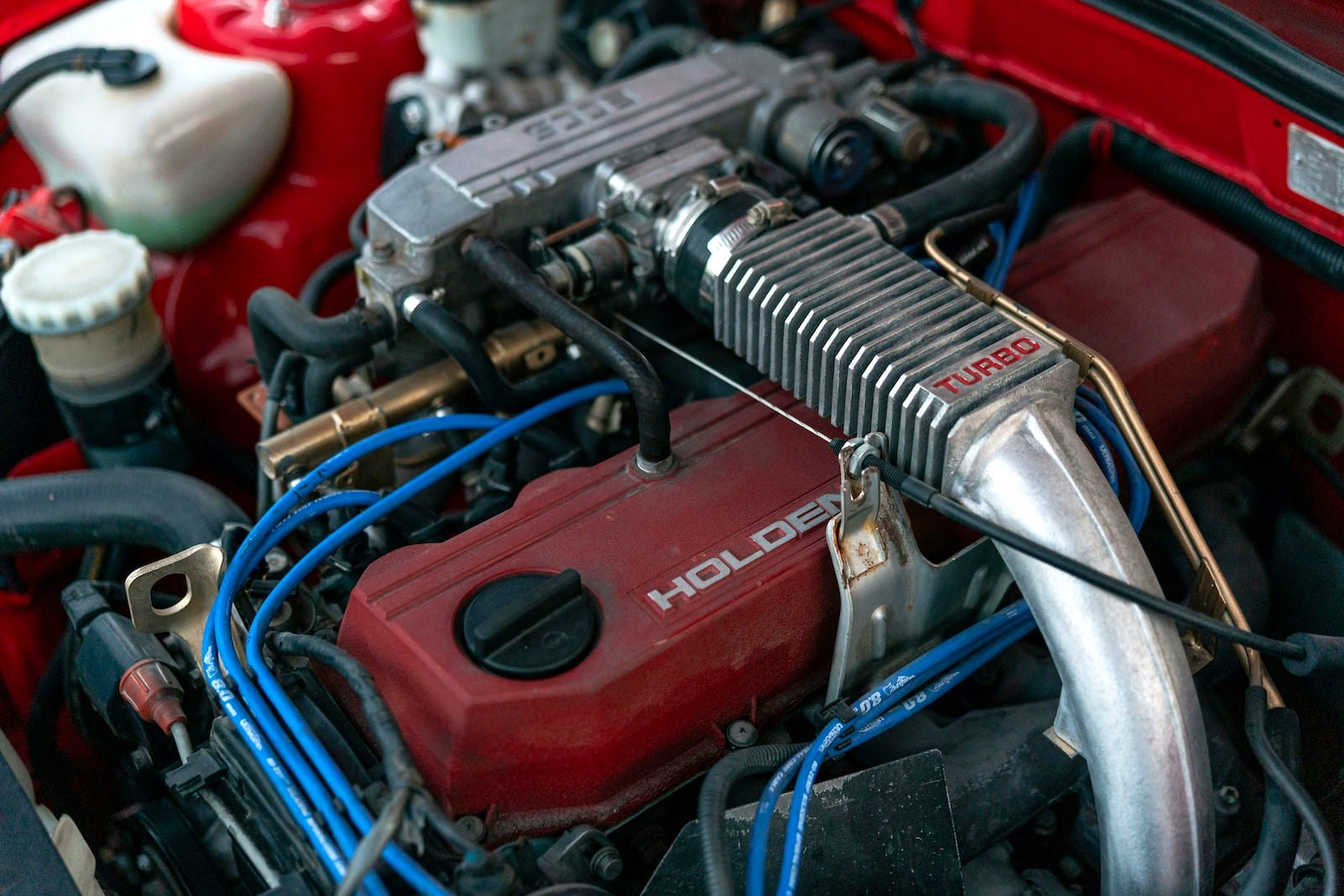
When Holden secured the naturally aspirated RB30E, it also negotiated exclusive rights to a turbocharged version. The RB30ET arrived in mid-1986, using a Garrett T3 turbocharger in a water-cooled housing. Lower-compression pistons reduced the ratio from 9.0:1 to 7.8:1, while a revised camshaft had more lift and less overlap.
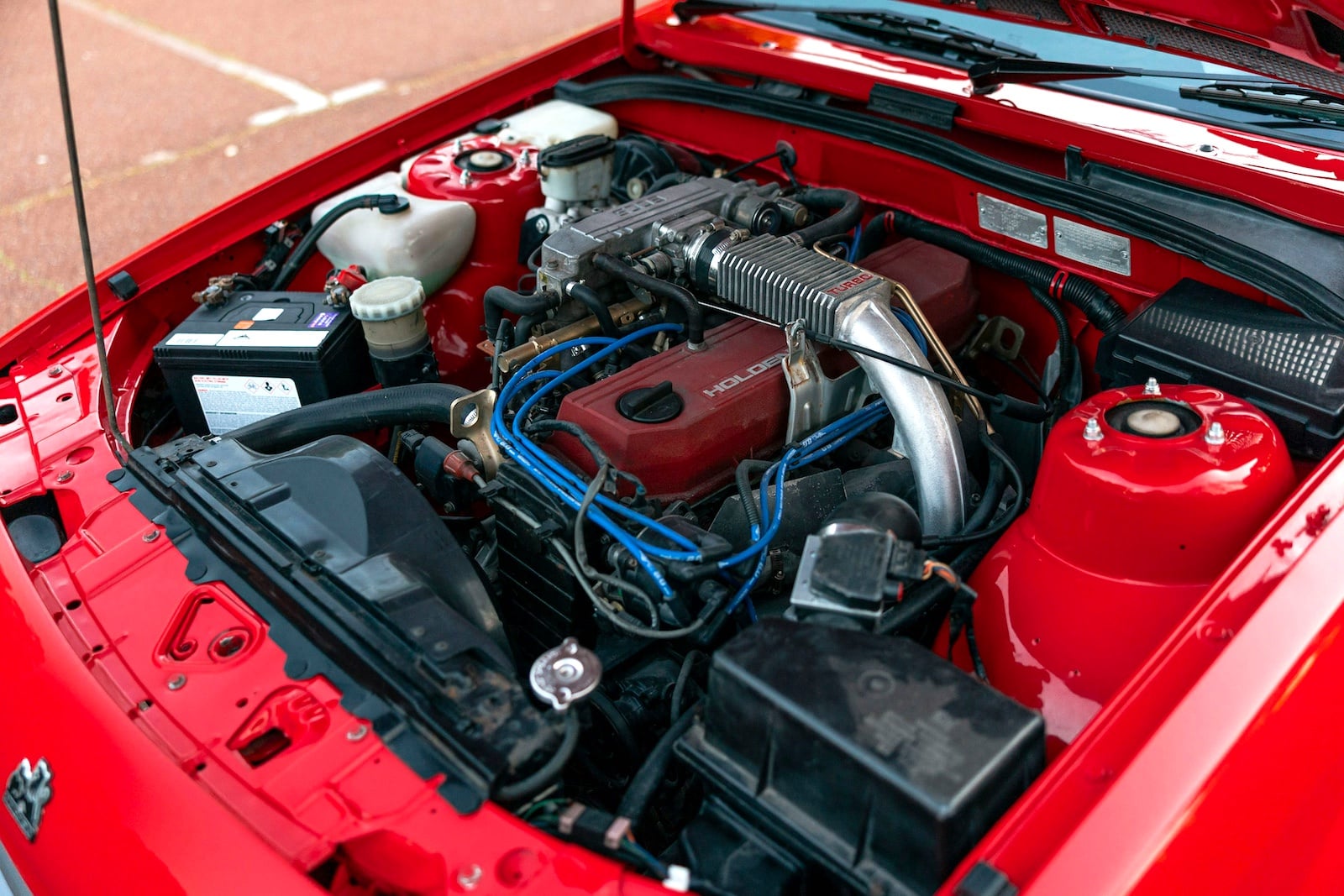
The RB30ET’s Garrett T3 turbo used a water-cooled housing, with revised pistons and camshaft. Image courtesy of Collecting Cars.
Peak output reached 201bhp at 5,600rpm and 218lb ft at 3,200rpm, with full boost available by 2,400rpm. Buyers could choose either gearbox and specify a limited-slip differential. The turbo was offered from SL to Calais trim, so its performance wasn’t confined to the most expensive model.
Turbo sedans received Holden’s FE2 suspension package, which brought linear-rate front springs, revised damping and anti-roll bars. The front brakes were larger, with finned aluminium Girlock calipers of a type also used on the contemporary Corvette. Those brakes required 15-inch wheels, and power steering was standard. Holden quoted eight seconds from 0–100km/h; independent tests recorded about 7.6 seconds to 62mph, brisk for a mass-produced Australian family car of the period.
A pursuit version called BT1 used the SL as its base, adding FE2 suspension and, in some examples, a long-range fuel tank. Absinthe Yellow was its most common colour. The VL Commodore’s total production reached 151,801 cars. The VN replaced it in August 1988, bringing a 3.8-litre Buick-derived V6 in place of the Nissan six.
The Berlina offered for sale
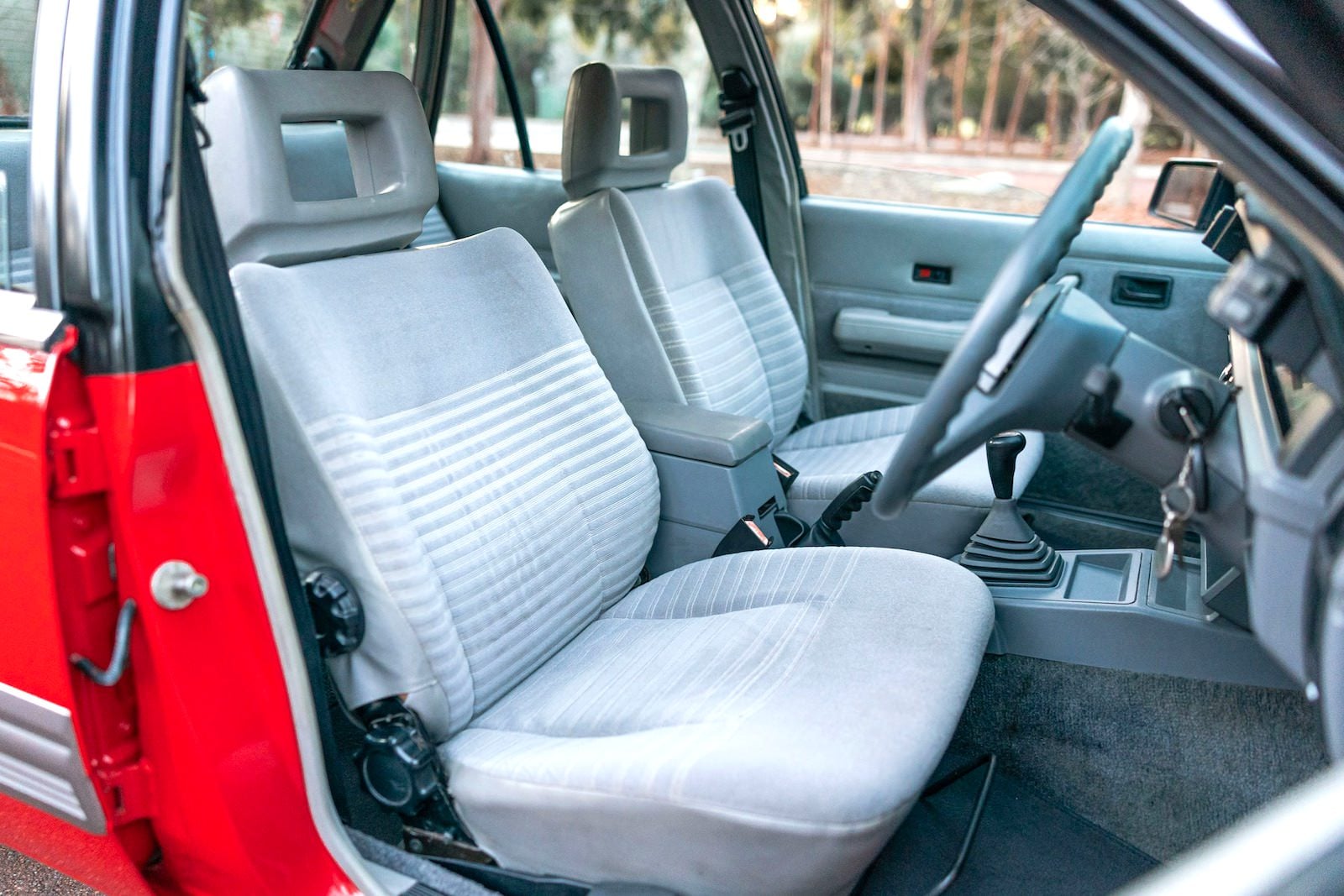
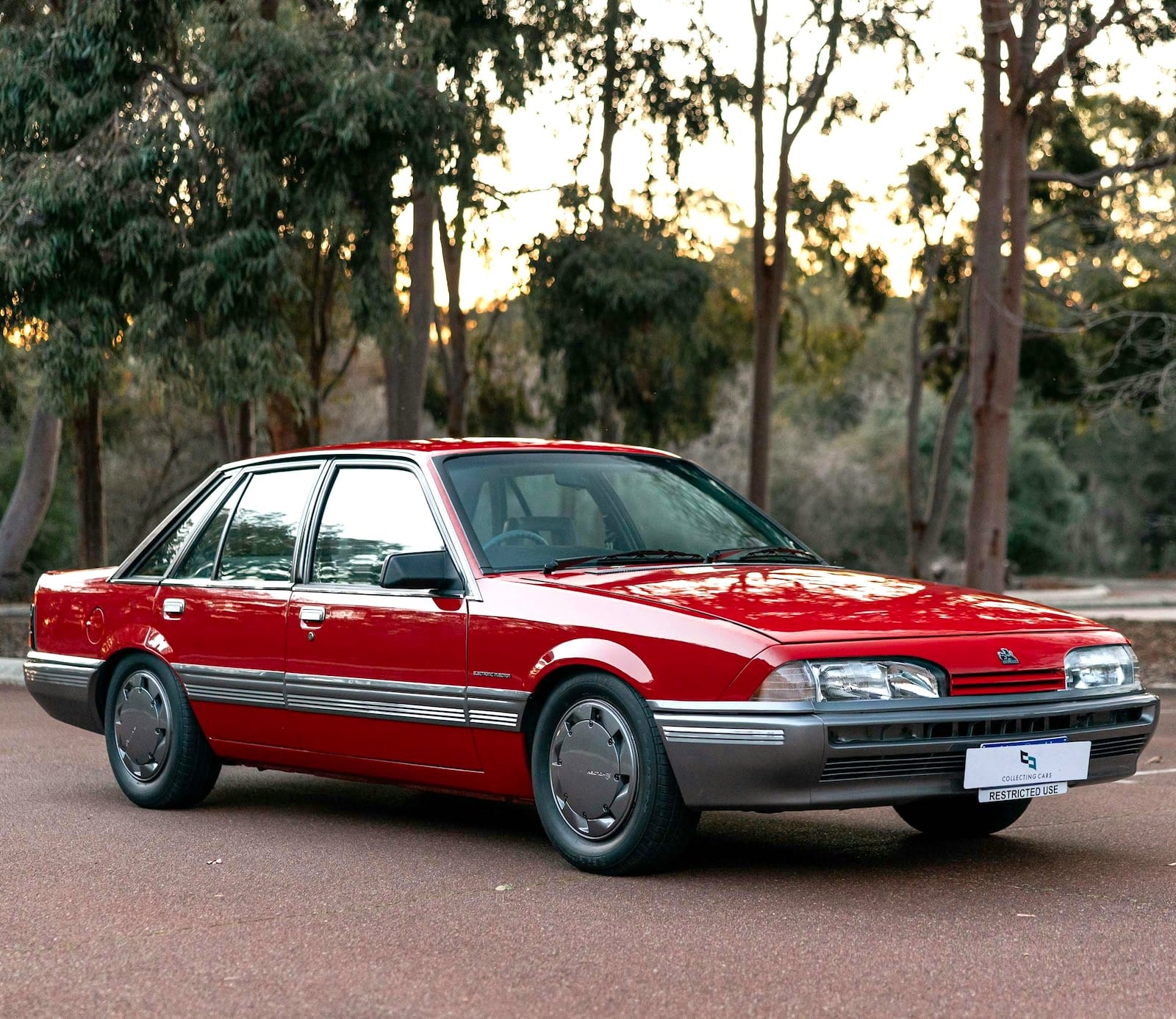
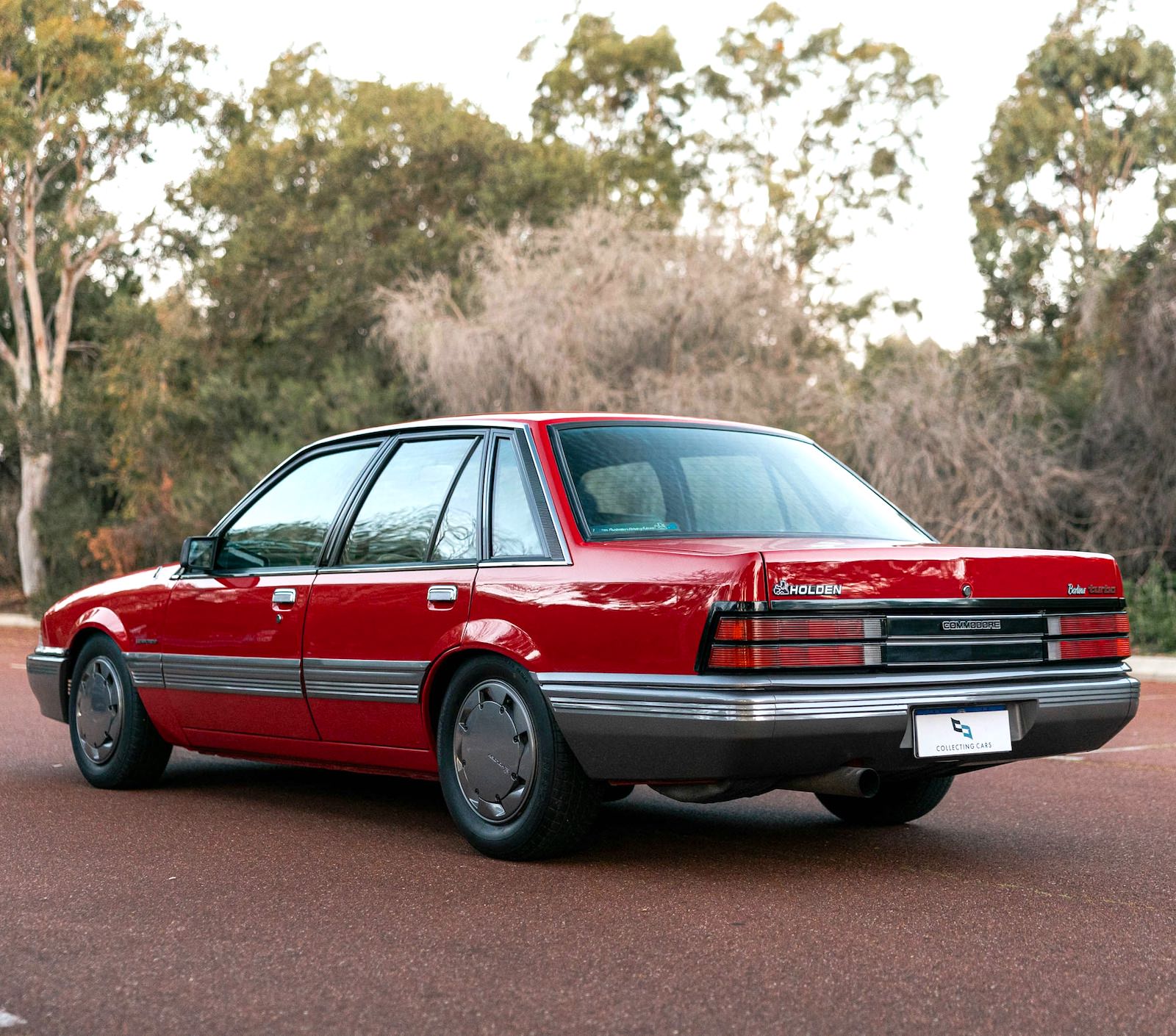
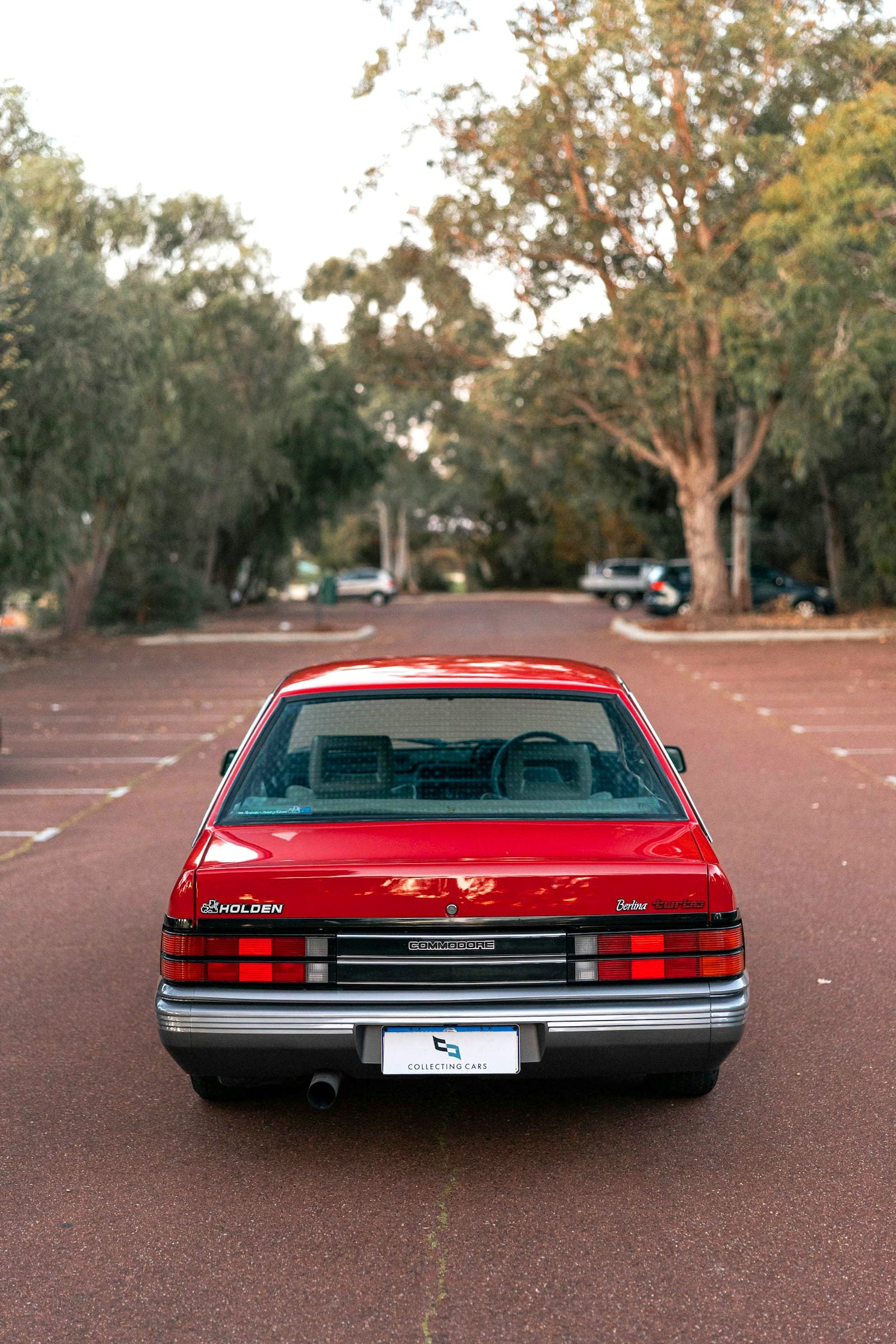
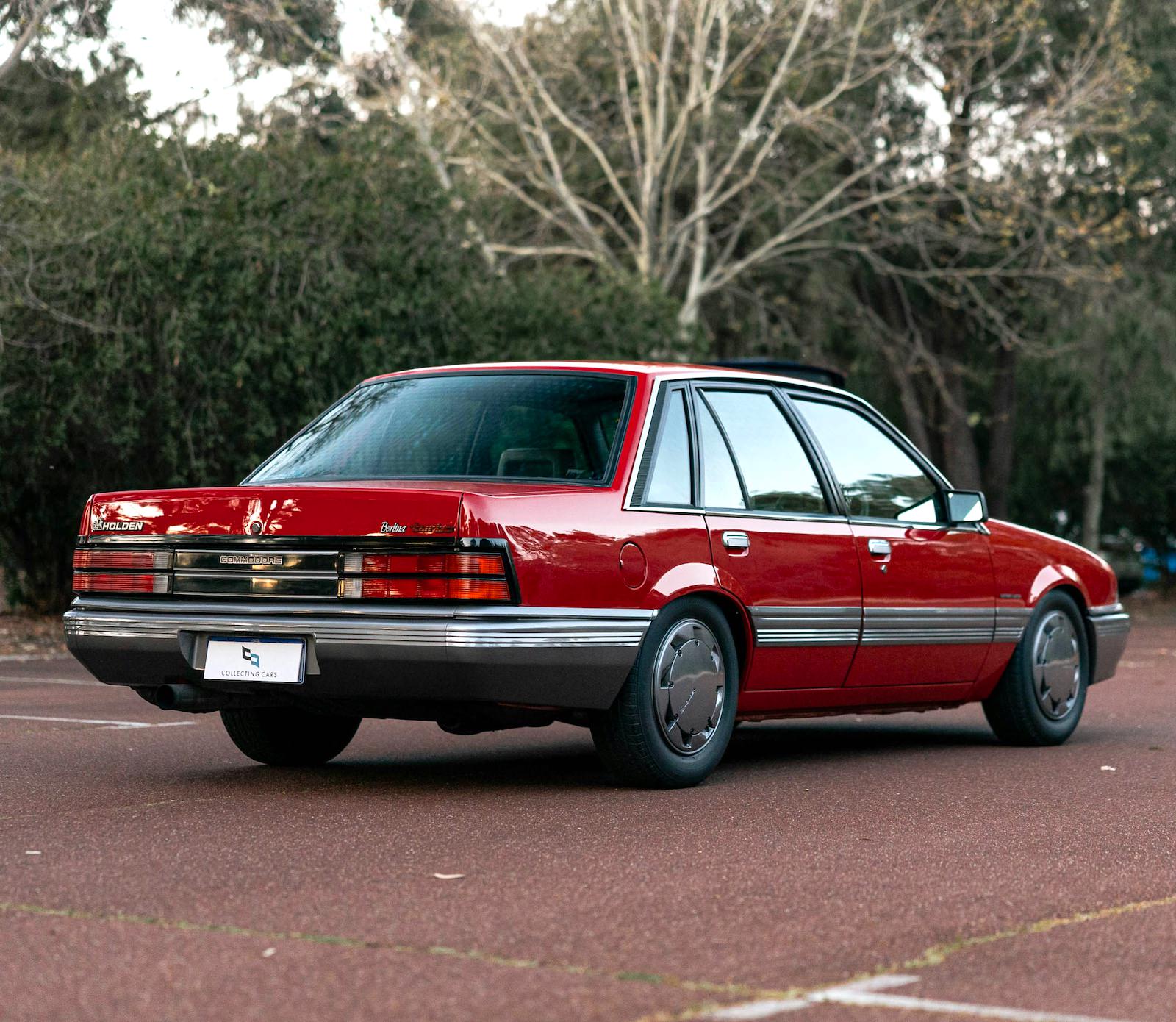
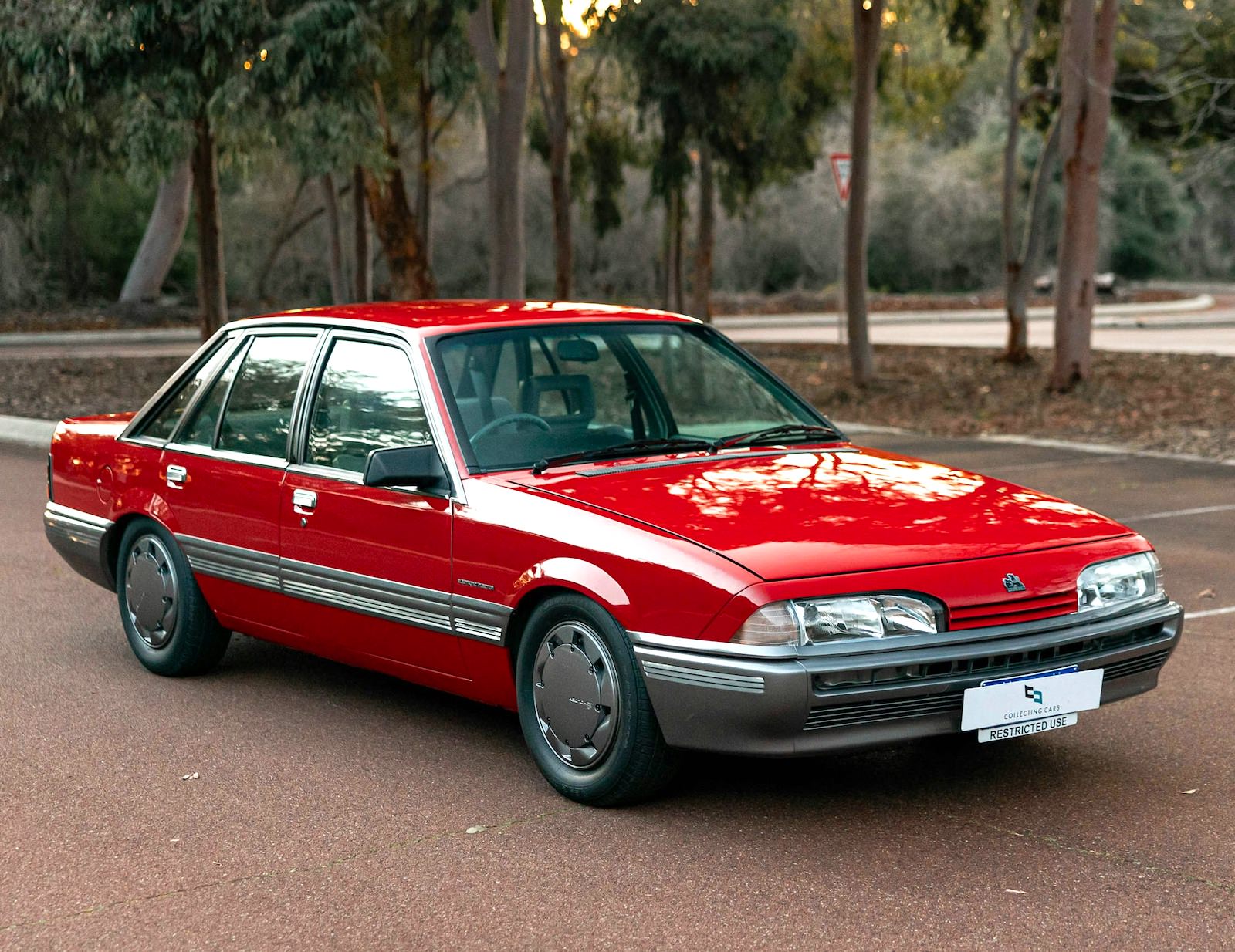
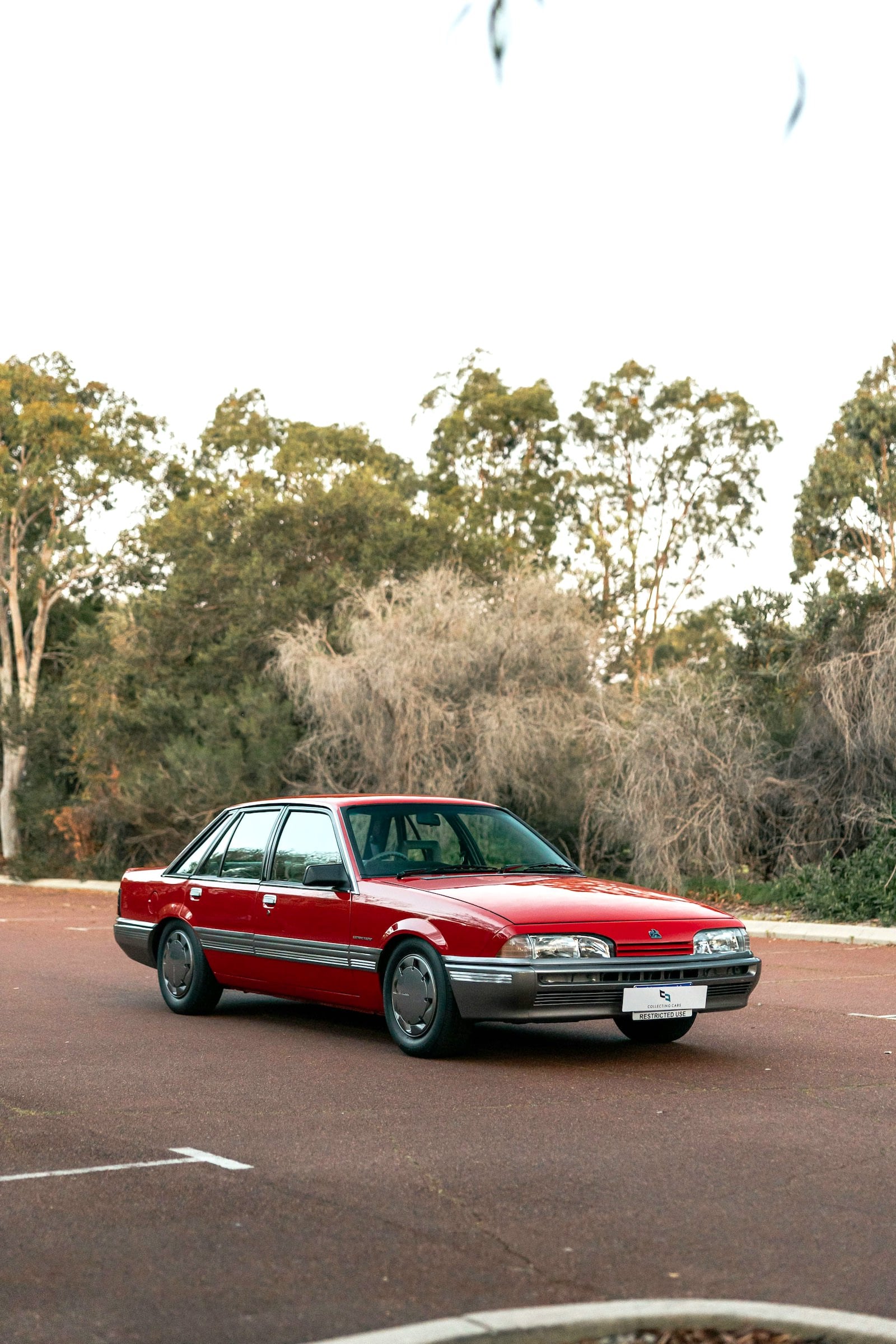
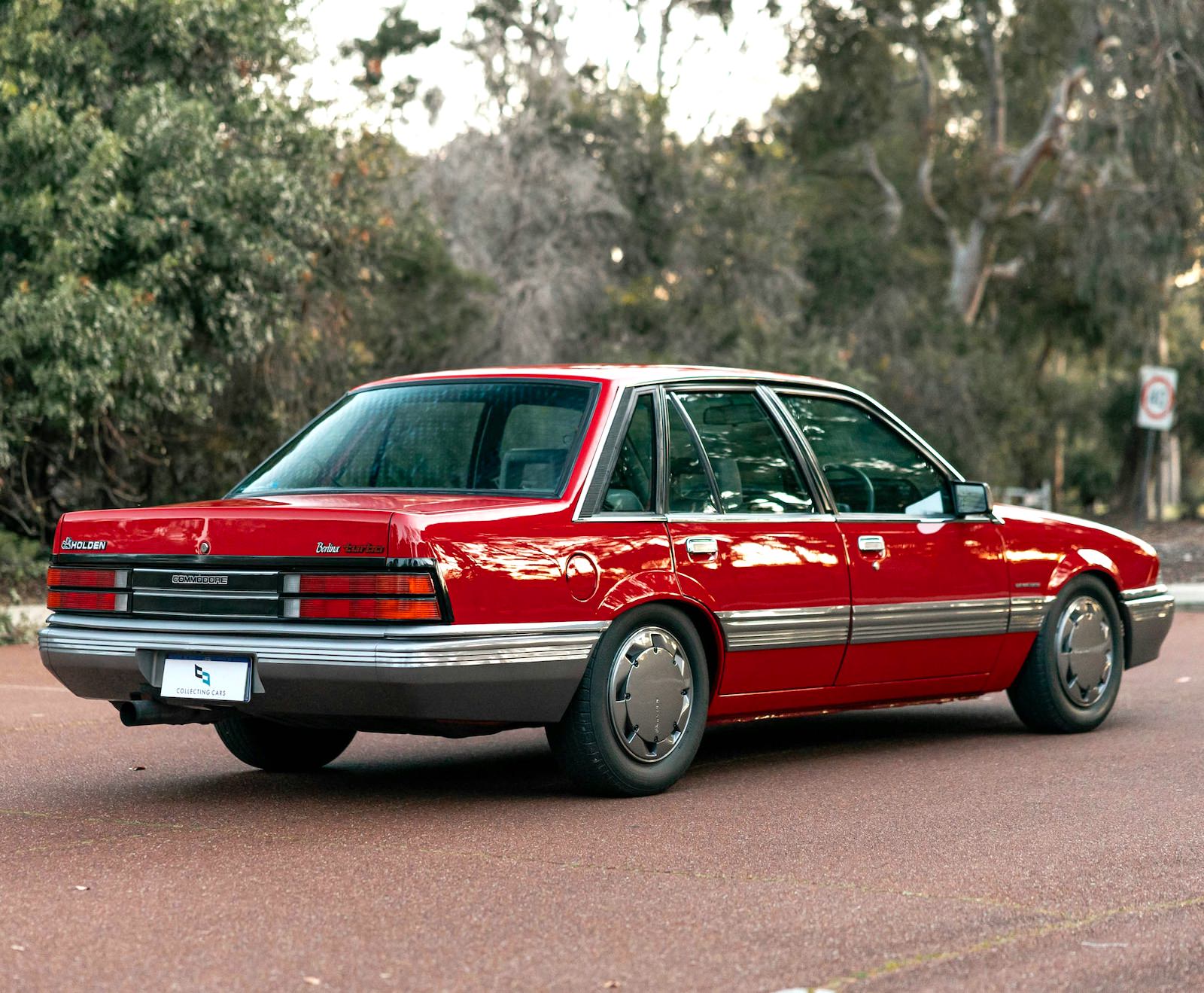
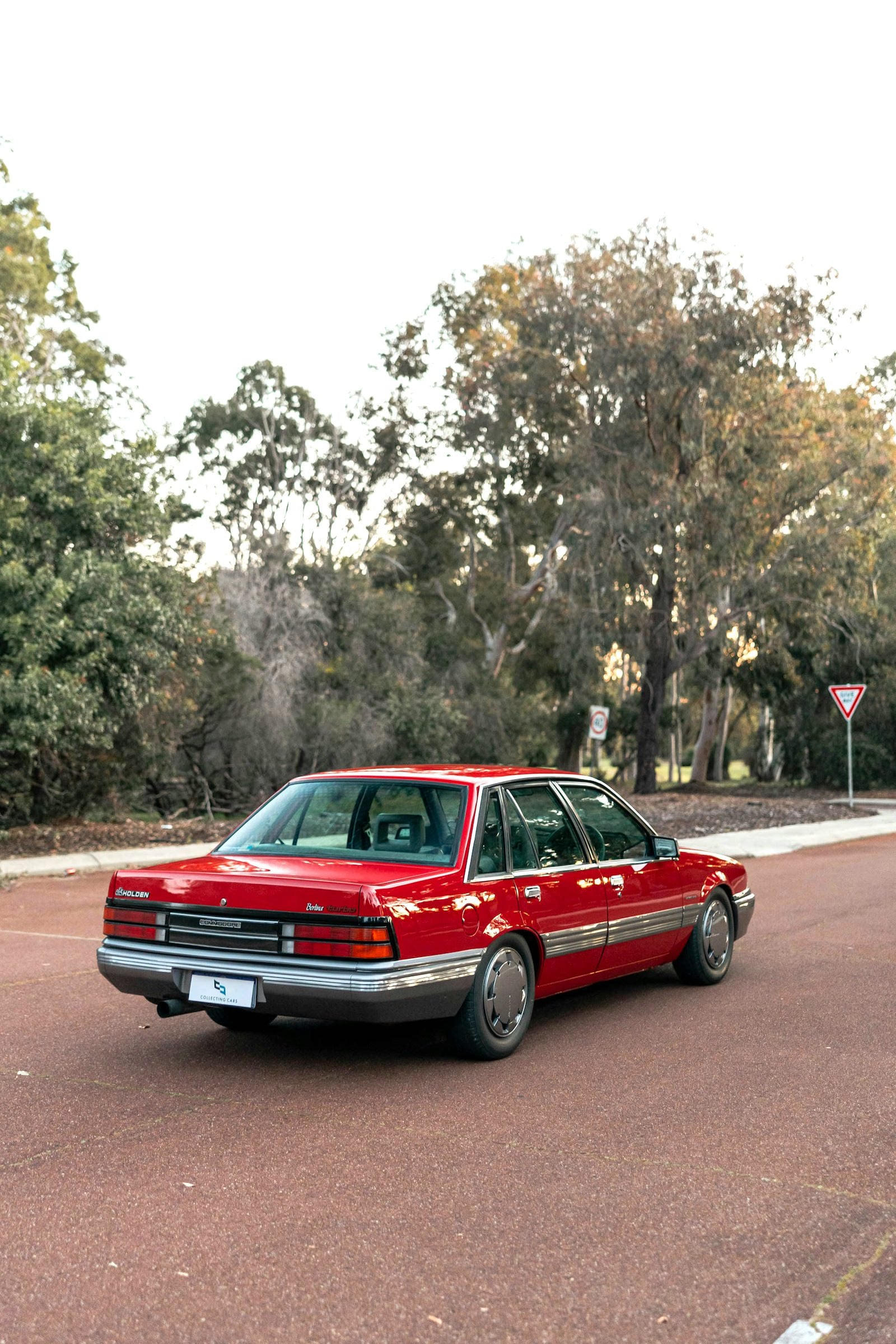
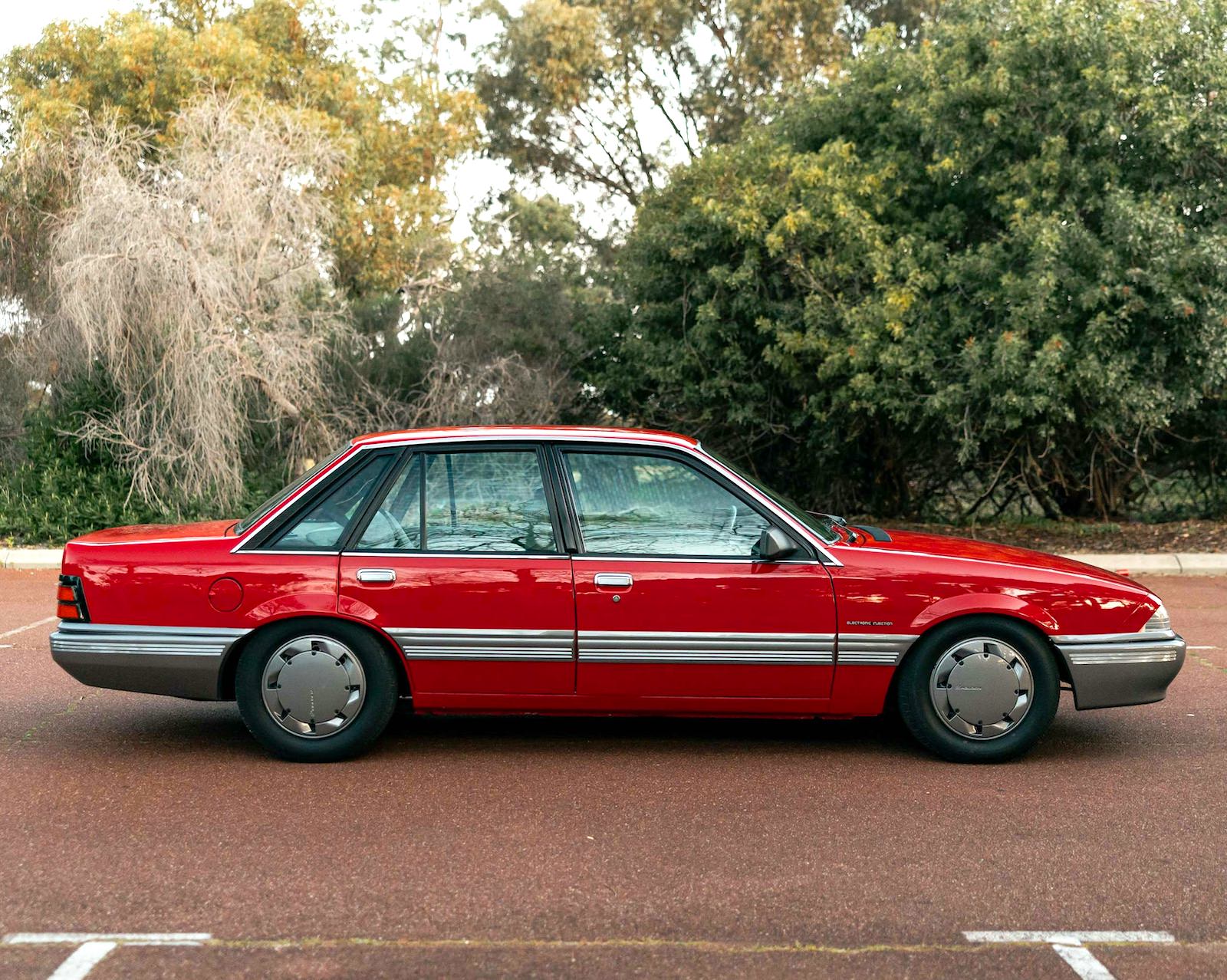
This Australian-market Berlina was built in 1986 and passed local compliance in the middle of that year. It has the RB30ET turbo engine driving the rear wheels through a five-speed manual. The odometer reads 164,207km, or approximately 102,033 miles.
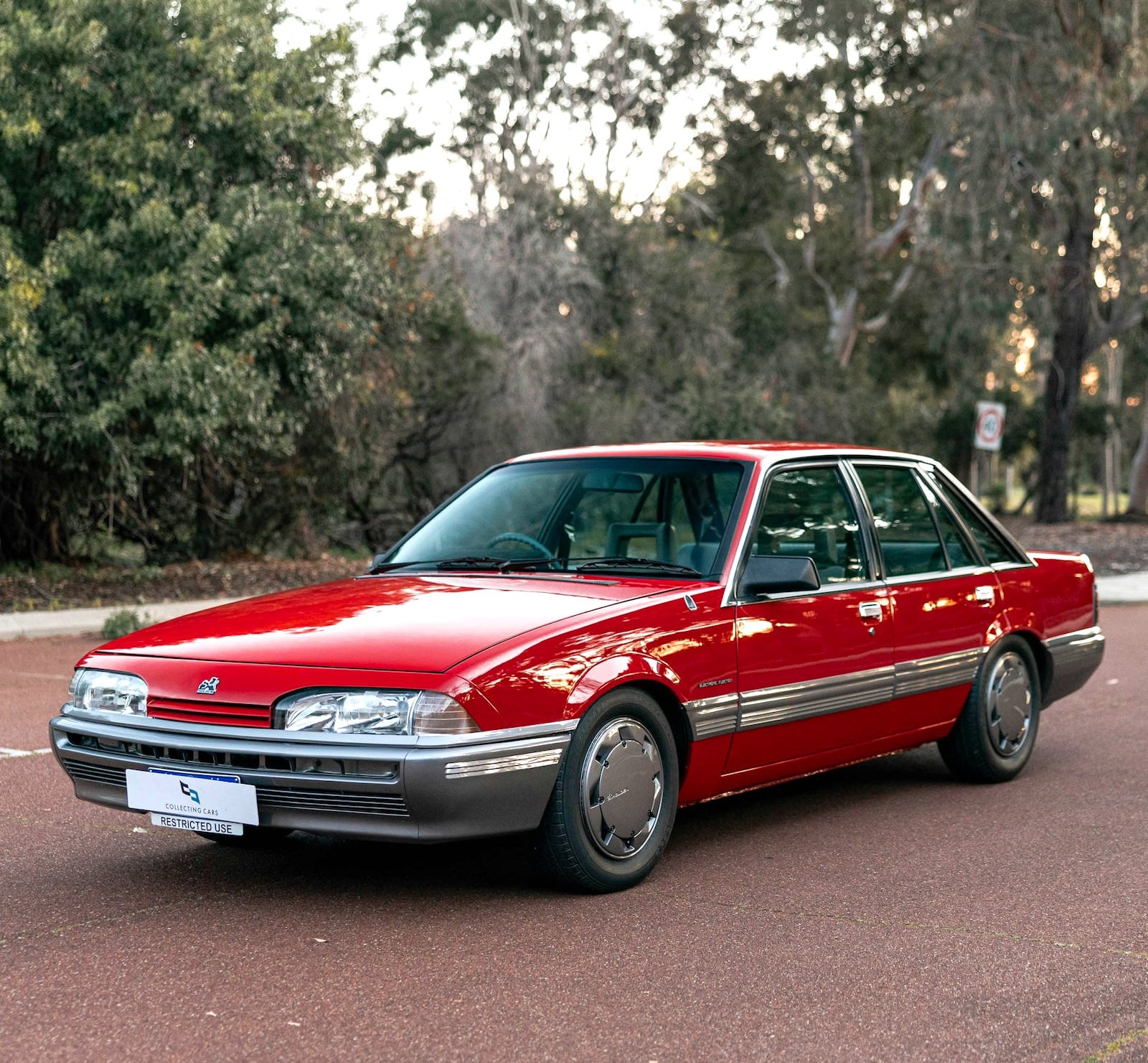
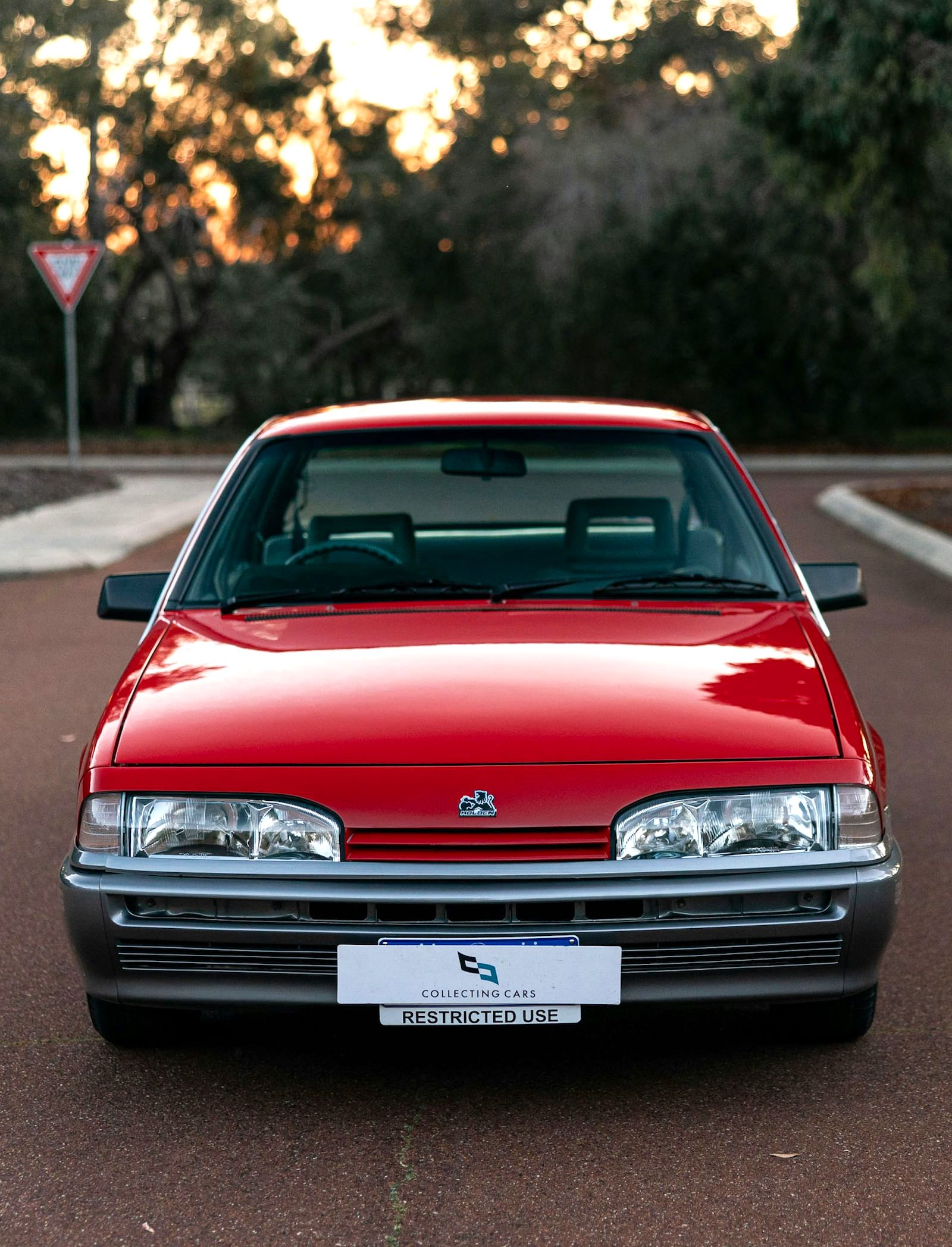
This red Berlina pairs the RB30ET with a five-speed manual and shows 164,207km. Image courtesy of Collecting Cars.
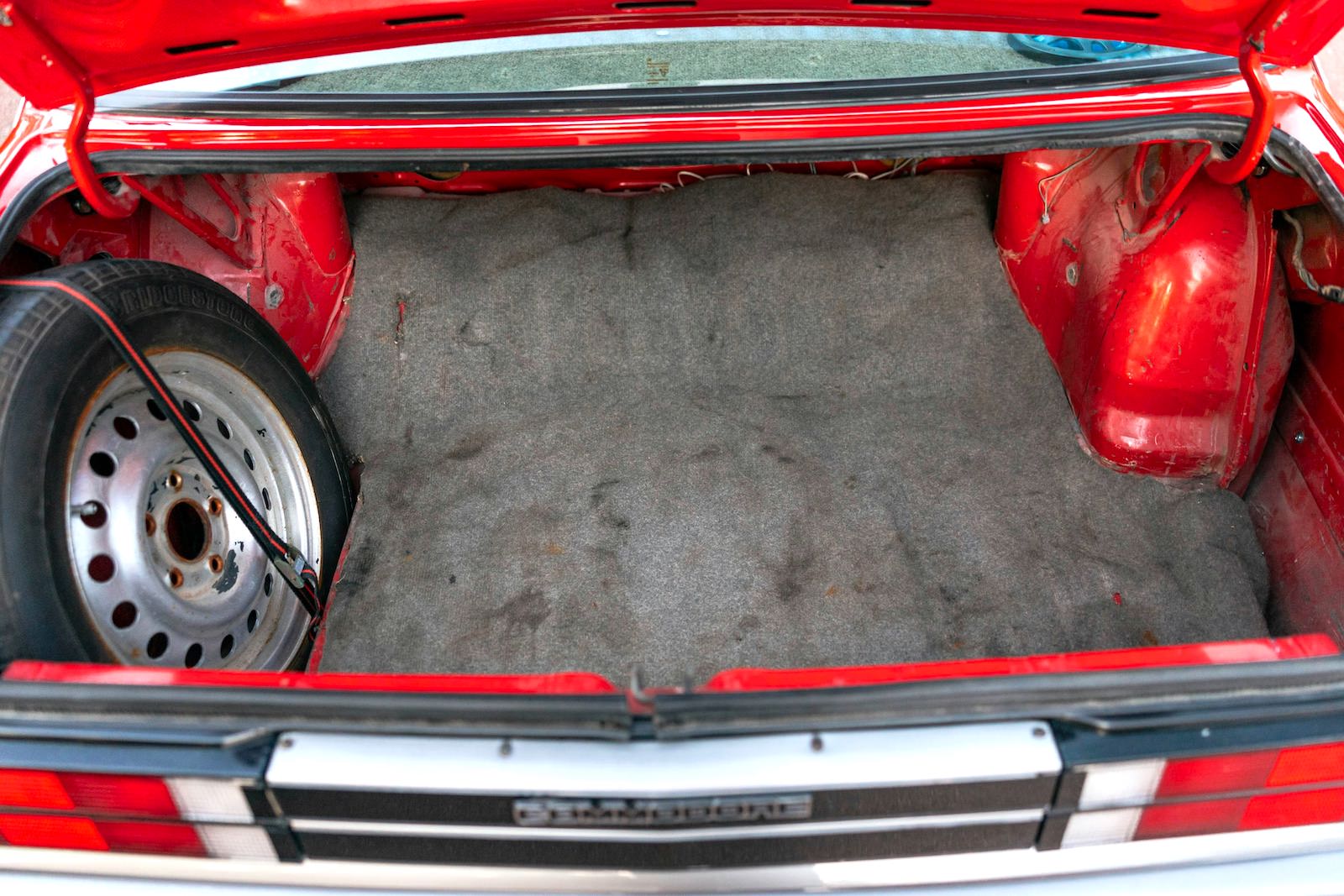
Its red exterior contrasts with a grey cloth cabin. Equipment includes air conditioning, electrically adjustable door mirrors and a two-spoke steering wheel. The car sits on 15-inch steel wheels with turbine-style hubcaps and Bridgestone RE92 tyres. Modifications listed include lowered suspension, a three-inch exhaust and an aftermarket Pioneer stereo. It is offered with two keys through Collecting Cars.
For buyers weighing up this particular car, the specifications tell only part of the story: its suspension and exhaust have been changed, while the five-speed gearbox preserves the appeal of the turbo VL’s more involving factory configuration. The model’s defining mix remains clear—space for family use, Holden’s locally familiar sedan format and a Japanese turbo six that made this Berlina genuinely quick for its era.
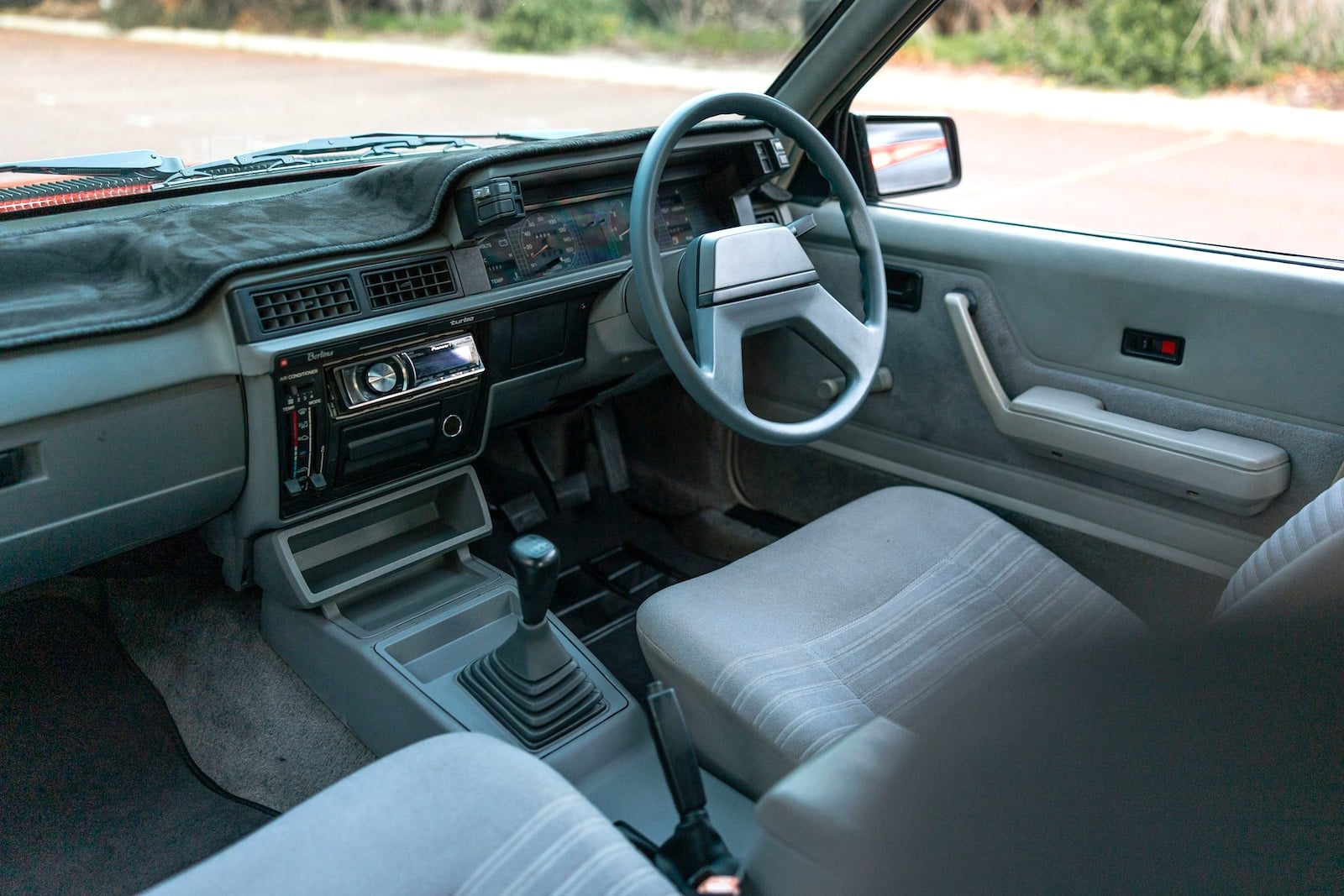
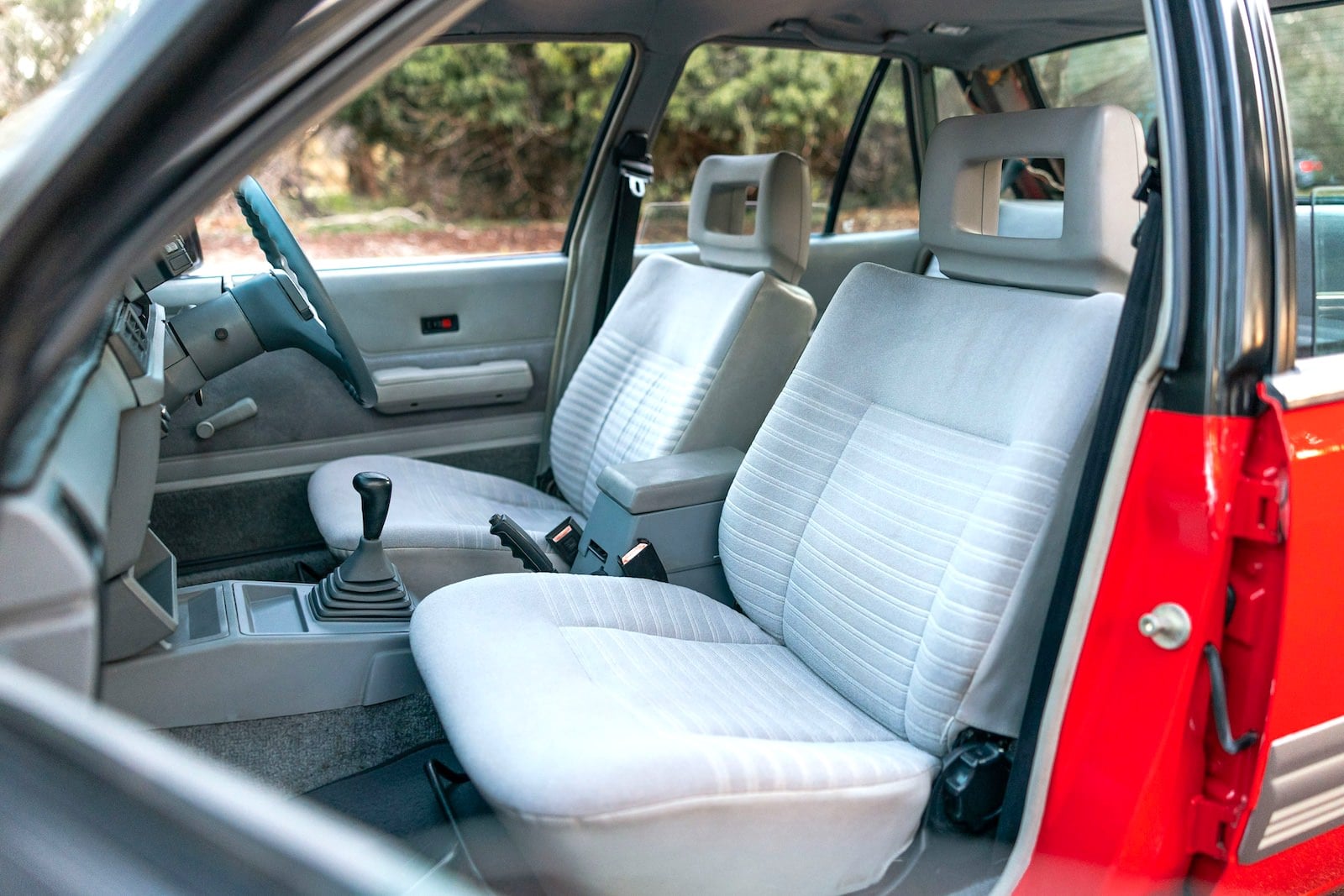
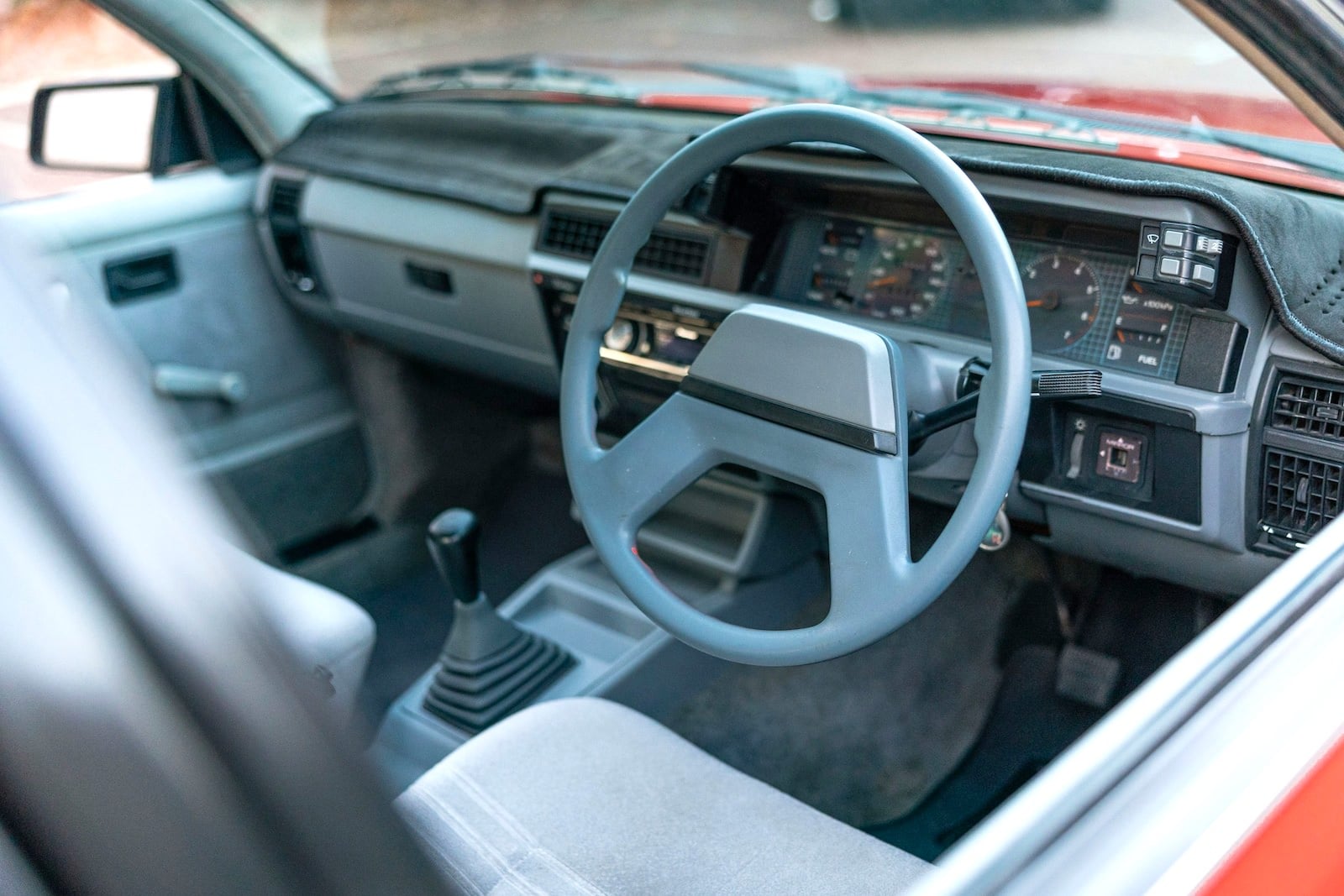
Images courtesy of Collecting Cars and General Motors Holden.


