In lane Electric Vehicles
1971 Plymouth ’Cuda 440 Six-Barrel: Rare 4-Speed Heads to Auction
Description
This triple-black ’Cuda pairs the 385 bhp 440 Six-Barrel with a 4-speed, Dana 60 axle and 4.10 gears. Mecum is set to auction it in late October.
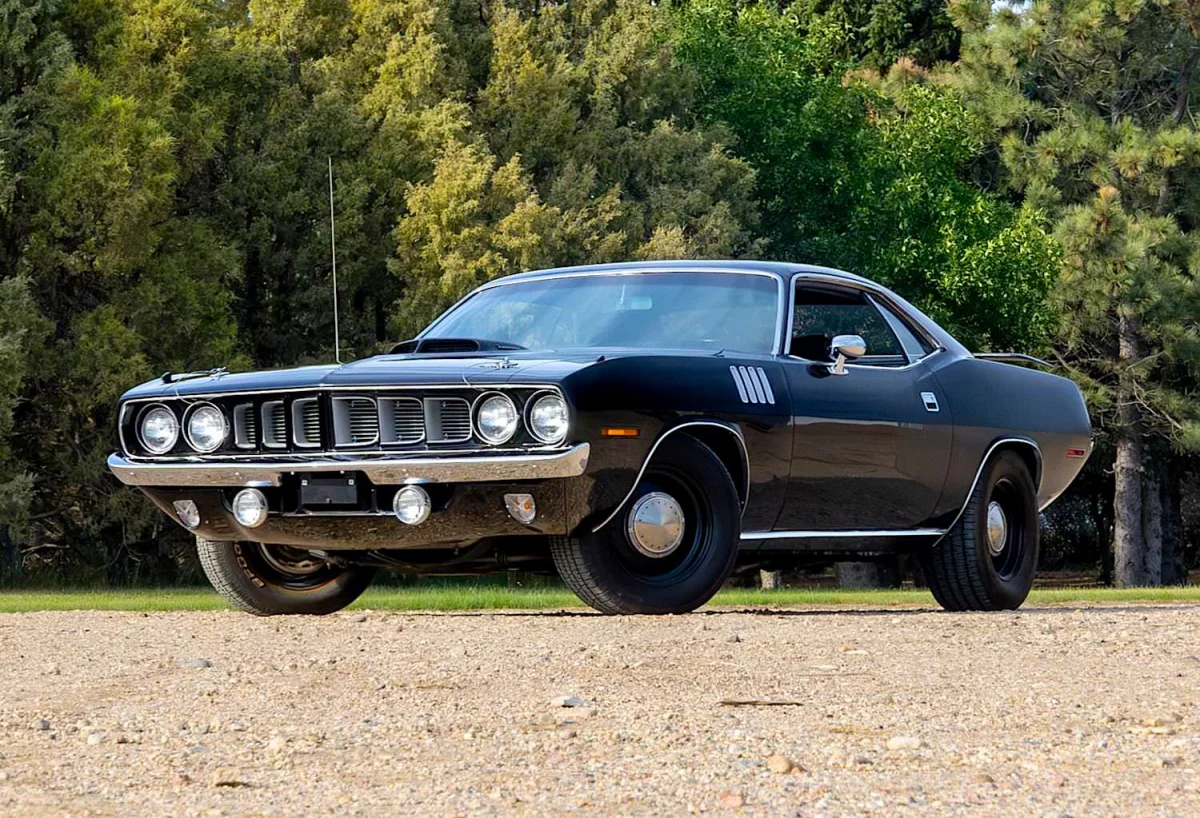
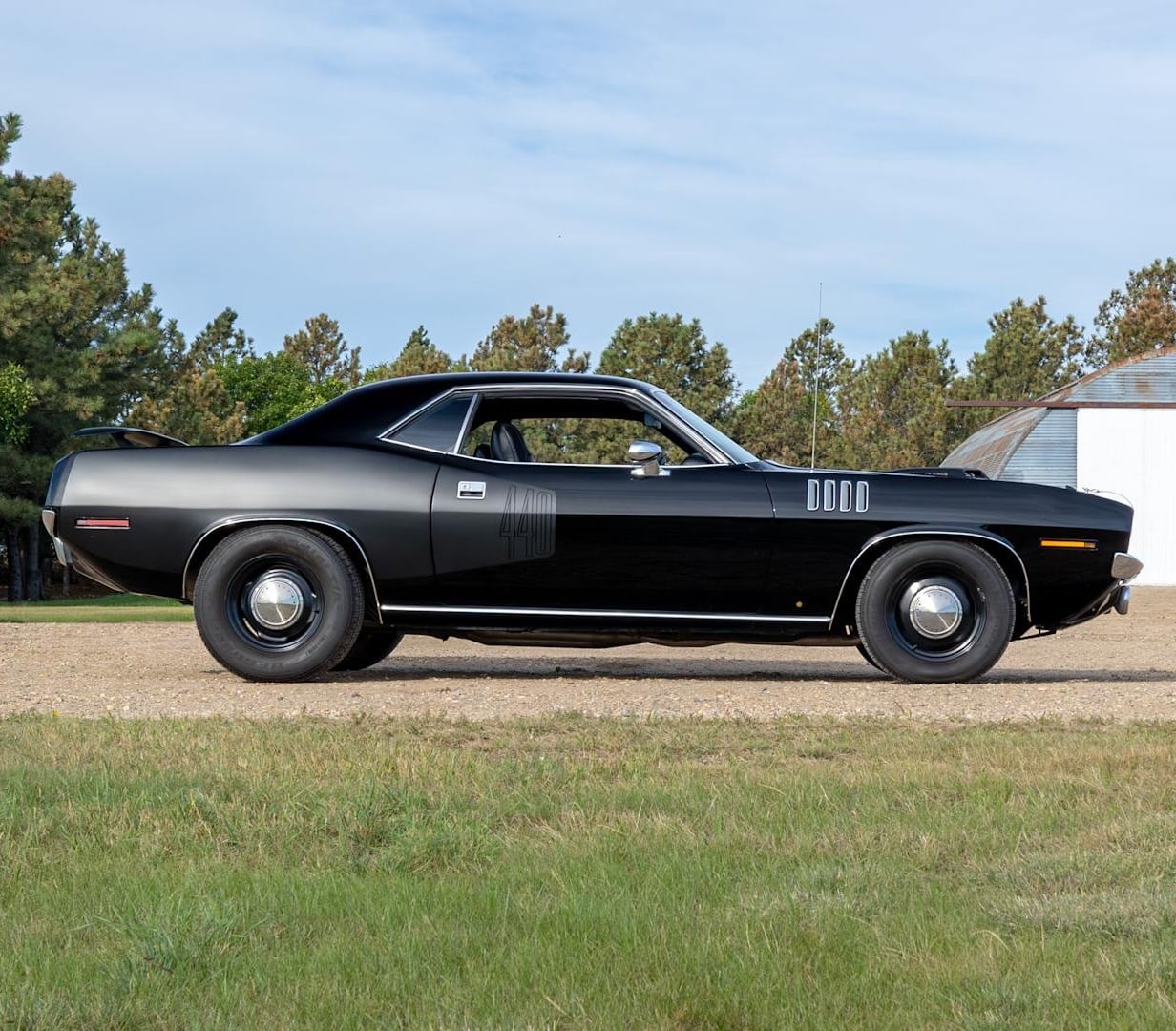
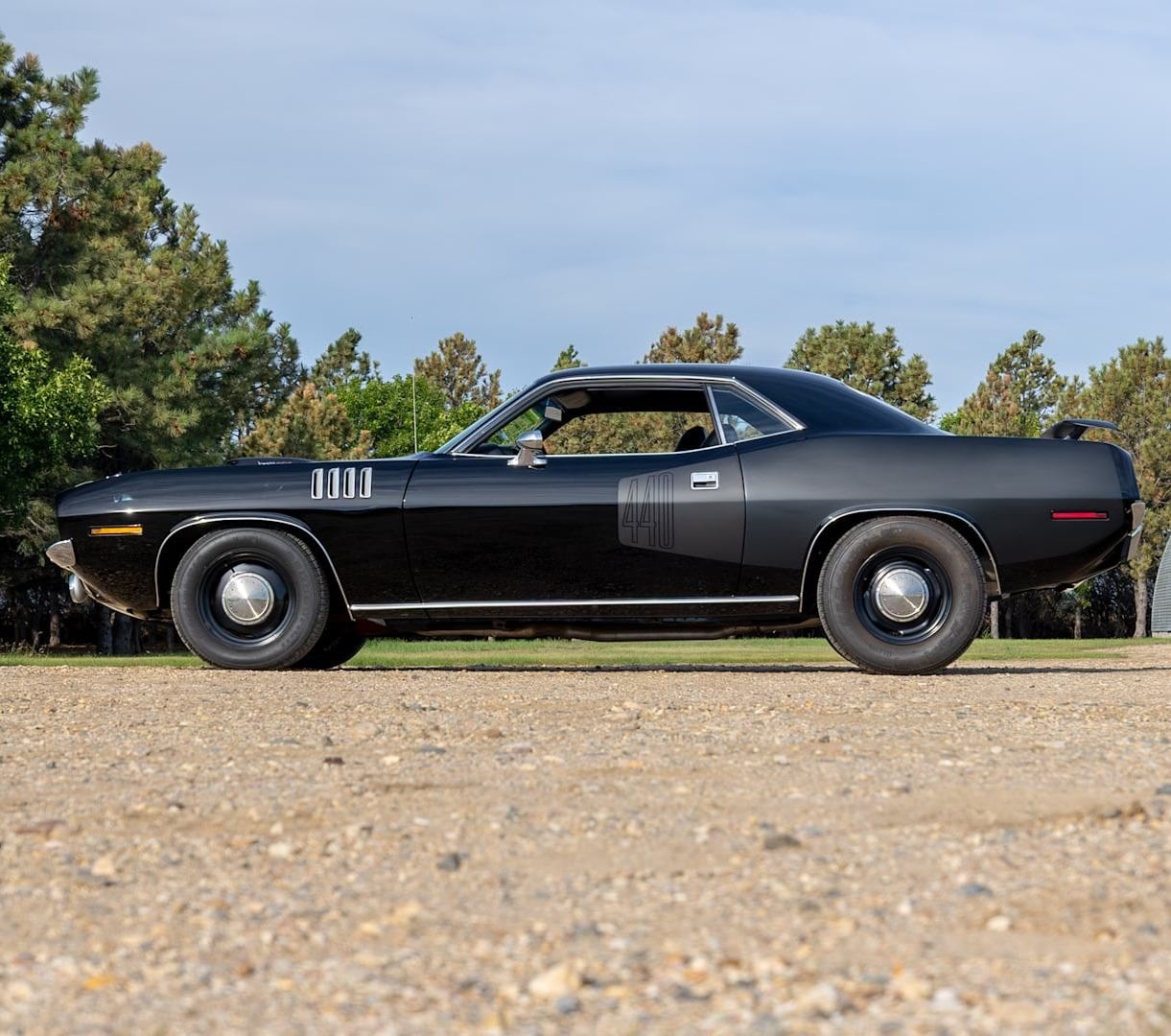
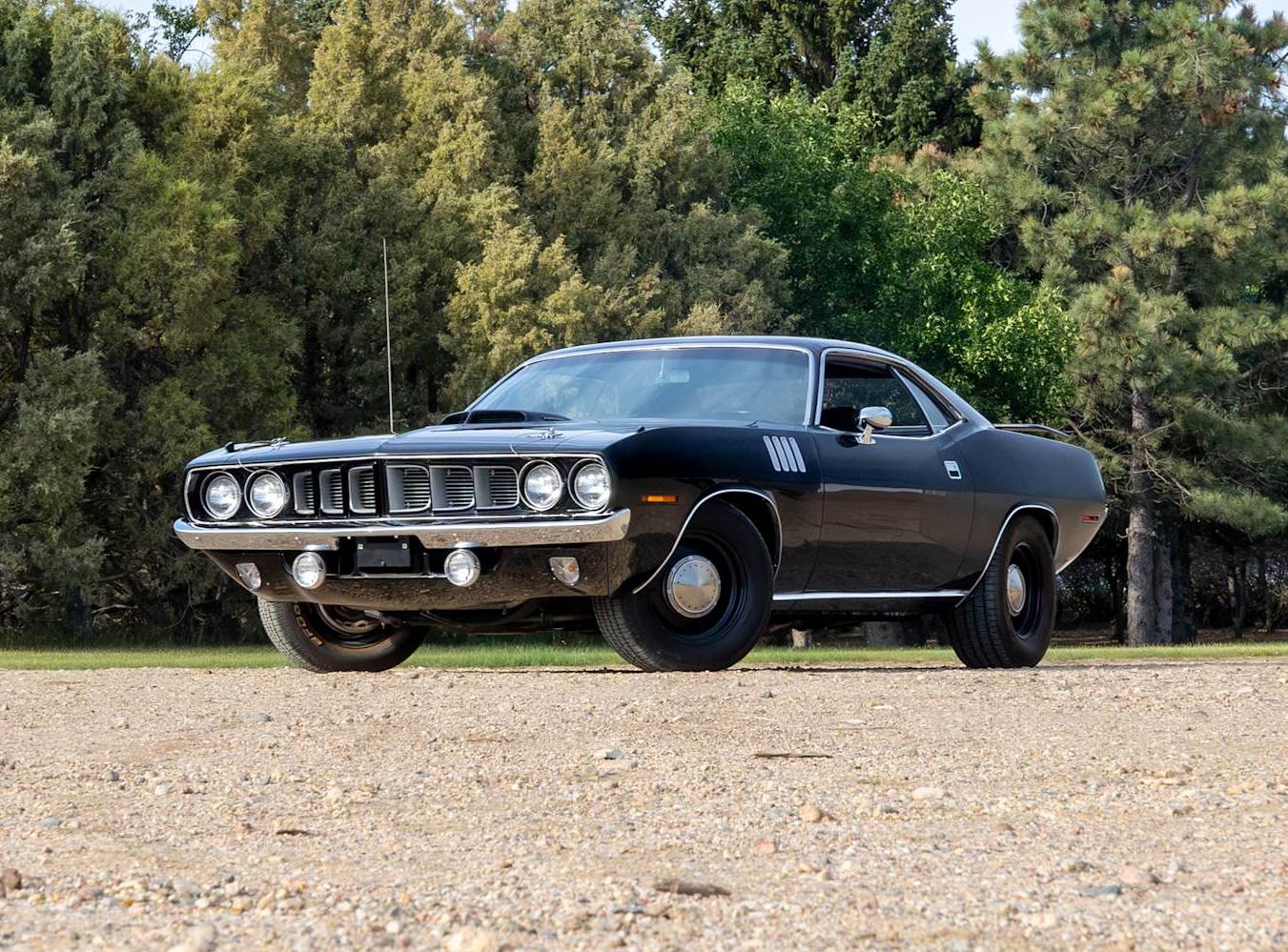
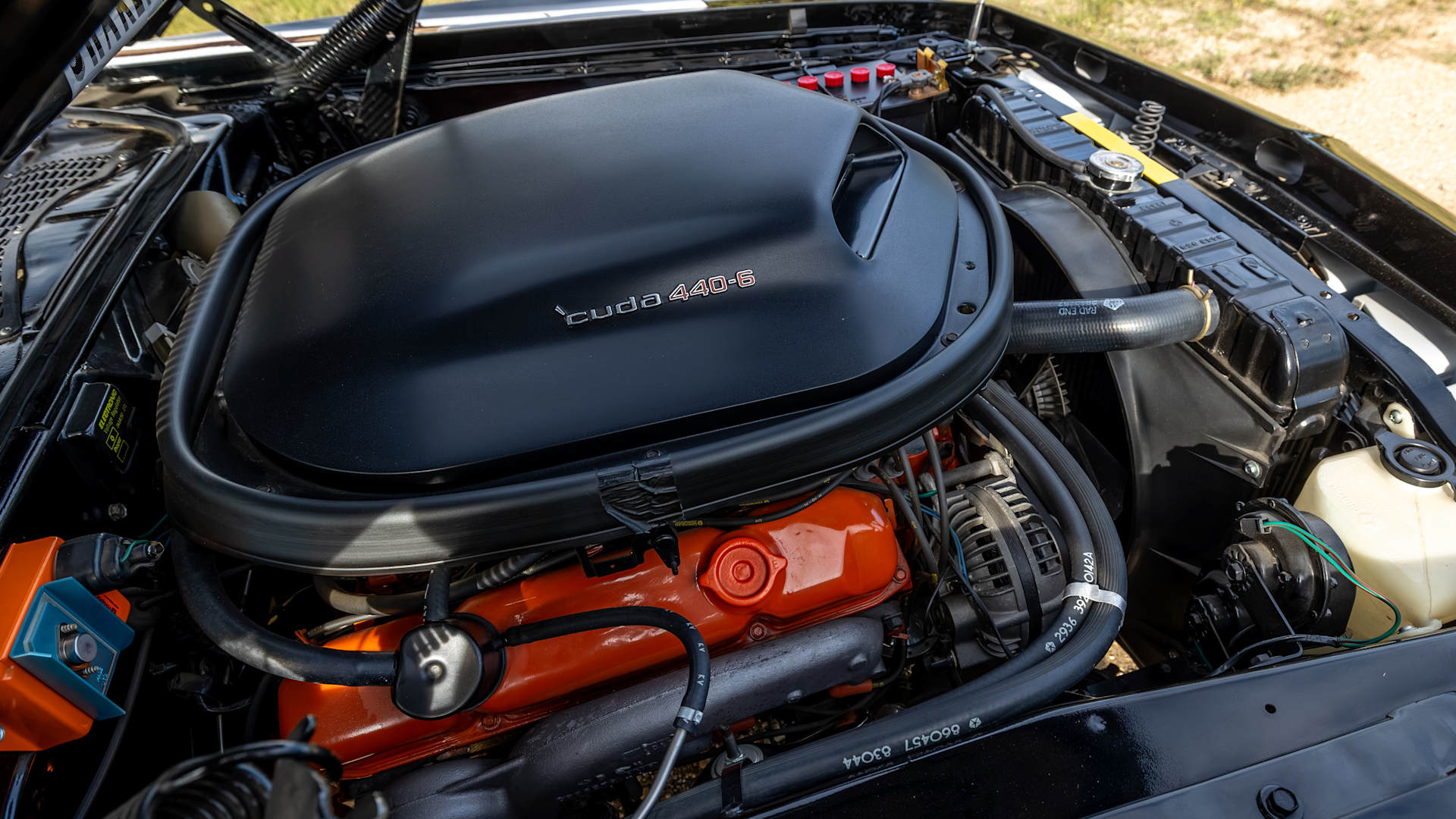
The appeal of this 1971 Plymouth ’Cuda comes down to a rare combination: the 440 Six-Barrel V8, an A833 4-speed manual, and the Super Track Pak’s Dana 60 rear axle with 4.10:1 gearing. Plymouth built just 108 hardtops with that engine and manual transmission for the 1971 model year. This example, finished in triple black, is due to cross the Mecum auction block in late October.

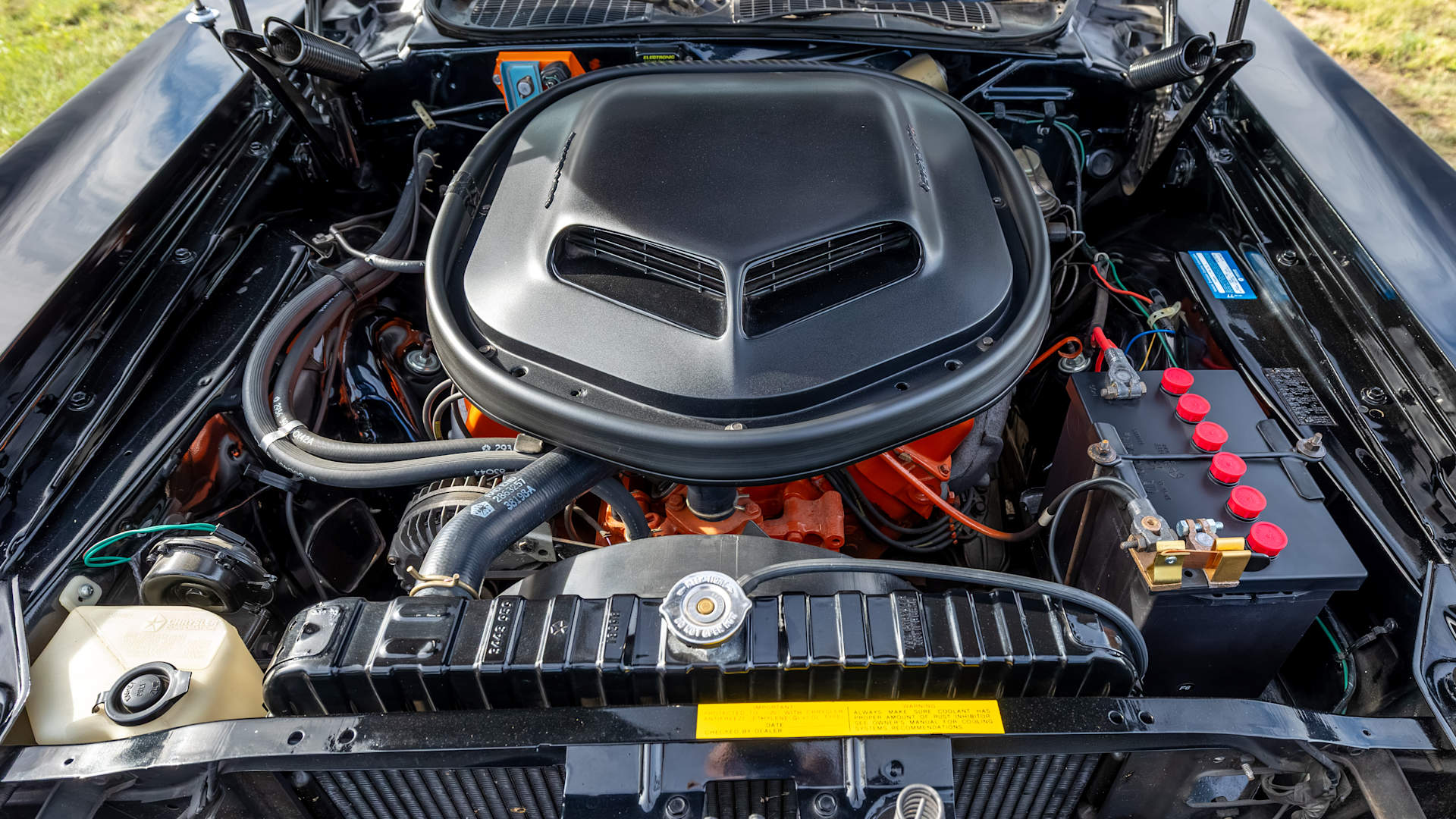
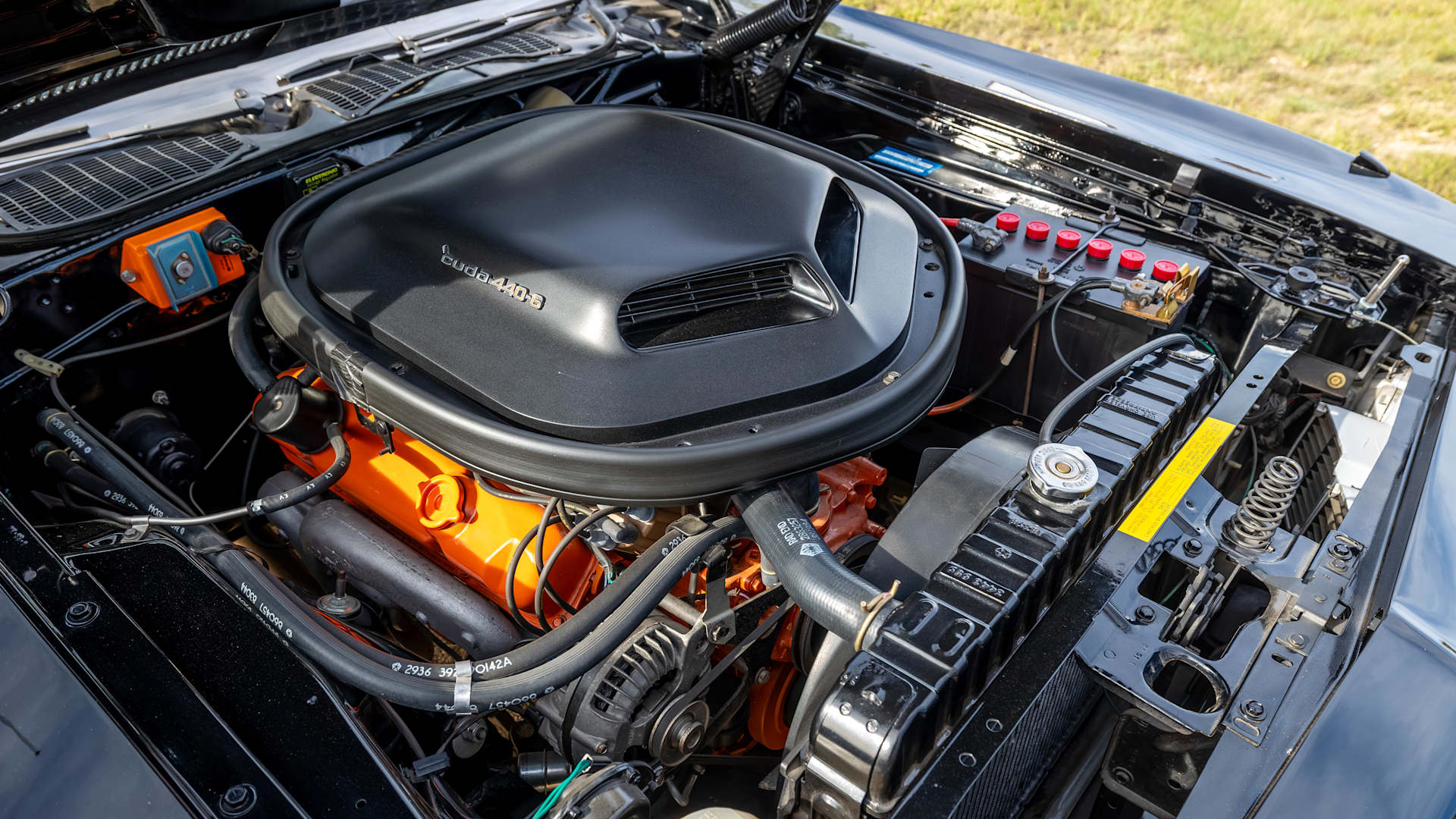
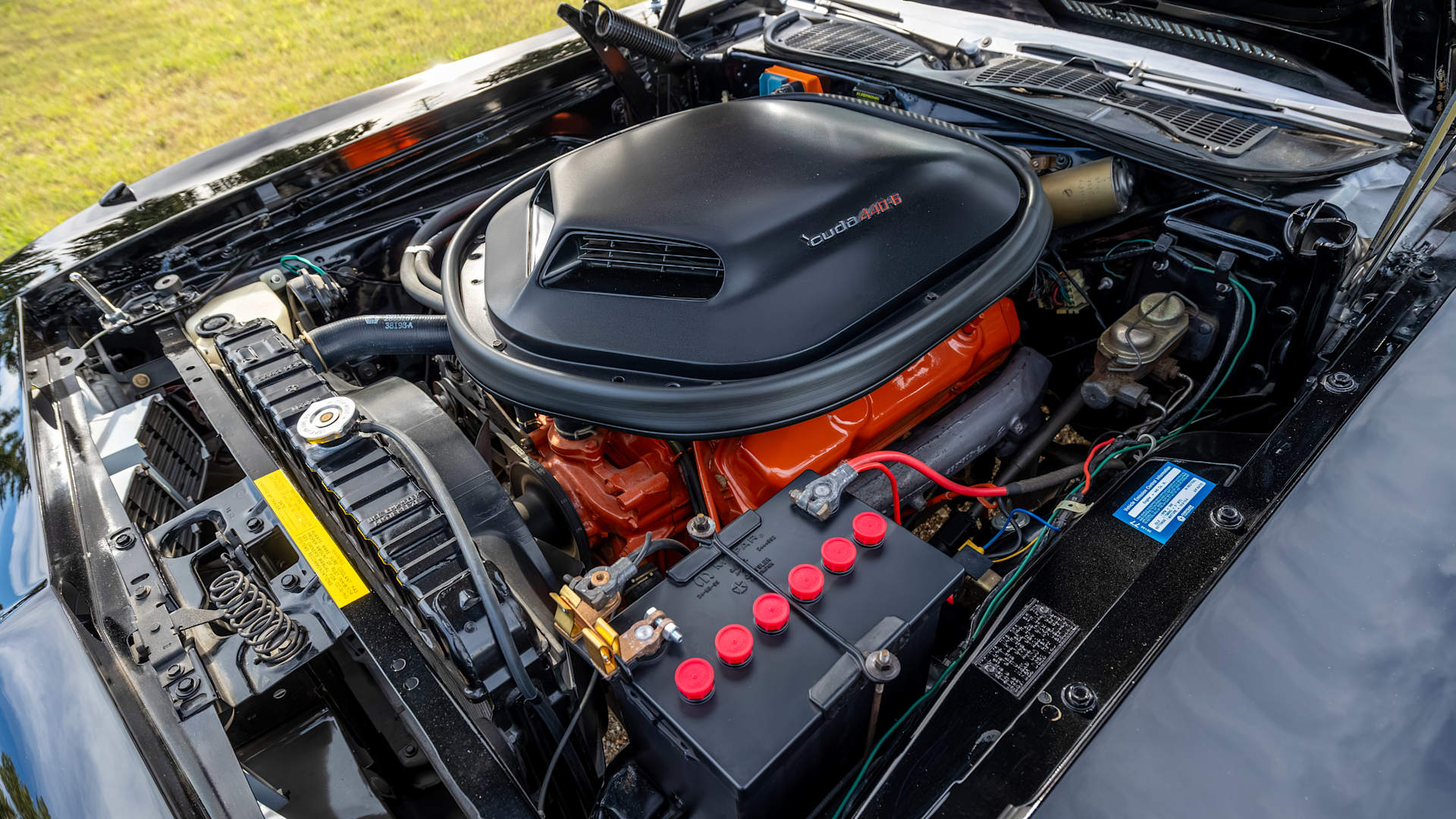
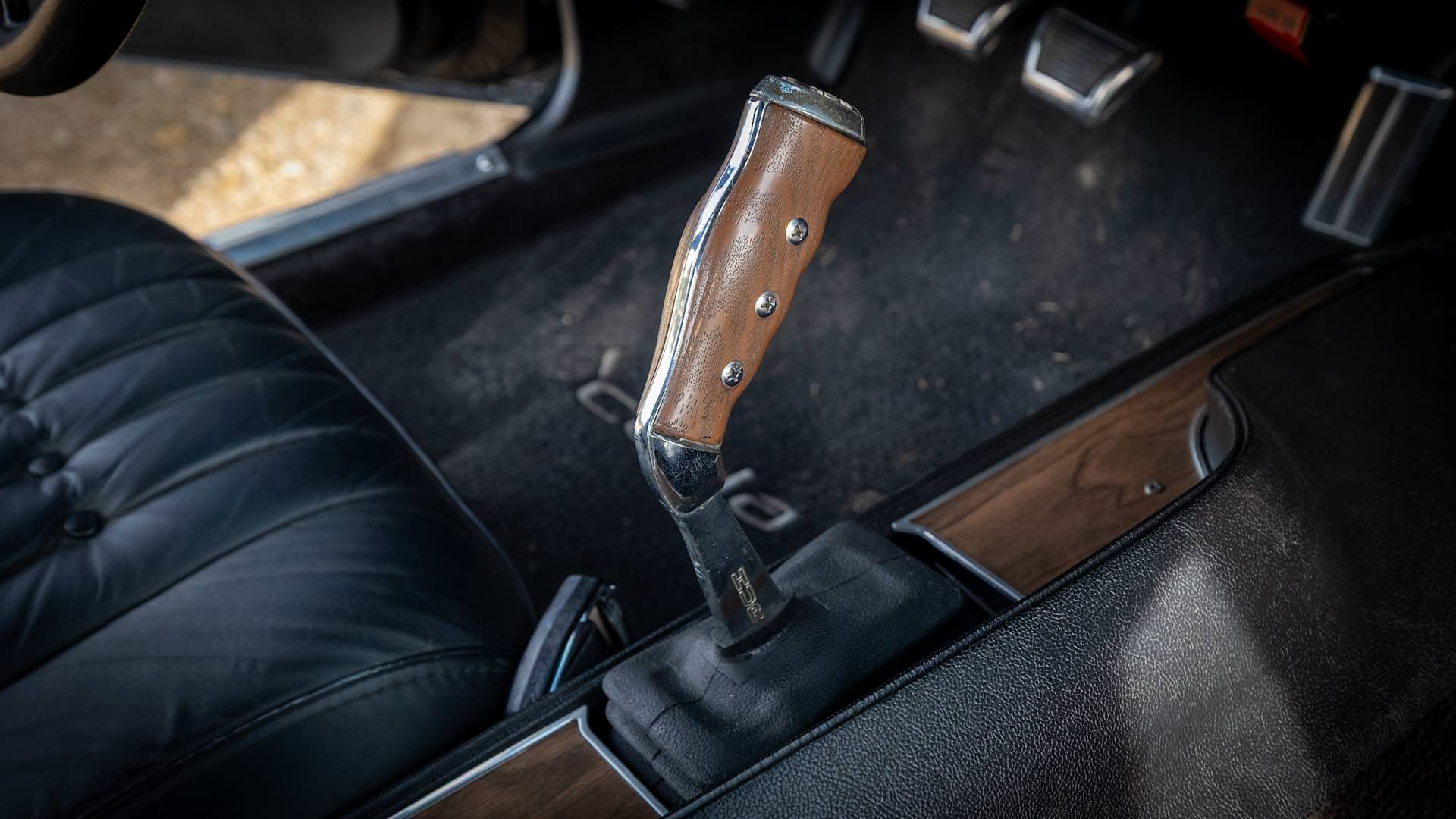
That specification makes it a particularly interesting version of an already distinctive muscle car. The 440’s published rating was 385 bhp at 4,700 rpm and 490 lb ft at 3,200 rpm. Triple Holley two-barrel carburetors feed the big V8, while a Hurst Pistol Grip handle operates the four-speed. The car also has dual exhausts, a combination that puts its engine, gearbox and rear axle at the center of the story.
Why the 440 and four-speed matter
The 440 Six-Barrel sat alongside the 426 Hemi near the top of the ’Cuda range. The Hemi was rated at 425 bhp at 5,000 rpm and the same 490 lb ft of torque, reached at 4,000 rpm. For 1971, net ratings put the Six-Barrel at 330 bhp and the Hemi at 350 bhp. The 440 therefore delivered its quoted peak torque 800 rpm earlier, a useful distinction between the two engines’ character.
Buyers could pair either the 440 or Hemi with a 3-speed 727 TorqueFlite automatic or the New Process A833 4-speed. The big-block manual gearbox used ratios of 2.44, 1.77, 1.34 and 1.00:1. Four-speed 440 and Hemi cars received the heavy-duty Dana 60 axle; automatic cars could be ordered with it as well. Its ring gear measured 9.75 inches.
The Super Track Pak specified here paired that axle with 4.10:1 gearing, a Sure-Grip limited-slip differential, power-assisted front disc brakes and a seven-blade fan for improved cooling. The less aggressive Track Pak used 3.54:1 gears with the Dana axle and Sure-Grip differential. That gearing and hardware help explain why the manual 440 cars remain especially sought after by driving enthusiasts.
A wider platform and a defining 1971 look
The Barracuda began as a fastback based on the compact Valiant, arriving on April 1, 1964, two weeks before the Ford Mustang. A 1967 redesign added notchback and convertible body styles but retained the A-body platform. The ’Cuda name followed in 1969 as a performance package available with 340, 383 and 440 V8s. That year’s 440 cars came only with the TorqueFlite automatic, and buyers couldn’t specify power steering or front disc brakes.

For 1970, Plymouth shifted the Barracuda to Chrysler’s E-body platform, shared with the Dodge Challenger. The Barracuda’s 108-inch wheelbase was two inches shorter than the Challenger’s. Compared with the 1969 model, it was roughly six inches shorter overall and more than five inches wider. The new engine bay could accommodate the 426 Hemi, expanding the car’s range of big-engine options.
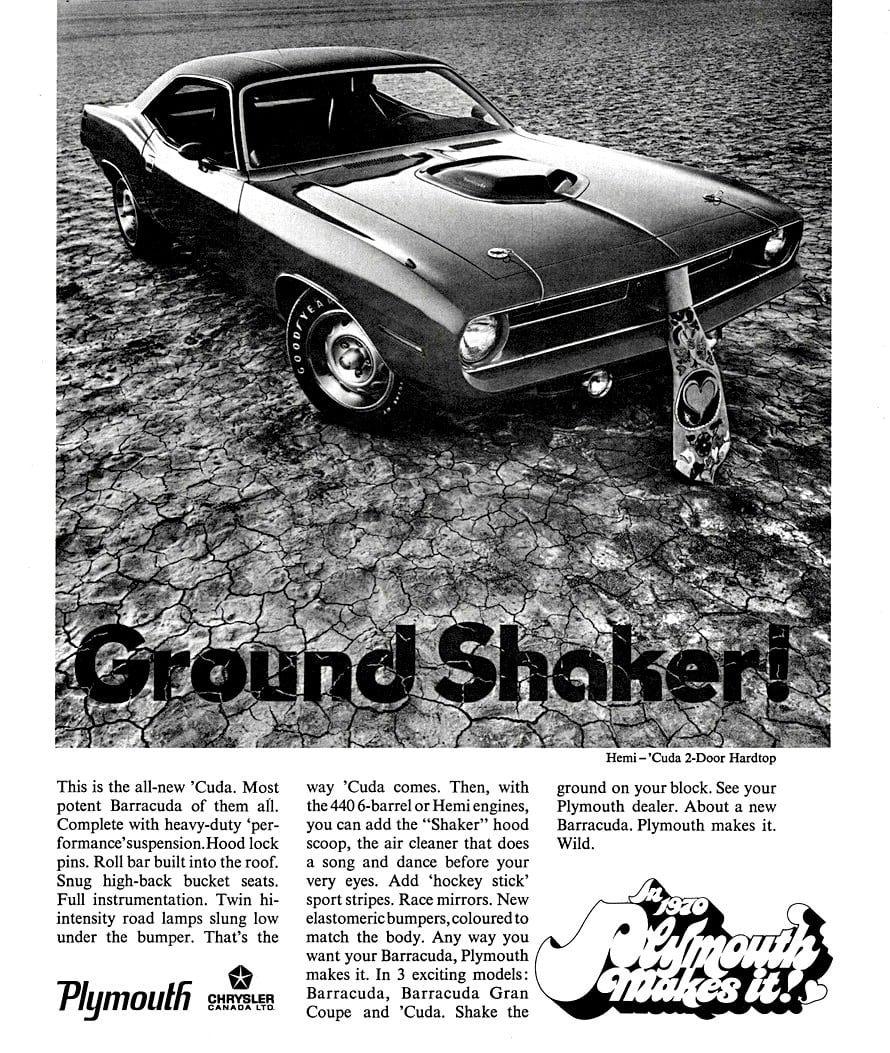
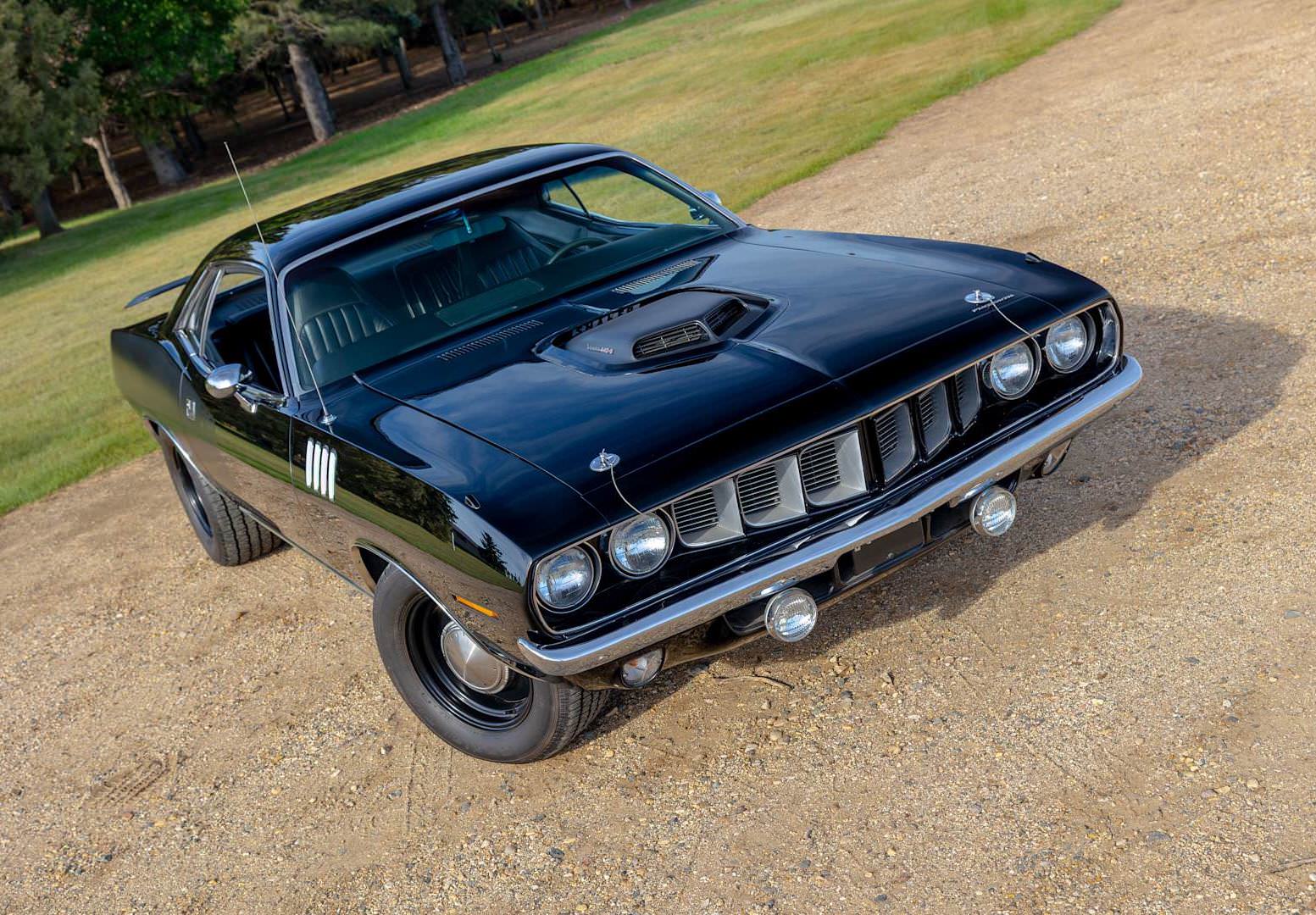
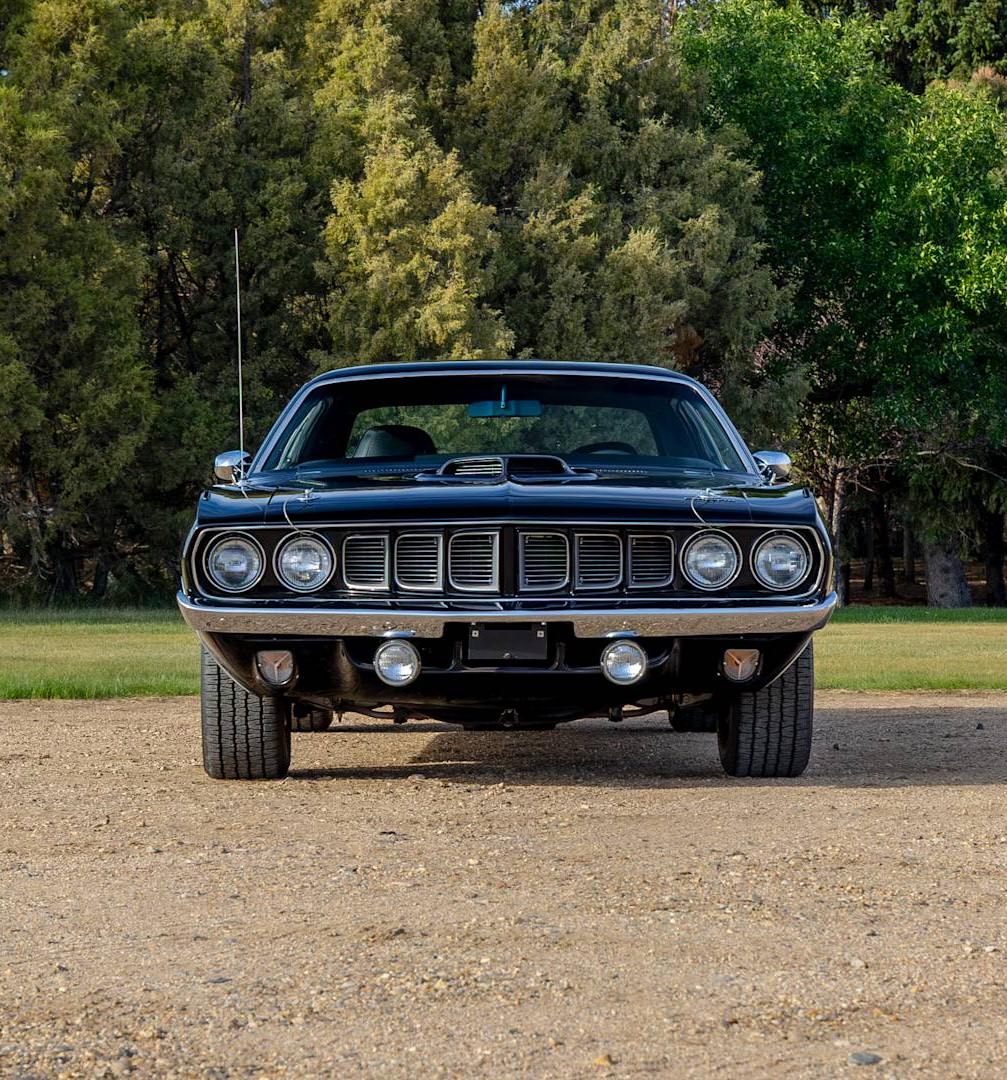
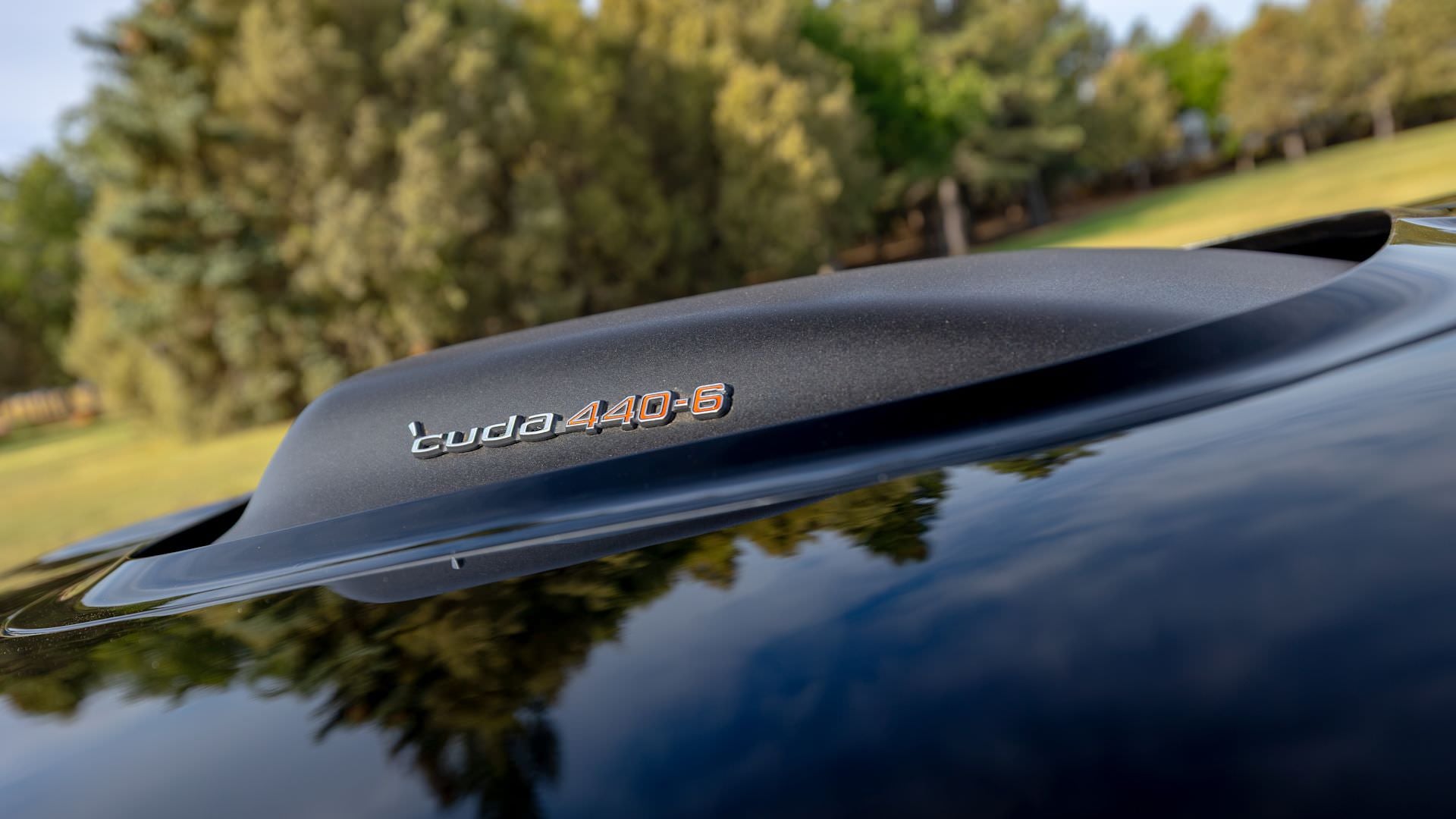
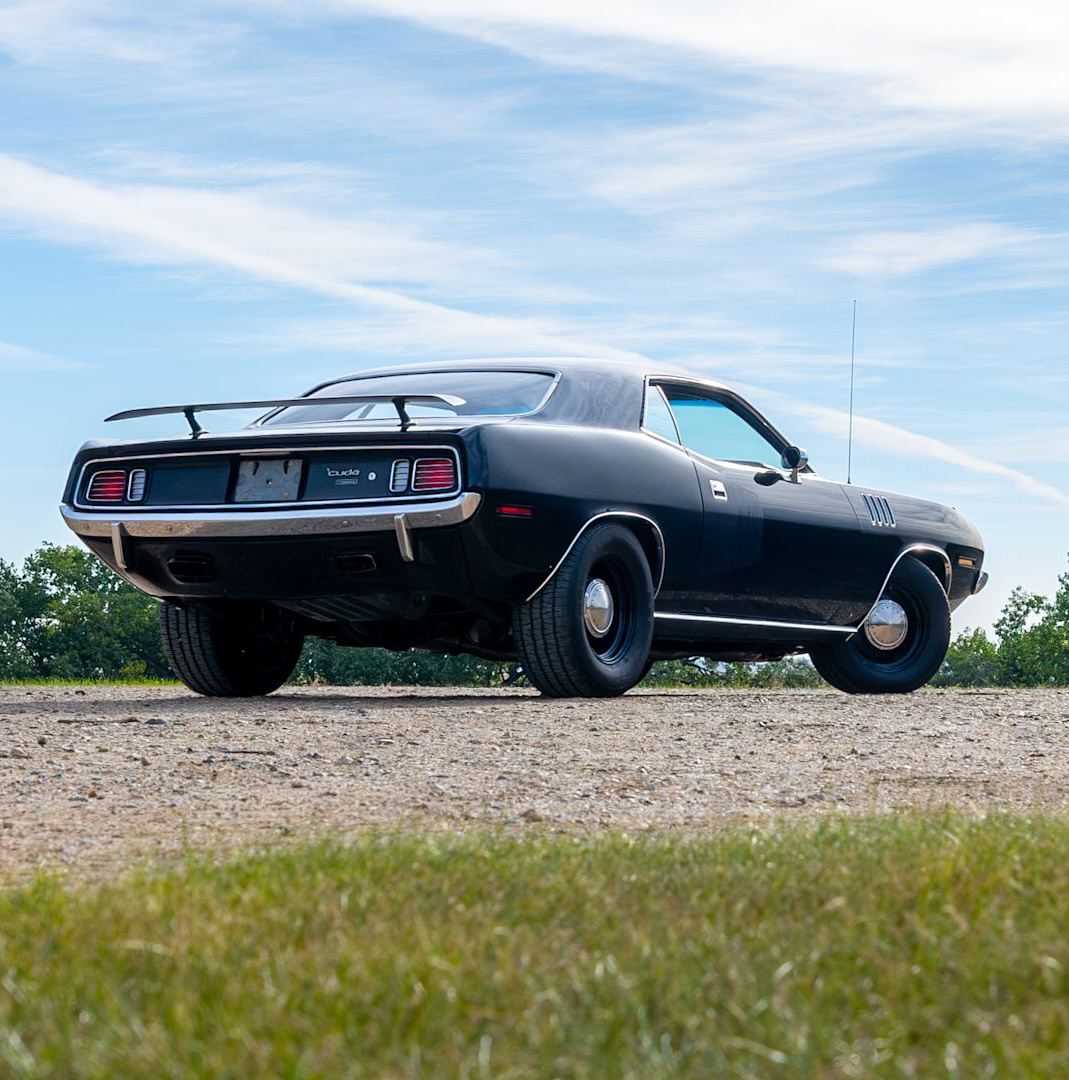
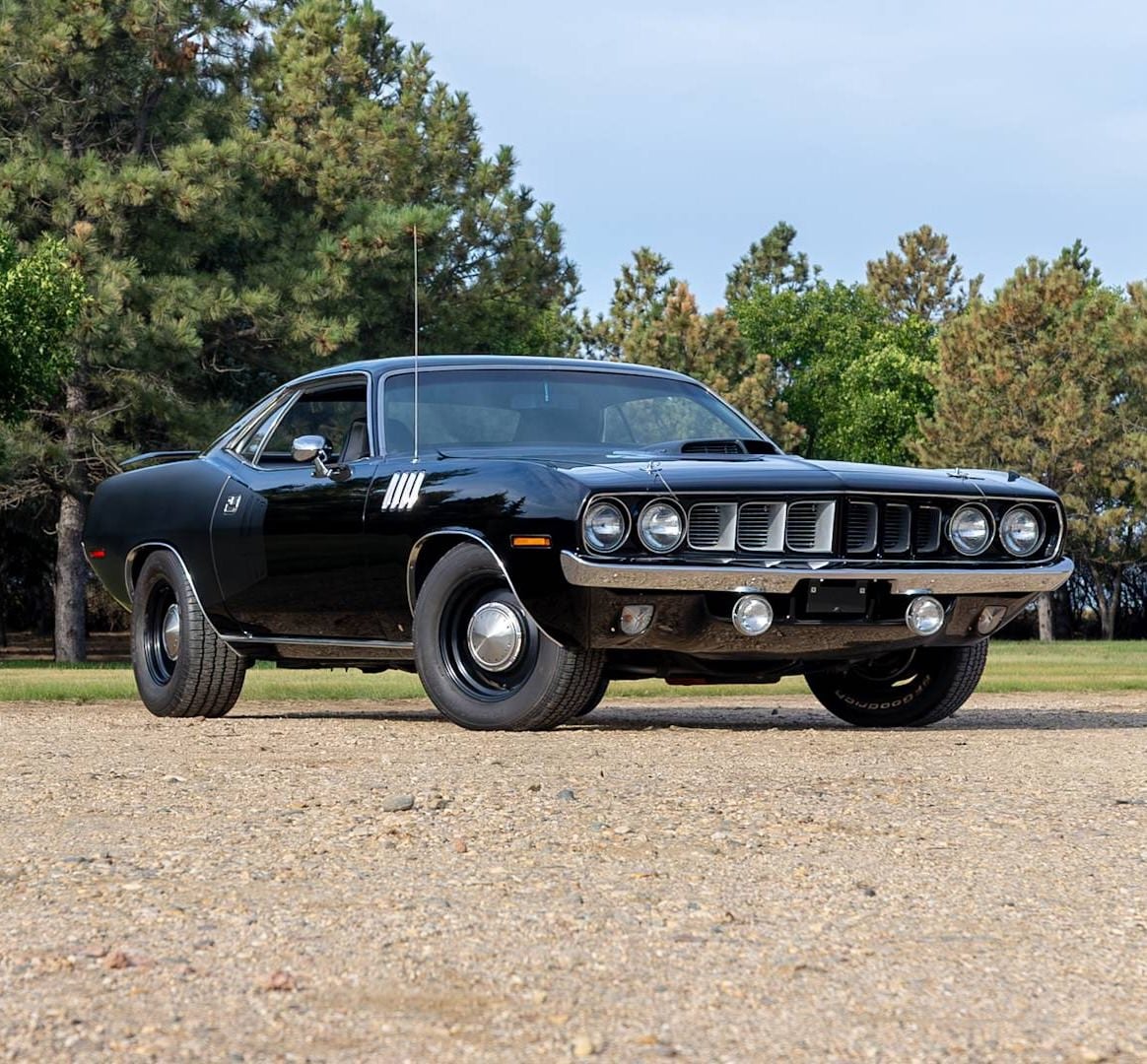
John Herlitz styled the E-body Barracuda. He later described the design aim as raising the rear quarters and lowering the roofline. For 1971, Plymouth gave the ’Cuda a new grille, four headlights and fender gills, details specific to that model year. Optional billboard side graphics spelled out the engine size. The Shaker hood scoop was standard on Hemi cars and optional on other ’Cudas, including the 440.
The 1971 engine range also included a 383-cubic-inch (6.3-liter) four-barrel rated at 300 bhp, standard in the ’Cuda, and a ’Cuda-only 340-cubic-inch (5.6-liter) four-barrel rated at 275 bhp. The 426-cubic-inch (7.0-liter) Hemi used two Carter AFB four-barrel carburetors. Air conditioning wasn’t available with either the Hemi or 440 Six-Barrel.
What this example includes
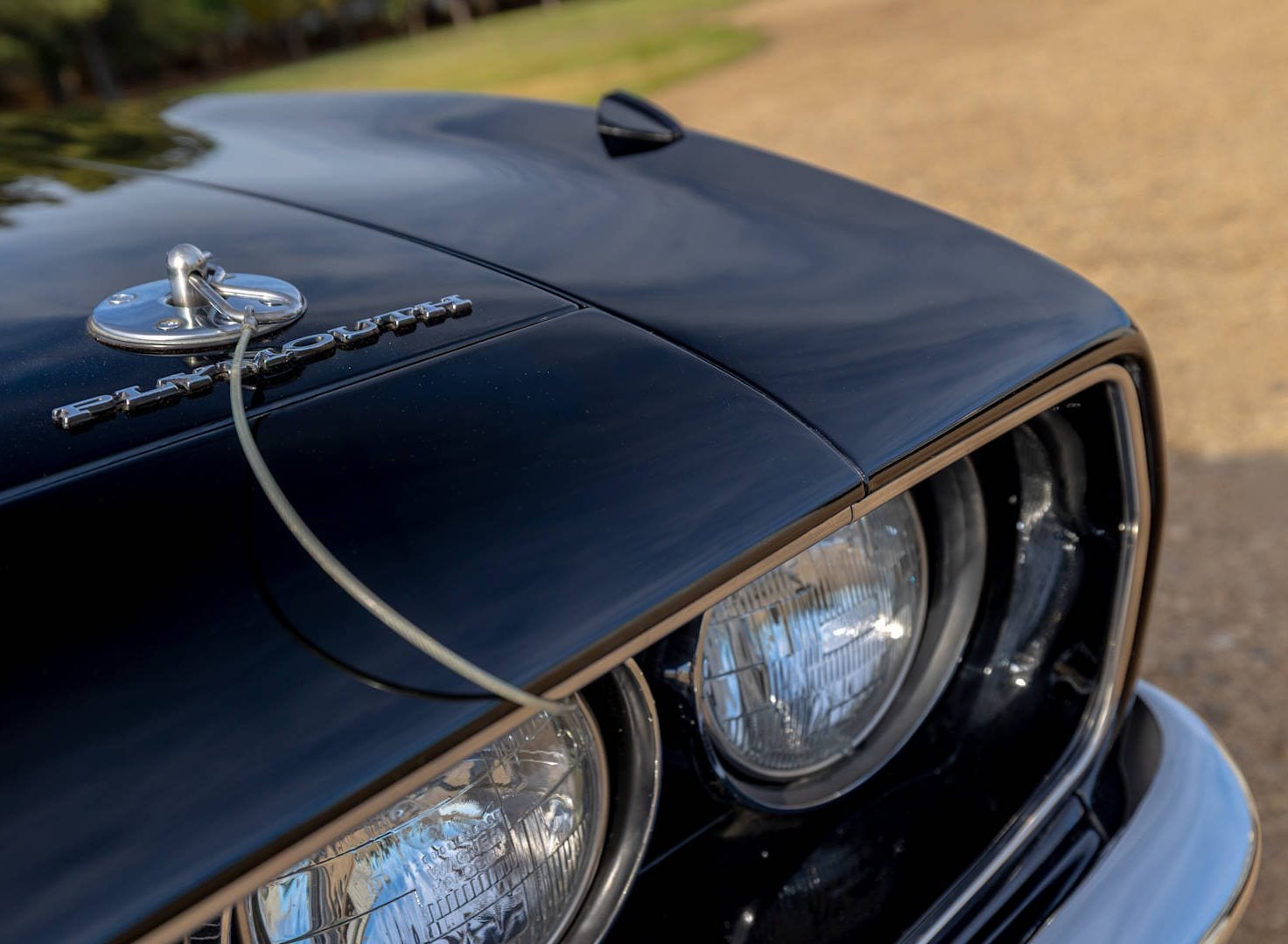
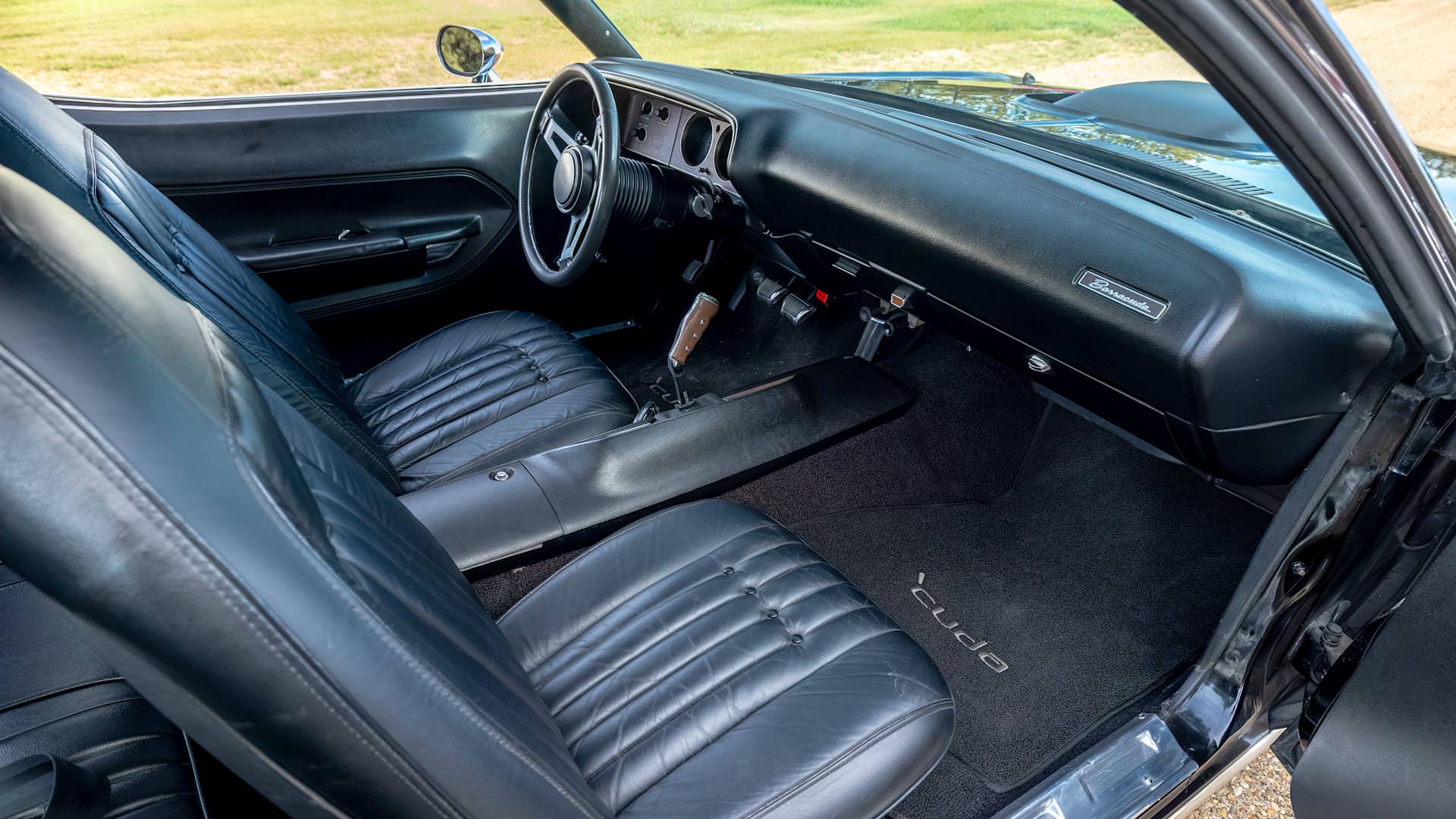
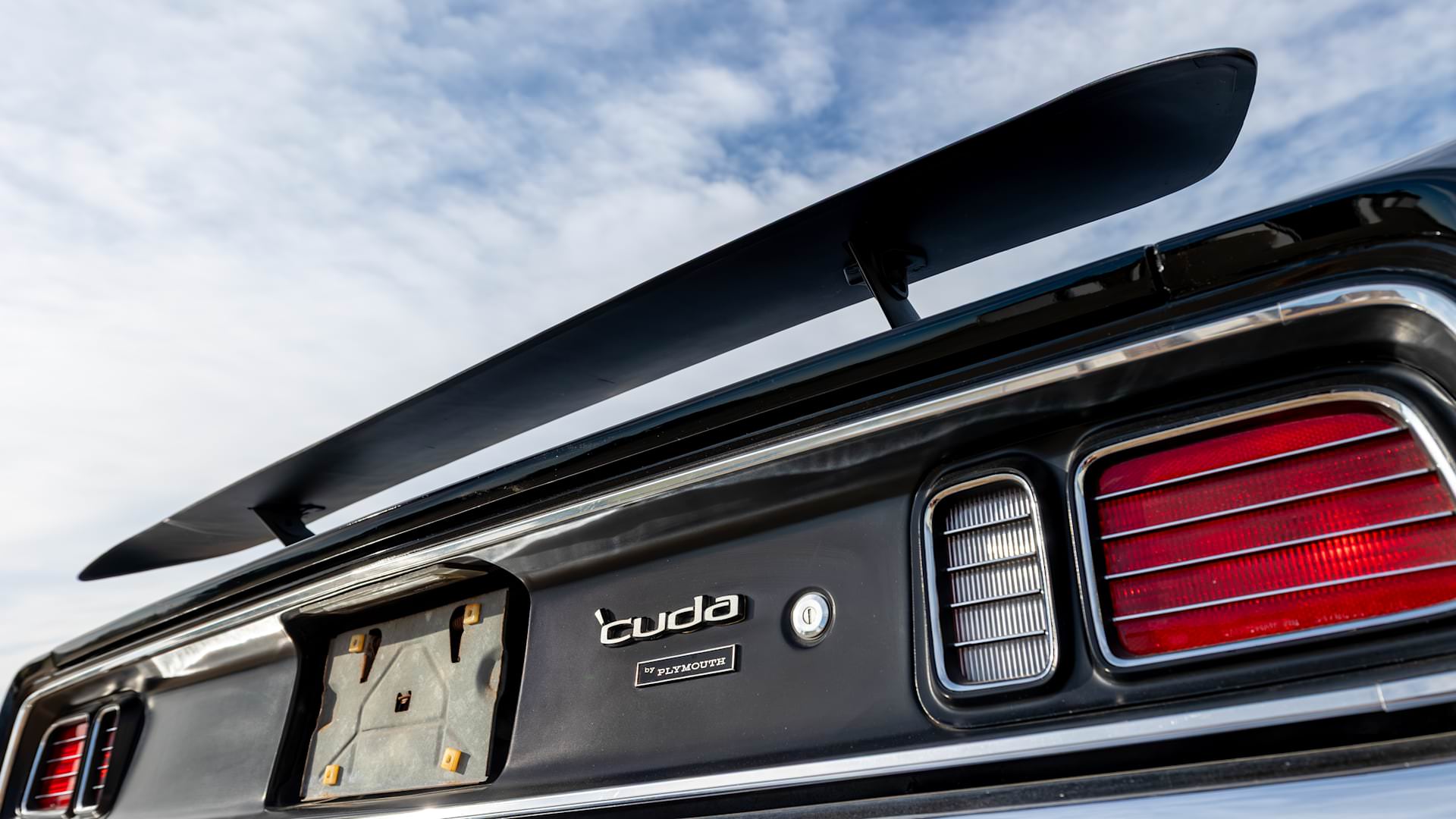
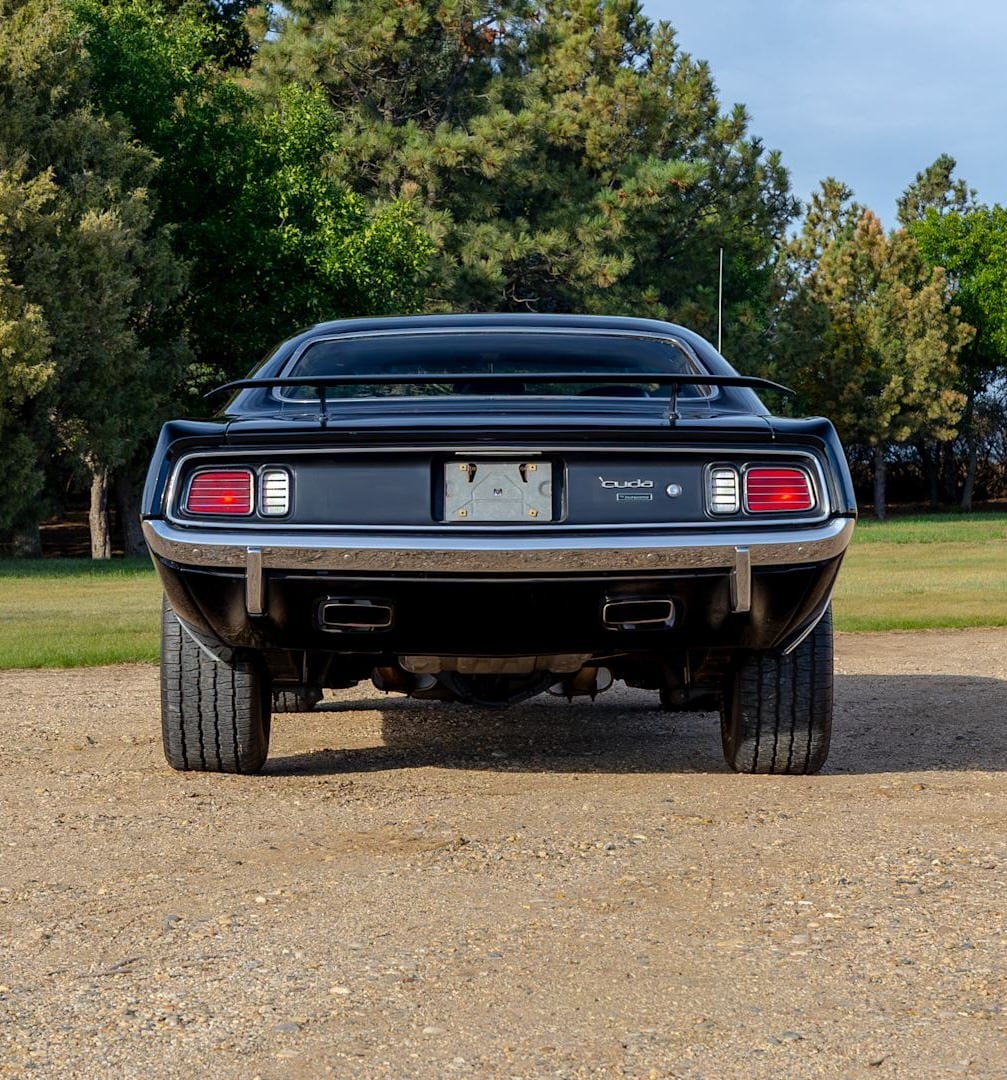
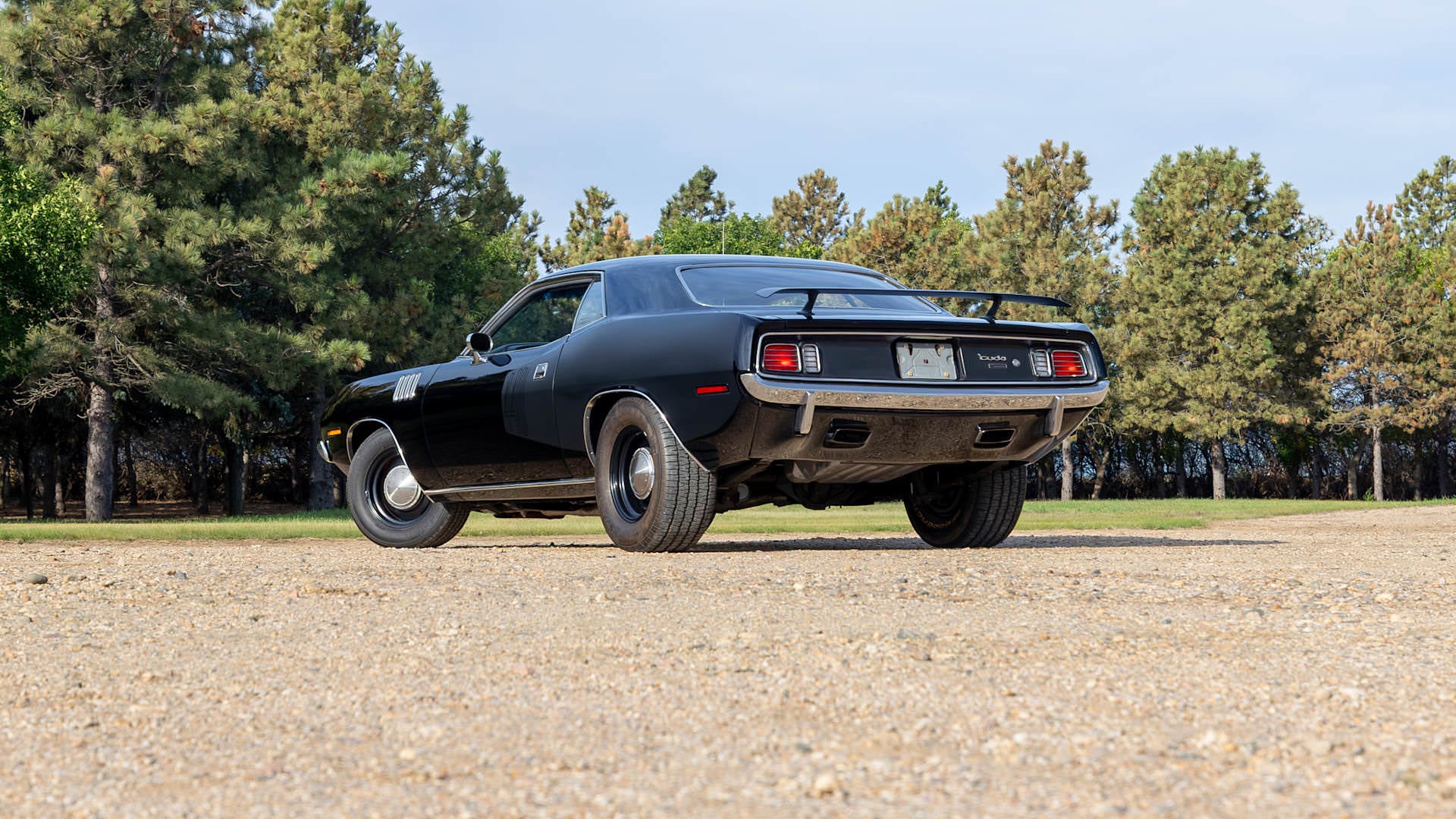
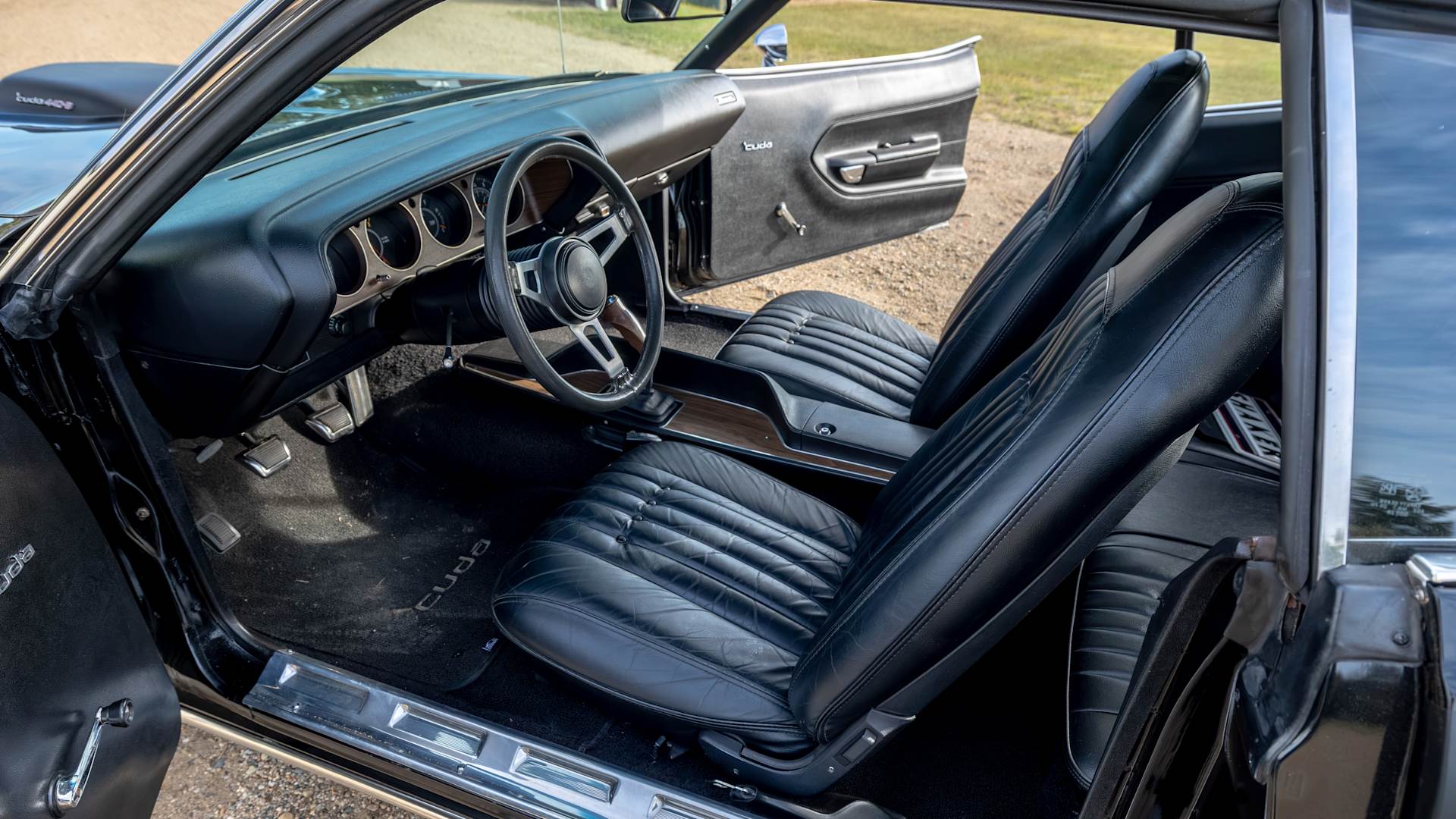
The car wears black paint and 440 billboard graphics, with a Shaker hood, hood pins, rear spoiler, fog lights and the 1971 grille. Its cabin has black vinyl bucket seats, a center console, simulated woodgrain trim, Rallye gauges and an AM push-button radio. It also retains a Space Saver spare and inflator canister, and comes with its broadcast sheet and a car cover.
Plymouth built 237 440 Six-Barrel ’Cuda hardtops in 1971, of which 108 had the four-speed. The same engine went into 17 convertibles, just five with manual gearboxes. Hemi production was lower still: just over 100 hardtops and seven convertibles. In 1972, the big-block engines, Dana 60 axle and convertible body were dropped. Barracuda production ended on April 1, 1974, exactly ten years after the model first went on sale.
Mecum’s listing has further details on the car and the late-October auction. Its surviving equipment and paperwork, together with the uncommon 440, four-speed and Super Track Pak combination, make the specification the key point for prospective bidders to examine.
Images provided by Mecum.
===END===

