In lane Electric Vehicles
Tesla Model Y Leads California Sales as EVs Hold Seven Category Top-Five Spots
Description
California EV sales have cooled, but Tesla models still dominate several segments, with the Model Y leading the state’s overall market.

Electric vehicle sales have lost momentum in California, but the first-half 2026 rankings still show EVs holding their ground in several segments. Tesla remains the clearest force: the Model Y led the state’s overall market by a wide margin, while other electric models placed in the top five across a mix of car, SUV and minivan categories.
The picture is more subdued than in earlier years, when EVs regularly appeared near the top of multiple segment charts. Some categories that previously had electric models in their top five no longer do. Still, more than half a dozen categories retain at least one EV in that group, suggesting demand has softened without disappearing from the state’s leading vehicle classes.
Tesla’s lead spans several segments
The Model Y’s sales declined, yet it remained far ahead of other luxury compact SUVs. That gap matters for shoppers comparing the segment: despite a broader slowdown, the Model Y continues to set the pace among its direct category rivals. The source provides no unit totals, so the ranking establishes its lead without showing the size of the difference in precise terms.
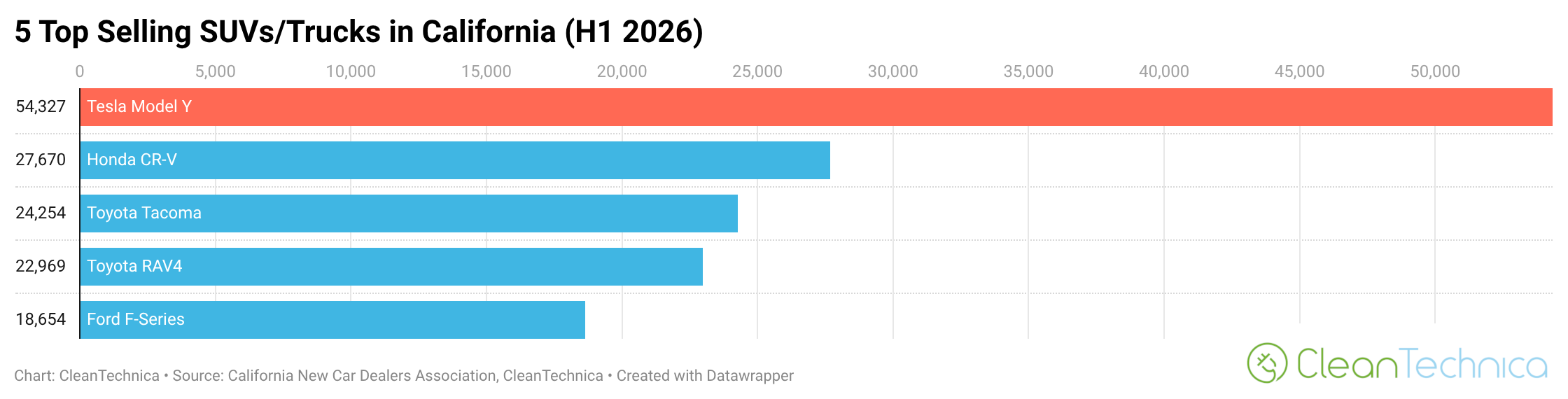
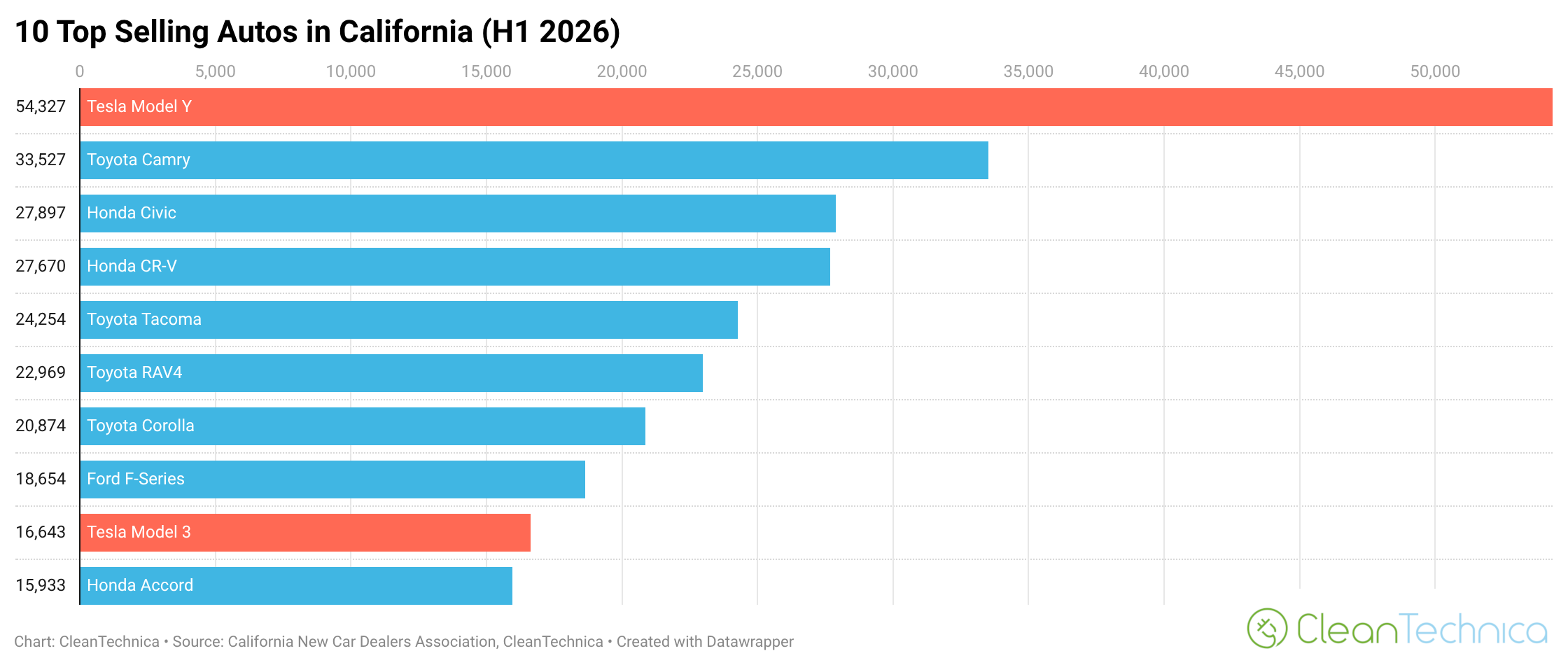
The Model Y also stood out beyond its own class. It was California’s best-selling vehicle overall, ahead of SUVs and trucks across price points and sizes. The Model 3 placed ninth in the statewide top ten and ranked fourth among all cars. Together, those results put two Tesla models among the state’s most popular vehicles, even as no other EV made the overall top ten.
In the near-luxury car category, the Model 3 outsold its nearest competitors by almost four times, according to the article. That is a striking result for a market where buyers can choose among established premium nameplates and newer electric alternatives. The ranking points to a strong position for the sedan, though it doesn’t explain whether the advantage comes from price, availability, brand recognition or other factors.
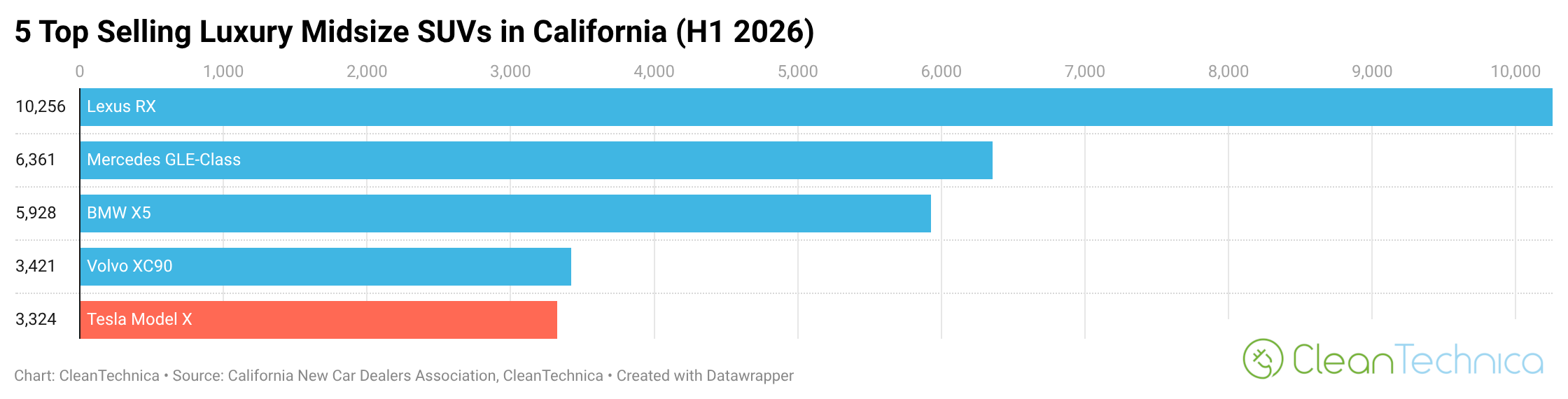
Tesla’s larger models also made the category lists. The Model X ranked fifth among luxury midsize SUVs despite being discontinued. The Model S, also being phased out, came second among luxury and high-end sports cars. Those placements suggest that a model can remain a meaningful segment seller while its production winds down, although the rankings alone don’t reveal how long its position can last.

Rivals find openings in SUV and minivan classes
Ford’s Mustang Mach-E took fourth place in its category, described in the source as highly competitive. Rivian’s R1S came close behind the Ford in sales volume but ranked second in its own category. That distinction underlines why raw sales comparisons can mislead: a model’s standing depends on the boundaries of the segment it competes in, as well as its total deliveries.
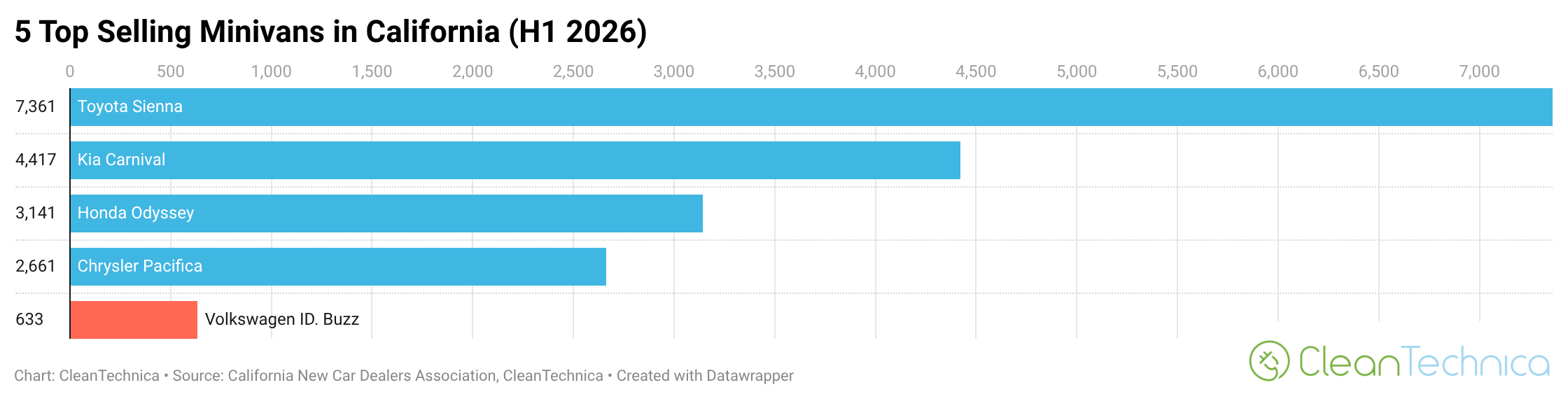
The Volkswagen ID. Buzz also reached the top five, placing fifth among minivans. The source describes the result as a narrow entry into the group and points out that the minivan field is limited. For shoppers, that makes the ranking useful as a snapshot of the model’s category position, but not a broad measure of how it stacks up against the many SUV and crossover alternatives families may also consider.
These category results show EVs competing across distinct buyer needs: compact luxury transport, near-luxury sedans, larger premium SUVs, sports cars and family vans. The source does not provide prices, range figures, charging details or ownership costs, so sales position is the clearest comparison available here. Buyers weighing these models will still need to compare those practical details for their own use.
What the rankings say about California demand
California remains the country’s largest EV market, but the reported downturn has narrowed the field of electric models near the top of category rankings. Tesla’s breadth is notable: nearly all of its vehicles appeared in their respective top fives, with the Cybertruck identified as the exception. Meanwhile, the Model Y’s overall lead and the Model 3’s place among the top ten show that the company’s strongest sellers continue to carry much of the visibility for EVs in the state.
The results also show why a single statewide ranking can miss useful differences. The Model Y and Model 3 combine category leadership with high overall sales, while the Mach-E, R1S, Model X, Model S and ID. Buzz earn attention through their places in more specific classes. For shoppers, those segment positions can help narrow a comparison, but they don’t substitute for evaluating range, charging access, space and price.
For the next set of California rankings, the key question is whether EVs regain the broader presence they had in previous periods or remain concentrated among a smaller group of strong sellers. For now, the Model Y sets the statewide benchmark, while the other category placements show that several electric alternatives are still finding buyers in their respective niches.