In lane Electric Vehicles
GWM Ora 5 vs Hyundai Kona Electric: Price, Range and Practicality Compared
Description
The Ora 5 Ultra costs less and claims more range and power; the Kona Electric counters with a larger boot, a four-star rating and longer service intervals.
The GWM Ora 5 Ultra makes a strong case against the entry-level Hyundai Kona Electric on price and claimed performance. In Australia, the Ora 5 range starts at $33,990 drive-away, while the Kona Electric Standard Range is currently advertised from $47,990 drive-away. That $14,000 gap comes with a larger battery, more power and a longer claimed range in the GWM, although the Hyundai has more cargo space and an ANCAP rating.
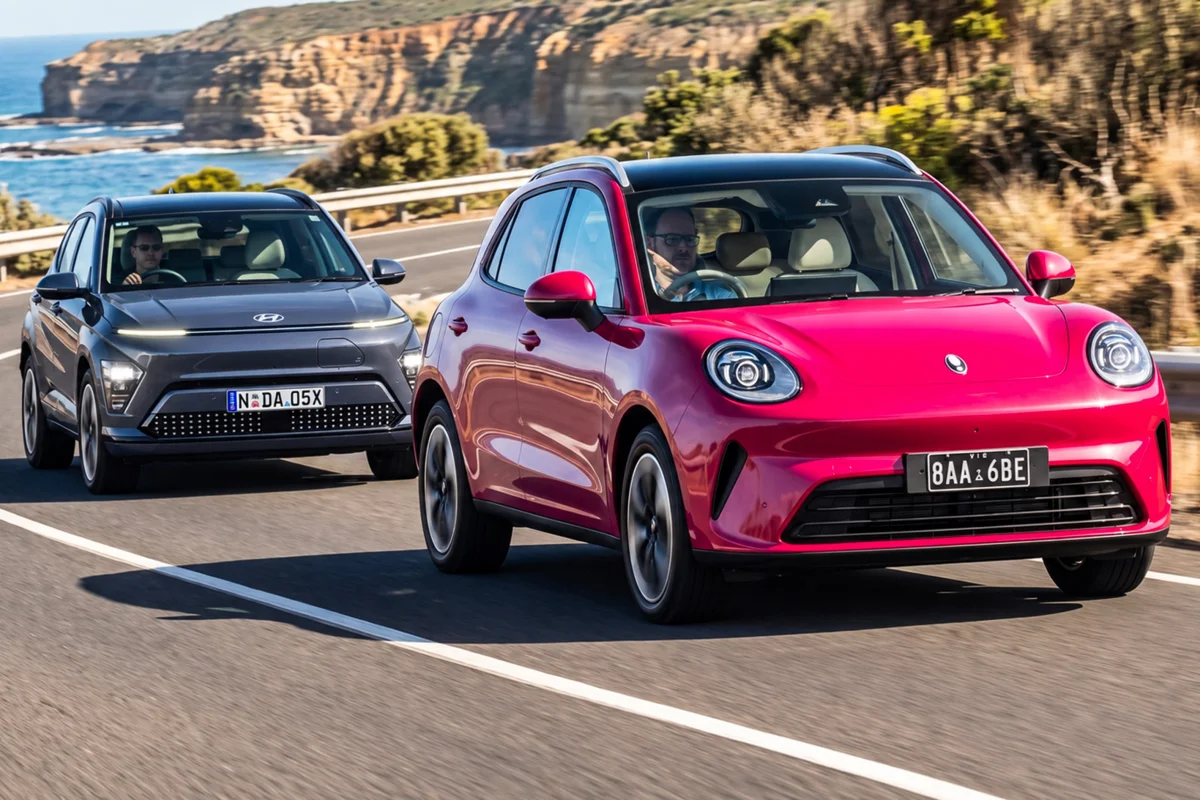
These are five-door, five-seat electric SUVs with distinct personalities. The Ora 5 takes an upright, playful approach; the Kona looks sharper and more angular. The comparison below pairs the top-spec Ora 5 Ultra with the base Kona Electric Standard Range, rather than matching equipment levels. The Hyundai’s higher grades cost more, and many of the Ultra’s comfort and convenience features become available as buyers move up the Kona range.
Pricing and equipment
GWM offers the Ora 5 in Lux and Ultra grades, priced at $33,990 and $36,990 drive-away respectively. Hyundai’s five-grade Kona Electric range starts at $46,000 before on-road costs for the 99kW Standard Range. Its current drive-away offer is $47,990. The 150kW Extended Range costs $50,000 plus on-road costs, or $51,990 drive-away under the offer, which is valid until December 31, 2026.
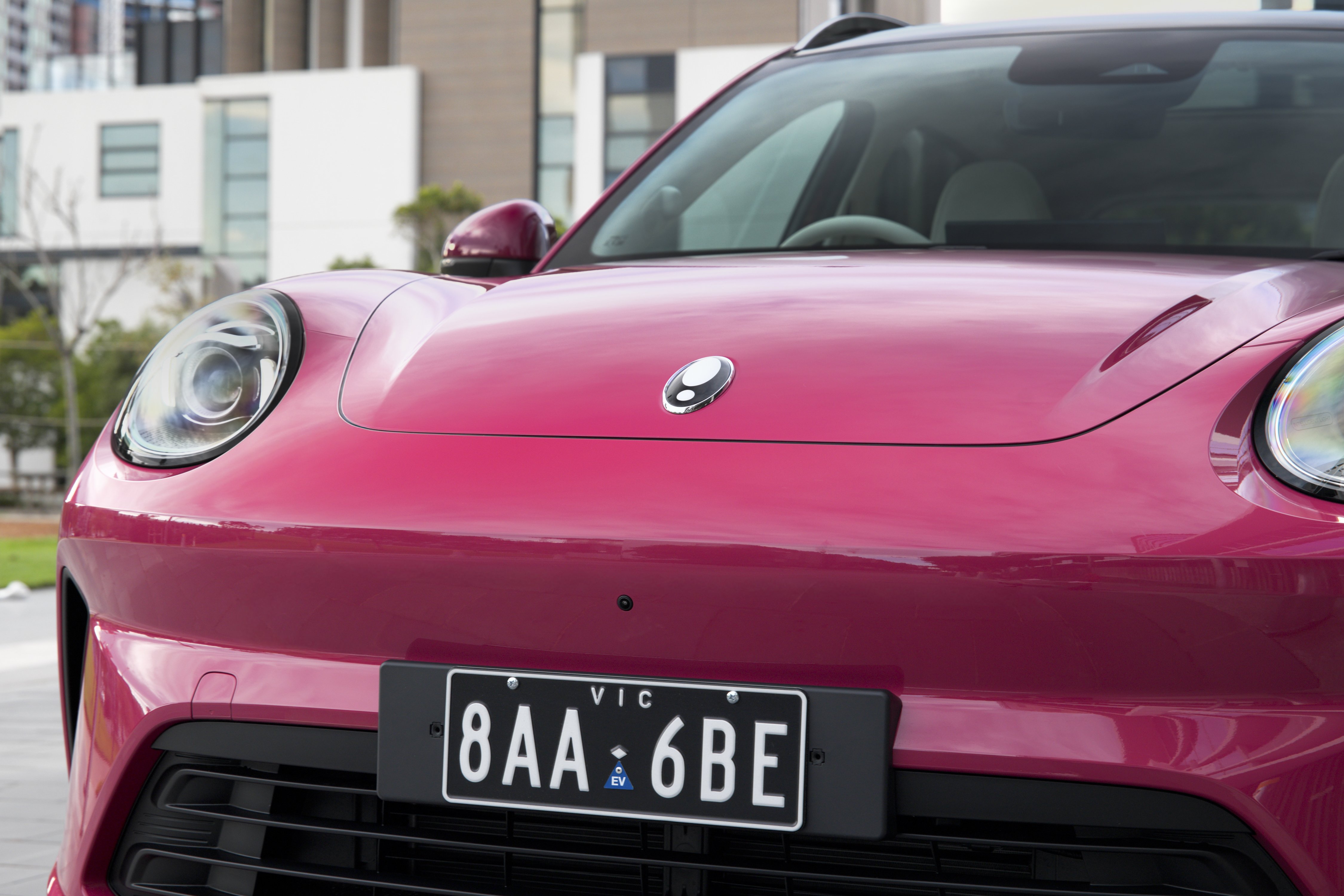
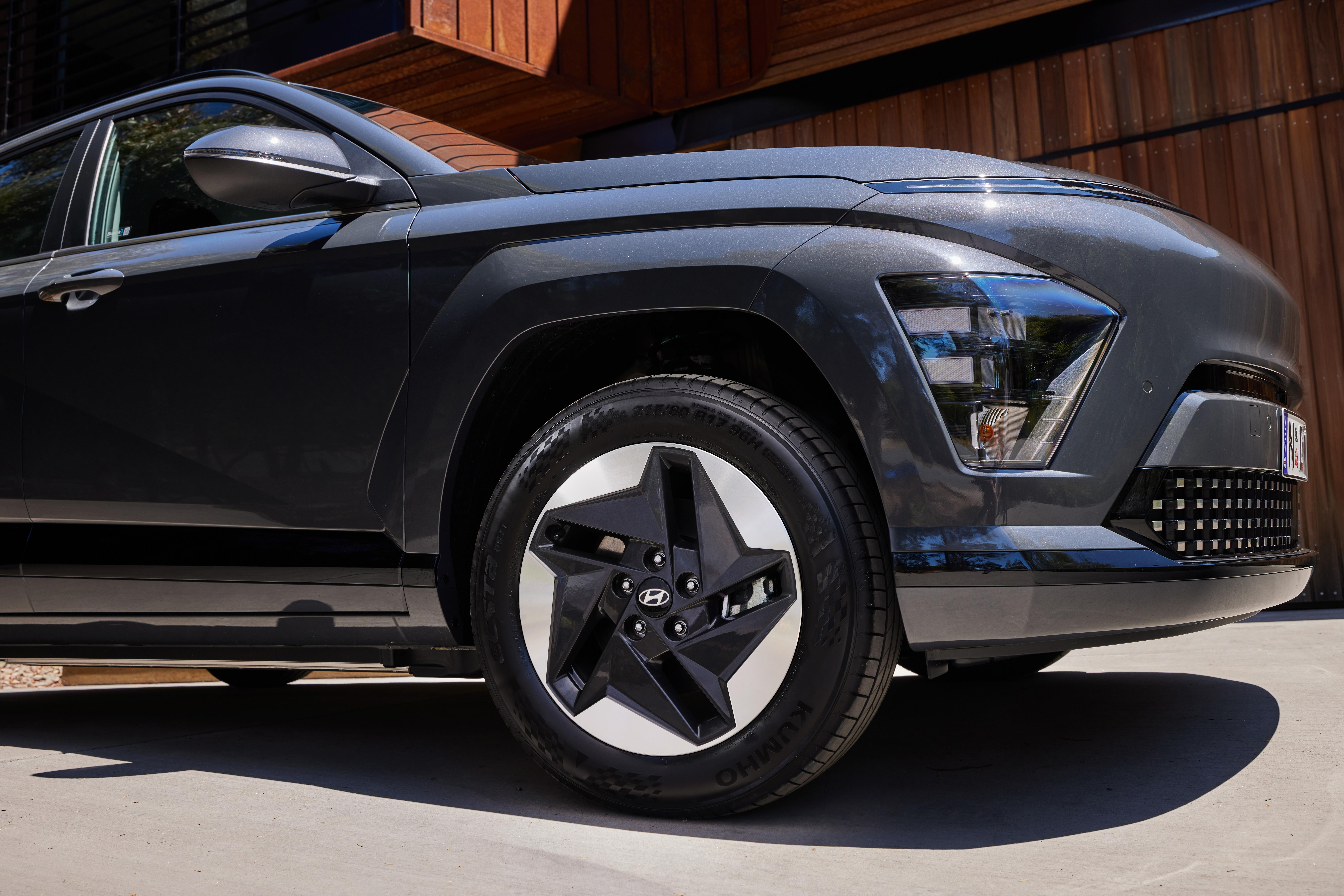
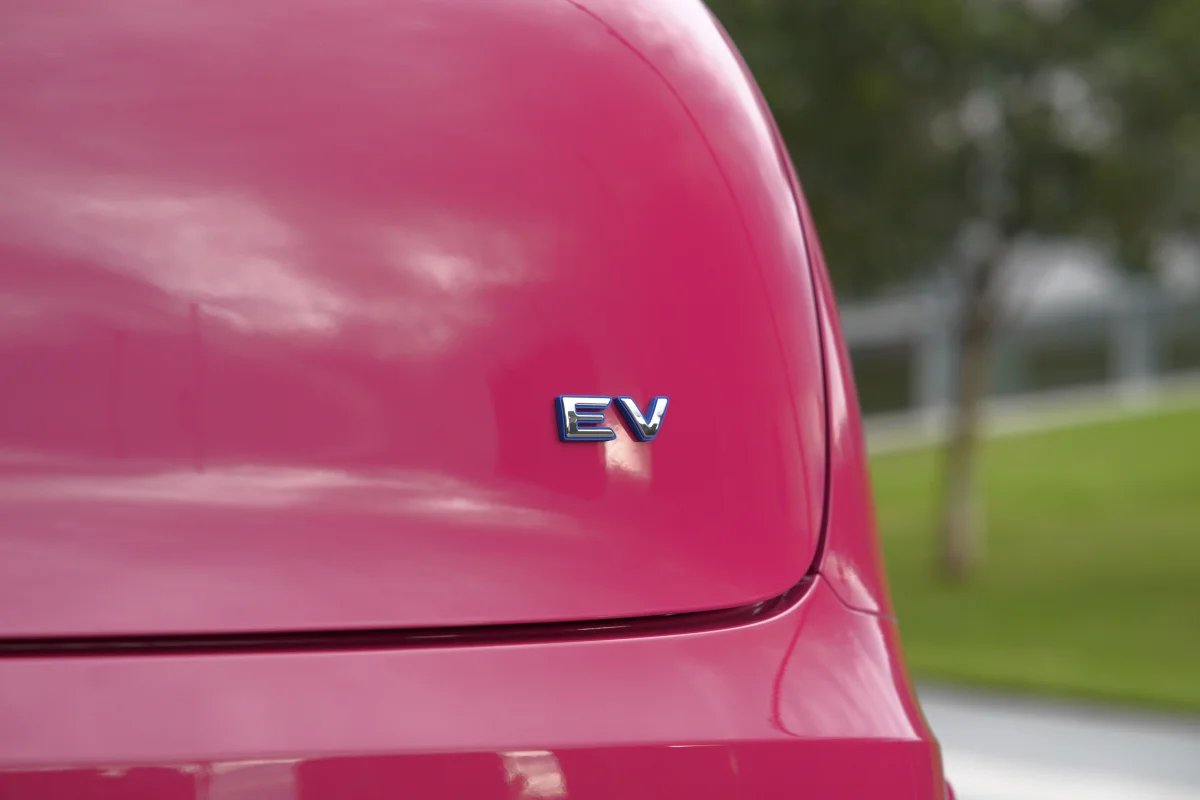
Every Kona Electric grade above the Standard Range uses the 150kW Extended Range powertrain. The Elite is $53,000 plus on-road costs, the Premium is $60,000, and the Premium N Line tops the range at $63,000. The cars shown wear optional paint: Flamingo Pink costs $595 on the Ora 5, while Meta Blue costs the same on the Kona. Pepper White is the GWM’s only no-cost paint; Atlas White and Mirage Green are standard Hyundai colours.
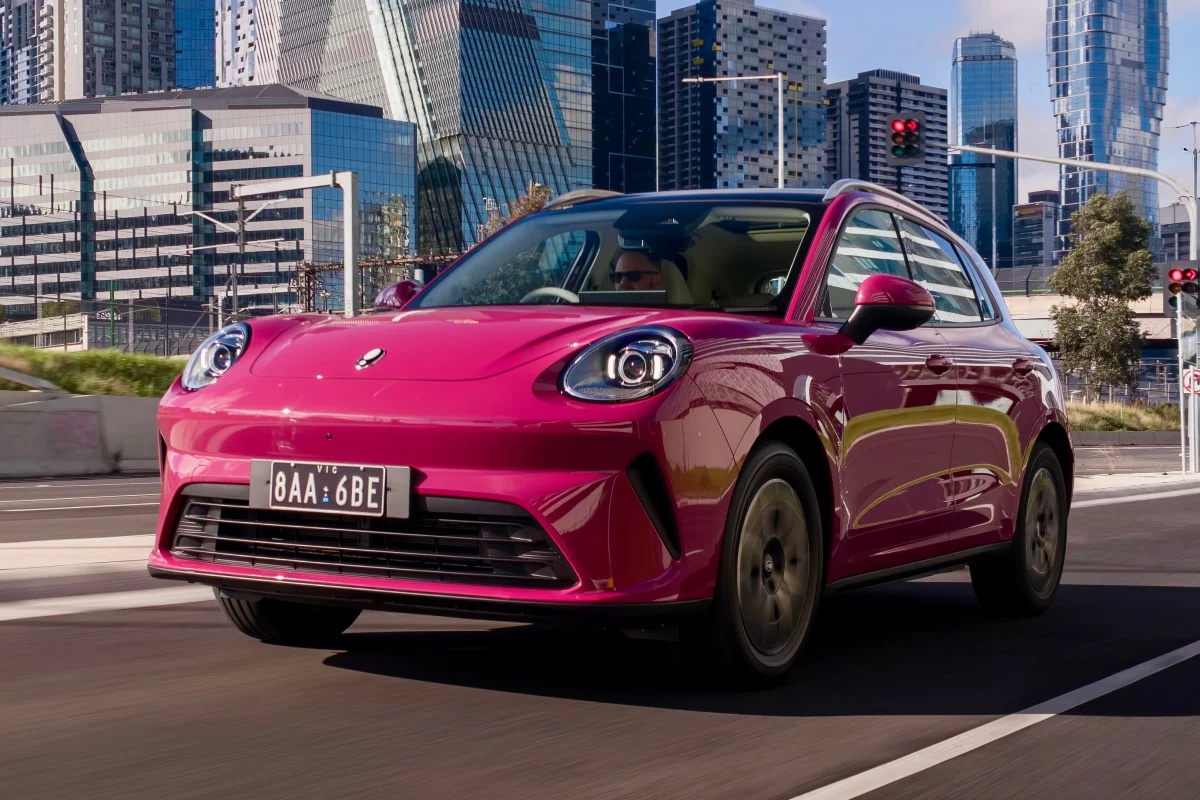
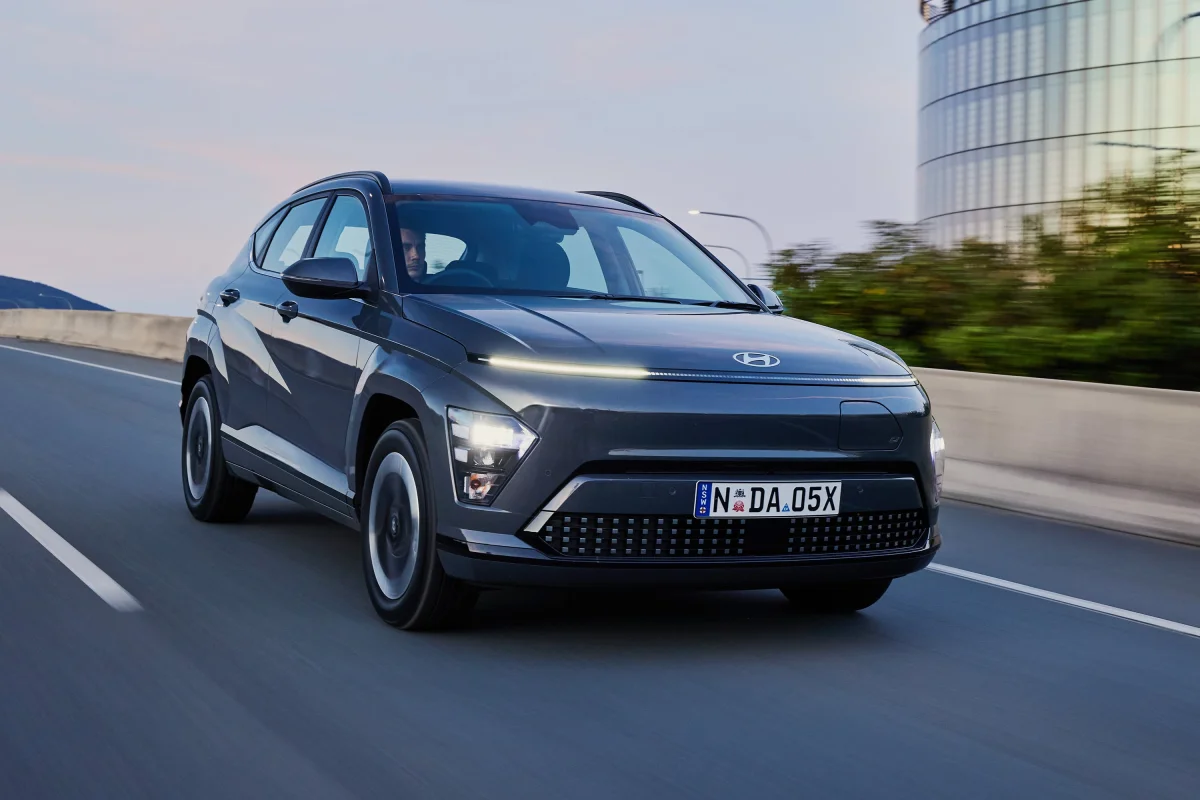
Both bring a substantial baseline of equipment, including LED lighting, rain-sensing wipers, heated folding mirrors, keyless entry and start, digital instrument displays, touchscreen infotainment, satellite navigation, connected services and over-the-air software updates. Apple CarPlay and Android Auto, wireless phone charging, Bluetooth, DAB+ radio, dual-zone climate control, rear air vents, front and rear power windows, a reversing camera and rear parking sensors are also listed for both.
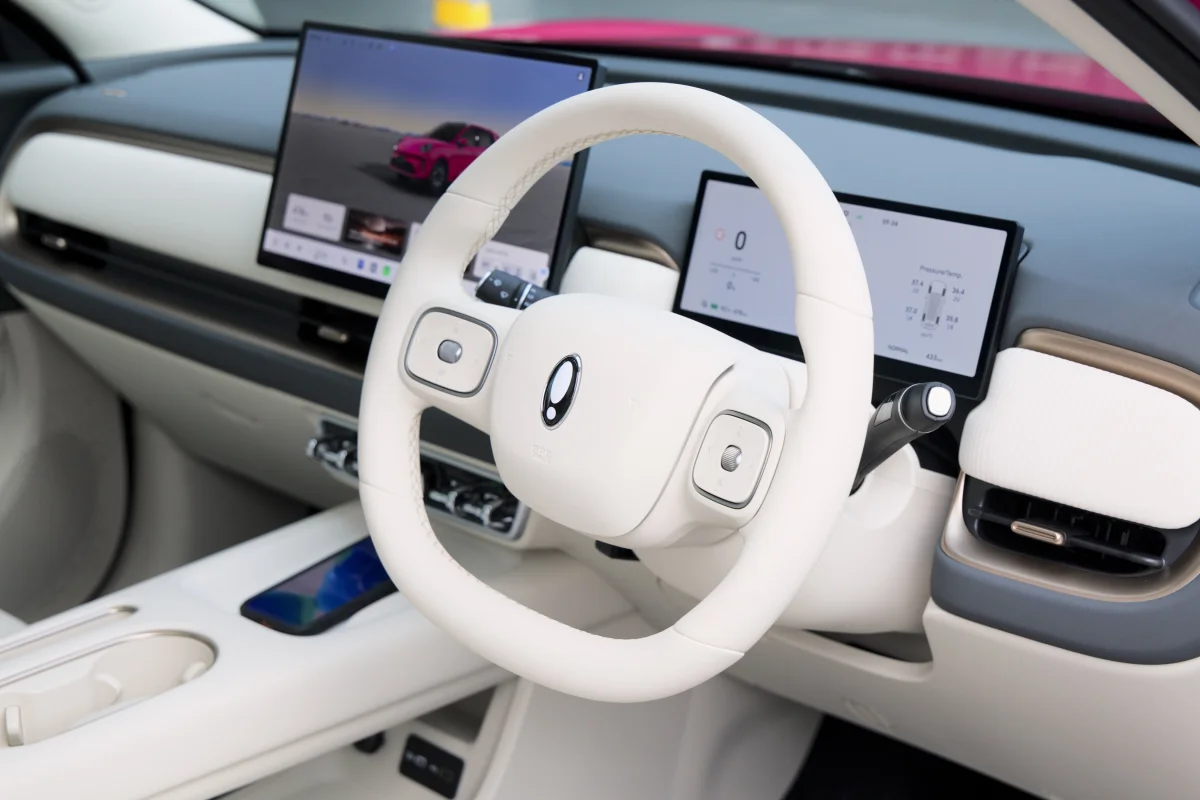
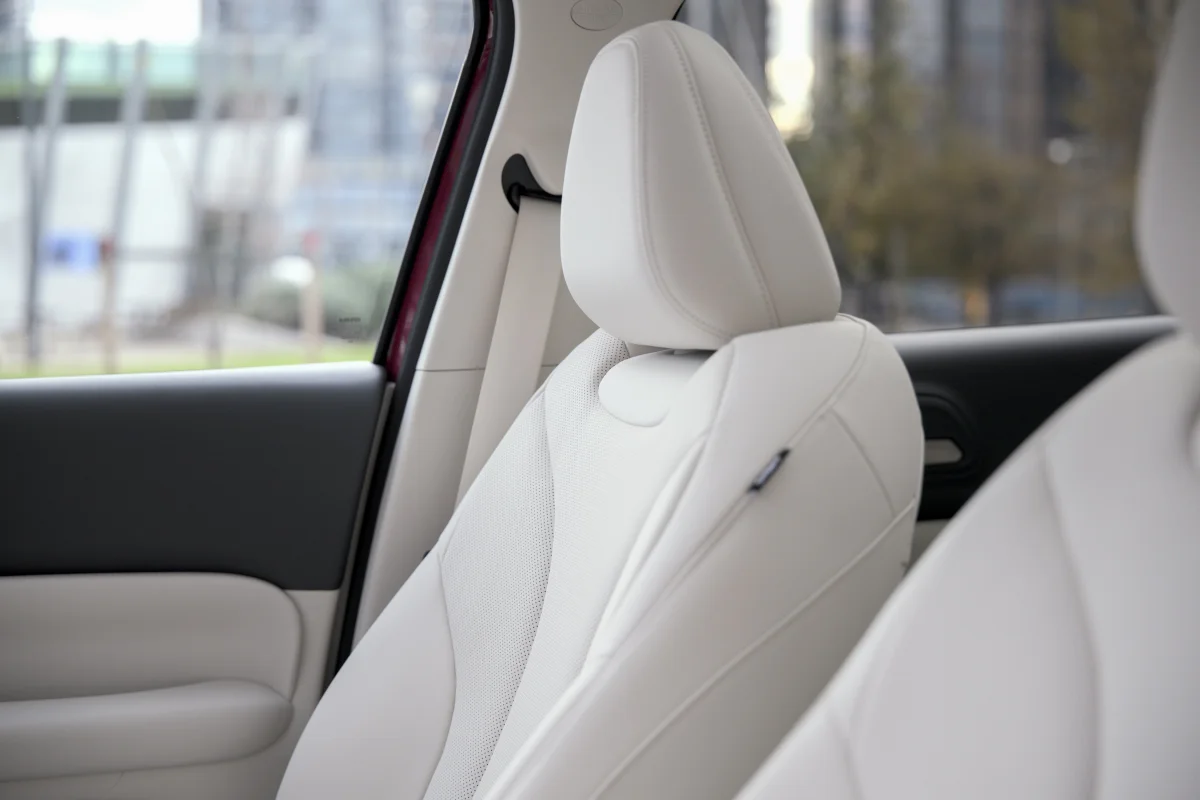
Each has a space-saver spare and vehicle-to-load (V2L) capability. The Ora 5 Ultra adds 18-inch wheels, compared with the Kona’s 17-inch rims, as well as rear privacy glass, a panoramic roof and a powered tailgate. Its synthetic leather seats are paired with power adjustment, heating and ventilation up front, plus a heated steering wheel. The base Kona has black cloth upholstery and manually adjusted front seats.
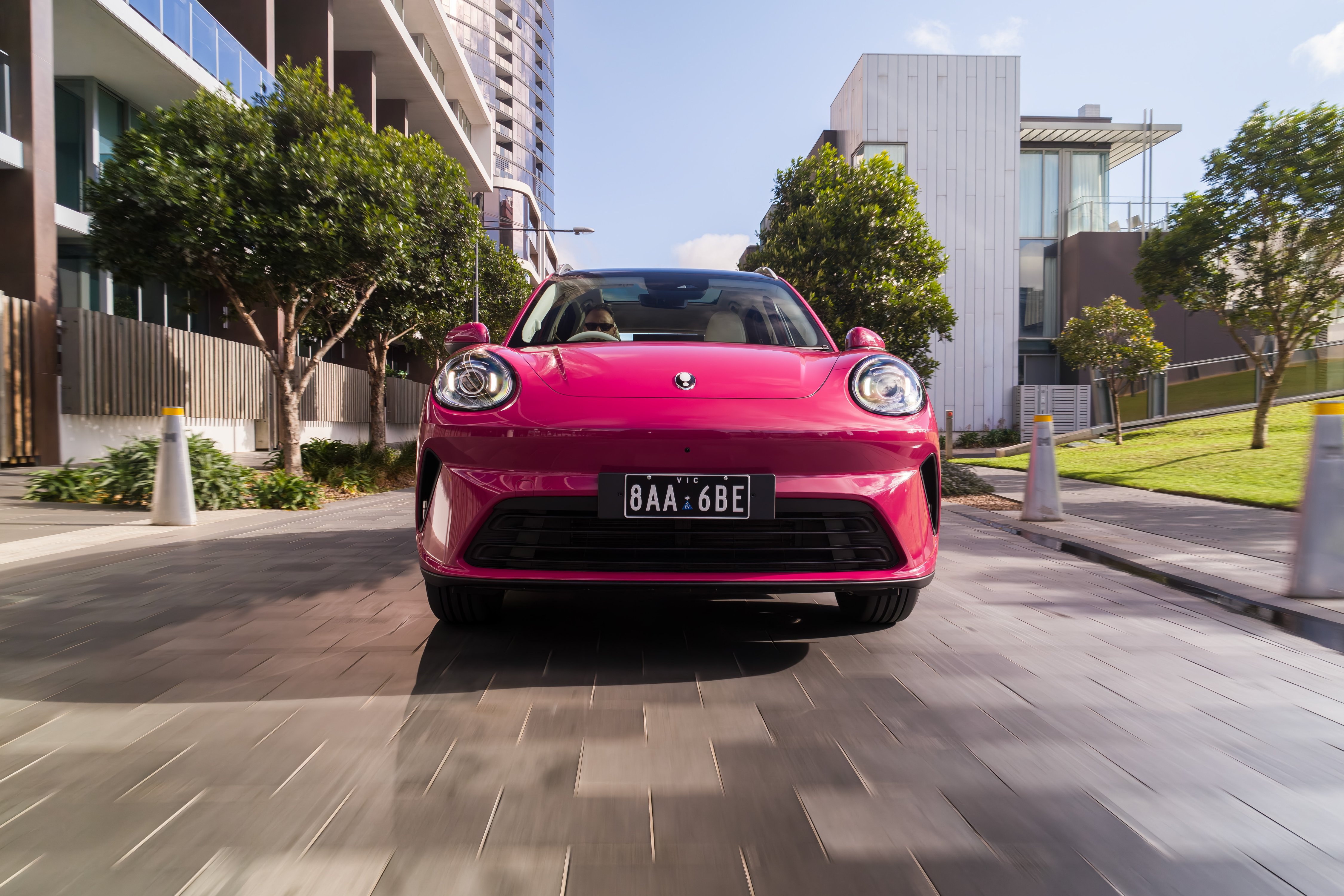
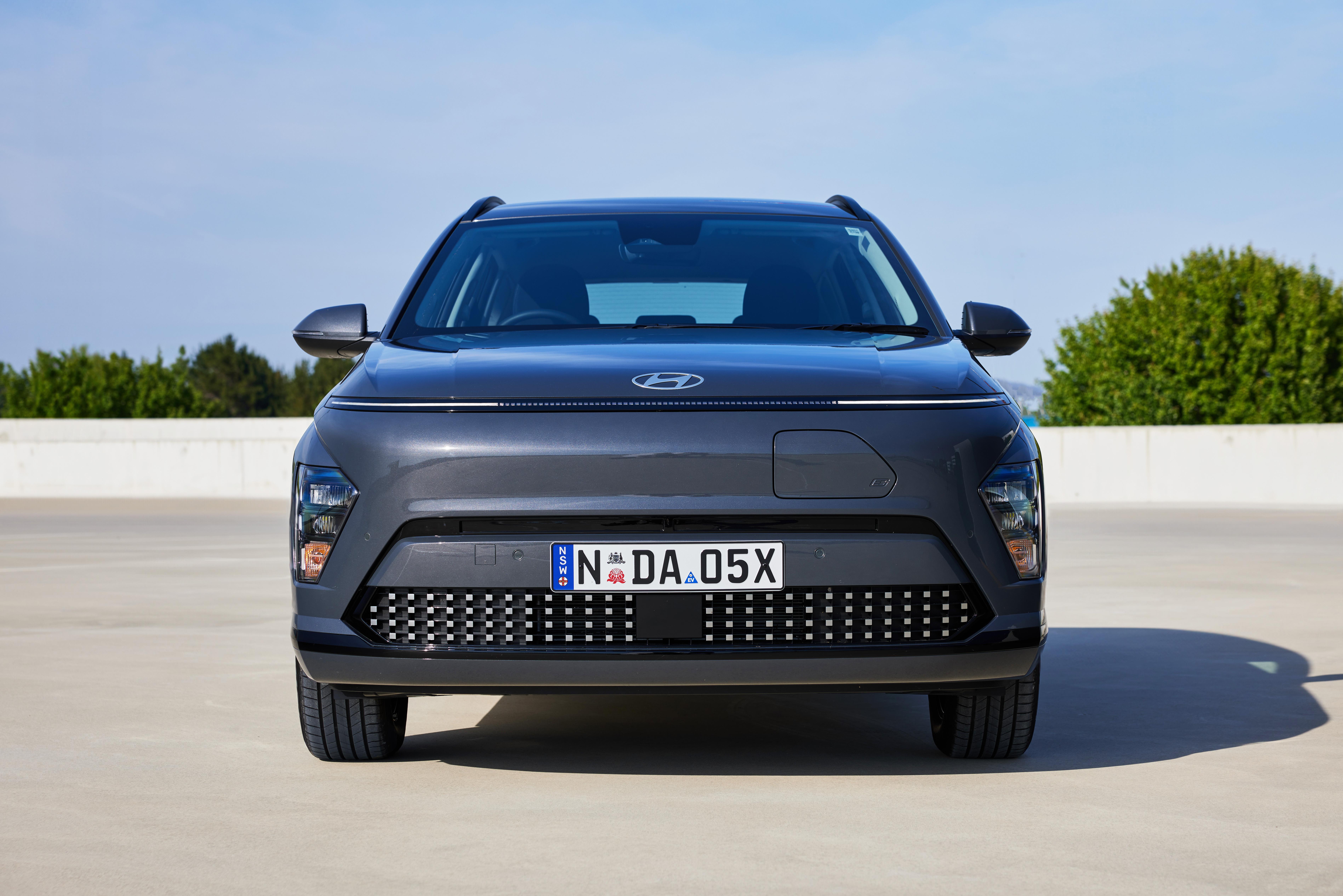
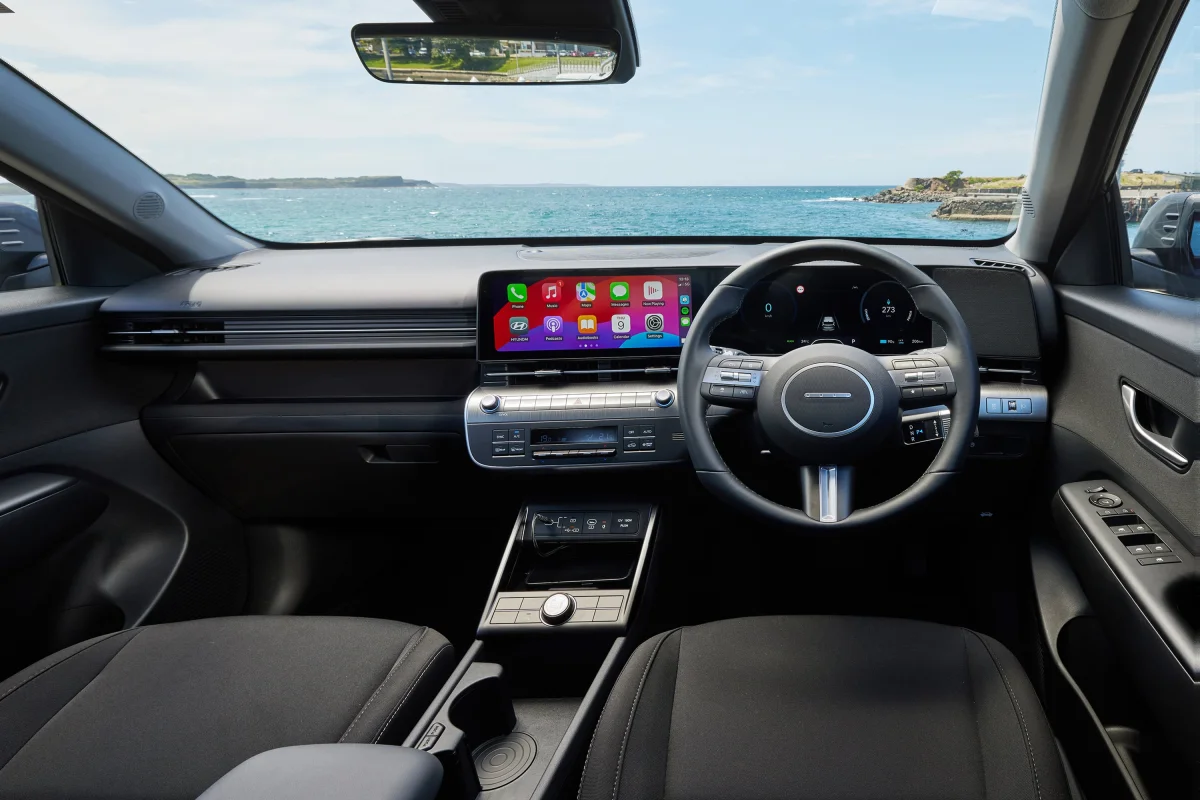
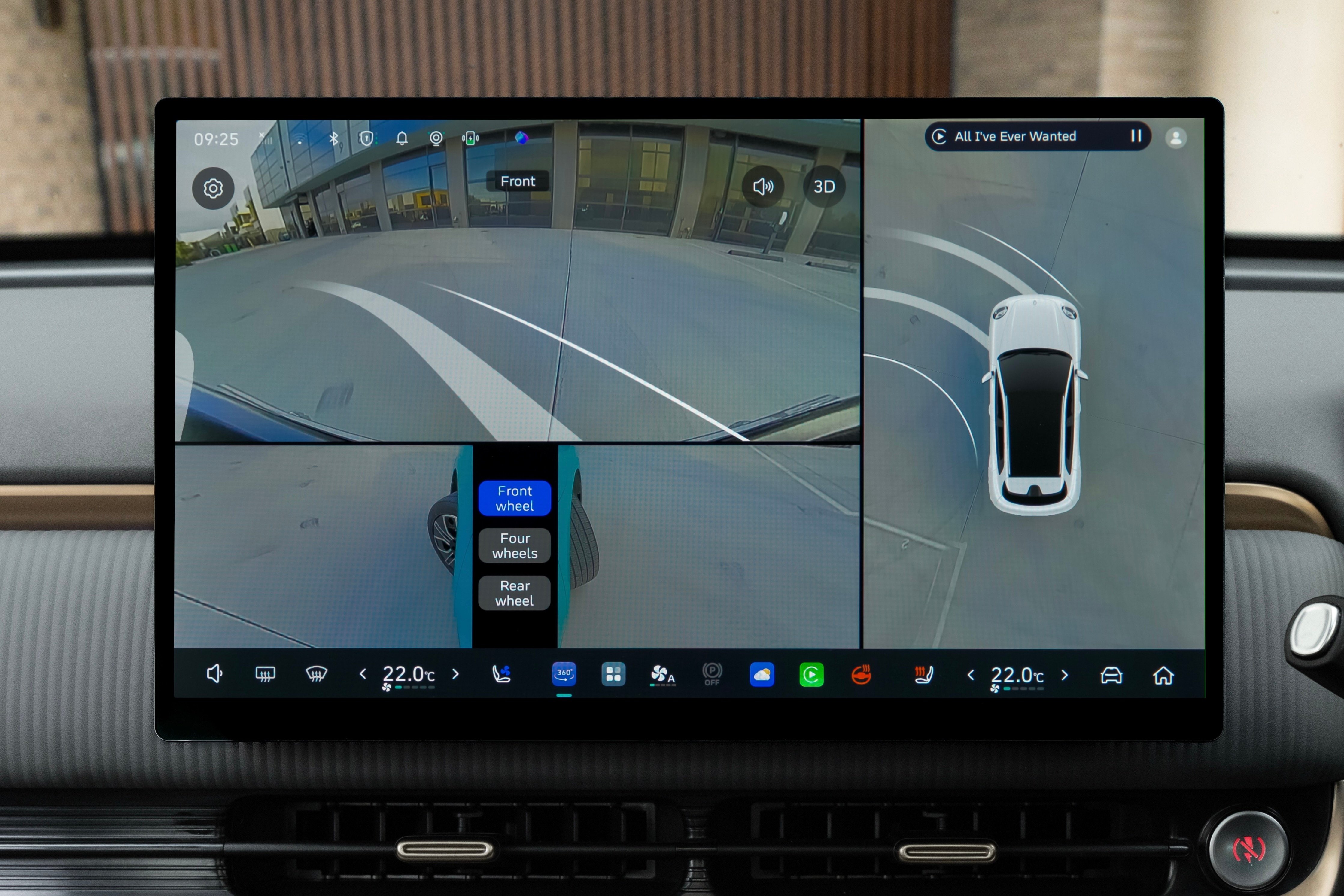
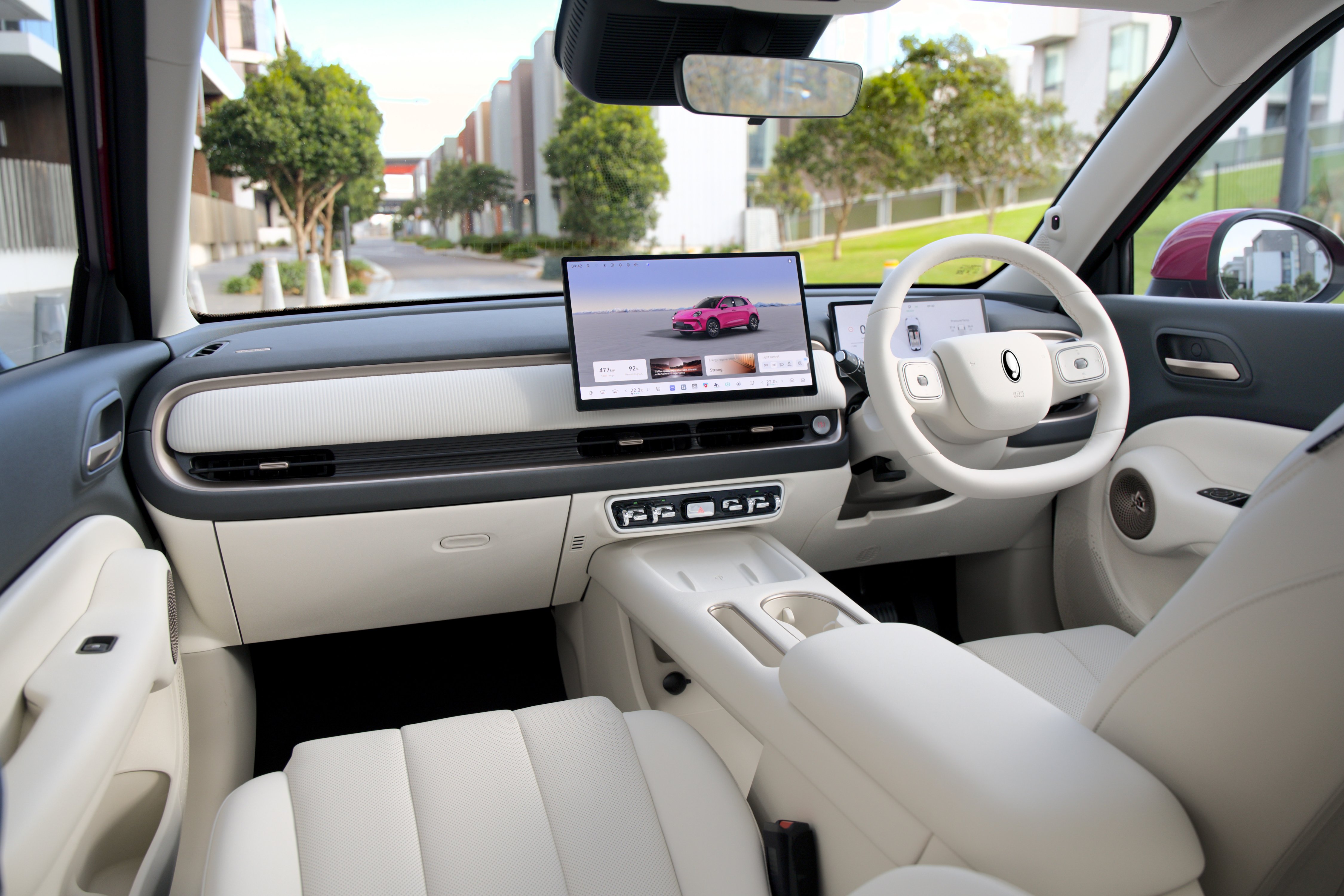
The screens favour different priorities: the Kona’s digital instrument display is 12.3 inches, compared with 10.25 inches in the Ora 5, while the GWM’s central infotainment screen measures 14.6 inches. The Ora also supplies a 360-degree camera with multiple views and a steering-wheel shortcut. The entry-level Hyundai has a reversing camera with guide lines but no surround-view system. Both have front and rear parking sensors; only the Ora 5 Ultra has a powered tailgate in this comparison.
Ambient lighting offers 64 colours and sequences in the Ora, which also has a nine-speaker stereo. The Kona has six speakers in this grade. Those differences need context: higher Kona grades add equipment, but also push the price further above the Ora 5 Ultra.
Space, cabin layout and safety
The Ora 5 is the larger vehicle outside. At 4471mm long, it stretches 116mm beyond the 4355mm Kona, and its 2720mm wheelbase is 60mm longer. It is also 8mm wider, at 1833mm, and 61mm taller, at 1641mm. That footprint translates into a roomier second row in the GWM, though its rear bench lacks a folding centre armrest and the front cabin’s ambient lighting doesn’t extend to the back.
GWM mixes touchscreen controls with physical details, including chrome toggle switches beneath the centre display for climate settings, drive modes and hazard lights. The panoramic roof is controlled through the screen, which has a customisable home menu; two steering-wheel buttons can also be programmed for quick access. Storage is split across two levels in the centre console, with a small upper cubby and useful space beneath the cupholders.
The Kona takes a more button-led approach, with physical controls for climate settings and drive modes, plus a configurable steering-wheel button. Its console is deeper but has one main level. Stowable cupholders, more accessible USB-C ports, a passenger-side dashboard shelf and deeper door bins add useful cabin storage. Hyundai also provides a folding rear armrest and two rear USB-C ports; the Ora has one. The Kona’s rear passenger area also includes a 250V socket.
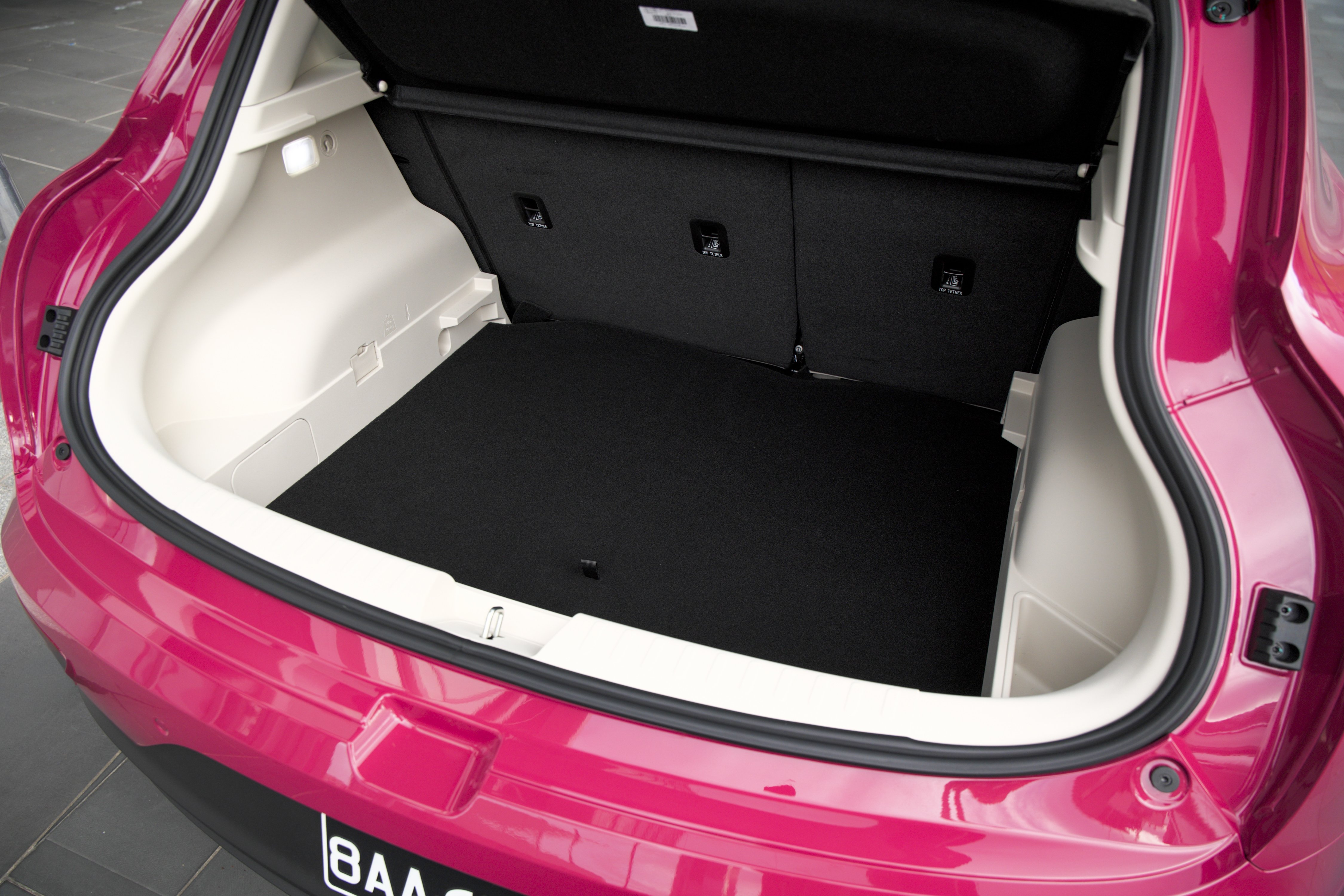
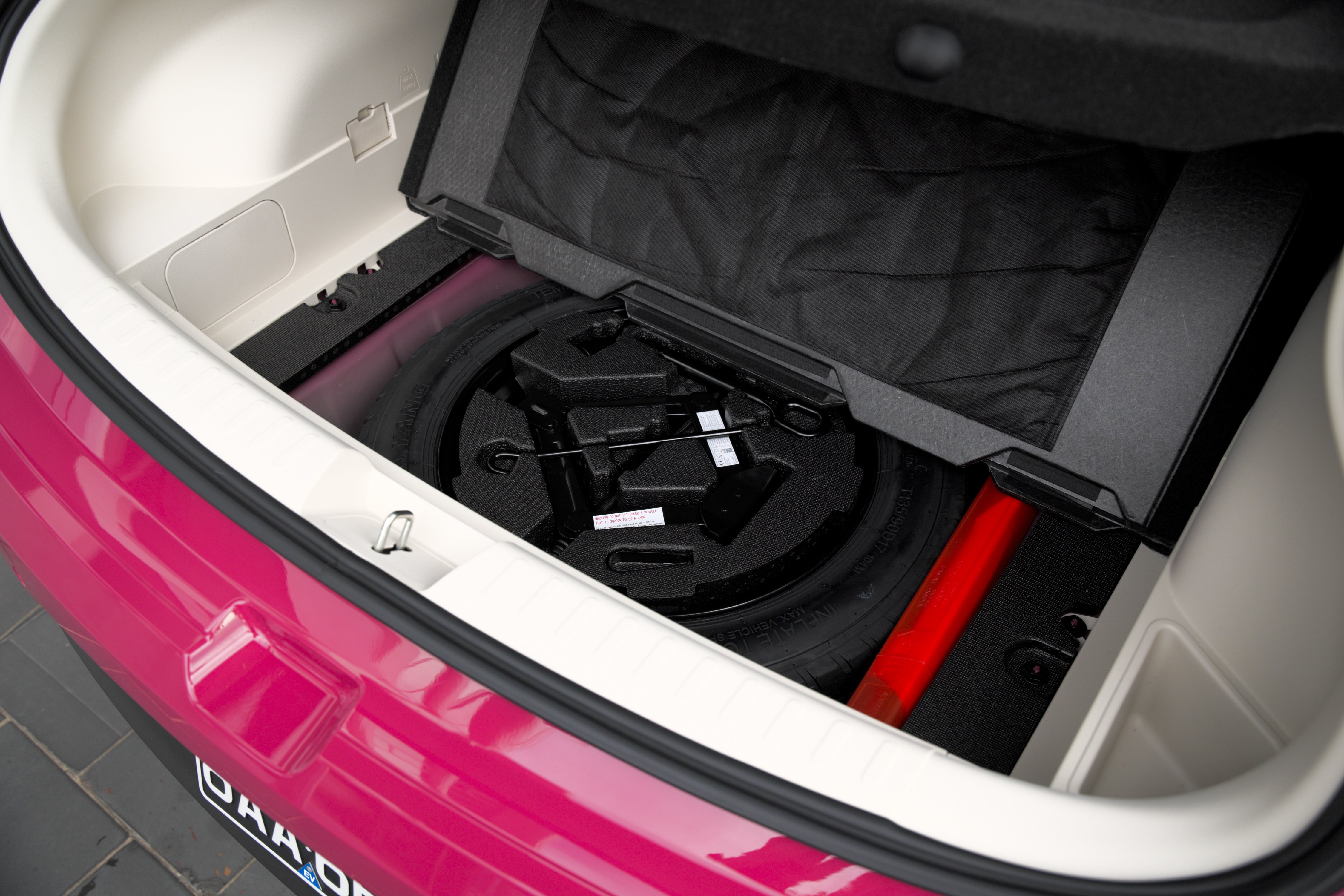
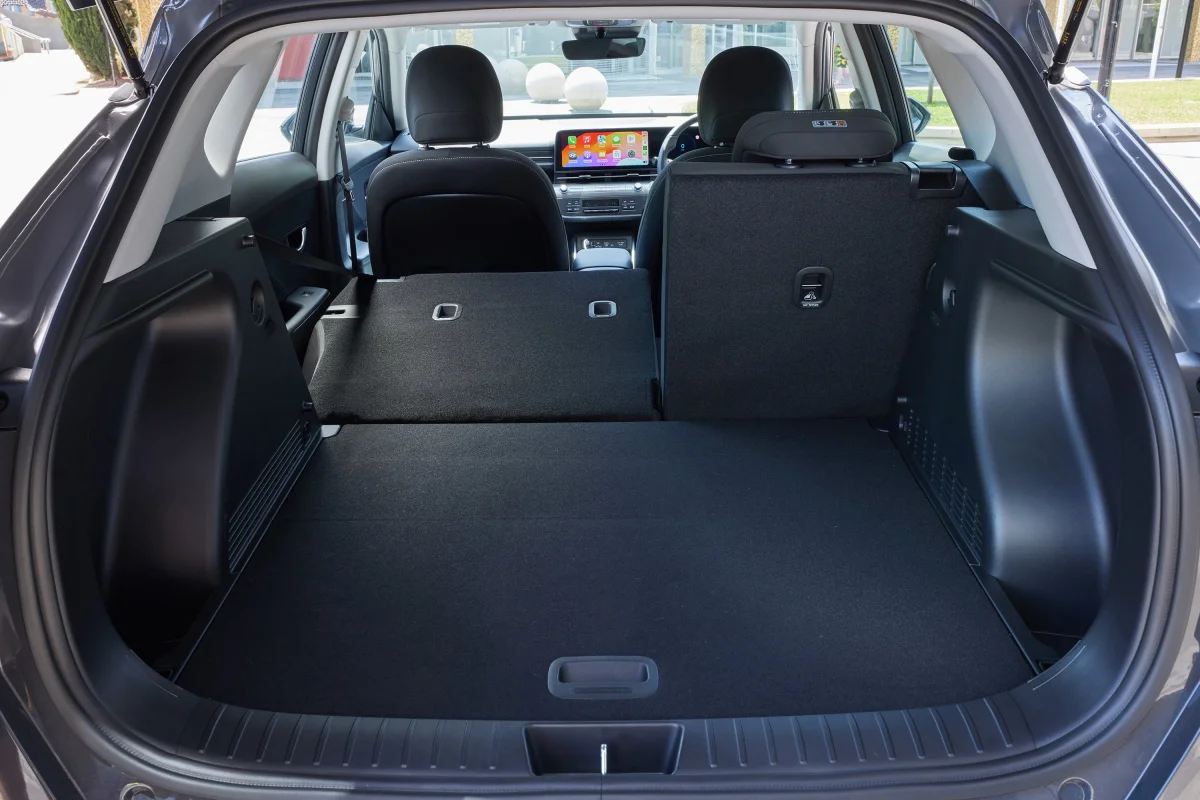
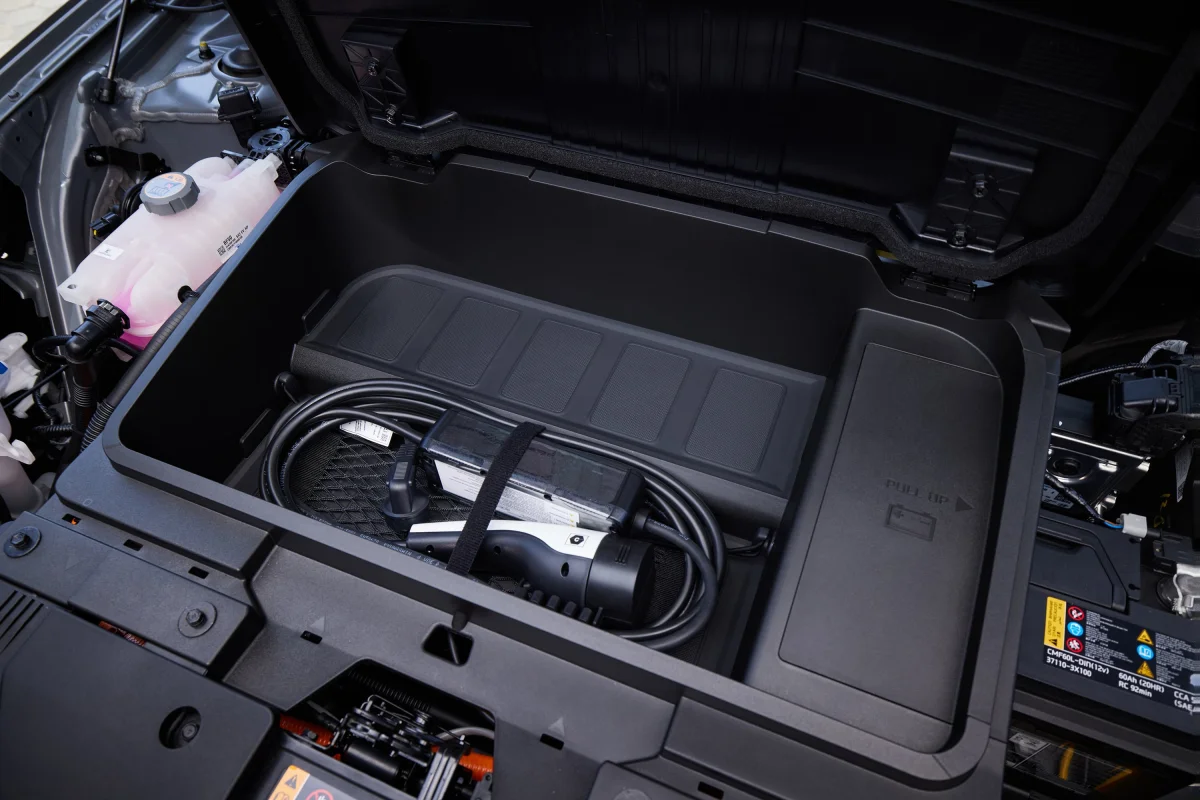
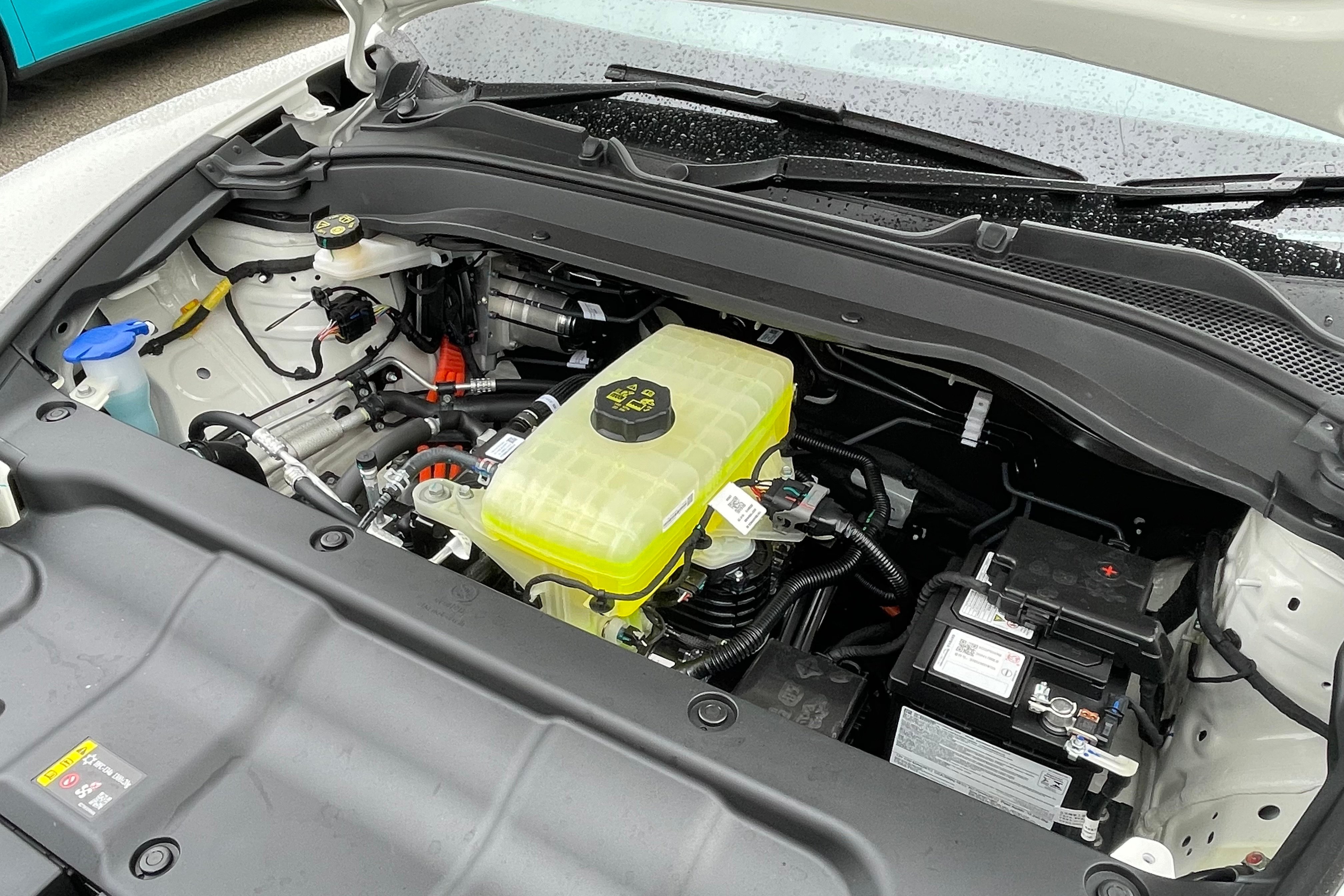
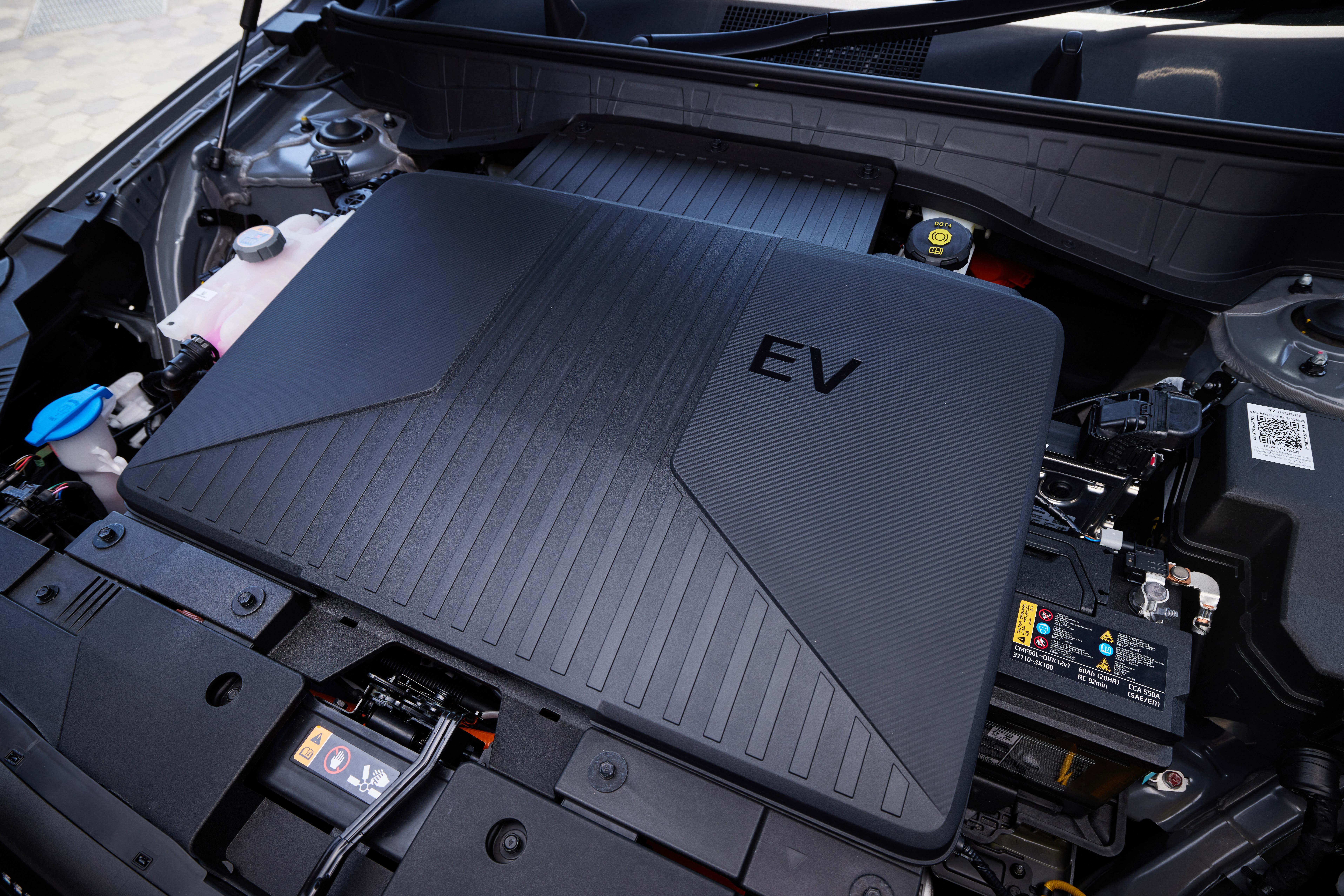
Boot space favours Hyundai. With the rear seats raised, the Kona offers 407 litres, expanding to 1241 litres with the seatbacks folded. The Ora 5 provides 362 litres, or 1060 litres behind the front seats. Both rear benches fold in a 60:40 split and both have a space-saver spare beneath the floor. The Hyundai adds a 27-litre front storage compartment; the Ora has no storage under its bonnet.
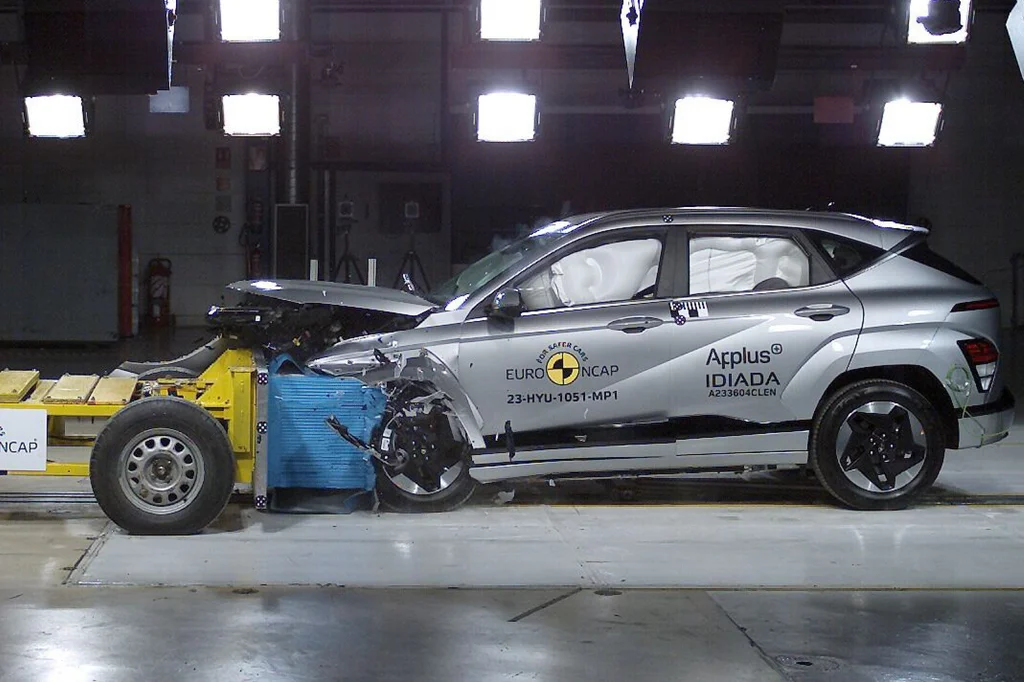
The Kona carries a four-star ANCAP rating, earned in 2023 and valid until December 2031. Its scores were 80 per cent for adult occupant protection, 84 per cent for child occupant protection, 64 per cent for vulnerable road user protection and 62 per cent for safety assist. The Ora 5 has not yet been assessed. Neither vehicle has been tested under the assessment protocols introduced in 2026.
Both list seven airbags, autonomous emergency braking with pedestrian and cyclist detection, forward collision warning, adaptive cruise control with Stop & Go, traffic sign recognition, blind-spot detection and collision avoidance, lane-keeping assistance, rear cross-traffic alert, door-opening warning and driver attention monitoring. Tyre-pressure monitoring, parking sensors, a reversing camera and two ISOFIX child-seat points are also included. The Ora adds child-presence detection. Hyundai’s Forward Collision-Avoidance Assist 2.0 adds lane-change collision avoidance and Leading Vehicle Departure Alert.
Power, range and charging
Both cars drive their front wheels through a single electric motor. The Ora 5 Ultra pairs a 150kW motor and 260Nm with a 58.3kWh LFP battery. The Kona Standard Range has a 99kW motor, 255Nm and a 48.6kWh lithium-ion battery. GWM claims an 8.0-second 0–100km/h time; Hyundai doesn’t provide a comparable acceleration figure for this version.
The Ora’s claimed range is 435km on the WLTC cycle, against 370km WLTP for the Kona. Those figures use different test cycles, so they aren’t directly equivalent. Claimed energy use is 15.5kWh/100km for GWM and 14.8kWh/100km for Hyundai. The Ora weighs 1685kg; the Kona’s stated kerb-weight range is 1615–1690kg.
Both use a CCS2 charging port and support scheduled charging. The Ora’s maximum DC rate is 120kW, with GWM quoting 10–80 per cent in 30 minutes. Hyundai lists up to 100kW and 45 minutes for the same state-of-charge window. V2L output is rated at up to 6kW for the Ora and 3kW for the Kona, giving the GWM more capacity to power external devices.
Warranty and servicing
GWM covers the Ora 5 for seven years with unlimited kilometres for private use. Commercial applications, including rideshare, hire-car and rental use, receive the same time coverage capped at 150,000km. The high-voltage battery has an eight-year, unlimited-kilometre warranty. Roadside assistance is included when the car is serviced at an authorised GWM outlet, and capped-price servicing covers the first five scheduled visits. Intervals are 12 months or 15,000km.
Hyundai’s Kona Electric warranty runs for five years with unlimited kilometres, extending to seven years if scheduled servicing is completed on time at an authorised dealer. Its battery coverage is eight years or 160,000km, whichever comes first. Hyundai also cites cover for paint durability and corrosion defects for up to seven years. Roadside assistance continues for the life of the vehicle when it’s serviced through an authorised Hyundai facility, including beyond the new-car warranty. Kona Electric service intervals are 24 months or 30,000km, under Hyundai’s capped-price Lifetime Service Plan.
Which one makes the stronger case?
The Kona’s case rests on cargo capacity, a documented four-star rating, more rear USB-C ports and longer gaps between scheduled services. Its bigger boot is a practical advantage, and its additional driver-assistance features may matter to buyers weighing the equipment closely. Hyundai also has strong name recognition in Australia; GWM has sold vehicles here since mid-2009, when it was known as Great Wall Motors.
Still, the Ora 5 Ultra is hard to dismiss at its current price. It undercuts the Kona Standard Range by $11,000 using the comparison’s drive-away figures of $36,990 and $47,990, while adding a more powerful motor, a larger battery and a higher claimed range. Its cabin equipment, roomier second row, 360-degree camera, powered tailgate and stronger V2L output strengthen the value argument. The Kona’s 150kW motor is available in pricier grades, which makes the Ora’s equipment and output particularly compelling at this price.
The GWM’s smaller boot and lack of an ANCAP assessment are meaningful trade-offs, and its design won’t suit every buyer. But for a buyer comparing these two specific versions, the Ora 5 Ultra delivers more power and equipment for substantially less. The Kona remains the more useful choice when luggage space and an existing safety score lead the shortlist; the Ora is the sharper value pick on paper.
Explore the GWM Ora 5 showroom · Explore the Hyundai Kona showroom


