In lane Electric Vehicles
Helene Rother’s Nash Rambler Interiors Helped Make Compact Cars Feel Special
Description
Designer Helene Rother gave Nash’s compact Rambler vivid, practical interiors that helped set it apart as sales climbed in the early 1950s.
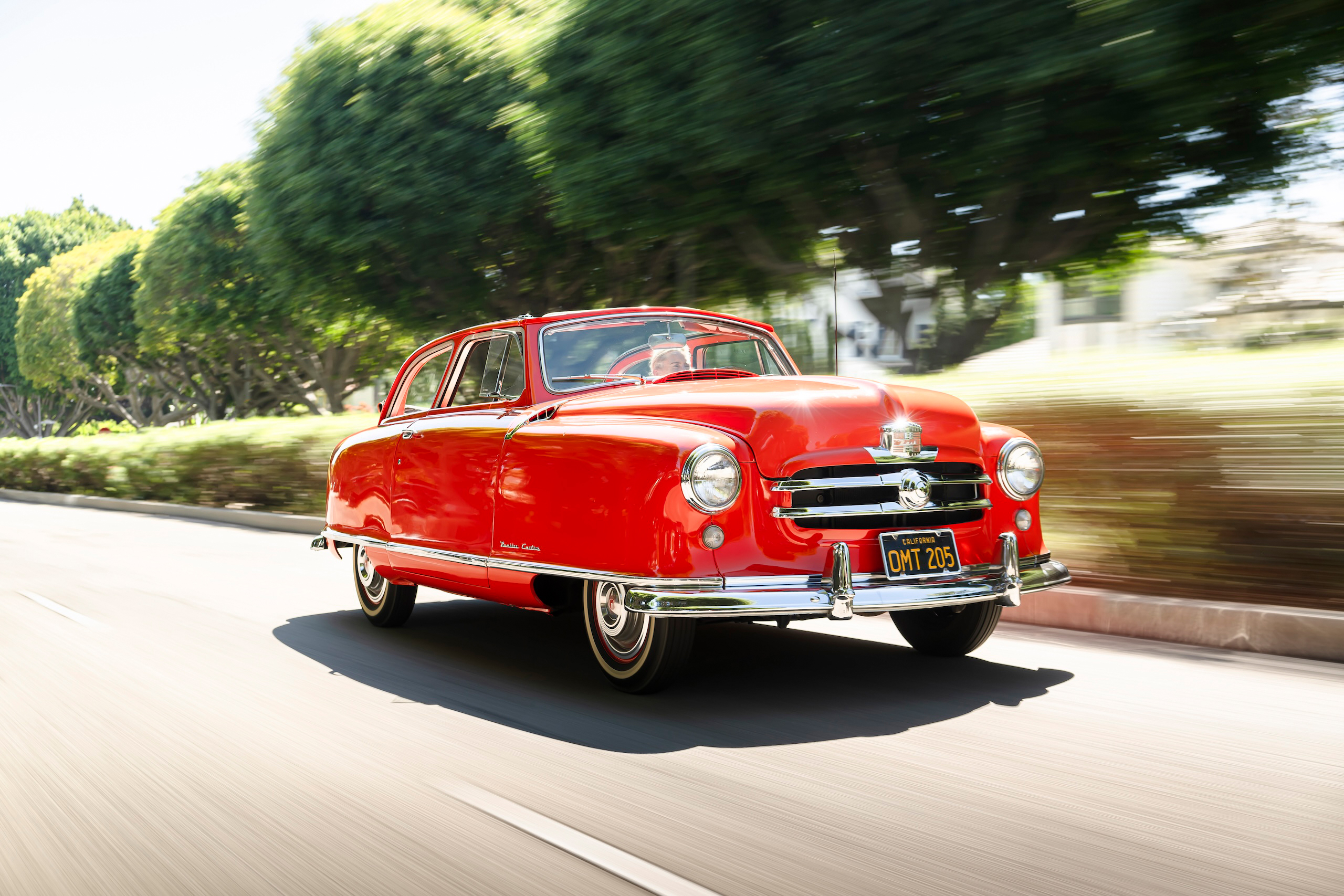
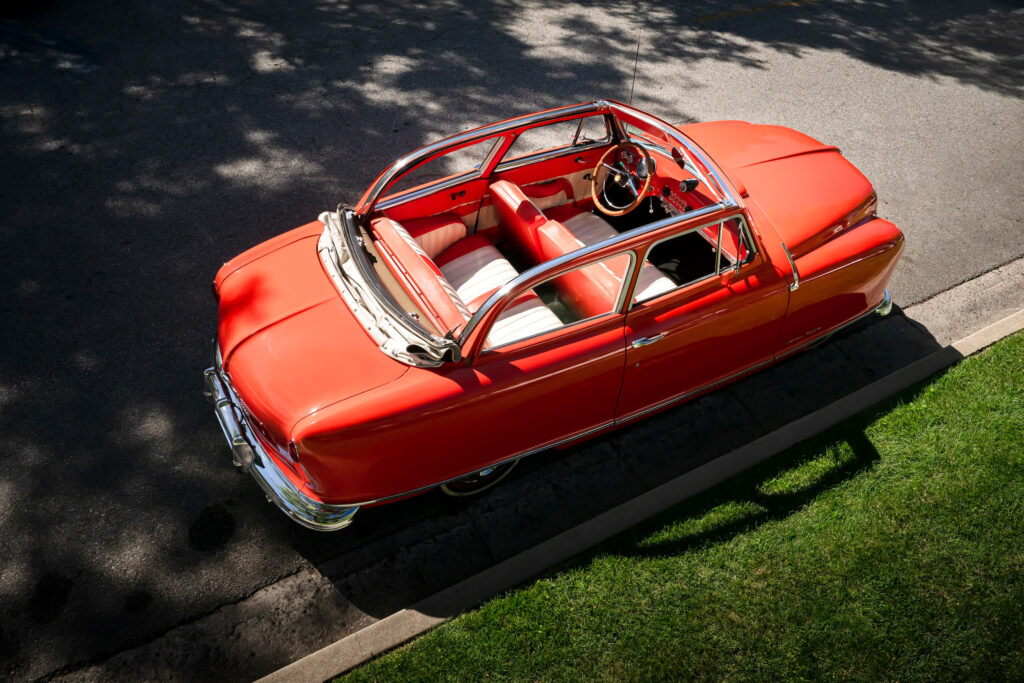
The Nash Rambler’s strongest argument for being small was that it didn’t feel like a compromise. When it arrived in 1950, the compact convertible paired a more manageable footprint with bright colors, useful standard equipment and an interior designed by Helene Rother. That combination helped Nash make a premium car out of a format many American buyers weren’t asking for yet.
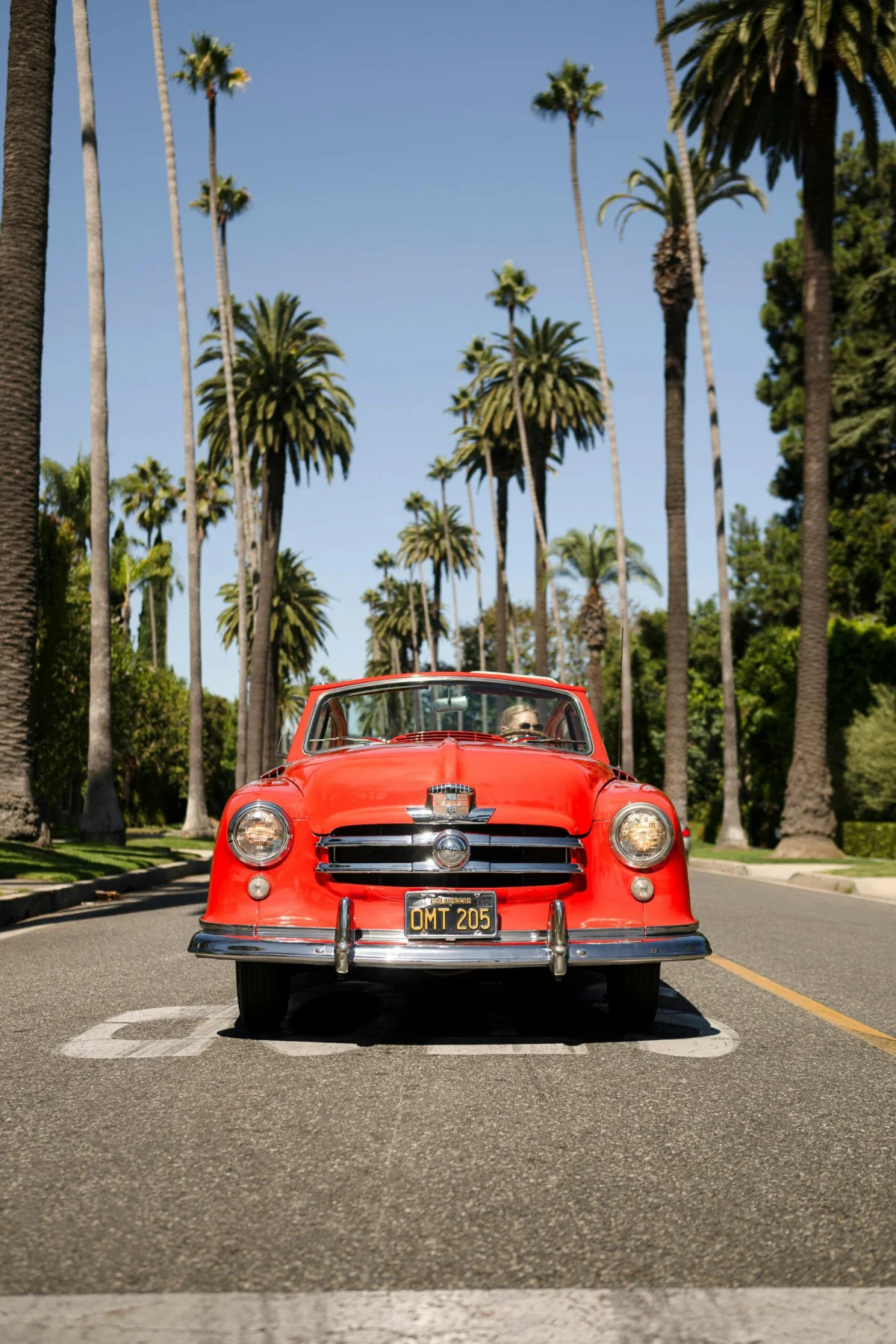
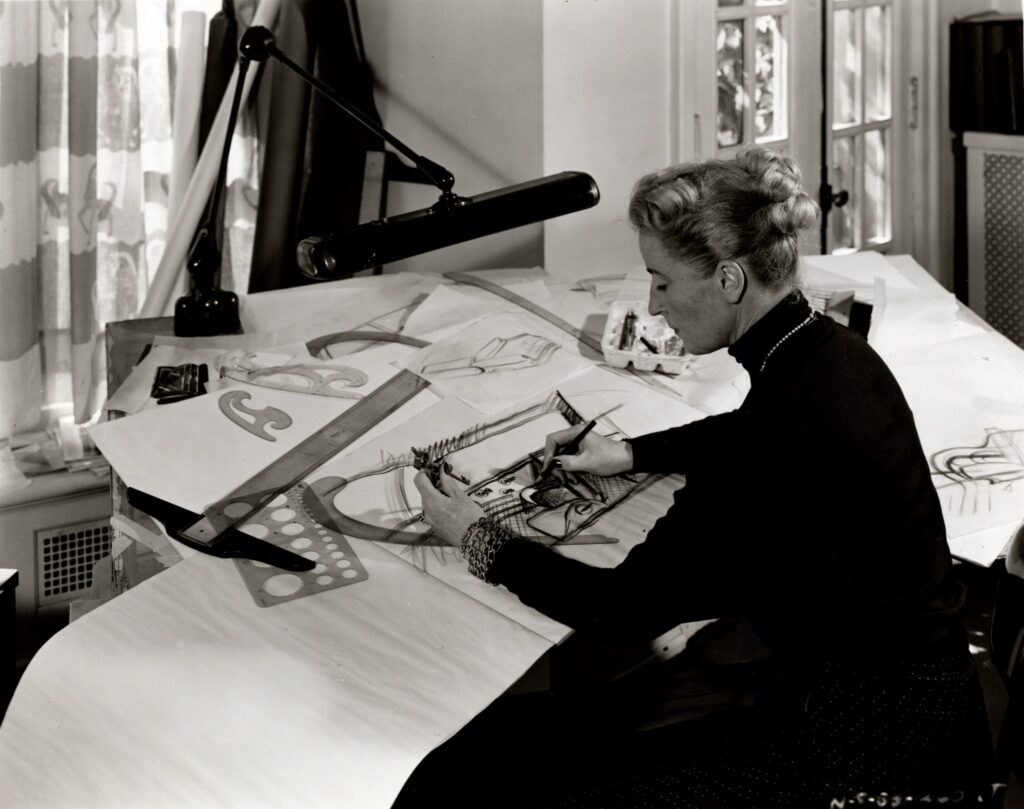
Rother brought a rare perspective to an industry dominated by men. She treated the cabin as a working part of the car, where materials, controls and storage could improve the time spent driving. The Rambler’s early sales suggest that approach found an audience: Nash sold more than 11,000 in its first production year, then 57,000 in 1951 after adding a hardtop. The figures belong to a brief high point, but the ideas behind the car had a longer reach.
The Rambler was modest beside the full-size American cars of its day. A 1950 model cost $1,800, several hundred dollars more than its nearest Ford or Chevrolet competitors. Nash made the price part of the pitch: buyers were paying for a well-equipped, stylish car, not settling for a cheap one. The first version came only as a convertible, with a radio, heater and whitewall tires included.
That formula also reflected the thinking of George W. Mason, Nash-Kelvinator’s president. During World War II, while the company made supercharged radial engines for naval aircraft, Mason kept new-car development alive. A $20 million compact sedan project begun during the war became the Rambler. After the war, Mason and his protégé George Romney saw room for a second car in American garages: smaller than the family car, but appealing enough to buy on its own merits.
From Leipzig to Detroit
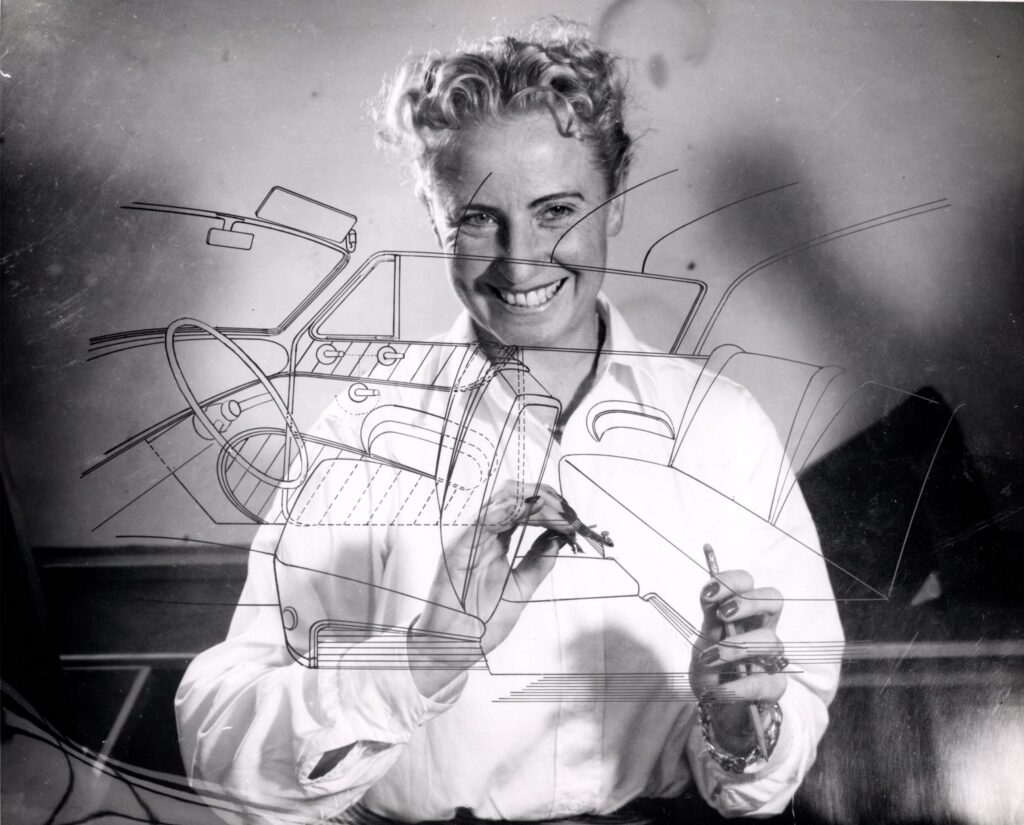
Rother’s path to Nash began far from the auto industry. She grew up in Leipzig, Germany, surrounded by books and art, and completed the equivalent of a master’s degree at Hamburg’s Kunstgewerbeschule in 1930. She began work in visual arts and graphic design. After her daughter, Ina, was born in 1932, Rother’s husband, a Trotskyist involved with anti-Nazi organizations, fled to France. Rother and Ina remained in Germany.
Rother continued to work, including in jewelry design, but her connection to her husband put her at risk as conditions worsened. After France fell to German forces, Americans with the Emergency Rescue Committee helped her escape. They supplied an alias, counterfeit identification and $400 for the journey to Marseilles. With travel to the United States tightly restricted, Rother and her daughter went to Casablanca to wait for passage to New York.
New York never quite became home. Rother found work as an artist, designed geometric textiles influenced by Le Corbusier and the Bauhaus, and illustrated children’s books that went unpublished. She also drew for Marvel Comics. Her varied experience mattered: she was trained to think about color, texture and how objects fit into daily life, not just how a car looked from the curb.
In 1942, Rother heard that Harley Earl, General Motors’ first vice president of styling, was hiring in Michigan. GM had never employed a woman as a designer. Earl nevertheless sought creative talent, and Rother moved to Detroit with her daughter. Some GM executives reportedly wanted to keep the hiring of women above secretarial positions quiet, fearing it would prove embarrassing. Rother joined anyway, part of a small group of women later known as the Damsels in Design.
Her work appeared in the interiors of Cadillacs, Buicks and Pontiacs. Rother said she earned less than the men she supervised. Still, she pushed for cabins that did more than provide a place to sit. In her view, color and attractive materials belonged alongside practical touches. She wrote of wanting car outlets for heating baby bottles and canned soup, spring-mounted cigarette lighters and umbrella holders. The wider group of women designers also worked on details such as gauge placement and tissue dispensers.
A cabin built around use
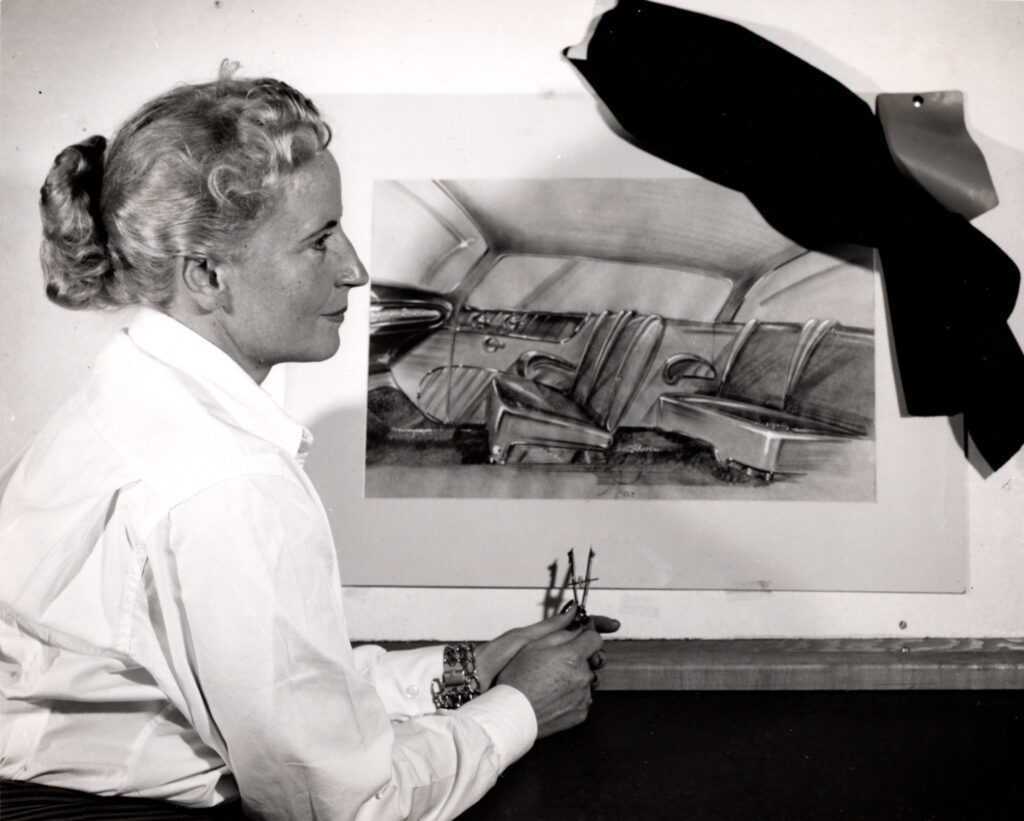
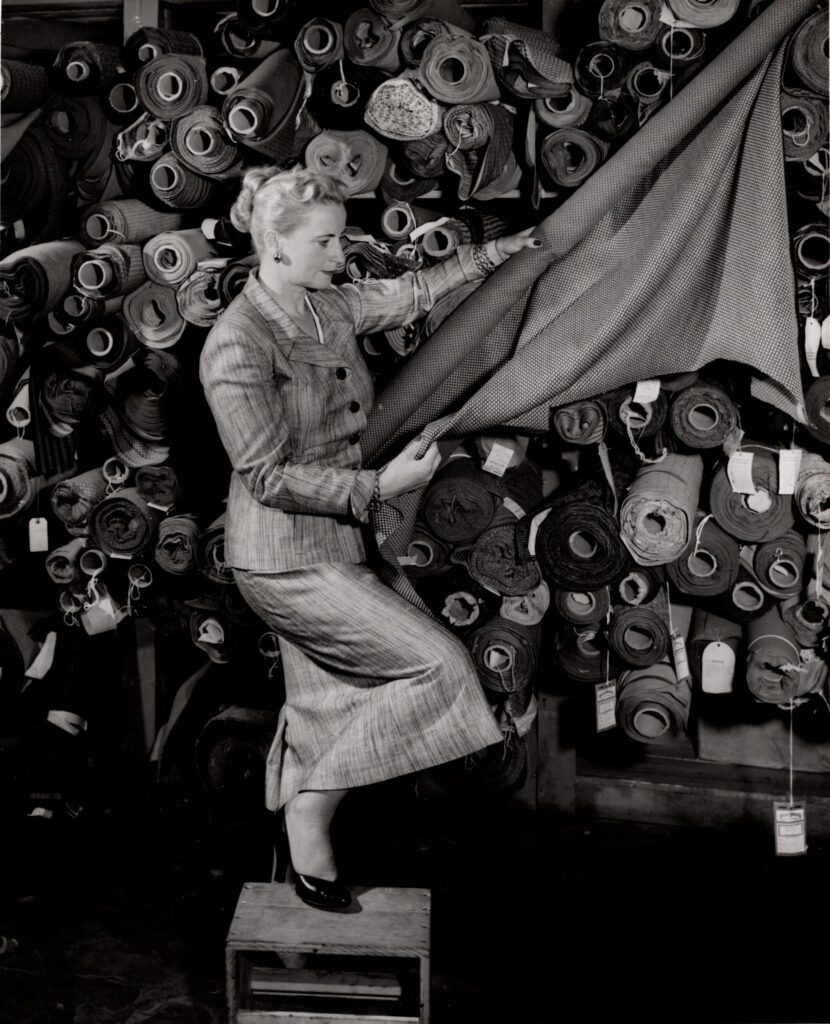
Rother opened her own design studio in 1947 while still working at GM. Nash became her main automotive client. She worked on seats, moldings, garnish, trim and fabrics, including interiors for Nash’s Airflyte models. Her Statesman work used coordinated colors and textures across the cabin. Buyers could select from 21 color combinations, with trims and finishes chosen to match.
The Statesman’s seating showed how Rother’s work could connect appearance with a practical purpose. Its right-front seat reclined into a daybed and could fold flat into a twin bed. With the driver’s seat lowered as well, the cabin offered sleeping space for two. The feature gave the interior a distinct selling point at a time when manufacturers were still treating car cabins largely as standard, dark spaces.
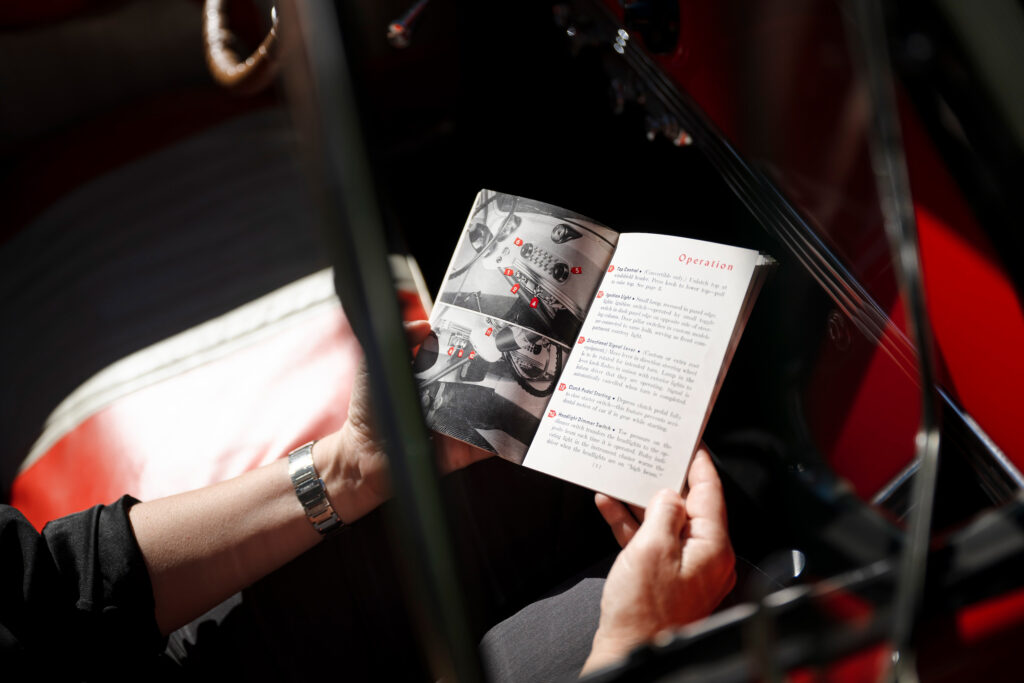
Rother also argued that the controls were part of the driver’s experience. In a paper she presented to the Society of Automotive Engineers in November 1948, she asked, “Are we doing a good job in our car interiors?” She wrote that the instrument board showed how well the styling and engineering worked together, because it put the driver in direct contact with the car’s mechanics. It’s a concise description of the cabin as both an interface and a design statement.
Mason, meanwhile, had become interested in the compact, elegantly simple cars of Italian coachbuilder Pinin Farina, including the Cisitalia 202. Nash had discussed a design arrangement with the firm, but it wasn’t in place when the Rambler’s body needed to be developed. Company engineers Nils Erik Wahlberg, Ted Ulrich and Meade Moore took on the job, working from loose studies by an independent design firm. Wahlberg, in particular, had doubts about the compact-car project.
The resulting car borrowed some visual cues from Nash’s larger Ambassador, scaled down and made more utilitarian. The engineering team also addressed practical details. Side air scoops covered the junction between the fenders and cowl; testing found that the battery, mounted beneath the new vent on the driver’s side, ran 3 percent cooler. These details weren’t showy, but they reflect the same attention to use that shaped the cabin.
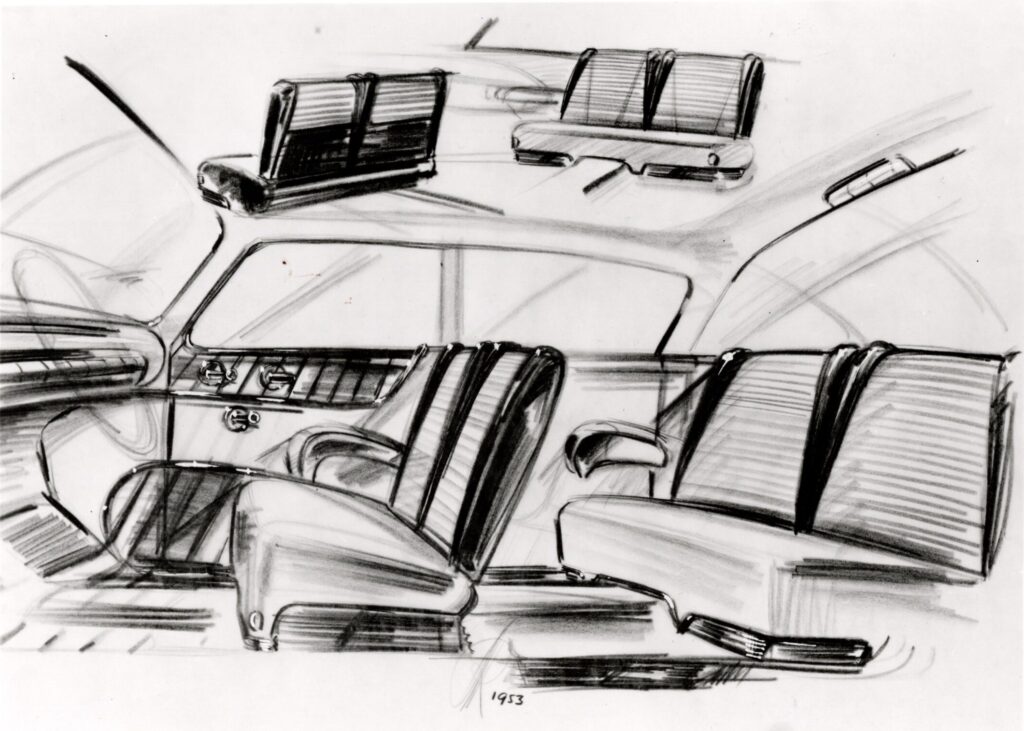
Rother’s interior gave the Rambler a distinctive character. Its gauge glass was concave, directing light toward the center of the display while reducing glare. That mattered in a convertible with an open cabin. The dashboard paired a single, cleanly marked instrument with restrained chrome and bold color. A small clock sat above the speaker grille, which served as the dash’s visual centerpiece. The effect was spare without feeling bare.
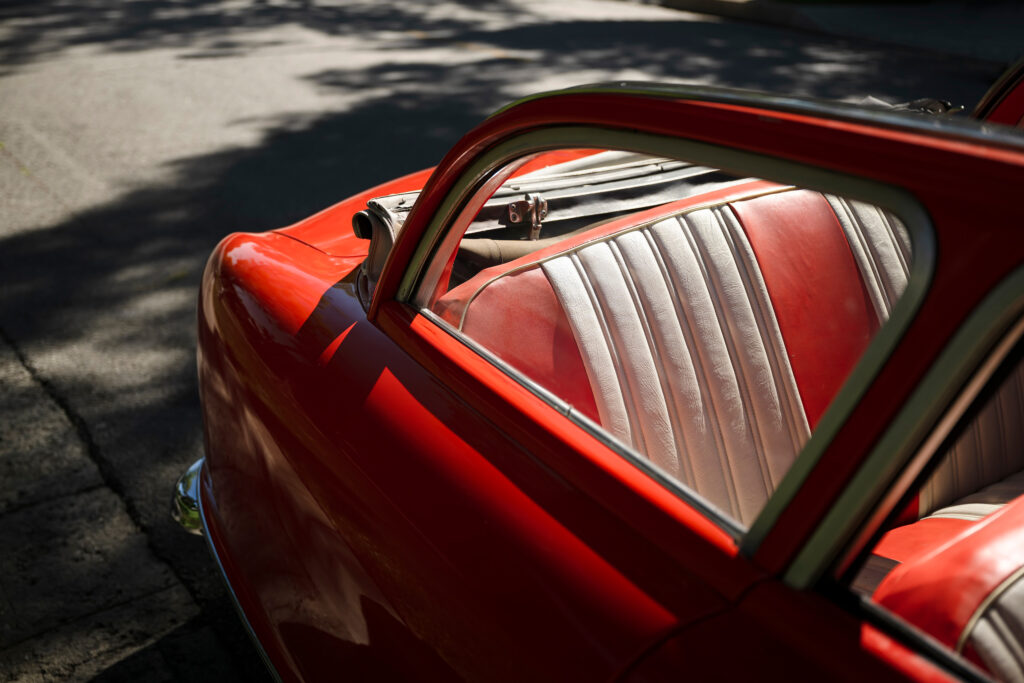
On the road, the car’s manners fit its name better than any performance claim could. A Rambler borrowed for a drive through Beverly Hills felt easygoing, not eager to sprint or charge through corners. Its broad bench seats were comfortable, with room for three across the front and two in the rear, though three adults up front would be a squeeze for a long journey. The car’s appeal was social and practical: a pleasant place to spend time, with enough space for everyday use.
By modern standards, the Rambler’s size is less striking than it was in 1950. Nash’s Ambassador stretched 210 inches, with a 121-inch wheelbase—roughly the scale of a modern Cadillac Escalade. The Rambler was still a substantial car by today’s compact standards, longer than a modern Toyota Corolla by 3 inches. Its upright greenhouse, squared roof and rounded fenders also made it look larger than its role suggested.
Engineering shaped the look
The Rambler’s unusual stance followed from its front suspension. Nash placed the coil spring above the upper control arm, over the steering knuckle, and attached it to the inner fender rather than a frame pad. The layout required a high fender line and small wheels. It also let the spring take the wheel’s direct load and helped control body roll.
Chief engineer Meade Moore explained that the lower control arms no longer had to handle vertical bending loads, so they could be lighter and reduce unsprung weight. The arrangement had a visible cost: it limited the body’s proportions and gave the Rambler a tall, rounded face. The styling may look unusual, but the shape wasn’t simply an aesthetic flourish. It accommodated the mechanical package.
Nash and Romney presented the car to buyers—especially women—as a well-equipped lifestyle choice. Magazine images showed women at the wheel, and brochures highlighted interior colors, fabrics and features such as a glove drawer. Nash’s advertising called the convertible as safe as a sedan. The car’s standard equipment and cabin options helped support a premium pitch, while the name “Nash Rambler Custom Convertible Landau” gave the small car a decidedly grand label.
Rother was alert to the gap between women’s role as car buyers and the attention they received after purchase. At a Detroit speaking engagement in May 1952, she said, “Once a car is sold, little is said about how (the female buyer) should care for it.” She also argued that American manufacturers did less to attract women than their European counterparts. The newspaper headline attached to her remarks mocked her accent, an example of the dismissive attitudes she was challenging.
She contrasted American auto exhibitions, where she saw mostly teenage boys, with French events where cars were presented as part of a fashion-conscious life and women made up more than half the visitors. Her point went beyond paint and upholstery. Manufacturers could take women seriously as drivers and customers by considering how they used cars, what information they needed, and which conveniences mattered to them.
Early success, then a fading run
The Rambler’s first sales were strong. Nash sold more than 11,000 in 1950 and 57,000 in 1951, the year the hardtop joined the range. Material shortages and inflation formed part of the period’s difficult backdrop. The convertible body also used less steel than a hardtop, one reason Nash introduced the model in that form. The car’s sales came from a distinctive mix of compact dimensions, upscale equipment and a cabin buyers could personalize.
By 1953, sales were declining, and Pinin Farina finally influenced the Rambler’s styling. The hood and fenders became longer and slimmer, giving the car a more graceful profile. Nash added a less expensive two-door sedan, and its advertising drew on both Rother’s work and the Italian design name. Neither change reversed the decline.
Nash joined Hudson in 1954 to form American Motors, gaining access to a much larger dealer network. The company also offered the Metropolitan, a smaller model that has since become collectible. Those moves didn’t halt Nash’s wider decline. The Rambler showed that a smaller American car could sell in meaningful numbers when buyers saw value and character in the package, but one successful model couldn’t settle the company’s longer-term challenges.
After Nash, Rother took on work for Goodyear Tire, BFGoodrich, Magnavox and International Harvester. Some of her stained glass remains in Detroit-area cathedrals. Later, she focused on her own projects and horses. Recognition of her automotive work came slowly, even as the ideas she had helped advance continued to appear in American car interiors.
Colorful cabins and useful features became more familiar in later decades. The Chevrolet Corvette, Lincoln Continental and Pontiac Trans Am offered expressive interiors, while modern cars bring conveniences such as phone connectivity, heated seats and, in some trucks, center-console coolers. Those features aren’t direct copies of Rother’s work, but the Rambler makes a persuasive case for treating the cabin as a place where comfort, identity and practical details belong together.

Rother was inducted posthumously into the Automotive Hall of Fame in February 2020, 21 years after her death at age 91. The honor recognized a designer whose work helped make the Rambler feel considered rather than reduced. For buyers comparing cars, that remains a useful lesson: a compact footprint can work when the cabin makes everyday tasks and time behind the wheel feel thoughtfully handled.
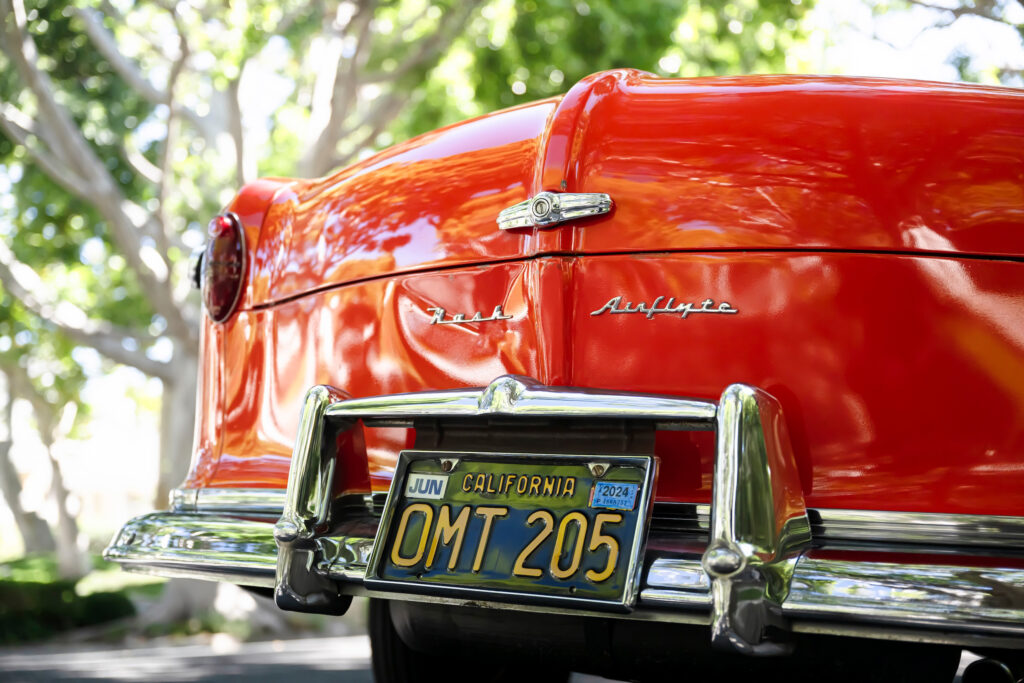
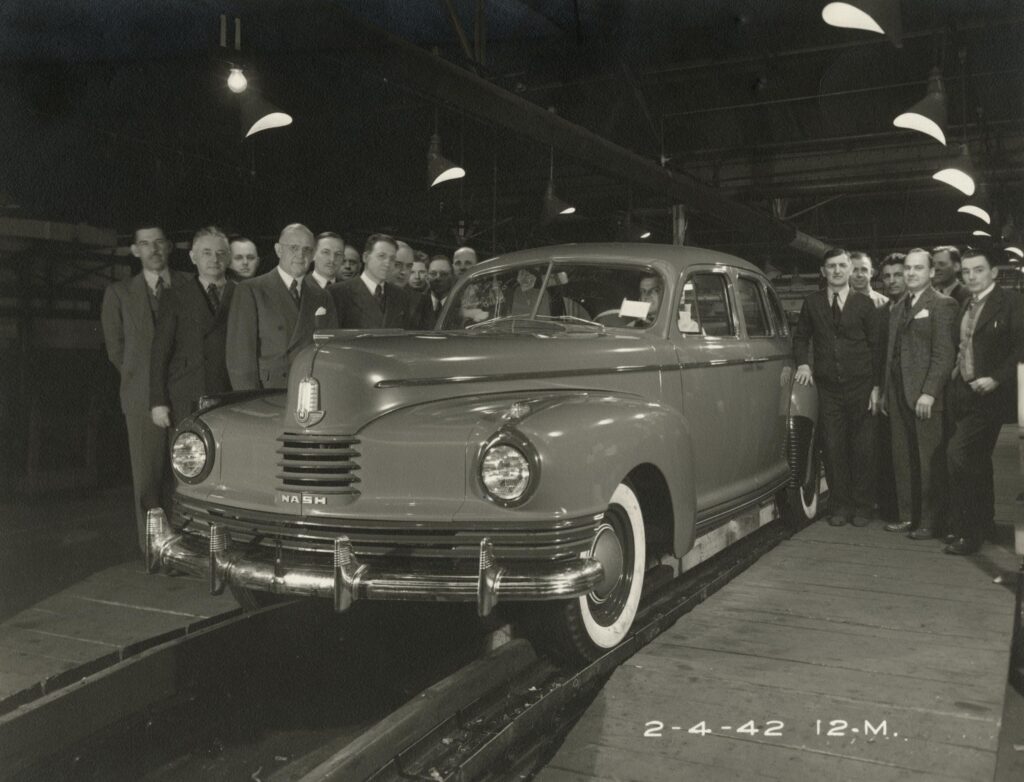
Nash Motors, based in Kenosha, Wisconsin, returned to civilian car production after World War II with designs that seemed unusually sleek and aerodynamic for the period. The company’s Airflyte models swept their wheels into the bodywork, and the Rambler made the case for a premium car with a smaller footprint. Rother’s contribution helped turn that proposition into an interior buyers could recognize and enjoy.
Rother’s story is striking in its own right, but her work is easiest to understand through the details. The Rambler’s gauge glass reduced glare, its bench seats made room for passengers, and its palette and trim made a utilitarian cabin feel personal. The car’s engineering shaped its tall stance; its equipment and pricing framed it as an upscale purchase. Those decisions worked together. The Rambler’s appeal rested on the whole experience, not on size alone.

Rother’s work at GM and Nash also came with a clear view of the industry’s blind spots. She spoke about unequal pay, the lack of attention given to women buyers and the way manufacturers treated car design as a conversation between engineers and stylists. Her SAE paper put the dashboard at the center of that relationship. Her Rambler interiors made the same argument in a more immediate way: controls, seating, visibility and materials all shape how a car feels to use.
The car’s early success didn’t last, and its later redesign couldn’t restore it. Still, the Rambler gave Nash a credible answer to a question the larger American market had largely ignored: could a smaller car feel desirable without pretending to be a full-size one? Rother’s interiors helped answer yes. That remains the car’s clearest legacy, alongside the overdue recognition of the designer who helped give it a point of view.
This article first appeared in Hagerty Drivers Club magazine. Click here to subscribe and join the club.
Visit the Hagerty Media homepage and subscribe to newsletters for more stories.
The post The Free-Thinking Genius of Helene Rother and Nash Motors appeared first on Hagerty Media.


