In lane Electric Vehicles
James May’s 1974 Triumph Stag MkII From The Grand Tour Finale Is for Sale
Description
May’s Magenta Stag pairs its original-specification V8 with a four-speed manual and has 83,368 miles showing. Its history includes two reported restorations.
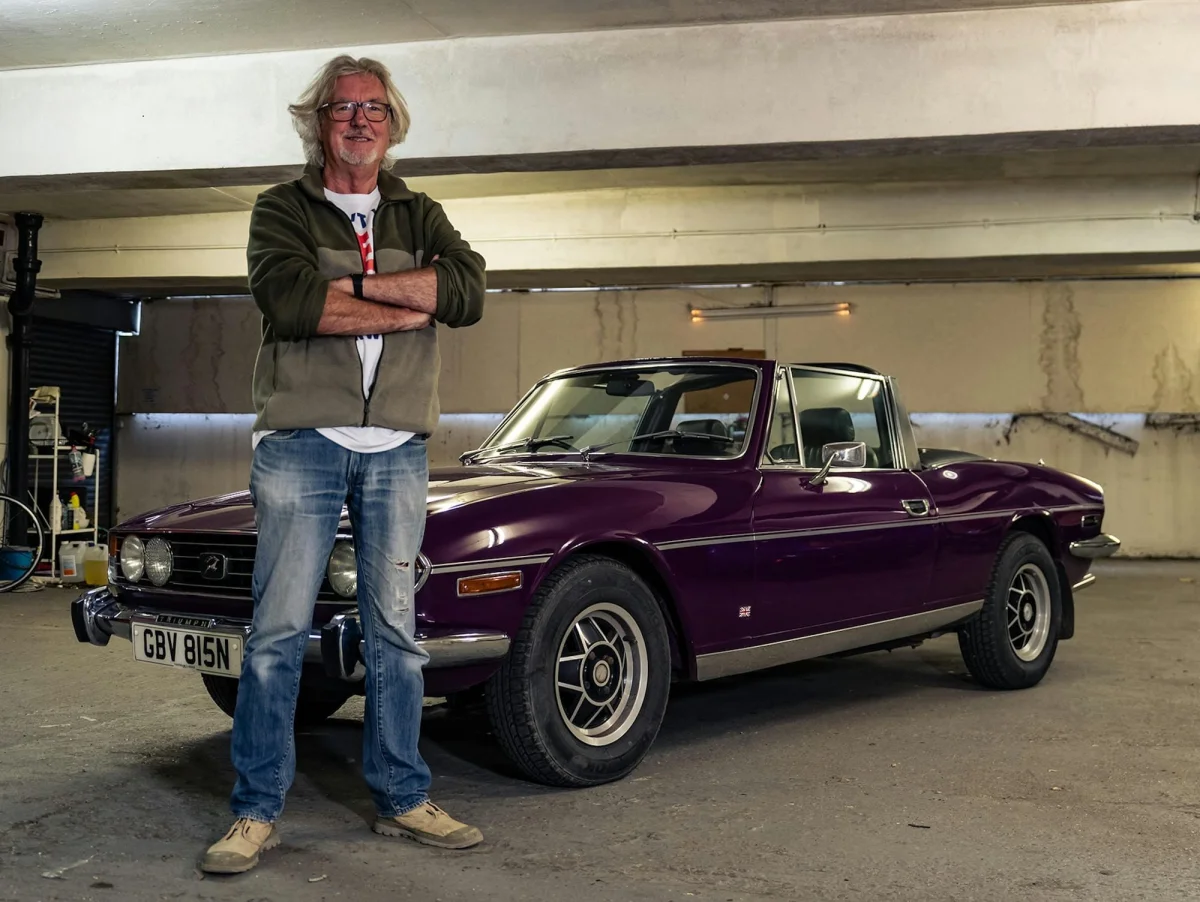
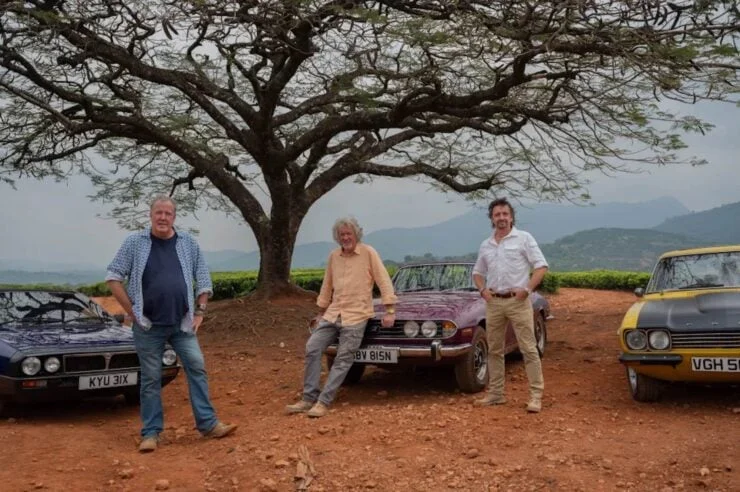
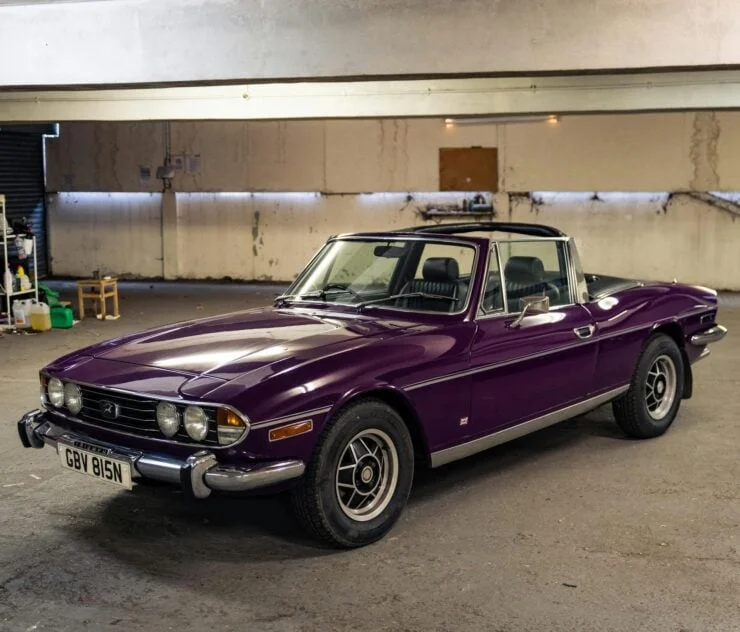
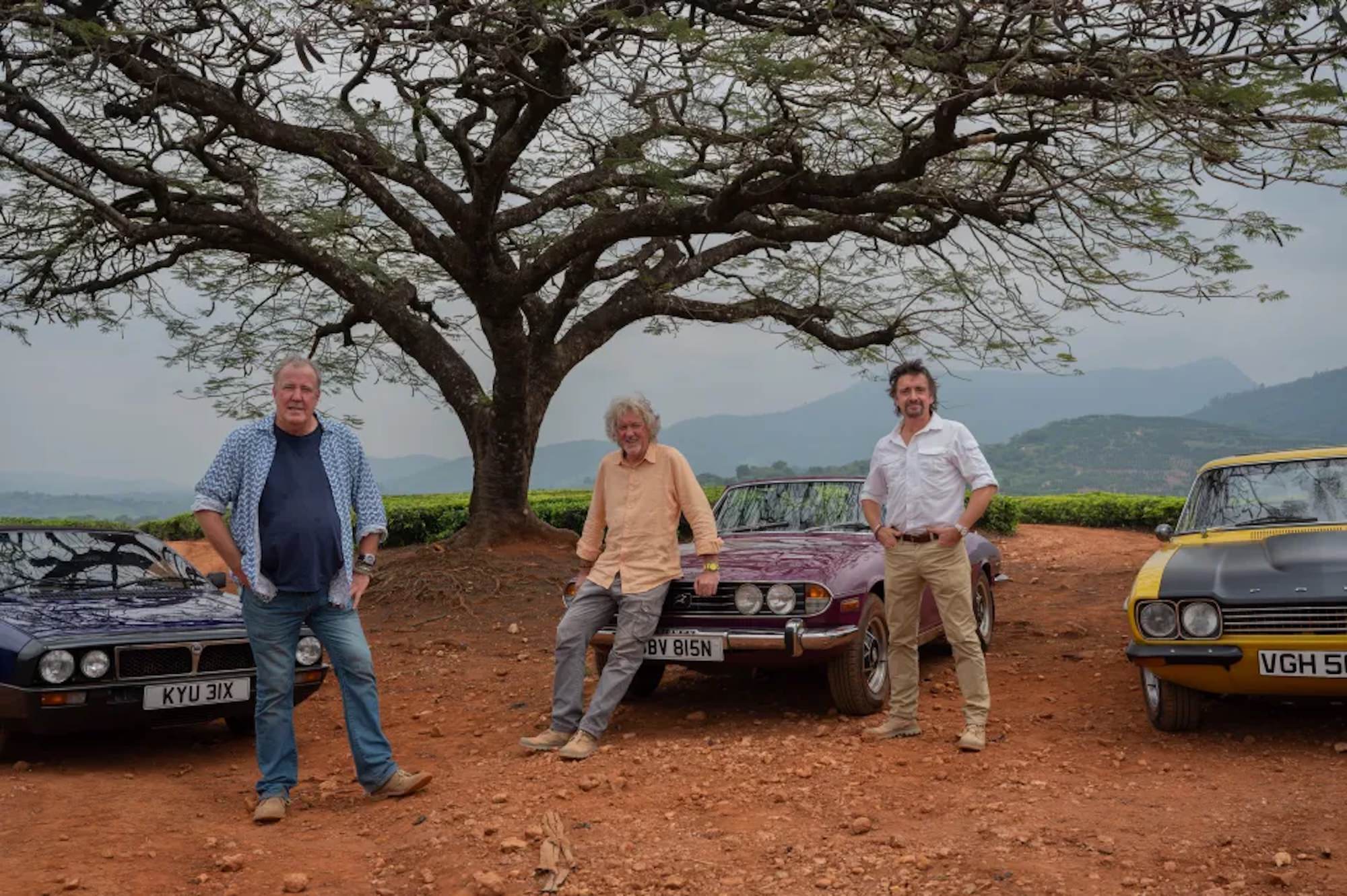
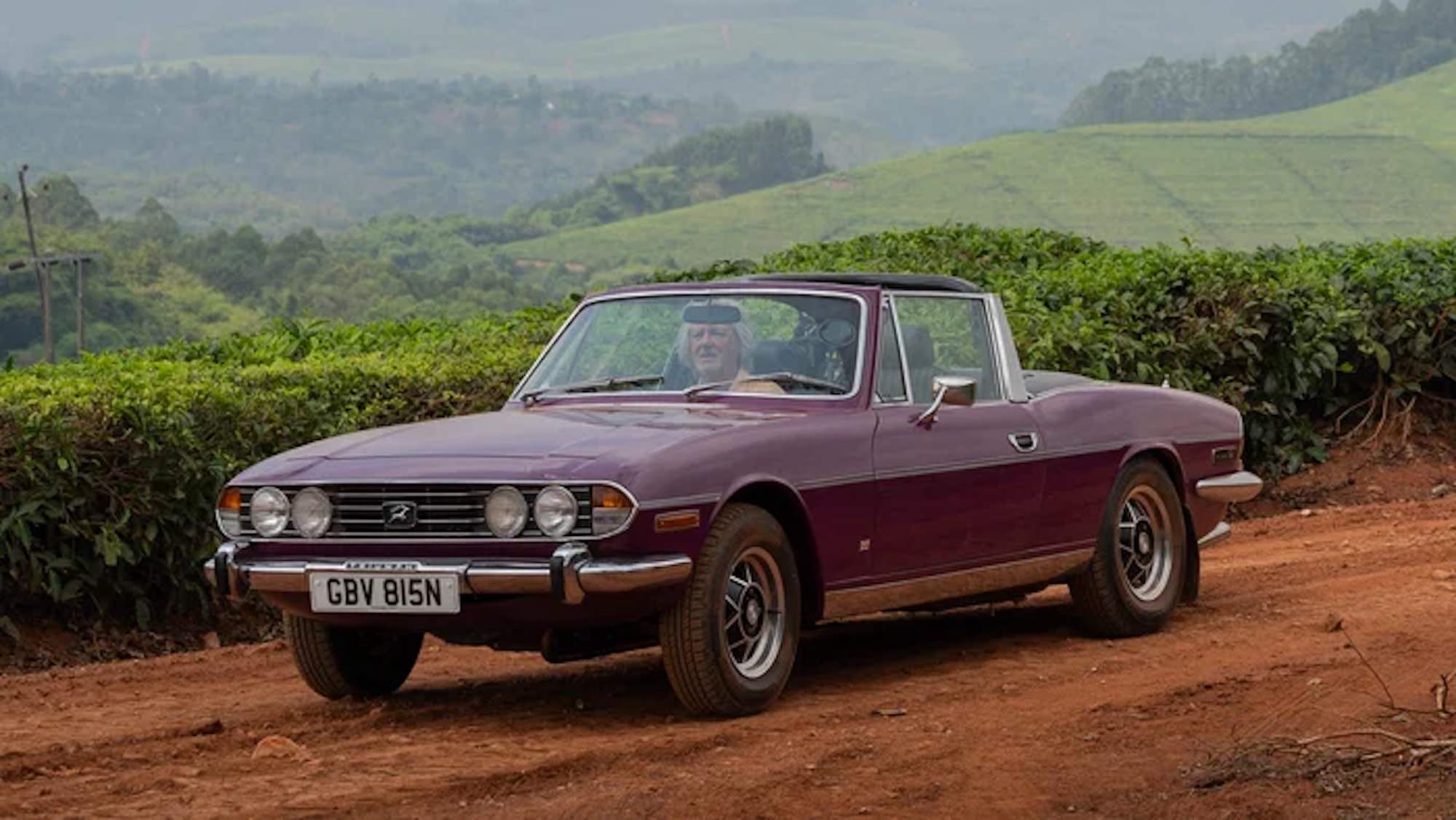
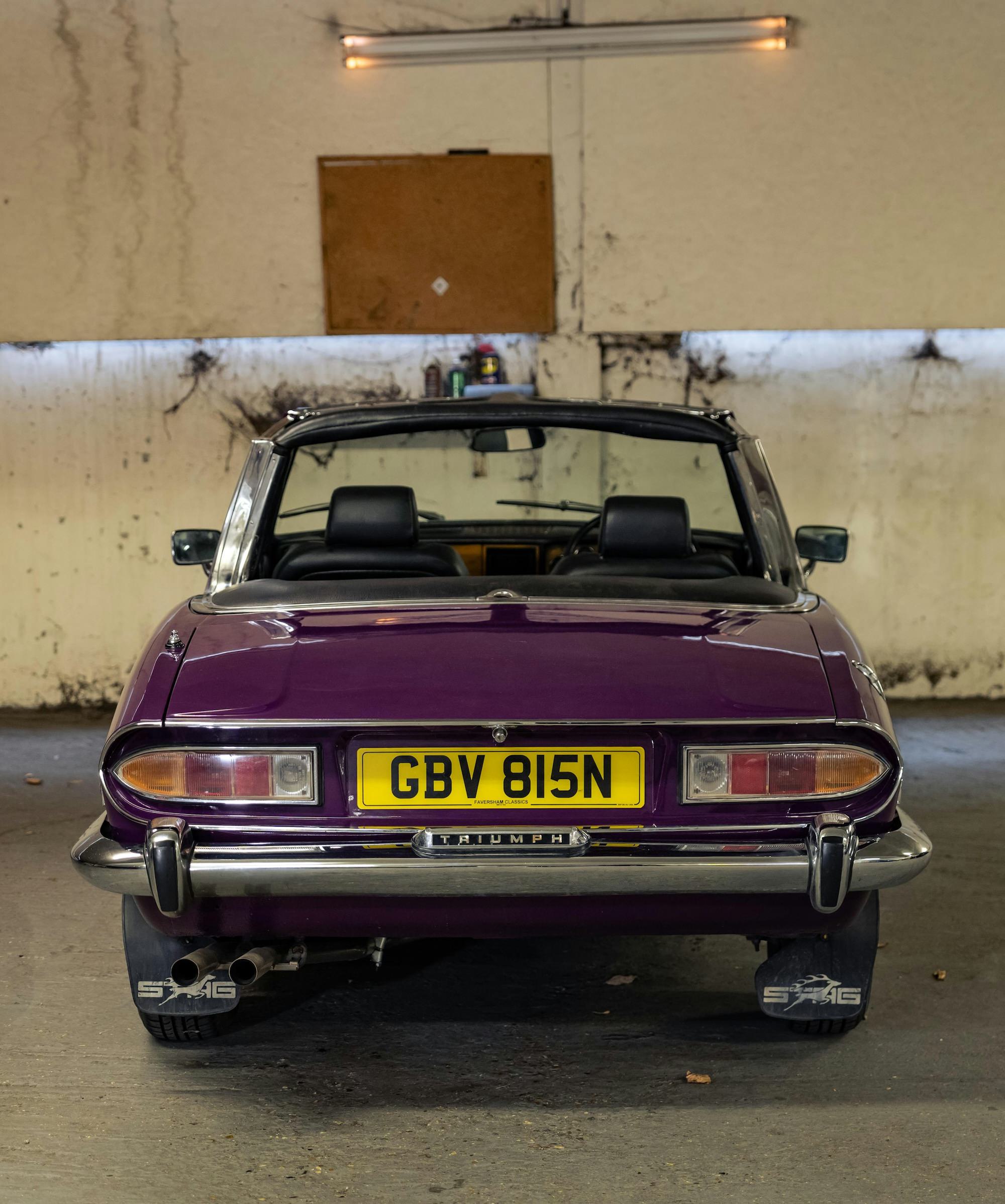
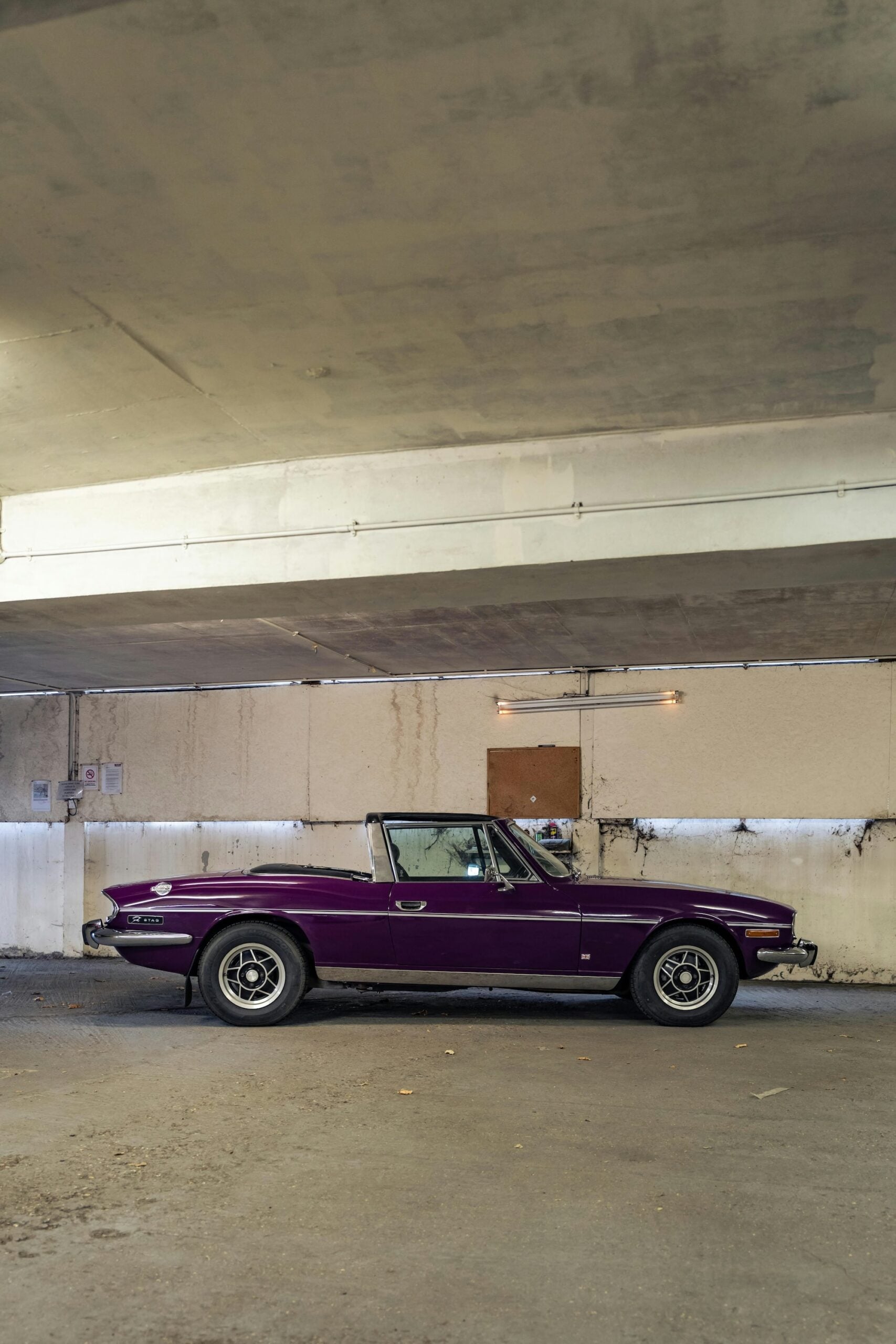
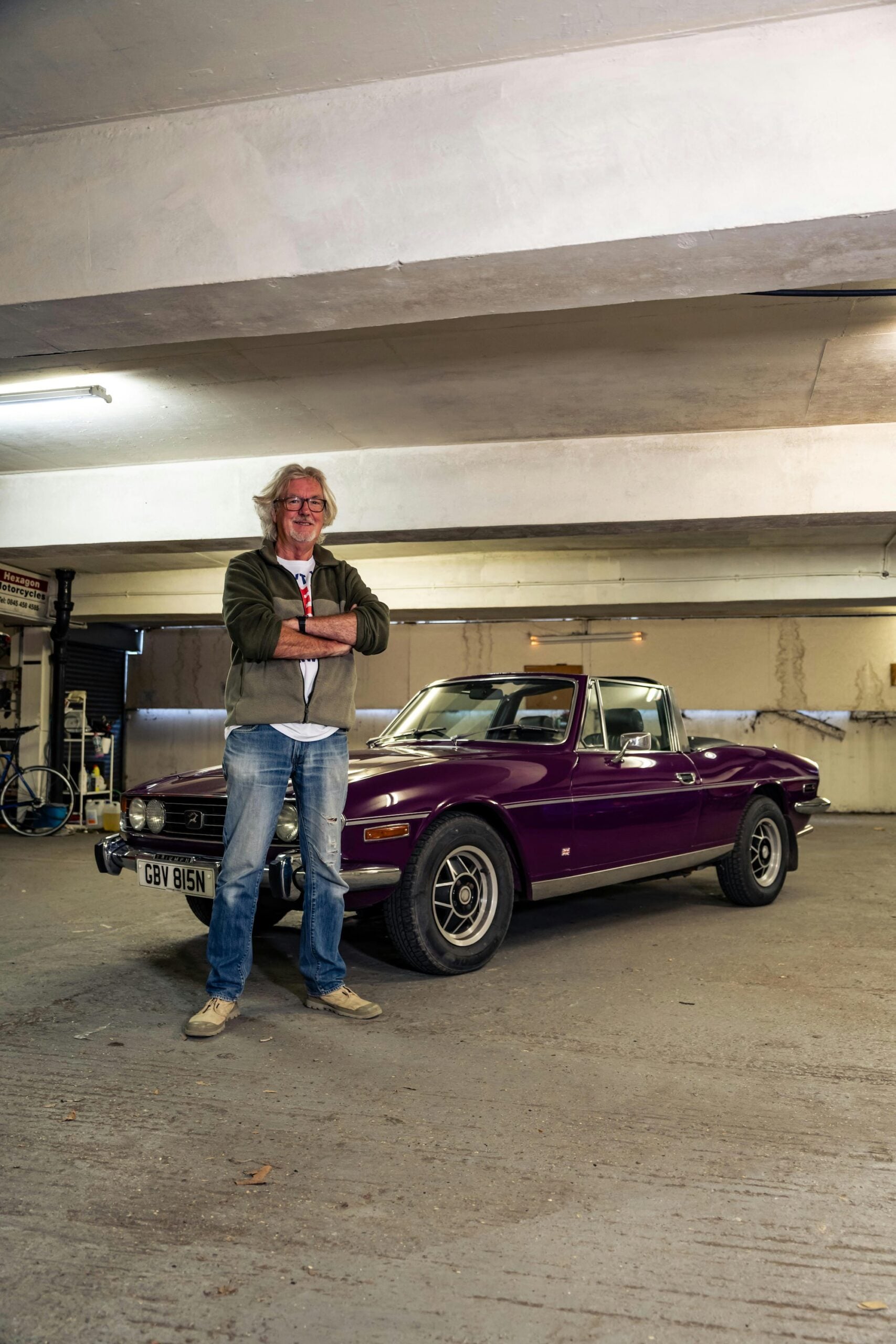
James May’s 1974 Triumph Stag MkII has the combination that defines the model’s appeal: Michelotti’s distinctive four-seat convertible shape, a 3.0-liter V8 and a four-speed manual. It also has a television credit, having appeared in the finale of The Grand Tour, “One for the Road.” Now offered for sale from May’s ownership in London, the car brings a well-known example of a much-loved, mechanically complicated British classic to market.
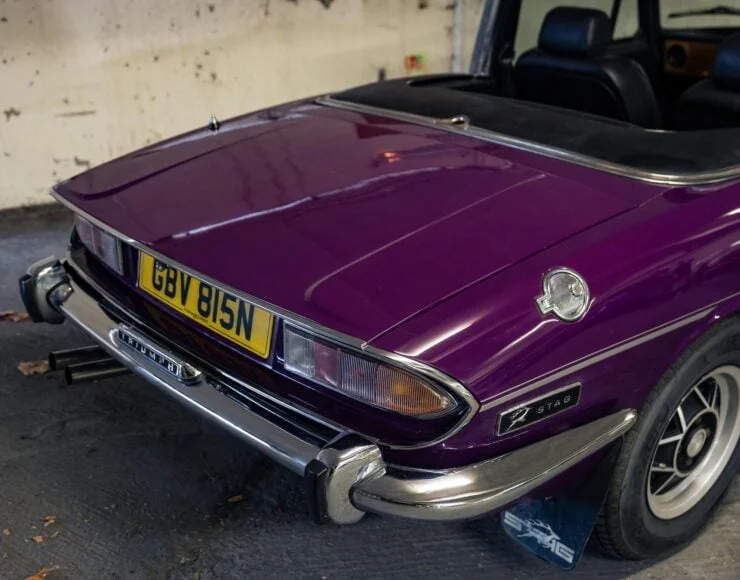
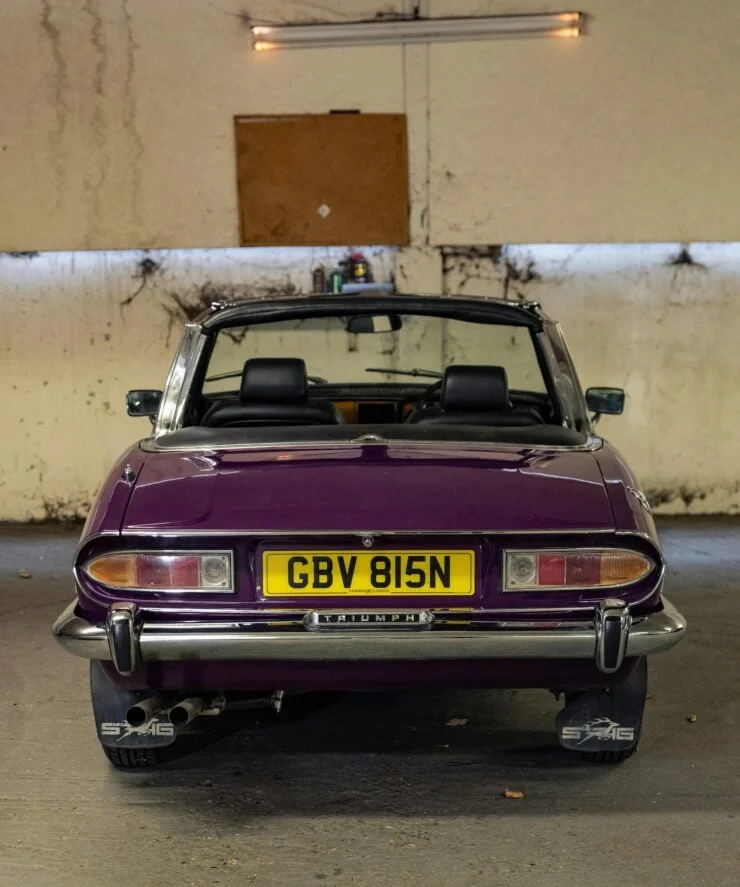
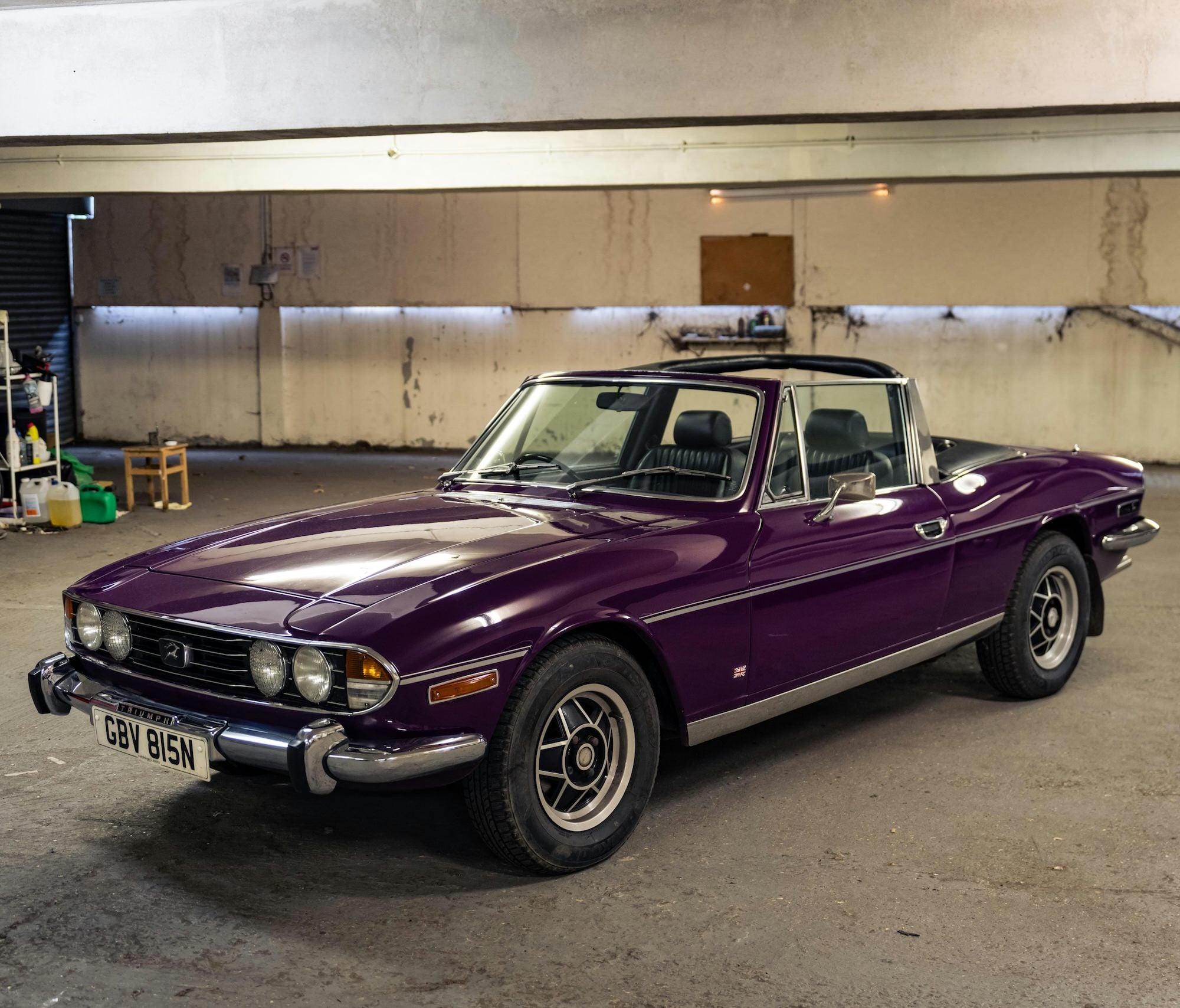
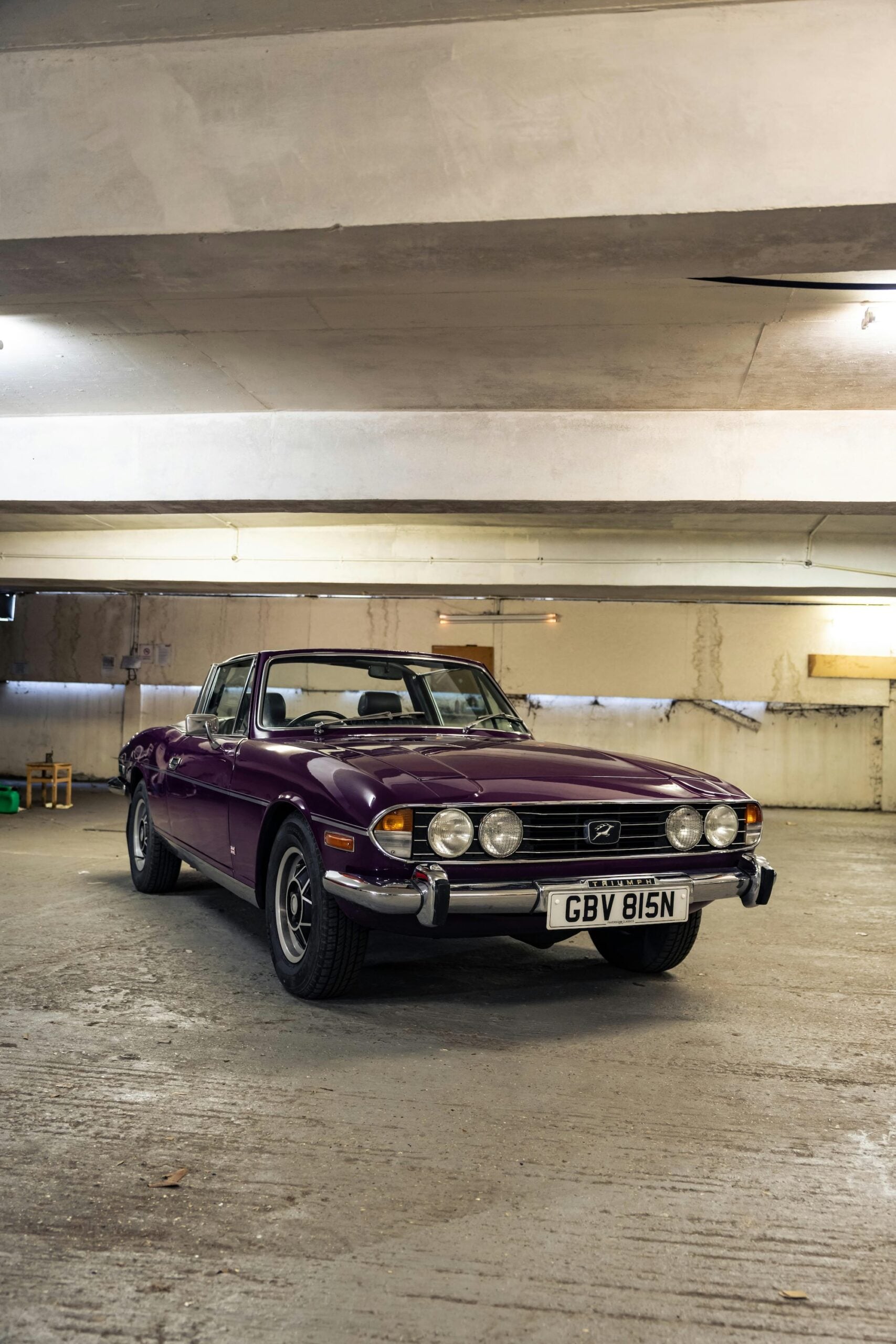
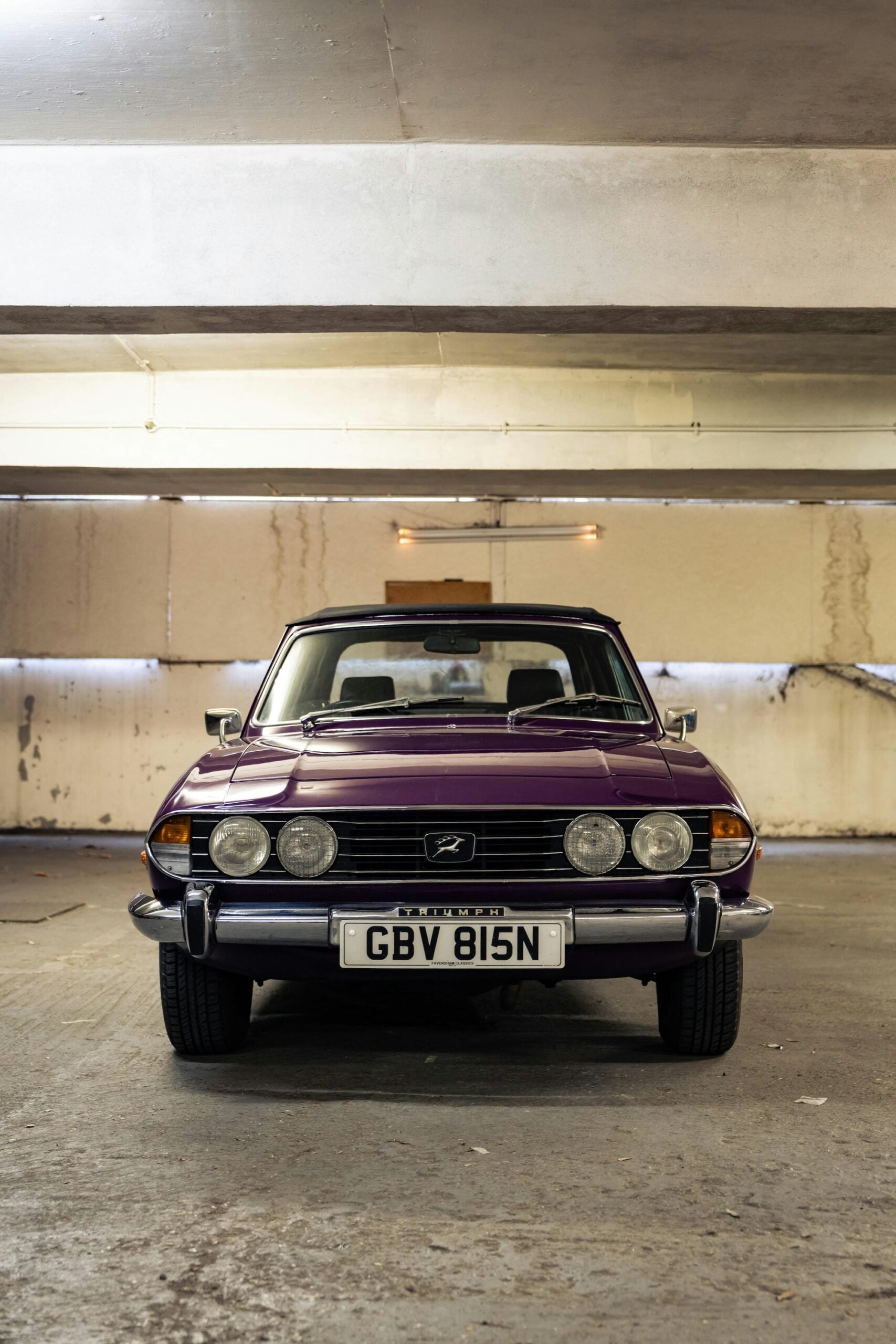
Finished in Magenta over black vinyl, this Stag reportedly has been restored twice. Its odometer shows 83,368 miles, although the mileage isn’t warranted. The most recent recorded service was in mid-2025, at 83,100 miles. The listing describes the car as generally in good condition, while also noting age and presentation details that prospective buyers will want to weigh.
A distinctive grand tourer with an unusual origin
The Stag was produced from 1970 to 1977, with 25,939 built. Its roots reach back to 1965, when designer Giovanni Michelotti asked Triumph engineering director Harry Webster for a car he could transform into a showpiece for the Geneva Motor Show. Webster supplied a 1964 Triumph 2000 that had served as a support car for Triumph’s Spitfire team at the 24 Hours of Le Mans. His condition was that Triumph could consider the finished design for production.
Michelotti’s open four-seater never made it to the show. Webster liked the result enough to have it brought from Turin to Coventry in 1966. The concept used Triumph 2000 underpinnings, modified with a shortened floorpan. Its project name, Stag, eventually became the production car’s name. More about the model’s history is available at this overview of the Triumph Stag.
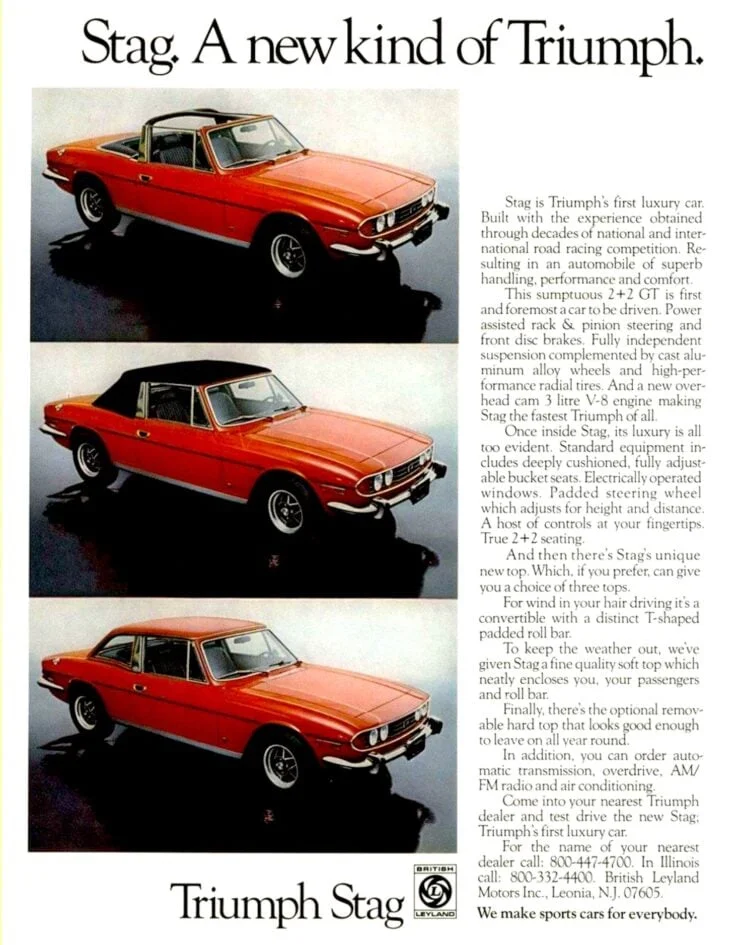
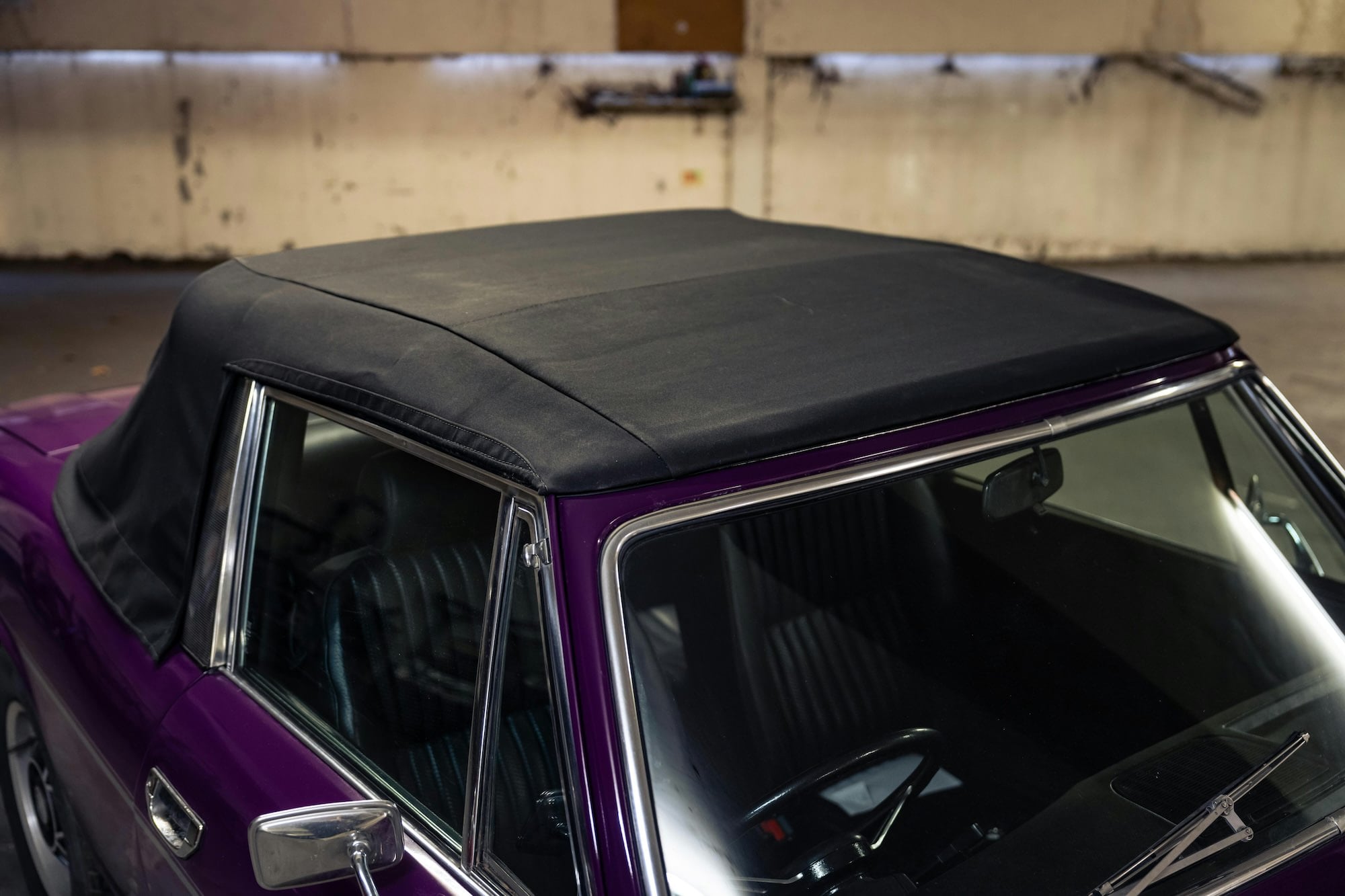
A T-shaped hoop behind the cabin became one of the car’s signatures. It helped stiffen the open body, while the design also reflected concern about the future of convertibles in the Stag’s key American market. The styling influenced other Triumphs, too: a facelifted Triumph 2000 saloon adopted the Stag’s nose and tail and reached showrooms around eight months before the Stag itself.
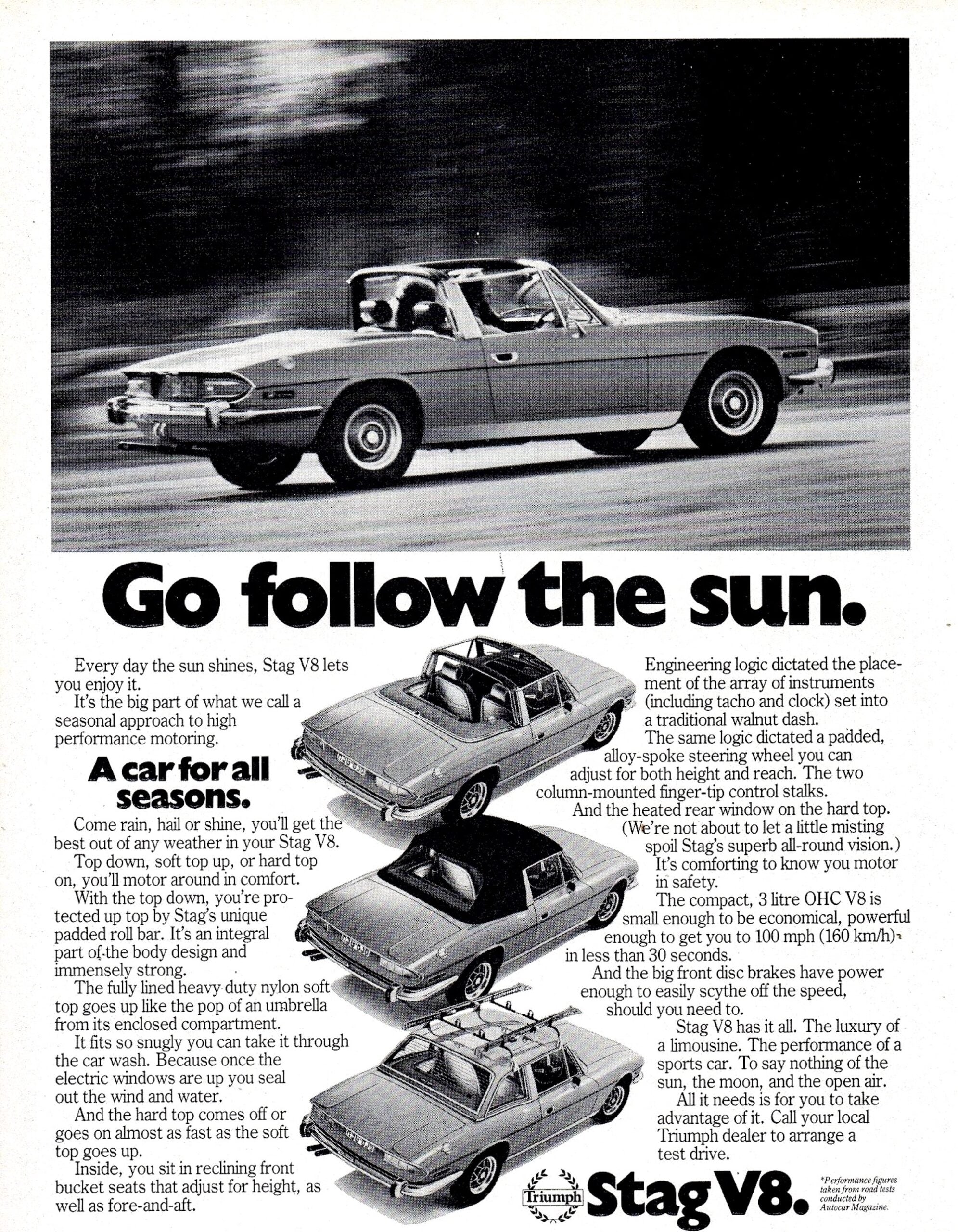
 The Stag was a four-seat convertible with a roll hoop and a purpose-built 3.0-liter V8. Image courtesy of Triumph.
The V8 made the car—and tested its owners
Triumph initially considered a six-cylinder engine, but Webster wanted a newer V8 with stronger appeal to American buyers. The original plan called for a 2.5-liter overhead-cam engine related to the slant-four Triumph was developing for the Saab 99. After the 1968 merger that formed British Leyland, Webster moved to Austin-Morris and Spen King took over the project. King enlarged the engine to 3.0 liters, or 2,997cc, and replaced fuel injection with twin Zenith-Stromberg carburetors.
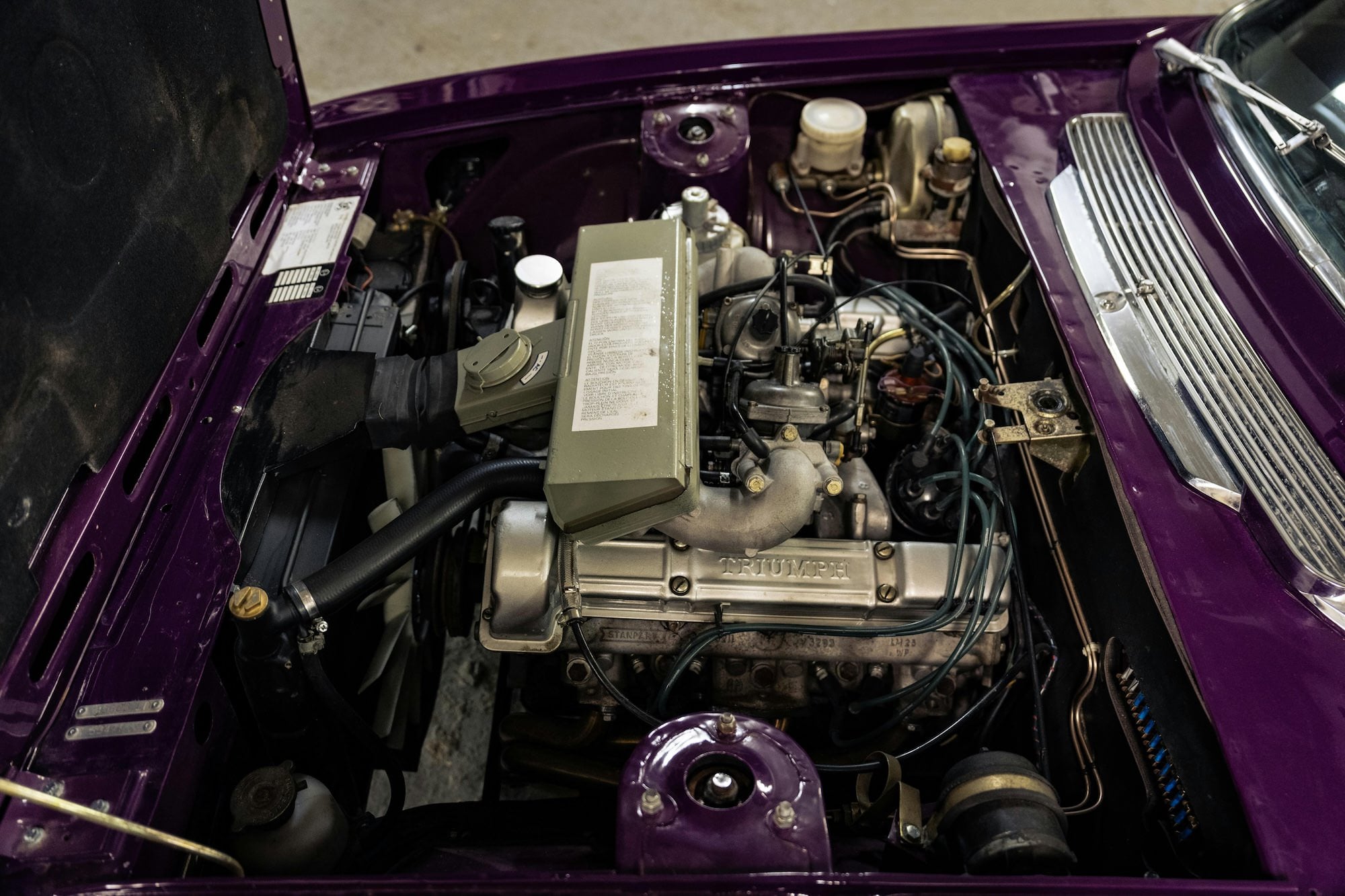
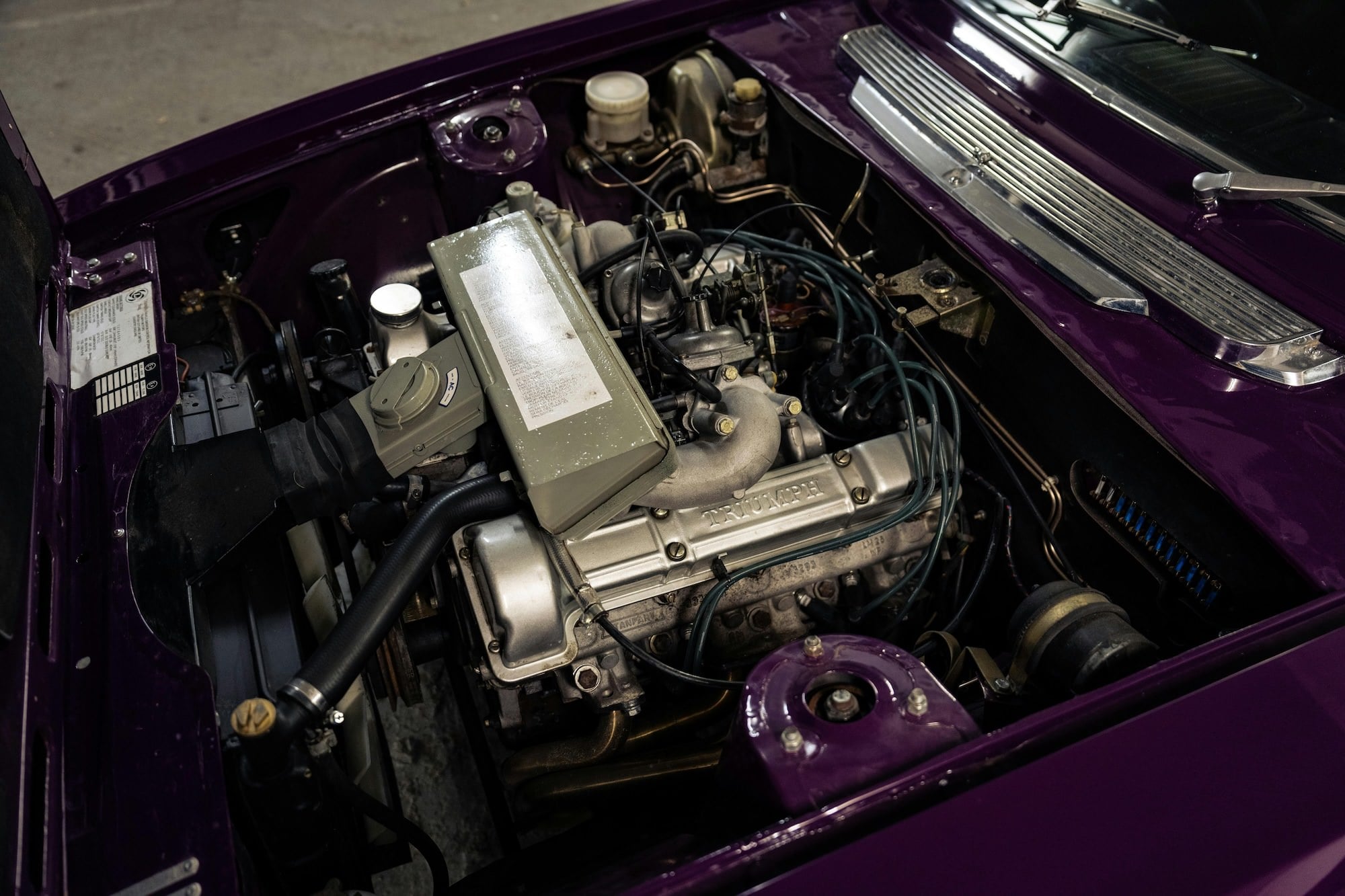
The resulting iron-block V8 had aluminum cylinder heads and a chain-driven camshaft for each bank. In its launch configuration, it produced 145 bhp at 5,500 rpm and 170 lb-ft of torque at 3,500 rpm. Power went to the rear wheels through either a four-speed manual, with optional Laycock overdrive, or a three-speed Borg-Warner automatic. The manual is the specification in May’s car.
The Stag’s chassis paired MacPherson struts at the front with semi-trailing arms at the rear, coil springs at all four corners and power rack-and-pinion steering. Servo-assisted front disc brakes worked with rear drums. On paper, it was a capable touring package; in service, its V8 demanded attention.
Corrosion inside the cooling system could restrict the waterways and radiator, leading to overheating and head-gasket failure. The engine’s water pump sat high in the V, making coolant loss a particular concern. Owners and service shops also faced long single-row timing chains that could stretch or fail. A jumped chain could cause valves and pistons to collide. Reports of casting sand left inside engine blocks added to the car’s reputation for trouble.
Those problems helped sales fall short of Triumph’s ambitions. The company had projected annual sales of 12,000, but its best year, 1973, brought about 5,500. The Stag left the American market after the 1973 model year; distributors sold 2,871 there in total, with some remaining stock moving as late as 1975. Yet the model’s mechanical reputation hasn’t erased its following. Aftermarket fixes have addressed many of the V8’s known weaknesses, and enthusiasts continue to value the car’s character and configuration.
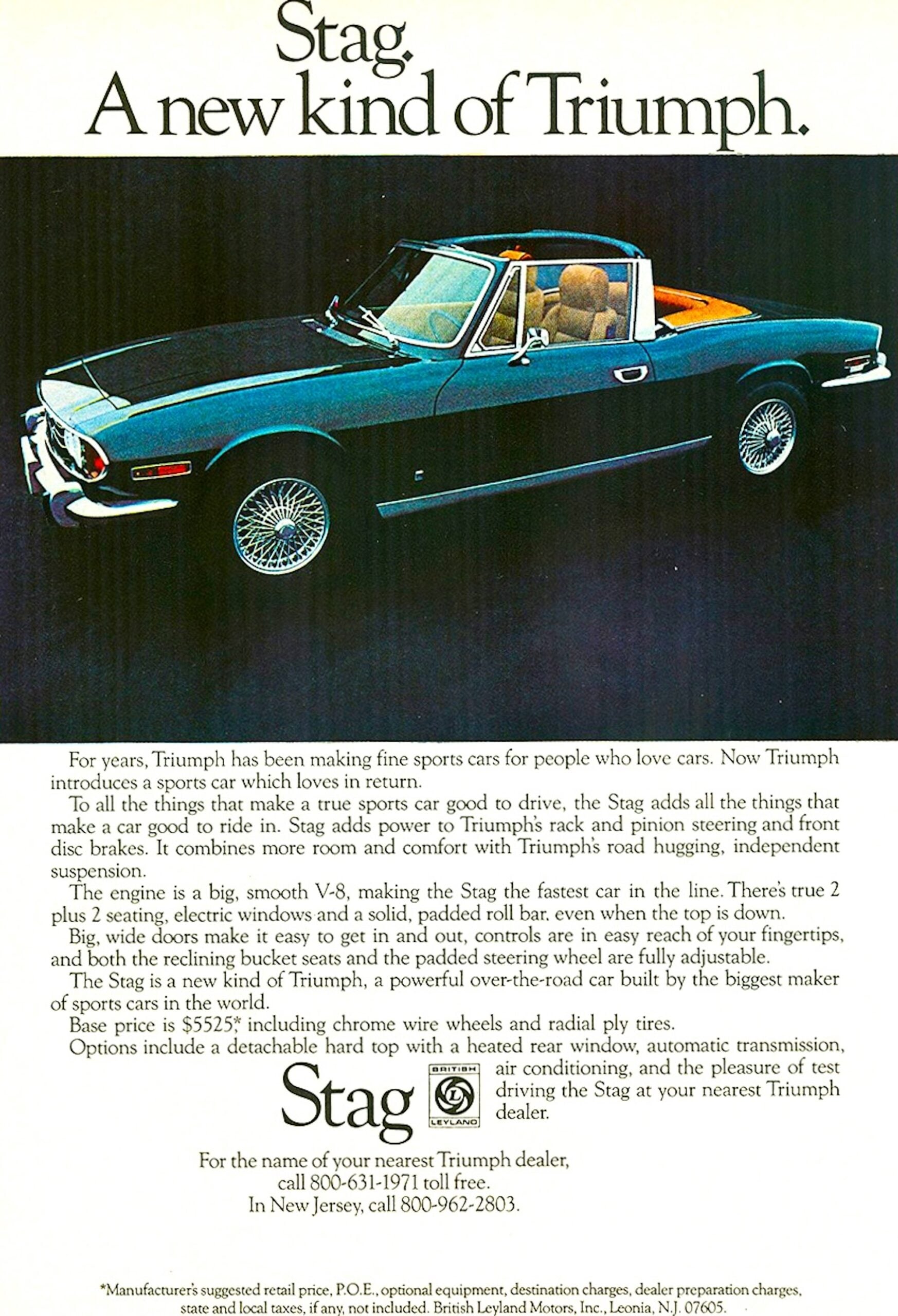
The Stag’s dedicated following has endured despite the V8’s well-documented troubles. Image courtesy of Triumph.

What changed for the MkII
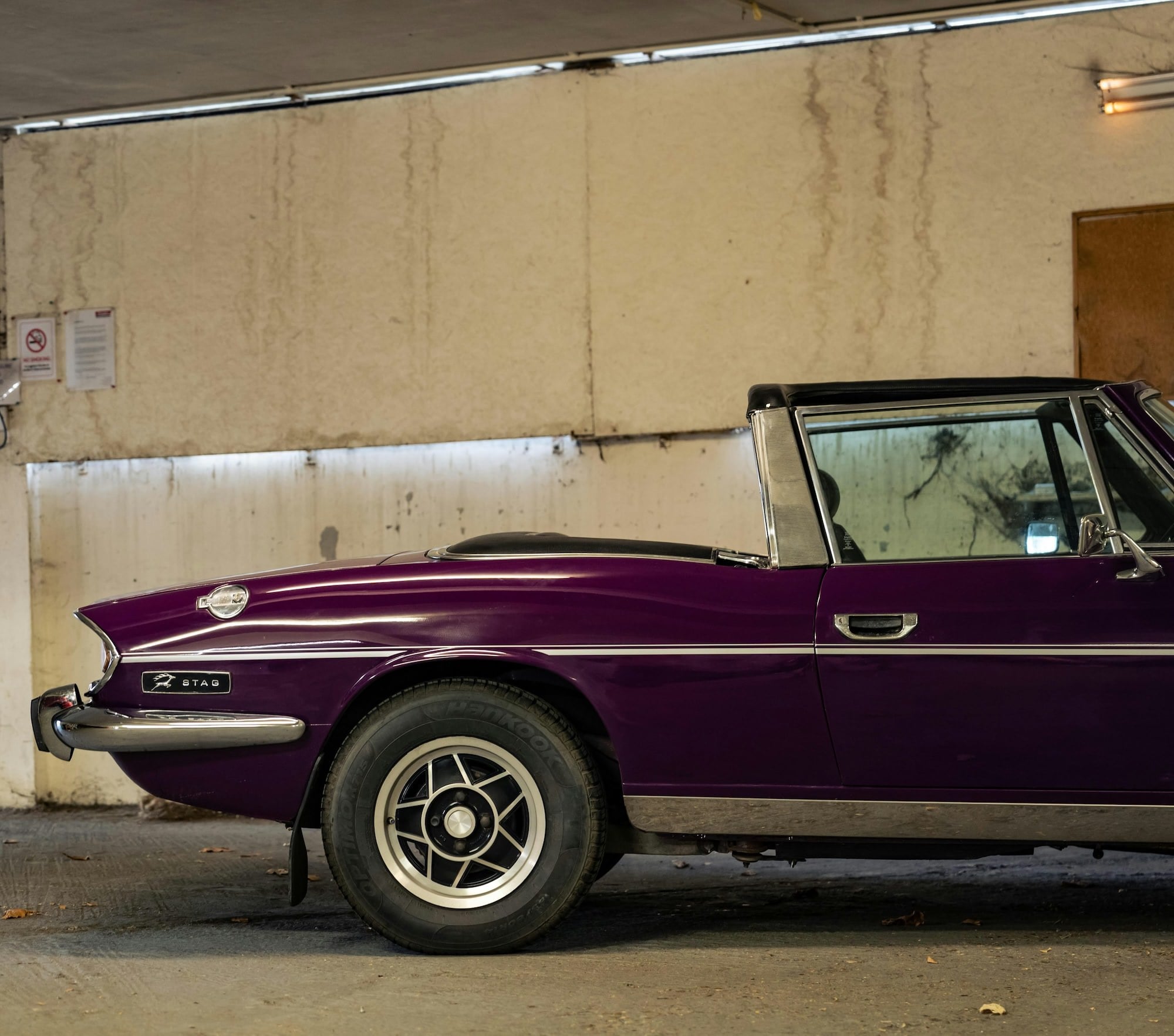
Triumph didn’t use MkI and MkII as formal model designations; enthusiasts later adopted the terms to distinguish cars around the 1973 model year. The MkII arrived in February 1973 with domed pistons and reshaped combustion chambers. Exterior changes included matte-black sills and rear panel, twin coachlines and black badges. A guide to the differences is available here.
Earlier running changes included a revised cooling system in early 1972 and standard overdrive on manual cars from October that year. From October 1975, Triumph returned the rear panel to body color, added stainless sill covers and made alloy wheels standard. A Borg-Warner Type 65 automatic replaced the Type 35 later in 1976; production ended in mid-1977.
The Stag’s reach was limited, but it remains a familiar sight among British classics. About 8,400 were still registered in the UK at the end of 2022, either taxed or declared off the road. The last Stag built is displayed at the British Motor Museum in Gaydon, England.
May’s car: specification and condition
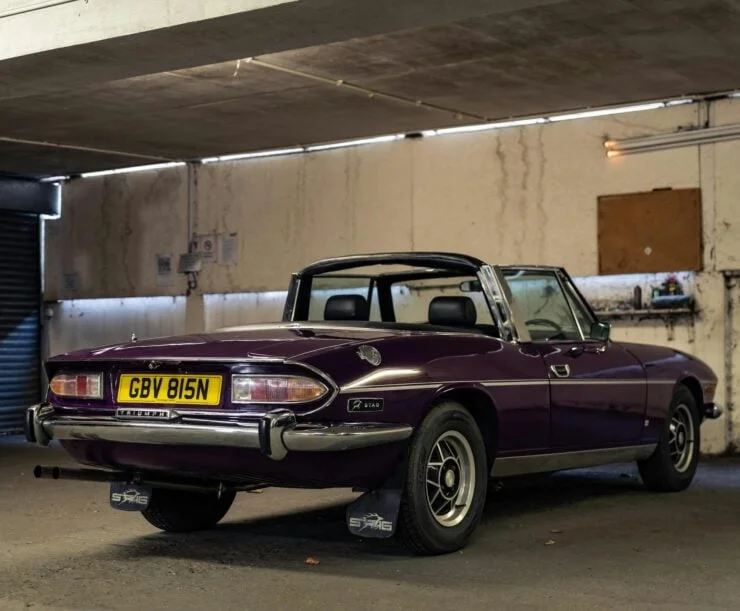
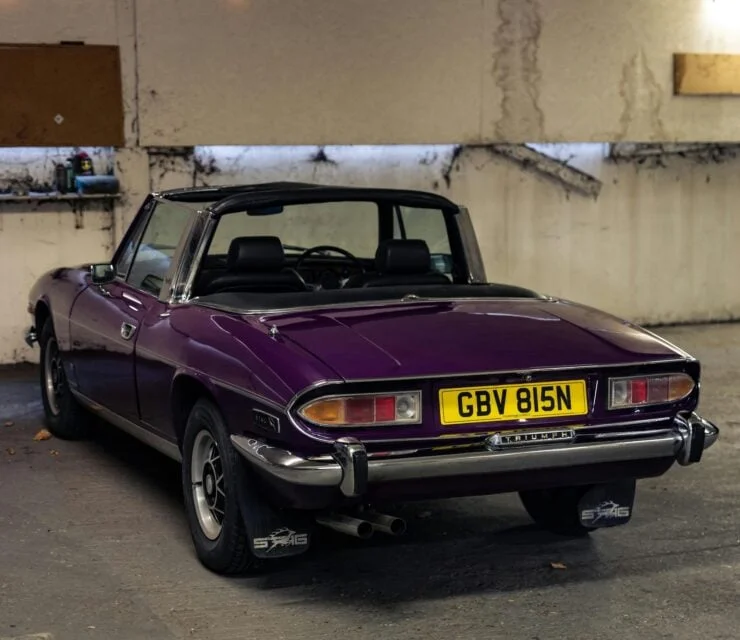
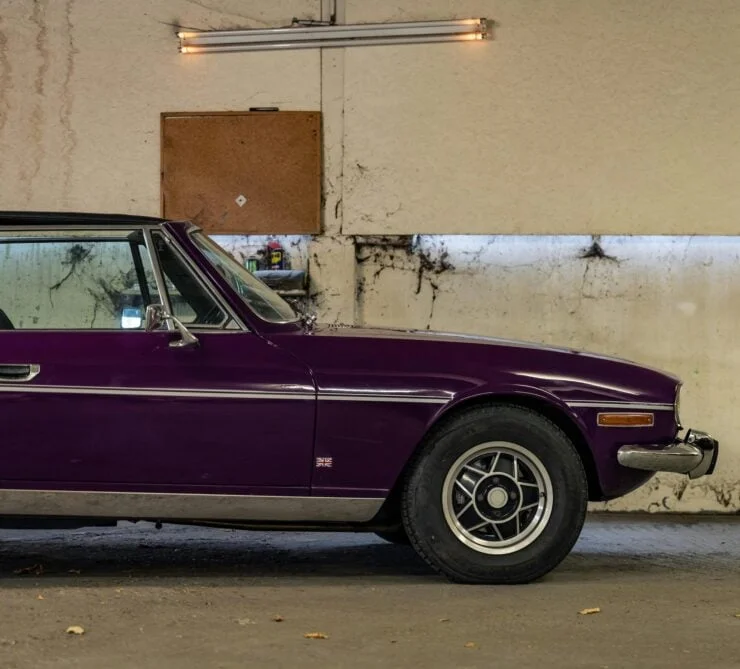
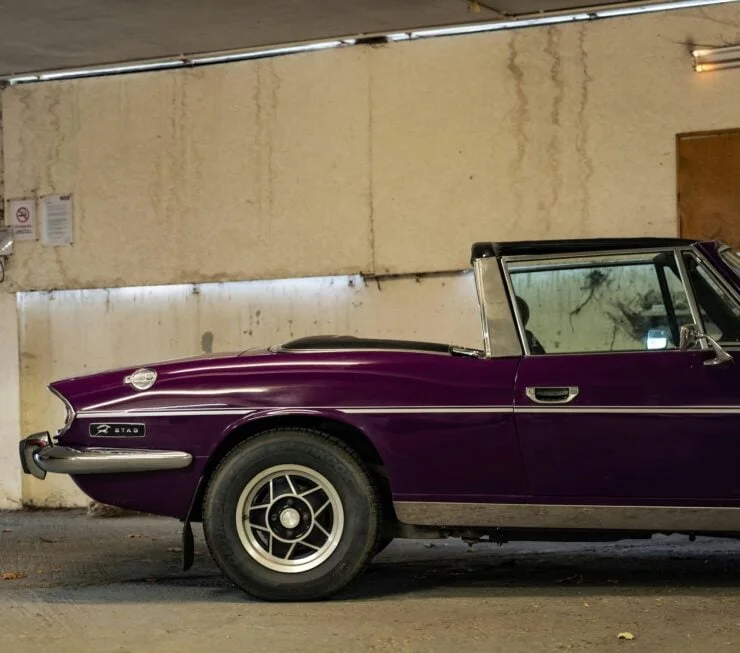
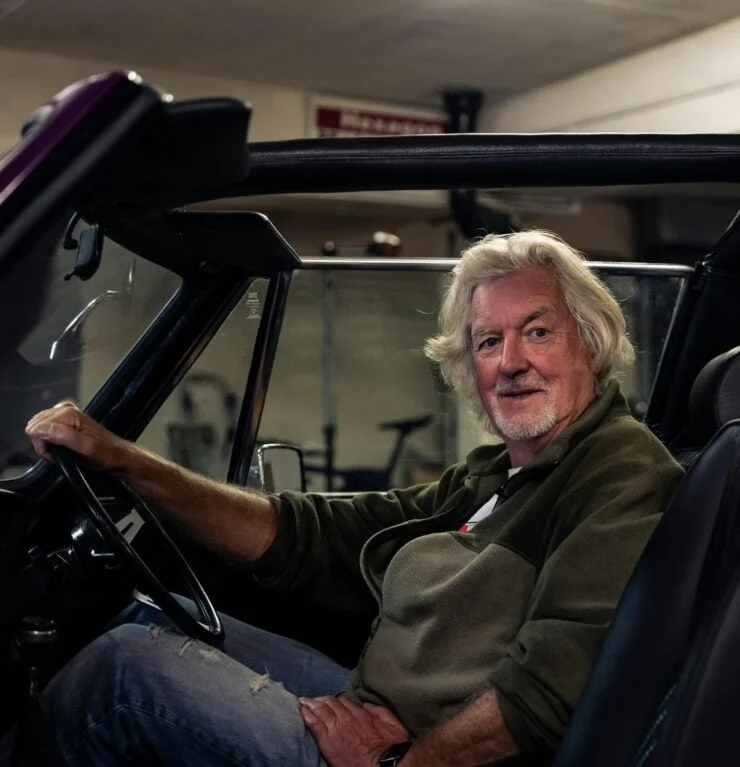
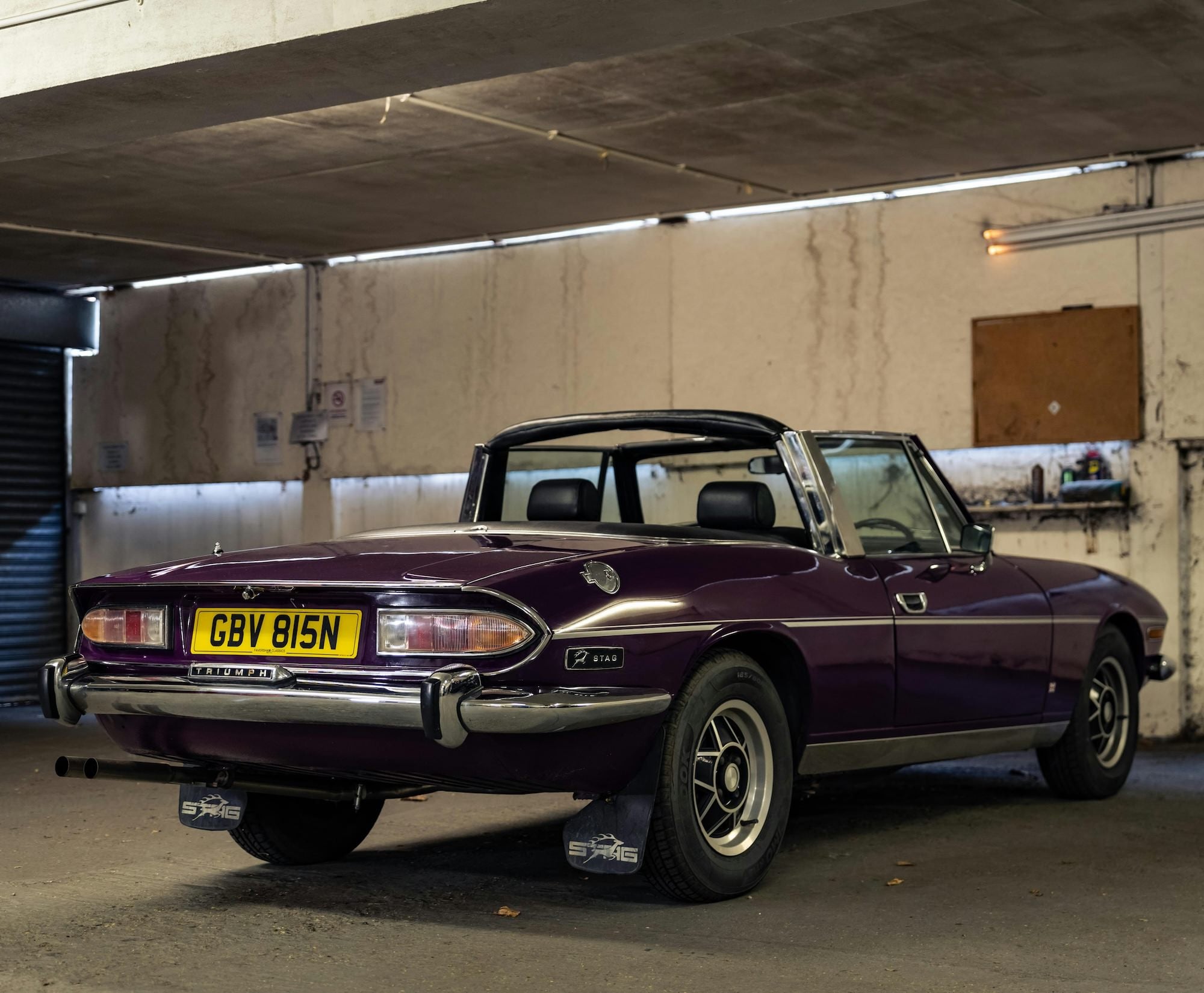
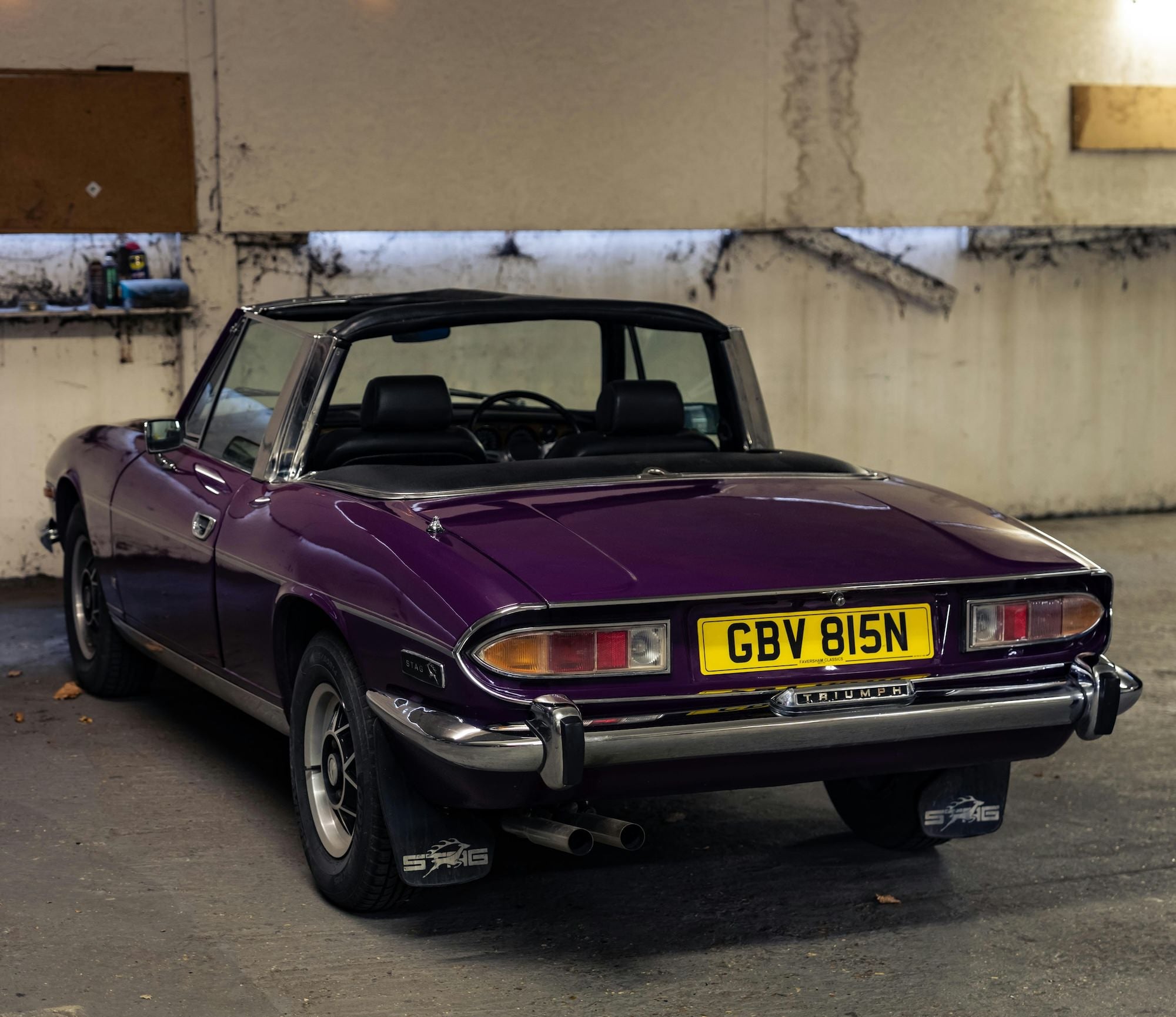
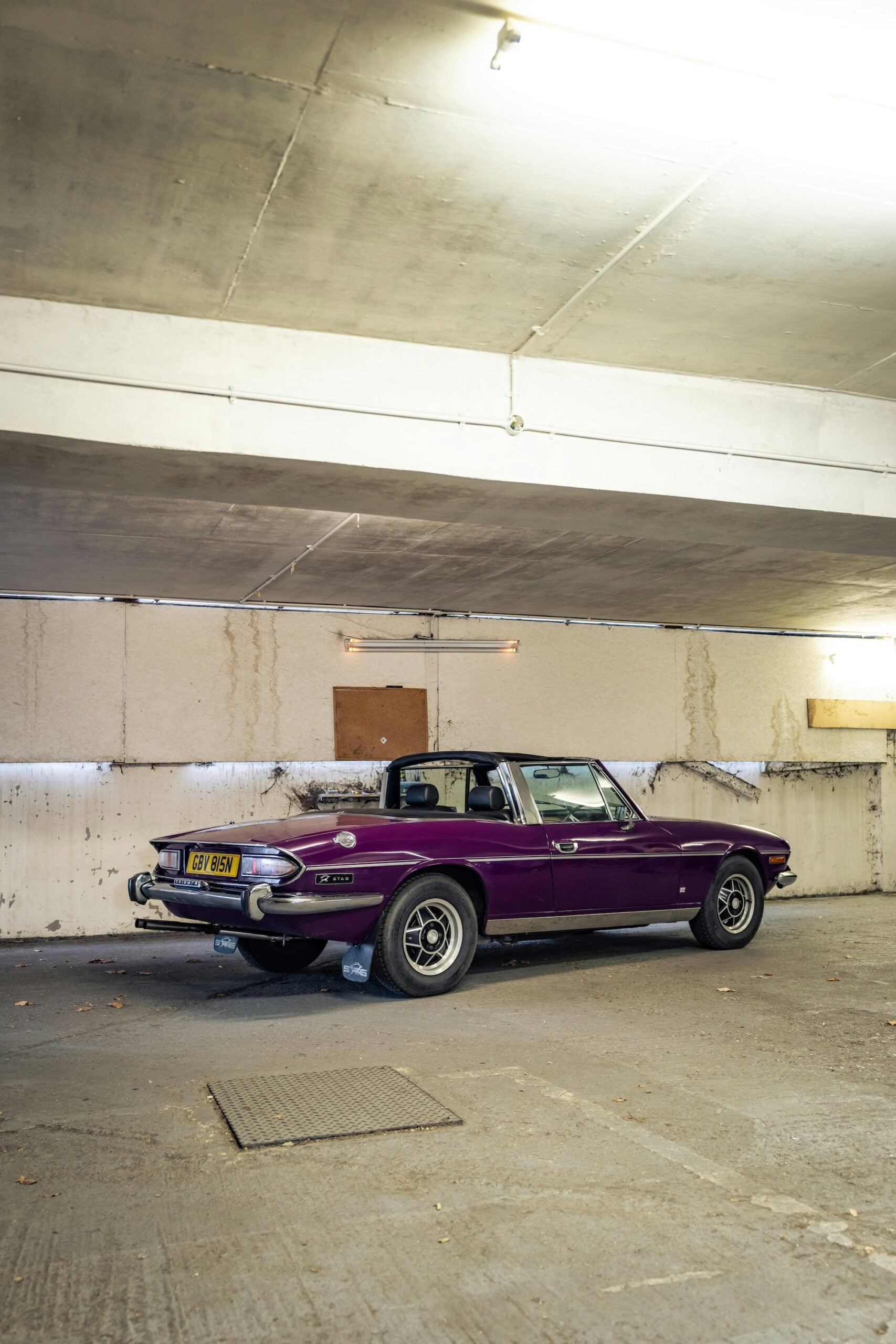
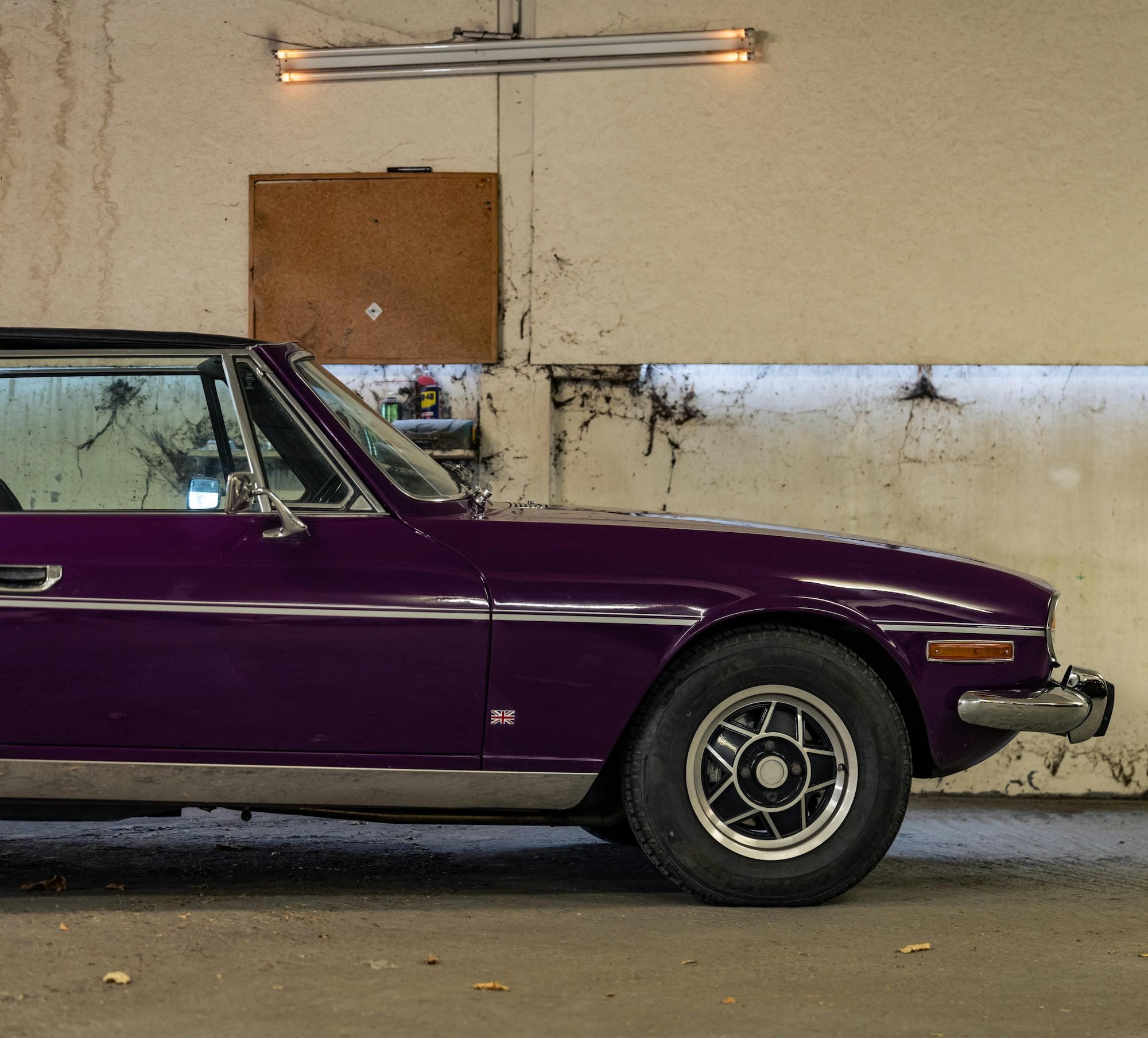
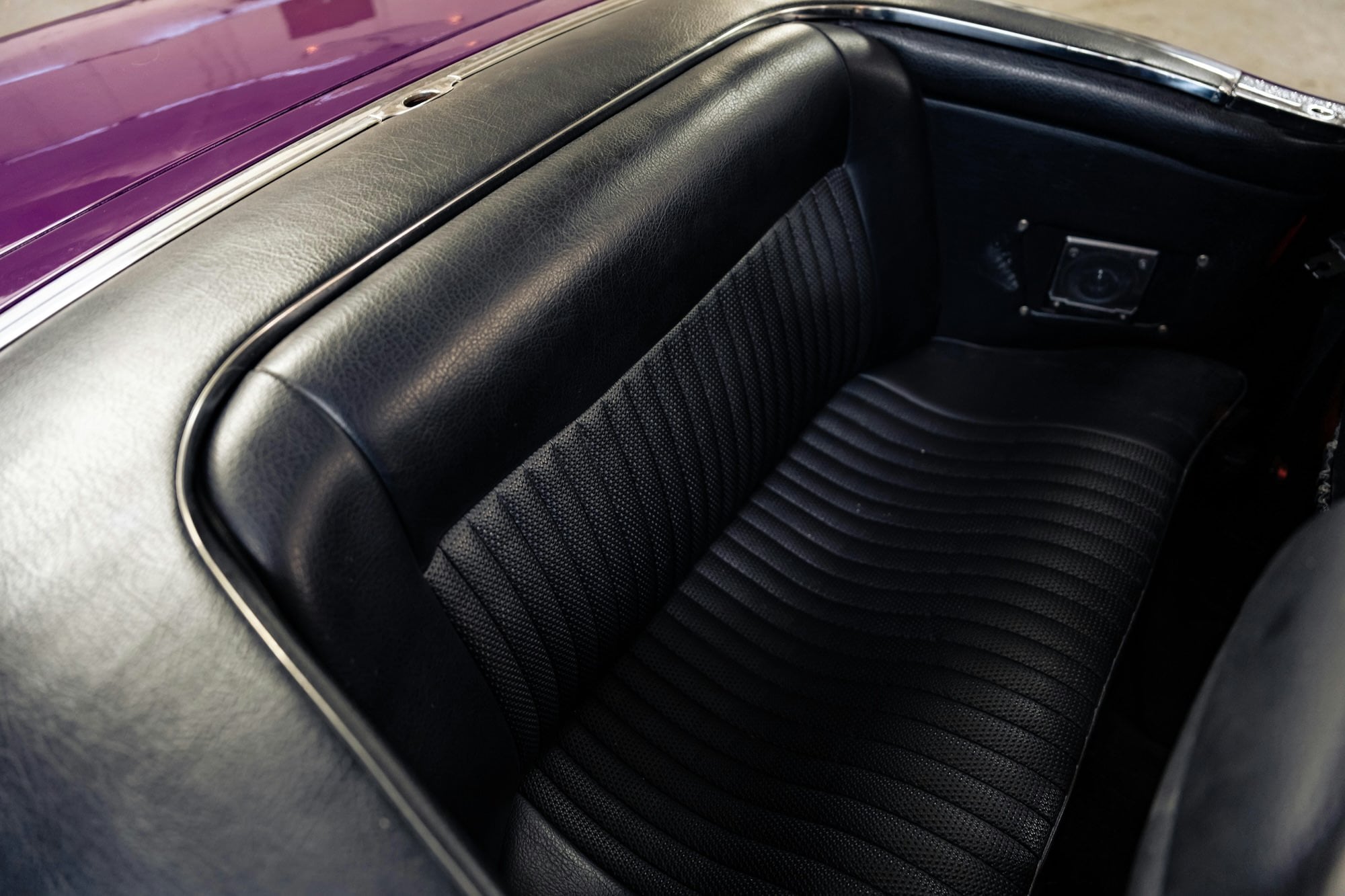
First registered in October 1974, this MkII has been in May’s hands for nearly three years, according to the listing. Its black vinyl upholstery is paired with wood veneer dashboard trim and chrome exterior detailing. The correct Triumph V8 remains in place, driving through a four-speed manual gearbox. The car has 14-inch five-spoke alloy wheels with Hankook Optimo tires, Smiths instruments, a three-spoke steering wheel and a Kienzle clock. A retro-style Bluetooth stereo is fitted as well.
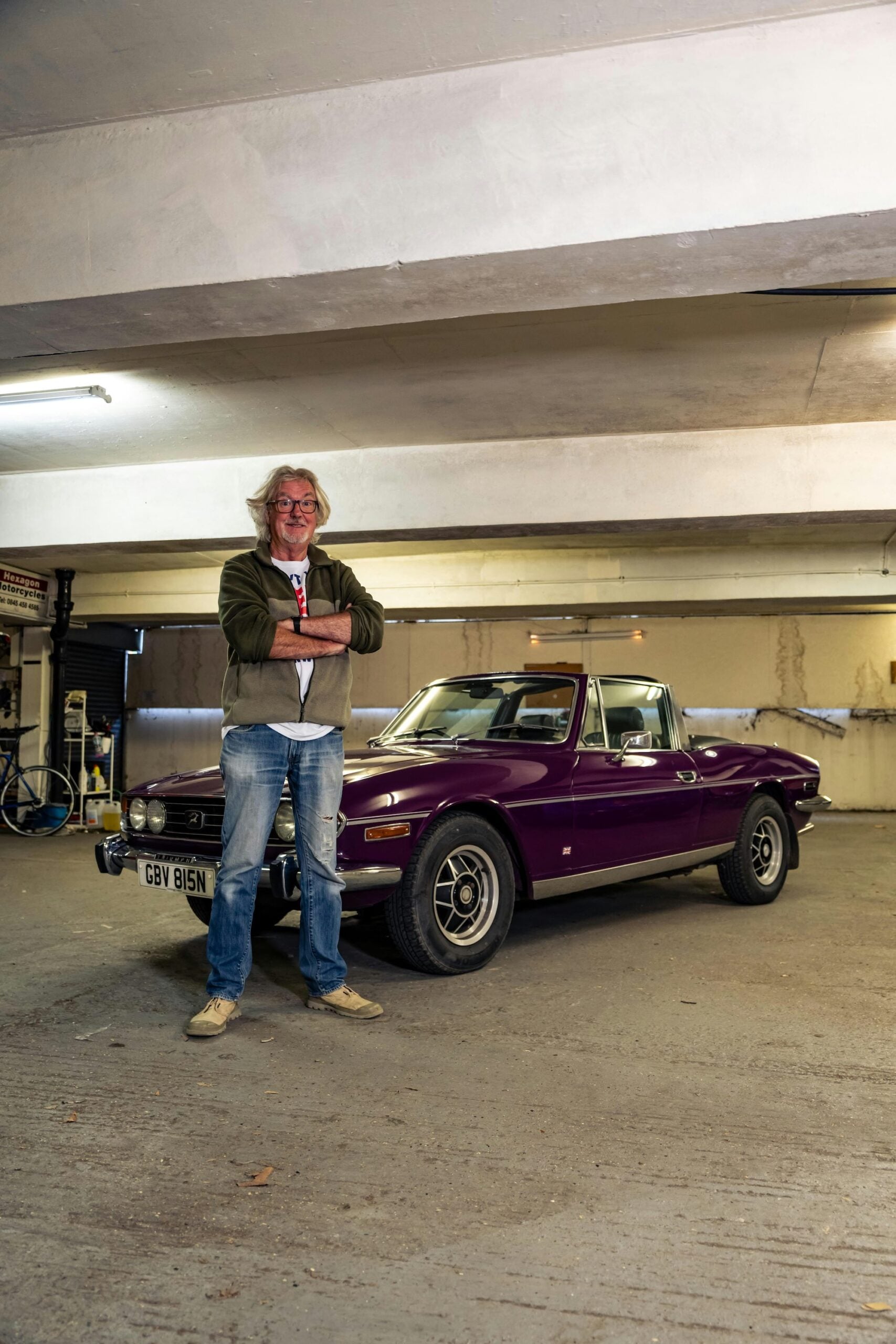
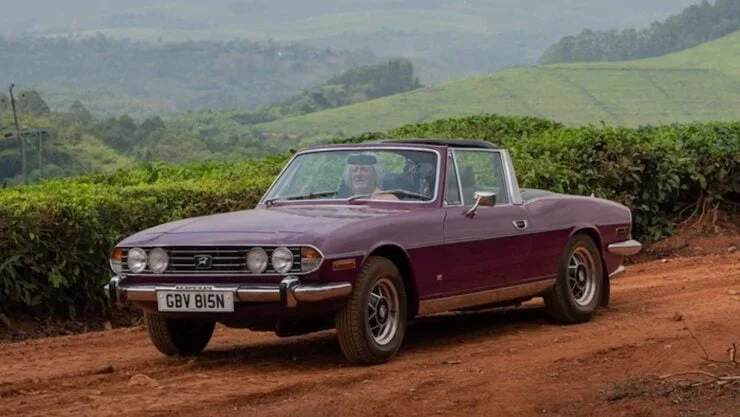
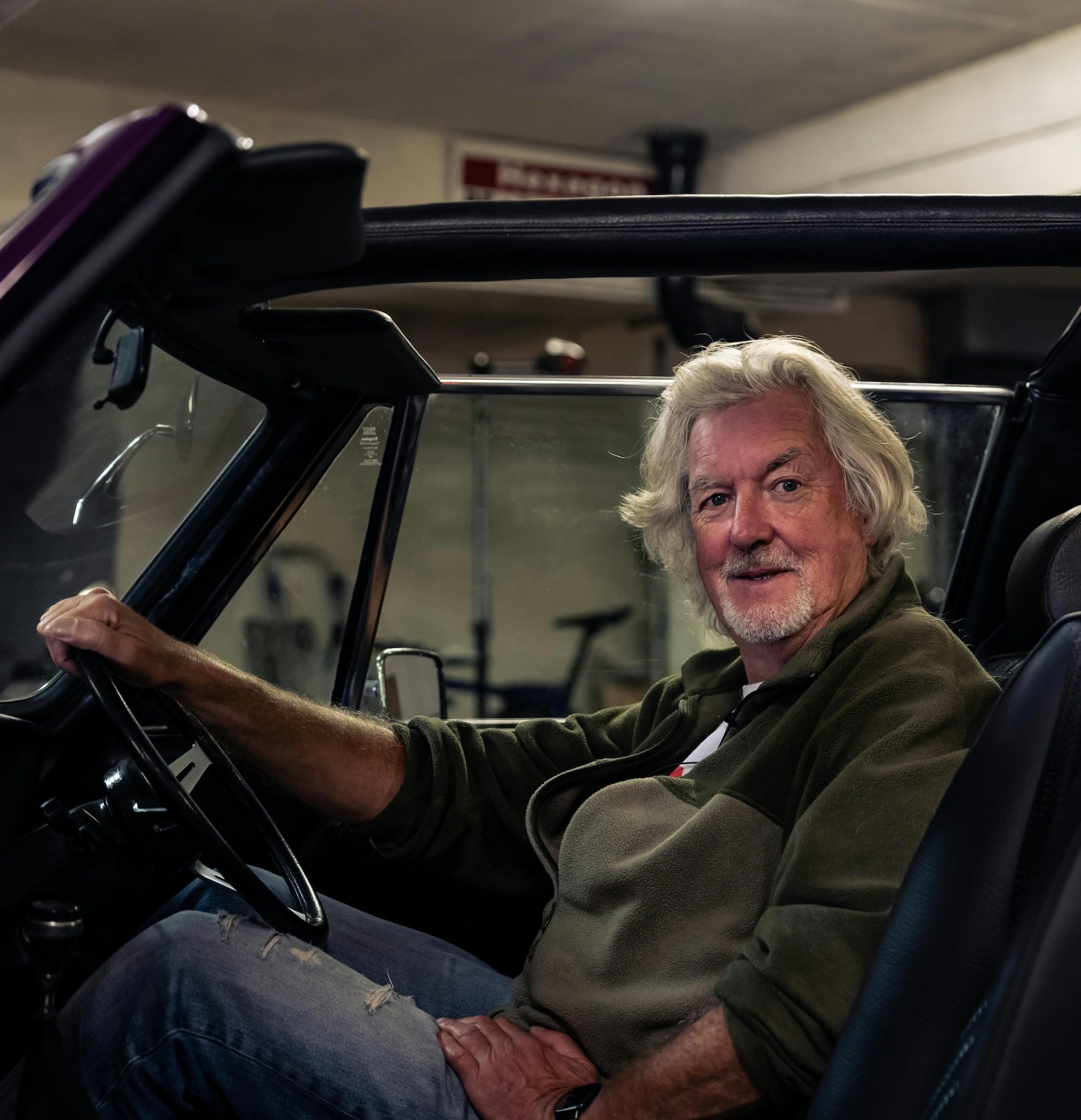
This 1974 MkII appeared in “One for the Road,” the finale of The Grand Tour.
The most recent restoration was commissioned by the previous owner and included substantial work to the engine, gearbox and suspension. The Magenta paint is understood to have been applied by The Smallest Cog, the workshop featured in Richard Hammond’s Workshop. The car is offered with an ignition key and leftover paint from that repaint.
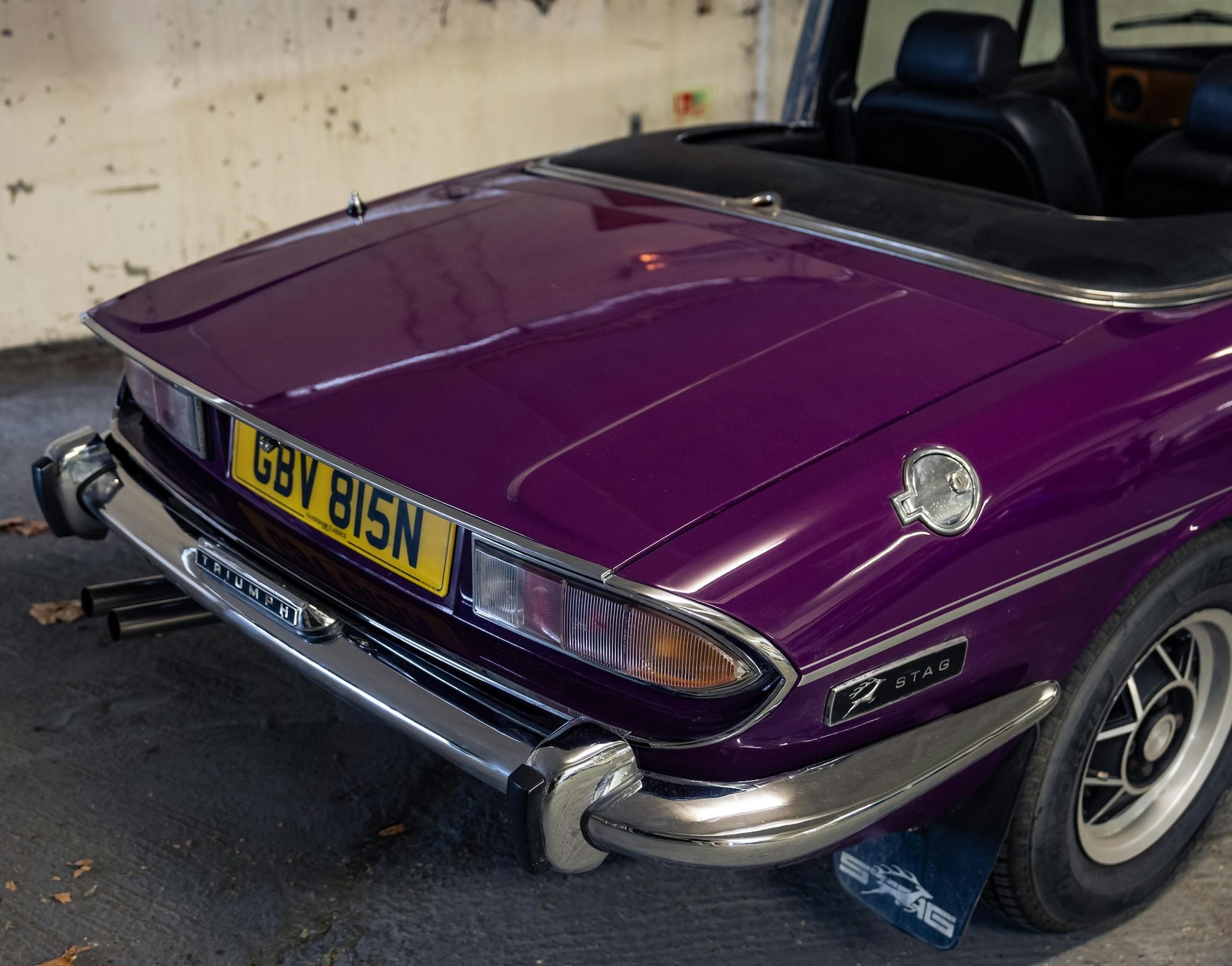
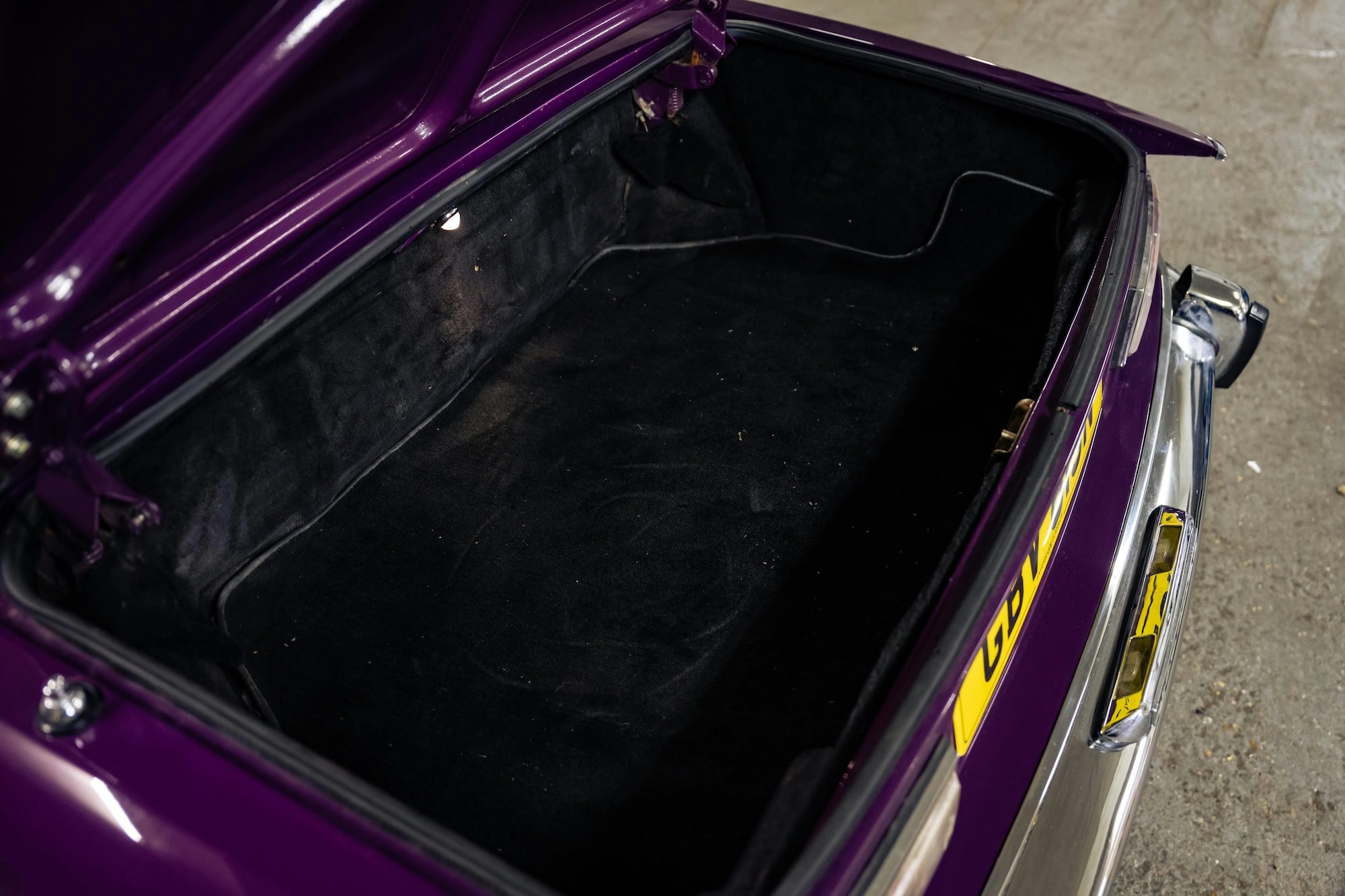
The condition notes are useful context alongside the restoration history: panel alignment could be improved, the chrome has minor pitting, and the interior shows age-related wear. Some dashboard illumination bulbs also need replacing. For a prospective owner, the reported mechanical work and the remaining cosmetic items together give a clearer picture than the television association alone.
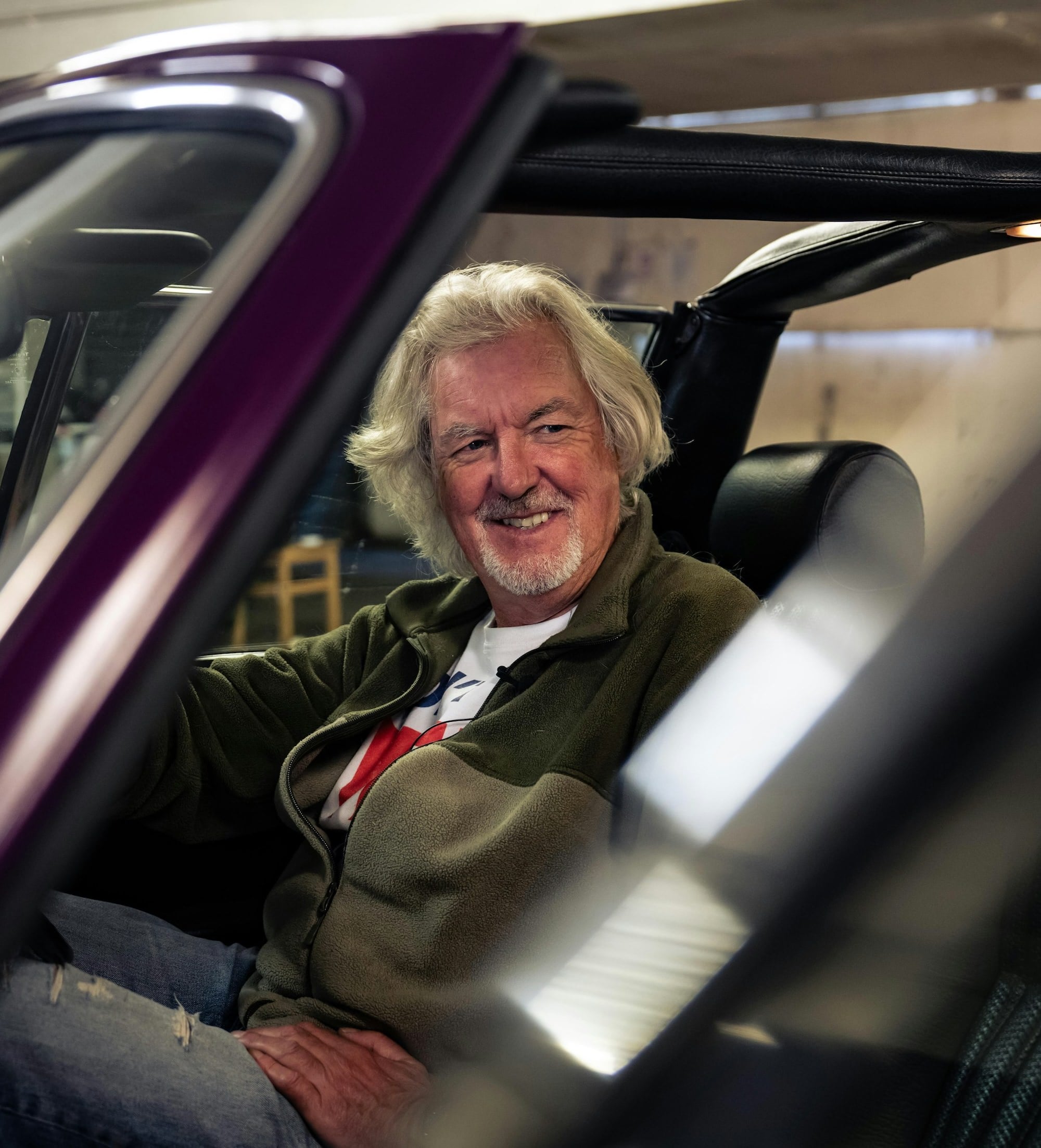
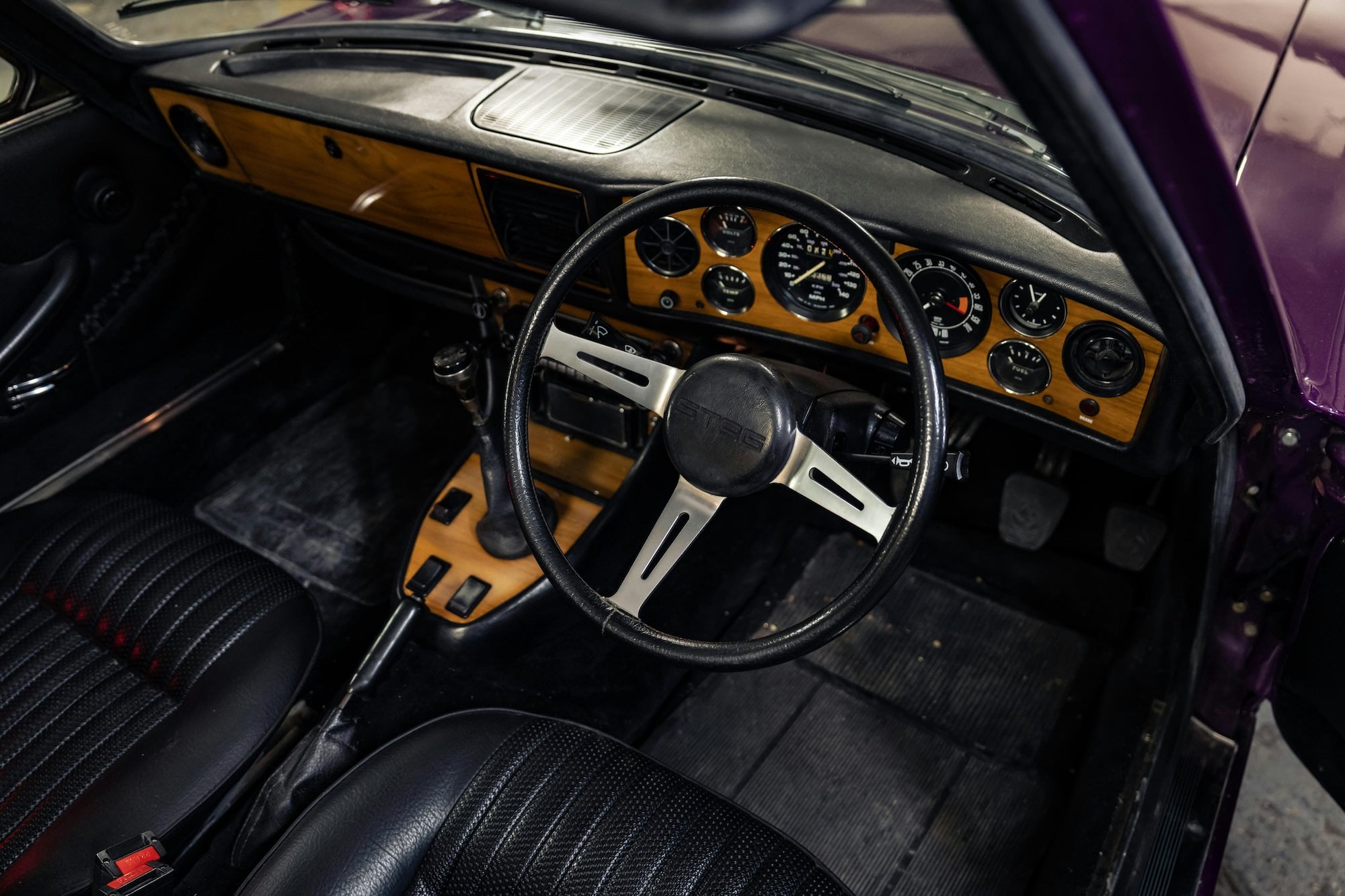
The car combines its original-specification V8 and manual transmission with a Magenta finish and black vinyl interior.
The 83,368-mile display reading isn’t warranted, and the last recorded service was at 83,100 miles in mid-2025. The car is being offered from London directly from May’s ownership. Further details and the opportunity to register to bid are available on the sale listing. Its mix of a familiar television appearance, manual V8 specification and documented condition details makes this Stag notable; its next owner will also inherit the maintenance considerations that have always been part of the model’s story.
Images courtesy of Collecting Cars and Triumph.
===

