In lane Electric Vehicles
Toyota’s Michigan Battery Center Covers Development From Materials to Recycling
Description
The 30,000-square-foot Saline center will test batteries for Toyota vehicles and support work across the company’s North American manufacturing network.
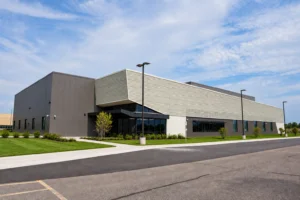
Toyota’s new battery center in Saline, Michigan, gives its North American teams a place to assess battery technology across the development cycle, from raw materials and vehicle applications through recycling. The 30,000-square-foot facility connects research and testing with Toyota’s regional manufacturing network, including its battery plant in North Carolina. That setup puts evaluation work closer to the engineers and factories it’s meant to support, though the company hasn’t described the center’s staffing, equipment or testing capacity.
The facility’s significance will depend on how its work feeds into vehicle programs and production decisions. A dedicated center can bring different parts of battery development into closer contact, but its size alone doesn’t show what Toyota will be able to deliver. The useful evidence will come later: what problems teams investigate, how findings reach manufacturing, and whether the work leads to observable changes in vehicles or battery production.
Testing across Toyota’s vehicle lineup
The Toyota Battery Center of North America (TBC) brings engineers and technicians together to evaluate battery performance and develop technology for hybrid, plug-in hybrid, hydrogen and fully electric vehicles. Toyota describes the center as a hub for development and evaluation, with work intended to support its manufacturing operations across North America. The range of powertrains gives the facility a broad assignment, but the company hasn’t said how its teams will divide their time among them.
That breadth matters because batteries don’t face the same demands in every vehicle. A battery used in a hybrid has a different role from one intended to power a fully electric vehicle, while vehicle design and how a driver uses the vehicle also shape what engineers need to assess. A shared facility could give teams a common place to compare performance and investigate issues across applications. It won’t, by itself, make those applications interchangeable.
The source doesn’t specify which battery chemistries or testing methods the center will use, or how many teams will work there. Those gaps make it difficult to judge the technical scope today. Toyota has identified the work it intends the center to support, but not the specific tests or engineering milestones that would show how that work is progressing.

Toyota Battery Center of North America cell performance testing area. (Provided by Toyota)
Cell testing is one part of the larger development picture. Battery performance can depend on how cells behave individually and how they function as part of a vehicle system; evaluation across those levels can help engineers understand where a concern originates. Toyota hasn’t outlined which levels the center will test, so the image and facility description shouldn’t be read as a complete account of its capabilities.
Closer links to manufacturing and field concerns
Toyota says the facility will support battery evaluation for Toyota Battery Manufacturing North Carolina and vehicle manufacturing plants across the region. The company’s stated aim is to help engineers identify and resolve field concerns faster by placing evaluation work closer to its North American operations. That connection matters because a finding in a vehicle or production setting may need to be assessed by people who can relate it to the battery’s design and manufacturing context.
“For Toyota customers, this facility means Toyota engineers can detect and resolve field concerns faster and closer to the source,” said Jordan Choby, Group Vice President of Powertrain. He also said the work is intended to help develop longer-lasting batteries for conditions American drivers face. Toyota hasn’t provided durability targets, range figures or details about how findings from the center will change specific models.
The promise is practical, but it’s still a promise. Faster access to evaluation could shorten the distance between identifying a concern and understanding it; whether that translates into quicker fixes for customers depends on what Toyota finds and how it responds. And longer battery life is a meaningful aim, since durability affects how owners experience a vehicle over time. The company hasn’t yet supplied results that would let readers measure progress against that aim.
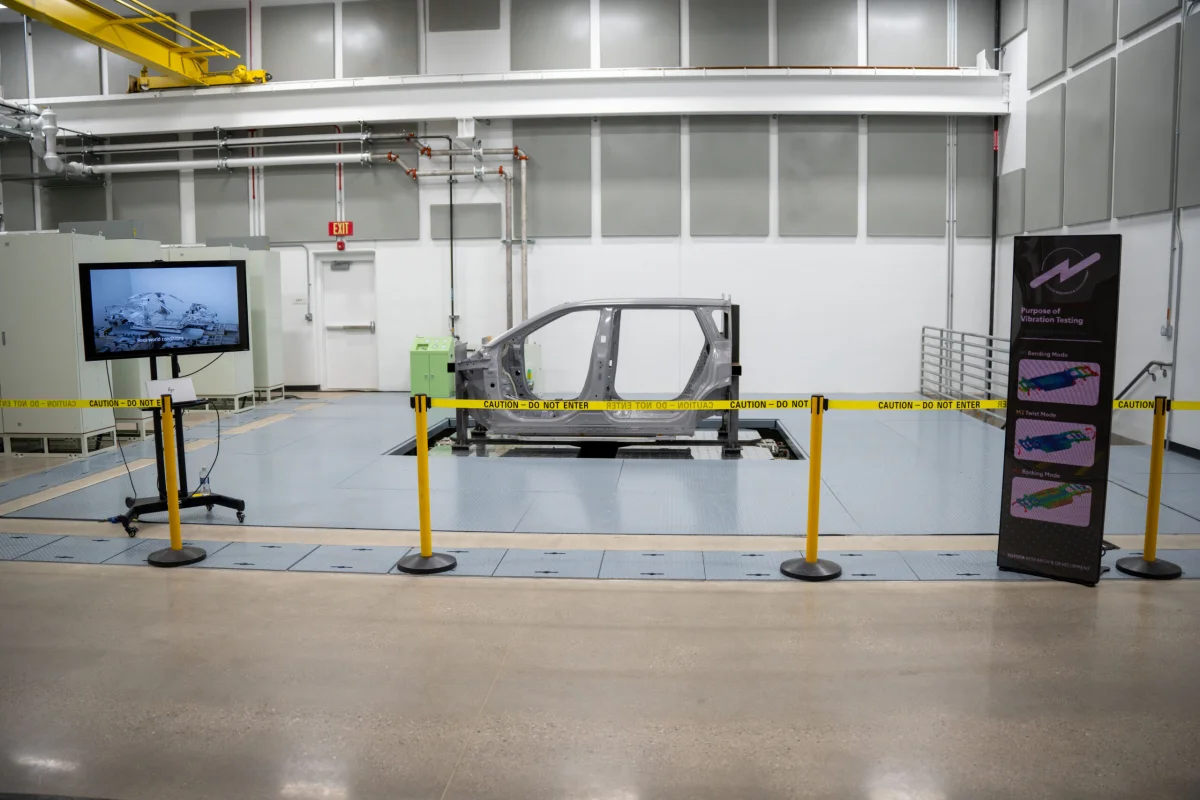
Toyota Battery Center of North America Emerging Tech Room. (Provided by Toyota)
The center’s scope extends from evaluating materials to considering customer applications and recycling. That creates a setting where teams can examine more stages of battery development in one place. For buyers, the practical effect will depend on whether the work leads to changes in battery life, vehicle availability, charging or ownership costs; Toyota hasn’t announced specific outcomes or timelines.
(And this is the part most people overlook.) Connecting development with recycling broadens the questions Toyota can consider, but it doesn’t establish that the center will handle recycling operations or deliver a particular recovery process. The description points to recycling as part of the scope of evaluation. What that means in day-to-day work remains unspecified.
Michigan research and North Carolina production
Toyota says it will share research access at the Saline facility with the University of Michigan Electric Vehicle Center. The automaker is a founding member of that center and describes the arrangement as part of its effort to develop the next generation of battery engineers and technicians in Michigan. The source gives no details on the research projects, access schedule or training numbers.
Sharing access could connect university research with the questions Toyota is pursuing in its own development work, while giving students and technicians a potential route to work with battery evaluation. That’s a useful link in principle, but its reach will depend on the projects and access Toyota and the university establish. Without details on participants or training, the scale of the workforce effort is still hard to assess.
The new center adds a research and evaluation link to Toyota’s existing North American battery manufacturing plans. In 2025, the company began production at Toyota Battery Manufacturing North Carolina in Liberty, its first battery plant outside Japan. Toyota described that $14 billion facility as housing lithium-ion battery production lines for hybrid electric, plug-in hybrid electric and battery electric vehicles.
Saline and Liberty therefore have distinct roles in the company’s account: one is a place for research and evaluation, while the other is a manufacturing site. Their connection could help Toyota relate technical findings to production needs, but the company hasn’t explained how that coordination will work or what decisions will flow between the facilities. If you’re working in this space, that link is the detail to watch.
What the center needs to prove
Keita Moritsu, Toyota Motor North America R&D senior vice president and chief technology officer, called the Saline center an expansion of the company’s battery development work into North America. The next measure of its value will be what Toyota reports about testing, manufacturing support and battery improvements as the facility’s work progresses.
This is more significant than it looks if the center can help turn evaluation into changes that reach vehicles and factories. But a new building and a broad mission aren’t evidence of improved battery life, better availability or lower ownership costs. Toyota hasn’t supplied specific outcomes or timelines, so those claims remain open questions.
For now, the center’s clearest contribution is organizational: it gives Toyota a North American base for work spanning battery materials, vehicle applications and recycling, with a stated connection to regional production and university research. The test will be whether the company can show how that work informs decisions, and what it changes for the batteries customers eventually use.