In lane Electric Vehicles
Rivian and Redwood Expand Battery Recycling and Energy Storage Work
Description
The expanded work covers Rivian factory scrap, retired EV packs and stationary storage at its Illinois plant, linking battery reuse with materials recovery.
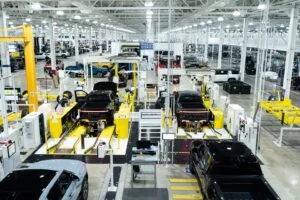
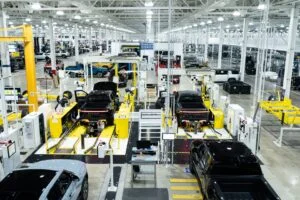
Rivian’s expanded work with Redwood Materials ties together three stages of an EV battery’s life: production scrap, reuse of packs that have left vehicle service, and recycling once batteries can no longer serve as storage. Redwood will also provide stationary battery storage at Rivian’s manufacturing plant in Normal, Illinois. The arrangement gives Rivian a way to connect battery handling with the plant’s electricity needs, while Redwood can assess packs for reuse before recovering their materials.
From service centers to second life
Rivian sends battery packs that are no longer suitable for vehicles through its nationwide network of service centers to Redwood. Redwood evaluates each pack’s condition and potential use. Packs that remain suitable for stationary storage can be deployed at Rivian’s manufacturing facilities or at other locations; those that cannot be reused are directed to recycling.
The expanded arrangement adds scrap produced during Rivian’s manufacturing operations to the material Redwood will recycle. That matters because battery recycling can begin before a pack has spent years on the road: production scrap is another stream of material to recover, alongside batteries that have reached the end of their useful life in a vehicle. Bringing both into the same relationship gives the companies a defined route for material that otherwise would need separate handling.
The work builds on an earlier plan announced in April, which provides 10 megawatt-hours (MWh) of energy storage from repurposed Rivian battery packs at the Normal plant. That figure describes the storage capacity in the existing project. The latest expansion adds battery scrap recycling and Redwood’s provision of stationary storage at the site; the source does not specify additional capacity for that provision.
Storage before recycling
A battery that no longer meets the needs of a vehicle may still hold useful capacity for a stationary application. Such systems can store electricity when demand is low or renewable generation is plentiful, then make it available when demand rises. The usefulness of a pack depends on its condition and on whether it can be integrated into a system suited to the facility it serves. Redwood says its technology can coordinate batteries from Rivian and other sources to respond to a facility’s needs.
For a manufacturer, on-site storage can help manage the timing of electricity use. It may take in power when supply is more available and discharge it at busier times, potentially easing pressure on the facility’s connection and reducing energy costs. The source describes these as possible benefits of storage; it gives no site-specific savings estimate or operating results for the Normal plant.
Rivian founder and CEO RJ Scaringe framed stationary reuse as a way to put retired packs to work while supporting grid reliability and lower energy costs. Redwood founder and CEO JB Straubel said Rivian packs could provide storage and, later, recoverable materials. Their comments point to the commercial logic of the arrangement: reuse can extend a battery’s working life, while recycling offers a path for materials after storage is no longer practical.
Materials recovery and industry context
Redwood says its recycling process recovers lithium, nickel, cobalt and copper at rates exceeding 95%. Those materials are used in battery supply chains, so recovering them can return a portion of a battery’s contents to further use. The stated recovery rate is a company figure and applies to its process; the source does not break it down by material or describe how it was measured.
The sequence matters for both resource use and operations. A pack that can still store electricity has another possible role before it is dismantled. Once it no longer suits that role—or when manufacturing scrap is generated—recycling can recover materials. This links battery reuse to material recovery, rather than treating storage and recycling as unrelated services. How well the model works in practice will depend on pack condition, the needs of each storage site, and the steady handling of batteries and scrap.
Redwood has also worked with BMW on lithium-ion battery recycling and has recycling arrangements with Toyota, Ford, Volvo and Volkswagen. General Motors has a separate program with Redwood to accelerate energy storage deployments using new and second-life batteries from its EVs. Those examples show that automakers are exploring both material recovery and stationary storage, although the arrangements differ in scope and the source gives no comparable capacity or cost figures.
For Rivian, the notable development is the connection between factory scrap, retired packs and storage at its own Illinois plant. The 10 MWh project provides a stated starting point for the reuse effort; the expanded work adds recycling coverage across more of the battery lifecycle. The next practical measure to watch is how much storage the expanded arrangement supplies and how consistently packs can move from vehicle service to a useful stationary role, then on to material recovery.