In lane Electric Vehicles
Fiat, Cadillac and BMW Group Lead US EV Sales Shares in Q2 2026
Description
Fiat’s Q2 share reached 98.8% on just 82 sales, while Cadillac rose to 35.4% and BMW Group held the top spot among auto groups.

Quarterly EV share figures put Fiat, Cadillac and BMW Group at the top of their respective US rankings, but the numbers come with different caveats. Fiat’s striking second-quarter lead rests on just 82 total sales. Cadillac’s rise, by contrast, came from a much larger starting share, while BMW Group kept its modest lead among auto groups as GM climbed into second place.
The figures compare battery-electric vehicles (BEVs) with each brand’s or group’s total sales. That makes them useful for seeing how much of a company’s current business is electric, rather than which company sells the most EVs overall. The two views answer different questions: a small brand can post a high BEV share on limited volume, while a large group can sell more EVs and still have a lower share across its wider lineup.
Brand rankings shift sharply in Q2
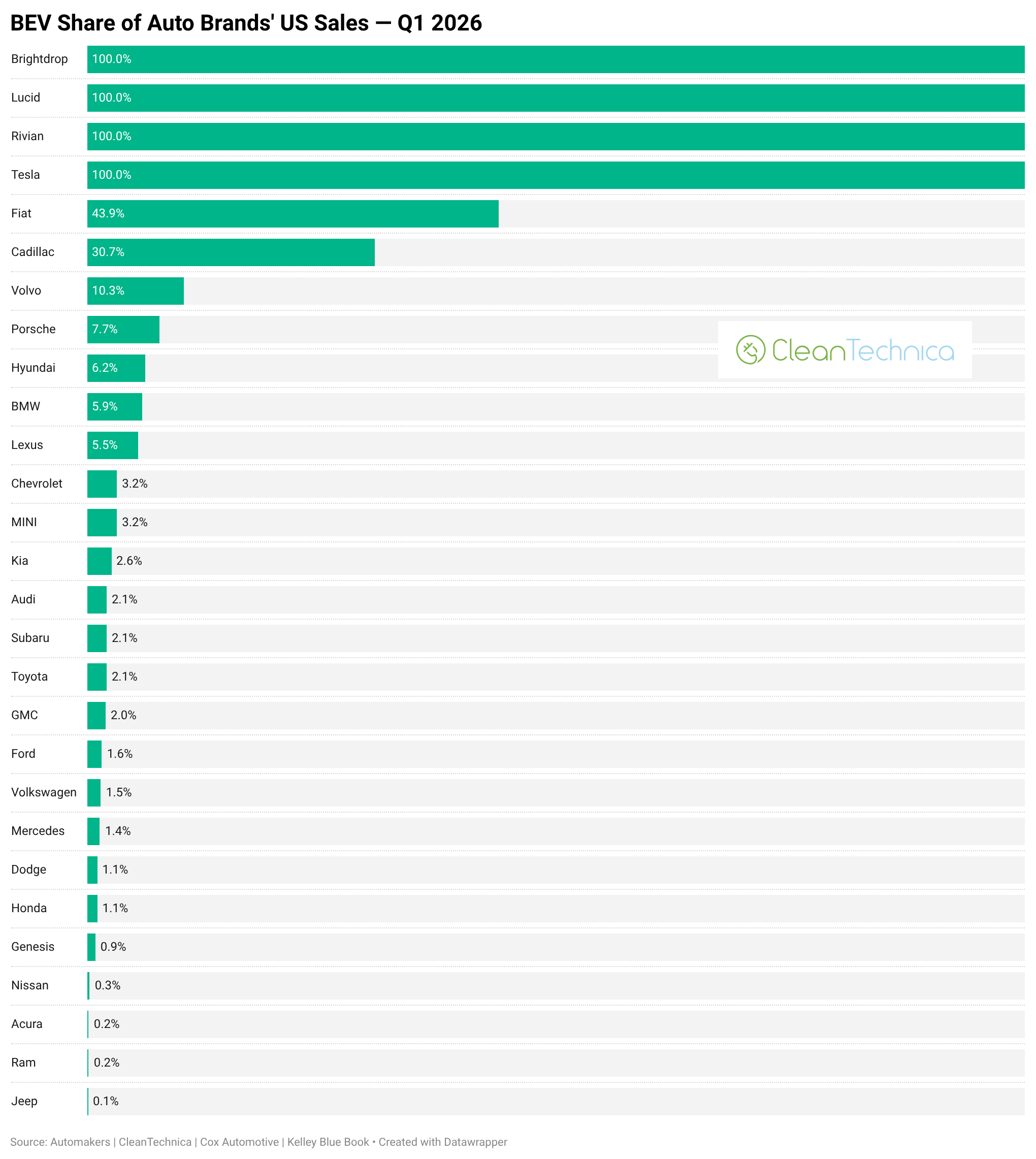
Fiat recorded a 43.9% BEV share in the first quarter, then rose to 98.8% in the second. The source reports only 155 total Fiat sales in Q1 and 82 in Q2, making the percentages highly sensitive to small changes in sales. The Q2 result is striking as a share, but the low total means it offers little evidence on its own about broad buyer demand or the brand’s longer-term direction.
Cadillac provides a more substantial point of comparison. Its BEV share increased from 30.7% in Q1 to 35.4% in Q2. The article describes that increase as coming from a much higher volume base than Fiat’s. Cadillac therefore stands out as the leading high-share legacy brand in these results, though the figures alone don’t show which models drove the change or how its EV sales compare with direct rivals by unit volume.
The next positions changed between quarters. Volvo Cars was the only other brand above 10% in Q1, at 10.3%. In Q2, Porsche moved above that mark, while Volvo’s share fell to 4.7%. Porsche’s Q1 share had been 7.7%, so the second-quarter result represents a clear move up. The source doesn’t give model-level sales or explain the reasons for Volvo’s decline, leaving those questions open.

Below the leaders, Q1’s middle tier included Porsche at 7.7%, Hyundai at 6.2%, BMW at 5.9% and Lexus at 5.5%. Those figures show how far the listed brands were from Cadillac’s share at the time, but the gap doesn’t by itself reveal the size of each company’s EV business. For shoppers, a brand share ranking also says nothing about individual model prices, range, charging access or delivery availability; those comparisons require model-specific information.
BMW Group stays ahead as GM rises
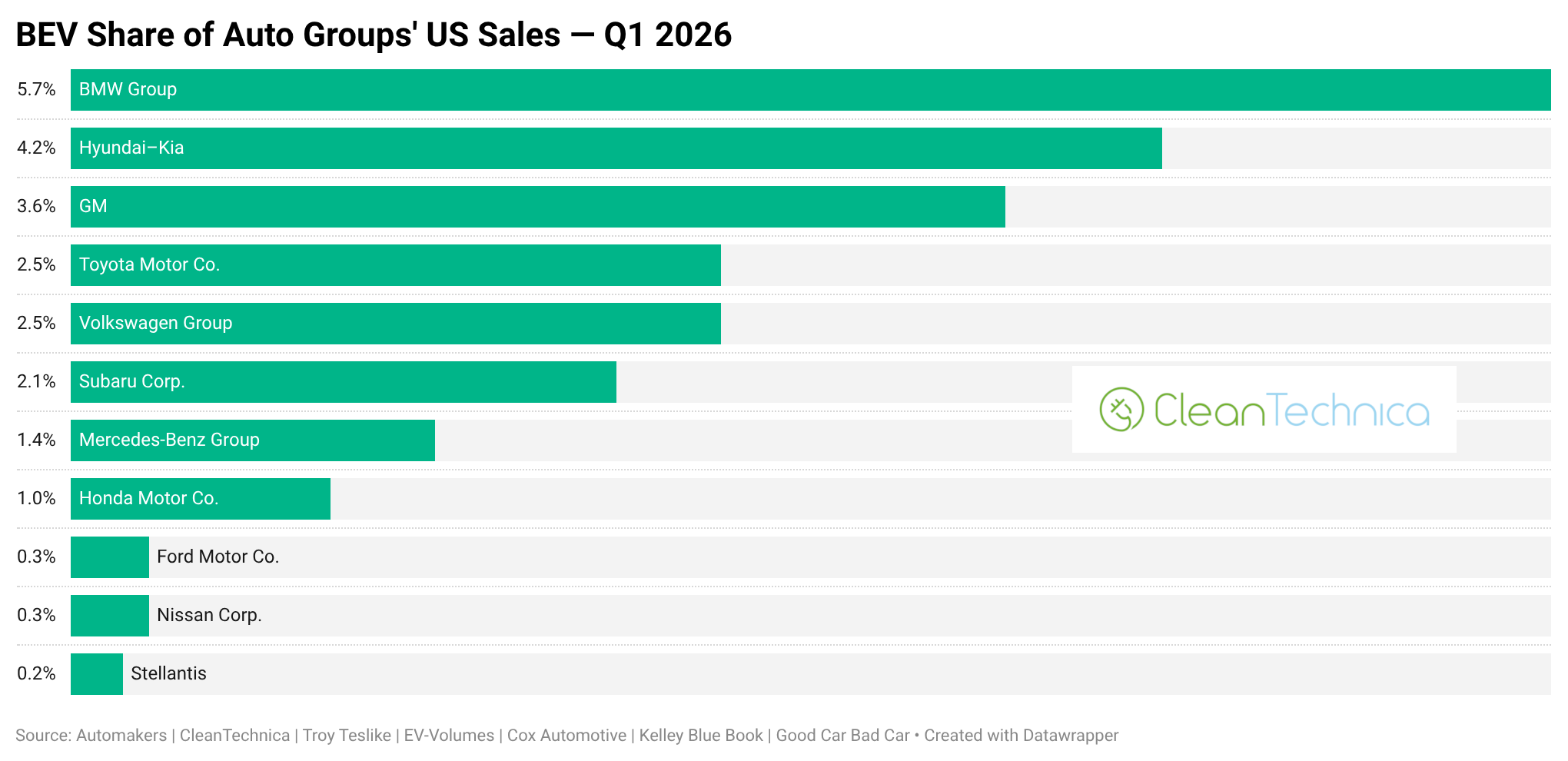
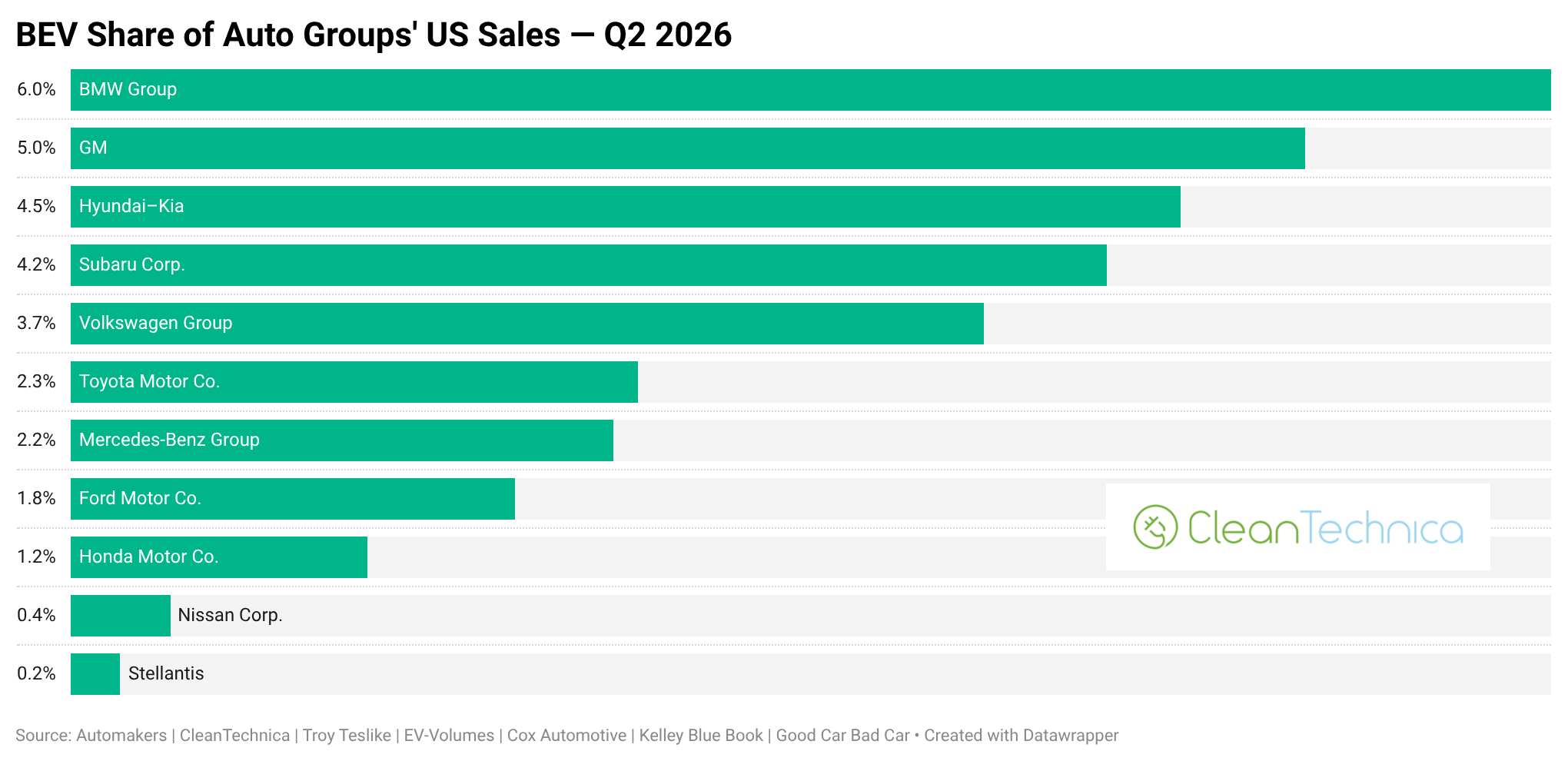
At group level, BMW Group ranked first in both quarters. Its BEV share edged up from 5.7% in Q1 to 6.0% in Q2. That is a small change, and the share remains in single digits, but BMW Group held the lead among the companies and alliances covered by the comparison.
Hyundai–Kia placed second in Q1 at 4.2%, ahead of GM at 3.6%. Both groups increased their BEV shares in Q2, but at different rates. Hyundai–Kia reached 4.5%, while GM climbed to 5.0%, moving into second place. The ranking change came from GM’s larger increase, not a fall in Hyundai–Kia’s share.
Subaru also made a notable move, rising from 2.1% in Q1 to 4.2% in Q2. That put its share close to Hyundai–Kia’s Q1 level, though the source gives no further detail on the sales mix behind Subaru’s jump. The figures point to a quarter in which several groups increased their EV proportions, with GM’s change large enough to alter the order near the top.
What the percentages tell buyers
These rankings are best read as a snapshot of sales mix across two quarters. A rising share can reflect stronger EV sales, changes in other vehicle sales, or both; the supplied figures don’t separate those effects. Nor do they establish whether a brand has enough EV models, production capacity or dealer availability to meet demand. Those details matter to buyers weighing a specific vehicle, especially when comparing range, charging, practicality and price.
The contrast between Fiat and Cadillac captures the key limitation. Fiat’s near-total Q2 share sounds decisive, but 82 total sales make it a narrow data point. Cadillac’s 35.4% share is less extreme and comes from a higher volume base, making it a more useful signal of an established brand’s sales mix in this comparison. Group figures add another perspective by showing how electrified sales contribute across a broader collection of brands and models.
The source also points readers to separate reports on US EV market share, leading models and the Q2 market’s year-over-year change. Those measures can add context, but they answer different questions from the share figures here. The next comparison to watch is whether Cadillac and GM can sustain their Q2 positions, whether Volvo recovers its share, and whether Fiat’s percentage changes meaningfully once its small sales base is considered.